

Rapid evolution of an adaptive multicellular morphology of Candida auris during systemic infection
Open accessThe DOI matches its Crossref record; 85 of the 85 references it cites were found in a registry or an index.
Abstract
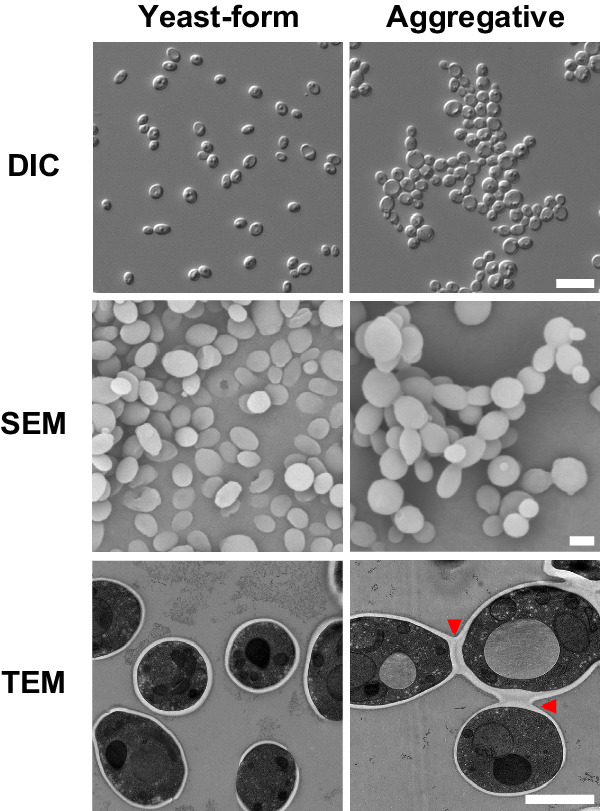
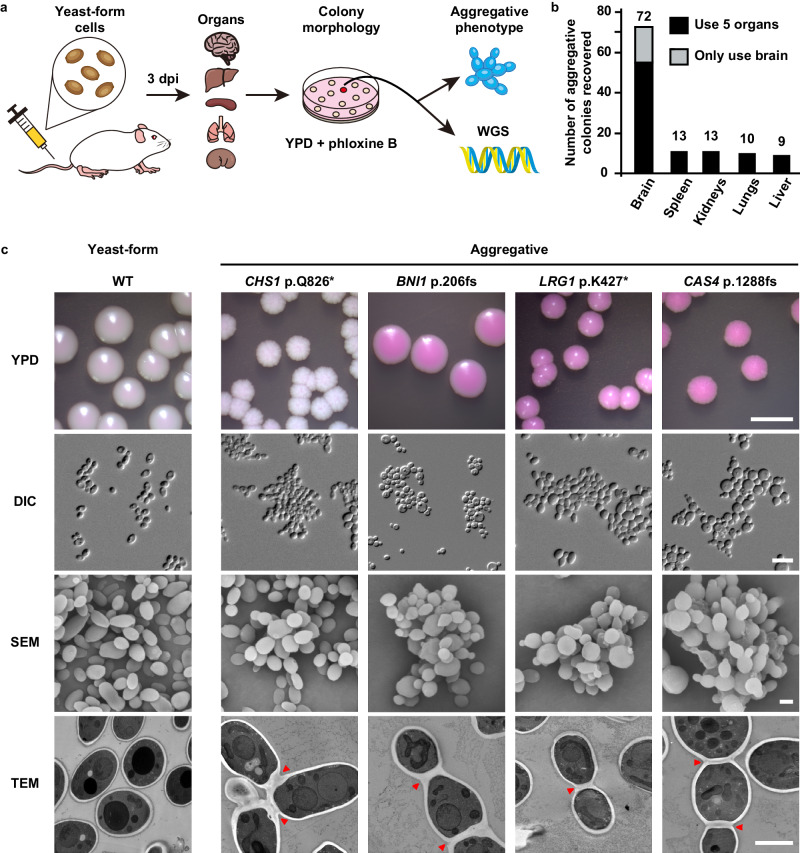
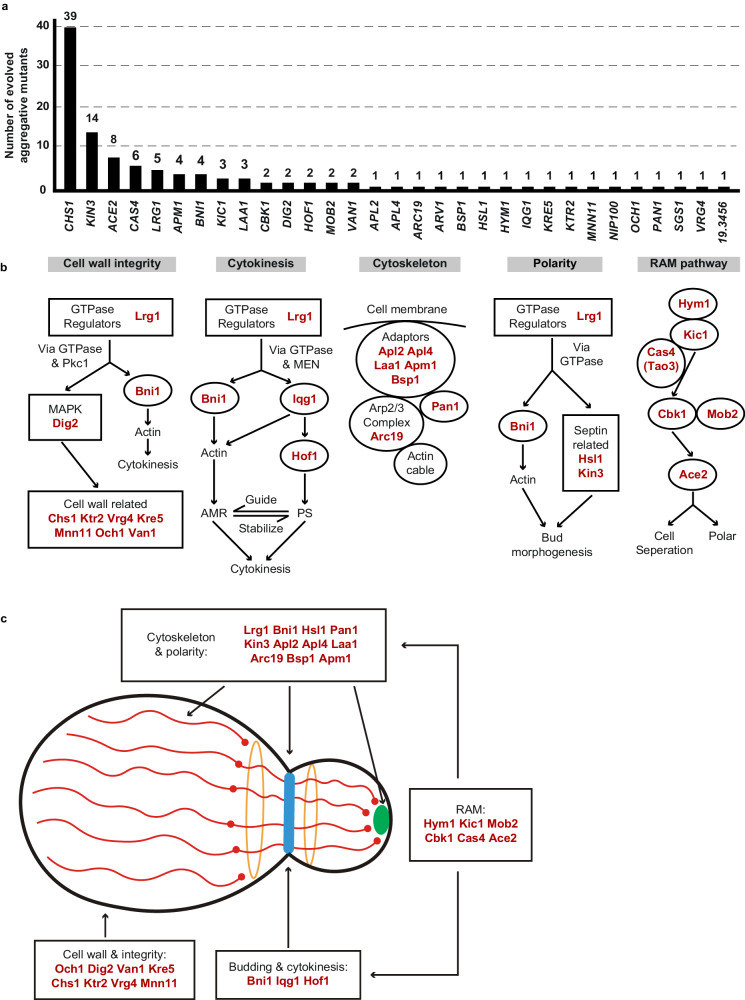
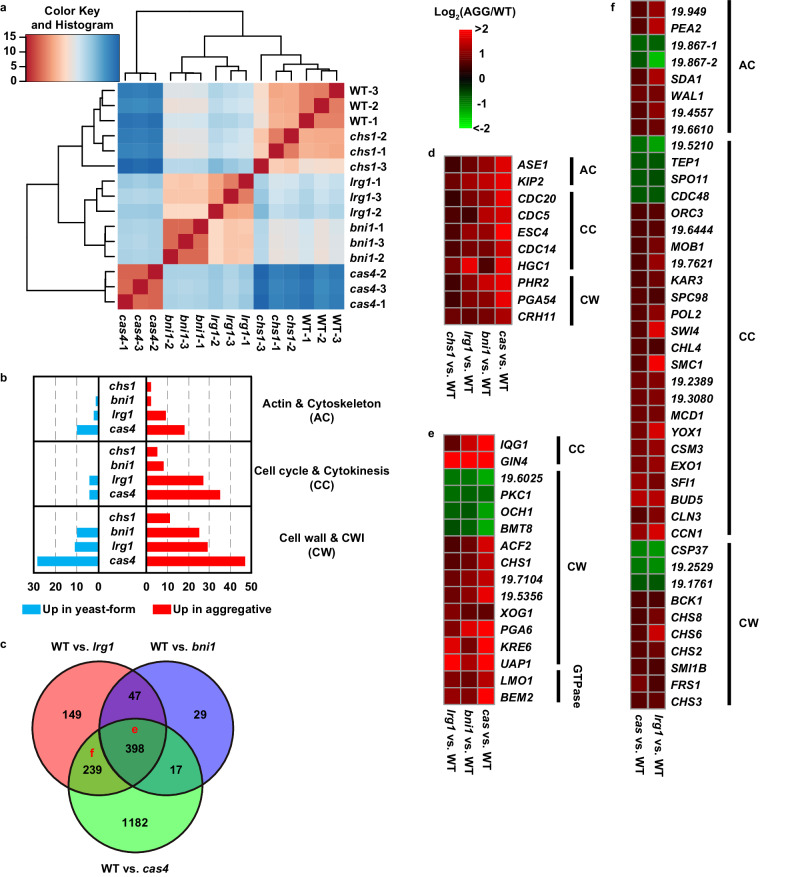
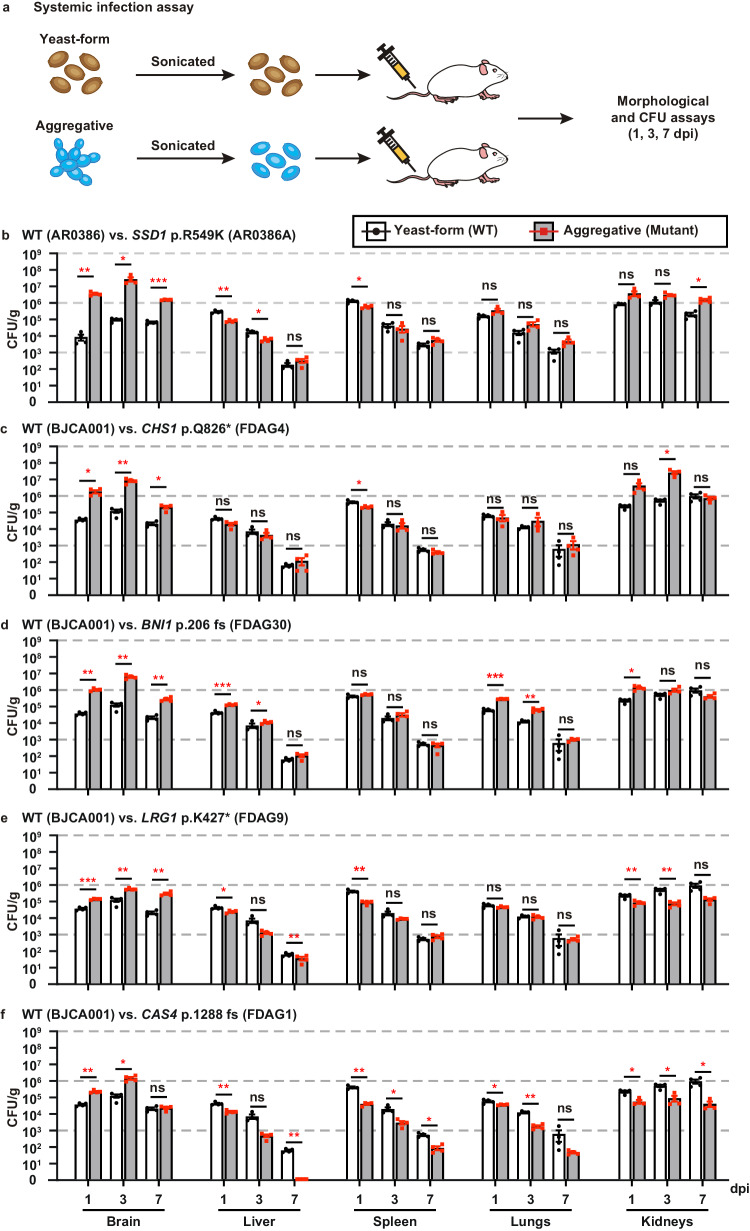
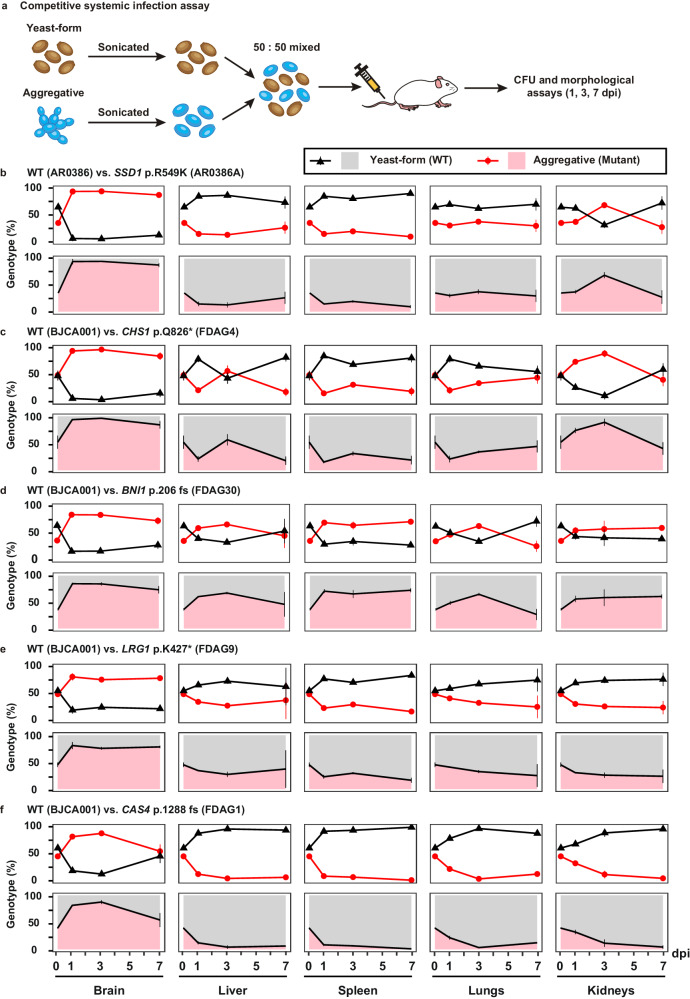
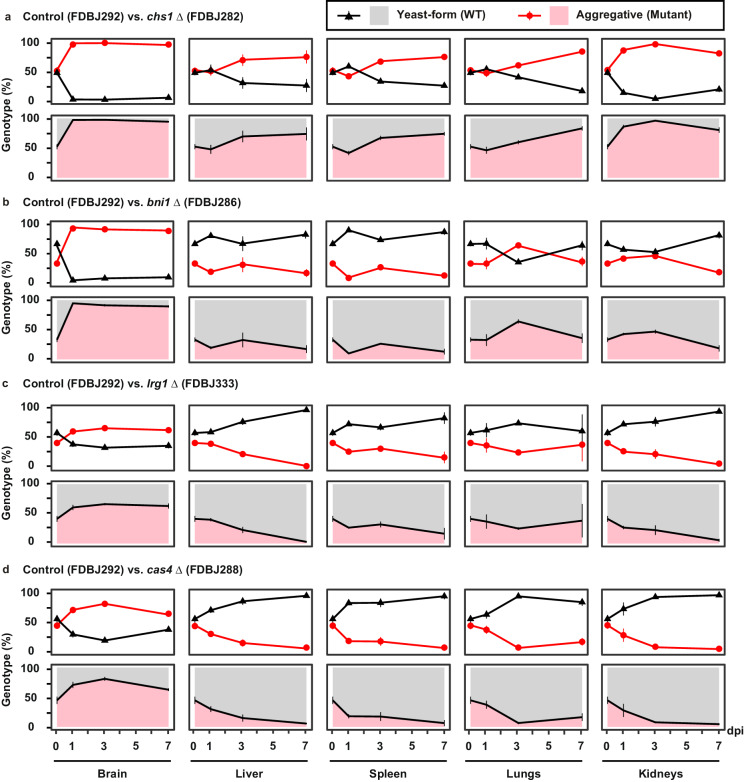
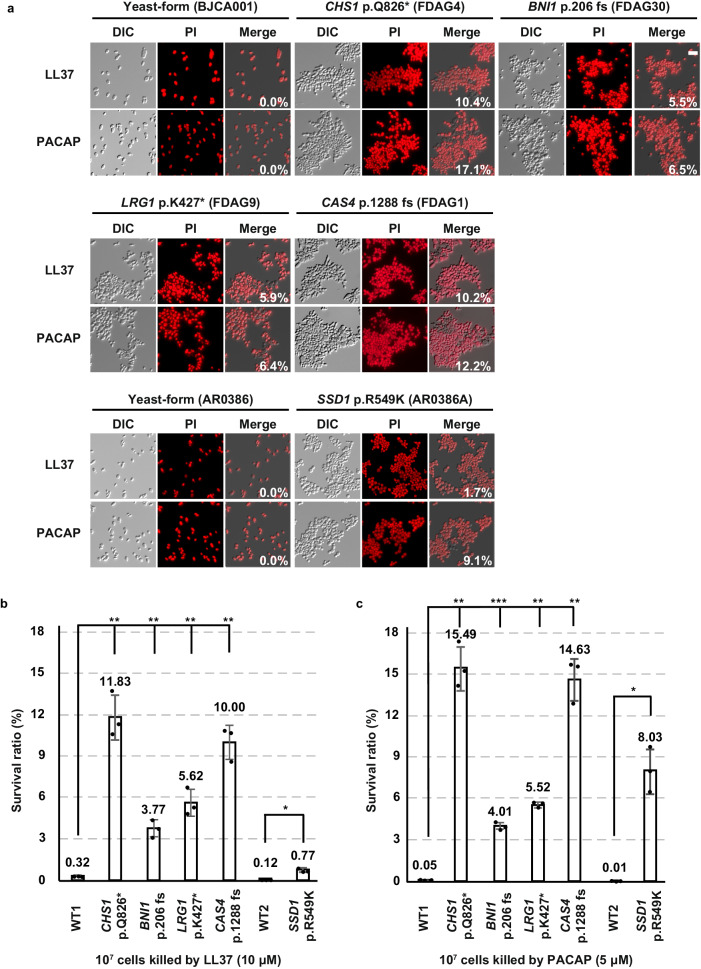
Candida auris has become a serious threat to public health. The mechanisms of how this fungal pathogen adapts to the mammalian host are poorly understood. Here we report the rapid evolution of an adaptive C. auris multicellular aggregative morphology in the murine host during systemic infection. C. auris aggregative cells accumulate in the brain and exhibit obvious advantages over the single-celled yeast-form cells during systemic infection. Genetic mutations, specifically de novo point mutations in genes associated with cell division or budding processes, underlie the rapid evolution of this aggregative phenotype. Most mutated C. auris genes are associated with the regulation of cell wall integrity, cytokinesis, cytoskeletal properties, and cellular polarization. Moreover, the multicellular aggregates are notably more recalcitrant to the host antimicrobial peptides LL-37 and PACAP relative to the single-celled yeast-form cells. Overall, to survive in the host, C. auris can rapidly evolve a multicellular aggregative morphology via genetic mutations.
Overview
The claims and statistics of this paper haven’t been checked yet.
Free: it reads the open-access text and checks the first 5 claims that cite a source we can check. Create a free account to check every claim.
Integrity signals
Registry
Cites
Statistics
Figures
Verification
Claims the paper makes
The claims and statistics of this paper haven’t been checked yet.
Free: it reads the open-access text and checks the first 5 claims that cite a source we can check. Create a free account to check every claim.
Claims other papers make about this one
Each is checked against this paper’s own text: does it say what the citing paper says it does?
The source backs part of the claim, not all of it — or backs it for a different population, condition or comparison.
In the citing paper
“Among them, suppression of the ACE2 locus due to point mutations or loss of ORF region was reported during C. auris adaptive evolution in the host.”
From Cell aggregation mediated by ACE2 deletion in Candida auris modulates fungal colonization and host immune responses in the skin (2024) · cites this paper as [20]
Experimental — accuracy not yet measuredThe source backs part of the claim, not all of it — or backs it for a different population, condition or comparison.
In the citing paper
“Aggregation has been mainly observed among clade III isolates but has also been reported in other clades and can be induced under some in vitro or in vivo conditions (18, 49–51).”
From Ume6-dependent pathways of morphogenesis and biofilm formation in Candida auris (2024) · cites this paper as [50]
Experimental — accuracy not yet measuredThe cited source says what the claim attributes to it.
In the citing paper
“Furthermore, the experimental host-driven evolution of C. auris in the murine model of systemic infection identified multicellular aggregative morphologies with point mutations at several gene loci (20).”
From Cell aggregation mediated by ACE2 deletion in Candida auris modulates fungal colonization and host immune responses in the skin (2024) · cites this paper as [20]
The cited source says what the claim attributes to it.
In the citing paper
“Interestingly, the mice intravenously infected with host-evolved C. auris with suppression of ACE2 locus did not survive after 5 days post-infection, denoting its virulence traits in C. auris (20).”
From Cell aggregation mediated by ACE2 deletion in Candida auris modulates fungal colonization and host immune responses in the skin (2024) · cites this paper as [20]
Self-check
Percentages, sums and reported differences re-computed from the paper’s own numbers.
The self-check needs the paper’s full text.
Citations
Cites
Moderated estimation of fold change and dispersion for RNA-seq data with DESeq2
Love, M. I., Huber, W., & Anders, S. (2014) · Genome Biology · doi:10.1186/s13059-014-0550-8 · Cited by 95,106
The Sequence Alignment/Map format and SAMtools
Li, H., Handsaker, B., Wysoker, A., Fennell, T., Ruan, J., Homer, N., Marth, G., Abecasis, G., Durbin, R., & 1000 Genome Project Data Processing Subgroup (2009) · Bioinformatics · doi:10.1093/bioinformatics/btp352 · Cited by 62,041 · cited 1×
“361 76 , Picard Tools v1.”
Fast and accurate short read alignment with Burrows-Wheeler transform
Li, H., & Durbin, R. (2009) · Bioinformatics · doi:10.1093/bioinformatics/btp324 · Cited by 58,607
The Genome Analysis Toolkit: A MapReduce framework for analyzing next-generation DNA sequencing data
McKenna, A., Hanna, M., Banks, E., Sivachenko, A., Cibulskis, K., Kernytsky, A., Garimella, K., Altshuler, D., Gabriel, S., Daly, M., et al. (2010) · Genome Research · doi:10.1101/gr.107524.110 · Cited by 27,895 · cited 1×
“7.2 were used for single nucleotide variant (SNV) and InDel analyses 77 .”
InfluentialSzklarczyk, D., Gable, A. L., Lyon, D., Junge, A., Wyder, S., Huerta-Cepas, J., Simonovic, M., Doncheva, N. T., Morris, J. H., Bork, P., et al. (2019) · Nucleic Acids Research · doi:10.1093/nar/gky1131 · Cited by 17,749 · cited 1×
“To further uncover the genetic and functional connections among the DEGs between the yeast-form strain and aggregative mutants (common DEGs found in two or more mutants), we performed network analysis using the STRING database 57 .”
ANNOVAR: functional annotation of genetic variants from high-throughput sequencing data
Wang, K., Li, M., & Hakonarson, H. (2010) · Nucleic Acids Research · doi:10.1093/nar/gkq603 · Cited by 14,621 · cited 1×
“An amino acid mutations were annotated using ANNOVAR 78 .”
Transcript-level expression analysis of RNA-seq experiments with HISAT, StringTie and Ballgown
Pertea, M., Kim, D., Pertea, G. M., Leek, J. T., & Salzberg, S. L. (2016) · Nature Protocols · doi:10.1038/nprot.2016.095 · Cited by 6,845 · cited 1×
“3.3b using default parameters 85 .”
GOplot: an R package for visually combining expression data with functional analysis
Walter, W., Sánchez-Cabo, F., & Ricote, M. (2015) · Bioinformatics · doi:10.1093/bioinformatics/btv300 · Cited by 1,756 · cited 1×
“Gene ontology (GO) analysis was performed by R package GOplot 79 .”
Antimicrobial host defence peptides: functions and clinical potential
Mookherjee, N., Anderson, M. A., Haagsman, H. P., & Davidson, D. J. (2020) · Nature Reviews Drug Discovery · doi:10.1038/s41573-019-0058-8 · Cited by 1,502 · cited 1×
“Aggregative cells are more resistant to host-derived anti-microbial peptides than yeast-form cells Antimicrobial or host defense peptides are key components of the mammalian innate immune system 60 .”
Satoh, K., Makimura, K., Hasumi, Y., Nishiyama, Y., Uchida, K., & Yamaguchi, H. (2009) · Microbiology and Immunology · doi:10.1111/j.1348-0421.2008.00083.x · Cited by 1,381
Growth of Candida albicans hyphae
Sudbery, P. E. (2011) · Nature Reviews Microbiology · doi:10.1038/nrmicro2636 · Cited by 1,110 · cited 3×
“Environmental cues induce morphological transitions in pathogenic Candida species largely through the regulation of the aforementioned signaling pathways by epigenetic or non-genetic changes 11,12,15,16 .”
LL-37, the only human member of the cathelicidin family of antimicrobial peptides
Dürr, U. H. N., Sudheendra, U. S., & Ramamoorthy, A. (2006) · Biochimica et Biophysica Acta (BBA) - Biomembranes · doi:10.1016/j.bbamem.2006.03.030 · Cited by 1,049 · cited 1×
“Both peptides have potent antifungal activity against pathogenic Candida species 61 – 63 , and PACAP is selectively induced in the brain in response to bacterial or fungal infections 61 .”
The distinct morphogenic states of Candida albicans
Sudbery, P., Gow, N., & Berman, J. (2004) · Trends in Microbiology · doi:10.1016/j.tim.2004.05.008 · Cited by 876 · cited 1×
“Theability toundergomorphologicaltransitionsisacommonstrategy usedbypathogenicfungitosurviveinthehostandevadehostimmune attacks 11,58,59 .”
The SAT1 flipper, an optimized tool for gene disruption in Candida albicans
Reuß, O., Vik, Å., Kolter, R., & Morschhäuser, J. (2004) · Gene · doi:10.1016/j.gene.2004.06.021 · Cited by 742 · cited 2×
“The PCR products were then cloned into plasmid pSFS2A, which contains a caSAT1 positive selection marker 81 .”
Interactions of fungal pathogens with phagocytes
Erwig, L. P., & Gow, N. A. R. (2016) · Nature Reviews Microbiology · doi:10.1038/nrmicro.2015.21 · Cited by 626 · cited 1×
“Since macrophages typically only engulf fungal cells of less than 10 μ m in diameter 72 , it is reasonablethat the large size of the C. auris aggregates prevents them from being phagocytized.”
Candida auris: Epidemiology, biology, antifungal resistance, and virulence
Du, H., Bing, J., Hu, T., Ennis, C. L., Nobile, C. J., & Huang, G. (2020) · PLOS Pathogens · doi:10.1371/journal.ppat.1008921 · Cited by 609 · cited 2×
“Since the fi lamentous and fi lament-competent cells exhibit cellular memory of their cell state, we suspect that genetic or epigenetic changes could be involved in this regulation 2 .”
Self-citationMorphological plasticity as a bacterial survival strategy
Justice, S. S., Hunstad, D. A., Cegelski, L., & Hultgren, S. J. (2008) · Nature Reviews Microbiology · doi:10.1038/nrmicro1820 · Cited by 600 · cited 1×
“5, 6, S8, S10, and S13).”
Noble, S. M., & Johnson, A. D. (2005) · Eukaryotic Cell · doi:10.1128/ec.4.2.298-309.2005 · Cited by 592 · cited 2×
“The fusion PCR product of TEF promoter-HIS1-TEF terminator was then subcloned into plasmid pSN52 at the Bam HI/ Not I site 82 , generating plasmid pSN52-CauHIS1 .”
Asymmetric cell division: recent developments and their implications for tumour biology
Knoblich, J. A. (2010) · Nature Reviews Molecular Cell Biology · doi:10.1038/nrm3010 · Cited by 578
Candida albicans cell-type switching and functional plasticity in the mammalian host
Noble, S. M., Gianetti, B. A., & Witchley, J. N. (2017) · Nature Reviews Microbiology · doi:10.1038/nrmicro.2016.157 · Cited by 521
Biswas, S., Van Dijck, P., & Datta, A. (2007) · Microbiology and Molecular Biology Reviews · doi:10.1128/mmbr.00009-06 · Cited by 516 · cited 6×
“Environmental cues induce morphological transitions in pathogenic Candida species largely through the regulation of the aforementioned signaling pathways by epigenetic or non-genetic changes 11,12,15,16 .”
InfluentialMolecular basis of cell integrity and morphogenesis in Saccharomyces cerevisiae
Cid, V. J., Durán, A., del Rey, F., Snyder, M. P., Nombela, C., & Sánchez, M. (1995) · Microbiological Reviews · doi:10.1128/mmbr.59.3.345-386.1995 · Cited by 464
The Yeast Actin Cytoskeleton: from Cellular Function to Biochemical Mechanism
Moseley, J. B., & Goode, B. L. (2006) · Microbiology and Molecular Biology Reviews · doi:10.1128/mmbr.00013-06 · Cited by 408 · cited 2×
“7 cells (ATCC, TIB-71) were cultivated in Dulbecco ’ s Modi fi ed Eagle ’ s Medium (DMEM, Gibco, Shanghai, China) supplemented with 10% FBS and 1% penicillin-streptomycin in 5% CO 2 at 37 °C. Macro-phage phagocytosis assays were performed as described previously 74 .”
Morphogenesis in Candida albicans
Whiteway, M., & Bachewich, C. (2007) · Annual Review of Microbiology · doi:10.1146/annurev.micro.61.080706.093341 · Cited by 388 · cited 4×
“Environmental cues induce morphological transitions in pathogenic Candida species largely through the regulation of the aforementioned signaling pathways by epigenetic or non-genetic changes 11,12,15,16 .”
InfluentialBorman, A. M., Szekely, A., & Johnson, E. M. (2016) · mSphere · doi:10.1128/msphere.00189-16 · Cited by 333 · cited 6×
“1 and in previous studies 30 – 33 , this multicellular morphology is To exclude the possibility of potential bias being introduced in our mutation screen due to the use of the red dye phloxine B, we performed comparative experiments using media with and without phloxine B.Brain tissues from 12 C.…”
InfluentialCell Polarization and Cytokinesis in Budding Yeast
Bi, E., & Park, H.-O. (2012) · Genetics · doi:10.1534/genetics.111.132886 · Cited by 305 · cited 8×
“These results further reveal that the CWI, cytoskeleton, cytokinesis, andcellpolaritypathwaysareinter-regulatedandgeneticperturbation of these pathways causes cell budding or division defects and formation of multicellular aggregates in C. auris .”
InfluentialKadosh, D., & Johnson, A. D. (2005) · Molecular Biology of the Cell · doi:10.1091/mbc.e05-01-0073 · Cited by 289 · cited 1×
“3) are related to fungal genes that are members of the well-conserved Regulation of Ace2 Morphogenesis (RAM) pathway, which regulates cellular polarity, cell separation, and fi lamentation in C. glabrata , C. albicans , and Saccharomyces cerevisiae 40 – 43 .”
Experimental evolution of a fungal pathogen into a gut symbiont
Tso, G. H. W., Reales-Calderon, J. A., Tan, A. S. M., Sem, X., Le, G. T. T., Tan, T. G., Lai, G. C., Srinivasan, K. G., Yurieva, M., Liao, W., et al. (2018) · Science · doi:10.1126/science.aat0537 · Cited by 248 · cited 4×
“…in C. glabrata as well as other fungal pathogens in prior studies using experimental evolution experiments and pathogen-host interaction assays 18 – 20, 22, 23, A comparative analysisof the global transcriptionalpro fi les of the yeast-form strain and four representative evolved aggregative…”
InfluentialThe first isolate of Candida auris in China: clinical and biological aspects
Wang, X., Bing, J., Zheng, Q., Zhang, F., Liu, J., Yue, H., Tao, L., Du, H., Wang, Y., Wang, H., et al. (2018) · Emerging Microbes & Infections · doi:10.1038/s41426-018-0095-0 · Cited by 191
Self-citationTetracycline-Inducible Gene Expression and Gene Deletion in Candida albicans
Park, Y.-N., & Morschhäuser, J. (2005) · Eukaryotic Cell · doi:10.1128/ec.4.8.1328-1342.2005 · Cited by 188
The Ras/cAMP/PKA signaling pathway and virulence in Candida albicans
Hogan, D. A., & Sundstrom, P. (2009) · Future Microbiology · doi:10.2217/fmb.09.106 · Cited by 186
Yue, H., Bing, J., Zheng, Q., Zhang, Y., Hu, T., Du, H., Wang, H., & Huang, G. (2018) · Emerging Microbes & Infections · doi:10.1038/s41426-018-0187-x · Cited by 176 · cited 1×
“Interestingly, clinical isolates of C. auris rarely undergo fi lamentation, although a subset of C. auris cells can become fi lament-competent (acquiring the ability to develop fi laments) after passage through the mammalian host 29 .”
Self-citationTsai, P.-W., Yang, C.-Y., Chang, H.-T., & Lan, C.-Y. (2011) · PLoS ONE · doi:10.1371/journal.pone.0017755 · Cited by 175
Regulation of phenotypic transitions in the fungal pathogen Candida albicans
Huang, G. (2012) · Virulence · doi:10.4161/viru.20010 · Cited by 163 · cited 4×
“White-opaque switching and yeast-fi lament transitioning are among the most well-studied morphological transitions investigated in C. albicans over the past two decades 8 – 10 .”
InfluentialSelf-citationMunro, C. A., Winter, K., Buchan, A., Henry, K., Becker, J. M., Brown, A. J. P., Bulawa, C. E., & Gow, N. A. R. (2001) · Molecular Microbiology · doi:10.1046/j.1365-2958.2001.02347.x · Cited by 162 · cited 1×
“Chs1 is required for primary septum synthesis and cell wall integrity in C. albicans 39 .”
Candida auris Genetics and Emergence
Chowdhary, A., Jain, K., & Chauhan, N. (2023) · Annual Review of Microbiology · doi:10.1146/annurev-micro-032521-015858 · Cited by 158
Global analysis of mutations driving microevolution of a heterozygous diploid fungal pathogen
Ene, I. V., Farrer, R. A., Hirakawa, M. P., Agwamba, K., Cuomo, C. A., & Bennett, R. J. (2018) · Proceedings of the National Academy of Sciences · doi:10.1073/pnas.1806002115 · Cited by 155 · cited 2×
“Experimental evolution studies in fungal pathogen cell populations have shown that exposure to or passage through the host leads to a higher rate of genetic mutations and phenotypic variations compared to cell populations cultured under in vitro conditions 19,65,66 .”
Evolution in Candida albicans Populations During a Single Passage Through a Mouse Host
Forche, A., Magee, P. T., Selmecki, A., Berman, J., & May, G. (2009) · Genetics · doi:10.1534/genetics.109.103325 · Cited by 147 · cited 1×
“Experimental evolution studies in fungal pathogen cell populations have shown that exposure to or passage through the host leads to a higher rate of genetic mutations and phenotypic variations compared to cell populations cultured under in vitro conditions 19,65,66 .”
Kim, S. H., Iyer, K. R., Pardeshi, L., Muñoz, J. F., Robbins, N., Cuomo, C. A., Wong, K. H., & Cowen, L. E. (2019) · mBio · doi:10.1128/mbio.02529-18 · Cited by 136 · cited 1×
“Genotoxic stress and inactivation of the molecular chaperone Hsp90 also promote the growth of fi la-ments in C. auris 26,27 , indicating that its ability to undergo morphological transitions has conserved regulatory features.”
Mitotic Exit and Separation of Mother and Daughter Cells
Weiss, E. L. (2012) · Genetics · doi:10.1534/genetics.112.145516 · Cited by 130 · cited 2×
“Hsl1 and Kin3 play critical roles in cellular polarity and budding in several yeast species 48 .”
Why does Candida albicans switch?
Soll, D. R. (2009) · FEMS Yeast Research · doi:10.1111/j.1567-1364.2009.00562.x · Cited by 129 · cited 2×
“Environmental cues induce morphological transitions in pathogenic Candida species largely through the regulation of the aforementioned signaling pathways by epigenetic or non-genetic changes 11,12,15,16 .”
Szekely, A., Borman, A. M., & Johnson, E. M. (2019) · Journal of Clinical Microbiology · doi:10.1128/jcm.02055-18 · Cited by 125
Adapting to survive: How Candida overcomes host-imposed constraints during human colonization
Alves, R., Barata-Antunes, C., Casal, M., Brown, A. J. P., Van Dijck, P., & Paiva, S. (2020) · PLOS Pathogens · doi:10.1371/journal.ppat.1008478 · Cited by 122 · cited 1×
“Theability toundergomorphologicaltransitionsisacommonstrategy usedbypathogenicfungitosurviveinthehostandevadehostimmune attacks 11,58,59 .”
Forgács, L., Borman, A. M., Prépost, E., Tóth, Z., Kardos, G., Kovács, R., Szekely, A., Nagy, F., Kovacs, I., & Majoros, L. (2020) · Emerging Microbes & Infections · doi:10.1080/22221751.2020.1771218 · Cited by 107 · cited 1×
“Forgacs et al. 35 observed the presence of large aggregates of C. auris cells in the heart, kidney, and liver tissues in a neutropenic mouse model, suggesting that numerous clinical isolates are capable of forming aggregates in the host 35 .”
Innate immune responses against the fungal pathogen Candida auris
Wang, Y., Zou, Y., Chen, X., Li, H., Yin, Z., Zhang, B., Xu, Y., Zhang, Y., Zhang, R., Huang, X., et al. (2022) · Nature Communications · doi:10.1038/s41467-022-31201-x · Cited by 107 · cited 2×
“TEMassayswereperformedbasedonapreviousreportwithslight modi fi cations 74 .”
Self-citationBachewich, C., Nantel, A., & Whiteway, M. (2005) · Molecular Microbiology · doi:10.1111/j.1365-2958.2005.04727.x · Cited by 101 · cited 1×
“Bni1arecorecomponentsofthepolarisome 49 ,whileHsl1and Kin3 are kinases involved in the regulation of septin assembly and fi lamentation 50,51 .”
Bravo Ruiz, G., Ross, Z. K., Gow, N. A. R., & Lorenz, A. (2020) · mSphere · doi:10.1128/msphere.00151-20 · Cited by 101 · cited 1×
“Genotoxic stress and inactivation of the molecular chaperone Hsp90 also promote the growth of fi la-ments in C. auris 26,27 , indicating that its ability to undergo morphological transitions has conserved regulatory features.”
Forche, A., Cromie, G., Gerstein, A. C., Solis, N. V., Pisithkul, T., Srifa, W., Jeffery, E., Abbey, D., Filler, S. G., Dudley, A. M., et al. (2018) · Genetics · doi:10.1534/genetics.118.301019 · Cited by 94 · cited 1×
“Experimental evolution studies in fungal pathogen cell populations have shown that exposure to or passage through the host leads to a higher rate of genetic mutations and phenotypic variations compared to cell populations cultured under in vitro conditions 19,65,66 .”
Santana, D. J., & O’Meara, T. R. (2021) · Nature Communications · doi:10.1038/s41467-021-27545-5 · Cited by 91 · cited 6×
“Another striking feature of C. auris is its ability to form multi-cellular aggregates 25,30 – 32 .”
InfluentialHemizygosity Enables a Mutational Transition Governing Fungal Virulence and Commensalism
Liang, S.-H., Anderson, M. Z., Hirakawa, M. P., Wang, J. M., Frazer, C., Alaalm, L. M., Thomson, G. J., Ene, I. V., & Bennett, R. J. (2019) · Cell Host & Microbe · doi:10.1016/j.chom.2019.01.005 · Cited by 89 · cited 1×
“Recent studies have additionally shown that genetic mutations are also involved in shaping the virulence or commensal characteristics of certain Candida species 17 – 19 .”
Biofilm formation by Candida auris isolated from colonising sites and candidemia cases
Singh, R., Kaur, M., Chakrabarti, A., Shankarnarayan, S. A., & Rudramurthy, S. M. (2019) · Mycoses · doi:10.1111/myc.12947 · Cited by 86 · cited 1×
“A unique characteristic of C . auris is that some clinical isolates exhibit a multicellular aggregative phenotype 31 – 33 , 38 .”
Lysosome Fusion Maintains Phagosome Integrity during Fungal Infection
Westman, J., Walpole, G. F. W., Kasper, L., Xue, B. Y., Elshafee, O., Hube, B., & Grinstein, S. (2020) · Cell Host & Microbe · doi:10.1016/j.chom.2020.09.004 · Cited by 85 · cited 1×
“In pathogenic fungi, morphological changes often provide invasive or survival advantages during host infection 16,67 .”
The role of phenotypic switching in the basic biology and pathogenesis of Candida albicans
Soll, D. (2014) · Journal of Oral Microbiology · doi:10.3402/jom.v6.22993 · Cited by 84
Bing, J., Guan, Z., Zheng, T., Zhang, Z., Fan, S., Ennis, C. L., Nobile, C. J., & Huang, G. (2023) · PLOS Pathogens · doi:10.1371/journal.ppat.1011239 · Cited by 84 · cited 7×
“Another striking feature of C. auris is its ability to form multi-cellular aggregates 25,30 – 32 .”
InfluentialSelf-citationMagditch, D. A., Liu, T.-B., Xue, C., & Idnurm, A. (2012) · PLoS Pathogens · doi:10.1371/journal.ppat.1002936 · Cited by 83 · cited 3×
“…as well as other fungal pathogens in prior studies using experimental evolution experiments and pathogen-host interaction assays 18 – 20, 22, 23, A comparative analysisof the global transcriptionalpro fi les of the yeast-form strain and four representative evolved aggregative isolates ( CHS1…”
LncRNA DINOR is a virulence factor and global regulator of stress responses in Candida auris
Gao, J., Chow, E. W. L., Wang, H., Xu, X., Cai, C., Song, Y., Wang, J., & Wang, Y. (2021) · Nature Microbiology · doi:10.1038/s41564-021-00915-x · Cited by 81 · cited 1×
“One study demonstrated that DINOR, a long non-coding RNA, plays a critical role in the control of fi lamentation and virulence in C. auris 28 .”
Candida auris Phenotypic Heterogeneity Determines Pathogenicity In Vitro
Brown, J. L., Delaney, C., Short, B., Butcher, M. C., McKloud, E., Williams, C., Kean, R., & Ramage, G. (2020) · mSphere · doi:10.1128/msphere.00371-20 · Cited by 76 · cited 1×
“A unique characteristic of C . auris is that some clinical isolates exhibit a multicellular aggregative phenotype 31 – 33 , 38 .”
Kamran, M., Calcagno, A.-M., Findon, H., Bignell, E., Jones, M. D., Warn, P., Hopkins, P., Denning, D. W., Butler, G., Rogers, T., et al. (2004) · Eukaryotic Cell · doi:10.1128/ec.3.2.546-552.2004 · Cited by 75 · cited 1×
“3) are related to fungal genes that are members of the well-conserved Regulation of Ace2 Morphogenesis (RAM) pathway, which regulates cellular polarity, cell separation, and fi lamentation in C. glabrata , C. albicans , and Saccharomyces cerevisiae 40 – 43 .”
Du, H., Guan, G., Xie, J., Sun, Y., Tong, Y., Zhang, L., & Huang, G. (2012) · PLoS ONE · doi:10.1371/journal.pone.0029707 · Cited by 74
Self-citationCao, C., Wu, M., Bing, J., Tao, L., Ding, X., Liu, X., & Huang, G. (2017) · Molecular Microbiology · doi:10.1111/mmi.13681 · Cited by 70 · cited 1×
“The cAMP/PKA signaling and the Ste11-Hst7-Cek1/2 MAPK pathways function as major regulators in controlling fi lamentationin C.albicans 11,13,14 .”
Self-citationEvolution of drug resistance in an antifungal-naive chronic Candida lusitaniae infection
Demers, E. G., Biermann, A. R., Masonjones, S., Crocker, A. W., Ashare, A., Stajich, J. E., & Hogan, D. A. (2018) · Proceedings of the National Academy of Sciences · doi:10.1073/pnas.1807698115 · Cited by 67
Brunke, S., Seider, K., Fischer, D., Jacobsen, I. D., Kasper, L., Jablonowski, N., Wartenberg, A., Bader, O., Enache-Angoulvant, A., Schaller, M., et al. (2014) · PLoS Pathogens · doi:10.1371/journal.ppat.1004478 · Cited by 64 · cited 3×
“…and eukaryotic pathogens to generate genetic and phenotypic diversity to ultimatelyincreasesurvival under changing environmental conditions 18 – 20, 22, During host infection speci fi cally, small-scale genetic changes and the resulting phenotypic plasticity often confer the pathogen with an…”
Lee, E. Y., Chan, L. C., Wang, H., Lieng, J., Hung, M., Srinivasan, Y., Wang, J. P., Waschek, J. A., Ferguson, A. L., Lee, K., et al. (2020) · Proceedings of the National Academy of Sciences · doi:10.1073/pnas.1917623117 · Cited by 64 · cited 2×
“Human antimicrobial peptides LL-37 and PACAP display structural and antimicrobial similarities 61 .”
Filamentous growth is a general feature of Candida auris clinical isolates
Fan, S., Yue, H., Zheng, Q., Bing, J., Tian, S., Chen, J., Ennis, C. L., Nobile, C. J., Huang, G., & Du, H. (2021) · Medical Mycology · doi:10.1093/mmy/myaa116 · Cited by 55 · cited 3×
“The aggregative form could be induced under both in vivo and in vitro conditions 24,25,30 – 32 .”
Self-citationJain, N., Hasan, F., & Fries, B. C. (2008) · Current Fungal Infection Reports · doi:10.1007/s12281-008-0026-y · Cited by 54 · cited 1×
“in the host 5 – 7 .”
Lorberg, A., Schmitz, H., Jacoby, J., & Heinisch, J. J. (2001) · Molecular Genetics and Genomics · doi:10.1007/s004380100580 · Cited by 51 · cited 1×
“Lrg1 and Bni1 regulate cellular polarity, while Hof1 is required for assembly and contraction of the actomyosin ring (AMR) 45 – 47 .”
Non-genetic diversity shapes infectious capacity and host resistance
Stewart, M. K., & Cookson, B. T. (2012) · Trends in Microbiology · doi:10.1016/j.tim.2012.07.003 · Cited by 51 · cited 2×
“5, 6, S8, S10, and S13).”
Xie, J. L., Grahl, N., Sless, T., Leach, M. D., Kim, S. H., Hogan, D. A., Robbins, N., & Cowen, L. E. (2016) · PLOS Genetics · doi:10.1371/journal.pgen.1006405 · Cited by 51 · cited 3×
“Lrg1 is a GTPase-activating protein (GAP) that regulates Cdc42 and Ras1, which control morphogenesis through multiple signaling pathways in fungi 45,46 .”
Polarisome scaffolder Spa2-mediated macromolecular condensation of Aip5 for actin polymerization
Xie, Y., Sun, J., Han, X., Turšić-Wunder, A., Toh, J. D. W., Hong, W., Gao, Y.-G., & Miao, Y. (2019) · Nature Communications · doi:10.1038/s41467-019-13125-1 · Cited by 49 · cited 1×
“Bni1arecorecomponentsofthepolarisome 49 ,whileHsl1and Kin3 are kinases involved in the regulation of septin assembly and fi lamentation 50,51 .”
Candida auris undergoes adhesin-dependent and -independent cellular aggregation
Pelletier, C., Shaw, S., Alsayegh, S., Brown, A. J. P., & Lorenz, A. (2024) · PLOS Pathogens · doi:10.1371/journal.ppat.1012076 · Cited by 44 · cited 4×
“Consistent with a previous study 36 , we found that C. auris yeast-form cells can be ef fi ciently phagocytosed by macrophages (using macrophage cell line RAW264.”
InfluentialWang, Y., Wear, M. P., Kohli, G., Vij, R., Giamberardino, C., Shah, A., Toffaletti, D. L., Yu, C.-H. A., Perfect, J. R., Casadevall, A., et al. (2021) · mBio · doi:10.1128/mbio.02790-21 · Cited by 42 · cited 1×
“This latter mechanism is reminiscent of the host inositol-mediated infections of the brain by C. neoformans 68 .”
Nucleocytoplasmic shuttling of Ssd1 defines the destiny of its bound mRNAs
Kurischko, C., Kuravi, V. K., Herbert, C. J., & Luca, F. C. (2011) · Molecular Microbiology · doi:10.1111/j.1365-2958.2011.07731.x · Cited by 41
Mutators Enhance Adaptive Micro-Evolution in Pathogenic Microbes
Boyce, K. J. (2022) · Microorganisms · doi:10.3390/microorganisms10020442 · Cited by 38
Saputo, S., Kumar, A., & Krysan, D. J. (2014) · Eukaryotic Cell · doi:10.1128/ec.00148-14 · Cited by 37
Short-term evolution strategies for host adaptation and drug escape in human fungal pathogens
Beekman, C. N., & Ene, I. V. (2020) · PLoS Pathogens · doi:10.1371/journal.ppat.1008519 · Cited by 31 · cited 2×
“…and eukaryotic pathogens to generate genetic and phenotypic diversity to ultimatelyincreasesurvival under changing environmental conditions 18 – 20, 22, During host infection speci fi cally, small-scale genetic changes and the resulting phenotypic plasticity often confer the pathogen with an…”
Transcriptional and translational landscape of Candida auris in response to caspofungin
Zamith-Miranda, D., Amatuzzi, R. F., Munhoz da Rocha, I. F., Martins, S. T., Lucena, A. C. R., Vieira, A. Z., Trentin, G., Almeida, F., Rodrigues, M. L., Nakayasu, E. S., et al. (2021) · Computational and Structural Biotechnology Journal · doi:10.1016/j.csbj.2021.09.007 · Cited by 29 · cited 1×
“For example, exposure to the antifungal drug cas-pofungin, an inhibitor of β − 1,3-glucan synthase, caused not only modi fi cations of the cell wall but also led to morphological changes and the formation of aggregative cells in C. auris 34 .”
Malavia-Jones, D., Farrer, R. A., Stappers, M. H. T., Edmondson, M. B., Borman, A. M., Johnson, E. M., Lipke, P. N., & Gow, N. A. R. (2023) · The Cell Surface · doi:10.1016/j.tcsw.2023.100110 · Cited by 29 · cited 5×
“This phenomenon was also recently observed by several other groups 36,37 .”
InfluentialOne-step targeted gene deletion in Candida albicans haploids
Zeng, G., Wang, Y., Chan, F. Y., & Wang, Y. (2014) · Nature Protocols · doi:10.1038/nprot.2014.029 · Cited by 26 · cited 1×
“The transformation method was performed according to a previous protocol of C. albicans transformation with slight modi fi cations 84 .”
Finnigan, G. C., Sterling, S. M., Duvalyan, A., Liao, E. N., Sargsyan, A., García, G., Nogales, E., & Thorner, J. W. (2016) · Molecular Biology of the Cell · doi:10.1091/mbc.e16-03-0177 · Cited by 26 · cited 1×
“Bni1arecorecomponentsofthepolarisome 49 ,whileHsl1and Kin3 are kinases involved in the regulation of septin assembly and fi lamentation 50,51 .”
Roles of the RAM signaling network in cell cycle progression in Saccharomyces cerevisiae
Bogomolnaya, L. M., Pathak, R., Guo, J., & Polymenis, M. (2006) · Current Genetics · doi:10.1007/s00294-006-0069-y · Cited by 25 · cited 1×
“These results are reasonable because Bni1 and Lrg1 are associated regulators involved in the regulation of the CWI 55 , cytokinesis, and polarity pathways, while Cas4 is a member of the RAM pathway that regulates cell polarity and separation 42 .”
Li, X., Ohmori, T., Irie, K., Kimura, Y., Suda, Y., Mizuno, T., & Irie, K. (2016) · mSphere · doi:10.1128/msphere.00250-16 · Cited by 19 · cited 1×
“Lrg1 is a GTPase-activating protein (GAP) that regulates Cdc42 and Ras1, which control morphogenesis through multiple signaling pathways in fungi 45,46 .”
SSD1 suppresses phenotypes induced by the lack of Elongator-dependent tRNA modifications
Xu, F., Byström, A. S., & Johansson, M. (2019) · PLoS Genetics · doi:10.1371/journal.pgen.1008117 · Cited by 14 · cited 1×
“SSD1 encodes a translational repressor and is involved in polar growth in S. cerevisiae 53,54 .”
The Role of the Cell Integrity Pathway in Septum Assembly in Yeast
Roncero, C., Celador, R., Sánchez, N., García, P., & Sánchez, Y. (2021) · Journal of Fungi · doi:10.3390/jof7090729 · Cited by 13 · cited 1×
“…budding site selection, actin or actomyosin ring (AMR) contraction, and septum formation and destruction play critical roles in cell division or budding 48,55,69 – 71 , genetic perturbation of these pathways could lead to cell division defects and the formation of multicellular aggregates.”
Dean, N., Jones, R., DaSilva, J., Chionchio, G., & Ng, H. (2022) · Genetics · doi:10.1093/genetics/iyac048 · Cited by 7 · cited 1×
“Of these genes, three ( OCH1 , MNN11 , and VAN1 ) are required for the initiation and elongation of N-mannosylation of cell wall in yeasts 52 .”
Phenotypic and genetic features of a novel clinically isolated rough morphotype Candida auris
Tian, S., Bing, J., Chu, Y., Li, H., Wang, Q., Cheng, S., Chen, J., & Shang, H. (2023) · Frontiers in Microbiology · doi:10.3389/fmicb.2023.1174878 · Cited by 6 · cited 1×
“Tian et al. 44 recently isolated two aggregative C. auris clinical strains carrying ACE2 mutations 44 .”
Self-citation
Cited by
Alves, V., Zamith‐Miranda, D., Frasés, S., & Nosanchuk, J. D. (2025) · Journal of Fungi · doi:10.3390/jof11020093 · Cited by 60
“C. auris can quickly develop adaptive traits, such as multicellular aggregative morphology, through genetic mutations, which enhances its survival in host environments and increases resistance to antimicrobial peptides [7].”
Li, M., Wang, B., Chen, J., Jiang, L., Zhou, Y., Guo, G., Jiang, F., Hu, Y., Wang, C., Yang, Y., et al. (2024) · npj Biofilms and Microbiomes · doi:10.1038/s41522-024-00576-8 · Cited by 37
“The formation of bacterial clumping is a common strategy employed by pathogens to evade host immune responses 44,50 .”
Zhang, Y., Zeng, L., Huang, X., Wang, Y., Chen, G., Moses, M., Zou, Y., Xiong, S., Xue, W., Dong, Y., et al. (2025) · Nature Communications · doi:10.1038/s41467-025-59898-6 · Cited by 33
“A de fi ning characteristic of C. auris is its ability to rapidly adapt to external pressures through diverse tolerance mechanisms, both in vitro and in vivo 61 – 65 .”
Self-citationEvolutionary accumulation of FKS 1 mutations from clinical echinocandin-resistant Candida auris
Tian, S., Wu, Y., Li, H., Chen, R., Wu, N., Chu, Y., Jiang, N., Zhang, J., & Shang, H. (2024) · Emerging Microbes & Infections · doi:10.1080/22221751.2024.2377584 · Cited by 34
“Prior research indicates that the non-synonymous mutant genes, RBR 3, IFF 6, MKC 1, and LRG1 , which show morphological changes such as cell aggregation in response to drug exposure and other stressors, may be involved at the cell wall stress stage (cell wall integrity or PKC pathways) [16–22].”
Uniqueness of Candida auris cell wall in morphogenesis, virulence, resistance, and immune evasion
Dakalbab, S., Hamdy, R., Holigová, P., Abuzaid, E. J., Abu-Qiyas, A., Lashine, Y., Mohammad, M. G., & Soliman, S. S. M. (2024) · Microbiological Research · doi:10.1016/j.micres.2024.127797 · Cited by 31
Metadata
- Authors
- Bing, J., Guan, Z., Zheng, T., Ennis, C. L., Nobile, C. J., Chen, C., Chu, H., & Huang, G.
- Affiliations
- Fudan University (CN)
- University of California, Merced (US)
- Chinese Academy of Sciences (CN)
- Tongji University (CN)
- Southwest University (CN)
- Corresponding author
- Chu, Haiqing
- Huang, Guanghua
- ORCID
- Venue
- Nature Communications
- Published
- 2024-03-16
- Volume
- 15
- Issue
- 1
- Pages
- 2381-2381
- ISSN
- 2041-1723 (ISSN-L)
- PMC
- PMC10944540
- OpenAlex
- W4392885420
- Cited by
- 74
- References
- 85
- Citations by year
- 2026: 25 · 2025: 33 · 2024: 16
- FWCI
- 25.60
- Type
- journal article
- Language
- en
- Open access
- gold
- doi.org
- Licence
- cc-by
- creativecommons.org/licenses/by/4.0 (tdm)
- creativecommons.org/licenses/by/4.0 (vor)
- Locations
- Nature Communications (publishedVersion, cc-by)
- PubMed Central (publishedVersion, cc-by)
- PubMed (publishedVersion)
- eScholarship (California Digital Library) (submittedVersion, cc-by)
- RePEc: Research Papers in Economics (submittedVersion)
- DOAJ (DOAJ: Directory of Open Access Journals) (submittedVersion, cc-by-sa)
- Funders
- National Natural Science Foundation of China (31930005 and 82272359, 32170193 and 32000018)
- U.S. Department of Health & Human Services | NIH | National Institute of General Medical Sciences (R35GM124594)
- Topics
- Health Sciences › Medicine › Infectious Diseases › Antifungal resistance and susceptibility
- Life Sciences › Biochemistry, Genetics and Molecular Biology › Molecular Biology › Fungal and yeast genetics research
- Health Sciences › Medicine › Infectious Diseases › Fungal Infections and Studies
- Keywords
- Candida auris, multicellular aggregates, rapid evolution, systemic fungal infection, brain infection, cell division, cytokinesis, cell wall integrity, cytoskeleton, antimicrobial peptides, LL-37, PACAP, host-pathogen interaction
- MeSH terms
- Candida auris, Animals, Antifungal Agents, Candida, Candidiasis, Mammals, Microbial Sensitivity Tests, Phenotype, Saccharomyces cerevisiae, Sepsis, Mice
About these checks
Registry, retraction, Cites and statistics results are computed, not judged, with one exception: a printed reference that no index lists is read once by a model before it counts as a citation error. Claims are extracted by a model and kept only when their quote appears verbatim in the text; each cited source is then checked, with a model’s help, for whether it says what the claim relies on. Those verdicts can be wrong — read the claim’s quote and the cited source before relying on one.
Statistics and arithmetic are recomputed, not judged.
Confidence bands are shown only for fields calibrated on our annotated test set. None is calibrated yet, so no band is shown.
What counts as a claim ›How we measure confidence ›How we check this ›
Are you an author, or do you see a problem with this page? Request a review
Data sources
Bibliographic data: Semantic Scholar, OpenAlex, Crossref.
Contains information from the Semantic Scholar Academic Graph Datasets, made available under the ODC Attribution License (ODC-BY 1.0).
Semantic Scholar’s data is described in: Kinney, R., et al. (2023). The Semantic Scholar Open Data Platform. arXiv:2301.10140.
