

Drivers and Impacts of the Record-Breaking 2023 Wildfire Season in Canada
Open accessThe DOI matches its Crossref record; 84 of the 84 references it cites were found in a registry or an index.
Abstract
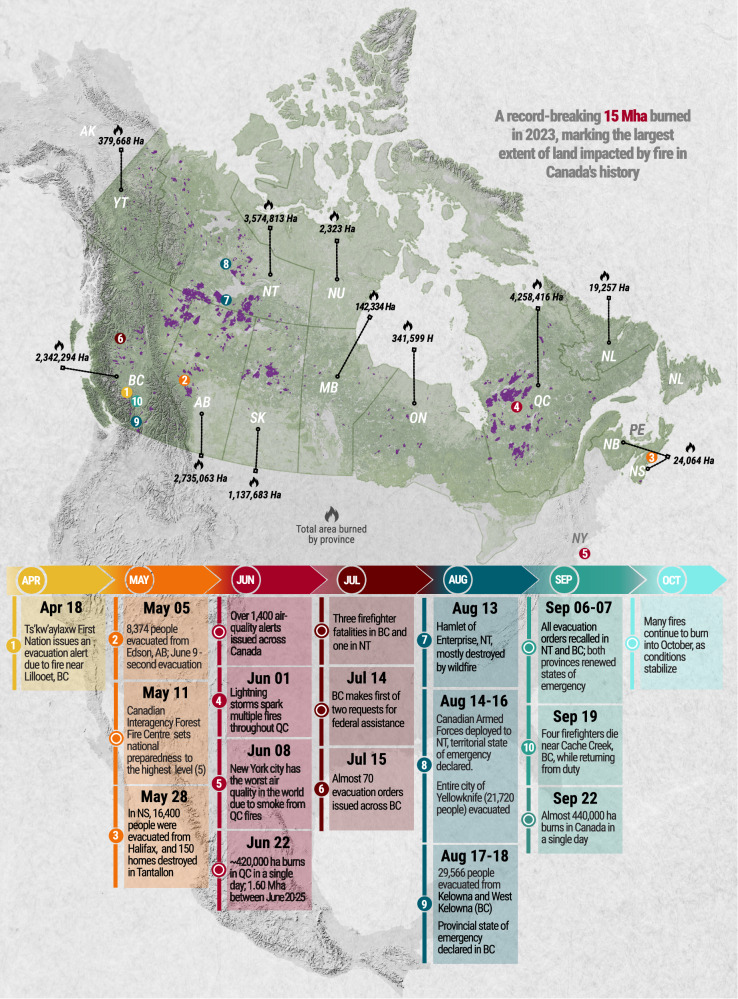
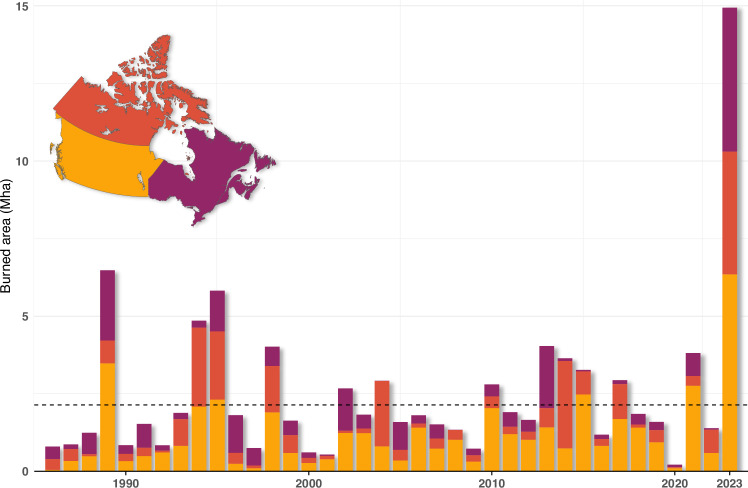
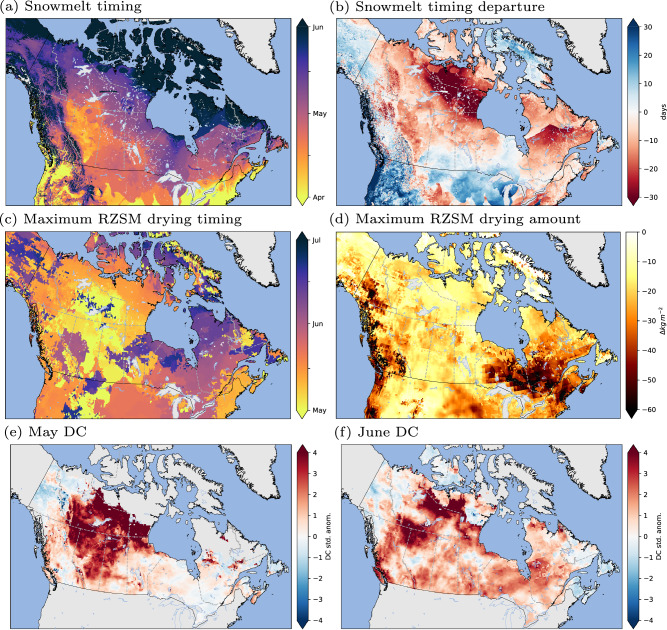
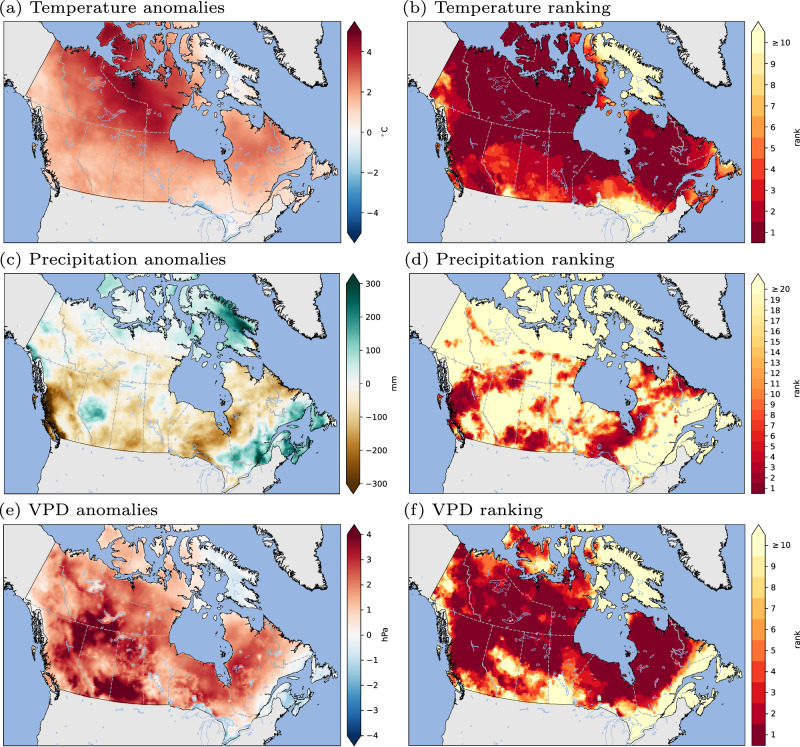
The 2023 wildfire season in Canada was unprecedented in its scale and intensity, spanning from mid-April to late October and across much of the forested regions of Canada. Here, we summarize the main causes and impacts of this exceptional season. The record-breaking total area burned (~15 Mha) can be attributed to several environmental factors that converged early in the season: early snowmelt, multiannual drought conditions in western Canada, and the rapid transition to drought in eastern Canada. Anthropogenic climate change enabled sustained extreme fire weather conditions, as the mean May–October temperature over Canada in 2023 was 2.2 °C warmer than the 1991–2020 average. The impacts were profound with more than 200 communities evacuated, millions exposed to hazardous air quality from smoke, and unmatched demands on fire-fighting resources. The 2023 wildfire season in Canada not only set new records, but highlights the increasing challenges posed by wildfires in Canada.
Overview
The claims and statistics of this paper haven’t been checked yet.
Free: it reads the open-access text and checks the first 5 claims that cite a source we can check. Create a free account to check every claim.
Integrity signals
Registry
Cites
Statistics
Figures
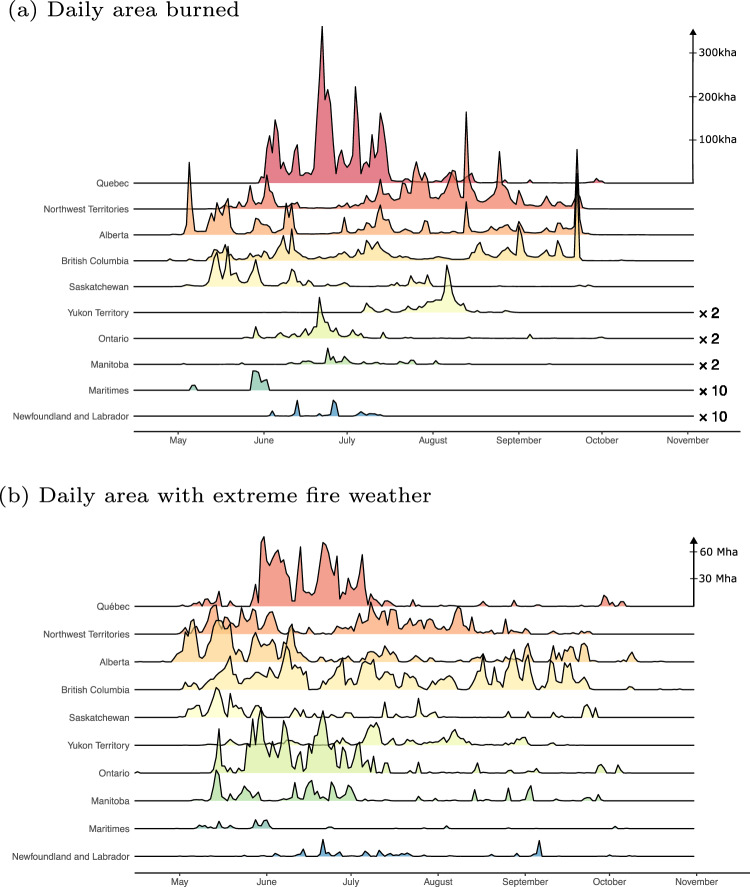
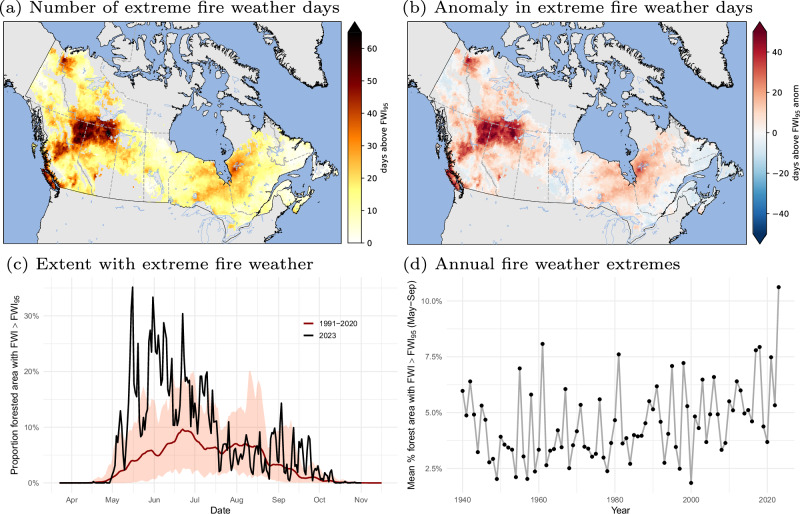
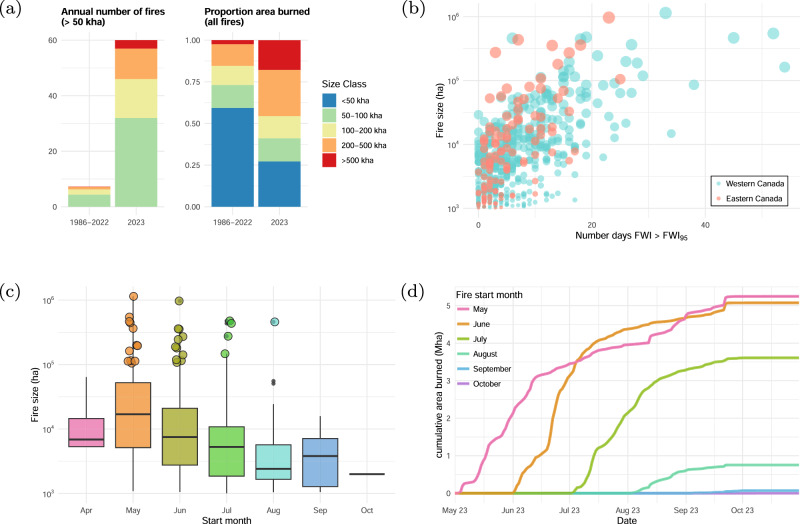
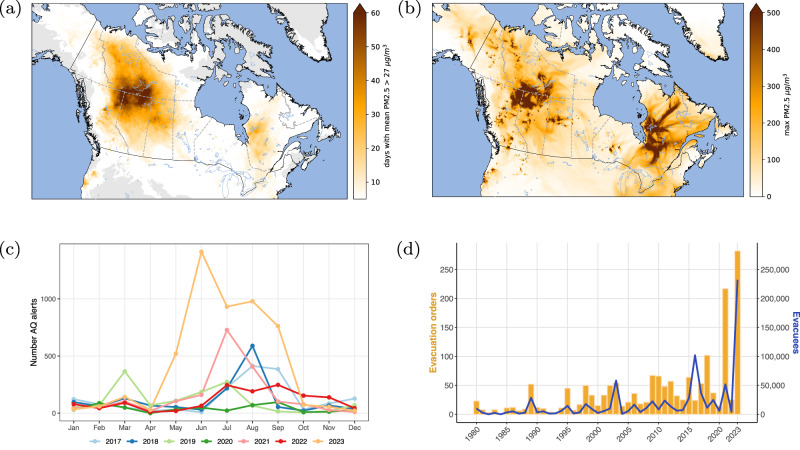
Verification
Claims the paper makes
The claims and statistics of this paper haven’t been checked yet.
Free: it reads the open-access text and checks the first 5 claims that cite a source we can check. Create a free account to check every claim.
Claims other papers make about this one
Each is checked against this paper’s own text: does it say what the citing paper says it does?
The source backs part of the claim, not all of it — or backs it for a different population, condition or comparison.
In the citing paper
“Changes in vegetation cover (i.e., deforestation and wildfires) can also shift the relative contribution of photodegradation by altering the amount of UV-radiation reaching plant litter [208–210].”
From Environmental consequences of interacting effects of changes in stratospheric ozone, ultraviolet radiation, and climate: UNEP Environmental Effects Assessment Panel, Update 2024 (2025) · cites this paper as [208]
Experimental — accuracy not yet measured
Self-check
Percentages, sums and reported differences re-computed from the paper’s own numbers.
The self-check needs the paper’s full text.
Citations
Cites
ERA5 hourly data on single levels from 1940 to present
C3S (2018) · European Centre for Medium-Range Weather Forecasts · doi:10.24381/cds.adbb2d47 · Cited by 2,550
Global and Regional Trends and Drivers of Fire Under Climate Change
Jones, M. W., Abatzoglou, J. T., Veraverbeke, S., Andela, N., Lasslop, G., Forkel, M., Smith, A. J. P., Burton, C., Betts, R. A., van der Werf, G. R., et al. (2022) · Reviews of Geophysics · doi:10.1029/2020rg000726 · Cited by 1,332
Boreal forest health and global change
Gauthier, S., Bernier, P., Kuuluvainen, T., Shvidenko, A. Z., & Schepaschenko, D. G. (2015) · Science · doi:10.1126/science.aaa9092 · Cited by 1,225 · cited 1×
“The cumulative impacts of the area burned in 2023 coupled with the extensive anthropogenic disturbance legacies on the landscape will challenge the resilience of forest eco-systems, especially if fi re activity continues to increase, as projected 65,66 .”
Improved Magnus Form Approximation of Saturation Vapor Pressure
Alduchov, O. A., & Eskridge, R. E. (1996) · Journal of Applied Meteorology · doi:10.1175/1520-0450(1996)035<0601:imfaos>2.0.co;2 · Cited by 979 · cited 5×
“We examined mean daily anomalies of temperature, precipitation and VPD averaged between May 1st and October 31st ( fi re season) of 2023 compared with the baseline period (1991 – 2020); we also plotted the rank of the fi re season mean of each variable for 2023 compared with the period 1940 – 2023.”
InfluentialOn the operational predictability of blocking
TIBALDI, S., & Molteni, F. (1990) · Tellus A Dynamic Meteorology and Oceanography · doi:10.1034/j.1600-0870.1990.t01-2-00003.x · Cited by 909 · cited 1×
“Blocking can be characterized by persistent positive anomalies in 500-hPa geopoten-tial heights 39 .”
Flannigan, M. D., Logan, K. A., Amiro, B. D., Skinner, W. R., & Stocks, B. J. (2005) · Climatic Change · doi:10.1007/s10584-005-5935-y · Cited by 874 · cited 2×
“Nationwide fi re activity, affecting nearly all forested areas in a single season as experienced in 2023 was not anticipated until later in the century based on climate change projections 5 .”
Self-citationCanada's changing climate report
Bush, E., & Lemmen, D. S. (2019) · doi:10.4095/314614 · Cited by 732
Global Emergence of Anthropogenic Climate Change in Fire Weather Indices
Abatzoglou, J. T., Williams, A. P., & Barbero, R. (2019) · Geophysical Research Letters · doi:10.1029/2018gl080959 · Cited by 680 · cited 4×
“Themodeldomain covers North America with a 10-km grid resolution.”
InfluentialWildfire-Driven Forest Conversion in Western North American Landscapes
Coop, J. D., Parks, S. A., Stevens-Rumann, C. S., Crausbay, S. D., Higuera, P. E., Hurteau, M. D., Tepley, A., Whitman, E., Assal, T., Collins, B. M., et al. (2020) · BioScience · doi:10.1093/biosci/biaa061 · Cited by 642
Self-citationParks, S. A., & Abatzoglou, J. T. (2020) · Geophysical Research Letters · doi:10.1029/2020gl089858 · Cited by 573 · cited 1×
“VPD is a good predictor of fuel moisture globally 30 and area burned regionally 31 .”
Research works printed but not linked: 2
- Jain, P. & Flannigan, M. The relationship between the polar jet stream and extreme wildfire events in North America. J. Clim. 34, 6247–6265 (2021).
- Stocks, B. J. et al. Large forest fires in Canada, 1959–1997. J. Geophys. Res.: Atmospheres 107, FFR–5 (2002).
Cited by
Journal of Geophysical Research: Atmospheres
(2018) · Journal of Geophysical Research Atmospheres · doi:10.1002/(issn)2169-8996 · Cited by 914
Jones, M. W., Kelley, D. I., Burton, C. A., Di Giuseppe, F., Barbosa, M. L. F., Brambleby, E., Hartley, A. J., Lombardi, A., Mataveli, G., McNorton, J. R., et al. (2024) · Earth System Science Data · doi:10.5194/essd-16-3601-2024 · Cited by 260
Self-citationCarbon emissions from the 2023 Canadian wildfires
Byrne, B., Liu, J., Bowman, K. W., Pascolini-Campbell, M., Chatterjee, A., Pandey, S., Miyazaki, K., van der Werf, G. R., Wunch, D., Wennberg, P. O., et al. (2024) · Nature · doi:10.1038/s41586-024-07878-z · Cited by 223
Friedlingstein, P., O'Sullivan, M., Jones, M. W., Andrew, R. M., Bakker, D. C. E., Hauck, J., Landschützer, P., Quéré, C. L., Li, H., Luijkx, I. T., et al. (2026) · Earth system science data · doi:10.5194/essd-18-3211-2026 · Cited by 324
Global emergence of unprecedented lifetime exposure to climate extremes
Grant, L., Vanderkelen, I., Gudmundsson, L., Fischer, E. M., Seneviratne, S. I., & Thiery, W. (2025) · Nature · doi:10.1038/s41586-025-08907-1 · Cited by 229
“2c–e and Supplementary Tables 1–3).”
InfluentialClimate change has increased the odds of extreme regional forest fire years globally
Abatzoglou, J. T., Kolden, C. A., Cullen, A. C., Sadegh, M., Williams, E. L., Turco, M., & Jones, M. W. (2025) · Nature Communications · doi:10.1038/s41467-025-61608-1 · Cited by 212
“Perhaps a mean over the larger region is less useful here.”
Kelley, D. I., Burton, C., Giuseppe, F. D., Jones, M. W., Barbosa, M. L. F., Brambleby, E., McNorton, J., Liu, Z., Bradley, A. S. I., Blackford, K. R., et al. (2025) · Earth system science data · doi:10.5194/essd-17-5377-2025 · Cited by 138
Deep learning for wildfire risk prediction: Integrating remote sensing and environmental data
Xu, Z., Li, J., Cheng, S. L., Xue, R., Zhao, Y., He, H., Guan, H., Sharma, A., Erxleben, M., Chang, R., et al. (2025) · ISPRS Journal of Photogrammetry and Remote Sensing · doi:10.1016/j.isprsjprs.2025.06.002 · Cited by 130
Parks, S. A., Guiterman, C. H., Margolis, E. Q., Lonergan, M., Whitman, E., Abatzoglou, J. T., Falk, D. A., Johnston, J. D., Daniels, L. D., Lafon, C. W., et al. (2025) · Nature Communications · doi:10.1038/s41467-025-56333-8 · Cited by 116
Self-citationKolden, C. A., Abatzoglou, J. T., Jones, M. W., & Jain, P. (2024) · Nature Reviews Earth & Environment · doi:10.1038/s43017-024-00544-y · Cited by 103
Self-citationA pronounced decline in northern vegetation resistance to flash droughts from 2001 to 2022
Zhang, M., Yuan, X., Zeng, Z., Pan, M., Wu, P., Xiao, J., & Keenan, T. F. (2025) · Nature Communications · doi:10.1038/s41467-025-58253-z · Cited by 99
“Therefore, skillful and reliable fl ash drought impact forecasts on subseasonal-to-seasonal timescales are increasingly critical for fl ash drought preparation and mitigation 25,55 .”
Canadian forests are more conducive to high-severity fires in recent decades
Wang, W., Wang, X., Flannigan, M., Guindon, L., Swystun, T., Castellanos‐Acuña, D., Wu, W., & Wang, G. (2025) · Science · doi:10.1126/science.ado1006 · Cited by 92
Self-citationHuman driven climate change increased the likelihood of the 2023 record area burned in Canada
Kirchmeier‐Young, M. C., Malinina, E., Barber, Q. E., Perdomo, K. G., Curasi, S. R., Liang, Y., Jain, P., Gillett, N. P., Parisien, M., Cannon, A. J., et al. (2024) · npj Climate and Atmospheric Science · doi:10.1038/s41612-024-00841-9 · Cited by 75
Self-citationA comprehensive review of recent progress on the drought-flood abrupt alternation
Zhang, G., Wang, H., Gan, T. Y., Zhang, S., Zhao, J., Su, X., Fu, X., Shi, L., Xu, P., Lu, M., et al. (2025) · Journal of Hydrology · doi:10.1016/j.jhydrol.2025.133806 · Cited by 62
Increasing global human exposure to wildland fires despite declining burned area
Seydi, S. T., Abatzoglou, J. T., Jones, M. W., Kolden, C. A., Filippelli, G. M., Hurteau, M. D., AghaKouchak, A., Luce, C. H., Miao, C., & Sadegh, M. (2025) · Science · doi:10.1126/science.adu6408 · Cited by 69
Canadian record-breaking wildfires in 2023 and their impact on US air quality
Chen, H., Zhang, W., & Sheng, L. (2024) · Atmospheric Environment · doi:10.1016/j.atmosenv.2024.120941 · Cited by 54
Law, B. E., Abatzoglou, J. T., Schwalm, C. R., Byrne, D., Fann, N. L., & Nassikas, N. J. (2025) · Communications Earth & Environment · doi:10.1038/s43247-025-02314-0 · Cited by 48
“More recently, the 2023 Canadian forest fi res covered seven times the average annual area burned compared to the previous four decades 16,17 , and climate change more than doubled the likelihood of extreme fi re weather conditions in Eastern and Southwestern Canada 18 .”
Neale, P. J., Hylander, S., Banaszak, A. T., Häder, D.-P., Rose, K. C., Vione, D., Wängberg, S.-Å., Jansen, M. A. K., Busquets, R., Andersen, M. P. S., et al. (2025) · Photochemical & Photobiological Sciences · doi:10.1007/s43630-025-00687-x · Cited by 32
“Changes in vegetation cover (i.e., deforestation and wildfires) can also shift the relative contribution of photodegradation by altering the amount of UV-radiation reaching plant litter [208–210].”
McFarland, J. R., Coop, J. D., Balik, J. A., Rodman, K. C., Parks, S. A., & Stevens‐Rumann, C. S. (2025) · Global Change Biology · doi:10.1111/gcb.70106 · Cited by 31
He, Y., Zhou, Z., Im, E., & Kwon, H. (2025) · Weather and Climate Extremes · doi:10.1016/j.wace.2025.100751 · Cited by 37
Yu, X., Li, H., Miao, X., Kang, N. B., Zong, R., Lu, S., Xu, M., & Wan, M. P. (2025) · Advanced Functional Materials · doi:10.1002/adfm.202528757 · Cited by 46
Wildfires will intensify in the wildland-urban interface under near-term warming
Cunningham, C. X., Abatzoglou, J. T., Ellis, T., Williamson, G. J., & Bowman, D. M. J. S. (2025) · Communications Earth & Environment · doi:10.1038/s43247-025-02475-y · Cited by 32
Global climate change below 2 °C avoids large end century increases in burned area in Canada
Curasi, S. R., Melton, J. R., Arora, V. K., Humphreys, E. R., & Whaley, C. H. (2024) · npj Climate and Atmospheric Science · doi:10.1038/s41612-024-00781-4 · Cited by 27
Kudláčková, L., Bartošová, L., Linda, R., Bláhová, M., Poděbradská, M., Fischer, M., Bálek, J., Žalud, Z., & Trnka, M. (2024) · Environmental Research Letters · doi:10.1088/1748-9326/ad97cf · Cited by 28
Lai, G., & Zhang, Y. (2025) · Geophysical Research Letters · doi:10.1029/2024gl114492 · Cited by 27
Increasing risk of global forest loss from extreme wildfires under climate change
Huang, K., Wu, X., Zhang, L., Geng, H., & Qu, Y. (2025) · International Journal of Digital Earth · doi:10.1080/17538947.2025.2483982 · Cited by 26
Atmospheric and oceanic drivers behind the 2023 Canadian wildfires
Luo, B., Xiao, C., Luo, D., Fu, Q., Chen, D., Zhang, Q., Ge, Y., & Diao, Y. (2025) · Communications Earth & Environment · doi:10.1038/s43247-025-02387-x · Cited by 36
“1a) and CO 2 emissions ( Fig.1b)in2023inCanadareachedtheirhighestlevelssince2003, consistent with previous fi ndings 34 – 37 .”
InfluentialKumar, A., Ray, T., Thangavel, M., Jatav, S. S., Chatterjee, U., Shekhar, S., Alam, E., & Islam, M. K. (2025) · Environmental Sciences Europe · doi:10.1186/s12302-025-01195-6 · Cited by 23
Gallo, C., Dieppois, B., Quilcaille, Y., Chiriacò, M. V., Fulé, P. Z., Drobyshev, I., San-Miguel-Ayanz, J., Blackett, M., & Eden, J. (2025) · Journal of Climate · doi:10.1175/jcli-d-24-0540.1 · Cited by 24
Skakun, R. S., Castilla, G., & Jain, P. (2024) · International Journal of Wildland Fire · doi:10.1071/wf24138 · Cited by 19
Self-citationSeif, M., Tosarkani, B. M., & Zolfagharinia, H. (2025) · Transportation Research Part E Logistics and Transportation Review · doi:10.1016/j.tre.2025.104516 · Cited by 22
Compounding preconditions of wildfires vary in time and space within Europe
Miller, J., Touma, D., & Brunner, M. I. (2025) · Communications Earth & Environment · doi:10.1038/s43247-025-02955-1 · Cited by 22
Bergkvist, J., Lagergren, F., Islam, M. R., Wårlind, D., Miller, P., Linderson, M., Lindeskog, M., & Jönsson, A. M. (2024) · Earth s Future · doi:10.1029/2024ef004662 · Cited by 22
Assessing costs and constraints of forest residue disposal by pile burning
Barker, J., Voorhis, J., & Crotty, S. M. (2025) · Frontiers in Forests and Global Change · doi:10.3389/ffgc.2024.1496190 · Cited by 19
Disentangling the roles of natural variability and climate change in Canada’s 2023 fire season
Barnes, C. R., Jain, P., Keeping, T., Gillett, N. P., Boucher, J., Gachon, P., Heinrich, D., Kirchmeier‐Young, M. C., & Boulanger, Y. (2025) · Environmental Research Climate · doi:10.1088/2752-5295/adec0f · Cited by 21
“…much of the country very early in the season, caused by record warm temperatures as well as persistent and spatially extensive drought conditions [7]: on May 11th, record fire activity prompted the Canadian Interagency Forest Fire Centre to declare the national preparedness level 5—the earliest…”
InfluentialSelf-citationThe response and management of species sensitive to altered fire regimes
Lindenmayer, D. B., Zylstra, P., DellaSala, D. A., Taylor, C., & Legge, S. (2025) · Nature Reviews Biodiversity · doi:10.1038/s44358-025-00086-1 · Cited by 17
“For example, Canada experienced record-breaking fires in 2023 with more than 15 million hectares burnt in that fire season alone 44 .”
Canadian net forest CO2 uptake enhanced by heat drought via reduced respiration
Dong, G., Jiang, F., Zhang, Y., Ju, W., Piao, S. L., Ciais, P., Peters, W., Luijkx, I. T., Liu, J., Chevallier, F., et al. (2026) · Nature Geoscience · doi:10.1038/s41561-025-01875-1 · Cited by 16
“17– 21).”
Self-citationPeterson, D. A., Berman, M. T., Fromm, M. D., Servranckx, R., Julstrom, W. J., Hyer, E. J., Campbell, J. R., McHardy, T. M., & Lambert, A. (2025) · npj Climate and Atmospheric Science · doi:10.1038/s41612-025-01188-5 · Cited by 16
Masoom, A., Kazadzis, S., Modini, R. L., Beer, M. G., Gröbner, J., Coen, M. C., Navas-Guzmán, F., Kouremeti, N., Brem, B. T., Nowak, N., et al. (2026) · Atmospheric chemistry and physics · doi:10.5194/acp-26-10801-2026 · Cited by 15
Increasing boreal fires reduce future global warming and sea ice loss
Blanchard‐Wrigglesworth, E., DeRepentigny, P., & Frierson, D. M. W. (2025) · Proceedings of the National Academy of Sciences · doi:10.1073/pnas.2424614122 · Cited by 19
Human activity augments lightning ignitions to reshape fire seasonality across all biomes on Earth
Ellis, T., Bowman, D. M. J. S., & Williamson, G. J. (2025) · Nature Ecology & Evolution · doi:10.1038/s41559-025-02862-w · Cited by 17
“This is particularly true for those ecoregions where lightning is the dominant driver of burned area during the mixed ignition period 73,80 .”
Global and regional climate in 2023
Sandford, C., Dunn, R., Titchner, H., Kendon, M., Rayner, N. A., Morice, C., Palmer, M. D., McCarthy, M., & Kaye, N. (2024) · Weather · doi:10.1002/wea.7636 · Cited by 15
Wildfires mediate carbon transfer from land to lakes across boreal and temperate regions
Bélair, M., McCullough, I. M., Filstrup, C. T., Brentrup, J. A., & Lapierre, J. (2025) · Communications Earth & Environment · doi:10.1038/s43247-025-02070-1 · Cited by 14
Hua, J., Liu, S., Qi, C., Wu, S., Lee, L., Hu, X., Zhao, X., Strong, K., Flood, V. A., Franco, B., et al. (2025) · Remote Sensing of Environment · doi:10.1016/j.rse.2025.114829 · Cited by 14
Cloud-to-Ground Lightning Trends in Canada and Regions of the United States North of 40°N 1999–2023
Burrows, W. R., Kochtubajda, B., & Fricska, G. (2025) · ATMOSPHERE-OCEAN · doi:10.1080/07055900.2025.2500648 · Cited by 16
“…increase in both CG and CG+ lightning was over northern AB, where some of the most extreme wild fi re events ever reported in Canada occurred in 2023 (Jain et al., 2024; Kolden et al., 2024) lightning stretches east from about 95°W across the southern Great Lakes region to the east coast (Fig.”
Zeng, Z. (2024) · Journal of Quantitative Spectroscopy and Radiative Transfer · doi:10.1016/j.jqsrt.2024.109336 · Cited by 13
Collins, L., Morrison, K., Buonanduci, M. S., Guindon, L., Harvey, B. J., Parisien, M., Taylor, S. W., & Whitman, E. (2025) · Ecosphere · doi:10.1002/ecs2.70364 · Cited by 18
“Extremely large wildfires in Canada typically burn for long periods (e.g., weeks to months), under a diverse range of weather conditions (Jain et al., 2024), giving rise to heterogeneous burn patterns (Whitman et al., 2018).”
InfluentialSelf-citationEnhanced radiative cooling by large aerosol particles from wildfire-driven thunderstorms
Li, Y., Dykema, J. A., Peterson, D. A., Xu, F., Shen, X., June, N. A., Fromm, M. D., McHardy, T. M., Jacquot, J., Pittman, J. V., et al. (2025) · Science Advances · doi:10.1126/sciadv.adw6526 · Cited by 13
“Despite these uncertainties, our study represents a realistic scenario given the persistent injections of smoke aerosols into the UT/LS through pyroCb events during active wildfire seasons, such as the 2023 Canadian wildfire season from March to November ( 53 ).”
Coker, E. S., Ho, W., Paul, N., Lee, M. J., Dickson, J. M., Greif, O., Nilson, B., Cleland, S. E., & Henderson, S. B. (2024) · ACS ES&T Air · doi:10.1021/acsestair.4c00204 · Cited by 12
Asynchronous modes of paleofire occurrence in eastern monsoonal China since the LGM
Song, M., Dodson, J., Mooney, S., Shi, G., & Yan, H. (2025) · Global and Planetary Change · doi:10.1016/j.gloplacha.2025.104912 · Cited by 12
Future climate-driven fires may boost ocean productivity in the iron-limited North Atlantic
Bergas‐Massó, E., Hamilton, D. S., Myriokefalitakis, S., Rathod, S., Ageitos, M. G., & García‐Pando, C. P. (2025) · Nature Climate Change · doi:10.1038/s41558-025-02356-4 · Cited by 13
“The extraordinary fire season in Canada in 2023 exemplifies the large and severe fires that lightning can trigger in these regions 6,51 .”
Firestorm in California: The new reality for wildland-urban interface regions
Amiri, A., Gumière, S. J., & Bonakdari, H. (2025) · Urban Climate · doi:10.1016/j.uclim.2025.102528 · Cited by 14
Large-scale impacts of the 2023 Canadian wildfires on the Northern Hemisphere atmosphere
Roșu, I.-A., Mourgela, R.-N., Kasoar, M. R., Boleti, E., Parrington, M., & Voulgarakis, A. (2025) · npj Clean Air · doi:10.1038/s44407-025-00022-9 · Cited by 14
Park, J.-C., Suh, J., & Baek, M. (2025) · Forests · doi:10.3390/f16091476 · Cited by 14
“These coefficients quantitatively affirm that a warming, drying climate contributes to more extreme fire activity, mirroring broader trends reported in the literature [21,22].”
InfluentialStratospheric impact of the anomalous 2023 Canadian wildfires: the two vertical pathways of smoke
Khaykin, S., Bekki, S., Godin-Beekmann, S. M., Fromm, M. D., Goloub, P., Hu, Q., Josse, B., Laeng, A., Meziane, M., Peterson, D. A., et al. (2025) · Atmospheric chemistry and physics · doi:10.5194/acp-25-14551-2025 · Cited by 12
“2 × 10 6 ha, rendering it the most destructive ever recorded (Byrne et al., 2024; Jain et al., 2024 .”
InfluentialQuantifying CO emissions from boreal wildfires by assimilating TROPOMI and TCCON observations
Voshtani, S., Jones, D. B. A., Wunch, D., Pendergrass, D. C., Wennberg, P. O., Pollard, D. F., Morino, I., Ohyama, H., Deutscher, N. M., Hase, F., et al. (2025) · Atmospheric chemistry and physics · doi:10.5194/acp-25-15527-2025 · Cited by 14
Self-citationMcKinley, S. C., Geoerg, P., Haghani, M., & Feliciani, C. (2025) · International Journal of Disaster Risk Reduction · doi:10.1016/j.ijdrr.2025.105628 · Cited by 14
Atmospheric Evolution of Brown Carbon from Wildfires in North America
Chen, J.-H., Puttu, U., Huynh, H. N., Ahern, A. T., Ball, K., Bates, K. H., Brock, C. A., Campos, T. L., Coggon, M. M., Crounse, J. D., et al. (2025) · Environmental Science & Technology · doi:10.1021/acs.est.5c09020 · Cited by 11
Self-citationTepley, A. J., Wang, X., Flannigan, M., & Parisien, M. (2025) · Ecosystems · doi:10.1007/s10021-025-00992-7 · Cited by 11
Self-citationKarle, N. N., Sakai, R. K., Rossi, R. D., Flores, A., & Chiao, S. (2025) · Atmospheric measurement techniques · doi:10.5194/amt-18-6727-2025 · Cited by 11
“Their presence substantially degrades air quality, especially in downwind areas, even those located considerable distances from the fire Deleted: y analysis”
Argüez, A., Bissolli, P., Ganter, C., Martinez, R., Mekonnen, A., Stevens, L. E., Zhu, Z., Agyakwah, W., Ahmadpour, S., Aldeco, L. S., et al. (2024) · Bulletin of the American Meteorological Society · doi:10.1175/2024bamsstateoftheclimate_chapter7.1 · Cited by 11
Self-citationKim, S. Y., Jun, C., & Na, W. (2025) · Ecological Informatics · doi:10.1016/j.ecoinf.2025.103021 · Cited by 12
An in-situ test method for portable air cleaners
Nahian, M. R., & Siegel, J. A. (2025) · Building and Environment · doi:10.1016/j.buildenv.2025.112659 · Cited by 10
Mansuy, N., Buss, J., Hirsch, K. G., Guindon, L., Robinne, F., Boulanger, Y., Lussier, M., Regos, A., Ayala, C. C., & Parisien, M. (2025) · Communications Earth & Environment · doi:10.1038/s43247-025-02313-1 · Cited by 11
“The year 2023 was Canada ’ s worst wild fi re season on record 8,9 accounting for 30% of total carbon emissions from wild fi res worldwide 6 .”
InfluentialSelf-citationDing, M., Wang, X., Bian, L., Jiang, Z., Lin, X., Ren, S., Su, J., Tian, B., Wang, S., Yu, Y., et al. (2025) · Advances in Climate Change Research · doi:10.1016/j.accre.2025.06.001 · Cited by 11
Self-citationDanneyrolles, V., Chavardès, R. D., Girardin, M. P., Ali, A. A., Arseneault, D., Asselin, H., Bélisle, A. C., Boucher, Y., Cyr, D., Drobyshev, I., et al. (2025) · Canadian Journal of Forest Research · doi:10.1139/cjfr-2024-0216 · Cited by 11
Self-citationOlsen, S., Cunsolo, A., Lammiman, J., & Harper, S. L. (2025) · Ecology and Society · doi:10.5751/es-16582-300409 · Cited by 11
Health Impact Analysis of Wildfire Smoke‐PM 2.5 in Canada (2019–2023)
Matz, C. J., Egyed, M., Wang, X., Duhamel, A., Xi, G., Rittmaster, R., Pentcheva, N., & Stieb, D. M. (2026) · GeoHealth · doi:10.1029/2025gh001565 · Cited by 11
Self-citationNOAA Arctic Report Card 2022: Surface Air Temperatures
Ballinger, T. J. (2022) · NOAA Institutional Repository · doi:10.25923/13qm-2576 · Cited by 10
Wildfires are spreading fast in Canada — we must strengthen forests for the future
Mulverhill, C., Coops, N. C., Boulanger, Y., Hoffman, K. M., Christianson, A. C., Daniels, L. D., Flamand-Hubert, M., Wotherspoon, A. R., & Achim, A. (2024) · Nature · doi:10.1038/d41586-024-02919-z · Cited by 9
Self-citationThe Impact of the 2023 Canadian Forest Fires on Air Quality in Southern Ontario
Flood, V. A., Strong, K., Whaley, C. H., Chen, J., Wunch, D., Drummond, J. R., Colebatch, O., Gillespie, L., & Pak, N. M. (2025) · Journal of Geophysical Research Atmospheres · doi:10.1029/2024jd042254 · Cited by 9
“The 2023 fire season was unique for Canada: it started in late April, which is earlier than normal, and persisted into October (Jain et al., 2024).”
InfluentialSelf-citationOMI-Derived Mass- and Number-Conserved Estimation of Black Carbon Emissions
Liu, J., Cohen, J. B., Feng, Y., Wang, S., & Qin, K. (2025) · Environmental Science & Technology Letters · doi:10.1021/acs.estlett.5c00340 · Cited by 9
Relevance of earth observations of essential climate variables in wildfire adaptation
Seitzinger, S. P., Chuvieco, E., Giuseppe, F. D., Bombelli, A., Cagnazzo, C., Harris, S. L., & TAPPER, N. J. (2025) · Remote Sensing of Environment · doi:10.1016/j.rse.2025.115082 · Cited by 10
Impacts of novel wildfire disturbance on landcover and wildlife in boreal North America
Baltzer, J. L., Haché, S., Hodson, J., Ahmed, M. R., Carrière, S., Coyle, M., McIntire, E. J. B., Mclaren, A. A. D., Riordan‐Short, E., Turetsky, M. R., et al. (2025) · Frontiers in Environmental Science · doi:10.3389/fenvs.2025.1504568 · Cited by 9
We Are in the Anthropocene—Now What?
Rockström, J., Martin, M. A., Ganopolski, A., Donges, J. F., Feulner, G., Marwan, N., & Rahmstorf, S. (2026) · Earth s Future · doi:10.1029/2025ef007730 · Cited by 13
Theys, N., Yu, H., Franco, B., Clarisse, L., Volkamer, R., Cha, H., Kim, J., Smedt, I. D., Stavrakou, T., van Gent, J., et al. (2025) · Journal of Geophysical Research Atmospheres · doi:10.1029/2024jd043163 · Cited by 8
Hour by Hour PM2.5 Mapping Using Geostationary Satellites
Park, S., Sayeed, A., Seo, J., Henderson, B. H., Naeger, A. R., & Gupta, P. (2025) · ACS ES&T Air · doi:10.1021/acsestair.4c00365 · Cited by 8
Thoman, R. L., Moon, T., Druckenmiller, M. L., Askjaer, T. G., Ballinger, T. J., Bhatt, U. S., Berner, L. T., Bernhard, G., Bigalke, S., Bjerke, J. W., et al. (2025) · Bulletin of the American Meteorological Society · doi:10.1175/bams-d-25-0104.1 · Cited by 8
Evgenieva, T. T., Dosev, S., Gurdev, L. L., Vulkova, L. A., Peshev, Z. Y., Toncheva, E. N., Popov, L., Vankov, O. I., & Dreischuh, T. N. (2025) · Remote Sensing · doi:10.3390/rs17162899 · Cited by 8
Cao, Z., & Furuya, M. (2025) · AGU Advances · doi:10.1029/2025av001849 · Cited by 9
Young, K., & Roher, S. I. G. (2025) · International Journal of Circumpolar Health · doi:10.1080/22423982.2025.2557701 · Cited by 9
Climate impacts from North American boreal forest fires
van Gerrevink, M. J., Veraverbeke, S., Cooperdock, S. C., Potter, S., Zhong, Q., Moubarak, M. F., Virkkala, A., Goetz, S. J., Mack, M. C., Randerson, J. T., et al. (2026) · Nature Geoscience · doi:10.1038/s41561-026-01940-3 · Cited by 12
“Our findings provide valuable insights into understanding the impacts of fires on climate in a region that has recently experienced record-breaking fire seasons 7,42 .”
Climate Change and Chronic Obstructive Pulmonary Disease: A GOLD Science Committee Review
Halpin, D. M. G., Balmes, J. R., Han, M. K., Papi, A. A., Martínez, F. J., de, M. M., Ozoh, O. B., Salvi, S. S., Sin, D. D., Zheng, J., et al. (2025) · American Journal of Respiratory and Critical Care Medicine · doi:10.1164/rccm.202410-2058pp · Cited by 8
Disentangling the drivers of wildfires
Gan, J. (2025) · Science · doi:10.1126/science.adu5463 · Cited by 9
Yemshanov, D., Liu, N., Neilson, E. W., Koch, F. H., & Parisien, M. (2025) · PLoS ONE · doi:10.1371/journal.pone.0321722 · Cited by 8
“The possible damages and subsequent prevention costs are expected to worsen given that wildfire frequency in North American forests is increasing due to climate change [4,9–13], as exemplified by the record-breaking 2023 fire season [14].”
Self-citationExamining post-fire environmental change and succession in Canada
Brown, K. J., Metsaranta, J. M., Paré, D., Perrakis, D. D. B., van der Kamp, D., Webster, K. L., Whitman, E., Arsenault, A., Dranga, S. A., Harvey, J. E., et al. (2026) · Environmental Reviews · doi:10.1139/er-2025-0224 · Cited by 8
Self-citationFortin, S., Boucher, Y., Bergeron, Y., Simard, M., Arseneault, D., Asselin, H., Barrette, M., Danneyrolles, V., Gauthier, S., Girard, F., et al. (2026) · Journal of Ecology · doi:10.1111/1365-2745.70260 · Cited by 7
“In North America's boreal forests, climate change is driving marked increase in burned areas (Jain et al., 2024 ) and is also increasingly favouring high-severity fires (i.e. fires that have greater impacts on vegetation and soil through combustion and heating; Keeley, 2009; Wang et al., 2025 ).”
Self-citationWildfires: Burning our way to a ‘hot house Earth’?
Bowman, D. M. J. S., & Cunningham, C. X. (2025) · Current Biology · doi:10.1016/j.cub.2024.11.060 · Cited by 7
Forest fires under the lens: needleleaf index - a novel tool for satellite image analysis
Amiri, A., Soltani, K., Gumière, S. J., & Bonakdari, H. (2025) · npj natural hazards. · doi:10.1038/s44304-025-00063-w · Cited by 7
Carbon Emissions From Fires in Eastern Siberian Larch Forests
Delcourt, C. J. F., Rogers, B. M., Akhmetzyanov, L., Izbicki, B., Scholten, R. C., Shestakova, T. A., van Wees, D., Mack, M. C., Sass‐Klaassen, U., & Veraverbeke, S. (2025) · Global Change Biology · doi:10.1111/gcb.70247 · Cited by 7
Tiwari, I., McKinnon, R. A., Jafry, A., Grewal, E., Gilliland, J., Ferguson, K. N., Card, K. G., Gislason, M., Cosma, A. P., & Martin, G. (2025) · PLOS mental health. · doi:10.1371/journal.pmen.0000424 · Cited by 8
Gazing into the flames: A guide to assessing the impacts of climate change on landscape fire
Clarke, H. G., Giuseppe, F. D., Johnston, L. M., Marlon, J. R., Penman, T. D., Pitman, A. J., van der Werf, G. R., & Flannigan, M. (2025) · Science Advances · doi:10.1126/sciadv.adz2429 · Cited by 10
Self-citationMulti-ignition fire complexes drive extreme fire years and impacts
Scholten, R. C., Banerjee, T., Chen, Y., Delgado, A., Desai, A., Ke, Z., Liu, T., Morton, D. C., Peterson, D. A., Tang, Q., et al. (2026) · Science Advances · doi:10.1126/sciadv.adx6477 · Cited by 8
Samoil, M., Owens, P. N., Ali, F., & Miller, B. (2026) · Journal of Soils and Sediments · doi:10.1007/s11368-026-04226-8 · Cited by 6
“For example, 2023 was the worst fire season in reported Canadian history, and the area burnt was more than seven times the historical national average (Jain et al. 2024a).”
Weighing Policy Effectiveness Through Recent Forest Fire Status
Wu, G., Yao, Q., Bai, M., Shi, L., Wang, Z., Fang, K., Guo, F., & Pei, Y. (2024) · Fire · doi:10.3390/fire7120432 · Cited by 6
Lux, M. M., Silins, U., Wagner, M. J., Turner, E. R., Fitzpatrick, J. J., Cherlet, E., Hawthorn, K., Harriott, C., Stone, M., Beamish, K. M., et al. (2025) · Environmental Science & Technology · doi:10.1021/acs.est.5c04555 · Cited by 6
Liang, Z., Gu, D., Li, R. S., Liu, J., Zhai, C., Su, H., & Lau, A. K. H. (2025) · Environmental Science & Technology Letters · doi:10.1021/acs.estlett.5c00501 · Cited by 6
Apantaku, G. O., Polgár, A., Giroux, F., Giang, A., Gladwin, D., & Ellis, N. (2025) · Cities & Health · doi:10.1080/23748834.2025.2558285 · Cited by 6
“The unprecedented nature of Canada’s 2023 wildfire season illustrates this reality, with more than 6,000 fires consuming over 15 million hectares of land by the end of the year, the most severe on record (Jain et al .”
Rutherford, K. H., Eskelson, B. N. I., Daniels, L. D., LeMay, V., Greene, G. A., & Gray, R. W. (2025) · International Journal of Wildland Fire · doi:10.1071/wf24096 · Cited by 6
Turunen, J., Rehell, S., Sarkkola, S., & Vasander, H. (2025) · Geoderma · doi:10.1016/j.geoderma.2025.117358 · Cited by 5
Metadata
- Authors
- Jain, P., Barber, Q. E., Taylor, S. W., Whitman, E., Castellanos Acuna, D., Boulanger, Y., Chavardès, R. D., Chen, J., Englefield, P., Flannigan, M., Girardin, M. P., Hanes, C. C., Little, J., Morrison, K., Skakun, R. S., Thompson, D. K., Wang, X., & Parisien, M.-A.
- Affiliations
- Canadian Forest Service (CA)
- Environment and Climate Change Canada (CA)
- Thompson Rivers University (CA)
- Corresponding author
- Jain, Piyush
- ORCID
- Venue
- Nature Communications
- Published
- 2024-08-20
- Volume
- 15
- Issue
- 1
- Pages
- 6764-6764
- ISSN
- 2041-1723 (ISSN-L)
- PMC
- PMC11335882
- OpenAlex
- W4401728510
- Cited by
- 319
- References
- 83
- Citations by year
- 2026: 157 · 2025: 145 · 2024: 17
- FWCI
- 56.32
- Type
- journal article
- Language
- en
- Open access
- gold
- doi.org
- Licence
- cc-by
- creativecommons.org/licenses/by/4.0 (tdm)
- creativecommons.org/licenses/by/4.0 (vor)
- Locations
- Nature Communications (publishedVersion, cc-by)
- PubMed Central (publishedVersion, cc-by)
- PubMed (publishedVersion)
- RePEc: Research Papers in Economics (submittedVersion)
- DOAJ (DOAJ: Directory of Open Access Journals) (submittedVersion, cc-by-sa)
- Funders
- Environment and Climate Change Canada
- U.S. Forest Service
- Canadian Forest Service
- Topics
- Physical Sciences › Environmental Science › Global and Planetary Change › Fire effects on ecosystems
- Social Sciences › Sociology and Political Science › Disaster Management and Resilience
- Life Sciences › Agricultural and Biological Sciences › Forestry › Forest Management and Policy
- Keywords
- wildfire drivers, wildfire effects, climate change, drought, early snowmelt, extreme fire weather, smoke exposure, burned area, forest fires
About these checks
Registry, retraction, Cites and statistics results are computed, not judged, with one exception: a printed reference that no index lists is read once by a model before it counts as a citation error. Claims are extracted by a model and kept only when their quote appears verbatim in the text; each cited source is then checked, with a model’s help, for whether it says what the claim relies on. Those verdicts can be wrong — read the claim’s quote and the cited source before relying on one.
Statistics and arithmetic are recomputed, not judged.
Confidence bands are shown only for fields calibrated on our annotated test set. None is calibrated yet, so no band is shown.
What counts as a claim ›How we measure confidence ›How we check this ›
Are you an author, or do you see a problem with this page? Request a review
Data sources
Bibliographic data: Semantic Scholar, OpenAlex, Crossref.
Contains information from the Semantic Scholar Academic Graph Datasets, made available under the ODC Attribution License (ODC-BY 1.0).
Semantic Scholar’s data is described in: Kinney, R., et al. (2023). The Semantic Scholar Open Data Platform. arXiv:2301.10140.
