

Drivers and Impacts of the Record-Breaking 2023 Wildfire Season in Canada
Open accessThe DOI matches its Crossref record; 84 of the 84 references it cites were found in a registry or an index.
Abstract
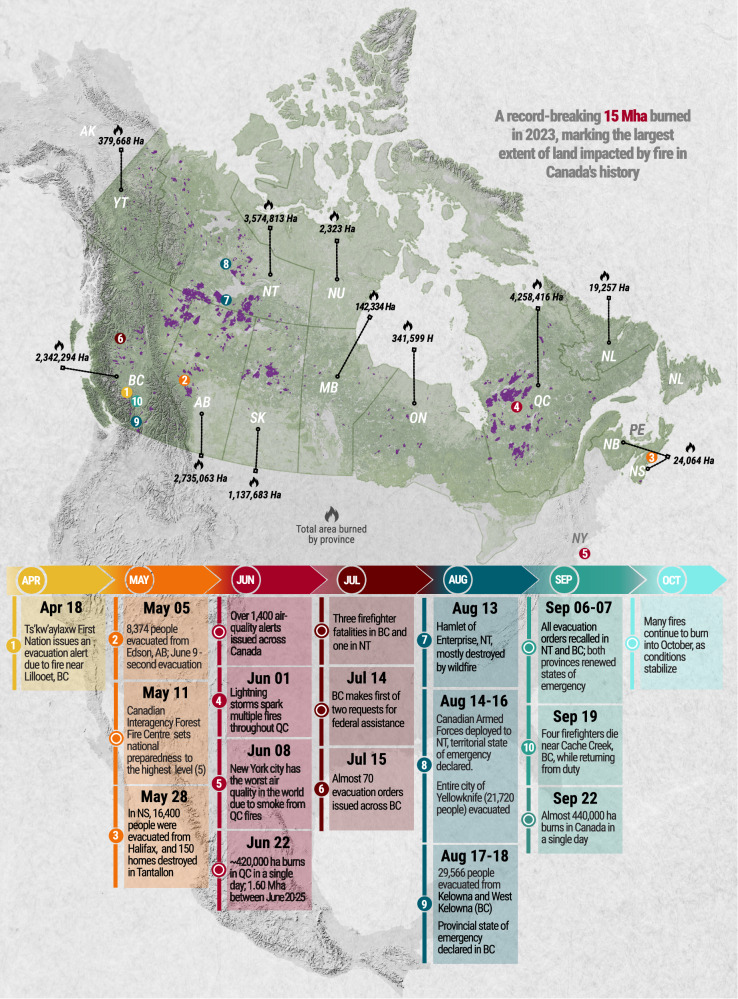
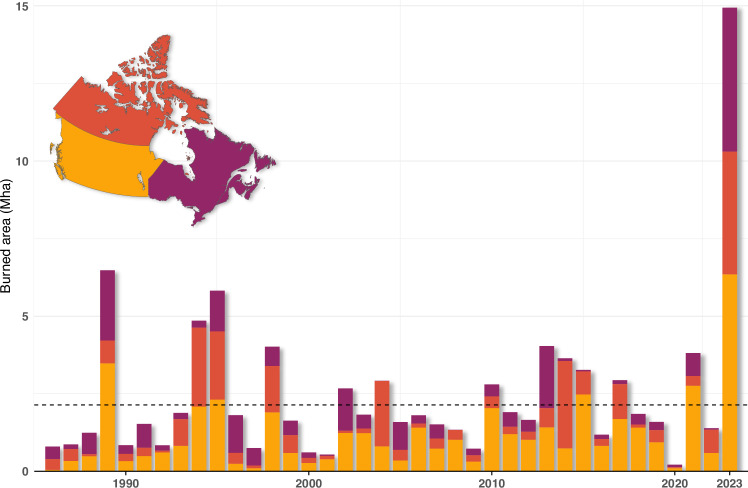
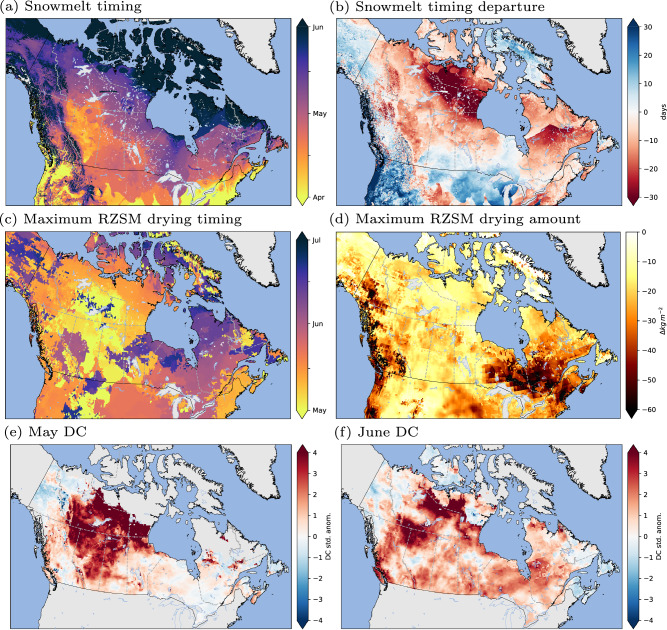
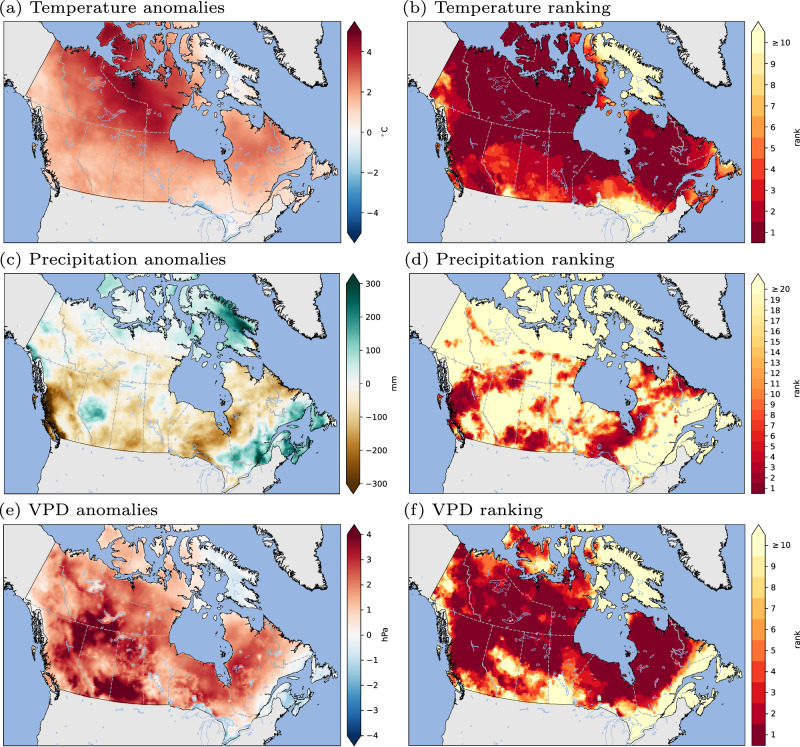
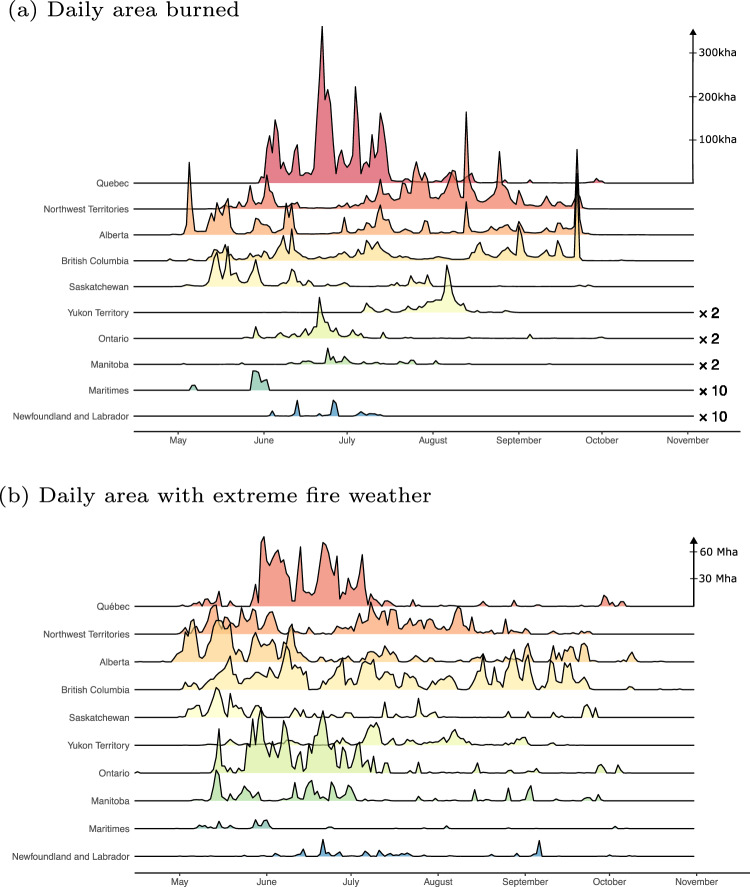
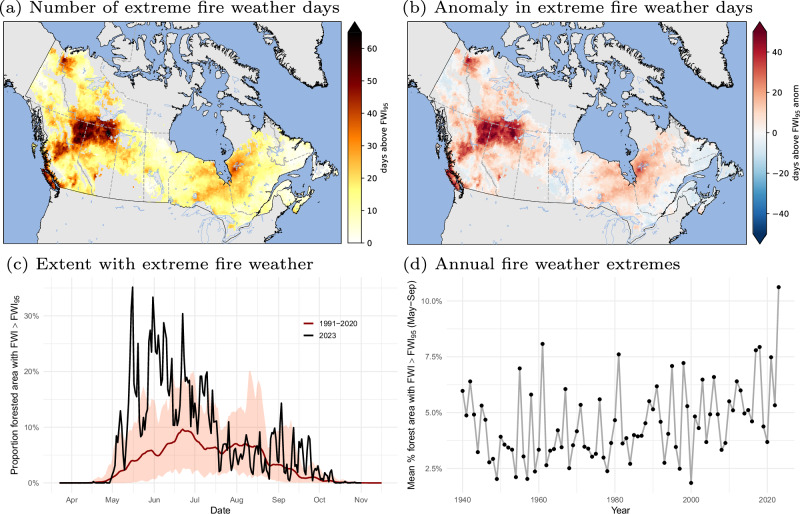
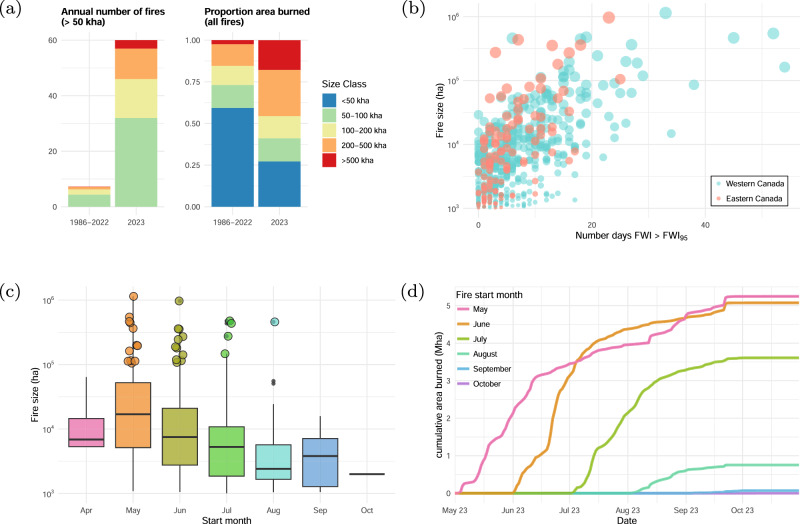
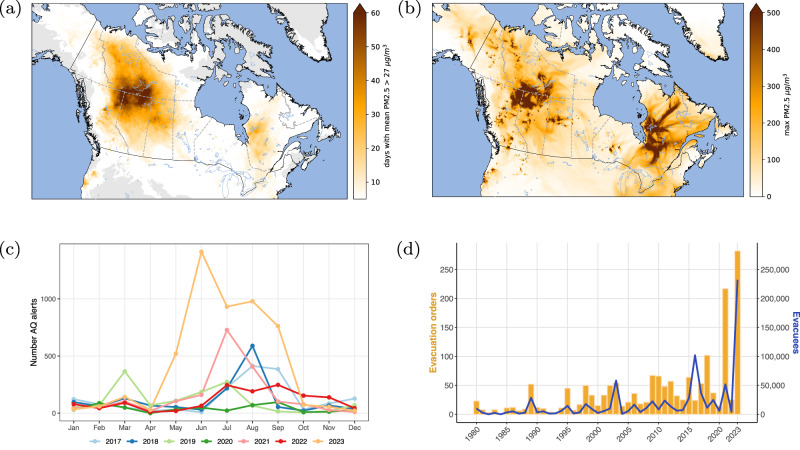
The 2023 wildfire season in Canada was unprecedented in its scale and intensity, spanning from mid-April to late October and across much of the forested regions of Canada. Here, we summarize the main causes and impacts of this exceptional season. The record-breaking total area burned (~15 Mha) can be attributed to several environmental factors that converged early in the season: early snowmelt, multiannual drought conditions in western Canada, and the rapid transition to drought in eastern Canada. Anthropogenic climate change enabled sustained extreme fire weather conditions, as the mean May–October temperature over Canada in 2023 was 2.2 °C warmer than the 1991–2020 average. The impacts were profound with more than 200 communities evacuated, millions exposed to hazardous air quality from smoke, and unmatched demands on fire-fighting resources. The 2023 wildfire season in Canada not only set new records, but highlights the increasing challenges posed by wildfires in Canada.
Overview
The claims and statistics of this paper haven’t been checked yet.
Free: it reads the open-access text and checks the first 5 claims that cite a source we can check. Create a free account to check every claim.
Integrity signals
Registry
Cites
Statistics
Figures
Verification
Claims the paper makes
The claims and statistics of this paper haven’t been checked yet.
Free: it reads the open-access text and checks the first 5 claims that cite a source we can check. Create a free account to check every claim.
Claims other papers make about this one
Each is checked against this paper’s own text: does it say what the citing paper says it does?
The source backs part of the claim, not all of it — or backs it for a different population, condition or comparison.
In the citing paper
“Changes in vegetation cover (i.e., deforestation and wildfires) can also shift the relative contribution of photodegradation by altering the amount of UV-radiation reaching plant litter [208–210].”
From Environmental consequences of interacting effects of changes in stratospheric ozone, ultraviolet radiation, and climate: UNEP Environmental Effects Assessment Panel, Update 2024 (2025) · cites this paper as [208]
Experimental — accuracy not yet measured
Self-check
Percentages, sums and reported differences re-computed from the paper’s own numbers.
The self-check needs the paper’s full text.
Citations
Cites
ERA5 hourly data on single levels from 1940 to present
C3S (2018) · European Centre for Medium-Range Weather Forecasts · doi:10.24381/cds.adbb2d47 · Cited by 2,550
Global and Regional Trends and Drivers of Fire Under Climate Change
Jones, M. W., Abatzoglou, J. T., Veraverbeke, S., Andela, N., Lasslop, G., Forkel, M., Smith, A. J. P., Burton, C., Betts, R. A., van der Werf, G. R., et al. (2022) · Reviews of Geophysics · doi:10.1029/2020rg000726 · Cited by 1,332
Boreal forest health and global change
Gauthier, S., Bernier, P., Kuuluvainen, T., Shvidenko, A. Z., & Schepaschenko, D. G. (2015) · Science · doi:10.1126/science.aaa9092 · Cited by 1,225 · cited 1×
“The cumulative impacts of the area burned in 2023 coupled with the extensive anthropogenic disturbance legacies on the landscape will challenge the resilience of forest eco-systems, especially if fi re activity continues to increase, as projected 65,66 .”
Improved Magnus Form Approximation of Saturation Vapor Pressure
Alduchov, O. A., & Eskridge, R. E. (1996) · Journal of Applied Meteorology · doi:10.1175/1520-0450(1996)035<0601:imfaos>2.0.co;2 · Cited by 979 · cited 5×
“We examined mean daily anomalies of temperature, precipitation and VPD averaged between May 1st and October 31st ( fi re season) of 2023 compared with the baseline period (1991 – 2020); we also plotted the rank of the fi re season mean of each variable for 2023 compared with the period 1940 – 2023.”
InfluentialOn the operational predictability of blocking
TIBALDI, S., & Molteni, F. (1990) · Tellus A Dynamic Meteorology and Oceanography · doi:10.1034/j.1600-0870.1990.t01-2-00003.x · Cited by 909 · cited 1×
“Blocking can be characterized by persistent positive anomalies in 500-hPa geopoten-tial heights 39 .”
Flannigan, M. D., Logan, K. A., Amiro, B. D., Skinner, W. R., & Stocks, B. J. (2005) · Climatic Change · doi:10.1007/s10584-005-5935-y · Cited by 874 · cited 2×
“Nationwide fi re activity, affecting nearly all forested areas in a single season as experienced in 2023 was not anticipated until later in the century based on climate change projections 5 .”
Self-citationCanada's changing climate report
Bush, E., & Lemmen, D. S. (2019) · doi:10.4095/314614 · Cited by 732
Global Emergence of Anthropogenic Climate Change in Fire Weather Indices
Abatzoglou, J. T., Williams, A. P., & Barbero, R. (2019) · Geophysical Research Letters · doi:10.1029/2018gl080959 · Cited by 680 · cited 4×
“Themodeldomain covers North America with a 10-km grid resolution.”
InfluentialWildfire-Driven Forest Conversion in Western North American Landscapes
Coop, J. D., Parks, S. A., Stevens-Rumann, C. S., Crausbay, S. D., Higuera, P. E., Hurteau, M. D., Tepley, A., Whitman, E., Assal, T., Collins, B. M., et al. (2020) · BioScience · doi:10.1093/biosci/biaa061 · Cited by 642
Self-citationParks, S. A., & Abatzoglou, J. T. (2020) · Geophysical Research Letters · doi:10.1029/2020gl089858 · Cited by 573 · cited 1×
“VPD is a good predictor of fuel moisture globally 30 and area burned regionally 31 .”
Research works printed but not linked: 2
- Jain, P. & Flannigan, M. The relationship between the polar jet stream and extreme wildfire events in North America. J. Clim. 34, 6247–6265 (2021).
- Stocks, B. J. et al. Large forest fires in Canada, 1959–1997. J. Geophys. Res.: Atmospheres 107, FFR–5 (2002).
Cited by
Items 101–200 of 464
Jia, X., Wei, B., Zhang, Z., Chen, L., Liu, M., Zhao, Y., & Wang, J. (2025) · Journal of Arid Land · doi:10.1007/s40333-025-0027-5 · Cited by 6
“For example, there was a historic record for fire extent in Canada in 2023, with a burned area of 15×10 6 hm 2 (Jain et al., 2024).”
Emerging drivers of urban aerosol increase global change vulnerability in a US megacity
Franklin, E. B., Rossell, R. K., Vermeuel, M. P., Groodt, A. D., Richard, K., Yee, L. D., Marcantonio, J., Maddaleno, T. A., Osburn, C., O’Brien, R. E., et al. (2025) · npj Climate and Atmospheric Science · doi:10.1038/s41612-025-01202-w · Cited by 6
Curasi, S. R., Melton, J. R., Humphreys, E. R., Arora, V. K., Beaver, J., Cannon, A. J., Chen, J. M., Hermosilla, T., Lee, S., & Wulder, M. A. (2026) · Global Change Biology · doi:10.1111/gcb.70958 · Cited by 5
Self-citationHe, R., Shellington, E. M., Barn, P. K., Rideout, K., Bueso, A., Joshi, I., Maddocks, S. T., Camp, P. G., Crocker, M. E., Coker, E. S., et al. (2025) · BMJ Open Quality · doi:10.1136/bmjoq-2025-003407 · Cited by 5
Snow dynamics and forest structure interact to increase wildfire burn severity in the boreal forest
Goldman, J. A., Fortin, M., & James, P. M. A. (2025) · Forest Ecology and Management · doi:10.1016/j.foreco.2025.123180 · Cited by 5
Walters, M. K., & Ward, T. J. (2025) · International Journal of Environmental Health Research · doi:10.1080/09603123.2025.2579084 · Cited by 7
“…of areas burned, extended wildfire seasons, and fire frequency can be attributed to several environmental factors including early snowmelt, reduced snowpack, multiannual drought conditions, increased temperatures and fuels (McFarla Nd et al. 2025; Jain et al. 2024; Wasserman and Mueller 2023).”
Auclair, M., Wright, S., Olefeldt, D., Sonnentag, O., & Quinton, W. L. (2025) · Permafrost and Periglacial Processes · doi:10.1002/ppp.70016 · Cited by 6
Aridification enhancing vegetation sensitivities to soil and atmospheric dryness in Northeast Asia
Wang, Z., Chen, W., Piao, J., Chen, S., & Wu, C. (2025) · Global and Planetary Change · doi:10.1016/j.gloplacha.2025.105244 · Cited by 5
Effectiveness of firebreaks: a review
Zong, X., Wang, X. J., Coogan, S. C. P., & Flannigan, M. (2026) · Fire Ecology · doi:10.1186/s42408-026-00451-1 · Cited by 7
“In Canada, recommended fire-break widths typically range from 30 to 200 m, with wider firebreaks advised on steeper slopes to help reduce the occurrence of crown fires (Partners in Protection 2003).”
InfluentialSelf-citationDivergent trajectories of global fires: Overall decline, regional intensification
Xin-Tong, C. H. E. N., Shi-Chang, K. A. N. G., Ji, Z.-M., Yang, J., Hu, Y., Xu, M., Ma, M.-M., & Zhou, Y. (2026) · Advances in Climate Change Research · doi:10.1016/j.accre.2026.02.011 · Cited by 5
Tang, Z., Yang, P., Miyazaki, K., Worden, J. R., Worden, H. M., Henze, D. K., Jones, D. B. A., & Jiang, Z. (2026) · Atmospheric chemistry and physics · doi:10.5194/acp-26-5531-2026 · Cited by 5
“Thus, an important unanswered question is to what extent the recent intensification of wildfires, particularly in high-latitude forests (Jain et al., 2024; Jones et al., 2024), is offsetting the gains achieved from anthropogenic emission reductions .”
Sperling, A. J., Pinno, B. D., & Froese, R. E. (2025) · Scandinavian Journal of Forest Research · doi:10.1080/02827581.2025.2466605 · Cited by 5
“Environmental factors that were unusual during the 2023 season include early snowmelt, drought, and higher-than-average spring temperatures (Jain et al. 2024).”
Zhang, W., Ding, G., Zhang, Y., Li, Y., Li, B., Lu, C., Tan, B., Sun, A., Fu, Y., & An, C. (2025) · CATENA · doi:10.1016/j.catena.2025.109213 · Cited by 7
Ha, H. J., & Long, J. (2025) · Computers Environment and Urban Systems · doi:10.1016/j.compenvurbsys.2025.102286 · Cited by 6
Meimand, H. M., Chen, J., Kneeshaw, D., Bakhtyari, M., & Peng, C. H. (2025) · Remote Sensing · doi:10.3390/rs17132162 · Cited by 4
Self-citationInvestigating the dynamic behaviour of merging fire fronts
Filkov, A. I., Holyland, B., Cirulis, B. A., Moinuddin, K., Sutherland, D., Sharples, J. J., Hilton, J. E., Clements, C. B., & Penman, T. D. (2025) · International Journal of Wildland Fire · doi:10.1071/wf24126 · Cited by 4
Lanet, M., Li, L., & Treut, H. L. (2025) · npj natural hazards. · doi:10.1038/s44304-025-00124-0 · Cited by 6
“This warming pattern corresponded with persistent elevated geo-potential height anomalies, which further intensi fi ed surface temperatures through enhanced subsidence 2,3 .”
A graph-based optimization framework for firebreak planning in wildfire-prone landscapes
Yemshanov, D., Liu, N., Neilson, E. W., Thompson, D. K., & Koch, F. H. (2025) · Ecological Informatics · doi:10.1016/j.ecoinf.2025.103339 · Cited by 4
Self-citationCatching up with drought: law and policy responses in the Netherlands
Augustijn, M. F. W., Alblas, E., & Richter, A. P. (2025) · Regional Environmental Change · doi:10.1007/s10113-025-02449-y · Cited by 6
“…or with multi-level implementation settings outside of the European Union, such as in Eastern Canada and Northeastern United States, which are historically wet regions that have experienced an increased prevalence and severity of droughts in recent years (Jain et al. 2024; Sweet et al. 2017).”
Impacts of the 2023 Canadian Wildfires on the Oxidative Potential of Particulate Matter
Isenor, B. H., Varnaite, G., Jeong, C., Subramanian, P. S. G., Duruisseau-Kuntz, R., Zaherddine, V., Chan, T. W., Al-Jabiri, M. H., Askari, A., Rivellini, L.-H., et al. (2025) · ACS ES&T Air · doi:10.1021/acsestair.5c00182 · Cited by 4
Lutze, M. T., Trouvé, R., Baker, P. J., & Nitschke, C. R. (2025) · Forest Ecology and Management · doi:10.1016/j.foreco.2025.123182 · Cited by 5
Wildfires Change Summertime Dissolved Organic Matter in Boreal Headwater Streams
Matula, E., Emilson, E. J. S., Smenderovac, E. E., Fonvielle, J., Freeman, E. C., & Tanentzap, A. J. (2025) · Journal of Geophysical Research Biogeosciences · doi:10.1029/2025jg008980 · Cited by 6
Quinn, C. A., Colligan, T. H., Ward, E. J., East, J. D., Lim, Y., Lee, E., Koster, R. D., & Poulter, B. (2025) · Journal of Advances in Modeling Earth Systems · doi:10.1029/2025ms005510 · Cited by 4
Mitigating increasing wildfire risk through fuel break innovations
Link, N. T., Johnstone, J. F., Walker, X. J., Amundsen, F., Berrios, H. K., Bibeau, L., Cooley, D., Erickson, A. C., Johnston, C., Little, J. M., et al. (2025) · iScience · doi:10.1016/j.isci.2025.114391 · Cited by 4
Self-citationWu, D., Zhang, J., Niu, X., Shi, R., Wang, X., Liu, J., Wen, H., Zhou, Y., Pu, W., Zhang, D., et al. (2025) · Journal of Geophysical Research Atmospheres · doi:10.1029/2025jd044451 · Cited by 4
Self-citationBenoît, C., Boulanger, Y., Boucher, J., & Girardin, M. P. (2025) · Landscape Ecology · doi:10.1007/s10980-025-02230-w · Cited by 4
Self-citationThe Risks to Human Health of Air Toxics, PM 2.5 , and Ozone from the 2023 Canadian Wildfires
Pye, H. O. T., Hutzell, W. T., Fann, N. L., Skipper, T. N., Pye, M., Beidler, J., Allen, C., Murphy, B. N., D’Ambro, E. L., Lin, S., et al. (2026) · Environmental Science & Technology Letters · doi:10.1021/acs.estlett.5c01181 · Cited by 4
Su, Y., Wang, Z., Fu, H., Yang, A., Chen, X., & An, C. (2026) · Environmental Pollution · doi:10.1016/j.envpol.2026.127667 · Cited by 4
Couillard, P.-L., Laflamme, J., Frégeau, M., Cardona, L., Morneau, C., & Payette, S. (2026) · Environmental Research Letters · doi:10.1088/1748-9326/ae49a0 · Cited by 4
“It is even more relevant with the recent exceptional fire season that occurred in Canada in 2023 (Jain et al 2024).”
Populus tremuloides as a natural fire barrier in Canada’s boreal forest under a changing climate
Pelletier, F., Cardille, J. A., & White, J. C. (2026) · Forest Ecology and Management · doi:10.1016/j.foreco.2026.123671 · Cited by 5
McGloin, R., Trancoso, R., Syktus, J. I., Eccles, R., Toombs, N. R., & Dowdy, A. (2026) · npj natural hazards. · doi:10.1038/s44304-026-00193-9 · Cited by 4
Tripathy, A., Khwaja, H. A., Hussain, M. M., Yerger, E. C., Kelting, D. L., Lawrence, C. E., Casson, P., Snyder, P., Lombardo, S., Pittman, N., et al. (2026) · Atmospheric chemistry and physics · doi:10.5194/acp-26-3951-2026 · Cited by 4
Wildfires destabilize permafrost critical zones in northern high latitudes
Li, X., Jin, H., Yang, S., (73290), D. W., Gao, H., Liu, S., Chen, D., Iwahana, G., Nie, Y., Robertson, D., et al. (2026) · npj Climate and Atmospheric Science · doi:10.1038/s41612-026-01450-4 · Cited by 5
“Frequent wild fi res also occur in boreal permafrost regions of North America 247,248 .”
Self-citationInitial impacts of wildfire on overwintering conditions for a Species-at-Risk snake
North, T. D., Markle, C. E., Fallas, R. Y., Moore, P. A., & Waddington, J. M. (2024) · Global Ecology and Conservation · doi:10.1016/j.gecco.2024.e03258 · Cited by 4
Park, E., Kim, M., Han, J., Yoo, H.-J., Yang, S.-H., Kim, S., Kim, Y.-A., Won, D.-J., & Kim, S. (2024) · Journal of Korean Society for Atmospheric Environment · doi:10.5572/kosae.2024.40.6.614 · Cited by 4
Christakis, N., Drikakis, D., & Tirchas, P. (2025) · Physics of Fluids · doi:10.1063/5.0260592 · Cited by 4
Seivwright, A. N., Ondei, S., Gjedrem, A. M., Lester, L., & Bowman, D. M. J. S. (2025) · International Journal of Disaster Risk Reduction · doi:10.1016/j.ijdrr.2025.105521 · Cited by 5
Zhang, J., Dong, Y., Liu, Y., Kang, Y., Xie, S., & Xu, H. (2025) · Agricultural & Rural Studies · doi:10.59978/ar03020008 · Cited by 9
Origin of Smoke in the Record‐Breaking Air‐Pollution Event in New York, June 2023
Magaritz‐Ronen, L., Menachem, Y., Shafir, A., Maor, S., & Raveh‐Rubin, S. (2025) · Atmospheric Science Letters · doi:10.1002/asl.1306 · Cited by 4
Assessing telecommunication vulnerabilities to wildfire in Alberta, Canada
Kuiper, C. S., & Beverly, J. L. (2025) · International Journal of Disaster Risk Reduction · doi:10.1016/j.ijdrr.2025.105761 · Cited by 4
Modernizing wildfire management in China
Li, J. (2025) · Science · doi:10.1126/science.adu3537 · Cited by 4
Perbet, P., Guindon, L., Correia, D. L. P., Gahrouei, O. R., Côté, J.-F., & Béland, M. (2025) · Scientific Data · doi:10.1038/s41597-025-06269-x · Cited by 4
“In 2023, our model underestimated the land area impacted by fire, likely due to the temporal mismatch between this record-breaking fire season, which extended into the fall 71 , and the Landsat summer composites used.”
Zhai, S., Leng, P., Ma, C., Kasim, A. A., Ma, T., Huo, H., Duan, S., Liu, X., & Li, Z.-L. (2025) · Scientific Data · doi:10.1038/s41597-025-06432-4 · Cited by 4
“Climatological records typically refer to long-term data spanning over 30 years 6,7 .”
Global lessons from disaster: rethinking risk and resilience in an age of compound crises
Yildiz, A., Wardman, J. K., Shaw, R., & Mohanty, S. K. (2026) · Journal of Risk Research · doi:10.1080/13669877.2025.2611553 · Cited by 4
“…(UNdrr & CrEd, 2020). the past few years alone have offered powerful examples, including: extreme heat domes (White et al. 2023) and wildfires (Jain et al. 2024) in normally temperate regions; catastrophic floods that submerged one-third of Pakistan in 2022 (United Nations Pakistan, 2023);…”
Vegetation Fire Emissions Exacerbate Glacier Melting on the Third Pole
You, C., Wang, J., Lin, R., & Xu, C. (2025) · Environmental Science & Technology · doi:10.1021/acs.est.4c08090 · Cited by 4
He, X., Wan, Z., Yuan, B., Zeng, J., Liu, L., Zhong, K., & Wu, H. J. (2025) · Forests · doi:10.3390/f16060986 · Cited by 3
“For instance, wind modulates the spatial dynamics of fire propagation, while rainfall influences the combustibility of vegetation through changes in the fuel moisture [24,27].”
Regional wildfire smoke reduces boreal forest carbon uptake
Huizen, B. V., Thompson, D. K., WILKINSON, S., Petrone, R. M., Chasmer, L., Kljun, N., Flannigan, M., Devito, K. J., & Waddington, J. M. (2025) · Environmental Research Communications · doi:10.1088/2515-7620/adf498 · Cited by 3
Self-citationA hybrid optimal estimation and machine learning approach to predict atmospheric composition
Werner, F., Bowman, K. W., Lee, S., Laughner, J. L., Payne, V. H., & McDuffie, J. (2026) · Atmospheric measurement techniques · doi:10.5194/amt-19-3095-2026 · Cited by 3
Canada’s landscape fires spreading into uncharted territory
Tymstra, C., & Flannigan, M. (2025) · Environmental Research Letters · doi:10.1088/1748-9326/ae1495 · Cited by 3
“The 2023 wildfire season was unprecedented in extent, scale, intensity, duration, and impact (Jain et al 2024b).”
Self-citationZhang, L., Guo, J. K., Wang, X., Zhang, R., Zhou, J., Li, L., Yang, X., & Yu, X. (2025) · Environmental Modelling & Software · doi:10.1016/j.envsoft.2025.106750 · Cited by 3
Self-citationMatz, C. J., MacDonald, M. E., Mitchell, M., & Audette, C. (2025) · Fire · doi:10.3390/fire8110441 · Cited by 3
“The 2023 Canadian wildfire season was unprecedented, as approximately 15 M ha was burned—about 4% of the forested area in Canada and more than seven times the historical average [13].”
Kavhu, B., Forrest, M., & Hickler, T. (2025) · Biogeosciences · doi:10.5194/bg-22-7001-2025 · Cited by 5
Yupanqui, D., Zapata, O., Natcher, D. C., Belcher, K. W., & Kulshreshtha, S. (2025) · International Journal of Disaster Risk Reduction · doi:10.1016/j.ijdrr.2025.105930 · Cited by 4
Olonimoyo, E. A., Ahn, M. C., Rastogi, D., Li, Y., Duncan, C. M., & Asa-Awuku, A. (2026) · Environmental Science Atmospheres · doi:10.1039/d5ea00119f · Cited by 3
Liu, Y., Cao, Y., Chen, Q., & Wu, J. (2025) · Environmental Science & Technology · doi:10.1021/acs.est.5c07367 · Cited by 3
The extent of drought determines daily area burned in Canadian forests
Wang, W., Wang, X., Anderson, K., Englefield, P., Castellanos‐Acuña, D., Swystun, T., & Flannigan, M. (2025) · Environmental Research Letters · doi:10.1088/1748-9326/ae2a53 · Cited by 4
Self-citationA Fire‐Driven Shift in Canadian Air Quality Concerns Mirrors Trends in the US
Field, R. D., Jethva, H. T., Wales, P., McCabe, T. D., Henderson, S. B., Clifton, O. E., Tsigaridis, K., Morton, D. C., MacKendrick, N. A., Orland, E., et al. (2025) · Earth s Future · doi:10.1029/2025ef007041 · Cited by 4
Self-citationHao, Z., Li, P., Li, C., Yang, Y., Cui, K., Zhang, X., Liao, M., Liu, L., Wang, Y., Glückler, R., et al. (2025) · Quaternary Science Reviews · doi:10.1016/j.quascirev.2025.109780 · Cited by 4
Creeping snow drought threatens Canada’s water supply
Sarpong, R., Nazemi, A., & AghaKouchak, A. (2026) · Communications Earth & Environment · doi:10.1038/s43247-025-03162-8 · Cited by 3
Biotic responses to fire disturbance in Canada
Tanney, J. B., Bleiker, K., Haché, S., Hébert, C., Hodges, K. E., Robinne, F., Tremblay, J. A., Whitman, T. L., Leach, J. A., Emilson, E. J. S., et al. (2026) · Environmental Reviews · doi:10.1139/er-2025-0200 · Cited by 3
Self-citationGlobal Mercury Emissions from Open Biomass Burning Estimated Using a Mass-Balance Approach
Shen, Y. H., Chen, L., Wang, D., Chen, Q., Zhou, Q., Huang, Y., Du, W., Chen, Y., & Yang, Y. (2026) · Environmental Science & Technology · doi:10.1021/acs.est.5c13535 · Cited by 4
Merchant, M. A., Evans, J., Edwards, R., Boychuk, L., Simms, J. F., Hird, J. N., Dooley, J. M., Doan, T., Toni, S. A., Cobbaert, D., et al. (2026) · Remote Sensing · doi:10.3390/rs18030507 · Cited by 3
Severe rapid indian monsoon weakening due to emissions from extreme Canadian wildfires
Roșu, I.-A., Mourgela, R.-N., Kasoar, M. R., Petrakis, M. P., & Voulgarakis, A. (2026) · npj natural hazards. · doi:10.1038/s44304-026-00184-w · Cited by 4
The Impact of Extreme Weather Events on Allergic Airway Disease
Middleton, J., & Rorie, A. C. (2026) · Current Allergy and Asthma Reports · doi:10.1007/s11882-026-01261-w · Cited by 3
“The burden of wild-fires has been observed globally, affecting regions such as Australia [54, 55], South America [56], Canada [57], Sibe-ria [58, 59], United States [60–63], and many more [50] (Table 1).”
Wildfires as Emerging Dominant Arctic and Subarctic Extremes
Overland, J. E., Chandra, V., & Wang, M. (2026) · Climate · doi:10.3390/cli14030065 · Cited by 3
Cleland, S. E., Qiong, O., Brauer, M. D., & Henderson, S. B. (2026) · Journal of Exposure Science & Environmental Epidemiology · doi:10.1038/s41370-026-00876-5 · Cited by 3
“The MultiWiSE metrics can also be used to examine spatial and temporal trends in WFS exposure, which we demonstrate by comparing the metrics across BC census subdivisions for the entire study period and for the fi rst and last 7 years.”
InfluentialA weakened diurnal weather constraint leads to longer burning hours in North America
Luo, K., Wang, X., Castellanos‐Acuña, D., & Flannigan, M. (2026) · Science Advances · doi:10.1126/sciadv.aed0725 · Cited by 4
“As warming continues, this pattern may also foreshadow future changes in boreal regions toward conditions similar to the record-breaking Canada’s 2023 fire season, which maintained typical ignition numbers but increased ABH, resulting in burned area seven times the historical average ( 59 ).”
Self-citationButler, S. J., Digby, G. C., Roy, C., Tse, S. M., Sajwani, S., Hubick, J., McCoy, C., Lam, I., Singer, A. G., Kaplan, A., et al. (2026) · BMJ Open Respiratory Research · doi:10.1136/bmjresp-2025-003880 · Cited by 3
Jethva, H. T., Kayetha, V., Torres, O., & Hu, Y. (2026) · Frontiers in Environmental Science · doi:10.3389/fenvs.2026.1796667 · Cited by 3
Hu, Q., Goloub, P., Veselovskii, I. A., Podvin, T., Dubois, G., Khaykin, S., Boissière, W., Ducos, F., & Korenskiy, M. (2026) · Atmospheric chemistry and physics · doi:10.5194/acp-26-13027-2026 · Cited by 3
Wildfire smoke air pollution: new approaches needed to protect people affected
Henderson, S. B. (2025) · Canadian Medical Association Journal · doi:10.1503/cmaj.250510 · Cited by 3
Chen, S., Jain, P., Ramsey, E. A., Chen, J., & Flannigan, M. (2025) · Weather and Forecasting · doi:10.1175/waf-d-25-0069.1 · Cited by 5
Self-citationCanadaFireSat: Towards high-resolution wildfire forecasting with multiple modalities
Porta, H., Dalsasso, E., McCarty, J. L., & Tuia, D. (2026) · ISPRS Journal of Photogrammetry and Remote Sensing · doi:10.1016/j.isprsjprs.2026.05.050 · Cited by 6
Liu, P., Reed, K. A., Zhao, M., Garner, S. T., Lau, N., Silvers, L. G., & Colle, B. A. (2025) · Environmental Research Communications · doi:10.1088/2515-7620/adc6de · Cited by 3
DeRepentigny, P. (2024) · Nature Climate Change · doi:10.1038/s41558-024-02183-z · Cited by 4
Moraes, A. H., Talebian, S., Afroz, R., Al-Jabiri, M. H., Chan, A. W. H., Chang, R. Y. ‐., Chen, K., Corbin, J. C., Drinovec, L., Isenor, B. H., et al. (2026) · doi:10.22541/essoar.15002871/v1 · Cited by 4
Numerical Simulation of the Thermal Effect of Firebrand Deposition on External Composite Walls
Zitouni, M., Bicelli, A. R. A., Arruda, M. R. T., & Branco, F. A. B. (2025) · Journal of Composites Science · doi:10.3390/jcs9040151 · Cited by 2
“Canada experienced its worst WLF season in 2023, with over 17.5 million hectares burned [5].”
InfluentialTreacy, S. M., & de Moura, A. B. (2026) · Energy Economics · doi:10.1016/j.eneco.2026.109482 · Cited by 2
“In 2023 Canada experienced its most destructive wildfire season on record with 15 million hectares burned - more than double the previous record of 6.7 million hectares in 1989 and seven times the historical annual average of 2.1 million hectares [1, 2].”
InfluentialKohm, S. A. (2025) · International Journal for Crime Justice and Social Democracy · doi:10.5204/ijcjsd.3773 · Cited by 2
Daily SLP and 500-hPa Z SOM Patterns Explain Lightning Variability in Alaska
Hostler, J., Bhatt, U. S., Bieniek, P. A., Ballinger, T. J., Borries‐Strigle, C., Burgard, M., Chriest, J., Fischer, E., Lader, R. T., Stevens, E., et al. (2025) · Artificial Intelligence for the Earth Systems · doi:10.1175/aies-d-24-0122.1 · Cited by 3
Sun, L., Chan, R., Endo, K., & Taylor, S. W. (2025) · Forests · doi:10.3390/f16111626 · Cited by 2
Self-citationFireRisk-Multi: A Dynamic Multimodal Fusion Framework for High-Precision Wildfire Risk Assessment
Yuan, K., Zhu, Z., Pang, Y., Pang, J., Hou, C., & Tang, Q. (2025) · ISPRS International Journal of Geo-Information · doi:10.3390/ijgi14110426 · Cited by 3
“This disaster burned over 15 million hectares of land, marking the largest area affected since Canada began comprehensive national reporting in 1972 [2].”
A decade of global hourly aerosol observations from DSCOVR/EPIC using near-UV measurements
Torres, O., Jethva, H. T., Ahn, C., & Kayetha, V. (2025) · Frontiers in Remote Sensing · doi:10.3389/frsen.2025.1685415 · Cited by 2
“…an agriculture-related phenomenon, has turned into an environmental global issue as wild fi res have become common occurrence events in Canada (Jain et al., 2024) and the United States (Balch et al., 2024), Europe and Russia (Yasunari et al., 2024), in the northern hemisphere, and in the…”
InfluentialMaassel, A. K., Brochu, P., Harder, V. S., Ricketts, T. H., Teach, S. J., & Robinson, K. J. (2025) · Environmental Health · doi:10.1186/s12940-025-01245-9 · Cited by 3
“This vulnerability was tested in the summer of 2023, when severe wildfires burned in Quebec, Canada, sending dense smoke across the border into the Northeastern United States [26].”
Daschuk, M., Dell, C., Morgan, A., Chalmers, D., Schwann, L., Laliberte, L., & Acoose, S. (2025) · Springer eBooks · doi:10.1007/978-3-032-00313-3_14 · Cited by 2
A climate indicator dashboard for communicating climate change in the Okanagan Valley of B.C.
Schira, S., Sears, A. W., & Fyke, J. (2025) · Climate Services · doi:10.1016/j.cliser.2025.100631 · Cited by 2
Fouqueray, T., Schoenig, D., Sousa‐Silva, R., Dupras, J., & Messier, C. (2026) · Communications Earth & Environment · doi:10.1038/s43247-025-02942-6 · Cited by 2
Assessing fire-induced tree cover loss and its contribution to carbon emission in BRICS + nations
Sharma, D. C., Kashyap, M. P., Das, D., Chatterji, B. P., Modi, M. K., & Talukdar, N. C. (2026) · Discover Environment · doi:10.1007/s44274-025-00477-3 · Cited by 2
“In recent years, forest fires have become more frequent, intense, and widespread across various regions of the world and this signifies the increasing challenges posed by wildfires across the world [6, 7].”
Lee, S. H., & Polvani, L. M. (2026) · Geophysical Research Letters · doi:10.1029/2025gl119421 · Cited by 2
“Both 2012 and 2019 saw extreme Greenland melt seasons (Hanna et al., 2014; Tedesco & Fett-weis, 2020), while 2023 saw unusual warmth over high‐latitude North America consistent with the GH regime, contributing to an extreme wildfire season (Jain et al., 2024).”
Assessing SMAP for enhanced wildfire danger prediction in boreal-Arctic ecosystems
Bourgeau-Chavez, L. L., Hanes, C. C., Billmire, M., Bosse, K. R., Battaglia, M. J., & Colliander, A. (2026) · Remote Sensing Applications Society and Environment · doi:10.1016/j.rsase.2026.101881 · Cited by 2
Self-citationFighting Fire With Fires: The Fire‐Fuel Feedback Effect in Canadian Forests
Wang, W., Wang, X. J., Swystun, T., Wang, T., Oliver, J. A., Flannigan, M. D., Wu, W., Innes, J. L., & Wang, G. (2026) · Global Ecology and Biogeography · doi:10.1111/geb.70182 · Cited by 2
Self-citationLiu, R., Li, C., Wu, Q., Wang, D., Zhang, Z., & Shen, J. (2026) · CATENA · doi:10.1016/j.catena.2026.109848 · Cited by 2
Climate-driven increases in wildfire projected to affect European forest types differently
Patacca, M., Grünig, M., Schelhaas, M., Alberdi, I., Filipek, S., Fridman, J., Järvikylä, J., Seidl, R., Senf, C., Staritsky, I., et al. (2026) · Environmental Research Letters · doi:10.1088/1748-9326/ae4115 · Cited by 2
“Despite observed (Jain et al 2024, Jones et al 2024) and expected (Grünig et al 2025) increases in climate-driven forest fires, their impacts on European forests remain uncertain.”
Impact of El Niño Southern Oscillation and Indian ocean dipole on wildfire across the Indian forests
Prabhakaran, A., & Srivastava, P. (2026) · Natural Hazards · doi:10.1007/s11069-025-07937-2 · Cited by 2
Kuo, C.-C., Liu, Y., & Lin, C. J. (2026) · Forest Ecology and Management · doi:10.1016/j.foreco.2026.123618 · Cited by 3
Challenges in comparing national forest statistics: Canada as a case study
Wulder, M. A. (2026) · The Forestry Chronicle · doi:10.5558/tfc2026-006 · Cited by 2
Constraining NOx emissions with satellite NO2 data to improve modeling of 2023 wildfire air quality
Kumm, J., & Qu, Z. (2026) · Atmospheric Environment · doi:10.1016/j.atmosenv.2026.121985 · Cited by 2
Randazzo, G. S., Hill, S. A., Booth, J. F., & Field, R. D. (2026) · Journal of Geophysical Research Atmospheres · doi:10.1029/2025jd044798 · Cited by 2
Boulanger, Y., Boucher, J., Nicoletta, V., Wang, X., Barber, Q. E., Whitman, E., & Parisien, M. (2026) · Canadian Journal of Forest Research · doi:10.1139/cjfr-2026-0100 · Cited by 2
Self-citationDang, L. M., Danish, S., Fayaz, M., Arzu, G. E., Nguyen, A., Song, H.-K., & Moon, H. (2026) · Process Safety and Environmental Protection · doi:10.1016/j.psep.2026.109102 · Cited by 3
Metadata
- Authors
- Jain, P., Barber, Q. E., Taylor, S. W., Whitman, E., Castellanos Acuna, D., Boulanger, Y., Chavardès, R. D., Chen, J., Englefield, P., Flannigan, M., Girardin, M. P., Hanes, C. C., Little, J., Morrison, K., Skakun, R. S., Thompson, D. K., Wang, X., & Parisien, M.-A.
- Affiliations
- Canadian Forest Service (CA)
- Environment and Climate Change Canada (CA)
- Thompson Rivers University (CA)
- Corresponding author
- Jain, Piyush
- ORCID
- Venue
- Nature Communications
- Published
- 2024-08-20
- Volume
- 15
- Issue
- 1
- Pages
- 6764-6764
- ISSN
- 2041-1723 (ISSN-L)
- PMC
- PMC11335882
- OpenAlex
- W4401728510
- Cited by
- 319
- References
- 83
- Citations by year
- 2026: 157 · 2025: 145 · 2024: 17
- FWCI
- 56.32
- Type
- journal article
- Language
- en
- Open access
- gold
- doi.org
- Licence
- cc-by
- creativecommons.org/licenses/by/4.0 (tdm)
- creativecommons.org/licenses/by/4.0 (vor)
- Locations
- Nature Communications (publishedVersion, cc-by)
- PubMed Central (publishedVersion, cc-by)
- PubMed (publishedVersion)
- RePEc: Research Papers in Economics (submittedVersion)
- DOAJ (DOAJ: Directory of Open Access Journals) (submittedVersion, cc-by-sa)
- Funders
- Environment and Climate Change Canada
- U.S. Forest Service
- Canadian Forest Service
- Topics
- Physical Sciences › Environmental Science › Global and Planetary Change › Fire effects on ecosystems
- Social Sciences › Sociology and Political Science › Disaster Management and Resilience
- Life Sciences › Agricultural and Biological Sciences › Forestry › Forest Management and Policy
- Keywords
- wildfire drivers, wildfire effects, climate change, drought, early snowmelt, extreme fire weather, smoke exposure, burned area, forest fires
About these checks
Registry, retraction, Cites and statistics results are computed, not judged, with one exception: a printed reference that no index lists is read once by a model before it counts as a citation error. Claims are extracted by a model and kept only when their quote appears verbatim in the text; each cited source is then checked, with a model’s help, for whether it says what the claim relies on. Those verdicts can be wrong — read the claim’s quote and the cited source before relying on one.
Statistics and arithmetic are recomputed, not judged.
Confidence bands are shown only for fields calibrated on our annotated test set. None is calibrated yet, so no band is shown.
What counts as a claim ›How we measure confidence ›How we check this ›
Are you an author, or do you see a problem with this page? Request a review
Data sources
Bibliographic data: Semantic Scholar, OpenAlex, Crossref.
Contains information from the Semantic Scholar Academic Graph Datasets, made available under the ODC Attribution License (ODC-BY 1.0).
Semantic Scholar’s data is described in: Kinney, R., et al. (2023). The Semantic Scholar Open Data Platform. arXiv:2301.10140.
