

Drivers and Impacts of the Record-Breaking 2023 Wildfire Season in Canada
Open accessThe DOI matches its Crossref record; 84 of the 84 references it cites were found in a registry or an index.
Abstract
The 2023 wildfire season in Canada was unprecedented in its scale and intensity, spanning from mid-April to late October and across much of the forested regions of Canada. Here, we summarize the main causes and impacts of this exceptional season. The record-breaking total area burned (~15 Mha) can be attributed to several environmental factors that converged early in the season: early snowmelt, multiannual drought conditions in western Canada, and the rapid transition to drought in eastern Canada. Anthropogenic climate change enabled sustained extreme fire weather conditions, as the mean May–October temperature over Canada in 2023 was 2.2 °C warmer than the 1991–2020 average. The impacts were profound with more than 200 communities evacuated, millions exposed to hazardous air quality from smoke, and unmatched demands on fire-fighting resources. The 2023 wildfire season in Canada not only set new records, but highlights the increasing challenges posed by wildfires in Canada.
Overview
The claims and statistics of this paper haven’t been checked yet.
Free: it reads the open-access text and checks the first 5 claims that cite a source we can check. Create a free account to check every claim.
Integrity signals
Registry
Cites
Statistics
Figures
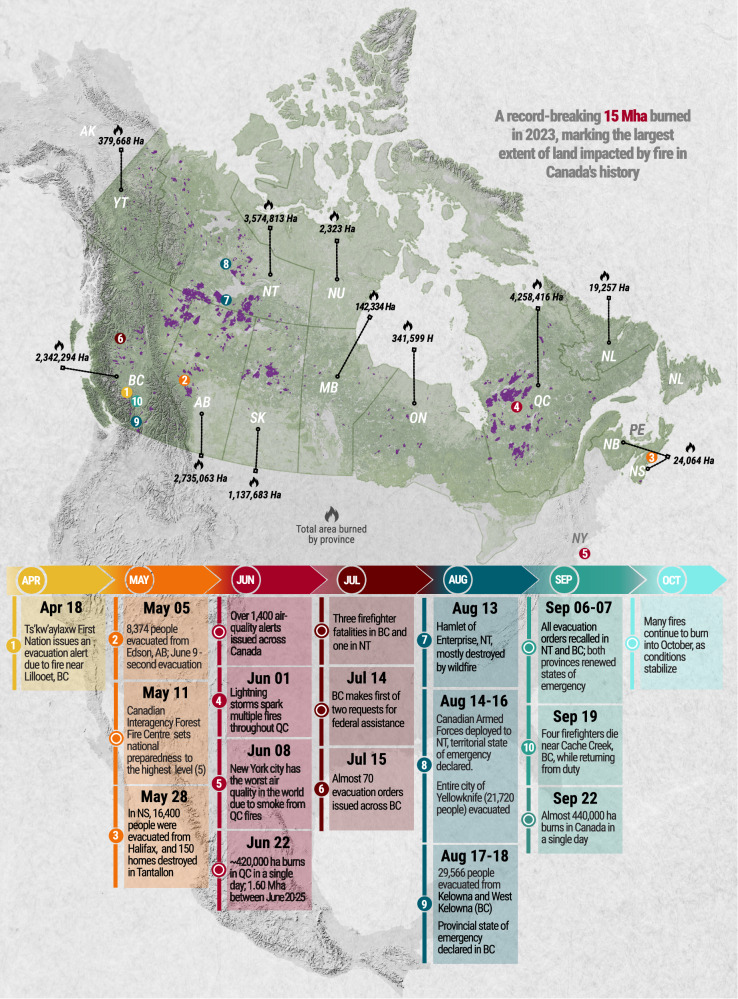
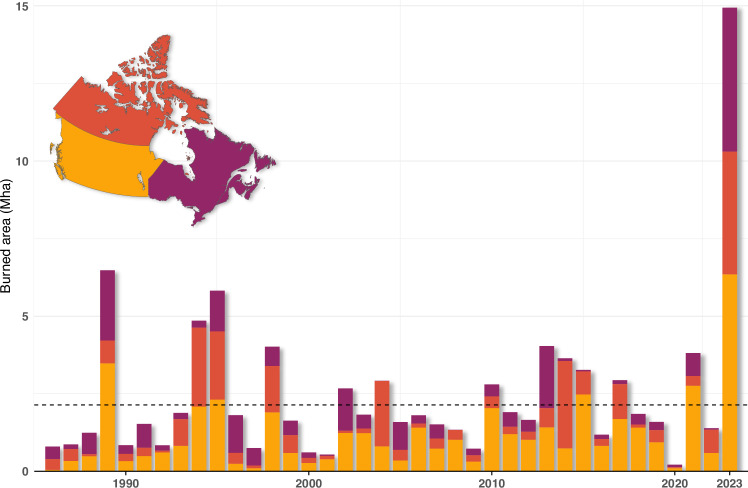
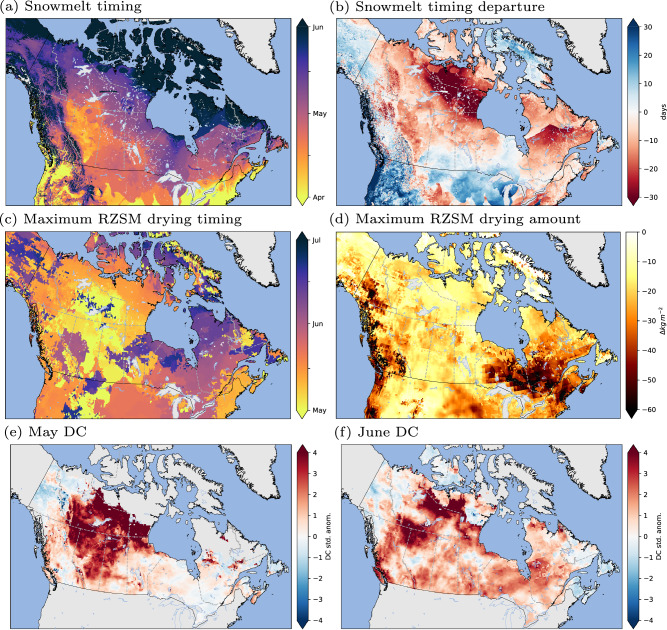
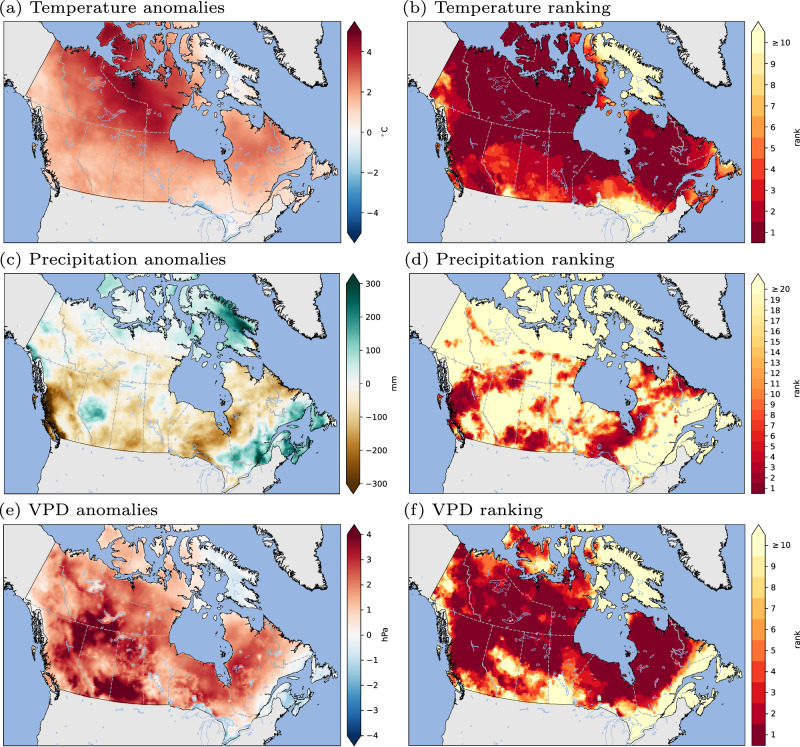
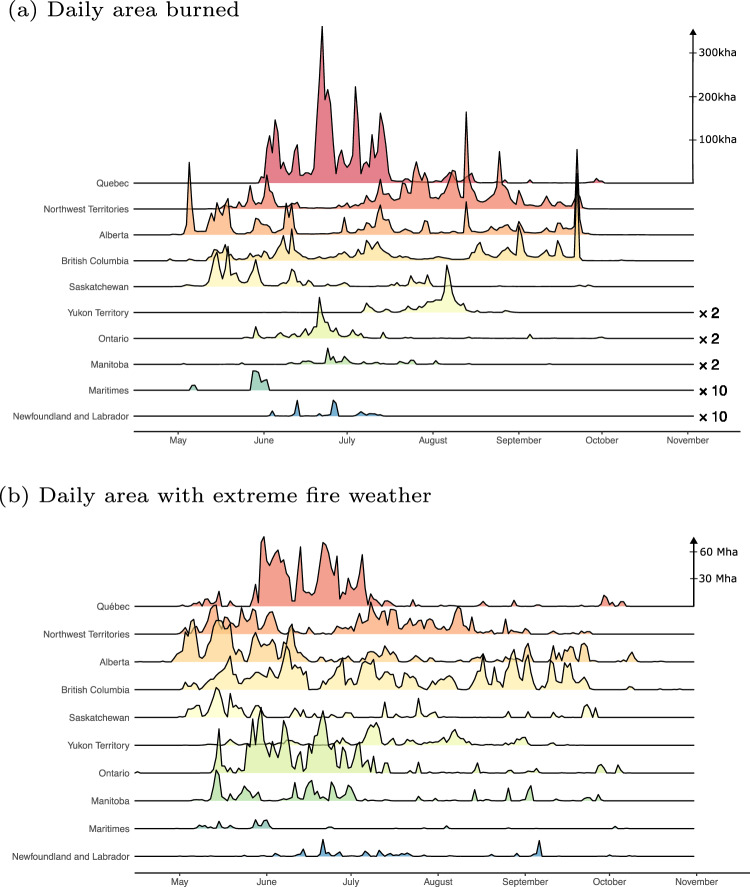
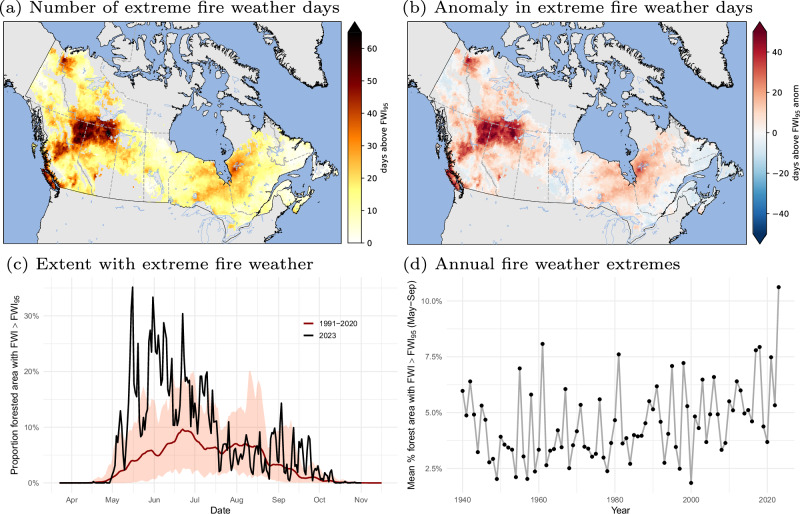
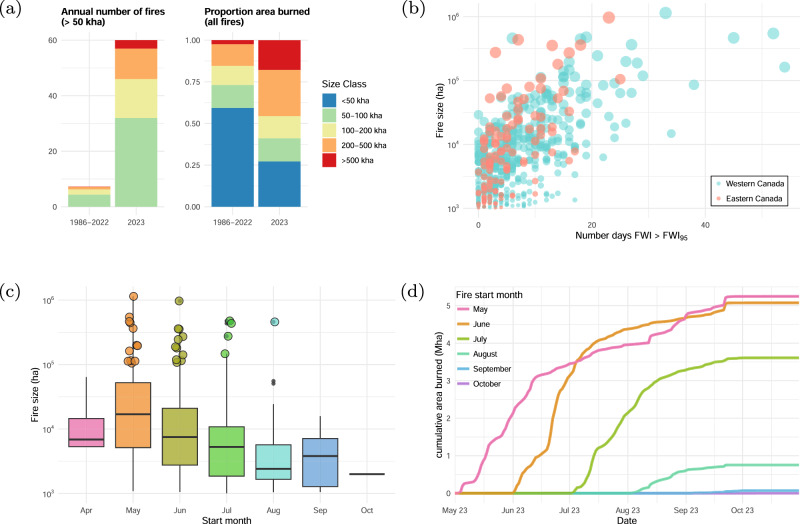
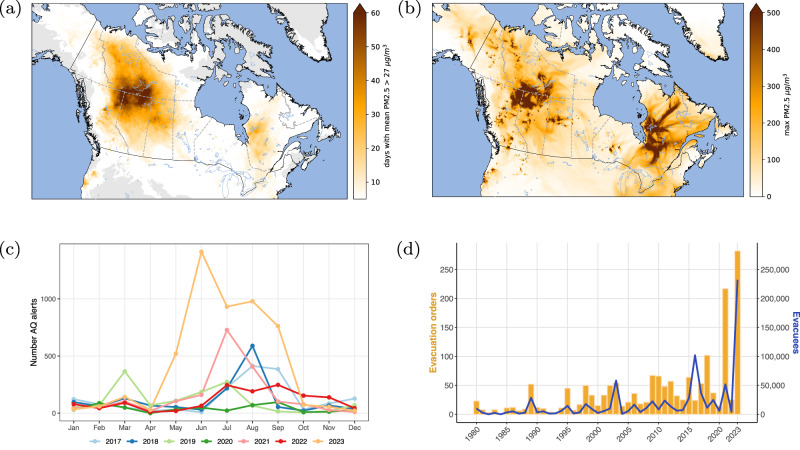
Verification
Claims the paper makes
The claims and statistics of this paper haven’t been checked yet.
Free: it reads the open-access text and checks the first 5 claims that cite a source we can check. Create a free account to check every claim.
Claims other papers make about this one
Each is checked against this paper’s own text: does it say what the citing paper says it does?
The source backs part of the claim, not all of it — or backs it for a different population, condition or comparison.
In the citing paper
“Changes in vegetation cover (i.e., deforestation and wildfires) can also shift the relative contribution of photodegradation by altering the amount of UV-radiation reaching plant litter [208–210].”
From Environmental consequences of interacting effects of changes in stratospheric ozone, ultraviolet radiation, and climate: UNEP Environmental Effects Assessment Panel, Update 2024 (2025) · cites this paper as [208]
Experimental — accuracy not yet measured
Self-check
Percentages, sums and reported differences re-computed from the paper’s own numbers.
The self-check needs the paper’s full text.
Citations
Cites
ERA5 hourly data on single levels from 1940 to present
C3S (2018) · European Centre for Medium-Range Weather Forecasts · doi:10.24381/cds.adbb2d47 · Cited by 2,550
Global and Regional Trends and Drivers of Fire Under Climate Change
Jones, M. W., Abatzoglou, J. T., Veraverbeke, S., Andela, N., Lasslop, G., Forkel, M., Smith, A. J. P., Burton, C., Betts, R. A., van der Werf, G. R., et al. (2022) · Reviews of Geophysics · doi:10.1029/2020rg000726 · Cited by 1,332
Boreal forest health and global change
Gauthier, S., Bernier, P., Kuuluvainen, T., Shvidenko, A. Z., & Schepaschenko, D. G. (2015) · Science · doi:10.1126/science.aaa9092 · Cited by 1,225 · cited 1×
“The cumulative impacts of the area burned in 2023 coupled with the extensive anthropogenic disturbance legacies on the landscape will challenge the resilience of forest eco-systems, especially if fi re activity continues to increase, as projected 65,66 .”
Improved Magnus Form Approximation of Saturation Vapor Pressure
Alduchov, O. A., & Eskridge, R. E. (1996) · Journal of Applied Meteorology · doi:10.1175/1520-0450(1996)035<0601:imfaos>2.0.co;2 · Cited by 979 · cited 5×
“We examined mean daily anomalies of temperature, precipitation and VPD averaged between May 1st and October 31st ( fi re season) of 2023 compared with the baseline period (1991 – 2020); we also plotted the rank of the fi re season mean of each variable for 2023 compared with the period 1940 – 2023.”
InfluentialOn the operational predictability of blocking
TIBALDI, S., & Molteni, F. (1990) · Tellus A Dynamic Meteorology and Oceanography · doi:10.1034/j.1600-0870.1990.t01-2-00003.x · Cited by 909 · cited 1×
“Blocking can be characterized by persistent positive anomalies in 500-hPa geopoten-tial heights 39 .”
Flannigan, M. D., Logan, K. A., Amiro, B. D., Skinner, W. R., & Stocks, B. J. (2005) · Climatic Change · doi:10.1007/s10584-005-5935-y · Cited by 874 · cited 2×
“Nationwide fi re activity, affecting nearly all forested areas in a single season as experienced in 2023 was not anticipated until later in the century based on climate change projections 5 .”
Self-citationCanada's changing climate report
Bush, E., & Lemmen, D. S. (2019) · doi:10.4095/314614 · Cited by 732
Global Emergence of Anthropogenic Climate Change in Fire Weather Indices
Abatzoglou, J. T., Williams, A. P., & Barbero, R. (2019) · Geophysical Research Letters · doi:10.1029/2018gl080959 · Cited by 680 · cited 4×
“Themodeldomain covers North America with a 10-km grid resolution.”
InfluentialWildfire-Driven Forest Conversion in Western North American Landscapes
Coop, J. D., Parks, S. A., Stevens-Rumann, C. S., Crausbay, S. D., Higuera, P. E., Hurteau, M. D., Tepley, A., Whitman, E., Assal, T., Collins, B. M., et al. (2020) · BioScience · doi:10.1093/biosci/biaa061 · Cited by 642
Self-citationParks, S. A., & Abatzoglou, J. T. (2020) · Geophysical Research Letters · doi:10.1029/2020gl089858 · Cited by 573 · cited 1×
“VPD is a good predictor of fuel moisture globally 30 and area burned regionally 31 .”
Research works printed but not linked: 2
- Jain, P. & Flannigan, M. The relationship between the polar jet stream and extreme wildfire events in North America. J. Clim. 34, 6247–6265 (2021).
- Stocks, B. J. et al. Large forest fires in Canada, 1959–1997. J. Geophys. Res.: Atmospheres 107, FFR–5 (2002).
Cited by
Items 201–300 of 464
Formulation of parametric uncertainty forecasts towards operational wildfire smoke assimilation
Vogel, A., Ménard, R., Abu, J. M., & Chen, J. (2026) · Nonlinear processes in geophysics · doi:10.5194/npg-33-347-2026 · Cited by 2
Self-citationCoop, J. D., Balik, J. A., McFarland, J. R., Parks, S. A., Rodman, K. C., Stevens‐Rumann, C. S., Krawchuk, M. A., Naficy, C. E., Parisien, M., & Whitman, E. (2026) · Science Advances · doi:10.1126/sciadv.aeg5802 · Cited by 2
Self-citationTaylor, I., Kelley, D. I., Mathison, C., Williams, K., Hartley, A. J., Betts, R., Burton, C., & Barbosa, M. L. F. (2026) · Natural hazards and earth system sciences · doi:10.5194/nhess-26-4257-2026 · Cited by 2
The impact of wildfire smoke on carbon-intensive stocks
Salikhova, T. (2025) · Finance research letters · doi:10.1016/j.frl.2025.107620 · Cited by 2
Ehret, A., Turquéty, S., Silva, A. D., George, M., Hadji‐Lazaro, J., Franco, B., Clarisse, L., Coheur, P., & Clerbaux, C. (2026) · Journal of Geophysical Research Atmospheres · doi:10.1029/2025jd045500 · Cited by 2
Cunningham, C. X., Williamson, G. J., & Bowman, D. M. J. S. (2025) · Nature Ecology & Evolution · doi:10.1038/s41559-025-02745-0 · Cited by 2
“This includes increases in atmospheric aridity 15 , fuel aridity 16 , fire weather 17 , explosive pyrocumulonimbus events 11 , intense overnight fires 18 and major societal disasters 19 .”
Pyrogeography of extraordinary wildfiresPreprint
Cunningham, C. X., Williamson, G. J., Abatzoglou, J. T., Kolden, C. A., Jones, M., Fromm, M. D., Peterson, D. A., Tedim, F. M. S., Flannigan, M. D., Johnston, F. H., et al. (2025) · EarthArXiv (California Digital Library) · doi:10.31223/x5t187 · Cited by 3
Self-citationVegetation health evaluation using cost-effective aerial reflectance measurements
Lucena, A., Rendeiro, R., & Marques, C. (2024) · EPJ Web of Conferences · doi:10.1051/epjconf/202430500005 · Cited by 1
Peng, J., Zhong, W., Wang, J., Dan, L., Xu, W., Yang, S., & Yuan, W. (2025) · Journal of Geophysical Research Atmospheres · doi:10.1029/2024jd042675 · Cited by 1
Assessment of the proposed wildfire curves for housing design protection
Fiorini, C., Arruda, M. R. T., Craveiro, H. D., Santiago, A. M. C., & Branco, F. A. B. (2025) · Fire Safety Journal · doi:10.1016/j.firesaf.2025.104409 · Cited by 1
Two-decade spatiotemporal variations in ground-level ozone over Ontario, Canada
Zang, Z., Liu, J. J., Ge, E., & Zhang, Y. (2025) · Frontiers in Environmental Engineering · doi:10.3389/fenve.2025.1601213 · Cited by 1
Ibisch, P. L. (2025) · Progress in botany · doi:10.1007/124_2025_92 · Cited by 1
Recent Active Wildland Fires Related to Rossby Wave Breaking (RWB) in Alaska
Hayasaka, H. (2025) · Remote Sensing · doi:10.3390/rs17152719 · Cited by 1
Choi, M., Lyapustin, A., Yujie Wang, A., Hyer, E. J., Eck, T. F., & Korkin, S. V. (2025) · Frontiers in Remote Sensing · doi:10.3389/frsen.2025.1654779 · Cited by 1
Firms under water! harmful algal blooms and corporate performance of coastal enterprises in China
Li, J., Li, S., Zhou, Y., Xue, Y., & Liu, J. (2025) · Journal of Business Research · doi:10.1016/j.jbusres.2025.115707 · Cited by 1
Chen, R., Rui, X., Zhang, J., & Song, W. (2026) · Science of Remote Sensing · doi:10.1016/j.srs.2026.100423 · Cited by 1
Emergency evacuations during wildfires: a public health perspective in Québec (Canada)
Michaud-Tétreault, J., Bouchard-Bastien, E., Peel, M.-A., & Perron, S. (2025) · Disaster Prevention and Management An International Journal · doi:10.1108/dpm-03-2025-0067 · Cited by 1
Canopy-mediated climate feedbacks in the boreal continuous permafrost zone
Stuenzi, S., Grosse, G., Miesner, F., Westermann, S., & Langer, M. (2026) · VU Research Portal · doi:10.1038/s41558-026-02692-z
“The thermal buffer provided by the canopy is increasingly compromised by intensifying disturbance regimes, which are amplified by climate warming, drying and earlier snowmelt 34,85,86 .”
Polycyclic aromatic compounds in Canadian Arctic seabirds: Spatial and temporal trends
Liebzeit, E. C., Halldorson, T. H. J., Provencher, J. F., Mallory, M. L., Tomy, G. T., & Dupuis‐Smith, R. (2025) · Marine Environmental Research · doi:10.1016/j.marenvres.2025.107722 · Cited by 1
Lyu, S., Wei, X., Qiu, M., Myers, M., Wang, Z., Hui, J., Yan, W., Shen, T., Sun, M., Wang, S., et al. (2025) · Forest Ecosystems · doi:10.1016/j.fecs.2025.100408 · Cited by 1
Cao, L., Wang, T., Chen, X., Xie, W., Feng, S., Tang, Q., Liu, X., Chang, X., Yu, M., Yin, S., et al. (2025) · Fire · doi:10.3390/fire8120457 · Cited by 1
Karanikolas, A., Torres, B., Momoi, M., Herreras-Giralda, M., Kouremeti, N., Gröbner, J., Doppler, L., & Kazadzis, S. (2025) · Atmospheric measurement techniques · doi:10.5194/amt-18-7651-2025 · Cited by 1
“Secondly, we focus on a highly unusual episode of long-range transport biomass burning smoke from the Canadian wildfires during the record-breaking year 2023 (Jain et al., 2024).”
Shirzad‐Ghaleroudkhani, N., Cen, A. C., Afaghi, M., Jamshidi, M., Jozi, D., Lu, H., Gaur, A., Bénichou, N., & Gül, M. (2026) · International Journal of Wildland Fire · doi:10.1071/wf24207 · Cited by 1
Overriding influence of climate on future carbon stocks in Australian temperate forests
Pickering, B. J., Kultaev, D., Nitschke, C. R., Marshall, E., Ababei, D. A., Penman, T. D., & Bennett, L. T. (2025) · The Science of The Total Environment · doi:10.1016/j.scitotenv.2025.181260 · Cited by 1
Pouliot, E., Bichai, F., Kammoun, R., & Dorner, S. M. (2026) · PLOS Water · doi:10.1371/journal.pwat.0000491 · Cited by 1
Wildfire activity and related weather patterns in Ukraine
Semenova, I. G. (2026) · Environmental Research Communications · doi:10.1088/2515-7620/ae3533 · Cited by 1
Kip, A., Gibbs, L. F., Molyneaux, R., Forbes, D., MacDougall, C., Gallagher, H. C., & Bryant, R. A. (2026) · International Journal of Disaster Risk Reduction · doi:10.1016/j.ijdrr.2026.106018 · Cited by 1
Remote Forcing of Super Typhoon Mawar on the 2023 Quebec Wildfires
Zhu, A., Xue, L., Wang, Z., Ding, K., Liu, Y., Lou, S., Zhou, C., Li, T., Zhao, J., Zhang, L., et al. (2026) · Geophysical Research Letters · doi:10.1029/2025gl119782 · Cited by 1
The Impact of Temporal Fluctuations in Temperature Inversions on PM2.5 Levels in Urban Alabama
Moustafa, A., Afandi, G. E., Ibrahim, S., Sapkota, S., Algendy, R., & Irfan, M. (2026) · Earth Systems and Environment · doi:10.1007/s41748-026-01026-5 · Cited by 1
“5 9(Jain et al. 2024; Zhang et al. 2025 ).”
Pulimeno, S., Lupi, A., Vitale, V., Frangipani, C., Toledano, C., Kazadzis, S., Kouremeti, N., Ritter, C., Graßl, S., Stebel, K., et al. (2026) · Atmospheric chemistry and physics · doi:10.5194/acp-26-1809-2026 · Cited by 2
Liu, X., Sun, Z., Shi, C., Wang, P., Nie, T., Chu, Q., Shang, H., Sun, L., Ji, D., Guo, M., et al. (2026) · Earth system science data · doi:10.5194/essd-18-1203-2026 · Cited by 2
Developing evidence briefs for landscape fire management
Symon, C., Barrow, S., Bennett, L. T., Dowdy, A., Fairman, T. A., Harris, S. L., Hillman, S. C., Kelly, L. T., Madigan, J., McCormack, P. C., et al. (2026) · Journal of Applied Ecology · doi:10.1111/1365-2664.70309 · Cited by 1
Incorporating fire severity mapping into fuel accumulation curves
Gordon, C. E., Collins, L., Jenkins, M. E., Murphy, B. P., Nguyen), T. D. N. (., Price, O. F., Volkova, L., Weston, C. J., & Nolan, R. H. (2026) · The Science of The Total Environment · doi:10.1016/j.scitotenv.2026.181574 · Cited by 1
Thermal Limits and Decline of Synechococcus Under Accelerated Warming and Marine Heatwaves
Azizah, L., Alou‐Font, E., Coello‐Camba, A., & Agustí, S. (2026) · Global Change Biology · doi:10.1111/gcb.70791 · Cited by 1
“This extreme warming has contributed to widespread coral bleaching in tropical oceans (Goreau and Hayes 2024), unprecedented wildfires in Canada (Jain et al. 2024), and exceptionally low sea ice extent in the Arctic and Antarctica (Davies et al. 2024; Moon et al. 2024; Purich and Doddridge 2023).”
Costa, J. V. S., & Martinho, D. (2026) · Fire · doi:10.3390/fire9030131 · Cited by 1
“Wildfires have evolved from a recurrent natural phenomenon into a major socio-ecological and economic threat, with increasingly severe events documented from Australia [1] to Canada [2], the United States [3] and the Mediterranean basin.”
A snow-fire bridge mechanism for the 2025 Southern California winter wildfire
Liu, S., Hu, S., & Seager, R. (2026) · Nature Communications · doi:10.1038/s41467-026-70827-z · Cited by 3
“The choice of DJ average, rather than January alone, is motivated by the facts that this particular 2025 wild fi re event occurred in early January and that the occurrence of wild fi res can be in fl uenced by preceding meteorological conditions 5,38 .”
El-Baba, M., Hertelendy, A. J., Voskanyan, A., Ciottone, G. R., & Issa, F. S. (2026) · The Lancet Regional Health - Americas · doi:10.1016/j.lana.2026.101445 · Cited by 1
Bater, C. W., White, J. C., Chen, H., Tompalski, P., Hermosilla, T., Boucher, J., & Wulder, M. A. (2026) · Earth system science data · doi:10.5194/essd-18-2075-2026 · Cited by 2
Spatial Heterogeneity and Responses of Wildfire Drivers Across Diverse Climatic Regions in China
Feng, X., Wang, H., Zhang, Z., Yuan, S., Jiang, R., & Dang, C. (2026) · Remote Sensing · doi:10.3390/rs18071007 · Cited by 1
Pyrodiversity of boreal lake islands begets biodiversity of beetles, plants, and birds
Bell, A. J., Paterson, S. M. A., Wilgenburg, S. L. V., Laroque, C. P., Wardle, D. A., & Phillips, I. D. (2026) · Ecological Applications · doi:10.1002/eap.70218 · Cited by 1
The Effect of Wildfire Exposure: Neurological Outcomes, Mental Health, and Epigenetic Insights
Khair, H. A. E., Toor, V., & Cao-Lei, L. (2026) · Genes · doi:10.3390/genes17040420 · Cited by 1
“Importantly, wildfire smoke can travel long distances and affect populations located hundreds or even thousands of kilo-meters away from the fire source, thereby exposing large populations to elevated levels of air pollutants [2].”
Arctic and Boreal Wildfires Impact Climate by Releasing Ancient Carbon and Light-Absorbing Particles
Ruppel, M. M., Somero, M., Sippula, O., Ihalainen, M., Louhisalmi, J., Tissari, J., Haghipour, N., Ström, J., Väliranta, M., Köster, K., et al. (2026) · Environmental Science & Technology · doi:10.1021/acs.est.5c17130 · Cited by 2
Oscilowicz, E., Chapple, K., Connolly, J. J., & Cordingley, C. (2026) · Canadian Planning and Policy / Aménagement et politique au Canada · doi:10.24908/cpp-apc.v2026i2.19927 · Cited by 2
Roach, J., Neudorf, Z., Holt-Lachance, M., Miller, E. M., Newport, E., Robinson, A., Weber-Roy, A., & Simard, S. W. (2026) · Frontiers in Forests and Global Change · doi:10.3389/ffgc.2026.1765240 · Cited by 1
The changing contribution of peatlands to burned area in Alberta’s Boreal Plains
Wilkinson, S. L., Krieger-Pottruff, E. J., Clark, A., & Wotton, B. M. (2026) · Canadian Journal of Forest Research · doi:10.1139/cjfr-2025-0292 · Cited by 1
Haija, K. A. E., & Santos, R. M. (2026) · Fire · doi:10.3390/fire9040173 · Cited by 1
Liu, M., Greene, G. A., Perrakis, D. D. B., & Röeser, D. (2026) · Ecological Informatics · doi:10.1016/j.ecoinf.2026.103789 · Cited by 1
Yang, C., Field, R. D., Scholten, R. C., & Randerson, J. T. (2026) · Global Change Biology · doi:10.1111/gcb.70891 · Cited by 1
Thompson, D. K., Whitman, E., Hafer, M., Hararuk, O., Hanes, C. C., Manvailer, V., & Hudson, B. (2026) · Geoscientific model development · doi:10.5194/gmd-19-3617-2026 · Cited by 1
“As a result, the CFFEPS-FireWork total emissions in 2023 with their exceptional nation-wide moisture deficits (Jain et al., 2024) underestimate total emissions compared to other methods, with CFFEPS estimates of CO emissions only ~40% of satellite observed values (Griffin et al., 2024; Voshtani et…”
Self-citationTree‐based modelling of ecosystem services and climate‐adaptive silviculture strategies
Sundquist, S. W., Lutz, D. A., Foster, A. C., & Goetz, S. J. (2026) · Journal of Applied Ecology · doi:10.1111/1365-2664.70404 · Cited by 1
Spatiotemporal Vegetation Trends in Burned Areas of the Americas
Oswaldo Maillard, Z., Chazdon, R. L., Aguiar, S., Mostacedo, B., Nunes, A., Vidal-Riveros, C., & Vides-Almonacid, R. (2026) · Remote Sensing · doi:10.3390/rs18121870 · Cited by 1
Zhang, W., Guo, J., Xiao, H., Wan, J., Lv, M., Zhang, Z., Zhao, C., & Liu, Y. (2026) · Applied Soil Ecology · doi:10.1016/j.apsoil.2026.107183 · Cited by 1
Climate and fuel interplay sparked Central Asia’s record-breaking 2002 wildfire
段, 季., & Zhang, D. (2026) · Science China Earth Sciences · doi:10.1007/s11430-025-1891-y · Cited by 1
“In contrast, forest fires are more directly linked to concurrent extreme events (Field et al., 2016; Tomshin and Solovyev, 2022; Byrne et al., 2024; Cho et al., 2024; Jain et al., 2024b).”
He, T., Wang, W. J., Bao, S. G., Helbig, M., Wang, X., Boulanger, Y., Liu, Z., Li, M., & He, H. S. (2026) · Earth s Future · doi:10.1029/2026ef008774 · Cited by 1
Self-citationOptimizing fuel break placement to mitigate wildland fire risk to communities
Nicoletta, V., Chavardès, R. D., Yemshanov, D., Bélanger, V., Cotton-Gagnon, A., & Boucher, J. (2026) · Fire Ecology · doi:10.1186/s42408-026-00550-z · Cited by 1
“As wildfires approach the WHI, they expose structures and make them more susceptible to damage (Abo El Ezz et al. 2022), as experienced in multiple regions of Canada during recent fire seasons (Boulanger et al. 2024; Jain et al. 2024; Recamara 2025).”
Self-citationNurdiati, S., Najib, M. K., Khatizah, E., Syaufina, L., Azhari, M. F., & Akbar, R. (2026) · Earth · doi:10.3390/earth7040121 · Cited by 1
Reforestation following megafires in boreal forests: silvicultural challenges and available tools
Canuel, C., Guyot, F., Hébert, F., Jacques-Beaudoin, É., Dumais, D., Thiffault, N., Barrette, M., & Boucher, Y. (2026) · New Forests · doi:10.1007/s11056-026-10196-z · Cited by 1
“…burning rates are surpassing historical variability is still being debated (Parks et al. 2025; Danneyrolles et al. 2025), but recent years have signalled the severity, magnitude, and impacts expected under future fire regimes driven by climate change (Jain et al. 2024; Boulanger et al. 2025).”
InfluentialBurton, J. E., Collins, L., Nolan, R. H., Clarke, H. G., Penman, T. D., Cirulis, B. A., & Cawson, J. G. (2026) · International Journal of Wildland Fire · doi:10.1071/wf25233 · Cited by 1
State of Wildfires in North America 2025-26
Kolden, C. A., Donovan, V. M., Shuman, P., Jain, P., Abatzoglou, J. T., & Bourbonnais, M. (2026) · Journal of Pyrogeography · doi:10.1016/j.pyro.2026.100033 · Cited by 1
Self-citationFire–Moisture Interactions Shape Recovery Trajectories Across Temperate Vegetation Communities
Simpson, E., Wardle, G. M., Dickman, C. R., & Greenville, A. C. (2026) · Global Change Biology · doi:10.1111/gcb.71057 · Cited by 1
“Given the sheer scale of Black Summer and other recent wildfire events (e.g., the 2023 Canadian wildfires; Jain et al. 2024), accurate post-fire assessment now requires datasets with broad temporal and spatial resolution that can effectively account for hydroclimatic extremes.”
Khan, M. S., Farooque, A. A., Al-Mughrabi, T., Malekian, R., Wang, X., Esau, T. J., & Zaman, Q. U. (2026) · Ecological Informatics · doi:10.1016/j.ecoinf.2026.103996 · Cited by 1
Self-citationCurrent model capabilities and future predictive pathways of wildfires under a changing climate
Whaley, C. H., Li, Y., Valiquette, I., Kiley, S., & Digby, R. A. R. (2026) · Communications Earth & Environment · doi:10.1038/s43247-026-04013-w · Cited by 1
“Earlier spring snowmelt lengthens the seasonal drying period 27 – 29 and permafrost thaw in the high north can increase soil drainage and upper-soil drying 26,30 – 34 .”
Li, Z., Lü, J., & Liu, Y. (2026) · Weather and Climate Dynamics · doi:10.5194/wcd-7-1821-2026 · Cited by 1
de Dios, V. R., Camprubí, À. C., Schütze, S. J., Castedo‐Dorado, F., Picos, J., Ramirez, J., Domènech, R., Bachfischer, M., Castellnou, M., & Cardíl, A. (2026) · Journal of Environmental Management · doi:10.1016/j.jenvman.2026.131063 · Cited by 1
Regional Case Studies: Southeast Australia, Sub-Saharan Africa, Central Europe, and Boreal Canada
(2024) · Elsevier eBooks · doi:10.1016/b978-0-443-13790-7.00013-2 · Cited by 1
Fire regime change in western Tasmania between 1830 and 2025
Bowman, D. M. J. S., Terry, I., Lehman, G., & Williamson, G. J. (2025) · Geographical Research · doi:10.1111/1745-5871.70046 · Cited by 3
Hazy Outlook: Wildfire Smoke and the Performance of Financial AnalystsPreprint
Israelsen, R. D., Jiang, J. X., & Kong, J. (2024) · SSRN Electronic Journal · doi:10.2139/ssrn.4702170 · Cited by 1
Vegetation greening enhances global fire activityPreprint
Zhang, Y., Lai, G., Wu, C., Cescatti, A., Duveiller, G., Pausas, J. G., Hantson, S., Zhang, Z., Descals, A., Cao, M., et al. (2024) · Research Square · doi:10.21203/rs.3.rs-5467904/v1 · Cited by 1
Perry, J., Easybuck, T., Feltner, M., Foster, E. G., Kowalski, M., Honaker, A., Clough, K., Easton, A., Berling, K. L., Pham, D., et al. (2025) · bioRxiv (Cold Spring Harbor Laboratory) · doi:10.1101/2025.08.13.670196 · Cited by 2
High-resolution Canada domain disturbance forcings suitable for land surface modeling applications
Beaver, J., Curasi, S. R., Melton, J. R., Humphreys, E. R., Hermosilla, T., & Wulder, M. A. (2025) · Scientific Data · doi:10.1038/s41597-025-05123-4 · Cited by 1
Reliable Data-Driven Wildfire Risk Prediction and Understanding in Western CanadaPreprint
Xu, Z., Wang, L., Cheng, S. L., Rui, X., Gao, K., Zhu, Y., Heffring, M., Dewis, Z., Taleghanidoozdoozan, S., Alkayid, M., et al. (2026) · SSRN Electronic Journal · doi:10.2139/ssrn.6161427 · Cited by 1
Smoke and Mirrors: Social Media Coverage of Wildfires in the Age of Climate Change
Bohonos, D., & Bergeron, T. (2024) · doi:10.66536/smoke-mirrors-wildfire_2024 · Cited by 1
(2024) · Earth system science data · doi:10.5194/essd-2024-218-cc1
Zhang, Y., Zhou, X., Chen, C., Tian, G., Wu, H., Wang, X., Tan, F., & Wu, R. (2024) · SSRN Electronic Journal · doi:10.2139/ssrn.5017148
Self-citation(2024) · Earth system science data · doi:10.5194/essd-2024-519-rc1
Galmiche, A. (2024) · Sextant · doi:10.4000/131o9
Friedlingstein, P. (2025) · Earth system science data · doi:10.5194/essd-2024-519-ac2
Plaas, H. E., Karl, C., Cogbill, R., Rosales-Garcia, N., Stoop, A. H., Satterwhite, L. L., Mathieu-Campbell, M. E., Richmond‐Bryant, J., Paerl, H. W., & Hamilton, D. S. (2025) · Environmental Science Atmospheres · doi:10.1039/d5ea00020c
Berthiaume, M., Kinateder, M. T., & Bénichou, N. (2025) · Proceedings of the ... International ISCRAM Conference · doi:10.59297/zfwqed06
Henderson, S. B. (2025) · Canadian Medical Association Journal · doi:10.1503/cmaj.250510-f
Гапало, А., Telak, O., Коваль, В., Koval, N., & Popovych, V. V. (2025) · doi:10.32447/bcet.2025.33
Hardy, C., Messier, C., Boulanger, Y., Cyr, D., & Filotas, É. (2025) · PLoS ONE · doi:10.1371/journal.pone.0326627
Self-citationLi, H., Ahmadov, R., Romero‐Alvarez, J., Grell, G., Olson, J. B., Schnell, J. L., James, E. P., Trahan, S., Hu, M., & Bhimireddy, S. R. (2025) · Geophysical Research Letters · doi:10.1029/2025gl115384
Human Mediation of Wildfires and Its Representation in Terrestrial Ecosystem Models
Zhu, J., Tang, H., Fang, K., Stordal, F., Bryn, A., Gao, M., & Liu, X. (2025) · Fire · doi:10.3390/fire8080297
Amiri, A., Gumière, S. J., & Bonakdari, H. (2025) · Earth · doi:10.3390/earth6030088
Jiang, X., Cai, H., & Yang, X. (2025) · Global and Planetary Change · doi:10.1016/j.gloplacha.2025.105030
Bonakdari, H. (2025) · The Conversation · doi:10.64628/aam.nwknramac
Accelerated biomass loss in western US forestlands due to shifting fire regimePreprint
Zhang, S., Carter, N., Sexton, J. O., Wang, J. A., Wang, P., & Zhu, K. (2025) · bioRxiv (Cold Spring Harbor Laboratory) · doi:10.1101/2025.08.22.671876
Voshtani, S. (2025) · doi:10.5194/egusphere-2025-858-ac2
Antibiotic resistance genes detected in lichens: insights from Cladonia stellaris
Alonso-García, M., George, P. B. L., Leclerc, S., Veillette, M., Duchaine, C., & Villarreal, J. C. (2025) · Annals of Botany · doi:10.1093/aob/mcaf231
McAulay, J., Querejeta, J. I., Eskelson, B. N. I., Daniels, L. D., Ewen, S., Danyagri, G., Saunders, S. C., & Barbeito, I. (2025) · Forest Ecology and Management · doi:10.1016/j.foreco.2025.123132
Distribution, Dynamics and Drivers of Asian Active Fire Occurrences
Gao, X., Shi, W., & Zhang, M. (2025) · ISPRS International Journal of Geo-Information · doi:10.3390/ijgi14090349
Comment une forêt peut-elle émettre plus de CO₂ qu’elle n’en capture ?
Mirabel, A., Sist, P. L. J., Derroire, G., & Traissac, S. (2025) · The Conversation · doi:10.64628/aak.whrngg59y
Boakye, E. A., Klutsch, J. G., Mvolo, C. S., & Duarte, A. G. (2025) · Wood and Fiber Science · doi:10.22382/wfs-2025-13 · Cited by 2
Haughian, S. R., & Fine, L. (2025) · Proceedings of the Nova Scotian Institute of Science · doi:10.15273/pnsis.v54i1.12676
“…CC has increased the frequency and intensity of natural disturbances such as wildfires, droughts, floods, hurricanes, and tropical storms, leading to substantial damage to human infrastructure and losses of life (Insurance Bureau of Canada 2024, Jain et al. 2024, Mekis et al. 2015, Ollerhead 2023).”
Metadata
- Authors
- Jain, P., Barber, Q. E., Taylor, S. W., Whitman, E., Castellanos Acuna, D., Boulanger, Y., Chavardès, R. D., Chen, J., Englefield, P., Flannigan, M., Girardin, M. P., Hanes, C. C., Little, J., Morrison, K., Skakun, R. S., Thompson, D. K., Wang, X., & Parisien, M.-A.
- Affiliations
- Canadian Forest Service (CA)
- Environment and Climate Change Canada (CA)
- Thompson Rivers University (CA)
- Corresponding author
- Jain, Piyush
- ORCID
- Venue
- Nature Communications
- Published
- 2024-08-20
- Volume
- 15
- Issue
- 1
- Pages
- 6764-6764
- ISSN
- 2041-1723 (ISSN-L)
- PMC
- PMC11335882
- OpenAlex
- W4401728510
- Cited by
- 319
- References
- 83
- Citations by year
- 2026: 157 · 2025: 145 · 2024: 17
- FWCI
- 56.32
- Type
- journal article
- Language
- en
- Open access
- gold
- doi.org
- Licence
- cc-by
- creativecommons.org/licenses/by/4.0 (tdm)
- creativecommons.org/licenses/by/4.0 (vor)
- Locations
- Nature Communications (publishedVersion, cc-by)
- PubMed Central (publishedVersion, cc-by)
- PubMed (publishedVersion)
- RePEc: Research Papers in Economics (submittedVersion)
- DOAJ (DOAJ: Directory of Open Access Journals) (submittedVersion, cc-by-sa)
- Funders
- Environment and Climate Change Canada
- U.S. Forest Service
- Canadian Forest Service
- Topics
- Physical Sciences › Environmental Science › Global and Planetary Change › Fire effects on ecosystems
- Social Sciences › Sociology and Political Science › Disaster Management and Resilience
- Life Sciences › Agricultural and Biological Sciences › Forestry › Forest Management and Policy
- Keywords
- wildfire drivers, wildfire effects, climate change, drought, early snowmelt, extreme fire weather, smoke exposure, burned area, forest fires
About these checks
Registry, retraction, Cites and statistics results are computed, not judged, with one exception: a printed reference that no index lists is read once by a model before it counts as a citation error. Claims are extracted by a model and kept only when their quote appears verbatim in the text; each cited source is then checked, with a model’s help, for whether it says what the claim relies on. Those verdicts can be wrong — read the claim’s quote and the cited source before relying on one.
Statistics and arithmetic are recomputed, not judged.
Confidence bands are shown only for fields calibrated on our annotated test set. None is calibrated yet, so no band is shown.
What counts as a claim ›How we measure confidence ›How we check this ›
Are you an author, or do you see a problem with this page? Request a review
Data sources
Bibliographic data: Semantic Scholar, OpenAlex, Crossref.
Contains information from the Semantic Scholar Academic Graph Datasets, made available under the ODC Attribution License (ODC-BY 1.0).
Semantic Scholar’s data is described in: Kinney, R., et al. (2023). The Semantic Scholar Open Data Platform. arXiv:2301.10140.
