

Identification of inducible HIV reservoirs in tonsillar, intestinal and cervical tissue models of HIV latency
Open accessPublished version of a preprint
The DOI matches its Crossref record; 139 of the 139 references it cites were found in a registry or an index.
Abstract
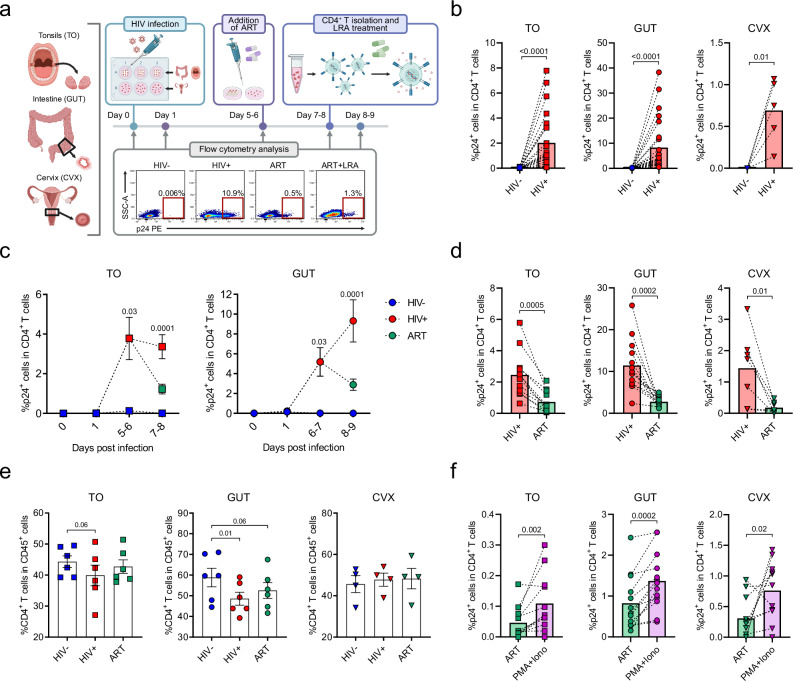
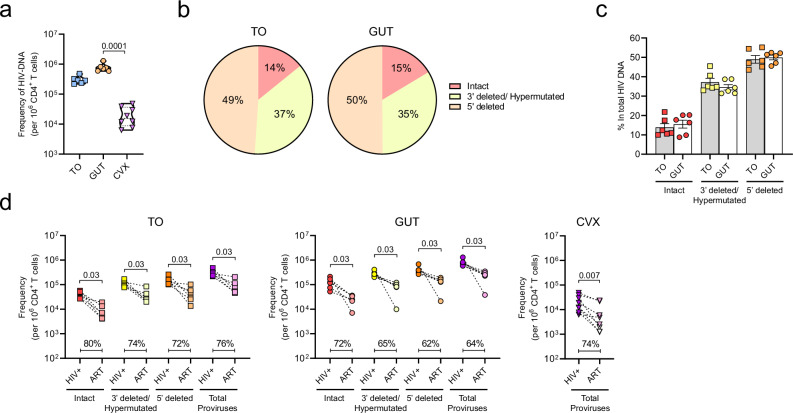
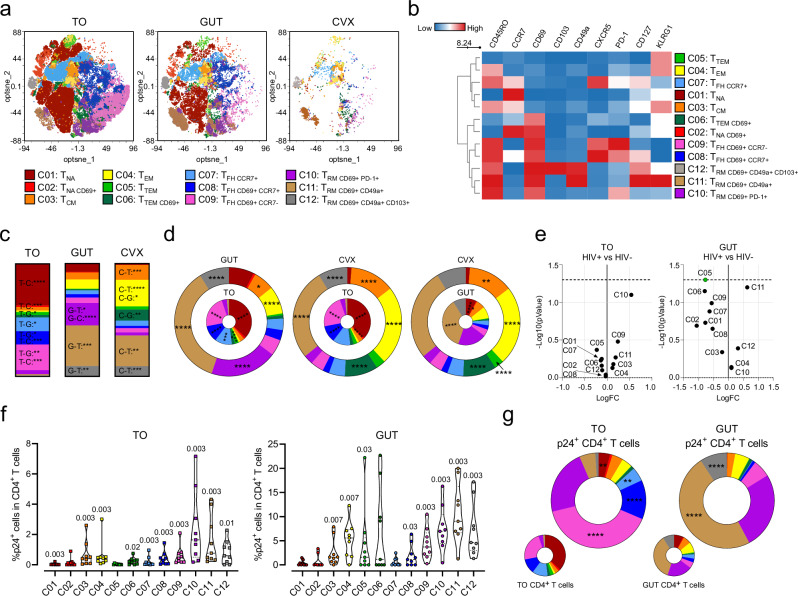
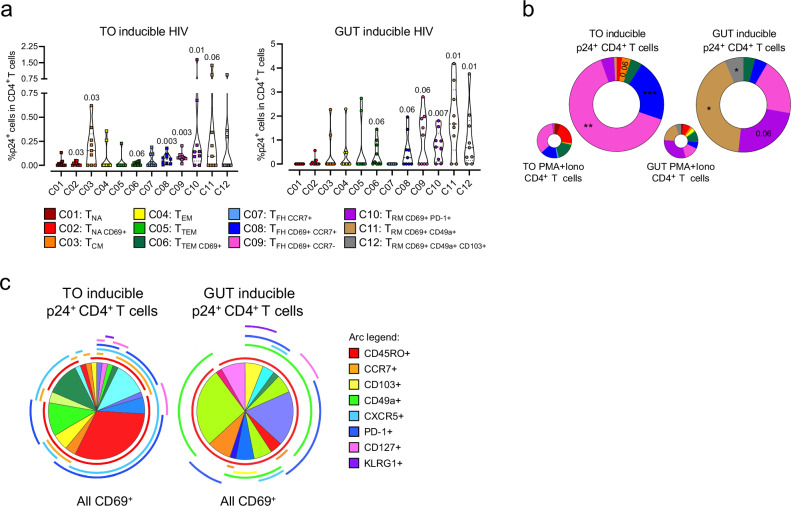
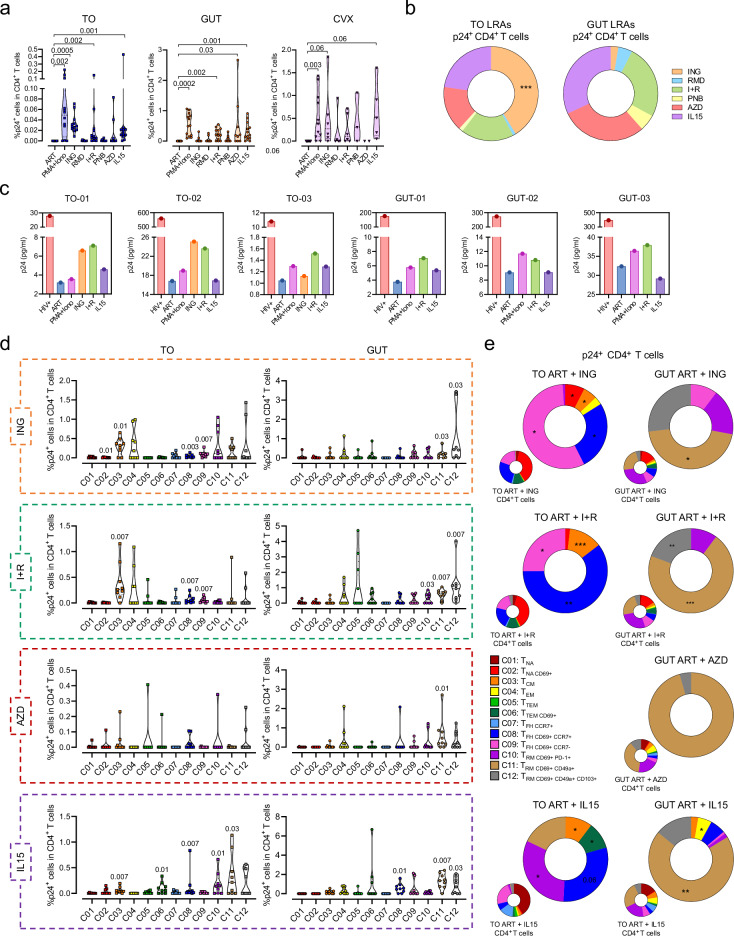
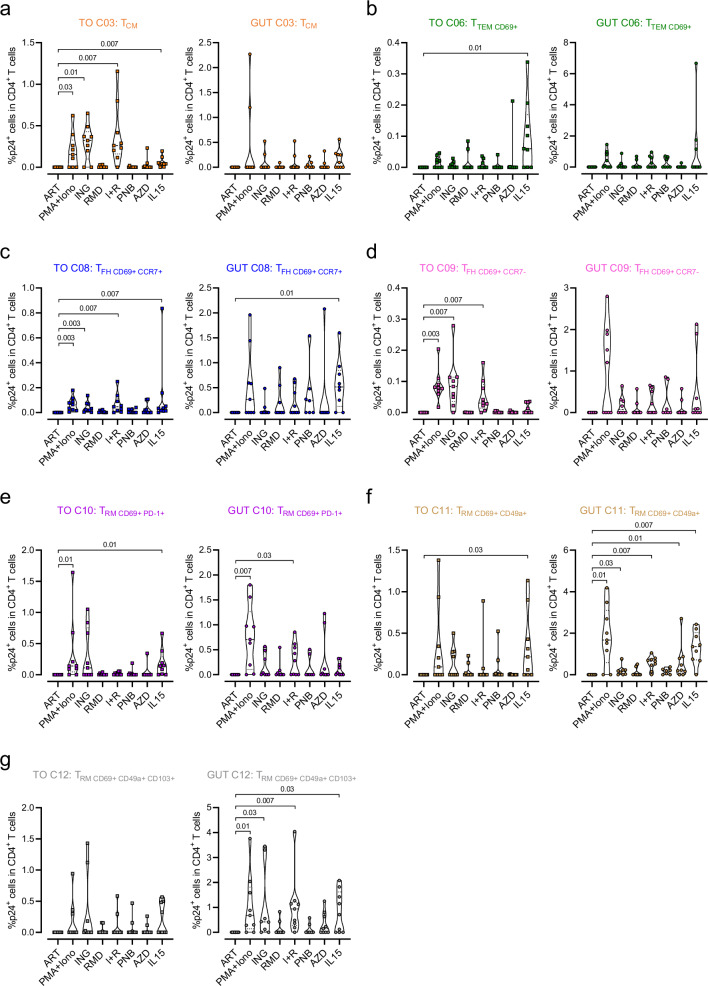
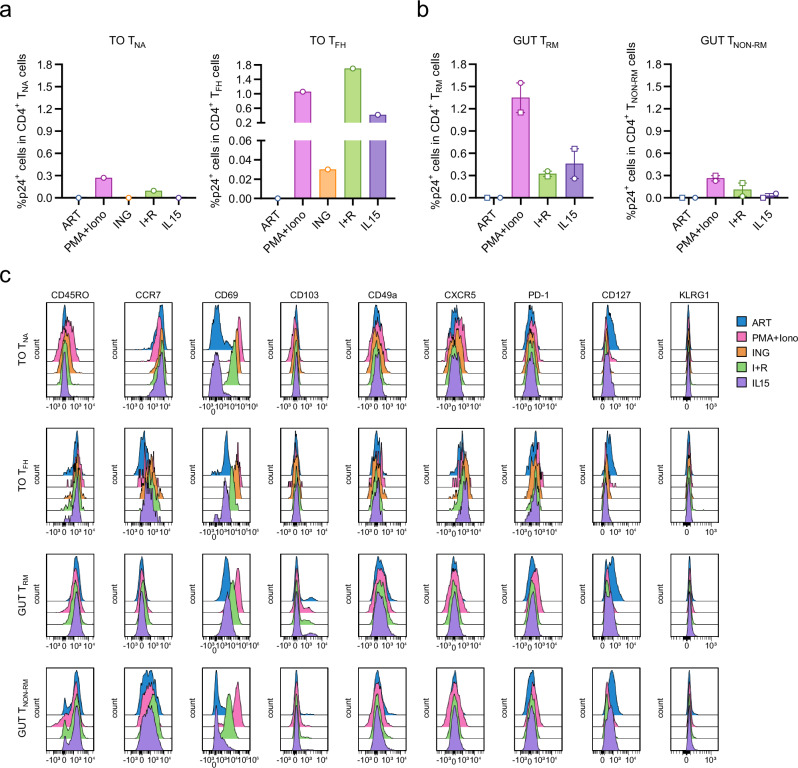
HIV persists in diverse tissues, with distinct cellular reservoirs presenting a major barrier to a cure and requiring targeted therapeutic strategies to address this heterogeneity. Here, we develop tissue models of HIV latency using human tonsillar, intestinal and cervicovaginal tissues. These models reveal differential HIV infection across CD4+ T-cell subpopulations, with ART partially restoring CD4+ T cells and reducing intact HIV DNA. T follicular helper cells (TFH CD69+ CCR7-) are the primary inducible reservoir in tonsils, while tissue-resident memory cells (TRM CD69+ CD49a+) dominate in the intestine. Identification of markers for inducible reservoirs shows that CD69, CD45RO, and PD-1 are shared across tissues, while CXCR5 in tonsils and CD49a in the intestine act as tissue-specific markers. Furthermore, using different latency reversal agents (LRAs) demonstrates that Histone Deacetylase Inhibitors (HDACis) fail to induce HIV in any tissue, the SMAC mimetic AZD5582 is effective only in a resident-memory CD4+ T-cell subpopulation in the intestine, and IL-15 exhibits the broadest reactivation potential across tissues and CD4+ T-cell subsets. These models provide insights into the inducible reservoir’s composition in different tissues and inform strategies for its elimination. HIV’s persistence in diverse tissue reservoirs poses a challenge to cure efforts, necessitating targeted approaches. Here, the authors develop human tissue models of HIV latency and find that inducible reservoirs differ across tissues and CD4⁺ T-cell subsets, highlighting tissue-specific markers and IL-15 as the most effective latency reversal agent.
Overview
The claims and statistics of this paper haven’t been checked yet.
Free: it reads the open-access text and checks the first 5 claims that cite a source we can check. Create a free account to check every claim.
Integrity signals
Registry
Cites
Statistics
Figures
Verification
Claims the paper makes
The claims and statistics of this paper haven’t been checked yet.
Free: it reads the open-access text and checks the first 5 claims that cite a source we can check. Create a free account to check every claim.
Claims other papers make about this one
Each is checked against this paper’s own text: does it say what the citing paper says it does?
The cited source says what the claim attributes to it.
In the citing paper
“These latently infected cells, residing in tissues such as the central nervous system and gut-associated lymphoid tissue, constitute a stable reservoir that is not eliminated by current antiretroviral therapy and is considered the primary barrier to an HIV-1 cure (89–91).”
From Research progress on HIV-1 structural proteins and antiviral therapies (2026) · cites this paper as [91]
Self-check
Percentages, sums and reported differences re-computed from the paper’s own numbers.
The self-check needs the paper’s full text.
Citations
Cites
HIV-1 Dynamics in Vivo: Virion Clearance Rate, Infected Cell Life-Span, and Viral Generation Time
Perelson, A. S., Neumann, A. U., Markowitz, M., Leonard, J. M., & Ho, D. D. (1996) · Science · doi:10.1126/science.271.5255.1582 · Cited by 3,531
Viral dynamics in human immunodeficiency virus type 1 infection
Wei, X., Ghosh, S. K., Taylor, M. E., Johnson, V. A., Emini, E. A., Deutsch, P., Lifson, J. D., Bonhoeffer, S., Nowak, M. A., Hahn, B. H., et al. (1995) · Nature · doi:10.1038/373117a0 · Cited by 3,260
Identification of a reservoir for HIV-1 in patients on highly active antiretroviral therapy
Finzi, D., Hermankova, M., Pierson, T., Carruth, L. M., Buck, C., Chaisson, R. E., Quinn, T. C., Chadwick, K., Margolick, J., Brookmeyer, R., et al. (1997) · Science · doi:10.1126/science.278.5341.1295 · Cited by 3,098
Follicular Helper CD4 T Cells (T FH )
Crotty, S. (2011) · Annual Review of Immunology · doi:10.1146/annurev-immunol-031210-101400 · Cited by 2,738
T follicular helper cell differentiation, function, and roles in disease
Crotty, S. (2014) · Immunity · doi:10.1016/j.immuni.2014.10.004 · Cited by 1,847
HIV-1 Integration in the Human Genome Favors Active Genes and Local Hotspots
Schröder, A. R. W., Shinn, P., Chen, H., Berry, C., Ecker, J. R., & Bushman, F. (2002) · Cell · doi:10.1016/s0092-8674(02)00864-4 · Cited by 1,832 · cited 1×
“Moreover, silencing due to repressive chromatin modi fi cations or transcriptional interference 132 – 134 , as well as integration into heterochromatin 135 , could profoundly impact viral reactivation in speci fi c cell subsets.”
Brenchley, J. M., Schacker, T. W., Ruff, L. E., Price, D. A., Taylor, J. H., Beilman, G. J., Nguyen, P. L., Khoruts, A., Larson, M., Haase, A. T., et al. (2004) · The Journal of Experimental Medicine · doi:10.1084/jem.20040874 · Cited by 1,832
Pantaleo, G., Graziosi, C., Demarest, J. F., Butini, L., Montroni, M., Fox, C. H., Orenstein, J. M., Kotler, D. P., & Fauci, A. S. (1993) · Nature · doi:10.1038/362355a0 · Cited by 1,808
HIV reservoir size and persistence are driven by T cell survival and homeostatic proliferation
Chomont, N., El-Far, M., Ancuta, P., Trautmann, L., Procopio, F. A., Yassine-Diab, B., Boucher, G., Boulassel, M.-R., Ghattas, G., Brenchley, J. M., et al. (2009) · Nature Medicine · doi:10.1038/nm.1972 · Cited by 1,722
Veazey, R. S., DeMaria, M., Chalifoux, L. V., Shvetz, D. E., Pauley, D. R., Knight, H. L., Rosenzweig, M., Johnson, R. P., Desrosiers, R. C., & Lackner, A. A. (1998) · Science · doi:10.1126/science.280.5362.427 · Cited by 1,407
Cited by
Tissue Reservoirs of HIV: The Hidden Protective Role of Lymphoid and Myeloid Cells
He, S., Zubair, A., & Al-Emam, A. (2026) · Reviews in Medical Virology · doi:10.1002/rmv.70159 · Cited by 5
HIV Reservoirs Across Multiple Tissues: From Heterogeneous Mechanisms to Therapeutic Targeting
Wu, Y., Lan, G.-W., Jiang, L.-Y., & Chen, X. (2026) · Microorganisms · doi:10.3390/microorganisms14040844 · Cited by 4
Advancements in development of novel class of HIV protease inhibitors
Gu, W.-G., Yin, G.-Z., & Zhang, Y. (2026) · Annals of Medicine · doi:10.1080/07853890.2026.2617730 · Cited by 3
Resident CD49a + CD103 + NKG2C + NK cells restrict HIV infection in human lymphoid tissue explants
Perea, D., Gonzalez, A., Gallego-Cortés, A., Sánchez-Gaona, N., Pumarola, F., Ortiz, N., Llano, I., Lorente, J., Falcó, V., Genescà, M., et al. (2026) · Science Advances · doi:10.1126/sciadv.adz1565 · Cited by 3
Self-citationMetformin: Historical Origins, Mechanisms of Action, and Emerging Clinical Applications
Hu, Y., Zhang, X., Yang, C., Wu, X., Ye, X., Yu, J. K., & Yang, Y. (2026) · Diabetes/Metabolism Research and Reviews · doi:10.1002/dmrr.70171 · Cited by 3
Metabolic reprogramming of CD4⁺ T cells by Zaprinast induces HIV-1 latency reversal ex vivo
d’Autume, V. D. M., Douce, V. L., Dutilleul, A., O’Reilly, S., François, N., Formiconi, E., Angieladis, M., Pilosio, L., Bendoumou, M., Leon, A. A. G., et al. (2026) · Retrovirology · doi:10.1186/s12977-026-00680-x · Cited by 3
Research progress on HIV-1 structural proteins and antiviral therapies
Wang, H., Yuan, J., & Wang, H. (2026) · Frontiers in Immunology · doi:10.3389/fimmu.2026.1805597 · Cited by 2
Virological biomarkers of HIV remission in children: implications for pediatric cure strategies
Reddy, K., & Ndung’u, T. (2026) · Current Opinion in HIV and AIDS · doi:10.1097/coh.0000000000001032 · Cited by 1
Quiet but not silent: assessing the impact of intact and defective HIV proviral DNA in the brain
Chalmers, E. K., Eddine, J. J., Yucel, L., Churchill, M. J., & Angelovich, T. A. (2026) · Current Opinion in HIV and AIDS · doi:10.1097/coh.0000000000001054 · Cited by 1
Abdelnaser, R. A., Hamdy, A. K., Abourehab, M. A. S., & Bräse, S. (2026) · Viruses · doi:10.3390/v18111248 · Cited by 1
Elliott, J. E., Webb, N. E., Ruiz, P., Cho, G. D., Ali, A., Anton, P. A., Yang, O. O., & Fulcher, J. A. (2026) · Retrovirology · doi:10.1186/s12977-026-00684-7
Unraveling the root causes of HIV-1 persistence
Sun, W., & Lichterfeld, M. D. (2026) · Current Opinion in HIV and AIDS · doi:10.1097/coh.0000000000001022 · Cited by 1
γc-cytokines in HIV Cure Research
Melo, C., Lochner, J. S., & Bosque, A. (2026) · Current Opinion in HIV and AIDS · doi:10.1097/coh.000000000000102
HIV and Cancer: Insights into Viral-Mediated Oncogenesis and Immunosuppression
Lasagna, A., Pozza, G., Matone, M., Fasola, C., Ruggieri, L., Verde, N. M. L., Pedrazzoli, P., & Dalu, D. (2026) · Pathogens · doi:10.3390/pathogens15040416
A transcriptional continuum links viral burden and host-cell biology in human lymphoid tissuePreprint
Mangold, J. F., Schrode, N., Fortune, T., Keane, A. M., Shroff, S., Petri, S., Tweel, B. C., Beaumont, K. G., & Swartz, T. H. (2026) · bioRxiv (Cold Spring Harbor Laboratory) · doi:10.64898/2026.07.07.736525
Virus-informed targeting of HIV reservoirs: Rev-dependent HIV Immunotherapy (RHIT)
Wu, Y. (2026) · Retrovirology · doi:10.1186/s12977-026-00682-9
Zhang, J., Li, X., Chen, C., Wu, Z., Qin, F., Li, Y., Zhang, Y., & Ning, C. (2026) · Frontiers in Immunology · doi:10.3389/fimmu.2026.1912904
Yang, S., Yuan, J., Sun, X., & Huan, C. (2026) · Frontiers in Cellular and Infection Microbiology · doi:10.3389/fcimb.2026.1926141
Yasin, K. S. M., Margret, A. A., & Fernandez, C. (2026) · Journal of Pharmaceutical Innovation · doi:10.1007/s12247-026-11075-y
HIV remodels germinal centers through T follicular helper cell lossPreprint
Jacobs, D. R., Abdool, F., Pohlenz, L., Curtis, D., Gill, R., Bush, J. P., Martin, M., Toman, J., Kuhn, W. P., Maistry, S., et al. (2026) · bioRxiv (Cold Spring Harbor Laboratory) · doi:10.64898/2026.10.08.757815
Mapping HIV reservoir geography: lessons for cure from the Last Gift rapid autopsy cohort
Birabaharan, M., Immer, A., Navarrete, A., Valdes, D., & Smith, D. M. (2026) · Current Opinion in HIV and AIDS · doi:10.1097/coh.0000000000001079
Metadata
- Authors
- Gallego-Cortés, A., Sánchez-Gaona, N., Mancebo-Pérez, C., Ruiz-Isant, O., Benítez-Martínez, A., Landolfi, S., Castellví, J., Pumarola, F., Ortiz, N., Llano, I., Lorente, J., Mañalich-Barrachina, L., Prado, J., Martín-Gayo, E., Falcó, V., Genescà, M., & Buzon, M.
- Affiliations
- Universitat Autònoma de Barcelona (ES)
- Vall d'Hebron Hospital Universitari (ES)
- ORCID
- Venue
- Nature Communications
- Published
- 2025-11-24
- Volume
- 16
- Issue
- 1
- Pages
- 10353-10353
- ISSN
- 2041-1723 (ISSN-L)
- PMC
- PMC12645015
- OpenAlex
- W4416690738
- Cited by
- 12
- References
- 139
- Citations by year
- 2026: 12
- FWCI
- 6.01
- Type
- journal article
- Language
- en
- Open access
- gold
- doi.org
- Licence
- cc-by-nc-nd
- creativecommons.org/licenses/by-nc-nd/4.0 (tdm)
- creativecommons.org/licenses/by-nc-nd/4.0 (vor)
- Locations
- Nature Communications (publishedVersion, cc-by-nc-nd)
- bioRxiv (Cold Spring Harbor Laboratory) (acceptedVersion, cc-by)
- PubMed (publishedVersion)
- DIGITAL.CSIC (Spanish National Research Council (CSIC)) (submittedVersion, other-oa)
- DOAJ (DOAJ: Directory of Open Access Journals) (submittedVersion, cc-by-sa)
- Funders
- "la Caixa" Foundation (LCF/PR/HR20/00218)
- Ministry of Economy and Competitiveness | Instituto de Salud Carlos III (CPII22/00005, PI20/00160)
- Topics
- Life Sciences › Immunology and Microbiology › Virology › HIV Research and Treatment
- Life Sciences › Biochemistry, Genetics and Molecular Biology › Genetics › Virus-based gene therapy research
- Health Sciences › Medicine › Infectious Diseases › HIV/AIDS drug development and treatment
- Keywords
- HIV reservoir, HIV latency, tonsillar tissue, intestinal tissue, tissue models, CD4+ T cell subsets, tissue-resident memory T cells, T follicular helper cells, CD69, CD45RO, PD-1, CXCR5, CD49a, latency reversal agents, histone deacetylase inhibitors, IL-15, HIV cure
- MeSH terms
- Cervix Uteri, Disease Reservoirs, Female, Humans, Intestinal Mucosa, Intestines, Palatine Tonsil, CD4-Positive T-Lymphocytes, HIV-1, HIV Infections, Antigens, CD, Virus Latency
About these checks
Registry, retraction, Cites and statistics results are computed, not judged, with one exception: a printed reference that no index lists is read once by a model before it counts as a citation error. Claims are extracted by a model and kept only when their quote appears verbatim in the text; each cited source is then checked, with a model’s help, for whether it says what the claim relies on. Those verdicts can be wrong — read the claim’s quote and the cited source before relying on one.
Statistics and arithmetic are recomputed, not judged.
Confidence bands are shown only for fields calibrated on our annotated test set. None is calibrated yet, so no band is shown.
What counts as a claim ›How we measure confidence ›How we check this ›
Are you an author, or do you see a problem with this page? Request a review
Data sources
Bibliographic data: Semantic Scholar, OpenAlex, Crossref.
Contains information from the Semantic Scholar Academic Graph Datasets, made available under the ODC Attribution License (ODC-BY 1.0).
Semantic Scholar’s data is described in: Kinney, R., et al. (2023). The Semantic Scholar Open Data Platform. arXiv:2301.10140.
