

CA1 Nampt knockdown recapitulates hippocampal cognitive phenotypes in old mice which nicotinamide mononucleotide improves
Open accessThe DOI matches its Crossref record; 46 of the 46 references it cites were found in a registry or an index.
Abstract
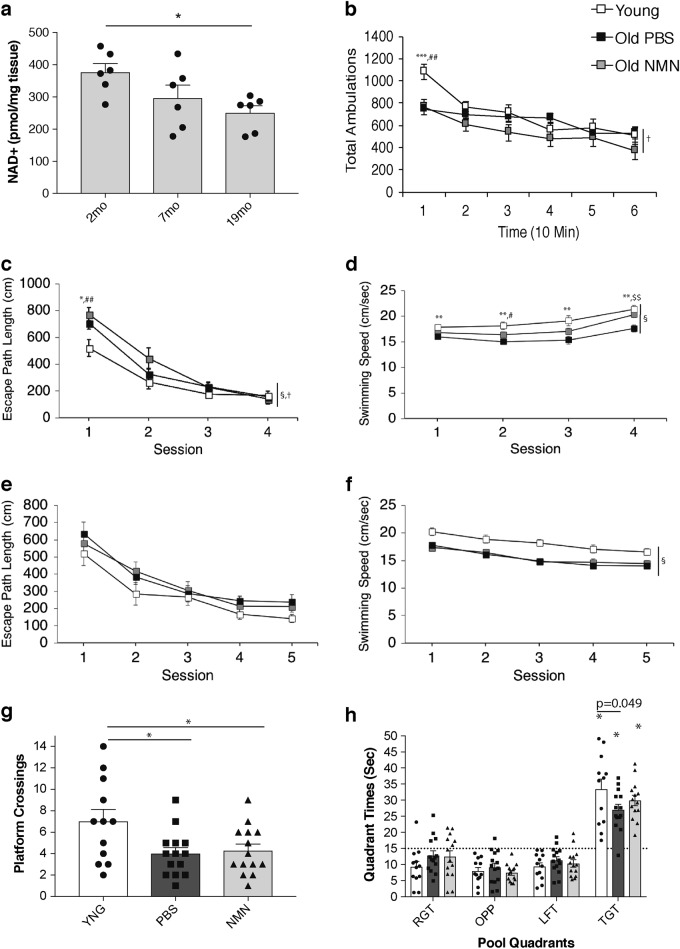
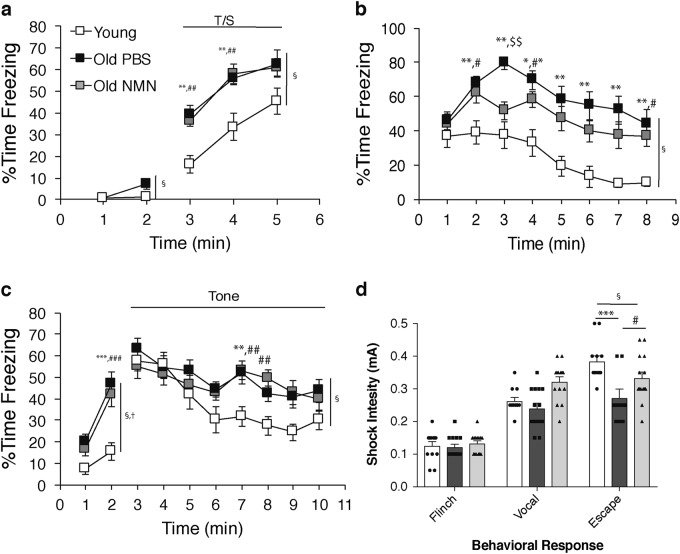
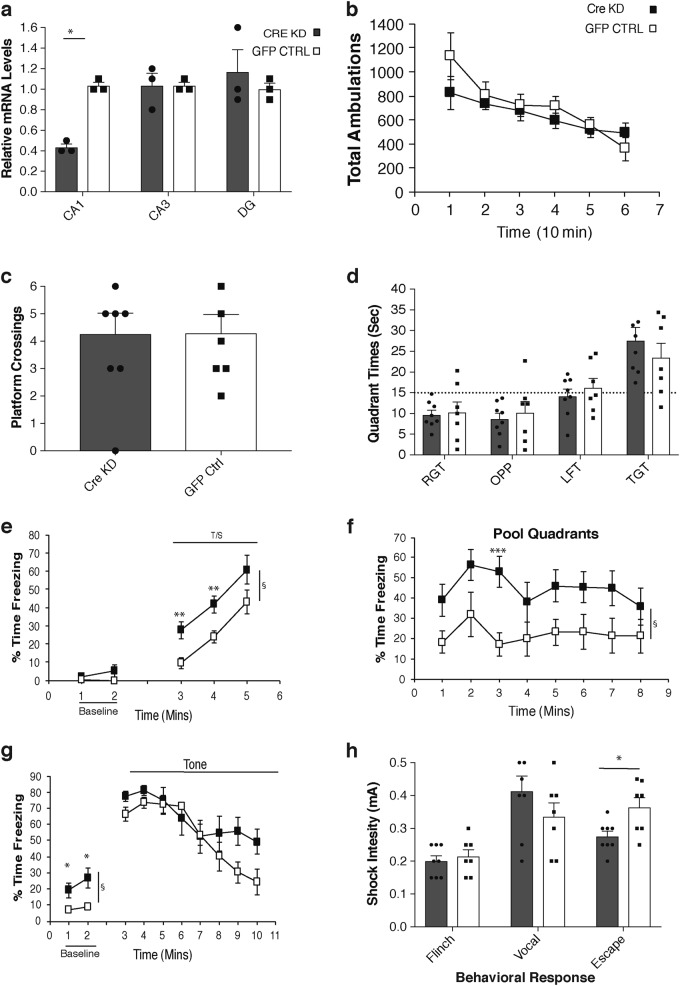
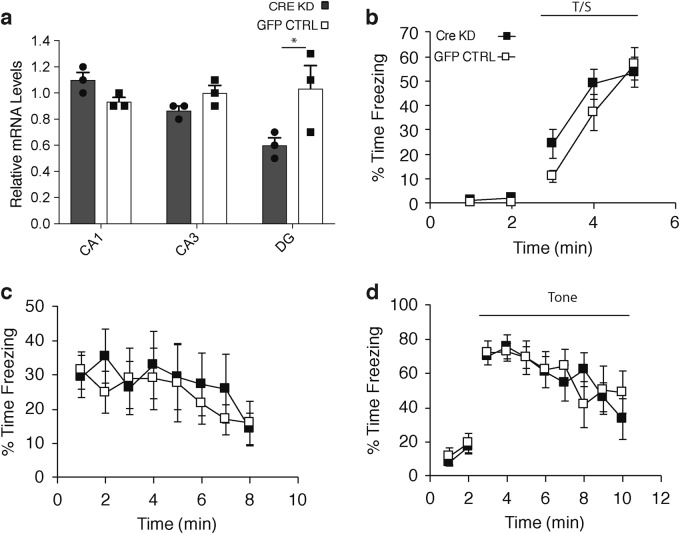
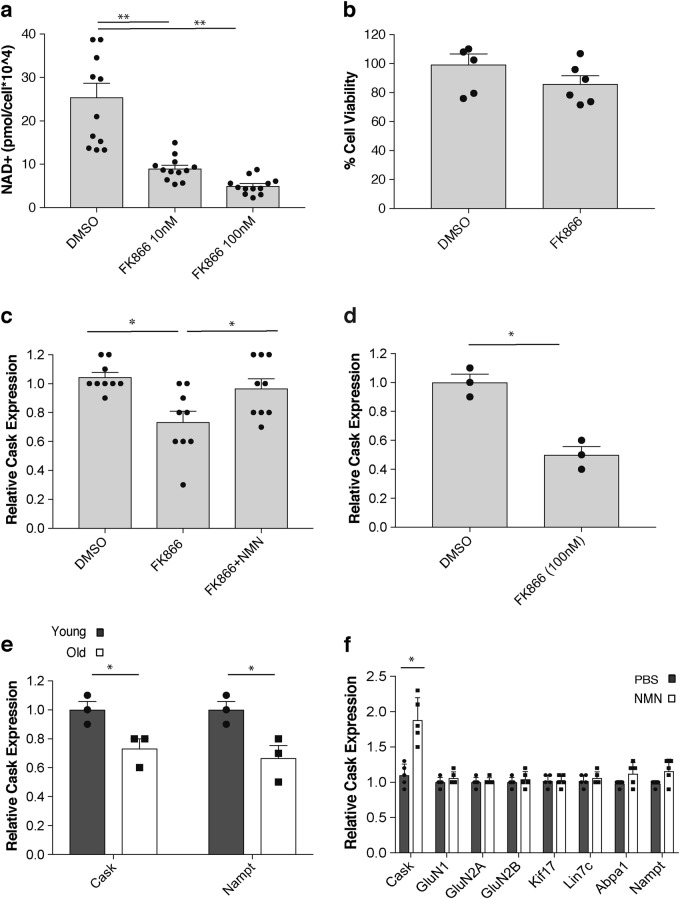
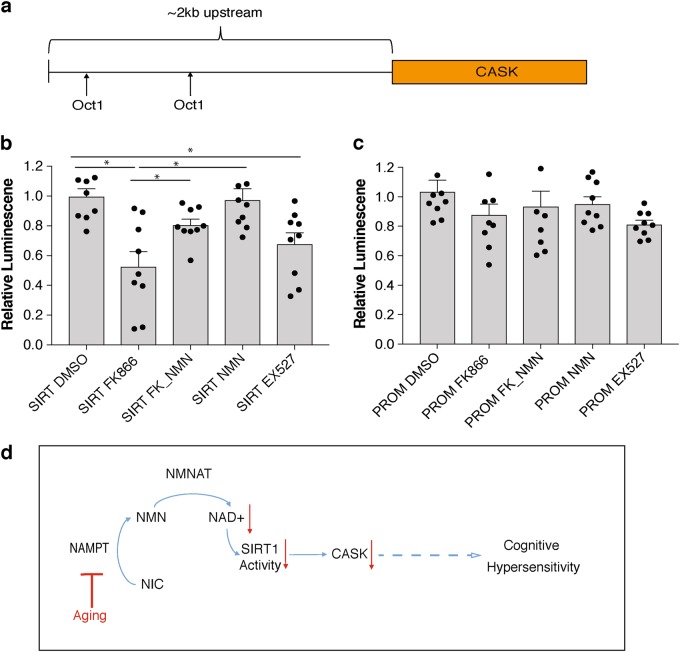
Cognitive dysfunction is one of the most concerning outcomes in global population aging. However, the mechanisms by which cognitive functions are impaired during aging remain elusive. It has been established that NAD+ levels are reduced in multiple tissues and organs, including the brain. We found that NAD+ levels declined in the hippocampus of mice during the course of aging, and whereas we observed minimal age-related effects on spatial learning/memory capabilities in old mice, we discovered that they developed cognitive hypersensitivity in response to aversive stimulation during contextual fear conditioning tests. This cognitive hypersensitivity appears to be associated with alterations in emotionality (fear/anxiety) and sensory processing (shock sensitivity), rather than reflect genuine conditioning/retention effects, during aging. Supplementation of nicotinamide mononucleotide (NMN) improved the sensory processing aspect of the hypersensitivity and possibly other related behaviors. Specific knockdown of nicotinamide phosphoribosyltransferase (Nampt) in the CA1 region, but not in the dentate gyrus, recapitulates this cognitive hypersensitivity observed in old mice. We identified calcium/calmodulin-dependent serine protein kinase (Cask) as a potential downstream effector in response to age-associated NAD+ reduction in the hippocampus. Cask expression is responsive to NAD+ changes and also reduced in the hippocampus during aging. Short-term NMN supplementation can enhance Cask expression in the hippocampus of old mice. Its promoter activity is regulated in a Sirt1-dependent manner. Taken together, NAD+ reduction in the CA1 region contributes to development of age-associated cognitive dysfunction, aspects of which may be prevented or treated by enhancing NAD+ availability through supplementation of NAD+ intermediates, such as NMN.
Overview
The claims and statistics of this paper haven’t been checked yet.
Free: it reads the open-access text and checks the first 5 claims that cite a source we can check. Create a free account to check every claim.
Integrity signals
Registry
Cites
Statistics
Figures
Verification
Claims the paper makes
The claims and statistics of this paper haven’t been checked yet.
Free: it reads the open-access text and checks the first 5 claims that cite a source we can check. Create a free account to check every claim.
Claims other papers make about this one
Each is checked against this paper’s own text: does it say what the citing paper says it does?
The cited source says what the claim attributes to it.
In the citing paper
“Mammalian aging is associated with a decline in central nervous system function (Figure 3A) (Johnson et al., 2018; Ungvari et al., 2017).”
From Loss of epigenetic information as a cause of mammalian aging (2023) · cites this paper as Johnson et al., 2018
The cited source says what the claim attributes to it.
In the citing paper
“Additionally, studies in aged mice show that calcium/calmodulin-dependent serine protein kinase (CASK) is a potential downstream effector in response to age-related NAD+ depletion in the hippocampus (Johnson et al., 2018).”
From NAD+ in Brain Aging and Neurodegenerative Disorders (2019) · cites this paper as Johnson et al., 2018
In the citing paper
“NMN treatment improved cognition in this Nampt-knockdown (CA1) mouse model, partially through upregulation of calcium/calmodulin-dependent serine protein kinase (Cask), a potential downstream effector, in a SIRT1-dependent manner (Johnson et al., 2018).”
From NAD+ in Brain Aging and Neurodegenerative Disorders (2019) · cites this paper as Johnson et al., 2018
In the citing paper
“In line with the role of NAD+ in maintaining healthy brain function, genetic approaches to reduce brain NAD+ production via CA1-region-specific knockdown of Nampt recapitulate hippocampal cognitive phenotypes of old mice (Johnson et al., 2018).”
From NAD+ in Brain Aging and Neurodegenerative Disorders (2019) · cites this paper as Johnson et al., 2018
Self-check
Percentages, sums and reported differences re-computed from the paper’s own numbers.
The self-check needs the paper’s full text.
Citations
Cites
Regier, D. A. (1988) · Archives of General Psychiatry · doi:10.1001/archpsyc.1988.01800350011002 · Cited by 1,737
Cantó, C., Menzies, K. J., & Auwerx, J. (2015) · Cell Metabolism · doi:10.1016/j.cmet.2015.05.023 · Cited by 1,648
NAD+ and sirtuins in aging and disease
Imai, S.-I., & Guarente, L. (2014) · Trends in Cell Biology · doi:10.1016/j.tcb.2014.04.002 · Cited by 1,481
Self-citationYoshino, J., Mills, K. F., Yoon, M. J., & Imai, S.-I. (2011) · Cell Metabolism · doi:10.1016/j.cmet.2011.08.014 · Cited by 1,340
Self-citationSubregion- and Cell Type–Restricted Gene Knockout in Mouse Brain
Tsien, J. Z., Chen, D. F., Gerber, D., Tom, C., Mercer, E. H., Anderson, D. J., Mayford, M., Kandel, E. R., & Tonegawa, S. (1996) · Cell · doi:10.1016/s0092-8674(00)81826-7 · Cited by 1,280
NAD+ Intermediates: The Biology and Therapeutic Potential of NMN and NR
Yoshino, J., Baur, J. A., & Imai, S.-I. (2018) · Cell Metabolism · doi:10.1016/j.cmet.2017.11.002 · Cited by 1,061
Self-citationRevollo, J. R., Grimm, A. A., & Imai, S.-I. (2004) · Journal of Biological Chemistry · doi:10.1074/jbc.m408388200 · Cited by 1,010
Self-citationA novel pathway regulates memory and plasticity via SIRT1 and miR-134
Gao, J., Wang, W.-Y., Mao, Y.-W., Gräff, J., Guan, J.-S., Pan, L., Mak, G., Kim, D., Su, S. C., & Tsai, L.-H. (2010) · Nature · doi:10.1038/nature09271 · Cited by 975
Mills, K. F., Yoshida, S., Stein, L. R., Grozio, A., Kubota, S., Sasaki, Y., Redpath, P., Migaud, M. E., Apte, R. S., Uchida, K., et al. (2016) · Cell Metabolism · doi:10.1016/j.cmet.2016.09.013 · Cited by 930
Self-citationPrevalence of Cognitive Impairment without Dementia in the United States
Plassman, B. L., Langa, K. M., Fisher, G. G., Heeringa, S. G., Weir, D. R., Ofstedal, M. B., Burke, J. R., Hurd, M. D., Potter, G. G., Rodgers, W. L., et al. (2008) · Annals of Internal Medicine · doi:10.7326/0003-4819-148-6-200803180-00005 · Cited by 929
Physiological and pathophysiological roles of NAMPT and NAD metabolism.
Garten, A., Schuster, S., Penke, M., Gorski, T., de Giorgis, T., & Kiess, W. (2015) · Nature Reviews Endocrinology · doi:10.1038/nrendo.2015.117 · Cited by 708
Culturing pyramidal neurons from the early postnatal mouse hippocampus and cortex
Beaudoin, G. M. J., Lee, S.-H., Singh, D., Yuan, Y., Ng, Y.-G., Reichardt, L. F., & Arikkath, J. (2012) · Nature Protocols · doi:10.1038/nprot.2012.099 · Cited by 653
SIRT1 Is Essential for Normal Cognitive Function and Synaptic Plasticity
Michan, S., Li, Y., Chou, M. M.-H., Parrella, E., Ge, H., Long, J. M., Allard, J. S., Lewis, K., Miller, M., Xu, W., et al. (2010) · Journal of Neuroscience · doi:10.1523/jneurosci.0027-10.2010 · Cited by 541
It takes two to tango: NAD(+) and sirtuins in aging/longevity control
Imai, S.-I., & Guarente, L. (2016) · npj Aging and Mechanisms of Disease · doi:10.1038/npjamd.2016.17 · Cited by 394
Self-citationJeong, H., Cohen, D. E., Cui, L., Supinski, A., Savas, J. N., Mazzulli, J. R., Yates, J. R., Bordone, L., Guarente, L., & Krainc, D. (2012) · Nature Medicine · doi:10.1038/nm.2559 · Cited by 367
Jiang, M., Wang, J., Fu, J., Du, L., Jeong, H., West, T., Xiang, L., Peng, Q., Hou, Z., Cai, H., et al. (2012) · Nature Medicine · doi:10.1038/nm.2558 · Cited by 345
Stein, L. R., & Imai, S. (2014) · The EMBO Journal · doi:10.1002/embj.201386917 · Cited by 265 · cited 5×
“Our previous studies have demonstrated that NAMPT in forebrain excitatory neurons is critical for cognitive and behavioral functions.(17,20) In these studies, we used mice lacking Nampt in forebrain excitatory neurons (CaMKIIαNampt mice).”
InfluentialSelf-citationHippocampal Sirtuin 1 signaling mediates depression-like behavior
Abe-Higuchi, N., Uchida, S., Yamagata, H., Higuchi, F., Hobara, T., Hara, K., Kobayashi, A., & Watanabe, Y. (2016) · Biological Psychiatry · doi:10.1016/j.biopsych.2016.01.009 · Cited by 247
Satoh, A., Brace, C. S., Ben-Josef, G., West, T., Wozniak, D. F., Holtzman, D. M., Herzog, E. D., & Imai, S.-I. (2010) · The Journal of Neuroscience · doi:10.1523/jneurosci.1385-10.2010 · Cited by 237
Self-citationSAP97 and CASK mediate sorting of NMDA receptors through a previously unknown secretory pathway
Jeyifous, O., Waites, C. L., Specht, C. G., Fujisawa, S., Schubert, M., Lin, E. I., Marshall, J., Aoki, C., de Silva, T., Montgomery, J. M., et al. (2009) · Nature Neuroscience · doi:10.1038/nn.2362 · Cited by 221
Anxiety and Alzheimer's Disease
Ferretti, L., McCurry, S. M., Logsdon, R., Gibbons, L., & Teri, L. (2001) · Journal of Geriatric Psychiatry and Neurology · doi:10.1177/089198870101400111 · Cited by 203
The Role of the MAGUK Protein CASK in Neural Development and Synaptic Function
Hsueh, Y.-P. (2006) · Current Medicinal Chemistry · doi:10.2174/092986706777585040 · Cited by 197
Rongvaux, A., Galli, M., Denanglaire, S., Van Gool, F., Drèze, P. L., Szpirer, C., Bureau, F., Andris, F., & Leo, O. (2008) · The Journal of Immunology · doi:10.4049/jimmunol.181.7.4685 · Cited by 178
NAD+ biosynthesis, aging, and disease
Johnson, S., & Imai, S. (2018) · F1000Research · doi:10.12688/f1000research.12120.1 · Cited by 178
Self-citationBartsch, T., Döhring, J., Reuter, S., Finke, C., Rohr, A., Brauer, H., Deuschl, G., & Jansen, O. (2015) · Journal of Cerebral Blood Flow & Metabolism · doi:10.1038/jcbfm.2015.137 · Cited by 172
Transcriptional Modification by a CASK-Interacting Nucleosome Assembly Protein
Wang, G., Hong, C., Yen, T., Huang, H., Ou, Y., Huang, T., Jung, W.-G., Kuo, T., Sheng, M., Wang, T., et al. (2004) · Neuron · doi:10.1016/s0896-6273(04)00139-4 · Cited by 163
SIRT1 Mediates Depression-Like Behaviors in the Nucleus Accumbens
Kim, H.-D., Hesterman, J., Call, T., Magazu, S., Keeley, E., Armenta, K., Kronman, H., Neve, R. L., Nestler, E. J., & Ferguson, D. (2016) · Journal of Neuroscience · doi:10.1523/jneurosci.0212-16.2016 · Cited by 158
CASK mutations are frequent in males and cause X-linked nystagmus and variable XLMR phenotypes
Hackett, A., Tarpey, P. S., Licata, A., Cox, J. J., Whibley, A. C., Boyle, J., Rogers, C., Grigg, J., Partington, M. W., Stevenson, R. E., et al. (2009) · European Journal of Human Genetics · doi:10.1038/ejhg.2009.220 · Cited by 141
Corpas, R., Revilla, S., Ursulet, S., Castro, M., Kaliman, P., Petegnief, V., Giménez‐Llort, L., Sarkis, C., Pallàs, M., & Sanfeliu, C. (2016) · Molecular Neurobiology · doi:10.1007/s12035-016-0087-9 · Cited by 136
Magnusson, K. R. (2000) · The Journal of Neuroscience · doi:10.1523/jneurosci.20-05-01666.2000 · Cited by 130
Zhao, X., Rosenke, R., Kronemann, D., Brim, B., Das, S. R., Dunah, A. W., & Magnusson, K. R. (2009) · Neuroscience · doi:10.1016/j.neuroscience.2009.05.018 · Cited by 112
Phenotypic and molecular insights into CASK-related disorders in males
Moog, U., Bierhals, T., Brand, K., Bautsch, J., Biskup, S., Brune, T., Denecke, J., de Die-Smulders, C. E. M., Evers, C., Hempel, M., et al. (2015) · Orphanet Journal of Rare Diseases · doi:10.1186/s13023-015-0256-3 · Cited by 90
Identification of Tbr-1/CASK complex target genes in neurons
Wang, T., Ding, C., Wang, G., Luo, S., Lin, Y., Ruan, Y., Hevner, R., Rubenstein, J. L. R., & Hsueh, Y. (2004) · Journal of Neurochemistry · doi:10.1111/j.1471-4159.2004.02845.x · Cited by 83
Medvedeva, Y. V., Ji, S. G., Yin, H. Z., & Weiss, J. H. (2017) · The Journal of Neuroscience · doi:10.1523/jneurosci.3270-16.2016 · Cited by 82
Magnusson, K. R., Scruggs, B., Zhao, X., & Hammersmark, R. (2007) · BMC Neuroscience · doi:10.1186/1471-2202-8-43 · Cited by 70
Systemic regulation of mammalian ageing and longevity by brain sirtuins
Satoh, A., & Imai, S.-I. (2014) · Nature Communications · doi:10.1038/ncomms5211 · Cited by 62
Self-citationStein, L. R., Wozniak, D. F., Dearborn, J. T., Kubota, S., Apte, R. S., Izumi, Y., Zorumski, C. F., & Imai, S.-I. (2014) · The Journal of Neuroscience · doi:10.1523/jneurosci.4730-13.2014 · Cited by 56
Self-citationWhy are hippocampal CA1 neurons vulnerable but motor cortex neurons resistant to transient ischemia?
Zhu, H., Yoshimoto, T., Imajo‐Ohmi, S., Dazortsava, M., Mathivanan, A., & Yamashima, T. (2012) · Journal of Neurochemistry · doi:10.1111/j.1471-4159.2011.07550.x · Cited by 51
Krasucki, C., Howard, R., & Mann, A. (1999) · International Psychogeriatrics · doi:10.1017/s1041610299005566 · Cited by 51
Ontl, T., Xing, Y., Bai, L., Kennedy, E., Nelson, S., Wakeman, M., & Magnusson, K. R. (2003) · Neuroscience · doi:10.1016/j.neuroscience.2003.09.006 · Cited by 39
Satoh, A., Brace, C. S., Rensing, N., & Imai, S. (2015) · Aging Cell · doi:10.1111/acel.12299 · Cited by 35
Self-citationHuang, T., & Hsueh, Y. (2016) · Journal of Psychiatry and Neuroscience · doi:10.1503/jpn.150359 · Cited by 33
Huang, T., Chang, H., & Hsueh, Y. (2010) · Journal of Neurochemistry · doi:10.1111/j.1471-4159.2010.06569.x · Cited by 32
CASK point mutation regulates protein–protein interactions and NR2b promoter activity
Huang, T., & Hsueh, Y. (2009) · Biochemical and Biophysical Research Communications · doi:10.1016/j.bbrc.2009.03.015 · Cited by 28
Binding of Y-P30 to Syndecan 2/3 Regulates the Nuclear Localization of CASK
Landgraf, P., Mikhaylova, M., Macharadze, T., Borutzki, C., Zenclussen, A. C., Wahle, P., & Kreutz, M. R. (2014) · PLoS ONE · doi:10.1371/journal.pone.0085924 · Cited by 13
Stein, L. R., Zorumski, C. F., Imai, S., & Izumi, Y. (2015) · Brain Research Bulletin · doi:10.1016/j.brainresbull.2015.10.005 · Cited by 10
Self-citation
Cited by
NAD+ in Brain Aging and Neurodegenerative Disorders
Lautrup, S., Sinclair, D. A., Mattson, M. P., & Fang, E. F. (2019) · Cell Metabolism · doi:10.1016/j.cmet.2019.09.001 · Cited by 790
Loss of epigenetic information as a cause of mammalian aging
Yang, J.-H., Hayano, M., Griffin, P. T., Amorim, J. A., Bonkowski, M. S., Apostolides, J. K., Salfati, E. L., Blanchette, M., Munding, E. M., Bhakta, M., et al. (2023) · Cell · doi:10.1016/j.cell.2022.12.027 · Cited by 643
Extracellular vesicle-contained eNAMPT delays aging and extends lifespan in mice
Yoshida, M., Satoh, A., Lin, J. B., Mills, K. F., Sasaki, Y., Rensing, N., Wong, M., Apte, R. S., & Imai, S.-I. (2019) · Cell Metabolism · doi:10.1016/j.cmet.2019.05.015 · Cited by 407
“, 2014), particularly neurons in the CA1 region (Johnson et al., 2018).”
BackgroundSelf-citationCD38 ecto-enzyme in immune cells is induced during aging and regulates NAD+ and NMN levels
Chini, C. C. S., Peclat, T. R., Warner, G. M., Kashyap, S., Espindola-Netto, J. M., de Oliveira, G. C., Gomez, L. S., Hogan, K. A., Tarragó, M. G., Puranik, A. S., et al. (2020) · Nature Metabolism · doi:10.1038/s42255-020-00298-z · Cited by 349
Mitochondrial dysfunction in the development and progression of neurodegenerative diseases
Johnson, J., Mercado-Ayon, E., Mercado-Ayon, Y., Dong, Y. N., Halawani, S., Ngaba, L., & Lynch, D. R. (2021) · Archives of Biochemistry and Biophysics · doi:10.1016/j.abb.2020.108698 · Cited by 244
Metadata
- Authors
- Johnson, S., Wozniak, D. F., & Imai, S.
- Affiliations
- Washington University in St. Louis (US)
- Corresponding author
- Imai, S.
- Venue
- npj Aging and Mechanisms of Disease
- Published
- 2018-11-08
- Volume
- 4
- Issue
- 1
- Pages
- 10-10
- ISSN
- 2056-3973 (ISSN-L)
- PMC
- PMC6224504
- OpenAlex
- W2898655244
- Cited by
- 57
- References
- 46
- Citations by year
- 2026: 3 · 2025: 5 · 2024: 8 · 2023: 7 · 2022: 11 · 2021: 9 · 2020: 9 · 2019: 5
- FWCI
- 3.19
- Type
- journal article
- Language
- en
- Open access
- gold
- doi.org
- Licence
- cc-by
- creativecommons.org/licenses/by/4.0 (tdm)
- creativecommons.org/licenses/by/4.0 (vor)
- Locations
- npj Aging and Mechanisms of Disease (publishedVersion, cc-by)
- Europe PMC (PubMed Central) (publishedVersion, other-oa)
- PubMed Central (publishedVersion, cc-by)
- PubMed (publishedVersion)
- Digital Commons@Becker (Washington University School of Medicine) (submittedVersion, cc-by)
- DOAJ (DOAJ: Directory of Open Access Journals) (submittedVersion, cc-by-sa)
- Funders
- American Federation for Aging Research
- Hope Center for Neurological Disorders
- National Institute on Aging (AG037457, R01AG037457, R01AG047902, AG047902)
- Topics
- Health Sciences › Medicine › Geriatrics and Gerontology › Sirtuins and Resveratrol in Medicine
- Life Sciences › Neuroscience › Cognitive Neuroscience › Memory and Neural Mechanisms
- Life Sciences › Neuroscience › Cellular and Molecular Neuroscience › Neuroscience and Neuropharmacology Research
- Keywords
- nicotinamide mononucleotide, visfatin, hippocampal CA1, aging, cognitive impairment, contextual fear conditioning, sensory processing, shock sensitivity, emotionality, CASK, SIRT1, NAD+ supplementation, age-related cognitive impairment
About these checks
Registry, retraction, Cites and statistics results are computed, not judged, with one exception: a printed reference that no index lists is read once by a model before it counts as a citation error. Claims are extracted by a model and kept only when their quote appears verbatim in the text; each cited source is then checked, with a model’s help, for whether it says what the claim relies on. Those verdicts can be wrong — read the claim’s quote and the cited source before relying on one.
Statistics and arithmetic are recomputed, not judged.
Confidence bands are shown only for fields calibrated on our annotated test set. None is calibrated yet, so no band is shown.
What counts as a claim ›How we measure confidence ›How we check this ›
Are you an author, or do you see a problem with this page? Request a review
Data sources
Bibliographic data: Semantic Scholar, OpenAlex, Crossref.
Contains information from the Semantic Scholar Academic Graph Datasets, made available under the ODC Attribution License (ODC-BY 1.0).
Semantic Scholar’s data is described in: Kinney, R., et al. (2023). The Semantic Scholar Open Data Platform. arXiv:2301.10140.
