

Incidence of Parkinson disease in North America
Open accessThe DOI matches its Crossref record; 79 of the 79 references it cites were found in a registry or an index.
Abstract
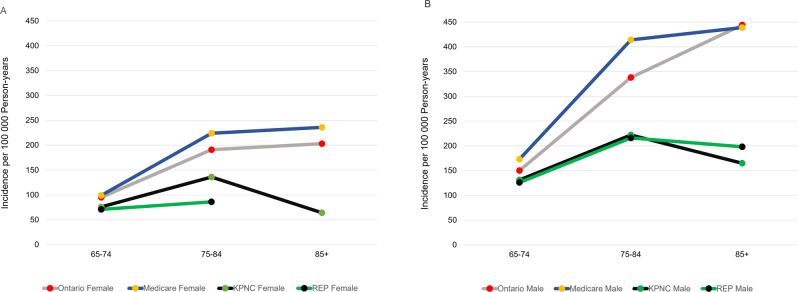
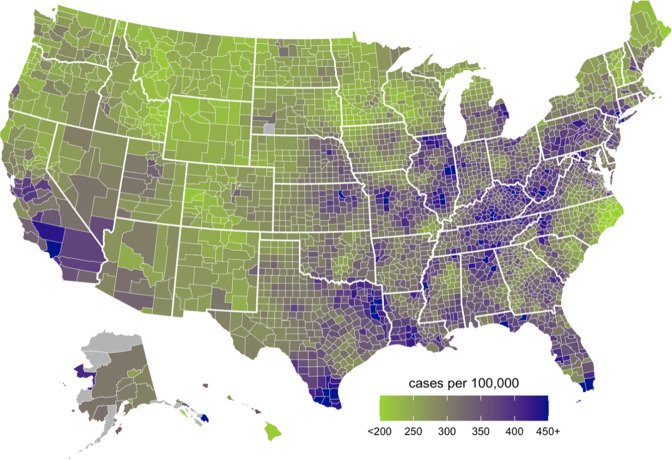
Parkinson disease (PD) is the second most common age-related neurodegenerative condition diagnosed in North America. We recently demonstrated, using multiple epidemiological data sources, that the prevalence of PD diagnoses was greater than previously reported and currently used for clinical, research, and policy decision-making. Prior PD incidence estimates have varied, for unclear reasons. There is a need for improved estimates of PD incidence, not only for care delivery planning and future policy but also for increasing our understanding of disease risk. The objective of this study was thus to investigate the incidence of Parkinson disease across five epidemiological cohorts in North America in a common year, 2012. The cohorts contained data on 6.7 million person-years of adults ages 45 and older, and 9.3 million person-years of adults ages 65 and older. Our estimates of age-sex-adjusted incidence of PD ranged from 108 to 212 per 100,000 among persons ages 65 and older, and from 47 to 77 per 100,00 among persons ages 45 and older. PD incidence increased with age and was higher among males. We also found persistent spatial clustering of incident PD diagnoses in the U.S. PD incidence estimates varied across our data sources, in part due to case ascertainment and diagnosis methods, but also possibly due to the influence of population factors (prevalence of genetic risk factors or protective markers) and geographic location (exposure to environmental toxins). Understanding the source of these variations will be important for health care policy, research, and care planning.
Overview
The claims and statistics of this paper haven’t been checked yet.
Free: it reads the open-access text and checks the first 5 claims that cite a source we can check. Create a free account to check every claim.
Integrity signals
Registry
Cites
Statistics
Figures
Verification
Claims the paper makes
The claims and statistics of this paper haven’t been checked yet.
Free: it reads the open-access text and checks the first 5 claims that cite a source we can check. Create a free account to check every claim.
Self-check
Percentages, sums and reported differences re-computed from the paper’s own numbers.
The self-check needs the paper’s full text.
Citations
Cites
Murray, C. J. L., Vos, T., Lozano, R., Naghavi, M., Flaxman, A. D., Michaud, C., Ezzati, M., Shibuya, K., Salomon, J. A., Abdalla, S., et al. (2012) · The Lancet · doi:10.1016/s0140-6736(12)61689-4 · Cited by 8,888
Self-citationEpidemiology of Parkinson's disease
de Lau, L. M., & Breteler, M. M. (2006) · The Lancet Neurology · doi:10.1016/s1474-4422(06)70471-9 · Cited by 4,110
The Neuroendocrinology of Stress: A Never Ending Story
Lightman, S. L. (2008) · Journal of Neuroendocrinology · doi:10.1111/j.1365-2826.2008.01711.x · Cited by 3,566
The Emerging Evidence of the Parkinson Pandemic
Dorsey, E. R., Sherer, T., Okun, M. S., & Bloem, B. R. (2018) · Journal of Parkinson’s Disease · doi:10.3233/jpd-181474 · Cited by 1,977 · cited 1×
“Parkinson disease is the second most common age-related neurodegenerative disease in the world and is responsible for signi fi cant disability and increased risks of dementia and mortality 11 – 14 .”
Prevalence of Dementia in the United States: The Aging, Demographics, and Memory Study
Plassman, B. L., Langa, K. M., Fisher, G. G., Heeringa, S. G., Weir, D. R., Ofstedal, M. B., Burke, J. R., Hurd, M. D., Potter, G. G., Rodgers, W. L., et al. (2007) · Neuroepidemiology · doi:10.1159/000109998 · Cited by 1,932 · cited 1×
“Symptomatic cognitive dysfunction or dementia, due to Alzheimer disease, vascular dementia, toxic or metabolic cognitive dysfunction, increases with age 52 and becomes very prevalent in the 8 th decade and beyond 12,53,54 .”
Incidence of Parkinson's Disease: Variation by Age, Gender, and Race/Ethnicity
Van Den Eeden, S. K. (2003) · American Journal of Epidemiology · doi:10.1093/aje/kwg068 · Cited by 1,747 · cited 3×
“Nevertheless, this contrasts sharply with the estimate of 40,000-60,000 new cases per annum that has been cited previously for PD incidence 6,10 .”
Healy, D. G., Falchi, M., O'Sullivan, S. S., Bonifati, V., Durr, A., Bressman, S., Brice, A., Aasly, J., Zabetian, C. P., Goldwurm, S., et al. (2008) · The Lancet Neurology · doi:10.1016/s1474-4422(08)70117-0 · Cited by 1,425
Self-citationMDS research criteria for prodromal Parkinson's disease
Berg, D., Postuma, R. B., Adler, C. H., Bloem, B. R., Chan, P., Dubois, B., Gasser, T., Goetz, C. G., Halliday, G., Joseph, L., et al. (2015) · Movement Disorders · doi:10.1002/mds.26431 · Cited by 1,309 · cited 1×
“This is especially true given the evidence that early diagnosis of parkinsonism secondary to PD associates with improved patient outcomes and clinician decision making 47 – 51 .”
Prevalence of Parkinson’s disease across North America
Marras, C., Beck, J. C., Bower, J. H., Roberts, E., Ritz, B., Ross, G. W., Abbott, R. D., Savica, R., Van Den Eeden, S. K., Willis, A. W., et al. (2018) · npj Parkinson's Disease · doi:10.1038/s41531-018-0058-0 · Cited by 968 · cited 1×
“Recently, we performed meta estimates of the 2010 prevalence of PD in North America, using multinational data from current and past epidemiology projects 4 .”
Self-citationAgeing and Parkinson's disease: Why is advancing age the biggest risk factor?
Reeve, A., Simcox, E., & Turnbull, D. (2014) · Ageing Research Reviews · doi:10.1016/j.arr.2014.01.004 · Cited by 947 · cited 1×
“Indeed, the single greatest risk factor for PD is advanced age 2,3 .”
Research works printed but not linked: 2
- Tinelli, M., Kanavos, P. & Grimaccia, F. the Value of Early Diagnosis and Treatment in Parkinson’s Disease: A Literature Review of the Potential Clinical and Socioeconomic Impact of Targeting Unmet Needs in Parkinson’s Disease (The London School of Economics and Political Science, 2016).
- Rukovets O Global burden of motor neuron disease is growing, signaling need for more specialists Neurol. Today 2019 19 16 18
Cited by
Items 301–341 of 341
Kang, T. W., Srinivasan, R., Brinkmeyer‐Langford, C., & Welsh, C. J. (2026) · Brain Behavior & Immunity - Health · doi:10.1016/j.bbih.2026.101230 · Cited by 1
Development of a new methodology for quantitative analysis of rigidity in Parkinson’s disease
Alves, C. M. (2024) · theses.fr (ABES) · doi:10.70675/c7e3e326ze315z49e1z80e1z327c04d421ea
Treatment of Dysphonia in Patients with Parkinson’s Disease: A Scoping Review
Abarca, L., Arya, P., Singer, A., Ongkasuwan, J., & Szymanowski, A. R. (2026) · Journal of Voice · doi:10.1016/j.jvoice.2026.03.019
Parent, J. H., Levine, T., Freeman, R. L., & Gibbons, C. H. (2026) · Frontiers in Neurology · doi:10.3389/fneur.2026.1823991
“Over the last decade, the incidence of Parkinson’s disease has increased to 90,000 new cases per year (33).”
Pelletier, J., Wingood, M., Alcon, C. A., & Nedimyer, A. K. (2026) · doi:10.2196/preprints.96988
Xie, B., Parker, E., Deng, Q., & Yang, L. (2026) · Experimental Brain Research · doi:10.1007/s00221-026-07295-w
“Moreover, aging enhances the pathogenic conversion and aggregation propensity of α-syn, increases oxidative burden, and weak-ens autophagic-lysosomal clearance pathways, thereby reducing the likelihood that exercise can effectively reverse or compensate for these deficits (Willis et al. 2022 ).”
Pure Autonomic Failure and Central Synucleinopathy Risk
Beach, P. A., & Freeman, R. L. (2026) · JAMA Neurology · doi:10.1001/jamaneurol.2026.0986
PDXAI: Parkinson’s Disease Prediction by employing Deep learning with Enhanced XAI
Kaur, G., Tiwari, D., Wani, N. A., & Bedi, J. (2025) · IEEE International Conference on Recent Trends in Computing and Smart Mobility (RCSM) · doi:10.1109/rcsm67767.2025.11507197
“With advancing age, individuals have an increased susceptibility to Parkinson’s disease [4].”
Micalos, P. S., Bramble, M., Fealy, S. M., Logan, P., & Wong, A. (2026) · Public Health · doi:10.1016/j.puhe.2026.106298
Ranjan, M., Thakur, V. V., Hodge, J., Fletcher, D., Oh, J., Murray, A. M., Chen, H. A., Dmytriw, A. A., Yedavalli, V. S., Colasurdo, M., et al. (2026) · Clinical Neurology and Neurosurgery · doi:10.1016/j.clineuro.2026.109479
Self-citationExposure to Air Pollutants and Lewy Body and Parkinson Disease–Related Dementias
Davydow, D. S., Pontone, G. M., Okun, M. S., Armstrong, M. J., Wimberley, T., Geels, C., Frohn, L. M., Brandt, J., Dreier, J. W., Christensen, J., et al. (2026) · JAMA Network Open · doi:10.1001/jamanetworkopen.2026.12601
Bhattacharya, A., Manjithaya, R. R., Chickabasaviah, Y. T., & Alladi, P. A. (2026) · Contemporary clinical neuroscience · doi:10.1007/978-3-032-18296-8_16
Lee, E.-J., Choi, H., Lee, M., Springer, G., & Kim, Y. (2026) · Clinical Parkinsonism & Related Disorders · doi:10.1016/j.prdoa.2026.100459
“Each year, about 90,000 individuals are newly diagnosed, mainly due to both genetic and geographical factors (e.g., increased exposure to pesticides), and age-* related risk factors (1).”
Prevalence, treatment and clinical outcomes of Parkinson’s disease in Nigeria: A systematic review
Aderinto, N., Kwape, J. M., Olatunji, G., Kokori, E., OYETOLA, E. O., Babalola, A. E., Egbunu, E. O., & Aljamea, F. H. (2026) · Global Neurological Insights · doi:10.1016/j.gni.2026.100011
Longitudinal study of changes in walking and cognition by motor subtype of Parkinson's disease
Olejua, P. A., McLain, A. C., Ghosal, R., Regan, E., & Flach, A. (2026) · Parkinsonism & Related Disorders · doi:10.1016/j.parkreldis.2026.108395
Recent antipsychotics use associated with elevated risk of Parkinson’s diseasePreprint
Neilson, L. E., Carnahan, R. M., Duffy, S. M., Kijewski, V., Narayanan, N. S., & Simmering, J. E. (2026) · medRxiv · doi:10.64898/2026.06.19.26356070
Grice, A. B., Kopell, B. H., Laborc, K. F., Lund, A. N., Chong, R. G., Spadaccia, M. R., Ona, G., Nadkarni, G. N., Crary, J. F., Charney, A. W., et al. (2026) · npj Parkinson s Disease · doi:10.1038/s41531-026-01422-8
County-level spatial distribution and hotspots of Parkinson’s disease mortality in the United StatesPreprint
Chiwoni, E. W. N., Nakiyingi, E., Banda, B. F., Mukwekwerere, E. D., Kalulu, P., & Foster, E. R. (2026) · Research Square · doi:10.21203/rs.3.rs-10197344/v1
Nikolenko, V. N., Rizaeva, N. A., Oganesyan, M. V., Zubkova, M., Golyshkina, M. S., Orluk, M. A., Pelicer, Y. C., Sabekia, R., Morozow, A., Pires, L. A. S., et al. (2026) · Current Behavioral Neuroscience Reports · doi:10.1007/s40473-026-00330-8
苏, 斌., Meng, F., Yao, L., Zhang, Y., Wang, T., Zhang, Y., Liu, J., & Lin, L. (2026) · Antioxidants · doi:10.3390/antiox15070882 · Cited by 2
“PD is a neurodegenerative disorder whose global prevalence is steadily increasing, highlighting an urgent need for effective interventions that also have minimal adverse effects [30].”
Environmental Risk in Parkinson Disease—Bring the Noise
Yang, D., Elser, H. C., & Willis, A. W. (2026) · JAMA Neurology · doi:10.1001/jamaneurol.2026.2274
Self-citationFaust, I. M., Camacho‐Soto, A., Krzyzanowski, B., Killion, J. A., & Racette, B. A. (2026) · Neuroepidemiology · doi:10.1159/000553577
Self-citationPreferences for Parkinson’s Disease Treatments: A Scoping Literature Review
Prieto, P. A., Boeri, M., Yan, C. H., & Baldwin, Z. (2026) · Patient · doi:10.1007/s40271-026-00827-0
Zheng, B., Wang, W., Lee, A., Gao, W., & Wang, X. (2026) · Frontiers in Neurology · doi:10.3389/fneur.2026.1844772
Happel, C., Grall, M. S., & Formella, A. E. (2026) · Journal of Neuroscience Nursing · doi:10.1097/jnn.0000000000000904
Plasma multi-miRNA models classify Alzheimer’s, Parkinson’s, and Lewy body dementia
Sandau, U. S., Wiedrick, J. T., McFarland, T. J., Yearout, D., Zabetian, C. P., Hu, S.-C., Tsuang, D. W., Quinn, J. F., & Saugstad, J. A. (2026) · Frontiers in Aging Neuroscience · doi:10.3389/fnagi.2026.1788991
“As expected, this AD-specific miRNA classifier achieved good separation of AD from NC (cvAUC = 0.75 [0.66, 0.82]) and almost no separation of either PD (cvAUC = 0.55 [0.46, 0.62]) or Classification of AD from PD and DLB using AD-specific multi-miRNA models.”
InfluentialBalsamo, J. M., & Bess, E. N. (2026) · ACS Bio & Med Chem Au · doi:10.1021/acsbiomedchemau.6c00110
Targeting Aberrant Protein-Protein Interactions in Cancer and Neurodegenerative Diseases
Ball, T. D. (2025) · Digital Commons - DU (University of Denver) · doi:10.56902/etdcrp.2025.222
Yanouri, O. A., Schuller, A. J., Rocha, S. M., Briggs, A. M., Martinez, P. A., Fernández, E., Strong, R., Li, X., Lehmler, H., Doorn, J. A., et al. (2026) · Frontiers in Toxicology · doi:10.3389/ftox.2026.1888799
Functional reorganization of motor subcircuits in Parkinson’s disease
Theofanopoulou, C., Bajaj, N., Sánchez, A. M., Crosson, B., Wolf, S. L., Krishnamurthy, V., McGregor, K., & Hackney, M. E. (2026) · Brain Communications · doi:10.1093/braincomms/fcag354 · Cited by 1
Rocha, F. C. D. O., Marques, C. H. D., Lemme, E., & Abrahão, L. (2026) · Clinics · doi:10.1016/j.clinsp.2026.101167
“19 To perform EMST, it was necessary to measure the participants' MEP.”
Baghel, D., & Ghosh, A. (2026) · Accounts of Chemical Research · doi:10.1021/acs.accounts.6c00390
Mecheri, Y. (2026) · Elsevier eBooks · doi:10.1016/b978-0-443-27702-3.00026-1
Case studies on the failures of animal research
Bailey, J., & Balls, M. (2026) · Elsevier eBooks · doi:10.1016/b978-0-443-26514-3.00011-4
Hui, Y. G., Wu, J., Shah, K., Mendez, R. C., Su, X., Wang, F., Borrome, M., Woolf, M. S., Yuan, M., & Mylott, W. R., Jr. (2026) · Bioanalysis · doi:10.1080/17576180.2026.2744032
Chen, J., Hou, S., Yu, Y., Qi, R., Pang, Y., Lin, Z., Liu, Z., & 刘建利 (2026) · Network Modeling Analysis in Health Informatics and Bioinformatics · doi:10.1007/s13721-026-00878-1
“Parkinson’s disease (PD) is a multisystem and multisymp - tom neurodegenerative disorder (Willis et al. 2022).”
Ye, J., Zhang, S. J., Guan, J., Shen, Z.-H., Wang, J., Yang, R., Huang, M., Li, Z.-M., Lin, Y., Gan, H., et al. (2026) · Frontiers in Nutrition · doi:10.3389/fnut.2026.1969279
Vascular Risk Factors and Late-Onset Epilepsy
Choi, H., Gutierrez, J., Wang, T., Liu, M., Leu, C., Misiewicz, S., Han, J., Bello, N. A., Biggs, M. L., Briceño, E. M., et al. (2026) · JAMA Neurology · doi:10.1001/jamaneurol.2026.3708
Wallace, G. L., Klein, C. B., Tao, S., Carey, M. E., Shea, L., & Klinger, L. G. (2026) · Autism · doi:10.1177/13623613261480394 · Cited by 2
Parkinson's Disease Burden, Inequality, and Projections in Asia, 1990–2050
Yang, S., Xu, F., Wang, S., Li, J., Xu, C., Yao, J., Wang, J., Zou, J., Huang, W., Lu, W., et al. (2026) · Parkinsonism & Related Disorders · doi:10.1016/j.parkreldis.2026.109032
BindingDB Entry 50022222: Discovery and Optimization of N-Heteroaryl Indazole LRRK2 Inhibitors.
BindingDB (2025) · UC San Diego · doi:10.7270/q2h136qn
Metadata
- Authors
- Willis, A. W., Roberts, E., Beck, J. C., Fiske, B., Ross, W., Savica, R., Van Den Eeden, S. K., Tanner, C. M., Marras, C., on behalf of the Parkinson’s Foundation P4 Group, Alcalay, R., Schwarzschild, M., Racette, B., Chen, H., Church, T., Wilson, B., & Doria, J. M.
- Affiliations
- University of Pennsylvania (US)
- Verge Genomics (United States) (US)
- Parkinson's Foundation (US)
- Michael J. Fox Foundation (US)
- Pacific Health Research and Education Institute (US)
- Mayo Clinic (US)
- University of California, San Francisco (US)
- University of Toronto (CA)
- Corresponding author
- Willis, A. W.
- ORCID
- Venue
- npj Parkinson's Disease
- Published
- 2022-12-15
- Volume
- 8
- Issue
- 1
- Pages
- 170-170
- ISSN
- 2373-8057 (ISSN-L)
- PMC
- PMC9755252
- OpenAlex
- W4311763498
- Semantic Scholar
- 6b5e607075af1a16d6cbb9a7f142da4e0600ab00
- Cited by
- 341
- References
- 79
- Citations by year
- 2026: 81 · 2025: 114 · 2024: 108 · 2023: 37 · 2022: 1
- FWCI
- 34.13
- Type
- journal article
- Language
- en
- Open access
- gold
- doi.org
- Licence
- cc-by
- creativecommons.org/licenses/by/4.0 (tdm)
- creativecommons.org/licenses/by/4.0 (vor)
- Locations
- npj Parkinson s Disease (publishedVersion, cc-by)
- PubMed Central (publishedVersion, cc-by)
- PubMed (publishedVersion)
- DOAJ (DOAJ: Directory of Open Access Journals) (submittedVersion, cc-by-sa)
- eScholarship (California Digital Library) (submittedVersion, cc-by)
- Funders
- Parkinson’s Foundation
- Michael J. Fox Foundation for Parkinson’s Research
- Topics
- Health Sciences › Medicine › Clinical Neurology › Parkinson's Disease Mechanisms and Treatments
- Health Sciences › Medicine › Psychiatry and Mental health › Dementia and Cognitive Impairment Research
- Health Sciences › Medicine › Clinical Neurology › Deep Brain Stimulation and Movement Disorders
- Keywords
- Parkinson's disease, incidence, older adults, spatial clustering, case ascertainment, diagnostic methods, epidemiological cohort, North America, environmental toxins, genetic risk factors
About these checks
Registry, retraction, Cites and statistics results are computed, not judged, with one exception: a printed reference that no index lists is read once by a model before it counts as a citation error. Claims are extracted by a model and kept only when their quote appears verbatim in the text; each cited source is then checked, with a model’s help, for whether it says what the claim relies on. Those verdicts can be wrong — read the claim’s quote and the cited source before relying on one.
Statistics and arithmetic are recomputed, not judged.
Confidence bands are shown only for fields calibrated on our annotated test set. None is calibrated yet, so no band is shown.
What counts as a claim ›How we measure confidence ›How we check this ›
Are you an author, or do you see a problem with this page? Request a review
Data sources
Bibliographic data: Semantic Scholar, OpenAlex, Crossref.
Contains information from the Semantic Scholar Academic Graph Datasets, made available under the ODC Attribution License (ODC-BY 1.0).
Semantic Scholar’s data is described in: Kinney, R., et al. (2023). The Semantic Scholar Open Data Platform. arXiv:2301.10140.
