

The neurobiology of treatment-resistant schizophrenia: paths to antipsychotic resistance and a roadmap for future research
Open accessThe DOI matches its Crossref record; 100 of the 100 references it cites were found in a registry or an index.
Abstract
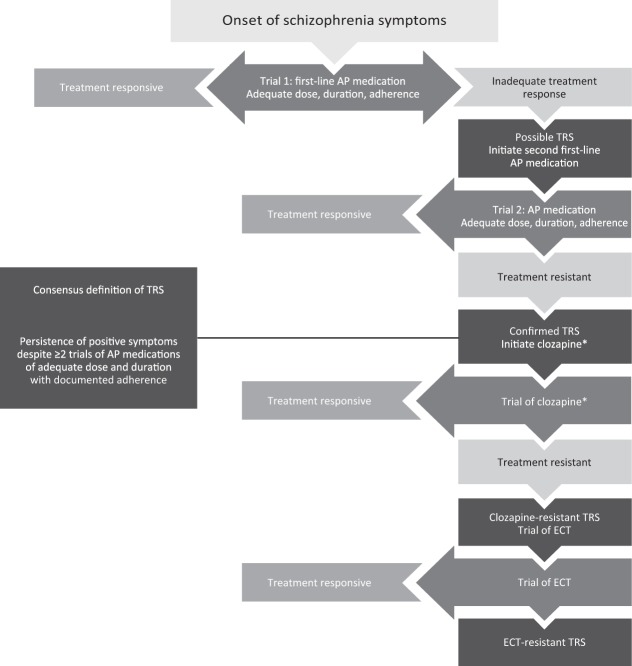
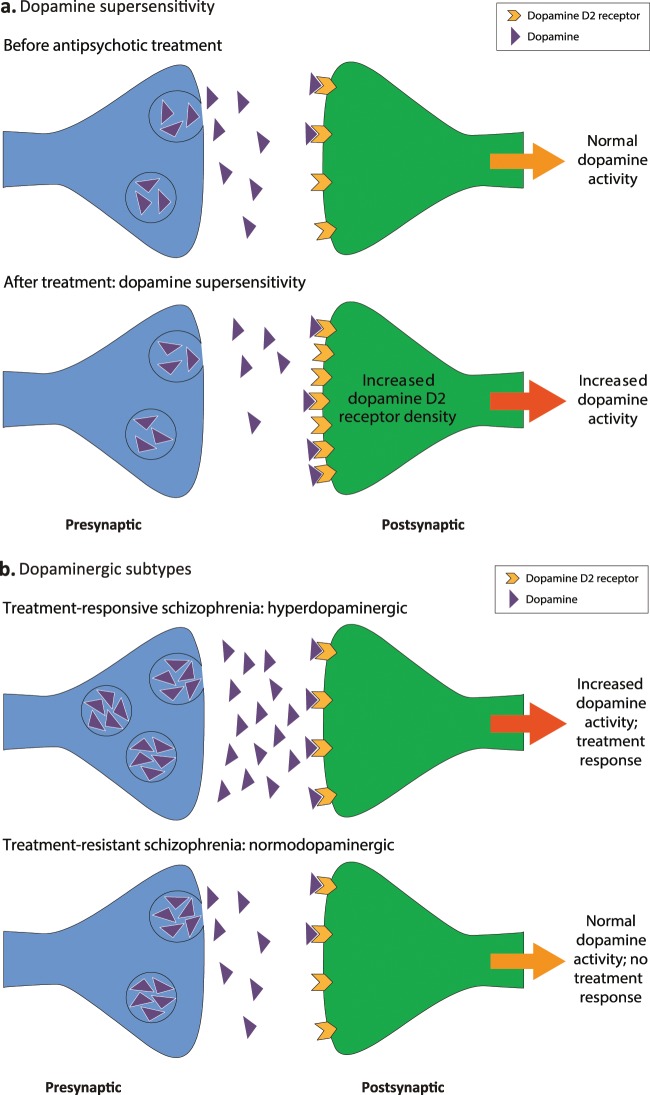
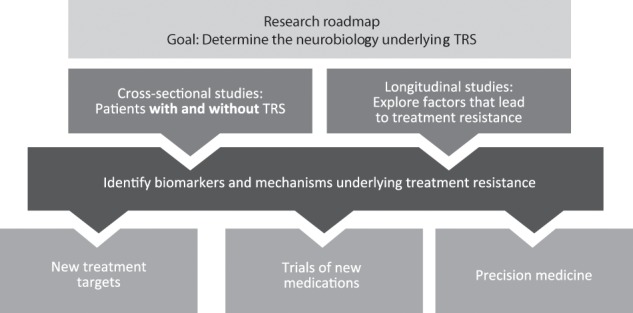
Treatment-resistant schizophrenia (TRS), the persistence of positive symptoms despite ≥2 trials of adequate dose and duration of antipsychotic medication with documented adherence, is a serious clinical problem with heterogeneous presentations. TRS can vary in its onset (at the first episode of psychosis or upon relapse), in its severity, and in the response to subsequent therapeutic interventions (i.e., clozapine, electroconvulsive therapy). The heterogeneity of TRS indicates that the underlying neurobiology of TRS may differ not only from treatment-responsive schizophrenia but also among patients with TRS. Several hypotheses have been proposed for the neurobiological mechanisms underlying TRS, including dopamine supersensitivity, hyperdopaminergic and normodopaminergic subtypes, glutamate dysregulation, inflammation and oxidative stress, and serotonin dysregulation. Research supporting these hypotheses is limited in part by variations in the criteria used to define TRS, as well as by the biological and clinical heterogeneity of TRS. Clinical trial designs for new treatments should be informed by this heterogeneity, and further clinical research is needed to more clearly understand the underlying neurobiology of TRS and to optimize treatment for patients with TRS.
Overview
The claims and statistics of this paper haven’t been checked yet.
Free: it reads the open-access text and checks the first 5 claims that cite a source we can check. Create a free account to check every claim.
Integrity signals
Registry
Cites
Statistics
Figures
Verification
Claims the paper makes
The claims and statistics of this paper haven’t been checked yet.
Free: it reads the open-access text and checks the first 5 claims that cite a source we can check. Create a free account to check every claim.
Claims other papers make about this one
Each is checked against this paper’s own text: does it say what the citing paper says it does?
The source backs part of the claim, not all of it — or backs it for a different population, condition or comparison.
In the citing paper
“There are three broad disease models proposed by the literature to explain treatment resistance, summarised in Figure 5 (see eAppendix 3 for search details). 48–51”
From Treatment resistance in psychiatry: state of the art and new directions (2022) · cites this paper as [48]
Experimental — accuracy not yet measured
Self-check
Percentages, sums and reported differences re-computed from the paper’s own numbers.
The self-check needs the paper’s full text.
Citations
Cites
Meta-Analysis of Cytokine Alterations in Schizophrenia: Clinical Status and Antipsychotic Effects
Miller, B. J., Buckley, P., Seabolt, W., Mellor, A., & Kirkpatrick, B. (2011) · Biological Psychiatry · doi:10.1016/j.biopsych.2011.04.013 · Cited by 1,742 · cited 1×
“Candidate serological biomarkers for TRS associated with schizophrenia treatment response could include decreased brain-derived neurotrophic factor (BDNF) and levels of soluble interleukin (IL)–2 receptor (sIL-2R), IL-6, and IL-1 receptor antagonist (IL-1RA).(81,91,92) Other candidate biomarkers could include normal s…”
BackgroundAntipsychotic drug doses and neuroleptic/dopamine receptors
SEEMAN, P., LEE, T., CHAU-WONG, M., & WONG, K. (1976) · Nature · doi:10.1038/261717a0 · Cited by 1,622
Discovering the Neural Basis of Human Social Anxiety: A Diagnostic and Therapeutic Imperative
Charney, D. S. (2004) · American Journal of Psychiatry · doi:10.1176/appi.ajp.161.1.1 · Cited by 1,428
Meltzer, H. Y., Matsubara, S., & Lee, J. C. (1989) · The Journal of Pharmacology and Experimental Therapeutics · doi:10.1016/s0022-3565(25)20710-8 · Cited by 1,349
Howes, O. D., McCutcheon, R., Agid, O., de Bartolomeis, A., van Beveren, N. J. M., Birnbaum, M. L., Bloomfield, M. A. P., Bressan, R. A., Buchanan, R. W., Carpenter, W. T., et al. (2017) · American Journal of Psychiatry · doi:10.1176/appi.ajp.2016.16050503 · Cited by 1,132
Self-citationHowes, O. D., Kambeitz, J., Kim, E., Stahl, D., Slifstein, M., Abi-Dargham, A., & Kapur, S. (2012) · Archives of General Psychiatry · doi:10.1001/archgenpsychiatry.2012.169 · Cited by 967 · cited 1×
“Increased striatal dopamine synthesis and release capacity in vivo are linked to psychotic relapse and the development of the first psychotic episode, with large effect size elevations on metaanalysis.(54) However, it has been proposed that not all patients with schizophrenia display striatal hyperdopaminergic activit…”
BackgroundSelf-citationLeucht, S., Tardy, M., Komossa, K., Heres, S., Kissling, W., Salanti, G., & Davis, J. M. (2012) · The Lancet · doi:10.1016/s0140-6736(12)60239-6 · Cited by 931 · cited 1×
“However, a meta-analysis failed to find differences in relapse rates between patients gradually or abruptly discontinuing antipsychotic medications.(47) A recent study found that relapse rates were higher in patients withdrawn from long-acting injectable paliperidone palmitate (i.”
Practice Guideline for the Treatment of Patients With Schizophrenia Second Edition
(2007) · APA Practice Guidelines for the Treatment of Psychiatric Disorders: Comprehensive Guidelines and Guideline Watches · doi:10.1176/appi.books.9780890423363.45859 · Cited by 737
Glutamate and dopamine in schizophrenia: An update for the 21 st century
Howes, O., McCutcheon, R., & Stone, J. (2015) · Journal of Psychopharmacology · doi:10.1177/0269881114563634 · Cited by 702 · cited 2×
“The most prominent hypothesis for the involvement of other neurotransmitter systems in the neurobiology of schizophrenia is the glutamate hypothesis, which suggests that dopamine hyperactivity is downstream of GABA and glutamate dysregulation.(26) According to the glutamate hypothesis, NMDA receptor dysfunction on GAB…”
BackgroundSelf-citationPharmacologic mechanisms of serotonergic regulation of dopamine neurotransmission
Alex, K. D., & Pehek, E. A. (2007) · Pharmacology & Therapeutics · doi:10.1016/j.pharmthera.2006.08.004 · Cited by 658 · cited 1×
“Serotonin plays a complex role in modification of dopamine neurotransmission and is thought to contribute to the neurobiology of schizophrenia.(85,86) There is evidence of lower levels of serotonin 2A receptors (and higher levels of serotonin 1A receptors) postmortem with moderate to large effect sizes in schizophreni…”
Background
Cited by
Items 301–381 of 381
Development and validation of polygenic risk profiles of schizophreniaPreprint
Kocak, E., Naamanka, J., Gradinger, T., Klaassen, F., Nitsche, J., Grotehusmann, P., Adorjan, K., Antonucci, L. A., Blasi, G., Budde, M., et al. (2025) · medRxiv · doi:10.1101/2025.04.29.25326656 · Cited by 1
Croy, E. (2020) · Otago University Research Archive (University of Otago) · Cited by 2
Tronchin, G. (2021) · Arrow@dit (Dublin Institute of Technology) · doi:10.13025/17075
Ferrara, M. (2021) · Research Publications (Maastricht University) · doi:10.26481/dis.20210312mf
Sarno, E. S. D. (2020) · Digital Library of Theses and Dissertations (Universidade de São Paulo) · doi:10.11606/d.5.2020.tde-16062021-140712
Qubad, M., & Bittner, R. A. (2021) · PsyArXiv (OSF Preprints) · doi:10.31234/osf.io/bmr2a
“Golden Shot” in the Treatment and Diagnosis of Schizophrenia: Psychiatrists or Neuroscientists?
Dubatova, I. V., Antsyborov, L. A., Хейгетян, А. В., & Antsyborov, A. V. (2021) · Interactive science · doi:10.21661/r-555399
Antipsychotic activity of a new PTPN5 blocker (TC-2051) in mice with the Disc1-L100P mutation
(2022) · International Multiconference on Bioinformatics of Genome Regulation and Structure / Systems Biology (BGRS/SB) · doi:10.18699/sbb-2022-423
Developmental Manipulation-Induced Changes in Cognitive Functioning
Kaki, S., DeRosa, H., Timmerman, B. M., Brummelte, S., Hunter, R. G., & Kentner, A. C. (2022) · Current topics in behavioral neurosciences · doi:10.1007/7854_2022_389
Esquizofrenia resistente: artículo de revisión
Meza, D. C., Kamenoff, Z. E. N., Navarro, D. J. V., García, A. C. C., David, M. C. M., Romero, J. J. M., Rueda, E. J. Q., & Henriquez, V. R. M. (2022) · Ciencia Latina Revista Científica Multidisciplinar · doi:10.37811/cl_rcm.v6i4.2640
Autres applications en psychiatrie
Vlaicu, M. B. ̆., & Vlaicu, A. (2023) · Elsevier eBooks · doi:10.1016/b978-2-294-77862-9.00006-2
Cannabidiol as a Treatment for Schizophrenia
Lisboa, J. R., Simei, J. L. Q., Souza, J. D. R., & Gomes, F. V. (2023) · Psychiatric Annals · doi:10.3928/00485713-20230505-01
Opţiuni terapeutice în schizofrenia ultrarezistentă. Intervenţii farmacologice (I)
Vasiliu, O. (2023) · Psihiatru ro · doi:10.26416/psih.72.1.2023.7932
Pharmacotherapy in women with schizophrenia
Szulc, A. (2023) · Psychiatria Spersonalizowana · doi:10.5114/psychs.2023.125305
Case reports in psychopharmacology
(2024) · Frontiers research topics · doi:10.3389/978-2-8325-4421-1
Tréhout, M. (2022) · theses.fr (ABES) · doi:10.70675/ff3a37f3zd83fz4e78zb01fz1f86238feec7 · Cited by 3
Caracterização do comprometimento cognitivo da esquizofrenia resistente a clozapina
da Silva, S. A. L. (2023) · Digital Library of Theses and Dissertations (Universidade de São Paulo) · doi:10.11606/d.5.2023.tde-05032024-121157
Warnick, J. A., Gifeisman, R. I., Joshi, K. P., Roe, S. A., Hiciano, R. A., Conroy, C. P., & Zahedi, S. (2024) · Journal of Correctional Health Care · doi:10.1089/jchc.23.09.0079
“…up to 34% of patients do not respond adequately and are defined as having treatment-resistant schizophrenia (TRS) when symptoms fail to improve after two trials of different antipsychotics at an adequate therapeutic dose and duration and with confirmed medication adherence (Potkin et al. , 2020).”
Reviews In Psychiatry 2023: Schizophrenia
(2024) · Frontiers research topics · doi:10.3389/978-2-8325-5171-4
Predictors of continuation for asenapine from real-world data in patients with schizophrenia
Takekita, Y., Hiraoka, S., Iwama, Y., Matsui, D., Aoki, N., Ogata, H., Funatsuki, T., Shimizu, T., Murase, Y., Shimamoto, Y., et al. (2024) · Annals of General Psychiatry · doi:10.1186/s12991-024-00512-2
Joo, S. W., Kim, S. K., Lee, W. H., Kim, S. H., & Lee, J. S. (2024) · Frontiers in Psychiatry · doi:10.3389/fpsyt.2024.1464066 · Cited by 1
Symptom Profiles And Clinical Correlates Of Paranoid Schizophrenia In Vietnamese Patients
Dinh, H. V., Tran, A. H., Truong, D. T., Nguyen, H. M., Huynh, L. N., Nguyen, L. V., Nguyen, K. D., Nguyen, H. M., & Dang, C. T. (2024) · Journal for ReAttach Therapy and Developmental Diversities · doi:10.53555/jrtdd.v7i6.3185
Javier, U. G. (2024) · Carleton University's Institutional Repository (MacOdrum Library, Carleton University) · doi:10.22215/etd/2024-16197
Sun, X., Xu, Y., Wu, Y., Li, M., Qiu, Y., Su, Q., Wang, J., Li, J., & Mao, F. (2025) · Schizophrenia Research · doi:10.1016/j.schres.2025.02.002
Blouzard, E. (2024) · theses.fr (ABES) · doi:10.70675/6b5733e6zca20z48adz8fb8zad22e082a5b2
Translational perspectives of endocrine alterations in psychosis: Are we there yet?
Misiak, B., & Labad, J. (2025) · Psychoneuroendocrinology · doi:10.1016/j.psyneuen.2025.107419
Watts, D., Moulden, H. M., Mамак, М., Passos, I. C., & Chaimowitz, G. A. (2025) · medRxiv · doi:10.1101/2025.03.06.25321797
“This pattern highlights a key distinction between pharmacological resistance and what previous literature terms "pseudo-resistance" - apparent non-response arising from suboptimal adherence, insufficient dosing, or diagnostic uncertainty rather than biological refractoriness 46-47 .”
Frontal and Parietal Alpha Asymmetry as Biomarkers for Negative Symptoms in Schizophrenia
Wu, Y.-C., Huang, C.-C., Wang, Y., Yang, C.-Y., Chang, W., Chang, C.-C., & Chang, H. (2025) · Psychiatry Investigation · doi:10.30773/pi.2024.0354
“24 This suggests that over time, the therapeutic effects and compensatory mechanisms may gradually diminish.”
Schwer behandelbare Schizophrenie
von Luxburg, S., Wagner, E. M., & Strube, W. (2025) · InFo Neurologie + Psychiatrie · doi:10.1007/s15005-025-4308-5
Kravchenko, I. V. (2024) · Psychology and Mental Health Care · doi:10.31579/2637-8892/252
Avaliação dos efeitos da ocitocina em pacientes com esquizofrenia refratária
Ferreira, A. C. (2025) · Digital Library of Theses and Dissertations (Universidade de São Paulo) · doi:10.11606/d.17.2025.tde-26052025-102627
Dopamine dysfunction in psychosis
McCutcheon, R. A., & Zauchenberger, C.-Z. (2025) · Handbook of behavioral neuroscience · doi:10.1016/b978-0-443-29867-7.00035-9
Burgess-Hull, A. J. (2025) · Journal of Addiction Medicine · doi:10.1097/adm.0000000000001559
Clinical and Psychopathological Features of Treatment-Resistant Schizophrenia
Kaydan, M. A., & Bravve, L. V. (2025) · Neuroscience and Behavioral Physiology · doi:10.1007/s11055-025-01857-1
“…of dopamine receptors, dopamine hyperpro-duction in the striatum, changes in the polymorphism of the dopamine transporter gene, dysregulation of glutamate, and increases in the level of oxidative stress [7], while there are no approaches to treatment for some of the possible links in pathogenesis.”
ELECTROCONVULSIVE THERAPY AS AN AUGMENTATION STRATEGY IN CLOZAPINE-RESISTANT SCHIZOPHRENIA
Zagajewska, A., Giba, A., Krygowska, A. M., Wąsik, M., Słupik, D., Reda, A., Śledziewska, A. M., Cyrkler, M., & Sieradocha, K. (2025) · Archiv Euromedica · doi:10.35630/2025/15/4.009
Xanomeline/Trospium (Cobenfy): A Novel Approach for the Treatment of Schizophrenia in Adults
Miron, A. A., Ifteni, P. I., Nguyen, T. V., & Dima, L. (2025) · American Journal of Therapeutics · doi:10.1097/mjt.0000000000002026
Schizophrenia: What We Know and What We Are Yet to Know
Chinonyerem, D., Awe, P. T., & Okaro, C. O. (2025) · Cureus · doi:10.7759/cureus.95890 · Cited by 2
“Regardless of this, no consistent relationship has been found between schizophrenia pathophysiology and D2 receptors [20,21].”
Reversal of ‘treatment resistance’ status of schizophrenia with clozapine: A case report
Biswas, T., Nath, S., & Mishra, B. R. (2025) · Psychiatria Danubina · doi:10.24869/psyd.2025.389
Systematic review of functional MRI applications for psychiatric disease subtypingPreprint
Miranda, L., Paul, R., Pütz, B., Koutsouleris, N., & Müller‐Myhsok, B. (2020) · Zenodo (CERN European Organization for Nuclear Research) · doi:10.5281/zenodo.3923918 · Cited by 2
Lenk, H. Ç., Koch, E. M., O’Connell, K. S., Smith, R. L., Akkouh, I. A., Djurovic, S., Andreassen, O. A., & Molden, E. (2024) · Figshare · doi:10.6084/m9.figshare.27123680
Sphingolipid Neurobiology of Schizophrenia and Its Treatment
Chestnykh, D. (2025) · doi:10.25593/open-fau-1579
Shizofrenija – tipovi, razvoj i liječenje
Rašan, P. (2023) · University of Zagreb University Computing Centre (SRCE)
Grot, S. (2023) · Papyrus : Institutional Repository (Université de Montréal) · doi:10.71781/29681
Dlugosz, L. (2021) · TSpace (University of Toronto) · Cited by 1
Prevención en los trabajos psicóticos: Un abordaje transversal
Aymerich, C. (2024) · Communities in ADDI (University of the Basque Country)
Bagali, K. B., Uppinkudru, C., Pathak, H., Parlikar, R. U., Samantaray, S., Jammigumpula, A., Pantoji, M., Reddy, S., Das, M., Joseph, J. T., et al. (2026) · Schizophrenia Research · doi:10.1016/j.schres.2026.01.025
Biological aspects of drug resistance in schizophrenia
Tikhonov, D. V., & Kaleda, V. G. (2026) · S S Korsakov Journal of Neurology and Psychiatry · doi:10.17116/jnevro202612601119
Therapieresistente Schizophrenie
Wagner, E. M., & Hasan, A. (2026) · Nervenheilkunde · doi:10.1055/a-2764-5774
SAĞLIK BİLİMLERİ Güncel Araştırmalar ve Yeni Eğilimler-3
SAHİN, F., & Geniş, B. (2021) · Kocaeli Üniversitesi - AVESİS
The Effects of Antipsychotics on Central Lipid-Mediated Regulation of Glucose Metabolism
Au, E. (2023) · TSpace (University of Toronto)
Torres‐Carmona, E. (2025) · TSpace (University of Toronto)
Deep Brain Stimulation for Psychiatric Disorders: A Systematic Review of Molecular Imaging with PET
Patil, S., Gerlach, A. D. M., Jeevika, F., Patel, R. K. P., Christner, E., Gujral, J., Gandhi, O. H., Writer, M., Wang, N. M., Kopylova, A., et al. (2026) · World Neurosurgery · doi:10.1016/j.wneu.2026.124933
Giné-Servén, E., Boix-Quintana, E., Ballesteros, A., Daví-Loscos, E., Guanyabens, N., Casado, V., Silles, S., Toll, A., Campana, M., Cuesta, M. J., et al. (2026) · Translational Psychiatry · doi:10.1038/s41398-026-03983-x
“It is essential to elucidate the underlying pathophysiology of TRS and identify its predictors and biomarkers for early detection and treatment [13].”
Corrales, A., Abadi, A. P., Bartoli, G., Pinto, C. B., Cabrera, A., Camino, S., Corral, R., Delmonte, G., Bonetto, G. G., Garay, C. J., et al. (2026) · Vertex Revista Argentina de Psiquiatría · doi:10.53680/vertex.v37i171.979
Pinhel, R. M. M., de Carvalho, I. G. R., Coutinho, F., Luz, M., Dionísio, R., Vilarinho, R., & Coya, P. (2026) · Psychiatry International · doi:10.3390/psychiatryint7020080
Donicz, P., Krzyściak, W., Szwajca, M., Śmierciak, N., Bryll, A., Karcz, P., Rozynek, M., Popiela, T., Silverstein, S. M., & Pilecki, M. W. (2026) · Journal of Psychiatric Research · doi:10.1016/j.jpsychires.2026.04.021
The design of multi-target ligands and their role in schizophrenia therapy: an update
Gagić, Ž., Popović-Nikolić, M. R., Čarapić, M., Zukic, S., Oljačić, S., & Nikolić, K. (2026) · Expert Opinion on Drug Discovery · doi:10.1080/17460441.2026.2669617
“By simultaneously modulating multiple targets, multi-target ligands can overcome or delay the development of resistance which can affect reach to 34% of patients with schizophrenia [76,77].”
Alharbi, M., Alshubaily, B., Fallata, E. O., Althagafi, E., & Almuqahwi, M. S. A. (2026) · Middle East Current Psychiatry · doi:10.1186/s43045-026-00640-3
“Clozapine is the treatment of choice for patients with treatment-resistant schizophrenia (TRS), defined as the persistence of positive symptoms despite at least two adequate trials of antipsychotic medication with confirmed adherence [21].”
Chiu, W.-H. M., Goh, A., Eratne, D., Malpas, C. B., Santillo, A. F., Janelidze, S., Hansson, O., Wannan, C., Merritt, A. H., Jayaram, M., et al. (2026) · The European Journal of Psychiatry · doi:10.1016/j.ejpsy.2026.100362
Kishi, Y., Takumi, I., & Nakajima‐Ohyama, K. C. (2026) · Psychiatry and Clinical Neurosciences Reports · doi:10.1002/pcn5.70383 · Cited by 2
“2 In this expanding landscape of novel targets, which includes rapid ‐ acting glutamatergic modulators and classic psychedelics, exogenous can-nabinoids have attracted attention due to their interactions with the endogenous cannabinoid system, a network regulating stress, affect, and cognition.”
Pjevac, M., Blagus, T., Oblak, A., Vogrinc, D., Terzić, T., Bon, J., & Dolžan, V. (2026) · Frontiers in Pharmacology · doi:10.3389/fphar.2026.1876365
“Early identification of patients at increased risk of TRS is clinically important because delayed initiation of clozapine is associated with poorer outcomes and a lower likelihood of achieving remission (Potkin et al., 2020).”
Leung, P. B. M., Wong, K. C.-Y., Smart, S. E., Zhang, N. R., Zheng, Z. Z., Qiu, J., Spinazzola, E., Pardiñas, A. F., Tubbs, J. D., Liu, A. C., et al. (2026) · medRxiv · doi:10.64898/2026.08.06.26359853
Elmas, S., & Üçok, A. (2026) · Nordic Journal of Psychiatry · doi:10.1080/08039488.2026.2720107
“Approximately 34% of adult patients with schizophrenia have treatment resistance [9–12].”
Zhao, H., Ding, Y., Xing, H., Zhang, Y., Li, M., Ding, L., Ye, W., Geng, L., Ye, H., & Bao, T. (2026) · Neuropsychiatric Disease and Treatment · doi:10.2147/ndt.s621364
“155 Therefore, the favorable outcomes observed in the NAcc group may be attributable, in part, to depletion of endogenous dopamine.”
The Role of Glutamatergic and Dopaminergic Genes in Resistant Schizophrenia: A Systematic Review
Moreno-Calle, M. T., Iñiguez-Barrio, S., Arrúe, A., & Erkoreka, L. (2026) · American Journal of Medical Genetics Part B Neuropsychiatric Genetics · doi:10.1002/ajmg.b.70031
López‐Hill, X., Marton, S., Richeri, A., Fabius, S., Urbanavicius, J., de Almeida, L. L., Echeverry, C., de Medina, V. S., Ferreiro, C., Castañé, A., et al. (2026) · Pharmacology Biochemistry and Behavior · doi:10.1016/j.pbb.2026.174260
Seward, M. (2026) · DalSpace (Dalhousie University)
Wang, T., Morrin, H., Majkic, N., Codling, D., Govind, R., Broadbent, M. T. M., Casetta, C., Kadra-Scalzo, G., Patel, R., Roberts, A., et al. (2026) · Research Square · doi:10.21203/rs.3.rs-10580263/v1
Kesby, J. P., Suetani, S., Sleight, I., Wood, J. C., Trott, M., McKeon, G. L., Dark, F. L., & Parker, S. (2026) · Australian & New Zealand Journal of Psychiatry · doi:10.1177/00048674261480588
Farhat, L. C., Sampaio, E. K., Nunes, D. D. A., Curiki, G. C., Taylor, J. H., Bloch, M. H., & Polanczyk, G. V. (2026) · Journal of the American Academy of Child & Adolescent Psychiatry · doi:10.1016/j.jaac.2026.09.002 · Cited by 1
Gao, T., Smith, R. C., Li, X., Zhang, S., Zhai, Z., Lu, C., Dong, Y., Zhuo, K., Xiang, Q., Wang, J., et al. (2026) · Schizophrenia Research · doi:10.1016/j.schres.2026.09.014
Bambico, F. R., Nicoglou, A., Relente, J., Surget, A., & Belzung, C. (2026) · Molecular Psychiatry · doi:10.1038/s41380-026-03872-1 · Cited by 1
Krishnadas, R., Leong, I. L., Fraczek, J., Fernández-Egea, E., & Palaniyappan, L. K. (2026) · Journal of Psychopharmacology · doi:10.1177/02698811261488465
Epigenetics processes involved in schizophrenia and antipsychotic treatment
MALIK, K., Davies, S. J. C., RAVINDRAN, N., & LUCA, V. D. (2026) · Handbook of clinical neurology · doi:10.1016/b978-0-443-19043-8.00024-4
Öz, A., Sağlam, Y., Turan, K., Fıçıcıoğlu, İ. E. G., Karaçetin, G., & Yeşilkaya, Ü. H. (2026) · European Child & Adolescent Psychiatry · doi:10.1007/s00787-026-03228-8 · Cited by 1
BindingDB Entry 50017122: Novel D
BindingDB (2023) · UC San Diego · doi:10.7270/q2ws8z8t
BindingDB Entry 50018428: Progress in mechanistically novel treatments for schizophrenia.
BindingDB (2024) · UC San Diego · doi:10.7270/q2fr01sz
Guo, D., Zong, R., Ma, Z., Lu, F., Zhang, Y., Zhang, S., Yao, Y., Bao, Y., Zhang, Y., Li, X., et al. (2026) · EClinicalMedicine · doi:10.1016/j.eclinm.2026.104299
Xiao, C., Jiang, Y., Lin, B. D., Xiang, S., Zhang, J., Collin, G., Wirsching, P., Schlagenhauf, F., Zhao, Y., Gong, H., et al. (2026) · Schizophrenia Bulletin · doi:10.1093/schbul/sbag143
Finger, S., Kim, E., & Clark, B. J. (2026) · Frontiers in Psychiatry · doi:10.3389/fpsyt.2026.1895122
Metadata
- Authors
- Potkin, S. G., Kane, J. M., Correll, C. U., Lindenmayer, J.-P., Agid, O., Marder, S. R., Olfson, M., & Howes, O. D.
- Affiliations
- University of California, Irvine (US)
- Feinstein Institute for Medical Research (US)
- NYU Langone Health (US)
- Centre for Addiction and Mental Health (CA)
- University of California, Los Angeles (US)
- Columbia University Irving Medical Center (US)
- King's College London (GB)
- Corresponding author
- Howes, Oliver D.
- ORCID
- Venue
- npj Schizophrenia
- Published
- 2020-01-07
- Volume
- 6
- Issue
- 1
- Pages
- 1-1
- ISSN
- 2334-265X (ISSN-L)
- PMC
- PMC6946650
- OpenAlex
- W2999966539
- Semantic Scholar
- 3bedfa2c5d60d9485bffa6488446b67df462d941
- Cited by
- 359
- References
- 100
- Citations by year
- 2026: 42 · 2025: 62 · 2024: 65 · 2023: 61 · 2022: 55 · 2021: 53 · 2020: 21
- FWCI
- 7.90
- Type
- journal article
- Language
- en
- Open access
- gold
- doi.org
- Licence
- cc-by
- creativecommons.org/licenses/by/4.0 (tdm)
- creativecommons.org/licenses/by/4.0 (vor)
- Locations
- Schizophrenia (publishedVersion, cc-by)
- Europe PMC (PubMed Central) (publishedVersion, cc-by)
- PubMed Central (publishedVersion, cc-by)
- PubMed (publishedVersion)
- DOAJ (DOAJ: Directory of Open Access Journals) (submittedVersion)
- eScholarship (California Digital Library) (submittedVersion)
- eScholarship (California Digital Library) (submittedVersion, cc-by)
- Research Portal (King's College London) (submittedVersion, cc-by)
- Funders
- Lundbeck
- Topics
- Health Sciences › Medicine › Psychiatry and Mental health › Schizophrenia research and treatment
- Life Sciences › Neuroscience › Cellular and Molecular Neuroscience › Neurotransmitter Receptor Influence on Behavior
- Health Sciences › Medicine › Pharmacology (medical) › Treatment of Major Depression
- Keywords
- treatment-resistant schizophrenia, antipsychotic resistance, neurobiology, dopamine supersensitivity, glutamate dysregulation, inflammation, oxidative stress, serotonin dysregulation, clozapine, electroconvulsive therapy, first-episode psychosis, relapse, treatment effect heterogeneity
About these checks
Registry, retraction, Cites and statistics results are computed, not judged, with one exception: a printed reference that no index lists is read once by a model before it counts as a citation error. Claims are extracted by a model and kept only when their quote appears verbatim in the text; each cited source is then checked, with a model’s help, for whether it says what the claim relies on. Those verdicts can be wrong — read the claim’s quote and the cited source before relying on one.
Statistics and arithmetic are recomputed, not judged.
Confidence bands are shown only for fields calibrated on our annotated test set. None is calibrated yet, so no band is shown.
What counts as a claim ›How we measure confidence ›How we check this ›
Are you an author, or do you see a problem with this page? Request a review
Data sources
Bibliographic data: Semantic Scholar, OpenAlex, Crossref.
Contains information from the Semantic Scholar Academic Graph Datasets, made available under the ODC Attribution License (ODC-BY 1.0).
Semantic Scholar’s data is described in: Kinney, R., et al. (2023). The Semantic Scholar Open Data Platform. arXiv:2301.10140.
