

The neurobiology of treatment-resistant schizophrenia: paths to antipsychotic resistance and a roadmap for future research
Open accessThe DOI matches its Crossref record; 100 of the 100 references it cites were found in a registry or an index.
Abstract
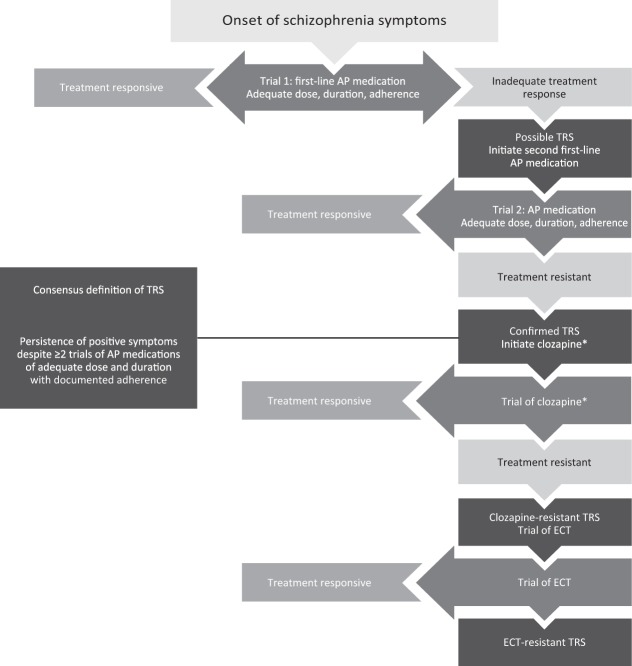
Treatment-resistant schizophrenia (TRS), the persistence of positive symptoms despite ≥2 trials of adequate dose and duration of antipsychotic medication with documented adherence, is a serious clinical problem with heterogeneous presentations. TRS can vary in its onset (at the first episode of psychosis or upon relapse), in its severity, and in the response to subsequent therapeutic interventions (i.e., clozapine, electroconvulsive therapy). The heterogeneity of TRS indicates that the underlying neurobiology of TRS may differ not only from treatment-responsive schizophrenia but also among patients with TRS. Several hypotheses have been proposed for the neurobiological mechanisms underlying TRS, including dopamine supersensitivity, hyperdopaminergic and normodopaminergic subtypes, glutamate dysregulation, inflammation and oxidative stress, and serotonin dysregulation. Research supporting these hypotheses is limited in part by variations in the criteria used to define TRS, as well as by the biological and clinical heterogeneity of TRS. Clinical trial designs for new treatments should be informed by this heterogeneity, and further clinical research is needed to more clearly understand the underlying neurobiology of TRS and to optimize treatment for patients with TRS.
Overview
The claims and statistics of this paper haven’t been checked yet.
Free: it reads the open-access text and checks the first 5 claims that cite a source we can check. Create a free account to check every claim.
Integrity signals
Registry
Cites
Statistics
Figures
Verification
Claims the paper makes
The claims and statistics of this paper haven’t been checked yet.
Free: it reads the open-access text and checks the first 5 claims that cite a source we can check. Create a free account to check every claim.
Claims other papers make about this one
Each is checked against this paper’s own text: does it say what the citing paper says it does?
The source backs part of the claim, not all of it — or backs it for a different population, condition or comparison.
In the citing paper
“There are three broad disease models proposed by the literature to explain treatment resistance, summarised in Figure 5 (see eAppendix 3 for search details). 48–51”
From Treatment resistance in psychiatry: state of the art and new directions (2022) · cites this paper as [48]
Experimental — accuracy not yet measured
Self-check
Percentages, sums and reported differences re-computed from the paper’s own numbers.
The self-check needs the paper’s full text.
Citations
Cites
Meta-Analysis of Cytokine Alterations in Schizophrenia: Clinical Status and Antipsychotic Effects
Miller, B. J., Buckley, P., Seabolt, W., Mellor, A., & Kirkpatrick, B. (2011) · Biological Psychiatry · doi:10.1016/j.biopsych.2011.04.013 · Cited by 1,742 · cited 1×
“Candidate serological biomarkers for TRS associated with schizophrenia treatment response could include decreased brain-derived neurotrophic factor (BDNF) and levels of soluble interleukin (IL)–2 receptor (sIL-2R), IL-6, and IL-1 receptor antagonist (IL-1RA).(81,91,92) Other candidate biomarkers could include normal s…”
BackgroundAntipsychotic drug doses and neuroleptic/dopamine receptors
SEEMAN, P., LEE, T., CHAU-WONG, M., & WONG, K. (1976) · Nature · doi:10.1038/261717a0 · Cited by 1,622
Discovering the Neural Basis of Human Social Anxiety: A Diagnostic and Therapeutic Imperative
Charney, D. S. (2004) · American Journal of Psychiatry · doi:10.1176/appi.ajp.161.1.1 · Cited by 1,428
Meltzer, H. Y., Matsubara, S., & Lee, J. C. (1989) · The Journal of Pharmacology and Experimental Therapeutics · doi:10.1016/s0022-3565(25)20710-8 · Cited by 1,349
Howes, O. D., McCutcheon, R., Agid, O., de Bartolomeis, A., van Beveren, N. J. M., Birnbaum, M. L., Bloomfield, M. A. P., Bressan, R. A., Buchanan, R. W., Carpenter, W. T., et al. (2017) · American Journal of Psychiatry · doi:10.1176/appi.ajp.2016.16050503 · Cited by 1,132
Self-citationHowes, O. D., Kambeitz, J., Kim, E., Stahl, D., Slifstein, M., Abi-Dargham, A., & Kapur, S. (2012) · Archives of General Psychiatry · doi:10.1001/archgenpsychiatry.2012.169 · Cited by 967 · cited 1×
“Increased striatal dopamine synthesis and release capacity in vivo are linked to psychotic relapse and the development of the first psychotic episode, with large effect size elevations on metaanalysis.(54) However, it has been proposed that not all patients with schizophrenia display striatal hyperdopaminergic activit…”
BackgroundSelf-citationLeucht, S., Tardy, M., Komossa, K., Heres, S., Kissling, W., Salanti, G., & Davis, J. M. (2012) · The Lancet · doi:10.1016/s0140-6736(12)60239-6 · Cited by 931 · cited 1×
“However, a meta-analysis failed to find differences in relapse rates between patients gradually or abruptly discontinuing antipsychotic medications.(47) A recent study found that relapse rates were higher in patients withdrawn from long-acting injectable paliperidone palmitate (i.”
Practice Guideline for the Treatment of Patients With Schizophrenia Second Edition
(2007) · APA Practice Guidelines for the Treatment of Psychiatric Disorders: Comprehensive Guidelines and Guideline Watches · doi:10.1176/appi.books.9780890423363.45859 · Cited by 737
Glutamate and dopamine in schizophrenia: An update for the 21 st century
Howes, O., McCutcheon, R., & Stone, J. (2015) · Journal of Psychopharmacology · doi:10.1177/0269881114563634 · Cited by 702 · cited 2×
“The most prominent hypothesis for the involvement of other neurotransmitter systems in the neurobiology of schizophrenia is the glutamate hypothesis, which suggests that dopamine hyperactivity is downstream of GABA and glutamate dysregulation.(26) According to the glutamate hypothesis, NMDA receptor dysfunction on GAB…”
BackgroundSelf-citationPharmacologic mechanisms of serotonergic regulation of dopamine neurotransmission
Alex, K. D., & Pehek, E. A. (2007) · Pharmacology & Therapeutics · doi:10.1016/j.pharmthera.2006.08.004 · Cited by 658 · cited 1×
“Serotonin plays a complex role in modification of dopamine neurotransmission and is thought to contribute to the neurobiology of schizophrenia.(85,86) There is evidence of lower levels of serotonin 2A receptors (and higher levels of serotonin 1A receptors) postmortem with moderate to large effect sizes in schizophreni…”
BackgroundCurrent Concepts and Treatments of Schizophrenia
Stępnicki, P., Kondej, M., & Kaczor, A. A. (2018) · Molecules · doi:10.3390/molecules23082087 · Cited by 556
Lodge, D. J., Behrens, M. M., & Grace, A. A. (2009) · The Journal of Neuroscience · doi:10.1523/jneurosci.5419-08.2009 · Cited by 488
Predictors of Treatment Response From a First Episode of Schizophrenia or Schizoaffective Disorder
Robinson, D. G., Woerner, M. G., Alvir, J. M. J., Geisler, S., Koreen, A., Sheitman, B., Chakos, M., Mayerhoff, D., Bilder, R., Goldman, R., et al. (1999) · American Journal of Psychiatry · doi:10.1176/ajp.156.4.544 · Cited by 466
Dopamine as the wind of the psychotic fire: new evidence from brain imaging studies
Laruelle, M., & Abi-Dargham, A. (1999) · Journal of Psychopharmacology · doi:10.1177/026988119901300405 · Cited by 461
Lodge, D. J., & Grace, A. A. (2007) · The Journal of Neuroscience · doi:10.1523/jneurosci.2847-07.2007 · Cited by 449
Buchanan, R. W., Javitt, D. C., Marder, S. R., Schooler, N. R., Gold, J. M., McMahon, R. P., Heresco-Levy, U., & Carpenter, W. T. (2007) · American Journal of Psychiatry · doi:10.1176/appi.ajp.2007.06081358 · Cited by 419 · cited 1×
“The multicenter CONSIST study also found no beneficial effects of high-dose glycine or glutamatergic agents on negative or cognitive schizophrenia symptoms.(76) Additionally, data from phase 3 S.”
BackgroundSelf-citationKishimoto, T., Robenzadeh, A., Leucht, C., Leucht, S., Watanabe, K., Mimura, M., Borenstein, M., Kane, J. M., & Correll, C. U. (2014) · Schizophrenia Bulletin · doi:10.1093/schbul/sbs150 · Cited by 395
Self-citationSiskind, D., Siskind, V., & Kisely, S. (2017) · The Canadian Journal of Psychiatry · doi:10.1177/0706743717718167 · Cited by 391 · cited 1×
“Up to 60% of patients with treatment resistance will not respond even to clozapine.(6,19) Although a wide variety of medication augmentation strategies have been tried, there is a lack of strong evidence regarding the efficacy of such strategies; thus, patients with TRS may have limited treatment options.”
BackgroundPetrides, G., Malur, C., Braga, R. J., Bailine, S. H., Schooler, N. R., Malhotra, A. K., Kane, J. M., Sanghani, S., Goldberg, T. E., John, M., et al. (2015) · American Journal of Psychiatry · doi:10.1176/appi.ajp.2014.13060787 · Cited by 352 · cited 4×
“Electroconvulsive therapy (ECT) was found to be helpful for some patients with clozapine-resistant schizophrenia.(22,23) There may be underlying biological differences between patients with TRS and patients with treatment-responsive schizophrenia.”
BackgroundInfluentialSelf-citationDopamine Synthesis Capacity Before Onset of Psychosis: A Prospective [ 18 F]-DOPA PET Imaging Study
Howes, O. D., Bose, S. K., Turkheimer, F., Valli, I., Egerton, A., Valmaggia, L. R., Murray, R. M., & McGuire, P. (2011) · American Journal of Psychiatry · doi:10.1176/appi.ajp.2011.11010160 · Cited by 343
Self-citationDemjaha, A., Egerton, A., Murray, R. M., Kapur, S., Howes, O. D., Stone, J. M., & McGuire, P. K. (2014) · Biological Psychiatry · doi:10.1016/j.biopsych.2013.06.011 · Cited by 342 · cited 6×
“There is evidence that abnormalities in glutamate regulation may specifically play a role in TRS.(24,25,69) Neuroimaging studies have measured brain glutamate levels in patients with schizophrenia in comparison with healthy controls.”
BackgroundResultInfluentialSelf-citationHeterogeneity and Homogeneity of Regional Brain Structure in Schizophrenia: A Meta-analysis
Brugger, S. P., & Howes, O. D. (2017) · JAMA Psychiatry · doi:10.1001/jamapsychiatry.2017.2663 · Cited by 332 · cited 1×
“There is also heterogeneity among patients with schizophrenia, including those with TRS, in their clinical characteristics, response to treatment, and underlying neurobiology.(90) It is likely that there are several distinct subgroups and neurobiological profiles of patients with TRS; further work is needed to differe…”
BackgroundSelf-citationClinical Guidance on the Identification and Management of Treatment-Resistant Schizophrenia
Kane, J. M., Agid, O., Baldwin, M. L., Howes, O., Lindenmayer, J.-P., Marder, S., Olfson, M., Potkin, S. G., & Correll, C. U. (2019) · The Journal of Clinical Psychiatry · doi:10.4088/jcp.18com12123 · Cited by 330 · cited 2×
“TRS results from lack of response to adequate exposure to medication with no confounding factors (Table 1), whereas pseudo-resistance may occur as a result of medication nonadherence, insufficient plasma levels of a medication, inadequate dosage or duration of treatment, misdiagnosis, adverse events of a treatment mas…”
BackgroundSelf-citationAntipsychotic Treatment and Functional Connectivity of the Striatum in First-Episode Schizophrenia
Sarpal, D. K., Robinson, D. G., Lencz, T., Argyelan, M., Ikuta, T., Karlsgodt, K., Gallego, J. A., Kane, J. M., Szeszko, P. R., & Malhotra, A. K. (2015) · JAMA Psychiatry · doi:10.1001/jamapsychiatry.2014.1734 · Cited by 327 · cited 1×
“Other candidate biomarkers could include normal striatal dopamine synthesis despite a schizophrenia diagnosis and resting state striatal connectivity.(24,93,94) Biomarkers that predict treatment resistance or clozapine response will likely be difficult to implement if they are very expensive or difficult to obtain (e.”
BackgroundSelf-citationDopamine Synthesis Capacity in Patients With Treatment-Resistant Schizophrenia
Demjaha, A., Murray, R. M., McGuire, P. K., Kapur, S., & Howes, O. D. (2012) · American Journal of Psychiatry · doi:10.1176/appi.ajp.2012.12010144 · Cited by 325 · cited 1×
“schizophrenia relative to patients with TRS, who, in turn, have a dopamine synthesis capacity similar to healthy controls.(24,53,55) Dopamine synthesis capacity in the striatum has been shown to be lower in patients with TRS who are clozapine-responsive compared with healthy controls or patients without TRS.”
BackgroundSelf-citationNeuroleptic-induced supersensitivity psychosis: clinical and pharmacologic characteristics
(1980) · American Journal of Psychiatry · doi:10.1176/ajp.137.1.16 · Cited by 301
Lally, J., Ajnakina, O., Di Forti, M., Trotta, A., Demjaha, A., Kolliakou, A., Mondelli, V., Reis Marques, T., Pariante, C., Dazzan, P., et al. (2016) · Psychological Medicine · doi:10.1017/s0033291716002014 · Cited by 298
Self-citationAntipsychotic treatment resistance in first-episode psychosis: prevalence, subtypes and predictors
Demjaha, A., Lappin, J. M., Stahl, D., Patel, M. X., MacCabe, J. H., Howes, O. D., Heslin, M., Reininghaus, U. A., Donoghue, K., Lomas, B., et al. (2017) · Psychological Medicine · doi:10.1017/s0033291717000435 · Cited by 289
Self-citationInflammation and the neural diathesis-stress hypothesis of schizophrenia: a reconceptualization
Howes, O. D., & McCutcheon, R. (2017) · Translational Psychiatry · doi:10.1038/tp.2016.278 · Cited by 288 · cited 1×
“Neuroinflammation early in life followed by chronic overactivation has been hypothesized to contribute to the etiology of schizophrenia; it is possible that high levels of inflammation play a role in treatment resistance as well.(80,81) Specific immune-inflammatory cytokine profiles have been associated with both trea…”
BackgroundSelf-citationCortisol and Inflammatory Biomarkers Predict Poor Treatment Response in First Episode Psychosis
Mondelli, V., Ciufolini, S., Belvederi Murri, M., Bonaccorso, S., Di Forti, M., Giordano, A., Marques, T. R., Zunszain, P. A., Morgan, C., Murray, R. M., et al. (2015) · Schizophrenia Bulletin · doi:10.1093/schbul/sbv028 · Cited by 286 · cited 3×
“Neuroinflammation early in life followed by chronic overactivation has been hypothesized to contribute to the etiology of schizophrenia; it is possible that high levels of inflammation play a role in treatment resistance as well.(80,81) Specific immune-inflammatory cytokine profiles have been associated with both trea…”
BackgroundKapur, S., & Seeman, P. M. (2000) · PubMed · Cited by 284
Antipsychotic-Induced Dopamine Supersensitivity Psychosis: Pharmacology, Criteria, and Therapy
Chouinard, G., Samaha, A.-N., Chouinard, V.-A., Peretti, C.-S., Kanahara, N., Takase, M., & Iyo, M. (2017) · Psychotherapy and Psychosomatics · doi:10.1159/000477313 · Cited by 270 · cited 3×
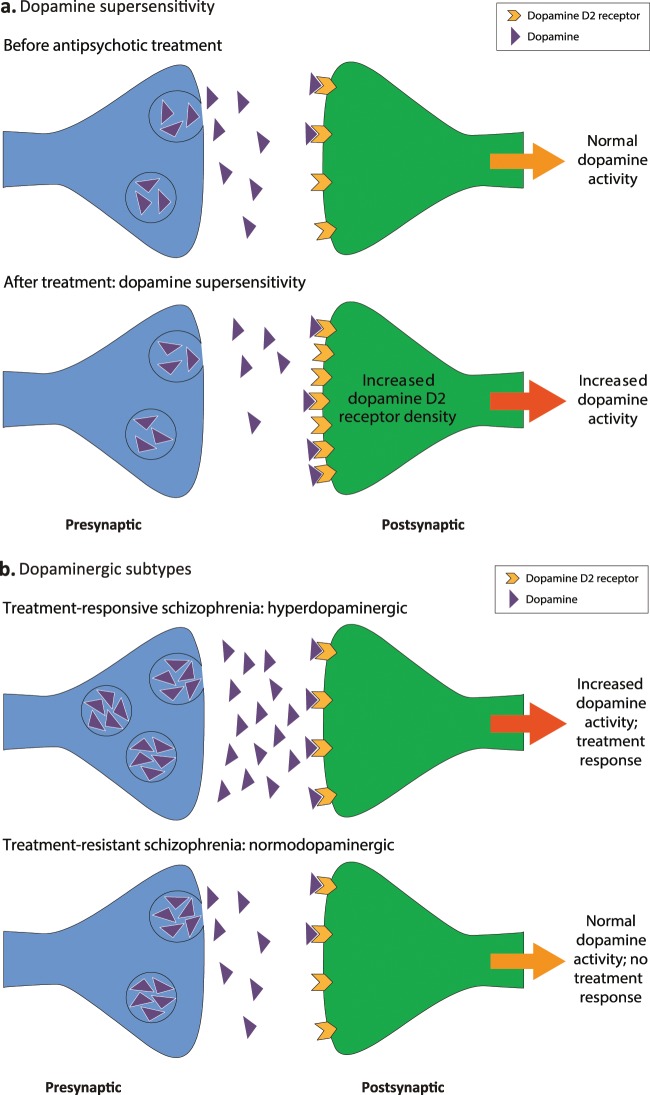
“2a).(33,37) In turn, increases in antipsychotic medication doses to control breakthrough symptoms are thought to lead to further increases in DRD2 density, resulting in increased dopamine supersensitivity, and consequently, the reemergence of symptoms.”
BackgroundResultInfluentialClinical predictors of therapeutic response to antipsychotics in schizophrenia
Carbon, M., & Correll, C. U. (2014) · Dialogues in Clinical Neuroscience · doi:10.31887/dcns.2014.16.4/mcarbon · Cited by 257
Self-citationMouchlianitis, E., Bloomfield, M. A. P., Law, V., Beck, K., Selvaraj, S., Rasquinha, N., Waldman, A., Turkheimer, F. E., Egerton, A., Stone, J., et al. (2016) · Schizophrenia Bulletin · doi:10.1093/schbul/sbv151 · Cited by 225 · cited 2×
“Neuroimaging studies have measured brain glutamate levels in patients with schizophrenia in comparison with healthy controls.(24,70) Glutamate levels in the anterior cingulate cortex were higher in patients with TRS compared with healthy controls or patients with schizophrenia who were treatment responsive.”
ResultSelf-citationAgid, O., Arenovich, T., Sajeev, G., Zipursky, R. B., Kapur, S., Foussias, G., & Remington, G. (2011) · The Journal of Clinical Psychiatry · doi:10.4088/jcp.09m05785yel · Cited by 224
Self-citationNeuroleptic-induced supersensitivity psychosis
(1978) · American Journal of Psychiatry · doi:10.1176/ajp.135.11.1409 · Cited by 224
Selvaraj, S., Arnone, D., Cappai, A., & Howes, O. (2014) · Neuroscience & Biobehavioral Reviews · doi:10.1016/j.neubiorev.2014.06.005 · Cited by 223 · cited 1×
“There is evidence of lower levels of serotonin 2A receptors (and higher levels of serotonin 1A receptors) postmortem with moderate to large effect sizes in schizophrenia in general, although imaging findings are inconsistent and treatment resistance has received little attention.(87) Notwithstanding this, polymorphism…”
BackgroundSelf-citationGitlin, M., Nuechterlein, K., Subotnik, K. L., Ventura, J., Mintz, J., Fogelson, D. L., Bartzokis, G., & Aravagiri, M. (2001) · American Journal of Psychiatry · doi:10.1176/appi.ajp.158.11.1835 · Cited by 217 · cited 1×
“However, relapse profiles, as well as clinical characteristics, are generally similar in patients with longer and shorter treatment durations.(43) From a clinical perspective, relapse despite full adherence after achieving remission does occur, as can best be seen in relapses on longacting injectable antipsychotic med…”
BackgroundCorrell, C. U., Rubio, J. M., Inczedy-Farkas, G., Birnbaum, M. L., Kane, J. M., & Leucht, S. (2017) · JAMA Psychiatry · doi:10.1001/jamapsychiatry.2017.0624 · Cited by 214 · cited 4×
“In patients with TRS not responding to clozapine, concomitant use of glutamate release inhibitors such as lamotrigine(73) or topiramate(79) may increase treatment response; however, the quality of studies has been mixed, and the efficacy of various pharmacological augmentation strategies in patients with clozapine-res…”
BackgroundInfluentialSelf-citationBaseline Striatal Functional Connectivity as a Predictor of Response to Antipsychotic Drug Treatment
Sarpal, D. K., Argyelan, M., Robinson, D. G., Szeszko, P. R., Karlsgodt, K. H., John, M., Weissman, N., Gallego, J. A., Kane, J. M., Lencz, T., et al. (2016) · American Journal of Psychiatry · doi:10.1176/appi.ajp.2015.14121571 · Cited by 212 · cited 1×
“Other candidate biomarkers could include normal striatal dopamine synthesis despite a schizophrenia diagnosis and resting state striatal connectivity.(24,93,94) Biomarkers that predict treatment resistance or clozapine response will likely be difficult to implement if they are very expensive or difficult to obtain (e.”
BackgroundSelf-citationHowes, O. D., & Kapur, S. (2014) · British Journal of Psychiatry · doi:10.1192/bjp.bp.113.138578 · Cited by 203 · cited 4×
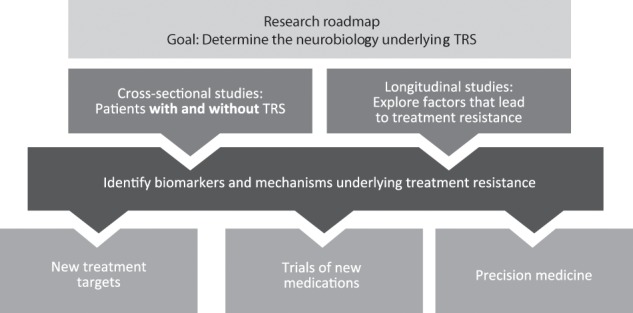
“The neurobiological diversity of schizophrenia as exemplified by TRS suggests that clinical trial strategies need to be informed by both the biology and diverse clinical presentation of the individual patient.(25) The cross-sectional diversity of the neurobiology of TRS, coupled with the clinical evidence for TRS bein…”
BackgroundResultInfluentialSelf-citationTakeuchi, H., Siu, C., Remington, G., Fervaha, G., Zipursky, R. B., Foussias, G., & Agid, O. (2019) · Neuropsychopharmacology · doi:10.1038/s41386-018-0278-3 · Cited by 200 · cited 2×
“Thus, it is likely that TRS apparent at the first episode of schizophrenia is neurobiologically distinct from TRS that develops over time.(10)”
BackgroundSelf-citationKahn, R. S., Winter van Rossum, I., Leucht, S., McGuire, P., Lewis, S. W., Leboyer, M., Arango, C., Dazzan, P., Drake, R., Heres, S., et al. (2018) · The Lancet Psychiatry · doi:10.1016/s2215-0366(18)30252-9 · Cited by 193
Glutamate Neurocircuitry: Theoretical Underpinnings in Schizophrenia
Schwartz, T. L., Sachdeva, S., & Stahl, S. M. (2012) · Frontiers in Pharmacology · doi:10.3389/fphar.2012.00195 · Cited by 187 · cited 1×
“Although dopamine dysregulation clearly contributes to the symptoms of schizophrenia in many patients, the failure of antipsychotic dopamine blockade to control symptoms in some patients implies that other neurotransmitters likely play a role in the etiology of TRS, as suggested by the subtype hypothesis.(64) The most…”
BackgroundAge at onset and gender of schizophrenic patients in relation to neuroleptic resistance
(1997) · American Journal of Psychiatry · doi:10.1176/ajp.154.4.475 · Cited by 184
Gitlin, M., Nuechterlein, K., Subotnik, K. L., Ventura, J., Mintz, J., Fogelson, D. L., Bartzokis, G., & Aravagiri, M. (2004) · FOCUS · doi:10.1176/foc.2.1.122 · Cited by 183
Determinants of treatment response in first-episode psychosis: an 18F-DOPA PET study
Jauhar, S., Veronese, M., Nour, M. M., Rogdaki, M., Hathway, P., Turkheimer, F. E., Stone, J., Egerton, A., McGuire, P., Kapur, S., et al. (2019) · Molecular Psychiatry · doi:10.1038/s41380-018-0042-4 · Cited by 183 · cited 3×
“schizophrenia relative to patients with TRS, who, in turn, have a dopamine synthesis capacity similar to healthy controls.(24,53,55) Dopamine synthesis capacity in the striatum has been shown to be lower in patients with TRS who are clozapine-responsive compared with healthy controls or patients without TRS.”
BackgroundSelf-citationChouinard, G., & Chouinard, V.-A. (2008) · Psychotherapy and Psychosomatics · doi:10.1159/000112883 · Cited by 168 · cited 1×
“This hypothesis, explaining TRS in patients who were responsive to antipsychotic treatment at illness onset, posits that continuous blockade of dopamine receptors by antipsychotic medications leads to dopamine supersensitivity, causing TRS.(27,28) However, the DSP hypothesis is not universally accepted, and clinical d…”
BackgroundGill, K. M., Lodge, D. J., Cook, J. M., Aras, S., & Grace, A. A. (2011) · Neuropsychopharmacology · doi:10.1038/npp.2011.76 · Cited by 162
Maes, M. (2000) · European Neuropsychopharmacology · doi:10.1016/s0924-977x(99)00062-0 · Cited by 156 · cited 1×
“Candidate serological biomarkers for TRS associated with schizophrenia treatment response could include decreased brain-derived neurotrophic factor (BDNF) and levels of soluble interleukin (IL)–2 receptor (sIL-2R), IL-6, and IL-1 receptor antagonist (IL-1RA).(81,91,92) Other candidate biomarkers could include normal s…”
BackgroundTanahashi, S., Yamamura, S., Nakagawa, M., Motomura, E., & Okada, M. (2012) · British Journal of Pharmacology · doi:10.1111/j.1476-5381.2011.01638.x · Cited by 155 · cited 2×
“Indirect evidence for glutamate’s role in clozapine-responsive TRS is supported by studies examining the effect of clozapine on the glutamatergic system.(71) Clozapine has high affinity for DRD4, and in a rat model, blockade of DRD4 upregulated α-amino-3-hydroxy-5methyl-4-isoxazoleproprionic acid (AMPA) receptors, imp…”
BackgroundResultBugarski‐Kirola, D., Blaettler, T., Arango, C., Fleischhacker, W., Garibaldi, G. M., Wang, A., Dixon, M., Bressan, R. A., Nasrallah, H. A., Lawrie, S. M., et al. (2016) · Biological Psychiatry · doi:10.1016/j.biopsych.2016.11.014 · Cited by 154 · cited 1×
“clinical trials of adjunctive bitopertin, a glycine reuptake inhibitor, showed no statistical difference from placebo in positive or negative symptoms.(77,78) Nevertheless, these studies were not specifically in TRS, highlighting that it would be useful to test this mechanism in this patient population.”
BackgroundSelf-citationKim, E., Howes, O. D., Veronese, M., Beck, K., Seo, S., Park, J. W., Lee, J. S., Lee, Y., & Kwon, J. S. (2016) · Neuropsychopharmacology · doi:10.1038/npp.2016.258 · Cited by 146
Self-citationBrain-imaging studies of treatment-resistant schizophrenia: a systematic review
Mouchlianitis, E., McCutcheon, R., & Howes, O. D. (2016) · The Lancet Psychiatry · doi:10.1016/s2215-0366(15)00540-4 · Cited by 142
Self-citationROSENBAUM, G. (1959) · A.M.A. Archives of General Psychiatry · doi:10.1001/archpsyc.1959.03590060113013 · Cited by 141 · cited 1×
“This theory is supported by observations that patients with schizophrenia show an exacerbation of positive symptoms after administration of phencyclidine (PCP), an NMDA receptor antagonist, and that PCP mimics the positive effects of schizophrenia in healthy volunteers.(67,68) There is evidence that abnormalities in g…”
BackgroundHigh-resolution copy number variation analysis of schizophrenia in Japan
Kushima, I., Aleksić, B., Nakatochi, M., Shimamura, T., Shiino, T., Yoshimi, A., Kimura, H., Takasaki, Y., Wang, C., Xing, J., et al. (2016) · Molecular Psychiatry · doi:10.1038/mp.2016.88 · Cited by 141 · cited 1×
“A study of copy number variations (CNVs) in a Japanese population observed that patients with clinically significant de novo CNVs were more likely to have TRS, perhaps indicating genetic instability.(61) A genome-wide association screen in patients with schizophrenia found an association between variation in genes rel…”
BackgroundEffect of Clozapine and Adjunctive High-Dose Glycine in Treatment-Resistant Schizophrenia
Potkin, S. G., Jin, Y., Bunney, B. G., Costa, J., & Gulasekaram, B. (1999) · American Journal of Psychiatry · doi:10.1176/ajp.156.1.145 · Cited by 139 · cited 1×
“Glycine opens NMDA channels and thus could counteract a hypoglutamatergic state; however, in a double-blind study of patients with TRS taking 30 g of glycine adjunctive to optimal doses of clozapine, patients taking only clozapine demonstrated significant improvement in positive symptoms.(75) The multicenter CONSIST s…”
ResultSelf-citationSchäfer, M., Rujescu, D., Giegling, I., Guntermann, A., Erfurth, A., Bondy, B., & Möller, H.-J. (2001) · American Journal of Psychiatry · doi:10.1176/appi.ajp.158.5.802 · Cited by 138
Polygenic overlap between schizophrenia risk and antipsychotic response: a genomic medicine approach
Ruderfer, D. M., Charney, A. W., Readhead, B., Kidd, B. A., Kähler, A. K., Kenny, P. J., Keiser, M. J., Moran, J. L., Hultman, C. M., Scott, S. A., et al. (2016) · The Lancet Psychiatry · doi:10.1016/s2215-0366(15)00553-2 · Cited by 126
The life course of schizophrenia: age and symptom dimensions
Schultz, S. K., Miller, D. D., Oliver, S. E., Arndt, S., Flaum, M., & Andreasen, N. C. (1997) · Schizophrenia Research · doi:10.1016/s0920-9964(96)00087-4 · Cited by 123
Wang, G., Zheng, W., Li, X.-B., Wang, S.-B., Cai, D.-B., Yang, X.-H., Ungvari, G. S., Xiang, Y., & Correll, C. U. (2018) · Journal of Psychiatric Research · doi:10.1016/j.jpsychires.2018.08.002 · Cited by 123
Self-citationGlutamatergic Neurometabolites in Clozapine-Responsive and -Resistant Schizophrenia
McIlwain, M., Anderson, V. M., Pillai, A., Kydd, R. R., & Russell, B. R. (2015) · The International Journal of Neuropsychopharmacology · doi:10.1093/ijnp/pyu117 · Cited by 118 · cited 6×
“This difference between groups could potentially be related to differences in the activity of the enzyme that converts Glx to glutamate or to a problem with Glx reuptake, resulting in excess Glx.(69) Although the precise mechanisms of action of clozapine are unknown, this work may support evidence for a contribution o…”
BackgroundResultInfluentialNoto, C., Maes, M., Ota, V. K., Teixeira, A. L., Bressan, R. A., Gadelha, A., & Brietzke, E. (2015) · The World Journal of Biological Psychiatry · doi:10.3109/15622975.2015.1062552 · Cited by 116
Gründer, G., Vernaleken, I., Müller, M. J., Davids, E., Heydari, N., Buchholz, H., Bartenstein, P., Munk, O. L., Stoeter, P., Wong, D. F., et al. (2002) · Neuropsychopharmacology · doi:10.1038/sj.npp.1300103 · Cited by 115
Treatment response after relapse in a placebo-controlled maintenance trial in schizophrenia
Emsley, R., Nuamah, I., Hough, D., & Gopal, S. (2012) · Schizophrenia Research · doi:10.1016/j.schres.2012.02.030 · Cited by 110
Pharmacotherapy of treatment-resistant schizophrenia: a clinical perspective
Dold, M., & Leucht, S. (2014) · Evidence Based Mental Health · doi:10.1136/eb-2014-101813 · Cited by 108 · cited 3×
“TRS results from lack of response to adequate exposure to medication with no confounding factors (Table 1), whereas pseudo-resistance may occur as a result of medication nonadherence, insufficient plasma levels of a medication, inadequate dosage or duration of treatment, misdiagnosis, adverse events of a treatment mas…”
BackgroundBugarski‐Kirola, D., Iwata, N., Sameljak, S., Reid, C., Blaettler, T., Millar, L., Marques, T. R., Garibaldi, G. M., & Kapur, S. (2016) · The Lancet Psychiatry · doi:10.1016/s2215-0366(16)30344-3 · Cited by 108
Drs. Chouinard and Jones Reply
Chouinard, G., & Jones, B. (1980) · American Journal of Psychiatry · doi:10.1176/ajp.137.8.992-a · Cited by 104
Iyo, M., Tadokoro, S., Kanahara, N., Hashimoto, T., Niitsu, T., Watanabe, H., & Hashimoto, K. (2013) · Journal of Clinical Psychopharmacology · doi:10.1097/jcp.0b013e31828ea95c · Cited by 100
Jeon, S., & Kim, Y. (2017) · International Journal of Molecular Sciences · doi:10.3390/ijms18102174 · Cited by 99 · cited 1×
“Although a wide variety of medication augmentation strategies have been tried, there is a lack of strong evidence regarding the efficacy of such strategies; thus, patients with TRS may have limited treatment options.(20,21) Electroconvulsive therapy (ECT) was found to be helpful for some patients with clozapine-resist…”
BackgroundEvil or Ill? Justifying the Insanity Defense
Robinson, G. (1999) · American Journal of Psychiatry · doi:10.1176/ajp.156.10.1659 · Cited by 96
Using Treatment Response to Subtype Schizophrenia: Proposal for a New Paradigm in Classification
Farooq, S., Agid, O., Foussias, G., & Remington, G. (2013) · Schizophrenia Bulletin · doi:10.1093/schbul/sbt137 · Cited by 95 · cited 2×
“Although persistent symptoms may be negative or cognitive,(1) persistence of positive symptoms is generally one of the defining features of TRS.(6) However, the failure of serial antipsychotic medication trials is not sufficient to define TRS, as other potential causes of persistent symptoms need to be excluded as wel…”
BackgroundSelf-citationOkhuijsen‐Pfeifer, C., Huijsman, E. A. H., Hasan, A., Sommer, I. E., Leucht, S., Kahn, R. S., & Luykx, J. J. (2018) · Acta Psychiatrica Scandinavica · doi:10.1111/acps.12954 · Cited by 92
Yamamori, H., Hashimoto, R., Fujita, Y., Numata, S., Yasuda, Y., Fujimoto, M., Ohi, K., Umeda‐Yano, S., Itô, A., Ohmori, T., et al. (2014) · Neuroscience Letters · doi:10.1016/j.neulet.2014.08.052 · Cited by 83 · cited 2×
“In a study examining D- and L-serine levels in patients with TRS before and after clozapine treatment, patients with TRS had significantly lower D-serine levels before clozapine treatment than did healthy controls, a difference that disappeared after clozapine treatment.(74) Similarly, the D-/L-serine ratio was signif…”
ResultGalling, B., Vernon, J. A., Pagsberg, A. K., Wadhwa, A., Grudnikoff, E., Seidman, A. J., Tsoy‐Podosenin, M., Poyurovsky, M., Kane, J. M., & Correll, C. U. (2018) · Acta Psychiatrica Scandinavica · doi:10.1111/acps.12854 · Cited by 83
Self-citationDopamine supersensitivity psychosis as a pivotal factor in treatment-resistant schizophrenia
Suzuki, T., Kanahara, N., Yamanaka, H., Takase, M., Kimura, H., Watanabe, H., & Iyo, M. (2015) · Psychiatry Research · doi:10.1016/j.psychres.2015.02.021 · Cited by 81 · cited 2×
“Although tardive dyskinesia is related to dose and duration of antipsychotic treatment, it is not equivalent to treatment resistance and is generally not considered a required diagnostic feature of TRS.(32,41,42) One prediction of the dopamine supersensitivity hypothesis is that patients who have received prolonged an…”
BackgroundPhencyclidine/Schizophrenia: One View Toward the Past, The Other to the Future
Domino, E. F., & Luby, E. D. (2012) · Schizophrenia Bulletin · doi:10.1093/schbul/sbs011 · Cited by 80 · cited 1×
“This theory is supported by observations that patients with schizophrenia show an exacerbation of positive symptoms after administration of phencyclidine (PCP), an NMDA receptor antagonist, and that PCP mimics the positive effects of schizophrenia in healthy volunteers.(67,68) There is evidence that abnormalities in g…”
BackgroundJauhar, S., Veronese, M., Nour, M. M., Rogdaki, M., Hathway, P., Natesan, S., Turkheimer, F., Stone, J., Egerton, A., McGuire, P., et al. (2019) · Biological Psychiatry · doi:10.1016/j.biopsych.2018.07.003 · Cited by 75 · cited 1×
“The dopamine supersensitivity hypothesis has generally focused on DRD2 receptor changes but could also involve presynaptic changes,(39) albeit these do not seem to be marked with secondgeneration antipsychotics.(40) A survey from Suzuki et al.”
BackgroundSelf-citationGill, K. M., Cook, J. M., Poe, M. M., & Grace, A. A. (2014) · Schizophrenia Bulletin · doi:10.1093/schbul/sbt236 · Cited by 72 · cited 1×
“However, pretreating MAM-treated rats with haloperidol, an antipsychotic DRD2 antagonist, for 3 weeks and then discontinuing it before initiation of the GABA modulator blocked these therapeutic effects of the GABA modulator.(35) This finding suggests that even temporary dopamine receptor blockade can alter the effects…”
MethodOda, Y., Kanahara, N., & Iyo, M. (2015) · International Journal of Molecular Sciences · doi:10.3390/ijms161226228 · Cited by 70 · cited 3×
“Genetic polymorphisms in DRD2 may also affect a patient’s risk of developing DSP TRS or the likelihood that a patient will respond to non-clozapine antipsychotic medications.(36,59) However, another study showed no association between TRS and SNPs in DRD1, DRD2, DRD3, or COMT.”
BackgroundBiological Predictors of Clozapine Response: A Systematic Review
Samanaite, R., Gillespie, A. L., Sendt, K.-V., McQueen, G., MacCabe, J. H., & Egerton, A. (2018) · Frontiers in Psychiatry · doi:10.3389/fpsyt.2018.00327 · Cited by 64 · cited 2×
“It is likely that a combination of biomarkers and patient clinical information will improve prediction of TRS and medication response.(95,96)”
BackgroundZheng, W., Xiang, Y. ‐., Xiang, Y. ‐., Li, X. ‐., Ungvari, G. S., Chiu, H. F. K., & Correll, C. U. (2016) · Acta Psychiatrica Scandinavica · doi:10.1111/acps.12631 · Cited by 63
Self-citationGill, K. M., & Grace, A. A. (2014) · The International Journal of Neuropsychopharmacology · doi:10.1017/s146114571400056x · Cited by 60 · cited 1×
“Loss of gamma-aminobutyric acid (GABA) interneurons during adolescence in the methylazoxymethanol acetate (MAM) model led to hyperactivity of midbrain dopaminergic neurons, consistent with findings in patients with schizophrenia.(49) Treatment with a positive allosteric modulator of the α5 subunit of GABA-A receptor,…”
ResultAlphs, L., Nasrallah, H. A., Bossie, C. A., Fu, D.-J., Gopal, S., Hough, D., & Turkoz, I. (2016) · International Clinical Psychopharmacology · doi:10.1097/yic.0000000000000125 · Cited by 60 · cited 2×
“Finally, DRD2 receptor upregulation occurs on a much shorter timescale, on the order of weeks rather than years,(27) making DSP an unlikely candidate for the mechanism of treatment resistance in the study by Alphs and colleagues.(46) Studies in a rat model of schizophrenia have investigated the effects of antipsychoti…”
BackgroundIncreased lipid peroxidation and neuron specific enolase in treatment refractory schizophrenics
Medina-Hernández, V., Ramos‐Loyo, J., Luquín, S., Sánchez, L. F. C., García‐Estrada, J., & Navarro-Ruiz, A. (2006) · Journal of Psychiatric Research · doi:10.1016/j.jpsychires.2006.02.010 · Cited by 56 · cited 1×
“Oxidative stress, as measured by lipid peroxidation, was elevated in patients with TRS compared with patients with treatment-responsive schizophrenia and healthy controls.(83) It is possible that oxidative stress–related neuronal damage also contributes to TRS.”
ResultKimura, H., Kanahara, N., Komatsu, N., Ishige, M., Muneoka, K., Yoshimura, M., Yamanaka, H., Suzuki, T., Komatsu, H., Sasaki, T., et al. (2014) · Schizophrenia Research · doi:10.1016/j.schres.2014.02.022 · Cited by 55 · cited 4×
“In patients with TRS and proposed DSP, risperidone long-acting injection improved scores on the Brief Psychiatric Rating Scale by ≥20%, a significantly greater improvement than seen in patients with TRS but without proposed DSP.(41) This finding suggests that patients meeting criteria for both DSP and TRS may be bette…”
BackgroundResultInfluentialLi, M. (2016) · Journal of Psychopharmacology · doi:10.1177/0269881116654697 · Cited by 55
Homeostatic regulation of glutamatergic transmission by dopamine D 4 receptors
Yuen, E. Y., Zhong, P., & Yan, Z. (2010) · Proceedings of the National Academy of Sciences · doi:10.1073/pnas.1010025108 · Cited by 54
Treatment-resistant schizophrenia and DAT and SERT polymorphisms
Bilić, P., Jukić, V., Vilibić, M., Savić, A., & Božina, N. (2014) · Gene · doi:10.1016/j.gene.2014.03.050 · Cited by 48
Bosia, M., Lorenzi, C., Pirovano, A., Guglielmino, C., Cocchi, F., Spangaro, M., Bramanti, P., Smeraldi, E., & Cavallaro, R. (2015) · Pharmacogenomics · doi:10.2217/pgs.14.150 · Cited by 46 · cited 1×
“Notwithstanding this, polymorphisms in serotonin receptors have been associated with response to clozapine.(88) Modulators of serotonin have shown some efficacy in improving negative symptoms as augmentation therapy in combination with antipsychotics medications,(89) but higher-quality studies are needed to confirm th…”
BackgroundFactors Associated with Response to Clozapine in Schizophrenia: A Review
Suzuki, T., Uchida, H., Watanabe, K., & Kashima, H. (2025) · Psychopharmacology Bulletin · doi:10.64719/pb.4070 · Cited by 44
Šagud, M., Tudor, L., Uzun, S., Perković, M. N., Živković, M., Konjevod, M., Kozumplik, O., Ćusa, B. V., Štrac, D. Š., Radoš, I., et al. (2018) · Frontiers in Pharmacology · doi:10.3389/fphar.2018.00705 · Cited by 44 · cited 1×
“A study of two single-nucleotide polymorphisms (SNPs) in the dopamine-degrading enzyme catechol-O-methyltransferase (COMT) demonstrated that a higher-activity haplotype was protective against TRS in women but not men.(58) Genetic polymorphisms in DRD2 may also affect a patient’s risk of developing DSP TRS or the likel…”
BackgroundClozapine Augmented with Glutamate Modulators in Refractory Schizophrenia: A Review and Metaanalysis
Veerman, S., Schulte, P., Begemann, M., Engelsbel, F., & de Haan, L. (2014) · Pharmacopsychiatry · doi:10.1055/s-0034-1383656 · Cited by 41
Some biological correlates of drug resistance in schizophrenia: A multidimensional approach
Altamura, A. C., Bassetti, R., Cattaneo, E., & Vismara, S. (2005) · The World Journal of Biological Psychiatry · doi:10.1080/15622970510030027 · Cited by 39 · cited 5×
“Several lines of evidence point to dopamine and glutamate dysfunction in the development of TRS, although there is some evidence that serotonin pathway dysfunction may also play a role.(8,26) One theory of TRS has been the dopamine supersensitivity psychosis (DSP) hypothesis.”
BackgroundInfluentialCorrelation between delay in initiating clozapine and symptomatic improvement
Yada, Y., Yoshimura, B., & Kishi, Y. (2015) · Schizophrenia Research · doi:10.1016/j.schres.2015.07.045 · Cited by 34
Genetic polymorphisms in dopaminergic system and treatment-resistant schizophrenia.
Terzić, T., Kastelic, M., Dolžan, V., & Plesničar, B. K. (2016) · PubMed · Cited by 34
Pinheiro, D. D. S., Santos, R. D. S., de Brito, R. B., Cruz, A. H. D. S., Ghedini, P. C., & Reis, Â. A. D. S. (2017) · PLoS ONE · doi:10.1371/journal.pone.0183812 · Cited by 34 · cited 1×
“Individuals with gene deletions in the antioxidant glutathione S-transferase family may have an increased risk of TRS compared with healthy controls.(84) However, this study was limited by the lack of a treatment-responsive schizophrenia control group,(84) and more research is needed to determine the role of oxidative…”
BackgroundAccessing Gene Expression in Treatment-Resistant Schizophrenia
Moretti, P. N. S., Ota, V., Gouvêa, E. S., Pedrini, M., Santoro, M. L., Talarico, F., Spíndola, L., Carvalho, C. M., Noto, C. D. S., Xavier, G., et al. (2018) · Molecular Neurobiology · doi:10.1007/s12035-018-0876-4 · Cited by 34
Emsley, R., Nuamah, I., Gopal, S., Hough, D., & Fleischhacker, W. W. (2018) · The Journal of Clinical Psychiatry · doi:10.4088/jcp.17m11874 · Cited by 34 · cited 2×
“However, there was no significant difference in relapse symptom severity between patients who experienced a relapse while continuing treatment and those who relapsed upon medication withdrawal, indicating that relapse upon withdrawal is not clinically different from illness recurrence; abrupt return of psychotic sympt…”
BackgroundBowtell, M., McGorry, P. D., & O'Donoghue, B. N. (2018) · Schizophrenia Research · doi:10.1016/j.schres.2018.07.032 · Cited by 7
Cited by
Treatment resistance in psychiatry: state of the art and new directions
Howes, O. D., Thase, M. E., & Pillinger, T. (2022) · Molecular Psychiatry · doi:10.1038/s41380-021-01200-3 · Cited by 413
Self-citationDopamine Receptor Subtypes, Physiology and Pharmacology: New Ligands and Concepts in Schizophrenia
Martel, J. C., & Gatti McArthur, S. (2020) · Frontiers in Pharmacology · doi:10.3389/fphar.2020.01003 · Cited by 229
Howes, O. D., Whitehurst, T., Shatalina, E., Townsend, L., Onwordi, E. C., Mak, T. L. A., Arumuham, A., O’Brien, O., Lobo, M., Vano, L., et al. (2021) · World Psychiatry · doi:10.1002/wps.20822 · Cited by 243
Self-citationSchizophrenia: from neurochemistry to circuits, symptoms and treatments
Howes, O. D., Bukala, B. R., & Beck, K. (2024) · Nature Reviews Neurology · doi:10.1038/s41582-023-00904-0 · Cited by 192
“One proposal is that treatment resistance to D2/3 receptor blockers is associated with a specific subtype characterized by more marked glutamatergic elevations and no alterations in striatal dopamine synthesis and release capacity 7 .”
Self-citationAntipsychotic Polypharmacy for the Management of Schizophrenia: Evidence and Recommendations
Lähteenvuo, M., & Tiihonen, J. (2021) · Drugs · doi:10.1007/s40265-021-01556-4 · Cited by 222
“However, it does not diminish the fact that there currently exists a large pool (up to 20%) of patients with insufficient treatment response from antipsychotic monotherapy (APM) [8].”
BackgroundInfluential
Metadata
- Authors
- Potkin, S. G., Kane, J. M., Correll, C. U., Lindenmayer, J.-P., Agid, O., Marder, S. R., Olfson, M., & Howes, O. D.
- Affiliations
- University of California, Irvine (US)
- Feinstein Institute for Medical Research (US)
- NYU Langone Health (US)
- Centre for Addiction and Mental Health (CA)
- University of California, Los Angeles (US)
- Columbia University Irving Medical Center (US)
- King's College London (GB)
- Corresponding author
- Howes, Oliver D.
- ORCID
- Venue
- npj Schizophrenia
- Published
- 2020-01-07
- Volume
- 6
- Issue
- 1
- Pages
- 1-1
- ISSN
- 2334-265X (ISSN-L)
- PMC
- PMC6946650
- OpenAlex
- W2999966539
- Cited by
- 359
- References
- 100
- Citations by year
- 2026: 42 · 2025: 62 · 2024: 65 · 2023: 61 · 2022: 55 · 2021: 53 · 2020: 21
- FWCI
- 7.90
- Type
- journal article
- Language
- en
- Open access
- gold
- doi.org
- Licence
- cc-by
- creativecommons.org/licenses/by/4.0 (tdm)
- creativecommons.org/licenses/by/4.0 (vor)
- Locations
- Schizophrenia (publishedVersion, cc-by)
- Europe PMC (PubMed Central) (publishedVersion, cc-by)
- PubMed Central (publishedVersion, cc-by)
- PubMed (publishedVersion)
- DOAJ (DOAJ: Directory of Open Access Journals) (submittedVersion)
- eScholarship (California Digital Library) (submittedVersion)
- eScholarship (California Digital Library) (submittedVersion, cc-by)
- Research Portal (King's College London) (submittedVersion, cc-by)
- Funders
- Lundbeck
- Topics
- Health Sciences › Medicine › Psychiatry and Mental health › Schizophrenia research and treatment
- Life Sciences › Neuroscience › Cellular and Molecular Neuroscience › Neurotransmitter Receptor Influence on Behavior
- Health Sciences › Medicine › Pharmacology (medical) › Treatment of Major Depression
- Keywords
- treatment-resistant schizophrenia, antipsychotic resistance, neurobiology, dopamine supersensitivity, glutamate dysregulation, inflammation, oxidative stress, serotonin dysregulation, clozapine, electroconvulsive therapy, first-episode psychosis, relapse, treatment effect heterogeneity
About these checks
Registry, retraction, Cites and statistics results are computed, not judged, with one exception: a printed reference that no index lists is read once by a model before it counts as a citation error. Claims are extracted by a model and kept only when their quote appears verbatim in the text; each cited source is then checked, with a model’s help, for whether it says what the claim relies on. Those verdicts can be wrong — read the claim’s quote and the cited source before relying on one.
Statistics and arithmetic are recomputed, not judged.
Confidence bands are shown only for fields calibrated on our annotated test set. None is calibrated yet, so no band is shown.
What counts as a claim ›How we measure confidence ›How we check this ›
Are you an author, or do you see a problem with this page? Request a review
Data sources
Bibliographic data: Semantic Scholar, OpenAlex, Crossref.
Contains information from the Semantic Scholar Academic Graph Datasets, made available under the ODC Attribution License (ODC-BY 1.0).
Semantic Scholar’s data is described in: Kinney, R., et al. (2023). The Semantic Scholar Open Data Platform. arXiv:2301.10140.
