

A global database of COVID-19 vaccinations
Open accessPublished version of a preprint
The DOI matches its Crossref record; 19 of the 19 references it cites were found in a registry or an index.
Abstract
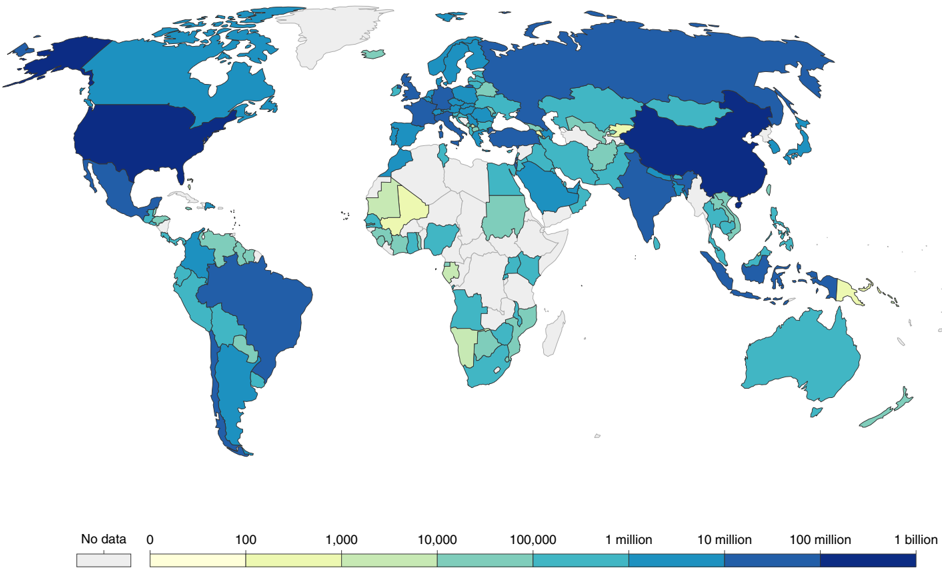
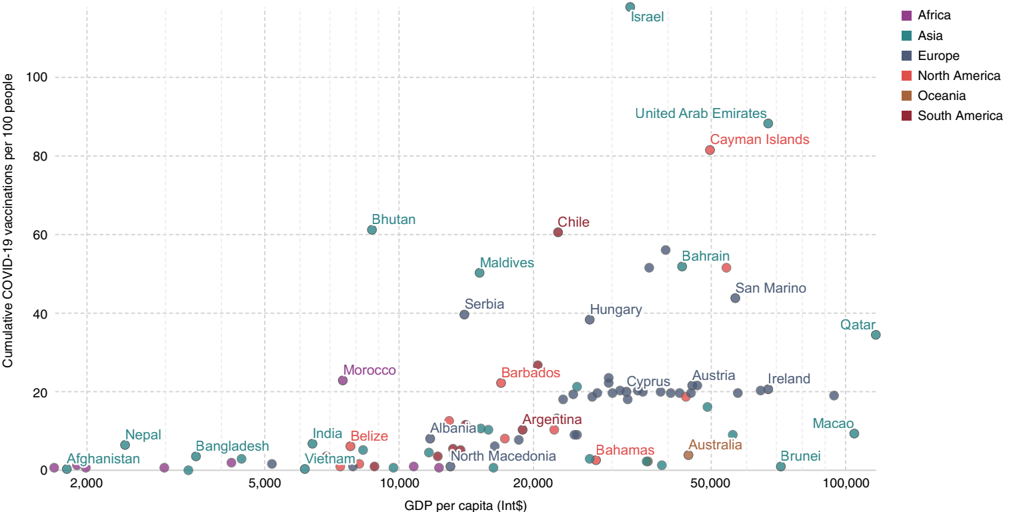
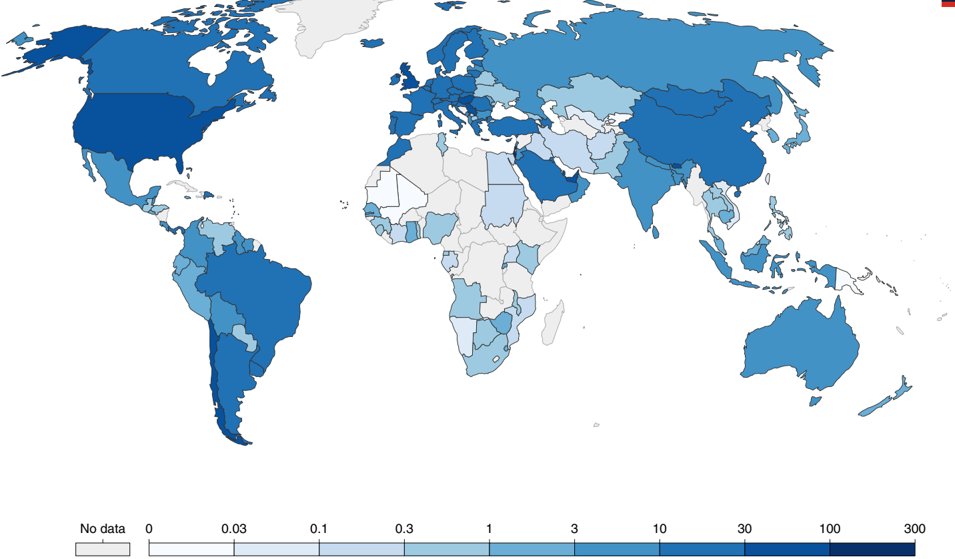
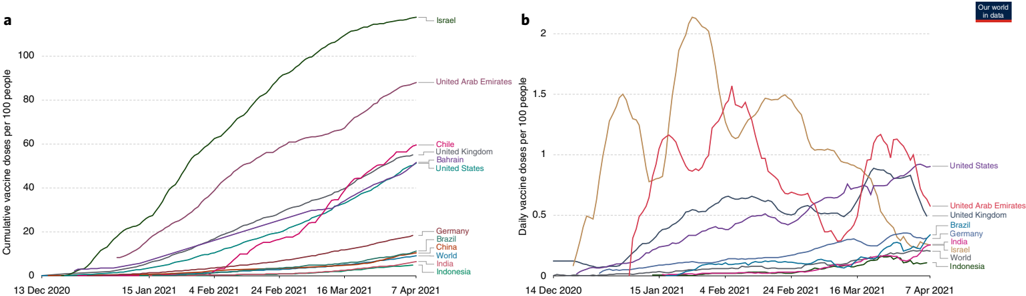
An effective rollout of vaccinations against COVID-19 offers the most promising prospect of bringing the pandemic to an end. We present the Our World in Data COVID-19 vaccination dataset, a global public dataset that tracks the scale and rate of the vaccine rollout across the world. This dataset is updated regularly and includes data on the total number of vaccinations administered, first and second doses administered, daily vaccination rates and population-adjusted coverage for all countries for which data are available (169 countries as of 7 April 2021). It will be maintained as the global vaccination campaign continues to progress. This resource aids policymakers and researchers in understanding the rate of current and potential vaccine rollout; the interactions with non-vaccination policy responses; the potential impact of vaccinations on pandemic outcomes such as transmission, morbidity and mortality; and global inequalities in vaccine access. The Our World in Data COVID-19 vaccination tracker charts the scale and rate of global vaccinations against COVID-19, making the data available to scientists, policymakers and the general public
Overview
The claims and statistics of this paper haven’t been checked yet.
Free: it reads the open-access text and checks the first 5 claims that cite a source we can check. Create a free account to check every claim.
Integrity signals
Registry
Cites
Statistics
Figures

Verification
Claims the paper makes
The claims and statistics of this paper haven’t been checked yet.
Free: it reads the open-access text and checks the first 5 claims that cite a source we can check. Create a free account to check every claim.
Claims other papers make about this one
Each is checked against this paper’s own text: does it say what the citing paper says it does?
The source backs part of the claim, not all of it — or backs it for a different population, condition or comparison.
In the citing paper
“Yet, this pandemic has become a race between effective vaccines and the new variants.”
From Waves and variants of SARS-CoV-2: understanding the causes and effect of the COVID-19 catastrophe (2022) · cites this paper as [2]
Experimental — accuracy not yet measuredThe source backs part of the claim, not all of it — or backs it for a different population, condition or comparison.
In the citing paper
“Accessibility to effective COVID-19 vaccines, particularly mRNA vaccines, remains very limited in many LMICs 17 , and the main goal of ChulaCov19 development is to be part of the solution to this problem.”
From Safety and immunogenicity of a prefusion non-stabilized spike protein mRNA COVID-19 vaccine: a phase I trial (2022) · cites this paper as [17]
Experimental — accuracy not yet measuredIn the citing paper
“By the end of 2021, Australia, Cambodia, China, Hong Kong SAR, New Zealand, Singapore, and Viet Nam had all achieved full vaccination rates of adult populations of more than 60%.”
From The Lancet Commission on lessons for the future from the COVID-19 pandemic (2022) · cites this paper as [157]
Self-check
Percentages, sums and reported differences re-computed from the paper’s own numbers.
The self-check needs the paper’s full text.
Citations
Cites
An interactive web-based dashboard to track COVID-19 in real time
Dong, E., Du, H., & Gardner, L. (2020) · The Lancet Infectious Diseases · doi:10.1016/s1473-3099(20)30120-1 · Cited by 10,048
A global panel database of pandemic policies (Oxford COVID-19 Government Response Tracker)
Hale, T., Angrist, N., Goldszmidt, R., Kira, B., Petherick, A., Phillips, T., Webster, S., Cameron-Blake, E., Hallas, L., Majumdar, S., et al. (2021) · Nature Human Behaviour · doi:10.1038/s41562-021-01079-8 · Cited by 4,578
BNT162b2 mRNA Covid-19 Vaccine in a Nationwide Mass Vaccination Setting
Dagan, N., Barda, N., Kepten, E., Miron, O., Perchik, S., Katz, M. A., Hernán, M. A., Lipsitch, M., Reis, B., & Balicer, R. D. (2021) · New England Journal of Medicine · doi:10.1056/nejmoa2101765 · Cited by 2,527 · cited 1×
“Integrating it with 93 other epidemiological data can help researchers evaluate these outcomes.(16,17) Evidence of 94 positive impacts of vaccination on transmission and mortality can also in turn help to 95 strengthen public trust.”
BackgroundSherman, S. M., Smith, L. E., Sim, J., Amlôt, R., Cutts, M., Dasch, H., Rubin, G. J., & Sevdalis, N. (2021) · Human Vaccines & Immunotherapeutics · doi:10.1080/21645515.2020.1846397 · Cited by 758
Factors Associated With US Adults’ Likelihood of Accepting COVID-19 Vaccination
Kreps, S., Prasad, S., Brownstein, J. S., Hswen, Y., Garibaldi, B. T., Zhang, B., & Kriner, D. L. (2020) · JAMA Network Open · doi:10.1001/jamanetworkopen.2020.25594 · Cited by 732
A cross-country database of COVID-19 testing
Hasell, J., Mathieu, E., Beltekian, D., Macdonald, B., Giattino, C., Ortiz-Ospina, E., Roser, M., & Ritchie, H. (2020) · Scientific Data · doi:10.1038/s41597-020-00688-8 · Cited by 662
Self-citationLooking beyond COVID-19 vaccine phase 3 trials
Kim, J. H., Marks, F., & Clemens, J. D. (2021) · Nature Medicine · doi:10.1038/s41591-021-01230-y · Cited by 585
Israel’s rapid rollout of vaccinations for COVID-19
Rosen, B., Waitzberg, R., & Israeli, A. (2021) · Israel Journal of Health Policy Research · doi:10.1186/s13584-021-00440-6 · Cited by 271
Restoring confidence in vaccines in the COVID-19 era
Verger, P., & Dubé, E. (2020) · Expert Review of Vaccines · doi:10.1080/14760584.2020.1825945 · Cited by 221
An interactive website tracking COVID-19 vaccine development
Shrotri, M., Swinnen, T., Kampmann, B., & Parker, E. P. K. (2021) · The Lancet Global Health · doi:10.1016/s2214-109x(21)00043-7 · Cited by 138 · cited 1×
“Other research groups have combined it with vaccine development data to provide a 86 complete overview of the global vaccine landscape.(14) It has been used by researchers 87 looking at the role of vaccine hesitancy, and how to design public messaging based on these 88 concerns.”
Background
Cited by
Items 401–500 of 1,002
Projecting COVID-19 Mortality as States Relax Nonpharmacologic Interventions
Linas, B. P., Xiao, J., Dalgic, O. O., Mueller, P. P., Adee, M. G., Aaron, A., Ayer, T., & Chhatwal, J. (2022) · JAMA Health Forum · doi:10.1001/jamahealthforum.2022.0760 · Cited by 19
Predictors of COVID-19 actual vaccine uptake in Hong Kong: A longitudinal population-based survey
Yan, E., Lai, D. W. L., Ng, H. K. L., & Lee, V. W. P. (2022) · SSM - Population Health · doi:10.1016/j.ssmph.2022.101130 · Cited by 19
“Hoping to end the spread of COVID-19 which has brought devastating impacts on every aspect in our lives, the development, testing, and manufacturing of vaccines against COVID-19 has been progressed faster than that of any other vaccine in history (Mathieu et al., 2021).”
Amantea, C., Rossi, M. F., Santoro, P. E., Beccia, F., Gualano, M. R., Borrelli, I., Costa, J. P., Daniele, A., Tumminello, A., Boccia, S., et al. (2022) · International Journal of Environmental Research and Public Health · doi:10.3390/ijerph19127191 · Cited by 19
“In Spain, the share of people fully vaccinated against COVID-19 amounts to 80%, whereas in healthcare workers, 98% was reached [28,29].”
Backgroundda Silva, N. S., de Araújo, N. K., dos Santos, K. A., de Souza, K. S. C., de Araújo, J. N. G., Cruz, M. S., Parra, E. J., Silbiger, V. N., & Luchessi, A. D. (2023) · Scientific Reports · doi:10.1038/s41598-023-40586-8 · Cited by 20
Aplicativos de contact tracing na pandemia de covid-19 e os direitos humanos digitais em Portugal
dos Santos, N. D. A. E. S. F. (2023) · Revista de Direito Sanitário · doi:10.11606/issn.2316-9044.rdisan.2023.188915 · Cited by 18
Kapnick, S. M. (2022) · DNA and Cell Biology · doi:10.1089/dna.2021.0538 · Cited by 21
“More than 900 million doses have been delivered into arms of individuals worldwide (Mathieu et al., 2021).”
BackgroundSentiment analysis on vaccine COVID-19 using word count and Gaussian Naïve Bayes
Ramadhan, N. G., & Adhinata, F. D. (2022) · Indonesian Journal of Electrical Engineering and Computer Science · doi:10.11591/ijeecs.v26.i3.pp1765-1772 · Cited by 18
Uptake of COVID-19 Booster Dose among Saudi Arabian Population
Alshahrani, N. Z., Alsabaani, A. A., Ridda, I., Rashid, H., Alzahrani, F., Almutairi, T. H., Alzahrani, B. A. S., & Albeshri, A. S. S. (2022) · Medicina · doi:10.3390/medicina58070972 · Cited by 20
“This rise in vaccination uptake peaked at about 70% in the fourth and last quarter of 2021 [29], mainly due to strategies adopted to improve the knowledge and awareness regarding the significance of COVID-19 vaccines.”
BackgroundTheory and methods of the multiverse: an application for panel-based models
Cantone, G. G., & Tomaselli, V. (2023) · Quality & Quantity · doi:10.1007/s11135-023-01698-5 · Cited by 21
Who Got Vaccinated for COVID-19? Evidence from Japan
Okubo, T., Inoue, A., & Sekijima, K. (2021) · Vaccines · doi:10.3390/vaccines9121505 · Cited by 22
“As of April 2021, the proportion of people who had received at least one dose of an approved COVID-19 vaccine was 5% of the world population [4] (This is considered to be low to achieve herd immunity against COVID-19 [5].”
BackgroundRinaldi, I., Pratama, S., Wiyono, L., Tandaju, J. R., Wardhana, I. L., & Winston, K. (2022) · Frontiers in Oncology · doi:10.3389/fonc.2022.951215 · Cited by 18
“In total, more than 11 billion doses have been administered with around 59% of the world’s population fully vaccinated (4).”
BackgroundThe COVID-19 pandemic in Vietnam – success, crisis, and endemic: Key thresholds and lessons
Hoang, V. (2022) · Journal of Global Health · doi:10.7189/jogh.12.03065 · Cited by 18
Rotulo, A., Kondilis, E., Thwe, T., Gautam, S., Torcu, Ö., Vera‐Montoya, M., Marjan, S., Gazi, M. I., Putri, A. S., Hasan, R. B., et al. (2023) · PLOS Global Public Health · doi:10.1371/journal.pgph.0001148 · Cited by 18
“Data reporting broken down by geographical and demographic strata facilitates international comparison [29] and points out inequalities in varying country contexts [30–32].”
BackgroundThe Psychological Science Accelerator’s COVID-19 rapid-response dataset
Buchanan, E. M., Lewis, S. C., Paris, B., Forscher, P. S., Pavlacic, J. M., Beshears, J. E., Drexler, S. M., Gourdon-Kanhukamwe, A., Mallik, P. R., Silan, M. A. A., et al. (2023) · Scientific Data · doi:10.1038/s41597-022-01811-7 · Cited by 18
COVID-19 vaccine skeptics are persuaded by pro-vaccine expert consensus messaging.
Białek, M., Meyers, E. A., Arriaga, P., Harateh, D., & Urbanek, A. (2023) · Journal of Experimental Psychology Applied · doi:10.1037/xap0000467 · Cited by 19
Emmanue, F., Ahmad, A. M., Reza, T. E., Shahzad, K., Rehman, F. U., Malik, M., Zaidi, R., Faran, A., Bashir, U., Aslam, F., et al. (2022) · Eastern Mediterranean Health Journal · doi:10.26719/emhj.22.011 · Cited by 17
“With low global vaccination rates (4) and few empirically proven effective treatment methods (5), countries are forced to adopt population-level widespread restrictions such as curfews and lockdowns, in order to limit contact between people to slow down transmission and exponential growth of cases (6).”
BackgroundCOVID-19 forecasting and intervention planning using gated recurrent unit and evolutionary algorithm
Bi, L., Fili, M., & Hu, G. (2022) · Neural Computing and Applications · doi:10.1007/s00521-022-07394-z · Cited by 17
“As of August 17th, 2021, there are over 208 million documented COVID-19 cases and over 4.3 million deaths, constituting major health, economic, and social harms to many countries and regions [1].”
BackgroundInfluentialYu, Y., Liu, Y., Zhao, S., & He, D. (2021) · Mathematical Biosciences & Engineering · doi:10.3934/mbe.2022485 · Cited by 18
Seidel, A., Zanoni, M., Groß, R. M., Krnavek, D., Erdemci-Evin, S., von Maltitz, P., Albers, D., Conzelmann, C., Liu, S., Weil, T., et al. (2022) · Frontiers in Immunology · doi:10.3389/fimmu.2022.882918 · Cited by 19
“Vaccination against the severe acute respiratory syndrome coronavirus 2 (SARS-CoV-2) is the key strategy to control the coronavirus disease 2019 (COVID-19) pandemic (1) and has already reduced incidences, hospitalizations, and deaths in several countries (2).”
BackgroundCurrent clinical status of new COVID-19 vaccines and immunotherapy
Nagpal, D., Nagpal, S., Kaushik, D. K., & Kathuria, H. (2022) · Environmental Science and Pollution Research · doi:10.1007/s11356-022-22661-1 · Cited by 19
Soegiarto, G., Purnomosari, D., Wulandari, L., Mahdi, B. A., Fahmita, K. D., Hadmoko, S. T., Gautama, H. I., Prasetyo, M. E., Prasetyaningtyas, D., Negoro, P. P., et al. (2022) · The Lancet Regional Health - Southeast Asia · doi:10.1016/j.lansea.2022.100130 · Cited by 20
Comparison of COVID-19 vaccine policies and their effectiveness in Korea, Japan, and Singapore
Ma, M., Shi, L., Liu, M., Yang, J., Xie, W., & Sun, G. (2023) · International Journal for Equity in Health · doi:10.1186/s12939-023-02034-x · Cited by 17
“Vaccination levels in Singapore were very high, with daily new cases per million starting to decline 40 days after vaccination initiation [17].”
BackgroundThe impact of national income and vaccine hesitancy on country-level COVID-19 vaccine uptake
Moradpour, J., Shajarizadeh, A., Carter, J., Chit, A., & Grootendorst, P. V. (2023) · PLoS ONE · doi:10.1371/journal.pone.0293184 · Cited by 18
Moneshwaran, S., Macrin, D., & Kanagathara, N. (2024) · International Journal of Biological Macromolecules · doi:10.1016/j.ijbiomac.2024.131324 · Cited by 17
SARS-CoV-2 variant of concern fitness and adaptation in primary human airway epithelia
Meganck, R. M., Edwards, C. E., Mallory, M. L., Lee, R. E., Dang, H., Bailey, A. B., Wykoff, J. A., Gallant, S. C., Zhu, D. R., Yount, B. L., et al. (2024) · Cell Reports · doi:10.1016/j.celrep.2024.114076 · Cited by 17
“38 In contrast, the Omicron variant emerged in November of 2021, at which point ~4 billion people are believed to have been vaccinated, and more were likely to have been previously infected.”
Cleaver, J., Ibitoye, R. T., Morrison, H. D., Flood, R., Crewdson, K., Marsh, A., Abhinav, K., Bosnell, R., Crossley, R. A., & Mortimer, A. M. (2021) · Journal of NeuroInterventional Surgery · doi:10.1136/neurintsurg-2021-018238 · Cited by 17
di Lego, V., Sánchez-Romero, M., & Prskawetz, A. (2022) · International Journal of Infectious Diseases · doi:10.1016/j.ijid.2022.03.059 · Cited by 20
In-person schooling and associated COVID-19 risk in the United States over spring semester 2021
Wiens, K. E., Smith, C. P., Badillo‐Goicoechea, E., Grantz, K. H., Grabowski, M. K., Azman, A. S., Stuart, E. A., & Lessler, J. (2022) · Science Advances · doi:10.1126/sciadv.abm9128 · Cited by 17
Valencia, J. S., Soto-Becerra, P., Escobar-Agreda, S., Fernández-Navarro, M., Reyes, O. A. E., Mayta‐Tristán, P., Mezones‐Holguín, E., & Solari, L. (2022) · Vaccine · doi:10.1016/j.vaccine.2022.09.066 · Cited by 17
Gendy, M. E. G., & Yuce, M. R. (2022) · IEEE Reviews in Biomedical Engineering · doi:10.1109/rbme.2022.3219433 · Cited by 20
“Furthermore, [137] has created a COVID-19 vaccination global public dataset that is routinely updated”
BackgroundThe importance of sustained compliance with physical distancing during COVID-19 vaccination rollout
Teslya, A., Rozhnova, G., Pham, T. M., van Wees, D. A., Nunner, H., Godijk, N. G., Bootsma, M., & Kretzschmar, M. (2022) · Communications Medicine · doi:10.1038/s43856-022-00207-3 · Cited by 17
Sasanami, M., Fujimoto, M., Kayano, T., Hayashi, K., & Nishiura, H. (2022) · Journal of Theoretical Biology · doi:10.1016/j.jtbi.2022.111384 · Cited by 18
The effect of altruism on COVID-19 vaccination rates
Recio, L. Á. H., Rodríguez, D. P., Atienza, P., Garzón, A. J., & Cantarero, D. (2023) · Health Economics Review · doi:10.1186/s13561-022-00415-6 · Cited by 18
“Source: original elaboration based on data from Mathieu, (2021) [75].”
BackgroundMethodTaucher, C., Lazarus, R., Dellago, H., Maurer, G., Weisova, P., Ramljak, I. C., Dubischar, K. L., Lilja, A., Eder-Lingelbach, S., Hochreiter, R., et al. (2023) · Journal of Infection · doi:10.1016/j.jinf.2023.06.022 · Cited by 18
Ortíz‐Brizuela, E., Carabalí, M., Jiang, C., Merckx, J., Talbot, D. C., & Schnitzer, M. E. (2024) · American Journal of Epidemiology · doi:10.1093/aje/kwae288 · Cited by 18
“48,49 In addition, we simulated the proportion of individuals who reported using any SARS-CoV-2 diagnostic test (either NAATs or antigen tests) within 30 days in the aforementioned survey ( ∼ 27.7%).”
InfluentialSynergistic anti-SARS-CoV-2 activity of repurposed anti-parasitic drug combinations
Jitobaom, K., Boonarkart, C., Manopwisedjaroen, S., Punyadee, N., Borwornpinyo, S., Thitithanyanont, A., Avirutnan, P., & Auewarakul, P. (2022) · BMC Pharmacology and Toxicology · doi:10.1186/s40360-022-00580-8 · Cited by 17
“The hope to get through the pandemic and resume normal life relies heavily on vaccine deployment, which will still take months or years in most less-developed countries [2].”
BackgroundEuropean Journal of Environment and Public Health
(2019) · European Journal of Environment and Public Health · doi:10.29333/ejeph · Cited by 17
Khan, S. H., & Iqbal, R. (2025) · arXiv (Cornell University) · doi:10.48550/arxiv.2503.16546 · Cited by 31
Cristelli, M. P., Rissoni, R. A. P., Viana, L. A., Junior, H. T. S., & Medina-Pestana, J. O. (2022) · Transplantation · doi:10.1097/tp.0000000000004193 · Cited by 16
Saini, V., Liang, L.-L., Yang, Y.-C., Le, H. M., & Wu, C. (2022) · JMIR Infodemiology · doi:10.2196/37077 · Cited by 19
Kawasuji, H., Morinaga, Y., Tani, H., Saga, Y., Yamada, H., Yoshida, Y., Takegoshi, Y., Kaneda, M., Murai, Y., Kimoto, K., et al. (2023) · Microbiology Spectrum · doi:10.1128/spectrum.05131-22 · Cited by 16
“Vaccination programs against COVID-19 have been conducted worldwide; however, vaccine coverage varies per country based on the social circumstances of each country (5, 6).”
BackgroundCOVID-19 vaccine decision-making among pregnant and lactating women in Bangladesh
Limaye, R. J., Singh, P., Paul, A. M., Fesshaye, B., Lee, C., Zavala, E., Wade, S. A., Ali, H., Rahman, H., Akter, S., et al. (2023) · Vaccine · doi:10.1016/j.vaccine.2023.05.024 · Cited by 16
“Bangladesh began COVID-19 vaccine rollout for healthcare workers on January 27, 2021, and vaccination for the rest of the population on February 7, 2021 [11,13].”
COVID-19 and vaccination rollout in Fiji: Challenges caused by digital platform
Chand, A. A. (2021) · International Journal of Surgery · doi:10.1016/j.ijsu.2021.106001 · Cited by 16
Truszkowska, A., Zino, L., Butail, S., Caroppo, E., Jiang, Z., Rizzo, A., & Porfiri, M. (2022) · Advanced Theory and Simulations · doi:10.1002/adts.202100521 · Cited by 17
“[74] The official website of New York State, Governor Hochul announces series of universal mask requirements to protect New Yorkers amid Adv.”
BackgroundInfluentialCOVID-19 Pandemic: Public Health Risk Assessment and Risk Mitigation Strategies
Kim, D.-Y., Shinde, S. K., Lone, S., Palem, R. R., & Ghodake, G. S. (2021) · Journal of Personalized Medicine · doi:10.3390/jpm11121243 · Cited by 19
Tun, M. M. N., Sakura, T., Sakurai, Y., Kurosaki, Y., Inaoka, D. K., Shioda, N., Yasuda, J., Kita, K., & Morita, K. (2022) · Tropical Medicine and Health · doi:10.1186/s41182-021-00397-x · Cited by 18
“As of April 2021, 169 countries were actively administering vaccines, and the global vaccination campaign continues to progress [18].”
BackgroundSchneider, F. S., Molina, L., Picot, M., l’Helgoualch, N., Espeut, J., Champigneux, P., Alali, M., Baptiste, J., Cardeur, L., Carniel, C., et al. (2022) · Scientific Reports · doi:10.1038/s41598-022-04826-7 · Cited by 16
There is nothing exempt from the peril of mutation – The Omicron spike
Behl, T., Kaur, I., Sehgal, A., Singh, S., Sharma, N., Anwer, M. K., Makeen, H. A., Albratty, M., Alhazmi, H. A., Bhatia, S., et al. (2022) · Biomedicine & Pharmacotherapy · doi:10.1016/j.biopha.2022.112756 · Cited by 16
“Multiple vaccines have been developed and administered to curb the infection spread [3], but the mutations in the viral sequence have brought into the light number of viral variants, which have challenged these efforts by the global healthcare system [4–7].”
Capelle, C., Ciré, S., Domingues, O., Ernens, I., Hedin, F., Fischer, A., Snoeck, C. J., Ammerlaan, W., Konstantinou, M., Grzyb, K., et al. (2022) · Cell Reports Medicine · doi:10.1016/j.xcrm.2022.100600 · Cited by 18
Liu, R., Huang, Y. C., Sun, J., Lau, J., & Cai, Q. (2022) · International Journal of Environmental Research and Public Health · doi:10.3390/ijerph19063705 · Cited by 17
“The premise for ending this pandemic is to have a large share of the world immune to the virus, for which vaccination is the safest way [2].”
BackgroundYu, B. Y., Lam, J. C.-S., Lam, S. C., Li, Y., Chen, S., Lam, M. Y., & Yeung, W. (2022) · Human Vaccines & Immunotherapeutics · doi:10.1080/21645515.2022.2072144 · Cited by 16
“However, despite the availability of vaccines and vaccination services, their acceptance among the global population is low, and less than 15% are fully vaccinated.(2) The World Health Organization (WHO) has identified “vaccine hesitancy” as one of the top 10 threats to public health.”
BackgroundMathematical modeling of the impact of Omicron variant on the COVID-19 situation in South Korea
Oh, J., Apio, C., & Park, T. (2022) · Genomics & Informatics · doi:10.5808/gi.22025 · Cited by 16
“used in the analysis was obtained from the Our World in Data website [70].”
MethodShould the COVID-19 lockdown be relaxed or intensified in case a vaccine becomes available?
Buratto, A., Muttoni, M., Wrzaczek, S., & Freiberger, M. (2022) · PLoS ONE · doi:10.1371/journal.pone.0273557 · Cited by 16
“org (last access May 15, 2021; see [5]).”
BackgroundLimaye, R. J., Balgobin, K. R., Michel, A. E., Schulz, G., & Erchick, D. J. (2022) · PLoS ONE · doi:10.1371/journal.pone.0274966 · Cited by 20
The Long-COVID Experience Changed People’s Vaccine Hesitancy but Not Their Vaccination Fear
Duradoni, M., Gursesli, M. C., Materassi, L., Serritella, E., & Guazzini, A. (2022) · International Journal of Environmental Research and Public Health · doi:10.3390/ijerph192114550 · Cited by 16
Maria, L. D., Sponselli, S., Caputi, A., Stefanizzi, P., Pipoli, A., Giannelli, G., Delvecchio, G., Tafuri, S., Inchingolo, F., Migliore, G., et al. (2023) · Journal of Clinical Medicine · doi:10.3390/jcm12020628 · Cited by 18
Wang, H., Yu, B., Chen, X., & Yan, H. (2023) · Global Health Journal · doi:10.1016/j.glohj.2023.02.003 · Cited by 17
“The impact of GDP was consistent with previous studies.”
Luo, W. P., Zhou, Y., Liu, Z., Kang, W., He, S., Zhu, R., Li, R., & Huang, B. (2023) · Health & Place · doi:10.1016/j.healthplace.2023.103000 · Cited by 17
Bhatia, S., Wardle, J., Nash, R. K., Nouvellet, P., & Cori, A. (2023) · Epidemics · doi:10.1016/j.epidem.2023.100692 · Cited by 18
Gatechompol, S., Kittanamongkolchai, W., Ketloy, C., Prompetchara, E., Thitithanyanont, A., Jongkaewwattana, A., Buranapraditkun, S., Alameh, M.-G., Ubolyam, S., Sophonphan, J., et al. (2022) · Nature Microbiology · doi:10.1038/s41564-022-01271-0 · Cited by 16
Gotlib, J., Sobierajski, T., Jaworski, M., Wawrzuta, D., Borowiak, E., Dobrowolska, B. B., Dyk, D., Gaworska‐Krzemińska, A., Grochans, E., Kózka, M., et al. (2021) · Vaccines · doi:10.3390/vaccines9091029 · Cited by 16
“According to the most recent data (4 July 2021), 884,440,000 people have been fully vaccinated worldwide [4], mostly in China and the USA.”
BackgroundEvasion of Vaccine-Induced Humoral Immunity by Emerging Sub-Variants of SARS-CoV-2
Koyama, T., Miyakawa, K., Tokumasu, R., Jeremiah, S. S., Kudo, M., & Ryo, A. (2022) · Future Microbiology · doi:10.2217/fmb-2022-0025 · Cited by 17
“The graph is based on Our World in Data taken from [13].”
BackgroundMethodPrice, A. M. H., Measey, M., Hoq, M., Rhodes, A., & Goldfeld, S. R. (2022) · BMJ Paediatrics Open · doi:10.1136/bmjpo-2021-001390 · Cited by 17
“end of July 2021, stay-at-home orders (‘lockdown’) were the country’s main measure of disease control.(3) Families caring for children and young people (referred to as children hereafter) were substantially affected by lockdown,(4) 5 required to juggle working from home, responsibility for their”
BackgroundCOVID-19 Vaccines: Computational tools and Development
Osamor, V. C., Ikeakanam, E., Bishung, J., Abiodun, T. N., & Ekpo, R. H. (2023) · Informatics in Medicine Unlocked · doi:10.1016/j.imu.2023.101164 · Cited by 15
“Vaccines typically contain genetic instructions that code for the disease or the same germs that cause the disease, thereby killing or weakening these germs [3,4].”
Within-Country Inequality in COVID-19 Vaccination Coverage: A Scoping Review of Academic Literature
Bergen, N., Johns, N. E., Blanc, D. C., & Hosseinpoor, A. R. (2023) · Vaccines · doi:10.3390/vaccines11030517 · Cited by 18
Arthur, R. F., Horng, L. M.-S., Tandanpolie, A. F., Gilstad, J. R., Tantum, L. K., & Luby, S. P. (2023) · BMC Public Health · doi:10.1186/s12889-023-15559-1 · Cited by 15
“Between May 2022 and September 2022, the proportion of fully vaccinated individuals in Liberia rose from 28% to 57% [44], demonstrating that popular opinion of the vaccine shifted rapidly in Liberia, but with significant delays due to supply, distribution, and community perceptions.”
BackgroundLongitudinal analysis of memory Tfh cells and antibody response following CoronaVac vaccination
Zhou, P., Cao, C., Ji, T., Zheng, T., Dai, Y., Liu, M., Jiang, J., Sun, D., Bai, Z., Lu, X., et al. (2023) · JCI Insight · doi:10.1172/jci.insight.168437 · Cited by 18
“More than 2 billion doses of CoronaVac have been administered in more than 40 countries (30).”
BackgroundHu, L., Zhang, H., Huang, C. H., Shen, T., Feng, Z., Mu, F., Xu, L., Lin, Y., Yue, C., Guo, K., et al. (2023) · QJM · doi:10.1093/qjmed/hcad254 · Cited by 15
Recent Advances in Arboviral Vaccines: Emerging Platforms and Promising Innovations
Pujhari, S. K. (2023) · Biologics · doi:10.3390/biologics4010001 · Cited by 16
“As per the latest data, more than 12.7 billion doses of COVID-19 vaccines have been administered globally, protecting millions of lives and livelihoods [3–5].”
BackgroundInfluentialAlmeida, N. D., Schiller, I., Ke, D., Sakr, E., Plesa, M., Vanamala, S., Moneger, A.-L., Bazan, M., Lucchesi, C., Woźniak, N. J., et al. (2024) · Frontiers in Immunology · doi:10.3389/fimmu.2024.1330549 · Cited by 16
A simple model of coupled individual behavior and its impact on epidemic dynamics
Chen, J., Espinoza, B., Chou, J., Gumel, A. B., Levin, S. A., & MARATHE, M. V. (2024) · Mathematical Biosciences · doi:10.1016/j.mbs.2024.109345 · Cited by 15
Ferreira‐da‐Silva, R., Lobo, M. F., Pereira, A. M., Morato, M., Polónia, J. J., & Ribeiro‐Vaz, I. (2025) · Frontiers in Medicine · doi:10.3389/fmed.2025.1501921 · Cited by 17
Husnayain, A., Shim, E., Fuad, A., & Su, E. C. (2021) · Journal of Medical Internet Research · doi:10.2196/34178 · Cited by 15
“Through the end of May, more than 700,000 people were newly vaccinated each day, but this number began to decrease by the end of June [26].”
BackgroundHwang, E. (2022) · Chaos Solitons & Fractals · doi:10.1016/j.chaos.2021.111789 · Cited by 15
What determines health professionals’ COVID‐19 vaccine hesitancy? A nationwide study
Estrela, M., Silva, T. M., Roque, V., Gomes, E. R., Roque, F., Herdeiro, M. T., & Figueiras, A. (2022) · European Journal of Clinical Investigation · doi:10.1111/eci.13785 · Cited by 15
Kang, M. S., Kim, S. Y., & Kwon, H. J. (2022) · Frontiers in Pharmacology · doi:10.3389/fphar.2022.845615 · Cited by 15
“5 billion doses of the vaccines against severe acute respiratory syndrome coronavirus-2 (SARS-CoV-2) had been administered to the world population (Mathieu et al., 2021).”
BackgroundTehrani, S. O., & Perkins, D. D. (2022) · COVID · doi:10.3390/covid2060053 · Cited by 20
Bednarski, E., Estrada, P. M. D. R., DaSilva, J., Boukadida, C., Zhang, F., Luna-Villalobos, Y. A., Rodríguez-Rangel, X., Pitén-Isidro, E., Luna-García, E., Díaz-Rivera, D., et al. (2022) · mBio · doi:10.1128/mbio.00840-22 · Cited by 15
“uted worldwide, in 162 and 182 countries, respectively, while Sputnik V, Ad5-nCoV, and CoronaVac have been used less widely thus far, in 5, 22, and 42 countries, respectively (33).”
Predictors of COVID-19 Vaccine Intention: Evidence from Chile, Mexico, and Colombia
Salazar-Fernández, C., Baeza-Rivera, M. J., Bustamante, M. V., Bautista, J. A. P., Navarro, R. M., & Pino, M. (2022) · Vaccines · doi:10.3390/vaccines10071129 · Cited by 15
Tehrani, S. O., & Perkins, D. D. (2022) · Vaccines · doi:10.3390/vaccines10081343 · Cited by 15
“These data are gathered from government sources such as government reports, health institutions, and authorized press and are widely utilized by the media, legislators, academia, and the broader population to compare the effectiveness of national vaccination programs [73].”
BackgroundThe risk of SARS-CoV-2 Omicron variant emergence in low and middle-income countries (LMICs)
Bi, K., Herrera, J. L., Bai, Y., Du, Z., Wang, L., Gibson, G., Johnson-León, M., Fox, S. J., & Ancel, L. W. (2022) · Epidemics · doi:10.1016/j.epidem.2022.100660 · Cited by 15
“To assess the risk of Omicron transmission following importation, we estimate the immunity-based effective reproduction number ( ) in each LMIC as of December 5, 2021, based on reported vaccination levels [10], estimates of infection-acquired immunity [11] (Figure C), and recent estimates for the transmissibility and…”
Singh, R., Li, J., Parmar, U., Jeng, B., & Jhanji, V. (2022) · British Journal of Ophthalmology · doi:10.1136/bjo-2022-322512 · Cited by 13
Tran, B. X., Do, A. L., Boyer, L., Auquier, P., Le, H. T., Vu, M. N. L., Dang, T. H. T., Cao, K. M., Le, L. D. T., Cu, L. T. N., et al. (2023) · JMIR Public Health and Surveillance · doi:10.2196/43055 · Cited by 16
“In Vietnam, this rate is below 60% compared to nearly 95% coverage for mandatory shots [10].”
BackgroundBaluku, M. M. (2023) · International Journal of Applied Positive Psychology · doi:10.1007/s41042-023-00091-9 · Cited by 15
“Whereas the COVID-19 infections and related deaths have subsided primarily because of vaccination and other control measures (Mathieu et al., 2021; Ullah et al., 2022; Watson et al., 2022), COVID-19 is still around and still adversely affecting people and communities.”
BackgroundEffectiveness of behavioural interventions to influence COVID-19 outcomes: A scoping review
Silubonde, T. M., Draper, C. E., & Norris, S. A. (2023) · Preventive Medicine · doi:10.1016/j.ypmed.2023.107499 · Cited by 16
“4% of people living in low and middle income countries (LMICs) had received one dose of a COVID-19 vaccine(10, 11) .”
InfluentialEens, S., Hecke, M. V., Favere, K., Tousseyn, T., Guns, P., Roskams, T., & Heidbüchel, H. (2023) · Frontiers in Oncology · doi:10.3389/fonc.2023.1158124 · Cited by 15
“In spite of their undisputed success in decreasing COVID-19associated hospitalizations and mortality, with over 13 billion doses administered globally, a variety of adverse events associated with COVID-19 vaccination have been reported among the general population (6, 7).”
BackgroundImpact of variants of concern on SARS-CoV-2 viral dynamics in non-human primates
Marc, A., Marlin, R., Donati, F., Prague, M., Kerioui, M., Hérate, C., Alexandre, M., Dereuddre‐Bosquet, N., Bertrand, J., Contreras, V., et al. (2023) · PLoS Computational Biology · doi:10.1371/journal.pcbi.1010721 · Cited by 16
COVID-19 vaccine acceptance and hesitancy in Indian context: a systematic review and meta-analysis
Dey, S., Kusuma, Y. S., Kant, S., Kumar, D., Gopalan, R. B., Sridevi, P., & Aggarwal, S. S. (2023) · Pathogens and Global Health · doi:10.1080/20477724.2023.2285184 · Cited by 15
“Our World in Data [84] corroborates this, reporting that 1.03 billion individuals in India have received at least one dose of the COVID-19 vaccine, 952 million (67”
BackgroundInfluentialSteinberg, J., Hughes, S., Hui, H., Allsop, M. J., Egger, S. J., David, M., Caruana, M., Coxeter, P., Carle, C., Onyeka, T. C., et al. (2023) · International Journal of Cancer · doi:10.1002/ijc.34798 · Cited by 18
“64 As such, our findings are not confounded by the individual or population-level effects of vaccination, including potential mitigation of the risk of death from COVID-19.”
BackgroundNzaji, M. K., Kamenga, J. D. D., Lungayo, C. L., Bene, A. C. M., Meyou, S. F., Kapit, A. M., Fogarty, A., Sessoms, D., MacDonald, P. D. M., Standley, C. J., et al. (2024) · PLOS Global Public Health · doi:10.1371/journal.pgph.0002772 · Cited by 15
Vette, K., Machalek, D. A., Gidding, H. F., Nicholson, S. R., O'Sullivan, M. V. N., Carlin, J. B., Downes, M., Armstrong, L., Beard, F., Dwyer, D. E., et al. (2022) · Open Forum Infectious Diseases · doi:10.1093/ofid/ofac002 · Cited by 18
“By comparison at the same time point, only 13% of the Australian population have been fully vaccinated, and our study demonstrates that Australia has had extremely limited acquisition of any potential “natural” protection [22].”
BackgroundBooster Doses and Prioritizing Lives Saved
Patel, M. K. (2021) · New England Journal of Medicine · doi:10.1056/nejme2117592 · Cited by 15
A Rare Adverse Effect of the COVID-19 Vaccine on Autoimmune Encephalitis
Huang, Y., Ho, T., Chang, C.-C., Shen, D. H.-Y., Chan, H.-P., Chuang, K., Tyan, Y., & Yang, M. (2022) · Vaccines · doi:10.3390/vaccines10071114 · Cited by 14
Oche, O. M., Adamu, H., Yahaya, M., Illo, H. G., Danmadami, A. M., Ijapa, A., Wali, A., Yusuf, H., Muhammad, H., & Aji, A. (2022) · PLoS ONE · doi:10.1371/journal.pone.0278332 · Cited by 18
“6% of the people in lowincome countries receiving one dose [40].”
BackgroundFlattening the curve: imperative when China eases the severe COVID-19 control policy
Zhao, S., Sha, T., Xue, Y., & Chen, H. (2023) · Journal of Infection · doi:10.1016/j.jinf.2022.12.022 · Cited by 14
Farahmand, B., Larijani, M. S., Fotouhi, F., Biglari, A., Sorouri, R., Amiri, F. B., Eslamifar, A., Jalali, T., Salehi-Vaziri, ., Banifazl, M., et al. (2023) · Heliyon · doi:10.1016/j.heliyon.2023.e20555 · Cited by 15
A review of neuro-ophthalmic sequelae following COVID-19 infection and vaccination
Shi, J., & Danesh-Meyer, H. V. (2024) · Frontiers in Cellular and Infection Microbiology · doi:10.3389/fcimb.2024.1345683 · Cited by 15
Rehms, R., Ellenbach, N., Rehfuess, E. A., Burns, J., Mansmann, U., & Hoffmann, S. (2024) · Biometrical Journal · doi:10.1002/bimj.202200341 · Cited by 14
The landscape of the COVID-19 pandemic in Poland emerging from epidemiological and genomic data
Mirska, B., Zeńczak, M., Nowis, K., Stolarek, I., Podkowiński, J., Rakoczy, M., Marcinkowska, M., Koralewska, N., Zmora, P., Lenartowicz, E., et al. (2024) · Scientific Reports · doi:10.1038/s41598-024-65468-5 · Cited by 14
O’Brien, G. E., Ganjigunta, R., & Dhillon, P. S. (2024) · Journal of Medical Internet Research · doi:10.2196/56651 · Cited by 15
“The number of COVID-19 vaccines administered per day around the world increased from December 2020 until it peaked around June 2021, with a smaller peak in daily vaccination counts around December 2021 [67].”
Metadata
- Authors
- Mathieu, E., Ritchie, H., Ortiz-Ospina, E., Roser, M., Hasell, J., Appel, C., Giattino, C., & Rodés-Guirao, L.
- Affiliations
- University of Oxford (GB)
- Corresponding author
- Ritchie, Hannah
- ORCID
- Venue
- Nature Human Behaviour
- Published
- 2021-05-10
- Volume
- 5
- Issue
- 7
- Pages
- 947-953
- ISSN
- 2397-3374 (ISSN-L)
- OpenAlex
- W3160918102
- Cited by
- 1,974
- References
- 19
- Citations by year
- 2026: 72 · 2025: 134 · 2024: 306 · 2023: 598 · 2022: 668 · 2021: 194
- FWCI
- 244.05
- Type
- journal article
- Language
- en
- Update notices
- correction (2021-06-17)
- Open access
- hybrid
- doi.org
- Licence
- cc-by
- www.springernature.com/gp/researchers/text-and-data-mining (tdm)
- www.springernature.com/gp/researchers/text-and-data-mining (vor)
- Locations
- Nature Human Behaviour (publishedVersion, cc-by)
- PubMed (publishedVersion)
- Queen Mary Research Online (Queen Mary University of London) (submittedVersion)
- Funders
- Bill and Melinda Gates Foundation (INV-008629)
- Department of Health and Social Care
- University of Oxford
- Topics
- Social Sciences › Health › Vaccine Coverage and Hesitancy
- Physical Sciences › Mathematics › Modeling and Simulation › COVID-19 epidemiological studies
- Health Sciences › Medicine › Infectious Diseases › SARS-CoV-2 and COVID-19 Research
- Keywords
- COVID-19 vaccination, vaccine rollout, vaccination coverage, global health disparities, vaccine access, pandemic outcomes, Our World in Data
- MeSH terms
- Vaccination Coverage, COVID-19, COVID-19 Vaccines, Humans, Immunization Schedule, Vaccination, Global Health, Immunization Programs
About these checks
Registry, retraction, Cites and statistics results are computed, not judged, with one exception: a printed reference that no index lists is read once by a model before it counts as a citation error. Claims are extracted by a model and kept only when their quote appears verbatim in the text; each cited source is then checked, with a model’s help, for whether it says what the claim relies on. Those verdicts can be wrong — read the claim’s quote and the cited source before relying on one.
Statistics and arithmetic are recomputed, not judged.
Confidence bands are shown only for fields calibrated on our annotated test set. None is calibrated yet, so no band is shown.
What counts as a claim ›How we measure confidence ›How we check this ›
Are you an author, or do you see a problem with this page? Request a review
Data sources
Bibliographic data: Semantic Scholar, OpenAlex, Crossref.
Contains information from the Semantic Scholar Academic Graph Datasets, made available under the ODC Attribution License (ODC-BY 1.0).
Semantic Scholar’s data is described in: Kinney, R., et al. (2023). The Semantic Scholar Open Data Platform. arXiv:2301.10140.
