

A global database of COVID-19 vaccinations
Open accessPublished version of a preprint
The DOI matches its Crossref record; 19 of the 19 references it cites were found in a registry or an index.
Abstract
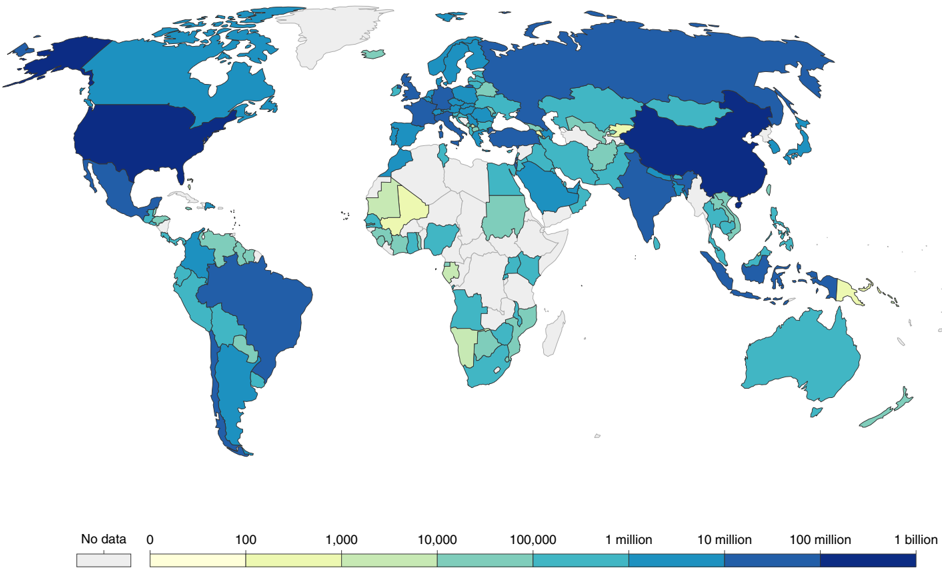
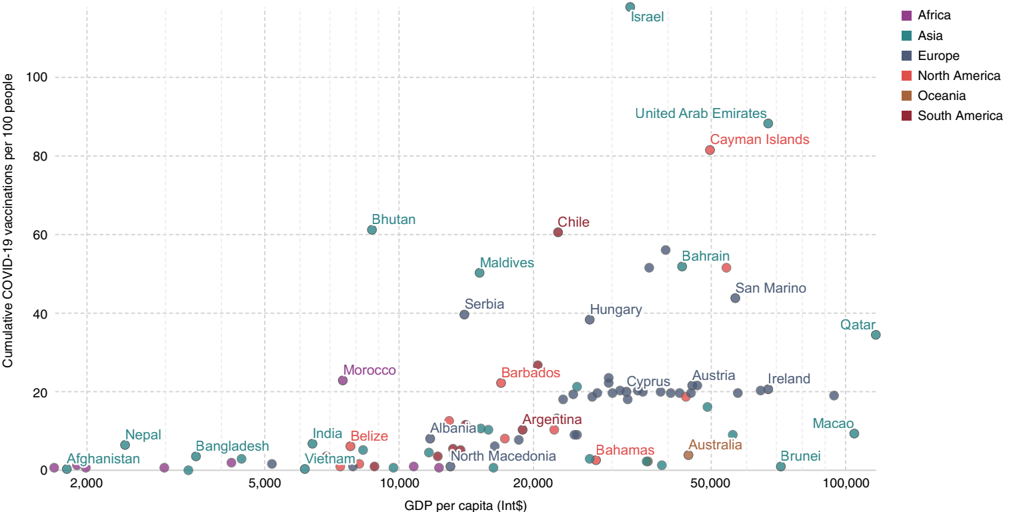
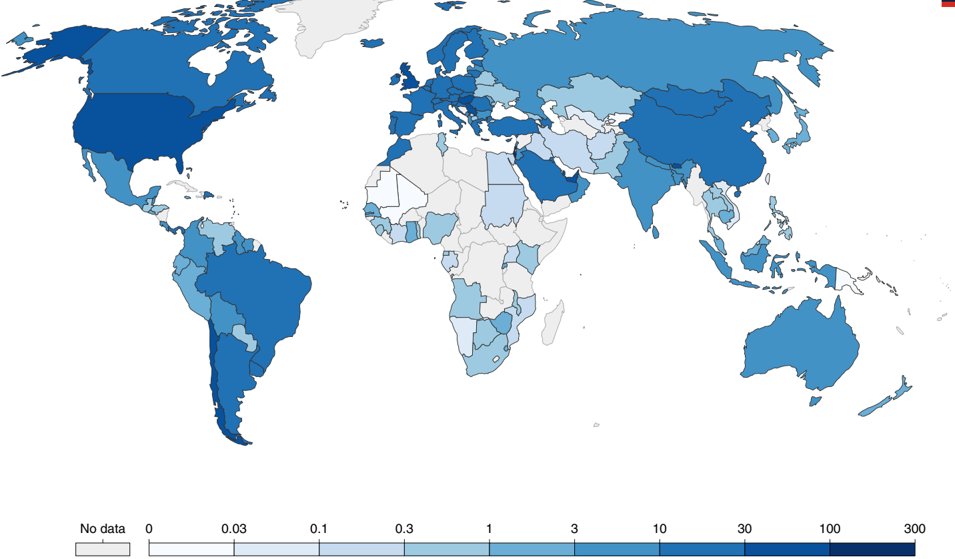
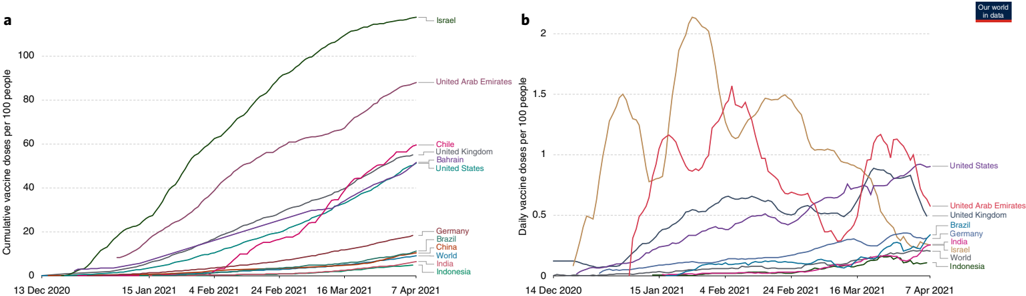
An effective rollout of vaccinations against COVID-19 offers the most promising prospect of bringing the pandemic to an end. We present the Our World in Data COVID-19 vaccination dataset, a global public dataset that tracks the scale and rate of the vaccine rollout across the world. This dataset is updated regularly and includes data on the total number of vaccinations administered, first and second doses administered, daily vaccination rates and population-adjusted coverage for all countries for which data are available (169 countries as of 7 April 2021). It will be maintained as the global vaccination campaign continues to progress. This resource aids policymakers and researchers in understanding the rate of current and potential vaccine rollout; the interactions with non-vaccination policy responses; the potential impact of vaccinations on pandemic outcomes such as transmission, morbidity and mortality; and global inequalities in vaccine access. The Our World in Data COVID-19 vaccination tracker charts the scale and rate of global vaccinations against COVID-19, making the data available to scientists, policymakers and the general public
Overview
The claims and statistics of this paper haven’t been checked yet.
Free: it reads the open-access text and checks the first 5 claims that cite a source we can check. Create a free account to check every claim.
Integrity signals
Registry
Cites
Statistics
Figures

Verification
Claims the paper makes
The claims and statistics of this paper haven’t been checked yet.
Free: it reads the open-access text and checks the first 5 claims that cite a source we can check. Create a free account to check every claim.
Claims other papers make about this one
Each is checked against this paper’s own text: does it say what the citing paper says it does?
The source backs part of the claim, not all of it — or backs it for a different population, condition or comparison.
In the citing paper
“Yet, this pandemic has become a race between effective vaccines and the new variants.”
From Waves and variants of SARS-CoV-2: understanding the causes and effect of the COVID-19 catastrophe (2022) · cites this paper as [2]
Experimental — accuracy not yet measuredThe source backs part of the claim, not all of it — or backs it for a different population, condition or comparison.
In the citing paper
“Accessibility to effective COVID-19 vaccines, particularly mRNA vaccines, remains very limited in many LMICs 17 , and the main goal of ChulaCov19 development is to be part of the solution to this problem.”
From Safety and immunogenicity of a prefusion non-stabilized spike protein mRNA COVID-19 vaccine: a phase I trial (2022) · cites this paper as [17]
Experimental — accuracy not yet measuredIn the citing paper
“By the end of 2021, Australia, Cambodia, China, Hong Kong SAR, New Zealand, Singapore, and Viet Nam had all achieved full vaccination rates of adult populations of more than 60%.”
From The Lancet Commission on lessons for the future from the COVID-19 pandemic (2022) · cites this paper as [157]
Self-check
Percentages, sums and reported differences re-computed from the paper’s own numbers.
The self-check needs the paper’s full text.
Citations
Cites
An interactive web-based dashboard to track COVID-19 in real time
Dong, E., Du, H., & Gardner, L. (2020) · The Lancet Infectious Diseases · doi:10.1016/s1473-3099(20)30120-1 · Cited by 10,048
A global panel database of pandemic policies (Oxford COVID-19 Government Response Tracker)
Hale, T., Angrist, N., Goldszmidt, R., Kira, B., Petherick, A., Phillips, T., Webster, S., Cameron-Blake, E., Hallas, L., Majumdar, S., et al. (2021) · Nature Human Behaviour · doi:10.1038/s41562-021-01079-8 · Cited by 4,578
BNT162b2 mRNA Covid-19 Vaccine in a Nationwide Mass Vaccination Setting
Dagan, N., Barda, N., Kepten, E., Miron, O., Perchik, S., Katz, M. A., Hernán, M. A., Lipsitch, M., Reis, B., & Balicer, R. D. (2021) · New England Journal of Medicine · doi:10.1056/nejmoa2101765 · Cited by 2,527 · cited 1×
“Integrating it with 93 other epidemiological data can help researchers evaluate these outcomes.(16,17) Evidence of 94 positive impacts of vaccination on transmission and mortality can also in turn help to 95 strengthen public trust.”
BackgroundSherman, S. M., Smith, L. E., Sim, J., Amlôt, R., Cutts, M., Dasch, H., Rubin, G. J., & Sevdalis, N. (2021) · Human Vaccines & Immunotherapeutics · doi:10.1080/21645515.2020.1846397 · Cited by 758
Factors Associated With US Adults’ Likelihood of Accepting COVID-19 Vaccination
Kreps, S., Prasad, S., Brownstein, J. S., Hswen, Y., Garibaldi, B. T., Zhang, B., & Kriner, D. L. (2020) · JAMA Network Open · doi:10.1001/jamanetworkopen.2020.25594 · Cited by 732
A cross-country database of COVID-19 testing
Hasell, J., Mathieu, E., Beltekian, D., Macdonald, B., Giattino, C., Ortiz-Ospina, E., Roser, M., & Ritchie, H. (2020) · Scientific Data · doi:10.1038/s41597-020-00688-8 · Cited by 662
Self-citationLooking beyond COVID-19 vaccine phase 3 trials
Kim, J. H., Marks, F., & Clemens, J. D. (2021) · Nature Medicine · doi:10.1038/s41591-021-01230-y · Cited by 585
Israel’s rapid rollout of vaccinations for COVID-19
Rosen, B., Waitzberg, R., & Israeli, A. (2021) · Israel Journal of Health Policy Research · doi:10.1186/s13584-021-00440-6 · Cited by 271
Restoring confidence in vaccines in the COVID-19 era
Verger, P., & Dubé, E. (2020) · Expert Review of Vaccines · doi:10.1080/14760584.2020.1825945 · Cited by 221
An interactive website tracking COVID-19 vaccine development
Shrotri, M., Swinnen, T., Kampmann, B., & Parker, E. P. K. (2021) · The Lancet Global Health · doi:10.1016/s2214-109x(21)00043-7 · Cited by 138 · cited 1×
“Other research groups have combined it with vaccine development data to provide a 86 complete overview of the global vaccine landscape.(14) It has been used by researchers 87 looking at the role of vaccine hesitancy, and how to design public messaging based on these 88 concerns.”
Background
Cited by
Items 601–700 of 1,002
A koronavírus oltással kapcsolatos állampolgári attitűd vizsgálata szentimentanalízis segítségével
Bányász, P., Toth, A. B., & László, G. (2022) · Információs Társadalom · doi:10.22503/inftars.xxii.2022.1.6 · Cited by 11
Niu, Q., Liu, J., Kato, M., Aoyama, T., & Nagai‐Tanima, M. (2022) · Journal of Medical Internet Research · doi:10.2196/37466 · Cited by 11
Andersson, N. W., Thiesson, E. M., Laursen, M. V., Mogensen, S. H., Kjær, J., & Hviid, A. P. (2022) · BMJ · doi:10.1136/bmj-2022-070483 · Cited by 11
Curtis, M. G., Whalen, C. C., Pjesivac, I., & Kogan, S. M. (2022) · Journal of Racial and Ethnic Health Disparities · doi:10.1007/s40615-022-01471-8 · Cited by 11
“Randomized clinical trials have demonstrated high levels of efficacy regarding the COVID vaccine and have showed promise in controlling the spread of the virus and reducing the severity of symptoms following infection [6, 43, 64].”
BackgroundMutation and SARS-CoV-2 strain competition under vaccination in a modified SIR model
Ahumada, M., Ledesma-Araujo, A., Gordillo, L., & Marín, J. F. (2022) · Chaos Solitons & Fractals · doi:10.1016/j.chaos.2022.112964 · Cited by 11
“The number of vaccinated people shows a arked increase after March 2, 2021 [43], as shown in Fig.”
BackgroundThe benefits and costs of U.S. employer COVID‐19 vaccine mandates
Ferranna, M., Robinson, L. A., Cadarette, D., Eber, M. R., & Bloom, D. E. (2023) · Risk Analysis · doi:10.1111/risa.14090 · Cited by 11
“As of May 2022, 66.4% of the overall U.S. population was fully vaccinated, about eight percentage points less than the average for high-income countries at 74.7% (Mathieu et al., 2021).”
BackgroundInfluentialThe effect of vaccination during the COVID-19 for the restaurant industry
Lee, S., Liu, B., Jung, S., & Kim, B. (2023) · International Journal of Hospitality Management · doi:10.1016/j.ijhm.2023.103451 · Cited by 13
Phylodynamic of SARS-CoV-2 during the second wave of COVID-19 in Peru
Arévalo, S. J., Calampa, C. S. U., Jiménez-Silva, C. L., Aguilar, M. Q., Bouckaert, R., & Pinho, J. R. R. (2023) · Nature Communications · doi:10.1038/s41467-023-39216-8 · Cited by 12
“Analyses of COVID-19 cases, deaths, stringency index and vaccinations at the country level were done based on the information of “ Our World in Data ” 19,20 (https://github.com/owid/covid-19-data/tree/ master/public/data).”
Askari, G., Bagherniya, M., Kiani, Z., Alikiaii, B., Mirjalili, M., Shojaei, M., Hassanizadeh, S., Vajdi, M., Feizi, A., Majeed, M. A., et al. (2023) · Advances in experimental medicine and biology · doi:10.1007/978-3-031-28012-2_22 · Cited by 14
COVID-19-related adolescent mortality and morbidity in nineteen European countries
Gil, J. D. C., Aguiar, P. M. V., & Ferrinho, P. D. L. G. M. (2023) · European Journal of Pediatrics · doi:10.1007/s00431-023-05068-z · Cited by 12
“…transport closures, general information campaigns, stay-at-home requirements, restrictions on internal movement, international controls, school recommendations, testing, contract tracing, face coverings, vaccination, and workplace closures) extracted from the Our World in Data organization [18].”
MethodCorrelates of uptake of COVID-19 vaccines and motivation to vaccinate among Malawian adults
Whitehead, H. S., Songo, J., Phiri, K., Kalande, P., Lungu, E., Phiri, S., van Oosterhout, J. J., Hoffman, R. M., & Moucheraud, C. (2023) · Human Vaccines & Immunotherapeutics · doi:10.1080/21645515.2023.2228168 · Cited by 12
Pan American Health Organization (2023) · Pan American Health Organization eBooks · doi:10.37774/9789275127421 · Cited by 15
Chauhan, R., Varma, G., Yafi, E., & Zuhairi, M. F. (2023) · BMC Public Health · doi:10.1186/s12889-023-17000-z · Cited by 12
“These were Oxford/AstraZeneca, Pfizer/ BioNTech, Sinopharm/Beijing, Sinovac, SputnikV, JohnsonandJohnson, Moderna, Covaxin, CanSino, Sin-opharm/Wuhan, Abdala, Soberana02, QazVac, Sinop-harm/HayatVax, EpiVacCorona, RBD-Dimer [22].”
BackgroundMethodInfluentialElalouf, A., Kedarya, T., Elalouf, H., & Rosenfeld, A. (2023) · Journal of Genetic Engineering and Biotechnology · doi:10.1186/s43141-023-00574-x · Cited by 12
“Vaccines play a crucial role in controlling the SARS-CoV-2 pandemic [24].”
BackgroundItalia, M., Rossa, F. D., & Dercole, F. (2023) · Scientific Reports · doi:10.1038/s41598-023-48465-y · Cited by 11
“…vaccination-intensive eGEA scenario that could have been realized, since characterized by vaccine rollouts in HI and MLI countries effectively achieved during the 2021–2022 vaccination campaign, and by a 2:1 rollout ratio slightly more equitable than the 2.5:1 ratio maintained so far 4,5, 28 .”
InfluentialHurstak, E., Farina, F. R., Paasche‐Orlow, M. K., Hahn, E. A., Henault, L. E., Moreno, P. I., Weaver, C., Marquez, M., Serrano, E., Thomas, J. L., et al. (2023) · Vaccines · doi:10.3390/vaccines11121848 · Cited by 11
Pro-religion attitude predicts lower vaccination coverage at country level
Mao, Z., Li, Q., Wang, Y., & Zhou, J. (2024) · Humanities and Social Sciences Communications · doi:10.1057/s41599-023-02598-7 · Cited by 13
Recent update on future therapeutic strategies for COVID-19 vaccination with omicron variant
Ellakwa, D. E., Elsheikh-Hassan, A. F., Ellakwa, T. E., & Abdelmalek, M. A. (2024) · Human Gene · doi:10.1016/j.humgen.2024.201281 · Cited by 11
Impact of the COVID-19 pandemic on excess maternal deaths in Brazil: A two-year assessment
Orellana, J. D. Y., Leventhal, D. G. P., Flores-Quispe, M. D. P., Marrero, L., Jacques, N., Morón-Duarte, L. S., & Boschi-Pinto, C. (2024) · PLoS ONE · doi:10.1371/journal.pone.0298822 · Cited by 11
Viermyr, H., Tonby, K., Ponzi, E., Trouillet‐Assant, S., Poissy, J., Arribas, J. R., Dyon-Tafani, V., Bouscambert‐Duchamp, M., Assoumou, L., Halvorsen, B. L., et al. (2024) · EBioMedicine · doi:10.1016/j.ebiom.2024.105511 · Cited by 13
“21,37 Despite this, the majority of participants in the study were not vaccinated.”
Школьников, В. М., Тимонин, С. А., Jdanov, D. A., Medina-Jaudes, N., Islam, N., & Leon, D. A. (2026) · PLoS ONE · doi:10.1371/journal.pone.0344003 · Cited by 11
Dmuchowska, D. A., Cwalina, I., Kraśnicki, P., Konopińska, J., Saeed, E., Mariak, Z., & Obuchowska, I. (2021) · Clinical ophthalmology · doi:10.2147/opth.s323998 · Cited by 11
“1% on May 31, 2021.(30) Since May 9, 2021, all adults in Poland can register for the vaccination.”
BackgroundGoh, Z. H., Tandoc, E. C., Salmon, C. T., Kim, H. K., & Shi, J. J. (2022) · Health Communication · doi:10.1080/10410236.2022.2056981 · Cited by 11
“The commercial development of vaccines is a pivotal point in the global fight against the 2019 novel coronavirus disease (COVID-19), which has claimed four million lives as of October 2021 (Mathieu et al., 2021).”
BackgroundLibotte, G. B., dos Anjos, L., Almeida, R. C., Malta, S. M. C., & Medronho, R. D. A. (2022) · Journal of The Royal Society Interface · doi:10.1098/rsif.2022.0275 · Cited by 14
“Despite the critical situation in containing the ensuing epidemic and the resurgence of cases (especially with the emergence of new variants), compared to other countries Brazil had delays in starting the vaccination campaign [11], which began on 17 January 2021.”
ResultA Needs-Based Analysis of Teaching on Vaccinations and COVID-19 in German Medical Schools
Baessler, F., Zafar, A., Mengler, K., Natus, R. N., Dutt, A. J., Kuhlmann, M., Çinkaya, E., & Hennes, S. (2022) · Vaccines · doi:10.3390/vaccines10060975 · Cited by 11
Thyroid autoimmunity and SARS-CoV-2 infection: Report of a large Italian series
Fallahi, P., Ferrari, S. M., Elia, G., Paparo, S. R., Patrizio, A., Balestri, E., Mazzi, V., Gragnani, L., Ferri, C., Botrini, C., et al. (2022) · Autoimmunity Reviews · doi:10.1016/j.autrev.2022.103183 · Cited by 11
“In a short time, numerous sera have been released [3], including, for the first time, mRNA technology based vaccines (Pfizer-Biontech’s BNT162b2 and Moderna’s mRNA-1273) [4,5].”
BackgroundLuo, Q., Yang, C., & Yang, J. (2023) · Expert Systems with Applications · doi:10.1016/j.eswa.2023.119545 · Cited by 11
Casano, N., Santini, S. J., Vittorini, P., Sinatti, G., Carducci, P., Mastroianni, C. M., Ciardi, M. R., Pasculli, P., Petrucci, E., Marinangeli, F., et al. (2023) · Berichte aus der medizinischen Informatik und Bioinformatik/Journal of integrative bioinformatics · doi:10.1515/jib-2022-0047 · Cited by 11
“By example, some countries have not adopted a common global response to SARS-CoV-2 infection and vaccination inequities are manifest [6].”
BackgroundHonda‐Okubo, Y., Li, L., André, G. O., Leong, K. H., Howerth, E. W., Bebin-Blackwell, A.-G., Ross, T. M., & Petrovsky, N. (2023) · Vaccine · doi:10.1016/j.vaccine.2023.06.063 · Cited by 12
“developing countries that lack required cold storage infrastructure [5,6].”
Shanmuganathan, P., & Parija, S. C. (2022) · Annals of SBV · doi:10.5005/jp-journals-10085-9119 · Cited by 11
Ahmadi‐Abhari, S., Bandosz, P., Shipley, M. J., Lindbohm, J. V., Dehghan, A., Elliott, P., & Kivimäki, M. (2025) · PLoS Medicine · doi:10.1371/journal.pmed.1004541 · Cited by 12
Changes in COVID-19 risk perceptions: methods of an internet survey conducted in six countries
Zhang, F., Shih, S., Harapan, H., Rajamoorthy, Y., Chang, H., Singh, A. K., Lu, Y., & Wagner, A. L. (2021) · BMC Research Notes · doi:10.1186/s13104-021-05846-8 · Cited by 10
“For example, the COVID-19 vaccination rollout started January 13, 2021 in Indonesia, February 24, 2021, in Malaysia, and March 22, 2021, in Taiwan, with the rate of vaccination uptake varying widely across countries [3, 4].”
BackgroundRisk Perception Influence on Vaccination Program on COVID-19 in Chile: A Mathematical Model
Gutiérrez-Jara, J. P., & Saracini, C. (2022) · International Journal of Environmental Research and Public Health · doi:10.3390/ijerph19042022 · Cited by 10
“Amongst the many countries pursuing an efficient vaccination process in order to reduce the contagion ([18]), Chile has been acknowledged as one of the countries that were able to lead a successful vaccination program, standing for some time at the third position amongst the countries with highest vaccination rates (a…”
BackgroundAli, M. (2022) · IJID Regions · doi:10.1016/j.ijregi.2022.03.022 · Cited by 10
COVID-19 Vaccine-Related Arthritis: A Descriptive Study of Case Reports on a Rare Complication
Dawoud, R., Haddad, D., Shah, V., Patel, V., Abbas, G., Guduru, S., Dakka, A., Kaushik, V., & Cheriyath, P. (2022) · Cureus · doi:10.7759/cureus.26702 · Cited by 10
“Three billion doses of the COVID19 vaccine have been administered globally so far, and at least 5% of the global population had received their first dose of vaccination by mid-2021 [3,4].”
BackgroundCross-Border Transmissions of the Delta Substrain AY.29 During Tokyo Olympic and Paralympic Games
Koyama, T., Tokumasu, R., Katayama, K., Saito, A., Kudo, M., & Imoto, S. (2022) · Frontiers in Microbiology · doi:10.3389/fmicb.2022.883849 · Cited by 11
“…might not be the case for low-income countries, where only Frontiers in Microbiology | www.frontiersin.org 7 August 2022 | Volume 13 | Article 883849 a few percent of citizens are vaccinated against SARS-CoV-2 at the time of the events (Coronavirus Pandemic (COVID19), 2020; Mathieu et al., 2021).”
BackgroundGlaucoma Cases Following SARS-CoV-2 Vaccination: A VAERS Database Analysis
Singh, R. B., Parmar, U. P. S., Cho, W., & Ichhpujani, P. (2022) · Vaccines · doi:10.3390/vaccines10101630 · Cited by 10
Trajectory of confirmed cases and deaths: fourth wave of COVID-19 epidemic in Myanmar
Htun, Y. M., Aung, T., Kyi, M. S., Shan, N. H., Winn, Z. T., Thu, K. S., Maung, N. L., Win, T. T., & Tun, K. M. (2023) · Virology Journal · doi:10.1186/s12985-023-01960-0 · Cited by 10
Joshi, K., Rumpler, É., Kennedy‐Shaffer, L., Bosan, R., & Lipsitch, M. (2023) · Vaccine · doi:10.1016/j.vaccine.2022.12.053 · Cited by 10
“At the end of 2021, some countries had already vaccinated over 90 % of their population, while others did not have access to vaccines [9].”
Herpetic Eye Disease After SARS-CoV-2 Vaccination: A CDC-VAERS Database Analysis
Singh, R. B., Parmar, U. P. S., Ichhpujani, P., Jeng, B. H., & Jhanji, V. (2023) · Cornea · doi:10.1097/ico.0000000000003246 · Cited by 10
Collaborative, T. O., Parker, E. P. K., Tazare, J., Hulme, W. J., Bates, C. J., Beale, R. C. L., Carr, E. J., Cockburn, J., Curtis, H. J., Fisher, L., et al. (2023) · BMJ Open · doi:10.1136/bmjopen-2022-066164 · Cited by 10
COVID-19 vaccination strategy in Singapore: perspectives and lessons from primary care
Koh, S. W. C., Loh, V. W. K., Liow, Y., Leong, C. K., & Young, D. (2023) · Singapore Medical Journal · doi:10.4103/singaporemedj.smj-2021-405 · Cited by 10
Application of Hybridization Chain Reaction/CRISPR-Cas12a for the Detection of SARS-CoV-2 Infection
Sagoe, K. O., Kyama, C. M., Maina, N. W., Kamita, M., Njoka, M., Thiong’o, K., Kanoi, B. N., Wandera, E. A., Ndegwa, D., Kinyua, D. M., et al. (2023) · Diagnostics · doi:10.3390/diagnostics13091644 · Cited by 10
Jones, C. M., Ferguson, S. G., O'Connor, D. B., & Schüz, B. (2023) · Health Psychology · doi:10.1037/hea0001305 · Cited by 10
Policy implementation in crisis: Lessons from the Philippines
Zech, S. T., Eastin, J., & Bonotti, M. (2023) · Asia & the Pacific Policy Studies · doi:10.1002/app5.378 · Cited by 12
Determinants of COVID-19 vaccination worldwide: WORLDCOV, a retrospective observational study
Peano, A., Politano, G. M. M., & Gianino, M. M. (2023) · Frontiers in Public Health · doi:10.3389/fpubh.2023.1128612 · Cited by 11
“Two outcomes were identified as indicators of vaccination coverage: the percentage of the population vaccinated with at least one dose (that is, the number of people who have received at least one vaccine dose per 100 people in the total population) and the total doses administered per 100 residents (“total doses admi…”
BackgroundFood inflation, agri‐food trade, and COVID‐19: Evidence from South Asia
Afesorgbor, S. K., & Lim, S. (2023) · Journal of the Agricultural and Applied Economics Association · doi:10.1002/jaa2.83 · Cited by 10
Kantor, J., Vanderslott, S., Morrison, M. C., Pollard, A. J., & Carlisle, R. C. (2023) · BMJ Open · doi:10.1136/bmjopen-2023-074466 · Cited by 12
Lin, L.-Y., Husnayain, A., Chen, Y.-T., & Kuo, C.-Y. (2024) · BMC Public Health · doi:10.1186/s12889-023-17607-2 · Cited by 10
“It is widely used by journalists, policymakers, researchers and the public [28].”
BackgroundJi, J., Hu, T., & Chen, M. (2024) · Health Communication · doi:10.1080/10410236.2024.2375478 · Cited by 10
“Vaccination has been recognized as one of the most effective prevention measures for controlling disease outbreaks and as the most cost-effective public health development (Mathieu et al., 2021; Pollard & Bijker, 2021).”
Assessing acute kidney injury risk after COVID vaccination and infection in a large cohort study
Pan, Y., Han, Y., Zhou, C., Zheng, J., Zhao, L., Ye, X., He, Y. O., Koraishy, F. M., & Chute, C. G. (2024) · npj Vaccines · doi:10.1038/s41541-024-00964-3 · Cited by 10
Proof-of-Vax: Studying User Preferences and Perception of Covid Vaccination Certificates
Kowalewski, M., Herbert, F., Schnitzler, T., & Dürmuth, M. (2021) · Proceedings on Privacy Enhancing Technologies · doi:10.2478/popets-2022-0016 · Cited by 10
Taborri, J., Stocchi, B., Calabrò, G., & Rossi, S. (2022) · IEEE Transactions on Instrumentation and Measurement · doi:10.1109/tim.2022.3142754 · Cited by 10
“3% of people in low-income countries have received at least one dose [5].”
BackgroundWillingness to receive COVID-19 vaccine booster doses for adults and their children in Vietnam
Chu, D.-T., Thi, H. V., Thi, Y. V. N., Nguyen, M., Bui, N.-L., Hoang, V., Nam, D. H., Do, D.-L., Than, V., & Al-Tawfiq, J. (2022) · Journal of Human Behavior in The Social Environment · doi:10.1080/10911359.2022.2046235 · Cited by 9
“(2021) reported that there were around 350 million COVID-19 booster doses administered globally (Mathieu et al., 2021).”
BackgroundHow to do social distancing in a shack: COVID-19 in the South African context
Jansen, J. D., & Madhi, S. A. (2022) · South African Journal of Science · doi:10.17159/sajs.2022/13989 · Cited by 10
Impact of Later-Stages COVID-19 Response Measures on Spatiotemporal Mobile Service Usage
Zanella, A. F., Martínez-Durive, O. E., Mishra, S., Smoreda, Z., & Fiore, M. (2022) · IEEE Conference on Computer Communications (INFOCOM) · doi:10.1109/infocom48880.2022.9796888 · Cited by 10
“On a side note, vaccination started in France on December 27, 2020, but the incidence was not substantial during the observed period, with only 16.35% of the population fully vaccinated by May 30, 2021 [4].”
BackgroundInfluentialAkbar, M. B., Singh, L., Deshpande, S., & Amoncar, N. (2022) · Health Marketing Quarterly · doi:10.1080/07359683.2022.2092325 · Cited by 10
“As of April 2021, 710 million vaccines have been administered worldwide (Mathieu et al., 2021).”
BackgroundFarkas, E., Böcskei, B., & Szabó, A. (2022) · Politics in Central Europe · doi:10.2478/pce-2022-0011 · Cited by 11
A data-validated temporary immunity model of COVID-19 spread in Michigan
Pell, B., Johnston, M. D., & Nelson, P. W. (2022) · Mathematical Biosciences & Engineering · doi:10.3934/mbe.2022474 · Cited by 10
Risk management and communication plans from SARS to COVID‐19 and beyond
Recchia, V., Aloisi, A., & Zizza, A. (2022) · The International Journal of Health Planning and Management · doi:10.1002/hpm.3545 · Cited by 12
Winston, L., McCann, M., & Onofrei, G. (2022) · JMIR Formative Research · doi:10.2196/35114 · Cited by 15
Climate justice and COP26: a new perspective on the climate crisis
Hasan, M. F. R. (2022) · Medicine Conflict & Survival · doi:10.1080/13623699.2022.2118108 · Cited by 10
“When the Delta variant became predominant in India in April 2021, only around 1.4% of the population were fully vaccinated (Mathieu et al. 2021).”
BackgroundInfluentialPanahi, Y., Einollahi, B., Beiraghdar, F., Darvishi, M., Fathi, S., Javanbakht, M., Shafiee, S., & Akhavan‐Sigari, R. (2022) · Frontiers in Immunology · doi:10.3389/fimmu.2022.947602 · Cited by 10
“Evidence of positive vaccination along with more effective public health communication strategies can be capable of boosting public trust and countering COVID-19 vaccine misinformation (11, 12).”
BackgroundOptimizing non-pharmaceutical intervention strategies against COVID-19 using artificial intelligence
Janko, V., Reščič, N., Vodopija, A., Susič, D., Masi, C. M. D., Tušar, T., Gradišek, A., Vandepitte, S., Smedt, D. D., Javornik, J., et al. (2023) · Frontiers in Public Health · doi:10.3389/fpubh.2023.1073581 · Cited by 10
“In addition to the already described OxNPIs and infection numbers, the following attributes were used to train the machinelearning models: vaccination (13) (one shot, two shots), strains (14, 15) of concern and interest as defined by the World Health Organization (16) testing rate (17), number of hospitalized patients…”
MethodBondjers, K., Lingaas, I., Stensland, S. Ø., Atar, D., Zwart, J., Wøien, H., & Dyb, G. A. (2023) · BMC Health Services Research · doi:10.1186/s12913-023-09246-5 · Cited by 12
Determinants of people’s motivations to approach COVID-19 vaccination centers
Keser, C., & Rau, H. A. (2023) · Scientific Reports · doi:10.1038/s41598-023-30244-4 · Cited by 10
Temporal association between COVID-19 vaccination and Raynaud’s phenomenon: A case series
Lisy, M., Urban, N., Brunner‐Ziegler, S., Weber, B., Bauer, W. M., Dassler, E., Koppensteiner, R., & Handisurya, A. (2023) · Human Vaccines & Immunotherapeutics · doi:10.1080/21645515.2023.2199653 · Cited by 11
“7% of the world’s population to have received at least one vaccination.(1,2) Active drug safety surveillance programs have led to numerous reports on vaccine-induced adverse effects of mostly mild-to-moderate severity.”
Backgroundvan de Munckhof, A. A. G. A., Borhani‐Haghighi, A., Aaron, S., Krzywicka, K., van Kammen, M. S., Cordonnier, C., Kleinig, T. J., Field, T. S., Poli, S., Lemmens, R., et al. (2023) · International Journal of Stroke · doi:10.1177/17474930231182901 · Cited by 11
Lipworth, W. L., Kerridge, I., Stewart, C. L., Silva, D. A. S., & Upshur, R. E. G. (2023) · Journal of Bioethical Inquiry · doi:10.1007/s11673-023-10289-w · Cited by 11
“…on technological solutions that both failed to address the needs of the most vulnerable populations (e.g. adequate housing to allow for social distancing or management of comorbid conditions (Patel, et al. 2020)) and were not made available to all who can benefit from them (Mathieu, et al. 2021).”
The rise of India’s global health diplomacy amid COVID-19 pandemic
Chattu, V. K., Singh, B., Kajal, F., Chatla, C., Chattu, S. K., Pattanshetty, S. M., & Reddy, K. S. (2023) · Health Promotion Perspectives · doi:10.34172/hpp.2023.34 · Cited by 15
Optimal vaccination policy to prevent endemicity: a stochastic model
Foutel‐Rodier, F., Charpentier, A., & Guérin, H. (2024) · Journal of Mathematical Biology · doi:10.1007/s00285-024-02171-z · Cited by 12
Olanipekun, T. O., Abe, T., Effoe, V. S., Westney, G. E., & Snyder, R. H. (2021) · Vaccine · doi:10.1016/j.vaccine.2021.10.015 · Cited by 10
“7079 tion has received at least one dose of a COVID-19 vaccine and 42% is fully vaccinated [11].”
Vila‐Candel, R., González‐Chordá, V. M., Soriano‐Vidal, F. J., Castro‐Sánchez, E., Rodríguez-Blanco, N., Gómez-Seguí, A., Pejó, L. A., Martínez-Porcar, C., Gonzálvez, C. R., Torrent-Ramos, P., et al. (2022) · International Journal of Environmental Research and Public Health · doi:10.3390/ijerph19095482 · Cited by 10
Siqueira, P. G., Duarte, H. O., & Moura, M. D. C. (2022) · Vaccine · doi:10.1016/j.vaccine.2022.05.038 · Cited by 14
Rufino, J., Baquero, C., Frey, D., Glorioso, C. A., Ortega, A., Reščič, N., Roberts, J. C., Lillo, R. E., Menezes, R., Champati, J. P., et al. (2023) · Scientific Reports · doi:10.1038/s41598-023-27951-3 · Cited by 12
COVID-19, the Global South and the Pandemic’s Development Impact
(2022) · Bristol University Press eBooks · doi:10.56687/9781529225679 · Cited by 10
Chhatwal, J., Xiao, J., Mueller, P. P., Adee, M. G., Dalgic, O. O., Ladd, M. A., Ayer, T., & Linas, B. P. (2021) · medRxiv · doi:10.1101/2021.08.11.21261845 · Cited by 10
Munung, N. S., Ujewe, S. J., & Afolabi, M. O. (2021) · Global Public Health · doi:10.1080/17441692.2021.1977973 · Cited by 10
“Algeria, Botswana, Equatorial Guinea, Libya, South Africa and Zimbabwe have vaccination rates of between 10% and 20% (Mathieu et al., 2021).”
BackgroundInfluentialReiner, R. C., Collins, J. K., COVID-19 Forecasting Team, & Murray, C. J. L. (2023) · medRxiv · doi:10.1101/2023.03.07.23286952 · Cited by 16
Burroughs, L., & Burgess, D. J. (2025) · Nanomedicine · doi:10.1080/17435889.2025.2500911 · Cited by 11
Aitken, Z., Emerson, E., & Kavanagh, A. M. (2023) · Health Promotion Journal of Australia · doi:10.1002/hpja.691 · Cited by 9
SARS-CoV-2 variants of concern: implications on the second wave of COVID-19 in India
Rocha, I. C. N., Goyal, S., Rackimuthu, S., & Jain, S. (2021) · Infezioni in Medicina · doi:10.53854/liim-2903-22 · Cited by 9
Hoang, H. T., Nguyen, X. T. K., Huynh, V.-S., Hua, T. D., Tran, H. T. T., & Tran-Chi, V.-L. (2022) · Frontiers in Psychology · doi:10.3389/fpsyg.2022.968902 · Cited by 9
“As the number of individuals who receive vaccinations grows (Mathieu et al., 2021), it has been demonstrated that vaccination is useful in lowering mortality and hospitalizations (Abu-Raddad et al., 2021; Pilishvili et al., 2021).”
BackgroundImplications of Vaccine Shopping during Pandemic
Nageswaran, L. (2021) · Production and Operations Management · doi:10.1111/poms.13916 · Cited by 9
“We compute the supply of vaccine doses, V , for each country by scaling the total number of doses administered as of June 20, 2021—obtained from Mathieu et al. (2021)—by the number of days since vaccination started in that country.”
MethodSadayi, D. P., & Suswanta, S. (2022) · Jurnal Ketahanan Nasional · doi:10.22146/jkn.78221 · Cited by 9
Acquired hemophilia A (AHA) due to anti‐SARS‐CoV‐2 vaccination: A systematic review
Amisha, F., Saluja, P., Malik, P., & van Rhee, F. (2023) · eJHaem · doi:10.1002/jha2.604 · Cited by 9
Geng, Y., Fan, Y., Wang, Y., Deng, X., Ji, L., Zhang, X., Song, Z., Huang, H., Gui, Y., Zhang, H., et al. (2023) · Chinese Medical Journal · doi:10.1097/cm9.0000000000002562 · Cited by 10
“7% globally in 2021.([7]) Focusing on the patients with chronic rheumatic diseases, wenotice that the vaccination rate of 50.”
BackgroundNyachoti, D. O., Fwelo, P., Springer, A. E., & Kelder, S. H. (2023) · BMC Public Health · doi:10.1186/s12889-023-17241-y · Cited by 10
“Yet a significant proportion of the world’s population has not been vaccinated against COVID-19 [11, 12].”
BackgroundSun, Y., Zhang, G., Liu, W., & Shi, P. (2023) · International Journal of Disaster Risk Reduction · doi:10.1016/j.ijdrr.2023.104187 · Cited by 9
Ciccone, E. J., Zhu, D., Gunderson, A. K., Hawke, S., Ajeen, R., Lodge, E. K., Shook‐Sa, B. E., Abernathy, H., Garrett, H. E., King, E., et al. (2024) · Open Forum Infectious Diseases · doi:10.1093/ofid/ofae009 · Cited by 9
“This is of particular public health relevance in countries with limited access to SARS-CoV-2 vaccines [21], especially as many of them now have a high population seroprevalence from natural infection [22–25].”
BackgroundHealth emergencies, science contrarianism and populism: A scoping review
Schenkel, M. D. A. (2024) · Social Science & Medicine · doi:10.1016/j.socscimed.2024.116691 · Cited by 9
Medical student´s motivational changes during the COVID-19 university lockdown: a mixed-method study
Moll-Khosrawi, P., Küllmei, J., Chindris, V., Ganzhorn, A., Haus, J.-M., Zöllner, C., & Schulte‐Uentrop, L. (2024) · BMC Medical Education · doi:10.1186/s12909-024-05204-9 · Cited by 11
“The implementation of effective COVID-19 vaccination and decreasing numbers of COVID-19 cases [2] were promising prospects to end the pandemic and return to pre-pandemic circumstances in many aspects of daily life, including teaching at universities [3].”
BackgroundMechanistic insights into interactions between ionizable lipid nanodroplets and biomembranes
Čechová, P., Paloncýová, M., Šrejber, M., & Otyepka, M. (2024) · Journal of Biomolecular Structure and Dynamics · doi:10.1080/07391102.2024.2329307 · Cited by 10
“This capability facilitated the distribution of over a billion doses of mRNA vaccines during the COVID-19 pandemic ( COVID-19 Vaccine Doses Administered by Manufacturer , n.d.; Mathieu et al., 2021).”
Juneau, C., Fall, E., Bros, J., Duc-Banaszuk, A.-S. L., Michel, M., Bruel, S., Asse, L. M. D., Kalecinski, J., Bonnay, S., Mueller, J. E., et al. (2024) · Vaccine · doi:10.1016/j.vaccine.2024.02.080 · Cited by 10
Dynamic analysis of SARS-CoV-2 evolution based on different countries
Xiao, B., Wu, L., Sun, Q., Shu, C., & Hu, S. (2024) · Gene · doi:10.1016/j.gene.2024.148426 · Cited by 9
Zhou, C., Wheelock, Å. M., Zhang, C., Ma, J., Li, Z., Liang, W., Gao, J., & Xu, L. (2024) · Population Health Metrics · doi:10.1186/s12963-024-00330-4 · Cited by 10
“Daily vaccination data from January 28, 2020 to January 3, 2022 were extracted from OWID and pre-processed by linear interpolation in 156 countries [22].”
MethodSARS-CoV-2 detection in aerosol from community indoor environments
Alfaro, C. E. M., Porru, S., Barberá-Riera, M., Esplugues, A., Galindo, N., Carrasco, P., Aparicio, E., Barneo‐Muñoz, M., Estarlich, M., Esteve, V., et al. (2024) · Building and Environment · doi:10.1016/j.buildenv.2024.111723 · Cited by 9
Zhao, Y., Qiu, J., Jiang, P., Wang, M., Sun, M., Fan, G., Yang, N., Huang, N., Han, Y., Han, L. G., et al. (2024) · Talanta · doi:10.1016/j.talanta.2024.126413 · Cited by 9
Holwerda, M. R., Hoeve, C. E., Huiberts, A. J., den Hartog, G., de Melker, H. E., van den Hof, S., & Knol, M. J. (2024) · Eurosurveillance · doi:10.2807/1560-7917.es.2024.29.25.2300585 · Cited by 9
“As vaccine scheduling in regard to both dosing and vaccine product administered differed between countries [30], this might also explain why some studies reported an increase in AE after the second and third dose.”
Resultd’Onofrio, A., Iannelli, M., Marinoschi, G., & Manfredi, P. (2024) · Journal of Theoretical Biology · doi:10.1016/j.jtbi.2024.111881 · Cited by 11
Metadata
- Authors
- Mathieu, E., Ritchie, H., Ortiz-Ospina, E., Roser, M., Hasell, J., Appel, C., Giattino, C., & Rodés-Guirao, L.
- Affiliations
- University of Oxford (GB)
- Corresponding author
- Ritchie, Hannah
- ORCID
- Venue
- Nature Human Behaviour
- Published
- 2021-05-10
- Volume
- 5
- Issue
- 7
- Pages
- 947-953
- ISSN
- 2397-3374 (ISSN-L)
- OpenAlex
- W3160918102
- Cited by
- 1,974
- References
- 19
- Citations by year
- 2026: 72 · 2025: 134 · 2024: 306 · 2023: 598 · 2022: 668 · 2021: 194
- FWCI
- 244.05
- Type
- journal article
- Language
- en
- Update notices
- correction (2021-06-17)
- Open access
- hybrid
- doi.org
- Licence
- cc-by
- www.springernature.com/gp/researchers/text-and-data-mining (tdm)
- www.springernature.com/gp/researchers/text-and-data-mining (vor)
- Locations
- Nature Human Behaviour (publishedVersion, cc-by)
- PubMed (publishedVersion)
- Queen Mary Research Online (Queen Mary University of London) (submittedVersion)
- Funders
- Bill and Melinda Gates Foundation (INV-008629)
- Department of Health and Social Care
- University of Oxford
- Topics
- Social Sciences › Health › Vaccine Coverage and Hesitancy
- Physical Sciences › Mathematics › Modeling and Simulation › COVID-19 epidemiological studies
- Health Sciences › Medicine › Infectious Diseases › SARS-CoV-2 and COVID-19 Research
- Keywords
- COVID-19 vaccination, vaccine rollout, vaccination coverage, global health disparities, vaccine access, pandemic outcomes, Our World in Data
- MeSH terms
- Vaccination Coverage, COVID-19, COVID-19 Vaccines, Humans, Immunization Schedule, Vaccination, Global Health, Immunization Programs
About these checks
Registry, retraction, Cites and statistics results are computed, not judged, with one exception: a printed reference that no index lists is read once by a model before it counts as a citation error. Claims are extracted by a model and kept only when their quote appears verbatim in the text; each cited source is then checked, with a model’s help, for whether it says what the claim relies on. Those verdicts can be wrong — read the claim’s quote and the cited source before relying on one.
Statistics and arithmetic are recomputed, not judged.
Confidence bands are shown only for fields calibrated on our annotated test set. None is calibrated yet, so no band is shown.
What counts as a claim ›How we measure confidence ›How we check this ›
Are you an author, or do you see a problem with this page? Request a review
Data sources
Bibliographic data: Semantic Scholar, OpenAlex, Crossref.
Contains information from the Semantic Scholar Academic Graph Datasets, made available under the ODC Attribution License (ODC-BY 1.0).
Semantic Scholar’s data is described in: Kinney, R., et al. (2023). The Semantic Scholar Open Data Platform. arXiv:2301.10140.
