

The DOI matches its Crossref record; 59 of the 61 references it cites were found in a registry or an index.
Biologically informed deep neural network for prostate cancer discovery
Open accessPublished version of a preprint
Abstract
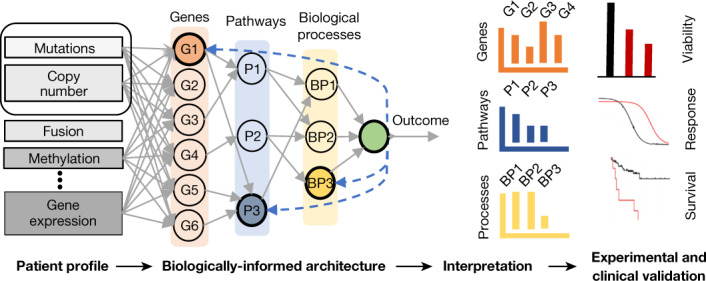
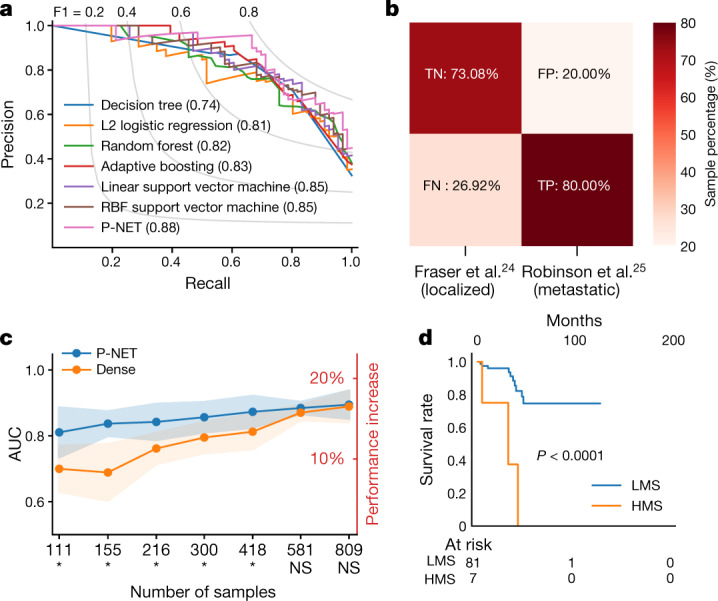
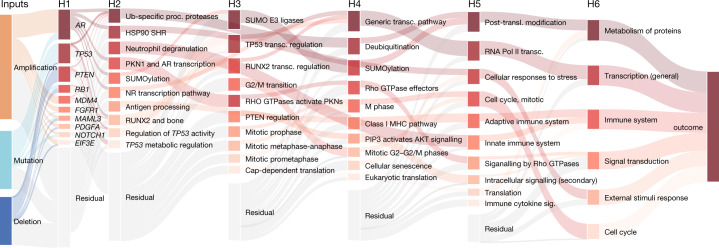
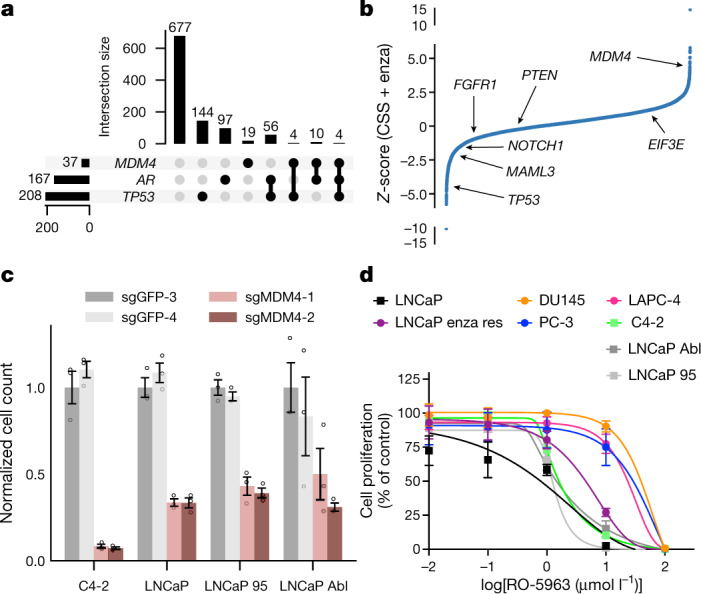
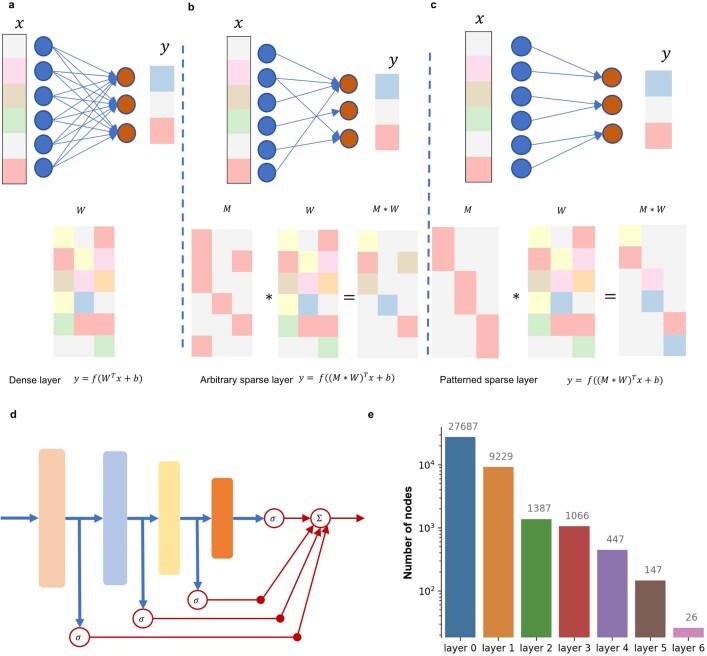
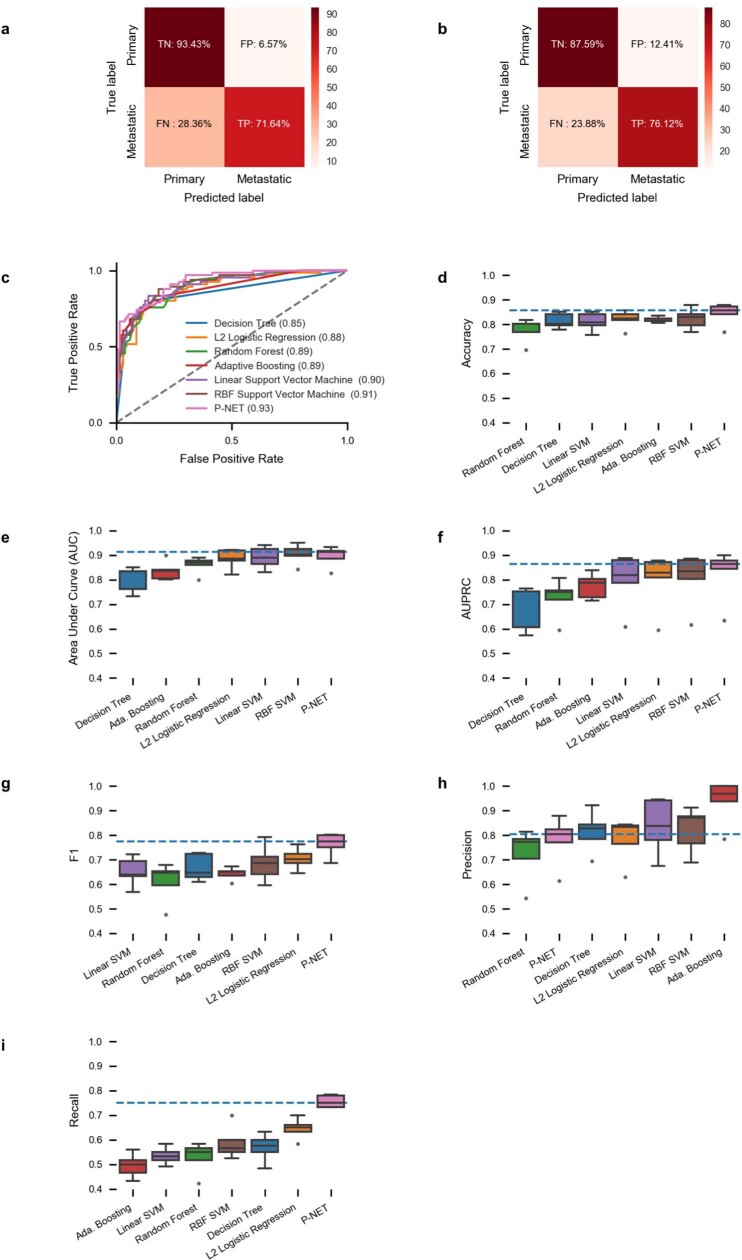
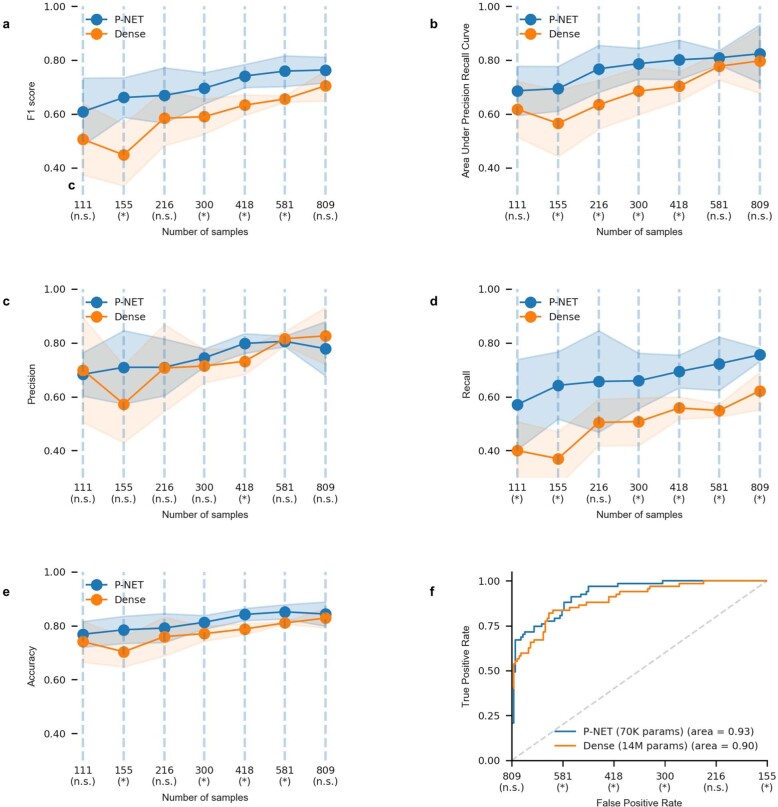
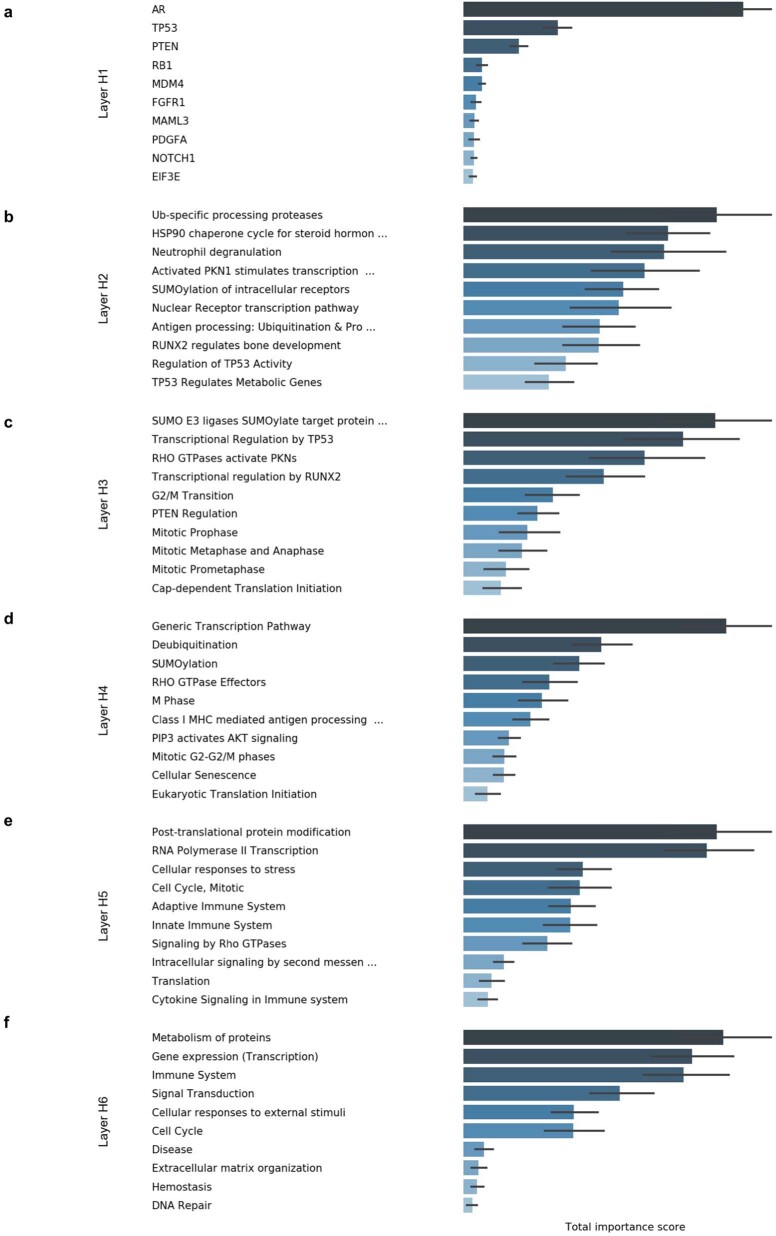
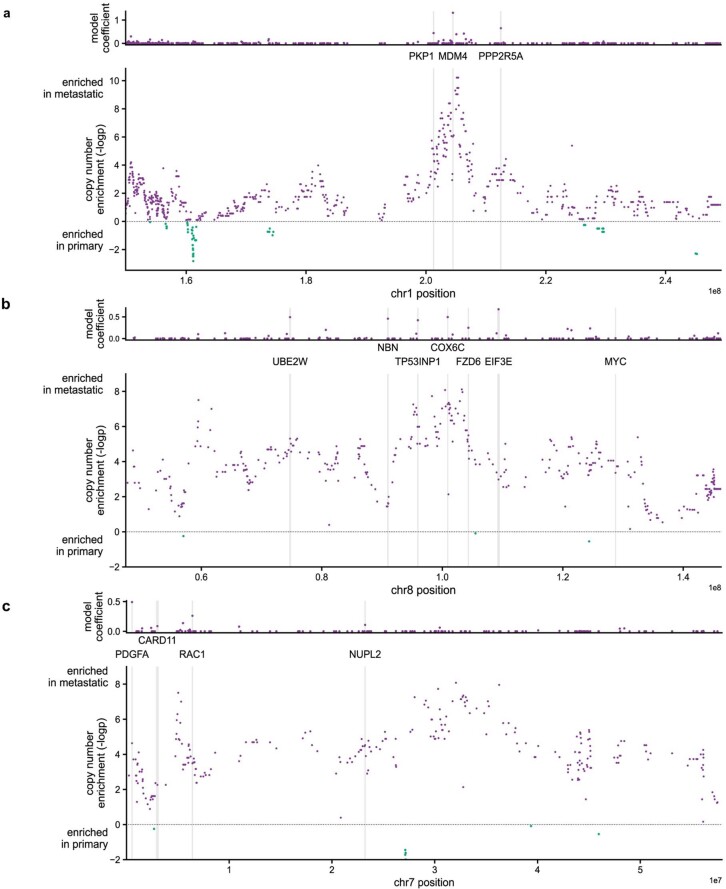
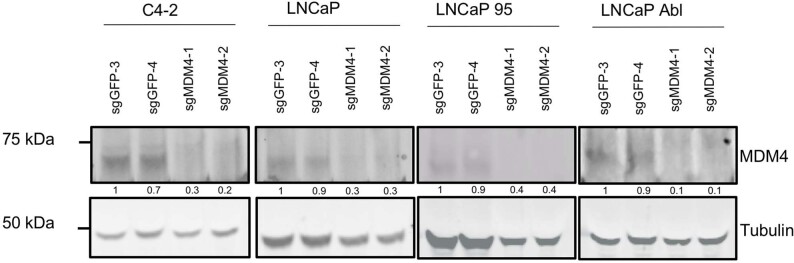
Abstract The determination of molecular features that mediate clinically aggressive phenotypes in prostate cancer remains a major biological and clinical challenge 1,2 . Recent advances in interpretability of machine learning models as applied to biomedical problems may enable discovery and prediction in clinical cancer genomics 3–5 . Here we developed P-NET—a biologically informed deep learning model—to stratify patients with prostate cancer by treatment-resistance state and evaluate molecular drivers of treatment resistance for therapeutic targeting through complete model interpretability. We demonstrate that P-NET can predict cancer state using molecular data with a performance that is superior to other modelling approaches. Moreover, the biological interpretability within P-NET revealed established and novel molecularly altered candidates, such as MDM4 and FGFR1 , which were implicated in predicting advanced disease and validated in vitro. Broadly, biologically informed fully interpretable neural networks enable preclinical discovery and clinical prediction in prostate cancer and may have general applicability across cancer types.
Overview
The claims and statistics of this paper haven’t been checked yet.
Run the check — free, no account needed. It reads the open-access text and checks the sources it cites.
Integrity signals
Registry
Cites
Statistics
Figures
Verification
Claims the paper makes
The claims and statistics of this paper haven’t been checked yet.
Run the check — free, no account needed. It reads the open-access text and checks the sources it cites.
Claims other papers make about this one
Each is checked against this paper’s own text: does it say what the citing paper says it does?
The source backs part of the claim, not all of it — or backs it for a different population, condition or comparison.
In the citing paper
“P-NET applied the hierarchical pathway information to construct a sparse deep neural network for inferring the disease status-specific molecular alterations, which aids in disease diagnosis and drug design for prostate cancer [116].”
From Challenges in AI-driven Biomedical Multimodal Data Fusion and Analysis (2025) · cites this paper as [116]
Experimental — accuracy not yet measuredThe source backs part of the claim, not all of it — or backs it for a different population, condition or comparison.
In the citing paper
“While multiple deep learning methods have been developed to integrate biological pathway information with neural network architectures [116,166], these methods are still limited by the predefined pathway annotations.”
From Challenges in AI-driven Biomedical Multimodal Data Fusion and Analysis (2025) · cites this paper as [116]
Experimental — accuracy not yet measuredThe cited source says what the claim attributes to it.
In the citing paper
“The common approach for biological model design is to construct a neural network architecture that is restrained by biological pathways, specifically connecting target gene nodes with pathway nodes, including models of P-NET [116], pmVAE [163], VEGA [164], and LDVAE [165].”
From Challenges in AI-driven Biomedical Multimodal Data Fusion and Analysis (2025) · cites this paper as [116]
In the citing paper
“P-NET (112) is a sparse deep learning model that processes molecular profiling data in a biologically informed, pathway-driven fashion to predict prostate disease states such as metastases, where the resulting prediction scores were shown to independently correlate with prognosis.”
From Artificial Intelligence in Oncology: Current Landscape, Challenges, and Future Directions (2024) · cites this paper as [112]
Self-check
Percentages, sums and reported differences re-computed from the paper’s own numbers.
The self-check needs the paper’s full text.
Citations
Cites
Adam: A Method for Stochastic Optimization
Kingma, D. P., & Ba, J. (2014) · arXiv · doi:10.48550/arxiv.1412.6980 · Cited by 98,946
STAR: ultrafast universal RNA-seq aligner
Dobin, A., Davis, C. A., Schlesinger, F., Drenkow, J., Zaleski, C., Jha, S., Batut, P., Chaisson, M., & Gingeras, T. R. (2013) · Bioinformatics · doi:10.1093/bioinformatics/bts635 · Cited by 51,709
Cutadapt removes adapter sequences from high-throughput sequencing reads
Martin, M. (2011) · EMBnet.journal · doi:10.14806/ej.17.1.200 · Cited by 33,889
DeLong, E. R., DeLong, D. M., & Clarke-Pearson, D. L. (1988) · Biometrics · doi:10.2307/2531595 · Cited by 22,649
"Why Should I Trust You?": Explaining the Predictions of Any Classifier
Ribeiro, M. T., Singh, S., & Guestrin, C. (2016) · Proceedings of the 22nd ACM SIGKDD International Conference on Knowledge Discovery and Data Mining · doi:10.1145/2939672.2939778 · Cited by 17,555
The Reactome pathway Knowledgebase
Fabregat, A., Sidiropoulos, K., Garapati, P., Gillespie, M., Hausmann, K., Haw, R., Jassal, B., Jupe, S., Korninger, F., McKay, S., et al. (2016) · Nucleic Acids Research · doi:10.1093/nar/gkv1351 · Cited by 5,605
Integrative Clinical Genomics of Advanced Prostate Cancer
Robinson, D., Van Allen, E. M., Wu, Y.-M., Schultz, N., Lonigro, R. J., Mosquera, J.-M., Montgomery, B., Taplin, M.-E., Pritchard, C. C., Attard, G., et al. (2015) · Cell · doi:10.1016/j.cell.2015.05.001 · Cited by 3,645
Mermel, C. H., Schumacher, S. E., Hill, B., Meyerson, M. M., Beroukhim, R., & Getz, G. A. (2011) · Genome biology · doi:10.1186/gb-2011-12-4-r41 · Cited by 3,520
Discovery and saturation analysis of cancer genes across 21 tumour types
Lawrence, M. S., Stojanov, P., Mermel, C. H., Robinson, J. T., Garraway, L. A., Golub, T. R., Meyerson, M., Gabriel, S. B., Lander, E. S., & Getz, G. (2014) · Nature · doi:10.1038/nature12912 · Cited by 3,096
Pruning Filters for Efficient ConvNets
Li, H., Kadav, A., Durdanovic, I., Samet, H., & Graf, H. P. (2016) · arXiv · doi:10.48550/arxiv.1608.08710 · Cited by 2,928
Research works printed but not linked: 2
- Han S., Pool J., Tran J., Dally W. in Advances in Neural Information Processing Systems (eds Cortes C. et al.) 1135–1143 (Curran Associates, 2015).
- Lundberg S. M., Lee S.-I. in Advances in Neural Information Processing Systems 30 (eds Guyon I. et al.) 4765–4774 (Curran Associates, 2017).
Cited by
Sorted by citations
Items 401–462 of 462
Knowledge-guided learning with curated prior genetic biomarkers for robust model interpretation
Baek, B., Jang, E., Parsa, S. P., Kim, Y. H., & Kang, M. (2026) · Bioinformatics · doi:10.1093/bioinformatics/btag411
A Multimodal Survival Prediction Fusion Framework Based on Prototype Learning
Wang, N., Wang, M., Yuan, C., Han, S., Ym, X., & Li, J. (2025) · IEEE International Conference on Bioinformatics and Biomedicine (BIBM) · doi:10.1109/bibm66473.2025.11357145
Wang, M., Wang, N., Han, S., Xue, Y., & Zhang, C. (2026) · Expert Systems with Applications · doi:10.1016/j.eswa.2026.131391
Lee, J., Jang, S., Lee, B., Shin, J., Gong, J.-R., & Shin, D. (2026) · BMC Biology · doi:10.1186/s12915-026-02559-x
Picard, M., Claude, E., Lalanne, F., Leclercq, M., Uricaru, R., Thébault, P., & Droit, A. (2026) · Bioinformatics Advances · doi:10.1093/bioadv/vbag065
Simulation and empirical evaluation of biologically-informed neural network performance
Miller, G., Roman, A., Glettig, M., Elmarakeby, H., AlDubayan, S. H., Park, J., Collins, R. L., & Allen, E. M. V. (2026) · Machine Learning with Applications · doi:10.1016/j.mlwa.2026.100876
Self-citationJia, X., Wang, T., Russo, D. P., Aleksunes, L. M., Xiao, S., & Zhu, H. (2026) · bioRxiv (Cold Spring Harbor Laboratory) · doi:10.64898/2026.02.26.708259
Multi-scale Multimodal Representation for Enhanced Survival Prediction in Computational Pathology
Hou, Q., Sun, Y., Ling, J., Lu, M., & Yao, S. (2026) · Interdisciplinary Sciences Computational Life Sciences · doi:10.1007/s12539-026-00816-9
BPX-Net: biomarker-preserved explainable networks for disease diagnosis and prognosis
Wang, J., Chen, S., Wen, R., Ying, H., Xu, W., Yin, L., Deng, X., Han, C., Zhu, Q., Zhang, B., et al. (2026) · BioData Mining · doi:10.1186/s13040-026-00537-1
MESSI: Multimodal Experiments with SyStematic Interrogation using nextflowPreprint
Liang, C. (., Grewal, T. S., Singh, A., & Singh, A. (2026) · bioRxiv (Cold Spring Harbor Laboratory) · doi:10.64898/2026.03.09.710452
Shoaib, M., Ali, A., Blanco‐Martin, B., Kant, S., & Hayden, M. (2026) · Research Square · doi:10.21203/rs.3.rs-8961141/v1
Huang, T., Lin, K., Machado‐Vieira, R., Soares, J. C., Jiang, X., & Kim, Y. (2026) · Translational Psychiatry · doi:10.1038/s41398-026-03971-1 · Cited by 4
VRWKV-MSA: Multi-Modal Survival Analysis Using VRWKV with Optimal Transport Alignment
Zeng, Y., Ouyang, L., & Zhang, X. (2025) · International Conference on Big Data and Data Mining (BDDM) · doi:10.1109/bddm68348.2025.11442002
Poovarasan., P., Prabakaran, K., & R, R. K. (2026) · IEEE International Conference on Interdisciplinary Approaches in Technology and Management for Social Innovation (IATMSI) · doi:10.1109/iatmsi68868.2026.11465973
Developping and exploring the interest of deep learning approaches in the field of multi-omics data
Beaude, A. (2024) · theses.fr (ABES) · doi:10.70675/717fb1ffz8eaaz47d6z88c4zec38f96c9ae2
Advancements in Graph Representation Learning and Applications in Computational Biology
Chatzianastasis, M. (2025) · theses.fr (ABES) · doi:10.70675/b8144805z57bfz47c2zbf7ezb00ae1597604
Liu, W. T., Zheng, Z., Wang, X., & Ji, H. (2026) · Analytical Chemistry · doi:10.1021/acs.analchem.6c00372
Chen, H. (2026) · Journal of Virology · doi:10.1128/jvi.00175-26
Ramanathan, V., Xu, T., Pati, P., Ahmed, F., Goubran, M., & Martel, A. L. (2025) · IEEE/CVF International Conference on Computer Vision (ICCV) · doi:10.1109/iccv51701.2025.02217 · Cited by 3
AI in designing novel cancer treatments
Kumar, P., Umar, M., Naeem, A., & Khan, E. (2026) · Elsevier eBooks · doi:10.1016/b978-0-443-45004-4.00011-6
A biologically annotated neural network for proteomic discovery in Parkinson’s diseasePreprint
Vijayaraghavan, A., Crawford, L. A., Krishnakant, S., Amini, A. P., Conard, A. M., Olsen, A. L., Chahine, L. M., & Severson, K. (2026) · medRxiv · doi:10.64898/2026.04.29.26351681
Savelonas, M. A. (2026) · Applied Soft Computing · doi:10.1016/j.asoc.2026.115357
Yin, Q., & Chen, L. (2026) · NAR Cancer · doi:10.1093/narcan/zcag031
Current Challenges in Prostate Cancer Biosensing
Shukla, B., Kumar, R., Vasishtha, D., & Taghizadeh‐Hesary, F. (2026) · Springer eBooks · doi:10.1007/978-981-95-8644-8_11
Yin, Z., Shu, Y., Shen, D., Gao, H., Zhang, Y., Yang, Z., Gong, W., Chen, T., & Liu, Y. (2026) · BMC Cancer · doi:10.1186/s12885-026-16116-w
ZHANG, P., Bo, X., & Hao, L. I. (2026) · China basic science · doi:10.3724/cbs.202601007
Dual-path Asymptotic Multimodal Fusion Network for cancer survival prediction
Ge, Y., Peng, Y., & Sun, B. (2026) · Biomedical Signal Processing and Control · doi:10.1016/j.bspc.2026.110636
A non-invasive end-to-end intelligent assistance system for breast ultrasound
Zhou, J., Si, P., Zhang, Y., Song, J., He, T., Liu, Q., Chen, S., Tu, M., Wang, H., Guo, Q., et al. (2026) · Nature Communications · doi:10.1038/s41467-026-73170-5
Supervised deep learning with gene functional annotation for cell classification
Lin, Z., Gao, Y., & Sun, W. (2026) · PLoS Computational Biology · doi:10.1371/journal.pcbi.1014327 · Cited by 2
Optimization of Deep Neural Networks for Improving the Effectiveness of Cancer Treatment
Draga, A., & Pempera, K. (2026) · Lecture notes in networks and systems · doi:10.1007/978-3-032-27927-9_11
EIGNN: An Explainable Imaging-Genetic Neural Network for Robust Alzheimer's Disease Risk Prediction
Zhang, Z.-C., Cai, Z., Zhao, X., Cao, J., Chen, F., Ding, J., Yang, Y., & Zhao, X. (2026) · IEEE Transactions on Medical Imaging · doi:10.1109/tmi.2026.3704478
Decoding Gene-Disease Associations With Computational Methods: A Survey
Zhai, Y., Li, M., Yu, L., Wang, X., Luo, S., & Yang, L. (2026) · IEEE Transactions on Computational Biology and Bioinformatics · doi:10.1109/tcbbio.2026.3707525
vDeepInsight: an injective three-dimensional voxel carrier for tabular-feature neighborhood learningPreprint
Jia, S., Lysenko, A., Boroevich, K. A., Sharma, A. K., & Tsunoda, T. (2026) · bioRxiv (Cold Spring Harbor Laboratory) · doi:10.64898/2026.06.22.733711
AI-driven precision diagnosis and treatment of prostate cancer: a narrative review
Chu, T., Zhang, Y., Du, J., & Abudurexiti, M. (2026) · Frontiers in Oncology · doi:10.3389/fonc.2026.1877570
Guo, L., Wang, X., Liu, S., Xu, C., & Yang, K. (2026) · Exploration of Drug Science · doi:10.37349/eds.2026.1008170
Xu, X., Li, Y., Zheng, S., Lu, C., Zhou, J., Lu, H., Zhu, B., Yu, J., & Geng, Z. (2026) · Computational and Structural Biotechnology Journal · doi:10.34133/csbj.0191
Ding, X., Zhang, L., Ming, F., & Li, L. (2026) · IEEE Transactions on Computational Biology and Bioinformatics · doi:10.1109/tcbbio.2026.3718442
YiJiang, D., Yuanwei, J., & Zhang, W. (2026) · Frontiers in Oncology · doi:10.3389/fonc.2026.1825286
Sparsity is all you need: rethinking biologically informed neural networks
Caranzano, I., Pancotti, C., Rollo, C., Sartori, F., Lió, P., Fariselli, P., & Sanavia, T. (2026) · Briefings in Bioinformatics · doi:10.1093/bib/bbag425 · Cited by 5
Kontolati, K., Gladstone, R. J., Davis, I., & Pickering, E. M. (2026) · The Plant Journal · doi:10.1111/tpj.71076 · Cited by 3
Parsa, S. P., Baek, B., Ko, E., Kosaraju, S., & Kang, M. (2026) · bioRxiv (Cold Spring Harbor Laboratory) · doi:10.64898/2026.08.11.744286
Diamantidis, D. E., Tsakaldimis, G., Smyrlis, N. V., Chousein, C., Kafalis, C., Foutzitzi, K., Deligeorgiou, E., Panagiotopoulos, N., Lailisidis, S., Georgellis, C., et al. (2026) · Current Urology · doi:10.1097/cu9.0000000000000367
Pan-tumor spatial transcriptomics reveals conserved properties of tumor organization
Behera, V., Guzzetta, A., Giba, H., Pen, U.-Y., Lello, A. D., Pandey, B., Doran, B. A., Esposito, A., Pezeshk, A., Husain, A., et al. (2026) · Cell Reports Medicine · doi:10.1016/j.xcrm.2026.103013
Khodagholi, Z., & Yousefi, N. (2026) · NAR Genomics and Bioinformatics · doi:10.1093/nargab/lqag099
Martinez-Olivares, L., Hernández, A., Vélez, J. I., & Vidal, O. M. (2026) · Social Sciences & Humanities Open · doi:10.1016/j.ssaho.2026.103182
Using Biological Networks to Guide Biomedical Prediction
Zhao, X., Kong, J., Pu, K., Churas, C., Parker, J. A., & Ideker, T. (2026) · Methods in molecular biology · doi:10.1007/978-1-0716-5408-8_3
Tahmin, N., Chinthala, L. K., Baye, T. M., Davis, R. L., & Khojandi, A. (2026) · medRxiv · doi:10.64898/2026.09.03.26362179
Zhang, Z., Moghadam, P. A., Maneshgar, B., Mirabadi, A. K., Alabi, N., Farahani, H., & Bashashati, A. (2026) · Lecture notes in computer science · doi:10.1007/978-3-032-38172-9_34
Structure-Aware Multi-Modal Fusion for Interpretable Niche Prediction in Spatial Omics
Jiang, P., Shi, B., Qin, Y., Li, Y., Wang, Q., Sataer, Y., & Tao, X. (2026) · International Symposium on Communications and Information Technologies · doi:10.1109/iscit70453.2026.11695369
Zheng, Z., Yang, X., Ou, M., Chen, Y., & Gan, D. (2026) · Frontiers in Genetics · doi:10.3389/fgene.2026.1969511
Igwe, S., Ehi‐Eromosele, C. O., Udofia, I. A., & Oloba‐Whenu, O. A. (2026) · In Silico Pharmacology · doi:10.1007/s40203-026-00762-w
Causality-integrated graph learning for multi-endpoint toxicity prediction
Tan, H., Bao, T., Fang, Y., Zhang, R., Jin, J., Xu, D., Xie, L., Zhong, H., Xiao, X., Hong, H., et al. (2026) · Proceedings of the National Academy of Sciences · doi:10.1073/pnas.2608919123
Toward interpretable foundation models for molecular biology
Varma, M., & Ideker, T. (2026) · Molecular Cell · doi:10.1016/j.molcel.2026.09.030
Jia, X., Wang, T., Russo, D. P., Aleksunes, L. M., Xiao, S., & Zhu, H. (2026) · Journal of Hazardous Materials · doi:10.1016/j.jhazmat.2026.143880 · Cited by 1
Allemailem, K. S., Alharbi, H. O., Alrumaihi, F., & Almatroudi, A. (2026) · Life · doi:10.3390/life16101743
Noordijk, B., van Loo, T., van Hoek, M., Reinders, M. J. T., van Dijk, A. D. J., García‐Gómez, M. L., ten Tusscher, K., & de Ridder, D. (2026) · bioRxiv (Cold Spring Harbor Laboratory) · doi:10.64898/2026.10.20.758482
Edwards, T., Long, Q., & Shen, L. (2026) · doi:10.64898/2026.10.17.759869
Yue, W., & Padanilam, B. J. (2026) · Discover Artificial Intelligence · doi:10.1007/s44163-026-02605-1
Metadata
- Authors
- Elmarakeby, H. A., Hwang, J., Arafeh, R., Crowdis, J., Gang, S., Liu, D., AlDubayan, S. H., Salari, K., Kregel, S., Richter, C., Arnoff, T. E., Park, J., Hahn, W. C., & Van Allen, E. M.
- Affiliations
- Broad Institute (US)
- University of Minnesota (US)
- Dana-Farber Cancer Institute (US)
- University of Illinois Chicago (US)
- ORCID
- Venue
- Nature
- Published
- 2021-09-22
- Volume
- 598
- Issue
- 7880
- Pages
- 348-352
- ISSN
- 0028-0836 (ISSN-L)
- 1476-4687
- PMC
- PMC8514339
- OpenAlex
- W3199772305
- Cited by
- 456
- References
- 61
- Citations by year
- 2026: 99 · 2025: 105 · 2024: 111 · 2023: 88 · 2022: 47 · 2021: 5
- FWCI
- 41.88
- Type
- journal article
- Language
- en
- Open access
- hybrid
- doi.org
- Locations
- Nature (publishedVersion, cc-by)
- bioRxiv (Cold Spring Harbor Laboratory) (acceptedVersion, cc-by-nc-nd)
- Europe PMC (PubMed Central) (publishedVersion, other-oa)
- PubMed Central (publishedVersion, cc-by)
- PubMed (publishedVersion)
- Digital Access to Scholarship at Harvard (DASH) (Harvard University) (acceptedVersion)
- RePEc: Research Papers in Economics (submittedVersion)
- Funders
- U.S. Department of Defense (U01 CA233100, PC200150)
- Movember Foundation
- National Institutes of Health
- National Cancer Institute (U01CA176058, U01CA233100)
- Topics
- Life Sciences › Biochemistry, Genetics and Molecular Biology › Cancer Research › Prostate Cancer Treatment and Research
- Health Sciences › Medicine › Radiology, Nuclear Medicine and Imaging › Radiomics and Machine Learning in Medical Imaging
- Life Sciences › Biochemistry, Genetics and Molecular Biology › Cancer Research › Breast Cancer Treatment Studies
- Keywords
- prostate cancer, treatment resistance, interpretable neural networks, MDM4, FGFR1, cancer genomics, patient stratification, therapeutic targeting
- MeSH terms
- Deep Learning, Humans, Male, Prostatic Neoplasms, Proto-Oncogene Proteins, Receptors, Androgen, Reproducibility of Results, Tumor Suppressor Protein p53, Cell Cycle Proteins, Drug Resistance, Neoplasm, Receptor, Fibroblast Growth Factor, Type 1
About these checks
Registry, retraction, Cites and statistics results are computed, not judged, with one exception: a printed reference that no index lists is read once by a model before it counts as a citation error. Claims are extracted by a model and kept only when their quote appears verbatim in the text; each cited source is then checked, with a model’s help, for whether it says what the claim relies on. Those verdicts can be wrong — read the claim’s quote and the cited source before relying on one.
Statistics and arithmetic are recomputed, not judged.
Confidence bands are shown only for fields calibrated on our annotated test set. None is calibrated yet, so no band is shown.
What counts as a claim ›How we measure confidence ›How we check this ›
Are you an author, or do you see a problem with this page? Request a review
