

The DOI matches its Crossref record; 59 of the 61 references it cites were found in a registry or an index.
Biologically informed deep neural network for prostate cancer discovery
Open accessPublished version of a preprint
Abstract
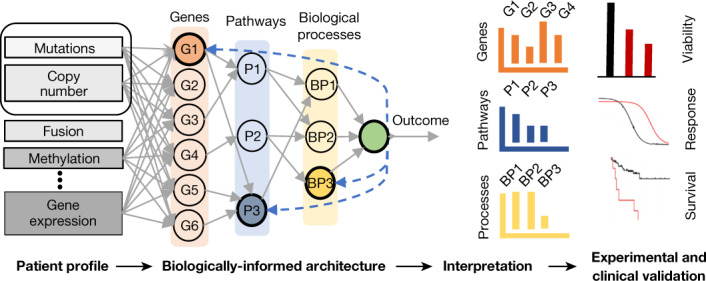
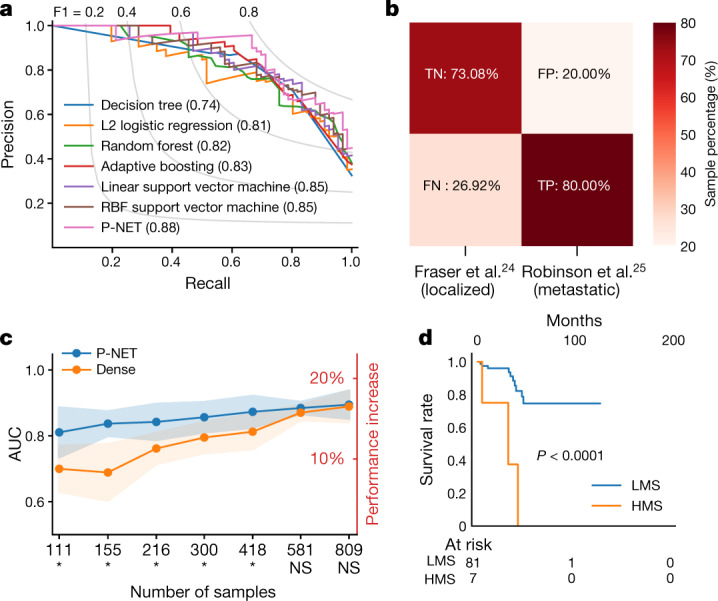
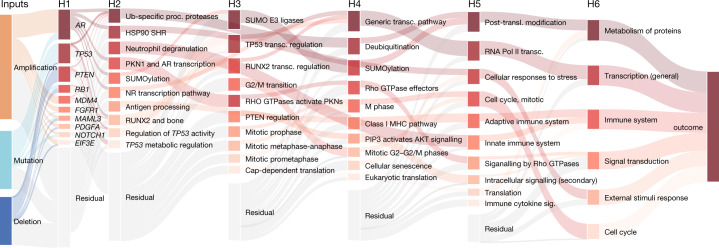
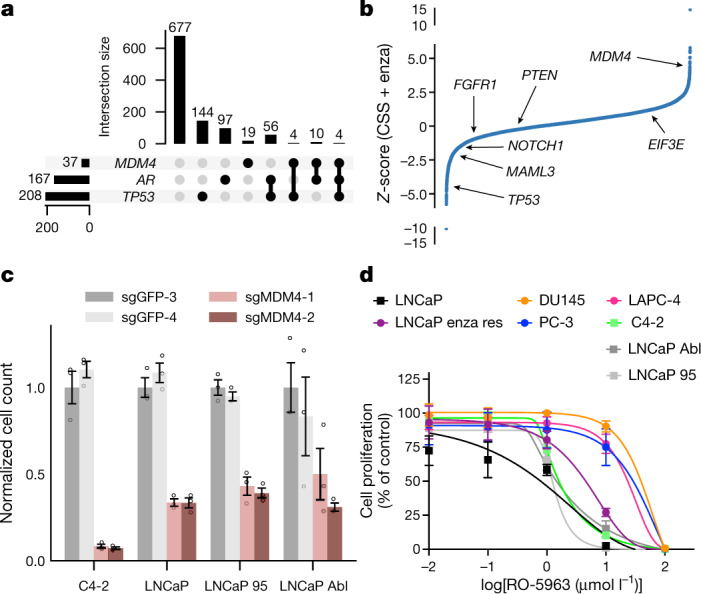
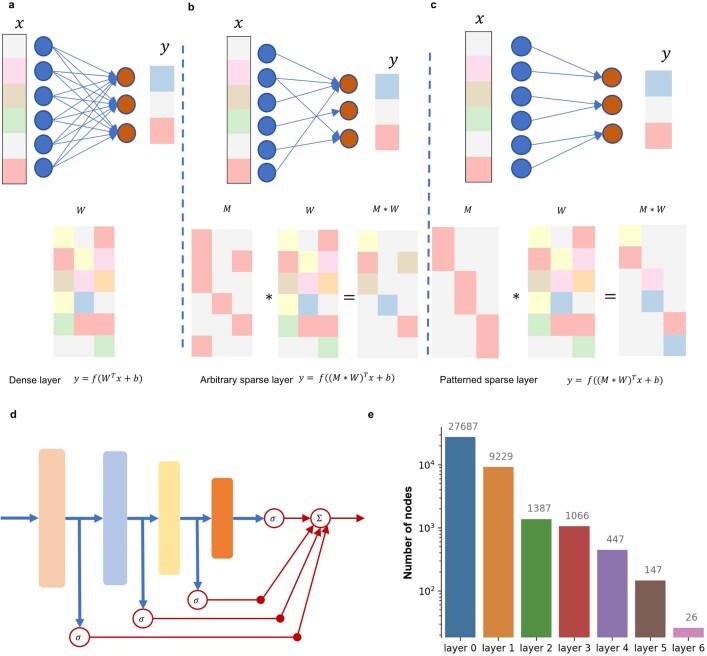
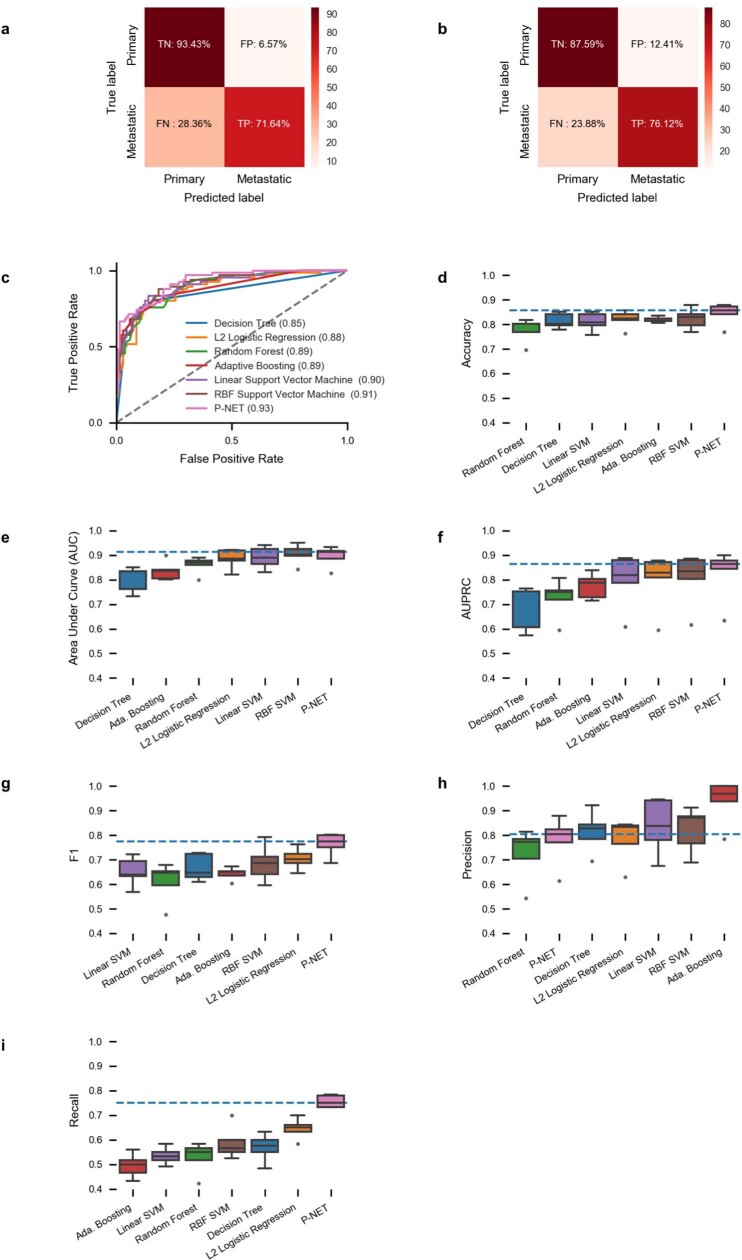
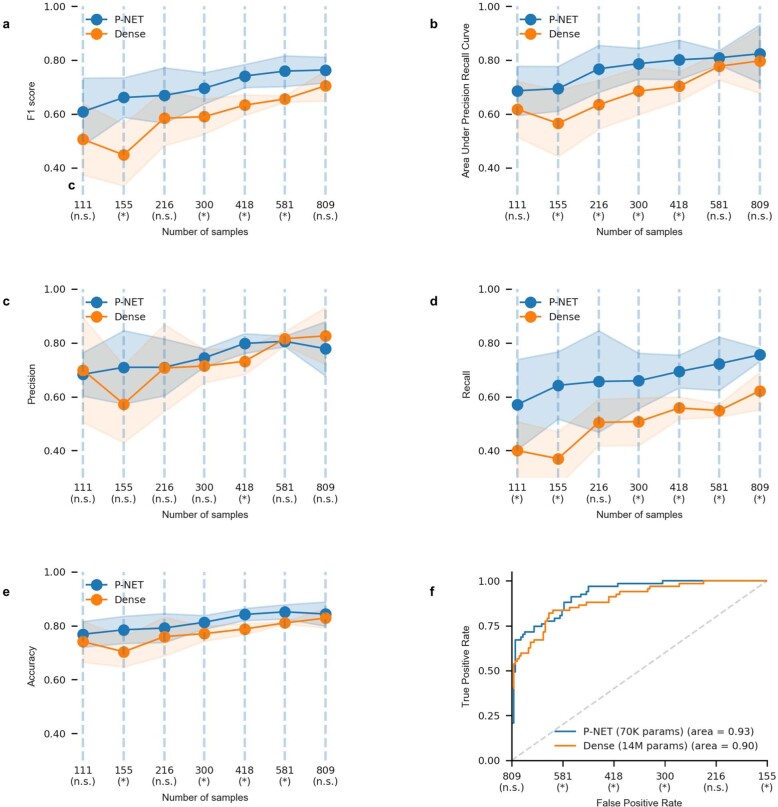
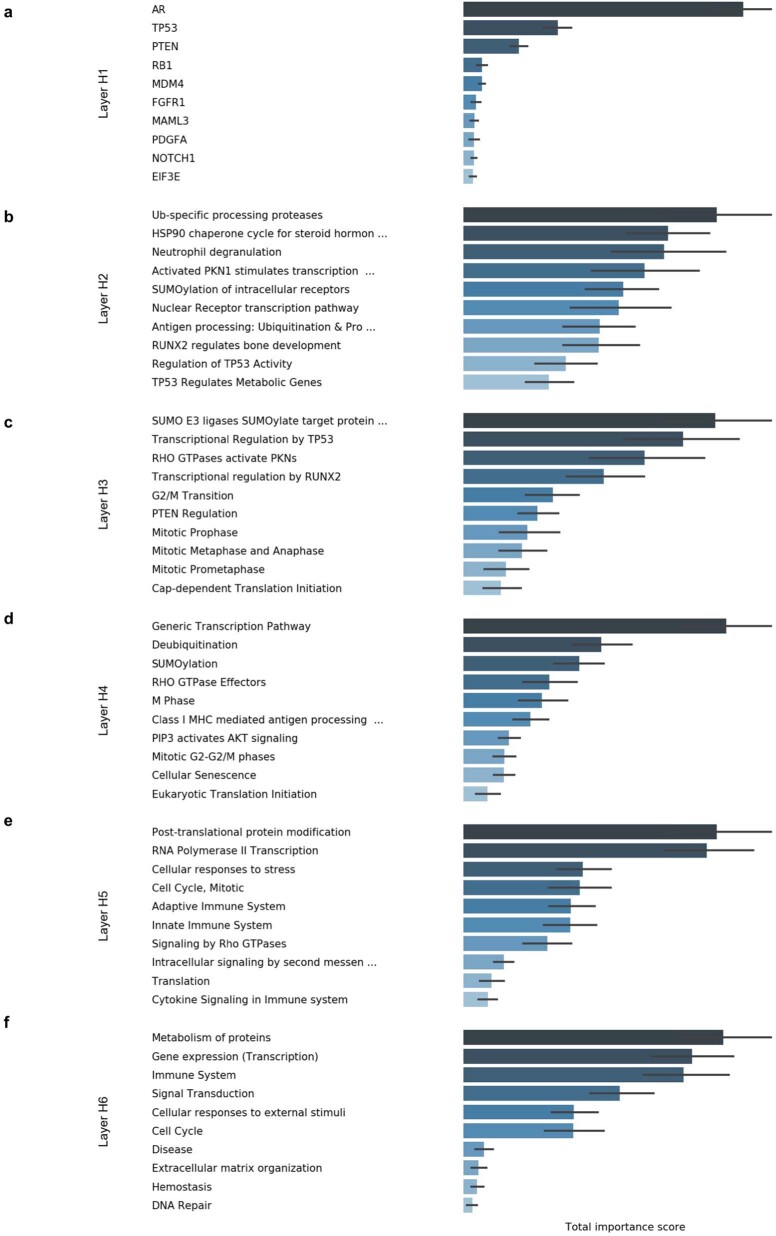
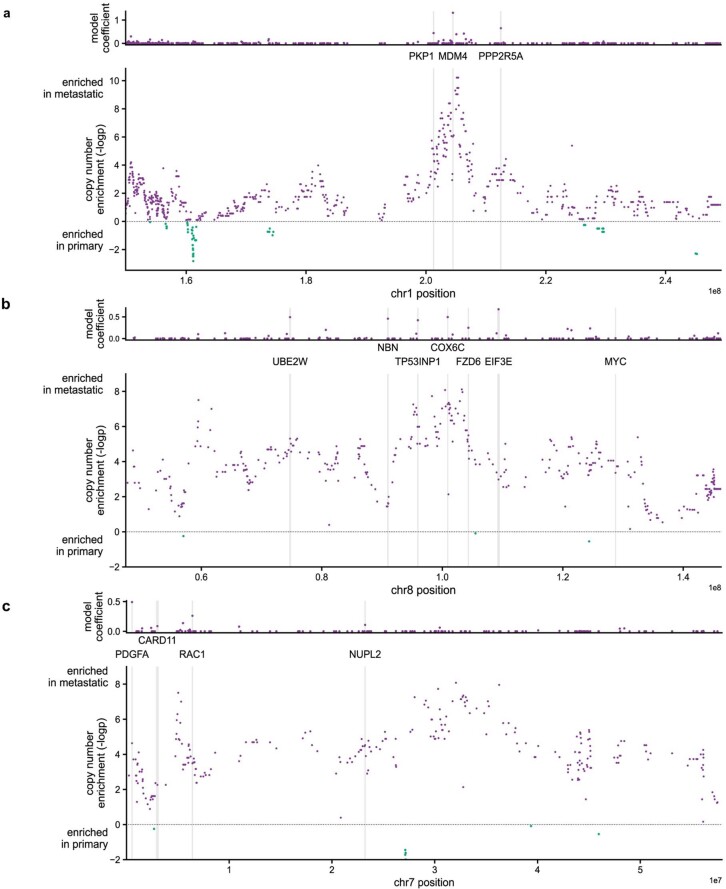
Abstract The determination of molecular features that mediate clinically aggressive phenotypes in prostate cancer remains a major biological and clinical challenge 1,2 . Recent advances in interpretability of machine learning models as applied to biomedical problems may enable discovery and prediction in clinical cancer genomics 3–5 . Here we developed P-NET—a biologically informed deep learning model—to stratify patients with prostate cancer by treatment-resistance state and evaluate molecular drivers of treatment resistance for therapeutic targeting through complete model interpretability. We demonstrate that P-NET can predict cancer state using molecular data with a performance that is superior to other modelling approaches. Moreover, the biological interpretability within P-NET revealed established and novel molecularly altered candidates, such as MDM4 and FGFR1 , which were implicated in predicting advanced disease and validated in vitro. Broadly, biologically informed fully interpretable neural networks enable preclinical discovery and clinical prediction in prostate cancer and may have general applicability across cancer types.
Overview
The claims and statistics of this paper haven’t been checked yet.
Run the check — free, no account needed. It reads the open-access text and checks the sources it cites.
Integrity signals
Registry
Cites
Statistics
Figures
Verification
Claims the paper makes
The claims and statistics of this paper haven’t been checked yet.
Run the check — free, no account needed. It reads the open-access text and checks the sources it cites.
Claims other papers make about this one
Each is checked against this paper’s own text: does it say what the citing paper says it does?
The source backs part of the claim, not all of it — or backs it for a different population, condition or comparison.
In the citing paper
“P-NET applied the hierarchical pathway information to construct a sparse deep neural network for inferring the disease status-specific molecular alterations, which aids in disease diagnosis and drug design for prostate cancer [116].”
From Challenges in AI-driven Biomedical Multimodal Data Fusion and Analysis (2025) · cites this paper as [116]
Experimental — accuracy not yet measuredThe source backs part of the claim, not all of it — or backs it for a different population, condition or comparison.
In the citing paper
“While multiple deep learning methods have been developed to integrate biological pathway information with neural network architectures [116,166], these methods are still limited by the predefined pathway annotations.”
From Challenges in AI-driven Biomedical Multimodal Data Fusion and Analysis (2025) · cites this paper as [116]
Experimental — accuracy not yet measuredThe cited source says what the claim attributes to it.
In the citing paper
“The common approach for biological model design is to construct a neural network architecture that is restrained by biological pathways, specifically connecting target gene nodes with pathway nodes, including models of P-NET [116], pmVAE [163], VEGA [164], and LDVAE [165].”
From Challenges in AI-driven Biomedical Multimodal Data Fusion and Analysis (2025) · cites this paper as [116]
In the citing paper
“P-NET (112) is a sparse deep learning model that processes molecular profiling data in a biologically informed, pathway-driven fashion to predict prostate disease states such as metastases, where the resulting prediction scores were shown to independently correlate with prognosis.”
From Artificial Intelligence in Oncology: Current Landscape, Challenges, and Future Directions (2024) · cites this paper as [112]
Self-check
Percentages, sums and reported differences re-computed from the paper’s own numbers.
The self-check needs the paper’s full text.
Citations
Cites
Adam: A Method for Stochastic Optimization
Kingma, D. P., & Ba, J. (2014) · arXiv · doi:10.48550/arxiv.1412.6980 · Cited by 98,946
STAR: ultrafast universal RNA-seq aligner
Dobin, A., Davis, C. A., Schlesinger, F., Drenkow, J., Zaleski, C., Jha, S., Batut, P., Chaisson, M., & Gingeras, T. R. (2013) · Bioinformatics · doi:10.1093/bioinformatics/bts635 · Cited by 51,709
Cutadapt removes adapter sequences from high-throughput sequencing reads
Martin, M. (2011) · EMBnet.journal · doi:10.14806/ej.17.1.200 · Cited by 33,889
DeLong, E. R., DeLong, D. M., & Clarke-Pearson, D. L. (1988) · Biometrics · doi:10.2307/2531595 · Cited by 22,649
"Why Should I Trust You?": Explaining the Predictions of Any Classifier
Ribeiro, M. T., Singh, S., & Guestrin, C. (2016) · Proceedings of the 22nd ACM SIGKDD International Conference on Knowledge Discovery and Data Mining · doi:10.1145/2939672.2939778 · Cited by 17,555
The Reactome pathway Knowledgebase
Fabregat, A., Sidiropoulos, K., Garapati, P., Gillespie, M., Hausmann, K., Haw, R., Jassal, B., Jupe, S., Korninger, F., McKay, S., et al. (2016) · Nucleic Acids Research · doi:10.1093/nar/gkv1351 · Cited by 5,605
Integrative Clinical Genomics of Advanced Prostate Cancer
Robinson, D., Van Allen, E. M., Wu, Y.-M., Schultz, N., Lonigro, R. J., Mosquera, J.-M., Montgomery, B., Taplin, M.-E., Pritchard, C. C., Attard, G., et al. (2015) · Cell · doi:10.1016/j.cell.2015.05.001 · Cited by 3,645
Mermel, C. H., Schumacher, S. E., Hill, B., Meyerson, M. M., Beroukhim, R., & Getz, G. A. (2011) · Genome biology · doi:10.1186/gb-2011-12-4-r41 · Cited by 3,520
Discovery and saturation analysis of cancer genes across 21 tumour types
Lawrence, M. S., Stojanov, P., Mermel, C. H., Robinson, J. T., Garraway, L. A., Golub, T. R., Meyerson, M., Gabriel, S. B., Lander, E. S., & Getz, G. (2014) · Nature · doi:10.1038/nature12912 · Cited by 3,096
Pruning Filters for Efficient ConvNets
Li, H., Kadav, A., Durdanovic, I., Samet, H., & Graf, H. P. (2016) · arXiv · doi:10.48550/arxiv.1608.08710 · Cited by 2,928
The Reactome Pathway Knowledgebase
Fabregat, A., Jupe, S., Matthews, L. R., Sidiropoulos, K., Gillespie, M. E., Garapati, P. V., Haw, R., Jassal, B., Korninger, F., May, B., et al. (2017) · Nucleic Acids Research · doi:10.1093/nar/gkx1132 · Cited by 2,862
Learning Important Features Through Propagating Activation Differences
Shrikumar, A., Greenside, P., & Kundaje, A. (2017) · arXiv · doi:10.48550/arxiv.1704.02685 · Cited by 2,761
UpSet: Visualization of Intersecting Sets
Lex, A., Gehlenborg, N., Strobelt, H., Vuillemot, R., & Pfister, H. (2014) · IEEE Transactions on Visualization and Computer Graphics · doi:10.1109/tvcg.2014.2346248 · Cited by 2,340
Definitions, methods, and applications in interpretable machine learning
Murdoch, W. J., Singh, C., Kumbier, K., Abbasi-Asl, R., & Yu, B. (2019) · Proceedings of the National Academy of Sciences · doi:10.1073/pnas.1900654116 · Cited by 2,167
The COSMIC Cancer Gene Census: describing genetic dysfunction across all human cancers
Sondka, Z., Bamford, S., Cole, C. G., Ward, S. A., Dunham, I., & Forbes, S. A. (2018) · Nature Reviews Cancer · doi:10.1038/s41568-018-0060-1 · Cited by 1,597
The Lottery Ticket Hypothesis: Finding Sparse, Trainable Neural Networks
Frankle, J., & Carbin, M. (2018) · arXiv · doi:10.48550/arxiv.1803.03635 · Cited by 1,529
Genomic correlates of clinical outcome in advanced prostate cancer
Abida, W., Cyrta, J., Heller, G., Prandi, D., Armenia, J., Coleman, I., Cieslik, M., Benelli, M., Robinson, D., Van Allen, E. M., et al. (2019) · Proceedings of the National Academy of Sciences · doi:10.1073/pnas.1902651116 · Cited by 1,372
The evolutionary history of lethal metastatic prostate cancer
ICGC Prostate UK Group, Gundem, G., Loo, P. V., Kremeyer, B., Alexandrov, L. B., Tubío, J. M. C., Papaemmanuil, E., Brewer, D. S., Kallio, H. M. L., Högnäs, G., et al. (2015) · Nature · doi:10.1038/nature14347 · Cited by 1,358
The long tail of oncogenic drivers in prostate cancer
PCF/SU2C International Prostate Cancer Dream Team, Armenia, J., Wankowicz, S. A. M., Liu, D., Gao, J., Kundra, R., Reznik, E., Chatila, W. K., Chakravarty, D., Han, G. C., et al. (2018) · Nature Genetics · doi:10.1038/s41588-018-0078-z · Cited by 896
Self-citationp53: 800 million years of evolution and 40 years of discovery
Levine, A. J. (2020) · Nature reviews. Cancer · doi:10.1038/s41568-020-0262-1 · Cited by 876
Integrative clinical genomics of metastatic cancer
Robinson, D. R., Wu, Y.-M., Lonigro, R. J., Vats, P., Cobain, E., Everett, J., Cao, X., Rabban, E., Kumar-Sinha, C., Raymond, V., et al. (2017) · Nature · doi:10.1038/nature23306 · Cited by 863
Aggarwal, R., Huang, J., Alumkal, J. J., Zhang, L., Feng, F. Y., Thomas, G. V., Weinstein, A. S., Friedl, V., Zhang, C., Witte, O. N., et al. (2018) · Journal of Clinical Oncology · doi:10.1200/jco.2017.77.6880 · Cited by 810
Androgen Receptor Pathway-Independent Prostate Cancer Is Sustained through FGF Signaling
Bluemn, E. G., Coleman, I. M., Lucas, J. M., Coleman, R. T., Hernandez-Lopez, S., Tharakan, R., Bianchi-Frias, D., Dumpit, R. F., Kaipainen, A., Corella, A. N., et al. (2017) · Cancer Cell · doi:10.1016/j.ccell.2017.09.003 · Cited by 744
Genomic Hallmarks and Structural Variation in Metastatic Prostate Cancer
Quigley, D. A., Dang, H. X., Zhao, S. G., Lloyd, P., Aggarwal, R., Alumkal, J. J., Foye, A., Kothari, V., Perry, M. D., Bailey, A. M., et al. (2018) · Cell · doi:10.1016/j.cell.2018.06.039 · Cited by 733
Haas, B. J., Dobin, A., Li, B., Stransky, N., Pochet, N., & Regev, A. (2019) · Genome biology · doi:10.1186/s13059-019-1842-9 · Cited by 646
Towards better understanding of gradient-based attribution methods for Deep Neural NetworksPreprint
Ancona, M., Ceolini, E., Öztireli, C., & Groß, M. H. (2017) · Zurich Open Repository and Archive (University of Zurich) · doi:10.3929/ethz-b-000249929 · Cited by 634
Genomic hallmarks of localized, non-indolent prostate cancer
Fraser, M. E., Sabelnykova, V. Y., Yamaguchi, T. N., Heisler, L. E., Livingstone, J. M., Huang, V., Shiah, Y.-J., Yousif, F., Lin, X., Masella, A. P., et al. (2017) · Nature · doi:10.1038/nature20788 · Cited by 602
Integrative Clinical Genomics of Advanced Prostate Cancer
Robinson, D. R., Allen, E. M. V., Wu, Y., Schultz, N. D., Lonigro, R. J., Mosquera, J., Montgomery, B., Taplin, M., Pritchard, C. C., Attard, G., et al. (2015) · Cell · doi:10.1016/j.cell.2015.06.053 · Cited by 570
Predicting drug response and synergy using a deep learning model of human cancer cells
Kuenzi, B. M., Park, J., Fong, S. H., Sanchez, K. S., Lee, J., Kreisberg, J. F., Ma, J., & Ideker, T. (2020) · Cancer Cell · doi:10.1016/j.ccell.2020.09.014 · Cited by 544
Self-citationp53 Protein Accumulation and Gene Mutation in the Progression of Human Prostate Carcinoma
Navone, N. M., Troncoso, P., Pisters, L. L., Goodrow, T. L., Palmer, J. L., Nichols, W. W., von Eschenbach, A. C., & Conti, C. J. (1993) · JNCI Journal of the National Cancer Institute · doi:10.1093/jnci/85.20.1657 · Cited by 477
Using deep learning to model the hierarchical structure and function of a cell
Ma, J., Yu, M. K., Fong, S., Ono, K., Sage, E., Demchak, B., Sharan, R., & Ideker, T. (2018) · Nature Methods · doi:10.1038/nmeth.4627 · Cited by 435
Copy number alteration burden predicts prostate cancer relapse
Hieronymus, H., Schultz, N. D., Gopalan, A., Carver, B. S., Chang, M. T., Xiao, Y., Heguy, A., Huberman, K. H., Bernstein, M. L., Assel, M. J., et al. (2014) · Proceedings of the National Academy of Sciences · doi:10.1073/pnas.1411446111 · Cited by 366
Sparse Networks from Scratch: Faster Training without Losing PerformancePreprint
Dettmers, T., & Zettlemoyer, L. (2019) · arXiv (Cornell University) · doi:10.48550/arxiv.1907.04840 · Cited by 366
The DNA methylation landscape of advanced prostate cancer
Zhao, S. G., Chen, W. S., Li, H., Foye, A., Zhang, M., Sjöström, M., Aggarwal, R. R., Playdle, D., Liao, A., Alumkal, J. J., et al. (2020) · Nature Genetics · doi:10.1038/s41588-020-0648-8 · Cited by 357
Sharma, A. M., Yeow, W.-S., Ertel, A., Coleman, I. M., Clegg, N. J., Thangavel, C., Morrissey, C. M., Zhang, X., Comstock, C. E. S., Witkiewicz, A. K., et al. (2010) · Journal of Clinical Investigation · doi:10.1172/jci44239 · Cited by 332
A White-Box Machine Learning Approach for Revealing Antibiotic Mechanisms of Action
Yang, J. H., Wright, S. N., Hamblin, M., McCloskey, D., Alcantar, M. A., Schrübbers, L. C., Lopatkin, A. J., Satish, S., Nili, A., Palsson, B. Ø., et al. (2019) · Cell · doi:10.1016/j.cell.2019.04.016 · Cited by 322
Activation of the p53 pathway by small-molecule-induced MDM2 and MDMX dimerization
Graves, B., Thompson, T., Xia, M., Janson, C., Lukacs, C., Deo, D., Di Lello, P., Fry, D., Garvie, C., Huang, K.-S., et al. (2012) · Proceedings of the National Academy of Sciences · doi:10.1073/pnas.1203789109 · Cited by 230
Rodrigues, D. N., Rescigno, P., Liu, D., Yuan, W., Carreira, S., Lambros, M. B. K., Seed, G., Mateo, J., Riisnaes, R., Mullane, S. A., et al. (2018) · Journal of Clinical Investigation · doi:10.1172/jci121924 · Cited by 209
Self-citationClinical significance of p53 alterations in surgically treated prostate cancers
Schlomm, T., Iwers, L., Kirstein, P., Jessen, B., Köllermann, J., Minner, S., Passow-Drolet, A., Mirlacher, M., Milde-Langosch, K., Graefen, M., et al. (2008) · Modern Pathology · doi:10.1038/modpathol.2008.104 · Cited by 196
Zhang, Z., Li, M., Wang, H., Agrawal, S., & Zhang, R. (2003) · Proceedings of the National Academy of Sciences · doi:10.1073/pnas.1934692100 · Cited by 192
Overfitting remedy by sparsifying regularization on fully-connected layers of CNNs
Xu, Q., Zhang, M., Gu, Z., & Pan, G. (2018) · Neurocomputing · doi:10.1016/j.neucom.2018.03.080 · Cited by 174
Genomic Hallmarks and Structural Variation in Metastatic Prostate Cancer
Quigley, D. A., Dang, H. X., Zhao, S. G., Lloyd, P., Aggarwal, R. R., Alumkal, J. J., Foye, A., Kothari, V., Perry, M. D., Bailey, A. M., et al. (2018) · Cell · doi:10.1016/j.cell.2018.10.019 · Cited by 171
Regulation of p53: a collaboration between Mdm2 and MdmX
Pei, D., Zhang, Y., & Zheng, J. (2012) · Oncotarget · doi:10.18632/oncotarget.443 · Cited by 140
Hao, J., Kim, Y. S., Kim, T.-K., & Kang, M. (2018) · BMC Bioinformatics · doi:10.1186/s12859-018-2500-z · Cited by 139
Chen, W. S., Aggarwal, R. R., Zhang, L., Zhao, S. G., THOMAS, G. V., Beer, T. M., Quigley, D. A., Foye, A., Playdle, D., Huang, J., et al. (2019) · European Urology · doi:10.1016/j.eururo.2019.03.020 · Cited by 130
Abnormal Expression of MDM2 in Prostate Carcinoma
Leite, K. R. M., de Franco, M. F., Srougi, M., Nesrallah, L., Nesrallah, A., Bevilacqua, R. G., Darini, E., Carvalho, C. M., Meirelles, M. I., Santana, I., et al. (2001) · Modern Pathology · doi:10.1038/modpathol.3880330 · Cited by 102
MDM2 and MDM4 Are Therapeutic Vulnerabilities in Malignant Rhabdoid Tumors
Howard, T. P., Arnoff, T. E., Song, M. R., Giacomelli, A. O., Wang, X., Hong, A. L., Dharia, N. V., Wang, S., Vázquez, F., Pham, M., et al. (2019) · Cancer Research · doi:10.1158/0008-5472.can-18-3066 · Cited by 70
Self-citationSutinen, P., Malinen, M., Heikkinen, S., & Palvimo, J. J. (2014) · Nucleic Acids Research · doi:10.1093/nar/gku543 · Cited by 70
Hwang, J. H., Seo, J.-H., Beshiri, M. L., Wankowicz, S. A. M., Liu, D., Cheung, A. T. M., Li, J., Qiu, X., Hong, A. L., Botta, G., et al. (2019) · Cell Reports · doi:10.1016/j.celrep.2019.10.068 · Cited by 68
Self-citationFarah, E., Li, C., Cheng, L., Kong, Y., Lanman, N. A., Pascuzzi, P. E., Lorenz, G. R., Zhang, Y., Ahmad, N., Li, L., et al. (2019) · Journal of Biological Chemistry · doi:10.1074/jbc.ra118.006983 · Cited by 67
Role of Runx2 phosphorylation in prostate cancer and association with metastatic disease
Ge, C., Zhao, G., Li, Y., Li, H., Zhao, X., Pannone, G., Bufo, P., Santoro, A., Sanguedolce, F., Tortorella, S., et al. (2015) · Oncogene · doi:10.1038/onc.2015.91 · Cited by 64
Feng, F. Y.-C., Zhang, Y., Kothari, V., Evans, J. R., Jackson, W., Chen, W., Johnson, S. B., Luczak, C., Wang, S., & Hamstra, D. A. (2016) · Neoplasia · doi:10.1016/j.neo.2016.01.006 · Cited by 59
Rodrigues, D. N., Rescigno, P., Liu, D., Yuan, W., Carreira, S., Lambros, M. B. K., Seed, G., Mateo, J., Riisnaes, R., Mullane, S. A., et al. (2018) · Journal of Clinical Investigation · doi:10.1172/jci125184 · Cited by 53
Self-citationRoles of Ubiquitination and SUMOylation on Prostate Cancer: Mechanisms and Clinical Implications
Chen, Z., & Lu, W. (2015) · International Journal of Molecular Sciences · doi:10.3390/ijms16034560 · Cited by 52
Tovar, C., Higgins, B., Kolinsky, K. D., Xia, M., Packman, K. E., Heimbrook, D. C., & Vassilev, L. T. (2011) · Molecular Cancer · doi:10.1186/1476-4598-10-49 · Cited by 41
Towards better understanding of gradient-based attribution methods for Deep Neural NetworksPreprint
Ancona, M., Ceolini, E., Öztireli, C., et al. (2017) · Zurich Open Repository and Archive (University of Zurich) · doi:10.48550/arxiv.1711.06104 · Cited by 26
Chopra, H., Khan, Z. A., Contreras, J., Wang, H., Sedrak, A., & Zhu, Y. Y. (2017) · Oncotarget · doi:10.18632/oncotarget.23569 · Cited by 25
Han, G. C., Hwang, J. H., Wankowicz, S. A. M., Zhang, Z., Liu, D., Cibulskis, C., Gaviola, G. C., Ghazikhanian, V., McKay, R. R., Bubley, G. J., et al. (2017) · JCO Precision Oncology · doi:10.1200/po.17.00140 · Cited by 24
Self-citationChen, W. S., Aggarwal, R. R., Zhang, L., Zhao, S. G., Beer, T. M., Quigley, D. A., Foye, A., Playdle, D., Lloyd, P., Rettig, M. B., et al. (2019) · Journal of Clinical Oncology · doi:10.1200/jco.2019.37.7_suppl.146 · Cited by 17
Research works printed but not linked: 2
- Han S., Pool J., Tran J., Dally W. in Advances in Neural Information Processing Systems (eds Cortes C. et al.) 1135–1143 (Curran Associates, 2015).
- Lundberg S. M., Lee S.-I. in Advances in Neural Information Processing Systems 30 (eds Guyon I. et al.) 4765–4774 (Curran Associates, 2017).
Cited by
Sorted by citations
Scientific discovery in the age of artificial intelligence.
Wang, H., Fu, T., Du, Y., Gao, W., Huang, K., Liu, Z., Chandak, P., Liu, S., Van Katwyk, P., Deac, A., et al. (2023) · Nature · doi:10.1038/s41586-023-06221-2 · Cited by 1,823
Obtaining genetics insights from deep learning via explainable artificial intelligence
Novakovsky, G., Dexter, N., Libbrecht, M. W., Wasserman, W. W., & Mostafavi, S. (2022) · Nature Reviews Genetics · doi:10.1038/s41576-022-00532-2 · Cited by 415
Artificial intelligence-powered electronic skin
Xu, C., Solomon, S. A., & Gao, W. (2023) · Nature Machine Intelligence · doi:10.1038/s42256-023-00760-z · Cited by 259
Artificial Intelligence in Oncology: Current Landscape, Challenges, and Future Directions
Lotter, W., Hassett, M. J., Schultz, N., Kehl, K. L., Van Allen, E. M., & Cerami, E. (2024) · Cancer Discovery · doi:10.1158/2159-8290.cd-23-1199 · Cited by 196
Advancing Computational Toxicology by Interpretable Machine Learning
Jia, X., Wang, T., & Zhu, H. (2023) · Environmental Science & Technology · doi:10.1021/acs.est.3c00653 · Cited by 199
Metadata
- Authors
- Elmarakeby, H. A., Hwang, J., Arafeh, R., Crowdis, J., Gang, S., Liu, D., AlDubayan, S. H., Salari, K., Kregel, S., Richter, C., Arnoff, T. E., Park, J., Hahn, W. C., & Van Allen, E. M.
- Affiliations
- Broad Institute (US)
- University of Minnesota (US)
- Dana-Farber Cancer Institute (US)
- University of Illinois Chicago (US)
- ORCID
- Venue
- Nature
- Published
- 2021-09-22
- Volume
- 598
- Issue
- 7880
- Pages
- 348-352
- ISSN
- 0028-0836 (ISSN-L)
- 1476-4687
- PMC
- PMC8514339
- OpenAlex
- W3199772305
- Cited by
- 456
- References
- 61
- Citations by year
- 2026: 99 · 2025: 105 · 2024: 111 · 2023: 88 · 2022: 47 · 2021: 5
- FWCI
- 41.88
- Type
- journal article
- Language
- en
- Open access
- hybrid
- doi.org
- Locations
- Nature (publishedVersion, cc-by)
- bioRxiv (Cold Spring Harbor Laboratory) (acceptedVersion, cc-by-nc-nd)
- Europe PMC (PubMed Central) (publishedVersion, other-oa)
- PubMed Central (publishedVersion, cc-by)
- PubMed (publishedVersion)
- Digital Access to Scholarship at Harvard (DASH) (Harvard University) (acceptedVersion)
- RePEc: Research Papers in Economics (submittedVersion)
- Funders
- U.S. Department of Defense (U01 CA233100, PC200150)
- Movember Foundation
- National Institutes of Health
- National Cancer Institute (U01CA176058, U01CA233100)
- Topics
- Life Sciences › Biochemistry, Genetics and Molecular Biology › Cancer Research › Prostate Cancer Treatment and Research
- Health Sciences › Medicine › Radiology, Nuclear Medicine and Imaging › Radiomics and Machine Learning in Medical Imaging
- Life Sciences › Biochemistry, Genetics and Molecular Biology › Cancer Research › Breast Cancer Treatment Studies
- Keywords
- prostate cancer, treatment resistance, interpretable neural networks, MDM4, FGFR1, cancer genomics, patient stratification, therapeutic targeting
- MeSH terms
- Deep Learning, Humans, Male, Prostatic Neoplasms, Proto-Oncogene Proteins, Receptors, Androgen, Reproducibility of Results, Tumor Suppressor Protein p53, Cell Cycle Proteins, Drug Resistance, Neoplasm, Receptor, Fibroblast Growth Factor, Type 1
About these checks
Registry, retraction, Cites and statistics results are computed, not judged, with one exception: a printed reference that no index lists is read once by a model before it counts as a citation error. Claims are extracted by a model and kept only when their quote appears verbatim in the text; each cited source is then checked, with a model’s help, for whether it says what the claim relies on. Those verdicts can be wrong — read the claim’s quote and the cited source before relying on one.
Statistics and arithmetic are recomputed, not judged.
Confidence bands are shown only for fields calibrated on our annotated test set. None is calibrated yet, so no band is shown.
What counts as a claim ›How we measure confidence ›How we check this ›
Are you an author, or do you see a problem with this page? Request a review
