

Effect of the intratumoral microbiota on spatial and cellular heterogeneity in cancer
Open accessThe DOI matches its Crossref record; 41 of the 41 references it cites were found in a registry or an index.
Abstract
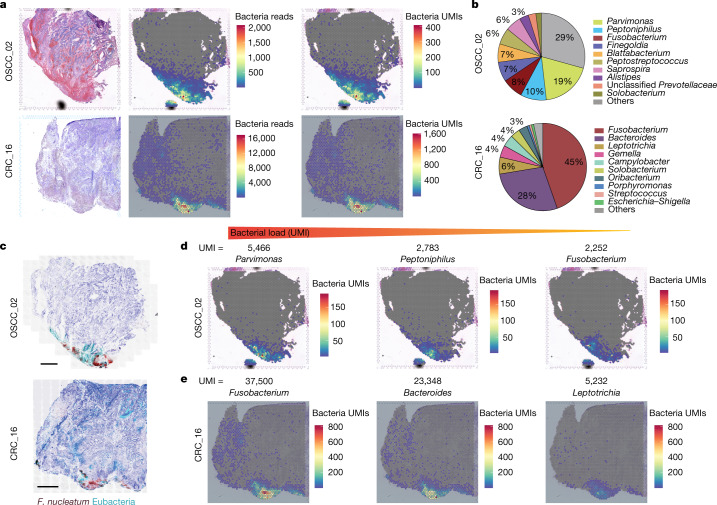
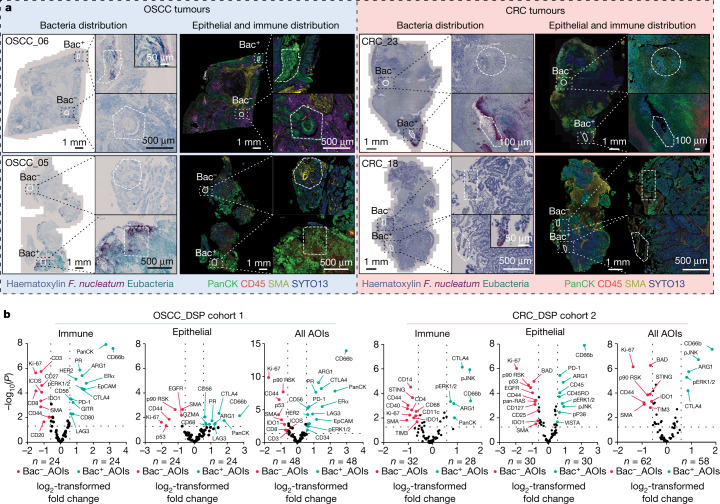
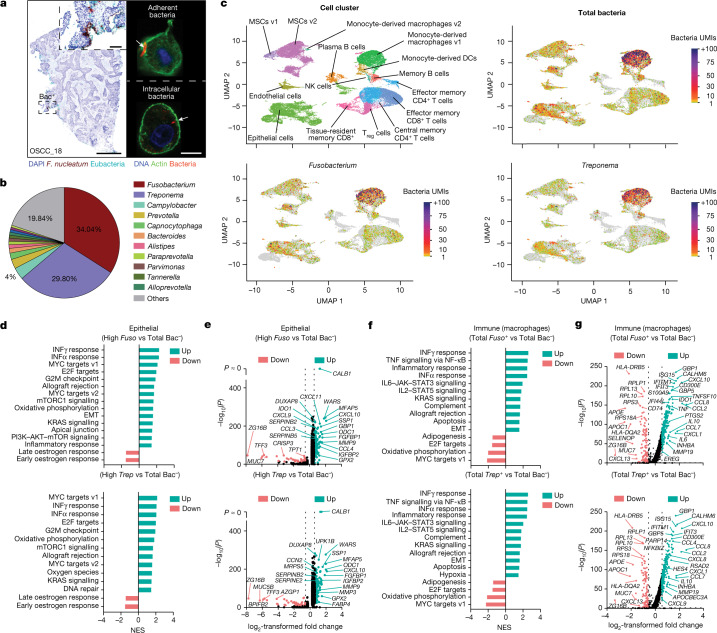
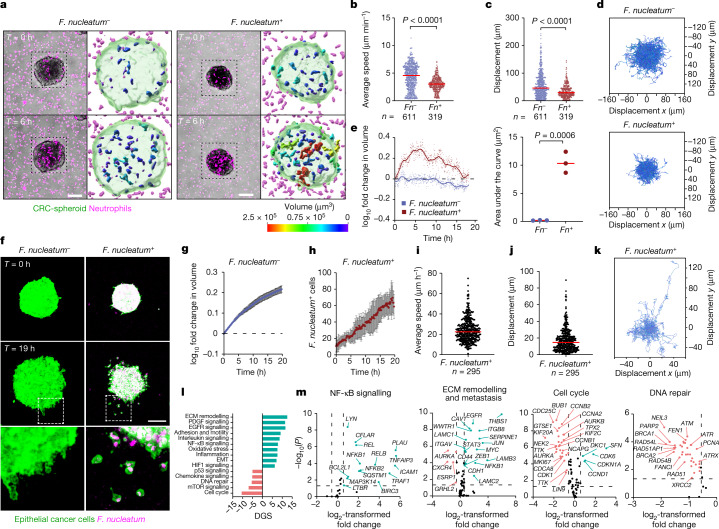
The tumour-associated microbiota is an intrinsic component of the tumour microenvironment across human cancer types 1,2 . Intratumoral host–microbiota studies have so far largely relied on bulk tissue analysis 1–3 , which obscures the spatial distribution and localized effect of the microbiota within tumours. Here, by applying in situ spatial-profiling technologies 4 and single-cell RNA sequencing 5 to oral squamous cell carcinoma and colorectal cancer, we reveal spatial, cellular and molecular host–microbe interactions. We adapted 10x Visium spatial transcriptomics to determine the identity and in situ location of intratumoral microbial communities within patient tissues. Using GeoMx digital spatial profiling 6 , we show that bacterial communities populate microniches that are less vascularized, highly immuno‑suppressive and associated with malignant cells with lower levels of Ki-67 as compared to bacteria-negative tumour regions. We developed a single-cell RNA-sequencing method that we name INVADEseq (invasion–adhesion-directed expression sequencing) and, by applying this to patient tumours, identify cell-associated bacteria and the host cells with which they interact, as well as uncovering alterations in transcriptional pathways that are involved in inflammation, metastasis, cell dormancy and DNA repair. Through functional studies, we show that cancer cells that are infected with bacteria invade their surrounding environment as single cells and recruit myeloid cells to bacterial regions. Collectively, our data reveal that the distribution of the microbiota within a tumour is not random; instead, it is highly organized in microniches with immune and epithelial cell functions that promote cancer progression.
Overview
The claims and statistics of this paper haven’t been checked yet.
Free: it reads the open-access text and checks the first 5 claims that cite a source we can check. Create a free account to check every claim.
Integrity signals
Registry
Cites
Statistics
Figures
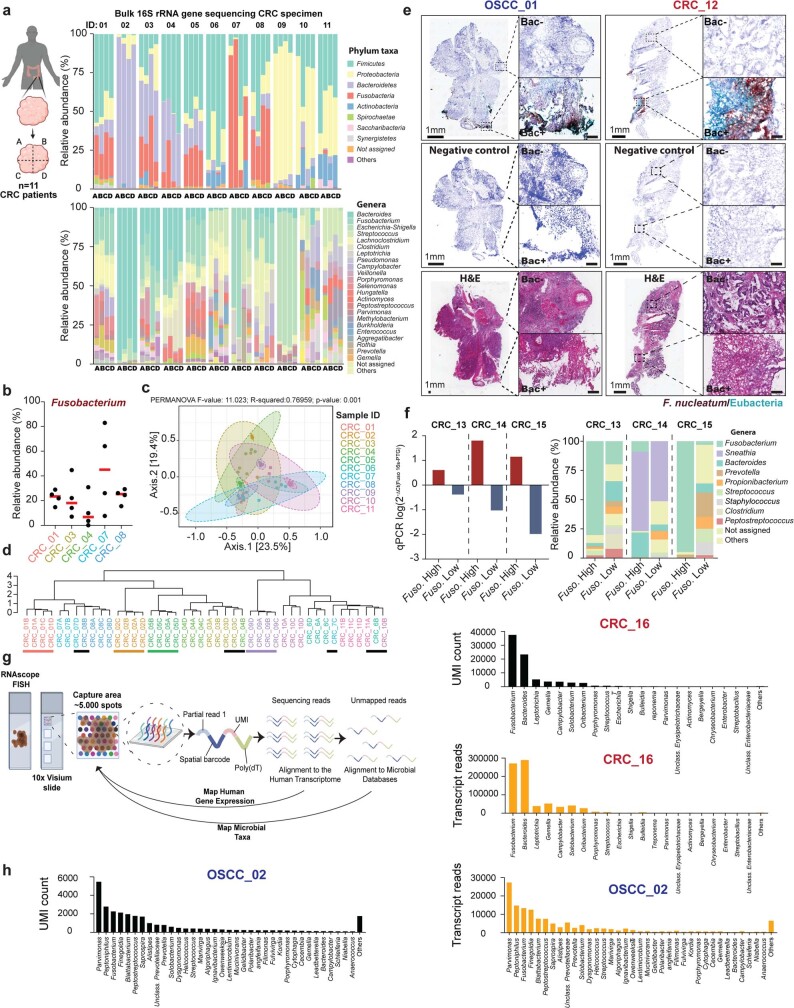
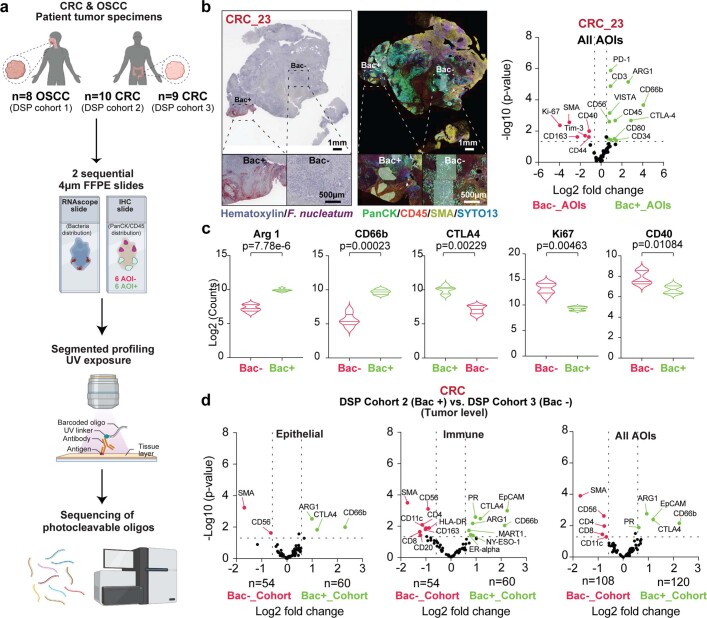
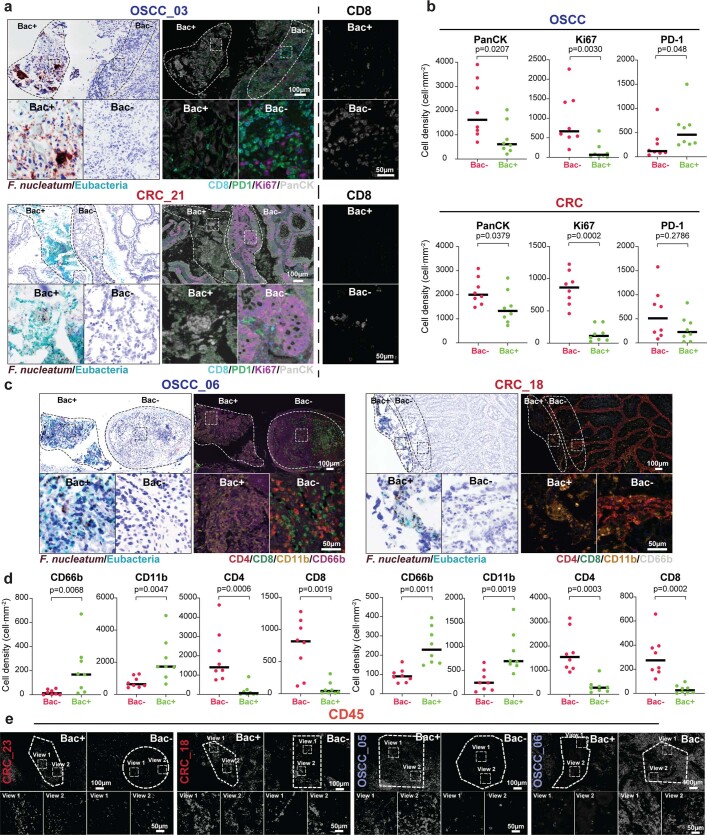
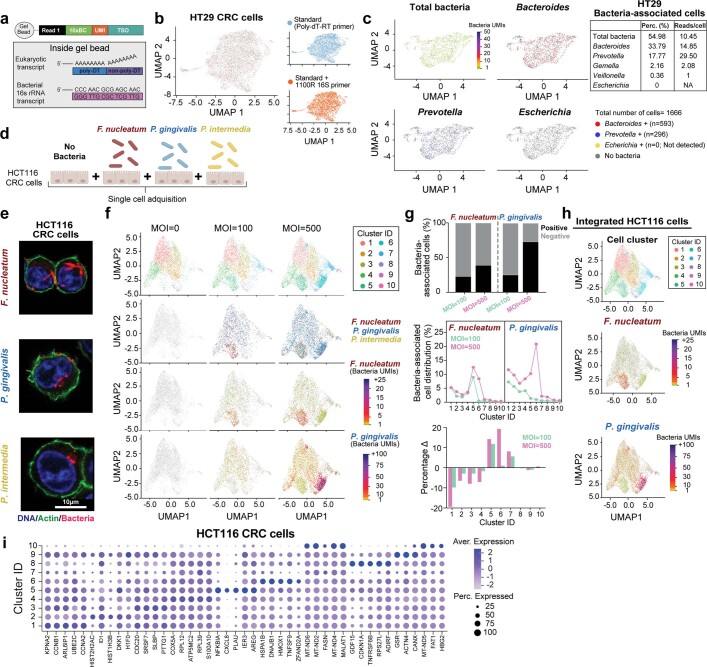
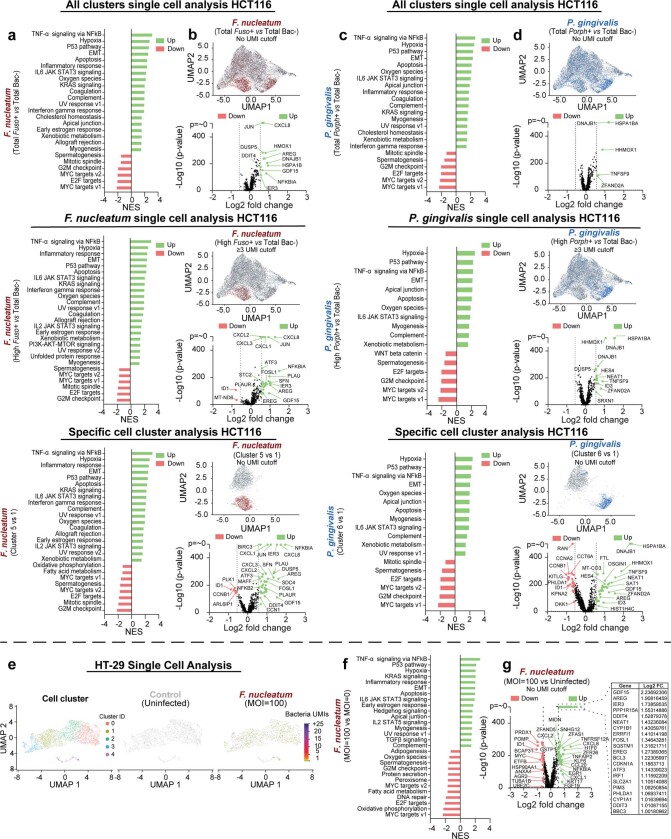
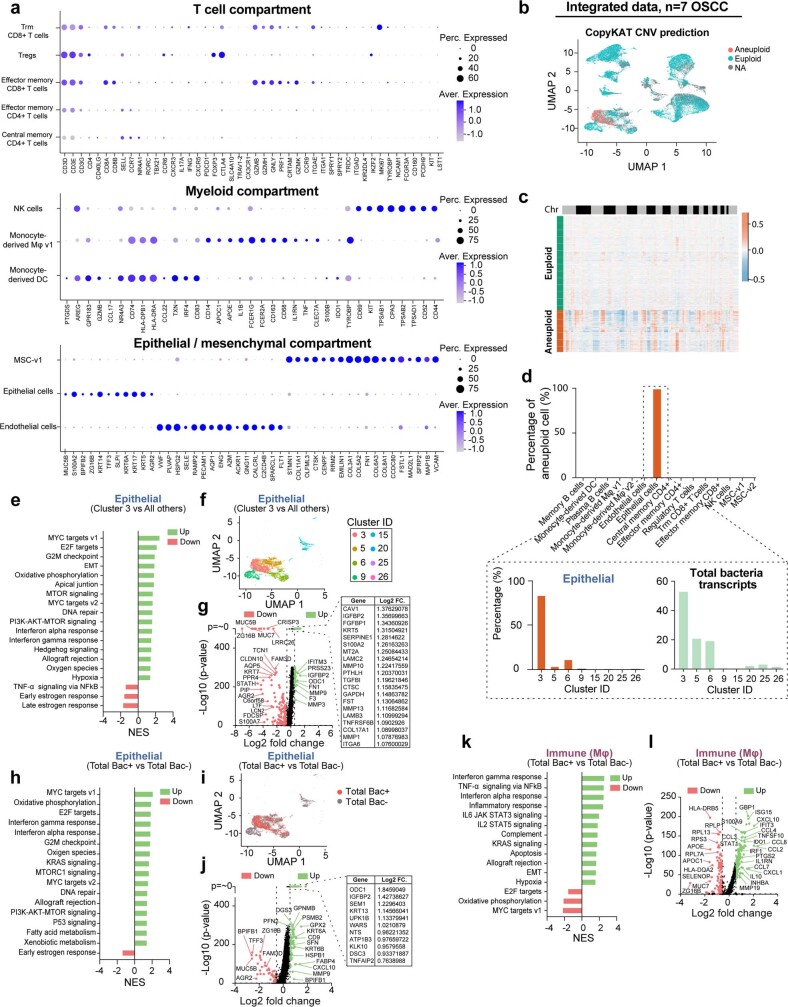
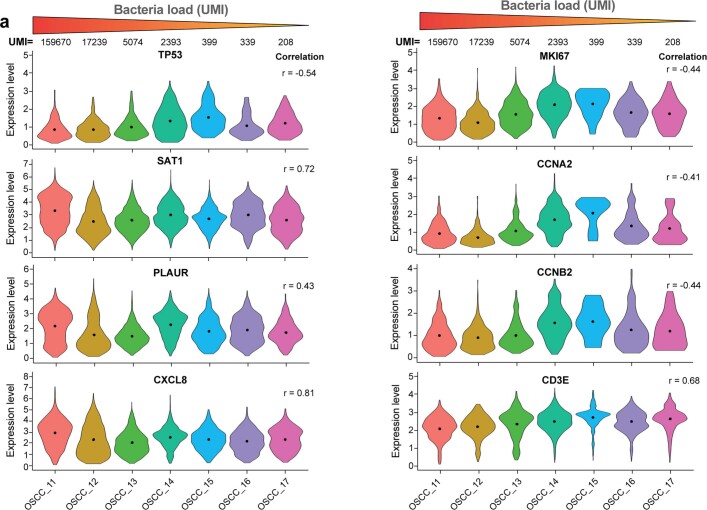
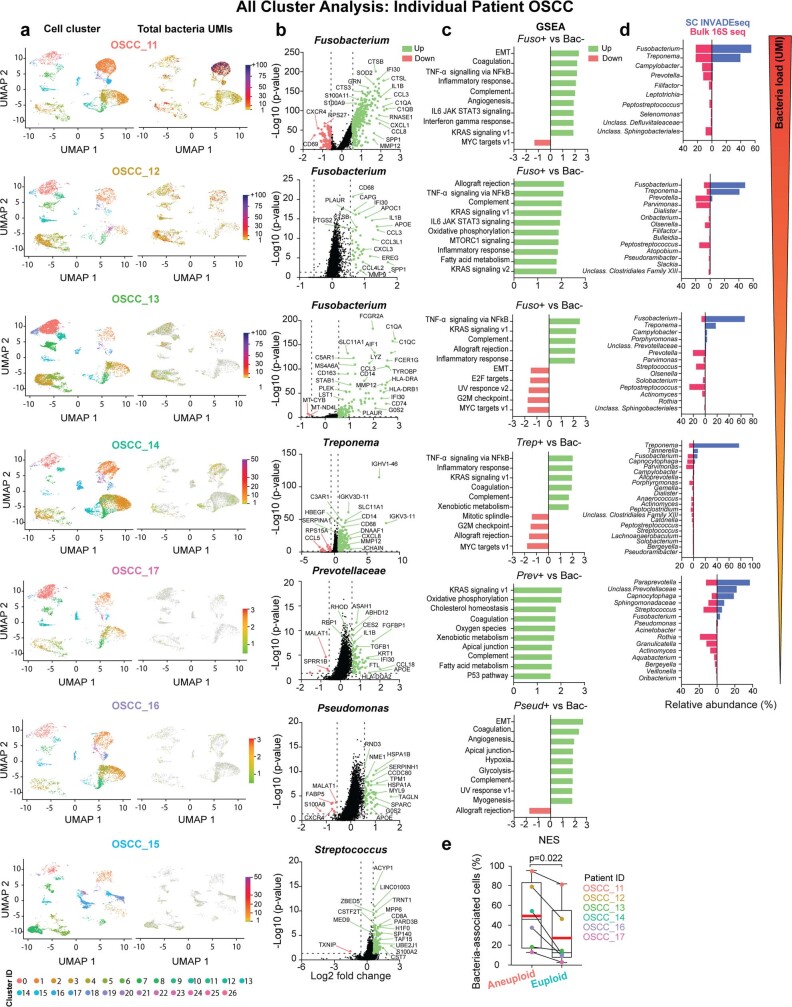
Verification
Claims the paper makes
The claims and statistics of this paper haven’t been checked yet.
Free: it reads the open-access text and checks the first 5 claims that cite a source we can check. Create a free account to check every claim.
Claims other papers make about this one
Each is checked against this paper’s own text: does it say what the citing paper says it does?
The cited source says what the claim attributes to it.
In the citing paper
“Galeano et al. introduced invasion-adhesion-directed expression sequencing (INVADEseq) targeting a conserved area of the bacterial 16 S rRNA, enabling the effective creation of cDNA libraries containing bacterial transcripts derived from human cells associated with bacteria.”
From Single-cell sequencing to multi-omics: technologies and applications (2024) · cites this paper as [158]
The cited source says what the claim attributes to it.
In the citing paper
“These microbes interact with both tumor and immune cells, influencing tumor dynamics by modulating immune responses, producing pro-proliferative metabolites, and reshaping the structural and biochemical landscape of the TME [38–40]”
From Phage therapy in oncology: opportunities for cancer prevention and treatment (2026) · cites this paper as [39]
The check wasn’t confident either way, so it gives no verdict — never disputed.
In the citing paper
“These microbes interact with both tumor and immune cells, influencing tumor dynamics by modulating immune responses, producing pro-proliferative metabolites, and reshaping the structural and biochemical landscape of the TME [38–40]”
From Phage therapy in oncology: opportunities for cancer prevention and treatment (2026) · cites this paper as [39]
Experimental — accuracy not yet measured
Self-check
Percentages, sums and reported differences re-computed from the paper’s own numbers.
The self-check needs the paper’s full text.
Citations
Cites
1 retracted
RETRACTED ARTICLE: Microbiome analyses of blood and tissues suggest cancer diagnostic approach
Poore, G. D., Kopylova, E., Zhu, Q., Carpenter, C., Fraraccio, S., Wandro, S., Kosciolek, T., Janssen, S., Metcalf, J., Song, S. J., et al. (2020) · Nature · doi:10.1038/s41586-020-2095-1 · Cited by 989
RetractedHighly parallel genome-wide expression profiling of individual cells using nanoliter droplets.
Macosko, E. Z., Basu, A., Satija, R., Nemesh, J., Shekhar, K., Goldman, M., Tirosh, I., Bialas, A. R., Kamitaki, N., Martersteck, E. M., et al. (2015) · Cell · doi:10.1016/j.cell.2015.05.002 · Cited by 7,110
Tumors: Wounds That Do Not Heal
Flier, J. S., Underhill, L. H., & Dvorak, H. F. (1986) · New England Journal of Medicine · doi:10.1056/nejm198612253152606 · Cited by 4,391
mRNA-Seq whole-transcriptome analysis of a single cell
Tang, F., Barbacioru, C., Wang, Y., Nordman, E., Lee, C., Xu, N., Wang, X., Bodeau, J., Tuch, B. B., Siddiqui, A., et al. (2009) · Nature Methods · doi:10.1038/nmeth.1315 · Cited by 3,969
Tumour heterogeneity and resistance to cancer therapies
Dagogo-Jack, I., & Shaw, A. T. (2018) · Nature Reviews Clinical Oncology · doi:10.1038/nrclinonc.2017.166 · Cited by 3,846
A Gene Encoding an Antigen Recognized by Cytolytic T Lymphocytes on a Human Melanoma
van der Bruggen, P., Traversari, C., Chomez, P., Lurquin, C., De Plaen, E., Van den Eynde, B., Knuth, A., & Boon, T. (1991) · Science · doi:10.1126/science.1840703 · Cited by 3,545
EMT Transition States during Tumor Progression and Metastasis
Pastushenko, I., & Blanpain, C. (2019) · Trends in Cell Biology · doi:10.1016/j.tcb.2018.12.001 · Cited by 2,876
Anderson, N. M., & Simon, M. C. (2020) · Current Biology · doi:10.1016/j.cub.2020.06.081 · Cited by 2,718
T cell exclusion, immune privilege, and the tumor microenvironment
Joyce, J. A., & Fearon, D. T. (2015) · Science · doi:10.1126/science.aaa6204 · Cited by 2,473
The human tumor microbiome is composed of tumor type–specific intracellular bacteria
Nejman, D., Livyatan, I., Fuks, G., Gavert, N., Zwang, Y., Geller, L. T., Rotter-Maskowitz, A., Weiser, R., Mallel, G., Gigi, E., et al. (2020) · Science · doi:10.1126/science.aay9189 · Cited by 2,464
Fusobacterium nucleatum Promotes Chemoresistance to Colorectal Cancer by Modulating Autophagy
Yu, T., Guo, F., Yu, Y., Sun, T., Ma, D., Han, J., Qian, Y., Kryczek, I., Sun, D., Nagarsheth, N., et al. (2017) · Cell · doi:10.1016/j.cell.2017.07.008 · Cited by 2,198
Genomic analysis identifies association of Fusobacterium with colorectal carcinoma
Kostic, A. D., Gevers, D., Pedamallu, C. S., Michaud, M., Duke, F., Earl, A. M., Ojesina, A. I., Jung, J., Bass, A. J., Tabernero, J., et al. (2012) · Genome Research · doi:10.1101/gr.126573.111 · Cited by 1,960
Geller, L. T., Barzily-Rokni, M., Danino, T., Jonas, O. H., Shental, N., Nejman, D., Gavert, N., Zwang, Y., Cooper, Z. A., Shee, K., et al. (2017) · Science · doi:10.1126/science.aah5043 · Cited by 1,817
Exploring tissue architecture using spatial transcriptomics
Rao, A., Barkley, D., França, G. S., & Yanai, I. (2021) · Nature · doi:10.1038/s41586-021-03634-9 · Cited by 1,700
Tumor Microbiome Diversity and Composition Influence Pancreatic Cancer Outcomes
Riquelme, E., Zhang, Y., Zhang, L., Montiel, M., Zoltan, M., Dong, W., Quesada, P., Sahin, I., Chandra, V., San Lucas, A., et al. (2019) · Cell · doi:10.1016/j.cell.2019.07.008 · Cited by 1,577
Analysis of Fusobacterium persistence and antibiotic response in colorectal cancer
Bullman, S., Pedamallu, C. S., Sicinska, E., Clancy, T. E., Zhang, X., Cai, D., Neuberg, D., Huang, K., Guevara, F., Nelson, T., et al. (2017) · Science · doi:10.1126/science.aal5240 · Cited by 1,574
Self-citationMutant p53 in Cancer: New Functions and Therapeutic Opportunities
Muller, P. A. J., & Vousden, K. H. (2014) · Cancer Cell · doi:10.1016/j.ccr.2014.01.021 · Cited by 1,545
The microbiome and human cancer
Sepich-Poore, G. D., Zitvogel, L., Straussman, R., Hasty, J., Wargo, J. A., & Knight, R. (2021) · Science · doi:10.1126/science.abc4552 · Cited by 1,332
High-definition spatial transcriptomics for in situ tissue profiling
Vickovic, S., Eraslan, G., Salmén, F., Klughammer, J., Stenbeck, L., Schapiro, D., Äijö, T., Bonneau, R., Bergenstråhle, L., Navarro, J. F., et al. (2019) · Nature Methods · doi:10.1038/s41592-019-0548-y · Cited by 1,150
Multiplex digital spatial profiling of proteins and RNA in fixed tissue
Merritt, C. R., Ong, G. T., Church, S. E., Barker, K., Danaher, P., Geiss, G., Hoang, M., Jung, J., Liang, Y., McKay-Fleisch, J., et al. (2020) · Nature Biotechnology · doi:10.1038/s41587-020-0472-9 · Cited by 1,072
Tumor-resident intracellular microbiota promotes metastatic colonization in breast cancer
Fu, A., Yao, B., Dong, T., Chen, Y., Yao, J., Liu, Y., Li, H., Bai, H., Liu, X., Zhang, Y., et al. (2022) · Cell · doi:10.1016/j.cell.2022.02.027 · Cited by 981
Commensal Microbiota Promote Lung Cancer Development via γδ T Cells
Jin, C., Lagoudas, G. K., Zhao, C., Bullman, S., Bhutkar, A., Hu, B., Ameh, S., Sandel, D., Liang, X. S., Mazzilli, S., et al. (2019) · Cell · doi:10.1016/j.cell.2018.12.040 · Cited by 964
Self-citationSingle-cell analysis reveals fibroblast clusters linked to immunotherapy resistance in cancer.
Kieffer, Y., Hocine, H. R., Gentric, G., Pelon, F., Bernard, C., Bourachot, B., Lameiras, S., Albergante, L., Bonneau, C., Guyard, A., et al. (2020) · Cancer Discovery · doi:10.1158/2159-8290.cd-19-1384 · Cited by 910
A pan-cancer blueprint of the heterogeneous tumor microenvironment revealed by single-cell profiling
Qian, J., Olbrecht, S., Boeckx, B., Vos, H., Laoui, D., Etlioglu, E., Wauters, E., Pomella, V., Verbandt, S., Busschaert, P., et al. (2020) · Cell Research · doi:10.1038/s41422-020-0355-0 · Cited by 817
Wu, F., Fan, J., He, Y., Xiong, A., Yu, J., Li, Y., Zhang, Y., Zhao, W., Zhou, F., Li, W., et al. (2021) · Nature Communications · doi:10.1038/s41467-021-22801-0 · Cited by 796
Parhi, L., Alon-Maimon, T., Sol, A., Nejman, D., Shhadeh, A., Fainsod-Levi, T., Yajuk, O., Isaacson, B., Abed, J., Maalouf, N., et al. (2020) · Nature Communications · doi:10.1038/s41467-020-16967-2 · Cited by 716
Fusobacterium nucleatum and T Cells in Colorectal Carcinoma
Mima, K., Sukawa, Y., Nishihara, R., Qian, Z. R., Yamauchi, M., Inamura, K., Kim, S. A., Masuda, A., Nowak, J. A., Nosho, K., et al. (2015) · JAMA Oncology · doi:10.1001/jamaoncol.2015.1377 · Cited by 669
Self-citationIdentification of bacteria-derived HLA-bound peptides in melanoma
Kalaora, S., Nagler, A., Nejman, D., Alon, M., Barbolin, C., Barnea, E., Ketelaars, S. L. C., Cheng, K., Vervier, K., Shental, N., et al. (2021) · Nature · doi:10.1038/s41586-021-03368-8 · Cited by 457
'Go or Grow': the key to the emergence of invasion in tumour progression?
Hatzikirou, H., Basanta, D., Simon, M., Schaller, K., & Deutsch, A. (2012) · Mathematical Medicine and Biology · doi:10.1093/imammb/dqq011 · Cited by 363
Commensal bacteria promote endocrine resistance in prostate cancer through androgen biosynthesis
Pernigoni, N., Zagato, E., Calcinotto, A., Troiani, M., Mestre, R. P., Calì, B., Attanasio, G., Troisi, J., Minini, M., Mosole, S., et al. (2021) · Science · doi:10.1126/science.abf8403 · Cited by 323
Spatially resolved transcriptomics reveals the architecture of the tumor-microenvironment interface
Hunter, M. V., Moncada, R., Weiss, J. M., Yanai, I., & White, R. M. (2021) · Nature Communications · doi:10.1038/s41467-021-26614-z · Cited by 285
Neutrophils self-limit swarming to contain bacterial growth in vivo
Kienle, K., Glaser, K. M., Eickhoff, S., Mihlan, M., Knöpper, K., Reátegui, E., Epple, M. W., Gunzer, M., Baumeister, R., Tarrant, T. K., et al. (2021) · Science · doi:10.1126/science.abe7729 · Cited by 176
Serna, G., Ruiz-Pace, F., Hernando, J., Alonso, L., Fasani, R., Landolfi, S., Comas, R., Jimenez, J., Elez, E., Bullman, S., et al. (2020) · Annals of Oncology · doi:10.1016/j.annonc.2020.06.003 · Cited by 155
Self-citationA gene encoding an antigen recognized by cytolytic T lymphocytes on a human melanoma.
van der Bruggen, P., Traversari, C., Chomez, P., Lurquin, C., Plaen, E. D., den Eynde, B. J. V., Knuth, A. K., & Boon, T. (2007) · PubMed · Cited by 133
Walker, M. A., Pedamallu, C. S., Ojesina, A. I., Bullman, S., Sharpe, T., Whelan, C. W., & Meyerson, M. (2018) · Bioinformatics · doi:10.1093/bioinformatics/bty501 · Cited by 124
Self-citationThe p90 RSK Family Members: Common Functions and Isoform Specificity
Lara, R., Seckl, M. J., & Pardo, O. E. (2013) · Cancer Research · doi:10.1158/0008-5472.can-12-4448 · Cited by 120
The impact of proliferation-migration tradeoffs on phenotypic evolution in cancer
Gallaher, J. A., Brown, J. S., & Anderson, A. R. A. (2019) · Scientific Reports · doi:10.1038/s41598-019-39636-x · Cited by 120
Neutrophil-specific deletion of Syk kinase results in reduced host defense to bacterial infection
Van Ziffle, J. A., & Lowell, C. A. (2009) · Blood · doi:10.1182/blood-2009-05-220806 · Cited by 115
Regulation of Collective Metastasis by Nanolumenal Signaling
Wrenn, E. D., Yamamoto, A., Moore, B. M., Huang, Y., McBirney, M., Thomas, A. J., Greenwood, E., Rabena, Y. F., Rahbar, H., Partridge, S. C., et al. (2020) · Cell · doi:10.1016/j.cell.2020.08.045 · Cited by 78
The relationship between gastrointestinal cancers and the microbiota
LaCourse, K. D., Johnston, C. D., & Bullman, S. (2021) · The Lancet Gastroenterology & Hepatology · doi:10.1016/s2468-1253(20)30362-9 · Cited by 56
Self-citationβ‐casein‐derived peptides, produced by bacteria, stimulate cancer cell invasion and motility
Oliveira, M. J., Damme, J. V., Lauwaet, T., Corte, V. D., Bruyne, G. D., Verschraegen, G., Vaneechoutte, M., Goethals, M., Ahmadian, M. R., Müller, O., et al. (2003) · The EMBO Journal · doi:10.1093/emboj/cdg586 · Cited by 25
Cited by
Gut microbiota in colorectal cancer development and therapy
Wong, C. C., & Yu, J. (2023) · Nature Reviews Clinical Oncology · doi:10.1038/s41571-023-00766-x · Cited by 721
Signaling pathways involved in colorectal cancer: pathogenesis and targeted therapy
Li, Q., Geng, S., Luo, H., Wang, W., Mo, Y.-Q., Luo, Q., Wang, L., Song, G.-B., Sheng, J.-P., & Xu, B. (2024) · Signal Transduction and Targeted Therapy · doi:10.1038/s41392-024-01953-7 · Cited by 546
Embracing cancer complexity: Hallmarks of systemic disease
Swanton, C., Bernard, E., Abbosh, C., André, F., Auwerx, J., Balmain, A., Bar-Sagi, D., Bernards, R., Bullman, S., DeGregori, J., et al. (2024) · Cell · doi:10.1016/j.cell.2024.02.009 · Cited by 540
Self-citation(2023) · doi:10.1038/s41392-022-01304-4 · Cited by 460
A distinct Fusobacterium nucleatum clade dominates the colorectal cancer niche
Zepeda-Rivera, M., Minot, S. S., Bouzek, H., Wu, H., Blanco-Míguez, A., Manghi, P., Jones, D. S., LaCourse, K. D., Wu, Y., McMahon, E. F., et al. (2024) · Nature · doi:10.1038/s41586-024-07182-w · Cited by 451
“Notably, recent work from our group demonstrated that Fusobacterium was predominantly associated with epithelial cells harbouring severe chromosomal abnormalities 10 , one of the most common forms of genomic instability in cancer.”
BackgroundSelf-citation
Metadata
- Authors
- Galeano Niño, J. L., Wu, H., LaCourse, K. D., Kempchinsky, A. G., Baryiames, A., Barber, B., Futran, N., Houlton, J., Sather, C., Sicinska, E., Taylor, A., Minot, S. S., Johnston, C. D., & Bullman, S.
- Affiliations
- Fred Hutch Cancer Center (US)
- University of Washington Medical Center (US)
- Herbert Irving Comprehensive Cancer Center (US)
- Corresponding author
- Johnston, Christopher D.
- Bullman, Susan
- ORCID
- Venue
- Nature
- Published
- 2022-11-16
- Volume
- 611
- Issue
- 7937
- Pages
- 810-817
- ISSN
- 0028-0836 (ISSN-L)
- 1476-4687
- PMC
- PMC9684076
- OpenAlex
- W4309334544
- Cited by
- 887
- References
- 41
- Citations by year
- 2026: 214 · 2025: 292 · 2024: 228 · 2023: 148 · 2022: 4
- FWCI
- 55.33
- Type
- journal article
- Language
- en
- Open access
- hybrid
- doi.org
- Licence
- cc-by
- creativecommons.org/licenses/by/4.0 (tdm)
- creativecommons.org/licenses/by/4.0 (vor)
- Locations
- Nature (publishedVersion, cc-by)
- PubMed Central (publishedVersion, cc-by)
- PubMed (publishedVersion)
- RePEc: Research Papers in Economics (submittedVersion)
- Funders
- Cancer Research Institute (CRI4208)
- Fred Hutchinson Cancer Research Center (P30CA015704)
- University of Washington (P30 CA015704)
- National Institutes of Health (1s10od028685-01, CA015704)
- National Cancer Institute (CA015704, R00CA229984, CA080416, P30CA015704, T32CA080416)
- National Institute of Dental and Craniofacial Research (R01DE027850)
- Office of Research Infrastructure Programs, National Institutes of Health (S10OD028685)
- Topics
- Life Sciences › Biochemistry, Genetics and Molecular Biology › Molecular Biology › Gut microbiota and health
- Life Sciences › Biochemistry, Genetics and Molecular Biology › Molecular Biology › Single-cell and spatial transcriptomics
- Health Sciences › Medicine › Oncology › Cancer Immunotherapy and Biomarkers
- Keywords
- intratumoral microbiota, tumor microenvironment, spatial heterogeneity, oral squamous cell carcinoma, colorectal cancer, host-microbe interactions, single-cell RNA sequencing, spatial transcriptomics, GeoMx digital spatial profiling, tumor invasion, cell dormancy, DNA repair, inflammation, metastasis, Ki-67
- MeSH terms
- Host Microbial Interactions, Carcinoma, Squamous Cell, Humans, Mouth Neoplasms, Colorectal Neoplasms, Sequence Analysis, RNA, Disease Progression, Ki-67 Antigen, Gene Expression Profiling, Myeloid Cells, Tumor Microenvironment, Microbiota
About these checks
Registry, retraction, Cites and statistics results are computed, not judged, with one exception: a printed reference that no index lists is read once by a model before it counts as a citation error. Claims are extracted by a model and kept only when their quote appears verbatim in the text; each cited source is then checked, with a model’s help, for whether it says what the claim relies on. Those verdicts can be wrong — read the claim’s quote and the cited source before relying on one.
Statistics and arithmetic are recomputed, not judged.
Confidence bands are shown only for fields calibrated on our annotated test set. None is calibrated yet, so no band is shown.
What counts as a claim ›How we measure confidence ›How we check this ›
Are you an author, or do you see a problem with this page? Request a review
Data sources
Bibliographic data: Semantic Scholar, OpenAlex, Crossref.
Contains information from the Semantic Scholar Academic Graph Datasets, made available under the ODC Attribution License (ODC-BY 1.0).
Semantic Scholar’s data is described in: Kinney, R., et al. (2023). The Semantic Scholar Open Data Platform. arXiv:2301.10140.
