

Effect of the intratumoral microbiota on spatial and cellular heterogeneity in cancer
Open accessThe DOI matches its Crossref record; 41 of the 41 references it cites were found in a registry or an index.
Abstract
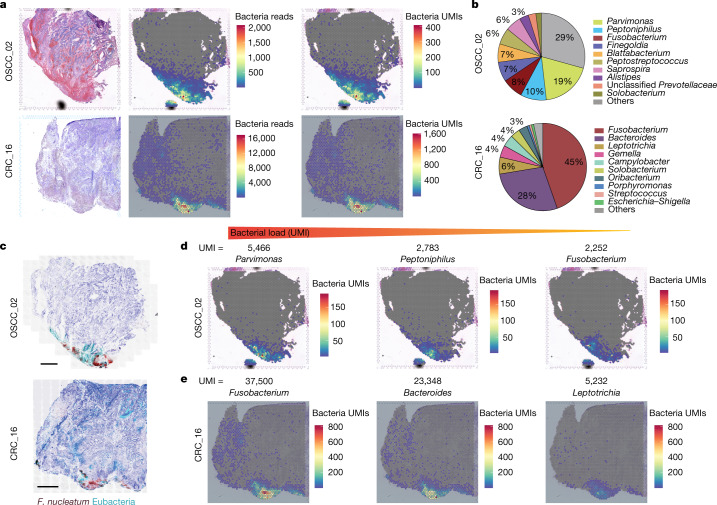
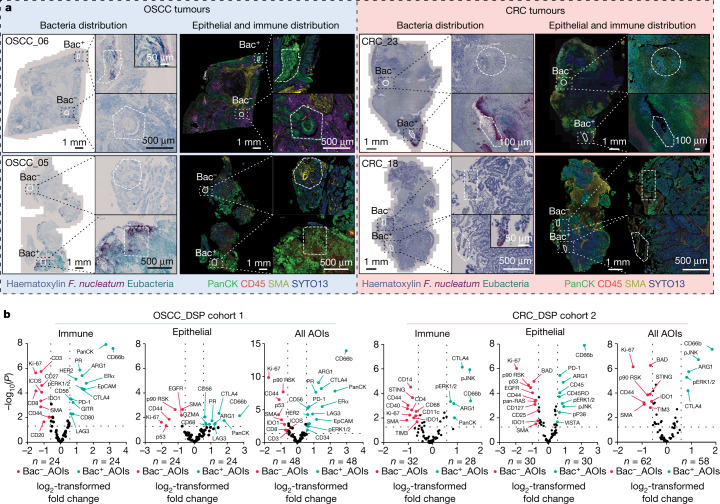
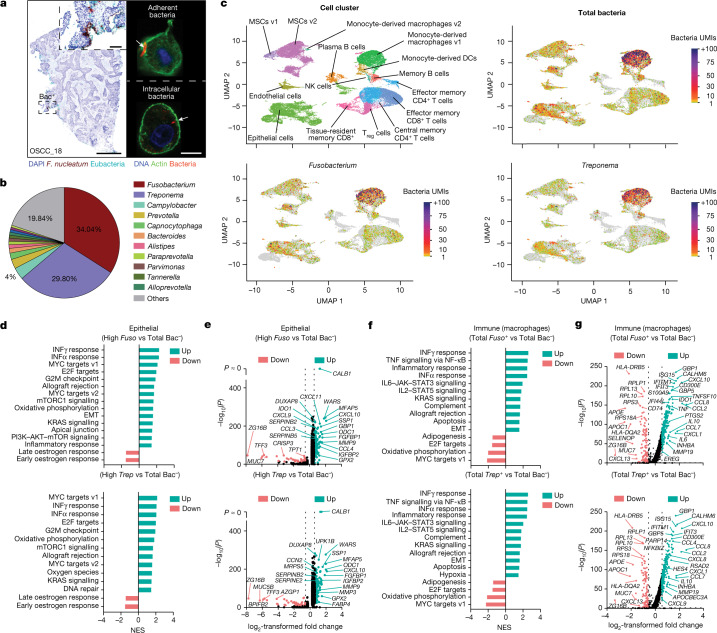
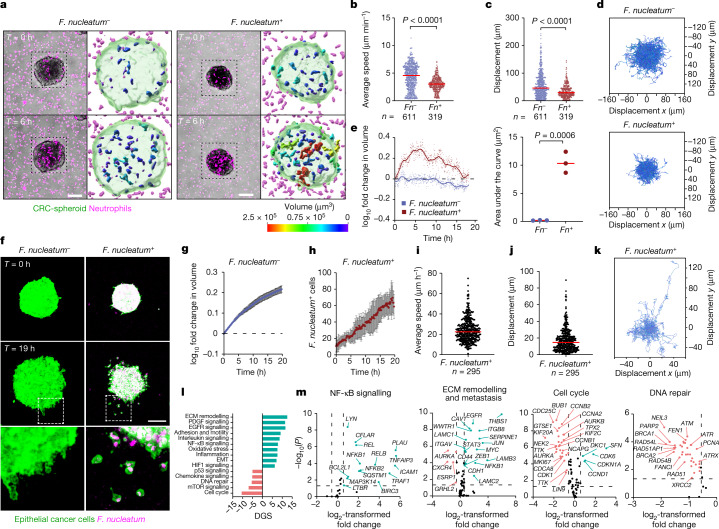
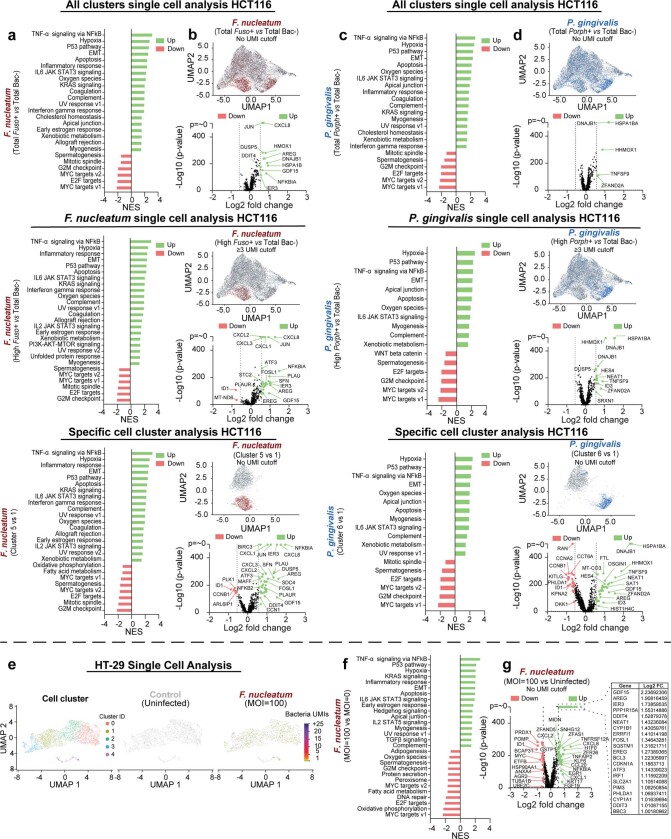
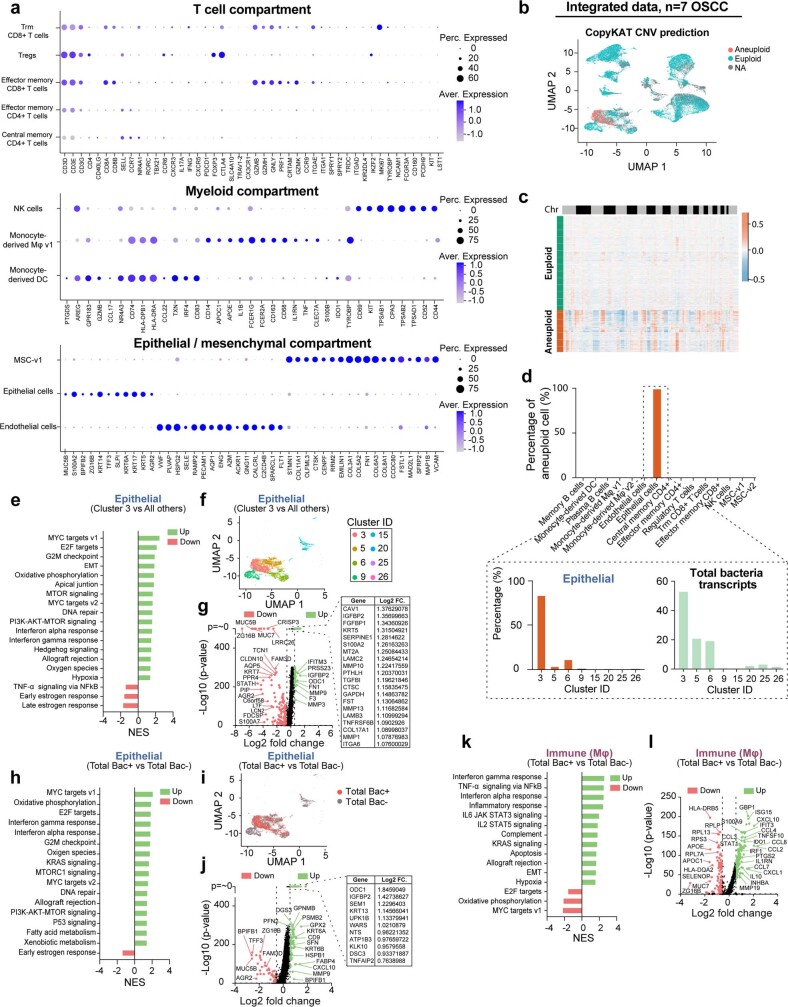
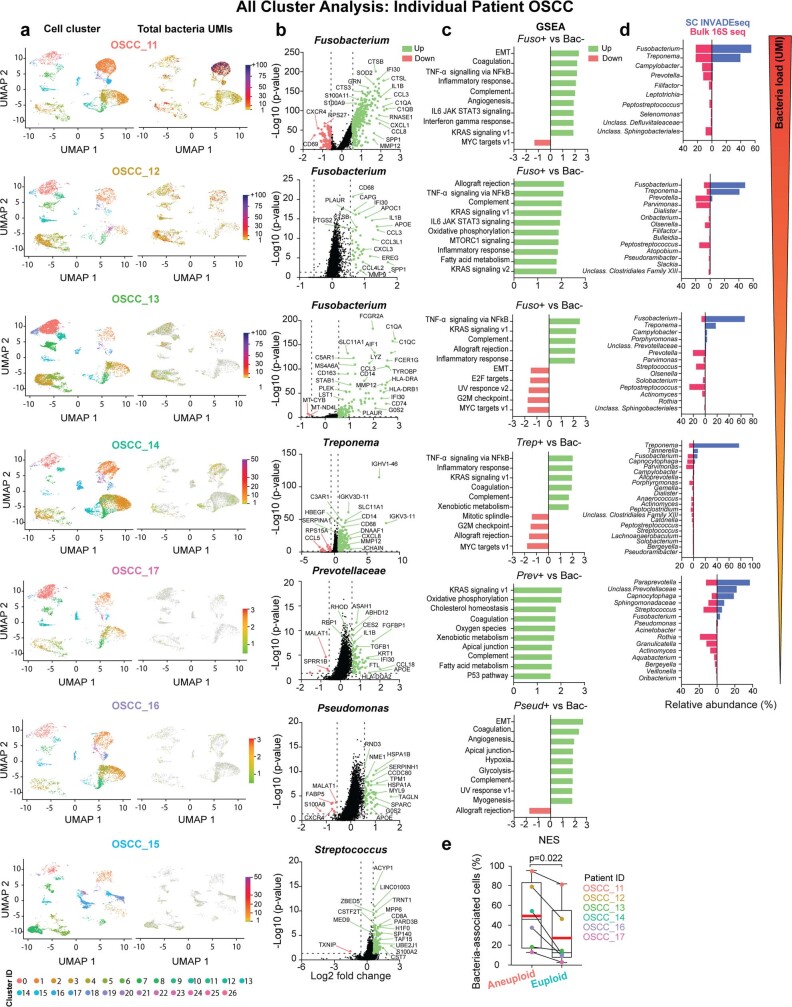
The tumour-associated microbiota is an intrinsic component of the tumour microenvironment across human cancer types 1,2 . Intratumoral host–microbiota studies have so far largely relied on bulk tissue analysis 1–3 , which obscures the spatial distribution and localized effect of the microbiota within tumours. Here, by applying in situ spatial-profiling technologies 4 and single-cell RNA sequencing 5 to oral squamous cell carcinoma and colorectal cancer, we reveal spatial, cellular and molecular host–microbe interactions. We adapted 10x Visium spatial transcriptomics to determine the identity and in situ location of intratumoral microbial communities within patient tissues. Using GeoMx digital spatial profiling 6 , we show that bacterial communities populate microniches that are less vascularized, highly immuno‑suppressive and associated with malignant cells with lower levels of Ki-67 as compared to bacteria-negative tumour regions. We developed a single-cell RNA-sequencing method that we name INVADEseq (invasion–adhesion-directed expression sequencing) and, by applying this to patient tumours, identify cell-associated bacteria and the host cells with which they interact, as well as uncovering alterations in transcriptional pathways that are involved in inflammation, metastasis, cell dormancy and DNA repair. Through functional studies, we show that cancer cells that are infected with bacteria invade their surrounding environment as single cells and recruit myeloid cells to bacterial regions. Collectively, our data reveal that the distribution of the microbiota within a tumour is not random; instead, it is highly organized in microniches with immune and epithelial cell functions that promote cancer progression.
Overview
The claims and statistics of this paper haven’t been checked yet.
Free: it reads the open-access text and checks the first 5 claims that cite a source we can check. Create a free account to check every claim.
Integrity signals
Registry
Cites
Statistics
Figures
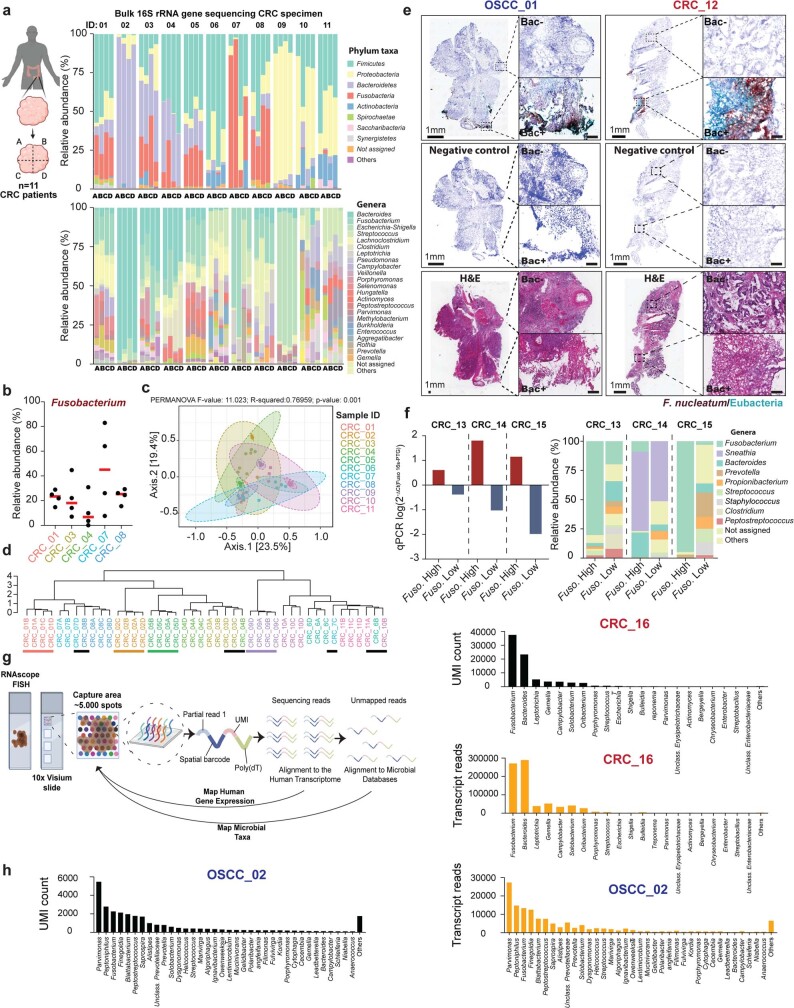
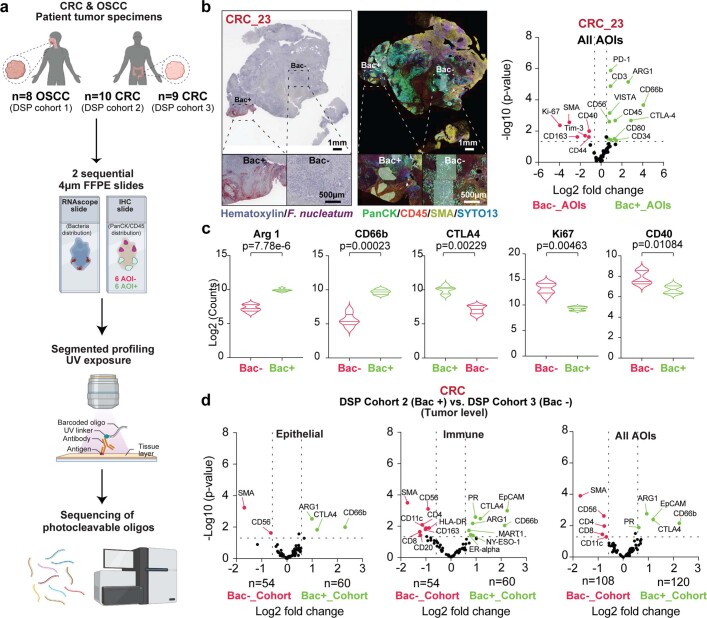
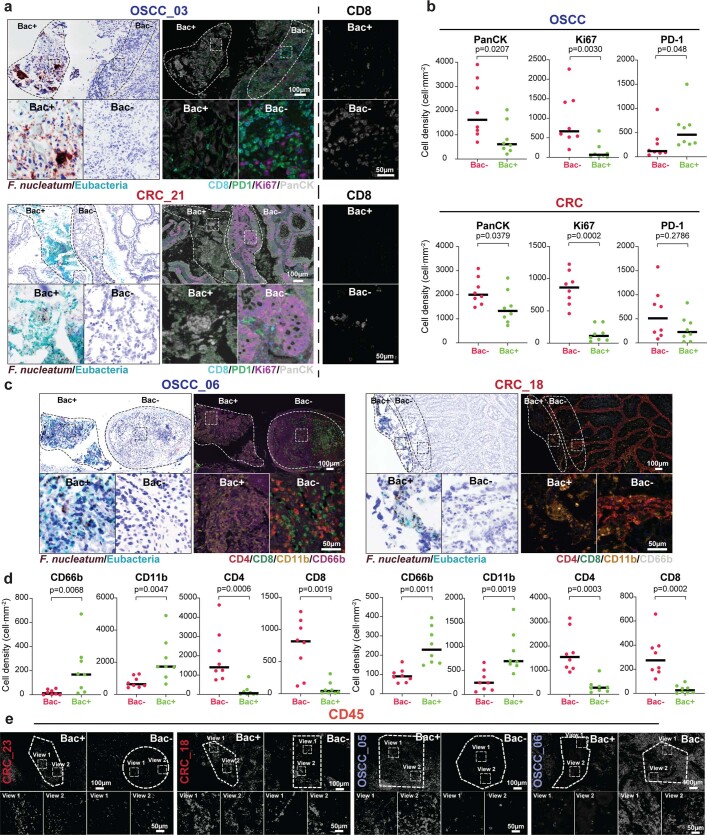
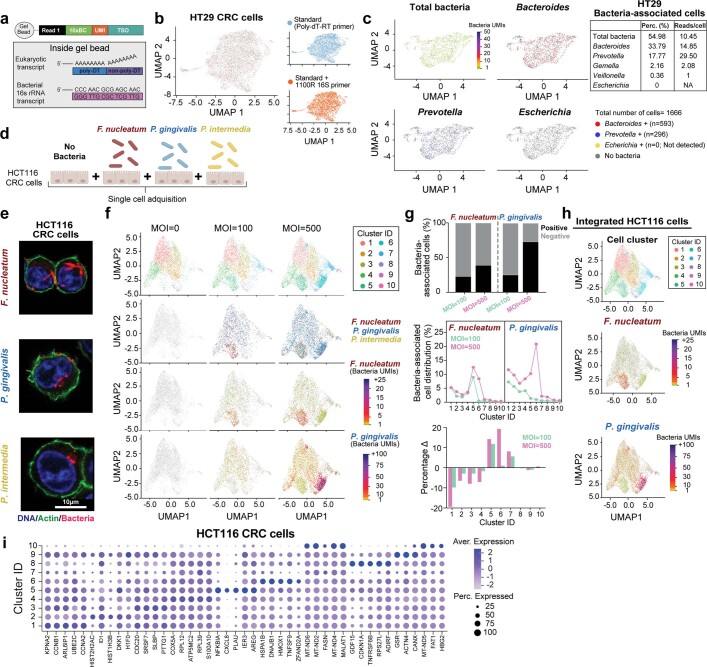
Verification
Claims the paper makes
The claims and statistics of this paper haven’t been checked yet.
Free: it reads the open-access text and checks the first 5 claims that cite a source we can check. Create a free account to check every claim.
Claims other papers make about this one
Each is checked against this paper’s own text: does it say what the citing paper says it does?
The cited source says what the claim attributes to it.
In the citing paper
“Galeano et al. introduced invasion-adhesion-directed expression sequencing (INVADEseq) targeting a conserved area of the bacterial 16 S rRNA, enabling the effective creation of cDNA libraries containing bacterial transcripts derived from human cells associated with bacteria.”
From Single-cell sequencing to multi-omics: technologies and applications (2024) · cites this paper as [158]
The cited source says what the claim attributes to it.
In the citing paper
“These microbes interact with both tumor and immune cells, influencing tumor dynamics by modulating immune responses, producing pro-proliferative metabolites, and reshaping the structural and biochemical landscape of the TME [38–40]”
From Phage therapy in oncology: opportunities for cancer prevention and treatment (2026) · cites this paper as [39]
The check wasn’t confident either way, so it gives no verdict — never disputed.
In the citing paper
“These microbes interact with both tumor and immune cells, influencing tumor dynamics by modulating immune responses, producing pro-proliferative metabolites, and reshaping the structural and biochemical landscape of the TME [38–40]”
From Phage therapy in oncology: opportunities for cancer prevention and treatment (2026) · cites this paper as [39]
Experimental — accuracy not yet measured
Self-check
Percentages, sums and reported differences re-computed from the paper’s own numbers.
The self-check needs the paper’s full text.
Citations
Cites
1 retracted
RETRACTED ARTICLE: Microbiome analyses of blood and tissues suggest cancer diagnostic approach
Poore, G. D., Kopylova, E., Zhu, Q., Carpenter, C., Fraraccio, S., Wandro, S., Kosciolek, T., Janssen, S., Metcalf, J., Song, S. J., et al. (2020) · Nature · doi:10.1038/s41586-020-2095-1 · Cited by 989
RetractedHighly parallel genome-wide expression profiling of individual cells using nanoliter droplets.
Macosko, E. Z., Basu, A., Satija, R., Nemesh, J., Shekhar, K., Goldman, M., Tirosh, I., Bialas, A. R., Kamitaki, N., Martersteck, E. M., et al. (2015) · Cell · doi:10.1016/j.cell.2015.05.002 · Cited by 7,110
Tumors: Wounds That Do Not Heal
Flier, J. S., Underhill, L. H., & Dvorak, H. F. (1986) · New England Journal of Medicine · doi:10.1056/nejm198612253152606 · Cited by 4,391
mRNA-Seq whole-transcriptome analysis of a single cell
Tang, F., Barbacioru, C., Wang, Y., Nordman, E., Lee, C., Xu, N., Wang, X., Bodeau, J., Tuch, B. B., Siddiqui, A., et al. (2009) · Nature Methods · doi:10.1038/nmeth.1315 · Cited by 3,969
Tumour heterogeneity and resistance to cancer therapies
Dagogo-Jack, I., & Shaw, A. T. (2018) · Nature Reviews Clinical Oncology · doi:10.1038/nrclinonc.2017.166 · Cited by 3,846
A Gene Encoding an Antigen Recognized by Cytolytic T Lymphocytes on a Human Melanoma
van der Bruggen, P., Traversari, C., Chomez, P., Lurquin, C., De Plaen, E., Van den Eynde, B., Knuth, A., & Boon, T. (1991) · Science · doi:10.1126/science.1840703 · Cited by 3,545
EMT Transition States during Tumor Progression and Metastasis
Pastushenko, I., & Blanpain, C. (2019) · Trends in Cell Biology · doi:10.1016/j.tcb.2018.12.001 · Cited by 2,876
Anderson, N. M., & Simon, M. C. (2020) · Current Biology · doi:10.1016/j.cub.2020.06.081 · Cited by 2,718
T cell exclusion, immune privilege, and the tumor microenvironment
Joyce, J. A., & Fearon, D. T. (2015) · Science · doi:10.1126/science.aaa6204 · Cited by 2,473
The human tumor microbiome is composed of tumor type–specific intracellular bacteria
Nejman, D., Livyatan, I., Fuks, G., Gavert, N., Zwang, Y., Geller, L. T., Rotter-Maskowitz, A., Weiser, R., Mallel, G., Gigi, E., et al. (2020) · Science · doi:10.1126/science.aay9189 · Cited by 2,464
Cited by
Gut microbiota in colorectal cancer development and therapy
Wong, C. C., & Yu, J. (2023) · Nature Reviews Clinical Oncology · doi:10.1038/s41571-023-00766-x · Cited by 721
Signaling pathways involved in colorectal cancer: pathogenesis and targeted therapy
Li, Q., Geng, S., Luo, H., Wang, W., Mo, Y.-Q., Luo, Q., Wang, L., Song, G.-B., Sheng, J.-P., & Xu, B. (2024) · Signal Transduction and Targeted Therapy · doi:10.1038/s41392-024-01953-7 · Cited by 546
Embracing cancer complexity: Hallmarks of systemic disease
Swanton, C., Bernard, E., Abbosh, C., André, F., Auwerx, J., Balmain, A., Bar-Sagi, D., Bernards, R., Bullman, S., DeGregori, J., et al. (2024) · Cell · doi:10.1016/j.cell.2024.02.009 · Cited by 540
Self-citation(2023) · doi:10.1038/s41392-022-01304-4 · Cited by 460
A distinct Fusobacterium nucleatum clade dominates the colorectal cancer niche
Zepeda-Rivera, M., Minot, S. S., Bouzek, H., Wu, H., Blanco-Míguez, A., Manghi, P., Jones, D. S., LaCourse, K. D., Wu, Y., McMahon, E. F., et al. (2024) · Nature · doi:10.1038/s41586-024-07182-w · Cited by 451
“Notably, recent work from our group demonstrated that Fusobacterium was predominantly associated with epithelial cells harbouring severe chromosomal abnormalities 10 , one of the most common forms of genomic instability in cancer.”
BackgroundSelf-citationBacteria in cancer initiation, promotion and progression
El Tekle, G., & Garrett, W. S. (2023) · Nature Reviews Cancer · doi:10.1038/s41568-023-00594-2 · Cited by 343
Bifidobacterium mechanisms of immune modulation and tolerance
Gavzy, S. J., Kensiski, A., Lee, Z. L., Mongodin, E. F., Ma, B., & Bromberg, J. S. (2023) · Gut Microbes · doi:10.1080/19490976.2023.2291164 · Cited by 343
LIANA+ Provides an All-in-One Framework for Cell–Cell Communication Inference
Dimitrov, D., Schäfer, P. S. L., Farr, E., Rodriguez-Mier, P., Lobentanzer, S., Badia-i-Mompel, P., Dugourd, A., Tanevski, J., Ramirez Flores, R. O., & Saez-Rodriguez, J. (2024) · Nature Cell Biology · doi:10.1038/s41556-024-01469-w · Cited by 263
“We further envision LIANA+ to be a versatile tool for the study of CCC driven by diverse mediators, beyond protein-mediated and metabolite-mediated interactions, expanding the range of CCC events that could be studied, such as host–microbiome interactions 73–75 .”
Intratumoural microbiota: a new frontier in cancer development and therapy
Cao, Y., Xia, H., Tan, X., Shi, C., Ma, Y., Meng, D., Zhou, M., Lv, Z., Wang, S., & Jin, Y. (2024) · Signal Transduction and Targeted Therapy · doi:10.1038/s41392-023-01693-0 · Cited by 253
Fusobacterium nucleatum facilitates anti-PD-1 therapy in microsatellite stable colorectal cancer
Wang, X., Fang, Y., Liang, W., Wong, C. C., Qin, H., Gao, Y., Liang, M., Song, L., Zhang, Y., Fan, M., et al. (2024) · Cancer Cell · doi:10.1016/j.ccell.2024.08.019 · Cited by 247
Metabolic reprogramming and therapeutic resistance in primary and metastatic breast cancer
Liu, S., Zhang, X., Wang, W., Li, X., Sun, X., Zhao, Y., Wang, Q., Li, Y., Hu, F., & Ren, H. (2024) · Molecular Cancer · doi:10.1186/s12943-024-02165-x · Cited by 246
Single-cell sequencing to multi-omics: technologies and applications
Wu, X., Yang, X., Dai, Y., Zhao, Z., Zhu, J., Guo, H., & Yang, R. (2024) · Biomarker Research · doi:10.1186/s40364-024-00643-4 · Cited by 222
“Galeano Niño et al. applied 10 × Visium to oral squamous cell carcinoma and colorectal cancer, identifying the identity and in situ position of the microbial communities within the tumors [76].”
BackgroundSpatial transcriptomics: Technologies, applications and experimental considerations
Wang, Y., Liu, B., Zhao, G., Lee, Y., Buzdin, A., Mu, X., Zhao, J., Chen, H., & Li, X. (2023) · Genomics · doi:10.1016/j.ygeno.2023.110671 · Cited by 218
“used 10× Visium technology to uncover spatially resolved cellular and molecular host-microbe interactions in oral squamous cell carcinoma and colorectal cancer [36].”
MethodAn integrated tumor, immune and microbiome atlas of colon cancer
Roelands, J., Kuppen, P. J. K., Ahmed, E. I., Mall, R., Masoodi, T., Singh, P., Monaco, G., Raynaud, C., de Miranda, N. F. C. C., Ferraro, L., et al. (2023) · Nature Medicine · doi:10.1038/s41591-023-02324-5 · Cited by 213
Engineering tumor-colonizing E. coli Nissle 1917 for detection and treatment of colorectal neoplasia
Gurbatri, C. R., Radford, G. A., Vrbanac, L., Im, J., Thomas, E. M., Coker, C., Taylor, S. R., Jang, Y., Sivan, A., Rhee, K., et al. (2024) · Nature Communications · doi:10.1038/s41467-024-44776-4 · Cited by 199
“4) 44 – 46 .”
Liu, Y., Dai, Y., & Wang, L. (2025) · Cancer Cell · doi:10.1016/j.ccell.2025.12.009 · Cited by 199
Western diets and chronic diseases
Adolph, T. E., & Tilg, H. (2024) · Nature Medicine · doi:10.1038/s41591-024-03165-6 · Cited by 191
“…and the mutational landscape of colorectal cancer (and other solid tumors) 203 , by identification of specific gut bacterial signatures in patients with colorectal cancer 204 and by a study demonstrating that the tumor-associated microbiota populates microniches involved in cancer progression 205 .”
Advances in spatial transcriptomics and related data analysis strategies
Du, J., Yang, Y.-C., An, Z.-J., Zhang, M.-H., Fu, X.-H., Huang, Z.-F., Yuan, Y., & Hou, J. (2023) · Journal of Translational Medicine · doi:10.1186/s12967-023-04150-2 · Cited by 187
“Another study analyzed the interactive relationship between the host and the microbiota in oral squamous cell carcinoma and colorectal cancer at a spatial level utilizing spatial transcriptomics and GeoMx digital spatial profiling [50].”
BackgroundCheng, M., Jiang, Y., Xu, J., Mentis, A.-F. A., Wang, S., Zheng, H., Sahu, S. K., Liu, L., & Xu, X. (2023) · Journal of Genetics and Genomics · doi:10.1016/j.jgg.2023.03.011 · Cited by 187
Multi-stage mechanisms of tumor metastasis and therapeutic strategies
Liu, Z., Chen, J., Ren, Y., Liu, S., Ba, Y., Zuo, A., Luo, P., Cheng, Q., Xu, H., & Han, X. (2024) · Signal Transduction and Targeted Therapy · doi:10.1038/s41392-024-01955-5 · Cited by 184
“132 Moreover, there is considerable cellular diversity within and between tumors in HPV-related and HBV-related cancers.”
BackgroundDecoding the tumor microenvironment with spatial technologies
Walsh, L. A., & Quail, D. F. (2023) · Nature Immunology · doi:10.1038/s41590-023-01678-9 · Cited by 180
“…biology at scale across large patient cohorts and have now been broadly applied to understand tumor immunology in human breast 23 , kidney 24 , lung 25 , brain 26 , skin 27 , pancreas 28 , ovarian 29 and many other cancers, and have even been adapted to understand the intratumoral microbiome 30 .”
BackgroundSpatial metatranscriptomics resolves host–bacteria–fungi interactomes
Saarenpää, S., Shalev, O., Ashkenazy, H., Carlos, V., Lundberg, D. S., Weigel, D., & Giacomello, S. (2023) · Nature Biotechnology · doi:10.1038/s41587-023-01979-2 · Cited by 181
“56 presented spatial capture of bacterial information in human cancer tissue.”
Spatial landscapes of cancers: insights and opportunities
Chen, J., Larsson, L., Swarbrick, A., & Lundeberg, J. (2024) · Nature Reviews Clinical Oncology · doi:10.1038/s41571-024-00926-7 · Cited by 184
“Other studies from the past few years have shown that untargeted sequenced-based SRT can also capture cancer clone heterogeneity 156 through CNV inference using methods developed for scRNA-seq analysis 157 .”
Tumor heterogeneity: preclinical models, emerging technologies, and future applications
Proietto, M., Crippa, M., Damiani, C., Pasquale, V., Sacco, E., Vanoni, M., & Gilardi, M. (2023) · Frontiers in Oncology · doi:10.3389/fonc.2023.1164535 · Cited by 172
Stomach microbiota in gastric cancer development and clinical implications
Zeng, R., Gou, H., Lau, H. C.-H., & Yu, J. Q. (2024) · Gut · doi:10.1136/gutjnl-2024-332815 · Cited by 168
Microbial peptides activate tumour-infiltrating lymphocytes in glioblastoma
Naghavian, R., Faigle, W., Oldrati, P., Wang, J., Toussaint, N. C., Qiu, Y., Medici, G., Wacker, M., Freudenmann, L. K., Bonté, P.-E., et al. (2023) · Nature · doi:10.1038/s41586-023-06081-w · Cited by 163
The microbial landscape of colorectal cancer
White, M. T., & Sears, C. L. (2024) · Nature Reviews Microbiology · doi:10.1038/s41579-023-00973-4 · Cited by 161
Intestinal bacteria and colorectal cancer: etiology and treatment
Dougherty, M. W., & Jobin, C. (2023) · Gut Microbes · doi:10.1080/19490976.2023.2185028 · Cited by 160
Liu, X., Sun, M., Pu, F., Ren, J., & Qu, X. (2023) · Journal of the American Chemical Society · doi:10.1021/jacs.3c09472 · Cited by 155
Liu, Y., Wong, C. C., Ding, Y., Gao, M., Wen, J., Lau, H. C.-H., Cheung, A. H. K., Huang, D., Huang, H., & Yu, J. Q. (2024) · Nature Microbiology · doi:10.1038/s41564-024-01695-w · Cited by 152
“Spatial profiling has demonstrated that pathogen-infected tumour cells from patients with CRC display gene signatures of enhanced cell migration and interferon response 3 .”
Scientists’ call to action: Microbes, planetary health, and the Sustainable Development Goals
Crowther, T. W., Rappuoli, R., Corinaldesi, C., Danovaro, R., Donohue, T. J., Huisman, J., Stein, L. Y., Timmis, K. N., Timmis, K. N., Anderson, M. Z., et al. (2024) · Cell · doi:10.1016/j.cell.2024.07.051 · Cited by 148
Cancer metastasis: Molecular mechanisms and clinical perspectives
Khan, S. U., Fatima, K., Malik, F. A., Kalkavan, H., & Wani, A. (2023) · Pharmacology & Therapeutics · doi:10.1016/j.pharmthera.2023.108522 · Cited by 133
Turning cold tumors into hot tumors to ignite immunotherapy
Liu, Y., Wang, Y., Wang, S., Li, J., He, W. A., Fan, X.-J., & Wan, X. (2025) · Molecular Cancer · doi:10.1186/s12943-025-02477-6 · Cited by 136
Gut–liver translocation of pathogen Klebsiella pneumoniae promotes hepatocellular carcinoma in mice
Wang, X., Fang, Y., Liang, W., Cai, Y., Wong, C. C., Wang, J., Wang, N., Lau, H. C.-H., Jiao, Y., Zhou, X., et al. (2025) · Nature Microbiology · doi:10.1038/s41564-024-01890-9 · Cited by 128
Accelerating the understanding of cancer biology through the lens of genomics
Wang, D., Liu, B., & Zhang, Z. (2023) · Cell · doi:10.1016/j.cell.2023.02.015 · Cited by 126
Zhang, T., Li, Y., Zhai, E., Zhao, R., Qian, Y., Huang, Z., Liu, Y., Zhao, Z., Xu, X., Liu, J., et al. (2025) · Cancer Research · doi:10.1158/0008-5472.can-24-2580 · Cited by 127
“Nonetheless, the advancement of tumors toward malignancy typically entails the modulation of the microenvironment (39).”
Intracellular bacteria in cancer—prospects and debates
Schorr, L., Mathies, M., Elinav, E., & Puschhof, J. (2023) · npj Biofilms and Microbiomes · doi:10.1038/s41522-023-00446-9 · Cited by 121
Heiser, C. N., Simmons, A. J., Revetta, F. L., McKinley, E. T., Ramirez-Solano, M. A., Wang, J., Kaur, H., Shao, J., Ayers, G. D., Wang, Y., et al. (2023) · Cell · doi:10.1016/j.cell.2023.11.006 · Cited by 121
Chen, L., Zhao, R., Shen, J., Liu, N., Zheng, Z., Yu, M., Zhu, J., Zhang, L., Wang, Y., Fang, H., et al. (2023) · Advanced Materials · doi:10.1002/adma.202306281 · Cited by 117
Intratumoural microbiome can predict the prognosis of hepatocellular carcinoma after surgery
Sun, L., Ke, X., Guan, A., Jin, B., Qu, J., Wang, Y., Xu, X., Li, C., Sun, H., Xu, H., et al. (2023) · Clinical and Translational Medicine · doi:10.1002/ctm2.1331 · Cited by 116
Yang, X., Mann, K. K., Wu, H., & Ding, J. (2024) · Genome biology · doi:10.1186/s13059-024-03338-z · Cited by 118
Self-citationDeep learning–driven multi-omics analysis: enhancing cancer diagnostics and therapeutics
Zhang, J., Che, Y., Liu, R., Wang, Z., & Liu, W. (2025) · Briefings in Bioinformatics · doi:10.1093/bib/bbaf440 · Cited by 112
“Among the NGS-based spatial transcriptomics methods include 10x Visium [97], Slide-Seq [98], and Stereo-seq [99], while imaging-based techniques include In Situ Sequencing (ISS) [100] and In Situ Hybridization (ISH) methods [101].”
Multiplex protein imaging in tumour biology
de Souza, N., Zhao, S., & Bodenmiller, B. (2024) · Nature reviews. Cancer · doi:10.1038/s41568-023-00657-4 · Cited by 110
“…recent work used spatial transcrip-tomics to map the location of bacterial genera within oral and colorectal tumours, combined with 77-plex DSP to show that tumour areas with bacterial presence have higher expression of immunosuppressive markers, lower proliferation and higher vascularization 160 .”
Gut virome in inflammatory bowel disease and beyond
Tun, H. M., Peng, Y., Massimino, L., Sin, Z. Y., Parigi, T. L., Facoetti, A., Rahman, S., Danese, S., & Ungaro, F. (2023) · Gut · doi:10.1136/gutjnl-2023-330001 · Cited by 108
“Recently, single-virus sequencing has emerged as a promising tool for uncovering the diversity and abundance of viruses 46 47 and for the identification of host–phage interactions.”
Lin, A., Xiong, M., Jiang, A., Huang, L., Wong, H. Z. H., Feng, S., Zhang, C., Yu, H., Chen, L., Chi, H., et al. (2025) · iMeta · doi:10.1002/imt2.70070 · Cited by 108
Alves, N. D. O., Dalmasso, G., Nikitina, D., Vaysse, A., Ruez, R., Ledoux, L., Pédron, T., Bergsten, E., Boulard, O., Autier, L., et al. (2024) · Gut Microbes · doi:10.1080/19490976.2024.2320291 · Cited by 107
“5,33 To address this issue, we applied state-of-the-art high-throughput in situ spatial profiling technologies to define whether CoPEC may locally contribute to metabolic changes that result in non-responsiveness to chemotherapeutic challenges and may subsequently create a potential vulnerability…”
BackgroundMethodInfluentialSingle-cell and spatially resolved interactomics of tooth-associated keratinocytes in periodontitis
Easter, Q. T., Matuck, B. F., Stark, G. B., Worth, C. L., Predeus, A. V., Fremin, B. J., Huynh, K., Ranganathan, V. N., Ren, Z. F., Pereira, D., et al. (2024) · Nature Communications · doi:10.1038/s41467-024-49037-y · Cited by 108
Spatial transcriptomics in cancer research and potential clinical impact: a narrative review
Cilento, M. A., Sweeney, C. J., & Butler, L. M. (2024) · Journal of Cancer Research and Clinical Oncology · doi:10.1007/s00432-024-05816-0 · Cited by 103
“…microbiota have also been made using ST in colorectal cancer, with spatial illustration that bacteria tend to populate niches that are less vascular and highly immunosuppressed, providing evidence of an organized nonrandom distribution of microbiota in these tumors (Galeano Niño et al. 2022).”
BackgroundXie, M., Yuan, K., Zhang, Y., Zhang, Y., Zhang, R., Gao, J., Wei, W., Jiang, L., Li, T., Ding, Y., et al. (2025) · Cancer Cell · doi:10.1016/j.ccell.2025.07.012 · Cited by 98
A guidebook of spatial transcriptomic technologies, data resources and analysis approaches
Yue, L., Liu, F., Hu, J., Yang, P., Wang, Y., Dong, J., Shu, W., Huang, X., & Wang, S. (2023) · Computational and Structural Biotechnology Journal · doi:10.1016/j.csbj.2023.01.016 · Cited by 96
CROST: a comprehensive repository of spatial transcriptomics
Wang, G., Wu, S., Xiong, Z., Qu, H., Fang, X., & Bào, Y. (2023) · Nucleic Acids Research · doi:10.1093/nar/gkad782 · Cited by 98
“Spatial transcriptomics, on the other hand, combines spatial information with transcriptomic data to provide a comprehensive understanding of tissue structure and mechanistic insights into various biological processes, including tissue development ( 5 ,6 ) and disease ( 7–9 ).”
BackgroundThe Microbiome and Cancer: A Translational Science Review
Fernandez, E., Wargo, J. A., & Helmink, B. A. (2025) · JAMA · doi:10.1001/jama.2025.2191 · Cited by 95
Nano-enabled colorectal cancer therapy
Pan, Q., Xi, F., Xie, L. W., Wu, D., Liu, R., Gao, W., Luo, K., He, B., & Pu, Y. (2023) · Journal of Controlled Release · doi:10.1016/j.jconrel.2023.09.014 · Cited by 95
Liquid Biopsy Based on Cell-Free DNA and RNA
Loy, C., Ahmann, L. S., Vlaminck, I. D., & Gu, W. (2024) · Annual Review of Biomedical Engineering · doi:10.1146/annurev-bioeng-110222-111259 · Cited by 94
Spheroids in cancer research: Recent advances and opportunities
Arora, S., Singh, S., Mittal, A. K., Desai, N., Khatri, D. K., Gugulothu, D. B., Lather, V., Pandita, D., & Vora, L. K. (2024) · Journal of Drug Delivery Science and Technology · doi:10.1016/j.jddst.2024.106033 · Cited by 92
Melanoma and microbiota: Current understanding and future directions
Routy, B., Jackson, T., Mählmann, L., Baumgartner, C. K., Blaser, M., Byrd, A., Corvaia, N., Couts, K., Davar, D., Derosa, L., et al. (2024) · Cancer Cell · doi:10.1016/j.ccell.2023.12.003 · Cited by 89
Zhou, J., Hu, Z., Wang, L., Hu, Q., Chen, Z., Lin, T., Zhou, R., Cai, Y., Wu, Z., Zhang, Z., et al. (2024) · Microbiome · doi:10.1186/s40168-024-01907-9 · Cited by 89
“Possibly, the unique microenvironment will further aggravate the colonization of other bacteria such as Fusobacterium nucleatum , invasion, and metastasis of malignant cells, and prevent cytotoxic T cells from acquiring optimal anti-tumor effector functions [13].”
BackgroundYao, J., Zou, P., Cui, Y., Quan, L., Gao, C., Li, Z., Gong, W., & Yang, M. (2023) · Pharmaceutics · doi:10.3390/pharmaceutics15041188 · Cited by 89
Enhancing head and neck tumor management with artificial intelligence: Integration and perspectives
Zhong, N., Wang, H., Huang, X., Li, Z., Cao, L., Huo, F., Liu, B., & Bu, L. (2023) · Seminars in Cancer Biology · doi:10.1016/j.semcancer.2023.07.002 · Cited by 88
Navigating established and emerging biomarkers for immune checkpoint inhibitor therapy
Wang, S. L., & Chan, T. A.-T. (2025) · Cancer Cell · doi:10.1016/j.ccell.2025.03.006 · Cited by 87
The emerging role of oral microbiota in oral cancer initiation, progression and stemness
Saikia, P. J., Pathak, L., Mitra, S., & Das, B. (2023) · Frontiers in Immunology · doi:10.3389/fimmu.2023.1198269 · Cited by 86
The Role of the Microbiome in the Etiopathogenesis of Colon Cancer
Tekle, G. E., Andreeva, N., & Garrett, W. S. (2024) · Annual Review of Physiology · doi:10.1146/annurev-physiol-042022-025619 · Cited by 88
Hilmi, M., Delaye, M., Muzzolini, M., Nicolle, R., Cros, J. F., Hammel, P. R., Cardot‐Ruffino, V., & Neuzillet, C. (2023) · The Lancet. Gastroenterology & hepatology · doi:10.1016/s2468-1253(23)00207-8 · Cited by 82
Chen, L., Kang, Z., Shen, J., Zhao, R., Miao, Y., Zhang, L., Zheng, Z., Zhang, Z., Liu, N., Wang, C., et al. (2024) · Science Bulletin · doi:10.1016/j.scib.2024.06.016 · Cited by 81
Distinct intratumoral microbiome of young-onset and average-onset colorectal cancer
Barot, S. V., Sangwan, N., Nair, K. G., Schmit, S. L., Shao, X., Kamath, S. D., Liska, D., & Khorana, A. A. (2024) · EBioMedicine · doi:10.1016/j.ebiom.2024.104980 · Cited by 80
“Furthermore, the low correlation coef fi cient value may be due to (a) low bacterial biomass related to inter-species cellular heterogeneity of the randomly selected tissue sections 81 and (b) unaccounted ASVs associated with the 16S rRNA amplicon clustering resolution.”
BackgroundBeyond the Gut: The intratumoral microbiome's influence on tumorigenesis and treatment response
Zhang, H., Fu, L., Leiliang, X., Qu, C., Wu, W., Wen, R., Huang, N., He, Q., Cheng, Q., Liu, G., et al. (2024) · 癌症:英文版 · doi:10.1002/cac2.12597 · Cited by 78
Spatial analysis of the osteoarthritis microenvironment: techniques, insights, and applications
Fan, X., Sun, A. R., Young, R. S. E., Afara, I. O., Hamilton, B. R., Ong, L. J. Y., Crawford, R., & Prasadam, I. (2024) · Bone Research · doi:10.1038/s41413-023-00304-6 · Cited by 78
“88,89 Nevertheless, its potential as a valuable instrument in OA research provides a promising avenue for future exploration.”
BackgroundThe potential role of the microbiota in prostate cancer pathogenesis and treatment
Pernigoni, N., Guo, C. W., Gallagher, L., Yuan, W., Colucci, M., Troiani, M., Liu, L., Maraccani, L., Guccini, I., Migliorini, D., et al. (2023) · Nature Reviews Urology · doi:10.1038/s41585-023-00795-2 · Cited by 77
Xu, Z., Li, W., Dong, X., Chen, Y., Zhang, D., Wang, J. G., Zhou, L., & He, G. (2024) · Clinica Chimica Acta · doi:10.1016/j.cca.2024.119686 · Cited by 75
Xie, Y., Wang, J., Li, C., Wang, M., Sun, J., Chang, J., Lin, J., & Li, C. (2024) · Angewandte Chemie International Edition · doi:10.1002/anie.202417592 · Cited by 77
Guo, S., Chen, F., Li, L., Dou, S., Li, Q., Huang, Y., Li, Z., Liu, W., & Zhang, G. (2023) · Journal of Advanced Research · doi:10.1016/j.jare.2023.08.014 · Cited by 75
“Furthermore, several new investigations determined that Fn is an important intratumoral bacterium in both colorectal cancer (CRC) and oral squamous cell carcinoma (OSCC) [11,19].”
The Impact of Gut Microbiota-Derived Metabolites on the Tumor Immune Microenvironment
Luu, M., Schütz, B., Lauth, M., & Visekruna, A. (2023) · Cancers · doi:10.3390/cancers15051588 · Cited by 70
Saftien, A., Puschhof, J., & Elinav, E. (2023) · Gut · doi:10.1136/gutjnl-2022-327952 · Cited by 70
Wang, Y., Li, Y., Lin, Y., Cao, C.-Y., Chen, D., Huang, X., Li, C., Xu, H., Lai, H., Chen, H., et al. (2025) · Cell Death Discovery · doi:10.1038/s41420-025-02413-z · Cited by 70
“Fusobacterium nucleatum in gut inhibited the anti-tumor activity of human NK cells and T cells [170], in tumour cells it increased the mobility of these cells mobility, rendered them more resistant to stress in the circulation, and fi nally promoted tumour metastasis [187].”
Decoding the interplay between genetic and non-genetic drivers of metastasis
Karras, P., Black, J. R., McGranahan, N., & Marine, J. (2024) · Nature · doi:10.1038/s41586-024-07302-6 · Cited by 69
“The host microbiota also shapes cancer metastasis 179–185 .”
Luo, Z., Cheng, X., Feng, B., Fan, D., Liu, X., Xie, R., Luo, T., Wegner, S. V., Ma, D., Chen, F., et al. (2024) · Advanced Science · doi:10.1002/advs.202400049 · Cited by 67
Broadening oncological boundaries: the intratumoral microbiota
Lu, Y.-Q., Qiao, H., Tan, X.-R., & Liu, N. (2024) · Trends in Microbiology · doi:10.1016/j.tim.2024.01.007 · Cited by 66
Pacheco‐Yanes, J., Reynolds, E. C., Li, J., & Mariño, E. (2023) · Trends in Molecular Medicine · doi:10.1016/j.molmed.2023.08.006 · Cited by 69
Udayasuryan, B., Zhou, Z., Ahmad, R. N., Sobol, P., Deng, C., Nguyen, T. T. D., Kodikalla, S., Morrison, R. G., Goswami, I., Slade, D. J., et al. (2024) · Communications Biology · doi:10.1038/s42003-024-06201-w · Cited by 65
“5 – 7).”
InfluentialInteractions between diet and gut microbiota in cancer
Nakatsu, G., Andreeva, N., MacDonald, M. H., & Garrett, W. S. (2024) · Nature Microbiology · doi:10.1038/s41564-024-01736-4 · Cited by 67
“There is spatial heterogeneity of the intratumoural microbiota within colon tumours 70 , and the factors underpinning co-exclusionary and co-occurrence relationships of microorganisms within tumours remain understudied.”
Li, Q., Xiao, Y., Han, L., Luo, W., Dai, W., Fang, H., Wang, R., Xu, Y., Cai, S., Goel, A., et al. (2025) · Nature Cancer · doi:10.1038/s43018-025-00910-9 · Cited by 67
“Mucosal immunity has long been considered closely related to the homeostasis of intestinal microbiota, and studies on CRC have noted their dysbiosis 19,23–25 .”
Li, W., Ai, S., Zhu, H., & Lin, W. (2025) · Nature Communications · doi:10.1038/s41467-025-57673-1 · Cited by 65
“Abnormal changes in the microenvironment and bioactive molecules can affect the homeostasis of biological systems, leading to the occurrence and progression of diseases 18 – 21 .”
Wang, M., Yu, F., & Li, P. (2023) · Frontiers in Immunology · doi:10.3389/fimmu.2023.1269054 · Cited by 64
The tumor microbiome in cancer progression: mechanisms and therapeutic potential
Zhang, W., Xiang, Y., Ren, H., Liu, Y., Wang, Q., Ran, M., Zhou, W., Lu, T., Zheng, X., Qiao, C., et al. (2025) · Molecular Cancer · doi:10.1186/s12943-025-02403-w · Cited by 64
“This approach demonstrated that changes in pro-tumor gene expression within host cells may be linked to the enrichment of specific microbial communities exhibiting distinct spatial structures [38].”
Tumor-infiltrating bacteria disrupt cancer epithelial cell interactions and induce cell-cycle arrest
Niño, J. L. G., Ponath, F., Ajisafe, V. A., Becker, C. R., Kempchinsky, A. G., Zepeda‐Rivera, M. A., Gomez, J. A., Wu, H., Terrazas, J. G., Bouzek, H. K., et al. (2025) · Cancer Cell · doi:10.1016/j.ccell.2025.09.010 · Cited by 66
Self-citationLi, C., Cai, C., Wang, C., Chen, X., Zhang, B., & Huang, Z. (2024) · Clinical and Molecular Hepatology · doi:10.3350/cmh.2024.0857 · Cited by 63
Wang, N., Wu, S., Huang, L., Hu, Y., He, X., He, J., Hu, B., Xu, Y., Rong, Y., Yuan, C., et al. (2025) · Journal of Biomedical Science · doi:10.1186/s12929-025-01117-x · Cited by 62
Biofilm and Cancer: Interactions and Future Directions for Cancer Therapy
Choi, E., Murray, B., & Choi, S. (2023) · International Journal of Molecular Sciences · doi:10.3390/ijms241612836 · Cited by 62
Zhang, J., Wan, S., Zhou, H., Du, J., Li, Y., Zhu, H., Weng, L., Ding, X., & Wang, L. (2024) · ACS Nano · doi:10.1021/acsnano.3c13194 · Cited by 61
Intratumoral Microbiota as a Target for Advanced Cancer Therapeutics
Peng, F., Hu, M., Su, Z., Hu, L., Guo, L., & Yang, K. (2024) · Advanced Materials · doi:10.1002/adma.202405331 · Cited by 62
Li, Y., Sun, H., Cao, D. S., Guo, Y., Wu, D., Yang, M., Wang, H., Shao, X., Li, Y., & Liang, Y. (2025) · International Journal of Nanomedicine · doi:10.2147/ijn.s497510 · Cited by 62
Microbiota in cancer: current understandings and future perspectives
Yao, Y., Zhu, Y., Chen, K., Chen, J., Li, Y., Li, D., & Wei, P. (2026) · Signal Transduction and Targeted Therapy · doi:10.1038/s41392-025-02335-3 · Cited by 61
Spatial genomics: mapping human steatotic liver disease
Matchett, K. P., Paris, J., Teichmann, S. A., & Henderson, N. C. (2024) · Nature Reviews Gastroenterology & Hepatology · doi:10.1038/s41575-024-00915-2 · Cited by 60
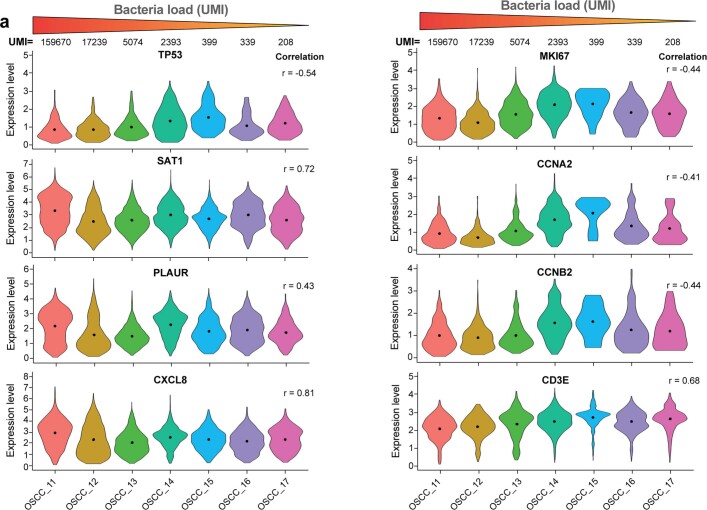
“In oral squamous cell carcinoma, the bacterial cellular load positively correlated with the neutrophil chemo attractant CXCL8 and negatively with the T cell receptor CD3E 87 .”
InfluentialAdvances in spatial transcriptomics and its application in the musculoskeletal system
Wang, H., Cheng, P., Wang, J., Lv, H., Han, J., Hou, Z., Xu, R., & Chen, W. (2025) · Bone Research · doi:10.1038/s41413-025-00429-w · Cited by 61
“In terms of applications, ST has been widely used in various fi elds including embryonic development, 25 – 29 oncology, 30,31 immunology, 32,33 and neuroscience.”
Kim, H. S., Kim, C. G., Kim, W. K., Kim, K.-A., Yoo, J., Min, B. S., Paik, S., Shin, S. J., Lee, H., Lee, K., et al. (2023) · Frontiers in Cellular and Infection Microbiology · doi:10.3389/fcimb.2023.1101291 · Cited by 53
Emerging clinical relevance of microbiome in cancer: promising biomarkers and therapeutic targets
Dai, J.-H., Tan, X.-R., Qiao, H., & Liu, N. (2023) · Protein & Cell · doi:10.1093/procel/pwad052 · Cited by 59
Engineered Bacteria for Disease Diagnosis and Treatment Using Synthetic Biology
Jin, K., Huang, Y. B., Che, H., & Wu, Y. (2025) · Microbial Biotechnology · doi:10.1111/1751-7915.70080 · Cited by 60
Chen, L., Shen, J., Kang, Z., Zhang, Z., Zheng, Z., Zhang, L., Xiao, Z., Zhang, Q., Fang, H., Zhou, J., et al. (2024) · Chem · doi:10.1016/j.chempr.2024.01.030 · Cited by 58
Jiang, S., Ma, W., Ma, C., Zhang, Z., Zhang, W., & Zhang, J. (2024) · Gut Microbes · doi:10.1080/19490976.2024.2341717 · Cited by 57
Long-distance microbial mechanisms impacting cancer immunosurveillance
Zitvogel, L., Fidelle, M., & Kroemer, G. (2024) · Immunity · doi:10.1016/j.immuni.2024.07.020 · Cited by 58
Metadata
- Authors
- Galeano Niño, J. L., Wu, H., LaCourse, K. D., Kempchinsky, A. G., Baryiames, A., Barber, B., Futran, N., Houlton, J., Sather, C., Sicinska, E., Taylor, A., Minot, S. S., Johnston, C. D., & Bullman, S.
- Affiliations
- Fred Hutch Cancer Center (US)
- University of Washington Medical Center (US)
- Herbert Irving Comprehensive Cancer Center (US)
- Corresponding author
- Johnston, Christopher D.
- Bullman, Susan
- ORCID
- Venue
- Nature
- Published
- 2022-11-16
- Volume
- 611
- Issue
- 7937
- Pages
- 810-817
- ISSN
- 0028-0836 (ISSN-L)
- 1476-4687
- PMC
- PMC9684076
- OpenAlex
- W4309334544
- Semantic Scholar
- 6717f1fc0c94d26c6693afed742936786e4a4011
- Cited by
- 887
- References
- 41
- Citations by year
- 2026: 214 · 2025: 292 · 2024: 228 · 2023: 148 · 2022: 4
- FWCI
- 55.33
- Type
- journal article
- Language
- en
- Open access
- hybrid
- doi.org
- Licence
- cc-by
- creativecommons.org/licenses/by/4.0 (tdm)
- creativecommons.org/licenses/by/4.0 (vor)
- Locations
- Nature (publishedVersion, cc-by)
- PubMed Central (publishedVersion, cc-by)
- PubMed (publishedVersion)
- RePEc: Research Papers in Economics (submittedVersion)
- Funders
- Cancer Research Institute (CRI4208)
- Fred Hutchinson Cancer Research Center (P30CA015704)
- University of Washington (P30 CA015704)
- National Institutes of Health (1s10od028685-01, CA015704)
- National Cancer Institute (CA015704, R00CA229984, CA080416, P30CA015704, T32CA080416)
- National Institute of Dental and Craniofacial Research (R01DE027850)
- Office of Research Infrastructure Programs, National Institutes of Health (S10OD028685)
- Topics
- Life Sciences › Biochemistry, Genetics and Molecular Biology › Molecular Biology › Gut microbiota and health
- Life Sciences › Biochemistry, Genetics and Molecular Biology › Molecular Biology › Single-cell and spatial transcriptomics
- Health Sciences › Medicine › Oncology › Cancer Immunotherapy and Biomarkers
- Keywords
- intratumoral microbiota, tumor microenvironment, spatial heterogeneity, oral squamous cell carcinoma, colorectal cancer, host-microbe interactions, single-cell RNA sequencing, spatial transcriptomics, GeoMx digital spatial profiling, tumor invasion, cell dormancy, DNA repair, inflammation, metastasis, Ki-67
- MeSH terms
- Host Microbial Interactions, Carcinoma, Squamous Cell, Humans, Mouth Neoplasms, Colorectal Neoplasms, Sequence Analysis, RNA, Disease Progression, Ki-67 Antigen, Gene Expression Profiling, Myeloid Cells, Tumor Microenvironment, Microbiota
About these checks
Registry, retraction, Cites and statistics results are computed, not judged, with one exception: a printed reference that no index lists is read once by a model before it counts as a citation error. Claims are extracted by a model and kept only when their quote appears verbatim in the text; each cited source is then checked, with a model’s help, for whether it says what the claim relies on. Those verdicts can be wrong — read the claim’s quote and the cited source before relying on one.
Statistics and arithmetic are recomputed, not judged.
Confidence bands are shown only for fields calibrated on our annotated test set. None is calibrated yet, so no band is shown.
What counts as a claim ›How we measure confidence ›How we check this ›
Are you an author, or do you see a problem with this page? Request a review
Data sources
Bibliographic data: Semantic Scholar, OpenAlex, Crossref.
Contains information from the Semantic Scholar Academic Graph Datasets, made available under the ODC Attribution License (ODC-BY 1.0).
Semantic Scholar’s data is described in: Kinney, R., et al. (2023). The Semantic Scholar Open Data Platform. arXiv:2301.10140.
