

Foundation models for generalist medical artificial intelligence
Open accessThe DOI matches its Crossref record; 69 of the 70 references it cites were found in a registry or an index; 23 of the 33 sources its claims cite were checked for support.
Abstract
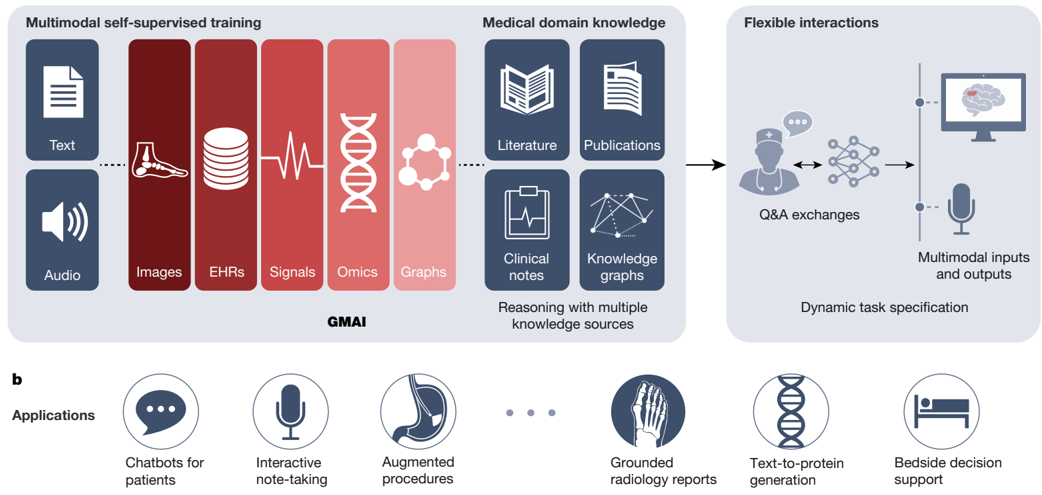
The exceptionally rapid development of highly flexible, reusable artificial intelligence (AI) models is likely to usher in newfound capabilities in medicine. We propose a new paradigm for medical AI, which we refer to as generalist medical AI (GMAI). GMAI models will be capable of carrying out a diverse set of tasks using very little or no task-specific labelled data. Built through self-supervision on large, diverse datasets, GMAI will flexibly interpret different combinations of medical modalities, including data from imaging, electronic health records, laboratory results, genomics, graphs or medical text. Models will in turn produce expressive outputs such as free-text explanations, spoken recommendations or image annotations that demonstrate advanced medical reasoning abilities. Here we identify a set of high-impact potential applications for GMAI and lay out specific technical capabilities and training datasets necessary to enable them. We expect that GMAI-enabled applications will challenge current strategies for regulating and validating AI devices for medicine and will shift practices associated with the collection of large medical datasets. This review discusses generalist medical artificial intelligence, identifying potential applications and setting out specific technical capabilities and training datasets necessary to enable them, as well as highlighting challenges to its implementation.
Overview
CoChat Summary
TL;DR
The paper proposes generalist medical AI (GMAI), a class of foundation models that would use self-supervision on large, diverse medical data to perform dynamically specified tasks, flexibly combine modalities, and reason with formal medical knowledge. It outlines six high-impact use cases and argues that GMAI will require new approaches to validation, regulation, bias auditing, privacy, and data collection.
Key findings
- Defines GMAI by three capabilities: dynamic task specification, flexible multimodal inputs/outputs, and formal representation of medical knowledge for advanced reasoning; existing models such as GPT-3 or PaLM show some medical reasoning but are not multimodal and do not reliably generate factual statements.
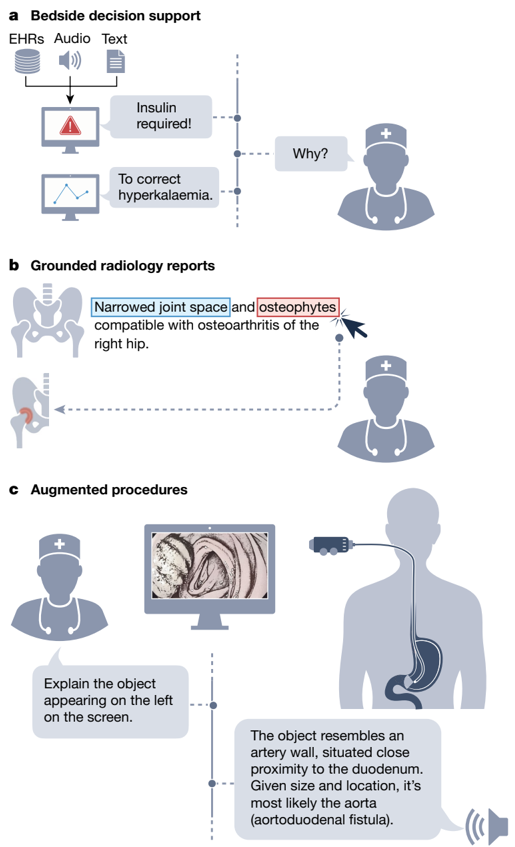
- Proposes six use cases: grounded radiology reports, augmented procedures, bedside decision support, chatbots for patients, text-to-protein generation, and interactive note-taking.
- Notes current medical AI is narrow: of more than 500 FDA-approved AI models for clinical medicine, most were approved for only 1 or 2 narrow tasks; CheXzero can detect dozens of diseases in chest X-rays without explicit labels; GPT-3 powered more than 300 apps within months of release.
- Flags scale and cost: PaLM, a 540-billion-parameter model, required an estimated 8.4 million hours’ worth of tensor processing unit v4 chips, using roughly 3,000 to 6,000 chips at a time, amounting to millions of dollars; training each model has been estimated to generate up to hundreds of tons of CO₂ equivalent; one study recommended 20 times more tokens than parameters for optimal performance.
Methods
- Perspective/review article; no primary data, sample, or experimental analysis.
- Synthesizes recent foundation-model advances and proposes the GMAI paradigm, identifying technical capabilities, training-data needs, use cases, and challenges.
- Draws on cited prior work and examples (e.g., GPT-3, Gato, CheXzero, PaLM) rather than new experiments.
Limitations
- Stated: GMAI will be uniquely difficult to validate because it can carry out previously unseen tasks, making failure modes hard to anticipate; social bias can increase with model scale; privacy risks include memorization of training data and prompt attacks; scale brings high computational, financial, and environmental costs; verification may require multidisciplinary panels; data collection/access and regulatory/liability frameworks are unresolved.
- Evident from the text: no GMAI model is built or empirically evaluated here; the use cases are prospective and illustrative; many capabilities depend on future advances in multimodal self-supervision, in-context learning, and medical knowledge integration.
Model-written summary. Check it against the paper before relying on it.
Integrity signals
Registry
Cites
Statistics
Figures
Verification
Claims the paper makes
17 Valid · 3 Not valid · 5 Not checked · 59 Own results and interpretations
The cited sources support only part of this claim — read each source’s verdict below.
In the paper
“They can acquire biases during training, when datasets either underrepresent certain groups of patients or contain harmful correlations 44,45 .”
§ Perspective Foundation models for generalist medical artificial intelligence > Social biases.
What the sources say
- Partly supportedcites [44] 44. Chung, H. W. et al. Scaling instruction-finetuned language models. Preprint at https:// arxiv.org/abs/2210.11416 (2022). sourceExperimental — accuracy not yet measured
The Mechanism of bias section (pp. 4–5) shows that the model learned to predict health care costs, which were correlated with race differently from health needs, producing racial bias. The paper does not identify underrepresentation of patient groups in training data as a cause of the bias it studied. (LLM, conf=0.87)
- Not matchedcites [45] 45. Kung, T. H. et al. Performance of ChatGPT on USMLE: potential for AI-assisted medical education using large language models. PLoS Dig. Health 2, 2 (2023).
Its entry has no title and year that we can search by.
plainstates a cause- Asserted: passes — The authors put it forward as true.
- Checkable: passes — It can be checked against evidence.
- Load-bearing: passes — The paper’s conclusions depend on it.
- Based: passes — The paper gives a reason why it holds.
- Partly supported
The cited sources support only part of this claim — read each source’s verdict below.
In the paper
“Individual models can now achieve state-of-the-art performance on a wide variety of problems, ranging from answering questions about texts to describing images and playing video games [2][3][4] .”
What the sources say
- Not matchedcites [2] 2. Yang, X. et al. A large language model for electronic health records. npj Digit. Med. 5, 194 (2022).
We searched by its title and found no matching paper.
- Partly supportedcites [3] 3. Food and Drug Administration. Artificial intelligence and machine learning (AI/ML)-enabled medical devices. FDA https://www.fda.gov/medical-devices/software-medical-device- samd/artificial-intelligence-and-machine-learning-aiml-enabled-medical-devices (2022). sourceExperimental — accuracy not yet measured
Section 3.1 (p. 7) reports that Flamingo outperforms previous zero- and few-shot methods across 16 vision-language benchmarks and exceeds fine-tuned state of the art on six tasks. Table 6 (p. 30) includes image scene description, supporting that example. The cited paper does not establish the sentence’s examples of answering questions about texts or playing video games. (LLM, conf=0.86)
- Partly supportedcites [4] 4. Acosta, J. N., Falcone, G. J., Rajpurkar, P. & Topol, E. J. Multimodal biomedical AI. Nat. Med. 28, 1773-1784 (2022). sourceExperimental — accuracy not yet measured
The Introduction (pp. 1–2) describes one model performing diverse vision and language tasks and reports the top overall score on the GRIT benchmark. The Results (p. 10) report state-of-the-art performance on A-OKVQA and strong image captioning, but say its NLP results lag behind state-of-the-art models. Related Work (p. 11) mentions another model's Atari button presses; it does not establish state-of-the-art video-game performance for Unified-IO. (LLM, conf=0.88)
plain- Asserted: passes — The authors put it forward as true.
- Checkable: passes — It can be checked against evidence.
- Load-bearing: passes — The paper’s conclusions depend on it.
- Based: passes — The paper gives a reason why it holds.
- Not matched
The cited sources support only part of this claim — read each source’s verdict below.
In the paper
“Furthermore, building on recent retrieval-based approaches, GMAI can retrieve relevant context from existing databases, in the form of articles, images or entire previous cases 19,20 .”
§ Perspective Foundation models for generalist medical artificial intelligence > Medical domain knowledge
What the sources say
- Partly supportedcites [19] 19. Guha Roy, A. et al. Does your dermatology classifier know what it doesn't know? Detecting the long-tail of unseen conditions. Med. Image Anal. 75, 102274 (2022). sourceExperimental — accuracy not yet measured
The Introduction (p. 1) describes Retro retrieving similar text from a large database, and the training-dataset section (p. 3) includes Wikipedia articles among its text sources. The paper does not establish that GMAI can retrieve images or entire previous medical cases; it supports the retrieval-based approach, but not those extensions. (LLM, conf=0.88)
- Partly supportedcites [20] 20. Radford, A. et al. Robust speech recognition via large-scale weak supervision. Preprint at https://arxiv.org/abs/2212.04356 (2022). sourceExperimental — accuracy not yet measured
The Introduction (p. 1) says REALM retrieves relevant documents from a corpus such as Wikipedia, supporting the article-retrieval part. Future Work (p. 9) proposes image retrieval as a possible extension, not an existing capability. The paper does not establish that GMAI retrieves images or entire previous cases. (LLM, conf=0.88)
plainstates a cause- Asserted: passes — The authors put it forward as true.
- Checkable: passes — It can be checked against evidence.
- Load-bearing: passes — The paper’s conclusions depend on it.
- Based: passes — The paper gives a reason why it holds.
- Partly supported
The cited sources support only part of this claim — read each source’s verdict below.
In the paper
“Models will be able to solve previously unseen problems simply by having new tasks explained to them (dynamic task specification), without needing to be retrained 3,5 .”
What the sources say
- Partly supportedcites [3] 3. Food and Drug Administration. Artificial intelligence and machine learning (AI/ML)-enabled medical devices. FDA https://www.fda.gov/medical-devices/software-medical-device- samd/artificial-intelligence-and-machine-learning-aiml-enabled-medical-devices (2022). sourceExperimental — accuracy not yet measured
The Introduction says Flamingo is designed to adapt to new vision-language tasks without fine-tuning, and the Contributions passage says it performs multimodal tasks from a few input/output examples. That supports adaptation without retraining, but not the broader claim that GMAI models can solve previously unseen problems simply by having tasks explained to them: Flamingo's demonstrated scope is narrower, and its task specification generally uses examples rather than an explanation alone. (LLM, conf=0.84)
- Not matchedcites [5] 5. Krishnan, R., Rajpurkar, P. & Topol, E. J. Self-supervised learning in medicine and healthcare. Nat. Biomed. Eng. 6, 1346-1352 (2022).
We searched by its title and found no matching paper.
plainstates a cause- Asserted: passes — The authors put it forward as true.
- Checkable: passes — It can be checked against evidence.
- Load-bearing: passes — The paper’s conclusions depend on it.
- Based: passes — The paper gives a reason why it holds.
- Partly supported
Every source the paper cites for this claim was checked and supports it.
In the paper
“CheXzero can be applied to detect dozens of diseases in chest X-rays without being trained on explicit labels for these diseases 9 .”
§ Perspective Foundation models for generalist medical artificial intelligence > Applicability.
What the sources say
- Supportedcites [9] 9. Vaswani, A. et al. Attention is all you need. In Advances in Neural Information Processing Systems (eds Guyon, I. et al.) 30, 5998-6008 (2017). source
The Main section describes CheXzero as a zero-shot chest X-ray classifier that needs no explicit pathology labels during training. The Results report an AUC of at least 0.700 for 38 of 57 radiographic findings evaluated on the PadChest test set, supporting the claim that it can detect dozens of conditions. (LLM, conf=0.90)
plainstates a cause- Asserted: passes — The authors put it forward as true.
- Checkable: passes — It can be checked against evidence.
- Load-bearing: unclear — It is unclear whether the paper’s conclusions depend on it.
- Based: passes — The paper gives a reason why it holds.
- Supported
32 more claims · 2 with their cited sources checked
Create a free account to see all 84 claims and to verify the 2 references still open.
- Probably not a substantial claim. 35
- It may state two separate claims as one. 25
Claims other papers make about this one
Each is checked against this paper’s own text: does it say what the citing paper says it does?
The source backs part of the claim, not all of it — or backs it for a different population, condition or comparison.
In the citing paper
“First, these models are predominantly pretrained using vision-only modeling57,59,60, which neglects not only rich supervisory signals found in pathology reports but also precludes multimodal capabilities such as zero-shot visual-language understanding and cross-model retrieval—a fundamental hallmark in foundation models84,85.”
From A multimodal whole-slide foundation model for pathology (2025) · cites this paper as [85]
Experimental — accuracy not yet measuredThe source backs part of the claim, not all of it — or backs it for a different population, condition or comparison.
In the citing paper
“Barriers to the clinical implementation of LLMs include their susceptibility to hallucinations, the absence of reliable references [13].”
From Diagnostic performance of Prof. Valmed, ChatGPT-5 Thinking, and OpenEvidence in rheumatology: A comparative evaluation (2026) · cites this paper as [13]
Experimental — accuracy not yet measuredThe cited source says what the claim attributes to it.
In the citing paper
“The emergence of (medical) foundational models (Moor et al., 2023), which are generally multimodal, is expected to accelerate research in optimal data fusion further.”
From Navigating the landscape of multimodal AI in medicine: A scoping review on technical challenges and clinical applications (2025) · cites this paper as Moor et al., 2023
The cited source says what the claim attributes to it.
In the citing paper
“Moor et al. introduced a paradigm for foundation model application in medical AI, named generalist medical AI (GMAI) [16].”
From Challenges in AI-driven Biomedical Multimodal Data Fusion and Analysis (2025) · cites this paper as [16]
The cited source says what the claim attributes to it.
In the citing paper
“Moor et al. proposed a framework of the GMAI, a foundation model designed to handle most clinical tasks, aiming to provide high-quality medical support to both patients and clinicians [16].”
From Challenges in AI-driven Biomedical Multimodal Data Fusion and Analysis (2025) · cites this paper as [16]
6 more claims about this paper
Create a free account to see every claim other papers make about this one.
Self-check
Percentages, sums and reported differences re-computed from the paper’s own numbers.
Each contradiction between two passages listed here was confirmed by an independent check.
Rated minor: it would not touch a result — a value no result rests on, a p-value that stays on the same side of the significance level, or a conflict that is clerical, resolved elsewhere in the paper, or outside its own findings.
In the paper
§ Perspective Foundation models for generalist medical artificial intelligence > Conclusion
“The presented example is inspired by a case report 58 .Image of the fistula in panel c adapted from ref. 58, CC BY 3.0.”
§ Perspective Foundation models for generalist medical artificial intelligence > References
“50. Vegunta, R., Vegunta, R. & Kutti Sridharan, G. Secondary aortoduodenal fistula presenting as gastrointestinal bleeding and fungemia. Cureus 11, e5575 (2019).”
Citations
Cites
Vaswani, A., Shazeer, N., Parmar, N., Uszkoreit, J., Jones, L., Gomez, A. N., Kaiser, L., & Polosukhin, I. (2017) · arXiv · doi:10.48550/arxiv.1706.03762 · Cited by 120,404
BERT: Pre-training of Deep Bidirectional Transformers for Language Understanding
Devlin, J., Chang, M.-W., Lee, K., & Toutanova, K. (2019) · Proceedings of the 2019 Conference of the North American Chapter of the Association for Computational Linguistics: Human Language Technologies, Volume 1 (Long and Short Papers) · doi:10.18653/v1/n19-1423 · Cited by 54,325
Highly accurate protein structure prediction with AlphaFold
Jumper, J., Evans, R., Pritzel, A., Green, T., Figurnov, M., Ronneberger, O., Tunyasuvunakool, K., Bates, R., Žídek, A., Potapenko, A., et al. (2021) · Nature · doi:10.1038/s41586-021-03819-2 · Cited by 43,764 · cited 1×
“There have already been early efforts to develop foundation models for biological sequences 33,34 , including RFdiffusion, which generates proteins on the basis of simple specifications (for example, a binding target) 35 .”
BackgroundHigh-Resolution Image Synthesis with Latent Diffusion Models
Rombach, R., Blattmann, A., Lorenz, D., Esser, P., & Ommer, B. (2022) · 2022 IEEE/CVF Conference on Computer Vision and Pattern Recognition (CVPR) · doi:10.1109/cvpr52688.2022.01042 · Cited by 20,302 · cited 2×
“For certain use cases (for example, chatbots), GMAI models can be stored on central compute clusters maintained by organizations with deep technical expertise, as DALL-E or GPT-3 are.”
BackgroundLearning Transferable Visual Models From Natural Language Supervision
Radford, A., Kim, J. W., Hallacy, C., Ramesh, A., Goh, G., Agarwal, S., Sastry, G., Askell, A., Mishkin, P., Clark, J., et al. (2021) · arXiv · doi:10.48550/arxiv.2103.00020 · Cited by 15,293 · cited 2×
“These include the rise of multimodal architectures 13 and self-supervised learning techniques 14 that dispense with explicit labels (for example, language modelling 15 and contrastive learning 16 ), as well as the advent of in-context learning capabilities 5 .”
BackgroundSudlow, C., Gallacher, J., Allen, N., Beral, V., Burton, P., Danesh, J., Downey, P., Elliott, P., Green, J., Landray, M., et al. (2015) · PLOS Medicine · doi:10.1371/journal.pmed.1001779 · Cited by 12,728 · cited 1×
“Large-scale data-sharing efforts, such as the MIMIC (Medical Information Mart for Intensive Care) database 55 or the UK Biobank 56 , will play a critical role in GMAI, and they should be extended to underrepresented countries to create larger, richer and more inclusive training datasets.”
BackgroundAdvances in Neural Information Processing Systems 14: Proceedings of the 2001 Conference
(2002) · The MIT Press eBooks · doi:10.7551/mitpress/1120.001.0001 · Cited by 8,890
Dissecting racial bias in an algorithm used to manage the health of populations
Obermeyer, Z., Powers, B., Vogeli, C., & Mullainathan, S. (2019) · Science · doi:10.1126/science.aax2342 · Cited by 7,137 · cited 1×
“They can acquire biases during training, when datasets either under-represent certain groups of patients or contain harmful correlations 44,45 .”
BackgroundUniProt: the universal protein knowledgebase
The UniProt Consortium (2017) · Nucleic Acids Research · doi:10.1093/nar/gkw1099 · Cited by 4,436
Training language models to follow instructions with human feedback
Ouyang, L., Wu, J., Jiang, X., Almeida, D., Wainwright, C. L., Mishkin, P., Zhang, C., Agarwal, S., Slama, K., Ray, A., et al. (2022) · arXiv · doi:10.48550/arxiv.2203.02155 · Cited by 4,208 · cited 1×
“Such feedback can then be used to improve model behaviour, following the example of InstructGPT, a model created by using human feedback to refine GPT-3 through reinforcement learning 41 .”
Method
Research works printed but not linked: 2
- Reed, S. et al. A generalist agent. In Transactions on Machine Learning Research (2022). This study presented Gato, a generalist model that can carry out a variety of tasks across modalities such as chatting, captioning images, playing video games and controlling a robot arm.
- Brown, T. et al. Language models are few-shot learners. In Advances in Neural Information Processing Systems (eds Larochelle, H. et al.) 33, 1877–1901 (2020). This study presented the language model GPT-3 and discovered that large language models can carry out in-context learning.
Cited by
Items 501–600 of 1,962
Moraitis, A., Küper, A. T., Tran‐Gia, J., Eberlein, U., Chen, Y., Seifert, R., Shi, K., Kim, M., Herrmann, K., Costa, P. F., et al. (2024) · Seminars in Nuclear Medicine · doi:10.1053/j.semnuclmed.2024.06.003 · Cited by 14
Leveraging Generative AI Models in Urban Science
Balsa‐Barreiro, J., Cebrián, M., Menéndez, M., & Axhausen, K. W. (2024) · Current topics in behavioral neurosciences · doi:10.1007/7854_2024_482 · Cited by 16
New Orientation of Interdisciplinarity in Medicine: Engineering Medicine
Wu, J., & Gu, N. (2024) · Engineering · doi:10.1016/j.eng.2024.09.009 · Cited by 18
Luan, H., Yang, K., Hu, T., Hu, J., Liu, S., Li, R., He, J., Yan, R., Guo, X., Qian, N., et al. (2024) · Future Generation Computer Systems · doi:10.1016/j.future.2024.107578 · Cited by 19
Simulated misuse of large language models and clinical credit systems
Anibal, J., Huth, H. B., Gunkel, J., Gregurick, S. K., & Wood, B. J. (2024) · npj Digital Medicine · doi:10.1038/s41746-024-01306-2 · Cited by 16
Cyber Shadows: Neutralizing Security Threats With AI and Targeted Policy Measures
Schmitt, M., & Koutroumpis, P. (2025) · IEEE Transactions on Artificial Intelligence · doi:10.1109/tai.2025.3527398 · Cited by 32
“A combination of these core capabilities has allowed applications to foster the invention of new algorithms [2], advance medical treatments [3], augment human creativity [4], and accelerate scientific progress [5].”
Shaikh, T. A., Rasool, T., & Mir, W. A. (2025) · Computer Standards & Interfaces · doi:10.1016/j.csi.2025.104005 · Cited by 22
Panzeri, D., Laohawetwanit, T., Akpınar, R., Carlo, C. D., Belsito, V., Terracciano, L., Aghemo, A., Pugliese, N., Chirico, G. G., Inverso, D., et al. (2025) · Hepatology Communications · doi:10.1097/hc9.0000000000000695 · Cited by 19
Informed Machine Learning: Excess risk and generalization
Oneto, L., Ridella, S., & Anguita, D. (2025) · Neurocomputing · doi:10.1016/j.neucom.2025.130521 · Cited by 23
Lv, S., Li, J., He, H., Zhao, Q. Y., & Jiang, Y. (2025) · Artificial Intelligence Review · doi:10.1007/s10462-025-11264-0 · Cited by 20
Engineering artificial intelligence: framework, challenges, and future direction
Lee, J., Su, H., Ji, D.-Y., & Minami, T. (2025) · Machine Learning Engineering · doi:10.1088/3049-4761/adce0d · Cited by 30
“…models in different engineering domains such as Prognostics and Health Management (PHM) [38], time series [24], CV [5], NLP [60], healthcare [44], manufacturing [73], etc. Hybrid Physics-Based and Data-Driven Models : combine the strengths of physics-based modeling and data-driven…”
Large Language Models in Healthcare Current Development and Future DirectionsPreprint
Jiang, X., Yan, L., Vavekanand, R., & Hu, M. (2024) · Preprints.org · doi:10.20944/preprints202407.0923.v1 · Cited by 15
Multimodal Foundation Models for Medical Imaging - A Systematic Review and Implementation GuidelinesPreprint
Huang, S.-C., Jensen, M., Yeung, S. Y., Lungren, M. P., Poon, H., & Chaudhari, A. S. (2024) · medRxiv · doi:10.1101/2024.10.23.24316003 · Cited by 27
A foundation model for generalized brain MRI analysisPreprint
Tak, D., Garomsa, B. A., Chaunzwa, T. L., Zapaishchykova, A., Pardo, J. C. C., Ye, Z., Zielke, J., Ravipati, Y., Vajapeyam, S., Mahootiha, M., et al. (2024) · medRxiv · doi:10.1101/2024.12.02.24317992 · Cited by 13
Patil, D. (2025) · SSRN Electronic Journal · doi:10.2139/ssrn.5057414 · Cited by 29
A Systematic Review and Implementation Guidelines of Multimodal Foundation Models in Medical ImagingPreprint
Huang, S.-C., Jensen, M., Yeung, S. Y., Lungren, M. P., Poon, H., & Chaudhari, A. S. (2025) · Research Square · doi:10.21203/rs.3.rs-5537908/v1 · Cited by 24
Bridging the gaps: Overcoming challenges of implementing AI in healthcare
Huang, X., Gu, L., Sun, J. X., & Eils, R. (2025) · Med · doi:10.1016/j.medj.2025.100666 · Cited by 16
Detjen, H., Densky, L., von Kalckreuth, N., & Kopka, M. (2025) · CHI Conference on Human Factors in Computing Systems · doi:10.1145/3706598.3713898 · Cited by 22
Artificial Intelligence in the Management of Heart Failure
Cheema, B. S., Hourmozdi, J., Kline, A. S., Ahmad, F. S., & Khera, R. (2025) · Journal of Cardiac Failure · doi:10.1016/j.cardfail.2025.02.020 · Cited by 24
MDD-LLM: Towards accuracy large language models for major depressive disorder diagnosis
Sha, Y., Pan, H., Xu, W., Meng, W., Luo, G., Du, X., Zhai, X., Tong, H. H. Y., Shi, C., & Li, K. (2025) · Journal of Affective Disorders · doi:10.1016/j.jad.2025.119774 · Cited by 17
A foundational model for in vitro fertilization trained on 18 million time-lapse images
Rajendran, S., Rehani, E., Phu, W., Zhan, Q., Malmsten, J. E., Meseguer, M., Miller, K. A., Rosenwaks, Z., Elemento, O., Zaninović, N., et al. (2025) · Nature Communications · doi:10.1038/s41467-025-61116-2 · Cited by 14
Artificial intelligence and infectious diseases: Scope and perspectives
Abbara, S., Crabol, Y., de Bouillé, J. G., Dinh, A., & Morquin, D. (2025) · Infectious Diseases Now · doi:10.1016/j.idnow.2025.105131 · Cited by 24
Building the world’s first truly global medical foundation model
Tham, Y. C., Goh, J. H. L., Nderitu, P., Zhou, Y., Ran, A. R., Srinivasan, S., Yang, G. D., Kitema, G. F., Rawlinson, P., Jiang, H., et al. (2025) · Nature Medicine · doi:10.1038/s41591-025-03859-5 · Cited by 28
Unifying machine learning and interpolation theory via interpolating neural networks
Park, C., Saha, S. K., Guo, J., Zhang, H., Xie, X., Bessa, M. A., Qian, D., Chen, W., Wagner, G. J., Cao, J., et al. (2025) · Nature Communications · doi:10.1038/s41467-025-63790-8 · Cited by 43
“The shift towards software 2.0 partially resolves the issue of labor-intensive programming in Software 1.0 and has signi fi cantly advanced the domain of large language models (LLMs) and other foundational models 2,3 .”
InfluentialExploring large language models for indoor occupancy measurement in smart office buildings
Qaisar, I., Sun, K., & Zhao, Q. (2025) · Building and Environment · doi:10.1016/j.buildenv.2025.113860 · Cited by 23
Discovery of predictive biomarkers for cancer therapy through computational approaches
Wang, X., Nguyen, J., Nader, K. M., Miihkinen, M., Wall, P., Singhal, A., Bedard, P. L., Ideker, T., Aittokallio, T. A., & Haibe‐Kains, B. (2026) · Nature Reviews Clinical Oncology · doi:10.1038/s41571-025-01109-8 · Cited by 31
“With increasing data availability and rapid developments in multimodal integration, the widespread use of foundation models capable of leveraging clinical, imaging and omics data for biomarker discovery is imminent 111 .”
Learning neuroimaging models from health system-scale data
Lyu, Y., Harake, E. S., Chowdury, A., Banerjee, S., Gologorsky, R., Liu, S., Meißner, A.-K., Rao, A., Zhao, C., Kondepudi, A., et al. (2026) · Nature Biomedical Engineering · doi:10.1038/s41551-025-01608-0 · Cited by 29
Bridging modalities with AI: a review of AI advances in multimodal biomedical imaging
Doan, L. M. T., Shahhosseini, K., Verma, S., Marefat, A., Locicero, G., Verma, S., Angione, C., & Occhipinti, A. (2026) · Communications Engineering · doi:10.1038/s44172-026-00602-x · Cited by 32
Artificial intelligence in ophthalmology
Wiedemann, P. (2023) · International Journal of Ophthalmology · doi:10.18240/ijo.2023.09.01 · Cited by 15
Keeping Up With ChatGPT: Evaluating Its Recognition and Interpretation of Nuclear Medicine Images
Rogasch, J. M. M., Jochens, H. V., Metzger, G., Wetz, C., Kaufmann, J., Furth, C., Amthauer, H., & Schatka, I. (2024) · Clinical Nuclear Medicine · doi:10.1097/rlu.0000000000005207 · Cited by 14
Esfandiari, E., Kalroozi, F., Mehrabi, N., & Hosseini, Y. (2024) · Journal of Education and Health Promotion · doi:10.4103/jehp.jehp_898_23 · Cited by 17
Artificial Intelligence Methods
Liu, S., Russo, C., Molina, E. S., & Ieva, A. D. (2024) · Advances in experimental medicine and biology · doi:10.1007/978-3-031-64892-2_3 · Cited by 20
Hofman, P. M., Ourailidis, I., Romanovsky, E., Ilié, M., Budczies, J., & Stenzinger, A. (2025) · Lung Cancer · doi:10.1016/j.lungcan.2025.108110 · Cited by 12
Guo, Z., Wu, X., Liang, L., Sheng, H., Chen, N., & Bi, Z. (2025) · Journal of Geophysical Research Machine Learning and Computation · doi:10.1029/2025jh000601 · Cited by 41
A Systemic Review of Large Language Models and Their Implications in Dermatology
Lewandowski, M., Kropidłowska, J., Kvinen, A., & Barańska‐Rybak, W. (2025) · Australasian Journal of Dermatology · doi:10.1111/ajd.14484 · Cited by 16
Longitudinal Risk Prediction for Pediatric Glioma with Temporal Deep Learning
Tak, D., Garomsa, B. A., Zapaishchykova, A., Ye, Z., Vajapeyam, S., Mahootiha, M., Pardo, J. C. C., Smith, C., Familiar, A., Chaunzwa, T. L., et al. (2025) · NEJM AI · doi:10.1056/aioa2400703 · Cited by 15
Application of Large Language Models in Traditional Chinese Medicine: A State-of-the-Art Review
Shataer, D., Cao, S.-X., Liu, X., Aierken, K., Bhattacharya, P., Sinha, A., & Liu, H. (2025) · The American Journal of Chinese Medicine · doi:10.1142/s0192415x25500375 · Cited by 16
Assessing GPT-3.5 and GPT-4 in Generating International Classification of Diseases Billing CodesPreprint
Soroush, A., Glicksberg, B. S., Zimlichman, E., Barash, Y., Freeman, R., Charney, A. W., Nadkarni, G. N., & Klang, E. (2023) · medRxiv · doi:10.1101/2023.07.07.23292391 · Cited by 12
“In the realm of healthcare, they could potentially support clinicians by automating administrative tasks, offering decision support, or communicating with patients (8-10).”
BackgroundHan, T., Adams, L. C., Bressem, K. K., Busch, F., Huck, L. C., Nebelung, S., & Truhn, D. (2023) · medRxiv · doi:10.1101/2023.11.03.23297957 · Cited by 21
Evaluating General Vision-Language Models for Clinical MedicinePreprint
Jiang, Y., Omiye, J. A., Zakka, C., Moor, M., Gui, H., Alipour, S., Mousavi, S. S., Chen, J. H., Rajpurkar, P., & Daneshjou, R. (2024) · medRxiv · doi:10.1101/2024.04.12.24305744 · Cited by 11
“As these models continue to evolve, their potential integration into healthcare systems necessitates a multidisciplinary evaluation approach involving clinicians, data scientists, ethicists, and patients, ensuring that these technologies augment medical practice without causing harm [11].”
BackgroundSelf-citationChatNT: A Multimodal Conversational Agent for DNA, RNA and Protein TasksPreprint
Richard, G., de Almeida, B. P., Dalla-Torre, H., Blum, C. F., Hexemer, L., Pandey, P., Laurent, S., Lopez, M., Laterre, A., Lang, M., et al. (2024) · bioRxiv (Cold Spring Harbor Laboratory) · doi:10.1101/2024.04.30.591835 · Cited by 14
Scaling text de-identification using locally augmented ensemblesPreprint
Murugadoss, K., Killamsetty, S., Doddahonnaiah, D., Iyer, N., Pencina, M. J., Ferranti, J. M., Halamka, J. D., Malin, B., & Ardhanari, S. (2024) · medRxiv · doi:10.1101/2024.06.20.24308896 · Cited by 17
“There is an emerging trend in clinical studies to substitute fine-tuned models with LLMs 32–37 .”
BackgroundSparks of Large Audio Models: A Survey and Outlook
Latif, S., Shoukat, M., Shamshad, F., Usama, M., Ren, Y., Cuayáhuitl, H., Wang, W., Zhang, X., Togneri, R., Cambria, E., et al. (2023) · arXiv · doi:10.48550/arxiv.2308.12792 · Cited by 17
“[38] 2023 ✓ ✗ Health Identify potential applications for medical foundation models and outline specific technical capabilities and training data needed to enable them.”
BackgroundHan, J., Liu, K., Isaacson, K., Monakhova, K., Griffith, L. G., & You, S. (2025) · Nature Communications · doi:10.1038/s41467-025-56078-4 · Cited by 16
Opportunities and Challenges in Combining Optical Sensing and Epidemiological Modeling
Mikaberidze, A., Cruz, C. D., Zerihun, A., Barreto, A., Beck, P. S. A., Calderón, R., Camino, C., Campbell, R. E., Delalieux, S., Fabre, F., et al. (2025) · Phytopathology · doi:10.1094/phyto-11-24-0359-fi · Cited by 15
Foundational models and federated learning: survey, taxonomy, challenges and practical insights
Hatfaludi, C.-A., & Serban, A. (2025) · PeerJ Computer Science · doi:10.7717/peerj-cs.2993 · Cited by 13
“Within this realm, FMs are also called generalist models (Moor et al., 2023).”
LLM-powered breast cancer staging from PET/CT reports: a comparative performance study
Spitzl, D., Mergen, M., Braren, R., Endrös, L., Eiber, M. J., & Steinhelfer, L. (2025) · International Journal of Medical Informatics · doi:10.1016/j.ijmedinf.2025.106053 · Cited by 15
Huang, Y., Zhao, W., Zhang, Z., Chen, Y., Fu, Y., Wu, F., Jiang, Y., Liang, L., Wang, S., & Yu, L. (2025) · Nature Communications · doi:10.1038/s41467-025-66300-y · Cited by 35
Dip, S. A., Mallick, D., Shuvo, U. A., Soumma, S. B., Rafsani, F., Paul, B. K., Moumi, N. A., Ahmed, S., & Zhang, L. (2026) · Briefings in Bioinformatics · doi:10.1093/bib/bbag110 · Cited by 25
“…strategies, representation learning, and downstream task performance across biological and chemical domains [8, 9], while domain-or modality-specific reviews focus on application-level gains within narrower settings such as radiology, genomics, or drug research and development [1, 10, 18].”
Jaylet, T., Quintens, R., Armant, O., & Audouze, K. (2023) · Frontiers in Cell and Developmental Biology · doi:10.3389/fcell.2023.1197204 · Cited by 13
Chang, C., Shi, W., Wang, Y., Zhang, Z., Huang, X., & Jiao, Y. (2024) · Computers in Biology and Medicine · doi:10.1016/j.compbiomed.2024.108258 · Cited by 16
Rosselló-Jiménez, D., Sierra, S. D., Collado, Y., Cuadra-Llopart, L., Riba, F., & Llonch-Masriera, M. (2024) · European Geriatric Medicine · doi:10.1007/s41999-024-00970-7 · Cited by 12
“Increased investment in AI output detectors is also necessary to ensure accurate and unbiased results [22, 46].”
Spina, A., Andalib, S., Flores, D., Vermani, R., Halaseh, F. F., & Nelson, A. M. (2024) · JMIR AI · doi:10.2196/54371 · Cited by 16
“Companies and health care professionals looking to develop GLMs for medical use continue to face legal hurdles aimed at protecting patient privacy [41].”
BackgroundMakarenko, M. O., Lopez, A. B., Wang, Q., Giancola, S., Ghanem, B., Passone, L., & Fratalocchi, A. (2024) · Nature Communications · doi:10.1038/s41467-024-51406-6 · Cited by 15
Jean-Quartier, C., Stryeck, S., Thien, A., Vrella, B., Kleinschuster, J., Spreitzer, E., Wali, M., Mueller, H., Holzinger, A., & Jeanquartier, F. (2024) · Digital Health · doi:10.1177/20552076241271769 · Cited by 13
“25 CNNs excel in identifying patterns and features within spatial data, making them ideal for medical imaging analysis, while RNNs are suited for temporal data analysis, crucial for understanding dynamic physiological processes over time.”
BackgroundRole of artificial intelligence in haematolymphoid diagnostics
Syrykh, C., van den Brand, M., Kather, J. N., & Laurent, C. (2024) · Histopathology · doi:10.1111/his.15327 · Cited by 15
A data-centric perspective on exposomics data analysis
Chang, L., Ewald, J., Hui, F., Bayen, S., & Xia, J. (2024) · Exposome · doi:10.1093/exposome/osae005 · Cited by 13
Ramadan, S., Mutsaers, A., Chen, P.-H. C., Bauman, G. S., Velker, V. M., Ahmad, B., Arifin, A. J., Nguyen, T. K., Palma, D., & Goodman, C. D. (2024) · Radiotherapy and Oncology · doi:10.1016/j.radonc.2024.110645 · Cited by 17
A Comprehensive Framework for Transparent and Explainable AI Sensors in Healthcare
Bouderhem, R. (2024) · International Electronic Conference on Sensors and Applications (ECSA) · doi:10.3390/ecsa-11-20524 · Cited by 19
“This adaptability is crucial for the practical implementation of our framework across various medical specialties [48].”
Hu, X., Xu, D., Zhang, H., Tang, M., & Gao, Q. (2025) · The Spine Journal · doi:10.1016/j.spinee.2024.12.035 · Cited by 11
Foundation Models: From Current Developments, Challenges, and Risks to Future Opportunities
Hussain, A., Ali, S., Farwa, U. E., Mozumder, M. A. I., & Kim, H.-C. (2025) · International Conference on Advanced Communications Technology (ICACT) · doi:10.23919/icact63878.2025.10936649 · Cited by 18
“You may also train such models to create special healthcare data analysis software [80-82].”
Detection of epileptic spasms using foundational AI and smartphone videos
Miron, G., Halimeh, M., Tietze, S., Holtkamp, M., & Meisel, C. (2025) · npj Digital Medicine · doi:10.1038/s41746-025-01773-1 · Cited by 18
“Ourstrategyofadaptingageneralist foundationalmodeltomedicalAIalignswithemergingtrendsinthe fi eld 32 .”
The Landscape of Medical AI in China
Qiu, Y., Ma, W., Wang, H., Tham, Y. C., & Wong, T. Y. (2025) · NEJM AI · doi:10.1056/aip2401234 · Cited by 11
Foundation models in medicine are a social experiment: time for an ethical framework
Ranisch, R., & Haltaufderheide, J. (2025) · npj Digital Medicine · doi:10.1038/s41746-025-01924-4 · Cited by 19
Advances in deep learning: From diagnosis to treatment
Huang, T., Ma, L., Zhang, B., & Liao, H. (2023) · BioScience Trends · doi:10.5582/bst.2023.01148 · Cited by 12
“The characteristics of foundation models include large training datasets, context awareness, multi-domain applications, and the ability to perform more advanced tasks by integrating information and performing reasoning ( 8 ).”
BackgroundArtificial intelligence, applications and challenges in simulation-based education
Díaz-Guio, D. A., Henao, J. H., Pantoja, A., Arango, M. A., Díaz-Gómez, A. S., & Camps, A. (2023) · Colombian Journal of Anesthesiology · doi:10.5554/22562087.e1085 · Cited by 15
“…in the 90s with advances in computing and microprocessor development and research in various areas such as natural language programming, automatic learning, deep learning, and applications in robotics, autonomous driving, diagnostic medicine, and education, among many other fields (14,15) .”
BackgroundPatil, D. (2025) · SSRN Electronic Journal · doi:10.2139/ssrn.5057408 · Cited by 28
Chandrashekar, M., Goethert, I., Haque, M. I. U., McMahon, B., Dhaubhadel, S., Knight, K., Erdos, J., Reagan, D., Taylor, C., Kuzmak, P. M., et al. (2025) · Journal of Imaging Informatics in Medicine · doi:10.1007/s10278-025-01494-7 · Cited by 13
“Based on the p -value calculated using the AUC two-tailed z-test, it was observed that ECM and support devices show stastically significant difference between MIMIC-CXR and VA-CXR.”
Tarhini, A. A., & Naqa, I. E. (2025) · International Journal of Molecular Sciences · doi:10.3390/ijms26168002 · Cited by 13
“General AI with FMs also poses the risk of bias, where datasets may fail to account for certain groups or parts of information, which, in the case of AI in spatial studies, can limit performance and generalizability [40].”
Artificial intelligence and climate change: the potential roles of foundation models
Filho, W. L., Kovaleva, M., Ng, A. W., Nagy, G. J., Luetz, J. M., & Dinis, M. A. P. (2025) · Environmental Sciences Europe · doi:10.1186/s12302-025-01153-2 · Cited by 14
“In the healthcare industry, FMs are a suitable tool for assistance attributable to the model’s ability to work with different combinations of medical data, such as health records, medical texts, laboratory results and etc. [37].”
Kazerooni, A. F., Familiar, A., Aboian, M., Brüningk, S. C., Vossough, A., Linguraru, M. G., Huang, R. Y., Hargrave, D. R., Peet, A. C., Resnick, A. C., et al. (2025) · The Lancet Oncology · doi:10.1016/s1470-2045(25)00489-9 · Cited by 19
Lee, S., Cho, W. I., Lee, Y., Kim, D. J., Nam, K. H., Lee, S. M., Suh, J., & Ko, T. (2025) · BMC Medical Informatics and Decision Making · doi:10.1186/s12911-025-03239-6 · Cited by 18
“Machine learning (ML) models are increasingly applied in healthcare for diagnosis, risk prediction, and treat-ment recommendations [1, 2].”
Multimodal foundation transformer models for multiscale genomics
Khan, S. A., Martinez‐de‐Morentin, X., Alsabbagh, A. R., Maillo, A., Lagani, V., Gómez-Cabrero, D., Lehmann, R., & Tegner, J. N. (2025) · Nature Methods · doi:10.1038/s41592-025-02918-6 · Cited by 31
“Recently, we have witnessed a similar excitement with the rise of biomedical foundational models 17 .”
Ruffini, F., Ayllón, E. M., Shen, L., Soda, P., & Guarrasi, V. (2025) · Computer Methods and Programs in Biomedicine · doi:10.1016/j.cmpb.2025.109196 · Cited by 21
“In healthcare, FMs have been extensively developed to align with domain-specific diagnostic and classification tasks [23, 24, 25].”
Afifi, I., Elgendy, M. A., Abdelfatah, M., & El–Sappagh, S. (2025) · Brain Informatics · doi:10.1186/s40708-025-00286-7 · Cited by 17
AI-Driven Digital Pathology: Deep Learning and Multimodal Integration for Precision Oncology
Jang, H., & Lee, S. H. (2025) · International Journal of Molecular Sciences · doi:10.3390/ijms27010379 · Cited by 14
“Recent efforts have advanced toward generalist medical foundation models capable of handling diverse medical data types simultaneously [50,51].”
Artificial intelligence and the impact on medical genetics
Solomon, B. D., & Chung, W. K. (2023) · American Journal of Medical Genetics Part C Seminars in Medical Genetics · doi:10.1002/ajmg.c.32060 · Cited by 12
Endocrinology in the multi-omics era
Shilo, S., & Segal, E. (2023) · Nature Reviews Endocrinology · doi:10.1038/s41574-023-00931-3 · Cited by 10
“In 2023, a new paradigm for medical AI was developed, referred to as foundation models 8 .”
Next-generation generalist energy artificial intelligence for navigating smart energy
Zhu, X., Chen, S., Liang, X., Jin, X., & Du, Z. (2024) · Cell Reports Physical Science · doi:10.1016/j.xcrp.2024.102192 · Cited by 16
The Transition From Homogeneous to Heterogeneous Machine Learning in Neuropsychiatric Research
Zhao, Q., Nooner, K. B., Tapert, S. F., Adeli, E., Pohl, K. M., Kuceyeski, A. F., & Sabuncu, M. R. (2024) · Biological Psychiatry Global Open Science · doi:10.1016/j.bpsgos.2024.100397 · Cited by 13
“This argument aligns with the current trend in ML to train a single large-scale foundation model on extensive datasets that is generalizable to various tasks and populations (109 – 111).”
Artificial intelligence: a primer for pediatric radiologists
Takahashi, M. S., Donnelly, L. F., & Siala, S. (2024) · Pediatric Radiology · doi:10.1007/s00247-024-06098-x · Cited by 15
Wang, C., Wan, Y., Li, S., Qu, K., Zhou, X., He, J., Ke, J., Yu, Y., Wang, T., & Shen, Y. (2024) · IEEE Transactions on Medical Imaging · doi:10.1109/tmi.2024.3501352 · Cited by 18
“While these models have demonstrated robust performance in specialized tasks, such as cancer sub-type classification, their ability to generalize across diverse clinical scenarios remains an area for further investigation [35].”
Enhancing risk and crisis communication with computational methods: A systematic literature review
Munro, M. H., Gore, R. J., Lynch, C. J., Hastings, Y. D., & Reinhold, A. M. (2024) · Risk Analysis · doi:10.1111/risa.17690 · Cited by 9
“Additionally, advancements in generating non-textual, multimedia forms of communication through LLMs are also ongoing (Meskó, 2023; Moor et al., 2023).”
Chen, M. S., Ravindranath, R., Chang, R. T., Zhou, Y., Keane, P. A., & Wang, S. Y. (2025) · Ophthalmology Science · doi:10.1016/j.xops.2025.100720 · Cited by 11
“18,19 This approach not only maximizes the utility of available data but also improves the model ’ s generalization and adaptability across different applications.”
Generalist medical AI reimbursement challenges and opportunities
Mahajan, A., & Powell, D. (2025) · npj Digital Medicine · doi:10.1038/s41746-025-01521-5 · Cited by 14
Generative artificial intelligence in oncology
Ganjavi, C., Melamed, S., Biedermann, B. M., Eppler, M., Rodler, S., Layne, E., Cei, F., Gill, I. S., & Cacciamani, G. E. (2025) · Current Opinion in Urology · doi:10.1097/mou.0000000000001272 · Cited by 12
Yuan, H. (2025) · Medicine Advances · doi:10.1002/med4.70001 · Cited by 12
“This efficiency stems from their ability to leverage generalizable knowledge acquired from extensive external data on related tasks and further mitigates the potential model convergence issues caused by data subset selection [11].”
The role of AI for MRI-analysis in multiple sclerosis—A brief overview
Falet, J.-P. R., Nobile, S., Szpindel, A., Barile, B., Kumar, A., Durso-Finley, J., Arbel, T., & Arnold, D. L. (2025) · Frontiers in Artificial Intelligence · doi:10.3389/frai.2025.1478068 · Cited by 16
Silva-Rodríguez, J., Dolz, J., & Ayed, I. B. (2025) · Medical Image Analysis · doi:10.1016/j.media.2025.103596 · Cited by 23
Large Language Models for Transforming Healthcare: A Perspective on DeepSeek‐R1
Zhou, J., Cheng, Y., He, S., Chen, Y.-C., & Chen, H. (2025) · MedComm – Future Medicine · doi:10.1002/mef2.70021 · Cited by 16
RadCLIP: Enhancing Radiologic Image Analysis Through Contrastive Language–Image Pretraining
Lu, Z., Li, H., Parikh, N. A., Dillman, J. R., & He, L. (2025) · IEEE Transactions on Neural Networks and Learning Systems · doi:10.1109/tnnls.2025.3568036 · Cited by 31
“Our key contributions include curating a large dataset featuring diverse radiologic 2D / 3D image-text pairs, pretraining RadCLIP as a vision-language foundation model on this dataset, developing a slice”
A framework for general-purpose microscopic image analysis via self-supervised learning
Zheng, Z., Yue, X., Wang, J., & Hou, J. (2024) · Materials Characterization · doi:10.1016/j.matchar.2024.114003 · Cited by 12
Napravnik, M., Hržić, F., Tschauner, S., & Štajduhar, I. (2024) · BioData Mining · doi:10.1186/s13040-024-00373-1 · Cited by 12
“In accordance with current trends in foundation models training [14], the image annotation is performed using unsupervised learning techniques from available multimodal data sources: images, Digital Imaging and Communications in Medicine (DICOM [15]) tags and narrative diagnoses.”
MethodRaTEScore: A Metric for Radiology Report GenerationPreprint
Zhao, W., Wu, C., Zhang, X., Zhang, Y., Wang, Y.-F., & Xie, W.-D. (2024) · Conference on Empirical Methods in Natural Language Processing · doi:10.1101/2024.06.24.24309405 · Cited by 99
“…et al., 2023; Qiu et al., 2024; Wu et al., 2024) and computer vision (Li et al., 2023; Alayrac et al., 2022; OpenAI; Zhang et al., 2023), the pursuit of generalist medical artificial intelligence has grown increasingly promising and appealing (Moor et al., 2023; Wu et al., 2023; Tu et al., 2024).”
BackgroundPanacea: A foundation model for clinical trial search, summarization, design, and recruitmentPreprint
Lin, J., Xu, H., Wang, Z., Wang, S., & Sun, J. (2024) · medRxiv · doi:10.1101/2024.06.26.24309548 · Cited by 23
“14 38 The MedPaLM model is a prime example of the first approach, illustrating how fine-tuning a general domain model on medical datasets can markedly enhance its ability to answer medical questions.”
BackgroundBordukova, M., Arneth, A. J., Makarov, N., Brown, R. M., Schneider‐Futschik, E. K., Dharmage, S. C., Ekinci, E. I., Crack, P. J., Hatters, D. M., Stewart, A. G., et al. (2025) · Expert Opinion on Drug Discovery · doi:10.1080/17460441.2025.2507376 · Cited by 12
“Powered by large, pre-trained deep learning-based foundation models (Table 1), generative AI holds immense potential in healthcare [18], facilitating the generation of synthetic cells, in vivo models, and virtual patients, offering novel methodologies for preclinical and clinical research [4].”
Thieme, A., Rajamohan, A., Cooper, B., Groombridge, H., Simister, R., Wong, B., Woznitza, N., Pinnock, M. A., Wetscherek, M. T., Morrison, C., et al. (2024) · arXiv · doi:10.48550/arxiv.2405.05299 · Cited by 10
von Conta, J., Engelke, M., Bahnsen, F. H., Dada, A., Liebert, E., Nensa, F., Kleesiek, J., & Diehl, A. (2025) · Bundesgesundheitsblatt - Gesundheitsforschung - Gesundheitsschutz · doi:10.1007/s00103-025-04086-6 · Cited by 17
Li, X., Li, H., Sun, C., Fan, Q., Han, Z., & Leung, V. C. M. (2025) · IEEE Communications Surveys & Tutorials · doi:10.1109/comst.2025.3587225 · Cited by 22
“The realization of AGI will bring profound changes to human society, and its potential impact covers almost all fields (e.g., health care, transportation, education) [5], [6].”
Mai, Z., Zhang, P., Tu, C.-H., Chen, H.-Y., Nguyen, Q.-H., Zhang, L., & Chao, W. (2025) · IEEE Computer Society Conference on Computer Vision and Pattern Recognition/Proceedings - IEEE Computer Society Conference on Computer Vision and Pattern Recognition/Proceedings · doi:10.1109/cvpr52734.2025.01383 · Cited by 41
“Building upon networks with millions (or billions) of parameters and massive training data, large pre-trained models have led to groundbreaking results in various downstream tasks [56, 69] and shown emerging capabilities not observed previously [9, 47, 53].”
Metadata
- Authors
- Moor, M., Banerjee, O., Abad, Z. S. H., Krumholz, H. M., Leskovec, J., Topol, E. J., & Rajpurkar, P.
- Affiliations
- Stanford University (US)
- Harvard University (US)
- University of Toronto (CA)
- Yale New Haven Hospital (US)
- Scripps Research Institute (US)
- Corresponding author
- Topol, Eric J.
- Rajpurkar, Pranav
- ORCID
- Venue
- Nature
- Published
- 2023-04-12
- Volume
- 616
- Issue
- 7956
- Pages
- 259-265
- ISSN
- 0028-0836 (ISSN-L)
- 1476-4687
- OpenAlex
- W4365143687
- Semantic Scholar
- 9faa2b0e5cb93f20df0555c3c350fab0b2eccf3a
- Cited by
- 2,028
- References
- 50
- Citations by year
- 2026: 753 · 2025: 645 · 2024: 445 · 2023: 181
- FWCI
- 23.78
- Type
- journal article
- Language
- en
- Open access
- hybrid
- doi.org
- Licence
- cc-by
- www.springernature.com/gp/researchers/text-and-data-mining (tdm)
- www.springernature.com/gp/researchers/text-and-data-mining (vor)
- Locations
- Nature (publishedVersion, cc-by)
- PubMed (publishedVersion)
- RePEc: Research Papers in Economics (submittedVersion)
- Funders
- National Science Foundation (1934578, 1835598, UL1TR001114, 1918940)
- National Institutes of Health (UL1TR001114)
- Defense Advanced Research Projects Agency (HR00112190039, N660011924033)
- Advanced Research Projects Agency
- Multidisciplinary University Research Initiative
- Wu Tsai Neurosciences Institute, Stanford University
- National Human Genome Research Institute (U54HG010426)
- National Institute of Neurological Disorders and Stroke (R61NS11865)
- National Center for Advancing Translational Sciences (grant UL1TR001114)
- Army Research Office (W911NF-16-1-0342, W911NF-16-1-, W911NF)
- Topics
- Health Sciences › Medicine › Health Informatics › Artificial Intelligence in Healthcare and Education
- Physical Sciences › Computer Science › Artificial Intelligence › Machine Learning in Healthcare
- Physical Sciences › Computer Science › Computer Vision and Pattern Recognition › Multimodal Machine Learning Applications
- Keywords
- foundation models, self-supervised learning, multimodal medical data, medical reasoning, explainable AI, health data collection, artificial intelligence in healthcare
- MeSH terms
- Unsupervised Machine Learning, Artificial Intelligence, Diagnostic Imaging, Humans, Medicine, Genomics, Electronic Health Records, Datasets as Topic
About these checks
Registry, retraction, Cites and statistics results are computed, not judged, with one exception: a printed reference that no index lists is read once by a model before it counts as a citation error. Claims are extracted by a model and kept only when their quote appears verbatim in the text; each cited source is then checked, with a model’s help, for whether it says what the claim relies on. Those verdicts can be wrong — read the claim’s quote and the cited source before relying on one.
The claim verdicts this report counts are experimental: their accuracy is not yet measured.
A language model drew the claims from the paper on 2026-10-10, under version 3 of the claim definition (model deepseek-v4.1-flash, prompt extract-v3).
A second model labelled each claim on 2026-10-10 (model jev-1.13-20260917, definition revision gold-guideline-v0.2).
Cited sources are checked with a language model’s help (gpt-6-sol).
Statistics and arithmetic are recomputed, not judged.
Confidence bands are shown only for fields calibrated on our annotated test set. None is calibrated yet, so no band is shown.
What counts as a claim ›How we measure confidence ›How we check this ›
Are you an author, or do you see a problem with this page? Request a review
Data sources
Bibliographic data: Semantic Scholar, OpenAlex, Crossref.
Contains information from the Semantic Scholar Academic Graph Datasets, made available under the ODC Attribution License (ODC-BY 1.0).
Semantic Scholar’s data is described in: Kinney, R., et al. (2023). The Semantic Scholar Open Data Platform. arXiv:2301.10140.
