

Foundation models for generalist medical artificial intelligence
Open accessThe DOI matches its Crossref record; 69 of the 70 references it cites were found in a registry or an index; 23 of the 33 sources its claims cite were checked for support.
Abstract
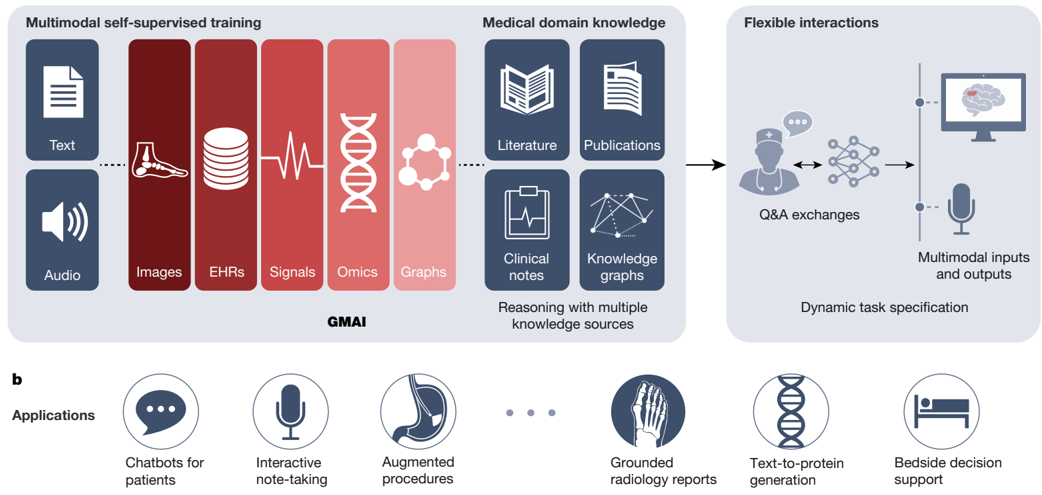
The exceptionally rapid development of highly flexible, reusable artificial intelligence (AI) models is likely to usher in newfound capabilities in medicine. We propose a new paradigm for medical AI, which we refer to as generalist medical AI (GMAI). GMAI models will be capable of carrying out a diverse set of tasks using very little or no task-specific labelled data. Built through self-supervision on large, diverse datasets, GMAI will flexibly interpret different combinations of medical modalities, including data from imaging, electronic health records, laboratory results, genomics, graphs or medical text. Models will in turn produce expressive outputs such as free-text explanations, spoken recommendations or image annotations that demonstrate advanced medical reasoning abilities. Here we identify a set of high-impact potential applications for GMAI and lay out specific technical capabilities and training datasets necessary to enable them. We expect that GMAI-enabled applications will challenge current strategies for regulating and validating AI devices for medicine and will shift practices associated with the collection of large medical datasets. This review discusses generalist medical artificial intelligence, identifying potential applications and setting out specific technical capabilities and training datasets necessary to enable them, as well as highlighting challenges to its implementation.
Overview
CoChat Summary
TL;DR
The paper proposes generalist medical AI (GMAI), a class of foundation models that would use self-supervision on large, diverse medical data to perform dynamically specified tasks, flexibly combine modalities, and reason with formal medical knowledge. It outlines six high-impact use cases and argues that GMAI will require new approaches to validation, regulation, bias auditing, privacy, and data collection.
Key findings
- Defines GMAI by three capabilities: dynamic task specification, flexible multimodal inputs/outputs, and formal representation of medical knowledge for advanced reasoning; existing models such as GPT-3 or PaLM show some medical reasoning but are not multimodal and do not reliably generate factual statements.
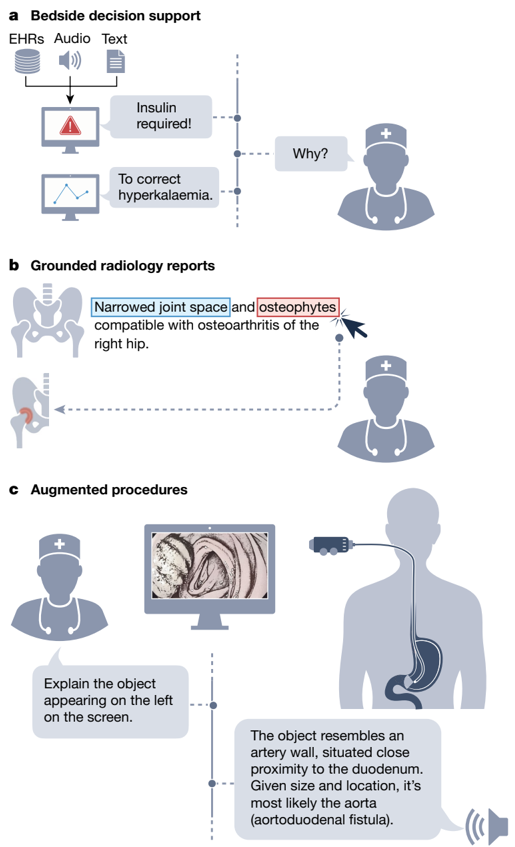
- Proposes six use cases: grounded radiology reports, augmented procedures, bedside decision support, chatbots for patients, text-to-protein generation, and interactive note-taking.
- Notes current medical AI is narrow: of more than 500 FDA-approved AI models for clinical medicine, most were approved for only 1 or 2 narrow tasks; CheXzero can detect dozens of diseases in chest X-rays without explicit labels; GPT-3 powered more than 300 apps within months of release.
- Flags scale and cost: PaLM, a 540-billion-parameter model, required an estimated 8.4 million hours’ worth of tensor processing unit v4 chips, using roughly 3,000 to 6,000 chips at a time, amounting to millions of dollars; training each model has been estimated to generate up to hundreds of tons of CO₂ equivalent; one study recommended 20 times more tokens than parameters for optimal performance.
Methods
- Perspective/review article; no primary data, sample, or experimental analysis.
- Synthesizes recent foundation-model advances and proposes the GMAI paradigm, identifying technical capabilities, training-data needs, use cases, and challenges.
- Draws on cited prior work and examples (e.g., GPT-3, Gato, CheXzero, PaLM) rather than new experiments.
Limitations
- Stated: GMAI will be uniquely difficult to validate because it can carry out previously unseen tasks, making failure modes hard to anticipate; social bias can increase with model scale; privacy risks include memorization of training data and prompt attacks; scale brings high computational, financial, and environmental costs; verification may require multidisciplinary panels; data collection/access and regulatory/liability frameworks are unresolved.
- Evident from the text: no GMAI model is built or empirically evaluated here; the use cases are prospective and illustrative; many capabilities depend on future advances in multimodal self-supervision, in-context learning, and medical knowledge integration.
Model-written summary. Check it against the paper before relying on it.
Integrity signals
Registry
Cites
Statistics
Figures
Verification
Claims the paper makes
17 Valid · 3 Not valid · 5 Not checked · 59 Own results and interpretations
The cited sources support only part of this claim — read each source’s verdict below.
In the paper
“They can acquire biases during training, when datasets either underrepresent certain groups of patients or contain harmful correlations 44,45 .”
§ Perspective Foundation models for generalist medical artificial intelligence > Social biases.
What the sources say
- Partly supportedcites [44] 44. Chung, H. W. et al. Scaling instruction-finetuned language models. Preprint at https:// arxiv.org/abs/2210.11416 (2022). sourceExperimental — accuracy not yet measured
The Mechanism of bias section (pp. 4–5) shows that the model learned to predict health care costs, which were correlated with race differently from health needs, producing racial bias. The paper does not identify underrepresentation of patient groups in training data as a cause of the bias it studied. (LLM, conf=0.87)
- Not matchedcites [45] 45. Kung, T. H. et al. Performance of ChatGPT on USMLE: potential for AI-assisted medical education using large language models. PLoS Dig. Health 2, 2 (2023).
Its entry has no title and year that we can search by.
plainstates a cause- Asserted: passes — The authors put it forward as true.
- Checkable: passes — It can be checked against evidence.
- Load-bearing: passes — The paper’s conclusions depend on it.
- Based: passes — The paper gives a reason why it holds.
- Partly supported
The cited sources support only part of this claim — read each source’s verdict below.
In the paper
“Individual models can now achieve state-of-the-art performance on a wide variety of problems, ranging from answering questions about texts to describing images and playing video games [2][3][4] .”
What the sources say
- Not matchedcites [2] 2. Yang, X. et al. A large language model for electronic health records. npj Digit. Med. 5, 194 (2022).
We searched by its title and found no matching paper.
- Partly supportedcites [3] 3. Food and Drug Administration. Artificial intelligence and machine learning (AI/ML)-enabled medical devices. FDA https://www.fda.gov/medical-devices/software-medical-device- samd/artificial-intelligence-and-machine-learning-aiml-enabled-medical-devices (2022). sourceExperimental — accuracy not yet measured
Section 3.1 (p. 7) reports that Flamingo outperforms previous zero- and few-shot methods across 16 vision-language benchmarks and exceeds fine-tuned state of the art on six tasks. Table 6 (p. 30) includes image scene description, supporting that example. The cited paper does not establish the sentence’s examples of answering questions about texts or playing video games. (LLM, conf=0.86)
- Partly supportedcites [4] 4. Acosta, J. N., Falcone, G. J., Rajpurkar, P. & Topol, E. J. Multimodal biomedical AI. Nat. Med. 28, 1773-1784 (2022). sourceExperimental — accuracy not yet measured
The Introduction (pp. 1–2) describes one model performing diverse vision and language tasks and reports the top overall score on the GRIT benchmark. The Results (p. 10) report state-of-the-art performance on A-OKVQA and strong image captioning, but say its NLP results lag behind state-of-the-art models. Related Work (p. 11) mentions another model's Atari button presses; it does not establish state-of-the-art video-game performance for Unified-IO. (LLM, conf=0.88)
plain- Asserted: passes — The authors put it forward as true.
- Checkable: passes — It can be checked against evidence.
- Load-bearing: passes — The paper’s conclusions depend on it.
- Based: passes — The paper gives a reason why it holds.
- Not matched
The cited sources support only part of this claim — read each source’s verdict below.
In the paper
“Furthermore, building on recent retrieval-based approaches, GMAI can retrieve relevant context from existing databases, in the form of articles, images or entire previous cases 19,20 .”
§ Perspective Foundation models for generalist medical artificial intelligence > Medical domain knowledge
What the sources say
- Partly supportedcites [19] 19. Guha Roy, A. et al. Does your dermatology classifier know what it doesn't know? Detecting the long-tail of unseen conditions. Med. Image Anal. 75, 102274 (2022). sourceExperimental — accuracy not yet measured
The Introduction (p. 1) describes Retro retrieving similar text from a large database, and the training-dataset section (p. 3) includes Wikipedia articles among its text sources. The paper does not establish that GMAI can retrieve images or entire previous medical cases; it supports the retrieval-based approach, but not those extensions. (LLM, conf=0.88)
- Partly supportedcites [20] 20. Radford, A. et al. Robust speech recognition via large-scale weak supervision. Preprint at https://arxiv.org/abs/2212.04356 (2022). sourceExperimental — accuracy not yet measured
The Introduction (p. 1) says REALM retrieves relevant documents from a corpus such as Wikipedia, supporting the article-retrieval part. Future Work (p. 9) proposes image retrieval as a possible extension, not an existing capability. The paper does not establish that GMAI retrieves images or entire previous cases. (LLM, conf=0.88)
plainstates a cause- Asserted: passes — The authors put it forward as true.
- Checkable: passes — It can be checked against evidence.
- Load-bearing: passes — The paper’s conclusions depend on it.
- Based: passes — The paper gives a reason why it holds.
- Partly supported
The cited sources support only part of this claim — read each source’s verdict below.
In the paper
“Models will be able to solve previously unseen problems simply by having new tasks explained to them (dynamic task specification), without needing to be retrained 3,5 .”
What the sources say
- Partly supportedcites [3] 3. Food and Drug Administration. Artificial intelligence and machine learning (AI/ML)-enabled medical devices. FDA https://www.fda.gov/medical-devices/software-medical-device- samd/artificial-intelligence-and-machine-learning-aiml-enabled-medical-devices (2022). sourceExperimental — accuracy not yet measured
The Introduction says Flamingo is designed to adapt to new vision-language tasks without fine-tuning, and the Contributions passage says it performs multimodal tasks from a few input/output examples. That supports adaptation without retraining, but not the broader claim that GMAI models can solve previously unseen problems simply by having tasks explained to them: Flamingo's demonstrated scope is narrower, and its task specification generally uses examples rather than an explanation alone. (LLM, conf=0.84)
- Not matchedcites [5] 5. Krishnan, R., Rajpurkar, P. & Topol, E. J. Self-supervised learning in medicine and healthcare. Nat. Biomed. Eng. 6, 1346-1352 (2022).
We searched by its title and found no matching paper.
plainstates a cause- Asserted: passes — The authors put it forward as true.
- Checkable: passes — It can be checked against evidence.
- Load-bearing: passes — The paper’s conclusions depend on it.
- Based: passes — The paper gives a reason why it holds.
- Partly supported
Every source the paper cites for this claim was checked and supports it.
In the paper
“CheXzero can be applied to detect dozens of diseases in chest X-rays without being trained on explicit labels for these diseases 9 .”
§ Perspective Foundation models for generalist medical artificial intelligence > Applicability.
What the sources say
- Supportedcites [9] 9. Vaswani, A. et al. Attention is all you need. In Advances in Neural Information Processing Systems (eds Guyon, I. et al.) 30, 5998-6008 (2017). source
The Main section describes CheXzero as a zero-shot chest X-ray classifier that needs no explicit pathology labels during training. The Results report an AUC of at least 0.700 for 38 of 57 radiographic findings evaluated on the PadChest test set, supporting the claim that it can detect dozens of conditions. (LLM, conf=0.90)
plainstates a cause- Asserted: passes — The authors put it forward as true.
- Checkable: passes — It can be checked against evidence.
- Load-bearing: unclear — It is unclear whether the paper’s conclusions depend on it.
- Based: passes — The paper gives a reason why it holds.
- Supported
32 more claims · 2 with their cited sources checked
Create a free account to see all 84 claims and to verify the 2 references still open.
- Probably not a substantial claim. 35
- It may state two separate claims as one. 25
Claims other papers make about this one
Each is checked against this paper’s own text: does it say what the citing paper says it does?
The source backs part of the claim, not all of it — or backs it for a different population, condition or comparison.
In the citing paper
“First, these models are predominantly pretrained using vision-only modeling57,59,60, which neglects not only rich supervisory signals found in pathology reports but also precludes multimodal capabilities such as zero-shot visual-language understanding and cross-model retrieval—a fundamental hallmark in foundation models84,85.”
From A multimodal whole-slide foundation model for pathology (2025) · cites this paper as [85]
Experimental — accuracy not yet measuredThe source backs part of the claim, not all of it — or backs it for a different population, condition or comparison.
In the citing paper
“Barriers to the clinical implementation of LLMs include their susceptibility to hallucinations, the absence of reliable references [13].”
From Diagnostic performance of Prof. Valmed, ChatGPT-5 Thinking, and OpenEvidence in rheumatology: A comparative evaluation (2026) · cites this paper as [13]
Experimental — accuracy not yet measuredThe cited source says what the claim attributes to it.
In the citing paper
“The emergence of (medical) foundational models (Moor et al., 2023), which are generally multimodal, is expected to accelerate research in optimal data fusion further.”
From Navigating the landscape of multimodal AI in medicine: A scoping review on technical challenges and clinical applications (2025) · cites this paper as Moor et al., 2023
The cited source says what the claim attributes to it.
In the citing paper
“Moor et al. introduced a paradigm for foundation model application in medical AI, named generalist medical AI (GMAI) [16].”
From Challenges in AI-driven Biomedical Multimodal Data Fusion and Analysis (2025) · cites this paper as [16]
The cited source says what the claim attributes to it.
In the citing paper
“Moor et al. proposed a framework of the GMAI, a foundation model designed to handle most clinical tasks, aiming to provide high-quality medical support to both patients and clinicians [16].”
From Challenges in AI-driven Biomedical Multimodal Data Fusion and Analysis (2025) · cites this paper as [16]
6 more claims about this paper
Create a free account to see every claim other papers make about this one.
Self-check
Percentages, sums and reported differences re-computed from the paper’s own numbers.
Each contradiction between two passages listed here was confirmed by an independent check.
Rated minor: it would not touch a result — a value no result rests on, a p-value that stays on the same side of the significance level, or a conflict that is clerical, resolved elsewhere in the paper, or outside its own findings.
In the paper
§ Perspective Foundation models for generalist medical artificial intelligence > Conclusion
“The presented example is inspired by a case report 58 .Image of the fistula in panel c adapted from ref. 58, CC BY 3.0.”
§ Perspective Foundation models for generalist medical artificial intelligence > References
“50. Vegunta, R., Vegunta, R. & Kutti Sridharan, G. Secondary aortoduodenal fistula presenting as gastrointestinal bleeding and fungemia. Cureus 11, e5575 (2019).”
Citations
Cites
Vaswani, A., Shazeer, N., Parmar, N., Uszkoreit, J., Jones, L., Gomez, A. N., Kaiser, L., & Polosukhin, I. (2017) · arXiv · doi:10.48550/arxiv.1706.03762 · Cited by 120,404
BERT: Pre-training of Deep Bidirectional Transformers for Language Understanding
Devlin, J., Chang, M.-W., Lee, K., & Toutanova, K. (2019) · Proceedings of the 2019 Conference of the North American Chapter of the Association for Computational Linguistics: Human Language Technologies, Volume 1 (Long and Short Papers) · doi:10.18653/v1/n19-1423 · Cited by 54,325
Highly accurate protein structure prediction with AlphaFold
Jumper, J., Evans, R., Pritzel, A., Green, T., Figurnov, M., Ronneberger, O., Tunyasuvunakool, K., Bates, R., Žídek, A., Potapenko, A., et al. (2021) · Nature · doi:10.1038/s41586-021-03819-2 · Cited by 43,764 · cited 1×
“There have already been early efforts to develop foundation models for biological sequences 33,34 , including RFdiffusion, which generates proteins on the basis of simple specifications (for example, a binding target) 35 .”
BackgroundHigh-Resolution Image Synthesis with Latent Diffusion Models
Rombach, R., Blattmann, A., Lorenz, D., Esser, P., & Ommer, B. (2022) · 2022 IEEE/CVF Conference on Computer Vision and Pattern Recognition (CVPR) · doi:10.1109/cvpr52688.2022.01042 · Cited by 20,302 · cited 2×
“For certain use cases (for example, chatbots), GMAI models can be stored on central compute clusters maintained by organizations with deep technical expertise, as DALL-E or GPT-3 are.”
BackgroundLearning Transferable Visual Models From Natural Language Supervision
Radford, A., Kim, J. W., Hallacy, C., Ramesh, A., Goh, G., Agarwal, S., Sastry, G., Askell, A., Mishkin, P., Clark, J., et al. (2021) · arXiv · doi:10.48550/arxiv.2103.00020 · Cited by 15,293 · cited 2×
“These include the rise of multimodal architectures 13 and self-supervised learning techniques 14 that dispense with explicit labels (for example, language modelling 15 and contrastive learning 16 ), as well as the advent of in-context learning capabilities 5 .”
BackgroundSudlow, C., Gallacher, J., Allen, N., Beral, V., Burton, P., Danesh, J., Downey, P., Elliott, P., Green, J., Landray, M., et al. (2015) · PLOS Medicine · doi:10.1371/journal.pmed.1001779 · Cited by 12,728 · cited 1×
“Large-scale data-sharing efforts, such as the MIMIC (Medical Information Mart for Intensive Care) database 55 or the UK Biobank 56 , will play a critical role in GMAI, and they should be extended to underrepresented countries to create larger, richer and more inclusive training datasets.”
BackgroundAdvances in Neural Information Processing Systems 14: Proceedings of the 2001 Conference
(2002) · The MIT Press eBooks · doi:10.7551/mitpress/1120.001.0001 · Cited by 8,890
Dissecting racial bias in an algorithm used to manage the health of populations
Obermeyer, Z., Powers, B., Vogeli, C., & Mullainathan, S. (2019) · Science · doi:10.1126/science.aax2342 · Cited by 7,137 · cited 1×
“They can acquire biases during training, when datasets either under-represent certain groups of patients or contain harmful correlations 44,45 .”
BackgroundUniProt: the universal protein knowledgebase
The UniProt Consortium (2017) · Nucleic Acids Research · doi:10.1093/nar/gkw1099 · Cited by 4,436
Training language models to follow instructions with human feedback
Ouyang, L., Wu, J., Jiang, X., Almeida, D., Wainwright, C. L., Mishkin, P., Zhang, C., Agarwal, S., Slama, K., Ray, A., et al. (2022) · arXiv · doi:10.48550/arxiv.2203.02155 · Cited by 4,208 · cited 1×
“Such feedback can then be used to improve model behaviour, following the example of InstructGPT, a model created by using human feedback to refine GPT-3 through reinforcement learning 41 .”
Method
Research works printed but not linked: 2
- Reed, S. et al. A generalist agent. In Transactions on Machine Learning Research (2022). This study presented Gato, a generalist model that can carry out a variety of tasks across modalities such as chatting, captioning images, playing video games and controlling a robot arm.
- Brown, T. et al. Language models are few-shot learners. In Advances in Neural Information Processing Systems (eds Larochelle, H. et al.) 33, 1877–1901 (2020). This study presented the language model GPT-3 and discovered that large language models can carry out in-context learning.
Cited by
Items 401–500 of 1,962
A systematic review of molecular representation learning foundation models
Song, B., Zhang, J., Liu, Y., Liu, Y., Jiang, J., Yuan, S., Zhen, X., & Li, J. (2026) · Briefings in Bioinformatics · doi:10.1093/bib/bbaf703 · Cited by 29
“Foundation models, defined as machine learning architectures characterized by massive parameter scales, enable adaptation to complex tasks [13–15].”
Muneer, A., Waqas, M. M., Saad, M. B., Showkatian, E., Bandyopadhyay, R., Xu, H. M., Li, W., Chang, J., Liao, Z., Haymaker, C., et al. (2026) · Artificial Intelligence Review · doi:10.1007/s10462-026-11522-9 · Cited by 30
“These models are trained on massive datasets, and sophisticated architectures are designed to generalize across a wide range of domain-specific tasks [38].”
How Can the Clinical Aptitude of AI Assistants Be Assayed?
Thirunavukarasu, A. J. (2023) · Journal of Medical Internet Research · doi:10.2196/51603 · Cited by 19
“…of large language models (LLMs) with remarkable performance in unseen tasks introduces the possibility of artificial intelligence (AI) assistants participating in health care delivery—applications with general knowledge and skills in contrast to existing AI applications with narrow use cases [1,2].”
WormGPT: A Large Language Model Chatbot for Criminals
Firdhous, M., Elbreiki, W., Abdullahi, I., Sudantha, B. H., & Budiarto, R. (2023) · International Arab Conference on Information Technology (ACIT) · doi:10.1109/acit58888.2023.10453752 · Cited by 37
“From the beginning, foundation models have shown many positive impacts on different fields of AI [19].”
BackgroundGPT-4/4V's performance on the Japanese National Medical Licensing Examination
Kawahara, T., & Sumi, Y. (2024) · Medical Teacher · doi:10.1080/0142159x.2024.2342545 · Cited by 18
“Although many studies have used generative AI for image analysis in the medical field (Moor et al. 2023; Shokrollahi et al. 2023), to the best of our knowledge, few papers have used it for questions on national medical examinations and evaluated its performance.”
PCNet: Prior Category Network for CT Universal Segmentation Model
Chen, Y., Gao, Y., Zhu, L., Shao, W., Lu, Y., Han, H., & Xie, Z. (2024) · IEEE Transactions on Medical Imaging · doi:10.1109/tmi.2024.3395349 · Cited by 21
“In various applications, such as classification, object detection, and visual question answering, CLIP demonstrates promising results [16].”
BackgroundMei, Y., & Duan, Y. (2024) · Applied Sciences · doi:10.3390/app14103994 · Cited by 21
“However, it has also brought about a series of challenges [18,19].”
BackgroundApplications of Artificial Intelligence and Machine Learning in Spine MRI
Lee, A., Ong, W., Makmur, A., Ting, Y. H., Tan, W. C., Lim, S. W. D., Low, X. Z., Tan, J. J. H., Kumar, N., & Hallinan, J. T. P. D. (2024) · Bioengineering · doi:10.3390/bioengineering11090894 · Cited by 22
Yu, L., & Zhai, X. (2024) · Journal of Clinical Nursing · doi:10.1111/jocn.17493 · Cited by 22
Hirosawa, T., Suzuki, T., Shiraishi, T., Hayashi, A., Fujii, Y., Harada, T., & Shimizu, T. (2024) · International Journal of General Medicine · doi:10.2147/ijgm.s497753 · Cited by 26
Deep Learning of radiology-genomics integration for computational oncology: A mini review
Wang, F., Li, Y., & Zeng, T. (2024) · Computational and Structural Biotechnology Journal · doi:10.1016/j.csbj.2024.06.019 · Cited by 27
“The integration of radiology and genomics into the foundation model should benefit multimodal analysis, learning new task and leveraging domain knowledge [94].”
BackgroundLuo, Y., Li, Y., Fang, M., Wang, S., Shao, L., Zou, R., Dong, D., Liu, Z., Wei, J., & Tian, J. (2024) · Intelligent Oncology · doi:10.1016/j.intonc.2024.10.003 · Cited by 19
End-to-End Prediction of Knee Osteoarthritis Progression With Multimodal Transformers
Panfilov, E., Saarakkala, S. S., Nieminen, M. T., & Tiulpin, A. (2025) · IEEE Journal of Biomedical and Health Informatics · doi:10.1109/jbhi.2025.3536170 · Cited by 24
“Future works may investigate emerging foundation models [70], [71].”
AI and omics technologies in biobanking: Applications and challenges for public health
Venturini, P., de Faria, P. L., & Cordeiro, J. V. (2025) · Public Health · doi:10.1016/j.puhe.2025.105726 · Cited by 23
Li, X., Sun, Y., Lin, J., Li, L., Feng, T., & Yin, S. (2025) · Artificial Intelligence Science and Engineering · doi:10.23919/aise.2005.000007 · Cited by 23
Advances in computational nephropathology
Hölscher, D. L., Bülow, R. D., Strauch, M., & Boor, P. (2025) · Kidney International · doi:10.1016/j.kint.2025.06.029 · Cited by 20
Bi, H.-B., Feng, Y.-C., Tong, B.-Y., Wang, M.-Y., Yu, H., Mao, Y.-Q., Chang, H., Diao, W.-H., Wang, P.-J., Yu, Y., et al. (2025) · IEEE Transactions on Pattern Analysis and Machine Intelligence · doi:10.1109/tpami.2025.3643453 · Cited by 45
“Beyond”
Wen, P., Ai, Q., Fan, X., Gu, Z., 陈波, & Qian, H. (2026) · Cancer Letters · doi:10.1016/j.canlet.2026.218257 · Cited by 21
Hassanein, F. E. A., Alkabazi, M., Taşsöker, M., Ahmed, Y., Alsaeed, S., & Abou‐Bakr, A. (2026) · Frontiers in Oral Health · doi:10.3389/froh.2026.1748450 · Cited by 30
The Potential of “Segment Anything” (SAM) for Universal Intelligent Ultrasound Image Guidance
Ning, G., Liang, H., Jiang, Z., Zhang, H., & Liao, H. (2023) · BioScience Trends · doi:10.5582/bst.2023.01119 · Cited by 17
“Numerous experts have described the potential for large models to be used in healthcare and their impact on traditional healthcare models (9).”
BackgroundPotential benefits of employing large language models in research in moral education and development
Han, H. (2023) · Journal of Moral Education · doi:10.1080/03057240.2023.2250570 · Cited by 24
“and prediction with enhanced flexibility (Moor et al., 2023; Wu et al., 2023).”
Challenges and applications in generative AI for clinical tabular data in physiology
Umesh, C., Mahendra, M., Bej, S., Wolkenhauer, O., & Wolfien, M. (2024) · Pflügers Archiv - European Journal of Physiology · doi:10.1007/s00424-024-03024-w · Cited by 24
Competition between AI foundation models: dynamics and policy recommendations
Schrepel, T., & Pentland, A. (2024) · Industrial and Corporate Change · doi:10.1093/icc/dtae042 · Cited by 33
Guidelines For Rigorous Evaluation of Clinical LLMs For Conversational ReasoningPreprint
Johri, S., Jeong, J., Tran, B. A., Schlessinger, D. I., Wongvibulsin, S., Cai, Z. R., Daneshjou, R., & Rajpurkar, P. (2023) · medRxiv · doi:10.1101/2023.09.12.23295399 · Cited by 17
Self-citationPatil, D. (2025) · SSRN Electronic Journal · doi:10.2139/ssrn.5057432 · Cited by 38
Can Large Language Models Safely Address Patient Questions Following Cataract Surgery?
Chowdhury, M., Lim, E., Higham, A., McKinnon, R., Ventoura, N., He, Y., & De Pennington, N. (2023) · Proceedings of the 5th Clinical Natural Language Processing Workshop · doi:10.18653/v1/2023.clinicalnlp-1.17 · Cited by 17
Kremer, P., Langballe, E., Haase, I., Bamberger, J., Kuhn, S., Krusche, M., & Knitza, J. (2026) · Rheumatology International · doi:10.1007/s00296-025-06068-y · Cited by 17
“Barriers to the clinical implementation of LLMs include their susceptibility to hallucinations, the absence of reliable references [13 ].”
Behaviours and drivers of diagnosis-related group upcoding in China: A mixed-methods study
Zhou, W., Xu, C., Zhang, L., Fu, H., & Jian, W. (2024) · Social Science & Medicine · doi:10.1016/j.socscimed.2024.117660 · Cited by 23
Surgical video workflow analysis via visual-language learning
Li, P., Shu, X., Feng, C.-M., Feng, Y., Zuo, W., & Tang, J. (2025) · npj Health Systems · doi:10.1038/s44401-024-00010-3 · Cited by 21
Toward an integrated omics approach for plant biosynthetic pathway discovery in the age of AI
Reinhardt, J. K., Craft, D., & Weng, J. (2025) · Trends in Biochemical Sciences · doi:10.1016/j.tibs.2025.01.010 · Cited by 22
Santacroce, G., Zammarchi, I., Nardone, O. M., Capobianco, I., Puga‐Tejada, M., Majumder, S., Ghosh, S., & Iacucci, M. (2025) · Therapeutic Advances in Gastroenterology · doi:10.1177/17562848251325525 · Cited by 23
Uncovering ethical biases in publicly available fetal ultrasound datasets
Fiorentino, M. C., Moccia, S., Cosmo, M. D., Frontoni, E., Giovanola, B., & Tiribelli, S. (2025) · npj Digital Medicine · doi:10.1038/s41746-025-01739-3 · Cited by 28
Advanced Design for High-Performance and AI Chips
Cao, Y., Chen, Y., Fan, X., Fu, H. C., & Xu, B. (2025) · Nano-Micro Letters · doi:10.1007/s40820-025-01850-w · Cited by 28
BioLLM: A standardized framework for integrating and benchmarking single-cell foundation models
Qiu, P. S., Chen, Q., Qin, H., Fang, S., Zhang, Y., Zhang, Y., Xia, T., Cao, L., Zhang, Y., Fang, X., et al. (2025) · Patterns · doi:10.1016/j.patter.2025.101326 · Cited by 33
“18 Central to this innovation are transformer 19 architectures, exemplified by models such as BERT 20 and GPT-4, 21 which have transformed the landscape of machine learning.”
Foundation models for radiology—the position of the AI for Health Imaging (AI4HI) network
de Almeida, J. G., Alberich, L. C., Tsakou, G., Marias, K., Tsiknakis, M., Lekadir, K., Martí‐Bonmatí, L., & Papanikolaou, N. K. (2025) · Insights into Imaging · doi:10.1186/s13244-025-02056-9 · Cited by 27
Lozano, A., Sun, M., Burgess, J., Chen, L., Nirschl, J., Gu, J., López, I., Aklilu, J. G., Rau, A., Katzer, A. W., et al. (2025) · IEEE Computer Society Conference on Computer Vision and Pattern Recognition/Proceedings - IEEE Computer Society Conference on Computer Vision and Pattern Recognition/Proceedings · doi:10.1109/cvpr52734.2025.01837 · Cited by 86
“…providing additional recommendations [11] (e.g. linking a patient to a promising clinical trial [31, 61]), flagging missed diagnoses [50], and identifying biomarkers correlated with patient prognosis [25] – ultimately offering essential support for patient care and informed medical decision-making.”
Adapting Segment Anything Model (SAM) for Retinal OCT
Fazekas, B., Morano, J., Lachinov, D., Aresta, G., & Bogunović, H. (2023) · Lecture notes in computer science · doi:10.1007/978-3-031-44013-7_10 · Cited by 31
Thu, N. Q., Tien, N. T. N., Yen, N. T. H., Duong, T., Long, N. P., & Nguyen, H. T. (2023) · Journal of Pharmaceutical Analysis · doi:10.1016/j.jpha.2023.09.009 · Cited by 20
Li, Z., Zhang, J.-F., Zhou, W., Zheng, J.-J., & Xia, Y.-S. (2024) · Scientific Reports · doi:10.1038/s41598-024-58514-9 · Cited by 14
“Several studies have previously attempted to improve the accuracy and completeness of LLM by including prompt engineering, fine-tuning, and retraining 29,32 .”
BackgroundA Data-Centric AI Paradigm for Socio-Industrial and Global Challenges
Majeed, A., & Hwang, S. O. (2024) · Electronics · doi:10.3390/electronics13112156 · Cited by 25
Evolution of Future Medical AI Models — From Task-Specific, Disease-Centric to Universal Health
Ma, W., Sheng, B., Liu, Y., Jing, Q., Liu, X., Li, J., Ouyang, D., Wang, H., Atanasov, A. G., Keane, P. A., et al. (2024) · NEJM AI · doi:10.1056/aip2400289 · Cited by 19
Irmici, G., Cozzi, A., Pepa, G. D., Berardinis, C. D., D’Ascoli, E., Cellina, M. I., Cè, M., Depretto, C., & Scaperrotta, G. P. (2024) · La radiologia medica · doi:10.1007/s11547-024-01872-1 · Cited by 20
“These models employ advanced deep neural network architectures: in particular, most of recently developed LLMs utilize the transformer architecture, which enables unsupervised learning from unlabeled datasets, leading to improved performance through more efficient text processing [2].”
BF-SAM: enhancing SAM through multi-modal fusion for fine-grained building function identification
Gong, Z., Li, B., Wang, C., Chen, J., & Zhao, P. (2024) · International Journal of Geographical Information Science · doi:10.1080/13658816.2024.2399142 · Cited by 16
Human-centred AI for emergency cardiac care: Evaluating RAPIDx AI with PROLIFERATE_AI
de Plaza, M. A. P., Lambrakis, K., Marmolejo‐Ramos, F., Beleigoli, A. M. R., Archibald, M. M., Yadav, L., McMillan, P., Clark, R. A., Lawless, M., Morton, E. B., et al. (2025) · International Journal of Medical Informatics · doi:10.1016/j.ijmedinf.2025.105810 · Cited by 22
Large language models in traditional Chinese medicine: a systematic review
Chen, Z., Wang, H., Li, C., Liu, C., Yang, F., Zhang, D., Fauci, A. J., & Zhang, J. (2025) · Acupuncture and Herbal Medicine · doi:10.1097/hm9.0000000000000143 · Cited by 26
“They have gained significant milestones in generating, interpreting, and responding to achieve expressive and inferential capabilities for medical AI [1,4–5] .”
Patil, D. (2025) · SSRN Electronic Journal · doi:10.2139/ssrn.5057434 · Cited by 35
MAIRA-2: Grounded Radiology Report Generation
Bannur, S., Bouzid, K., Castro, D. C., Schwaighofer, A., Thieme, A., Bond-Taylor, S., Ilse, M., Pérez-García, F., Salvatelli, V., Sharma, H., et al. (2024) · arXiv · doi:10.48550/arxiv.2406.04449 · Cited by 19
“We call this task grounded report generation , inspired by Moor et al. (2023).”
MethodInfluentialGodwin, R. C., Bryant, A. S., Wagener, B. M., Ness, T. J., DeBerry, J. J., Horn, L. L., Graves, S. H., Archer, A. C., & Melvin, R. L. (2024) · SoftwareX · doi:10.1016/j.softx.2023.101601 · Cited by 15
Chow, J., Lee, R., & Wu, H. (2025) · Journal of Imaging Informatics in Medicine · doi:10.1007/s10278-025-01493-8 · Cited by 27
“Newer generalist AI foundation models can interpret multi-modal data [60] and generate textual content as an output.”
Ji, H., Wang, X., Sia, C., Yap, J. J. L., Lim, S. T., Djohan, A. H., Chang, Y., Zhang, N., Guo, M., Li, F., et al. (2025) · Communications Medicine · doi:10.1038/s43856-025-00802-0 · Cited by 24
A perspective for adapting generalist AI to specialized medical AI applications and their challenges
Wang, Z., Wang, H., Danek, B. P., Li, Y., Mack, C. D., Arbuckle, L., Biswal, D., Poon, H., Wang, Y., Rajpurkar, P., et al. (2025) · npj Digital Medicine · doi:10.1038/s41746-025-01789-7 · Cited by 51
Self-citationWang, D., Ye, J., Li, J., Liang, J., Zhang, Q., Hu, Q., Pan, C., Wang, D., Liu, Z. Y., Shi, W. H., et al. (2025) · JMIR Medical Education · doi:10.2196/70190 · Cited by 18
Zeng, Q., Huang, C., & Zhu, J. (2026) · Frontiers in Public Health · doi:10.3389/fpubh.2025.1656603 · Cited by 28
Large language models in global health
Ong, J. C. L., Ning, Y., Yang, R., Bitterman, D. S., Liu, X., Tham, Y. C., Collins, G. S., Jiménez, M., Mateen, B. A., Amissah-Arthur, K. N., et al. (2026) · Nature Health · doi:10.1038/s44360-025-00024-7 · Cited by 30
“This has challenged conventional assumptions about the computational efficiency and sustainability of generative AI 63 .”
Self-citationRevolutionizing Healthcare with Foundation AI Models
Ali, H., Qadir, J., Alam, T., Househ, M. S., & Shah, Z. (2023) · Studies in health technology and informatics · doi:10.3233/shti230533 · Cited by 18
“Foundation AI models based tools such as ChatGPT work on large-scale pre-trained models that generalize well on a variety of tasks [1], [2].”
MethodKüstner, T., Qin, C., Sun, C., Ning, L., & Scannell, C. M. (2024) · Magnetic Resonance Materials in Physics Biology and Medicine · doi:10.1007/s10334-024-01179-2 · Cited by 20
“These networks can better generalize to different domains [31] and/or serve a multitude of tasks [32].”
BackgroundPawelczyk, J., Kraus, M., Eckl, L., Nehrer, S., Aurich, M. E., Izadpanah, K., Siebenlist, S., & Rupp, M. (2024) · Archives of Orthopaedic and Trauma Surgery · doi:10.1007/s00402-024-05408-0 · Cited by 19
“The field of artificial intelligence (AI) has made unprecedented progress in recent years and is poised to transform many facets of healthcare, including medical education [2, 12, 26, 32, 34, 43, 46, 49, 52].”
BackgroundA Justifiable Investment in AI for Healthcare: Aligning Ambition with Reality
Karpathakis, K., Morley, J., & Floridi, L. (2024) · Minds and Machines · doi:10.1007/s11023-024-09692-y · Cited by 31
“Some (Moor et al., 2023) hypothesize that this limitation is preventing traditional AI from providing a justifiable ROI and thus hope that GenAI, which is less affected by this limitation, may provide a better match between a healthcare system’s demand and AI supply.”
Egger, J., Gsaxner, C., Luijten, G., Chen, J., Chen, X., Bian, J., Kleesiek, J., & Puladi, B. (2024) · JMIR Serious Games · doi:10.2196/52785 · Cited by 44
“Thus, it supports clinicians in a range of essential tasks and reduces the administrative burden on clinicians to allow them to spend more time with their patients, which is a key challenge for upcoming artificial intelligence (AI)-based foundation models [53].”
BackgroundEmpowering nanophotonic applications via artificial intelligence: pathways, progress, and prospects
Chen, W., Yang, S., Yan, Y., Gao, Y., Zhu, J., & Dong, Z. (2025) · Nanophotonics · doi:10.1515/nanoph-2024-0723 · Cited by 22
Li, Z., Muhtar, D., Gu, F., He, Y., Zhang, X., Xiao, P., He, G., & Zhu, X. X. (2025) · ISPRS Journal of Photogrammetry and Remote Sensing · doi:10.1016/j.isprsjprs.2025.06.003 · Cited by 60
BioSignal Copilot: Leveraging the power of LLMs in drafting reports for biomedical signalsPreprint
Liu, C., Ma, Y., Kothur, K., Nikpour, A., & Kavehei, O. (2023) · medRxiv · doi:10.1101/2023.06.28.23291916 · Cited by 39
Artificial intelligence based data curation: enabling a patient-centric European health data space
de Zegher, I., Norak, K., Steiger, D., Müller, H., Kalra, D., Scheenstra, B., Cinà, I., Schulz, S., Kanimozhi, U., Kalendralis, P., et al. (2024) · Frontiers in Medicine · doi:10.3389/fmed.2024.1365501 · Cited by 24
Ji, X., Wu, X., Deng, R., Yang, Y., Wang, A., & Zhu, Y. (2024) · Journal of Environmental Management · doi:10.1016/j.jenvman.2024.123667 · Cited by 23
Schneider‐Kamp, A., & Godono, A. (2025) · AI & Society · doi:10.1007/s00146-025-02319-5 · Cited by 20
“…of the AI-extended professional self presents a shift from technology-centric models of professional practice to user-centric ones, where integrated and adaptive AI solutions draw upon Generalist Medical AI (Moor et al. 2023) to extend the capabilities of professionals as seamlessly as possible.”
Toward general text-guided multimodal brain MRI synthesis for diagnosis and medical image analysis
Wang, Y., Xiong, H., Sun, K., Bai, S., Dai, L., Ding, Z., Liu, J., Wang, Q., Liu, Q., & Shen, D. G. (2025) · Cell Reports Medicine · doi:10.1016/j.xcrm.2025.102182 · Cited by 47
“19 23 For example, Brainfounder, 23 trained on a multi-modal MRI dataset from 41,400 participants across three public databases, focuses on two brain abnormality segmentation tasks.”
Murray, M. E., Smith, C., Menon, V., Keene, C. D., Lein, E. S., Hawrylycz, M., Aguzzi, A., Benedetti, B. L., Brose, K., Caetano-Anollés, K., et al. (2025) · Neuron · doi:10.1016/j.neuron.2025.06.014 · Cited by 17
“163–165 To overcome the relative lack of labeled images to inform classification or segmentation models, 163 recent vision-language foundation models for pathology have introduced promising solutions.”
VisionUnite: A Vision-Language Foundation Model for Ophthalmology Enhanced With Clinical Knowledge
Li, Z., Song, D., Yang, Z., Wang, D., Li, F., Zhang, X., Kinahan, P. E., & Qiao, Y. (2025) · IEEE Transactions on Pattern Analysis and Machine Intelligence · doi:10.1109/tpami.2025.3598734 · Cited by 51
“The complexity inherent in VLFMs often results in a “non-interpretable” scenario, particularly problematic in health-care settings where interpretability is crucial [5], [7].”
Ultrasensitive β12-borophene humidity sensor for intelligent humidity interfaces
Zhu, R., Wu, Z., Zhao, Z., Xu, M., Hou, C., & Tai, G. (2025) · Chemical Engineering Journal · doi:10.1016/j.cej.2025.167088 · Cited by 22
A lung CT vision foundation model facilitating disease diagnosis and medical imaging
Gao, Z., Zhang, G.-X., Liang, H.-R., Liu, J.-X., Ma, L.-D., Wang, T.-Y., Guo, Y.-C., Chen, Y.-J., Yan, Z., Chen, X., et al. (2025) · Nature Communications · doi:10.1038/s41467-025-66620-z · Cited by 28
“Future efforts will be dedicated to leveraging LCTfound as a foundational component for constructing multimodal lung CT AI models, with an ongoing commitment to enhance its applicability in pulmonary medicine 84 .”
Responsible adoption of multimodal artificial intelligence in health care: promises and challenges
Azarfar, G., Naimimohasses, S., Rambhatla, S., Komorowski, M., Ferro, D., Lewis, P. R., Gates, D., Shara, N. M., Gascon, G. M., Chang, A. C., et al. (2025) · The Lancet Digital Health · doi:10.1016/j.landig.2025.100917 · Cited by 32
Discovery of the reward function for embodied reinforcement learning agents
Lu, R., Shao, Z., Ding, Y., Chen, R., Wu, D., Su, H., Yang, T., Zhang, F., Wang, J., Shi, Y., et al. (2025) · Nature Communications · doi:10.1038/s41467-025-66009-y · Cited by 42
“A long-standing debate in this fi eld concerns whether these policies should be general 2 or task-speci fi c 3 .”
Initial study on an expert system for spine diseases screening using inertial measurement unit
Pelc, M., Kahankova, R. V., Błaszczyszyn, M., Mikołajewski, D., Konieczny, M., Khoma, V., Bara, G., Zygarlicki, J., Martínek, R., Gupta, M. K., et al. (2023) · Scientific Reports · doi:10.1038/s41598-023-36798-7 · Cited by 14
Computer Vision Tasks for Ambient Intelligence in Children’s Health
Germanese, D., Colantonio, S., Coco, M. D., Carcagnì, P., & Leo, M. (2023) · Information · doi:10.3390/info14100548 · Cited by 17
“Efforts in this research direction could also allow researchers to deploy foundation models, which are at the edge of machine learning research right now and are pushing ahead the so-called generalist medical AI [154].”
BackgroundArtificial Intelligence–Generated Scientific Literature: A Critical Appraisal
Zybaczyńska, J., Norris, M. R., Modi, S., Brennan, J., Jhaveri, P., Craig, T., & Al‐Shaikhly, T. (2023) · The Journal of Allergy and Clinical Immunology In Practice · doi:10.1016/j.jaip.2023.10.010 · Cited by 26
Artificial intelligence for glaucoma: state of the art and future perspectives
Barão, R. C., Hemelings, R., Pinto, L. A., Pazos, M., & Stalmans, I. (2023) · Current Opinion in Ophthalmology · doi:10.1097/icu.0000000000001022 · Cited by 19
More Is Different: Large Language Models in Health Care
Lungren, M. P., Fishman, E. K., Chu, L. C. H., Rizk, R. C., & Rowe, S. P. (2023) · Journal of the American College of Radiology · doi:10.1016/j.jacr.2023.11.021 · Cited by 15
Sketch-based semantic retrieval of medical images
Kobayashi, K., Gu, L., Hataya, R., Mizuno, T., Miyake, M., Watanabe, H., Takahashi, M., Takamizawa, Y., Yoshida, Y., Nakamura, S., et al. (2023) · Medical Image Analysis · doi:10.1016/j.media.2023.103060 · Cited by 24
Bangash, S. H., Khan, I., Husnain, G., Irfan, M. A., & Iqbal, A. (2024) · VFAST Transactions on Software Engineering · doi:10.21015/vtse.v12i1.1760 · Cited by 21
Chuter, B., Huynh, J., Hallaj, S., Walker, E., Liebmann, J. M., Fazio, M. A., Girkin, C. A., Weinreb, R. N., Christopher, M. A., & Zangwill, L. M. (2024) · Ophthalmology Science · doi:10.1016/j.xops.2024.100623 · Cited by 24
Artificial Intelligence in Gastrointestinal Endoscopy
Labaki, C., Uche-Anya, E. N., & Berzin, T. M. (2024) · Gastroenterology Clinics of North America · doi:10.1016/j.gtc.2024.08.005 · Cited by 17
Segment anything model for few-shot medical image segmentation with domain tuning
Shi, W., Zhang, P., Li, Y., & Jiang, Z. (2024) · Complex & Intelligent Systems · doi:10.1007/s40747-024-01625-7 · Cited by 19
Herzog, C., & Blank, S. (2024) · Journal of Responsible Innovation · doi:10.1080/23299460.2024.2431350 · Cited by 19
Liu, Y., Yin, J., Zhang, W., An, C., Xia, Y., & Zhang, H. (2024) · IEEE Communications Surveys & Tutorials · doi:10.1109/comst.2024.3523350 · Cited by 23
“An attacker could manipulate input data to influence the model’s output, potentially leading to misdiagnosis or other serious consequences [89].”
Alsaedi, S. B., Gao, X., & Gojobori, T. (2025) · FEBS Open Bio · doi:10.1002/2211-5463.70003 · Cited by 22
Mekki, Y. M., Rhim, H. C., Daneshvar, D. H., Pouliopoulos, A. N., Curtin, C. M., & Hagert, E. M. (2025) · International Orthopaedics · doi:10.1007/s00264-025-06497-1 · Cited by 15
Nguyen, C., Carrion, D., & Badawy, M. K. (2025) · Journal of Medical Imaging and Radiation Oncology · doi:10.1111/1754-9485.13858 · Cited by 29
“While these task-specific models are beneficial, they are inflex-ible and can only perform tasks predefined by their training dataset [7].”
InfluentialThe risks of risk-based AI regulation: taking liability seriouslyPreprint
Kretschmer, M., Kretschmer, T., Peukert, A., & Peukert, C. (2023) · SSRN Electronic Journal · doi:10.2139/ssrn.4622405 · Cited by 27
Analyzing Diversity in Healthcare LLM Research: A Scientometric PerspectivePreprint
Restrepo, D. S., Wu, C., Vásquez-Venegas, C., de Matos, J. C. R. G., Gallifant, J., Celi, L. A., Bitterman, D. S., & Nakayama, L. F. (2024) · medRxiv · doi:10.1101/2024.06.18.24309113 · Cited by 22
“These advanced models, trained on vast corpora of text data, possess the ability to understand, interpret, and generate human language, thus offering promising solutions to some of the most pressing challenges in modern healthcare [7, 8].”
BackgroundPatil, D. (2025) · SSRN Electronic Journal · doi:10.2139/ssrn.5057404 · Cited by 43
Bai, X., Wang, S., Zhao, Y., Feng, M., Ma, W., & Liu, X. (2025) · Journal of Medical Internet Research · doi:10.2196/67462 · Cited by 23
“While chatbots currently underperform in medical decision-making, further technical optimizations—especially task-specific and scenario-specific fine-tuning—may enhance their decision-making capabilities [32].”
Radio DINO: A foundation model for advanced radiomics and AI-driven medical imaging analysis
Zedda, L., Loddo, A., & Ruberto, C. D. (2025) · Computers in Biology and Medicine · doi:10.1016/j.compbiomed.2025.110583 · Cited by 34
AI sheds new light on genome editing
Qin, Z. S., Deng, Z., Li, C., Wang, D., Ji, X., & Chen, Z. (2025) · Trends in biotechnology · doi:10.1016/j.tibtech.2025.07.011 · Cited by 16
Rethinking cancer of unknown primary: from diagnostic challenge to targeted treatment
Pouyiourou, M., Bochtler, T., Pauli, C., Moch, H., Brobeil, A., Pantel, K., Stenzinger, A., & Krämer, A. (2025) · Nature Reviews Clinical Oncology · doi:10.1038/s41571-025-01060-8 · Cited by 16
Liu, Z., Yang, T., Wang, J., Chen, Y., Gao, Z., Yang, J., Chen, K., Lu, B., Li, X., Luo, C., et al. (2025) · Information Fusion · doi:10.1016/j.inffus.2025.103663 · Cited by 23
Fußhöller, A., Lechner, F., Schlicker, N., Muehlensiepen, F., Mayr, A. J., Kühn, S., Hirsch, M. C., & Knitza, J. (2025) · JMIR Formative Research · doi:10.2196/81484 · Cited by 27
“These models are capable of generating human-like text, answering complex questions, and simulating interactive dialogue, which makes them uniquely suited for educational settings [4].”
Federated learning in oncology: Bridging artificial intelligence innovation and privacy protection
Qi, X., Xu, T., Dang, C., Qi, Z., Meng, L., & Yu, H. (2026) · Information Fusion · doi:10.1016/j.inffus.2026.104154 · Cited by 23
Oikonomou, E. K., Batinica, B., Dhingra, L. S., Aminorroaya, A., Coppi, A. C., & Khera, R. (2026) · NEJM AI · doi:10.1056/aioa2500588 · Cited by 25
Wei, H., Shi, P., Miao, J., Zhang, M., Bai, G., Qiu, J., Liu, F., & Yuan, W. (2024) · Computers in Biology and Medicine · doi:10.1016/j.compbiomed.2024.108459 · Cited by 17
Pugliese, N., Polverini, D., Lombardi, R., Pennisi, G., Ravaioli, F., Armandi, A., Buzzetti, E., Dalbeni, A., Liguori, A., Mantovani, A., et al. (2024) · Journal of Personalized Medicine · doi:10.3390/jpm14060568 · Cited by 21
“Discussion and Conclusions AI is anticipated to have a substantial impact on the medical field in the coming years and decades, affecting daily clinical practice [21,27,28].”
Background
Metadata
- Authors
- Moor, M., Banerjee, O., Abad, Z. S. H., Krumholz, H. M., Leskovec, J., Topol, E. J., & Rajpurkar, P.
- Affiliations
- Stanford University (US)
- Harvard University (US)
- University of Toronto (CA)
- Yale New Haven Hospital (US)
- Scripps Research Institute (US)
- Corresponding author
- Topol, Eric J.
- Rajpurkar, Pranav
- ORCID
- Venue
- Nature
- Published
- 2023-04-12
- Volume
- 616
- Issue
- 7956
- Pages
- 259-265
- ISSN
- 0028-0836 (ISSN-L)
- 1476-4687
- OpenAlex
- W4365143687
- Semantic Scholar
- 9faa2b0e5cb93f20df0555c3c350fab0b2eccf3a
- Cited by
- 2,028
- References
- 50
- Citations by year
- 2026: 753 · 2025: 645 · 2024: 445 · 2023: 181
- FWCI
- 23.78
- Type
- journal article
- Language
- en
- Open access
- hybrid
- doi.org
- Licence
- cc-by
- www.springernature.com/gp/researchers/text-and-data-mining (tdm)
- www.springernature.com/gp/researchers/text-and-data-mining (vor)
- Locations
- Nature (publishedVersion, cc-by)
- PubMed (publishedVersion)
- RePEc: Research Papers in Economics (submittedVersion)
- Funders
- National Science Foundation (1934578, 1835598, UL1TR001114, 1918940)
- National Institutes of Health (UL1TR001114)
- Defense Advanced Research Projects Agency (HR00112190039, N660011924033)
- Advanced Research Projects Agency
- Multidisciplinary University Research Initiative
- Wu Tsai Neurosciences Institute, Stanford University
- National Human Genome Research Institute (U54HG010426)
- National Institute of Neurological Disorders and Stroke (R61NS11865)
- National Center for Advancing Translational Sciences (grant UL1TR001114)
- Army Research Office (W911NF-16-1-0342, W911NF-16-1-, W911NF)
- Topics
- Health Sciences › Medicine › Health Informatics › Artificial Intelligence in Healthcare and Education
- Physical Sciences › Computer Science › Artificial Intelligence › Machine Learning in Healthcare
- Physical Sciences › Computer Science › Computer Vision and Pattern Recognition › Multimodal Machine Learning Applications
- Keywords
- foundation models, self-supervised learning, multimodal medical data, medical reasoning, explainable AI, health data collection, artificial intelligence in healthcare
- MeSH terms
- Unsupervised Machine Learning, Artificial Intelligence, Diagnostic Imaging, Humans, Medicine, Genomics, Electronic Health Records, Datasets as Topic
About these checks
Registry, retraction, Cites and statistics results are computed, not judged, with one exception: a printed reference that no index lists is read once by a model before it counts as a citation error. Claims are extracted by a model and kept only when their quote appears verbatim in the text; each cited source is then checked, with a model’s help, for whether it says what the claim relies on. Those verdicts can be wrong — read the claim’s quote and the cited source before relying on one.
The claim verdicts this report counts are experimental: their accuracy is not yet measured.
A language model drew the claims from the paper on 2026-10-10, under version 3 of the claim definition (model deepseek-v4.1-flash, prompt extract-v3).
A second model labelled each claim on 2026-10-10 (model jev-1.13-20260917, definition revision gold-guideline-v0.2).
Cited sources are checked with a language model’s help (gpt-6-sol).
Statistics and arithmetic are recomputed, not judged.
Confidence bands are shown only for fields calibrated on our annotated test set. None is calibrated yet, so no band is shown.
What counts as a claim ›How we measure confidence ›How we check this ›
Are you an author, or do you see a problem with this page? Request a review
Data sources
Bibliographic data: Semantic Scholar, OpenAlex, Crossref.
Contains information from the Semantic Scholar Academic Graph Datasets, made available under the ODC Attribution License (ODC-BY 1.0).
Semantic Scholar’s data is described in: Kinney, R., et al. (2023). The Semantic Scholar Open Data Platform. arXiv:2301.10140.
