

Foundation models for generalist medical artificial intelligence
Open accessThe DOI matches its Crossref record; 69 of the 70 references it cites were found in a registry or an index; 23 of the 33 sources its claims cite were checked for support.
Abstract
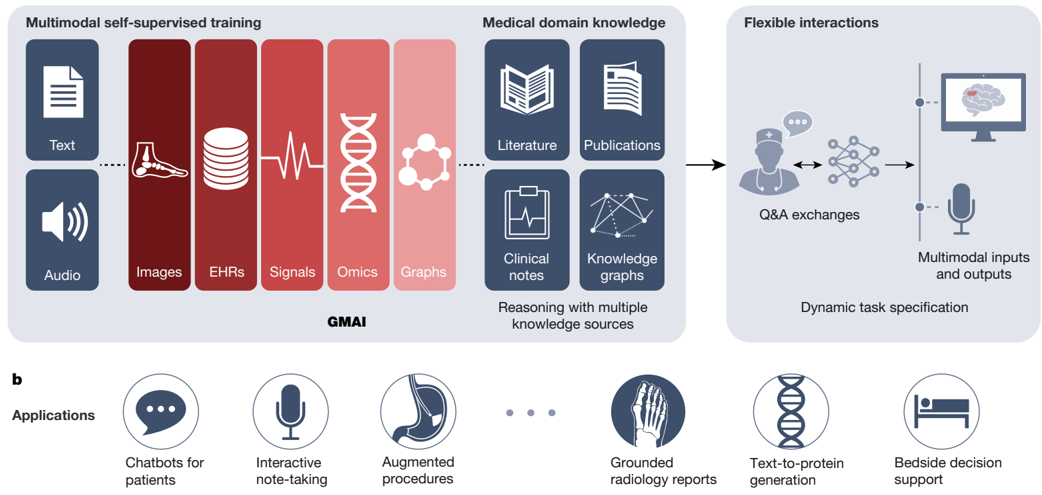
The exceptionally rapid development of highly flexible, reusable artificial intelligence (AI) models is likely to usher in newfound capabilities in medicine. We propose a new paradigm for medical AI, which we refer to as generalist medical AI (GMAI). GMAI models will be capable of carrying out a diverse set of tasks using very little or no task-specific labelled data. Built through self-supervision on large, diverse datasets, GMAI will flexibly interpret different combinations of medical modalities, including data from imaging, electronic health records, laboratory results, genomics, graphs or medical text. Models will in turn produce expressive outputs such as free-text explanations, spoken recommendations or image annotations that demonstrate advanced medical reasoning abilities. Here we identify a set of high-impact potential applications for GMAI and lay out specific technical capabilities and training datasets necessary to enable them. We expect that GMAI-enabled applications will challenge current strategies for regulating and validating AI devices for medicine and will shift practices associated with the collection of large medical datasets. This review discusses generalist medical artificial intelligence, identifying potential applications and setting out specific technical capabilities and training datasets necessary to enable them, as well as highlighting challenges to its implementation.
Overview
CoChat Summary
TL;DR
The paper proposes generalist medical AI (GMAI), a class of foundation models that would use self-supervision on large, diverse medical data to perform dynamically specified tasks, flexibly combine modalities, and reason with formal medical knowledge. It outlines six high-impact use cases and argues that GMAI will require new approaches to validation, regulation, bias auditing, privacy, and data collection.
Key findings
- Defines GMAI by three capabilities: dynamic task specification, flexible multimodal inputs/outputs, and formal representation of medical knowledge for advanced reasoning; existing models such as GPT-3 or PaLM show some medical reasoning but are not multimodal and do not reliably generate factual statements.
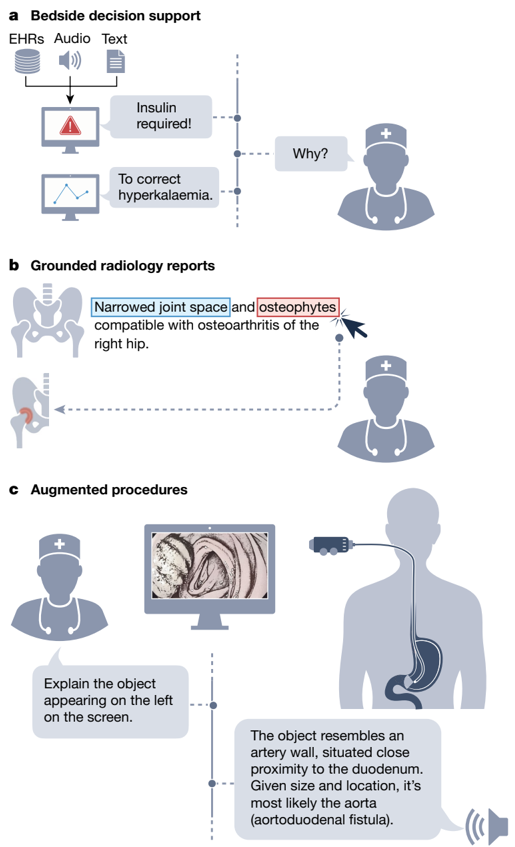
- Proposes six use cases: grounded radiology reports, augmented procedures, bedside decision support, chatbots for patients, text-to-protein generation, and interactive note-taking.
- Notes current medical AI is narrow: of more than 500 FDA-approved AI models for clinical medicine, most were approved for only 1 or 2 narrow tasks; CheXzero can detect dozens of diseases in chest X-rays without explicit labels; GPT-3 powered more than 300 apps within months of release.
- Flags scale and cost: PaLM, a 540-billion-parameter model, required an estimated 8.4 million hours’ worth of tensor processing unit v4 chips, using roughly 3,000 to 6,000 chips at a time, amounting to millions of dollars; training each model has been estimated to generate up to hundreds of tons of CO₂ equivalent; one study recommended 20 times more tokens than parameters for optimal performance.
Methods
- Perspective/review article; no primary data, sample, or experimental analysis.
- Synthesizes recent foundation-model advances and proposes the GMAI paradigm, identifying technical capabilities, training-data needs, use cases, and challenges.
- Draws on cited prior work and examples (e.g., GPT-3, Gato, CheXzero, PaLM) rather than new experiments.
Limitations
- Stated: GMAI will be uniquely difficult to validate because it can carry out previously unseen tasks, making failure modes hard to anticipate; social bias can increase with model scale; privacy risks include memorization of training data and prompt attacks; scale brings high computational, financial, and environmental costs; verification may require multidisciplinary panels; data collection/access and regulatory/liability frameworks are unresolved.
- Evident from the text: no GMAI model is built or empirically evaluated here; the use cases are prospective and illustrative; many capabilities depend on future advances in multimodal self-supervision, in-context learning, and medical knowledge integration.
Model-written summary. Check it against the paper before relying on it.
Integrity signals
Registry
Cites
Statistics
Figures
Verification
Claims the paper makes
17 Valid · 3 Not valid · 5 Not checked · 59 Own results and interpretations
The cited sources support only part of this claim — read each source’s verdict below.
In the paper
“They can acquire biases during training, when datasets either underrepresent certain groups of patients or contain harmful correlations 44,45 .”
§ Perspective Foundation models for generalist medical artificial intelligence > Social biases.
What the sources say
- Partly supportedcites [44] 44. Chung, H. W. et al. Scaling instruction-finetuned language models. Preprint at https:// arxiv.org/abs/2210.11416 (2022). sourceExperimental — accuracy not yet measured
The Mechanism of bias section (pp. 4–5) shows that the model learned to predict health care costs, which were correlated with race differently from health needs, producing racial bias. The paper does not identify underrepresentation of patient groups in training data as a cause of the bias it studied. (LLM, conf=0.87)
- Not matchedcites [45] 45. Kung, T. H. et al. Performance of ChatGPT on USMLE: potential for AI-assisted medical education using large language models. PLoS Dig. Health 2, 2 (2023).
Its entry has no title and year that we can search by.
plainstates a cause- Asserted: passes — The authors put it forward as true.
- Checkable: passes — It can be checked against evidence.
- Load-bearing: passes — The paper’s conclusions depend on it.
- Based: passes — The paper gives a reason why it holds.
- Partly supported
The cited sources support only part of this claim — read each source’s verdict below.
In the paper
“Individual models can now achieve state-of-the-art performance on a wide variety of problems, ranging from answering questions about texts to describing images and playing video games [2][3][4] .”
What the sources say
- Not matchedcites [2] 2. Yang, X. et al. A large language model for electronic health records. npj Digit. Med. 5, 194 (2022).
We searched by its title and found no matching paper.
- Partly supportedcites [3] 3. Food and Drug Administration. Artificial intelligence and machine learning (AI/ML)-enabled medical devices. FDA https://www.fda.gov/medical-devices/software-medical-device- samd/artificial-intelligence-and-machine-learning-aiml-enabled-medical-devices (2022). sourceExperimental — accuracy not yet measured
Section 3.1 (p. 7) reports that Flamingo outperforms previous zero- and few-shot methods across 16 vision-language benchmarks and exceeds fine-tuned state of the art on six tasks. Table 6 (p. 30) includes image scene description, supporting that example. The cited paper does not establish the sentence’s examples of answering questions about texts or playing video games. (LLM, conf=0.86)
- Partly supportedcites [4] 4. Acosta, J. N., Falcone, G. J., Rajpurkar, P. & Topol, E. J. Multimodal biomedical AI. Nat. Med. 28, 1773-1784 (2022). sourceExperimental — accuracy not yet measured
The Introduction (pp. 1–2) describes one model performing diverse vision and language tasks and reports the top overall score on the GRIT benchmark. The Results (p. 10) report state-of-the-art performance on A-OKVQA and strong image captioning, but say its NLP results lag behind state-of-the-art models. Related Work (p. 11) mentions another model's Atari button presses; it does not establish state-of-the-art video-game performance for Unified-IO. (LLM, conf=0.88)
plain- Asserted: passes — The authors put it forward as true.
- Checkable: passes — It can be checked against evidence.
- Load-bearing: passes — The paper’s conclusions depend on it.
- Based: passes — The paper gives a reason why it holds.
- Not matched
The cited sources support only part of this claim — read each source’s verdict below.
In the paper
“Furthermore, building on recent retrieval-based approaches, GMAI can retrieve relevant context from existing databases, in the form of articles, images or entire previous cases 19,20 .”
§ Perspective Foundation models for generalist medical artificial intelligence > Medical domain knowledge
What the sources say
- Partly supportedcites [19] 19. Guha Roy, A. et al. Does your dermatology classifier know what it doesn't know? Detecting the long-tail of unseen conditions. Med. Image Anal. 75, 102274 (2022). sourceExperimental — accuracy not yet measured
The Introduction (p. 1) describes Retro retrieving similar text from a large database, and the training-dataset section (p. 3) includes Wikipedia articles among its text sources. The paper does not establish that GMAI can retrieve images or entire previous medical cases; it supports the retrieval-based approach, but not those extensions. (LLM, conf=0.88)
- Partly supportedcites [20] 20. Radford, A. et al. Robust speech recognition via large-scale weak supervision. Preprint at https://arxiv.org/abs/2212.04356 (2022). sourceExperimental — accuracy not yet measured
The Introduction (p. 1) says REALM retrieves relevant documents from a corpus such as Wikipedia, supporting the article-retrieval part. Future Work (p. 9) proposes image retrieval as a possible extension, not an existing capability. The paper does not establish that GMAI retrieves images or entire previous cases. (LLM, conf=0.88)
plainstates a cause- Asserted: passes — The authors put it forward as true.
- Checkable: passes — It can be checked against evidence.
- Load-bearing: passes — The paper’s conclusions depend on it.
- Based: passes — The paper gives a reason why it holds.
- Partly supported
The cited sources support only part of this claim — read each source’s verdict below.
In the paper
“Models will be able to solve previously unseen problems simply by having new tasks explained to them (dynamic task specification), without needing to be retrained 3,5 .”
What the sources say
- Partly supportedcites [3] 3. Food and Drug Administration. Artificial intelligence and machine learning (AI/ML)-enabled medical devices. FDA https://www.fda.gov/medical-devices/software-medical-device- samd/artificial-intelligence-and-machine-learning-aiml-enabled-medical-devices (2022). sourceExperimental — accuracy not yet measured
The Introduction says Flamingo is designed to adapt to new vision-language tasks without fine-tuning, and the Contributions passage says it performs multimodal tasks from a few input/output examples. That supports adaptation without retraining, but not the broader claim that GMAI models can solve previously unseen problems simply by having tasks explained to them: Flamingo's demonstrated scope is narrower, and its task specification generally uses examples rather than an explanation alone. (LLM, conf=0.84)
- Not matchedcites [5] 5. Krishnan, R., Rajpurkar, P. & Topol, E. J. Self-supervised learning in medicine and healthcare. Nat. Biomed. Eng. 6, 1346-1352 (2022).
We searched by its title and found no matching paper.
plainstates a cause- Asserted: passes — The authors put it forward as true.
- Checkable: passes — It can be checked against evidence.
- Load-bearing: passes — The paper’s conclusions depend on it.
- Based: passes — The paper gives a reason why it holds.
- Partly supported
Every source the paper cites for this claim was checked and supports it.
In the paper
“CheXzero can be applied to detect dozens of diseases in chest X-rays without being trained on explicit labels for these diseases 9 .”
§ Perspective Foundation models for generalist medical artificial intelligence > Applicability.
What the sources say
- Supportedcites [9] 9. Vaswani, A. et al. Attention is all you need. In Advances in Neural Information Processing Systems (eds Guyon, I. et al.) 30, 5998-6008 (2017). source
The Main section describes CheXzero as a zero-shot chest X-ray classifier that needs no explicit pathology labels during training. The Results report an AUC of at least 0.700 for 38 of 57 radiographic findings evaluated on the PadChest test set, supporting the claim that it can detect dozens of conditions. (LLM, conf=0.90)
plainstates a cause- Asserted: passes — The authors put it forward as true.
- Checkable: passes — It can be checked against evidence.
- Load-bearing: unclear — It is unclear whether the paper’s conclusions depend on it.
- Based: passes — The paper gives a reason why it holds.
- Supported
32 more claims · 2 with their cited sources checked
Create a free account to see all 84 claims and to verify the 2 references still open.
- Probably not a substantial claim. 35
- It may state two separate claims as one. 25
Claims other papers make about this one
Each is checked against this paper’s own text: does it say what the citing paper says it does?
The source backs part of the claim, not all of it — or backs it for a different population, condition or comparison.
In the citing paper
“First, these models are predominantly pretrained using vision-only modeling57,59,60, which neglects not only rich supervisory signals found in pathology reports but also precludes multimodal capabilities such as zero-shot visual-language understanding and cross-model retrieval—a fundamental hallmark in foundation models84,85.”
From A multimodal whole-slide foundation model for pathology (2025) · cites this paper as [85]
Experimental — accuracy not yet measuredThe source backs part of the claim, not all of it — or backs it for a different population, condition or comparison.
In the citing paper
“Barriers to the clinical implementation of LLMs include their susceptibility to hallucinations, the absence of reliable references [13].”
From Diagnostic performance of Prof. Valmed, ChatGPT-5 Thinking, and OpenEvidence in rheumatology: A comparative evaluation (2026) · cites this paper as [13]
Experimental — accuracy not yet measuredThe cited source says what the claim attributes to it.
In the citing paper
“The emergence of (medical) foundational models (Moor et al., 2023), which are generally multimodal, is expected to accelerate research in optimal data fusion further.”
From Navigating the landscape of multimodal AI in medicine: A scoping review on technical challenges and clinical applications (2025) · cites this paper as Moor et al., 2023
The cited source says what the claim attributes to it.
In the citing paper
“Moor et al. introduced a paradigm for foundation model application in medical AI, named generalist medical AI (GMAI) [16].”
From Challenges in AI-driven Biomedical Multimodal Data Fusion and Analysis (2025) · cites this paper as [16]
The cited source says what the claim attributes to it.
In the citing paper
“Moor et al. proposed a framework of the GMAI, a foundation model designed to handle most clinical tasks, aiming to provide high-quality medical support to both patients and clinicians [16].”
From Challenges in AI-driven Biomedical Multimodal Data Fusion and Analysis (2025) · cites this paper as [16]
6 more claims about this paper
Create a free account to see every claim other papers make about this one.
Self-check
Percentages, sums and reported differences re-computed from the paper’s own numbers.
Each contradiction between two passages listed here was confirmed by an independent check.
Rated minor: it would not touch a result — a value no result rests on, a p-value that stays on the same side of the significance level, or a conflict that is clerical, resolved elsewhere in the paper, or outside its own findings.
In the paper
§ Perspective Foundation models for generalist medical artificial intelligence > Conclusion
“The presented example is inspired by a case report 58 .Image of the fistula in panel c adapted from ref. 58, CC BY 3.0.”
§ Perspective Foundation models for generalist medical artificial intelligence > References
“50. Vegunta, R., Vegunta, R. & Kutti Sridharan, G. Secondary aortoduodenal fistula presenting as gastrointestinal bleeding and fungemia. Cureus 11, e5575 (2019).”
Citations
Cites
Vaswani, A., Shazeer, N., Parmar, N., Uszkoreit, J., Jones, L., Gomez, A. N., Kaiser, L., & Polosukhin, I. (2017) · arXiv · doi:10.48550/arxiv.1706.03762 · Cited by 120,404
BERT: Pre-training of Deep Bidirectional Transformers for Language Understanding
Devlin, J., Chang, M.-W., Lee, K., & Toutanova, K. (2019) · Proceedings of the 2019 Conference of the North American Chapter of the Association for Computational Linguistics: Human Language Technologies, Volume 1 (Long and Short Papers) · doi:10.18653/v1/n19-1423 · Cited by 54,325
Highly accurate protein structure prediction with AlphaFold
Jumper, J., Evans, R., Pritzel, A., Green, T., Figurnov, M., Ronneberger, O., Tunyasuvunakool, K., Bates, R., Žídek, A., Potapenko, A., et al. (2021) · Nature · doi:10.1038/s41586-021-03819-2 · Cited by 43,764 · cited 1×
“There have already been early efforts to develop foundation models for biological sequences 33,34 , including RFdiffusion, which generates proteins on the basis of simple specifications (for example, a binding target) 35 .”
BackgroundHigh-Resolution Image Synthesis with Latent Diffusion Models
Rombach, R., Blattmann, A., Lorenz, D., Esser, P., & Ommer, B. (2022) · 2022 IEEE/CVF Conference on Computer Vision and Pattern Recognition (CVPR) · doi:10.1109/cvpr52688.2022.01042 · Cited by 20,302 · cited 2×
“For certain use cases (for example, chatbots), GMAI models can be stored on central compute clusters maintained by organizations with deep technical expertise, as DALL-E or GPT-3 are.”
BackgroundLearning Transferable Visual Models From Natural Language Supervision
Radford, A., Kim, J. W., Hallacy, C., Ramesh, A., Goh, G., Agarwal, S., Sastry, G., Askell, A., Mishkin, P., Clark, J., et al. (2021) · arXiv · doi:10.48550/arxiv.2103.00020 · Cited by 15,293 · cited 2×
“These include the rise of multimodal architectures 13 and self-supervised learning techniques 14 that dispense with explicit labels (for example, language modelling 15 and contrastive learning 16 ), as well as the advent of in-context learning capabilities 5 .”
BackgroundSudlow, C., Gallacher, J., Allen, N., Beral, V., Burton, P., Danesh, J., Downey, P., Elliott, P., Green, J., Landray, M., et al. (2015) · PLOS Medicine · doi:10.1371/journal.pmed.1001779 · Cited by 12,728 · cited 1×
“Large-scale data-sharing efforts, such as the MIMIC (Medical Information Mart for Intensive Care) database 55 or the UK Biobank 56 , will play a critical role in GMAI, and they should be extended to underrepresented countries to create larger, richer and more inclusive training datasets.”
BackgroundAdvances in Neural Information Processing Systems 14: Proceedings of the 2001 Conference
(2002) · The MIT Press eBooks · doi:10.7551/mitpress/1120.001.0001 · Cited by 8,890
Dissecting racial bias in an algorithm used to manage the health of populations
Obermeyer, Z., Powers, B., Vogeli, C., & Mullainathan, S. (2019) · Science · doi:10.1126/science.aax2342 · Cited by 7,137 · cited 1×
“They can acquire biases during training, when datasets either under-represent certain groups of patients or contain harmful correlations 44,45 .”
BackgroundUniProt: the universal protein knowledgebase
The UniProt Consortium (2017) · Nucleic Acids Research · doi:10.1093/nar/gkw1099 · Cited by 4,436
Training language models to follow instructions with human feedback
Ouyang, L., Wu, J., Jiang, X., Almeida, D., Wainwright, C. L., Mishkin, P., Zhang, C., Agarwal, S., Slama, K., Ray, A., et al. (2022) · arXiv · doi:10.48550/arxiv.2203.02155 · Cited by 4,208 · cited 1×
“Such feedback can then be used to improve model behaviour, following the example of InstructGPT, a model created by using human feedback to refine GPT-3 through reinforcement learning 41 .”
Method
Research works printed but not linked: 2
- Reed, S. et al. A generalist agent. In Transactions on Machine Learning Research (2022). This study presented Gato, a generalist model that can carry out a variety of tasks across modalities such as chatting, captioning images, playing video games and controlling a robot arm.
- Brown, T. et al. Language models are few-shot learners. In Advances in Neural Information Processing Systems (eds Larochelle, H. et al.) 33, 1877–1901 (2020). This study presented the language model GPT-3 and discovered that large language models can carry out in-context learning.
Cited by
Items 101–200 of 1,962
Pretraining a foundation model for generalizable fluorescence microscopy-based image restoration
Ma, C., Tan, W., He, R., & Yan, B. (2024) · Nature Methods · doi:10.1038/s41592-024-02244-3 · Cited by 109
“As stated by Moor et al. 30 , foundation models will offer amazing abilities through dataset size and model size increases, in addition to model architecture advances, in agreement with observations 32,33 that large-scale pretraining with larger and more diverse data consistently improved the…”
LLM-driven multimodal target volume contouring in radiation oncology
Oh, Y., Park, S., Byun, H. K., Cho, Y., Lee, I. J., Kim, J. S., & Ye, J. C. (2024) · Nature Communications · doi:10.1038/s41467-024-53387-y · Cited by 81
A Comprehensive Survey of Foundation Models in Medicine
Khan, W., Leem, S., See, K. B., Wong, J. K., Zhang, S., & Fang, R. (2025) · IEEE Reviews in Biomedical Engineering · doi:10.1109/rbme.2025.3531360 · Cited by 218
“Such as a radiologist might ask the model to identify new multiple sclerosis lesions compared to previous images [159].”
InfluentialQuantifying the use and potential benefits of artificial intelligence in scientific research
Gao, J., & Wang, D. (2024) · Nature Human Behaviour · doi:10.1038/s41562-024-02020-5 · Cited by 81
Large language models and multimodal foundation models for precision oncology
Truhn, D., Eckardt, J.-N., Ferber, D., & Kather, J. N. (2024) · npj Precision Oncology · doi:10.1038/s41698-024-00573-2 · Cited by 79
“Whenever a model is pre-trained on large and diverse tasks, and is subsequently applied to specialized tasks, it can be referred to as a “ foundation model ” 16 .”
BackgroundRisk of Bias in Chest Radiography Deep Learning Foundation Models
Glocker, B., Jones, C., Roschewitz, M., & Winzeck, S. (2023) · Radiology Artificial Intelligence · doi:10.1148/ryai.230060 · Cited by 143
“Foundation models have emerged as a promising solution to mitigate these issues (5,6).”
BackgroundThe hospital at home in the USA: current status and future prospects
Pandit, J. A., Pawelek, J., Leff, B. A., & Topol, E. J. (2024) · npj Digital Medicine · doi:10.1038/s41746-024-01040-9 · Cited by 100
“Scalabilitywasanissuefor in-personHaHprogramsgiventherelianceonclinicalstaf fi ng, however, with digital sensors, virtual care delivery platforms and GMAI models to help with data analytics and processing, the concept of acute care with a virtual medical assistant linked to a care delivery team is possible.”
MethodSelf-citationLimitations of large language models in clinical problem-solving arising from inflexible reasoning
Kim, J., Podlasek, A., Shidara, K., Liu, F., Alaa, A., & Bernardo, D. (2025) · Scientific Reports · doi:10.1038/s41598-025-22940-0 · Cited by 78
“The versatility and strong performance of Large Language Models (LLMs) across multiple domains[1] have sparked investigation of their reasoning capabilities in clinical contexts[2].”
Qiu, J., Wu, J., Wei, H., Shi, P., Zhang, M., Sun, Y., Li, L., Liu, H., Liu, H., Hou, S., et al. (2024) · NEJM AI · doi:10.1056/aioa2300221 · Cited by 139
“Recently, AI foundation models (FMs), such as GPT-4 17 and SAM 18 , have emerged and has the potential to transform many research and industrial domains 19,20 .”
BackgroundFrontier AI Regulation: Managing Emerging Risks to Public Safety
Anderljung, M., Barnhart, J., Korinek, A., Leung, J., O'Keefe, C., Whittlestone, J., Avin, S., Brundage, M., Bullock, J., Cass-Beggs, D., et al. (2023) · arXiv · doi:10.48550/arxiv.2307.03718 · Cited by 77
“Responsible AI innovation can provide extraordinary benefits to society, such as delivering medical [1, 2, 3, 4] and legal [5, 6, 7] services to more people at lower cost, enabling scalable personalized education [8], and contributing solutions to pressing global challenges like climate change [9, 10, 11, 12] and pand…”
BackgroundCheng, H., Xu, H.-T., Peng, B., Huang, X., Hu, Y., Zheng, C., & Zhang, Z. (2024) · npj Precision Oncology · doi:10.1038/s41698-024-00699-3 · Cited by 101
Artificial intelligence for medicine: Progress, challenges, and perspectives
Huang, T., Xu, H., Wang, H., Huang, H., Xu, Y., Li, B., Hong, S., Feng, G., Kui, S., Liu, G., et al. (2023) · The Innovation Medicine · doi:10.59717/j.xinn-med.2023.100030 · Cited by 108
Foundation Model for Endoscopy Video Analysis via Large-Scale Self-supervised Pre-train
Wang, Z., Liu, C., Zhang, S., & Dou, Q. (2023) · Lecture notes in computer science · doi:10.1007/978-3-031-43996-4_10 · Cited by 194
Hallmarks of artificial intelligence contributions to precision oncology
Chang, T., Park, S., Schäffer, A. A., Jiang, P., & Ruppin, E. (2025) · Nature Cancer · doi:10.1038/s43018-025-00917-2 · Cited by 99
“These models, which combine the benefits of transfer learning with the scale and versatility of multipurpose architectures, represent a new paradigm for medical AI 134 .”
Simon, B. D., Ozyoruk, K. B., Gelikman, D. G., Harmon, S. A., & Türkbey, B. (2024) · Diagnostic and Interventional Radiology · doi:10.4274/dir.2024.242631 · Cited by 73
“86 This generalizability has yet to become commonplace in multimodal AI, except for some key examples.”
BackgroundPrinciples, applications, and future of artificial intelligence in dermatology
Omiye, J. A., Gui, H., Daneshjou, R., Cai, Z. R., & Muralidharan, V. (2023) · Frontiers in Medicine · doi:10.3389/fmed.2023.1278232 · Cited by 104
“FMs have the distinct capability to learn from unlabeled data and can be adapted for a variety of downstream tasks without the necessity of specific training (96).”
BackgroundInfluentialAvanzo, M., Stancanello, J., Pirrone, G., Drigo, A., & Retico, A. (2024) · Cancers · doi:10.3390/cancers16213702 · Cited by 110
“Meta AI’s Imagebind [196] and Google Deepmind’s Perceiver IO [197] represent significant advancements in processing and integrating multimodal data.”
BackgroundInfluentialClinical entity augmented retrieval for clinical information extraction
López, I., Swaminathan, A., Vedula, K., Narayanan, S., Haredasht, F. N., Ma, S. P., Liang, A., Tate, S., Maddali, M., Gallo, R., et al. (2025) · npj Digital Medicine · doi:10.1038/s41746-024-01377-1 · Cited by 102
Yuan, M., Bao, P., Yuan, J., Shen, Y., Chen, Z., Xie, Y., Zhao, J., Li, Q., Chen, Y., Zhang, L., et al. (2024) · Medicine Plus · doi:10.1016/j.medp.2024.100030 · Cited by 70
Overcoming data scarcity in biomedical imaging with a foundational multi-task model
Schäfer, R., Nicke, T., Höfener, H., Lange, A., Merhof, D., Feuerhake, F., Schulz, V., Lotz, J., & Kiessling, F. M. (2024) · Nature Computational Science · doi:10.1038/s43588-024-00662-z · Cited by 139
“Driven by the recent trend of increasingly large pretraining data-sets, the need for foundational models in biomedical imaging has become clear 8,9 .”
MedLSAM: Localize and segment anything model for 3D CT images
Lei, W., Xu, W., Li, K., Zhang, X., & Zhang, S. (2025) · Medical Image Analysis · doi:10.1016/j.media.2024.103370 · Cited by 78
Artificial intelligence for science in quantum, atomistic, and continuum systems
Zhang, X., Wang, L., Helwig, J., Luo, Y., Fu, C., Xie, Y., Liu, M., Lin, Y., Zhao, X., Yan, K., et al. (2025) · Foundations and Trends® in Machine Learning · doi:10.1561/2200000115 · Cited by 261
Self-citationPerformance and Metacognition Disconnect when Reasoning in Human-AI Interaction
Fernandes, D., Villa, S., Nicholls, S., Haavisto, O., Buschek, D., Schmidt, A., Kosch, T., Shen, C., & Welsch, R. (2024) · arXiv · doi:10.48550/arxiv.2409.16708 · Cited by 71
Challenges in AI-driven Biomedical Multimodal Data Fusion and Analysis
Liu, J., Cen, X., Yi, C., Wang, F.-A., Ding, J., Cheng, J., Wu, Q., Gai, B., Zhou, Y., He, R., et al. (2025) · Genomics, Proteomics & Bioinformatics · doi:10.1093/gpbjnl/qzaf011 · Cited by 75
He, K., Mao, R., Lin, Q., Ruan, Y., Lan, X., Feng, M., & Cambria, E. (2024) · doi:10.2139/ssrn.4809363 · Cited by 69
Artificial intelligence in liver cancer — new tools for research and patient management
Caldéraro, J., Žigutytė, L., Truhn, D., Jaffe, A., & Kather, J. N. (2024) · Nature Reviews Gastroenterology & Hepatology · doi:10.1038/s41575-024-00919-y · Cited by 80
“Consequently, the next generation of medical AI models might be able to solve problems in several domains at once and allow users to query the models in natural language 84 .”
Benchmarking foundation models as feature extractors for weakly supervised computational pathology
Neidlinger, P., El Nahhas, O. S. M., Muti, H. S., Lenz, T., Hoffmeister, M., Brenner, H., van Treeck, M., Langer, R., Dislich, B., Behrens, H. M., et al. (2025) · Nature Biomedical Engineering · doi:10.1038/s41551-025-01516-3 · Cited by 80
Reale-Nosei, G., Amador-Domínguez, E., & Serrano, E. (2024) · Medical Image Analysis · doi:10.1016/j.media.2024.103264 · Cited by 89
The potential for large language models to transform cardiovascular medicine
Quer, G., & Topol, E. J. (2024) · The Lancet Digital Health · doi:10.1016/s2589-7500(24)00151-1 · Cited by 93
Self-citationHas multimodal learning delivered universal intelligence in healthcare? A comprehensive survey
Lin, Q., Zhu, Y., Mei, X., Huang, L., Ma, J., He, K., Peng, Z., Cambria, E., & Feng, M. (2024) · Information Fusion · doi:10.1016/j.inffus.2024.102795 · Cited by 117
A multimodal visual–language foundation model for computational ophthalmology
Shi, D., Zhang, W., Yang, J., Huang, S., Chen, X., Xu, P., Jin, K., Lin, S. C., Wei, J., Yusufu, M., et al. (2025) · npj Digital Medicine · doi:10.1038/s41746-025-01772-2 · Cited by 163
Enhancing head and neck tumor management with artificial intelligence: Integration and perspectives
Zhong, N., Wang, H., Huang, X., Li, Z., Cao, L., Huo, F., Liu, B., & Bu, L. (2023) · Seminars in Cancer Biology · doi:10.1016/j.semcancer.2023.07.002 · Cited by 88
Jin, Q., Leaman, R., & Lu, Z. (2023) · Journal of the American Society of Nephrology · doi:10.1681/asn.0000000000000166 · Cited by 64
A scoping review on generative AI and large language models in mitigating medication related harm
Ong, J. C. L., Chen, M. H., Ng, N., Elangovan, K., Tan, N. Y. T., Jin, L., Xie, Q., Ting, D. S. W., Rodriguez-Monguio, R., Bates, D. W., et al. (2025) · npj Digital Medicine · doi:10.1038/s41746-025-01565-7 · Cited by 64
Puladi, B., Gsaxner, C., Kleesiek, J., Hölzle, F., Röhrig, R., & Egger, J. (2024) · International Journal of Oral and Maxillofacial Surgery · doi:10.1016/j.ijom.2023.09.005 · Cited by 63
Generative artificial intelligence, patient safety and healthcare quality: a review
Howell, M. D. (2024) · BMJ Quality & Safety · doi:10.1136/bmjqs-2023-016690 · Cited by 88
Zero shot health trajectory prediction using transformer
Renc, P., Jia, Y., Samir, A. E., Wąs, J., Li, Q., Bates, D. W., & Sitek, A. (2024) · npj Digital Medicine · doi:10.1038/s41746-024-01235-0 · Cited by 193
Irfan, B., Kuoppamäki, S., & Skantze, G. (2024) · Frontiers in Robotics and AI · doi:10.3389/frobt.2024.1363713 · Cited by 99
A scoping review and expert consensus on digital determinants of health
van Kessel, R., Seghers, L.-E., Anderson, M., Schutte, N. M., Monti, G., Haig, M., Schmidt, J., Wharton, G., Román-Urrestarazu, A., Larrain, B., et al. (2025) · Bulletin of the World Health Organization · doi:10.2471/blt.24.292057 · Cited by 73
Medical large language models are susceptible to targeted misinformation attacks
Han, T., Nebelung, S., Khader, F., Wang, T., Müller-Franzes, G., Kuhl, C., Försch, S., Kleesiek, J., Haarburger, C., Bressem, K. K., et al. (2024) · npj Digital Medicine · doi:10.1038/s41746-024-01282-7 · Cited by 62
Yuan, H., Yu, K., Xie, F., Liu, M., & Sun, S. (2024) · Medicine Advances · doi:10.1002/med4.75 · Cited by 61
Tanaka, Y., Nakata, T., Aiga, K., Etani, T., Muramatsu, R., Katagiri, S., Kawai, H., Higashino, F., Enomoto, M., Noda, M., et al. (2024) · PLOS Digital Health · doi:10.1371/journal.pdig.0000433 · Cited by 62
“models hinders the verification of their validity and they require enormous computational 244 resources and costs, we believe that the advanced medical foundation AI model [28] can replace 245 task-specific approach AI models and will appear not far off, with scientifically proven clinical 246 efficacy and safety in m…”
MethodRheumatology in the digital health era: status quo and quo vadis?
Knitza, J., Gupta, L., & Hügle, T. (2024) · Nature Reviews Rheumatology · doi:10.1038/s41584-024-01177-7 · Cited by 71
“LLMs are becoming increasingly powerful DDSSs, capable of interpreting multimodal data, including images, videos, laboratory results and previous medical reports 25,26 .”
Dietary Assessment With Multimodal ChatGPT: A Systematic Analysis
Lo, F. P.-W., Qiu, J., Wang, Z., Chen, J., Xiao, B. J., Yuan, W., Giannarou, S., Frost, G. S., & Lo, B. P. L. (2024) · IEEE Journal of Biomedical and Health Informatics · doi:10.1109/jbhi.2024.3417280 · Cited by 81
“…the design of methodologies across numerous research fields, and foundation models are in fact revolutionizing various sectors within healthcare [34], [35], offering generalist intelligence and large-scale generalizability across multiple tasks such as the recent VisionFM [36] model that is…”
BackgroundFoundation models and intelligent decision-making: Progress, challenges, and perspectives
Huang, J., Xu, Y., Wang, Q., Wang, Q., Liang, X., Wang, F., Zhang, Z., Wei, W., Zhang, B., Huang, L., et al. (2025) · The Innovation · doi:10.1016/j.xinn.2025.100948 · Cited by 193
Huang, W., Li, C., Zhou, H.-Y., Yang, H., Liu, J., Liang, Y., Zheng, H., Zhang, S., & Wang, S. (2024) · Nature Communications · doi:10.1038/s41467-024-51749-0 · Cited by 101
“This reduces the labeling burden on clinical experts and enhances the potential for clinical deployment.”
Progress and opportunities of foundation models in bioinformatics
Li, Q., Hu, Z., Wang, Y., Li, L., Fan, Y., King, I., Jia, G., Wang, S., Song, L., & Li, Y. (2024) · Briefings in Bioinformatics · doi:10.1093/bib/bbae548 · Cited by 91
“Current qualitative evaluations often focus on certain modules such as Machine Reading Comprehension within a complete QA pipeline, rather than assessing previously unseen tasks, such as diagnosing disease in brain magnetic resonance imaging [14].”
BackgroundCombining spatial transcriptomics with tissue morphology
Chelebian, E., Avenel, C., & Wählby, C. (2025) · Nature Communications · doi:10.1038/s41467-025-58989-8 · Cited by 99
Artificial General Intelligence for Medical Imaging Analysis
Li, X., Zhao, L., Zhang, L., Wu, Z., Liu, Z., Jiang, H., Cao, C., Xu, S., Li, Y., Dai, H., et al. (2024) · IEEE Reviews in Biomedical Engineering · doi:10.1109/rbme.2024.3493775 · Cited by 117
“involves learning from multiple data modalities [67], a crucial aspect of applying LLMs to medical imaging or medicine in general.”
Faithful AI in Medicine: A Systematic Review with Large Language Models and Beyond
Xie, Q., Schenck, E. J., Yang, H. S., Chen, Y., Peng, Y., & Wang, F. (2023) · doi:10.21203/rs.3.rs-3661764/v1 · Cited by 57
“This means they can constantly drive the ongoing development in medical AI.”
BackgroundUtility of artificial intelligence‐based large language models in ophthalmic care
Biswas, S., Davies, L. N., Sheppard, A. L., Logan, N. S., & Wolffsohn, J. S. (2024) · Ophthalmic and Physiological Optics · doi:10.1111/opo.13284 · Cited by 73
Li, W., Qu, C., Chen, X., Bassi, P. R. A. S., Shi, Y., Lai, Y., Qian, Y., Xue, H., Chen, Y., Lin, X., et al. (2024) · Medical Image Analysis · doi:10.1016/j.media.2024.103285 · Cited by 137
Medical multimodal multitask foundation model for lung cancer screening
Niu, C., Lyu, Q., Carothers, C. D., Kaviani, P., Tan, J., Yan, P.-K., Kalra, M., Whitlow, C., & Wang, G. (2025) · Nature Communications · doi:10.1038/s41467-025-56822-w · Cited by 82
Ai makes you smarter but none the wiser: the disconnect between performance and metacognition
Fernandes, D., Villa, S., Nicholls, S., Haavisto, O., Buschek, D., Schmidt, A., Kosch, T., Shen, C., & Welsch, R. (2026) · Computers in Human Behavior · doi:10.1016/j.chb.2025.108779 · Cited by 83
Large language models for science and medicine
Telenti, A., Auli, M., Hie, B. L., Maher, C., Saria, S., & Ioannidis, J. P. A. (2024) · European Journal of Clinical Investigation · doi:10.1111/eci.14183 · Cited by 54
“A recent review by Moor et al. 43 proposes a new paradigm that they refer to as ‘generalist medical artificial intelligence’.”
MethodHadi, M. U., tashi, Q. A., Qureshi, R., Shah, A., muneer, A., Irfan, M., Zafar, A., Shaikh, M. B., Akhtar, N., Wu, J., et al. (2023) · doi:10.36227/techrxiv.23589741.v3 · Cited by 53
Fleurence, R. L., Bian, J., Wang, X., Xu, H., Dawoud, D., Higashi, M., & Chhatwal, J. (2025) · Value in Health · doi:10.1016/j.jval.2024.10.3846 · Cited by 54
Multimodal LLMs for Health Grounded in Individual-Specific Data
Belyaeva, A., Cosentino, J., Hormozdiari, F., Eswaran, K., Shetty, S., Corrado, G. S., Carroll, A. W., McLean, C. Y., & Furlotte, N. A. (2023) · Lecture notes in computer science · doi:10.1007/978-3-031-47679-2_7 · Cited by 130
BrainSegFounder: Towards 3D foundation models for neuroimage segmentation
Cox, J., Liu, P., Stolte, S. E., Yang, Y., Liu, K., See, K. B., Ju, H., & Fang, R. (2024) · Medical Image Analysis · doi:10.1016/j.media.2024.103301 · Cited by 107
“The complexity of the human brain, with its elaborate anatomy and intricate functions, poses significant challenges in neuroimaging analysis ([8], [9],[10], [2], [6]).”
BackgroundArtificial intelligence-enhanced retinal imaging as a biomarker for systemic diseases
Wang, J., Wang, Y. X., Zeng, D., Zhu, Z., Li, D., Liu, Y., Sheng, B., Grzybowski, A. E., & Wong, T. Y. (2025) · Theranostics · doi:10.7150/thno.100786 · Cited by 91
“The developed AI models will apply oculomics studies into the generalist medical artificial intelligence (GMAI) system [79], potentially transforming ophthalmology healthcare, which is much inspiring (Figure 2).”
Bienefeld, N., Keller, E., & Grote, G. (2024) · Journal of Medical Internet Research · doi:10.2196/50130 · Cited by 62
Empowering generative AI through mobile edge computing
Ale, L., Zhang, N., King, S. A., & Chen, D. (2024) · Nature Reviews Electrical Engineering · doi:10.1038/s44287-024-00053-6 · Cited by 69
“GenAI can leverage this wealth of personalized data to generate highly tailored and relevant content, responses and experiences 34 .”
The role of large language models in agriculture: harvesting the future with LLM intelligence
Shaikh, T. A., Rasool, T., Veningston, K., & Yaseen, S. M. (2024) · Progress in Artificial Intelligence · doi:10.1007/s13748-024-00359-4 · Cited by 69
Zhang, Y., Pan, Y., Zhong, T., Dong, P., Xie, K., Liu, Y., Jiang, H., Wu, Z., Liu, Z., Zhao, W., et al. (2024) · Meta-Radiology · doi:10.1016/j.metrad.2024.100103 · Cited by 52
A multi-center study on the adaptability of a shared foundation model for electronic health records
Guo, L., Fries, J., Steinberg, E., Fleming, S. L., Morse, K., Aftandilian, C. C., Posada, J., Shah, N. H., & Sung, L. (2024) · npj Digital Medicine · doi:10.1038/s41746-024-01166-w · Cited by 120
A collective AI via lifelong learning and sharing at the edge
Soltoggio, A., Ben-Iwhiwhu, E., Braverman, V., Eaton, E., Epstein, B., Ge, Y., Halperin, L., How, J., Itti, L., Jacobs, M. A., et al. (2024) · Nature Machine Intelligence · doi:10.1038/s42256-024-00800-2 · Cited by 51
“If such knowledge is available in medical datasets, ShELL technology could be the key to delivering personalized, task-specific knowledge to the point of care 187 .”
Chen, E., Prakash, S., Reddi, V. J., Kim, D. A., & Rajpurkar, P. (2023) · Nature Biomedical Engineering · doi:10.1038/s41551-023-01115-0 · Cited by 83
“…and medications, and to make predictions, generate alerts or provide recommendations for CTM. Additionally, the advent of general medical AI promises capabilities in the interpretation of multimodal sensor data and in the generation of written summaries or easily understandable explanations 9 .”
Self-citationLarge‐Language‐Model‐Based AI Agent for Organic Semiconductor Device Research
Zhang, Q., Hu, Y., Yan, J., Zhang, H., Xie, X., Zhu, J., Li, H., Niu, X., Li, L., Sun, Y., et al. (2024) · Advanced Materials · doi:10.1002/adma.202405163 · Cited by 73
Foundation models in ophthalmology
Chia, M. A., Antaki, F., Zhou, Y., Turner, A. W., Lee, A., & Keane, P. A. (2024) · British Journal of Ophthalmology · doi:10.1136/bjo-2024-325459 · Cited by 71
“55 Additionally, these models are likely to have heightened explainability requirements, such as the ability to reference evidence-based medicine sources.”
BackgroundTMO-Net: an explainable pretrained multi-omics model for multi-task learning in oncology
Wang, F.-A., Zhuang, Z., Gao, F., He, R., Zhang, S., Wang, L., Liu, J., & Li, Y. (2024) · Genome Biology · doi:10.1186/s13059-024-03293-9 · Cited by 51
“…pre-training frameworks have demonstrated success in enhancing the performance of deep learning models in specific tasks, including prognosis prediction [18], cancer dependency gene prediction [19], and others, the transferability of these models to diverse downstream tasks remains impractical.”
BackgroundInfluentialBehavioral health and generative AI: a perspective on future of therapies and patient care
Sezgın, E., & McKay, I. T. (2024) · npj Mental Health Research · doi:10.1038/s44184-024-00067-w · Cited by 81
Large language models and generative AI in telehealth: a responsible use lens
Pool, J., Indulska, M., & Sadiq, S. W. (2024) · Journal of the American Medical Informatics Association · doi:10.1093/jamia/ocae035 · Cited by 70
Generative artificial intelligence in surgery
Rodler, S., Ganjavi, C., BACKER, P. D., Magoulianitis, V., Ramacciotti, L. S., Abreu, A. L., Gill, I. S., & Cacciamani, G. E. (2024) · Surgery · doi:10.1016/j.surg.2024.02.019 · Cited by 59
Transforming Public Health Practice With Generative Artificial Intelligence
Bharel, M., Auerbach, J. M., Nguyen, V., & DeSalvo, K. B. (2024) · Health Affairs · doi:10.1377/hlthaff.2024.00050 · Cited by 74
Demographic bias of expert-level vision-language foundation models in medical imaging
Yang, Y., Liu, Y., Liu, X., Gulhane, A., Mastrodicasa, D., Wu, W., Wang, E. J., Sahani, D. V., & Patel, S. (2025) · Science Advances · doi:10.1126/sciadv.adq0305 · Cited by 127
Human–AI collectives most accurately diagnose clinical vignettes
Zöller, N., Berger, J., Lin, I., Fu, N., Komarneni, J., Barabucci, G., Laskowski, K., Shia, V., Harack, B., Chu, E. A., et al. (2025) · Proceedings of the National Academy of Sciences · doi:10.1073/pnas.2426153122 · Cited by 98
Eckhoff, J. A., Rosman, G., Altieri, M. S., Speidel, S., Stoyanov, D. V., Anvari, M., Meier-Hein, L., März, K., Jannin, P., Pugh, C. M., et al. (2023) · Surgical Endoscopy · doi:10.1007/s00464-023-10288-3 · Cited by 60
“Yet, even with increasingly sophisticated foundational models on the uprise [18, 19], that are trained with large amounts of data but a reduced set of detailed labels for novel tasks [20, 21], the challenge of validation for complex models remains, and requires high-quality, well-curated data.”
BackgroundLiu, X., Hou, C., Liu, Y., Chen, S., Wu, Z., Liang, X., & Tai, G. (2023) · Journal of Materials Chemistry A · doi:10.1039/d3ta04473d · Cited by 51
Progress and challenges of artificial intelligence in lung cancer clinical translation
Zhu, E., Muneer, A., Zhang, J., Yang, X., Li, X., Zhou, C., Heymach, J. V., Wu, J., & Le, X. (2025) · npj Precision Oncology · doi:10.1038/s41698-025-00986-7 · Cited by 65
Transforming sepsis management: AI-driven innovations in early detection and tailored therapies
Papareddy, P., Lobo, T. J., Holub, M., Bouma, H., Maca, J., Strodthoff, N., & Herwald, H. (2025) · Critical Care · doi:10.1186/s13054-025-05588-0 · Cited by 49
“Nonetheless, there are undoubtedly promising prospects on the horizon for a generalist medical artificial intelligence [128].”
Shi, W., Xu, R., Zhuang, Y., Yu, Y., Zhang, J., Wu, H., Zhu, Y., Ho, J. C., Yang, C., & Wang, M. D. (2024) · Proceedings of the 2024 Conference on Empirical Methods in Natural Language Processing · doi:10.18653/v1/2024.emnlp-main.1245 · Cited by 54
“Large language models (LLMs) (OpenAI, 2023; Anil et al., 2023) bring us one step closer to autonomous agents with extensive knowledge and substantial instruction-following abilities from di-a et al., 2017) and SPIDER (Yu et al., 2018), multi-tabular reasoning tasks within EHRs (orange) typically…”
BackgroundRadiology AI and sustainability paradox: environmental, economic, and social dimensions
Koçak, B., Ponsiglione, A., Romeo, V., Ugga, L., Huisman, M., & Cuocolo, R. (2025) · Insights into Imaging · doi:10.1186/s13244-025-01962-2 · Cited by 74
Rajendran, S., Pan, W., Sabuncu, M. R., Chen, Y., Zhou, J., & Wang, F. (2024) · Patterns · doi:10.1016/j.patter.2023.100913 · Cited by 47
“84 Additionally, training these models in a C 4 framework presents privacy concerns because they must generalize across diverse modalities while learning across si-loed cohorts.”
BackgroundA physics-informed and data-driven framework for robotic welding in manufacturing
Liu, J., Jiang, F., Tashiro, S., Chen, S., & Tanaka, M. (2025) · Nature Communications · doi:10.1038/s41467-025-60164-y · Cited by 86
Yang, Z., Tian, T., Kong, J., & Chen, H. (2025) · Analytical Chemistry · doi:10.1021/acs.analchem.4c06677 · Cited by 46
Masters, K., Herrmann-Werner, A., Festl-Wietek, T., & Taylor, D. (2024) · Medical Teacher · doi:10.1080/0142159x.2024.2387802 · Cited by 46
“Other initiatives, such as by Moor et al. [56]) and Google continue to explore the use of multi-modal data ( ‘ like radiology images, lab results, genomics data, environmental context and more ’ ) [57].”
A review on knowledge graphs for healthcare: Resources, applications, and promises
Cui, H., Lu, J., Xu, R., Wang, S.-Y., Ma, W., Yu, Y., Yu, S., Kan, X., Ling, C., Zhao, L., et al. (2025) · Journal of Biomedical Informatics · doi:10.1016/j.jbi.2025.104861 · Cited by 130
“Besides, Wu et al. [186] leveraged ontologies to improve the drug representations, and facilitates drug recommendation under a more challenging few-shot setting.”
On the limitations of large language models in clinical diagnosis
Reese, J. T., Danis, D., Caufield, J. H., Groza, T., Casiraghi, E., Valentini, G., Mungall, C. J., & Robinson, P. N. (2023) · medRxiv · doi:10.1101/2023.07.13.23292613 · Cited by 46
“A po solution could consist in coupling LLMs with a formal representation of medical knowledg example using biomedical knowledge graphs.(6) Future research and algorithmic developm needed to determine the optimal approach to leveraging LLMs for clinical diagnosis.”
The impact of ChatGPT and LLMs on medical imaging stakeholders: Perspectives and use cases
Yang, J., Li, H. B., & Wei, D. (2023) · Meta-Radiology · doi:10.1016/j.metrad.2023.100007 · Cited by 46
“With their unparalleled ability to interpret health data, improve communication, and facilitate decision-making processes, these models are transforming the roles and operations of each stakeholder in the healthcare ecosystem [17, 18].”
BackgroundInfluentialSingle-cell foundation models: bringing artificial intelligence into cell biology
Baek, S., Song, K., & Lee, I. (2025) · Experimental & Molecular Medicine · doi:10.1038/s12276-025-01547-5 · Cited by 46
Zambrano Chaves, J. M., Huang, S.-C., Xu, Y., Xu, H., Usuyama, N., Zhang, S., Wang, F., Xie, Y., Khademi, M., Yang, Z., et al. (2025) · Nature Communications · doi:10.1038/s41467-025-58344-x · Cited by 45
Bushuven, S., Bentele, M., Bentele, S., Gerber, B., Bansbach, J., Ganter, J., Trifunovic-Koenig, M., & Ranisch, R. (2023) · Journal of Medical Systems · doi:10.1007/s10916-023-02019-x · Cited by 47
The Application of Radiomics and AI to Molecular Imaging for Prostate Cancer
Tapper, W., Carneiro, G., Mikropoulos, C., Thomas, S. A., Evans, P., & Boussios, S. (2024) · Journal of Personalized Medicine · doi:10.3390/jpm14030287 · Cited by 58
“These can help generalize models and reduce the need to have large amounts of labeled data in a specific domain [72,73], and these have been used for analysis of patient records [74,75] and classification of pathologies [76], with potential for patient support systems [77,78].”
BackgroundAI-based large-scale screening of gastric cancer from noncontrast CT imaging
Hu, C., Xia, Y., Zheng, Z., Cao, M., Zheng, G., Chen, S., Sun, J., Chen, W., Zheng, Q., Pan, S., et al. (2025) · Nature Medicine · doi:10.1038/s41591-025-03785-6 · Cited by 74
“The emergence of AI methods has enabled the automatic segmentation and processing of underutilized data through deep learning, facilitating fast, objective algorithms for accurate lesion identification 18,19 .”
Hadi, M. U., Al-Tashi, Q., Qureshi, R., Shah, A., Muneer, A., Irfan, M., Zafar, A., Shaikh, M. B., Akhtar, N., Hassan, S. Z., et al. (2023) · TechRxiv · doi:10.36227/techrxiv.23589741.v2 · Cited by 146
ESMO guidance on the use of Large Language Models in Clinical Practice (ELCAP)
Wong, E. Y. T., Verlingue, L., Aldea, M., Franzoi, M. A., Umeton, R., Halabi, S., Harbeck, N., Indini, A., Prelaj, A., Romano, E., et al. (2025) · Annals of Oncology · doi:10.1016/j.annonc.2025.09.001 · Cited by 44
Barandas, M., Famiglini, L., Campagner, A., Folgado, D., Simão, R., Cabitza, F., & Gamboa, H. F. S. (2023) · Information Fusion · doi:10.1016/j.inffus.2023.101978 · Cited by 65
Goswami, J., Prajapati, K. K., Saha, A., & Saha, A. K. (2024) · Applied Soft Computing · doi:10.1016/j.asoc.2024.111531 · Cited by 60
Shao, J., Ma, J., Yu, Y., Zhang, S., Wang, W., Li, W., & Wang, C. (2024) · The Innovation · doi:10.1016/j.xinn.2024.100648 · Cited by 78
Zhang, L., Tashiro, S., Mukaino, M., & Yamada, S. (2023) · Journal of Rehabilitation Medicine · doi:10.2340/jrm.v55.13373 · Cited by 43
Metadata
- Authors
- Moor, M., Banerjee, O., Abad, Z. S. H., Krumholz, H. M., Leskovec, J., Topol, E. J., & Rajpurkar, P.
- Affiliations
- Stanford University (US)
- Harvard University (US)
- University of Toronto (CA)
- Yale New Haven Hospital (US)
- Scripps Research Institute (US)
- Corresponding author
- Topol, Eric J.
- Rajpurkar, Pranav
- ORCID
- Venue
- Nature
- Published
- 2023-04-12
- Volume
- 616
- Issue
- 7956
- Pages
- 259-265
- ISSN
- 0028-0836 (ISSN-L)
- 1476-4687
- OpenAlex
- W4365143687
- Semantic Scholar
- 9faa2b0e5cb93f20df0555c3c350fab0b2eccf3a
- Cited by
- 2,028
- References
- 50
- Citations by year
- 2026: 753 · 2025: 645 · 2024: 445 · 2023: 181
- FWCI
- 23.78
- Type
- journal article
- Language
- en
- Open access
- hybrid
- doi.org
- Licence
- cc-by
- www.springernature.com/gp/researchers/text-and-data-mining (tdm)
- www.springernature.com/gp/researchers/text-and-data-mining (vor)
- Locations
- Nature (publishedVersion, cc-by)
- PubMed (publishedVersion)
- RePEc: Research Papers in Economics (submittedVersion)
- Funders
- National Science Foundation (1934578, 1835598, UL1TR001114, 1918940)
- National Institutes of Health (UL1TR001114)
- Defense Advanced Research Projects Agency (HR00112190039, N660011924033)
- Advanced Research Projects Agency
- Multidisciplinary University Research Initiative
- Wu Tsai Neurosciences Institute, Stanford University
- National Human Genome Research Institute (U54HG010426)
- National Institute of Neurological Disorders and Stroke (R61NS11865)
- National Center for Advancing Translational Sciences (grant UL1TR001114)
- Army Research Office (W911NF-16-1-0342, W911NF-16-1-, W911NF)
- Topics
- Health Sciences › Medicine › Health Informatics › Artificial Intelligence in Healthcare and Education
- Physical Sciences › Computer Science › Artificial Intelligence › Machine Learning in Healthcare
- Physical Sciences › Computer Science › Computer Vision and Pattern Recognition › Multimodal Machine Learning Applications
- Keywords
- foundation models, self-supervised learning, multimodal medical data, medical reasoning, explainable AI, health data collection, artificial intelligence in healthcare
- MeSH terms
- Unsupervised Machine Learning, Artificial Intelligence, Diagnostic Imaging, Humans, Medicine, Genomics, Electronic Health Records, Datasets as Topic
About these checks
Registry, retraction, Cites and statistics results are computed, not judged, with one exception: a printed reference that no index lists is read once by a model before it counts as a citation error. Claims are extracted by a model and kept only when their quote appears verbatim in the text; each cited source is then checked, with a model’s help, for whether it says what the claim relies on. Those verdicts can be wrong — read the claim’s quote and the cited source before relying on one.
The claim verdicts this report counts are experimental: their accuracy is not yet measured.
A language model drew the claims from the paper on 2026-10-10, under version 3 of the claim definition (model deepseek-v4.1-flash, prompt extract-v3).
A second model labelled each claim on 2026-10-10 (model jev-1.13-20260917, definition revision gold-guideline-v0.2).
Cited sources are checked with a language model’s help (gpt-6-sol).
Statistics and arithmetic are recomputed, not judged.
Confidence bands are shown only for fields calibrated on our annotated test set. None is calibrated yet, so no band is shown.
What counts as a claim ›How we measure confidence ›How we check this ›
Are you an author, or do you see a problem with this page? Request a review
Data sources
Bibliographic data: Semantic Scholar, OpenAlex, Crossref.
Contains information from the Semantic Scholar Academic Graph Datasets, made available under the ODC Attribution License (ODC-BY 1.0).
Semantic Scholar’s data is described in: Kinney, R., et al. (2023). The Semantic Scholar Open Data Platform. arXiv:2301.10140.
