

Safe and just Earth system boundaries
Open accessThe DOI matches its Crossref record; 119 of the 120 references it cites were found in a registry or an index.
Abstract
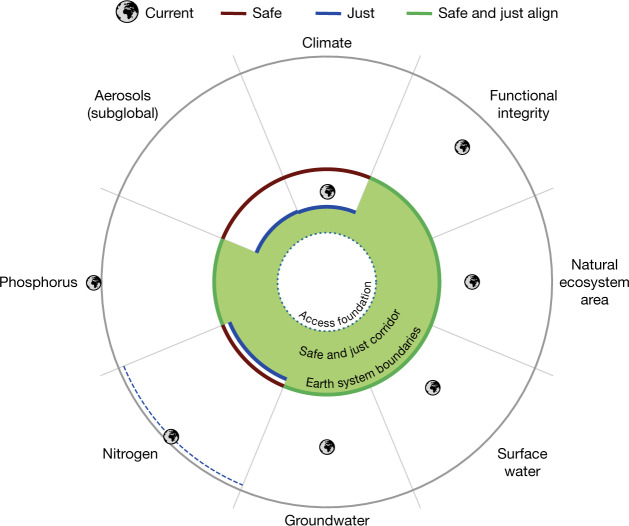
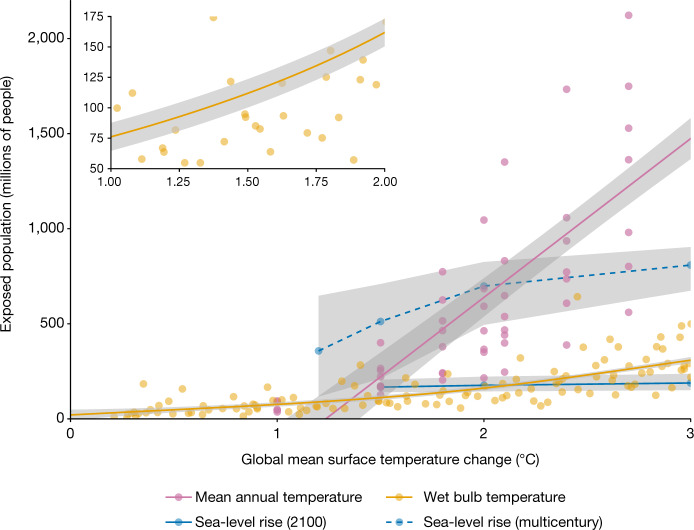
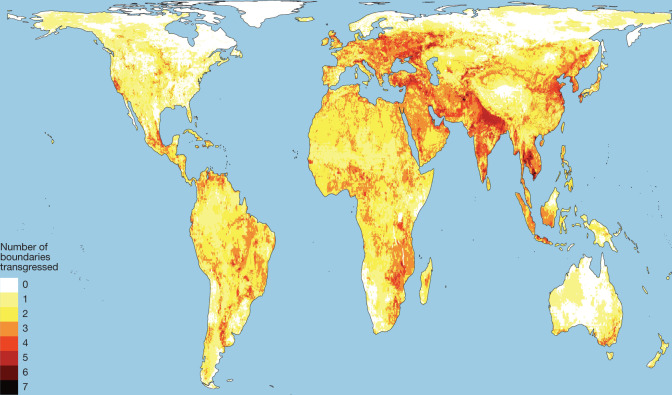
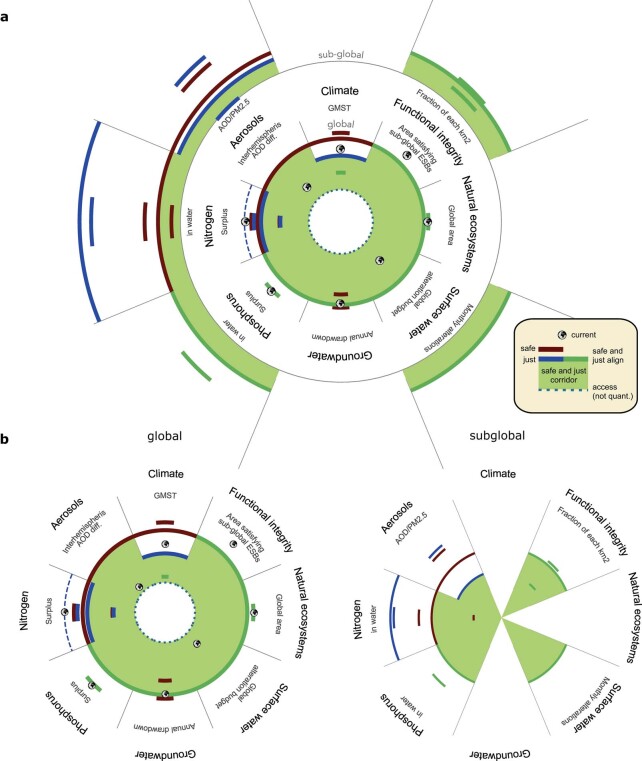
The stability and resilience of the Earth system and human well-being are inseparably linked 1–3 , yet their interdependencies are generally under-recognized; consequently, they are often treated independently 4,5 . Here, we use modelling and literature assessment to quantify safe and just Earth system boundaries (ESBs) for climate, the biosphere, water and nutrient cycles, and aerosols at global and subglobal scales. We propose ESBs for maintaining the resilience and stability of the Earth system (safe ESBs) and minimizing exposure to significant harm to humans from Earth system change (a necessary but not sufficient condition for justice) 4 . The stricter of the safe or just boundaries sets the integrated safe and just ESB. Our findings show that justice considerations constrain the integrated ESBs more than safety considerations for climate and atmospheric aerosol loading. Seven of eight globally quantified safe and just ESBs and at least two regional safe and just ESBs in over half of global land area are already exceeded. We propose that our assessment provides a quantitative foundation for safeguarding the global commons for all people now and into the future.
Overview
The claims and statistics of this paper haven’t been checked yet.
Free: it reads the open-access text and checks the first 5 claims that cite a source we can check. Create a free account to check every claim.
Integrity signals
Registry
Cites
Statistics
Figures
Verification
Claims the paper makes
The claims and statistics of this paper haven’t been checked yet.
Free: it reads the open-access text and checks the first 5 claims that cite a source we can check. Create a free account to check every claim.
Claims other papers make about this one
Each is checked against this paper’s own text: does it say what the citing paper says it does?
In the citing paper
“The accelerating socioeconomic trends of the past century [232] have put us on a path toward exceeding seven of eight globally defined safe and just Earth system boundaries that would provide safe living conditions for all humanity within the boundaries of the living systems on Earth [219].”
From Sustainability in computing education: A systematic literature review (2024) · cites this paper as [219]
Self-check
Percentages, sums and reported differences re-computed from the paper’s own numbers.
The self-check needs the paper’s full text.
Citations
Cites
A safe operating space for humanity
Rockström, J., Steffen, W., Noone, K., Persson, Å., Chapin, F. S., Lambin, E. F., Lenton, T. M., Scheffer, M., Folke, C., Schellnhuber, H. J., et al. (2009) · Nature · doi:10.1038/461472a · Cited by 13,333
Self-citationPlanetary boundaries: Guiding human development on a changing planet
Steffen, W., Richardson, K., Rockström, J., Cornell, S. E., Fetzer, I., Bennett, E. M., Biggs, R., Carpenter, S. R., de Vries, W., de Wit, C. A., et al. (2015) · Science · doi:10.1126/science.1259855 · Cited by 12,527 · cited 6×
“We note that the area of largely natural ecosystems replaces the “land boundary” in the planetary boundaries concept, which implied “largely intact lands” or areas of high biodiversity intactness (Steffen et al. 2015).”
InfluentialSelf-citationCohen, A. J., Brauer, M., Burnett, R., Anderson, H. R., Frostad, J., Estep, K., Balakrishnan, K., Brunekreef, B., Dandona, L., Dandona, R., et al. (2017) · The Lancet · doi:10.1016/s0140-6736(17)30505-6 · Cited by 6,583
Poff, N. L., Allan, J. D., Bain, M. B., Karr, J. R., Prestegaard, K. L., Richter, B. D., Sparks, R. E., & Stromberg, J. C. (1997) · BioScience · doi:10.2307/1313099 · Cited by 6,500
Four billion people facing severe water scarcity
Mekonnen, M. M., & Hoekstra, A. Y. (2016) · Science Advances · doi:10.1126/sciadv.1500323 · Cited by 5,531
Tipping elements in the Earth’s climate system
Lenton, T. M., Held, H., Kriegler, E., Hall, J. W., Lucht, W., Rahmstorf, S., & Schellnhuber, H. J. (2008) · Proceedings of the National Academy of Sciences · doi:10.1073/pnas.0705414105 · Cited by 3,982 · cited 1×
“Tipping elements: Those components or processes that regulate the functioning and state of the planet and that show evidence of having thresholds at which small additional perturbations can trigger selfreinforcing changes that undermine Earth system resilience (Lenton et al. 2008; Armstrong McKay et al. 2022).”
Self-citationEmerging threats and persistent conservation challenges for freshwater biodiversity
Reid, A. J., Carlson, A. K., Creed, I. F., Eliason, E. J., Gell, P. A., Johnson, P. T. J., Kidd, K. A., MacCormack, T. J., Olden, J. D., Ormerod, S. J., et al. (2019) · Biological Reviews · doi:10.1111/brv.12480 · Cited by 3,645
Options for keeping the food system within environmental limits
Springmann, M., Clark, M., Mason-D’Croz, D., Wiebe, K., Bodirsky, B. L., Lassaletta, L., de Vries, W., Vermeulen, S. J., Herrero, M., Carlson, K. M., et al. (2018) · Nature · doi:10.1038/s41586-018-0594-0 · Cited by 3,380
Self-citationBasic Principles and Ecological Consequences of Altered Flow Regimes for Aquatic Biodiversity
BUNN, S. E., & ARTHINGTON, A. H. (2002) · Environmental Management · doi:10.1007/s00267-002-2737-0 · Cited by 3,379
Self-citationIPBES (2019) · Socio-Environmental Systems Modeling · doi:10.5281/zenodo.3831673 · Cited by 3,354
Research works printed but not linked: 15
- IPCC Climate Change 2022: Impacts, Adaptation, and Vulnerability (eds Pörtner, H.-O. et al.) (Cambridge Univ. Press, 2022).
- IPCC Climate Change 2021: The Physical Science Basis (eds Masson-Delmotte, V. et al.) (Cambridge Univ. Press, 2021).
- O’Neill, B. et al. in Climate Change 2022: Impacts, Adaptation, and Vulnerability (eds Pörtner, H.-O. et al.) 2411–2538 (Cambridge Univ. Press, 2022).
- Parmesan, C. et al. in Climate Change 2022: Impacts, Adaptation, and Vulnerability (eds Pörtner, H.-O. et al.) 197–377 (Cambridge Univ. Press, 2022).
- WHO Guidelines for Drinking-water Quality 4th edn (World Health Organization, 2022); https://www.who.int/publications/i/item/9789240045064. 35417116
- Tirado, R. & Allsopp, M. Phosphorus in Agriculture: Problems and Solutions. Technical report (review) (Greenpeace, 2012); https://www.greenpeace.to/greenpeace/wp-content/uploads/2012/06/tirado-and-allsopp-2012-phosphorus-in-agriculture-technical-report-02-2012.pdf.
- Douville, H. et al. in Climate Change 2021: The Physical Science Basis (eds Masson-Delmotte, V. et al.) 1055–1210 (Cambridge Univ. Press, 2021).
- WHO Global Air Quality Guidelines: Particulate Matter (PM2.5and PM10), Ozone, Nitrogen Dioxide, Sulfur Dioxide and Carbon Monoxide (WHO, 2021); https://apps.who.int/iris/handle/10665/345329. 34662007
- EPA. Review of the national ambient air quality standards for particulate matter. Environmental Protection Agency. 40 CFR Part 50. Fed. Regis. Rules Regul. 85, 82684–82748 (2020).
- Biggs, R. et al. in Encyclopedia of Theoretical Ecology (eds Hastings, A. & Gross, L.) 609–617 (Univ. of California Press, 2012).
- Owusu, K. A., Kulesz, M. M. & Merico, A. Extraction behaviour and income inequalities resulting from a common pool resource exploitation. Sustain. Sci. Pract. Policy 11, 536 (2019).
- IPCC Climate Change 2022: Impacts, Adaptation, and Vulnerability (eds Pörtner, H.-O. et al.) (Cambridge Univ. Press, 2022).
- Fox-Kemper, B. et al. in Climate Change 2021: The Physical Science Basis (eds Masson-Delmotte, V. et al.) 1211–1362 (Cambridge Univ. Press, 2021).
- Shaw, R. et al. in Climate Change 2022: Impacts, Adaptation, and Vulnerability (eds Pörtner, H.-O. et al.) 1457–1579 (Cambridge Univ. Press, 2022).
- Klein Goldewijk, K., Beusen, A., Doelman, J. & Stehfest, E. Anthropogenic land use estimates for the Holocene–HYDE 3.2. Earth Syst. Monit. 9, 927–953 (2017).
Cited by
Designing a circular carbon and plastics economy for a sustainable future
Vidal, F., van der Marel, E. R., Kerr, R. W. F., McElroy, C., Schroeder, N., Mitchell, C., Rosetto, G., Chen, T. T. D., Bailey, R. M., Hepburn, C., et al. (2024) · Nature · doi:10.1038/s41586-023-06939-z · Cited by 489
“A useful metric for comparing impacts is the global planetary boundary framework 73–75 .”
The EAT–Lancet Commission on healthy, sustainable, and just food systems
Rockström, J., Thilsted, S. H., Willett, W. C., Gordon, L. J., Herrero, M., Hicks, C. C., Mason-D'Croz, D., Rao, N., Springmann, M., Wright, E. C., et al. (2025) · The Lancet · doi:10.1016/s0140-6736(25)01201-2 · Cited by 475
Self-citationvan Daalen, K. R., Tonne, C., Semenza, J. C., Rocklöv, J., Markandya, A., Dasandi, N., Jankin, S., Achebak, H., Ballester, J., Bechara, H., et al. (2024) · The Lancet Public Health · doi:10.1016/s2468-2667(24)00055-0 · Cited by 290
Vogel, J., & Hickel, J. (2023) · The Lancet Planetary Health · doi:10.1016/s2542-5196(23)00174-2 · Cited by 265
“The global economy is also transgressing six other planetary boundaries, 85 and high-income countries are overwhelm-ingly responsible for this.”
BackgroundThe 2023 state of the climate report: Entering uncharted territory
Ripple, W. J., Wolf, C., Gregg, J. W., Rockström, J., Newsome, T. M., Law, B. E., Marques, L., Lenton, T. M., Xu, C., Huq, S., et al. (2023) · BioScience · doi:10.1093/biosci/biad080 · Cited by 246
Self-citationA call to action: the second Lancet Commission on adolescent health and wellbeing
Baird, S., Choonara, S., Azzopardi, P. S., Banati, P., Bessant, J., Biermann, O., Capon, A. G., Claeson, M., Collins, P. Y., Wet, N. D., et al. (2025) · The Lancet · doi:10.1016/s0140-6736(25)00503-3 · Cited by 245
Gupta, J., Bai, X., Liverman, D. M., Rockström, J., Qin, D., Stewart-Koster, B., Rocha, J. C., Jacobson, L., Abrams, J. F., Andersen, L. S., et al. (2024) · The Lancet Planetary Health · doi:10.1016/s2542-5196(24)00042-1 · Cited by 197
Self-citationPlanetary Boundaries guide humanity’s future on Earth
Rockström, J., Donges, J. F., Fetzer, I., Martin, M. A., Wang-Erlandsson, L., & Richardson, K. (2024) · Nature Reviews Earth & Environment · doi:10.1038/s43017-024-00597-z · Cited by 197
Self-citationShi, T.-S., Collins, S. L., Yu, K., Peñuelas, J., Sardans, J., Li, H., & Ye, J.-S. (2024) · Nature Communications · doi:10.1038/s41467-024-47829-w · Cited by 175
Reducing chemical inputs in agriculture requires a system change
Brunelle, T., Chakir, R., Carpentier, A., Dorin, B., Goll, D. S., Guilpart, N., Maggi, F., Makowski, D., Nesme, T., Roosen, J., et al. (2024) · Communications Earth & Environment · doi:10.1038/s43247-024-01533-1 · Cited by 195
“Indeed, the excessive use of fertilizers has contributed to the transgression of the planetary boundary for biogeochemical fl ows of nitrogen and phosphorus 9,10 .”
Emotions and transformative learning for sustainability: a systematic review
Grund, J., Singer‐Brodowski, M., & Büssing, A. G. (2023) · Sustainability Science · doi:10.1007/s11625-023-01439-5 · Cited by 169
“However, humankind is far from realizing this vision (e.g., Alvaredo et al. 2018; IPBES 2019; IPCC 2022; Rockström et al. 2023) and major individual, and collective efforts are needed to ensure human survival on Earth.”
Keeping the global consumption within the planetary boundaries
Tian, P., Zhong, H., Chen, X., Feng, K., Sun, L., Zhang, N., Shao, X., Liu, Y., & Hubacek, K. (2024) · Nature · doi:10.1038/s41586-024-08154-w · Cited by 142
Holst, J., Singer‐Brodowski, M., Brock, A., & de Haan, G. (2024) · Sustainable Development · doi:10.1002/sd.2865 · Cited by 164
Bansal, P., Durand, R., Kreutzer, M., Kunisch, S., & McGahan, A. M. (2024) · Journal of Management Studies · doi:10.1111/joms.13088 · Cited by 145
Khalili, S., Lopez, G., & Breyer, C. (2025) · Renewable and Sustainable Energy Reviews · doi:10.1016/j.rser.2025.115383 · Cited by 147
Doughnut of social and planetary boundaries monitors a world out of balance
Fanning, A. L., & Raworth, K. (2025) · Nature · doi:10.1038/s41586-025-09385-1 · Cited by 156
“However, three indicator–boundary pairs are exceptions to this general formula (aragonite saturation state, forest area and stratospheric ozone), as they are each framed inversely, for which a decrease in the indicator value implies worsening ecological conditions (rather than an increase).”
Exploring pathways for world development within planetary boundaries
van Vuuren, D. P., Doelman, J., Tagomori, I. S., Beusen, A. H. W., Cornell, S., Rockström, J., Schipper, A. M., Stehfest, E., Ambrósio, G., van den Berg, M., et al. (2025) · Nature · doi:10.1038/s41586-025-08928-w · Cited by 149
“The MSA is conceptually similar to the biodiversity intactness index (BII) 1 or the intact natural ecosystem indicator 17 , but includes a wider set of pressures (N deposition, climate change and land use).”
InfluentialSelf-citationClimate Equality: A planet for the 99%
Khalfan, A., Lewis, A. N., Aguilar, C., Persson, J., Lawson, M., Dabi, N., al Jayoussi, S., & Acharya, S. (2023) · doi:10.21201/2023.000001 · Cited by 160
Strategies and tactics to reduce the impact of healthcare on climate change: systematic review
Braithwaite, J., Smith, C. L., Leask, E., Wijekulasuriya, S., Brooke-Cowden, K., Fisher, G., Patel, R., Pagano, L., Rahimi‐Ardabili, H., Spanos, S., et al. (2024) · BMJ · doi:10.1136/bmj-2024-081284 · Cited by 121
Unprivileged groups are less served by green cooling services in major European urban areas
Rocha, A. D., Vulova, S., Förster, M., Gioli, B., Matthews, B., Helfter, C., Meier, F., Steeneveld, G., Barlow, J. F., Järvi, L., et al. (2024) · Nature Cities · doi:10.1038/s44284-024-00077-x · Cited by 115
“Although access to green cooling services in urban areas is mostly related to climatic and distributive environmental justice, it is also indirectly associated to energy demand, air pollution and biodiversity injustices 21,22 .”
Living within the safe and just Earth system boundaries for blue water
Stewart‐Koster, B., Bunn, S. E., Green, P., Ndehedehe, C. E., Andersen, L. S., McKay, D. I. A., Bai, X., DeClerck, F., Ebi, K. L., Gordon, C., et al. (2023) · Nature Sustainability · doi:10.1038/s41893-023-01247-w · Cited by 111
“The safe and just ESB for groundwater was defined as an average annual drawdown from both natural and anthropogenic causes no greater than average annual recharge, to ensure there was no decline in aquifer depth 19 .”
BackgroundMethodInfluentialSelf-citationRevisiting the sustainability science research agenda
Sahle, M., Lahoti, S. A., Lee, S., Brundiers, K., van Riper, C. J., Pohl, C., Chien, H., Bohnet, I., Aguilar–Rivera, N., Edwards, P. J., et al. (2024) · Sustainability Science · doi:10.1007/s11625-024-01586-3 · Cited by 111
“Analyzing large systemic shocks offer an opportunity to learn from experiences and better prepare for future challenges (Haldon et al. 2020; Rockström et al. 2023).”
Self-citationUnderstanding soil phosphorus cycling for sustainable development: A review
Helfenstein, J., Ringeval, B., Tamburini, F., Mulder, V. L., Goll, D. S., He, X., Alblas, E., Wang, Y., Mollier, A., & Frossard, E. (2024) · One Earth · doi:10.1016/j.oneear.2024.07.020 · Cited by 106
Understanding global groundwater-climate interactions
Ndehedehe, C. E., Adeyeri, O. E., Onojeghuo, A. O., Ferreira, V. G., Kalu, I., & Okwuashi, O. (2023) · The Science of The Total Environment · doi:10.1016/j.scitotenv.2023.166571 · Cited by 105
“Beyond this, groundwater recharge is not declining in these regions and well within the earth system boundaries recently defined for blue water (Rockström et al., 2023a; Stewart-Koster et al., 2023).”
BackgroundSelf-citationMeasuring the Doughnut: A good life for all is possible within planetary boundaries
Schlesier, H., Schäfer, M., & Desing, H. (2024) · Journal of Cleaner Production · doi:10.1016/j.jclepro.2024.141447 · Cited by 106
Social and solidarity economy insights for the circular economy: Limited-profit and sufficiency
Villalba‐Eguiluz, U., Sahakian, M., Jamett, C. G., & Etxezarreta, E. (2023) · Journal of Cleaner Production · doi:10.1016/j.jclepro.2023.138050 · Cited by 105
Nitrogen and phosphorus trends in lake sediments of China may diverge
Ji, P., Chen, J., Chen, R., Liu, J., Yu, C., & Chen, F. (2024) · Nature Communications · doi:10.1038/s41467-024-46968-4 · Cited by 98
“Over the last few decades, the surge in anthropogenic emissions and the resulting climate change 5 – 7 have exacerbated the degradation of aquatic environments 8 – 10 .”
BackgroundWhose growth in whose planetary boundaries? Decolonising planetary justice in the Anthropocene
Sultana, F. (2023) · Geo Geography and Environment · doi:10.1002/geo2.128 · Cited by 133
Translating Earth system boundaries for cities and businesses
Bai, X., Hasan, S., Andersen, L. S., Bjørn, A., Kılkış, Ş., Ospina, D., Liu, J., Cornell, S., Muñoz, O. S., de Bremond, A., et al. (2024) · Nature Sustainability · doi:10.1038/s41893-023-01255-w · Cited by 110
“…intended usage in cross-scale translation. https://doi.org/10.1038/s41893-023-01255-w flow alteration (surface water) and the rate of resource renewal (ground-water), area of natural and semi-natural ecosystems (terrestrial bio-sphere), and nutrient concentrations or surplus (nutrient cycles) 1 .”
BackgroundInfluentialSelf-citationHydrogen as a sustainable transportation fuel
Wallington, T. J., Woody, M., Lewis, G. M., Keoleian, G. A., Adler, E. J., Martins, J. R. R. A., & Collette, M. (2025) · Renewable and Sustainable Energy Reviews · doi:10.1016/j.rser.2025.115725 · Cited by 96
Ekardt, F., Günther, P., Hagemann, K., Garske, B., Heyl, K., & Weyland, R. (2023) · Environmental Sciences Europe · doi:10.1186/s12302-023-00786-5 · Cited by 99
“In principle, biodiversity can renew itself, but if it is overexploited or if tipping points are exceeded, ecosystems can collapse and thus be irreversibly damaged or destroyed [about the debate on tipping points in nature see [64], on tipping points of the terrestrial biosphere, see [65], on planetary biodiversity ti…”
BackgroundArthington, A. H., Tickner, D., McClain, M. E., Acreman, M. C., Anderson, E. P., Babu, S., Dickens, C. W. S., Horne, A. C., Kaushal, N., Monk, W. A., et al. (2024) · Environmental Reviews · doi:10.1139/er-2022-0126 · Cited by 67
Ten key issues for ecological restoration of territorial space
Peng, J., Xu, D., Xu, Z., Tang, H., Jiang, H., Dong, J., & Liu, Y. (2024) · National Science Review · doi:10.1093/nsr/nwae176 · Cited by 86
Lopez, G., Pourjamal, Y., & Breyer, C. (2025) · Renewable and Sustainable Energy Reviews · doi:10.1016/j.rser.2025.115371 · Cited by 95
Computational reproducibility of Jupyter notebooks from biomedical publications
Samuel, S., & Mietchen, D. (2024) · GigaScience · doi:10.1093/gigascience/giad113 · Cited by 98
“This is in line with the need for humanity to act within earth system boundaries [76] and the recommendation in Lannelongue et al.”
Sustainability in computing education: A systematic literature review
Peters, A.-K., Capilla, R., Coroamă, V. C., Heldal, R., Lago, P., Leifler, O., Moreira, A., Fernandes, J. P., Penzenstadler, B., Porras, J., et al. (2024) · ACM Transactions on Computing Education · doi:10.1145/3639060 · Cited by 78
Corporate change agents for sustainability: Transforming organizations from the inside out
Schaltegger, S., Girschik, V. C., Trittin‐Ulbrich, H., Weissbrod, I., & Daudigeos, T. (2023) · Business Ethics the Environment & Responsibility · doi:10.1111/beer.12645 · Cited by 92
“To achieve sustainable development, companies must establish new business practices that allow them to operate in line with safe and just Earth system boundaries (Rockström et al., 2023) and, hence, contribute to meeting the UN Sustainable Development Goals (UN, 2015).”
BackgroundCraft, W., Oldfield, P., Reinmuth, G., Hadley, D., Balmforth, S., & Nguyen, A. (2024) · Sustainable Cities and Society · doi:10.1016/j.scs.2024.105702 · Cited by 84
Porkka, M., Virkki, V., Wang-Erlandsson, L., Gerten, D., Gleeson, T., Mohan, C., Fetzer, I., Jaramillo, F., Staal, A., te Wierik, S., et al. (2024) · doi:10.31223/x5bp8f · Cited by 78
(2024) · doi:10.1038/s44221-024-00208-7 · Cited by 77
“Second, changes are often quantified against reference conditions that are already affected by anthropogenic influences such as climate change 12–15 , hiding the full extent of anthropogenic change.”
BackgroundSelf-citationThe 2025 state of the climate report: a planet on the brink
Ripple, W. J., Wolf, C., MANN, M. E., Rockström, J., Gregg, J. W., Xu, C., Wunderling, N., Perkins-Kirkpatrick, S. E., Schaeffer, R., Broadgate, W. J., et al. (2025) · BioScience · doi:10.1093/biosci/biaf149 · Cited by 104
Self-citationWilliams, A. N., Perego, P., & Whiteman, G. (2024) · Journal of Management Studies · doi:10.1111/joms.13150 · Cited by 82
Climate crisis, cities, and health
Nieuwenhuijsen, M. J. (2024) · The Lancet · doi:10.1016/s0140-6736(24)01934-2 · Cited by 81
“9 Cities, and particularly a high-income urban lifestyle, have a large impact on the planet, 10 but are probably also the most sustainable way to house large populations.”
Carbon farming: a circular framework to augment CO 2 sinks and to combat climate change
Singh, S., Kiran, B. R., & Mohan, S. V. (2024) · Environmental Science Advances · doi:10.1039/d3va00296a · Cited by 88
Gong, H., Yin, Y., Chen, Z., Zhang, Q., Tian, X., Wang, Z., Wang, Y., & Cui, Z. (2025) · Nature Communications · doi:10.1038/s41467-025-56178-1 · Cited by 80
“The planetary phosphorus (P) boundary has been substantially trans-gressed in many regions 1,2 .”
Influential“No research on a dead planet”: preserving the socio-ecological conditions for academia
Thierry, A., Horn, L., von Hellermann, P., & Gardner, C. J. (2023) · Frontiers in Education · doi:10.3389/feduc.2023.1237076 · Cited by 94
Mohamed, A., DeClerck, F., Verburg, P. H., Obura, D. O., Abrams, J. F., Zafra‐Calvo, N., Rocha, J., Estrada-Carmona, N., Fremier, A. K., Jones, S. K., et al. (2024) · One Earth · doi:10.1016/j.oneear.2023.12.008 · Cited by 81
Self-citationArheimer, B., Cudennec, C., Castellarin, A., Grimaldi, S., Heal, K. V., Lupton, C., Sarkar, A., Tian, F., Onema, J. K., Archfield, S. A., et al. (2024) · Hydrological Sciences Journal · doi:10.1080/02626667.2024.2355202 · Cited by 74
“2018, Armstrong McKay et al .”
Fanzo, J., Carducci, B., Louis-Jean, J., Herrero, M., Karl, K., & Rosenzweig, C. E. (2025) · Annual Review of Nutrition · doi:10.1146/annurev-nutr-111324-111252 · Cited by 85
Global terrestrial nitrogen fixation and its modification by agriculture
Reis, C. R. G., Perakis, S. S., Cleveland, C. C., Menge, D. N. L., Reed, S. C., Taylor, B. N., Batterman, S. A., Clark, C. M., Crews, T. E., Dynarski, K. A., et al. (2025) · Nature · doi:10.1038/s41586-025-09201-w · Cited by 76
“Current N inputs from agricultural BNF alone (56 Tg N yr −1 ) are approaching planetary boundaries for safe global N cycling 7,8 , and similar to N fertilizer inputs, can be managed to sustain humanity and minimize environmental harm.”
Climate change engagement of scientists
Dablander, F., Sachisthal, M. S. M., Cologna, V., Strahm, N., Bosshard, A., Grüning, N., Green, A. J. K., Brick, C., Aron, A. R., & Haslbeck, J. M. B. (2024) · Nature Climate Change · doi:10.1038/s41558-024-02091-2 · Cited by 77
Global material flows and resource productivity: The 2024 update
Schandl, H., Marcos-Martínez, R., West, J., Miatto, A., Lutter, S., Lieber, M., Giljum, S., Lenzen, M., Li, M., Wang, H., et al. (2024) · Journal of Industrial Ecology · doi:10.1111/jiec.13593 · Cited by 81
“…material use, waste, and emissions is unsustainable (Rockström et al., 2023), the allocation of natural resources to their most efficient use is far from ideal (Olivetti & Cullen, 2018), and the benefits of natural resources are unevenly distributed between and within nations (Gupta et al., 2023).”
Pathway to zero emissions in global tourism: opportunities, challenges, and implications
Peeters, P., & Papp, B. (2024) · Journal of Sustainable Tourism · doi:10.1080/09669582.2024.2367513 · Cited by 73
“Rockström et al. (2023) found that the “just” limits to climate change are well below the “safe” limits.”
The impacts of human activities on Earth Critical Zone
Zhou, Y., & Gu, B. (2024) · Earth Critical Zone · doi:10.1016/j.ecz.2024.100004 · Cited by 70
Beyond the Farm to Fork Strategy: Methodology for designing a European agro-ecological future
Billen, G., Aguilera, E., Einarsson, R., Garnier, J. A., Gingrich, S., Grizzetti, B., Lassaletta, L., Noë, J. L., & Sanz-Cobeña, A. (2023) · The Science of The Total Environment · doi:10.1016/j.scitotenv.2023.168160 · Cited by 67
Overview of energy modeling requirements and tools for future smart energy systems
Majidi, H., Hayati, M. M., Breyer, C., Mohammadi‐Ivatloo, B., Honkapuro, S., Karjunen, H., Laaksonen, P., & Sihvonen, V. (2025) · Renewable and Sustainable Energy Reviews · doi:10.1016/j.rser.2025.115367 · Cited by 72
Aquatic deoxygenation as a planetary boundary and key regulator of Earth system stability
Rose, K. C., Ferrer, E. M., Carpenter, S. R., Crowe, S. A., Donelan, S. C., Garcon, V. C., Grégoire, M., Jane, S. F., Leavitt, P. R., Levin, L. A., et al. (2024) · Nature Ecology & Evolution · doi:10.1038/s41559-024-02448-y · Cited by 68
“These changes will vary across the globe and are tied to complex socio-ecological feedbacks, including changes in economic activity, population growth and movement, degree of urbanization, water use, agriculture and land management, and regulations 4 .”
Renewable energy quality trilemma and coincident wind and solar droughts
Li, M., Ma, Q., Shan, R., Abdulla, A., Virgüez, E., Gao, S., & Patiño‐Echeverri, D. (2024) · Communications Earth & Environment · doi:10.1038/s43247-024-01850-5 · Cited by 71
Cost-effective adaptations increase rice production while reducing pollution under climate change
Gao, Y., Cui, J., Zhang, X., Hoogenboom, G., Wallach, D., Huang, Y., Reis, S., Lin, T., & Gu, B. (2025) · Nature Food · doi:10.1038/s43016-024-01113-8 · Cited by 65
“Agricultural pollution, particularly from excessive fertilizer use, has exceeded Earth’s safe environmental boundaries 33 .”
Self-citationOvercoming confusion and stigma in habitat fragmentation research
Riva, F., Koper, N., & Fahrig, L. (2024) · Biological reviews/Biological reviews of the Cambridge Philosophical Society · doi:10.1111/brv.13073 · Cited by 66
Exploring new methods for assessing landscape ecological risk in key basin
Li, S., Tu, B., Zhang, Z., Wang, L., Zhang, Z., Chen, X., & Wang, Z. (2024) · Journal of Cleaner Production · doi:10.1016/j.jclepro.2024.142633 · Cited by 57
Lin, Q., Zhang, K., Giguet‐Covex, C., Arnaud, F., McGowan, S., Gielly, L., Capo, É., Huang, S., Ficetola, G. F., Shen, J., et al. (2024) · Proceedings of the National Academy of Sciences · doi:10.1073/pnas.2321303121 · Cited by 59
“The complex causal effects and trade - offs between food production, water security, soil stability, and climate change should be given full consideration when operationalizing regional safe and just operating spaces for landscape sustainability (49, 50).”
Alaux, N., Marton, C., Steinmann, J., Maierhofer, D., Mastrucci, A., Petrou, D., Obrecht, T. P., Ramon, D., Den, X. L., Allacker, K., et al. (2024) · Journal of Environmental Management · doi:10.1016/j.jenvman.2024.122915 · Cited by 63
Kılkış, Ş., Krajačić, G., Duić, N., Rosen, M. A., & Al-Nimr, M. A. (2023) · Energy Conversion and Management · doi:10.1016/j.enconman.2023.117644 · Cited by 62
Nitrogen management during decarbonization
Zhang, X., Sabo, R. D., Rosa, L., Niazi, H., Kyle, P. G., Byun, J. S., Wang, Y., Yan, X., Gu, B., & Davidson, E. A. (2024) · Nature Reviews Earth & Environment · doi:10.1038/s43017-024-00586-2 · Cited by 59
Self-citationFerreira, J. J., Fernandes, A. J. C., & Ramírez‐Pasillas, M. (2024) · International Small Business Journal Researching Entrepreneurship · doi:10.1177/02662426231210765 · Cited by 61
“…a CE supportive environment for safe and just resource use and consumption)–meso (circular supply chains and circular ecosystems)- micro (circular start-ups and circular business models) levels that prompt the transition to CE considering safe and just planetary boundaries (Rockström et al., 2023).”
InfluentialRudolf, M., & Schmidt, M. (2024) · Ecological Economics · doi:10.1016/j.ecolecon.2024.108426 · Cited by 58
Putting the S in Sustainable Supply Chain Management: A People‐Centric Research Agenda
Pagell, M. D., & Wilhelm, M. M. (2025) · Journal of Supply Chain Management · doi:10.1111/jscm.12337 · Cited by 68
Warming of +1.5 °C is too high for polar ice sheets
Stokes, C. R., Bamber, J. L., Dutton, A. L., & DeConto, R. M. (2025) · Communications Earth & Environment · doi:10.1038/s43247-025-02299-w · Cited by 67
“As noted elsewhere 144 , this warming level is consistent with a safe limit proposed in the early 1990s 145 and a planetary ‘ boundary ’ of CO 2 concentrations that should not exceed 350 ppm 146 , reinforcing recent callsfor a stricterand more ambitioustemperature target for a safe and just future…”
InfluentialUnderstanding polycrisis: definitions, applications, and responses
Mark, S., Holder, S. L., Hoyer, D., Schoonover, R., & Aldrich, D. P. (2025) · Global Sustainability · doi:10.1017/sus.2025.10018 · Cited by 61
Ordóñez, A., Riede, F., Normand, S., & Svenning, J. (2024) · Philosophical Transactions of the Royal Society B Biological Sciences · doi:10.1098/rstb.2023.0022 · Cited by 58
Framings in Indigenous futures thinking: barriers, opportunities, and innovations
Cheok, J., van Velden, J. L., Fulton, E. A., Gordon, I. J., Lyons, I., Peterson, G., Wren, L., & Hill, R. (2025) · Sustainability Science · doi:10.1007/s11625-024-01615-1 · Cited by 72
“…existential challenges from climate change, biodiversity loss, altered biogeochemical flows, and social unrest driven by competitive and accumulative social and economic systems that are causing growing inequities and injustices (Anderies et al. 2023; Richardson et al. 2023; Rockström et al. 2023).”
Captured Futures: Rethinking the Drama of Environmental Politics
Hajer, M. A., & Oomen, J. (2025) · doi:10.1093/9780198955382.001.0001 · Cited by 69
Sustainability transition theories: Perpetuating or breaking with the status quo
Biely, K., & Chakori, S. (2025) · Sustainable Development · doi:10.1002/sd.3101 · Cited by 50
Key value indicators: A framework for values-driven next-generation ICT solutions
Wikström, G., Bledow, N., Matinmikko‐Blue, M., Breuer, H., Costa, C., Darzanos, G., Gavras, A., Hoßfeld, T., Mesogiti, I., Petersen, K., et al. (2024) · Telecommunications Policy · doi:10.1016/j.telpol.2024.102778 · Cited by 58
Autoactive CNGC15 enhances root endosymbiosis in legume and wheat
Cook, N. M., Gobbato, G., Jacott, C. N., Marchal, C., Hsieh, C.-Y., Lam, A. H. C., Simmonds, J., del Cerro, P., Navarro‐Gómez, P., Rodney, C., et al. (2025) · Nature · doi:10.1038/s41586-024-08424-7 · Cited by 53
“However, this practice has inflicted considerable damage on our environment 29,30 ; thus, the reduction of inorganic fertilizers within agricultural systems is a considerable challenge 31 .”
Polycrisis in the Anthropocene: an invitation to contributions and debates
Lawrence, M. F. (2024) · Global Sustainability · doi:10.1017/sus.2024.2 · Cited by 53
Global potential of sustainable single-cell protein based on variable renewable electricity
Fasihi, M., Jouzi, F., Tervasmäki, P., Vainikka, P., & Breyer, C. (2025) · Nature Communications · doi:10.1038/s41467-025-56364-1 · Cited by 55
“…core plants, including maintenance, insurance, personnel, and outsourced services (cleaning, legal consultation, waste handling, accounting, laboratory analyses, as well as education and training) for the fi rst small-scale and full-scale SCP core plants are provided in the Supple-mentaryTable 2.”
The Potential of Hydrogeodesy to Address Water‐Related and Sustainability Challenges
Jaramillo, F., Aminjafari, S., Castellazzi, P., Fleischmann, A. S., Fluet‐Chouinard, E., Hashemi, H., Hübinger, C., Martens, H. R., Papa, F., Schöne, T., et al. (2024) · Water Resources Research · doi:10.1029/2023wr037020 · Cited by 51
“…the novel Earth System Boundaries framework also aims to integrate the planetary safe operating space with justice aspects and to present quantitative sub‐global safe and just Earth System boundaries—including surface water and groundwater (Rockström et al., 2023; Stewart‐Koster et al., 2024).”
InfluentialAndrieu, B., Marrauld, L., Vidal, O., Egnell, M., Boyer, L., & Fond, G. B. (2023) · The Lancet Planetary Health · doi:10.1016/s2542-5196(23)00169-9 · Cited by 52
Harris, F. M. A., Lyon, F., Sioen, G. B., & Ebi, K. L. (2024) · Global Sustainability · doi:10.1017/sus.2024.11 · Cited by 65
“The search for ways of flourishing within environmental limits (Jackson, 2017) and earth system boundaries (Rockström et al., 2003) cannot be left to single disciplinary specialists.”
BackgroundSelf-citationAssessing progress toward sustainable development in China and its impact on human well-being
Yu, C., Shen, W., & Zhang, Z. (2024) · Environmental Impact Assessment Review · doi:10.1016/j.eiar.2024.107729 · Cited by 47
Arai, R., Friant, M. C., & Vermeulen, W. J. V. (2023) · Circular Economy and Sustainability · doi:10.1007/s43615-023-00298-7 · Cited by 51
“Human well-being and global environmental stability are deeply interrelated, and a wholescale transformation of current provisioning and distribution systems is needed to meet the needs of humanity within the ecological limits of the biosphere [23, 24].”
Chronic nitrogen legacy in the aquifers of China
Liu, X., Yue, F., Li, L., Zhou, F., Wen, H., Yan, Z., Wang, L., Wong, W. W., Liu, C., & Li, S. (2025) · Communications Earth & Environment · doi:10.1038/s43247-025-02016-7 · Cited by 56
Identifying the safe operating space for food systems
Wierik, S. T., DeClerck, F., Beusen, A. H. W., Gerten, D., Maggi, F., Norberg, A., Noone, K. J., Schulte‐Uebbing, L., Springmann, M., Tang, F. H. M., et al. (2025) · Nature Food · doi:10.1038/s43016-025-01252-6 · Cited by 51
“Recent analyses support 10–25% (semi)natural habitat per km 2 as a critical minimum value below which such functions are lost 11,21,22 , which we adopt as a boundary for all agricultural lands (of which 88% are used to produce food) 4 .”
InfluentialSelf-citationZhou, Y., Yang, X., Chen, G., Zhu, F., Wang, J., Qi, Y., Huang, K., Wu, J., Chen, R., & Liu, Y. (2023) · Chemical Engineering Journal · doi:10.1016/j.cej.2023.146198 · Cited by 51
Inclusive development, leaving no one behind, justice and the sustainable development goals
Gupta, J., & Vegelin, C. (2023) · International Environmental Agreements Politics Law and Economics · doi:10.1007/s10784-023-09612-y · Cited by 44
Self-citationNegotiating discord in sustainability transformations
Patterson, J., Feola, G., & Kim, R. E. (2024) · Proceedings of the National Academy of Sciences · doi:10.1073/pnas.2310186121 · Cited by 47
Lake ecosystem tipping points and climate feedbacks
Hessen, D. O., Andersen, T., McKay, D. I. A., Kosten, S., Meerhoff, M., Pickard, A., & Spears, B. M. (2024) · Earth System Dynamics · doi:10.5194/esd-15-653-2024 · Cited by 49
“…to within the carrying capacity of the system (i.e. from ecosystem-to global scales) is comparatively simpler for both N and P when compared to C (Rockström et al., 2009, 2023) The incentives should be even greater for closing the P loop, given the potential for scarcity of this…”
BackgroundResultLiu, L., Bai, Z., Yang, J., Yuan, Z., Lun, F., Wang, M., Strokal, M., Kroeze, C., Cui, Z., Chen, X., et al. (2024) · Nature Food · doi:10.1038/s43016-024-00977-0 · Cited by 44
“Phosphorus (P) is an essential element for modern agriculture and is crucial to maintaining a stable ecosystem for humanity 1,2 .”
China's current carbon inequality is predominantly determined by capital disparity
Tian, P., Ma, H., Zhang, Z., Yang, Y., & Li, D. (2025) · Ecological Economics · doi:10.1016/j.ecolecon.2024.108515 · Cited by 44
Jing, Y., Yin, X.-L., & Li, L.-L. (2024) · Applied Catalysis A General · doi:10.1016/j.apcata.2024.120054 · Cited by 43
Triple Bottom Line or Trilemma? Global Tradeoffs Between Prosperity, Inequality, and the Environment
Wu, T., Rocha, J., Berry, K. L., Chaigneau, T., Hamann, M., Lindkvist, E., Qiu, J., Schill, C., Shepon, A., Crépin, A., et al. (2024) · World Development · doi:10.1016/j.worlddev.2024.106595 · Cited by 55
Self-citationEquity and justice should underpin the discourse on tipping points
Pereira, L. M., Gianelli, I., Achieng, T., Amon, D. J., Archibald, S. A., Arif, S., Castro, A., Chimbadzwa, T. P., Coetzer, K., Field, T.-L., et al. (2024) · Earth System Dynamics · doi:10.5194/esd-15-341-2024 · Cited by 49
Self-citationJacobsen, K. H., Waggett, C. E., Berenbaum, P., Bayles, B. R., Carlson, G. L., English, R., Guzmán, C., Gartin, M., Grant, L., Henshaw, T. L., et al. (2024) · The Lancet Planetary Health · doi:10.1016/s2542-5196(24)00167-0 · Cited by 46
Münzel, T. F., Khraishah, H., Schneider, A. E., Lelieveld, J., Daiber, A., & Rajagopalan, S. (2024) · European Heart Journal Acute Cardiovascular Care · doi:10.1093/ehjacc/zuae113 · Cited by 53
“10 The current carbon dioxide (CO 2 ) level of 420 p.p.b. already exceeds the planetary boundary limit of 350 p.p.m.”
BackgroundGargalo, C. L., Malanca, A. A., Aouichaoui, A. R. N., Huusom, J. K., & Gernaey, K. V. (2024) · Frontiers in Chemical Engineering · doi:10.3389/fceng.2024.1494244 · Cited by 46
Safeguarding Groundwater Nitrate within Regional Boundaries in China
Xu, X., Zou, Y., Pan, H., Zhang, R., & Gu, B. (2024) · Environmental Science & Technology · doi:10.1021/acs.est.4c08197 · Cited by 42
Self-citationCo-production of climate services: challenges and enablers
Jacob, D., Clair, A. L. S., Mahon, R., Marsland, S., Ndebele‐Murisa, M. R., Buontempo, C., Pulwarty, R. S., Siddiqui, M. R., Grossi, A., Steynor, A., et al. (2025) · Frontiers in Climate · doi:10.3389/fclim.2025.1507759 · Cited by 41
A landscape ecological approach to spatial conservation planning – ecological security pattern
Peng, J., Xu, D., Tang, H., Jiang, H., Dong, J., & Wu, J. (2025) · Trends in Ecology & Evolution · doi:10.1016/j.tree.2025.07.014 · Cited by 41
Metadata
- Authors
- Rockström, J., Gupta, J., Qin, D., Lade, S. J., Abrams, J. F., Andersen, L. S., Armstrong McKay, D. I., Bai, X., Bala, G., Bunn, S. E., Ciobanu, D., DeClerck, F., Ebi, K., Gifford, L., Gordon, C., Hasan, S., Kanie, N., Lenton, T. M., Loriani, S., Liverman, D. M., Mohamed, A., Nakicenovic, N., Obura, D., Ospina, D., Prodani, K., Rammelt, C., Sakschewski, B., Scholtens, J., Stewart-Koster, B., Tharammal, T., van Vuuren, D., Verburg, P. H., Winkelmann, R., Zimm, C., Bennett, E. M., Bringezu, S., Broadgate, W., Green, P. A., Huang, L., Jacobson, L., Ndehedehe, C., Pedde, S., Rocha, J., Scheffer, M., Schulte-Uebbing, L., de Vries, W., Xiao, C., Xu, C., Xu, X., Zafra-Calvo, N., & Zhang, X.
- Affiliations
- Stockholm Resilience Centre (SE)
- IHE Delft Institute for Water Education (NL)
- China Meteorological Administration (CN)
- Australian National University (AU)
- University of Exeter (GB)
- Leibniz Association (DE)
- Indian Institute of Science Bangalore (IN)
- Griffith University (AU)
- CGIAR (FR)
- University of Washington (US)
- University of Arizona (US)
- University of Ghana (GH)
- Keio University (JP)
- Universität Hamburg (DE)
- Coastal Oceans Research and Development in the Indian Ocean (KE)
- Future Earth (SE)
- University of Amsterdam (NL)
- Netherlands Environmental Assessment Agency (NL)
- Swiss Federal Institute for Forest, Snow and Landscape Research (CH)
- University of Potsdam (DE)
- International Institute for Applied Systems Analysis (AT)
- McGill University (CA)
- University of Kassel (DE)
- The Graduate Center, CUNY (US)
- Wageningen University & Research (NL)
- Chinese Academy of Sciences (CN)
- Nanjing University (CN)
- University of Maryland Center for Environmental Science (US)
- Corresponding author
- Rockström, Johan
- Lade, Steven J.
- ORCID
- Rockström, Johan
- Gupta, Joyeeta
- Lade, Steven J.
- Abrams, Jesse F.
- Andersen, Lauren S.
- Armstrong McKay, David I.
- Bai, Xuemei
- Bala, Govindasamy
- Bunn, Stuart E.
- Ciobanu, Daniel
- DeClerck, Fabrice
- Ebi, Kristie
- Gifford, Lauren
- Gordon, Christopher
- Hasan, Syezlin
- Kanie, Norichika
- Lenton, Timothy M.
- Loriani, Sina
- Liverman, Diana M.
- Mohamed, Awaz
- Obura, David
- Ospina, Daniel
- Prodani, Klaudia
- Rammelt, Crelis
- Sakschewski, Boris
- Scholtens, Joeri
- Stewart-Koster, Ben
- Tharammal, Thejna
- van Vuuren, Detlef
- Verburg, Peter H.
- Winkelmann, Ricarda
- Zimm, Caroline
- Bennett, Elena M.
- Bringezu, Stefan
- Broadgate, Wendy
- Green, Pamela A.
- Jacobson, Lisa
- Ndehedehe, Christopher
- Pedde, Simona
- Rocha, Juan
- Scheffer, Marten
- Schulte-Uebbing, Lena
- de Vries, Wim
- Xiao, Cunde
- Xu, Chi
- Zafra-Calvo, Noelia
- Zhang, Xin
- Venue
- Nature
- Published
- 2023-05-31
- Volume
- 619
- Issue
- 7968
- Pages
- 102-111
- ISSN
- 0028-0836 (ISSN-L)
- 1476-4687
- PMC
- PMC10322705
- OpenAlex
- W4378905467
- Semantic Scholar
- a8edd13b5e3c32453654f8d778fde8192c874d3e
- Cited by
- 1,400
- References
- 106
- Citations by year
- 2026: 364 · 2025: 452 · 2024: 438 · 2023: 145
- FWCI
- 157.19
- Type
- journal article
- Language
- en
- Open access
- hybrid
- doi.org
- Licence
- cc-by
- creativecommons.org/licenses/by/4.0 (tdm)
- creativecommons.org/licenses/by/4.0 (vor)
- Locations
- Nature (publishedVersion, cc-by)
- PubMed Central (publishedVersion, cc-by)
- PubMed (publishedVersion)
- VU Research Portal (publishedVersion, other-oa)
- ANU Open Research (Australian National University) (submittedVersion, cc-by)
- UA Campus Repository (The University of Arizona) (submittedVersion, cc-by)
- Communities in ADDI (University of the Basque Country) (submittedVersion, cc-by-nc-sa)
- CGSPace A Repository of Agricultural Research Outputs (Consultative Group for International Agricultural Research) (submittedVersion, cc-by)
- DORA WSL (Swiss Federal Institute for Forest, Snow and Landscape Research) (submittedVersion, cc-by)
- Socio-Environmental Systems Modeling (submittedVersion, cc-by)
- Open Research Exeter (University of Exeter) (submittedVersion, cc-by)
- Publication Database PIK (Potsdam Institute for Climate Impact Research (PIK)) (submittedVersion, cc-by)
- IIASA PURE (International Institute of Applied Systems Analysis) (submittedVersion, other-oa)
- Griffith Research Online (submittedVersion, cc-by)
- RePEc: Research Papers in Economics (submittedVersion)
- UvA-DARE (University of Amsterdam) (submittedVersion, cc-by)
- Utrecht University Repository (Utrecht University) (submittedVersion, other-oa)
- Figshare (submittedVersion, cc-by)
- Hispana (submittedVersion, cc-by-nc-sa)
- Greater South Information System
- Funders
- Open Society Foundations
- Gordon and Betty Moore Foundation
- Oak Foundation
- Global Environment Facility
- Australian Government (FT200100381)
- Porticus Foundation
- Svenska Forskningsrådet Formas (2020-00371)
- Vetenskapsrådet (ERC-2016-ADG 743080)
- Stockholms Universitet
- Tiina ja Antti Herlinin säätiö
- Australian Research Council (DE230101327)
- Japan Society for the Promotion of Science (18H03428)
- H2020 European Research Council (101020082)
- Topics
- Physical Sciences › Environmental Science › Global and Planetary Change › Sustainability and Climate Change Governance
- Physical Sciences › Environmental Science › Global and Planetary Change › Earth Systems and Cosmic Evolution
- Physical Sciences › Environmental Science › Global and Planetary Change › Land Use and Ecosystem Services
- Keywords
- planetary boundaries, planetary resilience, justice, climate change, biosphere, water cycle, nutrient cycling, atmospheric aerosols, global commons
- MeSH terms
- Nutrients, Environmental Justice, Aerosols, Climate, Humans, Safety, Water, Earth, Planet, Internationality, Climate Change
About these checks
Registry, retraction, Cites and statistics results are computed, not judged, with one exception: a printed reference that no index lists is read once by a model before it counts as a citation error. Claims are extracted by a model and kept only when their quote appears verbatim in the text; each cited source is then checked, with a model’s help, for whether it says what the claim relies on. Those verdicts can be wrong — read the claim’s quote and the cited source before relying on one.
Statistics and arithmetic are recomputed, not judged.
Confidence bands are shown only for fields calibrated on our annotated test set. None is calibrated yet, so no band is shown.
What counts as a claim ›How we measure confidence ›How we check this ›
Are you an author, or do you see a problem with this page? Request a review
Data sources
Bibliographic data: Semantic Scholar, OpenAlex, Crossref.
Contains information from the Semantic Scholar Academic Graph Datasets, made available under the ODC Attribution License (ODC-BY 1.0).
Semantic Scholar’s data is described in: Kinney, R., et al. (2023). The Semantic Scholar Open Data Platform. arXiv:2301.10140.
