

Safe and just Earth system boundaries
Open accessThe DOI matches its Crossref record; 119 of the 120 references it cites were found in a registry or an index.
Abstract
The stability and resilience of the Earth system and human well-being are inseparably linked 1–3 , yet their interdependencies are generally under-recognized; consequently, they are often treated independently 4,5 . Here, we use modelling and literature assessment to quantify safe and just Earth system boundaries (ESBs) for climate, the biosphere, water and nutrient cycles, and aerosols at global and subglobal scales. We propose ESBs for maintaining the resilience and stability of the Earth system (safe ESBs) and minimizing exposure to significant harm to humans from Earth system change (a necessary but not sufficient condition for justice) 4 . The stricter of the safe or just boundaries sets the integrated safe and just ESB. Our findings show that justice considerations constrain the integrated ESBs more than safety considerations for climate and atmospheric aerosol loading. Seven of eight globally quantified safe and just ESBs and at least two regional safe and just ESBs in over half of global land area are already exceeded. We propose that our assessment provides a quantitative foundation for safeguarding the global commons for all people now and into the future.
Overview
The claims and statistics of this paper haven’t been checked yet.
Free: it reads the open-access text and checks the first 5 claims that cite a source we can check. Create a free account to check every claim.
Integrity signals
Registry
Cites
Statistics
Figures
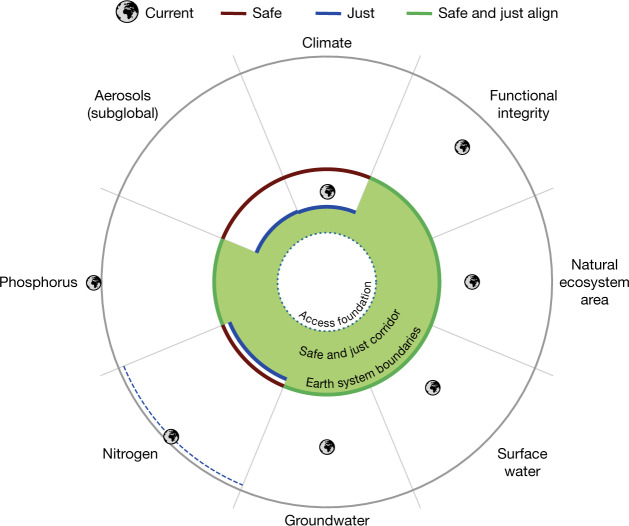
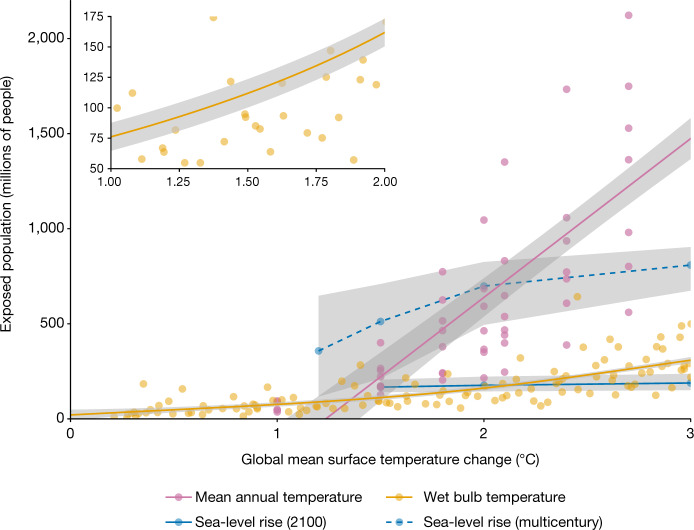
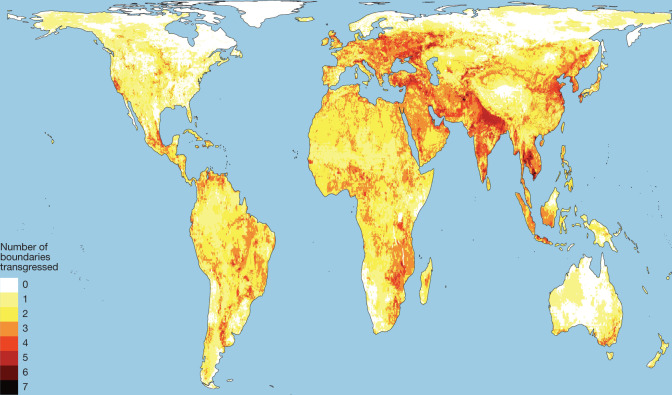
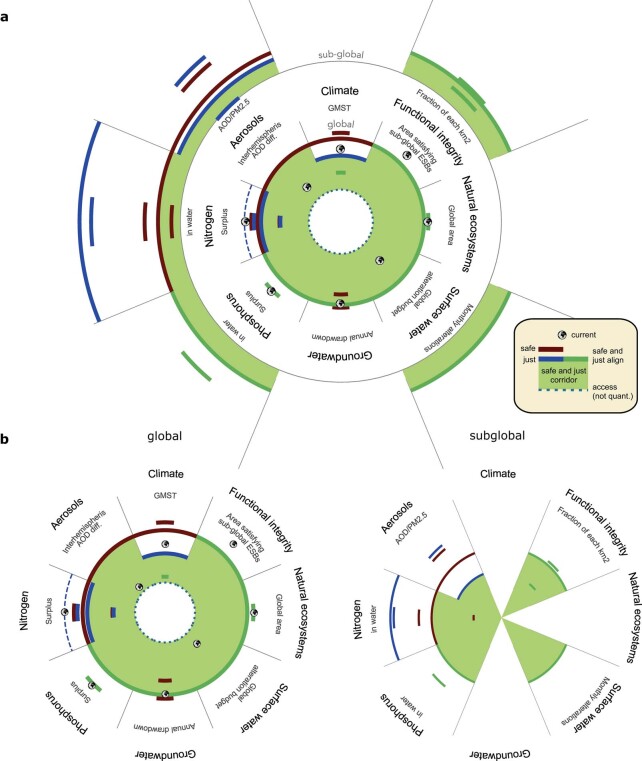
Verification
Claims the paper makes
The claims and statistics of this paper haven’t been checked yet.
Free: it reads the open-access text and checks the first 5 claims that cite a source we can check. Create a free account to check every claim.
Claims other papers make about this one
Each is checked against this paper’s own text: does it say what the citing paper says it does?
In the citing paper
“The accelerating socioeconomic trends of the past century [232] have put us on a path toward exceeding seven of eight globally defined safe and just Earth system boundaries that would provide safe living conditions for all humanity within the boundaries of the living systems on Earth [219].”
From Sustainability in computing education: A systematic literature review (2024) · cites this paper as [219]
Self-check
Percentages, sums and reported differences re-computed from the paper’s own numbers.
The self-check needs the paper’s full text.
Citations
Cites
A safe operating space for humanity
Rockström, J., Steffen, W., Noone, K., Persson, Å., Chapin, F. S., Lambin, E. F., Lenton, T. M., Scheffer, M., Folke, C., Schellnhuber, H. J., et al. (2009) · Nature · doi:10.1038/461472a · Cited by 13,333
Self-citationPlanetary boundaries: Guiding human development on a changing planet
Steffen, W., Richardson, K., Rockström, J., Cornell, S. E., Fetzer, I., Bennett, E. M., Biggs, R., Carpenter, S. R., de Vries, W., de Wit, C. A., et al. (2015) · Science · doi:10.1126/science.1259855 · Cited by 12,527 · cited 6×
“We note that the area of largely natural ecosystems replaces the “land boundary” in the planetary boundaries concept, which implied “largely intact lands” or areas of high biodiversity intactness (Steffen et al. 2015).”
InfluentialSelf-citationCohen, A. J., Brauer, M., Burnett, R., Anderson, H. R., Frostad, J., Estep, K., Balakrishnan, K., Brunekreef, B., Dandona, L., Dandona, R., et al. (2017) · The Lancet · doi:10.1016/s0140-6736(17)30505-6 · Cited by 6,583
Poff, N. L., Allan, J. D., Bain, M. B., Karr, J. R., Prestegaard, K. L., Richter, B. D., Sparks, R. E., & Stromberg, J. C. (1997) · BioScience · doi:10.2307/1313099 · Cited by 6,500
Four billion people facing severe water scarcity
Mekonnen, M. M., & Hoekstra, A. Y. (2016) · Science Advances · doi:10.1126/sciadv.1500323 · Cited by 5,531
Tipping elements in the Earth’s climate system
Lenton, T. M., Held, H., Kriegler, E., Hall, J. W., Lucht, W., Rahmstorf, S., & Schellnhuber, H. J. (2008) · Proceedings of the National Academy of Sciences · doi:10.1073/pnas.0705414105 · Cited by 3,982 · cited 1×
“Tipping elements: Those components or processes that regulate the functioning and state of the planet and that show evidence of having thresholds at which small additional perturbations can trigger selfreinforcing changes that undermine Earth system resilience (Lenton et al. 2008; Armstrong McKay et al. 2022).”
Self-citationEmerging threats and persistent conservation challenges for freshwater biodiversity
Reid, A. J., Carlson, A. K., Creed, I. F., Eliason, E. J., Gell, P. A., Johnson, P. T. J., Kidd, K. A., MacCormack, T. J., Olden, J. D., Ormerod, S. J., et al. (2019) · Biological Reviews · doi:10.1111/brv.12480 · Cited by 3,645
Options for keeping the food system within environmental limits
Springmann, M., Clark, M., Mason-D’Croz, D., Wiebe, K., Bodirsky, B. L., Lassaletta, L., de Vries, W., Vermeulen, S. J., Herrero, M., Carlson, K. M., et al. (2018) · Nature · doi:10.1038/s41586-018-0594-0 · Cited by 3,380
Self-citationBasic Principles and Ecological Consequences of Altered Flow Regimes for Aquatic Biodiversity
BUNN, S. E., & ARTHINGTON, A. H. (2002) · Environmental Management · doi:10.1007/s00267-002-2737-0 · Cited by 3,379
Self-citationIPBES (2019) · Socio-Environmental Systems Modeling · doi:10.5281/zenodo.3831673 · Cited by 3,354
Research works printed but not linked: 15
- IPCC Climate Change 2022: Impacts, Adaptation, and Vulnerability (eds Pörtner, H.-O. et al.) (Cambridge Univ. Press, 2022).
- IPCC Climate Change 2021: The Physical Science Basis (eds Masson-Delmotte, V. et al.) (Cambridge Univ. Press, 2021).
- O’Neill, B. et al. in Climate Change 2022: Impacts, Adaptation, and Vulnerability (eds Pörtner, H.-O. et al.) 2411–2538 (Cambridge Univ. Press, 2022).
- Parmesan, C. et al. in Climate Change 2022: Impacts, Adaptation, and Vulnerability (eds Pörtner, H.-O. et al.) 197–377 (Cambridge Univ. Press, 2022).
- WHO Guidelines for Drinking-water Quality 4th edn (World Health Organization, 2022); https://www.who.int/publications/i/item/9789240045064. 35417116
- Tirado, R. & Allsopp, M. Phosphorus in Agriculture: Problems and Solutions. Technical report (review) (Greenpeace, 2012); https://www.greenpeace.to/greenpeace/wp-content/uploads/2012/06/tirado-and-allsopp-2012-phosphorus-in-agriculture-technical-report-02-2012.pdf.
- Douville, H. et al. in Climate Change 2021: The Physical Science Basis (eds Masson-Delmotte, V. et al.) 1055–1210 (Cambridge Univ. Press, 2021).
- WHO Global Air Quality Guidelines: Particulate Matter (PM2.5and PM10), Ozone, Nitrogen Dioxide, Sulfur Dioxide and Carbon Monoxide (WHO, 2021); https://apps.who.int/iris/handle/10665/345329. 34662007
- EPA. Review of the national ambient air quality standards for particulate matter. Environmental Protection Agency. 40 CFR Part 50. Fed. Regis. Rules Regul. 85, 82684–82748 (2020).
- Biggs, R. et al. in Encyclopedia of Theoretical Ecology (eds Hastings, A. & Gross, L.) 609–617 (Univ. of California Press, 2012).
- Owusu, K. A., Kulesz, M. M. & Merico, A. Extraction behaviour and income inequalities resulting from a common pool resource exploitation. Sustain. Sci. Pract. Policy 11, 536 (2019).
- IPCC Climate Change 2022: Impacts, Adaptation, and Vulnerability (eds Pörtner, H.-O. et al.) (Cambridge Univ. Press, 2022).
- Fox-Kemper, B. et al. in Climate Change 2021: The Physical Science Basis (eds Masson-Delmotte, V. et al.) 1211–1362 (Cambridge Univ. Press, 2021).
- Shaw, R. et al. in Climate Change 2022: Impacts, Adaptation, and Vulnerability (eds Pörtner, H.-O. et al.) 1457–1579 (Cambridge Univ. Press, 2022).
- Klein Goldewijk, K., Beusen, A., Doelman, J. & Stehfest, E. Anthropogenic land use estimates for the Holocene–HYDE 3.2. Earth Syst. Monit. 9, 927–953 (2017).
Cited by
Items 201–300 of 1,001
Green growth in the mirror of history
Infante‐Amate, J., Travieso, E., & Aguilera, E. (2025) · Nature Communications · doi:10.1038/s41467-025-58777-4 · Cited by 24
Exploration of public discussion around sustainable consumption on social media
Sipilä, J., Tarkiainen, A., & Levänen, J. (2024) · Resources Conservation and Recycling · doi:10.1016/j.resconrec.2024.107505 · Cited by 27
Value stream mapping for sustainability: A management tool proposal for more sustainable companies
Silva, E. S., Agostinho, F., Almeida, C. M. V. B., Liu, G., & Giannetti, B. F. (2024) · Sustainable Production and Consumption · doi:10.1016/j.spc.2024.04.009 · Cited by 26
Lv, J., Gui, D., Zhang, Y., Li, R., Chen, X., & Sha, Z. (2023) · Scientia Horticulturae · doi:10.1016/j.scienta.2023.112769 · Cited by 23
Li, Z., Yang, Y.-C., Wang, X., Qi, Y.-B., & Yang, X. (2025) · Plant and Soil · doi:10.1007/s11104-025-07608-y · Cited by 26
“The agricultural sector, particularly arable soils, is the largest contributor to anthropogenic N ₂ O emissions, exceeding the safe planetary boundary and threatening sustainable development (Liang et al. 2024; Rockstrom et al. 2023).”
The role of critical remote sensing in environmental justice struggles
Segarra, J., González‐Fernández, A., Covarrubias, J. O., & Couturier, S. (2024) · Progress in Environmental Geography · doi:10.1177/27539687241269331 · Cited by 26
“Recent accounts of global environmental change have included the concept of injustice within the planetary boundary framework (Rockström et al. 2023).”
Romero, J. C., Linares, P., Matas, A. F. R., & Bravo, M. P. (2024) · Energy · doi:10.1016/j.energy.2024.134204 · Cited by 24
“The transition towards a sustainable socioeconomic model that mitigates the worst conse-26 quences of climate change is in progress [15], with the EU taking a leading role through the European Green Deal, aiming at carbon neutrality by 2050 [16].”
What is needed to act as a professional change agent for sustainability? A scoping review
Singer‐Brodowski, M., Henkel, G., Reith, A., Frank, P., & Rieckmann, M. (2025) · International Review of Education · doi:10.1007/s11159-024-10092-8 · Cited by 25
“Against the backdrop of accelerating and interconnected problems, such as crossing planetary boundaries and thereby risking a safe operating space for humanity on Earth (Rockström et al. 2023), the international agenda on sustainable development aims to stay within planetary boundaries and contribute to inter-and intr…”
Berger, M., Gerbens-Leenes, P. W., Karandish, F., Aldaya, M. M., Boulay, A., Hogeboom, R. J., Link, A., Manzardo, A., Mialyk, O., Motoshita, M., et al. (2025) · Ecological Indicators · doi:10.1016/j.ecolind.2025.113458 · Cited by 22
Surging blue economy, increasing conflict risks and mitigation strategies
Sumaila, U. R., & Villasante, S. (2025) · Frontiers in Marine Science · doi:10.3389/fmars.2025.1499386 · Cited by 22
Kühner, C., Hüffmeier, J., & Zacher, H. (2025) · Industrial and Organizational Psychology · doi:10.1017/iop.2025.10015 · Cited by 34
“Escalating environmental crises such as climate change, depletion of natural resources, pollution, and biodiversity loss seriously threaten the planetary boundaries for a safe and healthy life (Richardson et al., 2023; Rockström et al., 2023).”
Stenzel, F., Ben-Uri, L., Braun, J., Breier, J., Erb, K., Gerten, D., Haberl, H., Matej, S., Milo, R., Ostberg, S., et al. (2025) · One Earth · doi:10.1016/j.oneear.2025.101393 · Cited by 25
Self-citationThe implications of overshooting 1.5 °C on Earth system tipping elements—a review
Ritchie, P. D. L., Steinert, N. J., Abrams, J. F., Alkhayuon, H., Arnscheidt, C. W., Bochow, N., Chapman, R. R., Clarke, J., Dennis, D., Donges, J. F., et al. (2026) · Environmental Research Letters · doi:10.1088/1748-9326/ae3cad · Cited by 25
Self-citationSolidarity for the Anthropocene
Tong, S., Samet, J. M., Steffen, W., Kinney, P. L., & Frumkin, H. (2023) · Environmental Research · doi:10.1016/j.envres.2023.116716 · Cited by 22
Sarkki, S., Haanpää, O., Heikkinen, H. I., Hiedanpää, J., Kikuchi, K., & Räsänen, A. (2023) · AMBIO · doi:10.1007/s13280-023-01942-0 · Cited by 30
“Current sustainability challenges, including climate change, biodiversity loss and enhancing human well-being, require urgent solutions to balance environmental and social aspects (Rockstro¨m et al. 2023).”
BackgroundLeimona, B., Mithöfer, D., Wibawa, G., & van Noordwijk, M. (2024) · Current Opinion in Environmental Sustainability · doi:10.1016/j.cosust.2023.101393 · Cited by 29
Joel, O. T., & Oguanobi, V. U. (2024) · Engineering Science & Technology Journal · doi:10.51594/estj.v5i5.1110 · Cited by 22
Nature’s contributions to social determinants of mental health and the role of conservation
Pienkowski, T., Keane, A. M., Booth, H. L., Kinyanda, E., Fisher, J. C., Lawrance, E. L., Oh, R. R. Y., & Milner‐Gulland, E. J. (2024) · One Earth · doi:10.1016/j.oneear.2024.05.004 · Cited by 26
Huggins, X., Gleeson, T., Villholth, K. G., Rocha, J., & Famiglietti, J. S. (2024) · Water Resources Research · doi:10.1029/2023wr036287 · Cited by 27
“Groundwater is increasingly studied through an Earth system lens (Gleeson, Cuthbert, et al., 2020; Gleeson, Wang‐Erlandsson, et al., 2020), and is recognized as a critical resource that affects overall Earth system resilience (Rockström et al., 2023).”
Self-citationFair vs. fake touristic degrowth
Blanco-Romero, A., Blázquez-Salom, M., & Fletcher, R. (2023) · Tourism Recreation Research · doi:10.1080/02508281.2023.2248578 · Cited by 24
“Safeguarding the global commons for all people now and into the future requires taking in consideration safe and just planetary boundaries (Rockström et al., 2023).”
Circularity and livestock diversity: Pathways to sustainability in intensive pig farming regions
Rodríguez, J. Á., Ryschawy, J., Grillot, M., & Martin, G. (2023) · Agricultural Systems · doi:10.1016/j.agsy.2023.103809 · Cited by 22
An environmental and socially just climate mitigation pathway for a planet in peril
Ripple, W. J., Wolf, C., van Vuuren, D. P., Gregg, J. W., & Lenzen, M. (2024) · Environmental Research Letters · doi:10.1088/1748-9326/ad059e · Cited by 21
The split ladder of participation: A literature review and dynamic path forward
Hurlbert, M., & Gupta, J. (2024) · Environmental Science & Policy · doi:10.1016/j.envsci.2024.103773 · Cited by 21
Self-citationLi, X., Wang, X., Engel, B. A., Hua, E., Sun, S., Wu, P., & Wang, Y. (2024) · Sustainable Production and Consumption · doi:10.1016/j.spc.2024.05.018 · Cited by 21
What is the Strategy of Strategy to Tackle Climate Change?
Wickert, C. M. J., & Muzio, D. (2024) · Journal of Management Studies · doi:10.1111/joms.13114 · Cited by 22
Semlali, Y., Elrayah, M., Sabri, M., Zighed, R., & Bengana, I. (2024) · Sustainability · doi:10.3390/su16198629 · Cited by 27
Jin, L., Li, T., Fang, X., Zhao, X., Huang, H., & Ren, H. (2024) · npj Clean Water · doi:10.1038/s41545-024-00415-5 · Cited by 22
A social-ecological-technological vulnerability approach for assessing urban hydrological risks
Khromova, S., Villalba, G., Eckelman, M. J., Cantis, P. H., & Langemeyer, J. (2025) · Ecological Indicators · doi:10.1016/j.ecolind.2025.113334 · Cited by 23
Climate-driven systemic risk to the sustainable development goals
Ciullo, A., Franzke, C. L. E., Scheffran, J., & Sillmann, J. (2025) · PLOS Climate · doi:10.1371/journal.pclm.0000564 · Cited by 24
“Understanding impacts of systemic risk requires a holistic and transdisciplinary view, because not only is the overall risk greater than the sum of individual risks [19], but it can also trigger new events potentially crossing the planetary boundaries with system-destabilizing consequences [20].”
Ayers, A. J. (2023) · Critical Sociology · doi:10.1177/08969205231195229 · Cited by 26
“…planetary life support systems identified as critical to human survival, at least five have been surpassed: loss of biosphere integrity, land-system change, altered biogeochemical cycles (phosphorous and nitrogen), chemical pollution, and climate change (Foster, 2012; Rockström et al., 2009, 2023).”
BackgroundAccelerating the Renewable Energy Revolution to Get Back to the Holocene
Abbott, B. W., Abrahamian, C., Newbold, N., Smith, P., Merritt, M., Sayedi, S. S., Bekker, J., Greenhalgh, M., Gilbert, S. L., King, M. D., et al. (2023) · Earth s Future · doi:10.1029/2023ef003639 · Cited by 21
“…approaches to siting of renewable infrastructure is critical not only for ensuring political support, but also for reducing impacts on vulnerable human communities and the biodiversity and ecosystem services on which we depend (Carley & Konisky, 2020; Errigo et al., 2020; Rockström et al., 2023).”
BackgroundGünther, P., & Ekardt, F. (2023) · Frontiers in Climate · doi:10.3389/fclim.2023.1276606 · Cited by 20
“…that safe and just planetary boundaries on land use have already been exceeded due to the rapid expansion of land used for food production (Steffen et al., 2015, 2018; Rockström et al., 2023), it appears near certain that there are land availability constraints on the competing land-use approaches.”
Ten questions concerning absolute sustainability in the built environment
Andersen, S. C., Petersen, S., Ryberg, M. W., Molander, L. L., & Birkved, M. (2024) · Building and Environment · doi:10.1016/j.buildenv.2024.111220 · Cited by 24
Maier, R., Gerres, T., Tuerk, A., & Mey, F. (2024) · Global Environmental Change · doi:10.1016/j.gloenvcha.2024.102846 · Cited by 21
Uncertain Pathways to a Future Safe Climate
Sherwood, S. C., Hegerl, G. C., Braconnot, P., Friedlingstein, P., Goelzer, H., Harris, N., Holland, E. A., Kim, H., Mitchell, M., Naish, T., et al. (2024) · Earth s Future · doi:10.1029/2023ef004297 · Cited by 23
“The Paris agreement targets are one example of a science‐informed boundary for climate, which is complemented by Earth system boundaries (ESBs) to identify just and safe limits for other components or measures of the Earth‐ human system (Rockstrom et al., 2023).”
BackgroundBiotic Deterioration and Homogenization: Why It Matters
Hessen, D. O. (2024) · International Journal of Politics Culture and Society · doi:10.1007/s10767-024-09498-x · Cited by 22
City–company collaboration towards aligned science-based target setting
Kılkış, Ş., Bjørn, A., Bai, X., Liu, J., Whiteman, G., Crona, B., Andersen, L. S., Hasan, S., Vijay, V., & Muñoz, O. S. (2024) · Nature Sustainability · doi:10.1038/s41893-024-01473-w · Cited by 25
Self-citationBasiru, S., Mhand, K. A. S., & Hijri, M. (2024) · Applied Soil Ecology · doi:10.1016/j.apsoil.2024.105799 · Cited by 20
Qu, S., Jiang, Y., Gao, J., Wang, L., Chen, Q., Zhang, Y., & Huang, F. (2024) · Land Degradation and Development · doi:10.1002/ldr.5427 · Cited by 21
“To achieve sustainable rural development, social development must be kept within environmental limits (Rockström et al. 2023).”
AtmoRep: A stochastic model of atmosphere dynamics using large scale representation learning
Lessig, C., Luise, I., Gong, B., Langguth, M., Stadtler, S., & Schultz, M. (2023) · arXiv · doi:10.48550/arxiv.2308.13280 · Cited by 19
“Computer simulations of atmospheric dynamics are, therefore, of great importance for the well-being of our and future generations [1, 2].”
BackgroundIstrate, I.-R., Nabera, A., Pérez‐Ramírez, J., & Guillén‐Gosálbez, G. (2024) · One Earth · doi:10.1016/j.oneear.2024.11.005 · Cited by 19
Kumari, A., Ghosh, M., & Singh, M. P. (2025) · Canadian Journal of Administrative Sciences / Revue Canadienne des Sciences de l Administration · doi:10.1002/cjas.70004 · Cited by 21
The history of a + 3 °C future: Global and regional drivers of greenhouse gas emissions (1820–2050)
Infante‐Amate, J., Travieso, E., & Aguilera, E. (2025) · Global Environmental Change · doi:10.1016/j.gloenvcha.2025.103009 · Cited by 24
Applying assessment methods to diversified farming systems: Simple adjustment or complete overhaul?
Magne, M.-A., Alaphilippe, A., Bérard, A., Cournut, S., Dumont, B., Gosme, M., Hedde, M., Morel, K., Mugnier, S., Parnaudeau, V., et al. (2024) · Agricultural Systems · doi:10.1016/j.agsy.2024.103945 · Cited by 23
Biodegradation of flavonoids – Influences of structural features
Schnarr, L., Olsson, O., & Kümmerer, K. (2024) · Chemosphere · doi:10.1016/j.chemosphere.2024.142234 · Cited by 22
Nitrogen-phosphorus conservation and trade-offs in mangroves
Ishfaq, M., Tam, N. F. Y., Lang, T., Hussain, M., & Zhou, H. (2025) · Plant and Soil · doi:10.1007/s11104-024-07130-7 · Cited by 23
“Global climate change, including high temperature, elevated atmospheric CO 2 , sea-level rise and irregular flooding, poses a threat to ecosystem functioning and services (Lovelock et al. 2015; Rockstroem et al. 2023; Chung et al. 2023; van Bijsterveldt et al. 2023).”
Zhang, J., Ji, Q., Skene, K. R., Wu, X., Zhou, C., Wang, S., & Fu, B. (2025) · Regional Environmental Change · doi:10.1007/s10113-025-02442-5 · Cited by 21
“…that, in meeting the minimum societal needs (e.g., food, energy, water, and other resources), human activities must not exceed the maximum environmental boundaries, such as pollution emissions and resource consumption, particularly with respect to non-renewable resources (Rockström et al. 2023).”
Vingerhoets, R., Brienza, C., Sigurnjak, I., Buysse, J., Vlaeminck, S. E., Spiller, M., & Meers, E. (2023) · Chemical Engineering Journal · doi:10.1016/j.cej.2023.146984 · Cited by 18
Lam, V., & Rousselot, Y. (2024) · European Journal for Philosophy of Science · doi:10.1007/s13194-024-00579-4 · Cited by 20
“In recent years, work on planetary boundaries and Earth system justice (such as Gupta et al., 2023 and Rockström et al., 2023) has been produced within the framework of the Earth Commission network, which is hosted by the international science initiative Future Earth ; these programs aim to foster…”
InfluentialKramar, A., González‐Benito, J., Nikolić, N., Larrañaga, A., & Lizundia, E. (2024) · International Journal of Biological Macromolecules · doi:10.1016/j.ijbiomac.2024.132046 · Cited by 19
“Driven by the scarcity of raw materials, declining availability of fossil resources, and the climate crisis, there is an urgent need to transition from a linear economy, based on fossil-derived materials, to a sustainable circular economy based on renewable materials [1,2].”
Marketing in the anthropocene: A future agenda for research and practice
Bocken, N. M. P., Nießen, L., Gossen, M., Das, A., & Zielińska, M. (2025) · AMS Review · doi:10.1007/s13162-025-00300-5 · Cited by 22
“…six planetary boundaries and is also facing extensive environmental degradation and increasing extreme weather events (Richardson et al., 2023; Rockström et al., 2023), this era is dubbed the “Anthropocene” where humans are shaping earth’s geophysical cycles and the relations with the living…”
The Earth alignment principle for artificial intelligence
Gaffney, O., Luers, A. L., Carrero-Martínez, F., Oztekin-Gunaydin, B., Creutzig, F., Dignum, V., Galaz, V., Ishii, N., Larosa, F., Leptin, M., et al. (2025) · Nature Sustainability · doi:10.1038/s41893-025-01536-6 · Cited by 23
Agyekum, K., Sackey, K. N. Y. S., Addoh, F. E., Pittri, H., Sosu, J., & Danso, F. O. (2025) · Buildings · doi:10.3390/buildings15101750 · Cited by 17
“Rockström et al. [31] highlighted that exceeding Earth’s environmental boundaries endangers the health and livelihoods of future generations.”
Wan, R., Ge, L., Chen, B., Tang, J., Tan, E., Zou, W., Li, T., Li, M., Liu, Z., Hou, L., et al. (2023) · Water Research · doi:10.1016/j.watres.2023.120400 · Cited by 17
Pitfalls for the sustainability of forest transitions: evidence from Southeast Asia
Kull, C. A., Bartmess, J., Dressler, W., Gingrich, S., Grodzicki, M., Jasikowska, K., Łapniewska, Z., Mansourian, S., Nguyen, V. T. H., Persson, J., et al. (2024) · Environmental Conservation · doi:10.1017/s0376892924000079 · Cited by 20
Alkorta, I., & Garbisu, C. (2024) · Reviews on Environmental Health · doi:10.1515/reveh-2024-0013 · Cited by 18
Escaping the Loop of Unsustainability: Why and How Business Ethics Matters for Earth System Justice
Schneider, A., & Murray, J. A. (2024) · Journal of Business Ethics · doi:10.1007/s10551-024-05728-6 · Cited by 18
“…the role of business in Earth system dynamics, they either overlook the role of business and focus on technical and macro-economic considerations (see, e.g. Rockström et al., 2023) or are vague about the specific implications of a transition towards a more sustainable society for business.”
Urban emissions and land use efficiency scenarios for avoiding increments of global warming
Kılkış, Ş. (2024) · Energy · doi:10.1016/j.energy.2024.132174 · Cited by 19
Cao, J., Yang, X., Guo, M., Wu, Y., & Wang, C. (2024) · The Science of The Total Environment · doi:10.1016/j.scitotenv.2024.175494 · Cited by 17
Anticipating socio-technical tipping points
Mey, F., Mangalagiu, D., & Lilliestam, J. (2024) · Global Environmental Change · doi:10.1016/j.gloenvcha.2024.102911 · Cited by 17
Lersch, J., Tang, R., Weibelzahl, M., Weissflog, J., & Wu, Z. (2024) · Applied Energy · doi:10.1016/j.apenergy.2024.124743 · Cited by 20
“Current human activities, particularly the reliance on fossil fuel extraction and consumption, pose a severe threat to environmental stability [1], putting us at risk of triggering tipping points that irreversibly disrupt the Earth’s system [2].”
Mertens, J., Breyer, C., Belmans, R. J. M., Gendron, C., Geoffron, P., Fischer, C., Fornel, E. D., Lester, R. K., Nicholas, K. A., Miranda, P., et al. (2024) · iScience · doi:10.1016/j.isci.2024.111418 · Cited by 17
Exploring the Interface Between Planetary Boundaries and Palaeoecology
Gillson, L., Seddon, A. W. R., Mottl, O., Zhang, K., Kirsten, K. L., Gell, P., Marchant, R., Schwörer, C., Razanatsoa, E., Lane, P. J., et al. (2025) · Global Change Biology · doi:10.1111/gcb.70017 · Cited by 17
Human flourishing: An integrated systems approach to development post 2030
Zwitter, A., Bloch, C., Ellis, G., Hecht, R. D., Hernández, A. M., Hoffman, W., Rickles, D., Sukhomlinova, V., & Ura, K. (2025) · Earth System Governance · doi:10.1016/j.esg.2025.100236 · Cited by 17
Closing decent living gaps in energy and emissions scenarios: introducing DESIRE
Kikstra, J., Daioglou, V., Min, J., Sferra, F., Soergel, B., Kriegler, E., Lee, H., Mastrucci, A., Pachauri, S., Rao, N. D., et al. (2025) · Environmental Research Letters · doi:10.1088/1748-9326/adc3ad · Cited by 18
“…either from an ecological perspective and development perspective or both, such as the ‘safe and just Earth system boundaries’ (Gupta et al 2023, Rockström et al 2023), linked to ‘doughnut’ or ‘safe and just operating space’ (Raworth 2017, O’Neill et al 2018, Fanning et al 2022), the…”
Šedajová, V., Nandi, D., Langer, P., Lo, R., Hobza, P., Plachá, D., Bakandritsos, A., & Zbořil, R. (2025) · Journal of Colloid and Interface Science · doi:10.1016/j.jcis.2025.137481 · Cited by 17
Heo, H., Nguyen-Dinh, T., Jung, M., Greening, C., & Yoon, S. (2025) · The ISME Journal · doi:10.1093/ismejo/wraf092 · Cited by 19
“Although indispensable as a nutrient, the excessive release of anthropogenic reactive nitrogen into the environment poses significant threats to global sustainability by exacerbating nutrient pollution and climate change [2–4].”
Solar parks as livestock enclosures can become key to linking energy, biodiversity and society
Zaplata, M. K. (2023) · People and Nature · doi:10.1002/pan3.10522 · Cited by 17
Generating regenerative agriculture
Garbisu, C., Unamunzaga, O., & Alkorta, I. (2025) · Frontiers in Sustainable Food Systems · doi:10.3389/fsufs.2025.1545811 · Cited by 17
Rajagopal, R., Bohnes, F. A., Kukić, P., Rigarlsford, G., Vandenbossche, E., Campos, B., Davies, C., Malcomber, I., Maxwell, G., & Sim, S. (2025) · iScience · doi:10.1016/j.isci.2025.113116 · Cited by 18
“Furthermore, the majority of the PBs have been exceeded at the Earth system level, thereby negating their usefulness for SSbD. 32,33 A more pragmatic and practical approach is to focus on relative comparisons of alternative materials and products with a focus on reduced potential environmental…”
ESD Ideas: Climate tipping is not instantaneous – the duration of an overshoot matters
Ritchie, P. D. L., Huntingford, C., & Cox, P. M. (2025) · Earth System Dynamics · doi:10.5194/esd-16-1523-2025 · Cited by 16
Principles for a post-growth scenario of ambitious mitigation and high human well-being
Slameršak, A., Fisch-Romito, V., Hickel, J., Kikstra, J., Millward-Hopkins, J., Oswald, Y., & Steinberger, J. K. (2026) · Nature Climate Change · doi:10.1038/s41558-026-02580-6 · Cited by 20
Gupta, J., Chen, Y., McKay, D. I. A., Fezzigna, P., Gentile, G., Karg, A., van Vliet, L., Lade, S. J., & Jacobson, L. (2024) · International Environmental Agreements Politics Law and Economics · doi:10.1007/s10784-024-09628-y · Cited by 16
“Indeed, as 2023), and Lenton et al. (2023).”
InfluentialSelf-citationIdentifying social tipping point through perceived peer effect
Peng, Y., & Bai, X. (2024) · Environmental Innovation and Societal Transitions · doi:10.1016/j.eist.2024.100847 · Cited by 18
Self-citationKeeping Nitrogen Use in China within the Planetary Boundary Using a Spatially Explicit Approach
Chen, X., Strokal, M., van Vliet, M. T. H., Liu, L., Bai, Z., Ma, L., & Kroeze, C. (2024) · Environmental Science & Technology · doi:10.1021/acs.est.4c00908 · Cited by 20
“As other large-scale studies for regional N boundaries, 2 − 4,7 we used the uniformed threshold for all river sections.”
BackgroundMethodBurgeoning food demand outpaces sustainable water supply in China
Shi, S., Zhou, S., Lei, Y., Harrison, M. T., Liu, K., Chen, F., & Yin, X. (2024) · Agricultural Water Management · doi:10.1016/j.agwat.2024.108936 · Cited by 18
Paes, L. A. B., Bezerra, B. S., Jugend, D., & Agudo, F. L. (2024) · Environmental Development · doi:10.1016/j.envdev.2024.101039 · Cited by 22
Wiese, F., Zell-Ziegler, C., Burghardt, C., Kloos, Y., & Schäfer, M. (2024) · Environmental Research Communications · doi:10.1088/2515-7620/ad966e · Cited by 16
Deepening the Conversation on Systemic Sustainability Risks: A Social-Ecological Systems Approach
Ahlström, H., Williams, A. N., Wassénius, E., & Downing, A. S. (2024) · Journal of Business Ethics · doi:10.1007/s10551-024-05860-3 · Cited by 18
“Rockström et al. (2023) published Earth system boundaries, which quantify and readjust the planetary boundaries to consider justice—i.e., avoiding significant harm to human populations in current and future generations.”
Teng, Z., Xia, H., & He, Y. (2025) · Systems · doi:10.3390/systems13060400 · Cited by 16
“Recent high-impact studies, such as those by Rockström et al. [45] and Friedlingstein et al. [46], further reinforce the validity of this metric, highlighting its role as a composite reflection of unsustainable energy use, economic structures, and institutional practices.”
Ecological economics into action: Lessons from the Barcelona City doughnut
Cattaneo, C., Lemos, M. M. H., Humpert, V., Montlleó, M., Tello, E., & Demaria, F. (2025) · Ecological Economics · doi:10.1016/j.ecolecon.2025.108667 · Cited by 16
Beyond tipping points: risks, equity, and the ethics of intervention
Pereira, L. M., Smith, S. R., Gifford, L., Newell, P. J., Villasante, S., Achieng, T., Castro, A., Constantino, S. M., Powell, T., Ghadiali, A., et al. (2025) · Earth System Dynamics · doi:10.5194/esd-16-1267-2025 · Cited by 18
Self-citationStrenge, E., Zoboli, O., Mehdi, B., Párajka, J., Schönhart, M., Krampe, J., & Zessner, M. (2023) · Journal of Environmental Management · doi:10.1016/j.jenvman.2023.119023 · Cited by 16
Yang, S. T., Hu, A., Zhang, J., Yu, W., Wu, X., Huang, Y., Zhou, S., Li, B. J., & Wang, G. (2025) · Water Research · doi:10.1016/j.watres.2025.123745 · Cited by 15
Marquardt, J., Pfeiffer, F., Blum, M., Daw, T. M., Dugasseh, F. A., Heitzig, J., Hysing, E., Jensen, I. H. B., Kulha, K., Langkjær, F., et al. (2025) · Sustainability Science Practice and Policy · doi:10.1080/15487733.2025.2504239 · Cited by 23
“Addressing sustainability challenges is not only about reducing emissions or preserving “natural” environments within defined “planetary boundaries” (Rockström et al. 2023).”
Post-growth economics: a must for planetary health justice
van Woerden, W., van de Pas, R., & Curtain, J. (2023) · Globalization and Health · doi:10.1186/s12992-023-00957-2 · Cited by 18
“A 2023 update of the planetary boundaries framework coined by Rockstrom and colleagues as “the safe operating space for humanity” showed that seven out of nine planetary boundaries are currently being transgressed, jeopardising the capacity of our planet to safeguard health and wellbeing [4].”
BackgroundGoverning for a safe and just future with science-based targets: opportunities and limitations
Gifford, L., Liverman, D. M., Gupta, J., & Jacobson, L. (2023) · Climate and Development · doi:10.1080/17565529.2023.2264255 · Cited by 16
“This paper draws on our work with the Earth Commission that seeks to connect new ‘Earth system boundaries’ (ESBs) that stabilize the Earth system – with goals for justice between people, generations, countries and among humans and other living things (Rockström et al., 2023).”
Self-citationBuilding Capabilities for Earth System Governance
Prantl, J., Barros-Platiau, A. F., Inoue, C. Y. A., Pereira, J. C., Ribeiro, T. L., & Viola, E. (2024) · Cambridge University Press eBooks · doi:10.1017/9781108854030 · Cited by 16
Decolonising national evaluation systems
Goldman, I., Morkel, C., Agbodjan, E. D., & Molaiwa, T. G. (2024) · African Evaluation Journal · doi:10.4102/aej.v12i2.731 · Cited by 15
Kumar, M., Tiwari, R. K., Rautela, K. S., Kumar, K., Khajuria, V., Verma, I., Safi, S., Almazroui, M., Kafy, A. ‐. A., Zhang, L., et al. (2024) · Earth Systems and Environment · doi:10.1007/s41748-024-00441-w · Cited by 17
“This pressure is continuously increasing over the past two decades because of population growth, human interference, the dynamic nature of the climate, etc.; resulting in a conflict between demand and sup - ply to fulfil basic requirements (Rockström et al. 2023).”
Oral, E. (2024) · International Environmental Agreements Politics Law and Economics · doi:10.1007/s10784-024-09645-x · Cited by 20
“A rights-based approach to the Earth system boundaries (Rockström et al., 2023) to ensure a safe and just operating space for civilization and humanity (Rockström et al., 2009) requires environmental action not only from within and across the United Nations (UN) but also from the civil society…”
Conceptual framework for considering animal welfare in sustainability assessments of foods
Richter, S., Scherer, L., Hegwood, M., Bartlett, H., Bossert, L. N., Frehner, A., & Schader, C. (2024) · Sustainable Production and Consumption · doi:10.1016/j.spc.2024.10.004 · Cited by 19
Thomassen, G., Eswaran, A., Passel, S. V., & Dewulf, J. P. (2024) · Environmental Science & Technology · doi:10.1021/acs.est.4c08688 · Cited by 18
Wu, L., Huang, K., Yu, Y., Ridoutt, B. G., Qu, S., & Xu, M. (2025) · Environmental Science & Technology · doi:10.1021/acs.est.4c08025 · Cited by 20
The great dispersal: The fall and rise of global environmental governance
Sörlin, S., Warde, P., Akerman, I., Hellgren, J. H., Höhler, S., Isberg, E., Paglia, E., Samosír, G., & Schrøder, T. H. (2025) · AMBIO · doi:10.1007/s13280-025-02177-x · Cited by 19
“The Planetary Boundaries framework has increasingly addressed these issues (Steffen et al 2015a, b; Rockstro¨m et al. 2023) and has also been suggested as a platform for new ideas of governance based on Earth System boundaries (Albritton Jonsson and Wennerlind 2023).”
Indian interstate trade exacerbates nutrient pollution in food production hubs
Goyal, S. S., Dave, R., Kumar, R., & Bhatia, U. (2024) · Communications Earth & Environment · doi:10.1038/s43247-023-01178-6 · Cited by 17
A Global-Scale Time Series Dataset for Groundwater Studies within the Earth System
Bäthge, A., Vargas, C. R., Lischeid, G., Collenteur, R., Cuthbert, M. O., Fleckenstein, J. H., Flörke, M., de Graaf, I. E. M., Gnann, S. J., Hartmann, A., et al. (2026) · Scientific Data · doi:10.1038/s41597-026-06966-1 · Cited by 17
“We understand that the Earth system is not only composed of natural components like the atmosphere, geosphere, hydrosphere, cryosphere, and biosphere 28 but also includes the anthroposphere 14 .”
Beyond the buzz: analyzing actors promoting regenerative agriculture in Europe
Schreefel, L., Steenman, E., Adler, F., Buffara, R., Freundt, S., DeClerck, F., Duncan, J., Giller, K. E., Koster, H., & van Zanten, H. H. E. (2025) · npj Sustainable Agriculture · doi:10.1038/s44264-025-00100-1 · Cited by 14
“These negative environmental impacts directly threaten global food security and human well-being 6 .”
Self-citationWang, Y., Chen, H., Zhao, H., Gao, J., Su, W., Zhu, M., Turner, B. L., Peñuelas, J., Whalen, J. K., Wang, Y., et al. (2025) · One Earth · doi:10.1016/j.oneear.2025.101449 · Cited by 15
Actions for sustainably scalable multi-terawatt photovoltaics
Wagner, L., Peters, I. M., Anctil, A., Davies, M., de Groot, J., Wang, L., Helmers, H., Pietzcker, R., & Goldschmidt, J. C. (2026) · Nature Reviews Clean Technology · doi:10.1038/s44359-025-00129-y · Cited by 18
“This perspective inspires the concept of planetary boundaries 204–206 , which define a safe operating space for humanity Building on these concepts and expanding the idea of sustainable yield to non-bio-based resources creates the concept of optimum sustainable yield of technologies.”
Metadata
- Authors
- Rockström, J., Gupta, J., Qin, D., Lade, S. J., Abrams, J. F., Andersen, L. S., Armstrong McKay, D. I., Bai, X., Bala, G., Bunn, S. E., Ciobanu, D., DeClerck, F., Ebi, K., Gifford, L., Gordon, C., Hasan, S., Kanie, N., Lenton, T. M., Loriani, S., Liverman, D. M., Mohamed, A., Nakicenovic, N., Obura, D., Ospina, D., Prodani, K., Rammelt, C., Sakschewski, B., Scholtens, J., Stewart-Koster, B., Tharammal, T., van Vuuren, D., Verburg, P. H., Winkelmann, R., Zimm, C., Bennett, E. M., Bringezu, S., Broadgate, W., Green, P. A., Huang, L., Jacobson, L., Ndehedehe, C., Pedde, S., Rocha, J., Scheffer, M., Schulte-Uebbing, L., de Vries, W., Xiao, C., Xu, C., Xu, X., Zafra-Calvo, N., & Zhang, X.
- Affiliations
- Stockholm Resilience Centre (SE)
- IHE Delft Institute for Water Education (NL)
- China Meteorological Administration (CN)
- Australian National University (AU)
- University of Exeter (GB)
- Leibniz Association (DE)
- Indian Institute of Science Bangalore (IN)
- Griffith University (AU)
- CGIAR (FR)
- University of Washington (US)
- University of Arizona (US)
- University of Ghana (GH)
- Keio University (JP)
- Universität Hamburg (DE)
- Coastal Oceans Research and Development in the Indian Ocean (KE)
- Future Earth (SE)
- University of Amsterdam (NL)
- Netherlands Environmental Assessment Agency (NL)
- Swiss Federal Institute for Forest, Snow and Landscape Research (CH)
- University of Potsdam (DE)
- International Institute for Applied Systems Analysis (AT)
- McGill University (CA)
- University of Kassel (DE)
- The Graduate Center, CUNY (US)
- Wageningen University & Research (NL)
- Chinese Academy of Sciences (CN)
- Nanjing University (CN)
- University of Maryland Center for Environmental Science (US)
- Corresponding author
- Rockström, Johan
- Lade, Steven J.
- ORCID
- Rockström, Johan
- Gupta, Joyeeta
- Lade, Steven J.
- Abrams, Jesse F.
- Andersen, Lauren S.
- Armstrong McKay, David I.
- Bai, Xuemei
- Bala, Govindasamy
- Bunn, Stuart E.
- Ciobanu, Daniel
- DeClerck, Fabrice
- Ebi, Kristie
- Gifford, Lauren
- Gordon, Christopher
- Hasan, Syezlin
- Kanie, Norichika
- Lenton, Timothy M.
- Loriani, Sina
- Liverman, Diana M.
- Mohamed, Awaz
- Obura, David
- Ospina, Daniel
- Prodani, Klaudia
- Rammelt, Crelis
- Sakschewski, Boris
- Scholtens, Joeri
- Stewart-Koster, Ben
- Tharammal, Thejna
- van Vuuren, Detlef
- Verburg, Peter H.
- Winkelmann, Ricarda
- Zimm, Caroline
- Bennett, Elena M.
- Bringezu, Stefan
- Broadgate, Wendy
- Green, Pamela A.
- Jacobson, Lisa
- Ndehedehe, Christopher
- Pedde, Simona
- Rocha, Juan
- Scheffer, Marten
- Schulte-Uebbing, Lena
- de Vries, Wim
- Xiao, Cunde
- Xu, Chi
- Zafra-Calvo, Noelia
- Zhang, Xin
- Venue
- Nature
- Published
- 2023-05-31
- Volume
- 619
- Issue
- 7968
- Pages
- 102-111
- ISSN
- 0028-0836 (ISSN-L)
- 1476-4687
- PMC
- PMC10322705
- OpenAlex
- W4378905467
- Semantic Scholar
- a8edd13b5e3c32453654f8d778fde8192c874d3e
- Cited by
- 1,400
- References
- 106
- Citations by year
- 2026: 364 · 2025: 452 · 2024: 438 · 2023: 145
- FWCI
- 157.19
- Type
- journal article
- Language
- en
- Open access
- hybrid
- doi.org
- Licence
- cc-by
- creativecommons.org/licenses/by/4.0 (tdm)
- creativecommons.org/licenses/by/4.0 (vor)
- Locations
- Nature (publishedVersion, cc-by)
- PubMed Central (publishedVersion, cc-by)
- PubMed (publishedVersion)
- VU Research Portal (publishedVersion, other-oa)
- ANU Open Research (Australian National University) (submittedVersion, cc-by)
- UA Campus Repository (The University of Arizona) (submittedVersion, cc-by)
- Communities in ADDI (University of the Basque Country) (submittedVersion, cc-by-nc-sa)
- CGSPace A Repository of Agricultural Research Outputs (Consultative Group for International Agricultural Research) (submittedVersion, cc-by)
- DORA WSL (Swiss Federal Institute for Forest, Snow and Landscape Research) (submittedVersion, cc-by)
- Socio-Environmental Systems Modeling (submittedVersion, cc-by)
- Open Research Exeter (University of Exeter) (submittedVersion, cc-by)
- Publication Database PIK (Potsdam Institute for Climate Impact Research (PIK)) (submittedVersion, cc-by)
- IIASA PURE (International Institute of Applied Systems Analysis) (submittedVersion, other-oa)
- Griffith Research Online (submittedVersion, cc-by)
- RePEc: Research Papers in Economics (submittedVersion)
- UvA-DARE (University of Amsterdam) (submittedVersion, cc-by)
- Utrecht University Repository (Utrecht University) (submittedVersion, other-oa)
- Figshare (submittedVersion, cc-by)
- Hispana (submittedVersion, cc-by-nc-sa)
- Greater South Information System
- Funders
- Open Society Foundations
- Gordon and Betty Moore Foundation
- Oak Foundation
- Global Environment Facility
- Australian Government (FT200100381)
- Porticus Foundation
- Svenska Forskningsrådet Formas (2020-00371)
- Vetenskapsrådet (ERC-2016-ADG 743080)
- Stockholms Universitet
- Tiina ja Antti Herlinin säätiö
- Australian Research Council (DE230101327)
- Japan Society for the Promotion of Science (18H03428)
- H2020 European Research Council (101020082)
- Topics
- Physical Sciences › Environmental Science › Global and Planetary Change › Sustainability and Climate Change Governance
- Physical Sciences › Environmental Science › Global and Planetary Change › Earth Systems and Cosmic Evolution
- Physical Sciences › Environmental Science › Global and Planetary Change › Land Use and Ecosystem Services
- Keywords
- planetary boundaries, planetary resilience, justice, climate change, biosphere, water cycle, nutrient cycling, atmospheric aerosols, global commons
- MeSH terms
- Nutrients, Environmental Justice, Aerosols, Climate, Humans, Safety, Water, Earth, Planet, Internationality, Climate Change
About these checks
Registry, retraction, Cites and statistics results are computed, not judged, with one exception: a printed reference that no index lists is read once by a model before it counts as a citation error. Claims are extracted by a model and kept only when their quote appears verbatim in the text; each cited source is then checked, with a model’s help, for whether it says what the claim relies on. Those verdicts can be wrong — read the claim’s quote and the cited source before relying on one.
Statistics and arithmetic are recomputed, not judged.
Confidence bands are shown only for fields calibrated on our annotated test set. None is calibrated yet, so no band is shown.
What counts as a claim ›How we measure confidence ›How we check this ›
Are you an author, or do you see a problem with this page? Request a review
Data sources
Bibliographic data: Semantic Scholar, OpenAlex, Crossref.
Contains information from the Semantic Scholar Academic Graph Datasets, made available under the ODC Attribution License (ODC-BY 1.0).
Semantic Scholar’s data is described in: Kinney, R., et al. (2023). The Semantic Scholar Open Data Platform. arXiv:2301.10140.
