

Safe and just Earth system boundaries
Open accessThe DOI matches its Crossref record; 120 of the 120 references it cites were found in a registry or an index.
Abstract
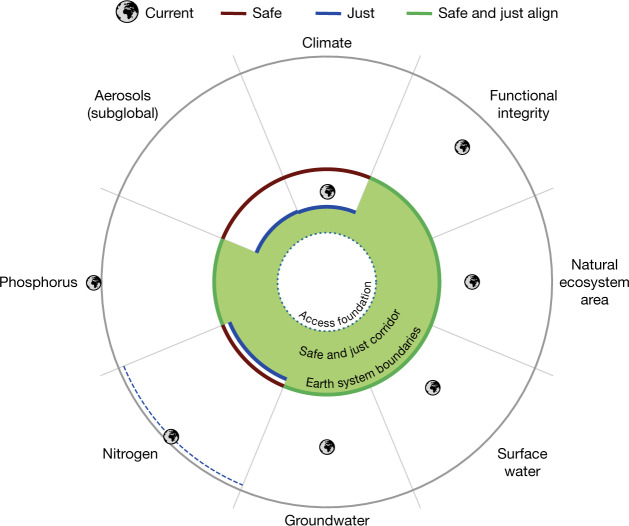
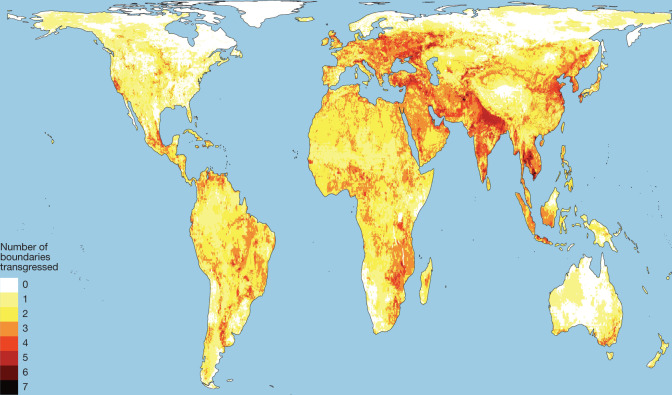
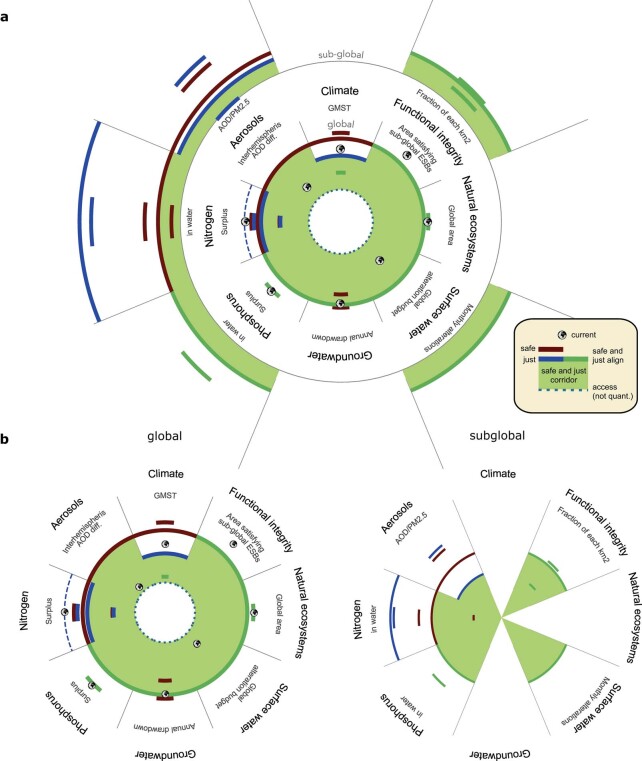
The stability and resilience of the Earth system and human well-being are inseparably linked 1–3 , yet their interdependencies are generally under-recognized; consequently, they are often treated independently 4,5 . Here, we use modelling and literature assessment to quantify safe and just Earth system boundaries (ESBs) for climate, the biosphere, water and nutrient cycles, and aerosols at global and subglobal scales. We propose ESBs for maintaining the resilience and stability of the Earth system (safe ESBs) and minimizing exposure to significant harm to humans from Earth system change (a necessary but not sufficient condition for justice) 4 . The stricter of the safe or just boundaries sets the integrated safe and just ESB. Our findings show that justice considerations constrain the integrated ESBs more than safety considerations for climate and atmospheric aerosol loading. Seven of eight globally quantified safe and just ESBs and at least two regional safe and just ESBs in over half of global land area are already exceeded. We propose that our assessment provides a quantitative foundation for safeguarding the global commons for all people now and into the future.
Overview
The claims and statistics of this paper haven’t been checked yet.
Free: it reads the open-access text and checks the first 5 claims that cite a source we can check. Create a free account to check every claim.
Integrity signals
Registry
Cites
Statistics
Figures
Verification
Claims the paper makes
The claims and statistics of this paper haven’t been checked yet.
Free: it reads the open-access text and checks the first 5 claims that cite a source we can check. Create a free account to check every claim.
Claims other papers make about this one
Each is checked against this paper’s own text: does it say what the citing paper says it does?
In the citing paper
“The accelerating socioeconomic trends of the past century [232] have put us on a path toward exceeding seven of eight globally defined safe and just Earth system boundaries that would provide safe living conditions for all humanity within the boundaries of the living systems on Earth [219].”
From Sustainability in computing education: A systematic literature review (2024) · cites this paper as [219]
Self-check
Percentages, sums and reported differences re-computed from the paper’s own numbers.
The self-check needs the paper’s full text.
Citations
Cites
A safe operating space for humanity
Rockström, J., Steffen, W., Noone, K., Persson, Å., Chapin, F. S., Lambin, E. F., Lenton, T. M., Scheffer, M., Folke, C., Schellnhuber, H. J., et al. (2009) · Nature · doi:10.1038/461472a · Cited by 13,333
Self-citationPlanetary boundaries: Guiding human development on a changing planet
Steffen, W., Richardson, K., Rockström, J., Cornell, S. E., Fetzer, I., Bennett, E. M., Biggs, R., Carpenter, S. R., de Vries, W., de Wit, C. A., et al. (2015) · Science · doi:10.1126/science.1259855 · Cited by 12,527 · cited 6×
“We note that the area of largely natural ecosystems replaces the “land boundary” in the planetary boundaries concept, which implied “largely intact lands” or areas of high biodiversity intactness (Steffen et al. 2015).”
InfluentialSelf-citationCohen, A. J., Brauer, M., Burnett, R., Anderson, H. R., Frostad, J., Estep, K., Balakrishnan, K., Brunekreef, B., Dandona, L., Dandona, R., et al. (2017) · The Lancet · doi:10.1016/s0140-6736(17)30505-6 · Cited by 6,583
Poff, N. L., Allan, J. D., Bain, M. B., Karr, J. R., Prestegaard, K. L., Richter, B. D., Sparks, R. E., & Stromberg, J. C. (1997) · BioScience · doi:10.2307/1313099 · Cited by 6,500
Four billion people facing severe water scarcity
Mekonnen, M. M., & Hoekstra, A. Y. (2016) · Science Advances · doi:10.1126/sciadv.1500323 · Cited by 5,531
Tipping elements in the Earth’s climate system
Lenton, T. M., Held, H., Kriegler, E., Hall, J. W., Lucht, W., Rahmstorf, S., & Schellnhuber, H. J. (2008) · Proceedings of the National Academy of Sciences · doi:10.1073/pnas.0705414105 · Cited by 3,982 · cited 1×
“Tipping elements: Those components or processes that regulate the functioning and state of the planet and that show evidence of having thresholds at which small additional perturbations can trigger selfreinforcing changes that undermine Earth system resilience (Lenton et al. 2008; Armstrong McKay et al. 2022).”
Self-citationEmerging threats and persistent conservation challenges for freshwater biodiversity
Reid, A. J., Carlson, A. K., Creed, I. F., Eliason, E. J., Gell, P. A., Johnson, P. T. J., Kidd, K. A., MacCormack, T. J., Olden, J. D., Ormerod, S. J., et al. (2019) · Biological Reviews · doi:10.1111/brv.12480 · Cited by 3,645
Options for keeping the food system within environmental limits
Springmann, M., Clark, M., Mason-D’Croz, D., Wiebe, K., Bodirsky, B. L., Lassaletta, L., de Vries, W., Vermeulen, S. J., Herrero, M., Carlson, K. M., et al. (2018) · Nature · doi:10.1038/s41586-018-0594-0 · Cited by 3,380
Self-citationBasic Principles and Ecological Consequences of Altered Flow Regimes for Aquatic Biodiversity
BUNN, S. E., & ARTHINGTON, A. H. (2002) · Environmental Management · doi:10.1007/s00267-002-2737-0 · Cited by 3,379
Self-citationIPBES (2019) · Socio-Environmental Systems Modeling · doi:10.5281/zenodo.3831673 · Cited by 3,354
Trajectories of the Earth System in the Anthropocene
Steffen, W., Rockström, J., Richardson, K., Lenton, T. M., Folke, C., Liverman, D., Summerhayes, C. P., Barnosky, A. D., Cornell, S. E., Crucifix, M., et al. (2018) · Proceedings of the National Academy of Sciences · doi:10.1073/pnas.1810141115 · Cited by 3,139
Self-citationSinking deltas due to human activities
Syvitski, J. P. M., Kettner, A. J., Overeem, I., Hutton, E. W. H., Hannon, M. T., Brakenridge, G. R., Day, J., Vörösmarty, C., Saito, Y., Giosan, L., et al. (2009) · Nature Geoscience · doi:10.1038/ngeo629 · Cited by 2,465
An ecoregion-based approach to protecting half the terrestrial realm
Dinerstein, E., Olson, D., Joshi, A., Vynne, C., Burgess, N. D., Wikramanayake, E., Hahn, N., Palminteri, S., Hedao, P., Noss, R., et al. (2017) · BioScience · doi:10.1093/biosci/bix014 · Cited by 2,460 · cited 2×
“Our proposed boundary value is consistent with varied sources that prescribe approximately 15% area restoration over the current natural area of 45-50% (Newbold et al. 2016; Dinerstein et al. 2017; Willett et al. 2019; Riggio et al. 2020; Leadley et al. 2022).”
Climate tipping points — too risky to bet against
Lenton, T. M., Rockström, J., Gaffney, O., Rahmstorf, S., Richardson, K., Steffen, W., & Schellnhuber, H. J. (2019) · Nature · doi:10.1038/d41586-019-03595-0 · Cited by 2,142
Self-citationSafeguarding pollinators and their values to human well-being
Potts, S. G., Imperatriz-Fonseca, V., Ngo, H. T., Aizen, M. A., Biesmeijer, J. C., Breeze, T. D., Dicks, L. V., Garibaldi, L. A., Hill, R., Settele, J., et al. (2016) · Nature · doi:10.1038/nature20588 · Cited by 2,138 · cited 1×
“In working lands, enhancing functional integrity secures access to pollination, pest control, and soil protection services which underpin food and nutritional security (Garibaldi et al. 2011, 2020; ChaplinKramer et al. 2014; Potts et al. 2016; Kremen and Merenlender 2018; Dainese et al. 2019).”
Landscape moderation of biodiversity patterns and processes ‐ eight hypotheses
Tscharntke, T., Tylianakis, J. M., Rand, T. A., Didham, R. K., Fahrig, L., Batáry, P., Bengtsson, J., Clough, Y., Crist, T. O., Dormann, C. F., et al. (2012) · Biological Reviews · doi:10.1111/j.1469-185x.2011.00216.x · Cited by 2,134 · cited 2×
“For example, the number of species, and abundance of species able to provide pollination or pest control services rapidly decreases with the decrease in the amount of habitat available (Kremen et al. 2004, 2007, 2012; Ricketts et al. 2008; Chaplin-Kramer et al. 2011; Tscharntke et al. 2012; Kremen 2015; Kremen and Mer…”
Exceeding 1.5°C global warming could trigger multiple climate tipping points
Armstrong McKay, D. I., Staal, A., Abrams, J. F., Winkelmann, R., Sakschewski, B., Loriani, S., Fetzer, I., Cornell, S. E., Rockström, J., & Lenton, T. M. (2022) · Science · doi:10.1126/science.abn7950 · Cited by 1,931
Self-citationPOFF, N. L., RICHTER, B. D., ARTHINGTON, A. H., BUNN, S. E., NAIMAN, R. J., KENDY, E., ACREMAN, M., APSE, C., BLEDSOE, B. P., FREEMAN, M. C., et al. (2010) · Freshwater Biology · doi:10.1111/j.1365-2427.2009.02204.x · Cited by 1,595 · cited 1×
“It is commonly expressed in terms of hydrological metrics such as the mean daily flow or the timing and duration of high/low flow events that are then converted into environmental flow requirements (Poff et al. 2010).”
Self-citationDrinking Water Nitrate and Human Health: An Updated Review
Ward, M., Jones, R., Brender, J., De Kok, T., Weyer, P., Nolan, B., Villanueva, C., & Van Breda, S. (2018) · International Journal of Environmental Research and Public Health · doi:10.3390/ijerph15071557 · Cited by 1,576 · cited 5×
“Contamination of water by N (in particular by nitrate (NO3) and nitrite (NO2)) can render it harmful to human health (WHO 2017; Ward et al. 2018), although in surface water eutrophication (and its harmful consequences, such as fishery collapse or toxin release) is likely to occur first.”
InfluentialA good life for all within planetary boundaries
O’Neill, D. W., Fanning, A. L., Lamb, W. F., & Steinberger, J. K. (2018) · Nature Sustainability · doi:10.1038/s41893-018-0021-4 · Cited by 1,452
Groundwater depletion and sustainability of irrigation in the US High Plains and Central Valley
Scanlon, B. R., Faunt, C. C., Longuevergne, L., Reedy, R. C., Alley, W. M., McGuire, V. L., & McMahon, P. B. (2012) · Proceedings of the National Academy of Sciences · doi:10.1073/pnas.1200311109 · Cited by 1,405
Outside the Safe Operating Space of the Planetary Boundary for Novel Entities
Persson, L., Carney Almroth, B. M., Collins, C. D., Cornell, S., de Wit, C. A., Diamond, M. L., Fantke, P., Hassellöv, M., MacLeod, M., Ryberg, M. W., et al. (2022) · Environmental Science & Technology · doi:10.1021/acs.est.1c04158 · Cited by 1,347
Prüss-Ustün, A., Wolf, J., Bartram, J., Clasen, T., Cumming, O., Freeman, M. C., Gordon, B., Hunter, P. R., Medlicott, K., & Johnston, R. (2019) · International Journal of Hygiene and Environmental Health · doi:10.1016/j.ijheh.2019.05.004 · Cited by 1,308 · cited 2×
“women and children who are particularly water vulnerable—especially in remote dry areas (Prüss-Ustün et al. 2019).”
New elevation data triple estimates of global vulnerability to sea-level rise and coastal flooding
Kulp, S. A., & Strauss, B. H. (2019) · Nature Communications · doi:10.1038/s41467-019-12808-z · Cited by 1,288
Bending the Curve of Global Freshwater Biodiversity Loss: An Emergency Recovery Plan
Tickner, D., Opperman, J. J., Abell, R., Acreman, M., Arthington, A. H., Bunn, S. E., Cooke, S. J., Dalton, J., Darwall, W., Edwards, G., et al. (2020) · BioScience · doi:10.1093/biosci/biaa002 · Cited by 1,241 · cited 1×
“Flow alteration of rivers and wetland systems is a primary cause of reductions in aquatic ecosystem health that lead to reduced water quality, habitat losses and subsequently biodiversity losses (Bunn and Arthington 2002; Tickner et al. 2020).”
Self-citationGlobal Monthly Water Scarcity: Blue Water Footprints versus Blue Water Availability
Hoekstra, A. Y., Mekonnen, M. M., Chapagain, A. K., Mathews, R. E., & Richter, B. D. (2012) · PLoS ONE · doi:10.1371/journal.pone.0032688 · Cited by 1,035
Garibaldi, L. A., Steffan-Dewenter, I., Kremen, C., Morales, J. M., Bommarco, R., Cunningham, S. A., Carvalheiro, L. G., Chacoff, N. P., Dudenhöffer, J. H., Greenleaf, S. S., et al. (2011) · Ecology Letters · doi:10.1111/j.1461-0248.2011.01669.x · Cited by 962
Agronomic phosphorus imbalances across the world's croplands
MacDonald, G. K., Bennett, E. M., Potter, P. A., & Ramankutty, N. (2011) · Proceedings of the National Academy of Sciences · doi:10.1073/pnas.1010808108 · Cited by 926
Self-citationFuture of the human climate niche
Xu, C., Kohler, T. A., Lenton, T. M., Svenning, J.-C., & Scheffer, M. (2020) · Proceedings of the National Academy of Sciences · doi:10.1073/pnas.1910114117 · Cited by 862
Self-citationProtecting the global ocean for biodiversity, food and climate
Sala, E., Mayorga, J., Bradley, D., Cabral, R. B., Atwood, T. B., Auber, A., Cheung, W., Costello, C., Ferretti, F., Friedlander, A. M., et al. (2021) · Nature · doi:10.1038/s41586-021-03371-z · Cited by 811
Monthly Global Estimates of Fine Particulate Matter and Their Uncertainty
van Donkelaar, A., Hammer, M. S., Bindle, L., Brauer, M., Brook, J. R., Garay, M. J., Hsu, N. C., Kalashnikova, O. V., Kahn, R. A., Lee, C., et al. (2021) · Environmental Science & Technology · doi:10.1021/acs.est.1c05309 · Cited by 747
Linking the influence and dependence of people on biodiversity across scales
Isbell, F., Gonzalez, A., Loreau, M., Cowles, J., Díaz, S., Hector, A., Mace, G. M., Wardle, D. A., O'Connor, M. I., Duffy, J. E., et al. (2017) · Nature · doi:10.1038/nature22899 · Cited by 745
Our future in the Anthropocene biosphere
Folke, C., Polasky, S., Rockström, J., Galaz, V., Westley, F., Lamont, M., Scheffer, M., Österblom, H., Carpenter, S. R., Chapin, F. S., et al. (2021) · Ambio · doi:10.1007/s13280-021-01544-8 · Cited by 696 · cited 10×
“(2) For groundwater, our approach is based on preventing declines in”
InfluentialSelf-citationDeadly heat waves projected in the densely populated agricultural regions of South Asia
Im, E.-S., Pal, J. S., & Eltahir, E. A. B. (2017) · Science Advances · doi:10.1126/sciadv.1603322 · Cited by 673
Global Environment Outlook – GEO-6: Healthy Planet, Healthy People
(2019) · Cambridge University Press eBooks · doi:10.1017/9781108627146 · Cited by 642
Chemical pollution: A growing peril and potential catastrophic risk to humanity
Naidu, R., Biswas, B., Willett, I. R., Cribb, J., Kumar Singh, B., Paul Nathanail, C., Coulon, F., Semple, K. T., Jones, K. C., Barclay, A., et al. (2021) · Environment International · doi:10.1016/j.envint.2021.106616 · Cited by 639
A Doughnut for the Anthropocene: humanity's compass in the 21st century
Raworth, K. (2017) · The Lancet Planetary Health · doi:10.1016/s2542-5196(17)30028-1 · Cited by 629
Satellite remote sensing of particulate matter and air quality assessment over global cities
Gupta, P., Christopher, S. A., Wang, J., Gehrig, R., Lee, Y., & Kumar, N. (2006) · Atmospheric Environment · doi:10.1016/j.atmosenv.2006.03.016 · Cited by 627
Life's Bottleneck: Sustaining the World's Phosphorus for a Food Secure Future
Cordell, D., & White, S. (2014) · Annual Review of Environment and Resources · doi:10.1146/annurev-environ-010213-113300 · Cited by 587 · cited 2×
“2018), and indirect harm through the consequences of eutrophication, such as loss of ecosystem services including lost fishery catches, impacts on farmland that rely on eutrophic water, and health impacts from algal blooms (Lavelle et al. 2005; Erisman et al. 2013; Cordell and White 2014; Schulte-Uebbing et al. 2022).”
Globally resolved surface temperatures since the Last Glacial Maximum
Osman, M. B., Tierney, J. E., Zhu, J., Tardif, R., Hakim, G. J., King, J., & Poulsen, C. J. (2021) · Nature · doi:10.1038/s41586-021-03984-4 · Cited by 574 · cited 2×
“2022); B) Quaternary temperature ranges (Marcott et al. 2013; Willeit et al. 2019; Kaufman et al. 2020; Fox-Kemper, Hewitt, Xiao, et al. 2021; Osman et al. 2021); C) the state of key carbon sinks e.”
The emergence and evolution of Earth System Science
Steffen, W., Richardson, K., Rockström, J., Schellnhuber, H. J., Dube, O. P., Dutreuil, S., Lenton, T. M., & Lubchenco, J. (2020) · Nature Reviews Earth & Environment · doi:10.1038/s43017-019-0005-6 · Cited by 566 · cited 1×
“(abiotic) interacting things including forcings, feedbacks and biological processes at the surface of the Earth, bounded by outer space on the outside, and by the inner Earth (with its own heat source) on the inside (Steffen et al. 2020).”
Self-citationAbating ammonia is more cost-effective than nitrogen oxides for mitigating PM 2.5 air pollution
Gu, B., Zhang, L., Van Dingenen, R., Vieno, M., Van Grinsven, H. J., Zhang, X., Zhang, S., Chen, Y., Wang, S., Ren, C., et al. (2021) · Science · doi:10.1126/science.abf8623 · Cited by 562 · cited 1×
“5 exposure in 2013 potentially caused 23 million years of life lost (Gu et al. 2021).”
Self-citationClimate change through a poverty lens
Hallegatte, S., & Rozenberg, J. (2017) · Nature Climate Change · doi:10.1038/nclimate3253 · Cited by 545 · cited 2×
“Case studies in Bangladesh, India, and Honduras also suggest that poor people are losing two to three times more than non-poor people when hit by a flood or storm (Hallegatte and Rozenberg 2017).”
Estimating ground‐level PM2.5 using aerosol optical depth determined from satellite remote sensing
van Donkelaar, A., Martin, R. V., & Park, R. J. (2006) · Journal of Geophysical Research: Atmospheres · doi:10.1029/2005jd006996 · Cited by 537
Future air pollution in the Shared Socio-economic Pathways
Rao, S., Klimont, Z., Smith, S. J., Van Dingenen, R., Dentener, F., Bouwman, L., Riahi, K., Amann, M., Bodirsky, B. L., van Vuuren, D. P., et al. (2017) · Global Environmental Change · doi:10.1016/j.gloenvcha.2016.05.012 · Cited by 492
The Working Group on the Anthropocene: Summary of evidence and interim recommendations
Zalasiewicz, J., Waters, C. N., Summerhayes, C. P., Wolfe, A. P., Barnosky, A. D., Cearreta, A., Crutzen, P., Ellis, E., Fairchild, I. J., Gałuszka, A., et al. (2017) · Anthropocene · doi:10.1016/j.ancene.2017.09.001 · Cited by 487
The Brisbane Declaration and Global Action Agenda on Environmental Flows (2018)
Arthington, A. H., Bhaduri, A., Bunn, S. E., Jackson, S. E., Tharme, R. E., Tickner, D., Young, B., Acreman, M., Baker, N., Capon, S., et al. (2018) · Frontiers in Environmental Science · doi:10.3389/fenvs.2018.00045 · Cited by 473 · cited 1×
“The Brisbane Declaration of 2018 defines these as; “Environmental flows describe the quantity, timing, and quality of freshwater flows and levels necessary to sustain aquatic ecosystems which, in turn, support human cultures, economies, sustainable livelihoods, and well-being” (Arthington et al. 2018).”
Self-citationHolocene global mean surface temperature, a multi-method reconstruction approach
Kaufman, D., McKay, N., Routson, C., Erb, M., Dätwyler, C., Sommer, P. S., Heiri, O., & Davis, B. (2020) · Scientific Data · doi:10.1038/s41597-020-0530-7 · Cited by 443
Reconsideration of the planetary boundary for phosphorus
Carpenter, S. R., & Bennett, E. M. (2011) · Environmental Research Letters · doi:10.1088/1748-9326/6/1/014009 · Cited by 433
Self-citationA PRESUMPTIVE STANDARD FOR ENVIRONMENTAL FLOW PROTECTION
Richter, B. D., Davis, M. M., Apse, C., & Konrad, C. (2012) · River Research and Applications · doi:10.1002/rra.1511 · Cited by 429
Wisser, D., Fekete, B. M., Vörösmarty, C. J., & Schumann, A. H. (2010) · Hydrology and Earth System Sciences · doi:10.5194/hess-14-1-2010 · Cited by 419 · cited 2×
“We derived this global estimate from modelled pre-industrial and contemporary flows derived from the WBM water balance model runs (Wisser et al. 2010) at 6-minute grid cell resolution using the TerraClimate high resolution data set of monthly climate forcings (Abatzoglou et al.”
Biodiversity, traditional medicine and public health: where do they meet?
Alves, R. R., & Rosa, I. M. (2007) · Journal of Ethnobiology and Ethnomedicine · doi:10.1186/1746-4269-3-14 · Cited by 418
Assessing the water challenge of a new green revolution in developing countries
Rockström, J., Lannerstad, M., & Falkenmark, M. (2007) · Proceedings of the National Academy of Sciences · doi:10.1073/pnas.0605739104 · Cited by 416 · cited 1×
“…stocks are critical for maintaining the atmospheric water cycle, which regulates seasonal precipitation levels34; can support a significant proportion of global agricultural production 70 with less impact on aquatic ecosystems than blue water use 71 ; and are closely related to the biosphere ESBs.”
Self-citationQuantifying the human cost of global warming
Lenton, T. M., Xu, C., Abrams, J. F., Ghadiali, A., Loriani, S., Sakschewski, B., Zimm, C., Ebi, K. L., Dunn, R. R., Svenning, J.-C., et al. (2023) · Nature Sustainability · doi:10.1038/s41893-023-01132-6 · Cited by 409 · cited 1×
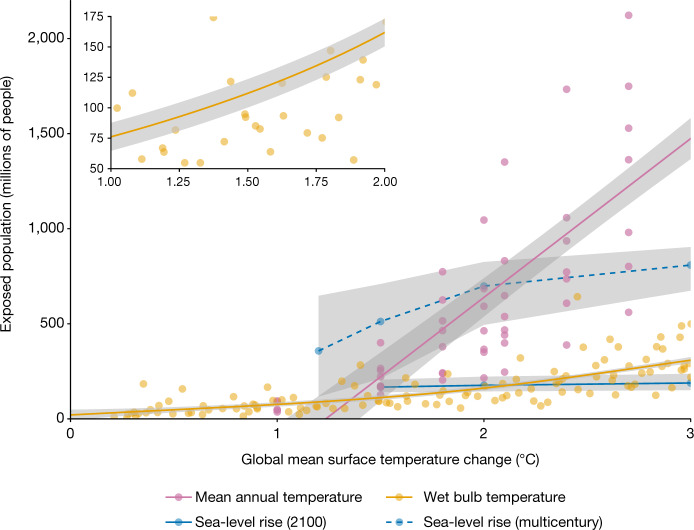
“At 1.5 °C warming, more than 200 million people, disproportionately those already vulnerable, poor and marginalised (intragenerational injustice), could be exposed to unprecedented mean annual temperatures 41 , and more than 500 million could be exposed to long-term sea-level rise (Fig.”
InfluentialSelf-citationMekonnen, M. M., & Hoekstra, A. Y. (2018) · Water Resources Research · doi:10.1002/2017wr020448 · Cited by 400
From planetary to regional boundaries for agricultural nitrogen pollution
Schulte-Uebbing, L. F., Beusen, A. H. W., Bouwman, A. F., & de Vries, W. (2022) · Nature · doi:10.1038/s41586-022-05158-2 · Cited by 399
Self-citationSwift, T. L., & Hannon, S. J. (2010) · Biological Reviews · doi:10.1111/j.1469-185x.2009.00093.x · Cited by 394
Biodiversity and the challenge of pluralism
Pascual, U., Adams, W. M., Díaz, S., Lele, S., Mace, G. M., & Turnhout, E. (2021) · Nature Sustainability · doi:10.1038/s41893-021-00694-7 · Cited by 381 · cited 1×
“…are highly local and are best implemented under local authority, knowledge and leadership 50 , with policy interventions often needed to ensure that marginalised groups are not further disempowered but are given the space to use their knowledge and approaches to participate in such processes 51 .”
Asymmetric forcing from stratospheric aerosols impacts Sahelian rainfall
Haywood, J. M., Jones, A., Bellouin, N., & Stephenson, D. (2013) · Nature Climate Change · doi:10.1038/nclimate1857 · Cited by 367
A planetary boundary for green water
Wang-Erlandsson, L., Tobian, A., van der Ent, R. J., Fetzer, I., te Wierik, S., Porkka, M., Staal, A., Jaramillo, F., Dahlmann, H., Singh, C., et al. (2022) · Nature Reviews Earth & Environment · doi:10.1038/s43017-022-00287-8 · Cited by 366 · cited 2×
“Recent PB assessments instead emphasise risks related to the departure from Holocene ranges of Earth system variability 38 .”
Self-citationApproaches to defining a planetary boundary for biodiversity
Mace, G. M., Reyers, B., Alkemade, R., Biggs, R., Chapin, F. S., Cornell, S. E., Díaz, S., Jennings, S., Leadley, P., Mumby, P. J., et al. (2014) · Global Environmental Change · doi:10.1016/j.gloenvcha.2014.07.009 · Cited by 349
The multimillennial sea-level commitment of global warming
Levermann, A., Clark, P. U., Marzeion, B., Milne, G. A., Pollard, D., Radic, V., & Robinson, A. (2013) · Proceedings of the National Academy of Sciences · doi:10.1073/pnas.1219414110 · Cited by 320 · cited 1×
“Additionally, these twenty-first century projections can be complemented with multi-centennial estimates since long-term sea-level rise is governed by the equilibria of the cryosphere elements and ocean thermal expansion 120 .”
Carlisle, D. M., Wolock, D. M., & Meador, M. R. (2011) · Frontiers in Ecology and the Environment · doi:10.1890/100053 · Cited by 319
Xu, Z., Han, Y., Tam, C.-Y., Yang, Z.-L., & Fu, C. (2021) · Scientific Data · doi:10.1038/s41597-021-01079-3 · Cited by 307
Quantification of global and national nitrogen budgets for crop production
Zhang, X., Zou, T., Lassaletta, L., Mueller, N. D., Tubiello, F. N., Lisk, M. D., Lu, C., Conant, R. T., Dorich, C. D., Gerber, J., et al. (2021) · Nature Food · doi:10.1038/s43016-021-00318-5 · Cited by 296
Self-citationWorking landscapes need at least 20% native habitat
Garibaldi, L. A., Oddi, F. J., Miguez, F. E., Bartomeus, I., Orr, M. C., Jobbágy, E. G., Kremen, C., Schulte, L. A., Hughes, A. C., Bagnato, C., et al. (2021) · Conservation Letters · doi:10.1111/conl.12773 · Cited by 280 · cited 2×
“For example, the number of species, and abundance of species able to provide pollination or pest control services rapidly decreases with the decrease in the amount of habitat available (Kremen et al. 2004, 2007, 2012; Ricketts et al. 2008; Chaplin-Kramer et al. 2011; Tscharntke et al. 2012; Kremen 2015; Kremen and Mer…”
Might over morality: Social values and the perception of other players in experimental games
Liebrand, W. B. G., Jansen, R. W. T. L., Rijken, V. M., & Suhre, C. J. M. (1986) · Journal of Experimental Social Psychology · doi:10.1016/0022-1031(86)90024-7 · Cited by 279 · cited 1×
“In such experiments, viewing the problem in terms of fairness can lead to norms that motivate restraining from harvesting 115 .”
Human Impact on Freshwater Ecosystem Services: A Global Perspective
Dodds, W. K., Perkin, J. S., & Gerken, J. E. (2013) · Environmental Science & Technology · doi:10.1021/es4021052 · Cited by 270
Strategic importance of green water in international crop trade
Aldaya, M. M., Allan, J. A., & Hoekstra, A. Y. (2010) · Ecological Economics · doi:10.1016/j.ecolecon.2009.11.001 · Cited by 262 · cited 1×
“…stocks are critical for maintaining the atmospheric water cycle, which regulates seasonal precipitation levels34; can support a significant proportion of global agricultural production 70 with less impact on aquatic ecosystems than blue water use 71 ; and are closely related to the biosphere ESBs.”
A fresh look at inland fisheries and their role in food security and livelihoods
Funge‐Smith, S., & Bennett, A. (2019) · Fish and Fisheries · doi:10.1111/faf.12403 · Cited by 256
Shaddick, G., Thomas, M. L., Amini, H., Broday, D., Cohen, A., Frostad, J., Green, A., Gumy, S., Liu, Y., Martin, R. V., et al. (2018) · Environmental Science & Technology · doi:10.1021/acs.est.8b02864 · Cited by 241
Biermann, F., & Kim, R. E. (2020) · Annual Review of Environment and Resources · doi:10.1146/annurev-environ-012320-080337 · Cited by 238
Earth system justice needed to identify and live within Earth system boundaries
Gupta, J., Liverman, D., Prodani, K., Aldunce, P., Bai, X., Broadgate, W., Ciobanu, D., Gifford, L., Gordon, C., Hurlbert, M., et al. (2023) · Nature Sustainability · doi:10.1038/s41893-023-01064-1 · Cited by 228 · cited 5×
“Intergenerational justice can be applied on time scales from successive generations to generations separated by centuries or millennia (Skillington 2019; Gupta et al. 2023).”
InfluentialSelf-citationBeusen, A. H. W., Doelman, J. C., Van Beek, L. P. H., Van Puijenbroek, P. J. T. M., Mogollón, J. M., Van Grinsven, H. J. M., Stehfest, E., Van Vuuren, D. P., & Bouwman, A. F. (2022) · Global Environmental Change · doi:10.1016/j.gloenvcha.2021.102426 · Cited by 222
Beusen, A. H. W., Van Beek, L. P. H., Bouwman, A. F., Mogollón, J. M., & Middelburg, J. J. (2015) · Geoscientific Model Development · doi:10.5194/gmd-8-4045-2015 · Cited by 216
Is it possible to achieve a good life for all within planetary boundaries?
Hickel, J. (2019) · Third World Quarterly · doi:10.1080/01436597.2018.1535895 · Cited by 215
Identifying a Safe and Just Corridor for People and the Planet
Rockström, J., Gupta, J., Lenton, T. M., Qin, D., Lade, S. J., Abrams, J. F., Jacobson, L., Rocha, J. C., Zimm, C., Bai, X., et al. (2021) · Earth's Future · doi:10.1029/2020ef001866 · Cited by 213 · cited 4×
“(4) For phosphorus, we relied on recent work that used literature-derived critical concentrations for avoiding eutrophication from P runoff to estimate global boundaries for P mined input and surplus based on a global budget calculation, taking into account P recycling, human excreta, soil and sediment retention, and…”
InfluentialSelf-citationAn Efficient and Accurate Method for Computing the Wet-Bulb Temperature along Pseudoadiabats
Davies-Jones, R. (2008) · Monthly Weather Review · doi:10.1175/2007mwr2224.1 · Cited by 200
Nature-dependent people: Mapping human direct use of nature for basic needs across the tropics
Fedele, G., Donatti, C. I., Bornacelly, I., & Hole, D. G. (2021) · Global Environmental Change · doi:10.1016/j.gloenvcha.2021.102368 · Cited by 196 · cited 1×
“…justice for current generations (I2a and I3 in Box 1) may require a stricter boundary because the safe ESB does not account for the current uneven distribution of largely intact natural ecosystems needed to support local livelihoods 43 , especially in poor or Indigenous communities 44,45 .”
The Water Planetary Boundary: Interrogation and Revision
Gleeson, T., Wang-Erlandsson, L., Zipper, S. C., Porkka, M., Jaramillo, F., Gerten, D., Fetzer, I., Cornell, S. E., Piemontese, L., Gordon, L. J., et al. (2020) · One Earth · doi:10.1016/j.oneear.2020.02.009 · Cited by 186
Self-citationQuantifying Nutrient Budgets for Sustainable Nutrient Management
Zhang, X., Davidson, E. A., Zou, T., Lassaletta, L., Quan, Z., Li, T., & Zhang, W. (2020) · Global Biogeochemical Cycles · doi:10.1029/2018gb006060 · Cited by 180
Self-citationMinderhoud, P. S. J., Middelkoop, H., Erkens, G., & Stouthamer, E. (2020) · Environmental Research Communications · doi:10.1088/2515-7620/ab5e21 · Cited by 177
VRIES, W. D., Schulte‐Uebbing, L., Kros, J., Voogd, J. C. H., & Louwagie, G. (2021) · The Science of The Total Environment · doi:10.1016/j.scitotenv.2021.147283 · Cited by 172
Self-citationScaling gridded river networks for macroscale hydrology: Development, analysis, and control of error
Fekete, B. M., Vörösmarty, C. J., & Lammers, R. B. (2001) · Water Resources Research · doi:10.1029/2001wr900024 · Cited by 162
Quantitative assessment of agricultural sustainability reveals divergent priorities among nations
Zhang, X., Yao, G., Vishwakarma, S., Dalin, C., Komarek, A. M., Kanter, D. R., Davis, K. F., Pfeifer, K., Zhao, J., Zou, T., et al. (2021) · One Earth · doi:10.1016/j.oneear.2021.08.015 · Cited by 162
Self-citationDefining a sustainable development target space for 2030 and 2050
van Vuuren, D. P., Zimm, C., Busch, S., Kriegler, E., Leininger, J., Messner, D., Nakićenović, N., Rockström, J., Riahi, K., Sperling, F., et al. (2022) · One Earth · doi:10.1016/j.oneear.2022.01.003 · Cited by 161
Self-citationGlobal monsoon precipitation responses to large volcanic eruptions
Liu, F., Chai, J., Wang, B., Liu, J., Zhang, X., & Wang, Z. (2016) · Scientific Reports · doi:10.1038/srep24331 · Cited by 154 · cited 1×
“…but observations based on past volcanic eruptions and climate modelling studies show that an increased concentration of reflecting aerosols in one hemisphere leads to precipitation decreasing in the same hemisphere’s tropical monsoon regions while increasing in the opposite hemisphere 80,82,83 .”
Self-citationIntegrating the Water Planetary Boundary With Water Management From Local to Global Scales
Zipper, S. C., Jaramillo, F., Wang‐Erlandsson, L., Cornell, S. E., Gleeson, T., Porkka, M., Häyhä, T., Crépin, A., Fetzer, I., Gerten, D., et al. (2020) · Earth's Future · doi:10.1029/2019ef001377 · Cited by 135
Döll, P., Fritsche, M., Eicker, A., & Schmied, H. M. (2014) · Surveys in Geophysics · doi:10.1007/s10712-014-9282-2 · Cited by 131
Rasmussen, D., Bittermann, K., Buchanan, M., Kulp, S., Strauss, B., Kopp, R., & Oppenheimer, M. (2018) · Publication Database PIK (Potsdam Institute for Climate Impact Research (PIK)) · Cited by 129
Rasmussen, D. J., Bittermann, K., Buchanan, M. K., Kulp, S., Strauss, B. H., Kopp, R. E., & Oppenheimer, M. (2018) · Environmental Research Letters · doi:10.1088/1748-9326/aaac87 · Cited by 114
Household contributions to and impacts from air pollution in India
Rao, N. D., Kiesewetter, G., Min, J., Pachauri, S., & Wagner, F. (2021) · Nature Sustainability · doi:10.1038/s41893-021-00744-0 · Cited by 113 · cited 1×
“5 is estimated to cause 4.2 million deaths annually 89 , with vulnerable groups being affected disproportionately more while polluting less 93 .”
InfluentialIntegrate biodiversity targets from local to global levels
Obura, D., Katerere, Y., Mayet, M., Kaelo, D., Msweli, S., Mather, K., Harris, J., Louis, M., Kramer, R., Teferi, T., et al. (2021) · Science · doi:10.1126/science.abh2234 · Cited by 108 · cited 1×
“Specific interventions that secure functional integrity are highly local and are best implemented under local authority, knowledge and leadership 50 , with policy interventions often needed to ensure that marginalised groups are not further disempowered but are given the space to use their…”
Self-citationImpacts of meeting minimum access on critical earth systems amidst the Great Inequality
Rammelt, C. F., Gupta, J., Liverman, D., Scholtens, J., Ciobanu, D., Abrams, J. F., Bai, X., Gifford, L., Gordon, C., Hurlbert, M., et al. (2022) · Nature Sustainability · doi:10.1038/s41893-022-00995-5 · Cited by 106 · cited 1×
“For the purposes of this manuscript, we analytically separate matters of harm due to Earth system change from matters of sufficient access to natural resources (Rammelt et al. 2022).”
Self-citationThe economic interaction between climate change mitigation, climate migration and poverty
Marotzke, J., Semmann, D., & Milinski, M. (2020) · Nature Climate Change · doi:10.1038/s41558-020-0783-3 · Cited by 101
Half Earth: promises, pitfalls, and prospects of dedicating Half of Earth’s land to conservation
Ellis, E. C., & Mehrabi, Z. (2019) · Current Opinion in Environmental Sustainability · doi:10.1016/j.cosust.2019.04.008 · Cited by 92
Gampfer, R. (2014) · Climatic Change · doi:10.1007/s10584-014-1091-6 · Cited by 75
Unprecedented threats to cities from multi-century sea level rise
Strauss, B., Kulp, S., Rasmussen, D. J., & Levermann, A. (2021) · Environmental Research Letters · doi:10.1088/1748-9326/ac2e6b · Cited by 68
Zuo, M., Zhou, T., & Man, W. (2019) · Journal of Climate · doi:10.1175/jcli-d-18-0707.1 · Cited by 66 · cited 1×
“…but observations based on past volcanic eruptions and climate modelling studies show that an increased concentration of reflecting aerosols in one hemisphere leads to precipitation decreasing in the same hemisphere’s tropical monsoon regions while increasing in the opposite hemisphere 80,82,83 .”
Ecosystems are showing symptoms of resilience loss
Rocha, J. (2022) · Environmental Research Letters · doi:10.1088/1748-9326/ac73a8 · Cited by 66 · cited 1×
“About two thirds of human-dominated land area (approximately 40% of total land area) has insufficient functional integrity (Supplementary Methods), and large areas are showing symptoms of resilience loss 49 , requiring regenerative practices to restore local and Earth system functions.”
Self-citationGupta, J., Liverman, D. M., Bai, X., Gordon, C., Hurlbert, M., Inoue, C. Y. A., Jacobson, L., Kanie, N., Lenton, T. M., Obura, D. O., et al. (2021) · Earth System Governance · doi:10.1016/j.esg.2021.100122 · Cited by 66
Self-citationCenter For International Earth Science Information Network-CIESIN-Columbia University (2018) · Earth Observing System Data and Information System · doi:10.7927/h4pn93pb · Cited by 66
Rolls, R. J., & Arthington, A. H. (2014) · Ecological Indicators · doi:10.1016/j.ecolind.2013.12.017 · Cited by 65
Seasonally Modulated Stratospheric Aerosol Geoengineering Alters the Climate Outcomes
Visioni, D., MacMartin, D. G., Kravitz, B., Richter, J. H., Tilmes, S., & Mills, M. J. (2020) · Geophysical Research Letters · doi:10.1029/2020gl088337 · Cited by 61 · cited 2×
“…if the interhemispheric AOD difference, currently approximately 0.05 87 on average and approximately 0.1 in the boreal spring and summer 87 , exceeds 0.15 (low confidence in Extended Data Table 1) due to air pollution85 or geoengineering-related aerosol asymmetries 81,85 (Supplementary Methods).”
InfluentialVogel, A., Alessa, G., Scheele, R., Weber, L., Dubovik, O., North, P., & Fiedler, S. (2022) · Journal of Geophysical Research: Atmospheres · doi:10.1029/2021jd035483 · Cited by 55 · cited 1×
“…disruptive if the interhemispheric AOD difference, currently approximately 0.05 87 on average and approximately 0.1 in the boreal spring and summer 87 , exceeds 0.15 (low confidence in Extended Data Table 1) due to air pollution85 or geoengineering-related aerosol asymmetries 81,85 (Supplementary…”
InfluentialReconciling food production and environmental boundaries for nitrogen in the European Union
Schulte‐Uebbing, L., & VRIES, W. D. (2021) · The Science of The Total Environment · doi:10.1016/j.scitotenv.2021.147427 · Cited by 55
Self-citationHESS Opinions: A planetary boundary on freshwater use is misleading
Heistermann, M. (2017) · Hydrology and Earth System Sciences · doi:10.5194/hess-21-3455-2017 · Cited by 52
Environmental flow requirements largely reshape global surface water scarcity assessment
Liu, X., Liu, W., Liu, L., Tang, Q., Liu, J., & Yang, H. (2021) · Environmental Research Letters · doi:10.1088/1748-9326/ac27cb · Cited by 51 · cited 1×
“In spite of these advances, most catchments around the world remain unassessed for their environmental flow needs (Liu et al. 2021).”
Sensitivity of tropical monsoon precipitation to the latitude of stratospheric aerosol injections
Krishnamohan, K. S., & Bala, G. (2022) · Climate Dynamics · doi:10.1007/s00382-021-06121-z · Cited by 46
Self-citationA conceptual framework for ecological responses to groundwater regime alteration (FERGRA)
Kath, J. M., Boulton, A. J., Harrison, E. T., & Dyer, F. J. (2018) · Ecohydrology · doi:10.1002/eco.2010 · Cited by 43
Future proofing the principle of no significant harm
Gupta, J., & Schmeier, S. (2020) · International Environmental Agreements: Politics, Law and Economics · doi:10.1007/s10784-020-09515-2 · Cited by 39
Self-citationHow to stop cities and companies causing planetary harm
Bai, X., Bjørn, A., Kılkış, Ş., Muñoz, O. S., Whiteman, G., Hoff, H., Andersen, L. S., & Rockström, J. (2022) · Nature · doi:10.1038/d41586-022-02894-3 · Cited by 35
Self-citationDependence of the Poor on Biodiversity: Which Poor, What Biodiversity?
Vira, B., & Kontoleon, A. (2012) · Wiley eBooks · doi:10.1002/9781118428351.ch4 · Cited by 28
Stockholm to Stockholm: Achieving a safe Earth requires goals that incorporate a just approach
Rockström, J., Gupta, J., Qin, D., Pedde, S., Broadgate, W. J., & Warszawski, L. (2021) · One Earth · doi:10.1016/j.oneear.2021.08.012 · Cited by 22
Self-citationClimate Response to Latitudinal and Altitudinal Distribution of Stratospheric Sulfate Aerosols
Zhao, M., Cao, L., Bala, G., & Duan, L. (2021) · Journal of Geophysical Research: Atmospheres · doi:10.1029/2021jd035379 · Cited by 21 · cited 1×
“It is further recognized that AOD difference and its impact on shifts in tropical precipitation and water availability is sensitive to the aerosol particle size, and the latitudinal and altitudinal distribution of reflecting aerosols emissions (Zhao et al. 2021).”
Self-citationThe no significant harm principle and the human right to water
Spijkers, O. (2020) · International Environmental Agreements Politics Law and Economics · doi:10.1007/s10784-020-09506-3 · Cited by 20 · cited 1×
“Minimising significant harm is a cornerstone of national and international law and corrective justice 24,25 .”
Planetary justice as a challenge for earth system governance: Editorial
Biermann, F., Dirth, E., & Kalfagianni, A. K. (2020) · Earth System Governance · doi:10.1016/j.esg.2020.100085 · Cited by 19
Across Species and Borders: Political Representation, Ecological Democracy and the Non-Human
Burke, A., & Fishel, S. R. (2020) · Frontiers in international relations · doi:10.1007/978-3-030-49496-4_3 · Cited by 19 · cited 1×
“2023), we use three Earth system justice criteria (the “3Is”) to assess whether adhering to the safe ESBs could protect people from significant harm: ● ‘Interspecies justice and Earth system stability’ (I1) (Burke and Fishel 2020) ● Intergenerational justice (Meyer 2021) between past and present generations (I2a) and…”
Low Elevation Coastal Zone (LECZ) Urban-Rural Population and Land Area Estimates, Version 3
Center For International Earth Science Information Network-CIESIN-Columbia University (2021) · Earth Observing System Data and Information System · doi:10.7927/d1x1-d702 · Cited by 13
Global Environment Outlook – GEO-6: Technical Summary
Gupta, J., Ekins, P., & Boileau, P. (2021) · Cambridge University Press eBooks · doi:10.1017/9781108627450 · Cited by 7
Self-citation
Research works printed but not linked: 15
- IPCC Climate Change 2022: Impacts, Adaptation, and Vulnerability (eds Pörtner, H.-O. et al.) (Cambridge Univ. Press, 2022).
- IPCC Climate Change 2021: The Physical Science Basis (eds Masson-Delmotte, V. et al.) (Cambridge Univ. Press, 2021).
- O’Neill, B. et al. in Climate Change 2022: Impacts, Adaptation, and Vulnerability (eds Pörtner, H.-O. et al.) 2411–2538 (Cambridge Univ. Press, 2022).
- Parmesan, C. et al. in Climate Change 2022: Impacts, Adaptation, and Vulnerability (eds Pörtner, H.-O. et al.) 197–377 (Cambridge Univ. Press, 2022).
- WHO Guidelines for Drinking-water Quality 4th edn (World Health Organization, 2022); https://www.who.int/publications/i/item/9789240045064. 35417116
- Tirado, R. & Allsopp, M. Phosphorus in Agriculture: Problems and Solutions. Technical report (review) (Greenpeace, 2012); https://www.greenpeace.to/greenpeace/wp-content/uploads/2012/06/tirado-and-allsopp-2012-phosphorus-in-agriculture-technical-report-02-2012.pdf.
- Douville, H. et al. in Climate Change 2021: The Physical Science Basis (eds Masson-Delmotte, V. et al.) 1055–1210 (Cambridge Univ. Press, 2021).
- WHO Global Air Quality Guidelines: Particulate Matter (PM2.5and PM10), Ozone, Nitrogen Dioxide, Sulfur Dioxide and Carbon Monoxide (WHO, 2021); https://apps.who.int/iris/handle/10665/345329. 34662007
- EPA. Review of the national ambient air quality standards for particulate matter. Environmental Protection Agency. 40 CFR Part 50. Fed. Regis. Rules Regul. 85, 82684–82748 (2020).
- Biggs, R. et al. in Encyclopedia of Theoretical Ecology (eds Hastings, A. & Gross, L.) 609–617 (Univ. of California Press, 2012).
- Owusu, K. A., Kulesz, M. M. & Merico, A. Extraction behaviour and income inequalities resulting from a common pool resource exploitation. Sustain. Sci. Pract. Policy 11, 536 (2019).
- IPCC Climate Change 2022: Impacts, Adaptation, and Vulnerability (eds Pörtner, H.-O. et al.) (Cambridge Univ. Press, 2022).
- Fox-Kemper, B. et al. in Climate Change 2021: The Physical Science Basis (eds Masson-Delmotte, V. et al.) 1211–1362 (Cambridge Univ. Press, 2021).
- Shaw, R. et al. in Climate Change 2022: Impacts, Adaptation, and Vulnerability (eds Pörtner, H.-O. et al.) 1457–1579 (Cambridge Univ. Press, 2022).
- Klein Goldewijk, K., Beusen, A., Doelman, J. & Stehfest, E. Anthropogenic land use estimates for the Holocene–HYDE 3.2. Earth Syst. Monit. 9, 927–953 (2017).
Cited by
Designing a circular carbon and plastics economy for a sustainable future
Vidal, F., van der Marel, E. R., Kerr, R. W. F., McElroy, C., Schroeder, N., Mitchell, C., Rosetto, G., Chen, T. T. D., Bailey, R. M., Hepburn, C., et al. (2024) · Nature · doi:10.1038/s41586-023-06939-z · Cited by 489
“A useful metric for comparing impacts is the global planetary boundary framework 73–75 .”
The EAT–Lancet Commission on healthy, sustainable, and just food systems
Rockström, J., Thilsted, S. H., Willett, W. C., Gordon, L. J., Herrero, M., Hicks, C. C., Mason-D'Croz, D., Rao, N., Springmann, M., Wright, E. C., et al. (2025) · The Lancet · doi:10.1016/s0140-6736(25)01201-2 · Cited by 475
Self-citationvan Daalen, K. R., Tonne, C., Semenza, J. C., Rocklöv, J., Markandya, A., Dasandi, N., Jankin, S., Achebak, H., Ballester, J., Bechara, H., et al. (2024) · The Lancet Public Health · doi:10.1016/s2468-2667(24)00055-0 · Cited by 290
Vogel, J., & Hickel, J. (2023) · The Lancet Planetary Health · doi:10.1016/s2542-5196(23)00174-2 · Cited by 265
“The global economy is also transgressing six other planetary boundaries, 85 and high-income countries are overwhelm-ingly responsible for this.”
BackgroundThe 2023 state of the climate report: Entering uncharted territory
Ripple, W. J., Wolf, C., Gregg, J. W., Rockström, J., Newsome, T. M., Law, B. E., Marques, L., Lenton, T. M., Xu, C., Huq, S., et al. (2023) · BioScience · doi:10.1093/biosci/biad080 · Cited by 246
Self-citation
Metadata
- Authors
- Rockström, J., Gupta, J., Qin, D., Lade, S. J., Abrams, J. F., Andersen, L. S., Armstrong McKay, D. I., Bai, X., Bala, G., Bunn, S. E., Ciobanu, D., DeClerck, F., Ebi, K., Gifford, L., Gordon, C., Hasan, S., Kanie, N., Lenton, T. M., Loriani, S., Liverman, D. M., Mohamed, A., Nakicenovic, N., Obura, D., Ospina, D., Prodani, K., Rammelt, C., Sakschewski, B., Scholtens, J., Stewart-Koster, B., Tharammal, T., van Vuuren, D., Verburg, P. H., Winkelmann, R., Zimm, C., Bennett, E. M., Bringezu, S., Broadgate, W., Green, P. A., Huang, L., Jacobson, L., Ndehedehe, C., Pedde, S., Rocha, J., Scheffer, M., Schulte-Uebbing, L., de Vries, W., Xiao, C., Xu, C., Xu, X., Zafra-Calvo, N., & Zhang, X.
- Affiliations
- Stockholm Resilience Centre (SE)
- IHE Delft Institute for Water Education (NL)
- China Meteorological Administration (CN)
- Australian National University (AU)
- University of Exeter (GB)
- Leibniz Association (DE)
- Indian Institute of Science Bangalore (IN)
- Griffith University (AU)
- CGIAR (FR)
- University of Washington (US)
- University of Arizona (US)
- University of Ghana (GH)
- Keio University (JP)
- Universität Hamburg (DE)
- Coastal Oceans Research and Development in the Indian Ocean (KE)
- Future Earth (SE)
- University of Amsterdam (NL)
- Netherlands Environmental Assessment Agency (NL)
- Swiss Federal Institute for Forest, Snow and Landscape Research (CH)
- University of Potsdam (DE)
- International Institute for Applied Systems Analysis (AT)
- McGill University (CA)
- University of Kassel (DE)
- The Graduate Center, CUNY (US)
- Wageningen University & Research (NL)
- Chinese Academy of Sciences (CN)
- Nanjing University (CN)
- University of Maryland Center for Environmental Science (US)
- Corresponding author
- Rockström, Johan
- Lade, Steven J.
- ORCID
- Rockström, Johan
- Gupta, Joyeeta
- Lade, Steven J.
- Abrams, Jesse F.
- Andersen, Lauren S.
- Armstrong McKay, David I.
- Bai, Xuemei
- Bala, Govindasamy
- Bunn, Stuart E.
- Ciobanu, Daniel
- DeClerck, Fabrice
- Ebi, Kristie
- Gifford, Lauren
- Gordon, Christopher
- Hasan, Syezlin
- Kanie, Norichika
- Lenton, Timothy M.
- Loriani, Sina
- Liverman, Diana M.
- Mohamed, Awaz
- Obura, David
- Ospina, Daniel
- Prodani, Klaudia
- Rammelt, Crelis
- Sakschewski, Boris
- Scholtens, Joeri
- Stewart-Koster, Ben
- Tharammal, Thejna
- van Vuuren, Detlef
- Verburg, Peter H.
- Winkelmann, Ricarda
- Zimm, Caroline
- Bennett, Elena M.
- Bringezu, Stefan
- Broadgate, Wendy
- Green, Pamela A.
- Jacobson, Lisa
- Ndehedehe, Christopher
- Pedde, Simona
- Rocha, Juan
- Scheffer, Marten
- Schulte-Uebbing, Lena
- de Vries, Wim
- Xiao, Cunde
- Xu, Chi
- Zafra-Calvo, Noelia
- Zhang, Xin
- Venue
- Nature
- Published
- 2023-05-31
- Volume
- 619
- Issue
- 7968
- Pages
- 102-111
- ISSN
- 0028-0836 (ISSN-L)
- 1476-4687
- PMC
- PMC10322705
- OpenAlex
- W4378905467
- Cited by
- 1,400
- References
- 106
- Citations by year
- 2026: 364 · 2025: 452 · 2024: 438 · 2023: 145
- FWCI
- 157.19
- Type
- journal article
- Language
- en
- Open access
- hybrid
- doi.org
- Licence
- cc-by
- creativecommons.org/licenses/by/4.0 (tdm)
- creativecommons.org/licenses/by/4.0 (vor)
- Locations
- Nature (publishedVersion, cc-by)
- PubMed Central (publishedVersion, cc-by)
- PubMed (publishedVersion)
- VU Research Portal (publishedVersion, other-oa)
- ANU Open Research (Australian National University) (submittedVersion, cc-by)
- UA Campus Repository (The University of Arizona) (submittedVersion, cc-by)
- Communities in ADDI (University of the Basque Country) (submittedVersion, cc-by-nc-sa)
- CGSPace A Repository of Agricultural Research Outputs (Consultative Group for International Agricultural Research) (submittedVersion, cc-by)
- DORA WSL (Swiss Federal Institute for Forest, Snow and Landscape Research) (submittedVersion, cc-by)
- Socio-Environmental Systems Modeling (submittedVersion, cc-by)
- Open Research Exeter (University of Exeter) (submittedVersion, cc-by)
- Publication Database PIK (Potsdam Institute for Climate Impact Research (PIK)) (submittedVersion, cc-by)
- IIASA PURE (International Institute of Applied Systems Analysis) (submittedVersion, other-oa)
- Griffith Research Online (submittedVersion, cc-by)
- RePEc: Research Papers in Economics (submittedVersion)
- UvA-DARE (University of Amsterdam) (submittedVersion, cc-by)
- Utrecht University Repository (Utrecht University) (submittedVersion, other-oa)
- Figshare (submittedVersion, cc-by)
- Hispana (submittedVersion, cc-by-nc-sa)
- Greater South Information System
- Funders
- Open Society Foundations
- Gordon and Betty Moore Foundation
- Oak Foundation
- Global Environment Facility
- Australian Government (FT200100381)
- Porticus Foundation
- Svenska Forskningsrådet Formas (2020-00371)
- Vetenskapsrådet (ERC-2016-ADG 743080)
- Stockholms Universitet
- Tiina ja Antti Herlinin säätiö
- Australian Research Council (DE230101327)
- Japan Society for the Promotion of Science (18H03428)
- H2020 European Research Council (101020082)
- Topics
- Physical Sciences › Environmental Science › Global and Planetary Change › Sustainability and Climate Change Governance
- Physical Sciences › Environmental Science › Global and Planetary Change › Earth Systems and Cosmic Evolution
- Physical Sciences › Environmental Science › Global and Planetary Change › Land Use and Ecosystem Services
- Keywords
- planetary boundaries, planetary resilience, justice, climate change, biosphere, water cycle, nutrient cycling, atmospheric aerosols, global commons
- MeSH terms
- Nutrients, Environmental Justice, Aerosols, Climate, Humans, Safety, Water, Earth, Planet, Internationality, Climate Change
About these checks
Registry, retraction, Cites and statistics results are computed, not judged, with one exception: a printed reference that no index lists is read once by a model before it counts as a citation error. Claims are extracted by a model and kept only when their quote appears verbatim in the text; each cited source is then checked, with a model’s help, for whether it says what the claim relies on. Those verdicts can be wrong — read the claim’s quote and the cited source before relying on one.
Statistics and arithmetic are recomputed, not judged.
Confidence bands are shown only for fields calibrated on our annotated test set. None is calibrated yet, so no band is shown.
What counts as a claim ›How we measure confidence ›How we check this ›
Are you an author, or do you see a problem with this page? Request a review
Data sources
Bibliographic data: Semantic Scholar, OpenAlex, Crossref.
Contains information from the Semantic Scholar Academic Graph Datasets, made available under the ODC Attribution License (ODC-BY 1.0).
Semantic Scholar’s data is described in: Kinney, R., et al. (2023). The Semantic Scholar Open Data Platform. arXiv:2301.10140.
