

Safe and just Earth system boundaries
Open accessThe DOI matches its Crossref record; 120 of the 120 references it cites were found in a registry or an index.
Abstract
The stability and resilience of the Earth system and human well-being are inseparably linked 1–3 , yet their interdependencies are generally under-recognized; consequently, they are often treated independently 4,5 . Here, we use modelling and literature assessment to quantify safe and just Earth system boundaries (ESBs) for climate, the biosphere, water and nutrient cycles, and aerosols at global and subglobal scales. We propose ESBs for maintaining the resilience and stability of the Earth system (safe ESBs) and minimizing exposure to significant harm to humans from Earth system change (a necessary but not sufficient condition for justice) 4 . The stricter of the safe or just boundaries sets the integrated safe and just ESB. Our findings show that justice considerations constrain the integrated ESBs more than safety considerations for climate and atmospheric aerosol loading. Seven of eight globally quantified safe and just ESBs and at least two regional safe and just ESBs in over half of global land area are already exceeded. We propose that our assessment provides a quantitative foundation for safeguarding the global commons for all people now and into the future.
Overview
The claims and statistics of this paper haven’t been checked yet.
Free: it reads the open-access text and checks the first 5 claims that cite a source we can check. Create a free account to check every claim.
Integrity signals
Registry
Cites
Statistics
Figures
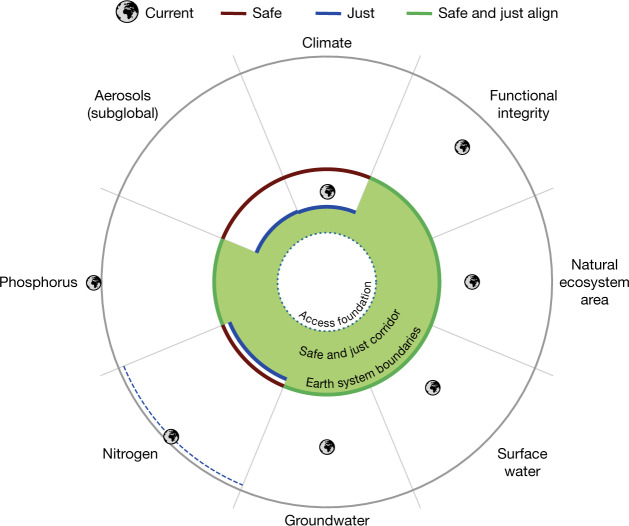
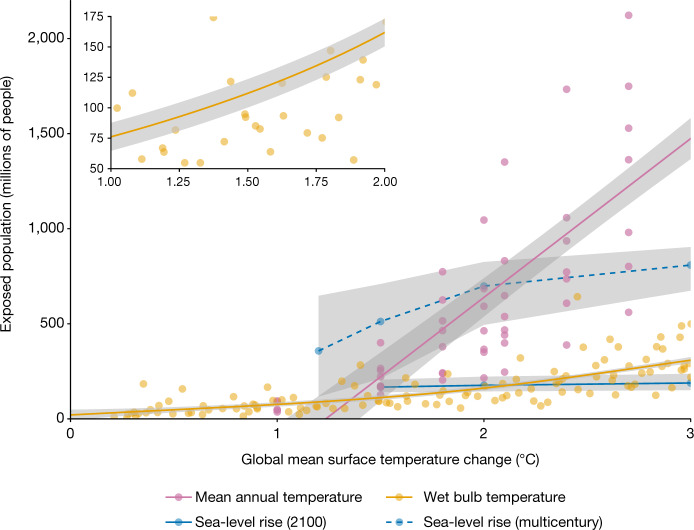
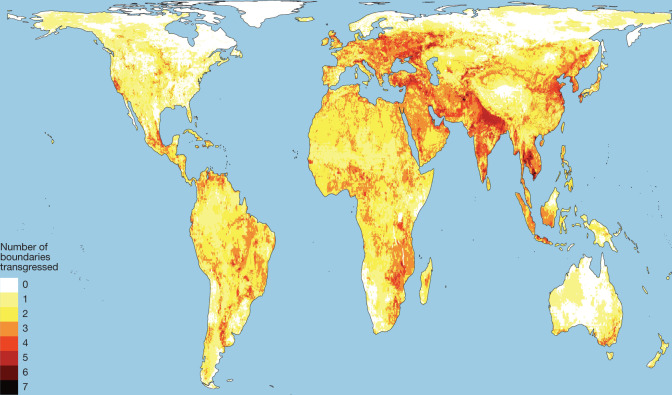
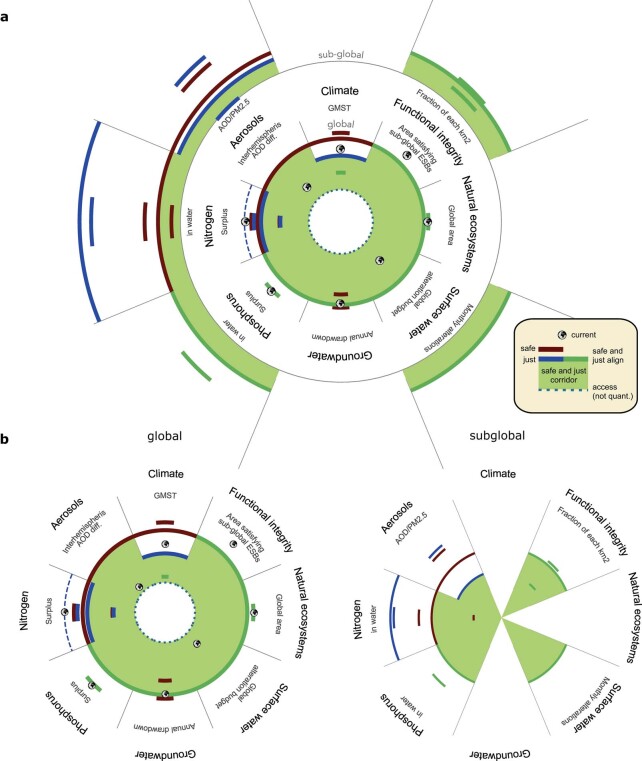
Verification
Claims the paper makes
The claims and statistics of this paper haven’t been checked yet.
Free: it reads the open-access text and checks the first 5 claims that cite a source we can check. Create a free account to check every claim.
Claims other papers make about this one
Each is checked against this paper’s own text: does it say what the citing paper says it does?
In the citing paper
“The accelerating socioeconomic trends of the past century [232] have put us on a path toward exceeding seven of eight globally defined safe and just Earth system boundaries that would provide safe living conditions for all humanity within the boundaries of the living systems on Earth [219].”
From Sustainability in computing education: A systematic literature review (2024) · cites this paper as [219]
Self-check
Percentages, sums and reported differences re-computed from the paper’s own numbers.
The self-check needs the paper’s full text.
Citations
Cites
A safe operating space for humanity
Rockström, J., Steffen, W., Noone, K., Persson, Å., Chapin, F. S., Lambin, E. F., Lenton, T. M., Scheffer, M., Folke, C., Schellnhuber, H. J., et al. (2009) · Nature · doi:10.1038/461472a · Cited by 13,333
Self-citationPlanetary boundaries: Guiding human development on a changing planet
Steffen, W., Richardson, K., Rockström, J., Cornell, S. E., Fetzer, I., Bennett, E. M., Biggs, R., Carpenter, S. R., de Vries, W., de Wit, C. A., et al. (2015) · Science · doi:10.1126/science.1259855 · Cited by 12,527 · cited 6×
“We note that the area of largely natural ecosystems replaces the “land boundary” in the planetary boundaries concept, which implied “largely intact lands” or areas of high biodiversity intactness (Steffen et al. 2015).”
InfluentialSelf-citationCohen, A. J., Brauer, M., Burnett, R., Anderson, H. R., Frostad, J., Estep, K., Balakrishnan, K., Brunekreef, B., Dandona, L., Dandona, R., et al. (2017) · The Lancet · doi:10.1016/s0140-6736(17)30505-6 · Cited by 6,583
Poff, N. L., Allan, J. D., Bain, M. B., Karr, J. R., Prestegaard, K. L., Richter, B. D., Sparks, R. E., & Stromberg, J. C. (1997) · BioScience · doi:10.2307/1313099 · Cited by 6,500
Four billion people facing severe water scarcity
Mekonnen, M. M., & Hoekstra, A. Y. (2016) · Science Advances · doi:10.1126/sciadv.1500323 · Cited by 5,531
Tipping elements in the Earth’s climate system
Lenton, T. M., Held, H., Kriegler, E., Hall, J. W., Lucht, W., Rahmstorf, S., & Schellnhuber, H. J. (2008) · Proceedings of the National Academy of Sciences · doi:10.1073/pnas.0705414105 · Cited by 3,982 · cited 1×
“Tipping elements: Those components or processes that regulate the functioning and state of the planet and that show evidence of having thresholds at which small additional perturbations can trigger selfreinforcing changes that undermine Earth system resilience (Lenton et al. 2008; Armstrong McKay et al. 2022).”
Self-citationEmerging threats and persistent conservation challenges for freshwater biodiversity
Reid, A. J., Carlson, A. K., Creed, I. F., Eliason, E. J., Gell, P. A., Johnson, P. T. J., Kidd, K. A., MacCormack, T. J., Olden, J. D., Ormerod, S. J., et al. (2019) · Biological Reviews · doi:10.1111/brv.12480 · Cited by 3,645
Options for keeping the food system within environmental limits
Springmann, M., Clark, M., Mason-D’Croz, D., Wiebe, K., Bodirsky, B. L., Lassaletta, L., de Vries, W., Vermeulen, S. J., Herrero, M., Carlson, K. M., et al. (2018) · Nature · doi:10.1038/s41586-018-0594-0 · Cited by 3,380
Self-citationBasic Principles and Ecological Consequences of Altered Flow Regimes for Aquatic Biodiversity
BUNN, S. E., & ARTHINGTON, A. H. (2002) · Environmental Management · doi:10.1007/s00267-002-2737-0 · Cited by 3,379
Self-citationIPBES (2019) · Socio-Environmental Systems Modeling · doi:10.5281/zenodo.3831673 · Cited by 3,354
Research works printed but not linked: 15
- IPCC Climate Change 2022: Impacts, Adaptation, and Vulnerability (eds Pörtner, H.-O. et al.) (Cambridge Univ. Press, 2022).
- IPCC Climate Change 2021: The Physical Science Basis (eds Masson-Delmotte, V. et al.) (Cambridge Univ. Press, 2021).
- O’Neill, B. et al. in Climate Change 2022: Impacts, Adaptation, and Vulnerability (eds Pörtner, H.-O. et al.) 2411–2538 (Cambridge Univ. Press, 2022).
- Parmesan, C. et al. in Climate Change 2022: Impacts, Adaptation, and Vulnerability (eds Pörtner, H.-O. et al.) 197–377 (Cambridge Univ. Press, 2022).
- WHO Guidelines for Drinking-water Quality 4th edn (World Health Organization, 2022); https://www.who.int/publications/i/item/9789240045064. 35417116
- Tirado, R. & Allsopp, M. Phosphorus in Agriculture: Problems and Solutions. Technical report (review) (Greenpeace, 2012); https://www.greenpeace.to/greenpeace/wp-content/uploads/2012/06/tirado-and-allsopp-2012-phosphorus-in-agriculture-technical-report-02-2012.pdf.
- Douville, H. et al. in Climate Change 2021: The Physical Science Basis (eds Masson-Delmotte, V. et al.) 1055–1210 (Cambridge Univ. Press, 2021).
- WHO Global Air Quality Guidelines: Particulate Matter (PM2.5and PM10), Ozone, Nitrogen Dioxide, Sulfur Dioxide and Carbon Monoxide (WHO, 2021); https://apps.who.int/iris/handle/10665/345329. 34662007
- EPA. Review of the national ambient air quality standards for particulate matter. Environmental Protection Agency. 40 CFR Part 50. Fed. Regis. Rules Regul. 85, 82684–82748 (2020).
- Biggs, R. et al. in Encyclopedia of Theoretical Ecology (eds Hastings, A. & Gross, L.) 609–617 (Univ. of California Press, 2012).
- Owusu, K. A., Kulesz, M. M. & Merico, A. Extraction behaviour and income inequalities resulting from a common pool resource exploitation. Sustain. Sci. Pract. Policy 11, 536 (2019).
- IPCC Climate Change 2022: Impacts, Adaptation, and Vulnerability (eds Pörtner, H.-O. et al.) (Cambridge Univ. Press, 2022).
- Fox-Kemper, B. et al. in Climate Change 2021: The Physical Science Basis (eds Masson-Delmotte, V. et al.) 1211–1362 (Cambridge Univ. Press, 2021).
- Shaw, R. et al. in Climate Change 2022: Impacts, Adaptation, and Vulnerability (eds Pörtner, H.-O. et al.) 1457–1579 (Cambridge Univ. Press, 2022).
- Klein Goldewijk, K., Beusen, A., Doelman, J. & Stehfest, E. Anthropogenic land use estimates for the Holocene–HYDE 3.2. Earth Syst. Monit. 9, 927–953 (2017).
Cited by
Items 901–1,000 of 1,001
Exploring absolute sustainability–informed water inequality indicators of Chinese city clusters
Li, M., & Yang, M. (2025) · Environmental Research · doi:10.1016/j.envres.2025.122478 · Cited by 2
Linares, Á. S., López, N. C., & Rada, T. S. (2025) · Sustainable Development · doi:10.1002/sd.70113 · Cited by 1
Rockström, J., Denton, F., Norström, A. V., Abrams, J. F., Alam, L., McKay, D. I. A., Bai, X., Bala, G., Boulton, C. A., Broadgate, W. J., et al. (2026) · Earth s Future · doi:10.1029/2025ef006976 · Cited by 1
“These pressures have pushed several planetary processes beyond their safe limits, placing both human societies and the biosphere at growing risk (Gupta et al., 2024; Richardson et al., 2023; Rockström, Gupta, et al., 2023).”
InfluentialSelf-citationEppinga, M. B., Pérez-Cárdenas, N., Reader, M. O., Martin, D. A., & Santos, M. J. (2025) · Proceedings of the Royal Society B Biological Sciences · doi:10.1098/rspb.2025.1744 · Cited by 2
“The Anthropocene is characterized by distinct human-driven changes in climate, land use and biodiversity [1,2].”
Ye, C., Wang, S., Li, C., Wu, S., Zhou, T., & Xiong, J. (2025) · Applied Geography · doi:10.1016/j.apgeog.2025.103761 · Cited by 1
Griebler, A., Tost, M., Obenaus-Emler, R., & Moser, P. D. (2026) · Sustainability · doi:10.3390/su18104938 · Cited by 1
Transdisciplinary perspectives to investigate sustainable food system transitions
Pascucci, S. (2025) · RIVISTA DI ECONOMIA AGRARIA · doi:10.36253/rea-16017 · Cited by 1
Paes, L. D. O. (2025) · Latin American Perspectives · doi:10.1177/0094582x251371559 · Cited by 1
Sirignano, C., Brondani, D. D. V., Iulio, G. D., Anselmi, C., Argentini, S., Bracci, A., Calfapietra, C., Canepari, S., Casasanta, G., Cattani, G., et al. (2025) · Atmosphere · doi:10.3390/atmos16101144 · Cited by 1
Ritter, L., & Sägesser, A. (2025) · Earth stewardship. · doi:10.1002/eas2.70027 · Cited by 2
“” With perseverance, we include the idea of thinking in extended time arcs, specifically the next seven generations and the safe and just Earth system boundaries (ESBs) (Rockström et al., 2023).”
Beukelaer, C. M. D., & Steinberg, P. E. (2025) · Global Sustainability · doi:10.1017/sus.2025.10027 · Cited by 1
Architectural Research and the Anthropocene: An Ethical Imperative
Rollot, M. (2025) · Anthropocene - humanities and social sciences · doi:10.1007/978-3-032-02522-7_1 · Cited by 1
Getting into the doughnut: A framework for assessing systemic resilience in the global food system
Paulus, E., Obersteiner, M. H., & Ranger, N. A. (2025) · One Earth · doi:10.1016/j.oneear.2025.101460 · Cited by 2
Vogler, A. (2025) · Environment and Security · doi:10.1177/27538796251366392 · Cited by 2
“Second, together with the crossing of other planetary boundaries (Rockstro¨m et al., 2023; Steffen et al., 2015), these direct changes impact ecosystems and human lives.”
Synergies: understandings in a complex world
Om, E. S., Fazey, I., Newman, R., Hodgson, A., Cooper, M., Carmen, E., Hodgson, A. M., Baffoe, G., Eyre, L., & Cordero, J. (2025) · Sustainability Science · doi:10.1007/s11625-025-01762-z · Cited by 3
“Working Deeply With the Community”: Nurse‐Community Partnership Processes for Climate Justice
LeClair, J., Krainak, K., Steege, L. M. B., & Zahner, S. J. (2025) · Public Health Nursing · doi:10.1111/phn.70044 · Cited by 1
Zhao, W., Wang, Z., Liu, Y., & Meadows, M. E. (2025) · Geography and sustainability · doi:10.1016/j.geosus.2025.100380 · Cited by 1
From Miserable Pedagogies to Anthropocene Intelligence for Universities in the Meta-Crisis
Stratford, R., Louverdis, E., & Joy, M. (2025) · Australian Journal of Environmental Education · doi:10.1017/aee.2025.10087 · Cited by 1
“In geological terms this change might broadly be described as a move away from the relatively stable and benevolent Holocene epoch, and towards an unstable, life-threatening Anthropocene (Rockström et al., 2024; Rockström et al., 2023).”
An Eco‐Social Lens on Voice for Undervoiced and Unvoiced Stakeholders
Waddock, S. A. (2025) · Business Strategy and the Environment · doi:10.1002/bse.70359 · Cited by 2
Rivas, B., Osores, V., González, D., Gualtieri, C., & Yepez, S. P. (2025) · Water · doi:10.3390/w17233413 · Cited by 1
Youth understandings of economic growth and ecological sustainability
van Tol, J. (2025) · The Journal of Environmental Education · doi:10.1080/00958964.2025.2583986 · Cited by 1
“…Limits to Growth predictions appear to be on track (Hall, 2022), and as several of earth’s ecological limits have been breached in terms of biodiversity loss, climate change, overextension of the nitrogen and phosphorus cycles, amongst others (Richardson et al., 2023; Rockström et al., 2023).”
Un camino de encuentros y desencuentros: la relación entre la Agenda 2030 y las políticas públicas
Martínez, I. M., & González, M. V. (2025) · Política y Sociedad · doi:10.5209/poso.97393 · Cited by 1
New rationalities, inner logic, and hope for sustainable future coasts
Celliers, L., Ferse, S. C. A., Bruns, A., Eisenack, K., Hornidge, A., Klepp, S., Lahl, R., Neumann, B., Riechers, M., Bogusz, T., et al. (2025) · Global Sustainability · doi:10.1017/sus.2025.10041 · Cited by 1
“…emergencies are relentlessly driving the planetary system towards tipping points and changes, making our continued existence less safe (Rockström et al., 2023; Steffen et al., 2018), including through potentially irreversible shifts in the Earth system’s components and processes…”
Wagner, P. (2025) · Social Science Information · doi:10.1177/05390184251405605 · Cited by 1
“The existence of “planetary boundaries” or “Earth System boundaries” (Rockström et al., 2009, 2023), first , has been a question for human consciousness and action for a long time, even though the specific expression is new.”
Wang, H., Cai, T., Chen, Z., Zhang, Q., Wang, Y., Liang, Z., Wang, J., Miao, Q., Zheng, H., Wang, Z., et al. (2025) · Field Crops Research · doi:10.1016/j.fcr.2025.110298 · Cited by 1
Anthromes and terrestrial carbon
Walker, A. P., Abramoff, R., Baragwanath, K., Craig, M. E., Malhi, Y. S., & McMichael, C. N. H. (2025) · Plants People Planet · doi:10.1002/ppp3.70123 · Cited by 1
“Indirect impacts include rising atmospheric CO 2 and its physiological and climatic effects, modification of other elemental cycles, and the introduction of non-native species, pests, and pathogens (Friedlingstein et al., 2025; Rockström et al., 2023; Walker et al., 2021).”
Tajidan, T., Setiawan, R. N. S., Efendy, E., Sharfina, N., Mulyawati, S., Sjah, T., & Amirah, S. N. (2025) · International Journal of Sustainable Development and Planning · doi:10.18280/ijsdp.200627 · Cited by 1
Samimi, S., Ahmadzadeh, F., Keshtkar, M., & Sayahnia, R. (2025) · Water Resources and Industry · doi:10.1016/j.wri.2025.100318 · Cited by 2
Naydani, C. J., Jessiman, L. J., Doyle, R., & Jarvis, S. (2025) · Agriculture and Human Values · doi:10.1007/s10460-025-10812-2 · Cited by 1
Yang, Y., Liu, X., Ma, Q., Wu, H., Sadras, V. O., & Liu, J. (2026) · Field Crops Research · doi:10.1016/j.fcr.2026.110327 · Cited by 1
Lende, S. G. (2026) · Papeles de Geografía · doi:10.6018/geografia.682751 · Cited by 1
Cell biology for a sustainable future – a call to action from early-career scientists
Costa, C., Flaum, E., Hlashwayo, D. F., Jacobovitz, M. R., Kubaczka, M. G., Lovat, S. J., Milshtein, E., Szafranska, H. M., & Zwahlen, S. M. (2026) · Journal of Cell Science · doi:10.1242/jcs.264596 · Cited by 1
Alternatives to planetary boundaries can enhance science-policy linkages for chemicals governance
Selin, H., & Selin, N. E. (2026) · Earth System Governance · doi:10.1016/j.esg.2026.100312 · Cited by 1
Groundwater responses to decadal rainfall variability in semi-arid South Africa
Bjerre, E., Jessen, S., Schneider, R. J. M., Villholth, K. G., Dippenaar, M. A., Enemark, T., Meyer, R., Hallowes, J., Sonnenborg, T. O., Kanyerere, T., et al. (2026) · Journal of Hydrology · doi:10.1016/j.jhydrol.2026.135022 · Cited by 1
Palma, M. C., Guisan, A., Chowdhury, S., Collart, F., & Riva, F. (2026) · Basic and Applied Ecology · doi:10.1016/j.baae.2026.02.002 · Cited by 2
Hanaček, K., Apostolopoulou, E., Kröger, M., Banerji, S. K., Dunlap, A., Landau, A., & Alier, J. M. (2026) · Energy Research & Social Science · doi:10.1016/j.erss.2026.104600 · Cited by 1
Helenius, L. (2026) · Sustainability Science · doi:10.1007/s11625-025-01780-x · Cited by 1
“…nonhuman nature as if humans did not exist within the same life-supporting cycles as every other living organism on this planet, thereby undermining the well-being and even existence of both human and nonhuman nature alike (Folke et al. 2021; Rockström et al. 2023; Koger and Winter 2011, 36).”
Amplifying beyond-GDP indicator initiatives: a comparative analysis of eight national case studies
Dethier, F., & Roman, P. (2026) · Sustainability Science Practice and Policy · doi:10.1080/15487733.2026.2630449 · Cited by 1
Linking climate-smart agriculture awareness and crop diversity in semi-arid South Africa
Dzvene, A. R., & Zhou, L. (2026) · Mitigation and Adaptation Strategies for Global Change · doi:10.1007/s11027-026-10297-2 · Cited by 1
Causal modeling of energy and resource demand
Chauhan, R., Acosta, J. G., & Derrible, S. (2026) · npj Urban Sustainability · doi:10.1038/s42949-026-00370-9 · Cited by 1
How National Institutional Configurations Shape the Global Diffusion of B Corp Certification
Pollmeier, T., Hirschmann, M., & Fisch, C. O. (2026) · Business Strategy and the Environment · doi:10.1002/bse.70706 · Cited by 1
Humanity’s Future: Earth System Science Within and Beyond Planetary Boundaries
Hart, P., & Hart, C. (2026) · Australian Journal of Environmental Education · doi:10.1017/aee.2026.10150 · Cited by 1
Der Apfelring mit Biss. Auf dem Weg zu einer transformativen Bildung in nachhaltiger Entwicklung
Rehm, M., Hermann, M., Kalcsics, K., Rinaldi, S., Schmid, F., & Wilhelm, M. (2026) · DDS – Die Deutsche Schule · doi:10.31244/dds.2026.01.02 · Cited by 1
Wrathall, D. J., Gosnell, H., Wickson, F., Spanger‐Siegfried, E., & Associates* (2026) · Action Research · doi:10.1177/14767503251404263 · Cited by 1
“The scienti fi c community has documented with increasing clarity and urgency the devastating implications for life on Earth of continuing current trends in biodiversity loss, climate change, and pollution (Rockstr¨om et al., 2023).”
Hans Jonas and Sophocles on the ethics of the Anthropocene
Folit-Weinberg, B., & Klooster, J. V. ’. (2026) · Contemporary Political Theory · doi:10.1057/s41296-026-00809-9 · Cited by 1
The obscenity of hope: educating young people in the Anthropocene
Thornton, S., Stratford, R., & Louverdis, E. (2026) · Ethics and Education · doi:10.1080/17449642.2026.2645852 · Cited by 1
“…‘end-times’ presidency of Donald Trump (Klein and Taylor 2025) continues to make the most environmentally alarming ‘policy’ decisions while ignoring or silencing scientists who report on humanities breaching of planetary limits (Rockström and Gaffney 2021; Rockström et al. 2023, 2024; Witze 2025).”
Zhang, J., Fu, M., Liang, Y., Zhao, C., Li, S., & Tang, F. (2026) · Applied Geography · doi:10.1016/j.apgeog.2026.103991 · Cited by 1
The CiFoS game: a serious game to redesign food systems for human and planetary health
Andreotti, F., Hordijk, D. J. A., Frehner, A., Müller, A. W., Mason-D’Croz, D., Herrero, M., Celiberti, S., Tzanavaris, S., & van Zanten, H. H. E. (2026) · Sustainability Science · doi:10.1007/s11625-026-01826-8 · Cited by 1
“Today’s agri-food system has a significant and wide-rang - ing impact on the planet’s well-being, with six of the nine planetary boundaries already being transgressed, increasing the risk of large-scale, irreversible environmental changes (Rockström et al. 2023 ).”
Ojeh, V. N., & Nicodemus, J. (2025) · Environmental Ethics & Law · doi:10.63385/eel.v1i2.441 · Cited by 2
Arsic, M., & McIntyre, T. (2026) · Australian Journal of Agricultural and Resource Economics · doi:10.1111/1467-8489.70107 · Cited by 1
Rahaman, W. A., Amidu, M., Coffie, W., & Dunyoh, M. (2026) · Advances in African economic, social and political development · doi:10.1007/978-3-032-15259-6_6 · Cited by 1
Ternary complexity: A consolidated conceptual framework for addressing global issues in education
Schmid, F., Rehm, M., & Rinaldi, S. (2026) · Prospects · doi:10.1007/s11125-026-09761-3 · Cited by 1
Tsujii, Y., Nagasaka, M., Haga, C., Matsui, T., Hayashi, F., Motoshita, M., Hashimoto, S., Tsuchiya, K., Hori, K., Watabe, A., et al. (2026) · Sustainability Science · doi:10.1007/s11625-026-01834-8 · Cited by 1
“This paradigm is rooted in the concept of Plan-etary Health, which recognizes the strong and inseparable link between human health and the state of the Earth’s natu - ral systems (Rockström et al. 2023; Canales and Fears 2021; Whitmee et al. 2015; Horton et al. 2014).”
Başkent, E. Z., Bončina, A., & Borges, J. G. (2026) · Ecosystem Services · doi:10.1016/j.ecoser.2026.101851 · Cited by 4
Ruiz, N. D., Bebbington, J., & Larrinaga, C. (2026) · Critical Perspectives on Accounting · doi:10.1016/j.cpa.2026.102855 · Cited by 1
Dynamic safe nitrogen boundary for maintaining surface water quality in China
Zou, Y., Wu, J., Xu, X., Deng, O., Duan, J., Zhan, J., Wang, M., Ros, G. H., VRIES, W. D., & Gu, B. (2026) · Science Advances · doi:10.1126/sciadv.aeb4368 · Cited by 1
“The use of surface water nitrogen concentration thresholds in boundary assessments has been adopted in both global ( 8 , 49 ) and regional ( 14 , 18 ) nitrogen boundary frameworks High concentrations of nitrogen in surface waters are a major driver of eutrophication in rivers and lakes, leading to…”
Self-citationAttah, E. Y., & Jibrin, S. M. (2026) · International Journal of Organization Theory and Behavior · doi:10.1108/ijotb-10-2025-0307 · Cited by 2
Czepkiewicz, M., Mattioli, G., Schmidt, F., Willberg, E. S., Kilian, L., Tenkanen, H., Timmer, D., Gosztonyi, Á., Raudsepp, J., Ala-Mantila, S., et al. (2026) · Transportation Research Interdisciplinary Perspectives · doi:10.1016/j.trip.2026.102029 · Cited by 5
Self-citationSustainable development and socially responsible business practices in transition countries
Pešto, H., & Gutesa, A. (2026) · Odrzivi razvoj · doi:10.5937/odrraz2601007p · Cited by 1
EcoBound: translating ecological thresholds into spatially explicit conservation boundaries
Wanghe, K., Hu, F., Ahmad, S., Zhou, X., Tong, C., Suo, N., Li, J., & Guo, X. (2026) · Ecological Indicators · doi:10.1016/j.ecolind.2026.114878 · Cited by 1
Ilmiah, W., Hilmiyati, F., Ma'mur, I., Hasanah, U., & Rasyidi, R. (2026) · TADBIRUNA · doi:10.51192/jurnalmanajemenpendidikanislam.v5i2.2542 · Cited by 1
Visions for Healthy and Sustainable Economies: The Economy for the Common Good
Ollé‐Espluga, L. (2026) · Handbook series in occupational health sciences · doi:10.1007/978-3-031-88856-4_36-1 · Cited by 1
Miñarro, F., & Ros-García, J. M. (2026) · Frontiers in Sustainable Cities · doi:10.3389/frsc.2026.1829460 · Cited by 1
Cultivating the power of participatory foresight for accelerating food systems transformation
Peters, B., Dengerink, J., & Woodhill, J. (2026) · Global Food Security · doi:10.1016/j.gfs.2026.100922 · Cited by 1
Local Microcosm of Planetary Health: Global Challenges, Local Solutions
Nagayasu, T., Nishida, N., Kita, K., Hashizume, M., Kimura, M., Takamura, N., Yoshida, F., & Kaneko, S. (2026) · Sustainable development · doi:10.5772/intechopen.1015707 · Cited by 1
Murphy, M. M., Ache, G., Alcantara, L. B., Anderson, S. G., Begg, G., Bhagtani, D., Broughton, B., Brown, C. R., Caroo-Afrifa, K., Cayetano, C. B., et al. (2026) · Frontiers in Sustainable Food Systems · doi:10.3389/fsufs.2026.1749286 · Cited by 1
From Global Water Bankruptcy Toward a Paradigm Shift in Water Security
Saito, C. H., Cerezini, M. T., Gomes, L. N. L., Novais, M. H., Mendes, A., & Morais, M. (2026) · Water · doi:10.3390/w18111314 · Cited by 1
Calafell-Subirà, G., Esparza, M., & Jiménez-Valverde, G. (2026) · International Journal of Sustainability in Higher Education · doi:10.1108/ijshe-08-2025-1027 · Cited by 1
Municipal solid waste generation in Norway: A panel analysis investigating the waste Kuznets curve
Mattson, K. R., Sborz, J., Henning, E., & Ottelin, J. (2026) · Ecological Economics · doi:10.1016/j.ecolecon.2026.109101 · Cited by 1
Unsustainable River Management Will Prevent the Achievement of the SDGs
Wen-Li, Z., Matthew, F. J., Faith, K. S. C., Nai-Cheng, W., Xu, Y., Guo, Z., Tao, L., & Cai, C. (2026) · Journal of Watershed Ecology · doi:10.70322/jwe.2026.10008 · Cited by 2
Sufficiency in principle and practice: An operational definition and typology
Koskimäki, T., Laurent, É., Linnanen, L., Neuvonen, A., & Salonen, A. O. (2026) · Journal of Cleaner Production · doi:10.1016/j.jclepro.2026.148738 · Cited by 1
Gutiérrez, E. J. D. (2026) · Sustainability · doi:10.3390/su18126186 · Cited by 1
Sari, R., Purwanto, A., & Nurjayadi, M. (2026) · SAKALIMA Pilar Pemberdayaan Masyarakat Pendidikan · doi:10.70211/sakalima.v3i2.566 · Cited by 1
“Isu keberlanjutan semakin menjadi fokus utama di tingkat global seiring meningkatnya tekanan terhadap sistem lingkungan akibat perubahan iklim, degradasi ekosistem, dan eksploitasi sumber daya alam [1], [2], [3].”
Henriques, B. S., Rodríguez, C. L. M., França, M. M. V., Olegário, D. R. F., de Castro, A. P. M., de Jesus, M. M., Marangon, B. B., Avelar, N. V., Rodrigues, F. Á., Nascentes, R., et al. (2026) · Journal of environmental chemical engineering · doi:10.1016/j.jece.2026.123714 · Cited by 1
Dadrasi, A., Soltani, E., Lamichhane, J. R., Vačkářová, D., Salmani, F., & Weinzettel, J. (2026) · Environmental Research Letters · doi:10.1088/1748-9326/ae860e · Cited by 1
“From an environmental perspective, reactive-nitrogen pollution is the main driver of transgressing the planetary boundary for nitrogen, and N 2 O release contributes substantially to the climate boundary (Rockström et al 2023).”
Revisiting safe and just planetary boundaries for nitrogen and phosphorus
VRIES, W. D., Schulte-Uebbing, L., Beusen, A. H. W., & Wierik, S. T. (2026) · Current Opinion in Environmental Sustainability · doi:10.1016/j.cosust.2026.101685 · Cited by 3
Self-citationWang, W., Su, B., Luo, S., & Cao, X. (2026) · Sustainable Production and Consumption · doi:10.1016/j.spc.2026.07.002 · Cited by 1
Doucette, S. R., & Price, H. U. (2026) · Journal of Chemical Education · doi:10.1021/acs.jchemed.5c01045 · Cited by 1
Towards safe and just planetary boundaries for novel entities
Diamond, M. L., Shalin, A., Boynton, L. S., Hicks, A., Schäfer, M. H., van der Velden, M., Wang, S., Wang, L., Xing, H., Muir, D. C. G., et al. (2026) · Nature Sustainability · doi:10.1038/s41893-026-01906-8
“At the outset, we focus the assessment of safe boundaries relative to ecosystem health and the assessment of just boundaries on intra-and intergenerational impacts on human health 9 .”
InfluentialSelf-citationLiebenberg, L., Lavey, W. G., Khan, S., Voskoboynikova, S., Zhu, J., Myatt, J. P., & Čavoški, A. (2026) · Frontiers in Education · doi:10.3389/feduc.2026.1832185 · Cited by 1
Bornemann, B., Laruffa, F., & Murphy, M. P. (2026) · Sustainability Science Practice and Policy · doi:10.1080/15487733.2026.2676224 · Cited by 1
Diverse trajectories of global fertilizer use in the post-Green Revolution period
Ray, D. K., Sapkota, T. B., & Dobermann, A. (2026) · Environmental Research Letters · doi:10.1088/1748-9326/ae9493 · Cited by 1
“Yet, we are still far away from a more sustainable and equitable global distribution of fertilizers [11, 13] that would lead to improved food security, healthier soils and less environmental impact everywhere and keep the world within the biogeochemical planetary boundary [69].”
Goyal, S. S., Kumar, R., & Bhatia, U. (2026) · Nature Communications · doi:10.1038/s41467-026-75905-w · Cited by 1
“…sur is recycled within the soil, a substantial portion is prone to environmental loss, potentially manifesting as nitrogen and phosphorus losses in various forms, such as nitrous oxide emissions into the atmosphere and nitrate and phosphorus leaching into surface and groundwater sources 13,38,73 .”
The Safe and Just Space framework: Conceptual evolution, research progress and future directions
Wang, Z., Zhao, W., Ni, Z., Zhai, P., & Meadows, M. E. (2026) · Journal of Arid Environments · doi:10.1016/j.jaridenv.2026.105705 · Cited by 1
Wafiyah, N. H. I. (2026) · Al Hukm Journal of Islamic Legal Studies · doi:10.65097/jils.v1i01.140 · Cited by 1
Sterner, E. O., Lundqvist, U., Persson, U. M., & Adawi, T. (2026) · European Journal of Engineering Education · doi:10.1080/03043797.2026.2701888 · Cited by 1
“In presenting safe Earth system boundaries, Rockström et al. (2023) argue that we have already exceeded the threshold for climate change.”
Hill, S. L. L., Harrison, M. L. K., Maney, C., Bedford, J., Harris, M., Mason, T. H. E., Ash, N., Hughes, J., & Jones, M. C. (2026) · Ecological Indicators · doi:10.1016/j.ecolind.2026.115314 · Cited by 1
Devecchi, S., Reppas-Chrysovitsinos, E., Dragsdahl, A. L. S. T., Pizzol, L., Semenzin, E., Zabeo, A., Hristozov, D. R., & Rydberg, T. (2026) · Integrated Environmental Assessment and Management · doi:10.1093/inteam/vjag150 · Cited by 1
Lende, S. G. (2026) · Revista da ANPEGE · doi:10.5418/ra2026.v22i48.20488 · Cited by 1
Housing tenure, climate resilience, and ecological segregation
Gulsrud, N. M., García‐Antúnez, O., Olafsson, A. S., & Jensen, M. B. (2026) · Proceedings of the National Academy of Sciences · doi:10.1073/pnas.2422764123 · Cited by 2
“Yet a key barrier to “leaving no one behind” in the green transition is the persistent uneven segregation of people and goods across and within societies, and specifically in cities (4, 5).”
Pathak, N., Saad, A., Wong, W. T., Merlo, G., Donohue, D. P., & Pollard, K. J. (2026) · American Journal of Lifestyle Medicine · doi:10.1177/15598276261478587 · Cited by 1
Putting Global Public Goods Back in the Context of a Polycrisis
Gardes-Landolfini, C. (2023) · Revue d économie financière · doi:10.3917/ecofi.151.0027 · Cited by 1
Cambio Climático y Desarrollo sustentable: Incertidumbres y Narrativas
Stanley, L. (2023) · Ciencias administrativas · doi:10.24215/23143738e134 · Cited by 1
Critical engagements with “ Climate Change as Class War ”—towards a politics of better
Katz-Rosene, R. M. (2023) · Studies in Political Economy · doi:10.1080/07078552.2023.2278007 · Cited by 2
(Not) Representing Cycling : Exploring the subjugation and multiplicity of cycling
Valentini, D. (2024) · Acta universitatis agriculturae Sueciae · doi:10.54612/a.6ra6fdg0nn · Cited by 1
Sustainability as a Shared Competency
Amel, E. L., Manning, C. M., Daus, C. S., & Quinn, M. (2023) · Psychology and our planet · doi:10.1007/978-3-031-50555-3_3 · Cited by 1
Policy and law: the case of synthetic nitrogen fertilizer
Parr, A. (2024) · Environmental Research Communications · doi:10.1088/2515-7620/ad4263 · Cited by 1
Edukacja na rzecz klimatu przez fotografię i słowo. Przypadek „Gazety Strajkowej” #3
Budzik, J. H., Ochwat, M., & Skubała, P. (2023) · Z Teorii i Praktyki Dydaktycznej Języka Polskiego · doi:10.31261/tpdjp.2023.32.14 · Cited by 1
Goals for Economics and Economic Transformation
Wolf, J. (2024) · Springer studies in alternative economics · doi:10.1007/978-3-658-43732-9_2 · Cited by 1
Lange, S., & Goldschmidt, N. (2024) · Ökologisches Wirtschaften - Fachzeitschrift · doi:10.14512/oew390230 · Cited by 1
Metadata
- Authors
- Rockström, J., Gupta, J., Qin, D., Lade, S. J., Abrams, J. F., Andersen, L. S., Armstrong McKay, D. I., Bai, X., Bala, G., Bunn, S. E., Ciobanu, D., DeClerck, F., Ebi, K., Gifford, L., Gordon, C., Hasan, S., Kanie, N., Lenton, T. M., Loriani, S., Liverman, D. M., Mohamed, A., Nakicenovic, N., Obura, D., Ospina, D., Prodani, K., Rammelt, C., Sakschewski, B., Scholtens, J., Stewart-Koster, B., Tharammal, T., van Vuuren, D., Verburg, P. H., Winkelmann, R., Zimm, C., Bennett, E. M., Bringezu, S., Broadgate, W., Green, P. A., Huang, L., Jacobson, L., Ndehedehe, C., Pedde, S., Rocha, J., Scheffer, M., Schulte-Uebbing, L., de Vries, W., Xiao, C., Xu, C., Xu, X., Zafra-Calvo, N., & Zhang, X.
- Affiliations
- Stockholm Resilience Centre (SE)
- IHE Delft Institute for Water Education (NL)
- China Meteorological Administration (CN)
- Australian National University (AU)
- University of Exeter (GB)
- Leibniz Association (DE)
- Indian Institute of Science Bangalore (IN)
- Griffith University (AU)
- CGIAR (FR)
- University of Washington (US)
- University of Arizona (US)
- University of Ghana (GH)
- Keio University (JP)
- Universität Hamburg (DE)
- Coastal Oceans Research and Development in the Indian Ocean (KE)
- Future Earth (SE)
- University of Amsterdam (NL)
- Netherlands Environmental Assessment Agency (NL)
- Swiss Federal Institute for Forest, Snow and Landscape Research (CH)
- University of Potsdam (DE)
- International Institute for Applied Systems Analysis (AT)
- McGill University (CA)
- University of Kassel (DE)
- The Graduate Center, CUNY (US)
- Wageningen University & Research (NL)
- Chinese Academy of Sciences (CN)
- Nanjing University (CN)
- University of Maryland Center for Environmental Science (US)
- Corresponding author
- Rockström, Johan
- Lade, Steven J.
- ORCID
- Rockström, Johan
- Gupta, Joyeeta
- Lade, Steven J.
- Abrams, Jesse F.
- Andersen, Lauren S.
- Armstrong McKay, David I.
- Bai, Xuemei
- Bala, Govindasamy
- Bunn, Stuart E.
- Ciobanu, Daniel
- DeClerck, Fabrice
- Ebi, Kristie
- Gifford, Lauren
- Gordon, Christopher
- Hasan, Syezlin
- Kanie, Norichika
- Lenton, Timothy M.
- Loriani, Sina
- Liverman, Diana M.
- Mohamed, Awaz
- Obura, David
- Ospina, Daniel
- Prodani, Klaudia
- Rammelt, Crelis
- Sakschewski, Boris
- Scholtens, Joeri
- Stewart-Koster, Ben
- Tharammal, Thejna
- van Vuuren, Detlef
- Verburg, Peter H.
- Winkelmann, Ricarda
- Zimm, Caroline
- Bennett, Elena M.
- Bringezu, Stefan
- Broadgate, Wendy
- Green, Pamela A.
- Jacobson, Lisa
- Ndehedehe, Christopher
- Pedde, Simona
- Rocha, Juan
- Scheffer, Marten
- Schulte-Uebbing, Lena
- de Vries, Wim
- Xiao, Cunde
- Xu, Chi
- Zafra-Calvo, Noelia
- Zhang, Xin
- Venue
- Nature
- Published
- 2023-05-31
- Volume
- 619
- Issue
- 7968
- Pages
- 102-111
- ISSN
- 0028-0836 (ISSN-L)
- 1476-4687
- PMC
- PMC10322705
- OpenAlex
- W4378905467
- Cited by
- 1,400
- References
- 106
- Citations by year
- 2026: 364 · 2025: 452 · 2024: 438 · 2023: 145
- FWCI
- 157.19
- Type
- journal article
- Language
- en
- Open access
- hybrid
- doi.org
- Licence
- cc-by
- creativecommons.org/licenses/by/4.0 (tdm)
- creativecommons.org/licenses/by/4.0 (vor)
- Locations
- Nature (publishedVersion, cc-by)
- PubMed Central (publishedVersion, cc-by)
- PubMed (publishedVersion)
- VU Research Portal (publishedVersion, other-oa)
- ANU Open Research (Australian National University) (submittedVersion, cc-by)
- UA Campus Repository (The University of Arizona) (submittedVersion, cc-by)
- Communities in ADDI (University of the Basque Country) (submittedVersion, cc-by-nc-sa)
- CGSPace A Repository of Agricultural Research Outputs (Consultative Group for International Agricultural Research) (submittedVersion, cc-by)
- DORA WSL (Swiss Federal Institute for Forest, Snow and Landscape Research) (submittedVersion, cc-by)
- Socio-Environmental Systems Modeling (submittedVersion, cc-by)
- Open Research Exeter (University of Exeter) (submittedVersion, cc-by)
- Publication Database PIK (Potsdam Institute for Climate Impact Research (PIK)) (submittedVersion, cc-by)
- IIASA PURE (International Institute of Applied Systems Analysis) (submittedVersion, other-oa)
- Griffith Research Online (submittedVersion, cc-by)
- RePEc: Research Papers in Economics (submittedVersion)
- UvA-DARE (University of Amsterdam) (submittedVersion, cc-by)
- Utrecht University Repository (Utrecht University) (submittedVersion, other-oa)
- Figshare (submittedVersion, cc-by)
- Hispana (submittedVersion, cc-by-nc-sa)
- Greater South Information System
- Funders
- Open Society Foundations
- Gordon and Betty Moore Foundation
- Oak Foundation
- Global Environment Facility
- Australian Government (FT200100381)
- Porticus Foundation
- Svenska Forskningsrådet Formas (2020-00371)
- Vetenskapsrådet (ERC-2016-ADG 743080)
- Stockholms Universitet
- Tiina ja Antti Herlinin säätiö
- Australian Research Council (DE230101327)
- Japan Society for the Promotion of Science (18H03428)
- H2020 European Research Council (101020082)
- Topics
- Physical Sciences › Environmental Science › Global and Planetary Change › Sustainability and Climate Change Governance
- Physical Sciences › Environmental Science › Global and Planetary Change › Earth Systems and Cosmic Evolution
- Physical Sciences › Environmental Science › Global and Planetary Change › Land Use and Ecosystem Services
- Keywords
- planetary boundaries, planetary resilience, justice, climate change, biosphere, water cycle, nutrient cycling, atmospheric aerosols, global commons
- MeSH terms
- Nutrients, Environmental Justice, Aerosols, Climate, Humans, Safety, Water, Earth, Planet, Internationality, Climate Change
About these checks
Registry, retraction, Cites and statistics results are computed, not judged, with one exception: a printed reference that no index lists is read once by a model before it counts as a citation error. Claims are extracted by a model and kept only when their quote appears verbatim in the text; each cited source is then checked, with a model’s help, for whether it says what the claim relies on. Those verdicts can be wrong — read the claim’s quote and the cited source before relying on one.
Statistics and arithmetic are recomputed, not judged.
Confidence bands are shown only for fields calibrated on our annotated test set. None is calibrated yet, so no band is shown.
What counts as a claim ›How we measure confidence ›How we check this ›
Are you an author, or do you see a problem with this page? Request a review
Data sources
Bibliographic data: Semantic Scholar, OpenAlex, Crossref.
Contains information from the Semantic Scholar Academic Graph Datasets, made available under the ODC Attribution License (ODC-BY 1.0).
Semantic Scholar’s data is described in: Kinney, R., et al. (2023). The Semantic Scholar Open Data Platform. arXiv:2301.10140.
