

Safe and just Earth system boundaries
Open accessThe DOI matches its Crossref record; 119 of the 120 references it cites were found in a registry or an index.
Abstract
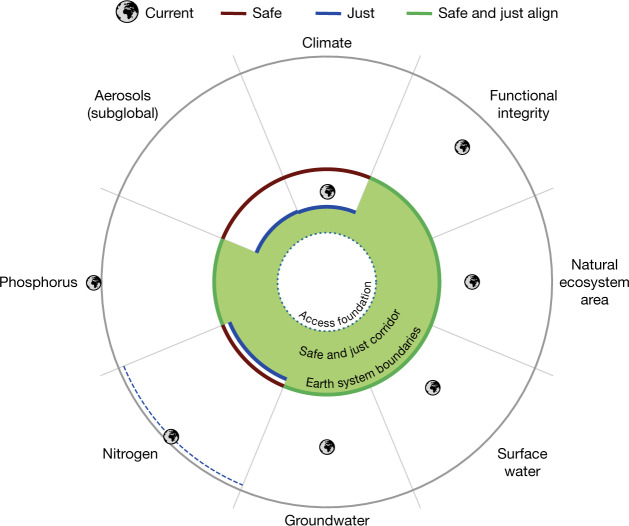
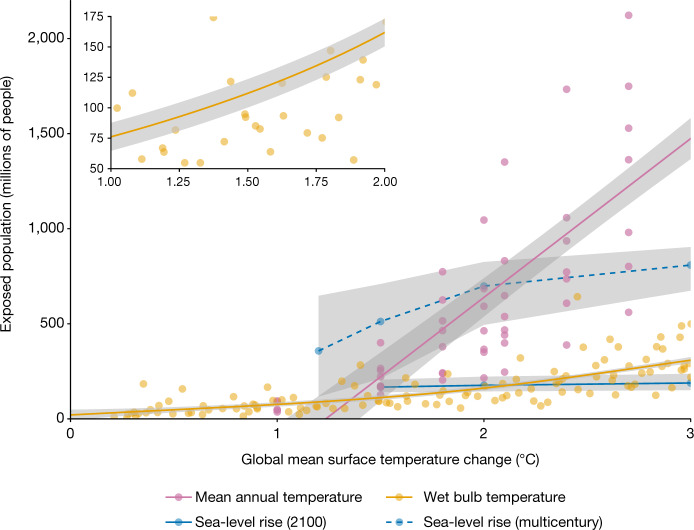
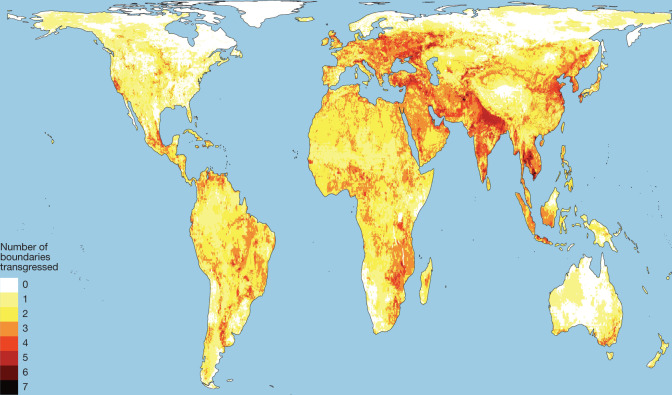
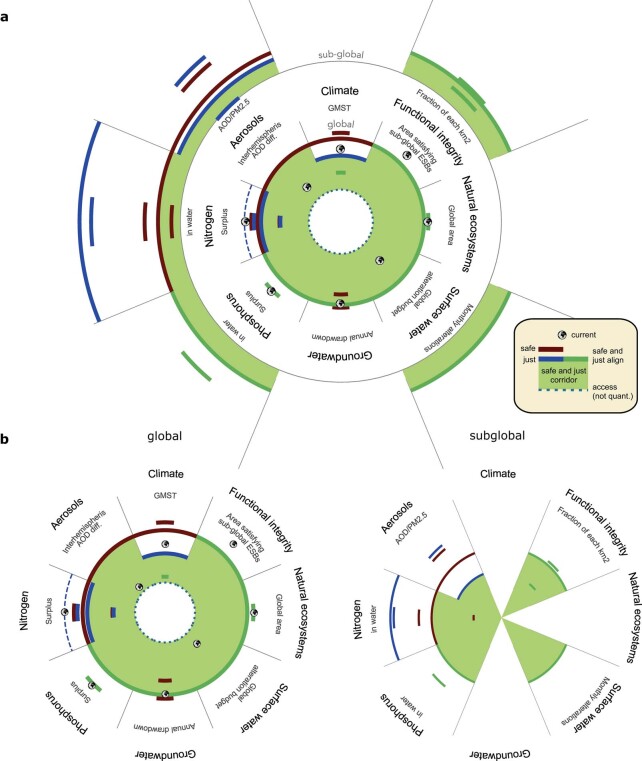
The stability and resilience of the Earth system and human well-being are inseparably linked 1–3 , yet their interdependencies are generally under-recognized; consequently, they are often treated independently 4,5 . Here, we use modelling and literature assessment to quantify safe and just Earth system boundaries (ESBs) for climate, the biosphere, water and nutrient cycles, and aerosols at global and subglobal scales. We propose ESBs for maintaining the resilience and stability of the Earth system (safe ESBs) and minimizing exposure to significant harm to humans from Earth system change (a necessary but not sufficient condition for justice) 4 . The stricter of the safe or just boundaries sets the integrated safe and just ESB. Our findings show that justice considerations constrain the integrated ESBs more than safety considerations for climate and atmospheric aerosol loading. Seven of eight globally quantified safe and just ESBs and at least two regional safe and just ESBs in over half of global land area are already exceeded. We propose that our assessment provides a quantitative foundation for safeguarding the global commons for all people now and into the future.
Overview
The claims and statistics of this paper haven’t been checked yet.
Free: it reads the open-access text and checks the first 5 claims that cite a source we can check. Create a free account to check every claim.
Integrity signals
Registry
Cites
Statistics
Figures
Verification
Claims the paper makes
The claims and statistics of this paper haven’t been checked yet.
Free: it reads the open-access text and checks the first 5 claims that cite a source we can check. Create a free account to check every claim.
Claims other papers make about this one
Each is checked against this paper’s own text: does it say what the citing paper says it does?
In the citing paper
“The accelerating socioeconomic trends of the past century [232] have put us on a path toward exceeding seven of eight globally defined safe and just Earth system boundaries that would provide safe living conditions for all humanity within the boundaries of the living systems on Earth [219].”
From Sustainability in computing education: A systematic literature review (2024) · cites this paper as [219]
Self-check
Percentages, sums and reported differences re-computed from the paper’s own numbers.
The self-check needs the paper’s full text.
Citations
Cites
A safe operating space for humanity
Rockström, J., Steffen, W., Noone, K., Persson, Å., Chapin, F. S., Lambin, E. F., Lenton, T. M., Scheffer, M., Folke, C., Schellnhuber, H. J., et al. (2009) · Nature · doi:10.1038/461472a · Cited by 13,333
Self-citationPlanetary boundaries: Guiding human development on a changing planet
Steffen, W., Richardson, K., Rockström, J., Cornell, S. E., Fetzer, I., Bennett, E. M., Biggs, R., Carpenter, S. R., de Vries, W., de Wit, C. A., et al. (2015) · Science · doi:10.1126/science.1259855 · Cited by 12,527 · cited 6×
“We note that the area of largely natural ecosystems replaces the “land boundary” in the planetary boundaries concept, which implied “largely intact lands” or areas of high biodiversity intactness (Steffen et al. 2015).”
InfluentialSelf-citationCohen, A. J., Brauer, M., Burnett, R., Anderson, H. R., Frostad, J., Estep, K., Balakrishnan, K., Brunekreef, B., Dandona, L., Dandona, R., et al. (2017) · The Lancet · doi:10.1016/s0140-6736(17)30505-6 · Cited by 6,583
Poff, N. L., Allan, J. D., Bain, M. B., Karr, J. R., Prestegaard, K. L., Richter, B. D., Sparks, R. E., & Stromberg, J. C. (1997) · BioScience · doi:10.2307/1313099 · Cited by 6,500
Four billion people facing severe water scarcity
Mekonnen, M. M., & Hoekstra, A. Y. (2016) · Science Advances · doi:10.1126/sciadv.1500323 · Cited by 5,531
Tipping elements in the Earth’s climate system
Lenton, T. M., Held, H., Kriegler, E., Hall, J. W., Lucht, W., Rahmstorf, S., & Schellnhuber, H. J. (2008) · Proceedings of the National Academy of Sciences · doi:10.1073/pnas.0705414105 · Cited by 3,982 · cited 1×
“Tipping elements: Those components or processes that regulate the functioning and state of the planet and that show evidence of having thresholds at which small additional perturbations can trigger selfreinforcing changes that undermine Earth system resilience (Lenton et al. 2008; Armstrong McKay et al. 2022).”
Self-citationEmerging threats and persistent conservation challenges for freshwater biodiversity
Reid, A. J., Carlson, A. K., Creed, I. F., Eliason, E. J., Gell, P. A., Johnson, P. T. J., Kidd, K. A., MacCormack, T. J., Olden, J. D., Ormerod, S. J., et al. (2019) · Biological Reviews · doi:10.1111/brv.12480 · Cited by 3,645
Options for keeping the food system within environmental limits
Springmann, M., Clark, M., Mason-D’Croz, D., Wiebe, K., Bodirsky, B. L., Lassaletta, L., de Vries, W., Vermeulen, S. J., Herrero, M., Carlson, K. M., et al. (2018) · Nature · doi:10.1038/s41586-018-0594-0 · Cited by 3,380
Self-citationBasic Principles and Ecological Consequences of Altered Flow Regimes for Aquatic Biodiversity
BUNN, S. E., & ARTHINGTON, A. H. (2002) · Environmental Management · doi:10.1007/s00267-002-2737-0 · Cited by 3,379
Self-citationIPBES (2019) · Socio-Environmental Systems Modeling · doi:10.5281/zenodo.3831673 · Cited by 3,354
Research works printed but not linked: 15
- IPCC Climate Change 2022: Impacts, Adaptation, and Vulnerability (eds Pörtner, H.-O. et al.) (Cambridge Univ. Press, 2022).
- IPCC Climate Change 2021: The Physical Science Basis (eds Masson-Delmotte, V. et al.) (Cambridge Univ. Press, 2021).
- O’Neill, B. et al. in Climate Change 2022: Impacts, Adaptation, and Vulnerability (eds Pörtner, H.-O. et al.) 2411–2538 (Cambridge Univ. Press, 2022).
- Parmesan, C. et al. in Climate Change 2022: Impacts, Adaptation, and Vulnerability (eds Pörtner, H.-O. et al.) 197–377 (Cambridge Univ. Press, 2022).
- WHO Guidelines for Drinking-water Quality 4th edn (World Health Organization, 2022); https://www.who.int/publications/i/item/9789240045064. 35417116
- Tirado, R. & Allsopp, M. Phosphorus in Agriculture: Problems and Solutions. Technical report (review) (Greenpeace, 2012); https://www.greenpeace.to/greenpeace/wp-content/uploads/2012/06/tirado-and-allsopp-2012-phosphorus-in-agriculture-technical-report-02-2012.pdf.
- Douville, H. et al. in Climate Change 2021: The Physical Science Basis (eds Masson-Delmotte, V. et al.) 1055–1210 (Cambridge Univ. Press, 2021).
- WHO Global Air Quality Guidelines: Particulate Matter (PM2.5and PM10), Ozone, Nitrogen Dioxide, Sulfur Dioxide and Carbon Monoxide (WHO, 2021); https://apps.who.int/iris/handle/10665/345329. 34662007
- EPA. Review of the national ambient air quality standards for particulate matter. Environmental Protection Agency. 40 CFR Part 50. Fed. Regis. Rules Regul. 85, 82684–82748 (2020).
- Biggs, R. et al. in Encyclopedia of Theoretical Ecology (eds Hastings, A. & Gross, L.) 609–617 (Univ. of California Press, 2012).
- Owusu, K. A., Kulesz, M. M. & Merico, A. Extraction behaviour and income inequalities resulting from a common pool resource exploitation. Sustain. Sci. Pract. Policy 11, 536 (2019).
- IPCC Climate Change 2022: Impacts, Adaptation, and Vulnerability (eds Pörtner, H.-O. et al.) (Cambridge Univ. Press, 2022).
- Fox-Kemper, B. et al. in Climate Change 2021: The Physical Science Basis (eds Masson-Delmotte, V. et al.) 1211–1362 (Cambridge Univ. Press, 2021).
- Shaw, R. et al. in Climate Change 2022: Impacts, Adaptation, and Vulnerability (eds Pörtner, H.-O. et al.) 1457–1579 (Cambridge Univ. Press, 2022).
- Klein Goldewijk, K., Beusen, A., Doelman, J. & Stehfest, E. Anthropogenic land use estimates for the Holocene–HYDE 3.2. Earth Syst. Monit. 9, 927–953 (2017).
Cited by
Items 801–900 of 1,001
Elaborating the Motivations and Attitudes Driving Interest in Voluntary Biodiversity Credits
Yakar‐Pritchard, G., Greenman, A., Stetkiewicz, S., Dijkstra, B. R., Bowen, F., & Field, R. (2026) · Business Strategy and the Environment · doi:10.1002/bse.70693 · Cited by 2
Removing the Fantasmatic Blindfold: Enjoyment as a Political Factor in Climate Justice
van Vliet, L. (2026) · European Journal of Social Theory · doi:10.1177/13684310261433427 · Cited by 2
“For example, justice has become a key signi fi er in the planetary governance research and policy agenda, as evidenced by the development from Rockström et al. ’ s (2009) planetary boundaries work to the safe and just Earth system boundaries framework (Rockström et al., 2023).”
Designing Integrated Policies for the Twin Transition: Challenges and Tradeoffs
Maggetti, M. (2026) · Policy Studies Journal · doi:10.1111/psj.70118 · Cited by 2
da Silva, A. W. P., de Figueiredo, C. J. J., El-Aouar, W. A., Severo, E. A., de Castro, A. B. C., de Sousa, J. C., & da Silva, P. M. M. (2026) · Business Strategy & Development · doi:10.1002/bsd2.70332 · Cited by 2
Samour, A., Chaouachi, S., Almulhim, A. A., Chaouachi, M., & Aljughaiman, A. A. (2026) · Energy Strategy Reviews · doi:10.1016/j.esr.2026.102220 · Cited by 2
Resilience Challenges in Bioeconomy Policies: A Global Comparative Analysis
Goritz, N., Proestou, M., & Feindt, P. H. (2026) · Environmental Management · doi:10.1007/s00267-026-02432-1 · Cited by 2
“In the face of planetary boundaries (Rockström et al. 2023), a transformative shift from a fossil-based towards a bio-based economy has been proposed as a pathway to ensure a sustainable supply of food, fi ber and renewable energy that would also help to address climate, biodiversity, economic, and…”
Partanen-Hertell, M., & Kauppila, R. (2026) · Zeitschrift für Psychodrama und Soziometrie · doi:10.1007/s11620-026-00915-1 · Cited by 2
Fan, X., & Shaohui, Z. (2026) · Ecological Indicators · doi:10.1016/j.ecolind.2026.114903 · Cited by 2
Enabling 1.5 °C lifestyles in Europe: lifestyle options and structural change for transformation
Fuchs, D., Kreinin, H., Becker, L. M., Berendt, P., Brizga, J., Cap, S., Coscieme, L., Domröse, L., Adina, D., Lakševics, K., et al. (2026) · Sustainability Science Practice and Policy · doi:10.1080/15487733.2026.2657131 · Cited by 2
Waddock, S. (2026) · Business and Society Review · doi:10.1111/basr.70054 · Cited by 2
Wang, J., Zhang, Z., Li, H., Long, R., & Li, Q. (2026) · Current Psychology · doi:10.1007/s12144-026-09510-x · Cited by 2
“Environmental degradation caused by improper consumption has become one of the most severe challenges facing the Earth (Dubois et al., 2019 ; Rockström et al., 2023 ; Naz et al., 2023 ).”
Climate obstruction and nationalism: a conceptual map
Conversi, D., Posocco, L., Karkour, H. L., Żuk, P., Scheffran, J., Vowles, K., Arantes, V., Hendlin, Y. H., & Enguer, J. (2026) · Frontiers in Political Science · doi:10.3389/fpos.2026.1839079 · Cited by 2
Geoparks and the future of geoscience outreach
Stewart, I. S., Brilha, J., Justice, S., & Adiyaman, Ö. (2026) · Nature Geoscience · doi:10.1038/s41561-026-01995-2 · Cited by 2
Souza, L. C. G., Guimarães, L. P., & Drumond, M. A. (2026) · Corporate Social Responsibility and Environmental Management · doi:10.1002/csr.70721 · Cited by 2
Schulte, J. (2026) · Environmental Education Research · doi:10.1080/13504622.2026.2693941 · Cited by 2
“Changing course toward sustainability is imperative to ensure the long-term viability of human society within the biosphere (Rockström et al. 2023).”
Müller, A. B., Bosch, H., Gupta, J., & Karg, A. (2026) · Water Policy · doi:10.2166/wp.2026.343 · Cited by 4
Self-citationFrom Human Sufficiency to Earth sufficiency: The role of nature quotient cultivation
Vuong, Q., & Nguyen, M.-H. (2026) · The Anthropocene Review · doi:10.1177/20530196261464206 · Cited by 2
Breyer, C., Khalili, S., Bredemeier, D., Jäger‐Waldau, A., Keiner, D., & Victoria, M. (2026) · Progress in Photovoltaics Research and Applications · doi:10.1002/pip.70135 · Cited by 2
Sigmund, G., Barra, R. O., Bertram, M. G., Diamond, M. L., Ford, A. T., İmamoğlu, İ., Li, J., Lohmann, R., Schäffer, A., Scheringer, M., et al. (2026) · Environmental Science & Technology · doi:10.1021/acs.est.6c06644 · Cited by 2
Jacquet, C., & Siqueira, T. T. D. S. (2026) · Environmental Innovation and Societal Transitions · doi:10.1016/j.eist.2026.101173 · Cited by 2
Regenerative Built Environments Add Positive Value
Craft, W., Prasad, D. K., & Ding, L. (2026) · Springer eBooks · doi:10.1007/978-981-95-7976-1_3 · Cited by 2
Abasova, U., Zaidi, S. A. H., & Ashraf, R. U. (2026) · Energy Policy · doi:10.1016/j.enpol.2026.115517 · Cited by 2
Wu, J., Zhang, L., Xu, X., Jiang, J., Wang, W., & Quan, Z. (2026) · Economic Modelling · doi:10.1016/j.econmod.2026.107778 · Cited by 2
Self-citationA Footprint Perspective for Sustainable Supply Chain Management Research
Shevchenko, A., & Luzzini, D. (2026) · Journal of Supply Chain Management · doi:10.1111/jscm.70033 · Cited by 2
Ecological Irreplaceability in the Era of Nature Positive
Maron, M., Ward, M., Simmonds, J. S., Wintle, B. A., Possingham, H. P., Li, R. V., Butler, D. W., Macintosh, A., Reside, A. E., Sonter, L. J., et al. (2026) · Conservation Letters · doi:10.1111/con4.70073 · Cited by 2
Global analysis of nitrogen inputs from irrigation water to cropland
Serra, J., Lassaletta, L., Ros, G. H., Quemada, M., Kurina, F. G., Aguilera, E., Graversgaard, M., Marques-dos-Santos, C. S. C., Cameira, M. D. R., VRIES, W. D., et al. (2026) · Nature Sustainability · doi:10.1038/s41893-026-01930-8 · Cited by 2
Self-citationBorland, H., Ambrosini, V., & Butler, M. (2026) · Journal of Business Ethics · doi:10.1007/s10551-026-06382-w · Cited by 3
Chen, Y., & Mao, F. (2026) · Sustainability Science · doi:10.1007/s11625-026-01903-y · Cited by 2
Unifying bright spots research for people and nature
Lin, B., & Cinner, J. E. (2026) · Nature Ecology & Evolution · doi:10.1038/s41559-026-03180-5 · Cited by 2
The value of societal values in finance
Schellhorn, C. D. (2023) · International Journal of Ethics and Systems · doi:10.1108/ijoes-08-2023-0178 · Cited by 2
Réinterroger le capitalisme contemporain : vers une économie politique de l’écologie
Cahen-Fourot, L., Plumecocq, G., & Vivien, F.-D. (2023) · Revue de la régulation · doi:10.4000/regulation.22893 · Cited by 3
Ehau‐Taumaunu, H., Williams, N., Marsh, A. T., Waipara, N. W., Higgins, C. M., Geering, A. D. W., Mesarich, C. H., Rigano, L., Summerell, B. A., Johnson, G. I., et al. (2024) · Australasian Plant Pathology · doi:10.1007/s13313-024-00977-5 · Cited by 2
“…and its translation into how we undertake research, scientists should be more responsible and accountable by reflecting more deeply and considering how their actions contribute to creating the desired future world and empowering Indigenous science (Rockström et al. 2023; Turner et al. 2022).”
Sisyphean Goal: Sustainable Development
Yigit, S. (2024) · Advances in human services and public health (AHSPH) book series · doi:10.4018/979-8-3693-2758-6.ch002 · Cited by 2
Water as Life for Susceptible Sustainability and Dithering Development
Yigit, S. (2024) · Advances in public policy and administration (APPA) book series · doi:10.4018/979-8-3693-2917-7.ch019 · Cited by 2
Ermolaeva, Y. V., & Dzyuba, Y. V. (2024) · Research Result Sociology and Management · doi:10.18413/2408-9338-2024-10-2-0-8 · Cited by 2
Exploring human-nature relationships in academic literature on the nitrogen cycle
West, B., Bauer, M., Chalkiadakis, C., Dendoncker, N., González-Martínez, T. M., Mascarenhas, A., Leucci, F., Phillips, B. B., Ploumi, K. T., González, C. R., et al. (2024) · Ecosystems and People · doi:10.1080/26395916.2024.2380856 · Cited by 2
Rebound Effects Make Digital Audio Unsustainable
Lostanlen, V., & Bouchet, L. (2024) · IEEE International Symposium on the Internet of Sounds (IS2) · doi:10.1109/is262782.2024.10704126 · Cited by 2
“In a 2022 article, Gabrielli and Turchet have called for a the emergence of a “sustainable Internet of Sounds” (IoS) [5]; i.e., one in which technological innovation is put at the service of ecological safety and social justice [6].”
BackgroundReimagining fishing in the Anthropocene through a rights of nature lens
Bender, M., & Bustamante, R. (2024) · Journal of Human Rights and the Environment · doi:10.4337/jhre.2024.02.02 · Cited by 2
Aladesuru, D. T., Čechura, L., Neuenfeldt, S., Kuhn, T., Kristkova, Z. S., Kroupová, Z. Ž., Ratinger, T., Gocht, A., Müller, M., & Storm, H. (2024) · Q Open · doi:10.1093/qopen/qoae027 · Cited by 2
Michalski, J., & Wolińska, M. (2024) · Routledge eBooks · doi:10.4324/9781003567851 · Cited by 2
Learning from nutrient profile models to inform environmental profile models
Geyik, Ö., Seferidi, P., Barrett, E. M., Jones, A., Pettigrew, S., Wu, J. H. Y., & Hadjikakou, M. (2024) · The Lancet Planetary Health · doi:10.1016/s2542-5196(24)00269-9 · Cited by 2
Indicadores de sustentabilidad para Áreas Naturales Protegidas
Marcelino, D. M., Rodríguez, M., & Camacho, A. D. (2024) · CienciaUAT · doi:10.29059/cienciauat.v19i2.1891 · Cited by 2
Güner, H. (2025) · Journal of Cleaner Production · doi:10.1016/j.jclepro.2025.144727 · Cited by 2
From Environmental Ethics to Sustainability Ethics
Du, H. (2025) · Problemy Ekorozwoju · doi:10.35784/preko.6834 · Cited by 2
“As evidenced in the literature, the world is currently facing a range of unprecedented ecological and environmental challenges (Lenton, 2019; Rockström et al., 2023; Steffen et al., 2018).”
Prasetya, S. P. (2025) · Pakistan Journal of Life and Social Sciences (PJLSS) · doi:10.57239/pjlss-2025-23.1.00136 · Cited by 2
Future directions for early career researchers in planetary health equity
Arthur, M., Godziewski, C., Sievert, K., Boddington, S. J., Carrad, A., Marchiori, G. D. L., de Groot, B., Guzman, C. F., Frank, N., Gajurel, H., et al. (2025) · Earth System Governance · doi:10.1016/j.esg.2025.100245 · Cited by 3
Gu, J., Luo, Y., Liang, M., Fan, Y., Zhang, X., Ji, G., & Jin, X. (2025) · Journal of Hazardous Materials · doi:10.1016/j.jhazmat.2025.137830 · Cited by 2
Self-citationFelicien, A., BORGES-LANDAEZ, P. A., Chacón, N., López-Gasca, M., González, H., TAPARA Indigenous Core Research Team, Asiza, H., Cardona, A., Cardona-Pérez, E., Cardona-Pérez, W., et al. (2024) · Inland Waters · doi:10.1080/20442041.2024.2437933 · Cited by 2
“While Western knowledge has contributed to our understanding of this crisis (Rockström et al. 2023), it has become clear that this knowledge alone cannot fully address the complexities of human-induced changes in Earth systems (Lam et al. 2020, Norström et al. 2020, Moreno-Cely et al. 2021,…”
Beyond Vulnerability: Reimagining the Global South's agency in environmental governance
Garcés, M. F. E. (2025) · Earth System Governance · doi:10.1016/j.esg.2025.100258 · Cited by 2
Systemic Management Practices—Enabling Local Governments to Adapt in Response to Complexity
Riemer, M., Sa’d, R., Posselt, T., Salehi, P., Corbett, D. M., Jones, P. H., Upward, A., DeCruz, E., Baue, B., Asadzadeh, A., et al. (2025) · World · doi:10.3390/world6020072 · Cited by 4
Phillips, J. (2025) · Journal of Cleaner Production · doi:10.1016/j.jclepro.2025.145965 · Cited by 3
Клименко, В. В., Tereshin, A. G., & Mikushina, O. V. (2025) · Journal of Globalization Studies · doi:10.30884/jogs/2025.01.01 · Cited by 2
Matkovic, V., Cadeddu, C., Pinho‐Gomes, A., Köster, M., Boeckmann, M., Valencia, P. A. D., Patterson, D., van den Hazel, P., Viegas, S., & Jevtić, M. (2025) · Perspectives in Public Health · doi:10.1177/17579139251316222 · Cited by 2
Sägesser, A., & Förster, R. (2025) · De Gruyter eBooks · doi:10.1515/9783111337913-006 · Cited by 3
Spanidis, P.-M., Christakopoulou, J., Siontorou, C. G., Pavloudakis, F., Servou, A., & Roumpos, C. P. (2025) · Mining Metallurgy & Exploration · doi:10.1007/s42461-025-01317-x · Cited by 2
“Based on the literature review discussed herein and reports on the climate change effects on Earth’s systems [47, 91], this study examines the resilience concept focused on cases of remnant infrastructures within mined sites, emphasizing the geoenvironmental and geotechnical measures and…”
Nutrient balance and nutrient use efficiency in Japan
Mishima, S. (2025) · Soil Science & Plant Nutrition · doi:10.1080/00380768.2025.2477131 · Cited by 2
“Rockström et al. (2023) indicated that Nr and P use are exceeding the planetary boundary by approximately double.”
Erwachsenenbildung und Nachhaltigkeit. Sondierungen und Forschung zwischen Anspruch und Wirklichkeit
:null (2024) · Pedocs (German Institute for International Educational Research) · doi:10.25656/01:31450 · Cited by 2
Reflections and trajectories for interdisciplinary research on the energy transition
Sposito, C., & Scalisi, F. (2024) · Agathón · doi:10.19229/2464-9309/1502024 · Cited by 2
Huntjens, P., Mohamed, N., Hujo, K., & Desai, M. (2025) · Springer eBooks · doi:10.1007/978-3-031-99109-7 · Cited by 3
Szemelvények a BGE kutatásaiból (II. kötet)
István, Á. (2023) · doi:10.29180/978-615-6342-76-8 · Cited by 2
Lin, Q., Ang, L. W., Shao, Y., & Palaniappan, S. (2024) · Journal of Informatics and Web Engineering · doi:10.33093/jiwe.2024.3.2.12 · Cited by 2
The Principle of Respect in Circular Economy: Recognising Worth and Boundaries
Adaui, C. R. L. (2024) · CSR, sustainability, ethics & governance · doi:10.1007/978-3-031-70749-0_2 · Cited by 2
Unequivocal principles for area-based biodiversity conservationPreprint
Riva, F., Haddad, N. M., Fahrig, L., & Banks-Leite, C. (2023) · doi:10.22541/au.169299482.22314493/v1 · Cited by 2
What is a just transition for environmental targets?
Parliamentary Office of Science and Technology, Grub, H. M. J., & Wentworth, J. (2023) · doi:10.58248/pn706 · Cited by 2
de Molina, M. G., & Toledo, V. M. (2023) · Environmental history · doi:10.1007/978-3-031-48411-7_13 · Cited by 2
Mapping the Transgression of the Planetary Boundary for Functional Biosphere IntegrityPreprint
Stenzel, F., Ben-Uri, L., Braun, J., Breier, J., Erb, K., Gerten, D., Haberl, H., Matej, S., Milo, R., Ostberg, S., et al. (2024) · SSRN Electronic Journal · doi:10.2139/ssrn.4998602 · Cited by 3
Self-citationSwärdh, E., & Palstam, A. (2025) · European Journal of Physiotherapy · doi:10.1080/21679169.2025.2495440 · Cited by 2
“This means ensuring that when students learn for sustainable development, we emphasise planetary boundaries [11], environmental integrity, and just transitions rather than perpetuating a narrow focus on efficiency or resilience within existing unsustainable systems.”
End GDP mania: how the world should really measure prosperity
(2025) · Nature · doi:10.1038/d41586-025-03144-y · Cited by 2
Join the dots on planetary boundary interactionsPreprint
Gerten, D., Almeida, B., Lade, S. J., & Norberg, A. (2025) · doi:10.5194/egusphere-2025-4761 · Cited by 2
Self-citationFuture Urban Sustainability: Lessons Learnt From the SDGs and Perspectives for a Post‐2030 Agenda
Koch, F., Beyer, S., Krellenberg, K., & Wesely, J. (2025) · Urban Planning · doi:10.17645/up.11526 · Cited by 2
“Looking ahead to the post‐2030 era, they must set and achieve targets for reducing their environmental impact, promoting justice and inclusion, and preventing further planetary harm (Bai et al., 2022; Rockström et al., 2023).”
Lighthouse Programmes in Sustainability Research and Innovation
Wuelser, G., & Edwards, P. J. (2023) · DORA Eawag (Swiss Federal Institute of Aquatic Science and Technology (Eawag)) · doi:10.5281/zenodo.15599259 · Cited by 2
Modelling Socio-Psychological Drivers of Land Management IntensityPreprint
Hotz, R., Brown, C., Zeng, Y., Schmitt, T., & Rounsevell, M. (2026) · arXiv (Cornell University) · doi:10.48550/arxiv.2602.02347 · Cited by 2
An Information-Based World-Earth System Resilience IndexPreprint
Anderies, J. M., Bechthold, M., Donges, J. F., Fetzer, I., Wunderling, N., Barfuß, W., & Rockström, J. (2026) · doi:10.5194/egusphere-2025-6345 · Cited by 2
Self-citationInternational business and sustainability: towards an interdisciplinary research agenda
Doh, J. P., Kolk, A., & Wang, H. C. (2026) · Journal of International Business Studies · doi:10.1057/s41267-026-00867-6 · Cited by 3
Sustainability, Higher Education, and Human Behavior
Amel, E. L., Manning, C. M., Daus, C. S., & Quinn, M. (2023) · Psychology and our planet · doi:10.1007/978-3-031-50555-3_1 · Cited by 1
Vidovich, L. D. (2024) · Springer eBooks · doi:10.1007/978-3-031-55028-7_1 · Cited by 1
Mishima, S. (2024) · Material Cycles and Waste Management Research · doi:10.3985/mcwmr.35.121 · Cited by 1
Preliminary assessment of the knowledge gaps to soil pollution and restoration
Pump, J., Schamphelaere, K. D., Stankovics, P., Cioci, G., & Tóth, G. (2024) · Soils for Europe. · doi:10.3897/soils4europe.e119627 · Cited by 1
Chapter 2: Fridays for Future and Extinction Rebellion Start to Grow
Fopp, D., Axelsson, I., & Tille, L. (2024) · Xtexte · doi:10.14361/9783839470312-007 · Cited by 1
Occupational Heat Effects: A Global Health and Economic Threat
Butler, C. D., LEE, J. K. W., Sahu, S., & Kjellstrom, T. E. (2024) · CABI eBooks · doi:10.1079/9781800620025.0012 · Cited by 1
Plant-Based v. Omnivorous Diets: Comparative Environmental Impacts
Cleveland, D. A., & Jay, J. A. (2024) · Springer eBooks · doi:10.1007/978-3-031-63083-5_30 · Cited by 2
Integrating Natural Capital in the Economy
Nulkar, G. V. (2024) · Springer eBooks · doi:10.1007/978-981-99-6893-0_5 · Cited by 1
Cook, D., Davíðsdóttir, B., Merida, V. E., & Ögmundarson, Ó. (2025) · Ecosystem Services · doi:10.1016/j.ecoser.2025.101709 · Cited by 1
Huckauf, J., Weisenfeld, U., & Broer, I. (2025) · New Biotechnology · doi:10.1016/j.nbt.2025.02.006 · Cited by 1
Enjeux d’une conceptualisation éducative de l’Anthropocène à partir des ruptures biogéophysiques
Wallenhorst, N. (2025) · Recherches en éducation · doi:10.4000/13l6h · Cited by 1
Afifi, A. S., & Kim, A. S. (2025) · Water · doi:10.3390/w17081231 · Cited by 1
The Drama of Environmental Politics
Hajer, M. A., & Oomen, J. (2025) · Oxford University Press eBooks · doi:10.1093/9780198955382.003.0003 · Cited by 1
Hajer, M. A., & Oomen, J. (2025) · Oxford University Press eBooks · doi:10.1093/9780198955382.003.0001 · Cited by 1
Hajer, M. A., & Oomen, J. (2025) · Oxford University Press eBooks · doi:10.1093/9780198955382.003.0010 · Cited by 1
Boyd, N. T., & Gabriel, S. A. (2025) · Computational Management Science · doi:10.1007/s10287-025-00534-5 · Cited by 1
“Crossing these ESBs carries consequences such as ecosystem degradation and loss of human life, livelihoods, and access to basic needs (Rockström et al 2023).”
Ashgezari, M. S. A., & Bidhendi, G. N. (2025) · Environmental Research Infrastructure and Sustainability · doi:10.1088/2634-4505/ade003 · Cited by 1
“A safe Earth system boundary, defined by the interhemispheric difference in AOD, shows risks if it goes over 0.15 due to air pollution or geoengineering aerosols [32].”
InfluentialToward Ethical Intervention in the Anthropocene: Saving Animals from Wildfires
Mateo, J. F. (2024) · Journal of Posthuman Studies · doi:10.5325/jpoststud.8.2.0265 · Cited by 1
Slaveykova, V. I. (2025) · Frontiers in Environmental Science · doi:10.3389/fenvs.2025.1643879 · Cited by 1
Ayassamy, P. (2025) · Thalassas An International Journal of Marine Sciences · doi:10.1007/s41208-025-00880-w · Cited by 1
“This inter-connection is further reinforced by the Planetary Boundaries framework, which highlights emissions reduction, bio-diversity protection, and ocean health as critical pillars for maintaining Earth’s safe operating space (Rockström et al. 2009; 2023).”
Designing a toolkit for visualising desirable sustainable futures in video games
Kay, N., Baron, G., Vervoort, J., & Armoudian, M. (2025) · doi:10.26503/dl.v2025i2.2459 · Cited by 1
Transformative Universities as Innovation
Singer‐Brodowski, M., Holst, J., & Bormann, I. (2025) · Springer eBooks · doi:10.1007/978-3-031-25143-6_74-1 · Cited by 1
Quantifying the dependence of China's water supply and regional economy on the Asian water tower
Wei, M., & Zhang, W. (2025) · Journal of Hydrology Regional Studies · doi:10.1016/j.ejrh.2025.102609 · Cited by 1
Asakereh, H., & Jahedi, A. (2025) · Izvestiya Atmospheric and Oceanic Physics · doi:10.1134/s0001433825700409 · Cited by 1
RetractedNavigating the safe and just operating space for urban systems: A cross-scale landscape approach
Bian, H., Wu, J., Jia, R., Wang, L., Zhu, Z., Wei, M., & Gao, J. (2025) · Geography and sustainability · doi:10.1016/j.geosus.2025.100352 · Cited by 2
Introducing Global Health, One Health and Planetary Health
Metzendorf, M. (2025) · Journal of EAHIL · doi:10.32384/jeahil21665 · Cited by 1
Metadata
- Authors
- Rockström, J., Gupta, J., Qin, D., Lade, S. J., Abrams, J. F., Andersen, L. S., Armstrong McKay, D. I., Bai, X., Bala, G., Bunn, S. E., Ciobanu, D., DeClerck, F., Ebi, K., Gifford, L., Gordon, C., Hasan, S., Kanie, N., Lenton, T. M., Loriani, S., Liverman, D. M., Mohamed, A., Nakicenovic, N., Obura, D., Ospina, D., Prodani, K., Rammelt, C., Sakschewski, B., Scholtens, J., Stewart-Koster, B., Tharammal, T., van Vuuren, D., Verburg, P. H., Winkelmann, R., Zimm, C., Bennett, E. M., Bringezu, S., Broadgate, W., Green, P. A., Huang, L., Jacobson, L., Ndehedehe, C., Pedde, S., Rocha, J., Scheffer, M., Schulte-Uebbing, L., de Vries, W., Xiao, C., Xu, C., Xu, X., Zafra-Calvo, N., & Zhang, X.
- Affiliations
- Stockholm Resilience Centre (SE)
- IHE Delft Institute for Water Education (NL)
- China Meteorological Administration (CN)
- Australian National University (AU)
- University of Exeter (GB)
- Leibniz Association (DE)
- Indian Institute of Science Bangalore (IN)
- Griffith University (AU)
- CGIAR (FR)
- University of Washington (US)
- University of Arizona (US)
- University of Ghana (GH)
- Keio University (JP)
- Universität Hamburg (DE)
- Coastal Oceans Research and Development in the Indian Ocean (KE)
- Future Earth (SE)
- University of Amsterdam (NL)
- Netherlands Environmental Assessment Agency (NL)
- Swiss Federal Institute for Forest, Snow and Landscape Research (CH)
- University of Potsdam (DE)
- International Institute for Applied Systems Analysis (AT)
- McGill University (CA)
- University of Kassel (DE)
- The Graduate Center, CUNY (US)
- Wageningen University & Research (NL)
- Chinese Academy of Sciences (CN)
- Nanjing University (CN)
- University of Maryland Center for Environmental Science (US)
- Corresponding author
- Rockström, Johan
- Lade, Steven J.
- ORCID
- Rockström, Johan
- Gupta, Joyeeta
- Lade, Steven J.
- Abrams, Jesse F.
- Andersen, Lauren S.
- Armstrong McKay, David I.
- Bai, Xuemei
- Bala, Govindasamy
- Bunn, Stuart E.
- Ciobanu, Daniel
- DeClerck, Fabrice
- Ebi, Kristie
- Gifford, Lauren
- Gordon, Christopher
- Hasan, Syezlin
- Kanie, Norichika
- Lenton, Timothy M.
- Loriani, Sina
- Liverman, Diana M.
- Mohamed, Awaz
- Obura, David
- Ospina, Daniel
- Prodani, Klaudia
- Rammelt, Crelis
- Sakschewski, Boris
- Scholtens, Joeri
- Stewart-Koster, Ben
- Tharammal, Thejna
- van Vuuren, Detlef
- Verburg, Peter H.
- Winkelmann, Ricarda
- Zimm, Caroline
- Bennett, Elena M.
- Bringezu, Stefan
- Broadgate, Wendy
- Green, Pamela A.
- Jacobson, Lisa
- Ndehedehe, Christopher
- Pedde, Simona
- Rocha, Juan
- Scheffer, Marten
- Schulte-Uebbing, Lena
- de Vries, Wim
- Xiao, Cunde
- Xu, Chi
- Zafra-Calvo, Noelia
- Zhang, Xin
- Venue
- Nature
- Published
- 2023-05-31
- Volume
- 619
- Issue
- 7968
- Pages
- 102-111
- ISSN
- 0028-0836 (ISSN-L)
- 1476-4687
- PMC
- PMC10322705
- OpenAlex
- W4378905467
- Semantic Scholar
- a8edd13b5e3c32453654f8d778fde8192c874d3e
- Cited by
- 1,400
- References
- 106
- Citations by year
- 2026: 364 · 2025: 452 · 2024: 438 · 2023: 145
- FWCI
- 157.19
- Type
- journal article
- Language
- en
- Open access
- hybrid
- doi.org
- Licence
- cc-by
- creativecommons.org/licenses/by/4.0 (tdm)
- creativecommons.org/licenses/by/4.0 (vor)
- Locations
- Nature (publishedVersion, cc-by)
- PubMed Central (publishedVersion, cc-by)
- PubMed (publishedVersion)
- VU Research Portal (publishedVersion, other-oa)
- ANU Open Research (Australian National University) (submittedVersion, cc-by)
- UA Campus Repository (The University of Arizona) (submittedVersion, cc-by)
- Communities in ADDI (University of the Basque Country) (submittedVersion, cc-by-nc-sa)
- CGSPace A Repository of Agricultural Research Outputs (Consultative Group for International Agricultural Research) (submittedVersion, cc-by)
- DORA WSL (Swiss Federal Institute for Forest, Snow and Landscape Research) (submittedVersion, cc-by)
- Socio-Environmental Systems Modeling (submittedVersion, cc-by)
- Open Research Exeter (University of Exeter) (submittedVersion, cc-by)
- Publication Database PIK (Potsdam Institute for Climate Impact Research (PIK)) (submittedVersion, cc-by)
- IIASA PURE (International Institute of Applied Systems Analysis) (submittedVersion, other-oa)
- Griffith Research Online (submittedVersion, cc-by)
- RePEc: Research Papers in Economics (submittedVersion)
- UvA-DARE (University of Amsterdam) (submittedVersion, cc-by)
- Utrecht University Repository (Utrecht University) (submittedVersion, other-oa)
- Figshare (submittedVersion, cc-by)
- Hispana (submittedVersion, cc-by-nc-sa)
- Greater South Information System
- Funders
- Open Society Foundations
- Gordon and Betty Moore Foundation
- Oak Foundation
- Global Environment Facility
- Australian Government (FT200100381)
- Porticus Foundation
- Svenska Forskningsrådet Formas (2020-00371)
- Vetenskapsrådet (ERC-2016-ADG 743080)
- Stockholms Universitet
- Tiina ja Antti Herlinin säätiö
- Australian Research Council (DE230101327)
- Japan Society for the Promotion of Science (18H03428)
- H2020 European Research Council (101020082)
- Topics
- Physical Sciences › Environmental Science › Global and Planetary Change › Sustainability and Climate Change Governance
- Physical Sciences › Environmental Science › Global and Planetary Change › Earth Systems and Cosmic Evolution
- Physical Sciences › Environmental Science › Global and Planetary Change › Land Use and Ecosystem Services
- Keywords
- planetary boundaries, planetary resilience, justice, climate change, biosphere, water cycle, nutrient cycling, atmospheric aerosols, global commons
- MeSH terms
- Nutrients, Environmental Justice, Aerosols, Climate, Humans, Safety, Water, Earth, Planet, Internationality, Climate Change
About these checks
Registry, retraction, Cites and statistics results are computed, not judged, with one exception: a printed reference that no index lists is read once by a model before it counts as a citation error. Claims are extracted by a model and kept only when their quote appears verbatim in the text; each cited source is then checked, with a model’s help, for whether it says what the claim relies on. Those verdicts can be wrong — read the claim’s quote and the cited source before relying on one.
Statistics and arithmetic are recomputed, not judged.
Confidence bands are shown only for fields calibrated on our annotated test set. None is calibrated yet, so no band is shown.
What counts as a claim ›How we measure confidence ›How we check this ›
Are you an author, or do you see a problem with this page? Request a review
Data sources
Bibliographic data: Semantic Scholar, OpenAlex, Crossref.
Contains information from the Semantic Scholar Academic Graph Datasets, made available under the ODC Attribution License (ODC-BY 1.0).
Semantic Scholar’s data is described in: Kinney, R., et al. (2023). The Semantic Scholar Open Data Platform. arXiv:2301.10140.
