

Algorithm for optimized mRNA design improves stability and immunogenicity
Open accessThe DOI matches its Crossref record; 63 of the 63 references it cites were found in a registry or an index; 45 of the 63 sources its claims cite were checked for support.
Abstract
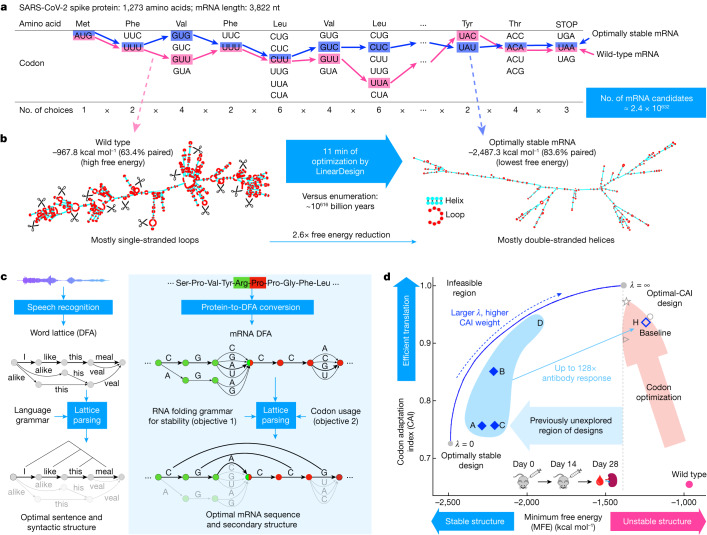
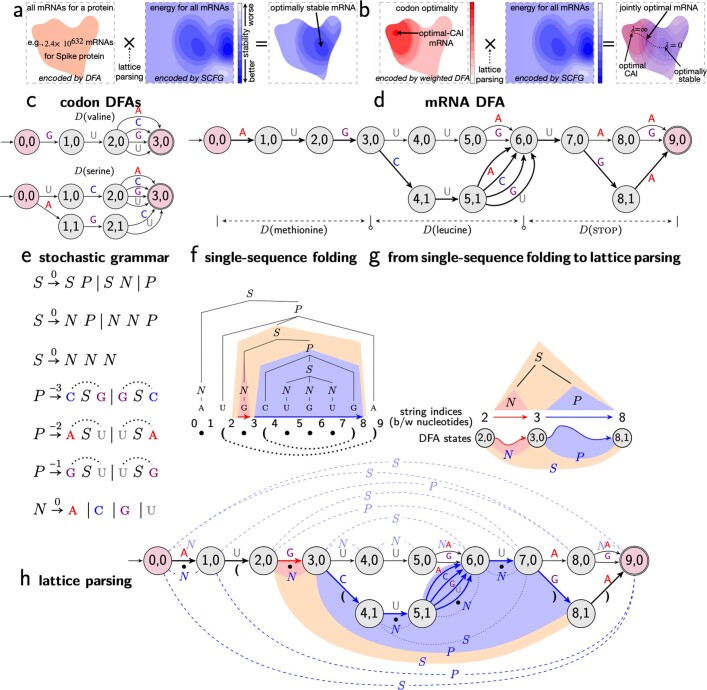
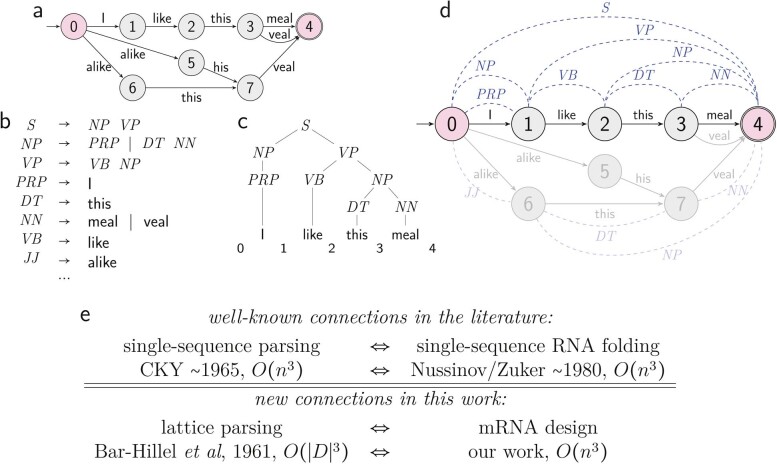
Abstract Messenger RNA (mRNA) vaccines are being used to combat the spread of COVID-19 (refs. 1–3 ), but they still exhibit critical limitations caused by mRNA instability and degradation, which are major obstacles for the storage, distribution and efficacy of the vaccine products 4 . Increasing secondary structure lengthens mRNA half-life, which, together with optimal codons, improves protein expression 5 . Therefore, a principled mRNA design algorithm must optimize both structural stability and codon usage. However, owing to synonymous codons, the mRNA design space is prohibitively large—for example, there are around 2.4 × 10 632 candidate mRNA sequences for the SARS-CoV-2 spike protein. This poses insurmountable computational challenges. Here we provide a simple and unexpected solution using the classical concept of lattice parsing in computational linguistics, where finding the optimal mRNA sequence is analogous to identifying the most likely sentence among similar-sounding alternatives 6 . Our algorithm LinearDesign finds an optimal mRNA design for the spike protein in just 11 minutes, and can concurrently optimize stability and codon usage. LinearDesign substantially improves mRNA half-life and protein expression, and profoundly increases antibody titre by up to 128 times in mice compared to the codon-optimization benchmark on mRNA vaccines for COVID-19 and varicella-zoster virus. This result reveals the great potential of principled mRNA design and enables the exploration of previously unreachable but highly stable and efficient designs. Our work is a timely tool for vaccines and other mRNA-based medicines encoding therapeutic proteins such as monoclonal antibodies and anti-cancer drugs 7,8 .
Overview
CoChat Summary
TL;DR
LinearDesign is a lattice-parsing-based algorithm for mRNA design that jointly optimizes folding stability and codon usage. In experiments on SARS-CoV-2 spike and VZV gE mRNAs, LinearDesign improved in vitro stability, protein expression, and in vivo immunogenicity versus codon-optimization benchmarks, with up to 128× higher antibody responses in mice.
Key findings
- The paper states that the SARS-CoV-2 spike protein has about 2.4 × 10^632 possible mRNA sequences, making brute-force enumeration infeasible; LinearDesign found an optimal spike mRNA in 11 min.
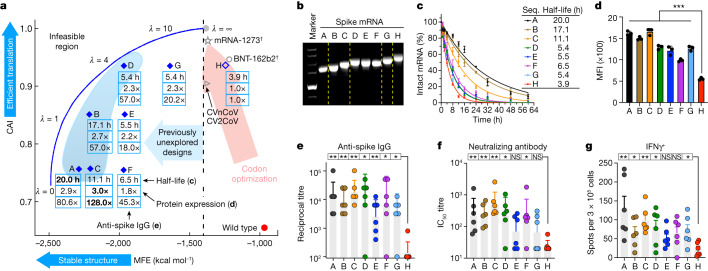
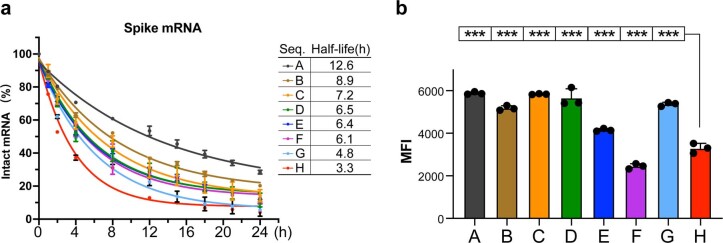
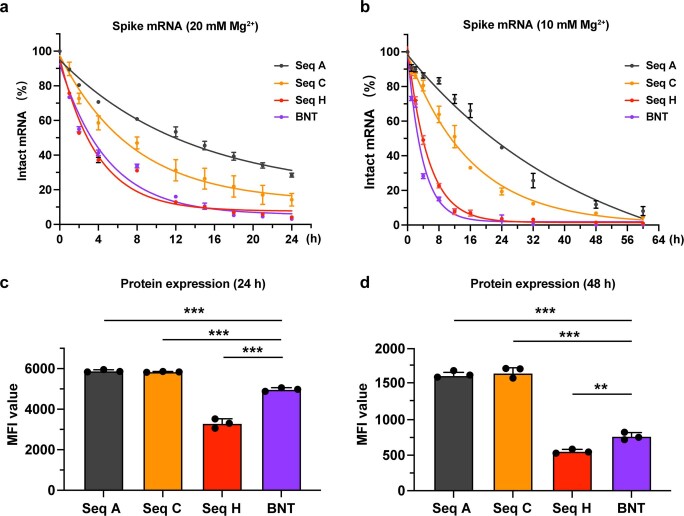
- On SARS-CoV-2 spike mRNAs, the best LinearDesign sequences showed substantially better stability than the benchmark: sequence A had a T1/2 of 20.0 h in 10 mM Mg2+ and 12.6 h in 20 mM Mg2+, versus sequence H at 3.9 h and 3.3 h.
- In HEK293 cells, all seven LinearDesign spike mRNAs (A–G) produced higher spike protein levels than benchmark H; sequence D and G were 2.3-fold higher than H, and sequence A was 2.9-fold higher.
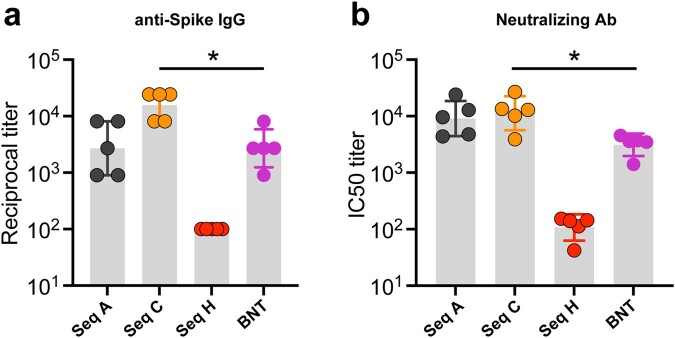
- In mice, LinearDesign spike mRNAs elicited much stronger immune responses: sequences A–D gave a 57 to 128× increase in anti-spike IgG titres and a 9 to 20× increase in neutralizing antibody titres over H.
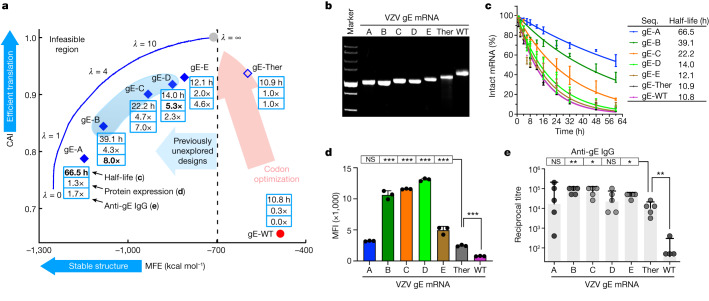
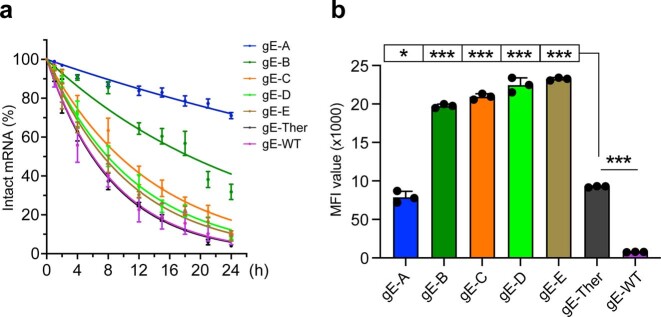
- For VZV gE, LinearDesign mRNAs also improved stability and expression; for example, gE-A had T1/2 = 66.5 h in 10 mM Mg2+ and 50.7 h in 20 mM Mg2+, compared with gE-Ther at 10.9 h and 5.9 h.
Methods
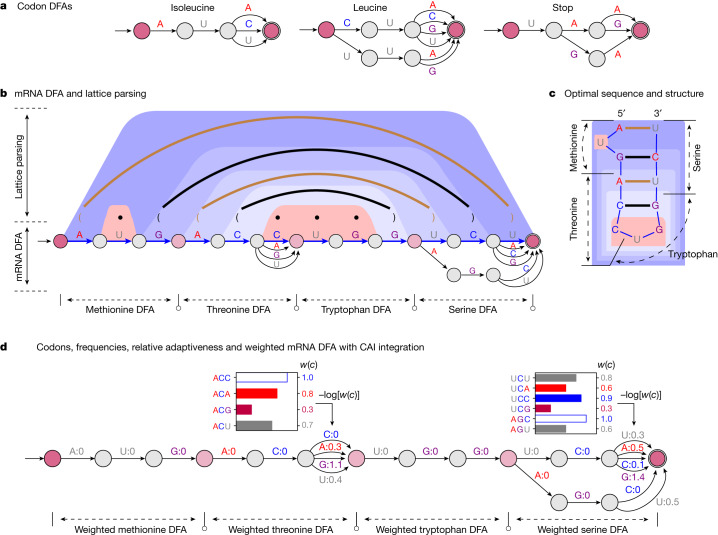
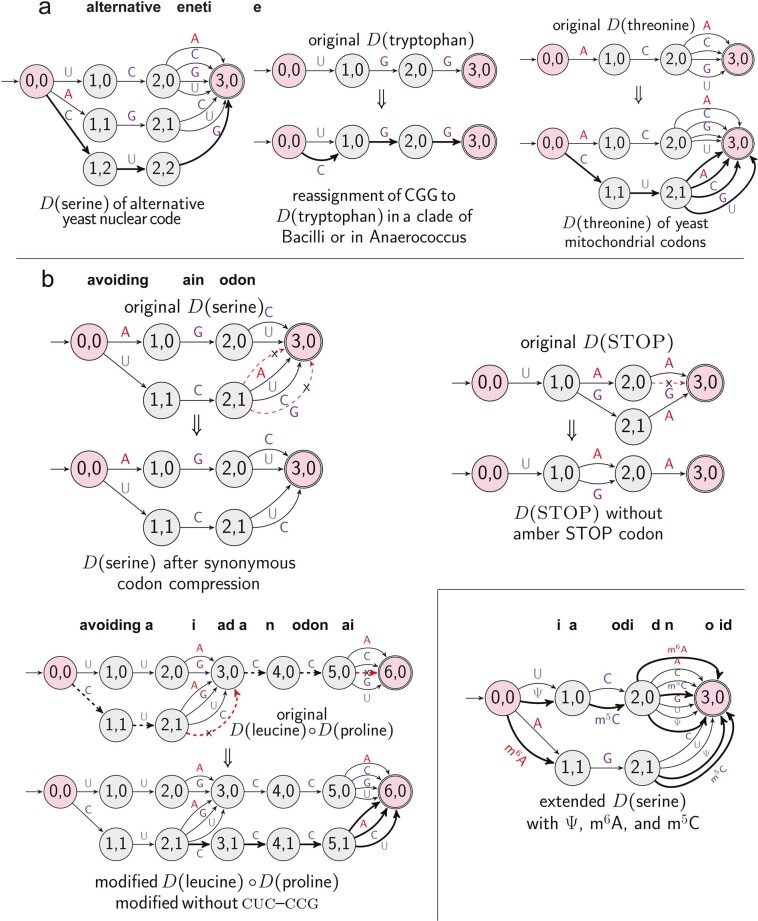
- The authors formulated mRNA design as a joint optimization problem over folding stability (MFE) and codon adaptation index (CAI), then solved it using deterministic finite automata (DFA) plus lattice parsing / weighted intersection with a stochastic context-free grammar.
- They benchmarked runtime on 114 human protein sequences from UniProt, with lengths from 78 to 3,333 amino acids, and also evaluated SARS-CoV-2 spike and VZV gE design cases.
- Experimental validation used in vitro mRNA stability assays, HEK293 protein expression assays, and in vivo immunogenicity studies in C57BL/6 mice given two intramuscular doses of 10 µg LPP-formulated mRNA at a 2-week interval.
Limitations
- The paper states that the work considered only the coding region; UTR optimization was not addressed directly.
- It also states that chemical modification was not used in the designed mRNAs, even though this is widely used in mRNA vaccines.
- Evident from the text: the in vivo experiments were not randomized, the investigators were not blinded, and the animal experiments were completed once, which limits robustness of the experimental evidence.
Model-written summary. Check it against the paper before relying on it.
Integrity signals
Registry
Cites
Statistics
Figures
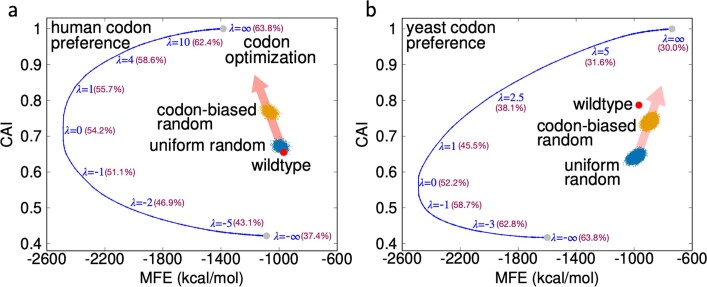
![Fig. 3 Computational characteristics of the LinearDesign algorithm. a, Runtime analysis of mRNA design for proteins in UniProt (Supplementary Table 1). Overall, our exact search scales quadratically with sequence length (Supplementary Figs. 7 and 8), and our MFE + CAI mode (with λ = 4) is about 15% slower than the MFE-only version. Moreover, beam search (b = 500) significantly speeds up the design of long sequences, with minor search errors (Supplementary Fig. 9). b,c, Two-dimensional (MFE–CAI) visualizations of designs for the SARS-CoV-2 spike (b) and VZV gE (c) proteins, respectively (both using human codon preference). The blue curves form the feasibility limit (optimal boundary), by varying λ from 0 to ∞ (see Extended Data Fig. 4 for λ of (–∞, 0]). The GC percentage is shown in parentheses. The human genome favours GC-rich codons; therefore, codon optimization (pink arrows) also improves stability, but only marginally, as the two optimization directions (codon versus stability) are largely orthogonal. By contrast, with an AU-rich codon preference (such as in yeast), codon optimization decreases stability (Extended Data Fig. 4b). d, Secondary structures of the mRNA designs for SARS-CoV-2 spike and VZV gE protein. The optimal-CAI designs (top, λ = ∞) are largely single-stranded (around 60% base-paired), whereas the optimally stable designs (bottom, λ = 0) are mostly double-stranded (around 80% base-paired). We also show intermediate designs (centre, λ = 4) with a balance of stability and CAI.](https://figures.cochat.ai/paper-figures/7f3b742293c6471081bcef7e5469da5b/algorithm-for-optimized-mrna-design-improves-stability-and-immunogenicity-figure-3.jpg)
Verification
Claims the paper makes
35 Valid · 2 Not valid · 9 Not checked · 111 Own results and interpretations
The cited sources support only part of this claim — read each source’s verdict below.
In the paper
“Messenger RNA (mRNA) vaccines are being used to combat the spread of COVID-19 (refs. 1–3), but they still exhibit critical limitations caused by mRNA instability and degradation”
§ Algorithm for optimized mRNA design improves stability and immunogenicity > Abstract
What the sources say
- Not matchedcites refs. 1–3
This doesn’t read as a citation we can look up.
- Supportedcites [4] Crommelin DJ Anchordoquy TJ Volkin DB Jiskoot W Mastrobattista E Addressing the cold reality of mRNA vaccine stability J. Pharm. Sci. 2021 110 997 1001 10.1016/j.xphs.2020.12.006 33321139 PMC7834447 source
The Historical Perspective section says that even minor mRNA degradation can severely impair translation and antigen expression. The Stability Data section describes storage stability as a critical limitation on large-scale mRNA vaccine deployment. No page numbers were supplied for these passages. (LLM, conf=0.93)
plainstates a cause- Asserted: passes — The authors put it forward as true.
- Checkable: passes — It can be checked against evidence.
- Load-bearing: passes — The paper’s conclusions depend on it.
- Based: passes — The paper gives a reason why it holds.
- Not matched
Every source the paper cites for this claim was checked and supports it.
In the paper
“which are major obstacles for the storage, distribution and efficacy of the vaccine products4”
§ Algorithm for optimized mRNA design improves stability and immunogenicity > Abstract
What the sources say
- Supportedcites [4] Crommelin DJ Anchordoquy TJ Volkin DB Jiskoot W Mastrobattista E Addressing the cold reality of mRNA vaccine stability J. Pharm. Sci. 2021 110 997 1001 10.1016/j.xphs.2020.12.006 33321139 PMC7834447 source
The Historical Perspective section says that even minor mRNA degradation can impair translation and antigen expression, affecting vaccine potency. The Abstract and Concluding Considerations identify formulation stability as a challenge for storage, transport and worldwide distribution. (LLM, conf=0.92)
plainstates a cause- Asserted: passes — The authors put it forward as true.
- Checkable: passes — It can be checked against evidence.
- Load-bearing: passes — The paper’s conclusions depend on it.
- Based: passes — The paper gives a reason why it holds.
- Supported
The cited sources support only part of this claim — read each source’s verdict below.
In the paper
“Increasing secondary structure lengthens mRNA half-life, which, together with optimal codons, improves protein expression5.”
§ Algorithm for optimized mRNA design improves stability and immunogenicity > Abstract
What the sources say
- Partly supportedcites [5] Mauger DM mRNA structure regulates protein expression through changes in functional half-life Proc. Natl Acad. Sci. USA 2019 116 24075 24083 10.1073/pnas.1908052116 31712433 PMC6883848 sourceExperimental — accuracy not yet measured
The Results section reports that highly structured mRNAs had more than twice the *functional* half-life of mRNAs with middling structure, independent of codon optimality, and the Abstract reports that codon optimality and greater CDS structure synergize to increase it. The Results also distinguish functional half-life—the time an mRNA productively generates protein—from physical half-life ending in degradation. The claim omits that distinction and the finding's position-dependent qualification: reduced structure in the 5′ leader correlated with higher expression. (LLM, conf=0.85)
plainstates a cause- Asserted: passes — The authors put it forward as true.
- Checkable: passes — It can be checked against evidence.
- Load-bearing: passes — The paper’s conclusions depend on it.
- Based: passes — The paper gives a reason why it holds.
- Partly supported
Every source the paper cites for this claim was checked and supports it.
In the paper
“Improving this structural stability, combined with optimal codon usage, leads to increased protein expression5.”
§ Algorithm for optimized mRNA design improves stability and immunogenicity > Main
What the sources say
- Supportedcites [5] Mauger DM mRNA structure regulates protein expression through changes in functional half-life Proc. Natl Acad. Sci. USA 2019 116 24075 24083 10.1073/pnas.1908052116 31712433 PMC6883848 source
The Results section, “Codon Usage and mRNA Structure Synergize to Determine Ribosome Loading and mRNA Half-Life,” reports that increasing either codon optimality or secondary structure increased median protein expression when the other was held constant. The paper specifies that greater structure is beneficial in the coding region beyond the 5′ leader; the highest-codon-optimality, most-structured group showed no further increase over the improved groups. (LLM, conf=0.90)
plainstates a cause- Asserted: passes — The authors put it forward as true.
- Checkable: passes — It can be checked against evidence.
- Load-bearing: passes — The paper’s conclusions depend on it.
- Based: passes — The paper gives a reason why it holds.
- Supported
The cited sources support only part of this claim — read each source’s verdict below.
In the paper
“However, mRNA molecules are chemically unstable and prone to degrade, which leads to insufficient protein expression5”
§ Algorithm for optimized mRNA design improves stability and immunogenicity > Main
What the sources say
- Partly supportedcites [5] Mauger DM mRNA structure regulates protein expression through changes in functional half-life Proc. Natl Acad. Sci. USA 2019 116 24075 24083 10.1073/pnas.1908052116 31712433 PMC6883848 sourceExperimental — accuracy not yet measured
The Results section (page unavailable) reports that protein output correlated strongly with mRNA functional half-life, supporting a link between shorter productive life and lower expression. But it explicitly says functional half-life is not necessarily physical degradation; the paper does not establish that chemical instability and degradation caused the lower expression. (LLM, conf=0.88)
plainstates a cause- Asserted: passes — The authors put it forward as true.
- Checkable: passes — It can be checked against evidence.
- Load-bearing: passes — The paper’s conclusions depend on it.
- Based: passes — The paper gives a reason why it holds.
- Partly supported
87 more claims · 9 with their cited sources checked
Create a free account to see all 157 claims and to verify the 1 reference still open.
- Probably not a substantial claim. 25
- It may state two separate claims as one. 45
Citations
Cites
Safety and Efficacy of the BNT162b2 mRNA Covid-19 Vaccine
Polack, F. P., Thomas, S. J., Kitchin, N., Absalon, J., Gurtman, A., Lockhart, S., Perez, J. L., Pérez Marc, G., Moreira, E. D., Zerbini, C., et al. (2020) · New England Journal of Medicine · doi:10.1056/nejmoa2034577 · Cited by 14,592
Efficacy and Safety of the mRNA-1273 SARS-CoV-2 Vaccine
Baden, L. R., El Sahly, H. M., Essink, B., Kotloff, K., Frey, S., Novak, R., Diemert, D., Spector, S. A., Rouphael, N., Creech, C. B., et al. (2021) · New England Journal of Medicine · doi:10.1056/nejmoa2035389 · Cited by 10,119
Cryo-EM structure of the 2019-nCoV spike in the prefusion conformation
Wrapp, D., Wang, N., Corbett, K. S., Goldsmith, J. A., Hsieh, C.-L., Abiona, O., Graham, B. S., & McLellan, J. S. (2020) · Science · doi:10.1126/science.abb2507 · Cited by 8,897
UniProt: a hub for protein information
The UniProt Consortium (2015) · Nucleic Acids Research · doi:10.1093/nar/gku989 · Cited by 5,106
Lorenz, R., Bernhart, S. H., Höner zu Siederdissen, C., Tafer, H., Flamm, C., Stadler, P. F., & Hofacker, I. L. (2011) · Algorithms for Molecular Biology · doi:10.1186/1748-7188-6-26 · Cited by 5,098
mRNA vaccines — a new era in vaccinology
Pardi, N., Hogan, M. J., Porter, F. W., & Weissman, D. (2018) · Nature Reviews Drug Discovery · doi:10.1038/nrd.2017.243 · Cited by 4,667
Direct Gene Transfer into Mouse Muscle in Vivo
Wolff, J. A., Malone, R. W., Williams, P., Chong, W., Acsadi, G., Jani, A., & Felgner, P. L. (1990) · Science · doi:10.1126/science.1690918 · Cited by 4,173
Sharp, P. M., & Li, W.-H. (1987) · Nucleic Acids Research · doi:10.1093/nar/15.3.1281 · Cited by 3,992
Mathews, D. H., Sabina, J., Zuker, M., & Turner, D. H. (1999) · Journal of Molecular Biology · doi:10.1006/jmbi.1999.2700 · Cited by 3,795
Self-citationBiological sequence analysis probabilistic models of proteins and nucleic acids
Durbin, R. M., Eddy, S. R., Krogh, A., & Mitchison, G. (1998) · Cited by 3,565
Research works printed but not linked: 4
- Hall, K. B. Best-First Word-Lattice Parsing: Techniques for Integrated Syntactic Language Modeling. PhD thesis, Brown Univ. (2005).
- Nederhof, M. J. & Satta, G. Probabilistic parsing as intersection. In Proc. 8th International Conference on Parsing Technologies 137–148 (2003).
- Huang, L. & Sagae, K. Dynamic programming for linear-time incremental parsing. In Proc. 48th Annual Meeting of the Association for Computational Linguistics 1077–1086 (Association for Computational Linguistics, 2010).
- Huang, L., Fayong, S. & Guo, Y. Structured perceptron with inexact search. In Proc. 2012 Conference of the North American Chapter of the Association for Computational Linguistics: Human Language Technologies 142–151 (Association for Computational Linguistics, 2012).
Cited by
Items 401–484 of 484
mRNA Vaccine Against Japanese Encephalitis Virus Genotype IV Protects Against Lethal Infection
Cox, A. L., Nguyen, W., Wales-Earl, L., Tang, B., Yan, K., Peters, J. R., Khromykh, A. A., Tropée, R., McMillan, N. A. J., Suhrbier, A., et al. (2026) · Viruses · doi:10.3390/v18020171 · Cited by 1
“Optimizing mRNA secondary structure, by enhancing mRNA stability, has emerged as an important factor for mRNA vaccine performance [60,61].”
Ravishankar, S., Bhavya, E., Boopathy, N., Sakthivel, S. R., Sekar, S., Murugathirumal, A., & Nandakumar, K. (2026) · Journal of Bio-X Research · doi:10.34133/jbioxresearch.0076
Status and outlook of mRNA therapeutics for viral diseases
Pan, Q., Wang, W., Hl, J., & Zhong, Z. (2026) · EMBO Molecular Medicine · doi:10.1038/s44321-026-00390-z
“…such as thermostable formulations, especially with the application of AI tools for high-throughput design of stable and thermo-stable mRNA (Zhang et al, 2023; Zhang et al, 2020), modi fi cation of mRNA sequences, lyophilized mRNA – LNPs, and alternative delivery carriers are under active…”
CPLfold: Chimeric and Pseudoknot-capable almost Linear-time RNA Secondary Structure PredictionPreprint
Wang, K., Kudla, G., & Cohen, S. B. (2026) · bioRxiv (Cold Spring Harbor Laboratory) · doi:10.64898/2026.02.12.704779
Liu, Y.-S., Ju, Y.-R., Chang, K., & Lu, C. L. (2026) · Bioinformatics Advances · doi:10.1093/bioadv/vbag060 · Cited by 2
“2019), a widely used pruning strategy, into the algorithm, enabling LinearDesign to generate high-quality approximate CDSs in linear time.”
InfluentialTang, J., Li, M., Liu, B., Wu, C., Dai, F., Kang, H., He, K., & Zhao, W. (2026) · ACS Synthetic Biology · doi:10.1021/acssynbio.5c00824
Self-citationSummarizing RNA Structural Ensembles via Maximum Agreement Secondary Structures
Gu, X., Ivanovic, S. S., Feng, D. W., & El-Kebir, M. (2026) · Journal of Computational Biology · doi:10.1177/15578666261486480
A Universal, AI-based Design Framework for Efficient Manufacturing of mRNA TherapeuticsPreprint
Liao, K., Maccari, G., Ciano, G., Huber, R. G., von der Haar, T., Tham, C. Y., Ong, N. T. X., de Sessions, P. F., Saw, T. Y., Lim, T. W., et al. (2026) · bioRxiv (Cold Spring Harbor Laboratory) · doi:10.64898/2026.03.09.710039
Fast mRNA delivery in vitro and in vivo enabled by magnetic responsive lipid nanoparticles
Lin, Y., Wu, J., Liu, Z., Song, R., Li, Z., Zhang, R., & Li, B. (2026) · Advanced Composites and Hybrid Materials · doi:10.1007/s42114-026-01690-1
Self-citationThe role of artificial intelligence in overcoming challenges in vaccine development
Iliyas, I. I., Isa, A., Kile, S. A., & Shanga, N. U. (2026) · Elsevier eBooks · doi:10.1016/b978-0-443-44430-2.00012-8
Wang, Y., Cai, Y., Wu, Z., Zhang, J., Turtle, L. C. W., & Meng, J. (2026) · Bioinformatics and Biology Insights · doi:10.1177/11779322261431255 · Cited by 1
“16 This interaction relies on a “seed sequence” (nucleotides 2–8 of the miRNA) pairing with mRNA targets, often amplified by auxiliary binding sites in coding regions.”
InfluentialDopler, P., Lin, B., & Kimchi‐Sarfaty, C. (2026) · Critical Insights in Biophysics · doi:10.1080/29932203.2025.2584155
RNASTOP: A Deep Learning Framework for mRNA Chemical Stability Prediction and Optimization
Lin, S., Chen, J., Sun, H., Zhang, Y., Yang, W., Tan, H., Wei, D., Jiang, Q., & Xiong, Y. (2026) · Genomics Proteomics & Bioinformatics · doi:10.64898/2026.03.18.712573 · Cited by 1
Self-citationEngineered mRNA backbones for gene expression in human T cells
Gibor, G., Tzvi, N., Meir, A., Abu-Hariri, H., Shemer, A., Kilim, S., Abelian, S., Harush, O., Itzhaki, O., Shapira‐Frommer, R., et al. (2026) · Molecular Therapy — Nucleic Acids · doi:10.1016/j.omtn.2026.102913 · Cited by 1
“A debate in the field of mRNA design revolves around the question of the contribution of UTRs and/or engineered ORFs by means of codon optimization, as was recently demonstrated for SARS-CoV-2 vaccines, 21 and some researchers even claim that ORF engineering outperforms UTR engineering.”
Wang, W., Zhan, Z., Chen, L., Wang, Z., Wang, L., Liu, S., Lin, Z., Yang, Z., & Wang, K. (2026) · Scientific Reports · doi:10.1038/s41598-026-46680-x · Cited by 2
“Recent advances in machine learning-driven design of UTR sequences for enhanced mRNA stability 15,16 suggest that further improvements may be achievable through computational optimization.”
Bénitière, F. (2024) · theses.fr (ABES) · doi:10.70675/a3e412c0z2333z4c62zb12ezf5e361ef1275
Xia, Z.-W., Tang, Q., Pan, J.-J., Liu, J., Jia, L.-X., Zhang, G., Xie, M.-N., Zheng, J.-H., Lv, C.-S., Zhang, L., et al. (2026) · Vaccines · doi:10.3390/vaccines14040356
“Fortunately, advances in artificial intelligence (AI) are illuminating this field, aiding in sequence design and optimization through the use of algorithmic models such as mRNArchitect, mRNAdesigner, and LinearDesign [37,38].”
Self-citationGu, Z., Wang, G.-A., Feng, Z., Sun, C., Li, S., Zhang, K., & Li, H. (2026) · Molecular Pharmaceutics · doi:10.1021/acs.molpharmaceut.5c01705 · Cited by 1
Self-citationBergamasco, M., Scarborough, H. A., Ponta, A., Clark, T., Cohen, S. B., Loo, L., Fujikake, K., Carr, R., Holsinger, R. M. D., & Neely, G. G. (2026) · Advanced Science · doi:10.64898/2026.04.19.719519
Reveal Principles of Codon Optimization via Machine LearningPreprint
Deng, F., Li, H., Sun, D., Duan, G., Sun, Z., & Xue, G. (2026) · bioRxiv (Cold Spring Harbor Laboratory) · doi:10.64898/2026.04.16.718958
Self-citationShafaati, M., Jamnani, F. N., & Ghorbani, M. (2026) · Immunologic Research · doi:10.1007/s12026-026-09763-5 · Cited by 3
Li, R., Liukang, C., Yang, H., Zhang, X., Liang, R., Zhao, J., Zhang, G.-Z., & Zhao, Y. (2026) · Vaccine · doi:10.1016/j.vaccine.2026.128685 · Cited by 1
Ishikawa, U., Mabrouk, M. T., & Yang, Y. (2026) · ACS Nano Medicine · doi:10.1021/acsnanomed.5c00166
Machine-guided design for bioengineering gene therapy vectors: Where are we and what lies ahead?
Rodrigues, A. F., Ferraz, L., & Pesquita, C. (2026) · Biotechnology Advances · doi:10.1016/j.biotechadv.2026.108925
Synonymous mutations in viral evolution and vaccine design
Shan, K.-J., Tang, X., Wang, Y., Wang, Z., & Lü, J. (2026) · Trends in Microbiology · doi:10.1016/j.tim.2026.04.010 · Cited by 1
mRNA Vaccines as Member of Biotechnology-Based Vaccines
Harisa, G. I., & Alzahrani, M. M. (2026) · Springer handbooks · doi:10.1007/978-3-032-01636-2_15
Fine-scale structural information substantially improves mRNA therapeutic stability prediction
Yi, S., Ali, S. E., Jadeja, Y., Davis, J. W., & Metkar, M. (2026) · Molecular Therapy — Nucleic Acids · doi:10.1016/j.omtn.2026.102960 · Cited by 2
“,14 These metrics are computationally efficient and biologically relevant, and they have been integrated into mRNA design tools 15,16 such as CDSfold, 17 RiboTree, 18 LinearDesign, 19 and DERNA.”
A single-nucleotide change in the Kozak sequence enhances protein expression from IVT mRNA
Knol, R. A., Fariaby, T., de Vlieger, E. A., van Santbrink, P., Kros, A., & Slütter, B. (2026) · Molecular Therapy — Nucleic Acids · doi:10.64898/2026.05.20.726450
Abraham, E., Andrade, J., Davis, A., Gawda, T., Glanville, J., Graves, D., Huang, J., Hur, J., Kim, S., Paul, J.-S., et al. (2026) · bioRxiv (Cold Spring Harbor Laboratory) · doi:10.64898/2026.05.22.727328
Modeling the Language of Codons with Artificial Intelligence
Lemay-St-Denis, C., & Kolodny, R. (2026) · Annual Review of Biomedical Data Science · doi:10.1146/annurev-biodatasci-092624-105741
Splice-Aware Optimization Prevents Pervasive Missplicing of Natural and Synthetic cDNAsPreprint
Ahmad, M., Molías, F. B., Cano-Aroca, L., Mordstein, C., Watson, S., Bhuiyan, N., Clarke, M. J., Kimchi‐Sarfaty, C., Katneni, U., Gaunt, E. R., et al. (2026) · bioRxiv (Cold Spring Harbor Laboratory) · doi:10.64898/2026.05.25.727620 · Cited by 3
Tan, T., & Fang, H. (2026) · medRxiv · doi:10.64898/2026.05.26.26354114
Transforming mRNA drug design with AI: From UTR and codon optimization to coordinated design
Shi, Y., Zeng, C., Sheng, X., Zhang, X., Xing, Y., Zheng, M., & Li, X. (2026) · Journal of Advanced Research · doi:10.1016/j.jare.2026.06.013 · Cited by 2
The Use of Deep Learning in RNA Therapeutic Development
Subramanian, D. A., Yao, S. L., Chan, A., Witten, J. J., Reker, D., Anderson, D. G., Langer, R., & Traverso, G. (2026) · ACS Nano · doi:10.1021/acsnano.6c02090 · Cited by 1
Liu, Z. H., Ying, Z., Shen, L., & Ma, W. (2026) · Proceedings of the National Academy of Sciences · doi:10.1073/pnas.2606609123
A protocol for computational design of mRNA vaccines with high functionality and specificity
Ramadan, M. A., ElGohary, H. M., Faraag, A. H., & Mysara, M. (2026) · Biology Direct · doi:10.1186/s13062-026-00846-9
“Structural stability is commonly assessed by minimum free energy (MFE), a thermodynamic measure of RNA folding; lower MFE values indicate more stable structures that can protect mRNA from degradation and promote efficient translation while high MFE increase degradation risk [11, 58].”
InfluentialReinforcement learning-driven unified generative framework for multi-objective RNA codon designPreprint
Lin, S., Tan, H., Wang, K., Wang, R., Wang, H., Zhu, T., & Xiong, Y. (2026) · bioRxiv (Cold Spring Harbor Laboratory) · doi:10.64898/2026.06.12.732012
“This process enhances sequence compatibility with host translational machinery while stabilizing RNA secondary structures, thereby amplifying antigen expression to potentiate both prophylactic and therapeutic applications [15-17].”
InfluentialProgramming the translational landscape for predictable gene expression
Yan, W., Hu, G., Liu, K., Liang, G., Gao, C., Li, X., & Wu, J. (2026) · Biotechnology Advances · doi:10.1016/j.biotechadv.2026.108950
Self-citationMonoclonal Antibodies Targeting Bacterial Infections: A Broad Review of the Field
Slarve, M. J., Tkaczyk, C., Doyle, M. P., Break, T. J., Smith, A. B., Alter, G., Luna, B. M., Spellberg, B. J., & DiGiandomenico, A. (2026) · BioDrugs · doi:10.1007/s40259-026-00787-9 · Cited by 1
“Further gains can be achieved with machine learning-guided algorithms through codon optimization and sequence designs that improve mRNA stability [310].”
Programming the immunological properties of mRNA vaccines for cancer
Wu, A., Jeong, S. D., Schrank, B. R., Kim, B. Y. S., Sharma, P., & Jiang, W. (2026) · Nature reviews. Immunology · doi:10.1038/s41577-026-01316-z · Cited by 3
D’Amico, C., Miska, M., Saarinen, S., Säkkinen, V., & Kostiainen, M. A. (2026) · bioRxiv (Cold Spring Harbor Laboratory) · doi:10.64898/2026.06.25.734245 · Cited by 1
“(12) Yet these sequence-level design strategies leave the three-dimensional structural state of the folded mRNA molecule, and in particular its behaviour during and after encapsulation, largely unaddressed.”
Analytical Characterization and Stability Assessment of RNA-Based Vaccines
Alasmari, H., Alghannam, S. F., Almoammar, H., Alrabiah, D. K., Harthy, S. A., Alyamani, E. J., Alyahya, S. A., Alkhrayef, M. N., Fallatah, M., Al‐Khaldi, S., et al. (2026) · Pharmaceutics · doi:10.3390/pharmaceutics18070790
“…offer the possibility to identify sequence and structure-specific degradation hotspots, thereby informing the design of untranslated regions and other regulatory elements to improve resistance to nuclease-mediated and oxidative degradation while maintaining translational efficiency [198,199].”
Bathula, N. V., Soriano, S. K. V., Huang, C., Jan, E., Sagan, S. M., & Blakney, A. K. (2026) · Molecular Therapy · doi:10.1016/j.ymthe.2026.07.004 · Cited by 1
“33 36 It remains unclear whether alphavirus-derived saRNA imposes additional sequence-composition constraints on the transgene that must be considered during sequence optimization.”
Application of Machine Learning in mRNA Therapeutics Development
Liu, C. X., Ouyang, L., Xu, H., Liu, S., & Ma, B. (2026) · Pharmaceutical Fronts · doi:10.1055/a-2899-0538
Machine Learning Applications in Vaccine Design
Parvathy, P. S., Kumar, V. A., Biswas, R., & Mohan, C. G. (2026) · Royal Society of Chemistry eBooks · doi:10.1039/9781837070206-00682
Artificial intelligence-assisted drug designing, toxicity assessment, and biodelivery
Mitra, P., Bhaduri, S., Das, D., & Haldar, D. K. (2026) · Elsevier eBooks · doi:10.1016/b978-0-443-43934-6.00032-8
Computational Design of a Broad-Spectrum Multi-Epitope mRNA Vaccine Candidate for Mammarenaviruses
Zhang, D., Li, R., Fang, X., Chen, Z., & Lu, J. H. (2026) · Applied Biochemistry and Biotechnology · doi:10.1007/s12010-026-05832-5
Liu, S., Gao, Y., Liu, Q., Yang, R., Li, J., & Guo, Z. (2026) · Chinese Science Bulletin (Chinese Version) · doi:10.1360/csb-2026-0582
Pathak, S., & Lin, G. (2026) · ACM International Conference on Bioinformatics, Computational Biology, and Health Informatics (ACM-BCB) · doi:10.1145/3807503.3819445
Advances in Nanotechnology in mRNA Vaccines
Krishna, V., Bandi, S. P., & Datta, D. (2026) · Nanomedicine and nanotoxicology · doi:10.1007/978-3-032-29006-9_10
Smart Design: Integrating Artificial Intelligence and Gene Editing for Advanced mRNA Therapeutics
Shi, H., Liu, S., Dai, D., Jiang, S., Tian, T., Niu, Z., Xiang, Z., Zou, C., Liu, F., Tang, X., et al. (2026) · MedComm – Biomaterials and Applications · doi:10.1002/mba2.70062 · Cited by 2
Emerging mRNA-based nanomedicines for cancer immunotherapy
Yu, C., Wu, X., Luo, S., Wang, H., Huang, C., Zhang, L., & Zhu, D. (2026) · Chinese Chemical Letters · doi:10.1016/j.cclet.2026.113288
Self-citationGALS-Fold: Geometry-Aware Long-Short RNA Inverse Folding with Linear Scaling
Wen, X., Bian, Y., Gu, H., & Zhou, K. (2026) · ACM SIGKDD Conference on Knowledge Discovery and Data Mining (KDD) · doi:10.1145/3770855.3818980
Sun, G., Tao, Y., Liu, Z., Zhang, K., Zuo, S., Chen, S., Ning, S., Zhang, T., Wang, P., Zhang, Y., et al. (2026) · Journal of Extracellular Vesicles · doi:10.1002/jev2.70339
Self-citationBian, L., Cui, J., Li, G., Cao, Y., Li, D., Sun, D., Gu, J., Xing, L., Zhou, J., Yang, Y., et al. (2026) · International Immunopharmacology · doi:10.1016/j.intimp.2026.117252
Self-citationRovito, S. W., Chen, P.-L., Yang, G., Writt, H. N., Zalla, A. N., Donofrio, M. A., Fogo, J. N., Webby, R. J., Brien, J. D., & Russell, C. J. (2026) · Vaccines · doi:10.3390/vaccines14080701
“Indeed, both total antigen cellular expression and cell-surface expression have been linked with the magnitude of adaptive immunity [73,74].”
Advances and Challenges in Nanodelivery Systems for RNA Vaccines
Li, H., Zhao, Y., Yang, J., Guo, J., Cai, H., & Tong, A. (2026) · ACS Nano · doi:10.1021/acsnano.6c10327 · Cited by 2
Self-citationmRNA therapeutics for restoring immune tolerance in autoimmune diseases
Zouali, M. (2026) · Drug Discovery Today · doi:10.1016/j.drudis.2026.104776
Xu, C., Jiang, F., Jiang, Y., Wang, W., Pu, C., Chen, R., Deng, C., Zhai, D., Chen, Y., Hu, W., et al. (2026) · Angewandte Chemie · doi:10.1002/ange.4782087 · Cited by 2
Self-citationXu, C., Jiang, F., Jiang, Y., Wang, W., Pu, C., Chen, R., Deng, C., Zhai, D., Chen, Y., Hu, W., et al. (2026) · Angewandte Chemie International Edition · doi:10.1002/anie.4782087
Self-citationParamasivam, Y. K., Nasir, N. S. M., & Salleh, M. Z. (2026) · Tropical Medicine and Infectious Disease · doi:10.3390/tropicalmed11090244
“Although managing formulation and manufacturing complexity remains a challenge, these precise structural frameworks provide a foundation for achieving broad protection against diverse viral lineages.”
In vivo CAR‑T therapy: recent progress and future directions
Wang, W., Cai, Y., Yang, X., & Xu, H. (2026) · Immunity & Inflammation · doi:10.1007/s44466-026-00050-4
From RNA design to delivery: Computational strategies for functional RNA therapeutics
Wang, Y., Tong, S., Wang, X., Jin, X., Tan, D., & Lu, Y. (2026) · Bioactive Materials · doi:10.1016/j.bioactmat.2026.08.045
“Consequently, it holds substantial translational significance for guiding the precise and rapid development of mRNA vaccines against emerging infectious diseases in preclinical settings [25].”
Hu, X., Liu, X., Wang, T., Liu, X., Yang, G., Huang, P., & Xu, H. (2026) · Biotechnology Advances · doi:10.1016/j.biotechadv.2026.109028 · Cited by 1
Translational Challenges and Opportunities in mRNA Cancer Vaccines
Jeong, S. D., Schrank, B. R., Mancuso, J. J., Kim, B. Y. S., Jiang, W., & Sharma, P. (2026) · Cancer Discovery · doi:10.1158/2159-8290.cd-25-1456
Cold-adapted RNA polymerase from Pseudomonas phage Njord improves synthesis of therapeutic mRNA
Nye, D. B., Chen, T.-H., Curcuru, J. L., Wolf, E. J., Molé, C. N., Kunte, V. A., Ryan, M., Mitchell, L., Schwarz, D. S., Whipple, J. M., et al. (2026) · Proceedings of the National Academy of Sciences · doi:10.1073/pnas.2606667123
Park, J., Lee, G., Lee, H., Kim, J., Kim, K., Kim, E., Lee, J., Lee, S., Youn, J., & Jang, Y. (2026) · Molecular Therapy — Nucleic Acids · doi:10.1016/j.omtn.2026.103082
“23 For example, recent mRNA design algorithms jointly optimize codon usage and RNA structural stability, whereas other therapeutic mRNA design frameworks implement uridine depletion as a separate, explicit sequence constraint.”
From codon optimization to AI-guided sequence design for engineered biological functions
Chan, C. T. Y. (2026) · Molecular Therapy — Nucleic Acids · doi:10.1016/j.omtn.2026.103072
“Conventional codon-opti-mization strategies typically rely on predefined metrics, such as codon usage, GC content, and predicted RNA structure, 3 but may not fully capture the context-dependent effects of synonymous sequence variation.”
Next-generation CAR therapies enabled by mRNA engineering and delivery
Zhao, Q., Wen, Q., Pu, P., Xu, C., Hu, Q., Zhou, Z., Hua, X., & Zhang, X. (2026) · Acta Pharmaceutica Sinica B · doi:10.1016/j.apsb.2026.09.001
Self-citationJoint optimisation of amino acid and coding sequence for de novo designed proteinsPreprint
Ali, A. A. M., Delhibabu, R., & Nelson, E. J. R. (2026) · Research Square · doi:10.21203/rs.3.rs-10942775/v1
Advances in immunotherapy for HPV-associated malignancies: emerging strategies and clinical progress
Alsalloum, A., Zakhareva, A. P., Lopatnikova, J., & Sennikov, S. (2026) · Frontiers in Immunology · doi:10.3389/fimmu.2026.1897025
Beyond codon optimality: codon pairs regulate mRNA stability dependent on translationPreprint
Lee, H., Musaev, D., Vejnar, C. E., Krishna, S., Nguyen, T. D., Strayer, E. C., Abdelmessih, M., Takacs, C. M., Beaudoin, J.-D., & Giráldez, A. J. (2026) · bioRxiv (Cold Spring Harbor Laboratory) · doi:10.64898/2026.09.15.751551
“Current codon optimization strategies are largely based on single-codon optimality 41 .”
Programmable mRNA Nanotherapeutics through Logic Switch Design
Chen, P., Alhussan, A., Cullis, P. R., & Cabral, H. (2026) · ACS Nano Medicine · doi:10.1021/acsnanomed.6c00159
Immune memory engineering in mRNA therapeutics
Wen, J., Tao, W., & Zhou, X. (2026) · Journal of Controlled Release · doi:10.1016/j.jconrel.2026.115370
The case for model-informed vaccine development
Bai, J. P. F., Beigmohammadi, F., Craig, M., Dalton, M., Desikan, R., Easlick, T., Gazeau, S., Heffernan, J., Kirpichnikova, A., Padmanabhan, P., et al. (2026) · Vaccine · doi:10.1016/j.vaccine.2026.128780 · Cited by 1
Enkmann, V., & Rajicic, N. (2026) · AI Chemistry · doi:10.3390/aichem1030015 · Cited by 1
Zheng, Z., Jiang, Y., Gong, Y., Wang, Q., Zhang, K., Zhou, W., Zhang, L., & Xu, J. (2026) · Nature Biomedical Engineering · doi:10.1038/s41551-026-01796-3
Self-citationFrom DNA origami to nanostructured mRNA-based delivery platforms
Enlund, E., D’Amico, C., Saarinen, S., & Kostiainen, M. A. (2026) · Current Opinion in Chemical Biology · doi:10.1016/j.cbpa.2026.102768
Designing gene expression with MPRA and AI: A new paradigm for synthetic and therapeutic regulation
Zhang, X., Huang, X.-Y., Wang, H.-Y., Bai, F., Li, K., & Hu, S. S. (2026) · Biotechnology Advances · doi:10.1016/j.biotechadv.2026.109049 · Cited by 1
mRNA lipid nanoparticle vaccines: current status, challenges and future prospects
吴志能, Lou, J., Cheng, Y., Li, M., Wang, Z., Liu, N., Gao, X., Zheng, A., & Zhang, H. (2026) · Molecular Biomedicine · doi:10.1186/s43556-026-00600-7
“Zhang et al. introduced the AI design algorithm LinearDesign, which markedly enhanced immunogenicity of mRNA vaccines against COVID-19 and varicella-zoster virus (VZV), with up to 128-fold higher neutralizing titers in mice [239].”
Self-citationRNA vaccines in motion: A multidisciplinary exploration of design, delivery, and deployment
Abuhassan, Q., Aldulaimi, A., Waleed, O. S., Ganesan, S., Kavitha, V., Maharana, L., Sharma, R., Latipova, M., Madatova, N., Jumanazarov, D., et al. (2026) · Bioimpacts · doi:10.34172/bi.33056
“31 However, caution is required in interpreting performance metrics, as fold-change values depend strongly on experimental context—for instance, while the LinearDesign pipeline demonstrated notable improvements in translational efficiency, subsequent analyses indicated that the originally reported…”
Plug-and-display labeling system for modular subunit vaccine development
Tang, W., Lu, L., Shi, X., 杨益民, Deng, D., Liu, M., Lovell, J. F., Sun, Y., & Jin, H. (2026) · Coordination Chemistry Reviews · doi:10.1016/j.ccr.2026.218594
Nano Delivery Systems for In Vivo CRISPR/Cas-Based Gene Therapy: From Vectors to Clinical Outcomes
Chen, R., Zhou, H., Wu, Q., & Gong, C. (2026) · ACS Nano · doi:10.1021/acsnano.6c12154 · Cited by 1
Bioengineering strategies for improving the immunogenicity of mRNA vaccines
Wang, H., Zhuo, R., Wu, J., & Ouyang, S. (2026) · Signal Transduction and Targeted Therapy · doi:10.1038/s41392-026-02991-z
“112 Experiments have shown that compared with the vaccine designed by traditional methods, the COVID-19 mRNA vaccine designed by LinearDesign induced up to 128 times higher antibody levels in mice, and also showed signi fi cant advantages in other vaccines (such as varicella-zoster virus vaccines).”
Metadata
- Authors
- Zhang, H., Zhang, L., Lin, A., Xu, C., Li, Z., Liu, K., Liu, B., Ma, X., Zhao, F., Jiang, H., Chen, C., Shen, H., Li, H., Mathews, D. H., Zhang, Y., & Huang, L.
- Affiliations
- Oregon State University (US)
- China Pharmaceutical University (CN)
- Baidu (China) (CN)
- National University of Singapore (SG)
- University of Rochester Medicine (US)
- Corresponding author
- Zhang, Liang
- Li, Hangwen
- Mathews, David H.
- Zhang, Yujian
- Huang, Liang
- ORCID
- Venue
- Nature
- Published
- 2023-05-02
- Volume
- 621
- Issue
- 7978
- Pages
- 396-403
- ISSN
- 0028-0836 (ISSN-L)
- 1476-4687
- PMC
- PMC10499610
- OpenAlex
- W4367681391
- Semantic Scholar
- 0ce2602824c861bd268acb6a61c6681b85e32df7
- Cited by
- 531
- References
- 61
- Citations by year
- 2026: 193 · 2025: 182 · 2024: 119 · 2023: 32
- FWCI
- 40.70
- Type
- journal article
- Language
- en
- Open access
- hybrid
- doi.org
- Licence
- cc-by
- creativecommons.org/licenses/by/4.0 (tdm)
- creativecommons.org/licenses/by/4.0 (vor)
- Locations
- Nature (publishedVersion, cc-by)
- PubMed Central (publishedVersion, cc-by)
- PubMed (publishedVersion)
- arXiv (Cornell University) (submittedVersion)
- RePEc: Research Papers in Economics (submittedVersion)
- arXiv (Cornell University)
- Funders
- Pfizer
- Sanofi
- Baidu
- National Institutes of Health
- University of California, Davis
- National Institute of General Medical Sciences (R35GM145283)
- Topics
- Life Sciences › Biochemistry, Genetics and Molecular Biology › Molecular Biology › RNA and protein synthesis mechanisms
- Health Sciences › Medicine › Infectious Diseases › SARS-CoV-2 and COVID-19 Research
- Life Sciences › Biochemistry, Genetics and Molecular Biology › Molecular Biology › RNA Interference and Gene Delivery
- Keywords
- mRNA vaccine design, mRNA stability, codon optimization, SARS-CoV-2 spike protein, mRNA secondary structure, immunogenicity, antibody titers, mRNA half-life, varicella-zoster vaccine, mRNA therapeutics
- MeSH terms
- COVID-19, SARS-CoV-2, COVID-19 Vaccines, mRNA Vaccines, Algorithms, Animals, Codon, Half-Life, Humans, RNA, Messenger, Herpesvirus 3, Human, RNA Stability, Mice, Spike Glycoprotein, Coronavirus
About these checks
Registry, retraction, Cites and statistics results are computed, not judged, with one exception: a printed reference that no index lists is read once by a model before it counts as a citation error. Claims are extracted by a model and kept only when their quote appears verbatim in the text; each cited source is then checked, with a model’s help, for whether it says what the claim relies on. Those verdicts can be wrong — read the claim’s quote and the cited source before relying on one.
The claim verdicts this report counts are experimental: their accuracy is not yet measured.
A language model drew the claims from the paper on 2026-10-09, under version 3 of the claim definition (model deepseek-v4.1-flash, prompt extract-v3).
A second model labelled each claim on 2026-10-09 (model jev-1.13-20260917, definition revision gold-guideline-v0.2).
Cited sources are checked with a language model’s help (gpt-6-sol).
Statistics and arithmetic are recomputed, not judged.
Confidence bands are shown only for fields calibrated on our annotated test set. None is calibrated yet, so no band is shown.
What counts as a claim ›How we measure confidence ›How we check this ›
Are you an author, or do you see a problem with this page? Request a review
Data sources
Bibliographic data: Semantic Scholar, OpenAlex, Crossref.
Contains information from the Semantic Scholar Academic Graph Datasets, made available under the ODC Attribution License (ODC-BY 1.0).
Semantic Scholar’s data is described in: Kinney, R., et al. (2023). The Semantic Scholar Open Data Platform. arXiv:2301.10140.
