

Algorithm for optimized mRNA design improves stability and immunogenicity
Open accessThe DOI matches its Crossref record; 63 of the 63 references it cites were found in a registry or an index; 45 of the 63 sources its claims cite were checked for support.
Abstract
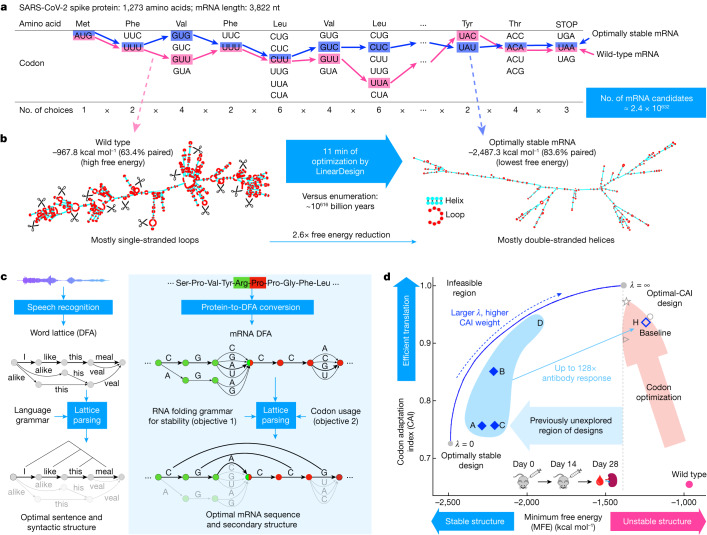
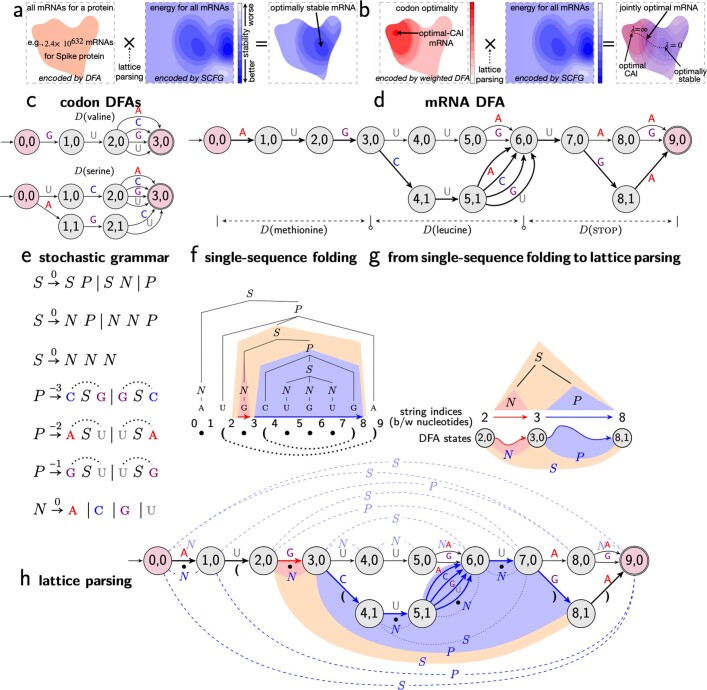
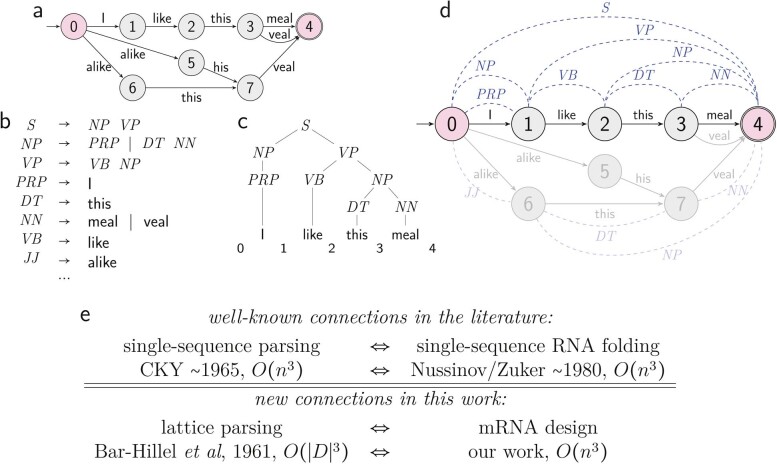
Abstract Messenger RNA (mRNA) vaccines are being used to combat the spread of COVID-19 (refs. 1–3 ), but they still exhibit critical limitations caused by mRNA instability and degradation, which are major obstacles for the storage, distribution and efficacy of the vaccine products 4 . Increasing secondary structure lengthens mRNA half-life, which, together with optimal codons, improves protein expression 5 . Therefore, a principled mRNA design algorithm must optimize both structural stability and codon usage. However, owing to synonymous codons, the mRNA design space is prohibitively large—for example, there are around 2.4 × 10 632 candidate mRNA sequences for the SARS-CoV-2 spike protein. This poses insurmountable computational challenges. Here we provide a simple and unexpected solution using the classical concept of lattice parsing in computational linguistics, where finding the optimal mRNA sequence is analogous to identifying the most likely sentence among similar-sounding alternatives 6 . Our algorithm LinearDesign finds an optimal mRNA design for the spike protein in just 11 minutes, and can concurrently optimize stability and codon usage. LinearDesign substantially improves mRNA half-life and protein expression, and profoundly increases antibody titre by up to 128 times in mice compared to the codon-optimization benchmark on mRNA vaccines for COVID-19 and varicella-zoster virus. This result reveals the great potential of principled mRNA design and enables the exploration of previously unreachable but highly stable and efficient designs. Our work is a timely tool for vaccines and other mRNA-based medicines encoding therapeutic proteins such as monoclonal antibodies and anti-cancer drugs 7,8 .
Overview
CoChat Summary
TL;DR
LinearDesign is a lattice-parsing-based algorithm for mRNA design that jointly optimizes folding stability and codon usage. In experiments on SARS-CoV-2 spike and VZV gE mRNAs, LinearDesign improved in vitro stability, protein expression, and in vivo immunogenicity versus codon-optimization benchmarks, with up to 128× higher antibody responses in mice.
Key findings
- The paper states that the SARS-CoV-2 spike protein has about 2.4 × 10^632 possible mRNA sequences, making brute-force enumeration infeasible; LinearDesign found an optimal spike mRNA in 11 min.
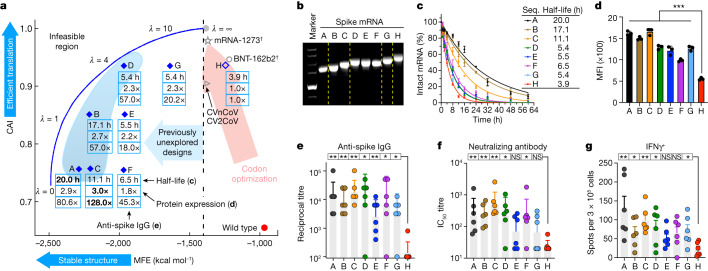
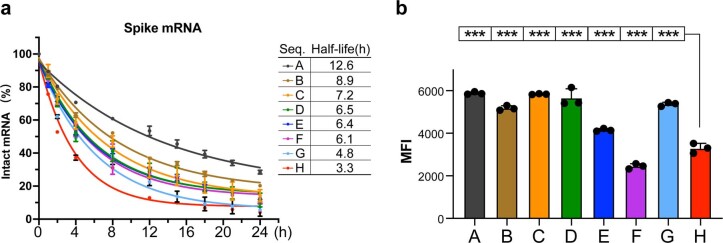
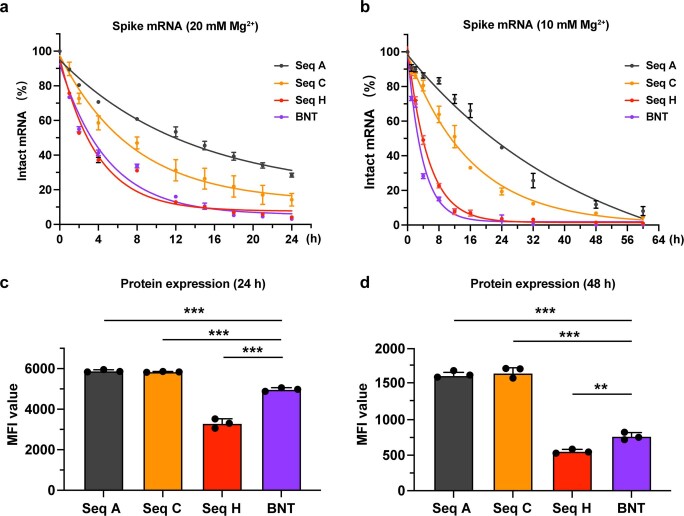
- On SARS-CoV-2 spike mRNAs, the best LinearDesign sequences showed substantially better stability than the benchmark: sequence A had a T1/2 of 20.0 h in 10 mM Mg2+ and 12.6 h in 20 mM Mg2+, versus sequence H at 3.9 h and 3.3 h.
- In HEK293 cells, all seven LinearDesign spike mRNAs (A–G) produced higher spike protein levels than benchmark H; sequence D and G were 2.3-fold higher than H, and sequence A was 2.9-fold higher.
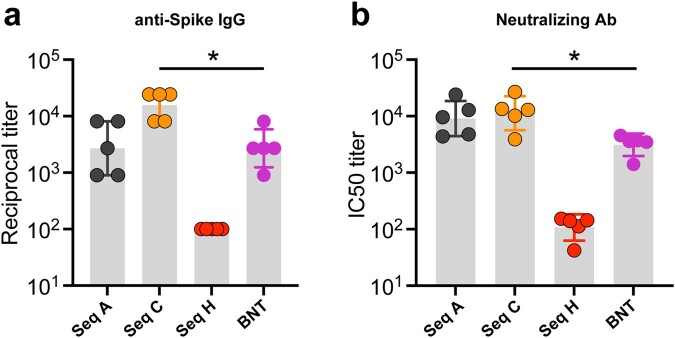
- In mice, LinearDesign spike mRNAs elicited much stronger immune responses: sequences A–D gave a 57 to 128× increase in anti-spike IgG titres and a 9 to 20× increase in neutralizing antibody titres over H.
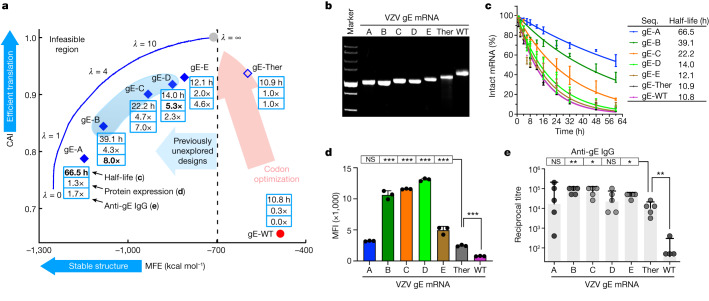
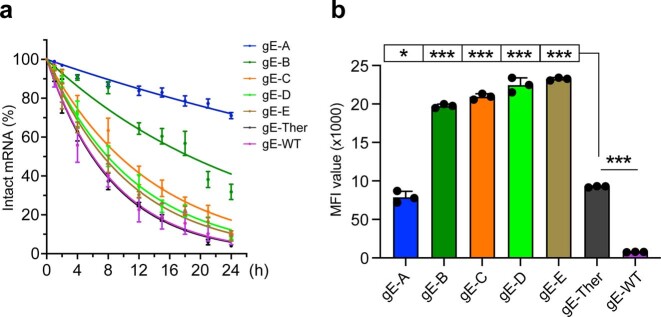
- For VZV gE, LinearDesign mRNAs also improved stability and expression; for example, gE-A had T1/2 = 66.5 h in 10 mM Mg2+ and 50.7 h in 20 mM Mg2+, compared with gE-Ther at 10.9 h and 5.9 h.
Methods
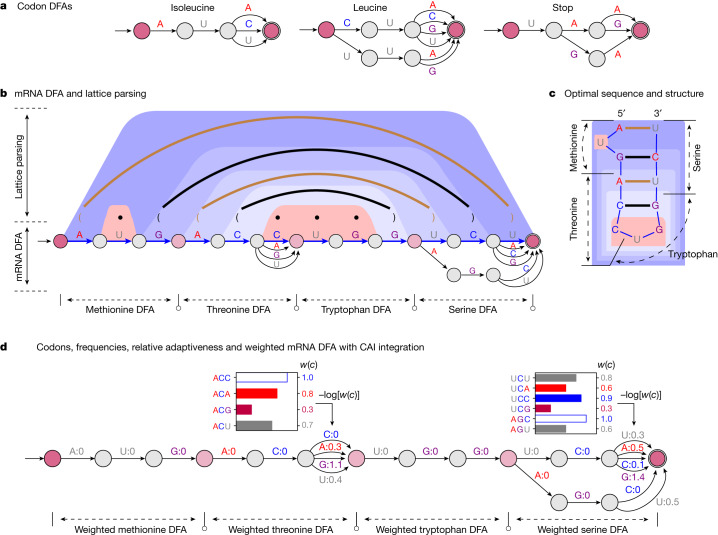
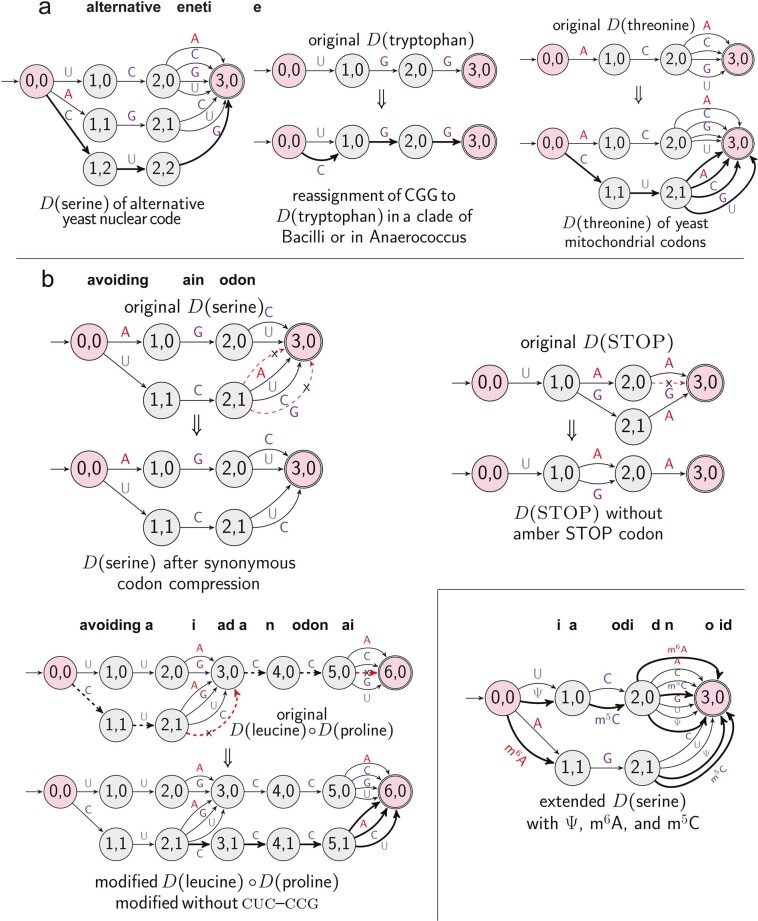
- The authors formulated mRNA design as a joint optimization problem over folding stability (MFE) and codon adaptation index (CAI), then solved it using deterministic finite automata (DFA) plus lattice parsing / weighted intersection with a stochastic context-free grammar.
- They benchmarked runtime on 114 human protein sequences from UniProt, with lengths from 78 to 3,333 amino acids, and also evaluated SARS-CoV-2 spike and VZV gE design cases.
- Experimental validation used in vitro mRNA stability assays, HEK293 protein expression assays, and in vivo immunogenicity studies in C57BL/6 mice given two intramuscular doses of 10 µg LPP-formulated mRNA at a 2-week interval.
Limitations
- The paper states that the work considered only the coding region; UTR optimization was not addressed directly.
- It also states that chemical modification was not used in the designed mRNAs, even though this is widely used in mRNA vaccines.
- Evident from the text: the in vivo experiments were not randomized, the investigators were not blinded, and the animal experiments were completed once, which limits robustness of the experimental evidence.
Model-written summary. Check it against the paper before relying on it.
Integrity signals
Registry
Cites
Statistics
Figures
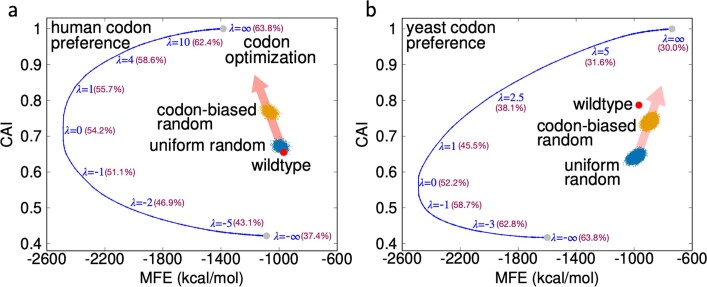
![Fig. 3 Computational characteristics of the LinearDesign algorithm. a, Runtime analysis of mRNA design for proteins in UniProt (Supplementary Table 1). Overall, our exact search scales quadratically with sequence length (Supplementary Figs. 7 and 8), and our MFE + CAI mode (with λ = 4) is about 15% slower than the MFE-only version. Moreover, beam search (b = 500) significantly speeds up the design of long sequences, with minor search errors (Supplementary Fig. 9). b,c, Two-dimensional (MFE–CAI) visualizations of designs for the SARS-CoV-2 spike (b) and VZV gE (c) proteins, respectively (both using human codon preference). The blue curves form the feasibility limit (optimal boundary), by varying λ from 0 to ∞ (see Extended Data Fig. 4 for λ of (–∞, 0]). The GC percentage is shown in parentheses. The human genome favours GC-rich codons; therefore, codon optimization (pink arrows) also improves stability, but only marginally, as the two optimization directions (codon versus stability) are largely orthogonal. By contrast, with an AU-rich codon preference (such as in yeast), codon optimization decreases stability (Extended Data Fig. 4b). d, Secondary structures of the mRNA designs for SARS-CoV-2 spike and VZV gE protein. The optimal-CAI designs (top, λ = ∞) are largely single-stranded (around 60% base-paired), whereas the optimally stable designs (bottom, λ = 0) are mostly double-stranded (around 80% base-paired). We also show intermediate designs (centre, λ = 4) with a balance of stability and CAI.](https://figures.cochat.ai/paper-figures/7f3b742293c6471081bcef7e5469da5b/algorithm-for-optimized-mrna-design-improves-stability-and-immunogenicity-figure-3.jpg)
Verification
Claims the paper makes
35 Valid · 2 Not valid · 9 Not checked · 111 Own results and interpretations
The cited sources support only part of this claim — read each source’s verdict below.
In the paper
“Messenger RNA (mRNA) vaccines are being used to combat the spread of COVID-19 (refs. 1–3), but they still exhibit critical limitations caused by mRNA instability and degradation”
§ Algorithm for optimized mRNA design improves stability and immunogenicity > Abstract
What the sources say
- Not matchedcites refs. 1–3
This doesn’t read as a citation we can look up.
- Supportedcites [4] Crommelin DJ Anchordoquy TJ Volkin DB Jiskoot W Mastrobattista E Addressing the cold reality of mRNA vaccine stability J. Pharm. Sci. 2021 110 997 1001 10.1016/j.xphs.2020.12.006 33321139 PMC7834447 source
The Historical Perspective section says that even minor mRNA degradation can severely impair translation and antigen expression. The Stability Data section describes storage stability as a critical limitation on large-scale mRNA vaccine deployment. No page numbers were supplied for these passages. (LLM, conf=0.93)
plainstates a cause- Asserted: passes — The authors put it forward as true.
- Checkable: passes — It can be checked against evidence.
- Load-bearing: passes — The paper’s conclusions depend on it.
- Based: passes — The paper gives a reason why it holds.
- Not matched
Every source the paper cites for this claim was checked and supports it.
In the paper
“which are major obstacles for the storage, distribution and efficacy of the vaccine products4”
§ Algorithm for optimized mRNA design improves stability and immunogenicity > Abstract
What the sources say
- Supportedcites [4] Crommelin DJ Anchordoquy TJ Volkin DB Jiskoot W Mastrobattista E Addressing the cold reality of mRNA vaccine stability J. Pharm. Sci. 2021 110 997 1001 10.1016/j.xphs.2020.12.006 33321139 PMC7834447 source
The Historical Perspective section says that even minor mRNA degradation can impair translation and antigen expression, affecting vaccine potency. The Abstract and Concluding Considerations identify formulation stability as a challenge for storage, transport and worldwide distribution. (LLM, conf=0.92)
plainstates a cause- Asserted: passes — The authors put it forward as true.
- Checkable: passes — It can be checked against evidence.
- Load-bearing: passes — The paper’s conclusions depend on it.
- Based: passes — The paper gives a reason why it holds.
- Supported
The cited sources support only part of this claim — read each source’s verdict below.
In the paper
“Increasing secondary structure lengthens mRNA half-life, which, together with optimal codons, improves protein expression5.”
§ Algorithm for optimized mRNA design improves stability and immunogenicity > Abstract
What the sources say
- Partly supportedcites [5] Mauger DM mRNA structure regulates protein expression through changes in functional half-life Proc. Natl Acad. Sci. USA 2019 116 24075 24083 10.1073/pnas.1908052116 31712433 PMC6883848 sourceExperimental — accuracy not yet measured
The Results section reports that highly structured mRNAs had more than twice the *functional* half-life of mRNAs with middling structure, independent of codon optimality, and the Abstract reports that codon optimality and greater CDS structure synergize to increase it. The Results also distinguish functional half-life—the time an mRNA productively generates protein—from physical half-life ending in degradation. The claim omits that distinction and the finding's position-dependent qualification: reduced structure in the 5′ leader correlated with higher expression. (LLM, conf=0.85)
plainstates a cause- Asserted: passes — The authors put it forward as true.
- Checkable: passes — It can be checked against evidence.
- Load-bearing: passes — The paper’s conclusions depend on it.
- Based: passes — The paper gives a reason why it holds.
- Partly supported
Every source the paper cites for this claim was checked and supports it.
In the paper
“Improving this structural stability, combined with optimal codon usage, leads to increased protein expression5.”
§ Algorithm for optimized mRNA design improves stability and immunogenicity > Main
What the sources say
- Supportedcites [5] Mauger DM mRNA structure regulates protein expression through changes in functional half-life Proc. Natl Acad. Sci. USA 2019 116 24075 24083 10.1073/pnas.1908052116 31712433 PMC6883848 source
The Results section, “Codon Usage and mRNA Structure Synergize to Determine Ribosome Loading and mRNA Half-Life,” reports that increasing either codon optimality or secondary structure increased median protein expression when the other was held constant. The paper specifies that greater structure is beneficial in the coding region beyond the 5′ leader; the highest-codon-optimality, most-structured group showed no further increase over the improved groups. (LLM, conf=0.90)
plainstates a cause- Asserted: passes — The authors put it forward as true.
- Checkable: passes — It can be checked against evidence.
- Load-bearing: passes — The paper’s conclusions depend on it.
- Based: passes — The paper gives a reason why it holds.
- Supported
The cited sources support only part of this claim — read each source’s verdict below.
In the paper
“However, mRNA molecules are chemically unstable and prone to degrade, which leads to insufficient protein expression5”
§ Algorithm for optimized mRNA design improves stability and immunogenicity > Main
What the sources say
- Partly supportedcites [5] Mauger DM mRNA structure regulates protein expression through changes in functional half-life Proc. Natl Acad. Sci. USA 2019 116 24075 24083 10.1073/pnas.1908052116 31712433 PMC6883848 sourceExperimental — accuracy not yet measured
The Results section (page unavailable) reports that protein output correlated strongly with mRNA functional half-life, supporting a link between shorter productive life and lower expression. But it explicitly says functional half-life is not necessarily physical degradation; the paper does not establish that chemical instability and degradation caused the lower expression. (LLM, conf=0.88)
plainstates a cause- Asserted: passes — The authors put it forward as true.
- Checkable: passes — It can be checked against evidence.
- Load-bearing: passes — The paper’s conclusions depend on it.
- Based: passes — The paper gives a reason why it holds.
- Partly supported
87 more claims · 9 with their cited sources checked
Create a free account to see all 157 claims and to verify the 1 reference still open.
- Probably not a substantial claim. 25
- It may state two separate claims as one. 45
Citations
Cites
Safety and Efficacy of the BNT162b2 mRNA Covid-19 Vaccine
Polack, F. P., Thomas, S. J., Kitchin, N., Absalon, J., Gurtman, A., Lockhart, S., Perez, J. L., Pérez Marc, G., Moreira, E. D., Zerbini, C., et al. (2020) · New England Journal of Medicine · doi:10.1056/nejmoa2034577 · Cited by 14,592
Efficacy and Safety of the mRNA-1273 SARS-CoV-2 Vaccine
Baden, L. R., El Sahly, H. M., Essink, B., Kotloff, K., Frey, S., Novak, R., Diemert, D., Spector, S. A., Rouphael, N., Creech, C. B., et al. (2021) · New England Journal of Medicine · doi:10.1056/nejmoa2035389 · Cited by 10,119
Cryo-EM structure of the 2019-nCoV spike in the prefusion conformation
Wrapp, D., Wang, N., Corbett, K. S., Goldsmith, J. A., Hsieh, C.-L., Abiona, O., Graham, B. S., & McLellan, J. S. (2020) · Science · doi:10.1126/science.abb2507 · Cited by 8,897
UniProt: a hub for protein information
The UniProt Consortium (2015) · Nucleic Acids Research · doi:10.1093/nar/gku989 · Cited by 5,106
Lorenz, R., Bernhart, S. H., Höner zu Siederdissen, C., Tafer, H., Flamm, C., Stadler, P. F., & Hofacker, I. L. (2011) · Algorithms for Molecular Biology · doi:10.1186/1748-7188-6-26 · Cited by 5,098
mRNA vaccines — a new era in vaccinology
Pardi, N., Hogan, M. J., Porter, F. W., & Weissman, D. (2018) · Nature Reviews Drug Discovery · doi:10.1038/nrd.2017.243 · Cited by 4,667
Direct Gene Transfer into Mouse Muscle in Vivo
Wolff, J. A., Malone, R. W., Williams, P., Chong, W., Acsadi, G., Jani, A., & Felgner, P. L. (1990) · Science · doi:10.1126/science.1690918 · Cited by 4,173
Sharp, P. M., & Li, W.-H. (1987) · Nucleic Acids Research · doi:10.1093/nar/15.3.1281 · Cited by 3,992
Mathews, D. H., Sabina, J., Zuker, M., & Turner, D. H. (1999) · Journal of Molecular Biology · doi:10.1006/jmbi.1999.2700 · Cited by 3,795
Self-citationBiological sequence analysis probabilistic models of proteins and nucleic acids
Durbin, R. M., Eddy, S. R., Krogh, A., & Mitchison, G. (1998) · Cited by 3,565
Research works printed but not linked: 4
- Hall, K. B. Best-First Word-Lattice Parsing: Techniques for Integrated Syntactic Language Modeling. PhD thesis, Brown Univ. (2005).
- Nederhof, M. J. & Satta, G. Probabilistic parsing as intersection. In Proc. 8th International Conference on Parsing Technologies 137–148 (2003).
- Huang, L. & Sagae, K. Dynamic programming for linear-time incremental parsing. In Proc. 48th Annual Meeting of the Association for Computational Linguistics 1077–1086 (Association for Computational Linguistics, 2010).
- Huang, L., Fayong, S. & Guo, Y. Structured perceptron with inexact search. In Proc. 2012 Conference of the North American Chapter of the Association for Computational Linguistics: Human Language Technologies 142–151 (Association for Computational Linguistics, 2012).
Cited by
Items 201–300 of 484
Yang, B., Li, B., Zhu, Y., Zhao, M., Cheng, Y., Zhao, X., Teoh, D. E.-J., Wang, Y., Zhang, M., Tang, X., et al. (2026) · Nature Nanotechnology · doi:10.1038/s41565-025-02114-9 · Cited by 13
Self-citationExpanding global access to mRNA vaccines
Eshaghi, B., Langer, R., & Jaklenec, A. (2026) · Nature Reviews Bioengineering · doi:10.1038/s44222-026-00424-8 · Cited by 9
Enhanced Antitumor Immunity Through T Cell Activation with Optimized Tandem Double-OX40L mRNAs
Deng, Z., Tian, Y., Wang, J., Xu, Y., Liu, Z., Xiao, Z., Wang, Z., Hu, M., Liu, R., & Yang, P. (2025) · International Journal of Nanomedicine · doi:10.2147/ijn.s479434 · Cited by 7
“40,41 We have similarly taken these approaches.”
Norimatsu, J., Hashim, R., Tockary, T. A., Nazir, M. S., Mochida, Y., & Uchida, S. (2025) · ACS Applied Nano Materials · doi:10.1021/acsanm.5c00633 · Cited by 6
RNA immunotherapy: revolutionizing cancer and autoimmune disease treatments
Savguira, M., Chen, D., Dong, S., & Li, B. (2025) · Trends in Molecular Medicine · doi:10.1016/j.molmed.2025.06.008 · Cited by 16
A generative framework for enhanced cell-type specificity in rationally designed mRNAsPreprint
Khoroshkin, M., Zinkevich, A. O., Aristova, E., Yousefi, H., Lee, S. B., Mittmann, T., Manegold, K., Penzar, D., Raleigh, D. R., Kulakovskiy, I. V., et al. (2024) · bioRxiv (Cold Spring Harbor Laboratory) · doi:10.1101/2024.12.31.630783 · Cited by 13
A generative language model decodes contextual constraints on codon choice for mRNA designPreprint
Faizi, M., Sakharova, H., Borrmann, H., Parsa, M. S., & Lareau, L. F. (2025) · bioRxiv (Cold Spring Harbor Laboratory) · doi:10.1101/2025.05.13.653614 · Cited by 10
“RNA structure and half-life has been another important avenue for optimization (Leppek et al. , 2022; Zhang et al. , 2023).”
The rise of mRNA therapeutic vaccines
Du, J., Fan, Z., Huang, J., Li, Z., Hu, H., & Li, Y. (2025) · RSC Pharmaceutics · doi:10.1039/d4pm00309h · Cited by 5
Self-citationRespiratory virus mRNA vaccines: mRNA Design, clinical studies, and future challenges
Zheng, L., & Feng, H. (2025) · Animal Models and Experimental Medicine · doi:10.1002/ame2.70018 · Cited by 9
“47 Several significant challenges remain, as detailed below.”
A flexible, high-throughput system for studying live mRNA translation with HiBiT technology
Ascanelli, C., Lawrence, E., Batho, C. A. P., & Wilson, C. H. (2025) · Nucleic Acids Research · doi:10.1093/nar/gkaf496 · Cited by 8
“For MycT58A mRNA optimization, the LinearDesign algo-rithm [ 9 ] was run with the MycT58A protein sequence using Python (version 2.7) and Clang (version 17.0.6).”
InfluentialPratyush, P., Pokharel, S., Schulze, S., Bramer, L., Newman, R. H., & KC, D. B. (2025) · Methods in molecular biology · doi:10.1007/978-1-0716-4623-6_19 · Cited by 7
Chemically modified tRNA enhances the translation capacity of mRNA rich in cognate codons
Dong, L., Wang, J., & Xia, Q. (2025) · Nature Communications · doi:10.1038/s41467-025-62981-7 · Cited by 8
“Additionally, the use of mRNA with extended lifetime can expand the translation duration of tRNA 8,13 , enabling further augmentation of mRNA functions.”
Emerging lipid nanoparticle systems capable of efficient intramuscular RNA delivery
Raza, A., Zhang, R., Lu, R., Wen, J., & Wu, W. (2025) · Nanomedicine · doi:10.1080/17435889.2025.2555507 · Cited by 9
Lipid nanoparticle-assisted mRNA therapy for cancer treatment
Kim, H.-J., Le, N. D., Oh, H.-J., Kim, B., Yoo, E., Kim, J., & Yim, H. (2025) · Applied Physics Reviews · doi:10.1063/5.0247029 · Cited by 6
Do the therapeutic vaccines hold hope for the treatment of hepatitis B?
Yan, Q., Fu, X., Wang, Y., & Wang, G. (2025) · Hepatology International · doi:10.1007/s12072-025-10907-2 · Cited by 8
“Based on artificial intelligence algorithm, a therapeutic HBV mRNA vaccine delivered by LNP (lipid nanoparticle) primarily encodes the HBsAg protein [32, 33].”
AI-powered design accelerates the development of mRNA therapeutics
Liu, Z., & Dong, Y. (2025) · Nature Chemical Biology · doi:10.1038/s41589-025-02074-0 · Cited by 6
Zai, X., Zhao, Y., Wang, X., Leng, M., Lu, M., Yang, Y., Zhao, X., Li, R., Li, Y., Zhang, Y., et al. (2025) · Nature Communications · doi:10.1038/s41467-025-67778-2 · Cited by 10
Self-citationmRNA technology for the prevention and treatment of HIV-1 infection
Chuang, L. I. U., Yaremenko, A. V., Li, X., You, X., Zhu, X., Liu, N., Chen, W., Kong, N., Xie, T., Gaiha, G. D., et al. (2026) · Nature Reviews Bioengineering · doi:10.1038/s44222-025-00387-2 · Cited by 9
Tang, W. Y., Dai, N., Zhou, T., Mathews, D. H., & Huang, L. (2026) · Nature Communications · doi:10.1038/s41467-025-67901-3 · Cited by 11
“While mRNA design for MFE can be solved ef fi - ciently by dynamic programming 32 , optimizing for other metrics suchasensemblefreeenergy 22 andaverageunpairedprobability 33 is much more challenging.”
Self-citationBeyond the Sequence: Chemical and Topological Design and Innovations in mRNA Therapeutics
Liu, D., Chen, H., Pan, A., & Wang, X. (2026) · Chemical Reviews · doi:10.1021/acs.chemrev.5c00347 · Cited by 11
Chien, K. R., Foo, K. S., & Witman, N. (2026) · Nature Reviews Drug Discovery · doi:10.1038/s41573-026-01459-7 · Cited by 16
“…while maintaining the encoded amino acid sequence 45 — is used as a strategy to enhance protein expression, as the choice of synonymous codons affects the efficiency of mRNA translation and the stability 46,47 by improving ribosome engagement and increasing translation elongation rates 48 .”
Immunological mechanisms of mRNA vaccines for infectious diseases
Locci, M., & Pardi, N. (2026) · Nature · doi:10.1038/s41586-026-10599-0 · Cited by 13
“Besides nucleoside modification, the codon-optimization strategy 40,41 , addition of a cap to the 5′ end of the mRNA 42 and stringency of mRNA purification 39 all impact innate immune sensing of the mRNA.”
NeoDesign: a computational tool for optimal selection of polyvalent neoantigen combinations
Yu, W., Yu, H., Zhao, J., Zhang, H., Ke, K., Hu, Z., & Huang, S. (2024) · Bioinformatics · doi:10.1093/bioinformatics/btae585 · Cited by 6
“This method integrates mRNA stability with protein expression, targeting previously unexplored areas of optimization (Zhang et al. 2023).”
MethodSelf-citationmRNA vaccine design using the proteome of Theileria annulata through immunoinformatics approaches
Fattahi, R., & Kalani, B. S. (2025) · mSphere · doi:10.1128/msphere.00809-24 · Cited by 8
Engineering an Escherichia coli based in vivo mRNA manufacturing platform
Curry, E., Muir, G., Qu, J., Kis, Z., Hulley, M. E., & Brown, A. J. (2024) · Biotechnology and Bioengineering · doi:10.1002/bit.28684 · Cited by 5
Progress of Gene‐Functionalized Regenerative Material Repair Intervertebral Disc Degeneration
Li, X., Chang, H., Cai, F., Zhang, Y., Li, A., Yang, X., Cai, Z., Cui, W., & Liu, X. (2024) · Small Science · doi:10.1002/smsc.202300355 · Cited by 7
Self-citationSalehi-Shadkami, H., Sedghi, M., Tavoosi, S., Alimohammadi, M., Alimohammadi, R., Barkhordar, M., Mofayezi, A., Modaresi, M. S., Vaezi, M., Dehghanizadeh, S., et al. (2025) · Current Research in Translational Medicine · doi:10.1016/j.retram.2025.103563 · Cited by 9
tRNA modifications inform tissue specific mRNA translation and codon optimizationPreprint
Ando, D., Rashad, S., Begley, T. J., Endo, H., Aoki, M., Dedon, P. C., & Niizuma, K. (2023) · bioRxiv (Cold Spring Harbor Laboratory) · doi:10.1101/2023.10.24.563884 · Cited by 5
“Codon optimization for gene and mRNA therapeutics have become a hot topic of research given the recent advances in mRNA vaccines, especially during the COVID-19 era(51).”
BackgroundMethodmRNArchitect: sequence design of mRNA medicinesPreprint
Gunter, H. M., Balicki, A., Budzinska, M. A., Waterhouse, J., Leonard, T. E., Peng, Y., Kulkarni, A., Zardbani, M., Sidharta, M. P., Morrison, J., et al. (2024) · bioRxiv (Cold Spring Harbor Laboratory) · doi:10.1101/2024.12.03.626696 · Cited by 9
(2025) · doi:10.1101/2025.11.04.686644 · Cited by 5
Szikszai, M., Wang, T.-Y., Krueger, R., Mathews, D. H., Ward, M., & Aviran, S. (2026) · RNA · doi:10.1261/rna.080846.125 · Cited by 5
Self-citationHeterologous Expression, Digestive Stability, and Emerging Trends of Lactoferrin
Feng, J., Wang, Z., Xia, X., Cheng, S., Mu, Z., & Du, M. (2025) · Comprehensive Reviews in Food Science and Food Safety · doi:10.1111/1541-4337.70255 · Cited by 6
RNA vaccines for cancer: revolutionizing immunization strategies
Huang, D., Zhang, J., Zeng, X., Zhang, Y., & Song, E. (2025) · Trends in cancer · doi:10.1016/j.trecan.2025.09.003 · Cited by 6
Self-citationmRNA-engineered CRISPR-Cas epigenetic editors enable durable and efficient gene silencing in vivo
Xu, C., Zeng, C., Wang, M., Wei, X., Song, M., Liu, X., Wang, W., Chen, Q., Ji, X., Luo, P., et al. (2025) · The Innovation · doi:10.1016/j.xinn.2025.101151 · Cited by 13
“Through iterative mRNA optimization 8–12 —including AI-assisted codon optimization, 10,13,14 5 ′ and 3 ′ untranslated region (UTR) refinement, 15–19 and nuclear localization signal (NLS) engineering 20–25 —we developed “superfolder” CRISPR OFF-EE constructs that enable robust editor expression and…”
Self-citationMuzard, C., Séguin, J., Bonnefoy, J., Salkini, N., Serra, V. A., Alhareth, K., Lemdani, K., & Mignet, N. (2025) · In vitro models · doi:10.1007/s44164-025-00096-5 · Cited by 7
“…protein structures, the protein-protein complexes formation, intermolecular interactions, protein and nucleic acids secondary structures and (iii) to predicate physico-chemical properties such as solubilities, hydro-phobicities, pKas, isoelectrical points, apparent sizes, etc [185– 192 ].”
Wang, T., Han, R., Hao, Z., Cheng, X., Li, J., Zhai, C., Guo, J., Wang, D., Deng, Y., Zhang, L., et al. (2025) · Molecular Therapy — Nucleic Acids · doi:10.1016/j.omtn.2025.102787 · Cited by 5
“In 23–25 However, limited research has been conducted on the use of LPP delivery systems and the impact of sequence optimization of mRNA vaccines against influenza viruses.”
InfluentialSelf-citationElgohary, M., Webb, A. L. J., Ward, J. C., Murthy, A., Hutchinson, J., Button, J., Thom, G., Newton, P., Hammarvid, E., Baran, A. D., et al. (2025) · Journal of Chromatography A · doi:10.1016/j.chroma.2025.466625 · Cited by 4
Tan, T., Diao, Y., Yu, X., Chen, L., & Fang, H. (2026) · Acta Pharmaceutica Sinica B · doi:10.1016/j.apsb.2025.12.044 · Cited by 9
A comprehensive survey on artificial intelligence for biomolecule design
Yang, G., Li, J., Wang, Q., Wu, L., Chen, Z., Zhao, P.-C., Wang, H., Wang, Q., Wen, B., Song, C., et al. (2026) · The Innovation Life · doi:10.59717/j.xinn-life.2026.100196 · Cited by 5
Advancing Gene Therapy for Pancreatitis: From Genetic Insights to Clinical Translation
Zheng, Y.-Z., Wang, Y., Qi, H.-M., Gao, J., Li, Z., Liao, Z., & Zou, W. (2026) · Research · doi:10.34133/research.1154 · Cited by 5
“…the application of mRNA therapy to modulate pancreatitis-specific genetic pathways remains unexplored, advances such as the LinearDesign algorithm [ 143 ]— designed to overcome mRNA instability and low translational efficiency—provide valuable insights into the development of mRNA-based therapies…”
Self-citationTang, J., Gong, D., Li, H., & Li, S. (2026) · Acta Pharmaceutica Sinica B · doi:10.1016/j.apsb.2026.01.039 · Cited by 7
“One strategy for mRNA, exemplified by LinearDesign 198 , reframes sequence design as a computational linguistics problem.”
Self-citationEngineered strategies for enhancing mRNA vaccine stability in delivery and storage
Cerav, E. N., Yao, Z., & Sun, B. (2026) · Nanoscale · doi:10.1039/d5nr05189d · Cited by 6
Accelerate the Highly Efficient Development of mRNA Vaccines Through Advanced Computational Methods
Gu, R., Si, D., Lei, D., Xie, X., Li, Y., & Wen, H. (2026) · MedComm · doi:10.1002/mco2.70612 · Cited by 6
“Using a deterministic finite automaton (DFA) to encode candidate sequences, LinearDesign demonstrated superior performance across multiple metrics [ 13 ].”
InfluentialMiles, S., Mourglia‐Ettlin, G., & Chabalgoity, J. A. (2026) · Vaccine · doi:10.1016/j.vaccine.2026.128392 · Cited by 4
Zhou, H., Shi, Y., Wang, Y., & Bai, G. (2026) · Journal of Cancer Research and Clinical Oncology · doi:10.1007/s00432-026-06435-7 · Cited by 6
“DCs are characterized by high surface expression of the mannose receptor (CD206). α-D-mannose-modified exosomes can therefore serve as specific ligands for this receptor, mediating targeted exosome adhesion to DCs and their subsequent endocytic internalization (Choi et al. 2019).”
InfluentialTruong, L. B., Li, S., Domkofski, C., Lin, J., Co, C., Halwasia, S., Kuefner, M., Hu, Y., Mao, H., Wang, T.-H., et al. (2026) · Molecular Therapy · doi:10.1016/j.ymthe.2026.04.028 · Cited by 8
Efficient prime editing in vivo and in vitro using lipid nanoparticles
Jiang, A. Y., Cristian, A., Brooks, D. L., Feierman, E. R., Chen, P., Whittaker, M. N., Pierce, S. E., Sakai, H. A., Chen, H., Liu, D., et al. (2026) · Nature Nanotechnology · doi:10.1038/s41565-026-02200-6 · Cited by 7
“Advances in mRNA transcript design and synthesis, including sequence optimization 62 and chemical cap and tail modifications 63,64 , could increase intracellular PE abundance and enhance PE-LNP efficacy.”
Lipid nanoparticle mediated mRNA delivery in cancer immunotherapy
Asthana, G. S., Bhattacharjee, S., Kumar, J., Sayyed, S., Jindal, A., Kumar, P., Chinchane, A., Bhattacharyya, A., Jaiswal, R., Kulkarni, S., et al. (2025) · Advances in immunology · doi:10.1016/bs.ai.2025.02.001 · Cited by 9
AI-directed gene fusing prolongs the evolutionary half-life of synthetic gene circuits
(2025) · doi:10.1126/sciadv.adx0796 · Cited by 4
RNA structure: implications in viral infections and neurodegenerative diseases
Lu, S., Tang, Y., Yin, S., & Sun, L. (2024) · Advanced Biotechnology · doi:10.1007/s44307-024-00010-2 · Cited by 9
Using peptide barcodes for simultaneous profiling of protein expression from mRNA
Kumano, S., Tanaka, K., Akahori, R., Yanagiya, A., & Nojima, A. (2024) · Rapid Communications in Mass Spectrometry · doi:10.1002/rcm.9867 · Cited by 5
Oligonucleotide‐Linked Lipid Nanoparticles as a Versatile mRNA Nanovaccine Platform
Im, S. H., Chung, Y., Duskunovic, N., Choi, H., Park, S., & Chung, H. J. (2024) · Advanced Healthcare Materials · doi:10.1002/adhm.202401868 · Cited by 5
All-Atom Simulations Elucidate the Molecular Mechanism Underlying RNA–Membrane Interactions
Marco, S. D., Aupič, J., Bussi, G., & Magistrato, A. (2025) · Nano Letters · doi:10.1021/acs.nanolett.5c01254 · Cited by 6
Leveraging an mRNA Platform for the Development of Vaccines Against Egg Allergy
Shao, X., Weng, C., Liu, L., Guo, K., Lu, Z., Huang, L., 翟振华, Guo, Y., 狄国荣, Qiao, R., et al. (2025) · Vaccines · doi:10.3390/vaccines13050448 · Cited by 5
“In this proof-of-concept study, using a well-established mRNA platform [13–15], we developed mRNA vaccine candidates encoding for the major egg white allergen Gal d2 (also known as ovalbumin) and comprehensively evaluated the prophylactic efficacy against anaphylaxis in a Gal d2-induced allergic…”
Self-citationAI-directed gene fusing prolongs the evolutionary half-life of synthetic gene circuits
Menuhin-Gruman, I., Arbel, M., Naki, D., Bergman, S., & Tuller, T. (2025) · doi:10.1101/2025.02.10.637495 · Cited by 4
Pinyon, J. L., von Jonquières, G., Mow, S. L., Abed, A. A., Lai, K., Manoharan, M., Crawford, E. N., Xue, S. H., Smith‐Moore, S., Caproni, L. J., et al. (2024) · Advanced Science · doi:10.1002/advs.202406545 · Cited by 3
Dynamic modifications of circular RNAs drive oncogenesis
Dai, J., Wang, Z., Cheng, X., Hu, Z., & Hua, J. (2025) · Epigenomics · doi:10.1080/17501911.2025.2518918 · Cited by 3
Dai, N., Zhou, T., Tang, W. Y., Mathews, D. H., & Huang, L. (2025) · Bioinformatics · doi:10.1093/bioinformatics/btaf245 · Cited by 11
“In particular, LinearDesign (Zhang et al. 2023) provides a conceptually simple solution by borrowing the concepts of lattice and lattice parsing from computational linguistics to compactly represent the design space and to efficiently score the energy model over that space, respectively.”
InfluentialSelf-citationDuran, T., Çine, N., Karaselek, M. A., Gül, N., Küççüktürk, S., Hatipoğlu, D., Ateş, M. B., Çalışkan, Ü., & Koçak, N. (2025) · Scientific Reports · doi:10.1038/s41598-025-08142-8 · Cited by 3
“…in host cells and to promote high levels of protein production. mRNA vaccines developed against SARS-CoV-2, such as Comirnaty™ (Pfizer-BioNTech) and Spikevax™ (Moderna), use codon-optimized sequences for the Spike protein, representing a critical strategy in the design of these vaccines 25,26 .”
Incorporating mRNA therapeutics into biological treatments of hematologic malignancies
Hunia, J., Tomasik, J., Czerwik, N., Pezeshki, P. S., & Nowis, D. (2025) · Frontiers in Immunology · doi:10.3389/fimmu.2025.1680071 · Cited by 6
“The LinearDesign algorithm, which simultaneously optimizes codon usage and secondary structure, has been experimentally validated to improve IVT-mRNA half-life, protein expression, and immunogenicity in vivo (198).”
Chen, H., Zhang, J., Huang, J., Wu, Z., Tang, L., Tian, Y., Gao, S., Huang, S., Cao, J., Chen, J., et al. (2025) · Journal of Translational Medicine · doi:10.1186/s12967-025-07470-7 · Cited by 4
“Advances in artificial intelligence have enabled rapid exploration of optimal mRNA sequences [98].”
Recent advances in engineering approaches for delivery of mRNA-based therapeutics
Prinindya, K. N. N., Ashraf, G. M., Uddin, S., Mahdi, E., & Hasan, A. (2025) · Biomaterials Advances · doi:10.1016/j.bioadv.2025.214667 · Cited by 7
Hu, M., Li, Y., Cai, Y., He, X., Fan, J., Wang, J., Mu, Y., Shen, Y., Chen, J., Zhou, Q., et al. (2026) · Molecular Therapy · doi:10.1016/j.ymthe.2025.12.066 · Cited by 3
Heendeniya, S. N., Chen, S., Bhatti, S. H., Zahra, Q. U. A., Rahimizadeh, K., Poudel, B. H., Wilton, S. D., & Veedu, R. N. (2025) · Experimental Biology and Medicine · doi:10.3389/ebm.2025.10784 · Cited by 4
Chemical engineering strategies to enhance mRNA–LNP stability for therapeutic applications
Zhang, Z., Ong, Y., Yang, B., Fan, B., Yang, Y. Y., & Ni, Q. (2026) · Biomaterials Science · doi:10.1039/d5bm01635e · Cited by 7
Russo, L., Villani, L., Ieraci, R., & Ricciardi, W. (2026) · Vaccines · doi:10.3390/vaccines14020144 · Cited by 4
“Additional categories include recombinant viral vector vaccines [14], DNA vaccines (mostly in veterinary medicine; only one vaccine approved for use in humans) [15–17], and mRNA vaccines [18].”
Raghupathi, W., & Raghupathi, V. (2026) · Health Information Science and Systems · doi:10.1007/s13755-026-00433-2 · Cited by 6
“Machine learning algorithms analyzed viral genomic data to identify potential vaccine targets in a fraction of the time required by traditional methods, and deep learning models such as LinearDesign optimized mRNA sequences for stability and immunogenicity [47].”
Omega-based mini prime- and base-editing systems in Escherichia coli
Liu, L.-H., Zhang, Y., Bo, X. U., YunXia, L. I., Guo, Y., Lu, X., Zhang, Z., Lai, S., Ge, Q., Zhang, K., et al. (2026) · Trends in biotechnology · doi:10.1016/j.tibtech.2026.02.002 · Cited by 3
Self-citationUnlocking the potential of engineered circular RNA therapeutics
Zhen, X., Mahmoudi, M., Lan, X., Huang, G., & Tao, W. (2026) · Med-X · doi:10.1007/s44258-026-00079-5 · Cited by 9
“…advances, linear RNAs face several intrinsic limitations that constrain their broader clinical use, such as vulnerability to degradation by endogenous and environmental ribonucleases (RNases) [10–12], reduced stability during storage and in vivo, and the risk of eliciting strong immune responses.”
De novo design of RNA pseudoknots with deep learning
Townley, J., Kladwang, W., Baker, D. A., Blair, H. M., Choe, C. A., Nesr, G. E., Favor, A., Fisker, E., Haack, D. B., He, S., et al. (2026) · Science · doi:10.1126/science.aeg6829 · Cited by 9
mRNA therapy: A new frontier in regenerative medicine
Xue, D., Zhang, Y., Shen, A., Tang, T., Liu, B., & Lv, L. (2025) · Interdisciplinary medicine · doi:10.1002/inmd.20240054 · Cited by 6
Self-citationImproving the Efficacy of Cancer mRNA Vaccines
Kirtane, A. R., & Traverso, G. (2025) · The Cancer Journal · doi:10.1097/ppo.0000000000000764 · Cited by 3
Aiman, S., Ahmad, A., Malik, A., Chen, R., Hanif, M. F., Khan, A. A., Ansari, M. A., Farrukh, S., Xu, G., Shahab, M., et al. (2025) · International Journal of Biological Macromolecules · doi:10.1016/j.ijbiomac.2025.142627 · Cited by 4
Progress on mRNA vaccines and lipid nanoparticles
Fan, Y., Yin, H., Li, Y., Xi, Y., Tang, X., Weng, Y., & Huang, Y. (2024) · Chinese Science Bulletin (Chinese Version) · doi:10.1360/tb-2023-1093 · Cited by 3
COVID‐19 vaccine: recent advancements and future prospects
Xu, L., Li, M., & He, W. (2024) · MedComm · doi:10.1002/mco2.646 · Cited by 6
“23,24 For vaccine research and development, omics, reverse vaccinology, next generation platforms, and vaccination routes could be selected.”
BackgroundReview on the bioanalysis of non-virus-based gene therapeutics
Zhou, M., Zhang, X., Yan, H., Xing, L., Yi, T., & Shen, L. (2024) · Bioanalysis · doi:10.1080/17576180.2024.2437418 · Cited by 4
Koren, L., Koren, A., Likić, R., & Katanec, T. (2025) · Dentistry Journal · doi:10.3390/dj13020079 · Cited by 4
“Further research should prioritize aligning vaccine designs with human pathophysiology [109].”
Novel universal vaccines to mitigate emerging avian influenza viruses
Liu, Y., Wang, L., Lai, A. C.-K., Kang, M., Qi, Y.-R., Merits, A., Jiao, X., Wang, X., Yu, X., Su, S., et al. (2025) · Trends in Molecular Medicine · doi:10.1016/j.molmed.2025.03.001 · Cited by 3
Zhang, J., Li, C., Liu, Y., Liao, R., He, D., Xu, L., Chen, T., Xiao, Q., Luo, M., Chen, Y., et al. (2025) · Molecular Therapy · doi:10.1016/j.ymthe.2025.05.024 · Cited by 7
A comprehensive analysis of the use of nucleoside analogues in RNA therapeutics
Kukushkina-Zvezdova, A. A., Zherebtsova, A. A., Telegina, D. V., Skvortsov, I. A., Ivanov, R. A., & Reshetnikov, V. V. (2026) · Journal of Translational Medicine · doi:10.1186/s12967-026-08083-4 · Cited by 3
“For instance, the LinearDesign algorithm was developed to optimize mRNA sequences by enhancing codon usage and structural stability [335].”
DRAG: design RNAs as hierarchical graphs with reinforcement learning
Li, Y., Pan, X., Shen, H., & Yang, Y. (2025) · Briefings in Bioinformatics · doi:10.1093/bib/bbaf106 · Cited by 3
“During the severe acute respiratory syndrome coronavirus-2 pandemic, RNA-based drugs and vaccines have been rapidly developed [7, 8], highlighting the need for efficient RNA sequence design methods to advance RNA therapies and vaccines [9].”
Self-citationOpportunities in Therapeutic mRNA Stabilization: Sequence, Structure, Adjuvants and Vectors
Choe, J. A., Burger, J. C., Jones, J. M., Panjla, A., & Murphy, W. L. (2025) · Advanced Therapeutics · doi:10.1002/adtp.202400537 · Cited by 4
Wu, C. F., Paradis, N. J., & Jain, K. (2025) · Journal of Molecular Evolution · doi:10.1007/s00239-025-10248-6 · Cited by 4
“However, there is growing evidence that suggests otherwise (Chamary et al. 2006) (Shen et al. 2024, 2022) (Zhang et al. 2023).”
Characterization of an mRNA-Encoded Antibody Against Henipavirus
Liu, Z., Sun, B., Fang, T., Zhao, X., Ren, Y., Song, Z., He, S., Li, J., Fan, P., & Yu, C. (2025) · Current Issues in Molecular Biology · doi:10.3390/cimb47070519 · Cited by 6
“Utilizing the PaddleHelix platform [30], we designed 20 distinct 5 ′ UTR sequences for the CDS of 1E5 heavy (D H 1-20) and light (D L 1-20) chains, respectively (Table S2).”
Batho, C. A. P., Hudson, J. E., & Wilson, C. H. (2025) · Biochemical Society Transactions · doi:10.1042/bst20243001 · Cited by 3
Pioneering next-generation mRNA therapeutics through molecular engineering and delivery optimization
Qi, L., Li, Z., Feng, Z., Liu, J., & Chen, X. S. (2025) · Materials Today · doi:10.1016/j.mattod.2025.08.023 · Cited by 3
Self-citationWang, L., Zhou, X., Yu, W., & Lin, J. (2025) · Frontiers in Immunology · doi:10.3389/fimmu.2025.1649091 · Cited by 5
“Five codon optimization methods, including LinearDesign (38), were systematically applied to resolve synonymous codon con fl icts while maximizing expression potential.”
InfluentialRational design of therapeutic RNA molecules
Fang, F., & Wei, B. (2025) · Trends in Chemistry · doi:10.1016/j.trechm.2025.09.016 · Cited by 2
Bhattacharya, M., Chatterjee, S., Das, A., Lee, S., & Chakraborty, C. (2025) · Vaccine · doi:10.1016/j.vaccine.2025.128051 · Cited by 2
Zhai, D., Ni, J., Shao, X., Zhao, W., Chen, Y., Fan, K., Li, J., Shen, Y., Lin, A., Hu, W., et al. (2026) · Hepatology · doi:10.1097/hep.0000000000001708 · Cited by 4
Self-citationmRNA vaccines transform personalized lung cancer treatment
Wei, K., Wan, Z., Wen, M., Xin, S., Zhou, Y., Wei, J. C., Zhu, J., Tang, C., Xiong, Y., Jiang, T., et al. (2026) · Frontiers in Immunology · doi:10.3389/fimmu.2025.1707654 · Cited by 2
“The higher the translation ef fi ciency, the greater the quantity of antigen synthesized by the cells, thereby enabling a more robust activation of the immune response (109, 110).”
Nanovaccines for lung cancer: Platforms, mechanistic insights, and translational challenges
Hosseinalizadeh, H., Ge, F., Davari, M., Liu, X., Tian, L., & Yu, J. (2026) · Chinese Medical Journal - Pulmonary and Critical Care Medicine · doi:10.1016/j.pccm.2026.02.001 · Cited by 2
Singh, S., Kumar, S., & Luthra, K. (2026) · Journal of Virology · doi:10.1128/jvi.02202-25 · Cited by 3
In vitro transcribed circRNA as a therapeutic agent for cancer
Xu, S., Zhao, Y., Tang, Y., Fu, G., Qian, C., Li, F., Yang, Z., Cui, W., & Cai, W. (2026) · Acta Pharmaceutica Sinica B · doi:10.1016/j.apsb.2026.04.019 · Cited by 3
“11B) 179,180 .”
Seyhan, A. A., & Carini, C. (2026) · Critical Reviews in Oncology/Hematology · doi:10.1016/j.critrevonc.2026.105461 · Cited by 9
The current landscape of mRNA therapy and the strategies for mRNA purification and dsRNA removal
Liu, J., Zang, J., Jing-Ru, X., Ran, X., Su, M., Zhang, W.-M., Ge, Z.-W., Sun, Q.-Y., & Ding, L. (2026) · Journal of Biomedical Science · doi:10.1186/s12929-026-01277-4 · Cited by 3
The evolving landscape of mRNA-LNP medicine: advances, challenges, and future perspectives
Song, Y., Dongye, Z., Wu, Y., & Li, J. (2026) · Medicine Plus · doi:10.1016/j.medp.2026.100154 · Cited by 2
Szvetnik, A., & Tubak, V. (2024) · Biomedicines · doi:10.3390/biomedicines12030646 · Cited by 2
“Similarly, mRNA codon optimization and simultaneous structural stabilization have been recently performed by the algorithm LinearDesign [105].”
MethodAn Elite Archive-Assisted Multi-Objective Evolutionary Algorithm for mRNA Design
Hong, W., Chen, C., Zhu, Z., & Tang, K. (2024) · IEEE Congress on Evolutionary Computation (CEC) · doi:10.1109/cec60901.2024.10611972 · Cited by 5
“These algorithms are as follows: 1) LinearDesign [10]: a state-of-the-art mRNA design method published recently.”
BackgroundMethodInfluentialSelf-citationThe rational design of mRNA vaccine: From empirical method to artificial intelligence-based design
Hu, Y., Pu, C., Liu, B., & Zhang, L. (2024) · Chinese Science Bulletin (Chinese Version) · doi:10.1360/tb-2024-0478 · Cited by 2
Self-citation
Metadata
- Authors
- Zhang, H., Zhang, L., Lin, A., Xu, C., Li, Z., Liu, K., Liu, B., Ma, X., Zhao, F., Jiang, H., Chen, C., Shen, H., Li, H., Mathews, D. H., Zhang, Y., & Huang, L.
- Affiliations
- Oregon State University (US)
- China Pharmaceutical University (CN)
- Baidu (China) (CN)
- National University of Singapore (SG)
- University of Rochester Medicine (US)
- Corresponding author
- Zhang, Liang
- Li, Hangwen
- Mathews, David H.
- Zhang, Yujian
- Huang, Liang
- ORCID
- Venue
- Nature
- Published
- 2023-05-02
- Volume
- 621
- Issue
- 7978
- Pages
- 396-403
- ISSN
- 0028-0836 (ISSN-L)
- 1476-4687
- PMC
- PMC10499610
- OpenAlex
- W4367681391
- Semantic Scholar
- 0ce2602824c861bd268acb6a61c6681b85e32df7
- Cited by
- 531
- References
- 61
- Citations by year
- 2026: 193 · 2025: 182 · 2024: 119 · 2023: 32
- FWCI
- 40.70
- Type
- journal article
- Language
- en
- Open access
- hybrid
- doi.org
- Licence
- cc-by
- creativecommons.org/licenses/by/4.0 (tdm)
- creativecommons.org/licenses/by/4.0 (vor)
- Locations
- Nature (publishedVersion, cc-by)
- PubMed Central (publishedVersion, cc-by)
- PubMed (publishedVersion)
- arXiv (Cornell University) (submittedVersion)
- RePEc: Research Papers in Economics (submittedVersion)
- arXiv (Cornell University)
- Funders
- Pfizer
- Sanofi
- Baidu
- National Institutes of Health
- University of California, Davis
- National Institute of General Medical Sciences (R35GM145283)
- Topics
- Life Sciences › Biochemistry, Genetics and Molecular Biology › Molecular Biology › RNA and protein synthesis mechanisms
- Health Sciences › Medicine › Infectious Diseases › SARS-CoV-2 and COVID-19 Research
- Life Sciences › Biochemistry, Genetics and Molecular Biology › Molecular Biology › RNA Interference and Gene Delivery
- Keywords
- mRNA vaccine design, mRNA stability, codon optimization, SARS-CoV-2 spike protein, mRNA secondary structure, immunogenicity, antibody titers, mRNA half-life, varicella-zoster vaccine, mRNA therapeutics
- MeSH terms
- COVID-19, SARS-CoV-2, COVID-19 Vaccines, mRNA Vaccines, Algorithms, Animals, Codon, Half-Life, Humans, RNA, Messenger, Herpesvirus 3, Human, RNA Stability, Mice, Spike Glycoprotein, Coronavirus
About these checks
Registry, retraction, Cites and statistics results are computed, not judged, with one exception: a printed reference that no index lists is read once by a model before it counts as a citation error. Claims are extracted by a model and kept only when their quote appears verbatim in the text; each cited source is then checked, with a model’s help, for whether it says what the claim relies on. Those verdicts can be wrong — read the claim’s quote and the cited source before relying on one.
The claim verdicts this report counts are experimental: their accuracy is not yet measured.
A language model drew the claims from the paper on 2026-10-09, under version 3 of the claim definition (model deepseek-v4.1-flash, prompt extract-v3).
A second model labelled each claim on 2026-10-09 (model jev-1.13-20260917, definition revision gold-guideline-v0.2).
Cited sources are checked with a language model’s help (gpt-6-sol).
Statistics and arithmetic are recomputed, not judged.
Confidence bands are shown only for fields calibrated on our annotated test set. None is calibrated yet, so no band is shown.
What counts as a claim ›How we measure confidence ›How we check this ›
Are you an author, or do you see a problem with this page? Request a review
Data sources
Bibliographic data: Semantic Scholar, OpenAlex, Crossref.
Contains information from the Semantic Scholar Academic Graph Datasets, made available under the ODC Attribution License (ODC-BY 1.0).
Semantic Scholar’s data is described in: Kinney, R., et al. (2023). The Semantic Scholar Open Data Platform. arXiv:2301.10140.
