

The DOI matches its Crossref record; 54 of the 54 references it cites were found in a registry or an index.
Illuminating protein space with a programmable generative model
Open accessPublished version of a preprint
Abstract
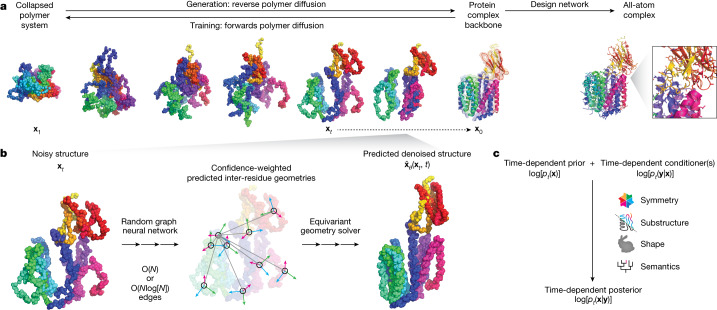
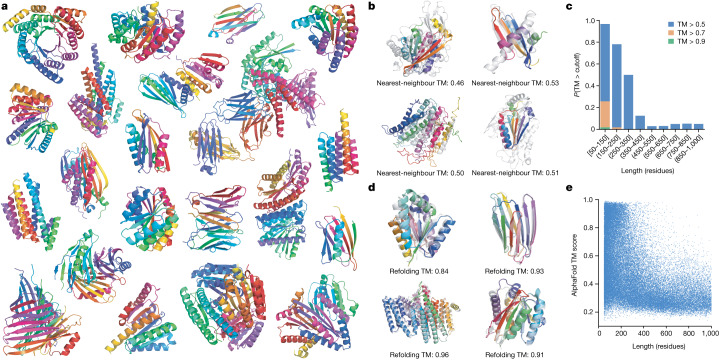
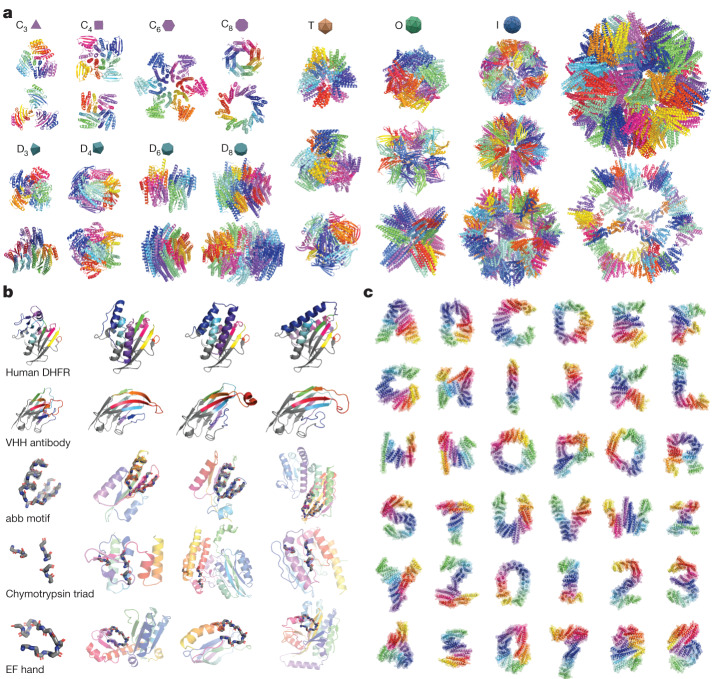
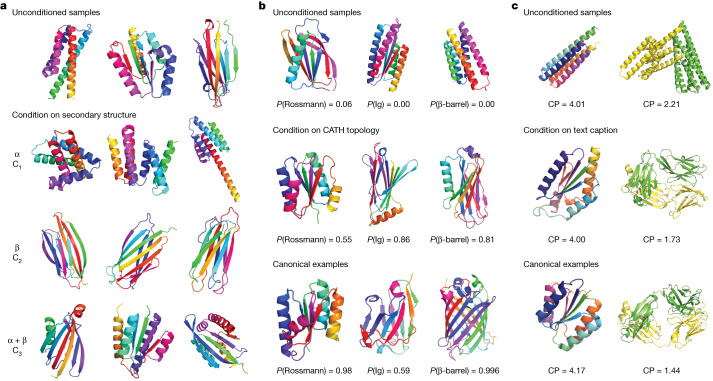
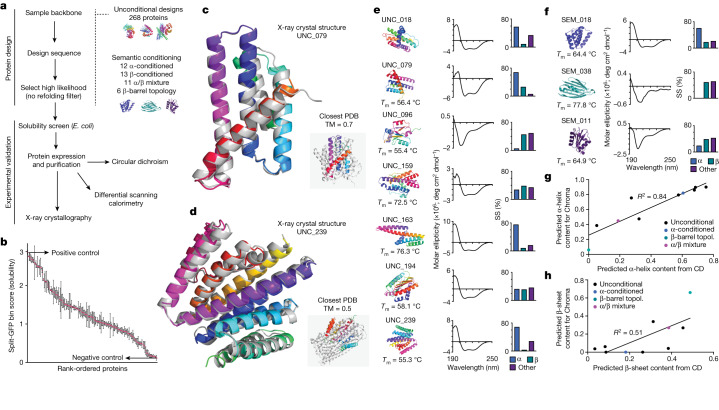
Three billion years of evolution has produced a tremendous diversity of protein molecules 1 , but the full potential of proteins is likely to be much greater. Accessing this potential has been challenging for both computation and experiments because the space of possible protein molecules is much larger than the space of those likely to have functions. Here we introduce Chroma, a generative model for proteins and protein complexes that can directly sample novel protein structures and sequences, and that can be conditioned to steer the generative process towards desired properties and functions. To enable this, we introduce a diffusion process that respects the conformational statistics of polymer ensembles, an efficient neural architecture for molecular systems that enables long-range reasoning with sub-quadratic scaling, layers for efficiently synthesizing three-dimensional structures of proteins from predicted inter-residue geometries and a general low-temperature sampling algorithm for diffusion models. Chroma achieves protein design as Bayesian inference under external constraints, which can involve symmetries, substructure, shape, semantics and even natural-language prompts. The experimental characterization of 310 proteins shows that sampling from Chroma results in proteins that are highly expressed, fold and have favourable biophysical properties. The crystal structures of two designed proteins exhibit atomistic agreement with Chroma samples (a backbone root-mean-square deviation of around 1.0 Å). With this unified approach to protein design, we hope to accelerate the programming of protein matter to benefit human health, materials science and synthetic biology.
Overview
The claims and statistics of this paper haven’t been checked yet.
Run the check — free, no account needed. It reads the open-access text and checks the sources it cites.
Integrity signals
Registry
Cites
Statistics
Figures
Verification
Claims the paper makes
The claims and statistics of this paper haven’t been checked yet.
Run the check — free, no account needed. It reads the open-access text and checks the sources it cites.
Self-check
Percentages, sums and reported differences re-computed from the paper’s own numbers.
The self-check needs the paper’s full text.
Citations
Cites
Highly accurate protein structure prediction with AlphaFold
Jumper, J., Evans, R., Pritzel, A., Green, T., Figurnov, M., Ronneberger, O., Tunyasuvunakool, K., Bates, R., Žídek, A., Potapenko, A., et al. (2021) · Nature · doi:10.1038/s41586-021-03819-2 · Cited by 43,764
UMAP: Uniform Manifold Approximation and Projection
McInnes, L., Healy, J., Saul, N., & Großberger, L. (2018) · Journal of Open Source Software · doi:10.21105/joss.00861 · Cited by 9,826 · cited 3×
“13, we present samples from Chroma and a set of native structures with global topology descriptors derived from knot theory 43,44 and embed them into two dimensions with UMAP 45 .”
BackgroundMethodDenoising Diffusion Probabilistic Models
Ho, J., Jain, A., & Abbeel, P. (2020) · arXiv · doi:10.48550/arxiv.2006.11239 · Cited by 8,712
UniProt: the universal protein knowledgebase in 2021
The UniProt Consortium, Bateman, A., Martin, M.-J., Orchard, S., Magrane, M., Agivetova, R., Ahmad, S., Alpi, E., Bowler-Barnett, E. H., Britto, R., et al. (2021) · Nucleic Acids Research · doi:10.1093/nar/gkaa1100 · Cited by 6,372
Evolutionary-scale prediction of atomic level protein structure with a language model
Lin, Z., Akin, H., Rao, R., Hie, B., Zhu, Z., Lu, W., Smetanin, N., Verkuil, R., Kabeli, O., Shmueli, Y., et al. (2022) · doi:10.1101/2022.07.20.500902 · Cited by 5,990
TM-align: a protein structure alignment algorithm based on the TM-score
Zhang, Y. (2005) · Nucleic Acids Research · doi:10.1093/nar/gki524 · Cited by 3,774
A hierarchical O(N log N) force-calculation algorithm
Barnes, J., & Hut, P. (1986) · Nature · doi:10.1038/324446a0 · Cited by 3,733
Diffusion Models Beat GANs on Image Synthesis
Dhariwal, P., & Nichol, A. (2021) · arXiv · doi:10.48550/arxiv.2105.05233 · Cited by 3,362
Rives, A., Meier, J., Sercu, T., Goyal, S., Lin, Z., Liu, J., Guo, D., Ott, M., Zitnick, C. L., Ma, J., et al. (2021) · Proceedings of the National Academy of Sciences · doi:10.1073/pnas.2016239118 · Cited by 3,286
Rives, A., Meier, J., Sercu, T., Goyal, S., Lin, Z., Liu, J., Guo, D., Ott, M., Zitnick, C. L., Ma, J., et al. (2019) · doi:10.1101/622803 · Cited by 3,280
Research works printed but not linked: 6
- Ramesh, A., Dhariwal, P., Nichol, A., Chu, C. & Chen, M. Hierarchical text-conditional image generation with CLIP latents. Preprint at https://arxiv.org/abs/2204.06125 (2022). · arXiv
- Ingraham, J., Garg, V., Barzilay, R. & Jaakkola, T. Generative models for graph-based protein design. In Proc. Advances in Neural Information Processing Systems 32 (eds Wallach, H. et al.) (NeurIPS, 2019).
- Anand, N. & Huang, P.-S. Generative modeling for protein structures. In Proc. Advances in Neural Information Processing Systems 31 (eds Bengio, S. et al.) (NeurIPS, 2018).
- Lin, Z., Sercu, T., LeCun, Y. & Rives, A. Deep generative models create new and diverse protein structures. In Machine Learning in Structural Biology Workshop at the 35th Conference on Neural Information Processing Systems (MLSB, 2021).
- Gilmer, J., Schoenholz, S. S., Riley, P. F., Vinyals, O. & Dahl, G. E. Neural message passing for quantum chemistry. In Proc. 34th International Conference on Machine Learning (eds Precup, D. et al.) 1263–1272 (PMLR, 2017).
- Jing, B., Eismann, S., Suriana, P., Townshend, R. J. L. & Dror, R. Learning from protein structure with geometric vector perceptrons. In International Conference on Learning Representations (eds Hofmann, K. et al.) (OpenReview.net, 2021).
Cited by
Sorted by citations
Items 201–300 of 447
Protein foundation models: a comprehensive survey
Xu, H., Li, L., Pan, S., Cheng, P., Wang, Y., Rong, Z., Feng, L., Huang, X., Wang, S., & Shu, W. (2026) · Science China Life Sciences · doi:10.1007/s11427-025-3147-2 · Cited by 8
Closing the loop: Experimentally validated methods in artificial intelligence–driven protein design
Kosonocky, C. W., Alamdari, S., Yang, K., & Amini, A. P. (2026) · Current Opinion in Structural Biology · doi:10.1016/j.sbi.2026.103272 · Cited by 9
Computational design of de novo bioenergetic membrane proteins
Hardy, B. J., & Curnow, P. (2024) · Biochemical Society Transactions · doi:10.1042/bst20231347 · Cited by 5
Semantic–Electromagnetic Inversion With Pretrained Multimodal Generative Model
Chen, Y., Zhang, H., Ma, J., Cui, T. J., del Hougne, P., & Li, L. (2024) · Advanced Science · doi:10.1002/advs.202406793 · Cited by 6
Reprogrammable 3D Shapes from 1D Metamaterial
Abu, E. B., Zigelman, A., Veksler, Y., Givli, S., Filipov, E. T., Lipson, H., & Gat, A. D. (2024) · Advanced Materials Technologies · doi:10.1002/admt.202401113 · Cited by 7
Scaling Graph Neural Networks to Large Proteins
Airas, J., & Zhang, B. (2025) · Journal of Chemical Theory and Computation · doi:10.1021/acs.jctc.4c01420 · Cited by 6
ACP‐DPE: A Dual‐Channel Deep Learning Model for Anticancer Peptide Prediction
Huang, G., Cao, Y., Dai, Q., & Chen, W. (2025) · IET Systems Biology · doi:10.1049/syb2.70010 · Cited by 6
Isolation of structural constraints by ensemble-conditioned protein sequence designPreprint
Shuai, R. W., Zhou, L., Nesr, G. E., Lin, J., Lu, T., Mathews, I. I., Bhatti, S., Yuan, J., Kouba, P., & Huang, P. (2025) · bioRxiv (Cold Spring Harbor Laboratory) · doi:10.1101/2025.09.30.679633 · Cited by 7
Advancing membrane-associated protein docking with improved sampling and scoring in Rosetta
Samnata, R., Harmalkar, A., Prathima, P., & Gray, J. J. (2024) · doi:10.1101/2024.07.09.602802 · Cited by 5
Wang, B., Wang, C., Chen, J., Liu, D., Sun, C., Zhang, J., Zhang, K., & Li, H. (2026) · Nature Machine Intelligence · doi:10.1038/s42256-026-01198-9 · Cited by 5
Limitations of the refolding pipeline for de novo protein design
Korbeld, K. T., Viliuga, V., & Fürst, M. J. L. J. (2026) · Protein Science · doi:10.1002/pro.70613 · Cited by 5
Tang, J., Gong, D., Li, H., & Li, S. (2026) · Acta Pharmaceutica Sinica B · doi:10.1016/j.apsb.2026.01.039 · Cited by 6
Barnett, A. J., Rajendra, K. C., Pandey, P., Somasiri, P., Fairfax, K. A., Hung, S. S. C., & Hewitt, A. W. (2026) · Genomics Proteomics & Bioinformatics · doi:10.1093/gpbjnl/qzag014 · Cited by 9
Generative AI for synthetic biology: Designing biological parts, circuits, and genomes
Kim, N., Carluccio, G. D., Zhang, K., & Collins, J. J. (2026) · Cell Systems · doi:10.1016/j.cels.2026.101533 · Cited by 5
Cochrane, R. R., dos Santos, L. V., & Cai, Y. (2026) · Current Opinion in Biotechnology · doi:10.1016/j.copbio.2026.103503 · Cited by 6
Birnbaum, F., & Keating, A. E. (2026) · Proceedings of the National Academy of Sciences · doi:10.1073/pnas.2535494123 · Cited by 7
Zhao, Z., Qu, Q., Sun, F., Zang, J., Zheng, B., Zhang, T., Zhao, G., Lv, C., & Wang, Z. (2025) · Biotechnology Advances · doi:10.1016/j.biotechadv.2025.108656 · Cited by 5
Liu, Y., Chen, Z., Wang, Y. G., & Shen, Y. (2024) · IEEE International Conference on Bioinformatics and Biomedicine (BIBM) · doi:10.1109/bibm62325.2024.10822318 · Cited by 6
Tokenizing Foldable Protein Structures with Machine-Learned Artificial Amino-Acid VocabularyPreprint
Lin, X., Chen, Z., Li, Y., Ma, Z., Fan, C., Cao, Z., Feng, S., Gao, Y. Q., & Zhang, J. (2023) · bioRxiv (Cold Spring Harbor Laboratory) · doi:10.1101/2023.11.27.568722 · Cited by 9
Mixed Continuous and Categorical Flow Matching for 3D De Novo Molecule GenerationPreprint
Dunn, I. C., & Koes, D. R. (2024) · PubMed · doi:10.48550/arxiv.2404.19739 · Cited by 43
Tang, Y., Yu, M., Bai, G., Li, X., Xu, Y., & Ma, B. (2024) · bioRxiv (Cold Spring Harbor Laboratory) · doi:10.1101/2024.06.27.600251 · Cited by 5
FoldToken3: Fold Structures Worth 256 Words or LessPreprint
Gao, Z., Tan, C., & Li, S. Z. (2024) · bioRxiv (Cold Spring Harbor Laboratory) · doi:10.1101/2024.07.08.602548 · Cited by 4
Weinstein, E. N., Gollub, M. G., Slabodkin, A., Gardner, C. L., Dobbs, K., Cui, X.-B., Amin, A. N., Church, G. M., & Wood, E. (2024) · bioRxiv (Cold Spring Harbor Laboratory) · doi:10.1101/2024.09.13.612900 · Cited by 6
Controllable All-Atom Protein Generation with Latent DiffusionPreprint
Lu, A. X., Yang, J., Long, Y., Lambert, T., Yan, W., Robinson, S. A., Yang, K., Gligorijević, V., Cho, K., Bonneau, R., et al. (2024) · Research Square · doi:10.1101/2024.12.02.626353 · Cited by 6
Broske, B., Binder, S. C., McEnroe, B. A., Kempchen, T. N., Fandrey, C. I., Messmer, J. M., Tan, E., Konopka, P., Ferber, D., Yong, M. C. R., et al. (2025) · bioRxiv (Cold Spring Harbor Laboratory) · doi:10.1101/2025.05.11.652819 · Cited by 6
Ohnuki, J., & Okazaki, K.-I. (2026) · JACS Au · doi:10.1021/jacsau.6c00596 · Cited by 4
AI Guided Protein Design for Next‐Generation Autogenic Engineered Living Materials
Hammad, H. M., & Duraj‐Thatte, A. (2026) · Advanced Intelligent Systems · doi:10.1002/aisy.202501021 · Cited by 4
Liao, S., Xu, G., Li, J., & Ma, J. (2025) · Molecules · doi:10.3390/molecules30051116 · Cited by 4
Flow perturbation to accelerate Boltzmann sampling
Peng, X., & Gao, A. (2025) · Nature Communications · doi:10.1038/s41467-025-62039-8 · Cited by 5
Protein Design Meets Single-Molecule Detection: Towards Programmable Nanopore Sensors
Liu, X., & Xu, C. (2025) · International Journal of Molecular Sciences · doi:10.3390/ijms262110561 · Cited by 4
Stable de novo protein design via joint conformational landscape and sequence optimization
Cho, Y., Dauparas, J., Tsuboyama, K., Rocklin, G. J., & Ovchinnikov, S. (2025) · Nature Communications · doi:10.1038/s41467-025-66526-w · Cited by 6
AI-enabled protein design facilitates future plant research and crop breeding
Lou, Y., Wu, T., Xia, F., Zhao, A., & Wang, X. (2026) · PLANT PHYSIOLOGY · doi:10.1093/plphys/kiag147 · Cited by 4
Dual-use artificial intelligence and biology: upstream risk-benefit reviews
Hanke, M. S., Rath, S., Cicero, A. J., Inglesby, T. V., & Pannu, J. (2026) · Frontiers in Microbiology · doi:10.3389/fmicb.2026.1832974 · Cited by 4
SCUBA-D: a freshly trained diffusion model generates high-quality protein structures
(2024) · Nature Methods · doi:10.1038/s41592-024-02465-6 · Cited by 4
Deep Learning-Assisted Discovery of Protein Entangling Motifs
Deng, P., Xu, L., Wei, Y., Sun, F., Li, L., Zhang, W., & Gao, H. (2025) · Biomacromolecules · doi:10.1021/acs.biomac.4c01243 · Cited by 4
Natural Language Prompts Guide the Design of Novel Functional Protein SequencesPreprint
Praljak, N., Yeh, H., Moore, M., Socolich, M., Ranganathan, R., & Ferguson, A. L. (2024) · bioRxiv (Cold Spring Harbor Laboratory) · doi:10.1101/2024.11.11.622734 · Cited by 7
Yan, J., Cui, Z., Yan, W., Chen, Y., Pu, M., Li, S., & Ye, S. (2025) · bioRxiv (Cold Spring Harbor Laboratory) · doi:10.1101/2025.04.29.651154 · Cited by 5
Can We Extract Physics-like Energies from Generative Protein Diffusion Models?Preprint
Sarma, S., Truscott, H. H., Xu, D. Z., Reid, K. A., Chu, L., Chen, J. H. K., & Gray, J. J. (2025) · bioRxiv (Cold Spring Harbor Laboratory) · doi:10.1101/2025.11.28.690021 · Cited by 4
Molecular Modeling Methods in the Development of Affine and Specific Protein-Binding Agents
Nasaev, S. S., Mukanov, A. R., Mishkorez, I. V., Kuznetsov, I. I., Leibin, I. V., Dolgusheva, V. A., Pavlyuk, G. A., Manasyan, A. L., & Veselovsky, A. V. (2024) · Biochemistry (Moscow) · doi:10.1134/s0006297924080066 · Cited by 3
Protein design and optimization for synthetic cells
Frohn, B. P., Kohyama, S., & Schwille, P. (2025) · Nature Reviews Bioengineering · doi:10.1038/s44222-025-00318-1 · Cited by 7
Optimizing the breadth of SARS-CoV-2-neutralizing antibodies in vivo and in silico
Kuroda, D., Moriyama, S., Sasaki, H., & Takahashi, Y. (2025) · Human Vaccines & Immunotherapeutics · doi:10.1080/21645515.2025.2526873 · Cited by 3
Empowering scientific discovery with explainable small domain-specific and large language models
Yu, H., Wang, Y., Cheng, T., Yan, Y., Dawson, K. A., Li, S. F. Y., Zheng, Y., & Jin, Y. (2025) · Artificial Intelligence Review · doi:10.1007/s10462-025-11365-w · Cited by 4
The emergence of novel versus known three-dimensional structures from random sequences
Yang, R., Yang, H., Davydenko, A., Mawaldi, Z., Kormos, R. C., Myerscough, D., Wu, Y., & DeGrado, W. F. (2026) · Proceedings of the National Academy of Sciences · doi:10.1073/pnas.2535076123 · Cited by 4
3-D thermodynamic analysis of helical fiber-matrix interfacial wettability
Guo, F., Hu, W., Cang, Y., Xuan, F., Liang, W., Wang, F., & Yang, B. (2025) · International Journal of Mechanical Sciences · doi:10.1016/j.ijmecsci.2025.110896 · Cited by 3
Geometric deep learning assists protein engineering. Opportunities and Challenges
Vinuesa, J. A. G. , Rojas, J. A., Soto-García, N., Martínez, N., Álvarez-Saravia, D., Uribe-Paredes, R., Davari, M. D., Conca, C., Asenjo, J. A., & Medina-Ortiz, D. (2025) · Biotechnology Advances · doi:10.1016/j.biotechadv.2025.108790 · Cited by 7
Li, Y., Du, G., Chen, J., Lv, X., & Liu, L. (2026) · Biotechnology Advances · doi:10.1016/j.biotechadv.2026.108850 · Cited by 4
AI-Driven Design of Miniproteins as Potential Allosteric Modulators
Liu, X., Sun, Y., Xia, Y., Li, H., & Yan, Z. (2026) · Pharmaceuticals · doi:10.3390/ph19030480 · Cited by 3
Protein FID: improved evaluation of protein structure generative models
Faltings, F., Stark, H., Jaakkola, T., & Barzilay, R. (2026) · Bioinformatics · doi:10.1093/bioinformatics/btag156 · Cited by 4
Kaushik, R., & Re, S. (2026) · Journal of Pharmacy & Pharmaceutical Sciences · doi:10.3389/jpps.2026.16146 · Cited by 3
Decoding complexity through machine learning is redefining scientific discovery
Vinuesa, R., Cinnella, P., Rabault, J., Azizpour, H., Bauer, S., Brunton, B. W., Elofsson, A., Elias Jarlebring, A., Kjellström, H., Markidis, S., et al. (2026) · Communications Physics · doi:10.1038/s42005-026-02676-7 · Cited by 17
From waste to wealth: AI-driven enzyme innovation for straw transformation
Sun, X., Zhou, L., Li, Y., Shen, Q., Wang, Y., Jia, B., Yao, Y., & Pu, Z. (2026) · Bioresource Technology · doi:10.1016/j.biortech.2026.134875 · Cited by 3
Structural basis for host membrane binding and remodeling by invading malaria parasites
Haile, M. T., Kaxiras, D. A., Zhen, J., Lee, C. L., Jiang, B., Small-Saunders, J. L., & Ho, C.-M. (2026) · Cell · doi:10.1016/j.cell.2026.06.012 · Cited by 7
De novo design of stable proteins that efficaciously inhibit oncogenic G proteins
Cummins, M. C., Tripathy, A., Sondek, J., & Kuhlman, B. A. (2023) · Protein Science · doi:10.1002/pro.4713 · Cited by 3
Decoding force-transmission linkages for therapeutic targeting and engineering
Liu, J., Deng, Y., & Yan, J. (2025) · APL Bioengineering · doi:10.1063/5.0267032 · Cited by 3
Generating functional and multistate proteins with a multimodal diffusion transformerPreprint
Jing, B., Sappington, A., Bafna, M., Shah, R., Tang, A., Krishna, R., Klivans, A. R., Diaz, D. J., & Berger, B. (2025) · bioRxiv (Cold Spring Harbor Laboratory) · doi:10.1101/2025.09.03.672144 · Cited by 5
Parikh, V., Foley, B., Gatlin, W., Ludwick, M., Turano, L., & Verkhivker, G. M. (2026) · bioRxiv (Cold Spring Harbor Laboratory) · doi:10.64898/2026.02.24.707829 · Cited by 4
Computer‐Aided Technology for Bioactive Protein Design and Clinical Application
Wang, C., Chen, Y., & Ren, L. (2025) · Macromolecular Bioscience · doi:10.1002/mabi.202500007 · Cited by 2
Zhang, S., Jiang, Z., Huang, R., Huang, W., Peng, S., Mo, S., Zhu, L., Li, P., Zhang, Z., Pan, E., et al. (2025) · Advanced Science · doi:10.1002/advs.202502723 · Cited by 10
Multimodal diffusion for joint design of protein sequence and structure
Zhu, S., Gulati, S., Liu, Y., Kotnis, S., Sun, Q. H., & Shen, Y. (2025) · Protein Science · doi:10.1002/pro.70340 · Cited by 5
Translational potential of AI-driven de novo protein binders for crop protection and improvement
Rifat, M. H., Tai, L., Wang, Y., Deng, Q., Pan, R., & Feng, Y. (2026) · Crop Design · doi:10.1016/j.cropd.2026.100133 · Cited by 3
Li, J., Guo, H., & Song, C. (2026) · Journal of Chemical Theory and Computation · doi:10.1021/acs.jctc.5c01859 · Cited by 2
Beck, J., & Romero‐Romero, S. (2026) · Biochemical Society Transactions · doi:10.1042/bst20253060 · Cited by 2
Beyond accuracy: comprehensive alignment for AI-driven molecular design
Zhang, Q. H., Zhuang, X., Zhou, C., Zhu, Y., Xu, T., Li, T., Liu, D., Liu, S., Ding, K., Li, M., et al. (2026) · AI for Science · doi:10.1088/3050-287x/ae5f37 · Cited by 3
From evolution to rational design: AI-driven engineering of safe and highly efficient food enzymes
Wu, X., Yuan, Y., Wang, F., Lu, F., & Liu, F. (2026) · Biotechnology Advances · doi:10.1016/j.biotechadv.2026.108901 · Cited by 2
BioPipelines: Accessible Computational Protein and Ligand Design for Chemical Biologists
Quargnali, G., & Rivera‐Fuentes, P. (2026) · Computational and Structural Biotechnology Journal · doi:10.34133/csbj.0129 · Cited by 2
Structure and Dynamics of the HIV-1 Envelope Protein on the Virion Envelope
Majumder, A., Dutta, M., Cherek, L., & Voth, G. A. (2026) · Journal of the American Chemical Society · doi:10.1021/jacs.6c10101 · Cited by 3
De novo design of DNA origami with a generative diffusion model
Truong-Quoc, C., Jeon, K., Kim, J., Kwon, S. H., Seo, D., Lee, C., & Kim, D. (2026) · Nature Communications · doi:10.1038/s41467-026-73578-z · Cited by 4
Protein engineering: status report
Ai, H., Arnold, F. H., Barrick, D., Bayley, H., Brownless, A.-L. R., Campbell, R. E., Castells‐Graells, R., Chaiyen, P., Chica, R. A., Chisholm, L. O., et al. (2026) · Protein Engineering Design and Selection · doi:10.1093/protein/gzag020 · Cited by 2
Broske, B., McEnroe, B. A., Binder, S. C., Kempchen, T. N., Fandrey, C. I., Tan, E., Ferber, D., Yong, M. C. R., Kleinert, M., Messmer, J. M., et al. (2026) · Nature Communications · doi:10.1038/s41467-026-76760-5 · Cited by 4
Atomic functional site scaffolding in biopolymers with RFdiffusion3
Butcher, J., Krishna, R., Mitra, R., Woodbury, S. M., Kim, D., Brent, R. I., Li, Y., Corley, N., Favor, A., Chen, A., et al. (2026) · Science · doi:10.1126/science.aeh2982 · Cited by 5
Vince, O., Gowers, G.-O. F., & McGibbon, S. (2024) · GEN Biotechnology · doi:10.1089/genbio.2024.0018 · Cited by 3
PB-GPT: An innovative GPT-based model for protein backbone generation
Min, X., Liao, Y., Chen, X., Yang, Q., Ying, J., Zou, J., Yang, C., Zhang, J., Ge, S., & Xia, N. (2024) · Structure · doi:10.1016/j.str.2024.07.016 · Cited by 2
All‐Atom Protein Sequence Design Based on Geometric Deep Learning
Liu, J., Guo, Z., You, H., Zhang, C., & Lai, L. (2024) · Angewandte Chemie · doi:10.1002/ange.202411461 · Cited by 3
Norton, T., & Bhattacharya, D. (2024) · Journal of Molecular Biology · doi:10.1016/j.jmb.2024.168818 · Cited by 3
Liu, Y., Chen, L.-H., Chen, Q., & Liu, H. (2025) · National Science Review · doi:10.1093/nsr/nwaf290 · Cited by 2
Secondary Structure-Guided Novel Protein Sequence Generation with Latent Graph Diffusion
Hu, Y., Tan, Y., Han, A., Zheng, L., Hong, L., & Zhong, B. (2024) · IEEE International Conference on Bioinformatics and Biomedicine (BIBM) · doi:10.1109/bibm62325.2024.10822117 · Cited by 4
Internal-Coordinate Density Modelling of Protein Structure: Covariance MattersPreprint
Arts, M., Frellsen, J., & Boomsma, W. (2023) · arXiv (Cornell University) · doi:10.48550/arxiv.2302.13711 · Cited by 2
BIOFORMERS: A SCALABLE FRAMEWORK FOR EXPLORING BIOSTATES USING TRANSFORMERSPreprint
Amara-Belgadi, S., Li, O., Zhang, D. Y., & Gopinath, A. (2023) · bioRxiv (Cold Spring Harbor Laboratory) · doi:10.1101/2023.11.29.569320 · Cited by 2
FoldToken2: Learning compact, invariant and generative protein structure languagePreprint
Gao, Z., Tan, C., & Li, S. Z. (2024) · bioRxiv (Cold Spring Harbor Laboratory) · doi:10.1101/2024.06.11.598584 · Cited by 2
FoldToken4: Consistent & Hierarchical Fold LanguagePreprint
Gao, Z., Tan, C., & Li, S. Z. (2024) · bioRxiv (Cold Spring Harbor Laboratory) · doi:10.1101/2024.08.04.606514 · Cited by 2
Marden, G., Schmitt, K. P., Zimmerman, M. I., Ramos, A. H., Menzenski, M., Sharma, G., Li, H., Carlin, E., Jecrois, A. M., Morales-Pérez, C. L., et al. (2025) · bioRxiv (Cold Spring Harbor Laboratory) · doi:10.1101/2025.03.30.646023 · Cited by 2
Self-citationExperiment-guided AlphaFold3 resolves accurate protein ensemblesPreprint
Maddipatla, A., Sellam, N. B., Bojan, M., Masalitin, V., Vedula, S., Schanda, P., Marx, A., & Bronstein, A. M. (2025) · bioRxiv (Cold Spring Harbor Laboratory) · doi:10.1101/2025.10.11.681796 · Cited by 2
Learning Dynamic Protein Representations at Scale with DistogramsPreprint
Portal, N., Karroucha, W., Mallet, V., & Bonomi, M. (2026) · bioRxiv (Cold Spring Harbor Laboratory) · doi:10.64898/2026.01.29.702509 · Cited by 3
Lin, Y., Lee, M., Vermani, A., Jiang, E., Cooman, S. D., Špeťko, M., & AlQuraishi, M. (2026) · bioRxiv (Cold Spring Harbor Laboratory) · doi:10.64898/2026.05.01.722168 · Cited by 4
Zheng, Z., Zhang, B., Zhong, B., Yu, J., Liu, K., Li, Z., Zhu, J., Wei, T., & Chen, H.-F. (2026) · PLOS Computational Biology · doi:10.1371/journal.pcbi.1014290 · Cited by 1
STORMM: Structure and topology replica molecular mechanics for chemical simulations
Cerutti, D. S., Wiewiora, R., Boothroyd, S., & Sherman, W. (2024) · The Journal of Chemical Physics · doi:10.1063/5.0211032 · Cited by 1
Scrutinization on Docking against Individually Generated Target Pockets for each Ligand
Zhan, R., Zhang, W., & Huang, J. (2026) · Journal of Pharmaceutical Analysis · doi:10.1016/j.jpha.2026.101759 · Cited by 2
Yoshimori, A., & Bajorath, J. (2025) · European Journal of Medicinal Chemistry Reports · doi:10.1016/j.ejmcr.2025.100249 · Cited by 1
Artificial Intelligence and Cancer Immunotherapy
Shah, A., Bhat, A. A., Bhat, M. R., Assad, A., & Macha, M. A. (2025) · Springer eBooks · doi:10.1007/978-981-96-8176-1_16 · Cited by 1
Piochi, L. F., & Khakzad, H. (2025) · Cell Systems · doi:10.1016/j.cels.2025.101369 · Cited by 1
Luzik, D. A., & Skrynnikov, N. R. (2025) · Proteins Structure Function and Bioinformatics · doi:10.1002/prot.70050 · Cited by 1
Protein language model supervised motif-scaffolding design with GPDL
Zhang, B., Liu, K., Zheng, Z., Zhu, J., Li, Z., Liu, Y., Mu, J., Wei, T., & Chen, H. (2025) · International Journal of Biological Macromolecules · doi:10.1016/j.ijbiomac.2025.148441 · Cited by 1
Large language model agents as experimental orchestrators in data-driven enzyme engineering
Gao, Y., Fu, L., & Si, T. (2025) · Current Opinion in Biotechnology · doi:10.1016/j.copbio.2025.103376 · Cited by 4
Multi-objective optimization for designing structurally similar proteins with dissimilar sequences
Akiba, R., Moriwaki, Y., Ishitani, R., & Yoshikawa, N. (2026) · Science and Technology of Advanced Materials: Methods · doi:10.1080/27660400.2025.2611575 · Cited by 1
ModelCIF Update: Supporting Emerging Classes of Computational Macromolecular Models
Tauriello, G., Lill, Y., Sgrignani, J., Zoete, V., Singer, B., Vallat, B. K., Webb, B., Garello, T., Bienert, S., Feig, M., et al. (2026) · Journal of Molecular Biology · doi:10.1016/j.jmb.2026.169658 · Cited by 1
Design of novel enzymes with the incorporation of noncanonical amino acids
Cheng, L., Yang, L., Song, Z., & Yu, H. (2026) · Critical Reviews in Biotechnology · doi:10.1080/07388551.2025.2612060 · Cited by 1
Manufacturing-aware generative models enable petascale synthesis of designed DNA
Weinstein, E. N., Gollub, M. G., Slabodkin, A., Dobbs, K., Cui, X.-B., Gardner, C. L., Grant, R. J., Gurung, K., Bailey, A., Amin, A. N., et al. (2026) · Nature Biotechnology · doi:10.1038/s41587-026-03020-8 · Cited by 3
Bailey, J., Spina, S. C., Hu, A., Phan, N., Getman, R. B., & Kimmel, B. R. (2026) · ACS Engineering Au · doi:10.1021/acsengineeringau.5c00099 · Cited by 3
Metadata
- Authors
- Ingraham, J. B., Baranov, M., Costello, Z., Barber, K. W., Wang, W., Ismail, A., Frappier, V., Lord, D. M., Ng-Thow-Hing, C., Van Vlack, E. R., Tie, S., Xue, V., Cowles, S. C., Leung, A., Rodrigues, J. V., Morales-Perez, C. L., Ayoub, A. M., Green, R., Puentes, K., Oplinger, F., Panwar, N. V., Obermeyer, F., Root, A. R., Beam, A. L., Poelwijk, F. J., & Grigoryan, G.
- Corresponding author
- Grigoryan, Gevorg
- ORCID
- Venue
- Nature
- Published
- 2023-11-15
- Volume
- 623
- Issue
- 7989
- Pages
- 1070-1078
- ISSN
- 0028-0836 (ISSN-L)
- 1476-4687
- PMC
- PMC10686827
- OpenAlex
- W4388694364
- Cited by
- 444
- References
- 45
- Citations by year
- 2026: 152 · 2025: 147 · 2024: 125 · 2023: 20
- FWCI
- 39.56
- Type
- journal article
- Language
- en
- Open access
- hybrid
- doi.org
- Locations
- Nature (publishedVersion, cc-by)
- PubMed Central (publishedVersion, cc-by)
- PubMed (publishedVersion)
- Topics
- Life Sciences › Biochemistry, Genetics and Molecular Biology › Molecular Biology › Protein Structure and Dynamics
- Life Sciences › Biochemistry, Genetics and Molecular Biology › Molecular Biology › Machine Learning in Bioinformatics
- Life Sciences › Pharmacology, Toxicology and Pharmaceutics › Drug Discovery › Computational Drug Discovery Methods
- Keywords
- protein design, generative models, diffusion models, protein complexes, protein structure prediction, Bayesian inference, protein folding, natural language prompts, color intensity
- MeSH terms
- Machine Learning, Algorithms, Bayes Theorem, Computer Simulation, Humans, Models, Molecular, Protein Conformation, Proteins, Semantics, Protein Folding, Directed Molecular Evolution, Synthetic Biology
About these checks
Registry, retraction, Cites and statistics results are computed, not judged, with one exception: a printed reference that no index lists is read once by a model before it counts as a citation error. Claims are extracted by a model and kept only when their quote appears verbatim in the text; each cited source is then checked, with a model’s help, for whether it says what the claim relies on. Those verdicts can be wrong — read the claim’s quote and the cited source before relying on one.
Statistics and arithmetic are recomputed, not judged.
Confidence bands are shown only for fields calibrated on our annotated test set. None is calibrated yet, so no band is shown.
What counts as a claim ›How we measure confidence ›How we check this ›
Are you an author, or do you see a problem with this page? Request a review
