

An epigenetic barrier sets the timing of human neuronal maturation
Open accessPublished version of a preprint
The DOI matches its Crossref record; 97 of the 97 references it cites were found in a registry or an index.
Abstract
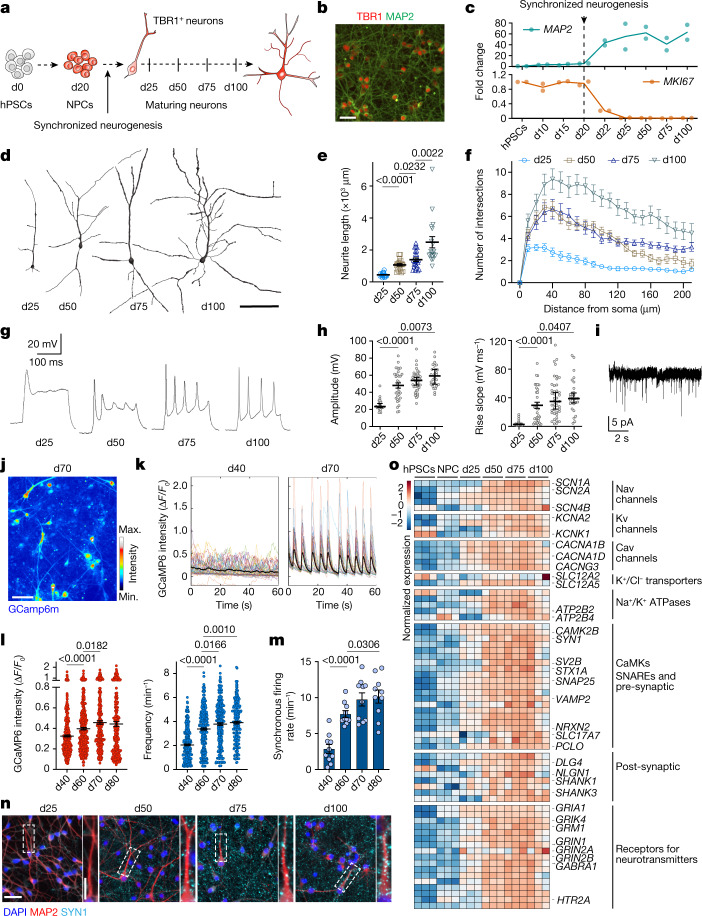
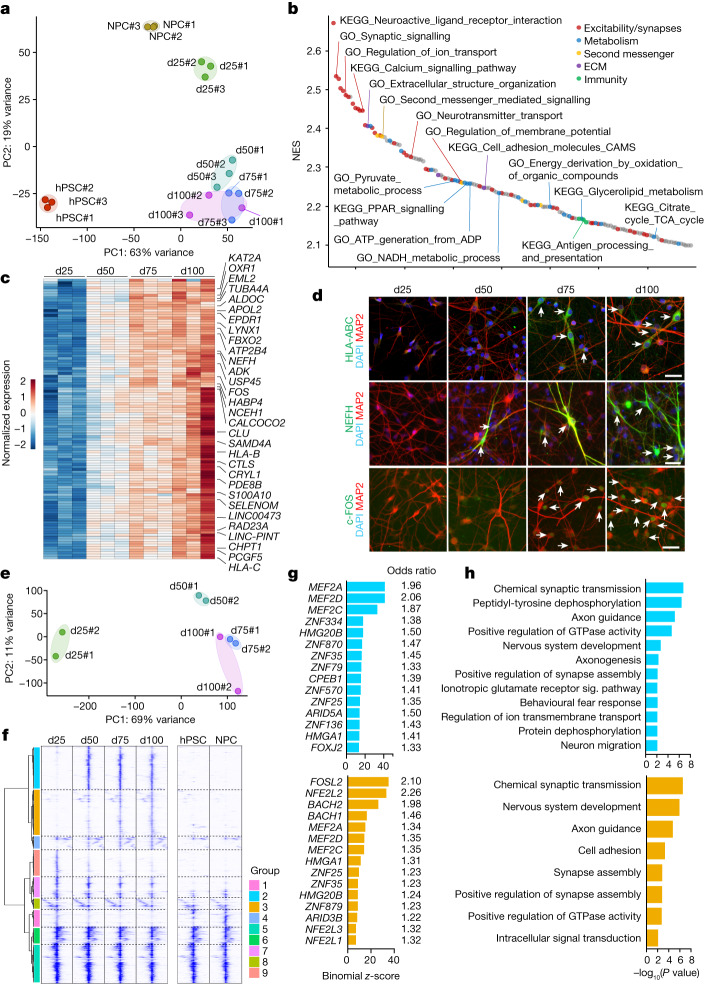
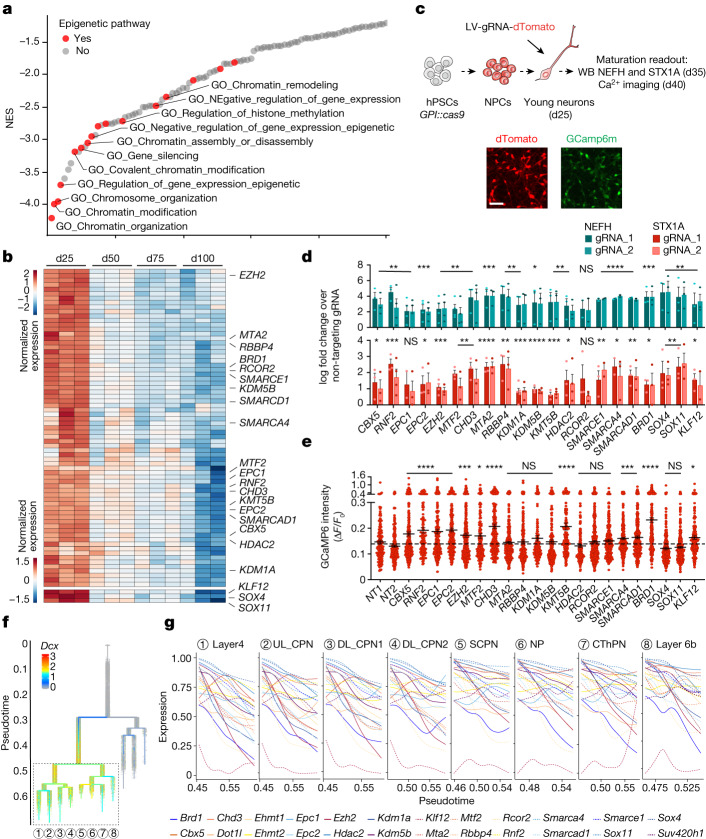
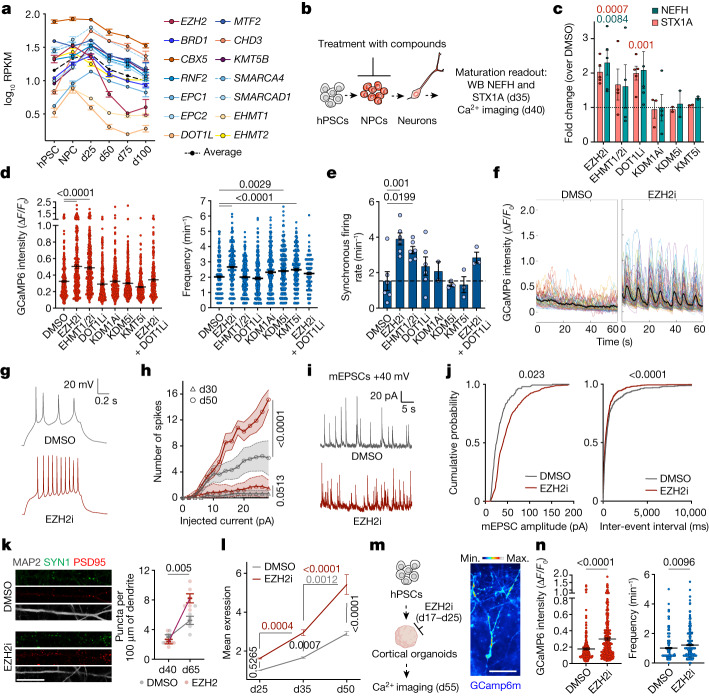
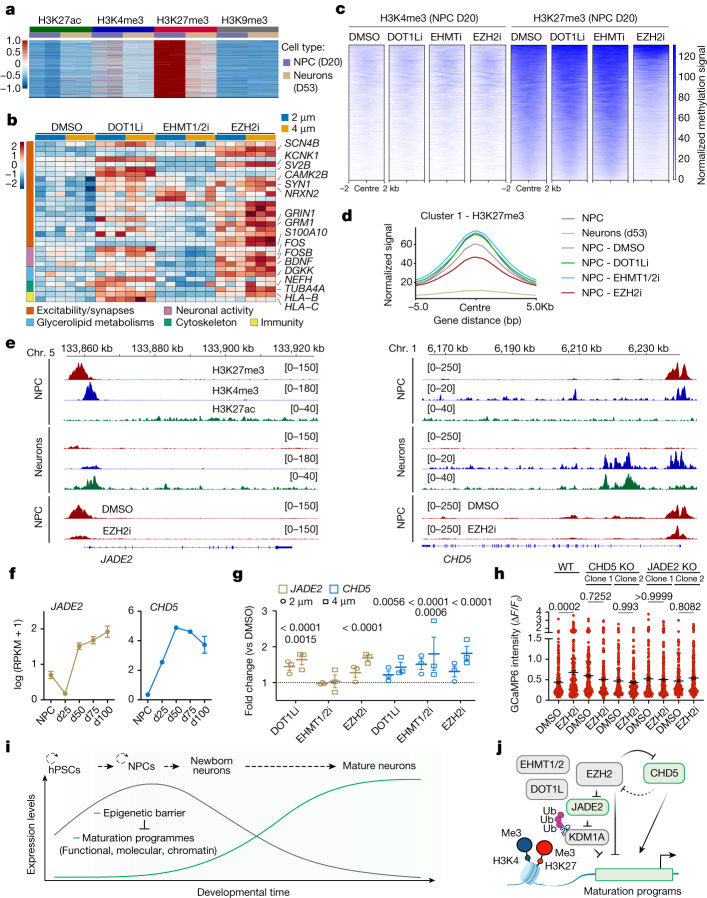
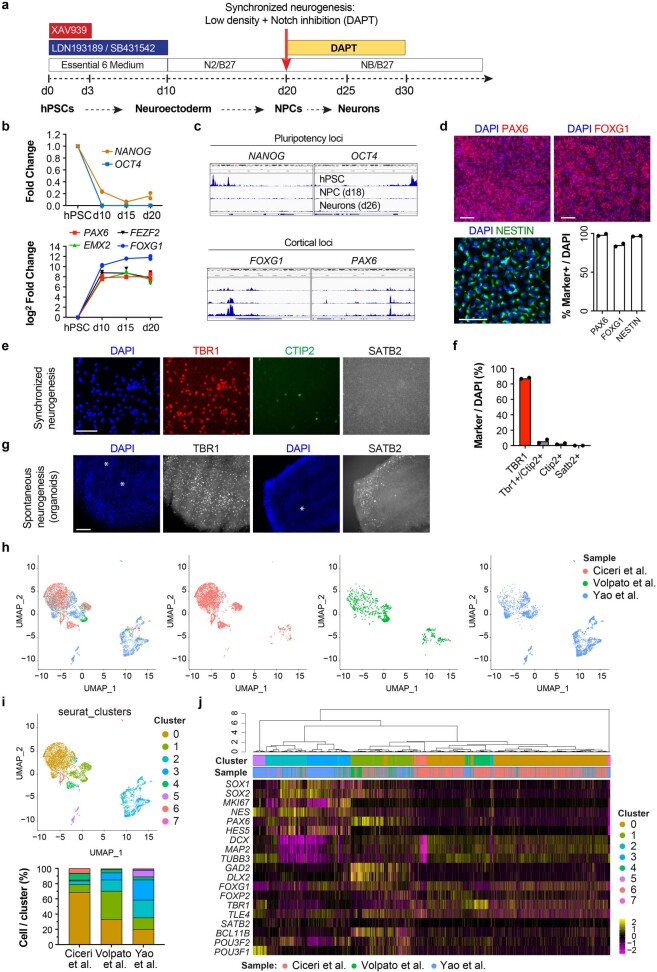
The pace of human brain development is highly protracted compared with most other species 1–7 . The maturation of cortical neurons is particularly slow, taking months to years to develop adult functions 3–5 . Remarkably, such protracted timing is retained in cortical neurons derived from human pluripotent stem cells (hPSCs) during in vitro differentiation or upon transplantation into the mouse brain 4,8,9 . Those findings suggest the presence of a cell-intrinsic clock setting the pace of neuronal maturation, although the molecular nature of this clock remains unknown. Here we identify an epigenetic developmental programme that sets the timing of human neuronal maturation. First, we developed a hPSC-based approach to synchronize the birth of cortical neurons in vitro which enabled us to define an atlas of morphological, functional and molecular maturation. We observed a slow unfolding of maturation programmes, limited by the retention of specific epigenetic factors. Loss of function of several of those factors in cortical neurons enables precocious maturation. Transient inhibition of EZH2, EHMT1 and EHMT2 or DOT1L, at progenitor stage primes newly born neurons to rapidly acquire mature properties upon differentiation. Thus our findings reveal that the rate at which human neurons mature is set well before neurogenesis through the establishment of an epigenetic barrier in progenitor cells. Mechanistically, this barrier holds transcriptional maturation programmes in a poised state that is gradually released to ensure the prolonged timeline of human cortical neuron maturation.
Overview
The claims and statistics of this paper haven’t been checked yet.
Free: it reads the open-access text and checks the first 5 claims that cite a source we can check. Create a free account to check every claim.
Integrity signals
Registry
Cites
Statistics
Figures
Verification
Claims the paper makes
The claims and statistics of this paper haven’t been checked yet.
Free: it reads the open-access text and checks the first 5 claims that cite a source we can check. Create a free account to check every claim.
Claims other papers make about this one
Each is checked against this paper’s own text: does it say what the citing paper says it does?
The source backs part of the claim, not all of it — or backs it for a different population, condition or comparison.
In the citing paper
“While mitochondria metabolism and epigenetic remodeling were recently shown to regulate the species-specific tempo of human CPN maturation,21,22,23”
From Synaptic neoteny of human cortical neurons requires species-specific balancing of SRGAP2-SYNGAP1 cross-inhibition (2024) · cites this paper as [22]
Experimental — accuracy not yet measured
Self-check
Percentages, sums and reported differences re-computed from the paper’s own numbers.
The self-check needs the paper’s full text.
Citations
Cites
Moderated estimation of fold change and dispersion for RNA-seq data with DESeq2
Love, M. I., Huber, W., & Anders, S. (2014) · Genome Biology · doi:10.1186/s13059-014-0550-8 · Cited by 95,106 · cited 2×
“Differentially accessible peaks in the atlas were called by DESeq2 version 1.16 73 .”
InfluentialSubramanian, A., Tamayo, P., Mootha, V. K., Mukherjee, S., Ebert, B. L., Gillette, M. A., Paulovich, A., Pomeroy, S. L., Golub, T. R., Lander, E. S., et al. (2005) · Proceedings of the National Academy of Sciences · doi:10.1073/pnas.0506580102 · Cited by 53,625
STAR: ultrafast universal RNA-seq aligner
Dobin, A., Davis, C. A., Schlesinger, F., Drenkow, J., Zaleski, C., Jha, S., Batut, P., Chaisson, M., & Gingeras, T. R. (2013) · Bioinformatics · doi:10.1093/bioinformatics/bts635 · Cited by 51,709
HTSeq—a Python framework to work with high-throughput sequencing data
Anders, S., Pyl, P. T., & Huber, W. (2015) · Bioinformatics · doi:10.1093/bioinformatics/btu638 · Cited by 21,464 · cited 1×
“The htseq-count function of the HTSeq Python package version 0.7.1 72 was used to count uniquely aligned reads at all exons of a gene.”
InfluentialModel-based Analysis of ChIP-Seq (MACS)
Zhang, Y., Liu, T., Meyer, C. A., Eeckhoute, J., Johnson, D. S., Bernstein, B. E., Nusbaum, C., Myers, R. M., Brown, M., Li, W., et al. (2008) · Genome Biology · doi:10.1186/gb-2008-9-9-r137 · Cited by 18,386
Integrated analysis of multimodal single-cell data
Hao, Y., Hao, S., Andersen-Nissen, E., Mauck, W. M., Zheng, S., Butler, A., Lee, M. J., Wilk, A. J., Darby, C., Zagar, M., et al. (2020) · doi:10.1101/2020.10.12.335331 · Cited by 15,508 · cited 1×
“To compare our dataset to those generated by Yao et al. 86 and Volpato et al. 87 , Seurat’s anchor-based integration approach 85 was used using FindIntegrationAnchors with 5,000 features.”
Heinz, S., Benner, C., Spann, N., Bertolino, E., Lin, Y. C., Laslo, P., Cheng, J. X., Murre, C., Singh, H., & Glass, C. K. (2010) · Molecular Cell · doi:10.1016/j.molcel.2010.05.004 · Cited by 13,382 · cited 1×
“HOMER findMotifsGenome.pl ( version 4.6) 78 was used to investigate the motif enrichment in pairwise comparisons and unbiasedly clustered groups of peaks.”
InfluentialMEME SUITE: tools for motif discovery and searching
Bailey, T. L., Boden, M., Buske, F. A., Frith, M., Grant, C. E., Clementi, L., Ren, J., Li, W. W., & Noble, W. S. (2009) · Nucleic Acids Research · doi:10.1093/nar/gkp335 · Cited by 10,648
Shrestha, S., & Offer, S. M. (2016) · Medical Epigenetics · doi:10.1159/000444713 · Cited by 8,914
A bivalent chromatin structure marks key developmental genes in embryonic stem cells
Bernstein, B. E., Mikkelsen, T. S., Xie, X., Kamal, M., Huebert, D. J., Cuff, J., Fry, B., Meissner, A., Wernig, M., Plath, K., et al. (2006) · Cell · doi:10.1016/j.cell.2006.02.041 · Cited by 5,361
Cited by
Items 201–239 of 239
Okoro, P. D., Dalsania, K., Iragavarapu, S. B., Cruz, B. D., Banerjee, A., Basaranbilek, M., Haase, M. F., Anvari, B., & Noshadi, I. (2025) · Advanced Functional Materials · doi:10.1002/adfm.202509452 · Cited by 1
Temporal Transcriptional Regulation of Human Neuronal Differentiation via Forward Programming
Zhu, L., Wang, W., Zhang, J., Liu, L., Huang, M., Diao, L., Feng, S., Yang, Q., Qiu, H., Pan, B., et al. (2025) · Advanced Science · doi:10.1002/advs.202510641 · Cited by 1
KMT2D-deficiency destabilizes lineage progression in immature neural progenitors
Golden, C. S., Bawa, P., Wang, F., Leon, S. S. P. D., Bodamer, O. A., Yost, H. J., & Serrano, M. A. (2025) · Epigenetics Reports · doi:10.1080/28361512.2025.2599802 · Cited by 2
Lacaille, H., Lebayle, E., Corneo, B., Vacher, C., & Penn, A. A. (2025) · Frontiers in Cellular Neuroscience · doi:10.3389/fncel.2025.1715823 · Cited by 1
The evolution of extended neurodevelopment and increased neuroplasticity in human brains
Drennan, A., Sherwood, C. C., & Gómez‐Robles, A. (2025) · Elsevier eBooks · doi:10.1016/b978-0-443-27380-3.00045-2 · Cited by 2
CITED2 is a druggable epigenetic switch coupling neuronal maturation to regenerative decline
Müller, F., McLachlan, E., Costa, A. C., Qu, J., Shrestha, B., Wang, Z., Virgiliis, F. D., Hutson, T. H., Zhou, L., Kong, G., et al. (2026) · EMBO Molecular Medicine · doi:10.1038/s44321-026-00385-w
“…supports axon growth of DRG neurons, including after SCI Gene expression dynamics during development are accompanied by coordinated changes in epigenetic signatures that ensure proper activation of developmental programs (Ciceri et al, 2024; Joseph et al, 2021; Luo et al, 2021; Ding et al, 2016).”
Contribution of neuroepigenetics to HD – developmental and aging-related signatures
Scuto, J., Penaud, N., & Mérienne, K. (2026) · Journal of Huntington s Disease · doi:10.1177/18796397261426625
“112 Thus, mutant HTT might impair this timing.”
Mini models of the human brain are revealing how this complex organ takes shape
Abbott, A. (2026) · Nature · doi:10.1038/d41586-026-01025-6
Rare bi-allelic MEX3B mutations in childhood herpes simplex encephalitis
Kerrouche, N. (2024) · theses.fr (ABES) · doi:10.70675/a1c17eadz8e32z4ae6z8f5dzbe60fed472de
Direct neuronal reprogramming: emerging therapeutic strategies for neurodegenerative disorders
Tyagi, A., Prabhu, V., Agarwal, P., & Kumar, P. (2026) · Annals of Medicine · doi:10.1080/07853890.2026.2654230
“These reasons prevent the induced neurons from gaining complete electrophysiological properties and synaptic integration with the native tissue [14,16].”
Liu, H., Shang, H., Chen, H., Zhou, C., Luo, B., Zhao, D., Xiao, Z., Cui, Y., Zhang, Y., & Xie, R. (2026) · Cell Host & Microbe · doi:10.1016/j.chom.2026.03.023 · Cited by 1
RetractedMercer, T. J., Dániel, B., Fredrickson, C., Le, D., Lee, S., Kulkarni, V. V., Hou, X., Fiesel, F. C., Ngu, H., Jung, M., et al. (2026) · bioRxiv (Cold Spring Harbor Laboratory) · doi:10.64898/2026.04.24.719390 · Cited by 1
Specializations of human cerebral cortex
Preuss, T. M. (2026) · Elsevier eBooks · doi:10.1016/b978-0-443-27380-3.00064-6
Helgueta, S., Bonafina, A., Olivié, N., Coumans, B., Nguyen, L., & Espuny-Camacho, I. (2026) · bioRxiv (Cold Spring Harbor Laboratory) · doi:10.64898/2026.04.27.720597
“This temporal upregulation of maturation genes and downregulation of pluripotency and cell cycle related genes may reflect a reduced expression of epigenetic regulators that set the timing of human cerebellar maturation (Aldridge & West, 2024; Ciceri et al., 2024; Nowakowski et al., 2017).”
Yamauchi, Y., Zhou, X. D., Tarfder, R., Kumamoto, T., Hatakeyama, J., Sato, H., Rouillard, P., Bilgic, M., Deguchi, S., Nakamura, T., et al. (2026) · The EMBO Journal · doi:10.1038/s44318-026-00806-z · Cited by 3
“…elongation of developmental processes observed in humans compared to mice, as evidenced by studies on cortical neuron maturation (Iwata et al, 2023; Ciceri et al, 2024; Charrier et al, 2012), spinal motoneuron generation (Rayon et al, 2020), and somitogenesis (Matsuda et al, 2020; Lázaro et al,…”
Chapman, G., Determan, J. J., Edwards, J. R., Batool, F., Huettner, J. E., Prakasam, R., Crump, S. R., Razia, Y., Malik, S., Law, T. E., et al. (2026) · eLife · doi:10.7554/elife.111056.1
Chapman, G., Determan, J. J., Edwards, J. R., Batool, F., Huettner, J. E., Prakasam, R., Crump, S. R., Razia, Y., Malik, S., Law, T. E., et al. (2026) · eLife · doi:10.7554/elife.111056
Kdm6b-mediated epigenetic coordination of temporal precision during motor neuron differentiation
Ren, H., Liu, Q., Li, B., Yu, X., Liang, D., Li, S., Pan, B., Gao, Q., Deng, W., Yu, J.-M., et al. (2026) · EMBO Reports · doi:10.1038/s44319-026-00808-2
“The stage-speci fi c removal of H3K27me3 triggered by Kdm6b occupancy also provides an alternative mechanism underlying sequential unfolding of epigenetic barriers set for neuronal maturation (Ciceri et al, 2024).”
Jovanovic, V. M., Narisu, N., Bonnycastle, L. L., Castellano, D., Ryu, S., Tharakan, R., Mesch, K. T., Chen, Q., Erol, F. M. B., Glover, H. J., et al. (2026) · Stem Cell Reports · doi:10.1016/j.stemcr.2026.102958 · Cited by 1
RAI1 safeguards fidelity and tempo of human neurodevelopmental gene expressionPreprint
Zhou, B., Mohanty, S., Riggle, P., Tsukahara, T., Lin, G., Dang, L. T., Sutton, M. A., & Iwase, S. (2026) · bioRxiv (Cold Spring Harbor Laboratory) · doi:10.64898/2026.06.11.731717 · Cited by 1
“For neuronal maturation, a recent study uncovered a dozen “barrier” chromatin regulators that slow down the process (8).”
Trigger-day hCG effects on DNA methylation and neurodevelopment in ART offspring
Jiang, Y., Wei, X., Liu, X., Zhou, J., Han, M., Zhao, A., Lv, H., Jiang, Y., Gu, Y., Wang, C., et al. (2026) · Nature Communications · doi:10.1038/s41467-026-74712-7
Zhu, Y., Li, M., Wang, Z., & Gu, X. (2026) · Neurobiology of Disease · doi:10.1016/j.nbd.2026.107511
Park, S., Kim, D., Yoo, S. H., Yeon, G., Lee, J., Cho, M. S., Kim, D., & Kim, D. K. (2026) · Tissue Engineering and Regenerative Medicine · doi:10.1007/s13770-026-00820-6
“A complementary strategy to accelerate neuronal maturation involves the modulation of intracellular signaling and epigenetic states that constrain postmitotic development [25, 26].”
PRMT5-Cacna1d axis maintains calcium homeostasis to regulate postnatal motor development in mice
Cao, J., He, Z., Chai, W., Tian, M., Wei, T., Liu, X., Wang, Y., Liu, S., Liu, R., Yin, Y., et al. (2026) · Cellular and Molecular Life Sciences · doi:10.1007/s00018-026-06306-x
“In agreement with our data, epigenetic regulation of calcium homeostasis has been shown to prevent precocious maturation of human neurons [62].”
From chromatin dynamics to brain disease: Polycomb–Trithorax mechanisms in neurodevelopment
Castro, V. L., So, M. B., & Peng, J. C. (2026) · Trends in Neurosciences · doi:10.1016/j.tins.2026.06.001
Evolutionary diversification of lipid logistics shapes synaptic maturation in primatesPreprint
Rava, V., Restelli, E., Mirabella, F., Silvestrini, L., Cannone, E., Ciuba, K., Abbas, M., Graziadei, A., Francolini, M., Pękowska, A., et al. (2026) · bioRxiv (Cold Spring Harbor Laboratory) · doi:10.64898/2026.07.08.734953 · Cited by 1
Mendelian disorders of the epigenetic machinery: a decade of insights into the molecular basis
Boukas, L., & Bjornsson, H. T. (2026) · Epigenomics · doi:10.1080/17501911.2026.2699328
Kingston, A. J., Wurmser, A., Kulkarni, A., Miao, K., Agsu, G. G., Lakatos, A., & Basu, S. (2026) · bioRxiv (Cold Spring Harbor Laboratory) · doi:10.64898/2026.07.15.736390
González-Huerta, L. M., Sánchez, M. Á. F., Esquivel‐Velázquez, M., & Toral‐López, J. (2026) · Diseases · doi:10.3390/diseases14080289
“Moreover, functional studies emphasize that precise dosage constraints of histone methyltransferases are obligatory for normal corticogenesis and cognitive maturation [18].”
Neuronal Antibodies in Patients With Atypical Parkinsonism
Kerstens, J., Dopper, E. G. P., Kaat, L. D., Meeter, L. H. H., de Graaff, E., de Vries, J. M., Crijnen, Y. S., van Steenhoven, R. W., Veenbergen, S., Fransen, N. L., et al. (2026) · Neurology Neuroimmunology & Neuroinflammation · doi:10.1212/nxi.0000000000200631
Advances in hiPSC-Based Models of Complex Neurological Disorders
Giadone, R. M., Sartore, R., Arlotta, P., & Rubin, L. L. (2026) · Springer eBooks · doi:10.1007/978-3-032-31497-0_10
Directing GABAergic neuronal identity from human iPSCs through developmental patterning
Hu, R., Boshans, L. L., Tao, Y., Zhu, B., Li, J., Li, X., Dang, R., Liang, M., Cai, P., Youssef, M., et al. (2026) · Stem Cell Reports · doi:10.1016/j.stemcr.2026.103086
Kirk, R. G., Liwei, S., Xiao, R., Clark, E., & Nelson, S. B. (2026) · eLife · doi:10.7554/elife.106510.2
CCNB1IP1 regulatory evolution underlies gradual increases in cortical size and folding in primates
Hu, T., Ma, P., Kong, Y., Tan, Y., Sun, X., Wang, J., Xiang, K., Mao, B., Wu, Q., Yi, S. V., et al. (2026) · Nature Genetics · doi:10.1038/s41588-026-02773-x · Cited by 2
Written in development and lost in ageing: the grammar of cellular identity
Yücel, A. D., Molière, A., & Gladyshev, V. N. (2026) · Nature · doi:10.1038/s41586-026-10955-0 · Cited by 3
ALS/FTD-linked TDP-43 alterations prevent HSV-1 infection by disrupting cell-adhesion pathwaysPreprint
Jackvony, S., Ijaz, L., Hardin, E. J., Aikedan, A., Zhou, C. Q., Yadavalli, T., Jang, M. W., Mahoney, M., Gan, L., Shukla, D., et al. (2026) · bioRxiv (Cold Spring Harbor Laboratory) · doi:10.64898/2026.09.28.755069
Sibih, Y., & Hervey‐Jumper, S. L. (2026) · Hematology/Oncology Clinics of North America · doi:10.1016/j.hoc.2026.09.003
Untangling time and prematurity in brain development
Kelly-Goss, M. R., & Crouch, E. E. (2026) · Science · doi:10.1126/science.aem4864
Metadata
- Authors
- Ciceri, G., Baggiolini, A., Cho, H. S., Kshirsagar, M., Benito-Kwiecinski, S., Walsh, R. M., Aromolaran, K. A., Gonzalez-Hernandez, A. J., Munguba, H., Koo, S. Y., Xu, N., Sevilla, K. J., Goldstein, P. A., Levitz, J., Leslie, C. S., Koche, R. P., & Studer, L.
- Affiliations
- Memorial Sloan Kettering Cancer Center (US)
- Microsoft (United States) (US)
- Weill Cornell Medicine (US)
- Corresponding author
- Ciceri, Gabriele
- Studer, Lorenz
- ORCID
- Venue
- Nature
- Published
- 2024-01-31
- Volume
- 626
- Issue
- 8000
- Pages
- 881-890
- ISSN
- 0028-0836 (ISSN-L)
- 1476-4687
- PMC
- PMC10881400
- OpenAlex
- W4391383718
- Semantic Scholar
- c4e44d091b4c901e6fac4d476cab1524c27b2da2
- Cited by
- 240
- References
- 95
- Citations by year
- 2026: 62 · 2025: 88 · 2024: 68
- FWCI
- 35.20
- Type
- journal article
- Language
- en
- Open access
- hybrid
- doi.org
- Licence
- cc-by
- creativecommons.org/licenses/by/4.0 (tdm)
- creativecommons.org/licenses/by/4.0 (vor)
- Locations
- Nature (publishedVersion, cc-by)
- bioRxiv (Cold Spring Harbor Laboratory) (acceptedVersion, cc-by-nc-nd)
- PubMed Central (publishedVersion, cc-by)
- PubMed (publishedVersion)
- RePEc: Research Papers in Economics (submittedVersion)
- UCL Discovery (University College London) (submittedVersion, cc-by)
- Funders
- National Science Foundation
- European Molecular Biology Organization (ALTF 311-2015)
- New York State Stem Cell Science (C32559GG)
- Schweizerischer Nationalfonds zur Förderung der Wissenschaftlichen Forschung (180672)
- National Institute on Aging (R01AG056298, R01AG054720)
- National Institute of Mental Health (F32MH116590)
- National Cancer Institute (P30CA008748)
- National Institute of Neurological Disorders and Stroke (R01NS128087)
- Topics
- Life Sciences › Neuroscience › Developmental Neuroscience › Neurogenesis and neuroplasticity mechanisms
- Life Sciences › Biochemistry, Genetics and Molecular Biology › Molecular Biology › Pluripotent Stem Cells Research
- Life Sciences › Biochemistry, Genetics and Molecular Biology › Molecular Biology › Developmental Biology and Gene Regulation
- Keywords
- neuronal maturation, epigenetic barriers, human brain development, cortical neurons, pluripotent stem cell differentiation, EZH2, EHMT1, G9a, DOT1L, histone methyltransferase, neurogenesis, early maturity
- MeSH terms
- Human Embryonic Stem Cells, Enhancer of Zeste Homolog 2 Protein, Adult, Animals, Histocompatibility Antigens, Humans, Neurons, Histone-Lysine N-Methyltransferase, Time Factors, Transcription, Genetic, Gene Expression Regulation, Developmental, Epigenesis, Genetic, Mice, Neurogenesis, Neural Stem Cells
About these checks
Registry, retraction, Cites and statistics results are computed, not judged, with one exception: a printed reference that no index lists is read once by a model before it counts as a citation error. Claims are extracted by a model and kept only when their quote appears verbatim in the text; each cited source is then checked, with a model’s help, for whether it says what the claim relies on. Those verdicts can be wrong — read the claim’s quote and the cited source before relying on one.
Statistics and arithmetic are recomputed, not judged.
Confidence bands are shown only for fields calibrated on our annotated test set. None is calibrated yet, so no band is shown.
What counts as a claim ›How we measure confidence ›How we check this ›
Are you an author, or do you see a problem with this page? Request a review
Data sources
Bibliographic data: Semantic Scholar, OpenAlex, Crossref.
Contains information from the Semantic Scholar Academic Graph Datasets, made available under the ODC Attribution License (ODC-BY 1.0).
Semantic Scholar’s data is described in: Kinney, R., et al. (2023). The Semantic Scholar Open Data Platform. arXiv:2301.10140.
