

An epigenetic barrier sets the timing of human neuronal maturation
Open accessPublished version of a preprint
The DOI matches its Crossref record; 97 of the 97 references it cites were found in a registry or an index.
Abstract
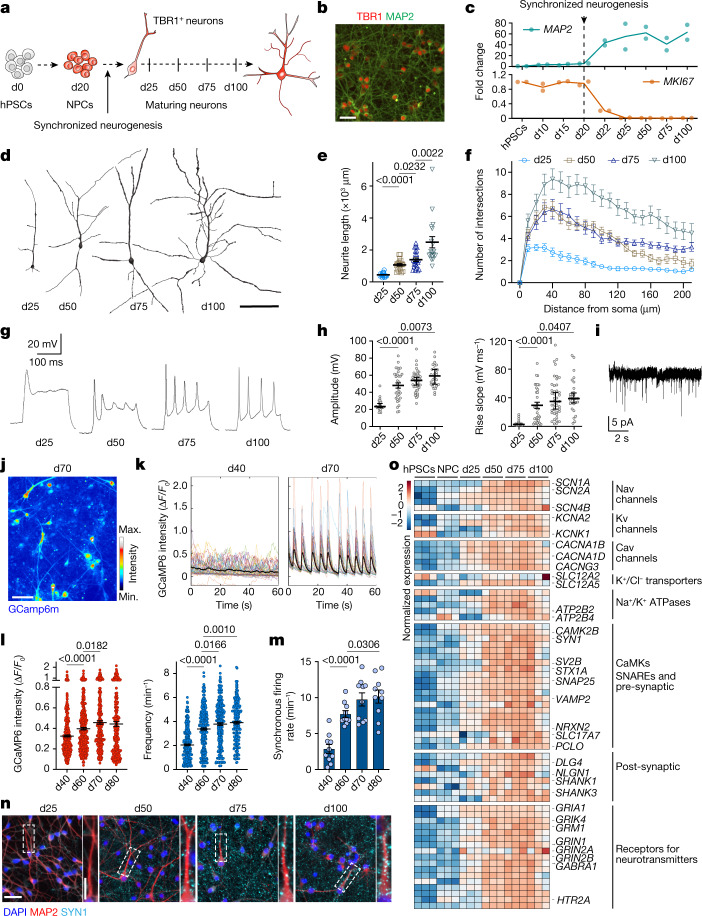
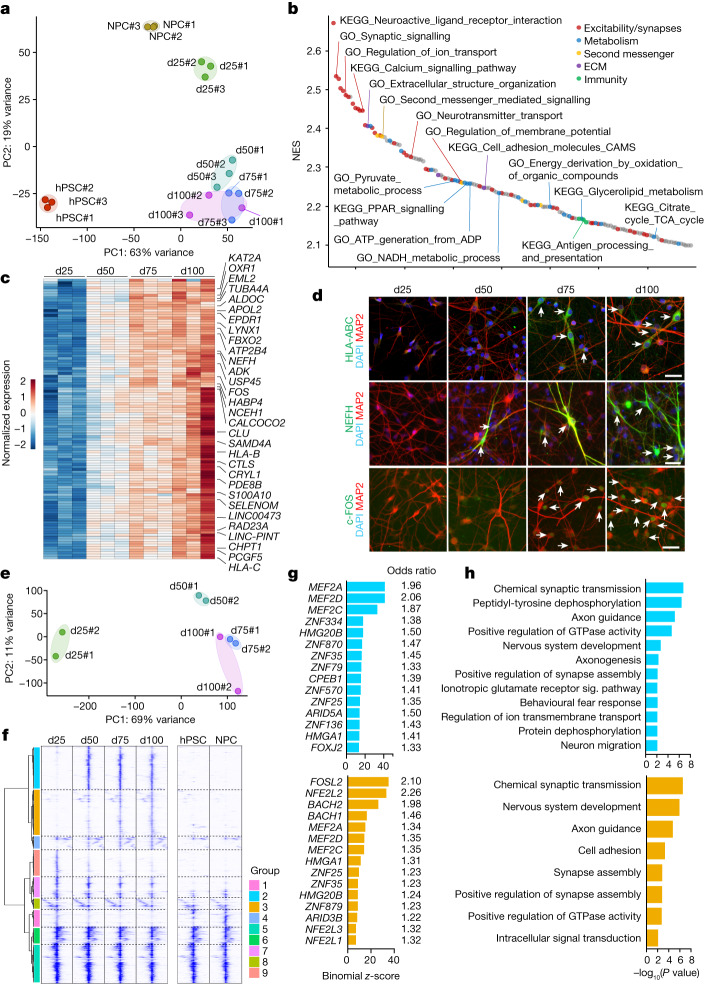
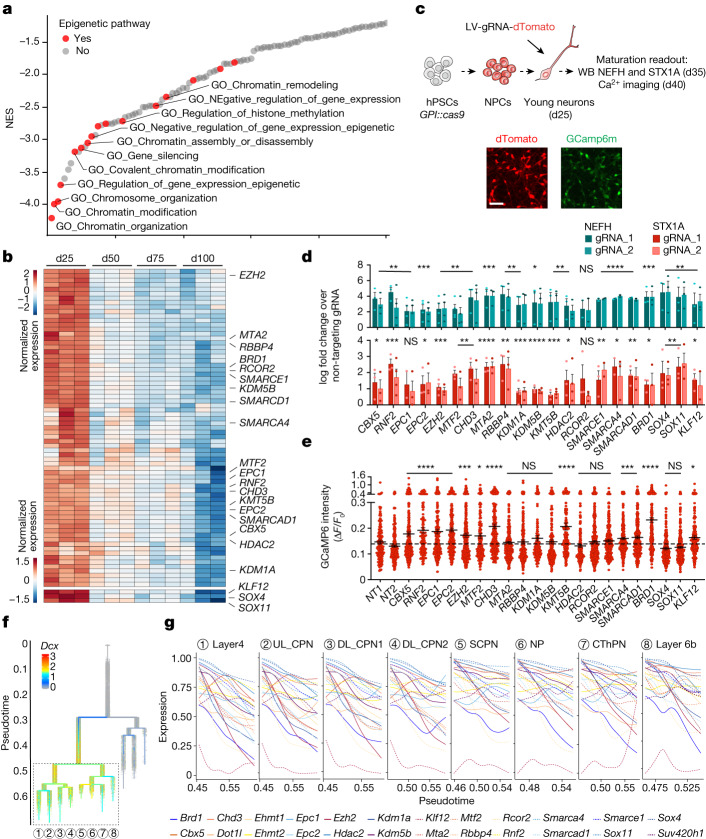
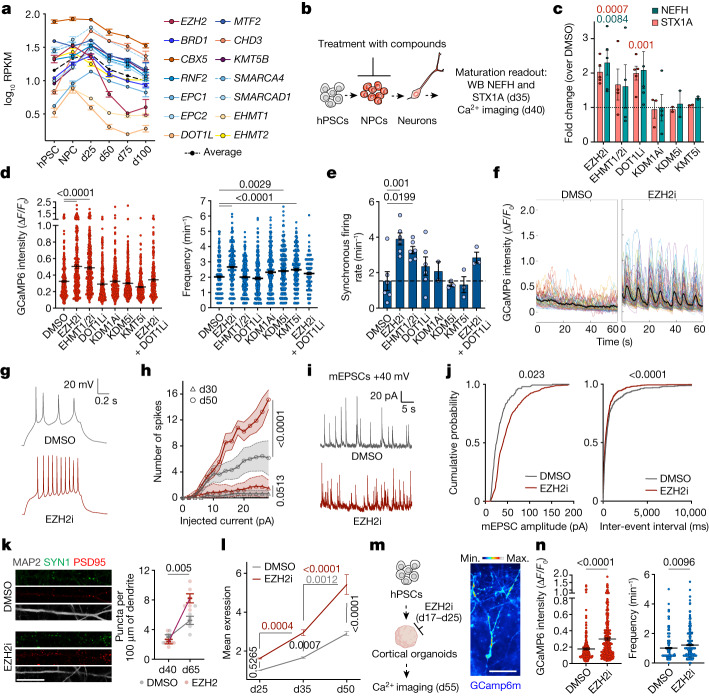
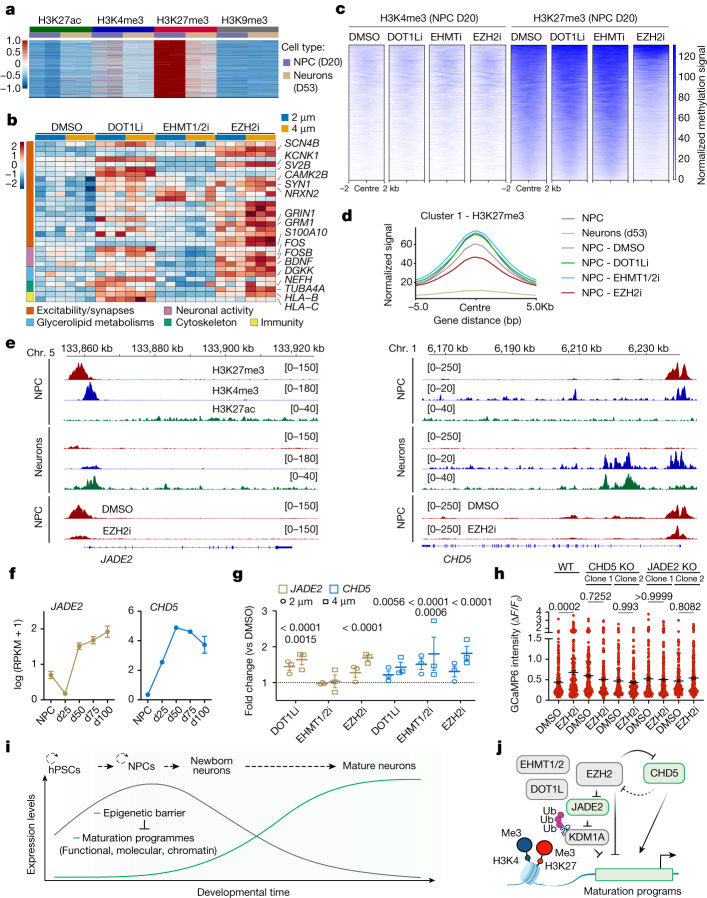
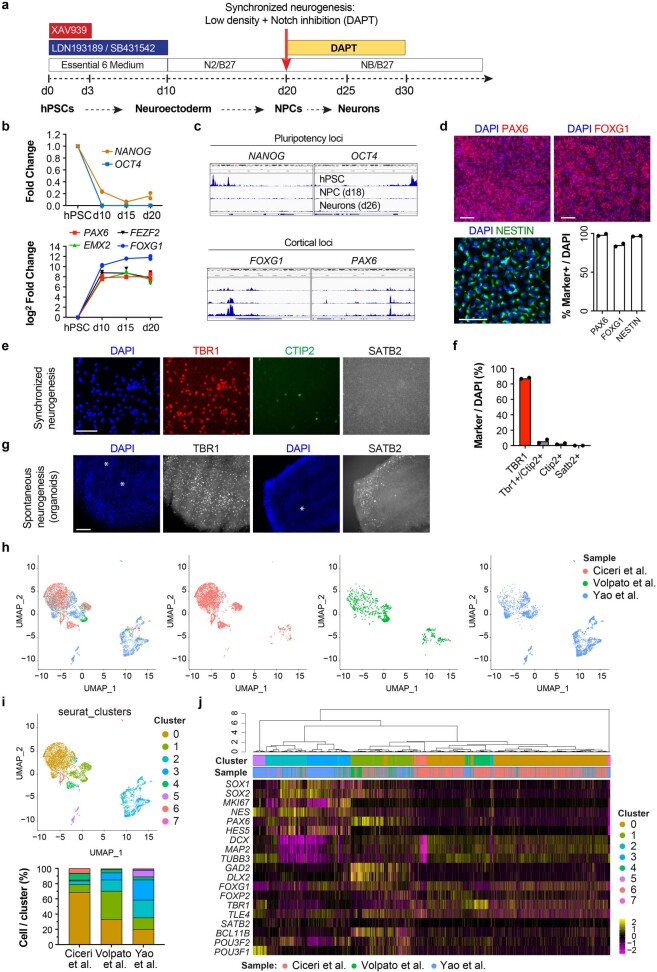
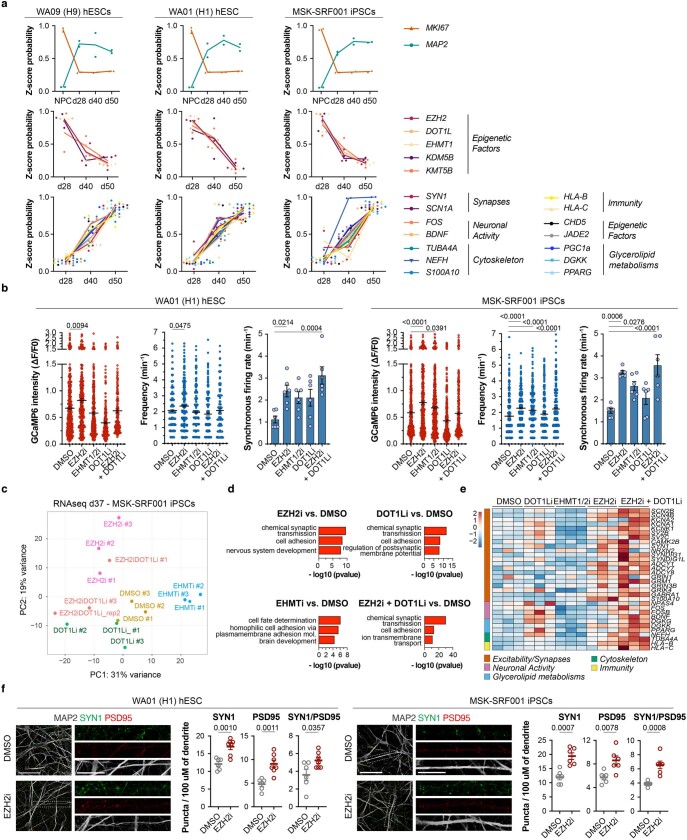
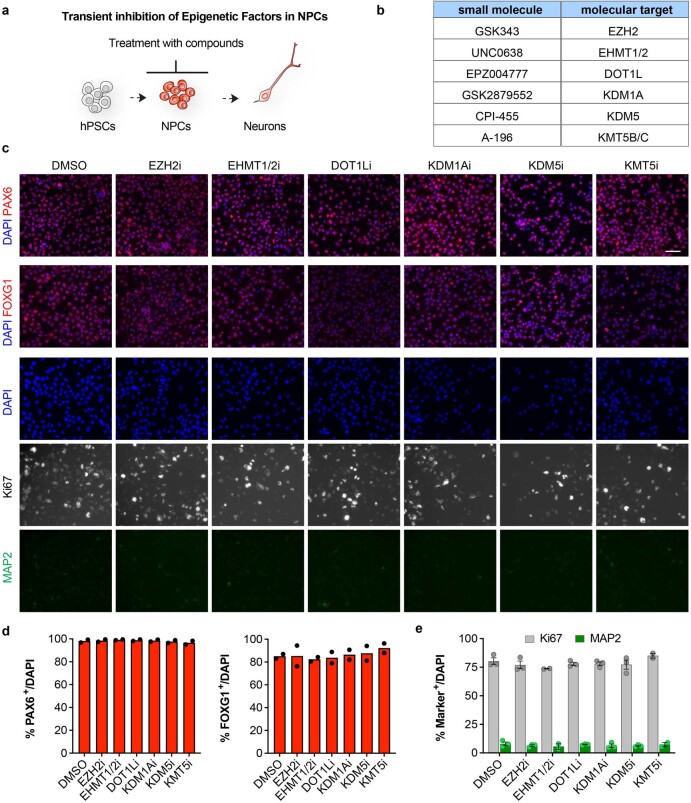
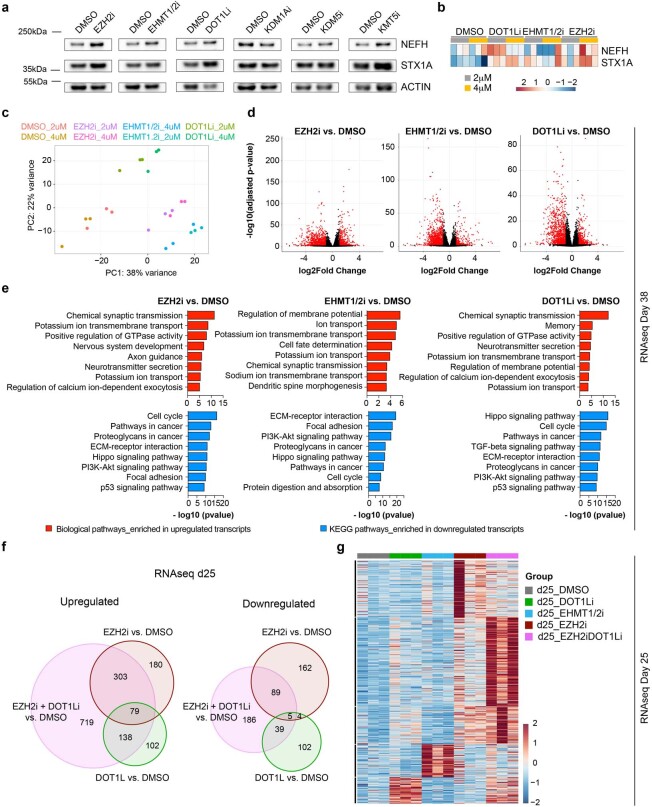
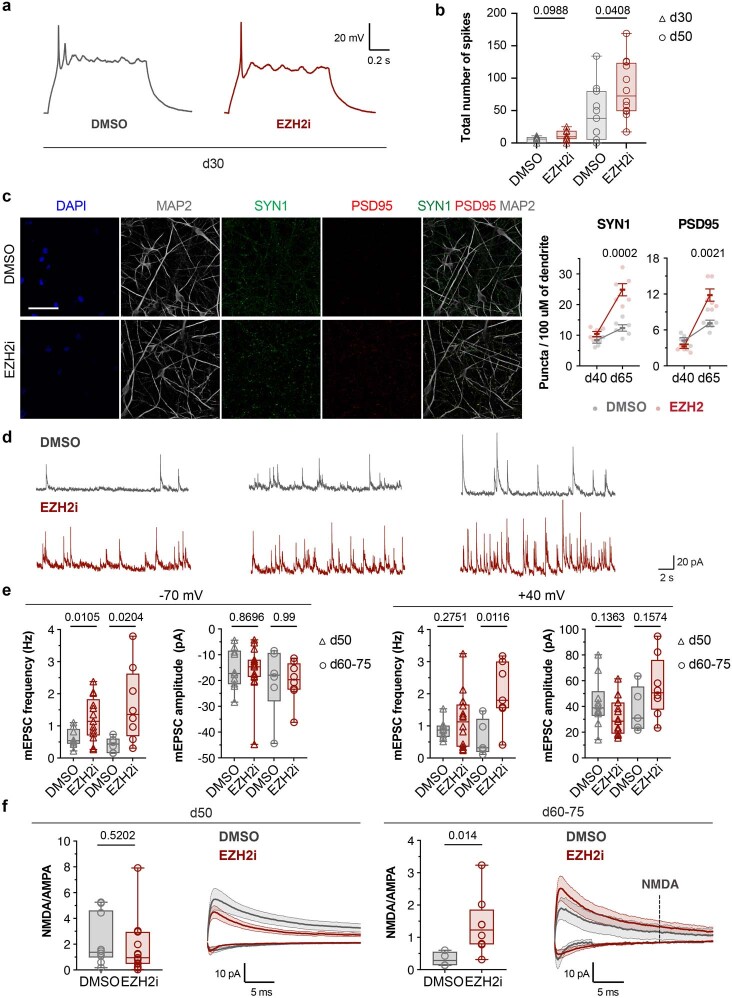
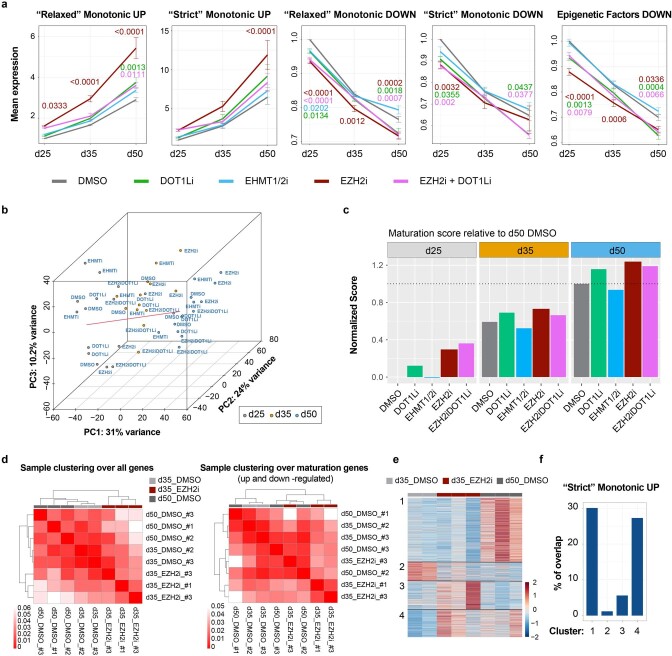
The pace of human brain development is highly protracted compared with most other species 1–7 . The maturation of cortical neurons is particularly slow, taking months to years to develop adult functions 3–5 . Remarkably, such protracted timing is retained in cortical neurons derived from human pluripotent stem cells (hPSCs) during in vitro differentiation or upon transplantation into the mouse brain 4,8,9 . Those findings suggest the presence of a cell-intrinsic clock setting the pace of neuronal maturation, although the molecular nature of this clock remains unknown. Here we identify an epigenetic developmental programme that sets the timing of human neuronal maturation. First, we developed a hPSC-based approach to synchronize the birth of cortical neurons in vitro which enabled us to define an atlas of morphological, functional and molecular maturation. We observed a slow unfolding of maturation programmes, limited by the retention of specific epigenetic factors. Loss of function of several of those factors in cortical neurons enables precocious maturation. Transient inhibition of EZH2, EHMT1 and EHMT2 or DOT1L, at progenitor stage primes newly born neurons to rapidly acquire mature properties upon differentiation. Thus our findings reveal that the rate at which human neurons mature is set well before neurogenesis through the establishment of an epigenetic barrier in progenitor cells. Mechanistically, this barrier holds transcriptional maturation programmes in a poised state that is gradually released to ensure the prolonged timeline of human cortical neuron maturation.
Overview
The claims and statistics of this paper haven’t been checked yet.
Free: it reads the open-access text and checks the first 5 claims that cite a source we can check. Create a free account to check every claim.
Integrity signals
Registry
Cites
Statistics
Figures
Verification
Claims the paper makes
The claims and statistics of this paper haven’t been checked yet.
Free: it reads the open-access text and checks the first 5 claims that cite a source we can check. Create a free account to check every claim.
Claims other papers make about this one
Each is checked against this paper’s own text: does it say what the citing paper says it does?
The source backs part of the claim, not all of it — or backs it for a different population, condition or comparison.
In the citing paper
“While mitochondria metabolism and epigenetic remodeling were recently shown to regulate the species-specific tempo of human CPN maturation,21,22,23”
From Synaptic neoteny of human cortical neurons requires species-specific balancing of SRGAP2-SYNGAP1 cross-inhibition (2024) · cites this paper as [22]
Experimental — accuracy not yet measured
Self-check
Percentages, sums and reported differences re-computed from the paper’s own numbers.
The self-check needs the paper’s full text.
Citations
Cites
Moderated estimation of fold change and dispersion for RNA-seq data with DESeq2
Love, M. I., Huber, W., & Anders, S. (2014) · Genome Biology · doi:10.1186/s13059-014-0550-8 · Cited by 95,106 · cited 2×
“Differentially accessible peaks in the atlas were called by DESeq2 version 1.16 73 .”
InfluentialSubramanian, A., Tamayo, P., Mootha, V. K., Mukherjee, S., Ebert, B. L., Gillette, M. A., Paulovich, A., Pomeroy, S. L., Golub, T. R., Lander, E. S., et al. (2005) · Proceedings of the National Academy of Sciences · doi:10.1073/pnas.0506580102 · Cited by 53,625
STAR: ultrafast universal RNA-seq aligner
Dobin, A., Davis, C. A., Schlesinger, F., Drenkow, J., Zaleski, C., Jha, S., Batut, P., Chaisson, M., & Gingeras, T. R. (2013) · Bioinformatics · doi:10.1093/bioinformatics/bts635 · Cited by 51,709
HTSeq—a Python framework to work with high-throughput sequencing data
Anders, S., Pyl, P. T., & Huber, W. (2015) · Bioinformatics · doi:10.1093/bioinformatics/btu638 · Cited by 21,464 · cited 1×
“The htseq-count function of the HTSeq Python package version 0.7.1 72 was used to count uniquely aligned reads at all exons of a gene.”
InfluentialModel-based Analysis of ChIP-Seq (MACS)
Zhang, Y., Liu, T., Meyer, C. A., Eeckhoute, J., Johnson, D. S., Bernstein, B. E., Nusbaum, C., Myers, R. M., Brown, M., Li, W., et al. (2008) · Genome Biology · doi:10.1186/gb-2008-9-9-r137 · Cited by 18,386
Integrated analysis of multimodal single-cell data
Hao, Y., Hao, S., Andersen-Nissen, E., Mauck, W. M., Zheng, S., Butler, A., Lee, M. J., Wilk, A. J., Darby, C., Zagar, M., et al. (2020) · doi:10.1101/2020.10.12.335331 · Cited by 15,508 · cited 1×
“To compare our dataset to those generated by Yao et al. 86 and Volpato et al. 87 , Seurat’s anchor-based integration approach 85 was used using FindIntegrationAnchors with 5,000 features.”
Heinz, S., Benner, C., Spann, N., Bertolino, E., Lin, Y. C., Laslo, P., Cheng, J. X., Murre, C., Singh, H., & Glass, C. K. (2010) · Molecular Cell · doi:10.1016/j.molcel.2010.05.004 · Cited by 13,382 · cited 1×
“HOMER findMotifsGenome.pl ( version 4.6) 78 was used to investigate the motif enrichment in pairwise comparisons and unbiasedly clustered groups of peaks.”
InfluentialMEME SUITE: tools for motif discovery and searching
Bailey, T. L., Boden, M., Buske, F. A., Frith, M., Grant, C. E., Clementi, L., Ren, J., Li, W. W., & Noble, W. S. (2009) · Nucleic Acids Research · doi:10.1093/nar/gkp335 · Cited by 10,648
Shrestha, S., & Offer, S. M. (2016) · Medical Epigenetics · doi:10.1159/000444713 · Cited by 8,914
A bivalent chromatin structure marks key developmental genes in embryonic stem cells
Bernstein, B. E., Mikkelsen, T. S., Xie, X., Kamal, M., Huebert, D. J., Cuff, J., Fry, B., Meissner, A., Wernig, M., Plath, K., et al. (2006) · Cell · doi:10.1016/j.cell.2006.02.041 · Cited by 5,361
Cited by
Items 101–200 of 239
Nazeen, S., Wang, X., Zielinski, D., Lam, I., Hallacli, E., Xu, P., Ethier, E., Strom, R., Zanella, C. A., Nithianandam, V., et al. (2024) · bioRxiv (Cold Spring Harbor Laboratory) · doi:10.1101/2024.03.03.583145 · Cited by 5
“PSCs were differentiated to cortical neurons as previously described 89 .”
Self-citationAlpha-Synuclein co-pathology in Alzheimer’s Disease drives tau accumulationPreprint
Struebing, F. L., Song, X., Vecchi, T. D., Widmann, J., Fierli, F., Ruf, V., Tang, Q., Arzberger, T., Roeber, S., Koeglsperger, T., et al. (2025) · Research Square · doi:10.1101/2025.01.24.634706 · Cited by 7
A transcriptional clock of the human pluripotency transitionPreprint
Coussement, L., Ciarchi, M., Kolmogorova, A., Meyer, T. D., Rulands, S., Reik, W., & Rostovskaya, M. (2025) · bioRxiv (Cold Spring Harbor Laboratory) · doi:10.1101/2025.03.13.643129 · Cited by 5
Bocchi, V. D., To, K., Weber, L., Zumbo, P., Kim, L., Shida, I. Y., Yang, D., Storm, P., Fiorenzano, A., Sozzi, E., et al. (2026) · bioRxiv (Cold Spring Harbor Laboratory) · doi:10.64898/2026.06.19.733041 · Cited by 5
Self-citationKelkar, G. R., Stuppy, S. R., Sen, D., Yagci, Z. B., Han, L., Land, L., Hartman, J. K., & Keung, A. J. (2025) · Frontiers in Cell and Developmental Biology · doi:10.3389/fcell.2025.1665693 · Cited by 3
“We also assess UBE3A reactivation upon exposure to topoisomerase inhibitors.”
Loss of EHMT2 enhances NK cell-driven anti-tumor immunity through TGF-β1 suppression
Chava, S., Bugide, S., Malvi, P., DeMarco, K. D., Ma, B., Parikh, C. N., Ruscetti, M. A., Zajac, A. J., Cai, G., Gupta, R., et al. (2025) · EMBO Molecular Medicine · doi:10.1038/s44321-025-00357-6 · Cited by 4
“Previous studies have shown the role of EHMT2 in a variety of cellular processes, including embryonic development and cell differentiation (Ciceri et al, 2024; Ideno et al, 2013), DNA repair and cell survival (Yang et al, 2017), immune regulation (Kato et al, 2020; Scheer and Zaph, 2017) and in…”
Heesen, S. H., Chang, M., Wehr, M. C., & Rossner, M. J. (2026) · Current Opinion in Genetics & Development · doi:10.1016/j.gde.2025.102425 · Cited by 3
Subnuclear genome compartmentalization controls bivalent chromatin activity
Ahanger, S. H., Semenza, E. R., Zhang, C., Gil, E., Cole, M. A., Lu, S. H.-A., Wang, L., Kriegstein, A. R., & Lim, D. A. (2026) · Nature · doi:10.1038/s41586-026-10832-w · Cited by 19
Human-specific SRGAP2 paralogs synchronize neotenic microglial maturation and synaptic development
Diaz-Salazar, C., Kim, J., Krzisch, M., Yoo, J., Nano, P. R., Bhaduri, A., Jaenisch, R., Paredes, M., & Polleux, F. (2026) · Neuron · doi:10.1016/j.neuron.2026.07.007 · Cited by 7
“These include species-specific epigenetic 77 and metabolic 78 developmental programs setting the slow pace of human neuronal maturation, human-specific base pair substitutions in regulatory regions otherwise ultra-conserved throughout vertebrate evolution (termed Human Accelerated Regions) that…”
Mabrouk, M. H. E., Zeevaert, K., Henneke, A.-C., Maaßen, C., & Wagner, W. (2024) · Cytotherapy · doi:10.1016/j.jcyt.2024.03.485 · Cited by 4
The sodium channel SCN2A regulates cortical excitatory and inhibitory neurogenesis
Uy, J. A., Dargaei, Z., Geahchan, S., Botler, L., Pan, Y., Brown, C. O., Howe, J., Scherer, S. W., Bains, J. S., & Singh, K. K. (2026) · Nature Communications · doi:10.1038/s41467-026-75751-w · Cited by 2
Brain organoids and genome editing: A new era in understanding human brain development and disorders
Zhou, M., Cao, Y., Yue, K., Wu, W., Xie, Y., Hu, D., Zhao, J., Xu, F., Guo, J., Li, Z., et al. (2025) · Neural Regeneration Research · doi:10.4103/nrr.nrr-d-24-01546 · Cited by 3
“However, gene editing technologies offer the potential to accelerate this process by promoting the expression of neurodevelopmental genes, such as neuronal differentiation 1 ( NeuroD1 ), thereby enhancing organoid maturation (Choi et al., 2020; Zhao et al., 2021; Ciceri et al., 2024).”
Mitra, R., Richhariya, S., & Hasan, G. (2024) · eLife · doi:10.7554/elife.88808 · Cited by 8
Can the male germline offer insight into mammalian brain size expansion?
Bush, S. J., & Goriely, A. (2024) · Andrology · doi:10.1111/andr.13766 · Cited by 4
“Acriticalepigeneticfactorthatregulatesthetimingofcorticalneuronmaturation, 81 mutationsinwhichareassociated withWeaversyndrome,characterizedbyovergrowthandintellectualdisability.”
Zhang, C., Saurat, N. G., Cornacchia, D., Chung, S. Y., Sikder, T., Minotti, A. P., Studer, L., & Betel, D. (2023) · bioRxiv (Cold Spring Harbor Laboratory) · doi:10.1101/2023.07.03.547539 · Cited by 3
Self-citationden Hoed, J., Wong, M. M. K., Claassen, W. J. J., de Hoyos, L., Lütje, L., Heide, M., Huttner, W. Β., & Fisher, S. E. (2024) · bioRxiv (Cold Spring Harbor Laboratory) · doi:10.1101/2024.04.29.591720 · Cited by 3
“Consistent with our results, a recent study focusing on epigenetic factors that control neuronal maturation identified CHD3 as one of the chromatin remodelers crucial for controlling the pace of maturation of cortical neurons 46 .”
Jovanovic, V. M., Narisu, N., Bonnycastle, L. L., Tharakan, R., Mesch, K. T., Glover, H. J., Yan, T., Sinha, N., Sen, C., Castellano, D., et al. (2024) · bioRxiv (Cold Spring Harbor Laboratory) · doi:10.1101/2024.06.27.601062 · Cited by 3
Expanding GABAergic Neuronal Diversity in PSC-Derived Disease ModelsPreprint
Hu, R., Boshans, L. L., Tao, Y., Zhu, B., Li, J., Li, X., Dang, R., Liang, M., Cai, P., Youssef, M. M., et al. (2024) · bioRxiv (Cold Spring Harbor Laboratory) · doi:10.1101/2024.12.03.626438 · Cited by 3
“…to inhibitory neurons from the developing fetal brain, we utilized previously published scRNA-seq data from Bhaduri et al. 23 encompassing weeks 18, 19, 20, and 25 of gestation across various brain regions (neocortex, striatum, thalamus, hypothalamus, ganglionic eminence, midbrain, and cerebellum).”
Zagirova, D., Kononkova, A. D., Morozov, K. V., Molodova, M. N., Vaulin, N., Dudkovskaia, A., Dozorova, P. I., Efimova, O., Tvorogova, A. V., Ulianov, K. A., et al. (2026) · Genome Research · doi:10.1101/gr.281488.125 · Cited by 4
Disentangling cell-intrinsic and cell-extrinsic factors underlying evolution
Starr, A. L., Nishimura, T., Igarashi, K. J., Funamoto, C., Nakauchi, H., & Fraser, H. B. (2025) · Cell Genomics · doi:10.1016/j.xgen.2025.100891 · Cited by 5
“46 Consistent with this, we found that the tempo of neurogenesis—which is faster in mouse than in rat—has evolved via a complex combination of both intrinsic and extrinsically driven divergence, as well as interactions be-tween these.”
Neocortical neurogenesis: a proneural gene perspective
Vasan, L., Moffat, A., Mattar, P. A., & Schuurmans, C. (2025) · FEBS Journal · doi:10.1111/febs.70158 · Cited by 3
“In humans, variation in neuronal maturation arises as TFs operate in the context of a more restrictive epigenetic landscape, in which chromatin regulators have established roadblocks to slow down gene transcription [263].”
Coupling and decoupling of the cell cycle from cell differentiation in development
Kukreja, K., & Klein, A. M. (2025) · Development · doi:10.1242/dev.204821 · Cited by 2
PRC2 Diversity in Neuronal Differentiation and Developmental Disorders
Akoto, J., Roulé, T., & Akizu, N. (2025) · Genes · doi:10.3390/genes16101191 · Cited by 3
“Indeed, a recent study demonstrated that transient inhibition of specific chromatin-modifying programs in neural progenitor cultures can override the intrinsic barriers that establish the long maturation pace of human neurons [54].”
Maskell, K. G., Cook, A. L., King, A. E., Dickson, T. C., & Blizzard, C. L. (2026) · Lab on a Chip · doi:10.1039/d5lc00577a · Cited by 3
González‐Martínez, J., Sánchez-Belmonte, A., Ayala, E., Escobar, B., Gómez, J., Garcia-Diaz, A., Nogueira, E., Muñoz, J., Melati, A., Brandauer, A., et al. (2026) · Science Advances · doi:10.1126/sciadv.adr1776 · Cited by 2
Pavlinek, A., Guerrisi, S., O'Driscoll, K., Polit, L. D., Nagy, R., Lancaster, M. A., Vernon, A. C., & Srivastava, D. P. (2026) · Cell Reports Methods · doi:10.1016/j.crmeth.2026.101371 · Cited by 7
Luoni, M., Kubacki, M., Giannelli, S. G., Morosi, F., Berardino, C. D., Iannielli, A., Sessa, A., Colasante, G., Soldateschi, E. D. P., Lanzuolo, C., et al. (2026) · Nature Communications · doi:10.1038/s41467-026-71432-w · Cited by 3
“As for MeCP2, these factors are expressed during neural development and their alteration heavily impact on the transcriptional program of progenitor cells, altering their developmental differentiation program 72,73 .”
Human amygdala-like telencephalic organoids model stress circuitry in assembloid systems
Yang, W. S., Choe, M. S., Lo, C., Liu, H.-W., Cho, Y. M., Kim, J., Kiral, F. R., Scandura, M., Lu, X., Kim, K.-Y., et al. (2026) · Cell stem cell · doi:10.1016/j.stem.2026.04.021 · Cited by 3
Jun, H. R., Kim, Y. H., Moon, J. E., Jeong, S., Goh, H. S., Hoang, M. H., Lee, Y. N., Jeong, H., Shim, I. K., & Kim, S. C. (2024) · Experimental Cell Research · doi:10.1016/j.yexcr.2024.114307 · Cited by 2
Using cortical organoids to understand the pathogenesis of malformations of cortical development
Winden, K. D., Gisser, I., & Şahin, M. (2025) · Frontiers in Neuroscience · doi:10.3389/fnins.2024.1522652 · Cited by 3
Neural plasticity, heterochrony, and the onto-phylogeny of consciousness
Iurato, G. (2025) · Biosystems · doi:10.1016/j.biosystems.2025.105661 · Cited by 3
Environmental stiffness regulates neuronal maturation via Piezo1-mediated TTR activityPreprint
Kreysing, E., Gautier, H. O. B., Mukherjee, S., Mooslehner, K. A., Mureşan, L., Haarhoff, D., Zhao, X., Winkel, A. K., Boric, T., Vásquez-Sepúlveda, S., et al. (2024) · bioRxiv (Cold Spring Harbor Laboratory) · doi:10.1101/2024.07.25.605128 · Cited by 2
The chromatin tapestry as a framework for neurodevelopment
Nolan, B., Reznicek, T. E., Cummings, C. T., & Rowley, M. J. (2024) · Genome Research · doi:10.1101/gr.278408.123 · Cited by 4
“For example, the decrease in EZH2/H3K27me3 at NPC neuronal maturation loci is much more substantial in humans than in mice (Ciceri et al. 2024).”
Ditzer, N., Senoglu, E., Schütze, T. M., Nikolaidi, A., Kolodziejczyk, A., Sameith, K., Dietz, S., Derihaci, R. P., Birdir, C., Eugster, A., et al. (2024) · SSRN Electronic Journal · doi:10.2139/ssrn.5017114 · Cited by 3
Becca, S., Bianchi, S., Hahn, E. M., Snijders, K. E., Truszkowski, L., Křepelová, A., Neri, F., Cacchiarelli, D., Mendjan, S., Balmas, E., et al. (2025) · bioRxiv (Cold Spring Harbor Laboratory) · doi:10.1101/2025.10.07.680441 · Cited by 2
“Reduction in CTCF binding coincides with activation of the pioneer factor GATA4, rendering TTN accessible to transcription at the appropriate time.”
Convergent effects of neurodevelopmental disorder-associated variants at mitochondriaPreprint
Robinette, M. I., Gundy, J. B., Leng, X., Duong, D., Shantaraman, A., Shi, L., Candelario, E. A., Sing, A., Garg, S. V., Niu, W., et al. (2026) · bioRxiv (Cold Spring Harbor Laboratory) · doi:10.64898/2026.02.26.708316 · Cited by 4
“Cells were either differentiated by standard dual-SMAD inhibition as described previously [43] or by a recently reported method to improved synchronization of neurogenesis [53].”
Diversification of dentate gyrus granule cell subtypes is regulated by Nrg1 nuclear back-signaling
Rajebhosale, P., Jiang, L., Ressa, H. J., Johnson, K. R., Desai, N. S., Jone, A., Role, L. W., & Talmage, D. A. (2025) · Life Science Alliance · doi:10.26508/lsa.202403169 · Cited by 1
Human brain ancestral barcodes
Shibata, D. (2025) · eLife · doi:10.7554/elife.101163.3 · Cited by 1
Establishing validity standards for iPSC modeling of neuropsychiatric disorders
Kolsters, N., Vernon, A. C., Kasri, N. N., & Latour, B. L. (2025) · Genomic psychiatry : · doi:10.61373/gp025p.0074 · Cited by 2
Deehan, M., Sapp, E., Iwanowicz, A., Kothuis, J. M., Weisman, E., Liu, S., Jones, E. C., Iuliano, M., Robertson, R., Seeley, C., et al. (2025) · Human Molecular Genetics · doi:10.1093/hmg/ddaf141 · Cited by 1
Yao, S., & Hu, J. S. (2025) · Journal of Affective Disorders · doi:10.1016/j.jad.2025.120302 · Cited by 1
Tian, Y., Ou, Y., Zhang, Z.-X., Cai, J., Cai, S.-Q., & Xing, G. (2026) · Advanced Science · doi:10.1002/advs.202512891 · Cited by 1
“…data demonstrate that neurite outgrowth and neural network formation follow a sequence similar to that seen in previous reported longer protocols [ 32 , 41 , 47 , 48 ], and that action potential firing and spontaneous activity emerge in a developmentally ordered manner [ 41 , 49 , 50 ].”
InfluentialHe, B., & Smedler, E. (2026) · Neuroscience Applied · doi:10.1016/j.nsa.2026.106982 · Cited by 2
Basal progenitors as drivers of neocortical expansion
Barão, S., & Müller, U. (2026) · Trends in Neurosciences · doi:10.1016/j.tins.2025.12.007 · Cited by 1
Cell type-agnostic transcriptomic signatures enable uniform comparisons of neural maturation
Venkatesan, S., Werner, J. M., Li, Y., & Gillis, J. (2026) · PLOS Biology · doi:10.1371/journal.pbio.3003757 · Cited by 3
“The human brain develops at a slower pace compared to other species, a phenomenon called neoteny or bradychrony [70,71], whereas mice are thought to exhibit accelerated neurodevelopment.”
Epigenetic regulation of cell fate determination in cortical development
Lee, J.-E., Abe, P., & Albert, M. (2026) · Current Opinion in Genetics & Development · doi:10.1016/j.gde.2026.102486 · Cited by 1
Epigenetic Gene Networks Governing Immune State Transitions Across the Lifespan
Al-Ewaidat, O. A., & Naffaa, M. M. (2026) · Immunology · doi:10.1111/imm.70161 · Cited by 2
“These states are marked by selective repression of plasticity-associated genes, constrained enhancer usage, and restrained inflammatory responsiveness [30, 31].”
In preprints: releasing the brakes on neuronal maturation
Rayón, T., & van den Ameele, J. (2022) · Development · doi:10.1242/dev.201477 · Cited by 1
A critical role for Pol II CTD phosphorylation in heterochromatic gene activation
Kainth, A. S., Zhang, H., & Gross, D. S. (2024) · Gene · doi:10.1016/j.gene.2024.148473 · Cited by 1
Molecular mechanisms of the specialization of human synapses in the neocortex
Christopoulou, E., & Charrier, C. (2024) · Current Opinion in Genetics & Development · doi:10.1016/j.gde.2024.102258 · Cited by 3
Kirk, R. W., Liwei, S., Xiao, R., Clark, E., & Nelson, S. B. (2026) · eLife · doi:10.1101/2025.02.07.636951 · Cited by 4
Disentangling the Gordian Knot of parasympathetic innervations in arthritic joint
Mathew, S., Boussios, S., & Ovsepian, S. V. (2025) · Neuroscience · doi:10.1016/j.neuroscience.2025.03.061 · Cited by 1
Luo, Y., Nie, Y., Huang, X., Wang, H., Sun, Z., Yang, J., & He, Y. (2025) · BMC Genomics · doi:10.1186/s12864-025-11785-6 · Cited by 2
“3F), known to accelerate neuronal maturation and control GABAergic fate determination [33, 34].”
Mitra, R., Richhariya, S., & Hasan, G. (2023) · doi:10.7554/elife.88808.1 · Cited by 1
Disentangling cell-intrinsic and extrinsic factors underlying evolutionPreprint
Starr, A. L., Nishimura, T., Igarashi, K. J., Funamoto, C., Nakauchi, H., & Fraser, H. B. (2024) · bioRxiv (Cold Spring Harbor Laboratory) · doi:10.1101/2024.05.06.592777 · Cited by 1
de la Porte, A., Schröder, J., Thomas, M., Geuder, J., Sterr, M., Pastor, X., Sanderson, L. E., Barakat, T. S., Enard, W., Marr, C., et al. (2024) · bioRxiv (Cold Spring Harbor Laboratory) · doi:10.1101/2024.09.03.610938 · Cited by 3
“Consistent with this finding, the slow maturation of human cortical neurons has been linked to an epigenetic barrier that could be overcome by the targeted inhibition of modifiers of chromatin accessibility 35,36 .”
Ditzer, N., Senoglu, E., Schütze, T. M., Nikolaidi, A., Kolodziejczyk, A., Sameith, K., Dietz, S., Derihaci, R. P., Birdir, C., Eugster, A., et al. (2024) · bioRxiv (Cold Spring Harbor Laboratory) · doi:10.1101/2024.10.01.616076 · Cited by 4
Hu, T., Kong, Y., Tan, Y., Ma, P., Wang, J., Sun, X., Xiang, K., Mao, B., Wu, Q., Yi, S. V., et al. (2024) · bioRxiv (Cold Spring Harbor Laboratory) · doi:10.1101/2024.12.08.627376 · Cited by 1
Epigenetic restoration of differentiation competency via reversal of epiblast regionalisationPreprint
Sutcliffe, M. A., Wingett, S., Morris, C. A. J., Wong, E., Schoenfelder, S., & Lancaster, M. A. (2024) · bioRxiv (Cold Spring Harbor Laboratory) · doi:10.1101/2024.12.27.630149 · Cited by 1
Heterochronic scaling of neurogenesis for species-specific dosing of cortical excitatory subtypesPreprint
Yamauchi, Y., Sheu, X. D., Tarfder, R., Kumamoto, T., Hatakeyama, J., Sato, H., Rouillard, P., Bilgic, M., Deguchi, S., Nakamura, T., et al. (2025) · bioRxiv (Cold Spring Harbor Laboratory) · doi:10.1101/2025.04.10.648214 · Cited by 1
Kirk, R. W., Liwei, S., Xiao, R., Clark, E., & Nelson, S. B. (2025) · eLife · doi:10.7554/elife.106510.1 · Cited by 3
Kirk, R. W., Liwei, S., Xiao, R., Clark, E., & Nelson, S. B. (2026) · eLife · doi:10.7554/elife.106510 · Cited by 1
“Such switches appear to be conserved properties of postnatal development, as they have been identified in multiple cortical regions, cell types, and species albeit with modestly differing degrees and kinetics ( Ciceri and Studer, 2024 ; Law et al., 2003 ).”
Yildiz, U., Claringbould, A., Marttinen, M., Campos-Fornés, V., Lamprousi, M., Saraswat, M., Saver, M., Bunina, D., Dorrity, M. W., Zaugg, J. B., et al. (2025) · bioRxiv (Cold Spring Harbor Laboratory) · doi:10.1101/2025.06.13.659629 · Cited by 1
Chapman, G., Determan, J. J., Edwards, J. R., Batool, F., Huettner, J. E., Prakasam, R., Crump, S. R., Razia, Y., Malik, S., Law, T. E., et al. (2025) · bioRxiv (Cold Spring Harbor Laboratory) · doi:10.1101/2025.06.24.661324 · Cited by 3
“Recent work demonstrated a role for EZH2 in restraining glutamatergic neuron maturation (Ciceri et al. 2024), suggesting a critical role for other OGID-associated genes in regulating neuronal maturation.”
Lead (Pb) exposure alters neural cell fate in the developing human brainPreprint
Sampson, M. M., Sonsurkar, S., Nieland, L., Pan, L., Kan, R. L., Azizad, D. J., Li, X., Kebede, N., Lane, A. R., D'Souza, P. E., et al. (2025) · bioRxiv (Cold Spring Harbor Laboratory) · doi:10.1101/2025.08.14.670354 · Cited by 1
Wu, F., Steadman, C., Argent, L. P., Jamieson, B. G., Vellarikkal, S. K., Tamburino, A. M., Khalil, I. G., Peterson, V. M., Kennedy, M. E., Mathew, R. S., et al. (2025) · bioRxiv (Cold Spring Harbor Laboratory) · doi:10.1101/2025.09.12.675888 · Cited by 3
Halperin, D., Alves, C. J., Lemos, M. R., Dey, S., Tao, H., Kang, S., Li, X., Yue, Z., Li, J., Dias, R. A., et al. (2025) · Research Square · doi:10.1101/2025.09.19.677444 · Cited by 1
Sierra, A., Pereira‐Iglesias, M., Martinson, W. D., Falcó, C., Maldonado-Teixidó, J., González-Domínguez, M., Senovilla-Ganzo, R., Benito, E., Beccari, S., Valero, J., et al. (2025) · Research Square · doi:10.1101/2025.11.03.685577 · Cited by 1
Single-cell multimodal atlas reveals regulatory programs in the human brain
Xie, Y., Chang, L., Zhong, G., Rink, J. A., Baez-Becerra, T., Armand, E. J., Ding, W., Li, K., Bonne, É., Indralingam, H. S., et al. (2026) · Cell · doi:10.64898/2026.02.02.703166 · Cited by 7
Determan, J. J., Chapman, G., Batool, F., Crump, S. R., Gaines, J. C., Kaushik, K., Malik, S., Sentmanat, M. F., Cui, X., Jetter, H., et al. (2026) · bioRxiv (Cold Spring Harbor Laboratory) · doi:10.64898/2026.02.11.705165 · Cited by 3
Wong, C., Liu, J., Yang, H., Li, H., Luo, X., Li, T., Chen, Z., Chu, J., Shen, Y., Long, S., et al. (2026) · bioRxiv (Cold Spring Harbor Laboratory) · doi:10.64898/2026.02.25.707603 · Cited by 1
Qing, Z., Yin, Z., Chen, B., Rao, Z., Yin, D., Li, D., Lu, Y., Shi, M., Li, S., Xu, Y., et al. (2026) · Frontiers in Neuroscience · doi:10.3389/fnins.2026.1964684
Mitra, R., Richhariya, S., & Hasan, G. (2023) · bioRxiv (Cold Spring Harbor Laboratory) · doi:10.1101/2023.05.24.542083
Mitra, R., Richhariya, S., & Hasan, G. (2023) · eLife · doi:10.7554/elife.88808.2
Identification of a chemical cocktail that drives the maturation of human neurons
(2024) · Nature Biotechnology · doi:10.1038/s41587-023-02044-8
Mitra, R., Richhariya, S., & Hasan, G. (2024) · eLife · doi:10.7554/elife.88808.3
González‐Martínez, J., Sánchez-Belmonte, A., Ayala, E., García, A., Nogueira, E., Muñoz, J., Melati, A., Giménez-Llorente, D., Losada, A., Ortega, S., et al. (2024) · bioRxiv (Cold Spring Harbor Laboratory) · doi:10.1101/2024.02.06.579214
NFIB influences progenitor competence in maturation of GABAergic neurons in micePreprint
Bright, A. R., Kotlyarenko, Y., Neuhaus, F., Rodrigues, D., Feng, C., Peters, C., Vitali, I., Dönmez, E., Myoga, M. H., Dvoretskova, E., et al. (2024) · bioRxiv (Cold Spring Harbor Laboratory) · doi:10.1101/2024.03.18.585524
The use of human iPSC-derived neuronal cultures for the study of persistent neurotoxic effects
Tukker, A. M., & Bowman, A. B. (2024) · Advances in neurotoxicology · doi:10.1016/bs.ant.2024.07.003
Kim, H., & Bowman, A. B. (2024) · Advances in neurotoxicology · doi:10.1016/bs.ant.2024.08.003
Human brain ancestral barcodesPreprint
Shibata, D. K. (2024) · eLife · doi:10.7554/elife.101163 · Cited by 2
Human Brain BarcodesPreprint
Shibata, D. K. (2024) · eLife · doi:10.7554/elife.101163.1
He, M. T., Shin, Y. S., Kim, H. Y., & Cho, E. J. (2024) · Nutrition Research and Practice · doi:10.4162/nrp.2024.18.5.647 · Cited by 1
FLT3 Kinase Inhibition Reshapes the Neuronal Transcriptome to Suppress Seizures
Cruite, K., Moore, M., Gallagher, M. D., Lin, S., Yin, Y., Coleman, E. M., Shahbo, E., Lungjangwa, T., Ge, X., Hovestadt, V., et al. (2026) · Molecular Therapy · doi:10.1101/2024.10.02.616380
“In the context of brain development, a recent study reports that EZH2 is a master suppressor of the expression of genes associated with neuronal functional maturation in human neurons 30 .”
Olmstead, R., & Walls, M. (2024) · Phenomenology and the Cognitive Sciences · doi:10.1007/s11097-024-10039-2 · Cited by 1
“…recognition of the extent to which neuro-plasticity and modal flexibility characterizes human cognition, which highlights our developmental sensitivity-situated and environmental experience (Ciceri et al., 2024; Draganski et al., 2004; Kelly & Garavan, 2005; Li, 2003; Lindhout et al., 2024).”
Laufer, L., Inberg, S., Nir, E., Sufrin, A., & Stern, S. (2024) · bioRxiv (Cold Spring Harbor Laboratory) · doi:10.1101/2024.10.28.620731
Human Brain Ancestral BarcodesPreprint
Shibata, D. K. (2024) · eLife · doi:10.7554/elife.101163.2
TGIF2 is a major regulator of neural stem cell fate and neurogenic primingPreprint
Li, Y., Krontira, A. C., Vierl, F., Richter, M. L., Wang, W., Merl‐Pham, J., Theis, F. J., Hauck, S. M., & Götz, M. (2025) · bioRxiv (Cold Spring Harbor Laboratory) · doi:10.1101/2025.02.13.635953
Cell Type-Agnostic Transcriptomic Signatures Enable Uniform Comparisons of NeurodevelopmentPreprint
Venkatesan, S., Werner, J. M., Li, Y., & Gillis, J. A. (2025) · bioRxiv (Cold Spring Harbor Laboratory) · doi:10.1101/2025.02.24.639936
“The human brain develops at a slower pace compared to other species, a phenomenon called neoteny or bradychrony 55,56 , whereas mice are thought to exhibit accelerated neurodevelopment.”
Rizzuti, L., Vitriolo, A., Mariana, P. D. A., Pereira, M. F., Meert, L., Dossena, F., Prazzoli, F., Dekker, M. R., Dekkers, D. H. W., Demmers, J., et al. (2025) · bioRxiv (Cold Spring Harbor Laboratory) · doi:10.1101/2025.03.06.641037 · Cited by 1
Gerstner, N., Fröhlich, A. S., Matosin, N., Binder, E. B., & Arloth, J. (2025) · medRxiv · doi:10.1101/2025.03.17.25324098
“ASCL1 is a TF crucial for neuronal differentiation and development (50,51), and the expression of its respective gene is crucial for the maturation of dopaminergic neurons derived from induced pluripotent stem cells (52).”
Microglia Mitochondria Drive Neuronal Maturation via Metabolic and Transcriptional ReprogrammingPreprint
Sterben, S. P., Anamala, C. C., Koduri, V., Kansakar, S. B. S., & Liaudanskaya, V. (2025) · bioRxiv (Cold Spring Harbor Laboratory) · doi:10.1101/2025.04.29.651306
In preprints: setting the tempo of development.
Valdebenito, G. E., & Díaz-Cuadros, M. (2025) · PubMed · doi:10.1242/dev.205069
Human neurons undergo protracted functional maturation into adulthoodPreprint
Verhoog, M. B., Hattingh, R. M., Scharein, P., Chatiza, T. A., Samsodien, N., Pulani, Y., Awala, A. N., Tavares, J., Mertens, E. J., de Kock, C. P. J., et al. (2025) · bioRxiv (Cold Spring Harbor Laboratory) · doi:10.1101/2025.08.01.668139 · Cited by 1
“S1, Table S1).”
DOT1L induces RNAPII accumulation independent of its catalytic activity in pluripotent stem cellsPreprint
Zhang, X., & Sridharan, R. (2025) · bioRxiv (Cold Spring Harbor Laboratory) · doi:10.1101/2025.08.08.668971
Воронков, Д. Н., Stavrovskaya, A. V., Olshanskiy, A. S., Lebedeva, O. S., & Illarioshkin, S. N. (2025) · Bulletin of Experimental Biology and Medicine · doi:10.1007/s10517-025-06469-w
Generation of Active Neurons from Mouse Embryonic Stem Cells Using Retinoic Acid and Purmorphamine
Vajaria, R., Davis, D., Tamagnini, F., McMillan, D. G. G., Vasudevan, N., & Delivopoulos, E. (2025) · International Journal of Molecular Sciences · doi:10.3390/ijms26178372
Dionne, O., Gaudreau, G.-L., Bergis, C., Avino, M., Sabatié, S., Corbin, F., & Laurent, B. (2025) · bioRxiv (Cold Spring Harbor Laboratory) · doi:10.1101/2025.08.31.673358
Unlocking the epigenome: Single-cell histone profiling in cortical development
Gao, Y., & Zenk, F. L. (2025) · Neuron · doi:10.1016/j.neuron.2025.07.026
Hnı́zda, A., Martínez–Delgado, B., Sánchez-Ponce, D., Alonso, J., Amiel, J., Attié‐Bitach, T., Bada-Navarro, A., Baladrón, B., Bermejo, E., Brinsa, V., et al. (2025) · bioRxiv (Cold Spring Harbor Laboratory) · doi:10.1101/2025.09.25.678439
Metadata
- Authors
- Ciceri, G., Baggiolini, A., Cho, H. S., Kshirsagar, M., Benito-Kwiecinski, S., Walsh, R. M., Aromolaran, K. A., Gonzalez-Hernandez, A. J., Munguba, H., Koo, S. Y., Xu, N., Sevilla, K. J., Goldstein, P. A., Levitz, J., Leslie, C. S., Koche, R. P., & Studer, L.
- Affiliations
- Memorial Sloan Kettering Cancer Center (US)
- Microsoft (United States) (US)
- Weill Cornell Medicine (US)
- Corresponding author
- Ciceri, Gabriele
- Studer, Lorenz
- ORCID
- Venue
- Nature
- Published
- 2024-01-31
- Volume
- 626
- Issue
- 8000
- Pages
- 881-890
- ISSN
- 0028-0836 (ISSN-L)
- 1476-4687
- PMC
- PMC10881400
- OpenAlex
- W4391383718
- Semantic Scholar
- c4e44d091b4c901e6fac4d476cab1524c27b2da2
- Cited by
- 240
- References
- 95
- Citations by year
- 2026: 62 · 2025: 88 · 2024: 68
- FWCI
- 35.20
- Type
- journal article
- Language
- en
- Open access
- hybrid
- doi.org
- Licence
- cc-by
- creativecommons.org/licenses/by/4.0 (tdm)
- creativecommons.org/licenses/by/4.0 (vor)
- Locations
- Nature (publishedVersion, cc-by)
- bioRxiv (Cold Spring Harbor Laboratory) (acceptedVersion, cc-by-nc-nd)
- PubMed Central (publishedVersion, cc-by)
- PubMed (publishedVersion)
- RePEc: Research Papers in Economics (submittedVersion)
- UCL Discovery (University College London) (submittedVersion, cc-by)
- Funders
- National Science Foundation
- European Molecular Biology Organization (ALTF 311-2015)
- New York State Stem Cell Science (C32559GG)
- Schweizerischer Nationalfonds zur Förderung der Wissenschaftlichen Forschung (180672)
- National Institute on Aging (R01AG056298, R01AG054720)
- National Institute of Mental Health (F32MH116590)
- National Cancer Institute (P30CA008748)
- National Institute of Neurological Disorders and Stroke (R01NS128087)
- Topics
- Life Sciences › Neuroscience › Developmental Neuroscience › Neurogenesis and neuroplasticity mechanisms
- Life Sciences › Biochemistry, Genetics and Molecular Biology › Molecular Biology › Pluripotent Stem Cells Research
- Life Sciences › Biochemistry, Genetics and Molecular Biology › Molecular Biology › Developmental Biology and Gene Regulation
- Keywords
- neuronal maturation, epigenetic barriers, human brain development, cortical neurons, pluripotent stem cell differentiation, EZH2, EHMT1, G9a, DOT1L, histone methyltransferase, neurogenesis, early maturity
- MeSH terms
- Human Embryonic Stem Cells, Enhancer of Zeste Homolog 2 Protein, Adult, Animals, Histocompatibility Antigens, Humans, Neurons, Histone-Lysine N-Methyltransferase, Time Factors, Transcription, Genetic, Gene Expression Regulation, Developmental, Epigenesis, Genetic, Mice, Neurogenesis, Neural Stem Cells
About these checks
Registry, retraction, Cites and statistics results are computed, not judged, with one exception: a printed reference that no index lists is read once by a model before it counts as a citation error. Claims are extracted by a model and kept only when their quote appears verbatim in the text; each cited source is then checked, with a model’s help, for whether it says what the claim relies on. Those verdicts can be wrong — read the claim’s quote and the cited source before relying on one.
Statistics and arithmetic are recomputed, not judged.
Confidence bands are shown only for fields calibrated on our annotated test set. None is calibrated yet, so no band is shown.
What counts as a claim ›How we measure confidence ›How we check this ›
Are you an author, or do you see a problem with this page? Request a review
Data sources
Bibliographic data: Semantic Scholar, OpenAlex, Crossref.
Contains information from the Semantic Scholar Academic Graph Datasets, made available under the ODC Attribution License (ODC-BY 1.0).
Semantic Scholar’s data is described in: Kinney, R., et al. (2023). The Semantic Scholar Open Data Platform. arXiv:2301.10140.
