

An epigenetic barrier sets the timing of human neuronal maturation
Open accessPublished version of a preprint
The DOI matches its Crossref record; 97 of the 97 references it cites were found in a registry or an index.
Abstract
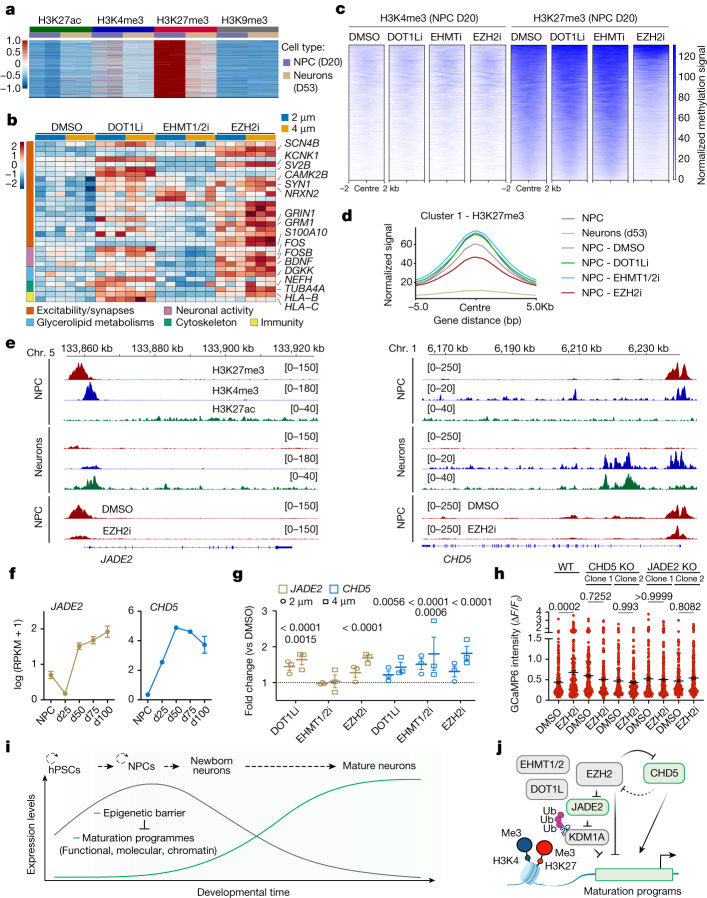
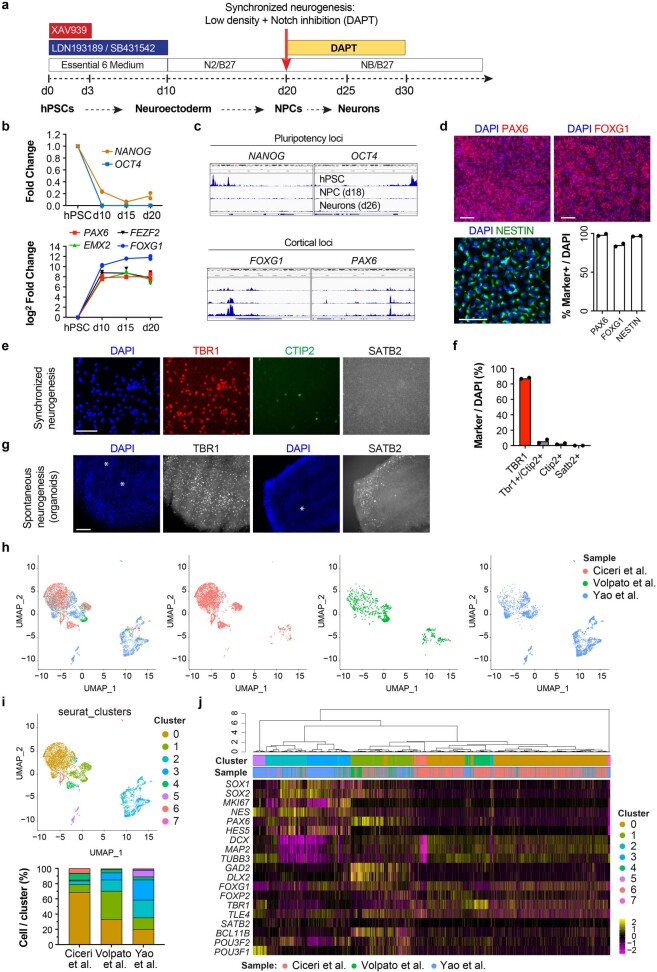
The pace of human brain development is highly protracted compared with most other species 1–7 . The maturation of cortical neurons is particularly slow, taking months to years to develop adult functions 3–5 . Remarkably, such protracted timing is retained in cortical neurons derived from human pluripotent stem cells (hPSCs) during in vitro differentiation or upon transplantation into the mouse brain 4,8,9 . Those findings suggest the presence of a cell-intrinsic clock setting the pace of neuronal maturation, although the molecular nature of this clock remains unknown. Here we identify an epigenetic developmental programme that sets the timing of human neuronal maturation. First, we developed a hPSC-based approach to synchronize the birth of cortical neurons in vitro which enabled us to define an atlas of morphological, functional and molecular maturation. We observed a slow unfolding of maturation programmes, limited by the retention of specific epigenetic factors. Loss of function of several of those factors in cortical neurons enables precocious maturation. Transient inhibition of EZH2, EHMT1 and EHMT2 or DOT1L, at progenitor stage primes newly born neurons to rapidly acquire mature properties upon differentiation. Thus our findings reveal that the rate at which human neurons mature is set well before neurogenesis through the establishment of an epigenetic barrier in progenitor cells. Mechanistically, this barrier holds transcriptional maturation programmes in a poised state that is gradually released to ensure the prolonged timeline of human cortical neuron maturation.
Overview
The claims and statistics of this paper haven’t been checked yet.
Free: it reads the open-access text and checks the first 5 claims that cite a source we can check. Create a free account to check every claim.
Integrity signals
Registry
Cites
Statistics
Figures
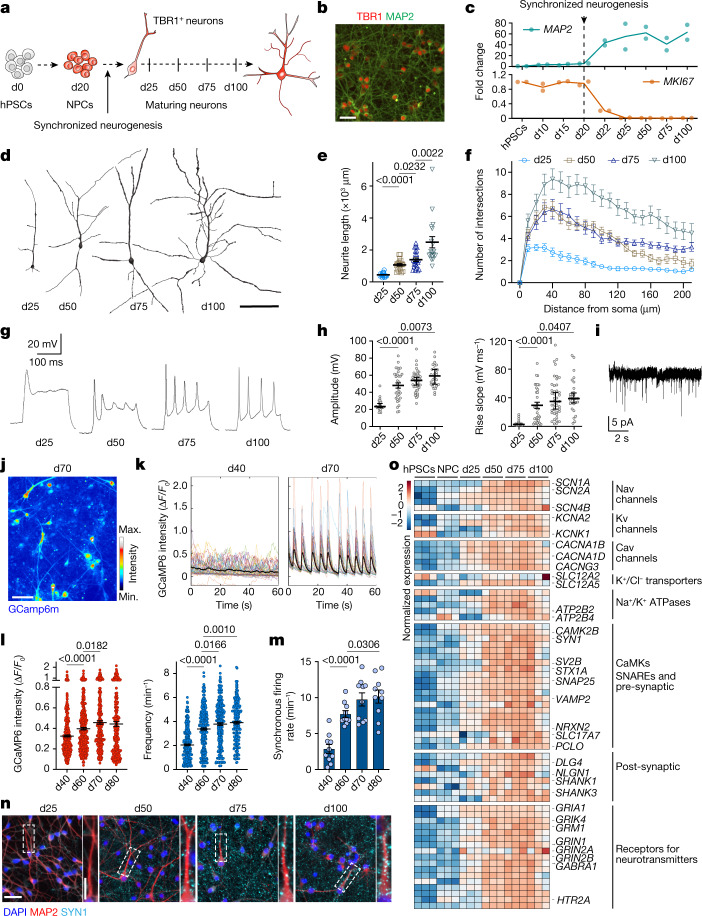
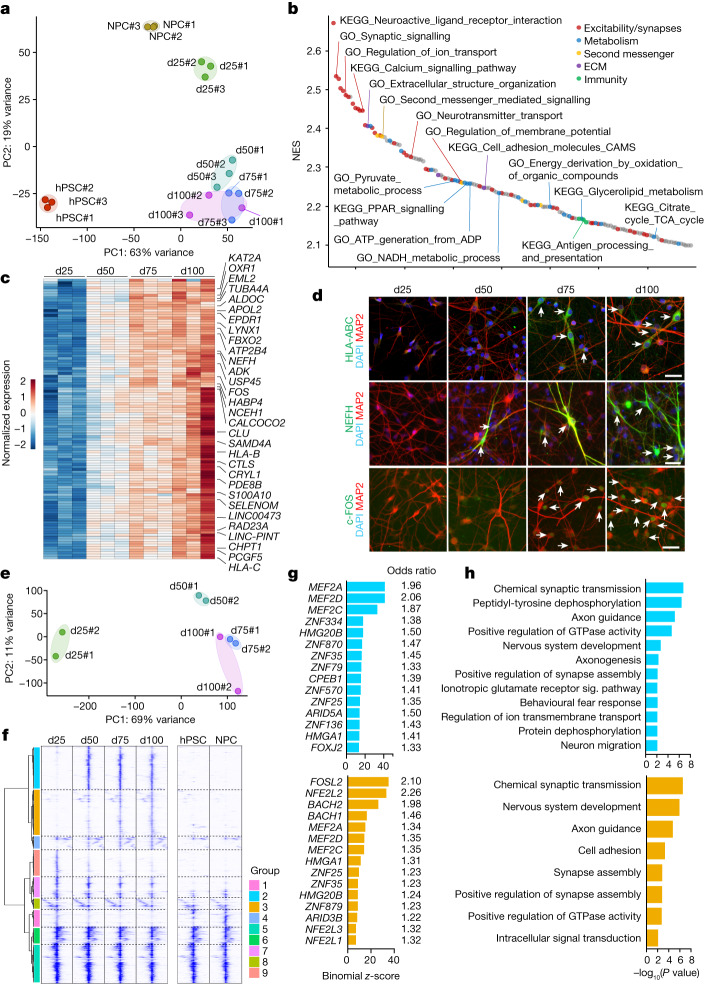
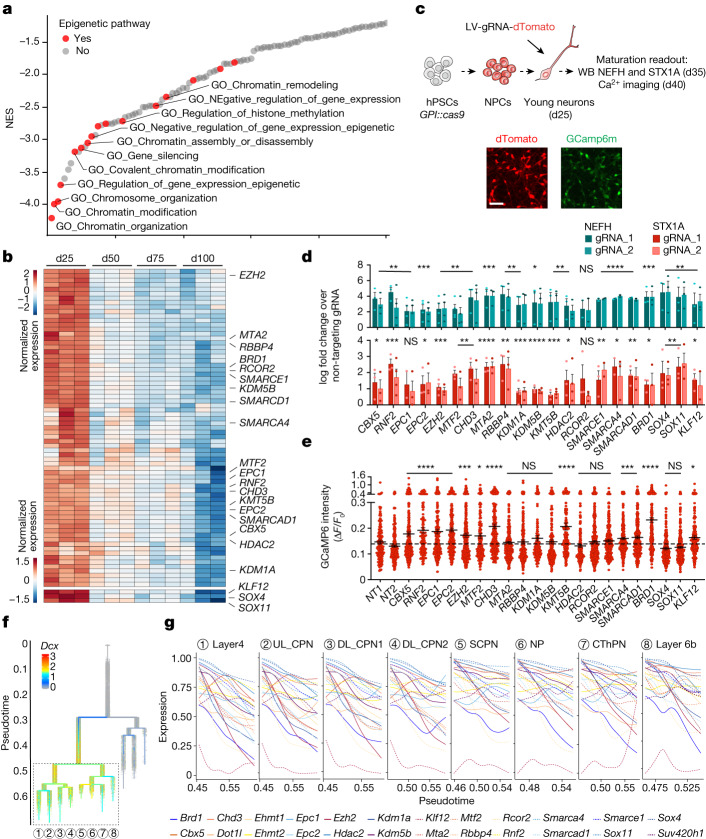
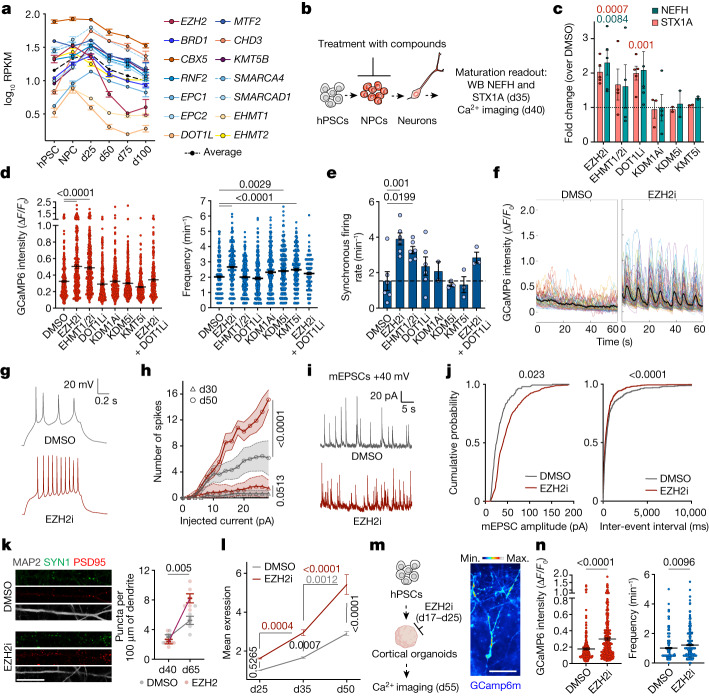
Verification
Claims the paper makes
The claims and statistics of this paper haven’t been checked yet.
Free: it reads the open-access text and checks the first 5 claims that cite a source we can check. Create a free account to check every claim.
Claims other papers make about this one
Each is checked against this paper’s own text: does it say what the citing paper says it does?
The source backs part of the claim, not all of it — or backs it for a different population, condition or comparison.
In the citing paper
“While mitochondria metabolism and epigenetic remodeling were recently shown to regulate the species-specific tempo of human CPN maturation,21,22,23”
From Synaptic neoteny of human cortical neurons requires species-specific balancing of SRGAP2-SYNGAP1 cross-inhibition (2024) · cites this paper as [22]
Experimental — accuracy not yet measured
Self-check
Percentages, sums and reported differences re-computed from the paper’s own numbers.
The self-check needs the paper’s full text.
Citations
Cites
Moderated estimation of fold change and dispersion for RNA-seq data with DESeq2
Love, M. I., Huber, W., & Anders, S. (2014) · Genome Biology · doi:10.1186/s13059-014-0550-8 · Cited by 95,106 · cited 2×
“Differentially accessible peaks in the atlas were called by DESeq2 version 1.16 73 .”
InfluentialSubramanian, A., Tamayo, P., Mootha, V. K., Mukherjee, S., Ebert, B. L., Gillette, M. A., Paulovich, A., Pomeroy, S. L., Golub, T. R., Lander, E. S., et al. (2005) · Proceedings of the National Academy of Sciences · doi:10.1073/pnas.0506580102 · Cited by 53,625
STAR: ultrafast universal RNA-seq aligner
Dobin, A., Davis, C. A., Schlesinger, F., Drenkow, J., Zaleski, C., Jha, S., Batut, P., Chaisson, M., & Gingeras, T. R. (2013) · Bioinformatics · doi:10.1093/bioinformatics/bts635 · Cited by 51,709
HTSeq—a Python framework to work with high-throughput sequencing data
Anders, S., Pyl, P. T., & Huber, W. (2015) · Bioinformatics · doi:10.1093/bioinformatics/btu638 · Cited by 21,464 · cited 1×
“The htseq-count function of the HTSeq Python package version 0.7.1 72 was used to count uniquely aligned reads at all exons of a gene.”
InfluentialModel-based Analysis of ChIP-Seq (MACS)
Zhang, Y., Liu, T., Meyer, C. A., Eeckhoute, J., Johnson, D. S., Bernstein, B. E., Nusbaum, C., Myers, R. M., Brown, M., Li, W., et al. (2008) · Genome Biology · doi:10.1186/gb-2008-9-9-r137 · Cited by 18,386
Integrated analysis of multimodal single-cell data
Hao, Y., Hao, S., Andersen-Nissen, E., Mauck, W. M., Zheng, S., Butler, A., Lee, M. J., Wilk, A. J., Darby, C., Zagar, M., et al. (2020) · doi:10.1101/2020.10.12.335331 · Cited by 15,508 · cited 1×
“To compare our dataset to those generated by Yao et al. 86 and Volpato et al. 87 , Seurat’s anchor-based integration approach 85 was used using FindIntegrationAnchors with 5,000 features.”
Heinz, S., Benner, C., Spann, N., Bertolino, E., Lin, Y. C., Laslo, P., Cheng, J. X., Murre, C., Singh, H., & Glass, C. K. (2010) · Molecular Cell · doi:10.1016/j.molcel.2010.05.004 · Cited by 13,382 · cited 1×
“HOMER findMotifsGenome.pl ( version 4.6) 78 was used to investigate the motif enrichment in pairwise comparisons and unbiasedly clustered groups of peaks.”
InfluentialMEME SUITE: tools for motif discovery and searching
Bailey, T. L., Boden, M., Buske, F. A., Frith, M., Grant, C. E., Clementi, L., Ren, J., Li, W. W., & Noble, W. S. (2009) · Nucleic Acids Research · doi:10.1093/nar/gkp335 · Cited by 10,648
Shrestha, S., & Offer, S. M. (2016) · Medical Epigenetics · doi:10.1159/000444713 · Cited by 8,914
A bivalent chromatin structure marks key developmental genes in embryonic stem cells
Bernstein, B. E., Mikkelsen, T. S., Xie, X., Kamal, M., Huebert, D. J., Cuff, J., Fry, B., Meissner, A., Wernig, M., Plath, K., et al. (2006) · Cell · doi:10.1016/j.cell.2006.02.041 · Cited by 5,361
Cited by
Mitochondria metabolism sets the species-specific tempo of neuronal development
Iwata, R., Casimir, P., Erkol, E., Boubakar, L., Planque, M., Gallego López, I. M., Ditkowska, M., Gaspariunaite, V., Beckers, S., Remans, D., et al. (2023) · Science · doi:10.1126/science.abn4705 · Cited by 312
“AlbuMAX-GSK–treated neurons were still less mature than mouse counterparts at the same age, indicating that other mechanisms contribute to species differences in neuronal developmental timing, including human-specific genes (34), RNA or protein turnover (35, 36), and chromatin remodeling (37, 38).”
Human neuronal maturation comes of age: cellular mechanisms and species differences
Wallace, J. L., & Pollen, A. A. (2024) · Nature Reviews Neuroscience · doi:10.1038/s41583-023-00760-3 · Cited by 82
“Can changes in NPCs (illustrated as increased precipitation at the headwaters of our maturation river (1)), corresponding to genetic, epigenetic and/or metabolic changes in NPCs, affect the flow of the river downstream?”
InfluentialPatrick, R., Naval-Sánchez, M., Deshpande, N., Huang, Y., Zhang, J., Chen, X., Yang, Y., Tiwari, K., Esmaeili, M., Tran, M., et al. (2024) · Cell Metabolism · doi:10.1016/j.cmet.2024.06.006 · Cited by 82
A molecular and cellular perspective on human brain evolution and tempo
Lindhout, F. W., Krienen, F. M., Pollard, K. S., & Lancaster, M. A. (2024) · Nature · doi:10.1038/s41586-024-07521-x · Cited by 84
Saurat, N. G., Minotti, A. P., Rahman, M. T., Sikder, T., Zhang, C., Cornacchia, D., Jungverdorben, J., Ciceri, G., Betel, D., & Studer, L. (2024) · Cell stem cell · doi:10.1016/j.stem.2024.06.001 · Cited by 64
Self-citationGeneration of human cerebral organoids with a structured outer subventricular zone
Walsh, R. M., Luongo, R., Giacomelli, E., Ciceri, G., Rittenhouse, C. A., Verrillo, A., Galimberti, M., Bocchi, V. D., Wu, Y., Xu, N., et al. (2024) · Cell Reports · doi:10.1016/j.celrep.2024.114031 · Cited by 68
Self-citationCalcium and activity-dependent signaling in the developing cerebral cortex
Arjun McKinney, A., Petrova, R., & Panagiotakos, G. (2022) · Development · doi:10.1242/dev.198853 · Cited by 55
Unraveling mechanisms of human brain evolution
Lancaster, M. A. (2024) · Cell · doi:10.1016/j.cell.2024.08.052 · Cited by 67
Zenk, F. L., Fleck, J. S., Jansen, S. M. J., Kashanian, B., Eisinger, B., Santel, M., Dupré, J.-S., Camp, J. G., & Treutlein, B. (2024) · Nature Neuroscience · doi:10.1038/s41593-024-01652-0 · Cited by 62
“Our observation offers a mechanistic explanation to the alterations in developmental timing observed in other systems 10,45,48 .”
Krefft, O., Jabali, A., Iefremova, V., Koch, P., & Ladewig, J. (2018) · Journal of Visualized Experiments · doi:10.3791/56768 · Cited by 63
Microglia regulate GABAergic neurogenesis in prenatal human brain through IGF1
Yu, D., Jain, S., Wangzhou, A., Zhu, B., Shao, W., Coley, E. J. L., Florencio, S. L. D., Kim, J. Y., Choi, J. J.-Y., Paredes, M. F., et al. (2025) · Nature · doi:10.1038/s41586-025-09362-8 · Cited by 54
Regenerating human skeletal muscle forms an emerging niche in vivo to support PAX7 cells
Hicks, M. R., Saleh, K. K., Clock, B., Gibbs, D. E., Yang, M., Younesi, S., Gane, L., Gutierrez-Garcia, V., Xi, H., & Pyle, A. D. (2023) · Nature Cell Biology · doi:10.1038/s41556-023-01271-0 · Cited by 45
“…of mouse embryonic stem cells following overexpression of Pax3 or Pax7 (iPAX) 77 and hPSC SMPCs in vivo 78 , but all are largely foetal and not equivalent to quiescent adult SCs. Recent work has also shown that maturation can be enhanced by epigenetic modulation in other stem cell systems 79,80 .”
Libé-Philippot, B., Iwata, R., Recupero, A. J., Wierda, K., Bernal Garcia, S., Hammond, L., van Benthem, A., Limame, R., Ditkowska, M., Beckers, S., et al. (2024) · Neuron · doi:10.1016/j.neuron.2024.08.021 · Cited by 38
de Luzy, I. R., Lee, M. K., Mobley, W. C., & Studer, L. (2024) · Nature Aging · doi:10.1038/s43587-024-00586-3 · Cited by 41
“In fact, many robust protocols are available for generating a broad range of neuronal subtypes including cortical, dopaminergic or spinal motor neurons, among others 54–57 .”
Self-citationEngineering mtDNA Deletions by Reconstituting End-Joining in Human Mitochondria
Fu, Y., Land, M., Kavlashvili, T., Cui, R., Kim, M., DeBitetto, E., Lieber, T., Ryu, K. W., Choi, E., Masilionis, I., et al. (2024) · Cell · doi:10.1016/j.cell.2025.02.009 · Cited by 38
Integrator loss leads to dsRNA formation that triggers the integrated stress response
Baluapuri, A., Zhao, N. C., Marina, R. J., Huang, K.-L., Kuzkina, A., Amodeo, M. E., Stein, C. B., Ahn, L., Farr, J. S., Schaffer, A. E., et al. (2025) · Cell · doi:10.1016/j.cell.2025.03.025 · Cited by 45
Comparative landscape of genetic dependencies in human and chimpanzee stem cells
She, R., Fair, T., Schaefer, N. K., Saunders, R. A., Pavlovic, B. J., Weissman, J. S., & Pollen, A. A. (2023) · Cell · doi:10.1016/j.cell.2023.05.043 · Cited by 35
Metabolic mechanisms of species-specific developmental tempo
Iwata, R., & Vanderhaeghen, P. (2024) · Developmental Cell · doi:10.1016/j.devcel.2024.05.027 · Cited by 32
Human TMEFF1 is a restriction factor for herpes simplex virus in the brain
Chan, Y.-H., Liu, Z., Bastard, P., Khobrekar, N. V., Hutchison, K. M., Yamazaki, Y., Fan, Q., Matuozzo, D., Harschnitz, O., Kerrouche, N., et al. (2024) · Nature · doi:10.1038/s41586-024-07745-x · Cited by 33
“Nuclei were labelled with DAPI (Thermo Fisher, 62248).”
InfluentialSelf-citationCerebral Organoids as an Experimental Platform for Human Neurogenomics
Nowakowski, T. J., & Salama, S. R. (2022) · Cells · doi:10.3390/cells11182803 · Cited by 30
“Progress in addressing these questions will require advances in culture methods that promote neuronal maturation [208,209], scalable methods combining multiplexed perturbation strategies with increasingly complex phenotypes, such as pooled optical CRISPR screens [210], or perturb-ATAC [211].”
Linking mitochondria metabolism, developmental timing, and human brain evolution
Casimir, P., Iwata, R., & Vanderhaeghen, P. (2024) · Current Opinion in Genetics & Development · doi:10.1016/j.gde.2024.102182 · Cited by 27
Therapeutic Reprogramming toward Regenerative Medicine
Ding, S. (2025) · Chemical Reviews · doi:10.1021/acs.chemrev.4c00332 · Cited by 33
Regional differences in progenitor metabolism shape brain growth during development
Baumann, N., Wagener, R. J., Javed, A., Conti, E., Abe, P., Lopes, A., Sansevrino, R., Lavalley, A., Magrinelli, E., Szalai, T., et al. (2025) · Cell · doi:10.1016/j.cell.2025.04.003 · Cited by 37
Cell time: How cells control developmental timetables
Rayón, T. (2023) · Science Advances · doi:10.1126/sciadv.adh1849 · Cited by 21
“Transient inhibition of the epigenetic regulators EZH2, EHMT1/2, or DOT1L in progenitors accelerates maturation properties later in human stem cell–differentiated neurons (11).”
Conrad, J. V., MEYER, S. R., Ramesh, P. S., Neira, J. A., Rusteika, M., Mamott, D., Duffin, B. M., Bautista, M., Zhang, J., Hiles, E., et al. (2023) · Stem Cell Reports · doi:10.1016/j.stemcr.2023.10.009 · Cited by 25
Rao, S. B., Sun, Z., Brundu, F. G., Chen, Y., Sun, Y., Zhu, H., Shprintzen, R. J., Tomer, R., Rabadán, R., Leong, K. W., et al. (2025) · Nature Communications · doi:10.1038/s41467-025-62187-x · Cited by 29
“Noteworthy targets of miRNA dysregulation include epigenetic regulators such as EZH2, a key component of a recently identi fi ed epigenetic barrier to maturation, which is established before the onset of neurogenesis 68 .”
Cuyubamba, O., Braga, C., Swift, D. D., Stickney, J. T., & Viel, C. (2025) · Cells · doi:10.3390/cells14070477 · Cited by 22
“Conversely, the downregulation of proteins such as FXR1, LMNB2, and RPS19 indicates a necessary transition as neurons mature and solidify their functional roles [52].”
Human neuron subtype programming via single-cell transcriptome-coupled patterning screens
Lin, H., Janssens, J., Eisinger, B., Hornauer, P., Kroell, A.-S. H., Santel, M., Pascual-Garcia, M., Okamoto, R., Karava, K., He, Z., et al. (2025) · Science · doi:10.1126/science.adn6121 · Cited by 28
Early developmental origins of cortical disorders modeled in human neural stem cells
Mato-Blanco, X., Kim, S., Jourdon, A., Ma, S., Choi, S.-H., Giani, A. M., Paredes, M. I., Tebbenkamp, A. T. N., Liu, F., Duque, A., et al. (2025) · Nature Communications · doi:10.1038/s41467-025-61316-w · Cited by 22
Environmental epigenetics: new horizons in redefining biological and health outcomes
Faraji, J., & Metz, G. A. S. (2026) · Environment International · doi:10.1016/j.envint.2026.110072 · Cited by 30
Dannert, A., Klimmt, J., Gonçalves, C. C., Crusius, D., & Paquet, D. (2023) · STAR Protocols · doi:10.1016/j.xpro.2023.102266 · Cited by 20
Kim, H., Kang, S., Cho, B., An, S., Kim, Y.-K., & Kim, J. (2025) · Advanced Science · doi:10.1002/advs.202412548 · Cited by 30
Multiomic single-cell profiling identifies critical regulators of postnatal brain
Clarence, T., Bendl, J. M., Cao, X. D., Wang, X., Zheng, S., Hoffman, G. E., Kozlenkov, A., Hong, A., Iskhakova, M., Jaiswal, M. K., et al. (2025) · Nature Genetics · doi:10.1038/s41588-025-02083-8 · Cited by 25
“…89,90 , whereas KLF12 has been demonstrated to play a role in brain development, potentially through epigenetic switch of neuronal maturation 91 , along with ZNF385D, which was implicated in reading disability and language impairment 92 and more recently as potentially being dysregulated in…”
Epigenetic control and manipulation of neuronal maturation timing
Ciceri, G., & Studer, L. (2024) · Current Opinion in Genetics & Development · doi:10.1016/j.gde.2024.102164 · Cited by 20
Self-citationDouvaras, P., Buenaventura, D. F., Sun, B. Q., Lepack, A. E., Baker, E., Simpson, E., Ebel, M. E., Lallos, G., LoSchiavo, D., Stitt, N., et al. (2024) · Nature Communications · doi:10.1038/s41467-024-52400-8 · Cited by 22
“Human iPSCs were differentiated into cortical neuronal progenitors as reported by Ciceri et al. 73 On day 20 neural progenitor cells (NPCs) were dissociated to single cells using Accutase and were resuspended in STEM-CELLBANKER (Amsbio, 11924) freezing medium and transferred to cryogenic vials.”
Zhang, W.-X., Yang, Y.-L., Yu, J., Jia, L., & Huang, H. (2025) · Biochemical and Biophysical Research Communications · doi:10.1016/j.bbrc.2025.152335 · Cited by 20
Disruption of the autism gene and chromatin regulator KDM5A alters hippocampal cell identity
Hayek, L. E., DeVries, D., Gogate, A., Aiken, A., Kaur, K. J., & Chahrour, M. H. (2023) · Science Advances · doi:10.1126/sciadv.adi0074 · Cited by 22
“…cellular identity in the hippocampus, which provides in vivo evidence and complements recent studies showing that chromatin regulators, notably KDM1A, function as an “ epigenetic barrier ” during neuronal maturation, and inhibiting them leads to an accelerated neuronal maturation ( 75 , 76 ).”
The cis-regulatory logic integrating spatial and temporal patterning in the vertebrate neural tube
Zhang, I., Boezio, G. L. M., Cornwall-Scoones, J., Frith, T. J. R., Finnie, E., Luo, J., Jiang, M., Howell, M. T., Lovell-Badge, R. H., Sagner, A., et al. (2025) · Developmental Cell · doi:10.1016/j.devcel.2025.06.029 · Cited by 21
Ding, J., Li, Y., & Larochelle, A. (2023) · Cells · doi:10.3390/cells12020321 · Cited by 17
Present and Future Modeling of Human Psychiatric Connectopathies With Brain Organoids
Urenda, J., Dosso, A. D., Birtele, M., & Quadrato, G. (2022) · Biological Psychiatry · doi:10.1016/j.biopsych.2022.12.017 · Cited by 16
Genomic, molecular, and cellular divergence of the human brain
Nehme, R., Pietiläinen, O. P. H., & Barrett, L. E. (2024) · Trends in Neurosciences · doi:10.1016/j.tins.2024.05.009 · Cited by 15
“Notably, a study comparing postsynaptic cortical development between mouse and macaque reported isochronic development, suggesting that synaptic neoteny may have emerged in hominids [128].”
Epigenetic and metabolic regulation of developmental timing in neocortex evolution
Aquilino, M., Ditzer, N., Namba, T., & Albert, M. (2025) · Trends in Neurosciences · doi:10.1016/j.tins.2025.03.001 · Cited by 17
Zhang, S., Xiao, Y., Mo, X., Chen, X., Zhong, J., Chen, Z., Liu, X., Qiu, Y., Dai, W., Chen, J., et al. (2024) · Nature Communications · doi:10.1038/s41467-024-52335-0 · Cited by 15
“Previous studies have con fi rmed that the expression of NRL is regulated by H3K27 epigenetic modi fi cations 27 , and the function of H3K27 in regulating chromatin accessibility and poised state has been demonstrated in various tissues including the nervous system and tumors 28,29 .”
BackgroundHuman brain organoids record the passage of time over multiple years in culturePreprint
Faravelli, I., Antón-Bolaños, N., Wei, A., Faits, T., Kumar, A. S., Andreadis, S., Kästli, R., Crespo, M. M., Steiger, M., Leible, D., et al. (2025) · bioRxiv (Cold Spring Harbor Laboratory) · doi:10.1101/2025.10.01.679721 · Cited by 14
Tosoni, G., Ayyildiz, D., Snoeck, S., Moreno‐Jiménez, E. P., Penning, A., Santiago-Mujika, E., Ormaechea, O. R., Lee, H., Poovathingal, S. K., Davie, K., et al. (2026) · Cell stem cell · doi:10.1016/j.stem.2026.04.002 · Cited by 16
Dynamic neuro-immune regulation of psychiatric risk loci in human neurons
Townsley, K. G., Lee, S. H., Williams, S., Cartwright, S., Cohen, S., Sen, A., Jia, M., Young, H. E., Dobbyn, L., Deans, M., et al. (2026) · Nature Communications · doi:10.1038/s41467-026-77114-x · Cited by 18
“A variety of methods now exist to maintain 113,114 or accelerate 115 – 118 aging in vitro, which could be incorporated into future MPRAs, towards dissecting the dynamic functional impact of genetic risk across neurodevelopment, brain maturation, and aging to inform mappingof brain-related GWAS and…”
The Clockwork Embryo: Mechanisms Regulating Developmental Rate
Díaz-Cuadros, M., & Pourquié, O. (2023) · Annual Review of Genetics · doi:10.1146/annurev-genet-022123-104503 · Cited by 18
Epigenetic preparation of future gene induction kinetics
Xiong, J., & Zhu, B. (2025) · Annual Review of Genetics · doi:10.1146/annurev-genet-012825-093148 · Cited by 12
Genome-wide CRISPR screen identifies Menin and SUZ12 as regulators of human developmental timing
Xu, N., Cho, H., Hackland, J. O. S., Benito-Kwiecinski, S. K., Saurat, N. G., Harschnitz, O., Russo, M. V., Garippa, R. J., Ciceri, G., & Studer, L. (2025) · Nature Cell Biology · doi:10.1038/s41556-025-01751-5 · Cited by 16
“In parallel, studies conducted primarily in either human or mouse systems have highlighted a role of the epigenetic landscape 18–21 .”
Self-citationEpigenetics and the timing of neuronal differentiation
Aldridge, A. I., & West, A. E. (2024) · Current Opinion in Neurobiology · doi:10.1016/j.conb.2024.102915 · Cited by 14
Gene-environmental regulation of the postnatal post-mitotic neuronal maturation
Prince, G. S., Reynolds, M., Martina, V., & Sun, H. (2024) · Trends in Genetics · doi:10.1016/j.tig.2024.03.006 · Cited by 15
From compartments to loops: understanding the unique chromatin organization in neuronal cells
Zagirova, D., Kononkova, A. D., Vaulin, N., & Khrameeva, E. E. (2024) · Epigenetics & Chromatin · doi:10.1186/s13072-024-00538-6 · Cited by 15
“Significant changes in the expression of Polycomb subunits over time have been observed in hPSCs differentiated into TBR1 + neurons over 100 days [56].”
BackgroundResultIntegrating Mitochondrial Biology into Innovative Cell Therapies for Neurodegenerative Diseases
Ore, A., Angelastro, J. M., & Giulivi, C. (2024) · Brain Sciences · doi:10.3390/brainsci14090899 · Cited by 16
Temporal control of progenitor competence shapes maturation in GABAergic neuron development in mice
Bright, A. R., Kotlyarenko, Y., Neuhaus, F., Rodrigues, D., Feng, C., Peters, C., Vitali, I., Dönmez, E., Myoga, M. H., Dvoretskova, E., et al. (2025) · Nature Neuroscience · doi:10.1038/s41593-025-01999-y · Cited by 20
More Than a Small Brain: The Importance of Studying Neural Function during Development
Dooley, J. C., & van der Heijden, M. E. (2024) · Journal of Neuroscience · doi:10.1523/jneurosci.1367-24.2024 · Cited by 10
Cates, K., Yuan, L., Yang, Y., & Yoo, A. S. J. (2025) · Cell Reports · doi:10.1016/j.celrep.2024.115153 · Cited by 14
“27,77 This could suggest that the perturbation of p53, particularly the DNA-binding domain that is absent in p53DD, 50 may result in changes to PRC2 activity and subsequent histone methylation signatures that are critical to miR-9/9*-124-mediated fibroblast fate erasure.”
Zhang, C., Saurat, N. G., Cornacchia, D., Chung, S. Y., Sikder, T., Nemchik, A., Minotti, A. P., Studer, L., & Betel, D. (2025) · Aging Cell · doi:10.1111/acel.70075 · Cited by 16
Self-citationDitzer, N., Senoglu, E., Kolodziejczyk, A., Schütze, T. M., Nikolaidi, A., Küster, K., Sameith, K., Dietz, S., Derihaci, R. P., Birdir, C., et al. (2025) · Neuron · doi:10.1016/j.neuron.2025.06.016 · Cited by 13
Fan, X., Qian, Q., Li, W., Liu, T., Zeng, C., Jia, P., Lin, H., Gao, X., Li, J., Xia, M., et al. (2025) · Genome Research · doi:10.1101/gr.280155.124 · Cited by 11
“Increasedexpressionof FBXO2 occurs with neurons ’ developmental maturation (Ciceri et al. 2024).”
KAT6B is required for histone 3 lysine 9 acetylation and SOX gene expression in the developing brain
Bergamasco, M., Abeysekera, W., Garnham, A. L., Hu, Y., Suen, C. S. N. L. W., Sheikh, B. N., Smyth, G. K., Thomas, T., & Voss, A. K. (2024) · Life Science Alliance · doi:10.26508/lsa.202402969 · Cited by 13
“For example, the histone methyltransferases EZH2, EHMT1, EHMT2, and DOT1L inhibit premature NSPC differentiation in a cell-based model (Ciceri et al, 2024).”
Early central nervous system development and neuron regeneration
Yang, R., Ji, F., & Jiao, J. (2024) · Current Opinion in Genetics & Development · doi:10.1016/j.gde.2024.102286 · Cited by 11
Systematic differences in protein stability underlie species-specific developmental tempo
Matsuda, M., Hammarén, H. M., Lázaro, J., Savitski, M. M., & Ebisuya, M. (2026) · Developmental Cell · doi:10.1016/j.devcel.2026.07.012 · Cited by 10
Spatial 3D genome organization controls the activity of bivalent chromatin during human neurogenesisPreprint
Ahanger, S. H., Zhang, C., Semenza, E. R., Gil, E., Cole, M. A., Wang, L., Kriegstein, A. R., & Lim, D. A. (2024) · bioRxiv (Cold Spring Harbor Laboratory) · doi:10.1101/2024.08.01.606248 · Cited by 9
Histone bivalency in CNS development
Mätlik, K., Govek, E., & Hatten, M. E. (2025) · Genes & Development · doi:10.1101/gad.352306.124 · Cited by 11
“Although these studies did not investigate bivalency in detail, it was reported that genes upregulated during human NPC differentiation into cortical neurons and in response to EZH2 inhibition were more likely to be bivalent in NPCs, supporting the role of bivalency in regulating the timing of gene expression during n…”
InfluentialChen, X., Kim, Y., & Kawaguchi, D. (2025) · Frontiers in Neural Circuits · doi:10.3389/fncir.2025.1568610 · Cited by 12
Oberst, P., Xu, N., Munguba, H., Zhang, C., Zhong, A., Zhou, T., Liston, C. M., Levitz, J., & Studer, L. (2025) · Developmental Cell · doi:10.1016/j.devcel.2025.08.011 · Cited by 10
Self-citationDevelopmental gene expression patterns driving species-specific cortical features
Javed, A., Gómez, L., Pravatà, V. M., Sarhadi, M., Giudice, Q. L., Szalai, T., Aubert, L., Ribierre, T., Nguyen, L., Cappello, S., et al. (2026) · Nature · doi:10.1038/s41586-026-10491-x · Cited by 11
Medina-Cano, D., Islam, M. T., Petrova, V., Dixit, S., Balic, Z., Yang, M. G., Stadtfeld, M., Wong, E. S. W., & Vierbuchen, T. (2025) · Developmental Cell · doi:10.1016/j.devcel.2025.08.001 · Cited by 11
Carter, A. C., Koreman, G. T., Petrocelli, J. E., Robb, J. E., Bushinsky, E. M., Trowbridge, S. K., Kingsley, D. M., Walsh, C. A., Song, J. H. T., & Greenberg, M. E. (2025) · bioRxiv (Cold Spring Harbor Laboratory) · doi:10.1101/2025.03.31.646366 · Cited by 14
“…signaling has long been known to regulate neuronal maturation, and recently published studies have implicated the regulation of calcium influx in driving the prolonged period of human neuron maturation and axonal outgrowth (Ciceri et al., 2024; Her-genreder et al., 2024; Lindhout et al., 2025).”
Environmental stiffness regulates neuronal maturation via Piezo1-mediated transthyretin activity
Kreysing, E., Gautier, H. O. B., Mukherjee, S., Mooslehner, K. A., Mureşan, L., Haarhoff, D., Zhao, X., Winkel, A. K., Boric, T., Vásquez-Sepúlveda, S., et al. (2025) · Nature Communications · doi:10.1038/s41467-025-64810-3 · Cited by 12
“Furthermore, in the human cortex, the timing of neuronal maturation is regulated by epigenetic factors such as histone methylation, and the rate at which human neurons mature was recently suggested to be determinedwellbeforeneurogenesis 9 .”
Leonardi, O., Lewerissa, E., Aprile, D., Barakat, T. S., Culotta, L., Deng, R., Haazen, L., Linda, K., Majoie, M., Mordelt, A., et al. (2025) · bioRxiv (Cold Spring Harbor Laboratory) · doi:10.1101/2025.01.21.634145 · Cited by 8
Human brain organoids record the passage of time over multiple years
Faravelli, I., Antón-Bolaños, N., Wei, A., Faits, T., Kumar, A. S., Andreadis, S., Kästli, R., Montero‐Crespo, M., Steiger, M., Leible, D., et al. (2026) · Nature · doi:10.1038/s41586-026-10877-x · Cited by 44
“…timeline is preserved in all cell types generated in vitro from human pluripotent stem (hPS) cells, including cortical neurons, pointing at a cell-intrinsic clock that sets the pace of brain development, although its molecular mechanisms and functional significance remain to be elucidated 1,2 .”
InfluentialWu, H., Hamilton, C., Porritt, H., Winbo, A., & Zeltner, N. (2024) · The Journal of Physiology · doi:10.1113/jp286416 · Cited by 7
“Using hiPSC technology, significant progress in understanding transcriptional networks for cell fate specification and tissue maturation has been made (Ciceri et al., 2024; Zhu & Huangfu, 2013).”
EHMT2 as a Candidate Gene for an Autosomal Recessive Neurodevelopmental Syndrome
Carvalho, L. M. L., Rzasa, J., Kerkhof, J., McConkey, H., Fishman, V., Koksharova, G., Jorge, A. A. L., Branco, E. V., Oliveira, D., Martínez–Delgado, B., et al. (2024) · Molecular Neurobiology · doi:10.1007/s12035-024-04655-x · Cited by 7
“Recently, Ciceri et al. [46] demonstrated that transient pharmacological inhibition of EHMT1 and EHMT2, specifically at the progenitor stage (NSC — neuron stem cell), during iPSC differentiation into cortical neurons, promotes a faster acquisition of mature cell properties compared to controls.”
DOT1L in neural development and neurological and psychotic disorders
Shen, F., Zeng, L., & Gao, Y. (2025) · Neurochemistry International · doi:10.1016/j.neuint.2025.105955 · Cited by 6
Structural and material basis of neuron–glioma interactions
Wang, J., Shen, T.-H., Liu, J., Wen, Q., Yang, X., Deng, Y., Duan, J., & Yu, S. (2025) · Cancer Letters · doi:10.1016/j.canlet.2025.217843 · Cited by 7
Developmental Correlates of Accelerated Molar Eruption in Early Childhood
McDermott, C. L., Lee, J. B., Park, A. T., Tooley, U. A., Boroshok, A. L., Hilton, K., Linn, K. A., Mupparapu, M., & Mackey, A. P. (2023) · Biological Psychiatry Global Open Science · doi:10.1016/j.bpsgos.2023.02.006 · Cited by 7
The stem cell zoo for comparative studies of developmental tempo
Lázaro, J., Sochacki, J., & Ebisuya, M. (2024) · Current Opinion in Genetics & Development · doi:10.1016/j.gde.2023.102149 · Cited by 8
Dissecting MPXV neurotropism and host antiviral signaling using human stem cell-based modelsPreprint
Bauer, L., Giussani, S., Palazzi, N., Bot, E., Colombo, E., Zare, F., Pinci, F., Leijten, L. M. E., Lanko, K., Benavides, F. F. W., et al. (2023) · bioRxiv (Cold Spring Harbor Laboratory) · doi:10.1101/2023.08.25.554849 · Cited by 8
Lindhout, F. W., Szafranska, H. M., Gulglielmi, L., Imaz-Rosshandler, I., Boulanger, J., Moarefian, M., Voitiuk, K., Zernicka-Glover, N. K., Schulze, U., Minnick, J., et al. (2024) · bioRxiv (Cold Spring Harbor Laboratory) · doi:10.1101/2024.12.28.630576 · Cited by 8
Iwata, R., López, I. M. G., Erkol, E., Limame, R., Vandekeere, A., Bénac, N., Turner-Bridger, B., Planque, M., Ditkowska, M., Lein, V., et al. (2025) · bioRxiv (Cold Spring Harbor Laboratory) · doi:10.1101/2025.08.27.672586 · Cited by 10
Verkerke, M., Werkman, M. H., & Donega, V. (2025) · Stem Cell Reports · doi:10.1016/j.stemcr.2025.102533 · Cited by 5
Development and modeling of cardiac autonomic innervation
Patsy, M., Ge, K., Khodabukus, A., & Bursac, N. (2025) · Nature Cardiovascular Research · doi:10.1038/s44161-025-00746-7 · Cited by 8
“Similarly, small-molecule candidates that accelerate hPS cell-derived neuron maturation 109,191,192 could be tested for their ability to accelerate the maturation of hPS cell-derived autonomic neurons 107 .”
Saber, W. A., Ruíz, J. P., Gisser, I., Yang, Z., Mehendale, L., Teaney, N. A., Hobson, R., Glass, M. R., Pham, T. T., Bainbridge, E., et al. (2025) · Cell Reports · doi:10.1016/j.celrep.2025.116664 · Cited by 6
“89,90 TET1 does not have intrinsic DNA binding capabilities and relies on chaperone proteins for its association with DNA.”
Tenreiro, M. F., & Muotri, A. R. (2026) · Developmental Cell · doi:10.1016/j.devcel.2026.02.018 · Cited by 6
Timing mechanisms: insights from comparative neural differentiation systems
Azzi, C., & Rayón, T. (2024) · Current Opinion in Genetics & Development · doi:10.1016/j.gde.2024.102197 · Cited by 4
The Promise of Epigenetic Editing for Treating Brain Disorders
González-Molina, L. A., Dolga, A. M., Rots, M. G., & Sarno, F. (2025) · Sub-cellular biochemistry/Subcellular biochemistry · doi:10.1007/978-3-031-75980-2_4 · Cited by 6
Harris, S., Kodila, Z. N., Salberg, S., Sgro, M., Vlassopoulos, E., Li, C. N., Smith, M. J., Shultz, S. R., Yamakawa, G. R., Noel, M. E., et al. (2025) · Neurotherapeutics · doi:10.1016/j.neurot.2025.e00598 · Cited by 5
“The period of heightened plasticity in adolescence likely results from changes in brain structure and function, fl uctuations in sex hormones, and age-dependent changes in neuronal maturation [19 – 21].”
Parmar, A., Srinivasan, A., Krockenberger, L., Augustine, A., Gong, O., Bullard, A. C., Kalra, R., Ledvin, L., Pilz, D. A., Tawil, J., et al. (2025) · PLoS Genetics · doi:10.1371/journal.pgen.1011843 · Cited by 7
“In neurons, for example, different distributions of epigenetic marks are associated with cell cycle exit, morphogenesis, synaptogenesis, and maturity [6–11].”
Wu, M., Xu, Y., Ji, X., Zhou, Y., Li, Y., Feng, B., Cheng, Q., He, H., Xingsheng, P., Zhou, W., et al. (2024) · Stem Cell Research & Therapy · doi:10.1186/s13287-024-04049-9 · Cited by 6
“In recent papers, hCNPs are efficiently synchronized and accelerated to more mature state by inhibition of Notch signaling with a γ-secretase inhibitor (GSI), DAPT [25, 32, 33].”
Diaz-Salazar, C., Krzisch, M., Yoo, J., Nano, P. R., Bhaduri, A., Jaenisch, R., & Polleux, F. (2024) · bioRxiv (Cold Spring Harbor Laboratory) · doi:10.1101/2024.06.28.601266 · Cited by 8
“These include an epigenetic developmental program setting the slow timing of human neuronal maturation 58 ; human-specific base pair substitutions in regulatory regions otherwise ultra-conserved throughout vertebrate evolution (termed Human Accelerated Regions) that might impact spatio-temporal…”
Tile by tile: capturing the evolutionary mosaic of human conditions
Caporale, N., Leonardi, O., Villa, C. E., Vitriolo, A., Boeckx, C. A., & Testa, G. (2024) · Current Opinion in Genetics & Development · doi:10.1016/j.gde.2024.102297 · Cited by 6
Chu, T., & Midha, R. (2025) · International Journal of Molecular Sciences · doi:10.3390/ijms26136457 · Cited by 4
“For example, human PSC-derived cortical neurons exhibit functional excitatory synapses and spontaneous calcium spikes by 30 days after neurogenesis, progressing gradually to synchronous firing after 40 days [38].”
Unique and divergent features of human brain development
Salamon, I., Doyle, D. Z., Bandler, R. C., Pattabiraman, K., & Šestan, N. (2025) · Current Opinion in Neurobiology · doi:10.1016/j.conb.2025.103133 · Cited by 7
Zhang, J., Li, M., Wang, M., Sun, Y., Yin, C., Yang, S., Wang, B., Liu, Z., Wang, W., Liu, M., et al. (2025) · Nature Neuroscience · doi:10.1038/s41593-025-02150-7 · Cited by 4
“Transcriptomic comparisons reveal a markedly prolonged developmental period in human PFC, consistent with long-term exposure to environmental stimuli and learning experiences in humans 7,42,43 .”
Akter, M., Sepehrimanesh, M., Wu, X., & Ding, B. (2024) · eNeuro · doi:10.1523/eneuro.0165-24.2024 · Cited by 7
“Importantly, the transcriptomic data reveals a core set of DEGs from neuronal progenitor cells to mature iPSC-MNs, representing a maturation program that is also identi fi ed in in vivo systems (Shimojo et al., 2015; Ciceri et al., 2024).”
Balogh, A., Bódi-Jakus, M., Karl, V. R., Bellák, T., Széky, B., Farkas, J., Lamberto, F., Novak, D., Fehér, A., Zana, M., et al. (2024) · Scientific Reports · doi:10.1038/s41598-024-72791-4 · Cited by 4
“While several lines of evidence indicate that reduced EHMT1 level accelerated neuronal differentiation during time course experiments 37,44–46 , we did not see a difference in the three main cell types (neuron, astrocyte, oligodendrocyte), as most probably by day 57 of differentiation not only the…”
BackgroundXiang, W., Zhang, X., Dong, M., Wan, L., Zhang, B., & Wan, F. (2025) · Pharmacological Research · doi:10.1016/j.phrs.2025.107599 · Cited by 8
Mahmoud, M. B., Rátkai, A. E., Bauer, K., Bencsik, N., Szűcs, A. L., Schlett, K., & Tárnok, K. (2025) · Scientific Reports · doi:10.1038/s41598-024-81140-4 · Cited by 9
“This phasic state of maturation could be explained by poised neuronal maturation genes (also called “effectors”), such as synaptic proteins and ion channels, as well as other chromatin regulators, which “competitively” interact with epigenetic barriers 32 .”
Whye, D., Norabuena, E. M., Srinivasan, G. R., Wood, D., Polanco, T. J., Makhortova, N. R., Şahin, M., & Buttermore, E. D. (2024) · Current Protocols · doi:10.1002/cpz1.70022 · Cited by 4
Metadata
- Authors
- Ciceri, G., Baggiolini, A., Cho, H. S., Kshirsagar, M., Benito-Kwiecinski, S., Walsh, R. M., Aromolaran, K. A., Gonzalez-Hernandez, A. J., Munguba, H., Koo, S. Y., Xu, N., Sevilla, K. J., Goldstein, P. A., Levitz, J., Leslie, C. S., Koche, R. P., & Studer, L.
- Affiliations
- Memorial Sloan Kettering Cancer Center (US)
- Microsoft (United States) (US)
- Weill Cornell Medicine (US)
- Corresponding author
- Ciceri, Gabriele
- Studer, Lorenz
- ORCID
- Venue
- Nature
- Published
- 2024-01-31
- Volume
- 626
- Issue
- 8000
- Pages
- 881-890
- ISSN
- 0028-0836 (ISSN-L)
- 1476-4687
- PMC
- PMC10881400
- OpenAlex
- W4391383718
- Cited by
- 240
- References
- 95
- Citations by year
- 2026: 62 · 2025: 88 · 2024: 68
- FWCI
- 35.20
- Type
- journal article
- Language
- en
- Open access
- hybrid
- doi.org
- Licence
- cc-by
- creativecommons.org/licenses/by/4.0 (tdm)
- creativecommons.org/licenses/by/4.0 (vor)
- Locations
- Nature (publishedVersion, cc-by)
- bioRxiv (Cold Spring Harbor Laboratory) (acceptedVersion, cc-by-nc-nd)
- PubMed Central (publishedVersion, cc-by)
- PubMed (publishedVersion)
- RePEc: Research Papers in Economics (submittedVersion)
- UCL Discovery (University College London) (submittedVersion, cc-by)
- Funders
- National Science Foundation
- European Molecular Biology Organization (ALTF 311-2015)
- New York State Stem Cell Science (C32559GG)
- Schweizerischer Nationalfonds zur Förderung der Wissenschaftlichen Forschung (180672)
- National Institute on Aging (R01AG056298, R01AG054720)
- National Institute of Mental Health (F32MH116590)
- National Cancer Institute (P30CA008748)
- National Institute of Neurological Disorders and Stroke (R01NS128087)
- Topics
- Life Sciences › Neuroscience › Developmental Neuroscience › Neurogenesis and neuroplasticity mechanisms
- Life Sciences › Biochemistry, Genetics and Molecular Biology › Molecular Biology › Pluripotent Stem Cells Research
- Life Sciences › Biochemistry, Genetics and Molecular Biology › Molecular Biology › Developmental Biology and Gene Regulation
- Keywords
- neuronal maturation, epigenetic barriers, human brain development, cortical neurons, pluripotent stem cell differentiation, EZH2, EHMT1, G9a, DOT1L, histone methyltransferase, neurogenesis, early maturity
- MeSH terms
- Human Embryonic Stem Cells, Enhancer of Zeste Homolog 2 Protein, Adult, Animals, Histocompatibility Antigens, Humans, Neurons, Histone-Lysine N-Methyltransferase, Time Factors, Transcription, Genetic, Gene Expression Regulation, Developmental, Epigenesis, Genetic, Mice, Neurogenesis, Neural Stem Cells
About these checks
Registry, retraction, Cites and statistics results are computed, not judged, with one exception: a printed reference that no index lists is read once by a model before it counts as a citation error. Claims are extracted by a model and kept only when their quote appears verbatim in the text; each cited source is then checked, with a model’s help, for whether it says what the claim relies on. Those verdicts can be wrong — read the claim’s quote and the cited source before relying on one.
Statistics and arithmetic are recomputed, not judged.
Confidence bands are shown only for fields calibrated on our annotated test set. None is calibrated yet, so no band is shown.
What counts as a claim ›How we measure confidence ›How we check this ›
Are you an author, or do you see a problem with this page? Request a review
Data sources
Bibliographic data: Semantic Scholar, OpenAlex, Crossref.
Contains information from the Semantic Scholar Academic Graph Datasets, made available under the ODC Attribution License (ODC-BY 1.0).
Semantic Scholar’s data is described in: Kinney, R., et al. (2023). The Semantic Scholar Open Data Platform. arXiv:2301.10140.
