

The DOI matches its Crossref record; 57 of the 57 references it cites were found in a registry or an index.
Chemical acylation of an acquired serine suppresses oncogenic signaling of K-Ras(G12S)
Open accessAbstract
Drugs that directly impede the function of driver oncogenes offer exceptional efficacy and a therapeutic window. The recently approved mutant selective small-molecule cysteine-reactive covalent inhibitor of the G12C mutant of K-Ras, sotorasib, provides a case in point. KRAS is the most frequently mutated proto-oncogene in human cancer, yet despite success targeting the G12C allele, targeted therapy for other hotspot mutants of KRAS has not been described. Here we report the discovery of small molecules that covalently target a G12S somatic mutation in K-Ras and suppress its oncogenic signaling. We show that these molecules are active in cells expressing K-Ras(G12S) but spare the wild-type protein. Our results provide a path to targeting a second somatic mutation in the oncogene KRAS by overcoming the weak nucleophilicity of an acquired serine residue. The chemistry we describe may serve as a basis for the selective targeting of other unactivated serines.
Overview
The claims and statistics of this paper haven’t been checked yet.
Run the check — free, no account needed. It reads the open-access text and checks the sources it cites.
Integrity signals
Registry
Cites
Statistics
Figures
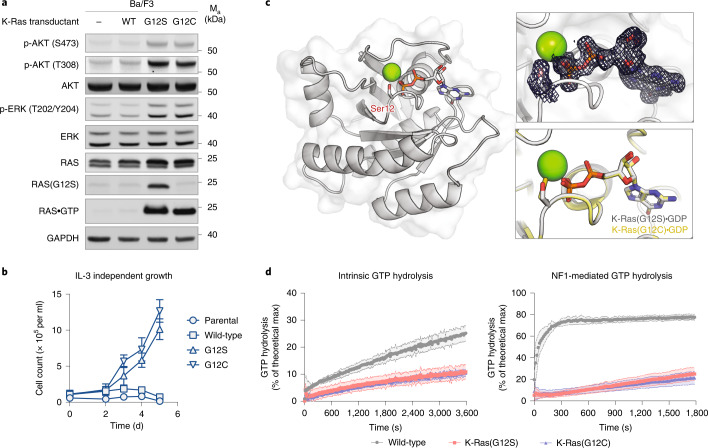
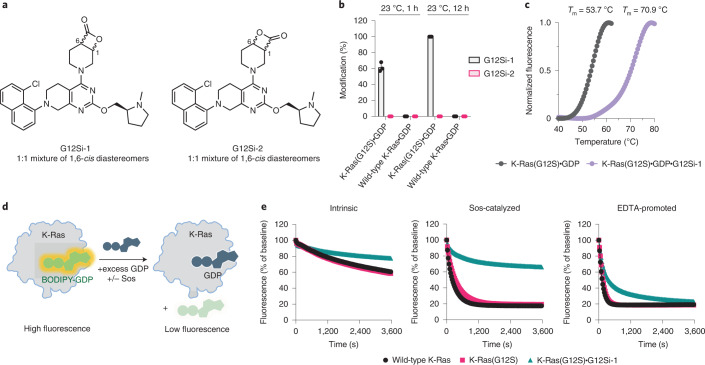
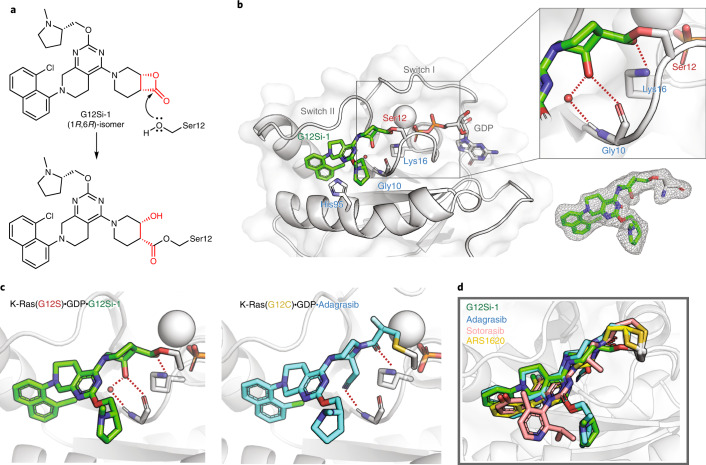
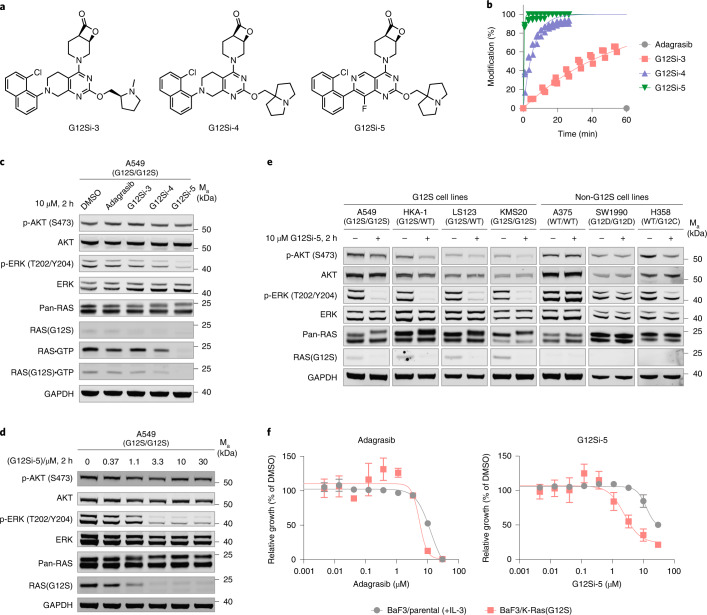
Verification
Claims the paper makes
The claims and statistics of this paper haven’t been checked yet.
Run the check — free, no account needed. It reads the open-access text and checks the sources it cites.
Claims other papers make about this one
Each is checked against this paper’s own text: does it say what the citing paper says it does?
The source backs part of the claim, not all of it — or backs it for a different population, condition or comparison.
In the citing paper
“These compounds showed GDP-bound KRAS selectivity.”
From KRAS: Biology, Inhibition, and Mechanisms of Inhibitor Resistance (2024) · cites this paper as [59]
Experimental — accuracy not yet measuredThe source backs part of the claim, not all of it — or backs it for a different population, condition or comparison.
In the citing paper
“These molecules were effective at halting the growth of cells expressing KRAS G12S at concentrations greater than 10 μM.”
From KRAS: Biology, Inhibition, and Mechanisms of Inhibitor Resistance (2024) · cites this paper as [59]
Experimental — accuracy not yet measuredThe cited source says what the claim attributes to it.
In the citing paper
“Compounds containing β-lactone electrophiles, designed to mimic the chemistry of natural proteasome inhibitors, covalently acylate the mutant serine of G12S in the switch II pocket.”
From KRAS: Biology, Inhibition, and Mechanisms of Inhibitor Resistance (2024) · cites this paper as [59]
The cited source says what the claim attributes to it.
In the citing paper
“In 2022, the Shokat lab introduced a novel KRAS G12S-selective covalent inhibitor [59].”
From KRAS: Biology, Inhibition, and Mechanisms of Inhibitor Resistance (2024) · cites this paper as [59]
In the citing paper
“Using adagrasib as the parent core, they introduced a, β-lactone structure that can covalently target serine and successfully developed the first selective covalent inhibitor G12Si-5 (24) targeting KRASG12S mutants.”
From Recent advances in targeting the “undruggable” proteins: from drug discovery to clinical trials (2023) · cites this paper as [93]
In the citing paper
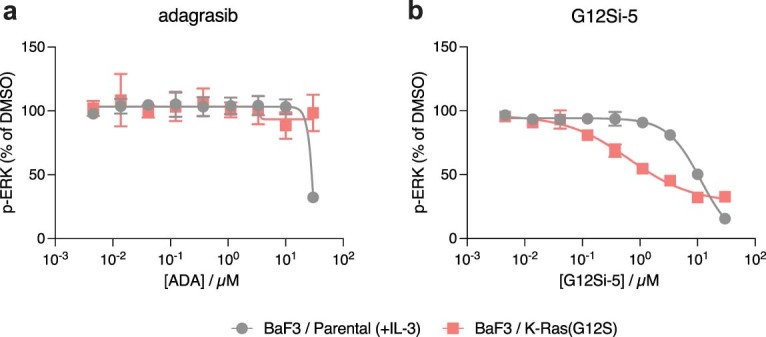
“G12Si-5 binds to the S-II P domain and inhibits oncogenic signaling, reducing ERK phosphorylation in KRASG12S mutant cells.”
From Recent advances in targeting the “undruggable” proteins: from drug discovery to clinical trials (2023) · cites this paper as [93]
In the citing paper
“In 2022, Shokat and colleagues reported the development of covalent inhibitors of KRASG12S mutants and KRASG12R mutants.93,94”
From Recent advances in targeting the “undruggable” proteins: from drug discovery to clinical trials (2023) · cites this paper as [93]
In the citing paper
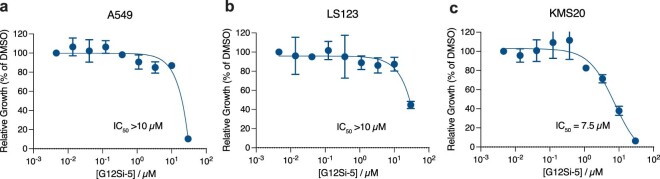
“The IC50 value of G12Si-5 in A549 cell line was 2.4 μM.93”
From Recent advances in targeting the “undruggable” proteins: from drug discovery to clinical trials (2023) · cites this paper as [93]
Self-check
Percentages, sums and reported differences re-computed from the paper’s own numbers.
The self-check needs the paper’s full text.
Citations
Cites
Features and development of Coot
Emsley, P., Lohkamp, B., Scott, W. G., & Cowtan, K. (2010) · Acta Crystallographica Section D Biological Crystallography · doi:10.1107/s0907444910007493 · Cited by 29,915
PHENIX : a comprehensive Python-based system for macromolecular structure solution
Adams, P. D., Afonine, P. V., Bunkóczi, G., Chen, V. B., Davis, I. W., Echols, N., Headd, J. J., Hung, L.-W., Kapral, G. J., Grosse-Kunstleve, R. W., et al. (2010) · Acta Crystallographica Section D Biological Crystallography · doi:10.1107/s0907444909052925 · Cited by 23,716
Phaser crystallographic software
McCoy, A. J., Grosse-Kunstleve, R. W., Adams, P. D., Winn, M. D., Storoni, L. C., & Read, R. J. (2007) · Journal of Applied Crystallography · doi:10.1107/s0021889807021206 · Cited by 20,612
Overview of the CCP 4 suite and current developments
Winn, M. D., Ballard, C. C., Cowtan, K. D., Dodson, E. J., Emsley, P., Evans, P. R., Keegan, R. M., Krissinel, E. B., Leslie, A. G. W., McCoy, A., et al. (2011) · Acta Crystallographica Section D Biological Crystallography · doi:10.1107/s0907444910045749 · Cited by 12,353
Enzymatic assembly of DNA molecules up to several hundred kilobases
Gibson, D. G., Young, L., Chuang, R.-Y., Venter, J. C., Hutchison, C. A., & Smith, H. O. (2009) · Nature Methods · doi:10.1038/nmeth.1318 · Cited by 10,088 · cited 1×
“…amino acids 1–169), human K-Ras (G12S, amino acids 1–169), human K-Ras G12S Cyslight (G12S/C51S/C80L/C118S, amino acids 1–169) and human NF1-GRD (amino acids 1,203–1,530) were codon optimized, synthesized by Twist Biosciences and cloned into pJExpress411 vector using the Gibson assembly method 51 .”
How good are my data and what is the resolution?
Evans, P. R., & Murshudov, G. N. (2013) · Acta Crystallographica Section D Biological Crystallography · doi:10.1107/s0907444913000061 · Cited by 4,743
iMOSFLM: a new graphical interface for diffraction-image processing withMOSFLM
Battye, T. G. G., Kontogiannis, L., Johnson, O., Powell, H. R., & Leslie, A. G. W. (2011) · Acta Crystallographica Section D Biological Crystallography · doi:10.1107/s0907444910048675 · Cited by 2,880
K-Ras(G12C) inhibitors allosterically control GTP affinity and effector interactions
Ostrem, J. M., Peters, U., Sos, M. L., Wells, J. A., & Shokat, K. M. (2013) · Nature · doi:10.1038/nature12796 · Cited by 2,557 · cited 1×
“To design compounds targeting K-Ras(G12S), we drew lessons from the successful drug discovery efforts directed against K-Ras (G12C) 9,11,15,40 , as well as a family of β -lactone-containing natural products (for example, salinosporamide A, omuralide) that inhibit the 20S proteasome by forming a…”
Self-citationThe Clinical KRAS(G12C) Inhibitor AMG 510 Drives Anti-Tumour Immunity
Canon, J., Rex, K., Saiki, A. Y., Mohr, C., Cooke, K., Bagal, D., Gaida, K., Holt, T., Knutson, C. G., Koppada, N., et al. (2019) · Nature · doi:10.1038/s41586-019-1694-1 · Cited by 2,277
AACR Project GENIE: Powering Precision Medicine through an International Consortium
The AACR Project GENIE Consortium, The AACR Project GENIE Consortium, André, F., Arnedos, M., Baras, A. S., Baselga, J., Bedard, P. L., Berger, M. F., Bierkens, M., Calvo, F., et al. (2017) · Cancer Discovery · doi:10.1158/2159-8290.cd-17-0151 · Cited by 1,964
Cited by
Sorted by citations
Recent advances in targeting the “undruggable” proteins: from drug discovery to clinical trials
Xie, X., Yu, T., Li, X., Zhang, N., Foster, L. J., Peng, C., Huang, W., & He, G. (2023) · Signal Transduction and Targeted Therapy · doi:10.1038/s41392-023-01589-z · Cited by 396
Emerging and Re-emerging Warheads for Targeted Covalent Inhibitors: An Update
Hillebrand, L., Liang, X. J., Serafim, R. A. M., & Gehringer, M. (2024) · Journal of Medicinal Chemistry · doi:10.1021/acs.jmedchem.3c01825 · Cited by 222
Drugging KRAS: Current perspectives and state-of-art review
Parikh, K., Banna, G., Liu, S. V., Friedlaender, A., Desai, A., Subbiah, V., & Addeo, A. (2022) · Journal of Hematology & Oncology · doi:10.1186/s13045-022-01375-4 · Cited by 164
Exploiting the therapeutic implications of KRAS inhibition on tumor immunity
Molina-Arcas, M., & Downward, J. (2024) · Cancer Cell · doi:10.1016/j.ccell.2024.02.012 · Cited by 152
KRAS G12D targeted therapies for pancreatic cancer: Has the fortress been conquered?
Bannoura, S. F., Khan, H. Y., & Azmi, A. S. (2022) · Frontiers in Oncology · doi:10.3389/fonc.2022.1013902 · Cited by 122
“Less prevalent in PDAC, the G12S mutation in KRAS has also been targeted recently with compounds that acylate the noncatalytic mutant serine 12 residue (62).”
BackgroundExpanding Chemical Probe Space: Quality Criteria for Covalent and Degrader Probes
Hartung, I. V., Rudolph, J., Mader, M. M., Mulder, M. P. C., & Workman, P. (2023) · Journal of Medicinal Chemistry · doi:10.1021/acs.jmedchem.3c00550 · Cited by 105
Targeting small GTPases: emerging grasps on previously untamable targets, pioneered by KRAS
Yin, G., Huang, J., Petela, J., Jiang, H., Zhang, Y., Gong, S., Wu, J., Liu, B., Shi, J., & Gao, Y. (2023) · Signal Transduction and Targeted Therapy · doi:10.1038/s41392-023-01441-4 · Cited by 98
“Of note, KRASG12C/Y96D secondary mutation was found to disrupt Adagrasib binding, which was sufficient to retain KRAS activation in the presence of Adagrasib.483 Other secondary mutations in SII-P of KRAS discovered in a clinical study cohort (NCT03785249), including R68S, H95D, H95Q, H95R, and Y96C, were reported to…”
BackgroundInfluentialStrain-release alkylation of Asp12 enables mutant selective targeting of K-Ras-G12D
Zheng, Q., Zhang, Z., Guiley, K. Z., & Shokat, K. M. (2024) · Nature Chemical Biology · doi:10.1038/s41589-024-01565-w · Cited by 80
Self-citationTargeted Covalent Modification Strategies for Drugging the Undruggable Targets
Tamura, T., Kawano, M., & Hamachi, I. (2025) · Chemical Reviews · doi:10.1021/acs.chemrev.4c00745 · Cited by 75
Chemical technology principles for selective bioconjugation of proteins and antibodies
Chauhan, P. S., Ragendu, V., Kumar, M., Molla, R., Mishra, S. D., Basa, S., & Rai, V. (2023) · Chemical Society Reviews · doi:10.1039/d3cs00715d · Cited by 70
Development of covalent inhibitors: Principle, design, and application in cancer
Zheng, L., Li, Y., Wu, D., Xiao, H., Zheng, S., Wang, G., & Sun, Q. (2023) · MedComm – Oncology · doi:10.1002/mog2.56 · Cited by 71
Simultaneous Covalent Modification of K-Ras(G12D) and K-Ras(G12C) with Tunable Oxirane Electrophiles
Yu, Z., He, X., Wang, R., Xu, X., Zhang, Z., Ding, K., Zhang, Z., Tan, Y., & Li, Z. (2023) · Journal of the American Chemical Society · doi:10.1021/jacs.3c05899 · Cited by 61
Self-citationKRAS: Biology, Inhibition, and Mechanisms of Inhibitor Resistance
Ash, L. J., Busia-Bourdain, O., Okpattah, D., Kamel, A., Liberchuk, A., & Wolfe, A. L. (2024) · Current Oncology · doi:10.3390/curroncol31040150 · Cited by 68
“The G12C inhibitor BI-0474 scaffold was used to develop the pan-KRAS inhibitor BI-2865, which non-covalently binds to KRAS-GDP with high affinity while sparing wildtypes HRAS and NRAS [62].”
MethodInfluentialTargeting Ras-, Rho-, and Rab-family GTPases via a conserved cryptic pocket
Morstein, J., Bowcut, V., Fernando, M. C., Yang, Y., Zhu, L., Jenkins, M. L., Evans, J. T., Guiley, K. Z., Peacock, D. M., Krahnke, S., et al. (2024) · Cell · doi:10.1016/j.cell.2024.08.017 · Cited by 62
Self-citationKRAS Mutation Subtypes and Their Association with Other Driver Mutations in Oncogenic Pathways
Mondal, K., Posa, M. K., Shenoy, R. P., & Roychoudhury, S. (2024) · Cells · doi:10.3390/cells13141221 · Cited by 58
“Characterization of small molecule compound for G12S ligand, an electrophilic group, β -lactone reacts explicitly with a serine residue, which could attach with the tetrahydropyridopyrimidine moiety of G12C ligand Adagarisib [176].”
BackgroundAnnual review of KRAS inhibitors in 2022
Wang, H., Chi, L., Yu, F., Dai, H., Gao, C., Si, X., Wang, Z., Liu, L., Zheng, J., Shan, L., et al. (2023) · European Journal of Medicinal Chemistry · doi:10.1016/j.ejmech.2023.115124 · Cited by 53
Targeting KRAS in Pancreatic Ductal Adenocarcinoma: The Long Road to Cure
de Jesus, V. H. F., Mathias-Machado, M. C., de Farias, J. P. F., Aruquipa, M. P. S., Jacome, A. A. D. A., & Peixoto, R. D. (2023) · Cancers · doi:10.3390/cancers15205015 · Cited by 51
“Some examples of compounds tested with pan-RAS properties include 3144, which can bind to the switch-I site and prevent RAS pocket effector activation, and BI-2852 (Boehringer, Ingelheim, Germany), which acts on the DCAI pocket and reduces SOS1 activity, thereby decreasing ERK and AKT activation…”
BackgroundFacts and Hopes on RAS Inhibitors and Cancer Immunotherapy
Boumelha, J., Molina‐Arcas, M., & Downward, J. (2023) · Clinical Cancer Research · doi:10.1158/1078-0432.ccr-22-3655 · Cited by 44
“These include inhibitors targetingtheactiveformofKRASG12CoragainstotherKRASmutant proteins such as G12D, G12S, and G12R (22 – 24).”
BackgroundUSP7 deubiquitinates KRAS and promotes non-small cell lung cancer
Huang, B., Cao, D., Yuan, X., Xiong, Y., Chen, B., Wang, Y., Niu, X., Tian, R., & Huang, H. (2024) · Cell Reports · doi:10.1016/j.celrep.2024.114917 · Cited by 47
Somsen, B. A., Schellekens, R. J. C., Verhoef, C. J. A., Arkin, M. R., Ottmann, C., Cossar, P. J., & Brunsveld, L. (2023) · Journal of the American Chemical Society · doi:10.1021/jacs.2c12781 · Cited by 42
From bench to bedside: current development and emerging trend of KRAS-targeted therapy
Chen, Y., Liu, Q.-P., Xie, H., & Ding, J. (2023) · Acta Pharmacologica Sinica · doi:10.1038/s41401-023-01194-4 · Cited by 45
“For the KRAS G12S mutation, they employed a potent electrophile, β -lactone-containing molecules, to covalently modify the less reactive serine residue [87].”
New prospectives on treatment opportunities in RASopathies
Gelb, B. D., Yohe, M. E., Wolf, C. M., & Andelfinger, G. (2022) · American Journal of Medical Genetics Part C Seminars in Medical Genetics · doi:10.1002/ajmg.c.32024 · Cited by 39
Hoyt, K. W., Urul, D. A., Ogboo, B. C., Wittlinger, F., Laufer, S., Schaefer, E., May, E. W., & Heppner, D. E. (2023) · Journal of Medicinal Chemistry · doi:10.1021/acs.jmedchem.3c01502 · Cited by 35
Emerging landscape of KRAS inhibitors in cancer treatment
Riedl, J. M., Matsubara, H., McNeil, R., Patel, P. S., de la Cruz, F. F., Gulhan, D., & Corcoran, R. B. (2026) · Cancer Cell · doi:10.1016/j.ccell.2026.01.001 · Cited by 41
RAS signaling and immune cells: a sinister crosstalk in the tumor microenvironment
Liu, Y., Xie, B., & Chen, Q. (2023) · Journal of Translational Medicine · doi:10.1186/s12967-023-04486-9 · Cited by 36
“The chemical development of other covalent ligands of mutant arginine residue in KRAS G12R and mutant serine residue in KRAS G12S provided a novel therapeutic window specifically for KRAS-driven cancers [90, 91], although in vivo experimental evidence was incomplete.”
BackgroundA single inhibitor for all KRAS mutations
Corcoran, R. B. (2023) · Nature Cancer · doi:10.1038/s43018-023-00615-x · Cited by 36
Design, Synthesis, and Bioevaluation of Pyrido[2,3-d]pyrimidin-7-ones as Potent SOS1 Inhibitors
Liu, M., Zhou, G., Su, W., Gu, Y., Gao, M., Wang, K., Huo, R., Li, Y., Zhou, Z., Chen, K., et al. (2023) · ACS Medicinal Chemistry Letters · doi:10.1021/acsmedchemlett.2c00490 · Cited by 33
Wu, X., Pan, J., Fan, R., Zhang, Y., Wang, C., Wang, G., Liu, J., Cui, M., Yue, J., Jin, R., et al. (2025) · Journal of the American Chemical Society · doi:10.1021/jacs.5c01712 · Cited by 34
Direct K-Ras Inhibitors to Treat Cancers: Progress, New Insights, and Approaches to Treat Resistance
Nussinov, R., & Jang, H. (2023) · The Annual Review of Pharmacology and Toxicology · doi:10.1146/annurev-pharmtox-022823-113946 · Cited by 32
Innovative design and potential applications of covalent strategy in drug discovery
Tang, T., Luo, J., Zhang, D., Lü, Y., Liao, W., & Zhang, J. (2024) · European Journal of Medicinal Chemistry · doi:10.1016/j.ejmech.2024.117202 · Cited by 27
Multiple Strategies to Develop Small Molecular KRAS Directly Bound Inhibitors
Zhou, X., Ji, Y., & Zhou, J. (2023) · Molecules · doi:10.3390/molecules28083615 · Cited by 27
“This technology overcomes the weak nucleophilicity of an acquired serine residue, which may serve as a way to selectively target other inactivated serines in covalent drug development [62].”
BackgroundDirect Modulators of K-Ras–Membrane Interactions
Morstein, J., Shrestha, R., Van, Q. N., López, C. A., Arora, N., Tonelli, M., Hong, L., Chen, D., Zhou, Y., Hancock, J. F., et al. (2023) · ACS Chemical Biology · doi:10.1021/acschembio.3c00413 · Cited by 27
Self-citationHu, Z., & Martí, J. (2022) · International Journal of Molecular Sciences · doi:10.3390/ijms232213865 · Cited by 25
RAS‐targeted cancer therapy: Advances in drugging specific mutations
Liu, C., Ye, D., Yang, H., Chen, X., Su, Z., Li, X., Ding, M., & Liu, Y. (2023) · MedComm · doi:10.1002/mco2.285 · Cited by 25
KRAS mutations in advanced non-small cell lung cancer: From biology to novel therapeutic strategies
Liguori, L., Salomone, F., Viggiano, A., Sabbatino, F., Pepe, S., Formisano, L., Bianco, R., & Servetto, A. (2024) · Critical Reviews in Oncology/Hematology · doi:10.1016/j.critrevonc.2024.104554 · Cited by 27
Eliminating oncogenic RAS: back to the future at the drawing board
Steffen, C. L., Kaya, P., Schaffner‐Reckinger, E., & Abankwa, D. (2023) · Biochemical Society Transactions · doi:10.1042/bst20221343 · Cited by 23
Targeting KRAS Diversity: Covalent Modulation of G12X and Beyond in Cancer Therapy
Kirschner, T., Müller, M. P., & Rauh, D. (2024) · Journal of Medicinal Chemistry · doi:10.1021/acs.jmedchem.3c02403 · Cited by 23
Insight into Janus kinases specificity: From molecular architecture to cancer therapeutics
Wei, T., Lu, M., Yao, S., Hong, Y., Yang, J., Zhang, M., Yin, Y., Han, Y., Li, Q., Wang, Z., et al. (2024) · MedComm – Oncology · doi:10.1002/mog2.69 · Cited by 22
Evolution of direct RAS inhibitors: from undruggable target to clinical breakthroughs
Wang, X., Wu, J., Xiao, A., Wang, J., & Tian, J. (2025) · Molecular Cancer · doi:10.1186/s12943-025-02364-0 · Cited by 25
“Building upon the optimized groups of MRTX1133 and MRTX849, a variety of covalent inhibitors targeting different KRAS mutations were obtained by replacing the warhead of MRTX1133, including G12S [41] (Shokat Lab), G12R [42] (Shokat Lab), G12D/C [43] (Li Lab), G12D [44] (Shokat Lab) (Fig.”
Technologies for Direct Detection of Covalent Protein–Drug Adducts
Mons, E., Kim, R. Q., & Mulder, M. P. C. (2023) · Pharmaceuticals · doi:10.3390/ph16040547 · Cited by 23
Genetically Encoded Epoxide Warhead for Precise and Versatile Covalent Targeting of Proteins
Zhang, J., Wang, X., Huang, Q., Ye, J., & Wang, J. (2024) · Journal of the American Chemical Society · doi:10.1021/jacs.4c03974 · Cited by 20
Proteome-wide Ligand and Target Discovery by Using Strain-Enabled Cyclopropane Electrophiles
Liu, Y., Yu, Z., Li, P., Yang, T., Ding, K., Zhang, Z., Tan, Y., & Li, Z. (2024) · Journal of the American Chemical Society · doi:10.1021/jacs.4c04695 · Cited by 21
Self-citationMultiple medicinal chemistry strategies of targeting KRAS: State-of-the art and future directions
Shang, Y., Fu, S., Hao, Q., Ying, H., Wang, J., & Shen, T. (2024) · Bioorganic Chemistry · doi:10.1016/j.bioorg.2023.107092 · Cited by 17
Bracken, A. K., Gekko, C. E., Suss, N. O., Lueders, E. E., Cui, Q., Fu, Q., Lui, A. C. W., Anderson, E. T., Zhang, S., & Abbasov, M. E. (2024) · Journal of the American Chemical Society · doi:10.1021/jacs.3c10741 · Cited by 16
Liu, Y., Chen, J., Li, X., Fan, Y., Peng, C. Y., Ye, X., Wang, Y. A., & Xie, X. (2025) · Pharmacological Research · doi:10.1016/j.phrs.2025.107577 · Cited by 17
Discovery of Covalent Ligands with AlphaFold3
Shamir, Y., Gabizon, R., Rogel, A., Lin, D. Y.-W., Andreotti, A. H., & London, N. (2026) · Journal of the American Chemical Society · doi:10.1021/jacs.5c22222 · Cited by 18
Extended Applications of Small-Molecule Covalent Inhibitors toward Novel Therapeutic Targets
Lee, J., & Park, S. B. (2022) · Pharmaceuticals · doi:10.3390/ph15121478 · Cited by 16
“G12Si-5 (7) GTPase (KRASG12S) Anticancer (NSCLC) β-Lactam [48]”
BackgroundKage, M., Hayashi, R., Matsuo, A., Tamiya, M., Kuramoto, S., Ohara, K., Irie, M., Chiyoda, A., Takano, K., Ito, T., et al. (2024) · Bioorganic & Medicinal Chemistry · doi:10.1016/j.bmc.2024.117830 · Cited by 15
Advances and Challenges in RAS Signaling Targeted Therapy in Leukemia
Chen, Y., Yin, Z., Westover, K. D., Zhou, Z., & Shu, L. (2024) · Molecular Cancer Therapeutics · doi:10.1158/1535-7163.mct-24-0504 · Cited by 15
“Notably, the adagrasib scaffold has been adapted to target other oncogenic KRAS variants, such as KRAS G12S (71).”
Kocabey, S., Cattin, S., Gray, I., & Rüegg, C. (2024) · Biosensors and Bioelectronics · doi:10.1016/j.bios.2024.116839 · Cited by 14
Xiao, X., Miao, X., Duan, S., Liu, S., Cao, Q., Wu, R., Tao, C., Zhao, J., Qu, Q., Markiewicz, A., et al. (2023) · Small Methods · doi:10.1002/smtd.202300096 · Cited by 13
Parry, C., Pellicano, F., Schüttelkopf, A. W., Beyer, K. S., Bower, J. F., Bryson, A., Cameron, K., Cerutti, N. M., Clark, J. P., Davidson, S. C., et al. (2025) · Journal of Medicinal Chemistry · doi:10.1021/acs.jmedchem.4c02929 · Cited by 12
Herzberg, B. O., & Manji, G. A. (2023) · The Oncologist · doi:10.1093/oncolo/oyad014 · Cited by 15
Single-cell sensor analyses reveal signaling programs enabling Ras-G12C drug resistance
Zhang, J. Z., Ong, S., Baker, D. A., & Maly, D. J. (2024) · Nature Chemical Biology · doi:10.1038/s41589-024-01684-4 · Cited by 11
Hamachi, I., Tamura, T., & Nonaka, H. (2025) · Accounts of Chemical Research · doi:10.1021/acs.accounts.5c00646 · Cited by 12
Innovative drugs promote precision cancer therapy
Huang, X., Zhu, M., Chen, R., Ni, J., Zhao, W., Li, S., Lü, X., Jiao, H., & Cao, X. (2023) · Clinical Cancer Bulletin · doi:10.1007/s44272-023-00002-8 · Cited by 12
“Ziyang Zhang et al. proposed the G12Si series of drugs, a small molecule that binds irreversibly to KRAS (G12S), among which G12Si-5 exhibited the best inhibitory effect (Ki = 26 µM) [21].”
Frankovich, T. V., McCann, H. M., Hoffman, K. S., & Rullo, A. F. (2025) · ACS Central Science · doi:10.1021/acscentsci.5c00699 · Cited by 10
Werner, A. N., Kumar, A. I., & Charest, P. G. (2023) · Molecular Biology of the Cell · doi:10.1091/mbc.e23-05-0152 · Cited by 12
“In fact, many cancer cells harboring KRAS mutations were found to have low-mutant K-Ras dependency, including the A549 lung cancer cells, although these cells are still very tumorigenic (Singh et al. , 2009; Weng et al. , 2012; Fujita-Sato et al. , 2015; Zhang et al. , 2022).”
A Top-Down Proteomic Assay to Evaluate KRAS4B-Compound Engagement
D’Ippolito, R. A., Rabara, D., Blanco, M. A., Alberico, E. O., Drew, M. R., Ramakrishnan, N., Sontan, D., Widmeyer, S. R. T., Scheidemantle, G. M., Messing, S. A. J., et al. (2024) · Analytical Chemistry · doi:10.1021/acs.analchem.3c05626 · Cited by 10
Pharmacological targeting of casein kinase 1δ suppresses oncogenic NRAS-driven melanoma
Wen, Y., Wang, H., Yang, X., Zhu, Y., Li, M., Ma, X., Huang, L., Wan, R., Zhang, C., Li, S., et al. (2024) · Nature Communications · doi:10.1038/s41467-024-54140-1 · Cited by 11
“…of treatment approaches has been explored in the preclinical and clinical trials, primarily focusing on inhibiting the MAPK signaling pathway 29 , either alone or in combination with interventions targeting downstream signaling pathways of NRAS, suchasCDK4/6,FAK, and autophagy pathways 30 – 33 .”
Rahmani, R., Djafri, A., Khaldi, H., Megrouss, Y., Guerroudj, A. R., Dege, N., Djafri, A., & Chouaıh, A. (2024) · Journal of Molecular Structure · doi:10.1016/j.molstruc.2024.139661 · Cited by 9
KRASG12D selective VHL-PROTAC with sparing KRASWT and other KRAS mutants
Jeon, E., Kim, C., Ko, M., Kim, T. K., Bae, J., Oh, J. W., Kim, K. P., Kim, H. S., & Sim, T. (2025) · European Journal of Medicinal Chemistry · doi:10.1016/j.ejmech.2025.117928 · Cited by 10
ZBTB11 depletion targets metabolic vulnerabilities in KRAS inhibitor-resistant PDAC
Tran, N. L., Jiang, J., Ma, M., Gadbois, G. E., Gulay, K. C. M., Verano, A. L., Schiavon, C. R., Rebollo, E., Zhou, H., Huang, C., et al. (2025) · Nature Chemical Biology · doi:10.1038/s41589-025-01978-1 · Cited by 14
“ZBTB11 is a zinc finger (ZF) transcription factor that cooperates with GA-binding protein-α to regulate the nuclear expression of components of complex I and the mitoribosome, thereby maintaining field of research 3–7 .”
Covalent drug – An emerging framework for targeted drug development
Bhole, R. P., Joshi, G. O., Kapare, H. S., Chikhale, R. V., & Chaudhari, S. Y. (2024) · Results in Chemistry · doi:10.1016/j.rechem.2024.101615 · Cited by 10
In Silico Evaluation of the Thr58-Associated Conserved Water with KRAS Switch-II Pocket Binders
Leini, R., & Pantsar, T. (2023) · Journal of Chemical Information and Modeling · doi:10.1021/acs.jcim.2c01479 · Cited by 7
Graph neural networks for identifying protein-reactive compounds
Gil, V., & Rowley, C. N. (2024) · Digital Discovery · doi:10.1039/d4dd00038b · Cited by 7
Zhou, Y., Zhang, L., Niu, Z. L., & Wang, Z. A. (2025) · Biomolecules · doi:10.3390/biom15121699 · Cited by 9
“Nevertheless, these residues are functionally important: they can undergo post-translational modifications (PTMs) (e.g., H3Q5 mono-amination) [82] and play critical roles in disease-relevant mutations (e.g., KRas G12S) [83].”
Li, N., Liu, C., Zhang, W., & Rao, G. (2023) · Current Medicinal Chemistry · doi:10.2174/0109298673258913231019113814 · Cited by 7
Crystal structure of NRAS Q61K with a ligand-induced pocket near switch II
Gebregiworgis, T., Chan, J. Y.-L., Kuntz, D. A., Privé, G. G., Marshall, C. B., & Ikura, M. (2024) · European Journal of Cell Biology · doi:10.1016/j.ejcb.2024.151414 · Cited by 10
Tan, Y. S., Chakrabarti, M., Stein, R. M., Prentis, L. E., Rizzo, R. C., Kurtzman, T., Fischer, M. M., & Balius, T. E. (2025) · Journal of Chemical Information and Modeling · doi:10.1021/acs.jcim.4c01623 · Cited by 7
“However, other residues may also be attacked, including serines, aspartates, and arginines, all of which have been targeted for RAS, 50 − 52 as well as lysines, tyrosines, threonines, and histidines.”
InfluentialSynthetic approaches and clinical application of KRAS inhibitors for cancer therapy
Jiang, M., Ma, S., Xuan, Y., & Chen, K. (2025) · European Journal of Medicinal Chemistry · doi:10.1016/j.ejmech.2025.117626 · Cited by 6
Emerging and Established Targets in Colorectal Cancer: Translating Biology Into Therapeutics
Grochot, R. M., Bartolini, M., Algaze, S. D., Reimann, P., Winder, T., Lenz, H., & Fontana, E. (2026) · American Society of Clinical Oncology Educational Book · doi:10.1200/edbk-26-516576 · Cited by 5
Evolution of structure-guided drug design strategies targeting mutations in codon 12 of KRAS
Dorandish, S., Bhayekar, K., Singh, A., Kushwaha, N. D., Malin, E., Serafimovski, S., Kelm, J. M., Gavande, N. S., & Lakkaniga, N. R. (2025) · RSC Medicinal Chemistry · doi:10.1039/d5md00169b · Cited by 6
Park, S. L., Saralamma, V. V. G., Nale, S. D., Kim, C. J., Jo, Y. S., Baig, M. H., & Cho, J. (2024) · Heliyon · doi:10.1016/j.heliyon.2024.e28495 · Cited by 6
Crystallographic Studies of KRAS in Complex with Small Molecules and RAS-Binding Proteins
Chan, A. H., & Simanshu, D. K. (2024) · Methods in molecular biology · doi:10.1007/978-1-0716-3822-4_5 · Cited by 5
Standardized Parts for Activation of Small GTPase Signaling in Living Cells
He, Y., Faulkner, B. M., Roberti, M. A., Bassford, D. K., & Stains, C. I. (2024) · Angewandte Chemie International Edition · doi:10.1002/anie.202403499 · Cited by 4
Distal Covalent Targeting Suppresses Signaling of Oncogenic K-Ras(G13C) in Cancer Cells
Zheng, Q., Shen, T., Pampel, J., & Shokat, K. M. (2025) · ACS Chemical Biology · doi:10.1021/acschembio.5c00249 · Cited by 4
Self-citationThe Oxidative Drug Combination for Suppressing KRAS G12D Inducible Tumour Growth
Бегимбетова, Д., Kukanova, А., Fazyl, F., Manekenova, K., Омаров, Т. М., Burska, A. N., Khamijan, M., Gulyayev, A., Yermekbayeva, B., Макишев, А. К., et al. (2022) · BioMed Research International · doi:10.1155/2022/9426623 · Cited by 5
“KRAS has been identi fi ed as the most frequently mutated gene in human cancers that is responsible for 30% of all human carcinomas [1 – 4].”
A Nexus between Genetic and Non-Genetic Mechanisms Guides KRAS Inhibitor Resistance in Lung Cancer
Kulkarni, P., Mohanty, A. R., Ramisetty, S. K., Duvivier, H. L., Khan, A., Shrestha, S., Tan, T., Merla, A., El-Hajjaoui, M., Malhotra, J. D., et al. (2023) · Biomolecules · doi:10.3390/biom13111587 · Cited by 4
“Small-molecule inhibitors that are either specific to G12C, such as sotorasib (AMG510) and adagrasib (MRTX849) [22–24], or that are non-G12C-specific (pan-KRAS) inhibitors, have been developed [25].”
Wang, H., Liu, D., Yu, Y., Fang, M., Gu, X., & Long, D. (2022) · Physical Chemistry Chemical Physics · doi:10.1039/d2cp04964c · Cited by 4
Hu, Z., & Martí, J. (2024) · Molecular Physics · doi:10.1080/00268976.2024.2316883 · Cited by 5
Shen, T., Fei, W., Hu, Z., Pang, M., Ma, J., Zhou, T., & Shang, Y. (2025) · Bioorganic Chemistry · doi:10.1016/j.bioorg.2025.109345 · Cited by 3
Chemical adaptation: bridging synthetic chemistry with drug development
Ding, K., Li, Y., Zhou, Y., & Huang, W. (2026) · Science China Life Sciences · doi:10.1007/s11427-025-3223-4 · Cited by 3
“In contrast, inorganic drugs, such as the platinum-containing agents cisplatin, carboplatin, and oxaliplatin, are designed to be more effectively delivered to tumor sites, minimizing side effects in normal tissues (Zhang et al., 2022a).”
Copper-catalyzed nitration of electron-deficient BN-naphthalene
Fang, X. (2023) · Chemical Communications · doi:10.1039/d3cc04359b · Cited by 3
Kidane, M., Hoffman, R. M., Wolfe-Demarco, J. K., Huang, T.-Y., Teng, C.-L., Samanta, S., Lira, L. M. G., Lin‐Jones, J., Pallares, G., Lamerdin, J. E., et al. (2024) · ACS Pharmacology & Translational Science · doi:10.1021/acsptsci.4c00450 · Cited by 3
Martins, F., Machado, A. L., Carvalho, J., Almeida, C. R., Beck, H. C., Carvalho, A. S., Backman, V., Matthiesen, R., & Velho, S. (2025) · Scientific Reports · doi:10.1038/s41598-025-94549-2 · Cited by 3
Comprehensive molecular characterization of collecting duct carcinoma for therapeutic vulnerability
Guan, P., Chen, J., Mo, C., Fukawa, T., Zhang, C., Cai, X., Li, M., Hong, J. H., Chan, J. Y., Ng, C. C. Y., et al. (2024) · EMBO Molecular Medicine · doi:10.1038/s44321-024-00102-5 · Cited by 3
“To date, only one other genomic study focused on Chinese CDC patients ( n = 10) using formalin-fi xed, paraf fi n-embedded (FFPE) samples, which found a similar TMB with ours (1.37 vs our 1.86 per MB) (Zhang et al, 2022a).”
BackgroundInfluentialGhosh, S., Fan, F., Powell, R. T., Park, Y. S., STEPHAN, C. C., Kopetz, S., Ellis, L. M., & Bhattacharya, R. (2024) · Therapeutic Advances in Medical Oncology · doi:10.1177/17588359241303302 · Cited by 4
“5,6 Inhibitors targeting other specific mutations of KRAS including agents targeting G12D 7 and G12S 8 and pan-KRAS inhibitors targeting both wild-type and mutated KRAS 9,10 are under development.”
ZBTB11 Depletion Targets Metabolic Vulnerabilities in K-Ras Inhibitor Resistant PDACPreprint
Tran, N. L., Jiang, J., Ma, M., Gadbois, G. E., Gulay, K. C. M., Verano, A. L., Zhou, H., Huang, C., Scott, D. A., Bang, A. G., et al. (2024) · bioRxiv (Cold Spring Harbor Laboratory) · doi:10.1101/2024.05.19.594824 · Cited by 3
Methods for Controlling Small GTPase Activity
Faulkner, B. M., He, Y., Sitrin, D., & Stains, C. I. (2025) · ChemBioChem · doi:10.1002/cbic.202500156 · Cited by 2
Proteomic Perspectives on KRAS-Driven Cancers and Emerging Therapeutic Approaches
Karki, R., Chen, R., & Pan, S. (2025) · Current Oncology · doi:10.3390/curroncol32110614 · Cited by 3
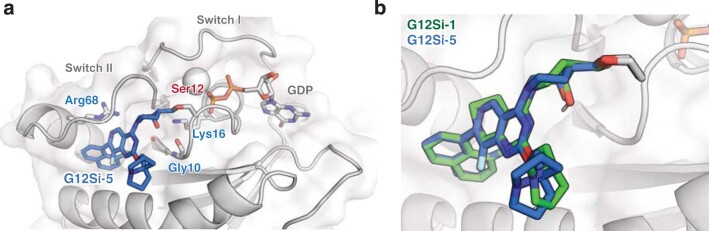
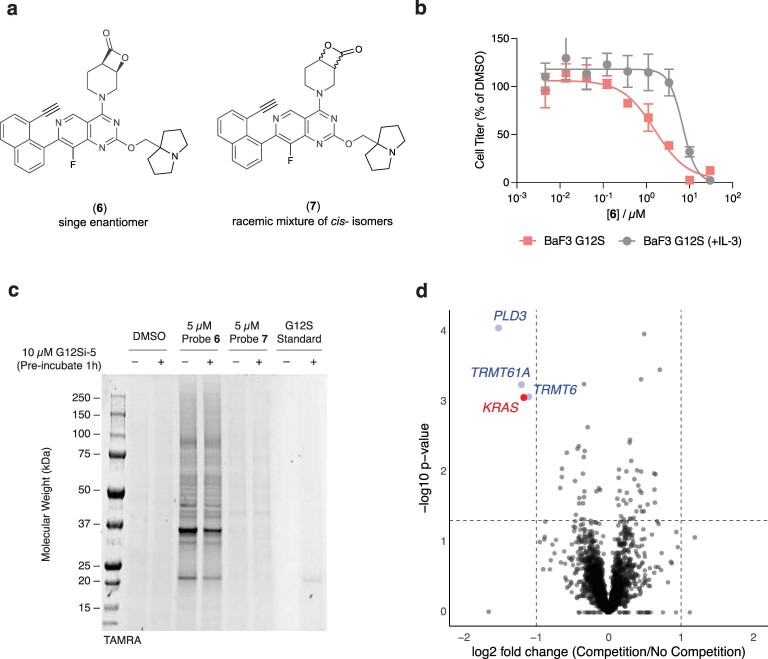
“Using competition proteomics, a proteomic after treatment with a terminal alkyne-containing analog of G12Si-5 in cells that were pretreated with G12Si-5 or DMSO, resulted in KRAS G12S being a selective target together with off-target modification on proteins PLD3, TRMT61A, and TRMT6 [100].”
Systematic cysteine scanning identifies a druggable pocket in oncogenic KRAS
van Tienen, L. M., Bayoumi, S., Muneeruddin, K., Leymarie, N., Popa, A., Shekhar, M., Mueller, M. A., Li, R., Żak, K. M., Chilukuri, H., et al. (2026) · Cell chemical biology · doi:10.1016/j.chembiol.2026.01.007 · Cited by 2
Phillips, D. P., Alper, P. B., Cho, C. Y., Borkin, D., Han, D., Kochanek, S. E., Vidal-Biggart, A., Herath, A., Gurjar, J., Lu, W., et al. (2026) · Journal of Medicinal Chemistry · doi:10.1021/acs.jmedchem.6c00127 · Cited by 2
Protein State‐Dependent Chemical Biology
Scott, K. A., Zhang, T. L., Xi, S. Y., Ngo, B., & Vinogradova, E. V. (2023) · Israel Journal of Chemistry · doi:10.1002/ijch.202200101 · Cited by 3
Covalency-enabled Drug Discovery is Redefining Druggability
McKenna, J. M., & Proctor, R. S. J. (2023) · CHIMIA International Journal for Chemistry · doi:10.2533/chimia.2023.537 · Cited by 2
Westover, K. D. (2024) · Nature Chemical Biology · doi:10.1038/s41589-024-01556-x · Cited by 2
Malolactone strikes: K-Ras-G12D's Achilles' heel
Adamopoulos, C., Papavassiliou, K. A., & Papavassiliou, A. G. (2024) · Trends in Pharmacological Sciences · doi:10.1016/j.tips.2024.04.001 · Cited by 2
Insights into direct KRAS inhibition strategies for cancer treatment
Li, T., Gu, C., Zhou, C., Mao, C., Yang, K., Xu, J., Lu, T., & Chen, J. (2024) · Future Medicinal Chemistry · doi:10.1080/17568919.2024.2424149 · Cited by 3
Targeting KRASG13C with cyclic linker based inhibitors to explore warhead orientation
Kirschner, T., Rodriguez, J., Moreira, E. G., Niggenaber, J., Warmuth, J. D., Verli, H., Müller, M. P., & Rauh, D. (2025) · Scientific Reports · doi:10.1038/s41598-025-22145-5 · Cited by 2
“Another significant mutation hotspot within the KRAS gene is codon 13, where mutations occur in approximately 14 % of tumors 16 .”
Smith, B. P., Rigby, M., Ma, R., & Maciag, A. E. (2024) · Methods in molecular biology · doi:10.1007/978-1-0716-3822-4_20 · Cited by 2
Metadata
- Authors
- Zhang, Z., Guiley, K. Z., & Shokat, K. M.
- Affiliations
- Howard Hughes Medical Institute (US)
- Corresponding author
- Shokat, Kevan M.
- Venue
- Nature Chemical Biology
- Published
- 2022-07-21
- Volume
- 18
- Issue
- 11
- Pages
- 1177-1183
- ISSN
- 1552-4450 (ISSN-L)
- 1552-4469
- PMC
- PMC9596369
- OpenAlex
- W4286203125
- Cited by
- 153
- References
- 57
- Citations by year
- 2026: 23 · 2025: 36 · 2024: 51 · 2023: 34 · 2022: 9
- FWCI
- 10.70
- Type
- journal article
- Language
- en
- Open access
- hybrid
- doi.org
- Locations
- Nature Chemical Biology (publishedVersion, cc-by)
- PubMed Central (publishedVersion, cc-by)
- PubMed (publishedVersion)
- eScholarship (California Digital Library) (submittedVersion, cc-by)
- Funders
- Samuel Waxman Cancer Research Foundation
- Howard Hughes Medical Institute
- U.S. Department of Health & Human Services | National Institutes of Health (R01CA244550)
- The Emerald Foundation The Mark Foundation
- Damon Runyon Cancer Research Foundation (DRG-2281-17, DRG-2399-20)
- Topics
- Life Sciences › Biochemistry, Genetics and Molecular Biology › Molecular Biology › Protein Kinase Regulation and GTPase Signaling
- Life Sciences › Biochemistry, Genetics and Molecular Biology › Molecular Biology › Protein Tyrosine Phosphatases
- Life Sciences › Biochemistry, Genetics and Molecular Biology › Molecular Biology › Protein Degradation and Inhibitors
- Keywords
- KRAS oncogenic signaling, covalent inhibitors, small molecule inhibitors, sotorasib
- MeSH terms
- Acylation, Cysteine, Humans, Mutation, Oncogenes, Serine, Proto-Oncogene Proteins p21(ras)
About these checks
Registry, retraction, Cites and statistics results are computed, not judged, with one exception: a printed reference that no index lists is read once by a model before it counts as a citation error. Claims are extracted by a model and kept only when their quote appears verbatim in the text; each cited source is then checked, with a model’s help, for whether it says what the claim relies on. Those verdicts can be wrong — read the claim’s quote and the cited source before relying on one.
Statistics and arithmetic are recomputed, not judged.
Confidence bands are shown only for fields calibrated on our annotated test set. None is calibrated yet, so no band is shown.
What counts as a claim ›How we measure confidence ›How we check this ›
Are you an author, or do you see a problem with this page? Request a review
