

The DOI matches its Crossref record; 57 of the 57 references it cites were found in a registry or an index.
Chemical acylation of an acquired serine suppresses oncogenic signaling of K-Ras(G12S)
Open accessAbstract
Drugs that directly impede the function of driver oncogenes offer exceptional efficacy and a therapeutic window. The recently approved mutant selective small-molecule cysteine-reactive covalent inhibitor of the G12C mutant of K-Ras, sotorasib, provides a case in point. KRAS is the most frequently mutated proto-oncogene in human cancer, yet despite success targeting the G12C allele, targeted therapy for other hotspot mutants of KRAS has not been described. Here we report the discovery of small molecules that covalently target a G12S somatic mutation in K-Ras and suppress its oncogenic signaling. We show that these molecules are active in cells expressing K-Ras(G12S) but spare the wild-type protein. Our results provide a path to targeting a second somatic mutation in the oncogene KRAS by overcoming the weak nucleophilicity of an acquired serine residue. The chemistry we describe may serve as a basis for the selective targeting of other unactivated serines.
Overview
The claims and statistics of this paper haven’t been checked yet.
Run the check — free, no account needed. It reads the open-access text and checks the sources it cites.
Integrity signals
Registry
Cites
Statistics
Figures
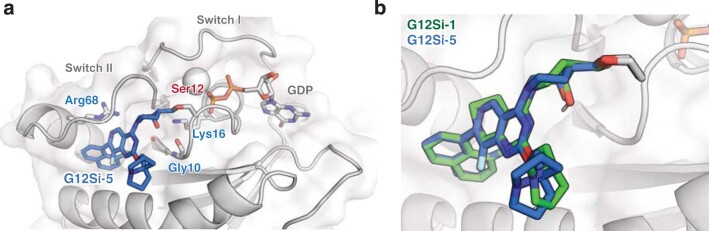
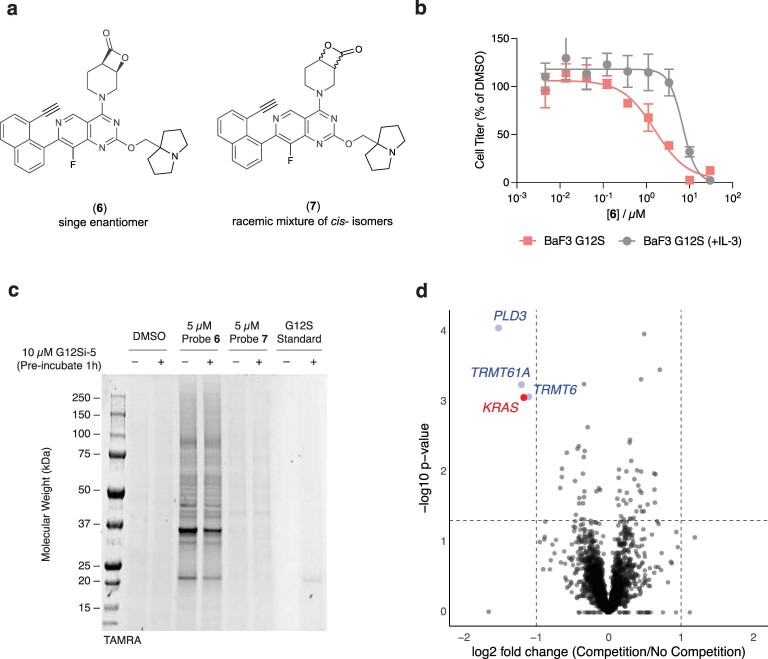
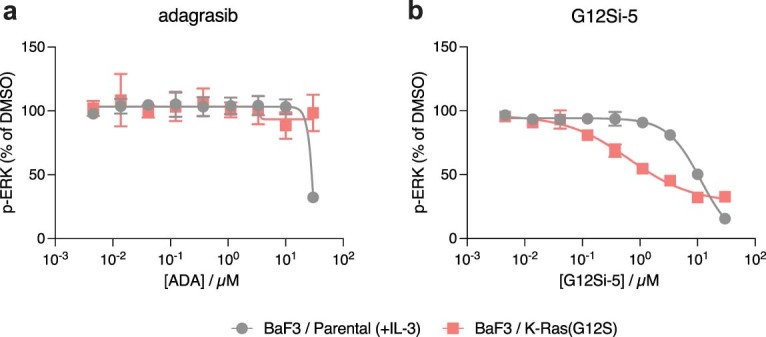
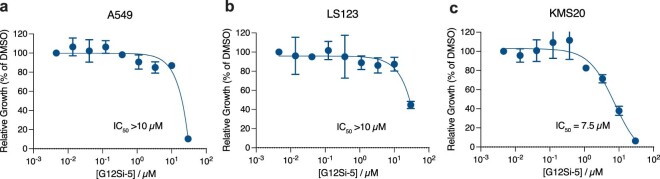
Verification
Claims the paper makes
The claims and statistics of this paper haven’t been checked yet.
Run the check — free, no account needed. It reads the open-access text and checks the sources it cites.
Claims other papers make about this one
Each is checked against this paper’s own text: does it say what the citing paper says it does?
The source backs part of the claim, not all of it — or backs it for a different population, condition or comparison.
In the citing paper
“These compounds showed GDP-bound KRAS selectivity.”
From KRAS: Biology, Inhibition, and Mechanisms of Inhibitor Resistance (2024) · cites this paper as [59]
Experimental — accuracy not yet measuredThe source backs part of the claim, not all of it — or backs it for a different population, condition or comparison.
In the citing paper
“These molecules were effective at halting the growth of cells expressing KRAS G12S at concentrations greater than 10 μM.”
From KRAS: Biology, Inhibition, and Mechanisms of Inhibitor Resistance (2024) · cites this paper as [59]
Experimental — accuracy not yet measuredThe cited source says what the claim attributes to it.
In the citing paper
“Compounds containing β-lactone electrophiles, designed to mimic the chemistry of natural proteasome inhibitors, covalently acylate the mutant serine of G12S in the switch II pocket.”
From KRAS: Biology, Inhibition, and Mechanisms of Inhibitor Resistance (2024) · cites this paper as [59]
The cited source says what the claim attributes to it.
In the citing paper
“In 2022, the Shokat lab introduced a novel KRAS G12S-selective covalent inhibitor [59].”
From KRAS: Biology, Inhibition, and Mechanisms of Inhibitor Resistance (2024) · cites this paper as [59]
In the citing paper
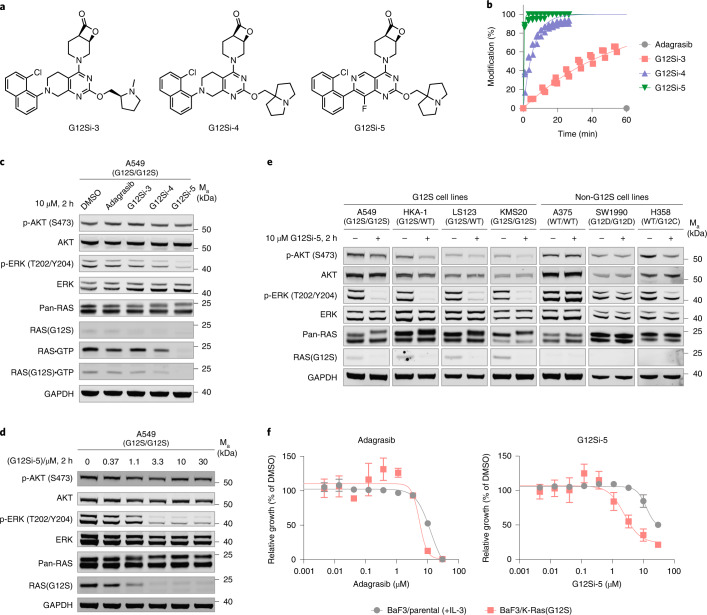
“Using adagrasib as the parent core, they introduced a, β-lactone structure that can covalently target serine and successfully developed the first selective covalent inhibitor G12Si-5 (24) targeting KRASG12S mutants.”
From Recent advances in targeting the “undruggable” proteins: from drug discovery to clinical trials (2023) · cites this paper as [93]
In the citing paper
“G12Si-5 binds to the S-II P domain and inhibits oncogenic signaling, reducing ERK phosphorylation in KRASG12S mutant cells.”
From Recent advances in targeting the “undruggable” proteins: from drug discovery to clinical trials (2023) · cites this paper as [93]
In the citing paper
“In 2022, Shokat and colleagues reported the development of covalent inhibitors of KRASG12S mutants and KRASG12R mutants.93,94”
From Recent advances in targeting the “undruggable” proteins: from drug discovery to clinical trials (2023) · cites this paper as [93]
In the citing paper
“The IC50 value of G12Si-5 in A549 cell line was 2.4 μM.93”
From Recent advances in targeting the “undruggable” proteins: from drug discovery to clinical trials (2023) · cites this paper as [93]
Self-check
Percentages, sums and reported differences re-computed from the paper’s own numbers.
The self-check needs the paper’s full text.
Citations
Cites
Features and development of Coot
Emsley, P., Lohkamp, B., Scott, W. G., & Cowtan, K. (2010) · Acta Crystallographica Section D Biological Crystallography · doi:10.1107/s0907444910007493 · Cited by 29,915
PHENIX : a comprehensive Python-based system for macromolecular structure solution
Adams, P. D., Afonine, P. V., Bunkóczi, G., Chen, V. B., Davis, I. W., Echols, N., Headd, J. J., Hung, L.-W., Kapral, G. J., Grosse-Kunstleve, R. W., et al. (2010) · Acta Crystallographica Section D Biological Crystallography · doi:10.1107/s0907444909052925 · Cited by 23,716
Phaser crystallographic software
McCoy, A. J., Grosse-Kunstleve, R. W., Adams, P. D., Winn, M. D., Storoni, L. C., & Read, R. J. (2007) · Journal of Applied Crystallography · doi:10.1107/s0021889807021206 · Cited by 20,612
Overview of the CCP 4 suite and current developments
Winn, M. D., Ballard, C. C., Cowtan, K. D., Dodson, E. J., Emsley, P., Evans, P. R., Keegan, R. M., Krissinel, E. B., Leslie, A. G. W., McCoy, A., et al. (2011) · Acta Crystallographica Section D Biological Crystallography · doi:10.1107/s0907444910045749 · Cited by 12,353
Enzymatic assembly of DNA molecules up to several hundred kilobases
Gibson, D. G., Young, L., Chuang, R.-Y., Venter, J. C., Hutchison, C. A., & Smith, H. O. (2009) · Nature Methods · doi:10.1038/nmeth.1318 · Cited by 10,088 · cited 1×
“…amino acids 1–169), human K-Ras (G12S, amino acids 1–169), human K-Ras G12S Cyslight (G12S/C51S/C80L/C118S, amino acids 1–169) and human NF1-GRD (amino acids 1,203–1,530) were codon optimized, synthesized by Twist Biosciences and cloned into pJExpress411 vector using the Gibson assembly method 51 .”
How good are my data and what is the resolution?
Evans, P. R., & Murshudov, G. N. (2013) · Acta Crystallographica Section D Biological Crystallography · doi:10.1107/s0907444913000061 · Cited by 4,743
iMOSFLM: a new graphical interface for diffraction-image processing withMOSFLM
Battye, T. G. G., Kontogiannis, L., Johnson, O., Powell, H. R., & Leslie, A. G. W. (2011) · Acta Crystallographica Section D Biological Crystallography · doi:10.1107/s0907444910048675 · Cited by 2,880
K-Ras(G12C) inhibitors allosterically control GTP affinity and effector interactions
Ostrem, J. M., Peters, U., Sos, M. L., Wells, J. A., & Shokat, K. M. (2013) · Nature · doi:10.1038/nature12796 · Cited by 2,557 · cited 1×
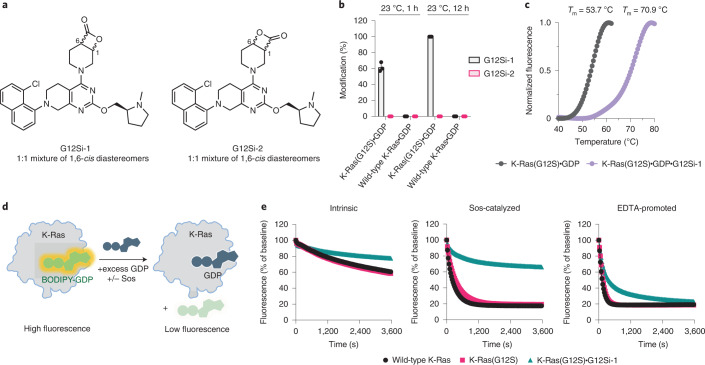
“To design compounds targeting K-Ras(G12S), we drew lessons from the successful drug discovery efforts directed against K-Ras (G12C) 9,11,15,40 , as well as a family of β -lactone-containing natural products (for example, salinosporamide A, omuralide) that inhibit the 20S proteasome by forming a…”
Self-citationThe Clinical KRAS(G12C) Inhibitor AMG 510 Drives Anti-Tumour Immunity
Canon, J., Rex, K., Saiki, A. Y., Mohr, C., Cooke, K., Bagal, D., Gaida, K., Holt, T., Knutson, C. G., Koppada, N., et al. (2019) · Nature · doi:10.1038/s41586-019-1694-1 · Cited by 2,277
AACR Project GENIE: Powering Precision Medicine through an International Consortium
The AACR Project GENIE Consortium, The AACR Project GENIE Consortium, André, F., Arnedos, M., Baras, A. S., Baselga, J., Bedard, P. L., Berger, M. F., Bierkens, M., Calvo, F., et al. (2017) · Cancer Discovery · doi:10.1158/2159-8290.cd-17-0151 · Cited by 1,964
RAS Proteins and Their Regulators in Human Disease
Simanshu, D. K., Nissley, D. V., & McCormick, F. (2017) · Cell · doi:10.1016/j.cell.2017.06.009 · Cited by 1,943
A Cytoplasmic Protein Stimulates Normal N- ras p21 GTPase, But Does Not Affect Oncogenic Mutants
Trahey, M., & McCormick, F. (1987) · Science · doi:10.1126/science.2821624 · Cited by 1,211
Targeting KRAS mutant cancers with a covalent G12C-specific inhibitor
Janes, M. R., Zhang, J., Li, L.-S., Hansen, R., Peters, U., Guo, X., Chen, Y., Babbar, A., Firdaus, S. J., Darjania, L., et al. (2018) · Cell · doi:10.1016/j.cell.2018.01.006 · Cited by 1,172 · cited 14×
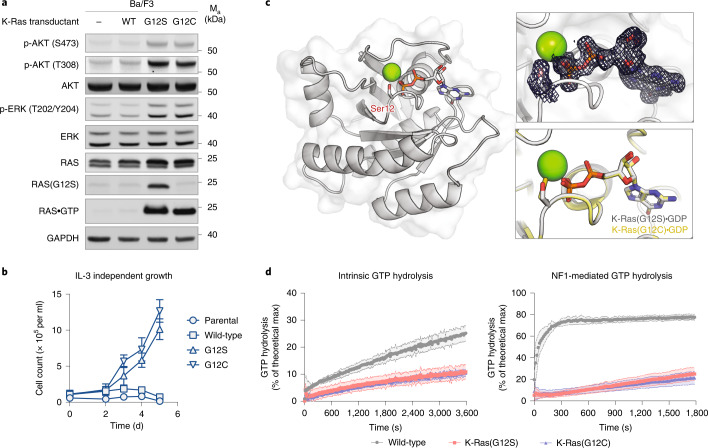
“1 | K-Ras(G12S) is an oncogenic driver with intrinsic GtPase activity. a , Immunoblot of Ba/F3 cells expressing wild-type K-Ras (WT), K-Ras(G12S) or K-Ras(G12C).”
InfluentialThe Frequency of Ras Mutations in Cancer
Prior, I. A., Hood, F. E., & Hartley, J. L. (2020) · Cancer Research · doi:10.1158/0008-5472.can-19-3682 · Cited by 1,130
Feling, R. H., Buchanan, G. O., Mincer, T. J., Kauffman, C. A., Jensen, P. R., & Fenical, W. (2003) · Angewandte Chemie International Edition · doi:10.1002/anie.200390115 · Cited by 1,057
Singh, A., Greninger, P., Rhodes, D., Koopman, L., Violette, S., Bardeesy, N., & Settleman, J. (2009) · Cancer Cell · doi:10.1016/j.ccr.2009.03.022 · Cited by 841
Biochemical and Structural Analysis of Common Cancer-Associated KRAS Mutations
Hunter, J. C., Manandhar, A., Carrasco, M. A., Gurbani, D., Gondi, S., & Westover, K. D. (2015) · Molecular Cancer Research · doi:10.1158/1541-7786.mcr-15-0203 · Cited by 786 · cited 1×
“We next asked whether the G12S mutation hampers the rate of GTP hydrolysis, a common biochemical mechanism that confers functional activation and extended pro-growth signaling to K-Ras hotspot mutants 5 .”
Discovery of a Covalent Inhibitor of KRAS G12C (AMG 510) for the Treatment of Solid Tumors
Lanman, B. A., Allen, J. R., Allen, J. G., Amegadzie, A. K., Ashton, K. S., Booker, S. K., Chen, J. J., Chen, N., Frohn, M. J., Goodman, G., et al. (2020) · Journal of Medicinal Chemistry · doi:10.1021/acs.jmedchem.9b01180 · Cited by 765
Fell, J. B., Fischer, J. P., Baer, B. R., Blake, J. F., Bouhana, K., Briere, D. M., Brown, K. D., Burgess, L. E., Burns, A. C., Burkard, M. R., et al. (2020) · Journal of Medicinal Chemistry · doi:10.1021/acs.jmedchem.9b02052 · Cited by 653 · cited 1×
“To design compounds targeting K-Ras(G12S), we drew lessons from the successful drug discovery efforts directed against K-Ras (G12C) 9,11,15,40 , as well as a family of β -lactone-containing natural products (for example, salinosporamide A, omuralide) that inhibit the 20S proteasome by forming a…”
Maurer, T., Garrenton, L. S., Oh, A., Pitts, K., Anderson, D. J., Skelton, N. J., Fauber, B. P., Pan, B., Malek, S., Stokoe, D., et al. (2012) · Proceedings of the National Academy of Sciences · doi:10.1073/pnas.1116510109 · Cited by 618 · cited 1×
“We chose to target the S-IIP because it proves to be a privileged drug-binding pocket for K-Ras and offers direct access to the mutant residues at codon 12.”
Intrinsic GTPase activity distinguishes normal and oncogenic ras p21 molecules.
Gibbs, W. W., Sigal, I. S., Poe, M., & Scolnick, E. M. (1984) · Proceedings of the National Academy of Sciences · doi:10.1073/pnas.81.18.5704 · Cited by 580
Biological properties of human c-Ha-ras1 genes mutated at codon 12
Seeburg, P. H., Colby, W. W., Capon, D. J., Goeddel, D. V., & Levinson, A. D. (1984) · Nature · doi:10.1038/312071a0 · Cited by 567
Discovery of Small Molecules that Bind to K‐Ras and Inhibit Sos‐Mediated Activation
Sun, Q., Burke, J. P., Phan, J., Burns, M. C., Olejniczak, E. T., Waterson, A. G., Lee, T., Rossanese, O. W., & Fesik, S. W. (2012) · Angewandte Chemie International Edition · doi:10.1002/anie.201201358 · Cited by 490
Targeted Degradation of Oncogenic KRAS G12C by VHL-Recruiting PROTACs
Bond, M. J., Chu, L., Nalawansha, D. A., Li, K., & Crews, C. M. (2020) · ACS Central Science · doi:10.1021/acscentsci.0c00411 · Cited by 450
A road map to evaluate the proteome-wide selectivity of covalent kinase inhibitors
Lanning, B. R., Whitby, L. R., Dix, M. M., Douhan, J., Gilbert, A. M., Hett, E. C., Johnson, T., Joslyn, C. M., Kath, J. C., Niessen, S., et al. (2014) · Nature Chemical Biology · doi:10.1038/nchembio.1582 · Cited by 356 · cited 1×
“…TRMT6), which merit future investigation because they could represent targets that are either specific to this chemical scaffold or common for this class of electrophile, similar to the general reactivity of FAM213A and AHR with clinically approved cysteine-targeting acrylamide electrophiles 44 .”
Targeting KRAS in non-small-cell lung cancer: recent progress and new approaches
Reck, M., Carbone, D. P., Garassino, M., & Barlesi, F. (2021) · Annals of Oncology · doi:10.1016/j.annonc.2021.06.001 · Cited by 326
Structural Analysis of Autoinhibition in the Ras Activator Son of Sevenless
Sondermann, H., Soisson, S. M., Boykevisch, S., Yang, S., Bar‐Sagi, D., & Kuriyan, J. (2004) · Cell · doi:10.1016/j.cell.2004.10.005 · Cited by 315
Crystal structure of human KRAS G12C covalently bound to a phthalazine inhibitor
Mohr, C. (2019) · Worldwide Protein Data Bank · doi:10.2210/pdb6pgo/pdb · Cited by 313
Therapeutic Targeting of Oncogenic K‐Ras by a Covalent Catalytic Site Inhibitor
Lim, S. M., Westover, K. D., Ficarro, S. B., Harrison, R. A., Choi, H. G., Pacold, M. E., Carrasco, M., Hunter, J., Kim, N. D., Xie, T., et al. (2014) · Angewandte Chemie International Edition · doi:10.1002/anie.201307387 · Cited by 300
An orthosteric inhibitor of the Ras-Sos interaction
Patgiri, A., Yadav, K. K., Arora, P. S., & Bar‐Sagi, D. (2011) · Nature Chemical Biology · doi:10.1038/nchembio.612 · Cited by 298
Shima, F., Yoshikawa, Y., Ye, M., Araki, M., Matsumoto, S., Liao, J., Hu, L., Sugimoto, T., Ijiri, Y., Takeda, A., et al. (2013) · Proceedings of the National Academy of Sciences · doi:10.1073/pnas.1217730110 · Cited by 293
Inhibition of RAS function through targeting an allosteric regulatory site
Spencer-Smith, R., Koide, A., Zhou, Y., Eguchi, R. R., Sha, F., Gajwani, P., Santana, D., Gupta, A., Jacobs, M., Herrero-Garcia, E., et al. (2017) · Nature Chemical Biology · doi:10.1038/nchembio.2231 · Cited by 283
Multivalent Small-Molecule Pan-RAS Inhibitors
Welsch, M., Kaplan, A. R., Chambers, J. M., Stokes, M. E., Bos, P. H., Zask, A., Zhang, Y., Sánchez-Martín, M., Badgley, M. A., Huang, C., et al. (2017) · Cell · doi:10.1016/j.cell.2017.02.006 · Cited by 282
Exploring Targeted Degradation Strategy for Oncogenic KRASG12C
Zeng, M., Xiong, Y., Safaee, N., Nowak, R. P., Donovan, K. A., Yuan, C. J., Nabet, B., Gero, T. W., Feru, F., Li, L., et al. (2020) · Cell Chemical Biology · doi:10.1016/j.chembiol.2019.12.006 · Cited by 275
Covalent protein modification: the current landscape of residue-specific electrophiles
Shannon, D. A., & Weerapana, E. (2014) · Current Opinion in Chemical Biology · doi:10.1016/j.cbpa.2014.10.021 · Cited by 234 · cited 1×
“Our work demonstrates that chemical acylation of a noncatalytic serine can be achieved using β -lactone electrophiles 49,50 .”
The path to the clinic: a comprehensive review on direct KRASG12C inhibitors
Kwan, A. K., Piazza, G. A., Keeton, A. B., & Leite, C. A. (2022) · Journal of Experimental & Clinical Cancer Research · doi:10.1186/s13046-021-02225-w · Cited by 200
Biosynthesis and chemical diversity of β-lactone natural products
Robinson, S. L., Christenson, J. K., & Wackett, L. P. (2018) · Natural Product Reports · doi:10.1039/c8np00052b · Cited by 168 · cited 1×
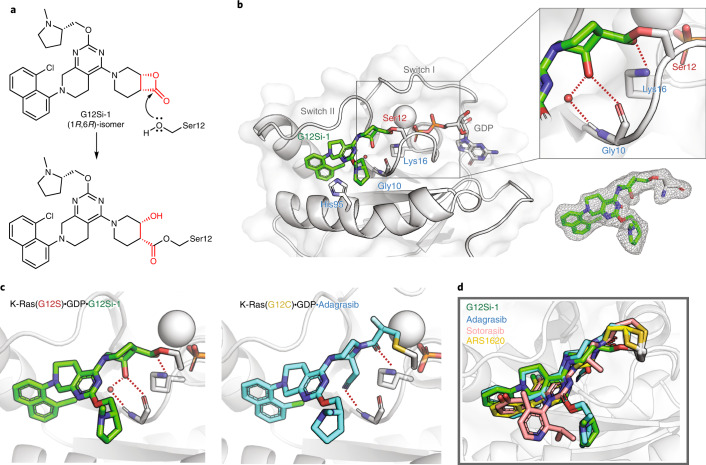
“Natural and synthetic β -lactones 48 are known to undergo ring opening following nucleophilic attack from catalytically active serine or threonine residues in enzymes (for example, omuralide/20S proteasome, lipstatin/pancreatic lipase and palmostatin B/acyl protein thioesterase).”
The reactivity-driven biochemical mechanism of covalent KRASG12C inhibitors
Hansen, R., Peters, U., Babbar, A., Chen, Y., Feng, J., Janes, M. R., Li, L.-S., Ren, P., Liu, Y., & Zarrinkar, P. P. (2018) · Nature Structural & Molecular Biology · doi:10.1038/s41594-018-0061-5 · Cited by 153
Pharmacological targeting of RAS: recent success with direct inhibitors
O’Bryan, J. P. (2019) · Pharmacological Research · doi:10.1016/j.phrs.2018.10.021 · Cited by 153
Characterising covalent warhead reactivity
Martin, J. S., Mackenzie, C. J., Fletcher, D., & Gilbert, I. H. (2019) · Bioorganic & Medicinal Chemistry · doi:10.1016/j.bmc.2019.04.002 · Cited by 129 · cited 1×
“Our work demonstrates that chemical acylation of a noncatalytic serine can be achieved using β -lactone electrophiles 49,50 .”
GTP-State-Selective Cyclic Peptide Ligands of K-Ras(G12D) Block Its Interaction with Raf
Zhang, Z., Gao, R., Hu, Q., Peacock, H., Peacock, D. M., Dai, S., Shokat, K. M., & Suga, H. (2020) · ACS Central Science · doi:10.1021/acscentsci.0c00514 · Cited by 124
Self-citationTaveras, A. G., Remiszewski, S., Doll, R. J., Cesarz, D., Huang, E. C., Kirschmeier, P. T., Pramanik, B. N., Snow, M. E., Wang, Y.-S., del Rosario, J., et al. (1997) · Bioorganic & Medicinal Chemistry · doi:10.1016/s0968-0896(96)00202-7 · Cited by 123
Trinh, T. B., Upadhyaya, P., Qian, Z., & Pei, D. (2015) · ACS Combinatorial Science · doi:10.1021/acscombsci.5b00164 · Cited by 119
Bach, R. D., & Dmitrenko, O. (2006) · Journal of the American Chemical Society · doi:10.1021/ja055086g · Cited by 118
K-Ras(G12D)-selective inhibitory peptides generated by random peptide T7 phage display technology
Sakamoto, K., Kamada, Y., Sameshima, T., Yaguchi, M., Niida, A., Sasaki, S., Miwa, M., Ohkubo, S., Sakamoto, J.-I., Kamaura, M., et al. (2017) · Biochemical and Biophysical Research Communications · doi:10.1016/j.bbrc.2017.01.147 · Cited by 118
Structural and functional characterization of a DARPin which inhibits Ras nucleotide exchange
Guillard, S., Kolasinska-Zwierz, P., Debreczeni, J. E., Breed, J., Zhang, J., Béry, N., Marwood, R., Tart, J., Overman, R., Stocki, P., et al. (2017) · Nature Communications · doi:10.1038/ncomms16111 · Cited by 97
Martín‐Gago, P., Fansa, E. K., Klein, C. H., Murarka, S., Janning, P., Schürmann, M., Metz, M., Ismail, S., Schultz‐Fademrecht, C., Baumann, M., et al. (2017) · Angewandte Chemie International Edition · doi:10.1002/anie.201610957 · Cited by 90
Johnson, C. W., Lin, Y.-J., Reid, D., Parker, J., Pavlopoulos, S., Dischinger, P., Graveel, C., Aguirre, A. J., Steensma, M., Haigis, K. M., et al. (2019) · Cell Reports · doi:10.1016/j.celrep.2019.07.026 · Cited by 89
Selective and noncovalent targeting of RAS mutants for inhibition and degradation
Teng, K. W., Tsai, S. T., Hattori, T., Fedele, C., Koide, A., Yang, C., Hou, X., Zhang, Y., Neel, B. G., O’Bryan, J. P., et al. (2021) · Nature Communications · doi:10.1038/s41467-021-22969-5 · Cited by 89
Weng, M., Lee, J., Wei, S., Li, Q., Shahamatdar, S., Hsu, D. J., Schetter, A. J., Swatkoski, S., Mannan, P., Garfield, S. H., et al. (2012) · Proceedings of the National Academy of Sciences · doi:10.1073/pnas.1207673110 · Cited by 69
An engineered protein antagonist of K-Ras/B-Raf interaction
Kauke, M. J., Traxlmayr, M. W., Parker, J. A., Kiefer, J. D., Knihtila, R., McGee, J., Verdine, G., Mattos, C., & Wittrup, K. D. (2017) · Scientific Reports · doi:10.1038/s41598-017-05889-7 · Cited by 64
Fujita-Sato, S., Galeas, J., Truitt, M., Pitt, C., Urisman, A., Bandyopadhyay, S., Ruggero, D., & McCormick, F. P. (2015) · Cancer Research · doi:10.1158/0008-5472.can-14-1623 · Cited by 56
Wey, M., Lee, J., Jeong, S. S., Kim, J., & Heo, J. (2013) · Biochemistry · doi:10.1021/bi400679q · Cited by 55
Structural Analysis of Spiro β-Lactone Proteasome Inhibitors
Groll, M., Balskus, E. P., & Jacobsen, E. N. (2008) · Journal of the American Chemical Society · doi:10.1021/ja806059t · Cited by 55 · cited 1×
“…from the successful drug discovery efforts directed against K-Ras (G12C) 9,11,15,40 , as well as a family of β -lactone-containing natural products (for example, salinosporamide A, omuralide) that inhibit the 20S proteasome by forming a covalent bond with the catalytic threonine (Thr1) 34,35 .”
Exceptionally high-affinity Ras binders that remodel its effector domain
McGee, J. H., Shim, S. Y., Lee, S., Swanson, P. K., Jiang, S. Y., Durney, M. A., & Verdine, G. L. (2017) · Journal of Biological Chemistry · doi:10.1074/jbc.m117.816348 · Cited by 40
RasIns: Genetically Encoded Intrabodies of Activated Ras Proteins
Çetin, M. S., Evenson, W. E., Gross, G. G., Jalali‐Yazdi, F., Krieger, D., Arnold, D. B., Takahashi, T. T., & Roberts, R. W. (2016) · Journal of Molecular Biology · doi:10.1016/j.jmb.2016.11.008 · Cited by 32
Pan‐Selective Aptamers for the Family of Small GTPases
Hons, M., Niebel, B., Karnowski, N., Weiche, B., & Famulok, M. (2012) · ChemBioChem · doi:10.1002/cbic.201200164 · Cited by 6
Cited by
Sorted by citations
Recent advances in targeting the “undruggable” proteins: from drug discovery to clinical trials
Xie, X., Yu, T., Li, X., Zhang, N., Foster, L. J., Peng, C., Huang, W., & He, G. (2023) · Signal Transduction and Targeted Therapy · doi:10.1038/s41392-023-01589-z · Cited by 396
Emerging and Re-emerging Warheads for Targeted Covalent Inhibitors: An Update
Hillebrand, L., Liang, X. J., Serafim, R. A. M., & Gehringer, M. (2024) · Journal of Medicinal Chemistry · doi:10.1021/acs.jmedchem.3c01825 · Cited by 222
Drugging KRAS: Current perspectives and state-of-art review
Parikh, K., Banna, G., Liu, S. V., Friedlaender, A., Desai, A., Subbiah, V., & Addeo, A. (2022) · Journal of Hematology & Oncology · doi:10.1186/s13045-022-01375-4 · Cited by 164
Exploiting the therapeutic implications of KRAS inhibition on tumor immunity
Molina-Arcas, M., & Downward, J. (2024) · Cancer Cell · doi:10.1016/j.ccell.2024.02.012 · Cited by 152
KRAS G12D targeted therapies for pancreatic cancer: Has the fortress been conquered?
Bannoura, S. F., Khan, H. Y., & Azmi, A. S. (2022) · Frontiers in Oncology · doi:10.3389/fonc.2022.1013902 · Cited by 122
“Less prevalent in PDAC, the G12S mutation in KRAS has also been targeted recently with compounds that acylate the noncatalytic mutant serine 12 residue (62).”
Background
Metadata
- Authors
- Zhang, Z., Guiley, K. Z., & Shokat, K. M.
- Affiliations
- Howard Hughes Medical Institute (US)
- Corresponding author
- Shokat, Kevan M.
- Venue
- Nature Chemical Biology
- Published
- 2022-07-21
- Volume
- 18
- Issue
- 11
- Pages
- 1177-1183
- ISSN
- 1552-4450 (ISSN-L)
- 1552-4469
- PMC
- PMC9596369
- OpenAlex
- W4286203125
- Cited by
- 153
- References
- 57
- Citations by year
- 2026: 23 · 2025: 36 · 2024: 51 · 2023: 34 · 2022: 9
- FWCI
- 10.70
- Type
- journal article
- Language
- en
- Open access
- hybrid
- doi.org
- Locations
- Nature Chemical Biology (publishedVersion, cc-by)
- PubMed Central (publishedVersion, cc-by)
- PubMed (publishedVersion)
- eScholarship (California Digital Library) (submittedVersion, cc-by)
- Funders
- Samuel Waxman Cancer Research Foundation
- Howard Hughes Medical Institute
- U.S. Department of Health & Human Services | National Institutes of Health (R01CA244550)
- The Emerald Foundation The Mark Foundation
- Damon Runyon Cancer Research Foundation (DRG-2281-17, DRG-2399-20)
- Topics
- Life Sciences › Biochemistry, Genetics and Molecular Biology › Molecular Biology › Protein Kinase Regulation and GTPase Signaling
- Life Sciences › Biochemistry, Genetics and Molecular Biology › Molecular Biology › Protein Tyrosine Phosphatases
- Life Sciences › Biochemistry, Genetics and Molecular Biology › Molecular Biology › Protein Degradation and Inhibitors
- Keywords
- KRAS oncogenic signaling, covalent inhibitors, small molecule inhibitors, sotorasib
- MeSH terms
- Acylation, Cysteine, Humans, Mutation, Oncogenes, Serine, Proto-Oncogene Proteins p21(ras)
About these checks
Registry, retraction, Cites and statistics results are computed, not judged, with one exception: a printed reference that no index lists is read once by a model before it counts as a citation error. Claims are extracted by a model and kept only when their quote appears verbatim in the text; each cited source is then checked, with a model’s help, for whether it says what the claim relies on. Those verdicts can be wrong — read the claim’s quote and the cited source before relying on one.
Statistics and arithmetic are recomputed, not judged.
Confidence bands are shown only for fields calibrated on our annotated test set. None is calibrated yet, so no band is shown.
What counts as a claim ›How we measure confidence ›How we check this ›
Are you an author, or do you see a problem with this page? Request a review
