

DNA-encoded library-enabled discovery of proximity-inducing small molecules
Open accessPublished version of a preprint
The DOI matches its Crossref record; 56 of the 56 references it cites were found in a registry or an index.
Abstract
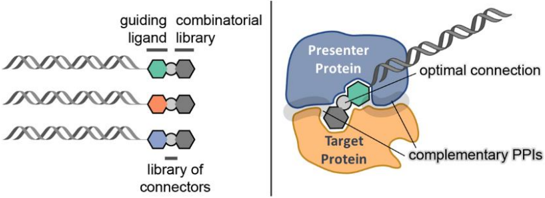
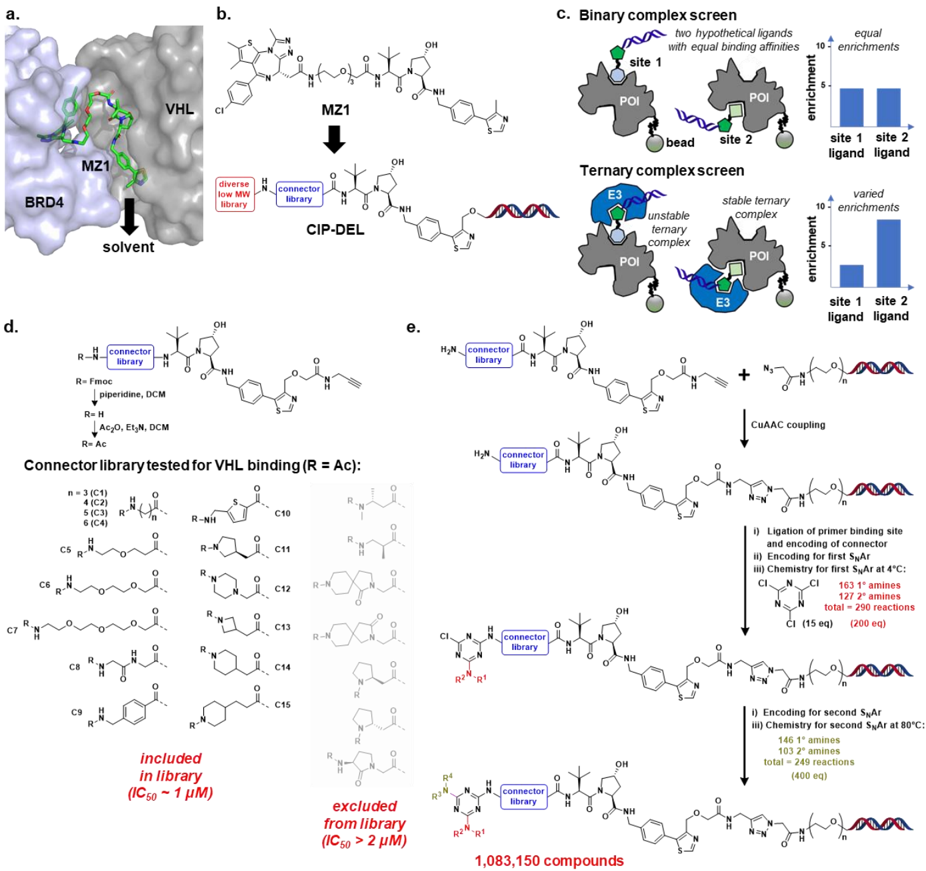
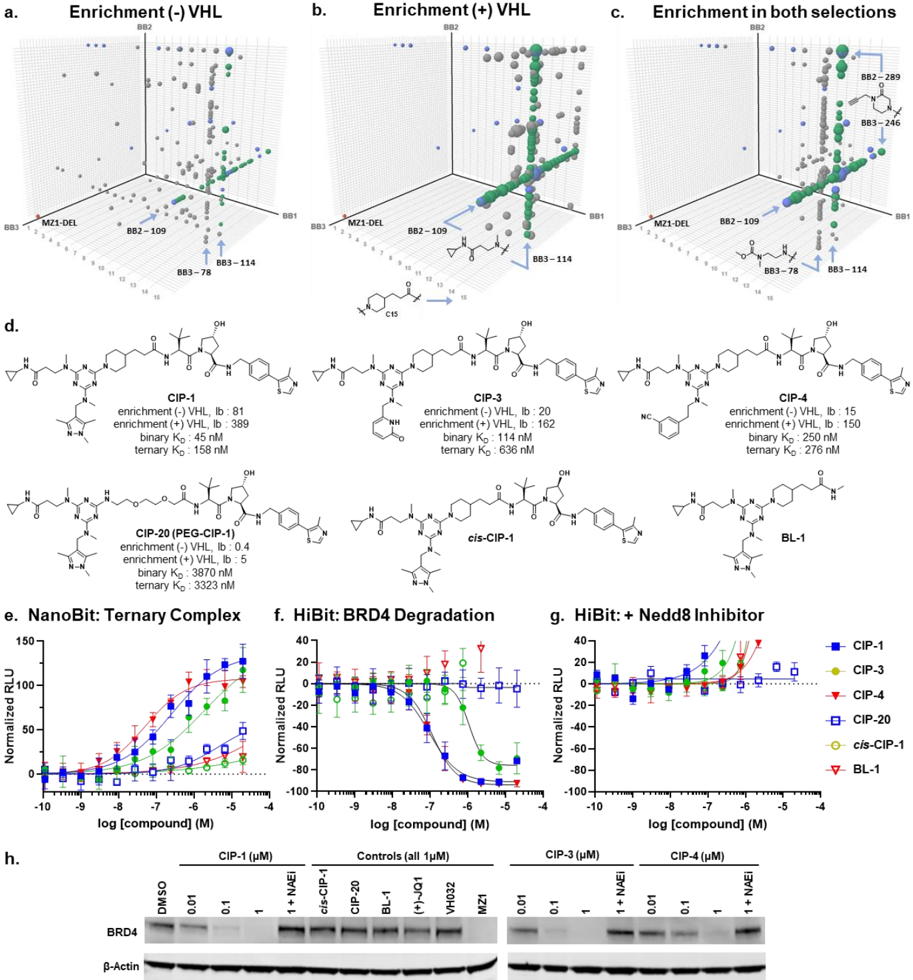
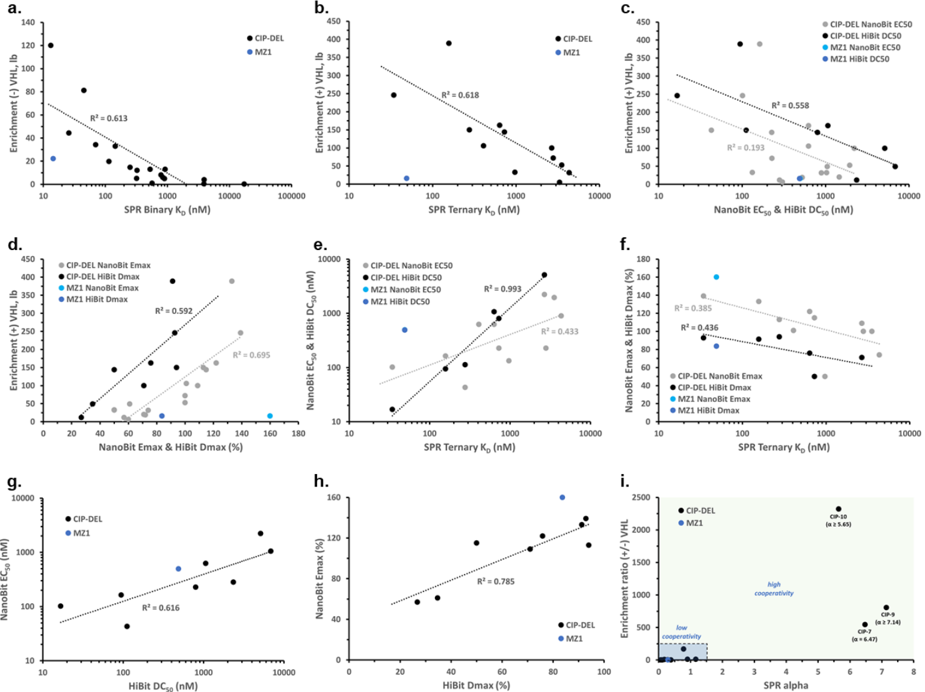
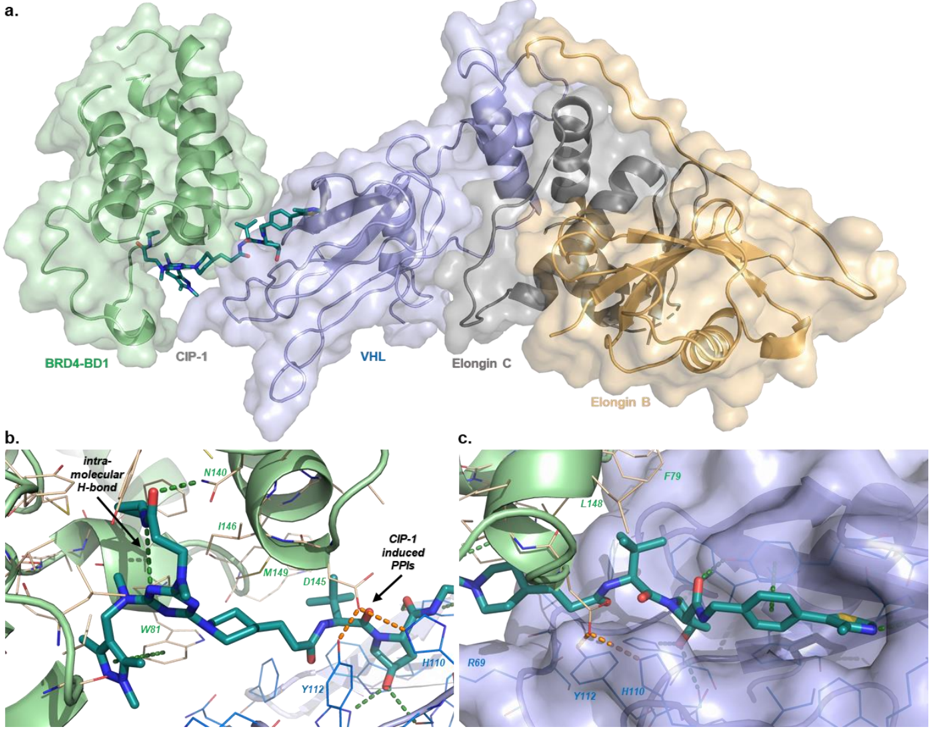
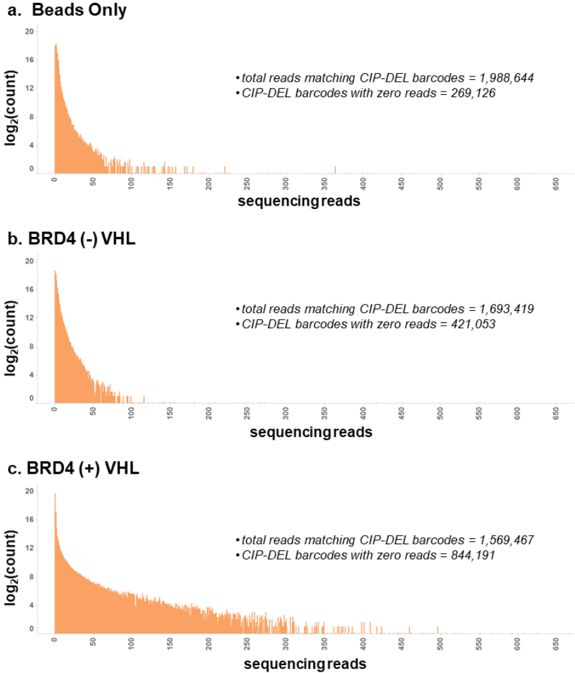
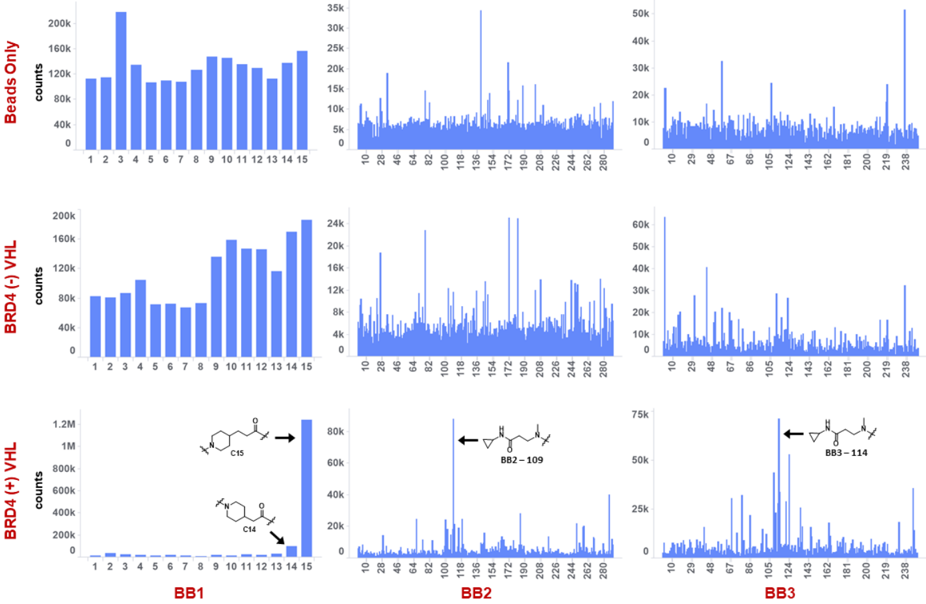
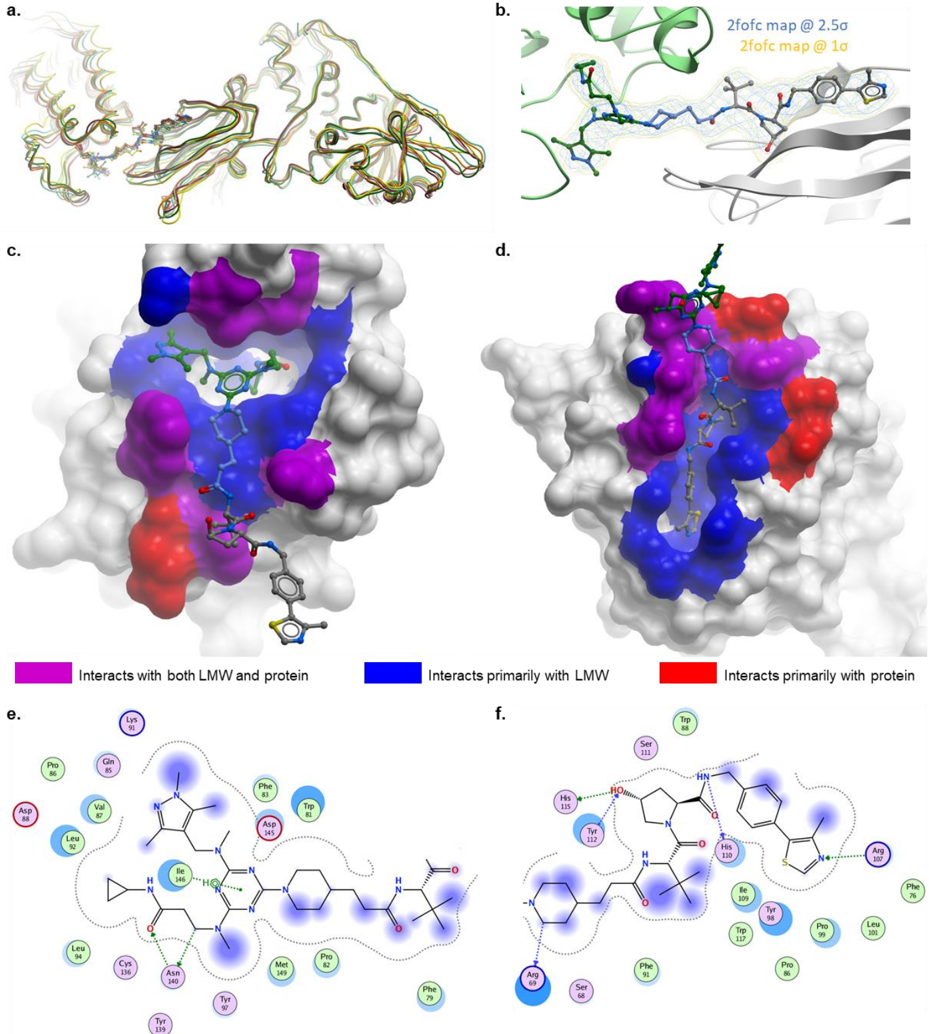
Small molecules that induce protein-protein associations represent powerful tools to modulate cell circuitry. We sought to develop a platform for the direct discovery of compounds able to induce association of any two preselected proteins, using the E3 ligase von Hippel-Lindau (VHL) and bromodomains as test systems. Leveraging the screening power of DNA-encoded libraries (DELs), we synthesized ~1 million DNA-encoded compounds that possess a VHL-targeting ligand, a variety of connectors and a diversity element generated by split-and-pool combinatorial chemistry. By screening our DEL against bromodomains in the presence and absence of VHL, we could identify VHL-bound molecules that simultaneously bind bromodomains. For highly barcode-enriched library members, ternary complex formation leading to bromodomain degradation was confirmed in cells. Furthermore, a ternary complex crystal structure was obtained for our most enriched library member with BRD4 BD1 and a VHL complex. Our work provides a foundation for adapting DEL screening to the discovery of proximity-inducing small molecules.
Overview
The claims and statistics of this paper haven’t been checked yet.
Free: it reads the open-access text and checks the first 5 claims that cite a source we can check. Create a free account to check every claim.
Integrity signals
Registry
Cites
Statistics
Figures
Verification
Claims the paper makes
The claims and statistics of this paper haven’t been checked yet.
Free: it reads the open-access text and checks the first 5 claims that cite a source we can check. Create a free account to check every claim.
Claims other papers make about this one
Each is checked against this paper’s own text: does it say what the citing paper says it does?
The source backs part of the claim, not all of it — or backs it for a different population, condition or comparison.
In the citing paper
“Although FKBP12 is not an e3 ligase, and so the compounds identified are not classified as degraders, these two landmark studies highlight Dels as a versatile platform for rational, high-throughput discovery of both PROtAcs and molecular glue degraders (Mason et al. 2024;Zandi et al. 2024).”
From From serendipity to strategy: molecular glue degraders in cancer therapeutics (2025) · cites this paper as Mason et al. 2024
Experimental — accuracy not yet measuredThe cited source says what the claim attributes to it.
In the citing paper
“in a PROtAc-based proof-of-concept study, a Del approach streamlined the development of these bivalent degraders, leading to the direct discovery of a potent vHl-dependent BRD4 degrader (Mason et al. 2024).”
From From serendipity to strategy: molecular glue degraders in cancer therapeutics (2025) · cites this paper as Mason et al. 2024
Self-check
Percentages, sums and reported differences re-computed from the paper’s own numbers.
The self-check needs the paper’s full text.
Citations
Cites
Coot : model-building tools for molecular graphics
Emsley, P., & Cowtan, K. (2004) · Acta Crystallographica Section D Biological Crystallography · doi:10.1107/s0907444904019158 · Cited by 30,571
Phaser crystallographic software
McCoy, A. J., Grosse-Kunstleve, R. W., Adams, P. D., Winn, M. D., Storoni, L. C., & Read, R. J. (2007) · Journal of Applied Crystallography · doi:10.1107/s0021889807021206 · Cited by 20,612
The CCP4 suite: programs for protein crystallography
Collaborative Computational Project, N. 4. (1994) · Acta Crystallographica Section D Biological Crystallography · doi:10.1107/s0907444994003112 · Cited by 17,270
Kabsch, W. (2010) · Acta Crystallographica Section D Biological Crystallography · doi:10.1107/s0907444909047337 · Cited by 16,463
How good are my data and what is the resolution?
Evans, P. R., & Murshudov, G. N. (2013) · Acta Crystallographica Section D Biological Crystallography · doi:10.1107/s0907444913000061 · Cited by 4,697
Selective inhibition of BET bromodomains
Filippakopoulos, P., Qi, J., Picaud, S., Shen, Y., Smith, W. B., Fedorov, O., Morse, E. M., Keates, T., Hickman, T. T., Felletar, I., et al. (2010) · Nature · doi:10.1038/nature09504 · Cited by 4,262 · cited 1×
“36) and the VHL-binding element VH032 (ref.”
Calcineurin is a common target of cyclophilin-cyclosporin A and FKBP-FK506 complexes
Liu, J., Farmer, J. D., Lane, W. S., Friedman, J., Weissman, I., & Schreiber, S. L. (1991) · Cell · doi:10.1016/0092-8674(91)90124-h · Cited by 4,116
Self-citationSakamoto, K. M., Kim, K. B., Kumagai, A., Mercurio, F., Crews, C. M., & Deshaies, R. J. (2001) · Proceedings of the National Academy of Sciences · doi:10.1073/pnas.141230798 · Cited by 2,609
Smith, T., Heger, A., & Sudbery, I. (2017) · Genome Research · doi:10.1101/gr.209601.116 · Cited by 2,143
A mammalian protein targeted by G1-arresting rapamycin–receptor complex
Brown, E. J., Albers, M. W., Bum Shin, T., ichikawa, K., Keith, C. T., Lane, W. S., & Schreiber, S. L. (1994) · Nature · doi:10.1038/369756a0 · Cited by 2,053
Self-citation
Cited by
Protein degraders enter the clinic — a new approach to cancer therapy
Chirnomas, D., Hornberger, K. R., & Crews, C. M. (2023) · Nature Reviews Clinical Oncology · doi:10.1038/s41571-023-00736-3 · Cited by 658
Targeted protein degradation: from mechanisms to clinic
Tsai, J. M., Nowak, R. P., Ebert, B. L., & Fischer, E. S. (2024) · Nature Reviews Molecular Cell Biology · doi:10.1038/s41580-024-00729-9 · Cited by 438
“…screening approaches have been devised and tested on established systems such as the use of isogenic cell lines lacking a key component of the UPS together with phenotypic screening 103,108 , using large-scale, small-molecule and genetic dependency data 100 , or DNA-encoded libraries 109 .”
Targeted protein degradation: advances in drug discovery and clinical practice
Zhong, G., Chang, X., Xie, W., & Zhou, X. (2024) · Signal Transduction and Targeted Therapy · doi:10.1038/s41392-024-02004-x · Cited by 326
Small-molecule discovery through DNA-encoded libraries
Peterson, A. A., & Liu, D. R. (2023) · Nature Reviews Drug Discovery · doi:10.1038/s41573-023-00713-6 · Cited by 247
Targeted protein degradation for cancer therapy
Hinterndorfer, M., Spiteri, V. A., Ciulli, A., & Winter, G. E. (2025) · Nature Reviews Cancer · doi:10.1038/s41568-025-00817-8 · Cited by 210
“Nevertheless, DELs massively expand the throughput and chemical space covered in unbiased chemical screens and have been successfully adopted for the identification of proximity-inducing small molecules 265,266 .”
Metadata
- Authors
- Mason, J. W., Chow, Y. T., Hudson, L., Tutter, A., Michaud, G., Westphal, M. V., Shu, W., Ma, X., Tan, Z. Y., Coley, C. W., Clemons, P. A., Bonazzi, S., Berst, F., Briner, K., Liu, S., Zécri, F. J., & Schreiber, S. L.
- Affiliations
- Broad Institute (US)
- Novartis Institutes for BioMedical Research (CH)
- Novartis (Switzerland) (CH)
- Corresponding author
- Liu, Shuang
- Zécri, Frédéric J.
- Schreiber, Stuart L.
- ORCID
- Venue
- Nature Chemical Biology
- Published
- 2023-11-02
- Volume
- 20
- Issue
- 2
- Pages
- 170-179
- ISSN
- 1552-4450 (ISSN-L)
- 1552-4469
- PMC
- PMC10917151
- OpenAlex
- W4388213141
- Cited by
- 83
- References
- 56
- Citations by year
- 2026: 15 · 2025: 36 · 2024: 23 · 2023: 9
- FWCI
- 7.66
- Type
- journal article
- Language
- en
- Open access
- green
- doi.org
- Licence
- cc-by-nc-nd
- www.springernature.com/gp/researchers/text-and-data-mining (tdm)
- www.springernature.com/gp/researchers/text-and-data-mining (vor)
- Locations
- Nature Chemical Biology (publishedVersion)
- bioRxiv (Cold Spring Harbor Laboratory) (acceptedVersion, cc-by-nc-nd)
- PubMed (publishedVersion)
- PubMed Central (acceptedVersion)
- Discovery Research Portal (University of Dundee) (submittedVersion)
- Funders
- U.S. Department of Health & Human Services | NIH | National Institute of General Medical Sciences (R35GM127045)
- Topics
- Life Sciences › Biochemistry, Genetics and Molecular Biology › Molecular Biology › Protein Degradation and Inhibitors
- Physical Sciences › Chemistry › Organic Chemistry › Chemical Synthesis and Analysis
- Life Sciences › Pharmacology, Toxicology and Pharmaceutics › Drug Discovery › Computational Drug Discovery Methods
- Keywords
- DNA-encoded libraries, protein-protein interaction, BRD4, ternary complex formation, high-throughput screening, crystal structure
- MeSH terms
- DNA, Nuclear Proteins, Transcription Factors, Ubiquitin-Protein Ligases, Von Hippel-Lindau Tumor Suppressor Protein
About these checks
Registry, retraction, Cites and statistics results are computed, not judged, with one exception: a printed reference that no index lists is read once by a model before it counts as a citation error. Claims are extracted by a model and kept only when their quote appears verbatim in the text; each cited source is then checked, with a model’s help, for whether it says what the claim relies on. Those verdicts can be wrong — read the claim’s quote and the cited source before relying on one.
Statistics and arithmetic are recomputed, not judged.
Confidence bands are shown only for fields calibrated on our annotated test set. None is calibrated yet, so no band is shown.
What counts as a claim ›How we measure confidence ›How we check this ›
Are you an author, or do you see a problem with this page? Request a review
How to cite
Cite CoChat for the checks on this page, and the paper for its own findings.
- This page
- CoChat. (2026). Citation check: DNA-encoded library-enabled discovery of proximity-inducing small molecules. https://app.cochat.ai/papers/10.1038/s41589-023-01458-4
- The paper
- Mason, J. W., Chow, Y. T., Hudson, L., Tutter, A., Michaud, G., Westphal, M. V., Shu, W., Ma, X., Tan, Z. Y., Coley, C. W., Clemons, P. A., Bonazzi, S., Berst, F., Briner, K., Liu, S., Zécri, F. J., & Schreiber, S. L. (2024). DNA-encoded library-enabled discovery of proximity-inducing small molecules. Nature Chemical Biology. https://doi.org/10.1038/s41589-023-01458-4
Data sources
Bibliographic data: Semantic Scholar, OpenAlex, Crossref.
Contains information from the Semantic Scholar Academic Graph Datasets, made available under the ODC Attribution License (ODC-BY 1.0).
Semantic Scholar’s data is described in: Kinney, R., et al. (2023). The Semantic Scholar Open Data Platform. arXiv:2301.10140.
