

DNA-encoded library-enabled discovery of proximity-inducing small molecules
Open accessPublished version of a preprint
The DOI matches its Crossref record; 56 of the 56 references it cites were found in a registry or an index.
Abstract
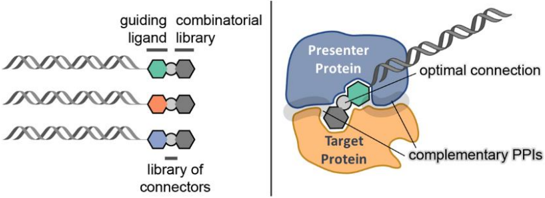
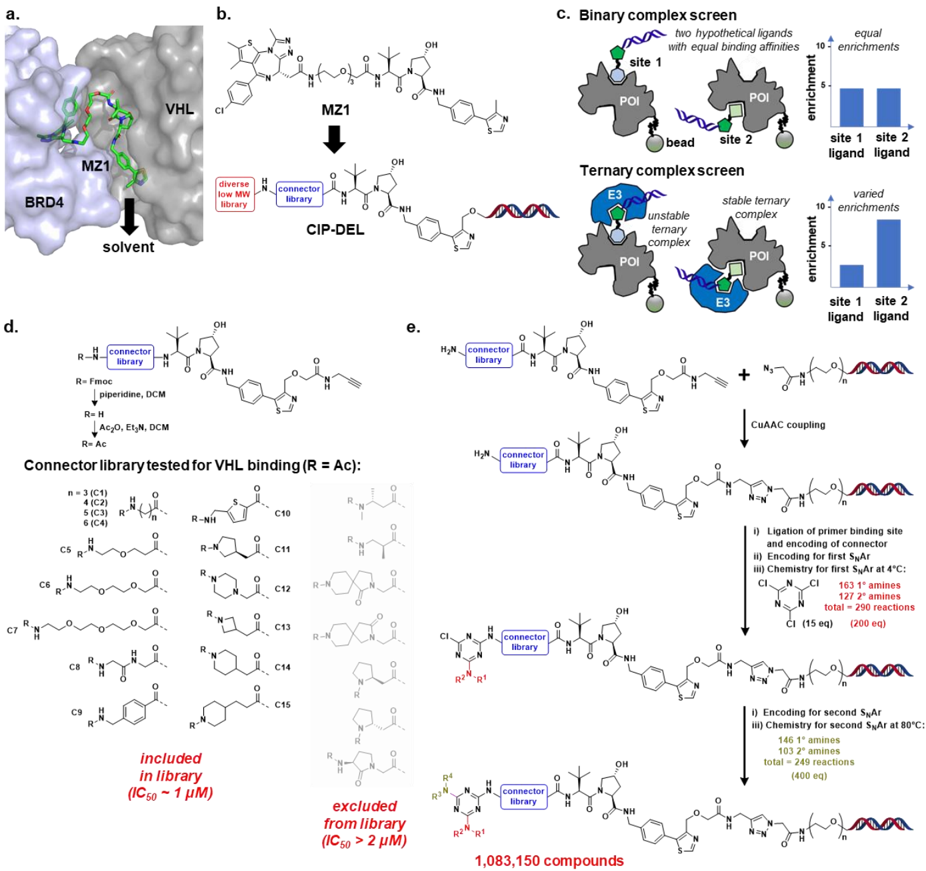
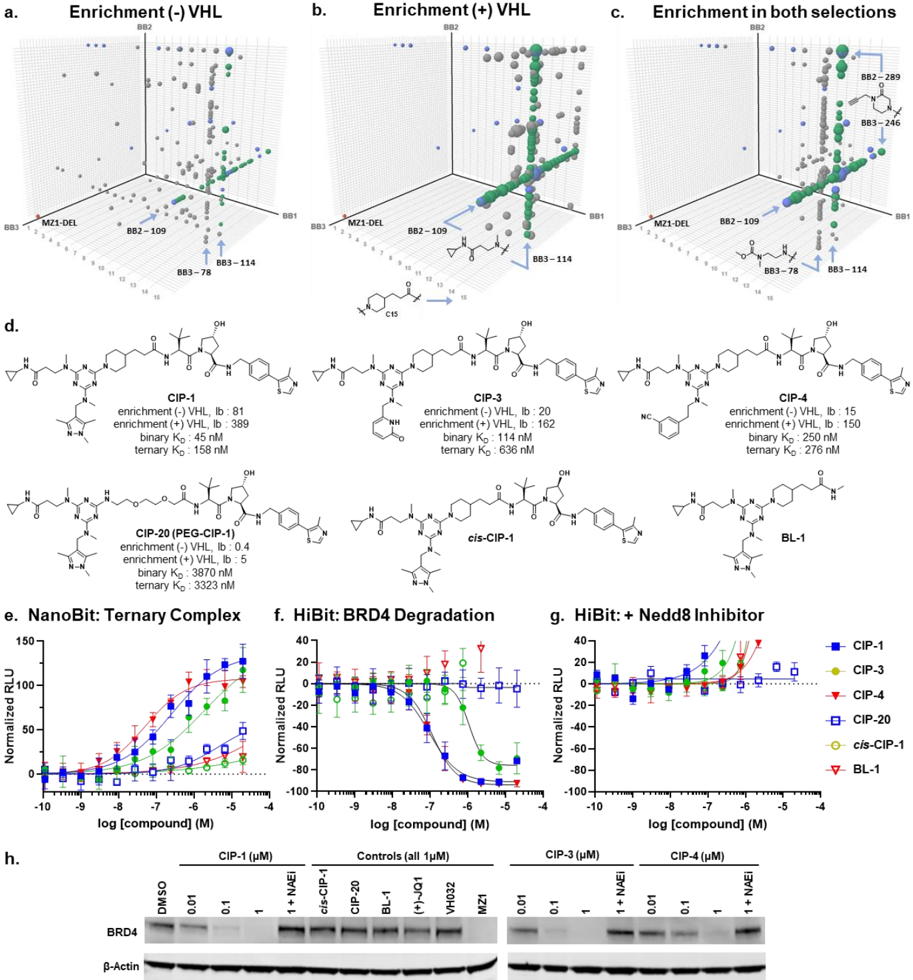
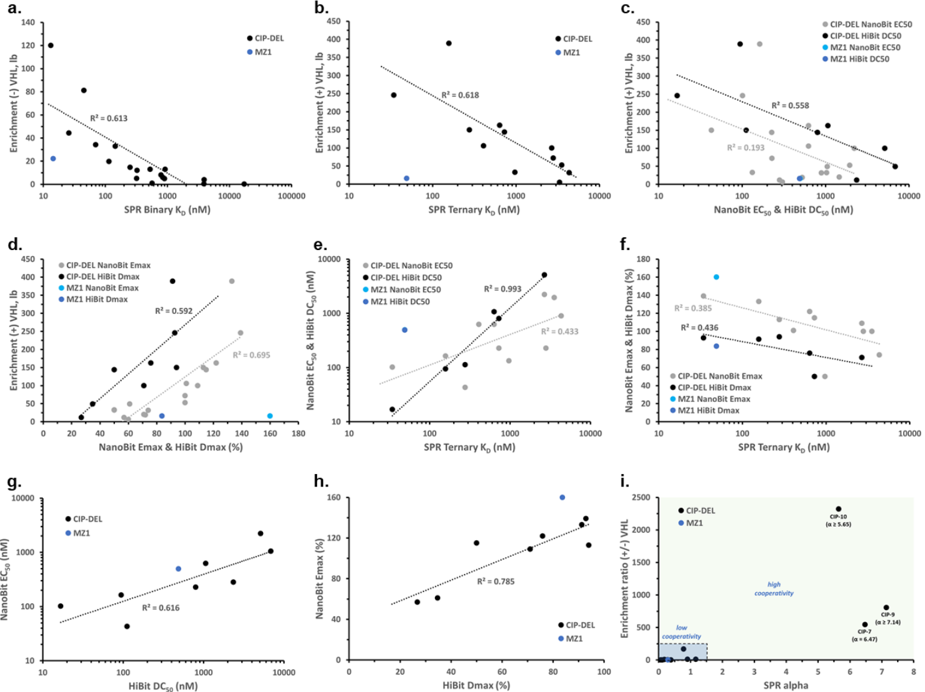
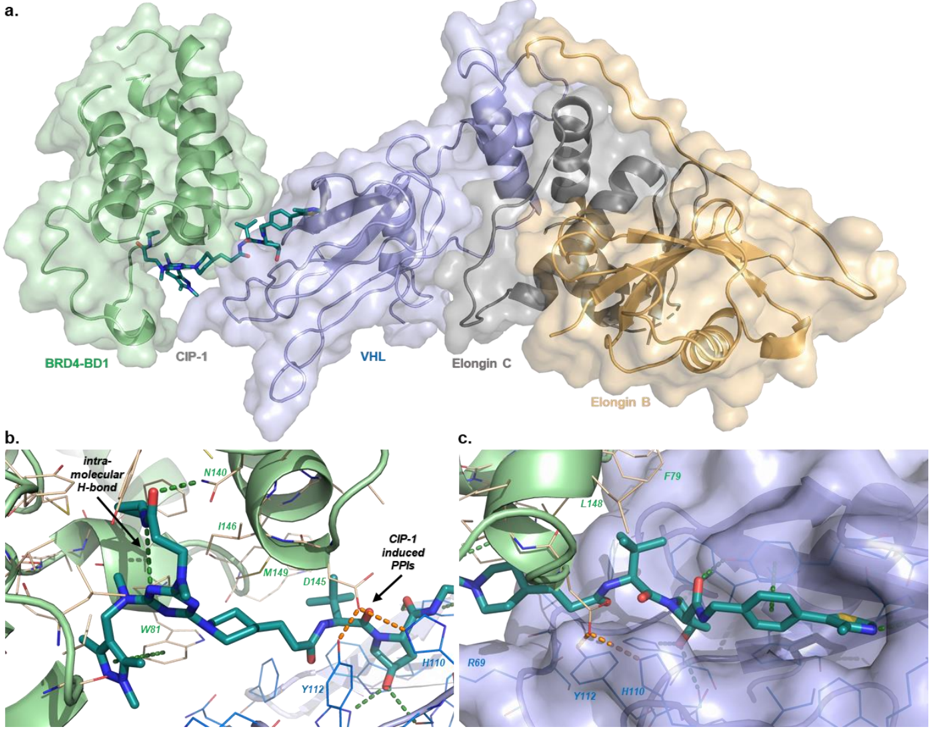
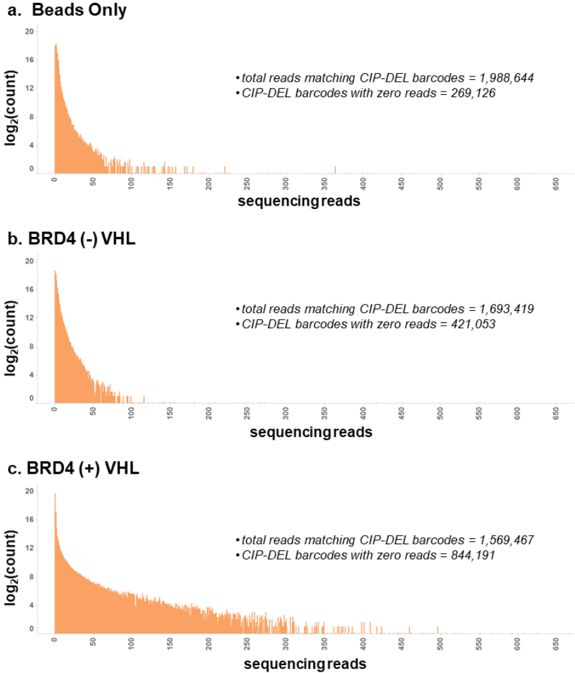
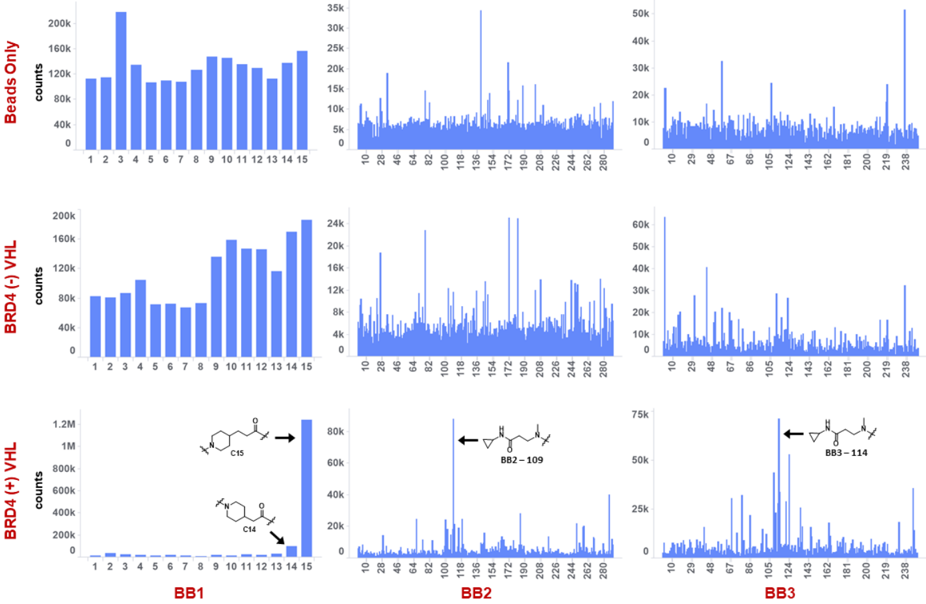
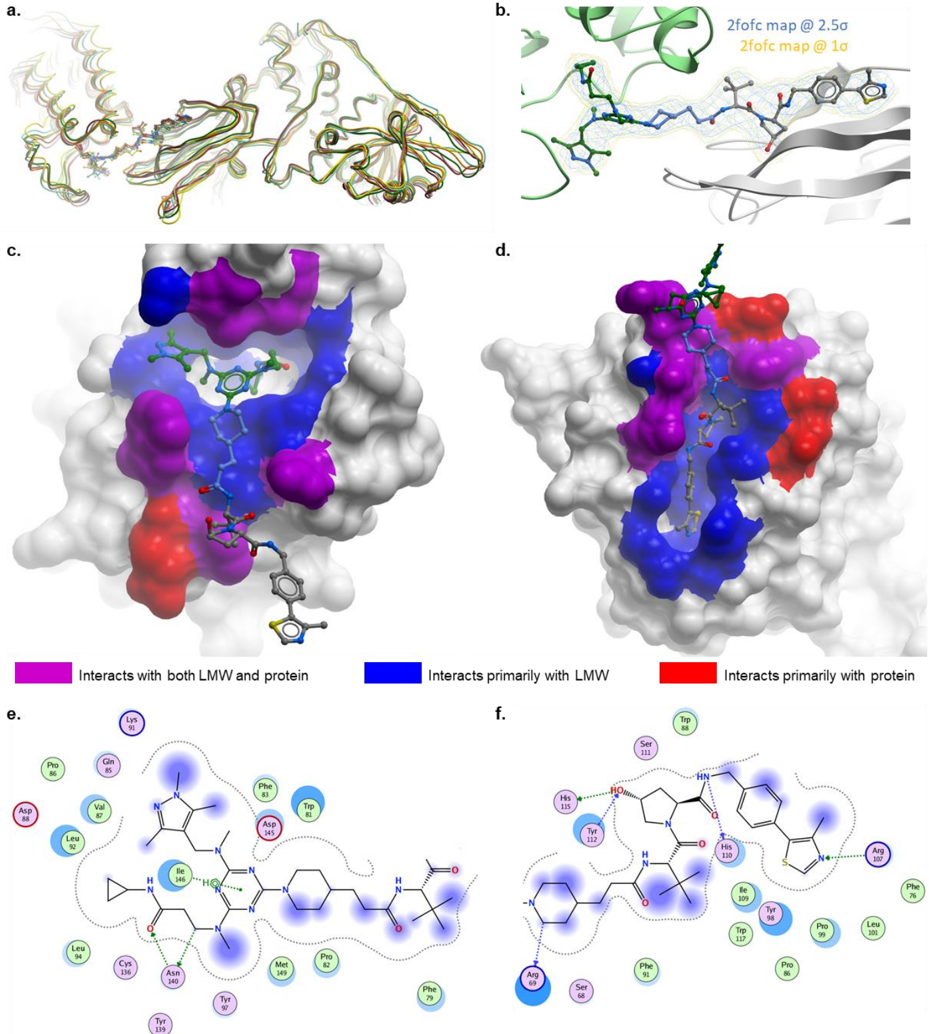
Small molecules that induce protein-protein associations represent powerful tools to modulate cell circuitry. We sought to develop a platform for the direct discovery of compounds able to induce association of any two preselected proteins, using the E3 ligase von Hippel-Lindau (VHL) and bromodomains as test systems. Leveraging the screening power of DNA-encoded libraries (DELs), we synthesized ~1 million DNA-encoded compounds that possess a VHL-targeting ligand, a variety of connectors and a diversity element generated by split-and-pool combinatorial chemistry. By screening our DEL against bromodomains in the presence and absence of VHL, we could identify VHL-bound molecules that simultaneously bind bromodomains. For highly barcode-enriched library members, ternary complex formation leading to bromodomain degradation was confirmed in cells. Furthermore, a ternary complex crystal structure was obtained for our most enriched library member with BRD4 BD1 and a VHL complex. Our work provides a foundation for adapting DEL screening to the discovery of proximity-inducing small molecules.
Overview
The claims and statistics of this paper haven’t been checked yet.
Free: it reads the open-access text and checks the first 5 claims that cite a source we can check. Create a free account to check every claim.
Integrity signals
Registry
Cites
Statistics
Figures
Verification
Claims the paper makes
The claims and statistics of this paper haven’t been checked yet.
Free: it reads the open-access text and checks the first 5 claims that cite a source we can check. Create a free account to check every claim.
Claims other papers make about this one
Each is checked against this paper’s own text: does it say what the citing paper says it does?
The source backs part of the claim, not all of it — or backs it for a different population, condition or comparison.
In the citing paper
“Although FKBP12 is not an e3 ligase, and so the compounds identified are not classified as degraders, these two landmark studies highlight Dels as a versatile platform for rational, high-throughput discovery of both PROtAcs and molecular glue degraders (Mason et al. 2024;Zandi et al. 2024).”
From From serendipity to strategy: molecular glue degraders in cancer therapeutics (2025) · cites this paper as Mason et al. 2024
Experimental — accuracy not yet measuredThe cited source says what the claim attributes to it.
In the citing paper
“in a PROtAc-based proof-of-concept study, a Del approach streamlined the development of these bivalent degraders, leading to the direct discovery of a potent vHl-dependent BRD4 degrader (Mason et al. 2024).”
From From serendipity to strategy: molecular glue degraders in cancer therapeutics (2025) · cites this paper as Mason et al. 2024
Self-check
Percentages, sums and reported differences re-computed from the paper’s own numbers.
The self-check needs the paper’s full text.
Citations
Cites
Coot : model-building tools for molecular graphics
Emsley, P., & Cowtan, K. (2004) · Acta Crystallographica Section D Biological Crystallography · doi:10.1107/s0907444904019158 · Cited by 30,571
Phaser crystallographic software
McCoy, A. J., Grosse-Kunstleve, R. W., Adams, P. D., Winn, M. D., Storoni, L. C., & Read, R. J. (2007) · Journal of Applied Crystallography · doi:10.1107/s0021889807021206 · Cited by 20,612
The CCP4 suite: programs for protein crystallography
Collaborative Computational Project, N. 4. (1994) · Acta Crystallographica Section D Biological Crystallography · doi:10.1107/s0907444994003112 · Cited by 17,270
Kabsch, W. (2010) · Acta Crystallographica Section D Biological Crystallography · doi:10.1107/s0907444909047337 · Cited by 16,463
How good are my data and what is the resolution?
Evans, P. R., & Murshudov, G. N. (2013) · Acta Crystallographica Section D Biological Crystallography · doi:10.1107/s0907444913000061 · Cited by 4,697
Selective inhibition of BET bromodomains
Filippakopoulos, P., Qi, J., Picaud, S., Shen, Y., Smith, W. B., Fedorov, O., Morse, E. M., Keates, T., Hickman, T. T., Felletar, I., et al. (2010) · Nature · doi:10.1038/nature09504 · Cited by 4,262 · cited 1×
“36) and the VHL-binding element VH032 (ref.”
Calcineurin is a common target of cyclophilin-cyclosporin A and FKBP-FK506 complexes
Liu, J., Farmer, J. D., Lane, W. S., Friedman, J., Weissman, I., & Schreiber, S. L. (1991) · Cell · doi:10.1016/0092-8674(91)90124-h · Cited by 4,116
Self-citationSakamoto, K. M., Kim, K. B., Kumagai, A., Mercurio, F., Crews, C. M., & Deshaies, R. J. (2001) · Proceedings of the National Academy of Sciences · doi:10.1073/pnas.141230798 · Cited by 2,609
Smith, T., Heger, A., & Sudbery, I. (2017) · Genome Research · doi:10.1101/gr.209601.116 · Cited by 2,143
A mammalian protein targeted by G1-arresting rapamycin–receptor complex
Brown, E. J., Albers, M. W., Bum Shin, T., ichikawa, K., Keith, C. T., Lane, W. S., & Schreiber, S. L. (1994) · Nature · doi:10.1038/369756a0 · Cited by 2,053
Self-citation
Cited by
Protein degraders enter the clinic — a new approach to cancer therapy
Chirnomas, D., Hornberger, K. R., & Crews, C. M. (2023) · Nature Reviews Clinical Oncology · doi:10.1038/s41571-023-00736-3 · Cited by 658
Targeted protein degradation: from mechanisms to clinic
Tsai, J. M., Nowak, R. P., Ebert, B. L., & Fischer, E. S. (2024) · Nature Reviews Molecular Cell Biology · doi:10.1038/s41580-024-00729-9 · Cited by 438
“…screening approaches have been devised and tested on established systems such as the use of isogenic cell lines lacking a key component of the UPS together with phenotypic screening 103,108 , using large-scale, small-molecule and genetic dependency data 100 , or DNA-encoded libraries 109 .”
Targeted protein degradation: advances in drug discovery and clinical practice
Zhong, G., Chang, X., Xie, W., & Zhou, X. (2024) · Signal Transduction and Targeted Therapy · doi:10.1038/s41392-024-02004-x · Cited by 326
Small-molecule discovery through DNA-encoded libraries
Peterson, A. A., & Liu, D. R. (2023) · Nature Reviews Drug Discovery · doi:10.1038/s41573-023-00713-6 · Cited by 247
Targeted protein degradation for cancer therapy
Hinterndorfer, M., Spiteri, V. A., Ciulli, A., & Winter, G. E. (2025) · Nature Reviews Cancer · doi:10.1038/s41568-025-00817-8 · Cited by 210
“Nevertheless, DELs massively expand the throughput and chemical space covered in unbiased chemical screens and have been successfully adopted for the identification of proximity-inducing small molecules 265,266 .”
Molecular glues and bifunctional compounds: Therapeutic modalities based on induced proximity
Schreiber, S. L. (2024) · Cell Chemical Biology · doi:10.1016/j.chembiol.2024.05.004 · Cited by 112
Self-citationRational Screening for Cooperativity in Small-Molecule Inducers of Protein–Protein Associations
Liu, S., Tong, B., Mason, J. W., Ostrem, J. M., Tutter, A., Hua, B. K., Tang, S. A., Bonazzi, S., Briner, K., Berst, F., et al. (2023) · Journal of the American Chemical Society · doi:10.1021/jacs.3c08307 · Cited by 69
Self-citationMolecular glues and induced proximity: An evolution of tools and discovery
Robinson, S. A., Co, J., & Banik, S. M. (2024) · Cell chemical biology · doi:10.1016/j.chembiol.2024.04.001 · Cited by 63
Lessons learned in linking PROTACs from discovery to the clinic
Pike, A., Lee, E. C. Y., Michaelides, I. N., Schade, M., Sharma, A., Scott, J. S., & Srivastava, A. (2025) · Nature Reviews Chemistry · doi:10.1038/s41570-025-00784-6 · Cited by 66
“Various research groups have shown how E3-biased DELs can be applied for PROTAC discovery by giving access to a vast number of heterobi-functional molecules that can be used for affinity screening with the E3 and POI 64–66 .”
Optimization of PROTAC Ternary Complex Using DNA Encoded Library Approach
Chen, Q., Liu, C., Wang, W., Meng, X., Cheng, X., Li, X., Cai, L., Luo, L., He, X., Qu, H., et al. (2023) · ACS Chemical Biology · doi:10.1021/acschembio.2c00797 · Cited by 55
Recent advances in DNA-encoded libraries
Gao, Y., Liu, J., Huang, S., Du, N., Zhang, G., & Li, Y. (2025) · Chemical Communications · doi:10.1039/d5cc02904j · Cited by 55
The changing landscape of medicinal chemistry optimization
Rácz, A., Mihalovits, L. M., Beckers, M., Fechner, N., Stiefl, N., Sirockin, F., McCoull, W., Evertsson, E., Lemurell, M., Makara, G. M., et al. (2025) · Nature Reviews Drug Discovery · doi:10.1038/s41573-025-01225-1 · Cited by 54
Proximity-inducing modalities: the past, present, and future
Singh, S., Tian, W., Severance, Z. C., Chaudhary, S. K., Anokhina, V. S., Mondal, B., Pergu, R., Singh, P. R., Dhawa, U., Singha, S., et al. (2023) · Chemical Society Reviews · doi:10.1039/d2cs00943a · Cited by 47
Alkylamine-tethered molecules recruit FBXO22 for targeted protein degradation
Kagiou, C., Cisneros, J. A., Farnung, J., Liwocha, J., Offensperger, F., Dong, K. D., Yang, K., Tin, G., Horstmann, C. S., Hinterndorfer, M., et al. (2024) · Nature Communications · doi:10.1038/s41467-024-49739-3 · Cited by 53
Drug Discovery Approaches to Target E3 Ligases
Rodríguez-Gimeno, A., & Galdeano, C. (2024) · ChemBioChem · doi:10.1002/cbic.202400656 · Cited by 45
High-throughput ligand diversification to discover chemical inducers of proximity
Shaum, J. B., Ordoño, M. M. I., Steen, E. A., Wenge, D. V., Cheong, H., Janowski, J., Hunkeler, M., Bilotta, E. M., Rutter, Z. J., Barta, P. A., et al. (2026) · Nature Chemical Biology · doi:10.1038/s41589-025-02137-2 · Cited by 47
“DNA-encoded library approaches have identified bifunctional compounds with glue-like cooperativity but they require preselection of both target and effector 90,91 .”
Wang, S., Faucher, F. F., Bertolini, M., Kim, H., Yu, B., Cao, L., Röltgen, K., Lovell, S., Shanker, V. R., Boyd, S. D., et al. (2025) · Journal of the American Chemical Society · doi:10.1021/jacs.4c15843 · Cited by 42
A small-molecule VHL molecular glue degrader for cysteine dioxygenase 1
Tutter, A., Buckley, D., Golosov, A. A., Ma, X., Shu, W., McKay, D. J. J., Darsigny, V., Dovala, D., Beckwith, R., Solomon, J., et al. (2025) · Nature Chemical Biology · doi:10.1038/s41589-025-01936-x · Cited by 36
“40,41).”
Self-citationMethods to accelerate PROTAC drug discovery
Osman, J., Thompson, P. E., Jörg, M., & Scanlon, M. J. (2025) · Biochemical Journal · doi:10.1042/bcj20243018 · Cited by 37
“Despite this limitation, there are many examples, summarised in recent reviews (e.g. [55]), where click chemistry has been used to synthesise analogue libraries quickly and cleanly, highlighting its utility within the PROTAC chemistry toolbox.”
Privileged heterocycles for DNA-encoded library design and hit-to-lead optimization
Wen, X., Wu, X., Jin, R., & Lu, X. (2023) · European Journal of Medicinal Chemistry · doi:10.1016/j.ejmech.2022.115079 · Cited by 39
Wang, X., Xiong, L., Zhu, Y., Liu, S., Zhao, W., Wu, X., Seydimemet, M., Li, L., Ding, P., Lin, X., et al. (2024) · Journal of the American Chemical Society · doi:10.1021/jacs.4c12992 · Cited by 34
Self-citationTargeted protein degradation in CNS disorders: a promising route to novel therapeutics?
Kuemper, S., Cairns, A. G., Birchall, K., Yao, Z., & Large, J. M. (2024) · Frontiers in Molecular Neuroscience · doi:10.3389/fnmol.2024.1370509 · Cited by 35
Direct-to-Biology Enabled Molecular Glue Discovery
Hu, M., Ochoada, J., Actis, M., McGowan, K. M., Jarusiewicz, J., Yoshimura, S., McGrath, L., Neelakantan, U., Aggarwal, A., Mayasundari, A., et al. (2025) · Journal of the American Chemical Society · doi:10.1021/jacs.5c13496 · Cited by 32
Evaluation of DNA encoded library and machine learning model combinations for hit discovery
Iqbal, S., Jiang, W., Hansen, E., Aristotelous, T., Liu, S., Reidenbach, A. G., Raffier, C., Leed, A., Chen, C., Chung, L., et al. (2025) · npj Drug Discovery. · doi:10.1038/s44386-025-00007-4 · Cited by 28
“…= the number of sequences collected for the library + selection condition DOS-DEL data deconvolution was performed following the published methods 15,29 , resulting in a calculated enrichment ratio of all molecules present in the sequencing output, reported as the lower bound of 95% con fi dence…”
Self-citationInnovative, combinatorial and high-throughput approaches to degrader synthesis
Stevens, R., Thompson, J. D. F., Fournier, J. C. L., Burley, G. A., Battersby, D. J., & Miah, A. H. (2024) · Chemical Society Reviews · doi:10.1039/d3cs01127e · Cited by 25
Exploring nondegrading molecular glues for protein–protein interactions
Yu, S., Zhou, L., Yang, J., Zhang, J., & Lu, W. (2025) · Trends in Biochemical Sciences · doi:10.1016/j.tibs.2025.07.005 · Cited by 22
The “three body solution”: Structural insights into molecular glues
Tomlinson, A. C. A., Knox, J. E., Brunsveld, L., Ottmann, C., & Yano, J. K. (2025) · Current Opinion in Structural Biology · doi:10.1016/j.sbi.2025.103007 · Cited by 23
Recognition and reprogramming of E3 ubiquitin ligase surfaces by α-helical peptides
Tokareva, O. S., Li, K., Travaline, T. L., Thomson, T. M., Swiecicki, J., Moussa, M., Ramirez, J. D., Litchman, S., Verdine, G. L., & McGee, J. H. (2023) · Nature Communications · doi:10.1038/s41467-023-42395-z · Cited by 21
Garber, K. (2024) · Nature Biotechnology · doi:10.1038/s41587-024-02164-9 · Cited by 22
Tan, Z. Y., Adade, J. K. A., Gu, X., Hecht, C. J. S., Salcius, M., Tong, B., Liu, S., Hwang, S., Zécri, F. J., Graham, D. B., et al. (2025) · Cell chemical biology · doi:10.1016/j.chembiol.2024.12.002 · Cited by 19
Self-citationZandi, T. A., Romanowski, M. J., Viscomi, J., Gunderson, K., Tan, Z. Y., Tong, B., Bonazzi, S., Zécri, F. J., Schreiber, S. L., & Michaud, G. A. (2026) · Nature Communications · doi:10.1038/s41467-026-71512-x · Cited by 17
“Next-generation sequencing data was converted into counts of individual bar-coded molecules by adapting and parallelizing the Python scripts utilized by Mason et al. 22 . for compatibility with a high-performance compute cluster.”
Self-citationA small molecule VHL molecular glue degrader for cysteine dioxygenase 1Preprint
Tutter, A. V., Buckley, D. L., Golosov, A. A., Ma, X., Shu, W., McKay, D. J., Darsigny, V., Dovala, D., Beckwith, R. E. J., Solomon, J. M., et al. (2024) · bioRxiv (Cold Spring Harbor Laboratory) · doi:10.1101/2024.01.25.576086 · Cited by 19
Self-citationRecent advances in targeting protein degradation for tumor immunotherapy
Li, S., Jin, Y., Wu, H., Yuan, H., & Zhao, J. (2025) · Journal of Hematology & Oncology · doi:10.1186/s13045-025-01765-4 · Cited by 15
“For example, Mason et al.. screened a VHL-ligand-based DEL library, identified hit molecules that stabilize the BRD4-VHL ternary complex and discovered BRD4-targeting PROTAC degraders exhibiting degradation activity in the nanomolar range [286].”
Proteome-Wide Discovery of Degradable Proteins Using Bifunctional Molecules
Forrest, I., Conway, L. P., Gathmann, C., Jadhav, A. M., Chiu, T.-Y., Chaheine, C. M., Estrada, M. A., Shrestha, A., Sarris, K., Reitsma, J. M., et al. (2025) · ACS Central Science · doi:10.1021/acscentsci.5c01594 · Cited by 14
Cai, P., Disraeli, C., Sauter, B., Zhanybekova, S., & Gillingham, D. G. (2025) · Chemical Science · doi:10.1039/d5sc01251a · Cited by 15
“6,26,28 The technology introduced here has a di ff erent application goal: characterizing a panel of Ub-transfer substrates 29 across a library of encoded molecules in a single dataset.”
Extrapolating Lessons from Targeted Protein Degradation to Other Proximity-Inducing Drugs
Winter, G. E. (2024) · ACS Chemical Biology · doi:10.1021/acschembio.4c00191 · Cited by 13
Huber, A. D., Lin, W., Poudel, S., Miller, D. J., & Chen, T. (2024) · Structure · doi:10.1016/j.str.2024.09.016 · Cited by 12
DNA-encoded chemical libraries on stage
Gloger, A., & Scheuermann, J. (2024) · Nature Chemical Biology · doi:10.1038/s41589-024-01791-2 · Cited by 12
Nondegradative Synthetic Molecular Glues Enter the Clinic
Repity, M. L., Deutscher, R. C. E., & Hausch, F. (2025) · ChemMedChem · doi:10.1002/cmdc.202500048 · Cited by 12
Recent advances in DNA-encoded libraries: From covalent targeting to protein profiling
Jin, R., & Lu, X. (2025) · Current Opinion in Structural Biology · doi:10.1016/j.sbi.2025.103163 · Cited by 11
Discovery of molecular glues that bind FKBP12 and novel targets using DNA-barcoded libraries
Zandi, T. A., Romanowski, M. J., Viscomi, J. S., Tan, Z. Y., Tong, B., Bonazzi, S., Zécri, F. J., Schreiber, S. L., & Michaud, G. A. (2024) · doi:10.1101/2024.12.09.627499 · Cited by 10
Self-citationOpportunities in proximity modulation: Bridging academia and industry
Đikić, I., Mayor‐Ruiz, C., Winter, G. E., Koch, K., Ciulli, A., & Thomä, N. H. (2025) · Molecular Cell · doi:10.1016/j.molcel.2025.07.018 · Cited by 11
“57,58 These compounds structurally resembled more closely PROTACs than conventional MGDs.”
From serendipity to strategy: molecular glue degraders in cancer therapeutics
Darling, S., Bajrami, I., & West, S. C. (2025) · Critical Reviews in Biochemistry and Molecular Biology · doi:10.1080/10409238.2025.2564068 · Cited by 9
“…applied to identify binders that engage both targets and effectors in ternary complexes. in a PROtAc-based proof-of-concept study, a Del approach streamlined the development of these bivalent degraders, leading to the direct discovery of a potent vHl-dependent BRD4 degrader (Mason et al. 2024).”
van der Nol, E., Haupt, N., Gao, Q., Smit, B. A. M., Hoffmann, M., Engler, M. S., Ludwig, M., McKenna, S. M., Mata, J. M., Béquignon, O. J. M., et al. (2025) · Nature Communications · doi:10.1038/s41467-025-65282-1 · Cited by 9
DNA-Compatible Synthesis of α-Aminophosphonate Scaffolds via Kabachnik–Fields Reaction
Choi, I. H., Lee, J., Seo, H., Kim, K. T., Song, M., & Hwang, G. T. (2025) · Organic Letters · doi:10.1021/acs.orglett.5c04477 · Cited by 8
MTA-cooperative PRMT5 inhibitors from cofactor-directed DNA-encoded library screens
Andersson, J., Cowland, S., Vestergaard, M., Yang, Y., Liu, S., Xie, F., Mukund, S., Ghimire-Rijal, S., Carter, C., Chung, G., et al. (2025) · Proceedings of the National Academy of Sciences · doi:10.1073/pnas.2425052122 · Cited by 10
“We speculate that the versatile directed binding strategy and large chemical libraries employed by the DEL platform may constitute a particular advantage for discovery of mul-tispecific compounds, as demonstrated by recent proof - of - concept experiments by the Schreiber lab ( 31 ).”
Self-citationSelection of DNA-encoded Chemical Libraries for Compounds that can Induce Protein UbiquitinationPreprint
Huang, C., Liu, X., Wu, X., Meng, L. H., Lu, X., & Li, X. (2024) · ChemRxiv · doi:10.26434/chemrxiv-2024-rmgtv · Cited by 7
Dang, W., Wang, X., Li, H., Xu, Y., Li, X., Huang, S., Tao, H., Li, X., Yang, Y., Xuan, L., et al. (2025) · Acta Pharmaceutica Sinica B · doi:10.1016/j.apsb.2025.06.006 · Cited by 6
“There are available tools for identifying compounds that induce new (neo)-protein associations 20,24,25 .”
Gray, J. L., Xiao, Z., Rogga, V. V., Zhang, X., & Tate, E. W. (2026) · Journal of the American Chemical Society · doi:10.1021/jacs.5c12299 · Cited by 6
Migliorini, F., Ciamarone, A., Plaza, S. D., Georgiev, T., Mascellani, M., Sabato, E., Vistoli, G., Biancofiore, I., Favalli, N., Puca, E., et al. (2025) · Advanced Science · doi:10.1002/advs.202505351 · Cited by 6
Chow, Y. T., Tong, B., Tan, Z. Y., Tutter, A. V., Nan, Z., Horton, P. A., Romanowski, M. J., Zécri, F. J., Schreiber, S. L., & Liu, S. (2025) · ACS Chemical Biology · doi:10.1021/acschembio.5c00413 · Cited by 5
Self-citationModulating the phosphorylation status of target proteins through bifunctional molecules
He, Q., Wang, Z., Wang, R., Lu, T., Chen, Y., & Lü, S. (2025) · Drug Discovery Today · doi:10.1016/j.drudis.2025.104307 · Cited by 4
PhenoDEL: A Novel Screening Strategy Based on Intracellular Protein Degradation Activity
Onda, Y., Ochi, Y., Araki, T., Kageoka, M., Takeda, S., Yamada, K., Ueda, T., Ohno, K., Tanaka, M., Sakai, D., et al. (2026) · ACS Chemical Biology · doi:10.1021/acschembio.6c00234 · Cited by 4
Deng, Y., Yang, S., Xu, H., Ding, X., Xu, Y., Ye, Z., Chen, Y., Zhang, Z., Lin, J., Xiong, H., et al. (2025) · Journal of Medicinal Chemistry · doi:10.1021/acs.jmedchem.5c00065 · Cited by 4
An, Y., Zhou, R., & Li, X. (2026) · ACS Medicinal Chemistry Letters · doi:10.1021/acsmedchemlett.5c00738 · Cited by 3
Targeted protein degradation: bridging chemical biology and clinical translation
Zhang, Y., Fu, J.-W., Liu, Y., Wu, R. Y., Liang, Y., Zhang, W., Yuan, T., Zhu, H., He, Q.-J., & Yang, B. (2026) · Acta Pharmacologica Sinica · doi:10.1038/s41401-026-01861-2 · Cited by 6
“Molecules capable of stabilizing the ternary complex are selectively enriched and subsequently decoded via next-generation sequencing (NGS) [101].”
MacKinnon, S., Zarganes‐Tzitzikas, T., Adams, C. J., Brennan, P. E., & Yue, W. W. (2024) · Biochimie · doi:10.1016/j.biochi.2024.08.011 · Cited by 3
Du, J., Villemure, E., Johnson, M., Azumaya, C. M., Gaspar, C. J., Marsters, S. A., Lawrence, D. A., Foster, S. A., Rohou, A. L., Cheung, T. K., et al. (2025) · Nature Communications · doi:10.1038/s41467-025-66382-8 · Cited by 2
“VHL associates via G6374 with the N-lobe of the IRE1-kinase domain in the forewings, with a total buried surface area (BSA) of ~300Å 2 — an interface that is comparable to known VHL:bromodo-main:PROTAC assemblies 50,51 (Supplementary Table 3).”
InfluentialChemistry-Driven Integrated Innovation: Unleashing the Potential of PROTAC Technology
Xu, H., Tang, K., Song, Y., Menéndez‐Arias, L., & Zhan, P. (2025) · Pharmaceutical Fronts · doi:10.1055/a-2731-6203 · Cited by 2
“47 By harnessing the screening capabilities of DELs, they synthesized approximately one million compounds with a VHL-targeting ligand, various connectors, and a diversity ele-mentgenerated through split-and-pool combinatorial chemistry.”
Dolorfino, M., Perez, D. S., Fu, Y., Lin, S.-H., McCarty, S., O’Meara, M. J., & Sztain, T. (2026) · Journal of Chemical Information and Modeling · doi:10.1021/acs.jcim.6c01611 · Cited by 2
Affinity-based DEL Selections with Different Target Types: Overview and Achievements
Chen, Q., & Israel, D. I. (2025) · Royal Society of Chemistry eBooks · doi:10.1039/9781788016032-00001 · Cited by 2
Orthogonal resistance mechanisms of classical- and induced-proximity inhibitorsPreprint
Merz, M. L., Kailass, K., Pergu, R., Tran, K., Gupta, K., Severance, Z. C., Singh, S., Sreekanth, V., Law, B. K., Rosenblatt, G., et al. (2025) · bioRxiv (Cold Spring Harbor Laboratory) · doi:10.1101/2025.05.10.652755 · Cited by 3
“34 We anticipate that such platforms will synergize with the tiling mutagenesis and variant scanning strategies to prioritize the development of inhibitors with orthogonal resistance mechanisms.”
Drug discovery technologies–Current and future trends
Noe, M. C., Steppan, C. M., & Weston, A. D. (2025) · Elsevier eBooks · doi:10.1016/b978-0-443-29808-0.00019-4 · Cited by 1
Niwa, M., Hayashida, J., Tokugawa, M., Nanya, T., Tanabe, M., Honda, N., Inohana, T., Fukano, H., Shigeta, Y., Kuboyama, T., et al. (2024) · Chemistry - A European Journal · doi:10.1002/chem.202403233 · Cited by 1
Testa, A. (2023) · Nature Chemical Biology · doi:10.1038/s41589-023-01473-5 · Cited by 1
PSL Chemical Biology Symposia Third Edition: A Branch of Science in its Explosive Phase
Baron, L., Hadjerci, J., Thoidingjam, L. K., Plays, M., Bucci, R., Morris, N., Müller, S., Sindikubwabo, F., Solier, S., Cañeque, T., et al. (2023) · ChemBioChem · doi:10.1002/cbic.202300093
Saganuwan, S. A. (2024) · RPS Pharmacy and Pharmacology Reports · doi:10.1093/rpsppr/rqae002
Enabling Technologies for Organic Synthesis: DNA-Encoded Libraries
Carden, S., & Chai, J. (2024) · Elsevier eBooks · doi:10.1016/b978-0-323-96025-0.00062-4
Hit discovery from DNA-encoded chemical library
Li, Y., Zhao, G., Huang, J., & Li, Y. (2024) · Elsevier eBooks · doi:10.1016/b978-0-443-23932-8.00003-0
Application of DELs for E3 Ligase Ligand Discovery and Targeted Protein Degradation
Malone, M. L., Sanchez, N. A., Hu, S. L., & Phelps, C. B. (2025) · Royal Society of Chemistry eBooks · doi:10.1039/9781788016032-00134
On-DNA Medicinal Chemistry: Focused Libraries, Fragment Expansion, and Hit Optimisation
Stanway‐Gordon, H. A., & Waring, M. J. (2025) · Royal Society of Chemistry eBooks · doi:10.1039/9781788016032-00087
Yang, L., Duan, H., Mao, X., Li, B., Che, J., & Dong, X. (2025) · Elsevier eBooks · doi:10.1016/b978-0-443-21816-3.00004-x
DNA self-assembly encoding in spatial multi-omics imaging
Tang, X., Diao, Q., Zhu, X., & Pan, Q. (2025) · Cell Reports Physical Science · doi:10.1016/j.xcrp.2025.102811
Ma, P., Zhang, S., Zhang, H., Bi, W., Hou, S., Ma, H., Zhao, S., Li, J., Zhou, T., Hou, W., et al. (2025) · Research Square · doi:10.21203/rs.3.rs-7459537/v1
Privileged scaffold repurposed: the evolving role of quinolone derivatives in antiviral therapy
Xu, H., Li, B., Tang, K., Yang, J., & Zhan, P. (2025) · Bioorganic & Medicinal Chemistry Letters · doi:10.1016/j.bmcl.2025.130427
DNA-Encoded Chemical Library Screening with Target Titration Analysis: DELTA
Faver, J. C., Sundersingh, F. S., Viarengo‐Baker, L. A., Chen, Y.-C., Billings, K., Riley, P., Tsai, C.-H., & Kollmann, C. S. (2026) · Journal of Medicinal Chemistry · doi:10.1021/acs.jmedchem.5c02259
Miyachi, H., Koshimizu, M., & Suzuki, M. (2026) · International Journal of Molecular Sciences · doi:10.3390/ijms27020828
“Representative examples include 2,4,6– trichloro–1,3,5–triazine [37–40] and protected amino acid derivatives such as (4S) –”
SAG/RBX2/ROC2/RNF7 dual E3 ligase: From target identification, validation to drug discovery
Yu, Q., Zhang, S., Li, Z., Liang, T., & Sun, Y. (2026) · Biochimica et Biophysica Acta (BBA) - Reviews on Cancer · doi:10.1016/j.bbcan.2026.189546
Synthesis of a nucleic acid reporter for molecular glue discovery in DNA encoded librariesPreprint
Magnani, C. S. H., & Schreiber, S. L. (2026) · ChemRxiv · doi:10.26434/chemrxiv.15000656/v1
Self-citationLineage Specific signaling and targeting of PI3Kγ in myeloid malignancies
Kelly, L. M. (2025) · theses.fr (ABES) · doi:10.70675/125db7d3z063bz4467zb1b2z7c1472b6513d
DNA‐Encoded Libraries for the Discovery of E3 Ligase Ligands
Wen, L., Zhang, Q., Duan, Z., Jin, R., & Lu, X. (2026) · ChemMedChem · doi:10.1002/cmdc.202501032
“Their screening strategy compared molecular enrichment on BRD4 in the presence or absence of VHL. Selected CIPs were subsequently shown to induce bromodomain degradation in cells, thereby validating the feasibility of DEL-based screening for the discovery of TPD molecules [111].”
Yang, X., Taghavi, A., Akahori, Y., Pedrini, M., Ishii, T., & Disney, M. D. (2026) · ACS Chemical Biology · doi:10.1021/acschembio.6c00337
Emerging biochemical and bioanalytical strategies shaping nature-based therapeutic discovery
McIntosh, B., & Koay, Y. C. (2026) · Current Opinion in Chemical Biology · doi:10.1016/j.cbpa.2026.102726
High-Throughput Screen for Candidate PROTAC Identification
Chen, X., & Zhu, C. (2026) · Handbook of experimental pharmacology · doi:10.1007/164_2026_841
Tong, B., Tang, S. A., Deng, Y., Nan, Z., Gao, A. X., Michaud, G. A., Bonazzi, S., Berst, F., Zécri, F. J., Liu, S., et al. (2026) · Advanced Science · doi:10.1002/advs.77819
“Our earlier VHL-based CIP-DELs were constructed from known VHL ligands, with DNA barcodes attached to one exit vector and library building blocks introduced through another [ 21 ].”
InfluentialSelf-citationTools for DNA-encoded library synthesis
Bingold, J., Li, Z., Liang, L., Schmidt, J., Zhang, C., & Brunschweiger, A. (2026) · Chemical Communications · doi:10.1039/d6cc05320c
Unbiased, Target-Agnostic Platform for the Synthesis and Screening of PROTAC Libraries
Busse, A. A., Rodriguez, M., Duncan, L. M., Luo, A., Bayona, J. D., Wanigasekara, M. S. K., Rosenblatt, M. M., Posner, B. A., Kober, D. L., Deng, S., et al. (2026) · Journal of Medicinal Chemistry · doi:10.1021/acs.jmedchem.6c02816
Close encounters of the glue kind: Exploring the medicinal chemistry landscape of molecular glues
Burston, H. E., Cavallo, F., Cilvert, O., Gourdet, B., Hjerpe, R., Jordan, A. M., Juillet, C., Leźnicki, P., MacFaul, P. A., Pillai, G., et al. (2026) · Progress in medicinal chemistry · doi:10.1016/bs.pmch.2026.10.002
Metadata
- Authors
- Mason, J. W., Chow, Y. T., Hudson, L., Tutter, A., Michaud, G., Westphal, M. V., Shu, W., Ma, X., Tan, Z. Y., Coley, C. W., Clemons, P. A., Bonazzi, S., Berst, F., Briner, K., Liu, S., Zécri, F. J., & Schreiber, S. L.
- Affiliations
- Broad Institute (US)
- Novartis Institutes for BioMedical Research (CH)
- Novartis (Switzerland) (CH)
- Corresponding author
- Liu, Shuang
- Zécri, Frédéric J.
- Schreiber, Stuart L.
- ORCID
- Venue
- Nature Chemical Biology
- Published
- 2023-11-02
- Volume
- 20
- Issue
- 2
- Pages
- 170-179
- ISSN
- 1552-4450 (ISSN-L)
- 1552-4469
- PMC
- PMC10917151
- OpenAlex
- W4388213141
- Cited by
- 83
- References
- 56
- Citations by year
- 2026: 15 · 2025: 36 · 2024: 23 · 2023: 9
- FWCI
- 7.66
- Type
- journal article
- Language
- en
- Open access
- green
- doi.org
- Licence
- cc-by-nc-nd
- www.springernature.com/gp/researchers/text-and-data-mining (tdm)
- www.springernature.com/gp/researchers/text-and-data-mining (vor)
- Locations
- Nature Chemical Biology (publishedVersion)
- bioRxiv (Cold Spring Harbor Laboratory) (acceptedVersion, cc-by-nc-nd)
- PubMed (publishedVersion)
- PubMed Central (acceptedVersion)
- Discovery Research Portal (University of Dundee) (submittedVersion)
- Funders
- U.S. Department of Health & Human Services | NIH | National Institute of General Medical Sciences (R35GM127045)
- Topics
- Life Sciences › Biochemistry, Genetics and Molecular Biology › Molecular Biology › Protein Degradation and Inhibitors
- Physical Sciences › Chemistry › Organic Chemistry › Chemical Synthesis and Analysis
- Life Sciences › Pharmacology, Toxicology and Pharmaceutics › Drug Discovery › Computational Drug Discovery Methods
- Keywords
- DNA-encoded libraries, protein-protein interaction, BRD4, ternary complex formation, high-throughput screening, crystal structure
- MeSH terms
- DNA, Nuclear Proteins, Transcription Factors, Ubiquitin-Protein Ligases, Von Hippel-Lindau Tumor Suppressor Protein
About these checks
Registry, retraction, Cites and statistics results are computed, not judged, with one exception: a printed reference that no index lists is read once by a model before it counts as a citation error. Claims are extracted by a model and kept only when their quote appears verbatim in the text; each cited source is then checked, with a model’s help, for whether it says what the claim relies on. Those verdicts can be wrong — read the claim’s quote and the cited source before relying on one.
Statistics and arithmetic are recomputed, not judged.
Confidence bands are shown only for fields calibrated on our annotated test set. None is calibrated yet, so no band is shown.
What counts as a claim ›How we measure confidence ›How we check this ›
Are you an author, or do you see a problem with this page? Request a review
Data sources
Bibliographic data: Semantic Scholar, OpenAlex, Crossref.
Contains information from the Semantic Scholar Academic Graph Datasets, made available under the ODC Attribution License (ODC-BY 1.0).
Semantic Scholar’s data is described in: Kinney, R., et al. (2023). The Semantic Scholar Open Data Platform. arXiv:2301.10140.
