

Modeling vaccination rollouts, SARS-CoV-2 variants and the requirement for non-pharmaceutical interventions in Italy
Open accessPublished version of a preprint
The DOI matches its Crossref record; 48 of the 48 references it cites were found in a registry or an index; 13 of the 19 sources its claims cite were checked for support.
Abstract
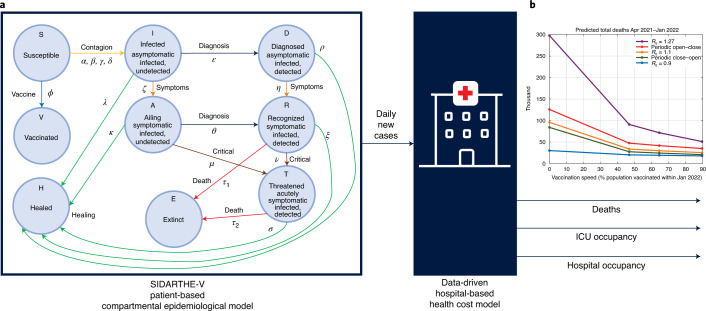
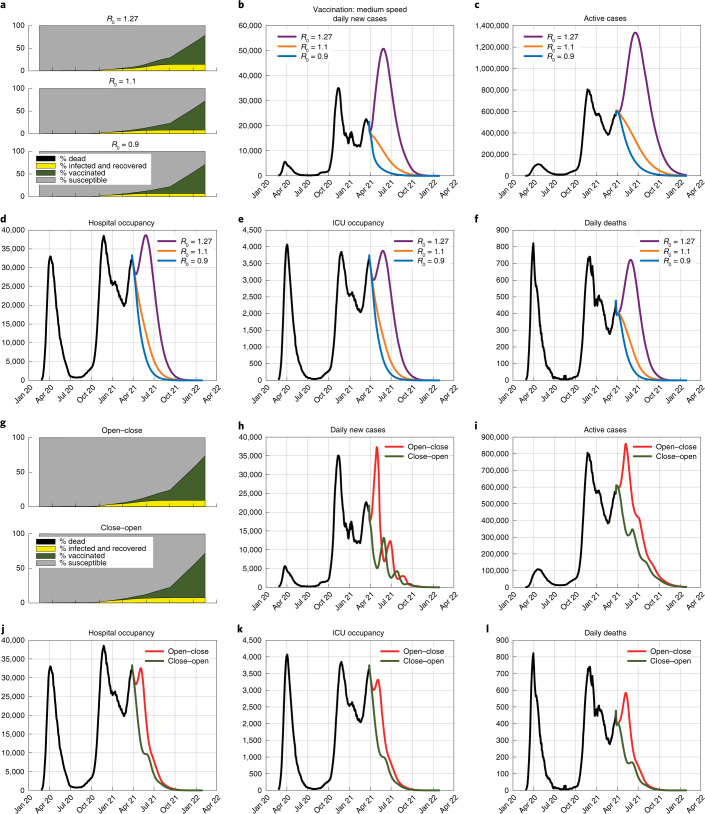
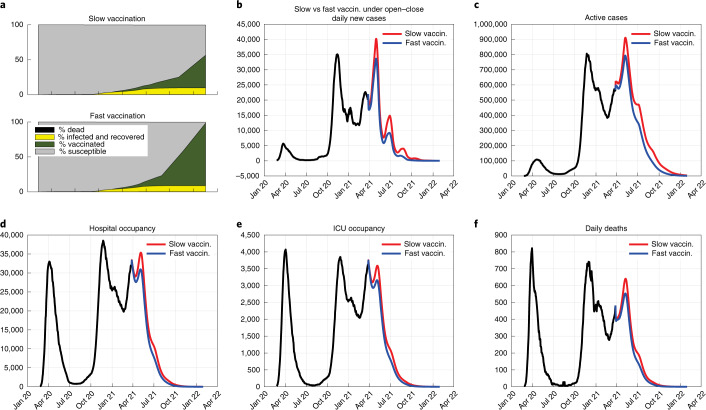
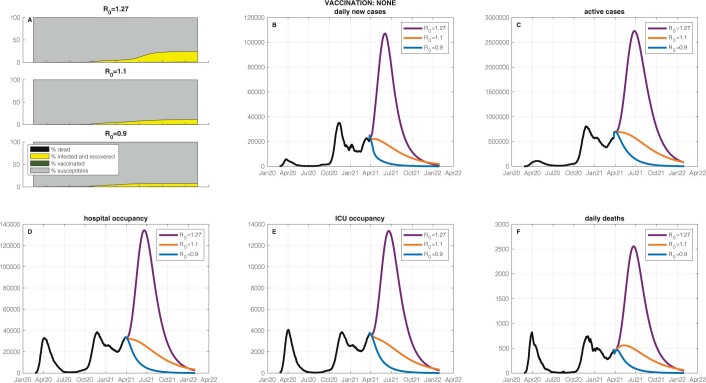
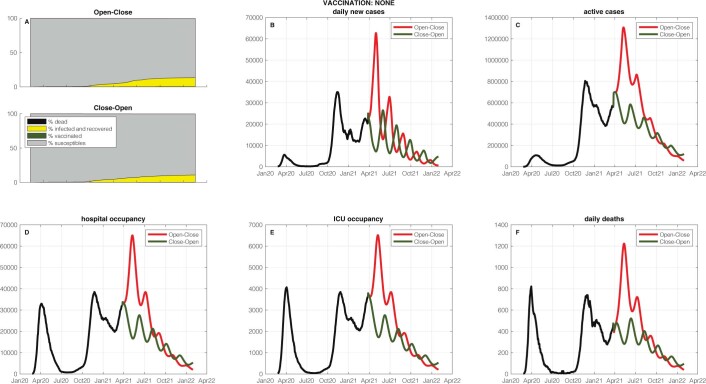
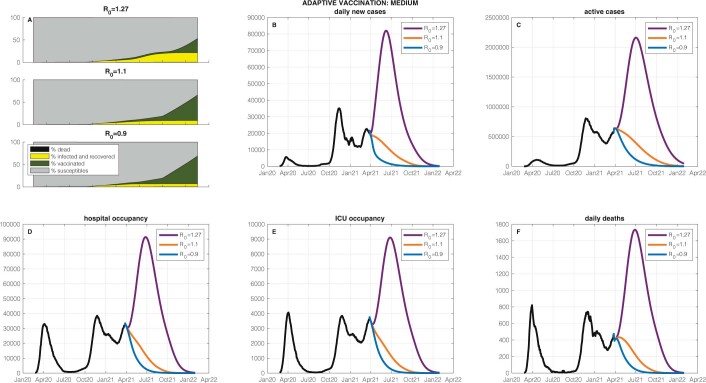
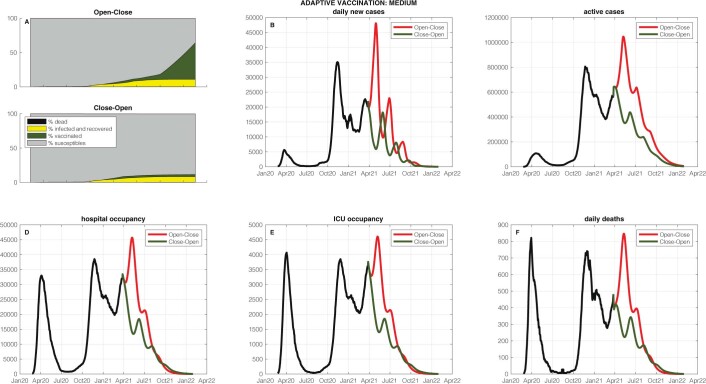
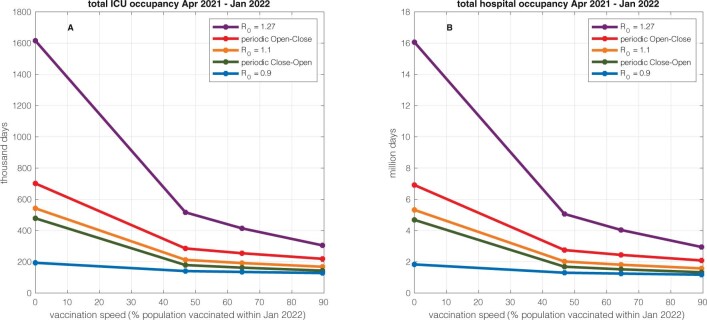
Despite progress in clinical care for patients with coronavirus disease 2019 (COVID-19) 1 , population-wide interventions are still crucial to manage the pandemic, which has been aggravated by the emergence of new, highly transmissible variants. In this study, we combined the SIDARTHE model 2 , which predicts the spread of SARS-CoV-2 infections, with a new data-based model that projects new cases onto casualties and healthcare system costs. Based on the Italian case study, we outline several scenarios: mass vaccination campaigns with different paces, different transmission rates due to new variants and different enforced countermeasures, including the alternation of opening and closure phases. Our results demonstrate that non-pharmaceutical interventions (NPIs) have a higher effect on the epidemic evolution than vaccination alone, advocating for the need to keep NPIs in place during the first phase of the vaccination campaign. Our model predicts that, from April 2021 to January 2022, in a scenario with no vaccine rollout and weak NPIs ( $${\cal{R}}_0$$ R 0 = 1.27), as many as 298,000 deaths associated with COVID-19 could occur. However, fast vaccination rollouts could reduce mortality to as few as 51,000 deaths. Implementation of restrictive NPIs ( $${\cal{R}}_0$$ R 0 = 0.9) could reduce COVID-19 deaths to 30,000 without vaccinating the population and to 18,000 with a fast rollout of vaccines. We also show that, if intermittent open–close strategies are adopted, implementing a closing phase first could reduce deaths (from 47,000 to 27,000 with slow vaccine rollout) and healthcare system costs, without substantive aggravation of socioeconomic losses.
Overview
CoChat Summary
## TL;DR
The paper combines a compartmental epidemic model (SIDARTHE-V) with a data-based healthcare-cost model to evaluate how vaccination speed, SARS-CoV-2 variants, and non-pharmaceutical interventions (NPIs) affect COVID-19 outcomes in Italy. It concludes that NPIs have a larger impact than vaccination speed alone, especially early in the vaccination campaign.
## Key findings
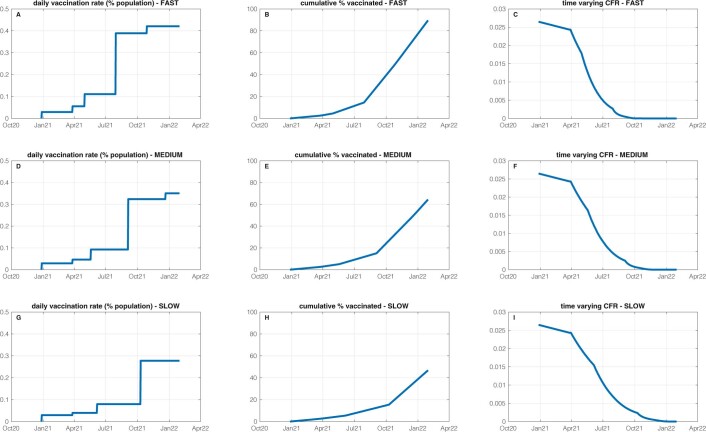
- In the main scenarios, deaths from April 2021 to January 2022 ranged from 30,000 to 298,000 with no vaccination rollout, 20,000 to 91,000 with slow vaccination, 19,000 to 72,000 with medium vaccination, and 18,000 to 51,000 with fast vaccination.
- Under a scenario with weak restrictions and no vaccination, the model projects as many as 298,000 deaths; with restrictive NPIs (\(= 0.9\)), deaths could be reduced to 30,000 without vaccination and 18,000 with fast vaccination.
- If intermittent open–close strategies are used, starting with a closing phase instead of an opening phase could reduce deaths from 47,000 to 27,000 with slow vaccine rollout, without substantive worsening of socioeconomic losses.
- With medium vaccination speed and higher transmissibility from variants, the model predicts within 2 months a peak of almost 4,000 ICU beds needed and more than 700 daily deaths unless NPIs are strengthened.
## Methods
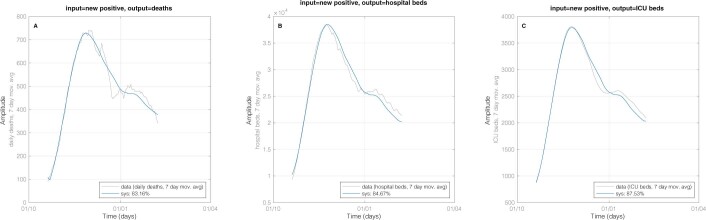
- The study combines two linked models: SIDARTHE-V, a compartmental model extended to include vaccination, and a data-driven model that maps predicted new cases to deaths, hospital occupancy, and ICU occupancy.
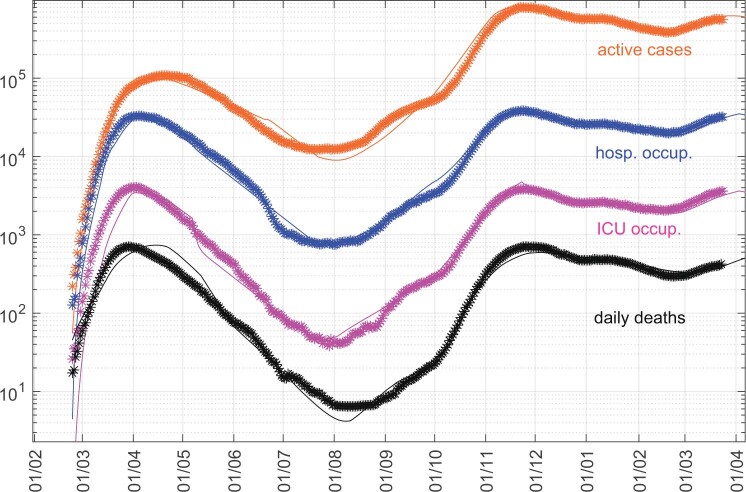
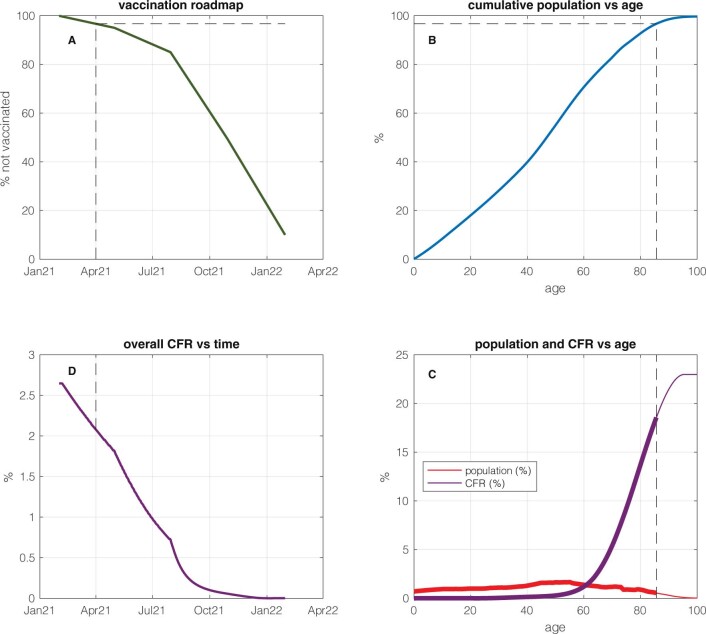
- Parameters for the epidemic model were fit to official Italian data from 24 February 2020 through 26 March 2021; the healthcare-cost model used second-wave data in a 110-day window ending 7 February 2021, plus age and demographic data from Italian public repositories.
- The authors simulated 20 scenarios from the combination of 4 vaccination schedules (absent, slow, medium, fast; reaching 0%, 47%, 64%, 90% immunized by January 2022) and 5 transmission/restriction profiles.
## Limitations
- The paper states that SIDARTHE-V is a mean-field compartmental model assuming homogeneous mixing, so it does not account for geographical heterogeneity; the text suggests more detailed spatial/social-network models could be used instead.
- The authors note they assumed vaccination is effective against SARS-CoV-2 variants, even though immune escape was a concern; this is a stated limitation.
- They also optimistically assumed protection against death and hospitalization starts 3 weeks after the first dose rather than after the second dose; this is stated as an assumption and may limit realism.
Model-written summary. Check it against the paper before relying on it.
Integrity signals
Registry
Cites
Statistics
Figures
Verification
Claims the paper makes
9 Valid · 4 Not valid · 3 Not checked · 61 Own results and interpretations
The cited sources support only part of this claim — read each source’s verdict below.
In the paper
“In the meantime, vaccine rollout in the UK has enabled planning subsequent gradual release of NPIs38,39.”
§ Modeling vaccination rollouts, SARS-CoV-2 variants and the requirement for non-pharmaceutical interventions in Italy > Main
What the sources say
- Partly supportedcites [38] Lopez Bernal, J. et al. Early effectiveness of COVID-19 vaccination with BNT162b2 mRNA vaccine and ChAdOx1 adenovirus vector vaccine on symptomatic disease, hospitalisations and mortality in older adults in England. Preprint at medRxiv10.1101/2021.03.01.21252652 (2021). sourceExperimental — accuracy not yet measured
The Introduction describes the UK vaccine rollout and says effectiveness evidence is essential for decisions about non-pharmaceutical interventions. It does not say the rollout enabled planning for a gradual release of those interventions; the Discussion instead emphasizes maintaining precautions after vaccination. (LLM, conf=0.83)
- Not matchedcites [39] GOV.UK. Coronavirus (COVID‑19). https://www.gov.uk/coronavirus
Its entry has no title and year that we can search by.
plainstates a cause- Asserted: passes — The authors put it forward as true.
- Checkable: passes — It can be checked against evidence.
- Load-bearing: unclear — It is unclear whether the paper’s conclusions depend on it.
- Based: passes — The paper gives a reason why it holds.
- Partly supported
The cited sources support only part of this claim — read each source’s verdict below.
In the paper
“the results of a clinical trial with the mRNA-1273 vaccine show that, despite a slight expected decline in titers of binding and neutralizing antibodies, mRNA-1273 has the potential to provide durable humoral immunity: as the natural infection, which produces variable antibody longevity and might induce robust memory B cell responses, also mRNA-1273 vaccine elicited primary CD4 type 1 helper T”
§ Modeling vaccination rollouts, SARS-CoV-2 variants and the requirement for non-pharmaceutical interventions in Italy > Methods > SIDARTHE-V compartmental model
What the sources say
- Partly supportedcites [40] Widge AT Durability of responses after SARS-CoV-2 mRNA-1273 vaccination N. Engl. J. Med. 2021 384 80 82 10.1056/NEJMc2032195 33270381 PMC7727324 sourceExperimental — accuracy not yet measured
The article reports that binding and neutralizing antibodies remained elevated at day 119 and concludes that mRNA-1273 has the potential to provide durable humoral immunity. It also says that correlates of protection were not yet established; it does not show that protection persisted beyond day 119. The supplied article-body passages have no page numbers. (LLM, conf=0.88)
hedgedstates a possible cause- Asserted: passes — The authors put it forward as true.
- Checkable: passes — It can be checked against evidence.
- Load-bearing: unclear — It is unclear whether the paper’s conclusions depend on it.
- Based: passes — The paper gives a reason why it holds.
- Partly supported
Every source the paper cites for this claim was checked and supports it.
In the paper
“Multi-pronged countermeasures, including distancing, testing and tracing, are necessary to achieve a sustained reduction in infection cases20, even more so in light of the recent emergence of new SARS-CoV-2 variants21, such as B.1.1.7”
§ Modeling vaccination rollouts, SARS-CoV-2 variants and the requirement for non-pharmaceutical interventions in Italy > Main
What the sources say
- Supportedcites [20] Priesemann V Calling for pan-European commitment for rapid and sustained reduction in SARS-CoV-2 infections Lancet 2021 397 92 93 10.1016/S0140-6736(20)32625-8 33347811 PMC7833270 source
The paper’s strategy calls for firm action to reduce case numbers, followed by continued measures to keep them low. Its panel lists moderate contact reduction, testing, and contact tracing among those measures. (LLM, conf=0.92)
- Supportedcites [21] Priesemann V An action plan for pan-European defence against new SARS-CoV-2 variants Lancet 2021 397 469 470 10.1016/S0140-6736(21)00150-1 33485462 PMC7825950 source
Citation 21 is attached to the emergence of new SARS-CoV-2 variants, particularly B.1.1.7, rather than to the preceding claim about distancing, testing, and tracing, which carries citation 20. The opening section of the cited paper states that new variants are emerging and identifies B.1.1.7 among them. (LLM, conf=0.94)
plainstates a cause- Asserted: passes — The authors put it forward as true.
- Checkable: passes — It can be checked against evidence.
- Load-bearing: passes — The paper’s conclusions depend on it.
- Based: passes — The paper gives a reason why it holds.
- Supported
The cited sources support only part of this claim — read each source’s verdict below.
In the paper
“In particular, the mild restrictions that kept around 0.9 with the original virus strain would keep it around 1.3 (at least) if the new variants increase transmissibility of at least 40–50%, as reported in the literature49–51.”
§ Modeling vaccination rollouts, SARS-CoV-2 variants and the requirement for non-pharmaceutical interventions in Italy > Methods > Our scenarios: different values of
What the sources say
- Partly supportedcites [49] Voltz, E. et al. Transmission of SARS-CoV-2 Lineage B.1.1.7 in England: insights from linking epidemiological and genetic data. Preprint at medRxiv10.1101/2020.12.30.20249034 (2021). sourceExperimental — accuracy not yet measured
In 'Estimating reproduction numbers for VOC and non-VOC independently' (page unavailable), the paper reports mean reproduction numbers of 0.92 for non-VOC strains and 1.45 for B.1.1.7 during England’s second lockdown. The Abstract (page unavailable) estimates a 1.4–1.8 ratio, supporting the approximate numerical comparison. But the paper describes high levels of social distancing, not mild restrictions, and cautions against extrapolating its estimate to other transmission contexts or variants. (LLM, conf=0.86)
- Not checked — no full text of the sourcecites [50] Moore, J. P. Approaches for optimal use of different COVID-19 vaccines. Issues of viral variants and vaccine efficacy. JAMA10.1001/jama.2021.3465 (2021). 33662101 source
- Supportedcites [51] Davies, N. G. et al. Estimated transmissibility and impact of SARS-CoV-2 lineage B.1.1.7 in England. Science10.1126/science.abg3055 (2021). PMC8128288 33658326 source
The Discussion estimates that B.1.1.7 had a 43–90% higher reproduction number than preexisting variants in England, assuming no change in generation interval. A 43% increase would take a reproduction number of 0.9 to about 1.3, consistent with the citing authors’ illustration. (LLM, conf=0.88)
hedgedstates a cause- Asserted: passes — The authors put it forward as true.
- Checkable: passes — It can be checked against evidence.
- Load-bearing: passes — The paper’s conclusions depend on it.
- Based: passes — The paper gives a reason why it holds.
- Partly supported
Every source the paper cites for this claim was checked and supports it.
In the paper
“Conversely, the basic reproduction number is the value of the parametric reproduction number at the first onset of the epidemic outbreak, and its value was estimated to range between 2.43 and 3.1 for SARS-CoV-2 in Italy43.”
§ Modeling vaccination rollouts, SARS-CoV-2 variants and the requirement for non-pharmaceutical interventions in Italy > Methods > SIDARTHE-V compartmental model
What the sources say
- Supportedcites [43] D’Arienzo M Coniglio A Assessment of the SARS-CoV-2 basic reproduction number, R0, based on the early phase of COVID-19 outbreak in Italy Biosaf. Health 2020 2 57 59 10.1016/j.bsheal.2020.03.004 32835209 PMC7148916 source
The Results and discussions section states that R₀ values associated with the early Italian outbreak may range from 2.43 to 3.10. The cited estimate matches the claim; the paper bases it on data from February 25 to March 12, 2020. (LLM, conf=0.94)
hedged- Asserted: passes — The authors put it forward as true.
- Checkable: passes — It can be checked against evidence.
- Load-bearing: unclear — It is unclear whether the paper’s conclusions depend on it.
- Based: passes — The paper gives a reason why it holds.
- Supported
29 more claims
Create a free account to see all 77 claims and every source verdict.
- It may state two separate claims as one. 32
- Probably not a substantial claim. 13
- The quote only partly states this claim. 3
Citations
Cites
Safety and Efficacy of the BNT162b2 mRNA Covid-19 Vaccine
Polack, F. P., Thomas, S. J., Kitchin, N., Absalon, J., Gurtman, A., Lockhart, S., Perez, J. L., Pérez Marc, G., Moreira, E. D., Zerbini, C., et al. (2020) · New England Journal of Medicine · doi:10.1056/nejmoa2034577 · Cited by 14,592
A new coronavirus associated with human respiratory disease in China
Wu, F., Zhao, S., Yu, B., Chen, Y.-M., Wang, W., Song, Z.-G., Hu, Y., Tao, Z.-W., Tian, J.-H., Pei, Y.-Y., et al. (2020) · Nature · doi:10.1038/s41586-020-2008-3 · Cited by 11,688 · cited 1×
“?̇?(t) = −S(t)(αI(t) + βD(t) + γA(t) + δR(t)) − φ(S(t)) (1) I(̇t) = S(t)(αI(t) + βD(t) + γA(t) + δR(t)) − (ε + ζ + λ)I(t) (2) ?̇?(t) = εI(t) − (η + ρ)D(t) (3) ?̇?(t) = ζI(t) − (θ + μ + κ)A(t) (4) ?̇?(t) = ηD(t) + θA(t) − (ν + ξ + τ1)R(t) (5) ?̇?(t) = μA(t) + νR(t) − (σ + τ2)T(t) (6)”
Efficacy and Safety of the mRNA-1273 SARS-CoV-2 Vaccine
Baden, L. R., El Sahly, H. M., Essink, B., Kotloff, K., Frey, S., Novak, R., Diemert, D., Spector, S. A., Rouphael, N., Creech, C. B., et al. (2021) · New England Journal of Medicine · doi:10.1056/nejmoa2035389 · Cited by 10,119
Voysey, M., Clemens, S. A. C., Madhi, S. A., Weckx, L. Y., Folegatti, P. M., Aley, P. K., Angus, B., Baillie, V. L., Barnabas, S. L., Bhorat, Q. E., et al. (2021) · The Lancet · doi:10.1016/s0140-6736(20)32661-1 · Cited by 4,616
Immunological memory to SARS-CoV-2 assessed for up to 8 months after infection.
Dan, J. M., Mateus, J., Kato, Y., Hastie, K. M., Yu, E. D., Faliti, C. E., Grifoni, A., Ramirez, S. I., Haupt, S., Frazier, A., et al. (2021) · Science · doi:10.1126/science.abf4063 · Cited by 2,656
Projecting the transmission dynamics of SARS-CoV-2 through the postpandemic period
Kissler, S. M., Tedijanto, C., Goldstein, E., Grad, Y. H., & Lipsitch, M. (2020) · Science · doi:10.1126/science.abb5793 · Cited by 2,611 · cited 1×
“The need to enforce new restrictions is likely to trigger intermittent containment measures, with the alternation of higher-ℛ and lower-ℛ phases 27,28 . higher-ℛ 0 lower-ℛ 0 In Open-Close strategies, closures are delayed and only enforced when the pressure on the healthcare system becomes…”
BackgroundEstimated transmissibility and impact of SARS-CoV-2 lineage B.1.1.7 in England
Davies, N. G., Abbott, S., Barnard, R. C., Jarvis, C. I., Kucharski, A. J., Munday, J. D., Pearson, C. A. B., Russell, T. W., Tully, D. C., Washburne, A. D., et al. (2021) · Science · doi:10.1126/science.abg3055 · Cited by 2,581
Estimated transmissibility and impact of SARS-CoV-2 lineage B.1.1.7 in England
Davies, N. G., Abbott, S., Barnard, R. C., Jarvis, C. I., Kucharski, A. J., Munday, J. D., Pearson, C. A. B., Russell, T. W., Tully, D. C., Washburne, A. D., et al. (2020) · doi:10.1101/2020.12.24.20248822 · Cited by 2,557
Convergent Antibody Responses to SARS-CoV-2 in Convalescent Individuals
Robbiani, D. F., Gaebler, C., Muecksch, F., Lorenzi, J. C. C., Wang, Z., Cho, A., Agudelo, M., Barnes, C. O., Gazumyan, A., Finkin, S., et al. (2020) · Nature · doi:10.1038/s41586-020-2456-9 · Cited by 1,853
Modelling the COVID-19 epidemic and implementation of population-wide interventions in Italy
Giordano, G., Blanchini, F., Bruno, R., Colaneri, P., Di Filippo, A., Di Matteo, A., & Colaneri, M. (2020) · Nature Medicine · doi:10.1038/s41591-020-0883-7 · Cited by 1,740 · cited 1×
“The SIDARTHE-V compartmental model shown in Figure 1A extends the SIDARTHE model, first introduced by Giordano et al. 2 , by including the effect of vaccination.”
MethodSelf-citation
Cited by
Controlling the pandemic during the SARS-CoV-2 vaccination rollout
Viana, J., van Dorp, C. H., Nunes, A., Gomes, M. C., van Boven, M., Kretzschmar, M., Veldhoen, M., & Rozhnova, G. (2021) · Nature Communications · doi:10.1038/s41467-021-23938-8 · Cited by 152
Yang, J., Marziano, V., Deng, X., Guzzetta, G., Zhang, J., Trentini, F., Cai, J., Poletti, P., Zheng, W., Wang, W., et al. (2021) · Nature Human Behaviour · doi:10.1038/s41562-021-01155-z · Cited by 124
Ge, Y., Zhang, W., Wu, X., Ruktanonchai, C. W., Liu, H., Wang, J., Song, Y., Liu, M., Yan, W., Yang, J., et al. (2022) · Nature Communications · doi:10.1038/s41467-022-30897-1 · Cited by 114
Data-driven methods for present and future pandemics: Monitoring, modelling and managing
Álamo, T., Reina, D. G., Millán, P., Preciado, V. M., & Giordano, G. (2021) · Annual Reviews in Control · doi:10.1016/j.arcontrol.2021.05.003 · Cited by 79
“countermeasure is adopted, the better in terms of its efficacy and potential to save lives [86].”
BackgroundSelf-citationMesa, D. O., Hogan, A. B., Watson, O. J., Charles, G. D., Hauck, K., Ghani, A. C., & Winskill, P. (2022) · Communications Medicine · doi:10.1038/s43856-022-00075-x · Cited by 73
Clinical outcomes and cost-effectiveness of COVID-19 vaccination in South Africa
Reddy, K. P., Fitzmaurice, K. P., Scott, J. A., Harling, G., Lessells, R. J., Panella, C., Shebl, F. M., Freedberg, K. A., & Siedner, M. J. (2021) · Nature Communications · doi:10.1038/s41467-021-26557-5 · Cited by 66
Optimizing COVID-19 vaccination programs during vaccine shortages
Liu, K., & Lou, Y. (2022) · Infectious Disease Modelling · doi:10.1016/j.idm.2022.02.002 · Cited by 74
Ren, Z., Xin, Y., Wang, Z., Liu, D., Ho, R. C. M., & Ho, C. S. H. (2021) · Frontiers in Psychiatry · doi:10.3389/fpsyt.2021.728278 · Cited by 56
Krueger, T., Gogolewski, K., Bodych, M., Gambin, A., Giordano, G., Cuschieri, S., Czypionka, T., Perc, M., Petelos, E., Rosińska, M., et al. (2022) · Communications Medicine · doi:10.1038/s43856-022-00084-w · Cited by 60
Self-citationPhan, T., Brozak, S. J., Pell, B., Gitter, A., Xiao, A., Mena, K. D., Kuang, Y., & Wu, F. (2022) · The Science of The Total Environment · doi:10.1016/j.scitotenv.2022.159326 · Cited by 52
Parino, F., Zino, L., Calafiore, G. C., & Rizzo, A. (2021) · International Journal of Robust and Nonlinear Control · doi:10.1002/rnc.5728 · Cited by 54
Disease spreading modeling and analysis: a survey
Guzzi, P. H., Petrizzelli, F., & Mazza, T. (2022) · Briefings in Bioinformatics · doi:10.1093/bib/bbac230 · Cited by 54
Understanding hesitancy with revealed preferences across COVID-19 vaccine types
Kutasi, K., Koltai, J., Szabó‐Morvai, Á., Röst, G., Karsai, M., Bíró, P., & Lengyel, B. (2022) · Scientific Reports · doi:10.1038/s41598-022-15633-5 · Cited by 49
“Pfizer Moderna AstraZeneca Sputnik Sinopharm Variance Mean Min Max Any (1) (2) (3) (4) (5) (6) (7) (8) (9) (10) Age x x x x x x Female x x x City Cat.”
Domenico, L. D., Sabbatini, C. E., Boëlle, P., Poletto, C., Crépey, P., Paireau, J., Cauchemez, S., Beck, F., Noël, H., Lévy-Bruhl, D., et al. (2021) · Communications Medicine · doi:10.1038/s43856-021-00057-5 · Cited by 51
Park, H. J., Gonsalves, G., Tan, S. T., Kelly, J. D., Rutherford, G. W., Wachter, R. M., Schechter, R., Paltiel, A. D., & Lo, N. C. (2024) · Nature Communications · doi:10.1038/s41467-024-45549-9 · Cited by 47
de Hoffer, A., Vatani, S., Cot, C., Cacciapaglia, G., Chiusano, M. L., Cimarelli, A., Conventi, F., Giannini, A., Hohenegger, S., & Sannino, F. (2022) · Scientific Reports · doi:10.1038/s41598-022-12442-8 · Cited by 40
“Most analyses of the epidemiological data are done applying the time-honoured compartmental models of the SIR type 17–19 , appropriately extended by including more compartments 20 .”
MethodPublic health implications of SARS-CoV-2 variants of concern: a rapid scoping review
Somerville, M., Curran, J., Dol, J., Boulos, L., Saxinger, L. M., Doroshenko, A., Hastings, S. E., Reynolds, B., Gallant, A. J., Shin, H. D., et al. (2021) · BMJ Open · doi:10.1136/bmjopen-2021-055781 · Cited by 37
“35 Attitudes towards vaccination related to VOC One cross-sectional study assessed changes in COVID-19 vaccine hesitancy related to VOC in the UK in late 2020 when Alpha began circulating.”
Mahmoudi, H., Chang, D., Lee, H., Ghaffarzadegan, N., & Jalali, M. S. (2025) · JMIR AI · doi:10.2196/68097 · Cited by 35
“Two trained researchers independently extracted data from the 10 studies [19-28] and then reconciled discrepancies in their findings—6 related to study settings and 11 to behavioral components—for convergence.”
InfluentialOptimal vaccine allocation for COVID-19 in the Netherlands: A data-driven prioritization
Miura, F., Leung, K. Y., Klinkenberg, D., Ainslie, K. E. C., & Wallinga, J. (2021) · PLoS Computational Biology · doi:10.1371/journal.pcbi.1009697 · Cited by 30
Blockchain-based COVID vaccination registration and monitoring
Nabil, S. S., Pran, M. S. A., Haque, A. A. A., Chakraborty, N. R., Chowdhury, M. J. M., & Ferdous, M. S. (2022) · Blockchain Research and Applications · doi:10.1016/j.bcra.2022.100092 · Cited by 39
Microsimulation based quantitative analysis of COVID-19 management strategies
Reguly, I. Z., Csercsik, D., Juhász, J., Tornai, K., Bujtár, Z., Horváth, G., Keömley-Horváth, B. M., Kós, T., Cserey, G., Iván, K., et al. (2022) · PLoS Computational Biology · doi:10.1371/journal.pcbi.1009693 · Cited by 29
Borchering, R. K., Mullany, L. C., Howerton, E., Chinazzi, M., Smith, C. P., Qin, M., Reich, N. G., Contamin, L., Levander, J. D., Kerr, J., et al. (2022) · The Lancet Regional Health - Americas · doi:10.1016/j.lana.2022.100398 · Cited by 32
“14,15 In anticipation of authorization and recommendations for expanding vaccination to children 5 – 11 years old in the U.S. (e.g., FDA and CDC) 10 members of the COVID-19 Scenario Modeling Hub undertook a multiple-model approach to assess potential effects of immunizing children 5 – 11 years old…”
Merkaj, E., & Santolini, R. (2022) · Health Policy · doi:10.1016/j.healthpol.2022.02.004 · Cited by 33
Stella, L., Martínez, A. P., Bauso, D., & Colaneri, P. (2022) · SIAM Journal on Control and Optimization · doi:10.1137/20m1373335 · Cited by 34
Self-citationState variation in effects of state social distancing policies on COVID-19 cases
Kaufman, B. G., Whitaker, R., Mahendraratnam, N., Hurewitz, S. R., Yi, J., Smith, V. A., & McClellan, M. (2021) · BMC Public Health · doi:10.1186/s12889-021-11236-3 · Cited by 28
“While significant advances in vaccines mitigate COVID-19 susceptibility, new evidence suggests that the benefits of continuing non-pharmaceutical interventions including social distancing policies is greater than vaccination alone [18].”
BackgroundModeling the Impact of Vaccination on COVID-19 and Its Delta and Omicron Variants
Wang, J., Chan, Y.-C., Niu, R., Wong, E. W. M., & van Wyk, M. A. (2022) · Viruses · doi:10.3390/v14071482 · Cited by 30
“[13] show that NPIs have a higher effect than vaccination alone and advocate for the need to keep NPIs in place during the first phase of the vaccination campaign.”
BackgroundMechanistic Models of COVID-19: Insights into Disease Progression, Vaccines, and Therapeutics
Desikan, R., Padmanabhan, P., Kierzek, A. M., & van der Graaf, P. H. (2022) · International Journal of Antimicrobial Agents · doi:10.1016/j.ijantimicag.2022.106606 · Cited by 27
Chen, C., Lai, C.-C., Luh, D., Chuang, S., Yang, K., Yeh, Y., Yen, A. M., Chang, K., Chang, R., & Chen, S. L. (2021) · Journal of the Formosan Medical Association · doi:10.1016/j.jfma.2021.05.022 · Cited by 28
“The NPIs of lockdown has been used to contain the outbreak in countries such as Italy.38,65, As part of the border control measures, the effectiveness of NPIs have also been demonstrated in countries such as Taiwan.42,66 With the vaccination distribution by the end of year 2020, the NPIs still play a role in containin…”
InfluentialCommunity structured model for vaccine strategies to control COVID19 spread: A mathematical study
Aruffo, E., Yuan, P., Tan, Y., Gatov, E., Gournis, E., Collier, S., Ogden, N. H., Bélair, J., & Zhu, H. (2022) · PLoS ONE · doi:10.1371/journal.pone.0258648 · Cited by 27
Modelling the COVID-19 epidemic and the vaccination campaign in Italy by the SUIHTER model
Parolini, N., Dede’, L., Ardenghi, G., & Quarteroni, A. M. (2022) · Infectious Disease Modelling · doi:10.1016/j.idm.2022.03.002 · Cited by 33
Rakhshan, S. A., Nejad, M. S., Zaj, M., & Ghane, F. H. (2023) · Computers in Biology and Medicine · doi:10.1016/j.compbiomed.2023.106817 · Cited by 25
Sanz‐Leon, P., Hamilton, L. H. W., Raison, S. J., Pan, A. J. X., Stevenson, N. J., Stuart, R. M., Abeysuriya, R., Kerr, C. C., Lambert, S. B., & Roberts, J. A. (2022) · Philosophical Transactions of the Royal Society A Mathematical Physical and Engineering Sciences · doi:10.1098/rsta.2021.0311 · Cited by 19
Aruffo, E., Yuan, P., Tan, Y., Gatov, E., Moyles, I. R., Bélair, J., Watmough, J., Collier, S., Arino, J., & Zhu, H. (2022) · BMC Public Health · doi:10.1186/s12889-022-13597-9 · Cited by 20
“[8] investigated the impact of mass vaccination campaigns and NPI lifting while considering increased transmission due to VOCs.”
Zhou, F., Hu, T., Zhang, X., Lai, K., Chen, J., & Zhou, X. (2022) · Journal of Infection and Public Health · doi:10.1016/j.jiph.2022.03.011 · Cited by 22
“This may result from that the vaccination makes the allocation of limited medical resources more reasonable and alleviates the lack of medical resources [19], and thus reduced excess deaths.”
COVID-19 vaccination strategies depend on the underlying network of social interactions
Herrmann, H. A., & Schwartz, J. (2021) · Scientific Reports · doi:10.1038/s41598-021-03167-1 · Cited by 23
Cattaneo, A., Vitali, A., Mazzoleni, M., & Previdi, F. (2022) · Computer Methods and Programs in Biomedicine · doi:10.1016/j.cmpb.2022.107029 · Cited by 21
Mitigating COVID-19 outbreaks in workplaces and schools by hybrid telecommuting
Mauras, S., Cohen-Addad, V., Duboc, G., la Tour, M. D., Frasca, P., Mathieu, C., Opatowski, L., & Viennot, L. (2021) · PLoS Computational Biology · doi:10.1371/journal.pcbi.1009264 · Cited by 28
“This situation is attracting the attention of researchers: for instance, the effect of various level of immunity on the death toll in Italy has been studied in [34].”
Anatomy of the first six months of COVID-19 vaccination campaign in Italy
Gozzi, N., Chinazzi, M., Davis, J. T., Mu, K., y Piontti, A. P., Ajelli, M., Perra, N., & Vespignani, A. (2022) · PLoS Computational Biology · doi:10.1371/journal.pcbi.1010146 · Cited by 16
“In the context of Italy, optimal allocation of vaccines [16, 17] and the potential combined effect of NPIs and rollout on epidemic scenarios [18] have been explored.”
BackgroundGarcía, Y. E., Mery, G., Vásquez, P., Calvo, J. G., Barboza, L. A., Rivas, T., & Sánchez, F. (2022) · Scientific Reports · doi:10.1038/s41598-022-06236-1 · Cited by 20
“These results go in hand with previous studies that evidence the reduction in hospitalization and mortality with high efficacy mass vaccination campaigns [3, 9, 21,42].”
MethodResultSustaining effective COVID-19 control in Malaysia through large-scale vaccination
Jayasundara, P., Peariasamy, K. M., Law, K. B., Rahim, K. N. K. A., Lee, S. W., Ghazali, I. M. M., Abayawardana, M., Le, L., Khalaf, R. K. S., Razali, K., et al. (2021) · Epidemics · doi:10.1016/j.epidem.2021.100517 · Cited by 25
“Similar findings of the need for maintaining control measures while carrying out vaccination programs in the presence of VoC have been reported for the United States (Borchering et al., 2021) and Italy (Giordano et al., 2021).”
Bayesian time‐varying autoregressive models of COVID‐19 epidemics
Giudici, P., Tarantino, B., & Roy, A. (2022) · Biometrical Journal · doi:10.1002/bimj.202200054 · Cited by 21
“It is crucial to understand how vaccination combined with NPIs reduces COVID-19 transmission (Giordano et al., 2021).”
Designing the Safe Reopening of US Towns Through High‐Resolution Agent‐Based Modeling
Truszkowska, A., Thakore, M., Zino, L., Butail, S., Caroppo, E., Jiang, Z., Rizzo, A., & Porfiri, M. (2021) · Advanced Theory and Simulations · doi:10.1002/adts.202100157 · Cited by 16
Detection of COVID-19 epidemic outbreak using machine learning
Cho, G., Park, J. R., Choi, Y., Ahn, H., & Lee, H. (2023) · Frontiers in Public Health · doi:10.3389/fpubh.2023.1252357 · Cited by 22
“These models can predict future trends in COVID-19 transmission dynamics and estimate the number of cases and deaths (1–3).”
Dynamic planning of a two-dose vaccination campaign with uncertain supplies
Calafiore, G. C., Parino, F., Zino, L., & Rizzo, A. (2022) · European Journal of Operational Research · doi:10.1016/j.ejor.2022.05.009 · Cited by 19
“…mimic the efect of immunization by encapsulating a simplistic implementaion of the vaccination process into the disease progression model. n Giordano (2021) ; Sinha, Kumar, & Chandra (2021) , one-dose vacination processes are used to investigate the prioritization of the ecipients of the…”
Hjörleifsson, K. E., Rögnvaldsson, S., Jónsson, H., Agustsdottir, A. B., Andrésdóttir, M. B., Birgisdottir, K., Eiríksson, Ö., Eyþórsson, E. S., Friðriksdóttir, R., Georgsson, G., et al. (2022) · Clinical Microbiology and Infection · doi:10.1016/j.cmi.2022.02.012 · Cited by 17
“Some efforts have been made to simulate the effect vaccination has on the spread of the disease 13–15 .”
Switched forced SEIRDV compartmental models to monitor COVID-19 spread and immunization in Italy
Antonelli, E., Piccolomini, E. L., & Zama, F. (2021) · Infectious Disease Modelling · doi:10.1016/j.idm.2021.11.001 · Cited by 17
Truszkowska, A., Zino, L., Butail, S., Caroppo, E., Jiang, Z., Rizzo, A., & Porfiri, M. (2022) · Advanced Theory and Simulations · doi:10.1002/adts.202100521 · Cited by 17
Raffetti, E., Melas, P. A., Landgren, A. J., Andersson, F., Forsell, Y., Lavebratt, C., & Galanti, M. R. (2021) · Translational Psychiatry · doi:10.1038/s41398-021-01601-6 · Cited by 25
A Modeling Study on Vaccination and Spread of SARS-CoV-2 Variants in Italy
Antonini, C., Calandrini, S., & Bianconi, F. (2021) · Vaccines · doi:10.3390/vaccines9080915 · Cited by 15
“As regards Italy, Giordano et al. evaluated the adoption of different restriction scenarios during the mass vaccination campaign with the compartmental model SIDARTHE-V [4].”
BackgroundMethodInfluentialAssessing the impact of vaccination in a COVID-19 compartmental model
Esteban, E. P., & Almodovar-Abreu, L. (2021) · Informatics in Medicine Unlocked · doi:10.1016/j.imu.2021.100795 · Cited by 16
Mahmoudi, H., Chang, D. F., Lee, H., et al. (2024) · SSRN Electronic Journal · doi:10.2139/ssrn.4797024 · Cited by 15
Zhu, W., Zhu, Y., Wen, Z., Zheng, B., Xu, A., Yao, Y., & Wang, W. (2022) · BMC Infectious Diseases · doi:10.1186/s12879-022-07816-2 · Cited by 13
“To control the spread of highly transmissible variants, it is necessary to accelerate the vaccination campaign [33].”
BackgroundOptimal control of compartmental models: The exact solution
Blanchini, F., Bolzern, P., Colaneri, P., Nicolao, G. D., & Giordano, G. (2022) · Automatica · doi:10.1016/j.automatica.2022.110680 · Cited by 33
Self-citationCOVID-19 Pandemic: Public Health Risk Assessment and Risk Mitigation Strategies
Kim, D.-Y., Shinde, S. K., Lone, S., Palem, R. R., & Ghodake, G. S. (2021) · Journal of Personalized Medicine · doi:10.3390/jpm11121243 · Cited by 19
“2021, 11, 1243 8 of 22 vaccination campaigns in different scenarios has been recently reported in Italy [105,106].”
BackgroundInfluentialMathematical Modeling Evaluates How Vaccinations Affected the Course of COVID-19 Disease Progression
Tzamali, E., Sakkalis, V., Tzedakis, G., Spanakis, E. G., & Tzanakis, N. (2023) · Vaccines · doi:10.3390/vaccines11040722 · Cited by 13
Rahman, A., Kuddus, M. A., Ip, R. H. L., & Bewong, M. (2021) · Viruses · doi:10.3390/v13112185 · Cited by 17
Liang, L.-L., Kao, C., Ho, H. J., & Wu, C. (2021) · Journal of Global Health · doi:10.7189/jogh.11.05021 · Cited by 14
Buonomo, B., & Giacobbe, A. (2023) · Chaos Solitons & Fractals · doi:10.1016/j.chaos.2023.113782 · Cited by 14
Critical assessment of the impact of vaccine-type and immunity on the burden of COVID-19
Taboe, H. B., Asare-Baah, M., Iboi, E., & Ngonghala, C. N. (2023) · Mathematical Biosciences · doi:10.1016/j.mbs.2023.108981 · Cited by 14
Mullin, S., Wyk, B. V., Asher, J. L., Compton, S. R., Allore, H. G., & Zeiss, C. J. (2022) · PNAS Nexus · doi:10.1093/pnasnexus/pgac096 · Cited by 16
Vaccination as an alternative to non-drug interventions to prevent local resurgence of COVID-19
Pan, J., Zhu, W., Tian, J., Liu, Z., Xu, A., Yao, Y., & Wang, W. (2022) · Infectious Diseases of Poverty · doi:10.1186/s40249-022-00960-6 · Cited by 16
“In addition, few studies have considered the impact of variants due to increased transmissibility and attenuated effectiveness of vaccine in models [37, 39].”
BackgroundResultInfluentialKalman-based compartmental estimation for covid-19 pandemic using advanced epidemic model
Nanda, S. K., Kumar, G., Bhatia, V., & Singh, A. K. (2023) · Biomedical Signal Processing and Control · doi:10.1016/j.bspc.2023.104727 · Cited by 13
Government Intervention, Human Mobility, and COVID-19: A Causal Pathway Analysis from 121 Countries
Wang, F., Ge, X., & Huang, D. (2022) · Sustainability · doi:10.3390/su14063694 · Cited by 12
Modeling the Transmission of the SARS-CoV-2 Delta Variant in a Partially Vaccinated Population
de León, U. A.-P., Avila-Vales, E. J., & Huang, K. (2022) · Viruses · doi:10.3390/v14010158 · Cited by 13
“2021 [45] demonstrated the need for NPI to reduce the spread of the virus.”
BackgroundZhao, Z., Li, X., Liu, F., Jin, R., Ma, C., Huang, B., Wu, A., & Nie, X. (2021) · Healthcare · doi:10.3390/healthcare9101292 · Cited by 13
“Although vaccines are key to curbing the epidemic, scientific effective prevention and control measures must be emphasized before herd immunity is reached [55].”
BackgroundSontag, E. D. (2021) · International Journal of Robust and Nonlinear Control · doi:10.1002/rnc.5701 · Cited by 26
Krueger, T., Gogolewski, K., Bodych, M., et al. (2021) · medRxiv · doi:10.1101/2021.05.07.21256847 · Cited by 9
Self-citationSontag, E. D. (2021) · medRxiv · doi:10.1101/2021.04.11.21255289 · Cited by 12
Decentralised adaptive-gain control for eliminating epidemic spreading on networks
Walsh, L., Ye, M., Anderson, B. D. O., & Sun, Z. (2025) · Automatica · doi:10.1016/j.automatica.2025.112143 · Cited by 16
Libotte, G. B., dos Anjos, L., Almeida, R. C., Malta, S. M. C., & Medronho, R. D. A. (2022) · Journal of The Royal Society Interface · doi:10.1098/rsif.2022.0275 · Cited by 14
Transmission Dynamics, Heterogeneity and Controllability of SARS-CoV-2: A Rural–Urban Comparison
Li, Y., Hu, T., Gai, X., Zhang, Y., & Zhou, X. (2021) · International Journal of Environmental Research and Public Health · doi:10.3390/ijerph18105221 · Cited by 10
“To the best of our knowledge, although there are many studies modelling vaccination and non-pharmaceutical interventions (NPIs) [18,19], this is the first direct comparison of the effects of NPIs under actual conditions and vaccination.”
BackgroundDynamics of novel COVID-19 in the presence of Co-morbidity
Saha, A. K., Podder, C., & Niger, A. M. (2022) · Infectious Disease Modelling · doi:10.1016/j.idm.2022.04.005 · Cited by 8
“Thus, it is obvious that vaccination alone will not be suf fi cient to stop the disease spread and it is still unclear how long vaccines can keep people safe Giordano et al. (2021).”
Strategies comparison in response to the two waves of COVID-19 in the United States and India
Yang, J., Shi, L., Chen, H., Wang, X., Jiao, J., Yang, M., Liu, M., & Sun, G. (2022) · International Journal for Equity in Health · doi:10.1186/s12939-022-01666-9 · Cited by 12
“also shows that non-pharmacotherapy interventions have a greater impact on the evolution of the epidemic than vaccination alone [8].”
BackgroundGe, Y., Zhang, W., Wu, X., Ruktanonchai, C. W., Liu, H., Wang, J., Song, Y., Liu, M., Yan, W., Cleary, E., et al. (2021) · Research Square · doi:10.21203/rs.3.rs-1033571/v1 · Cited by 10
An Epidemic Model with Infection Age and Vaccination Age Structure
Webb, G. F., & Zhao, X. E. (2024) · Infectious Disease Reports · doi:10.3390/idr16010004 · Cited by 11
Estimation and Distributed Eradication of SIR Epidemics on Networks
Zhang, C., Leung, H. C. H., Butler, B. A., & Paré, P. E. (2023) · IEEE Transactions on Control of Network Systems · doi:10.1109/tcns.2023.3306491 · Cited by 13
“Other SIR model variants, such as susceptible–exposed– infection–recovered (SEIR), susceptible–asymptomatic– infection–recovered (SAIR) [11], and SIDARTHE-V [12], model different immune responses and public health reactions to epidemic spread.”
BackgroundEgeren, D. V., Stoddard, M., Novokhodko, A., Rogers, M. S., Joseph‐McCarthy, D., Zetter, B. R., & Chakravarty, A. (2021) · PLoS ONE · doi:10.1371/journal.pone.0258997 · Cited by 11
“Modeling studies focused on the UK [38], Italy [39], and Portugal [40] have also pointed out the flaw in the strategy of relaxing restrictions during the vaccination campaign, as relevant to each of those countries.”
BackgroundResultValidity of Markovian modeling for transient memory-dependent epidemic dynamics
Feng, M., Tian, L., Lai, Y., & Zhou, C. (2024) · Communications Physics · doi:10.1038/s42005-024-01578-w · Cited by 10
“For these reasons, many recent studies of the COVID-19 pandemic assumed Markovian behaviors to avoid the dif fi culties associated with non-Markovian modeling 3 – 10 .”
BackgroundWu, J. W., Jiao, X. K., Du, X. H., et al. (2022) · PubMed · doi:10.3967/bes2022.057 · Cited by 7
de Hoffer, A., Vatani, S., Cot, C., et al. (2021) · medRxiv · doi:10.1101/2021.07.22.21260952 · Cited by 4
Rapid evolution of the COVID-19 pandemic calls for a unified public health response
He, N. (2021) · BioScience Trends · doi:10.5582/bst.2021.01261 · Cited by 9
“Given the accelerated emergence of viral mutations and variants, vaccination programs need to be rapidly rolled out and NPIs need to continue to be implemented under the rubric of a Unified Public Health Response (3,30-32).”
BackgroundSivadas, N., Panda, P., & Mahajan, A. (2022) · IEEE Transactions on Computational Social Systems · doi:10.1109/tcss.2022.3210404 · Cited by 11
“COV2, and Oxford–AstraZeneca AZD1222 [10].”
Rinaldi, G., Menon, P. P., Ferrara, A., Strain, W. D., & Edwards, C. (2022) · Scientific Reports · doi:10.1038/s41598-022-19630-6 · Cited by 11
“This principle can be translated into the SIHRD-V model by rewriting the equations (2)-(10) as: (13) R0 := β0 φ”
MethodMendes, D., Chapman, R., Gal, P., Atwell, J. E., Nguyen, J. L., Hamson, L., Fusco, M. D., Czudek, C., & Yang, J. (2022) · Journal of Medical Economics · doi:10.1080/13696998.2022.2111935 · Cited by 6
Phan, T. T., Brozak, S. J., Pell, B., et al. (2022) · medRxiv · doi:10.1101/2022.07.17.22277721 · Cited by 7
FOMO (fate of online media only) in infectious disease modeling: a review of compartmental models
Sooknanan, J., & Seemungal, T. (2022) · International Journal of Dynamics and Control · doi:10.1007/s40435-022-00994-6 · Cited by 7
“The COVID-19 pandemic has highlighted the importance of mathematical models in projecting the spread of disease outbreaks [1], in estimating epidemiological parameters [2, 3] and in evaluating the effects of various intervention or controlmeasures [4, 5].”
BackgroundEffects of infection fatality ratio and social contact matrices on vaccine prioritization strategies
Schulenburg, A., Cota, W., Costa, G. S., & Ferreira, S. C. (2022) · Chaos An Interdisciplinary Journal of Nonlinear Science · doi:10.1063/5.0096532 · Cited by 5
Landi, A., Pisaneschi, G., Laurino, M., & Manfredi, P. (2025) · Journal of Theoretical Biology · doi:10.1016/j.jtbi.2025.112072 · Cited by 6
Borri, A., Palumbo, P. J., Papa, F., & Possieri, C. (2023) · European Journal of Control · doi:10.1016/j.ejcon.2023.100902 · Cited by 6
Podrecca, C., Parimbelli, E., Pala, D., Cheng, C. I.-F., Messerschmidt, L., Büthe, T., & Bellazzi, R. (2023) · Scientific Reports · doi:10.1038/s41598-023-37751-4 · Cited by 8
Ziarelli, G., Dede’, L., Parolini, N., Verani, M., & Quarteroni, A. M. (2023) · Infectious Disease Modelling · doi:10.1016/j.idm.2023.05.012 · Cited by 9
“Moreover, following the scenario-analyses proposed in [40], we fix the transmission rate during the whole time frame at three different values in order to achieve three different initial reproduction numbers, i.”
Romanyukha, A. A., Novikov, K., Avilov, K. K., et al. (2023) · Infectious Disease Modelling · doi:10.1016/j.idm.2023.04.003 · Cited by 5
“Simultaneous spread of several COVID-19 variants is simulated by some compartmental (Giordano et al., 2021; Ramos et al., 2021) and agent-based models (Panovska-Griffiths et al.”
Observer Design for the State Estimation of Epidemic Processes
Niazi, M. U. B., & Johansson, K. H. (2022) · IEEE Conference on Decision and Control (CDC) · doi:10.1109/cdc51059.2022.9993275 · Cited by 9
“Both SIDARTHE and SIDARTHE-V models, for instance, developed in [25] and [30], respectively, can be written as (1) with f(Hx) = [ SI SD SA SR ] (see Section VI).”
BackgroundMethodInfluentialExploring a COVID‐19 Endemic Scenario: High‐Resolution Agent‐Based Modeling of Multiple Variants
Truszkowska, A., Zino, L., Butail, S., Caroppo, E., Jiang, Z., Rizzo, A., & Porfiri, M. (2022) · Advanced Theory and Simulations · doi:10.1002/adts.202200481 · Cited by 8
Vaccination and variants: Retrospective model for the evolution of Covid-19 in Italy
Fierro, A., Romano, S., & Liccardo, A. (2022) · PLoS ONE · doi:10.1371/journal.pone.0265159 · Cited by 11
“In [53] authors propose an extension of the SIDARTHE model [61], with the introduction of the appropriate vaccination compartment and different transmission rates, corresponding to new variants.”
BackgroundMethodResultNonparametric estimation and inference for spatiotemporal epidemic models
Wang, Y., Kim, M., Yu, S., Li, X., Wang, G., & Wang, L. (2021) · Journal of nonparametric statistics · doi:10.1080/10485252.2021.1988084 · Cited by 6
“For example, Giordano et al. (2021) andMoore et al. (2021) proposed an extended SEIR-type framework.”
Two-Step In Vitro Model to Evaluate the Cellular Immune Response to SARS-CoV-2
Melgaço, J. G., Azamor, T., da Silva, A. M. V., Linhares, J., Santos, T. P., Mendes, Y. S., de Lima, S. M. B., Fernandes, C. B., da Silva, J., de Souza, A. P., et al. (2021) · Cells · doi:10.3390/cells10092206 · Cited by 8
COVID-19 Propagation Model Based on Economic Development and Interventions
Nian, F., Shi, Y., & Cao, J. (2021) · Wireless Personal Communications · doi:10.1007/s11277-021-08998-9 · Cited by 6
Metadata
- Authors
- Giordano, G., Colaneri, M., Di Filippo, A., Blanchini, F., Bolzern, P., De Nicolao, G., Sacchi, P., Colaneri, P., & Bruno, R.
- Affiliations
- University of Trento (IT)
- Policlinico San Matteo Fondazione (IT)
- University of Udine (IT)
- Politecnico di Milano (IT)
- Institute of Electronics, Computer and Telecommunication Engineering (IT)
- University of Pavia (IT)
- Corresponding author
- Giordano, Giulia
- ORCID
- Venue
- Nature Medicine
- Published
- 2021-04-16
- Volume
- 27
- Issue
- 6
- Pages
- 993-998
- ISSN
- 1078-8956 (ISSN-L)
- 1546-170X
- PMC
- PMC8205853
- OpenAlex
- W3155313092
- Cited by
- 192
- References
- 44
- Citations by year
- 2026: 2 · 2025: 13 · 2024: 15 · 2023: 36 · 2022: 79 · 2021: 46
- FWCI
- 16.98
- Type
- journal article
- Language
- en
- Open access
- hybrid
- doi.org
- Licence
- cc-by
- creativecommons.org/licenses/by/4.0 (tdm)
- creativecommons.org/licenses/by/4.0 (vor)
- Locations
- Nature Medicine (publishedVersion, cc-by)
- Research Square (acceptedVersion, cc-by)
- PubMed Central (publishedVersion, cc-by)
- PubMed (publishedVersion)
- arXiv (Cornell University) (submittedVersion)
- Iris (University of Trento) (submittedVersion, cc-by)
- Virtual Community of Pathological Anatomy (University of Castilla La Mancha) (submittedVersion, other-oa)
- Archivio Istituzionale della Ricerca (Universita Degli Studi Di Milano) (submittedVersion, other-oa)
- Institutional Research Information System (University of Udine) (submittedVersion, cc-by-nc-nd)
- arXiv (Cornell University)
- Funders
- European Commission (H2020 SC1, PRIN 2017, SC1-PHE-CORONAVIRUS-2020, H2020-SC1-PHE-CORONAVIRUS-2020-2-RTD, HORIZON2020, H2020, 101016233)
- Horizon 2020 Framework Programme (H2020-SC1-PHE CORONAVIRUS-2020-2-RTD, 101016233, H2020-SC1, 101016233, H2020-SC1-PHE CORONAVIRUS-2020-2-RTD)
- Topics
- Physical Sciences › Mathematics › Modeling and Simulation › COVID-19 epidemiological studies
- Health Sciences › Medicine › Infectious Diseases › SARS-CoV-2 and COVID-19 Research
- Physical Sciences › Mathematics › Applied Mathematics › Mathematical and Theoretical Epidemiology and Ecology Models
- Keywords
- COVID-19 pandemic, SARS-CoV-2 variants, vaccine rollout, non-pharmaceutical interventions, epidemic modeling, COVID-19 mortality, basic reproduction number, Italy
- MeSH terms
- COVID-19, SARS-CoV-2, COVID-19 Vaccines, Humans, Italy, Vaccination, Pandemics
About these checks
Registry, retraction, Cites and statistics results are computed, not judged, with one exception: a printed reference that no index lists is read once by a model before it counts as a citation error. Claims are extracted by a model and kept only when their quote appears verbatim in the text; each cited source is then checked, with a model’s help, for whether it says what the claim relies on. Those verdicts can be wrong — read the claim’s quote and the cited source before relying on one.
The claim verdicts this report counts are experimental: their accuracy is not yet measured.
A language model drew the claims from the paper on 2026-10-10, under version 3 of the claim definition (model deepseek-v4.1-flash, prompt extract-v3).
A second model labelled each claim on 2026-10-10 (model jev-1.13-20260917, definition revision gold-guideline-v0.2).
Cited sources are checked with a language model’s help (gpt-6-sol).
Statistics and arithmetic are recomputed, not judged.
Confidence bands are shown only for fields calibrated on our annotated test set. None is calibrated yet, so no band is shown.
What counts as a claim ›How we measure confidence ›How we check this ›
Are you an author, or do you see a problem with this page? Request a review
Data sources
Bibliographic data: Semantic Scholar, OpenAlex, Crossref.
Contains information from the Semantic Scholar Academic Graph Datasets, made available under the ODC Attribution License (ODC-BY 1.0).
Semantic Scholar’s data is described in: Kinney, R., et al. (2023). The Semantic Scholar Open Data Platform. arXiv:2301.10140.
