

Gut microbiota signatures are associated with toxicity to combined CTLA-4 and PD-1 blockade
Open accessPublished version of a preprint
The DOI matches its Crossref record; 67 of the 67 references it cites were found in a registry or an index.
Abstract
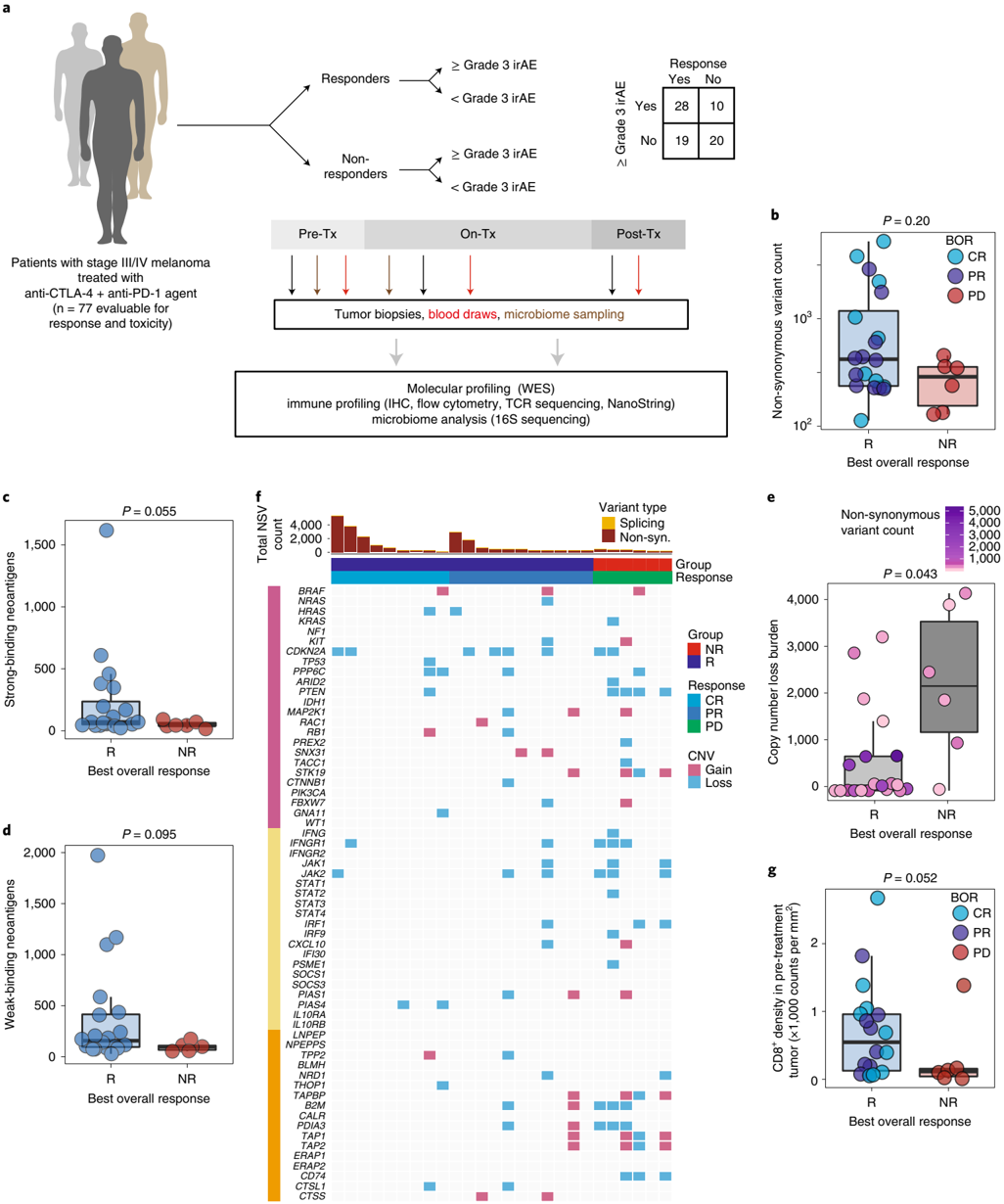
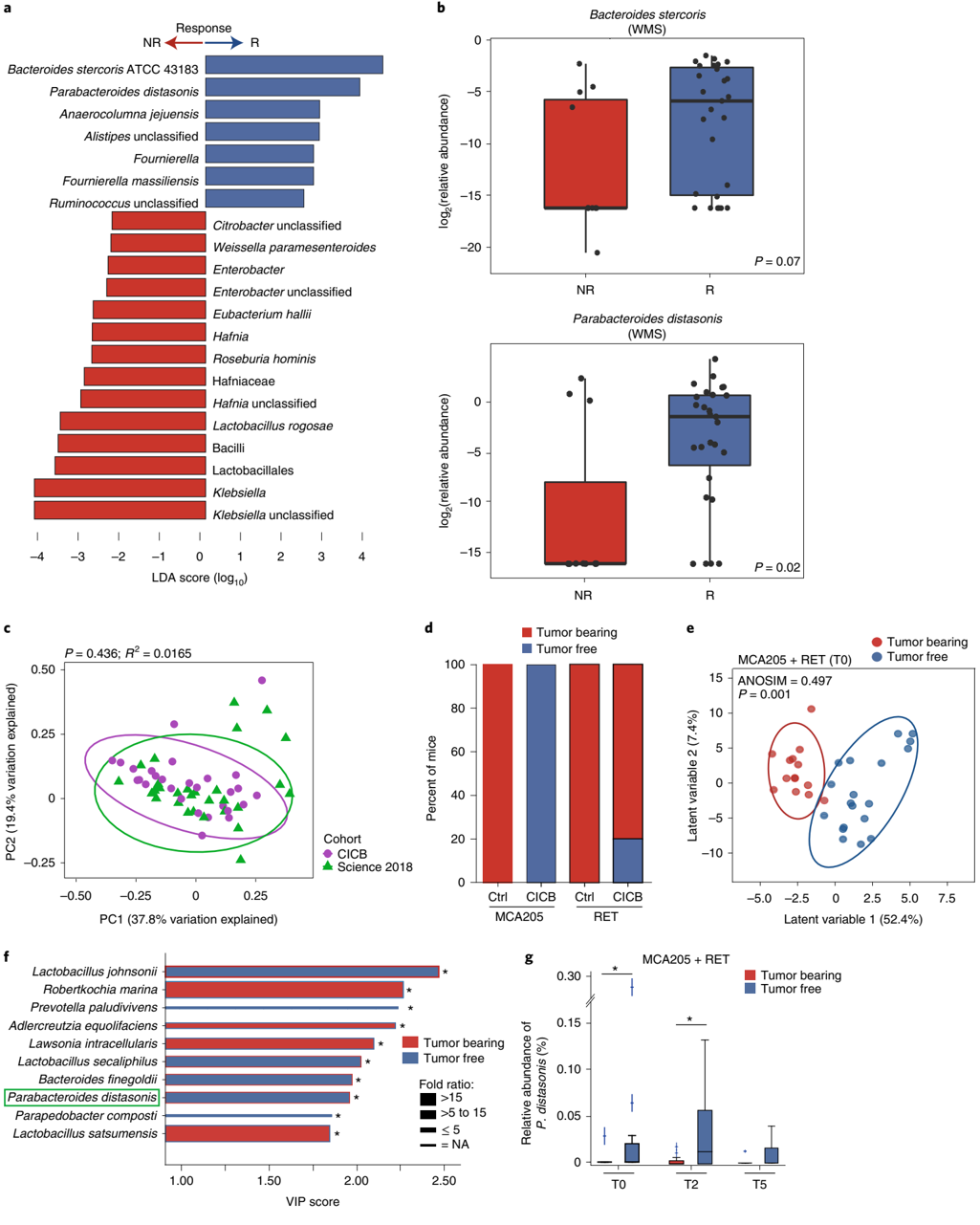
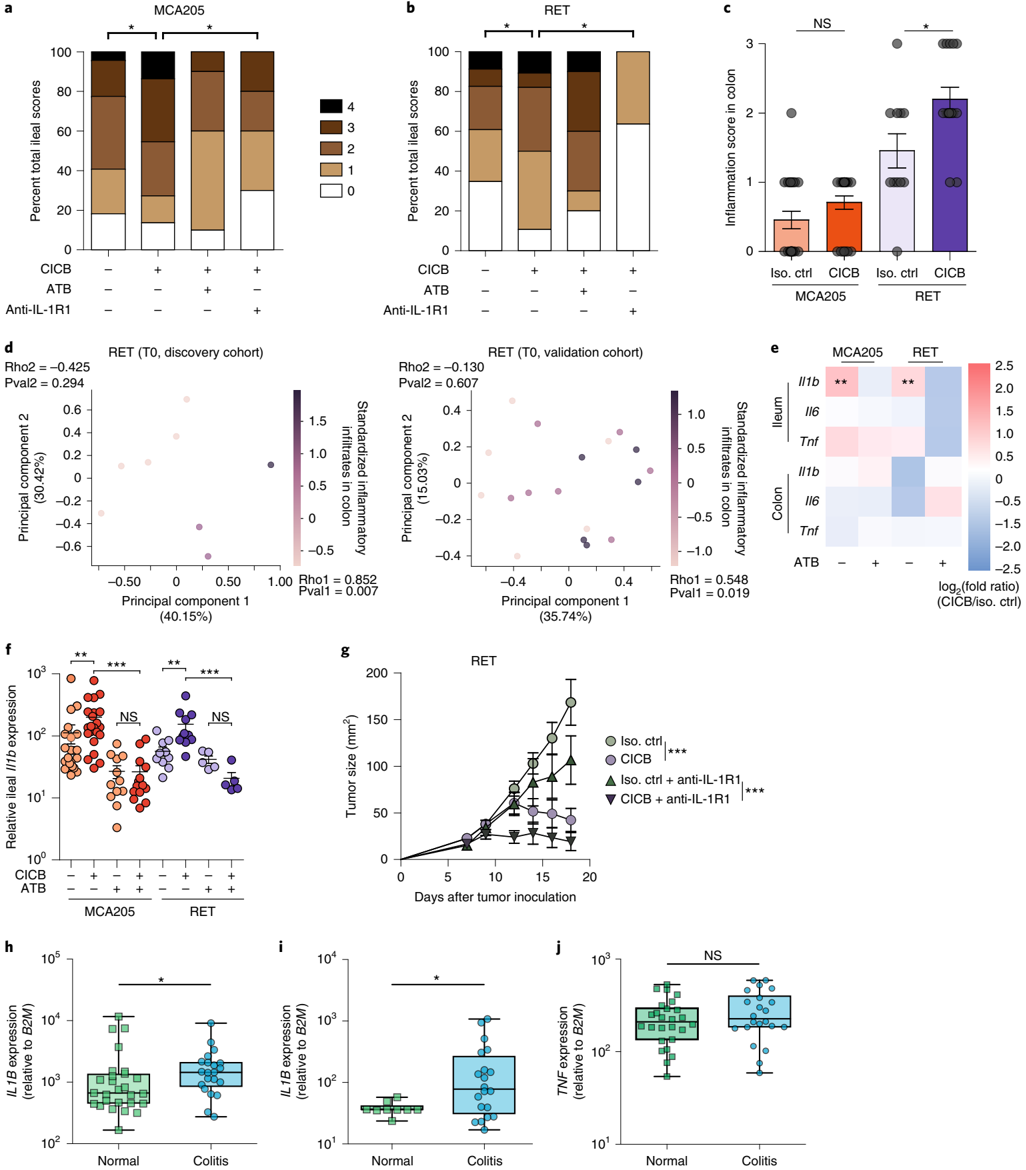
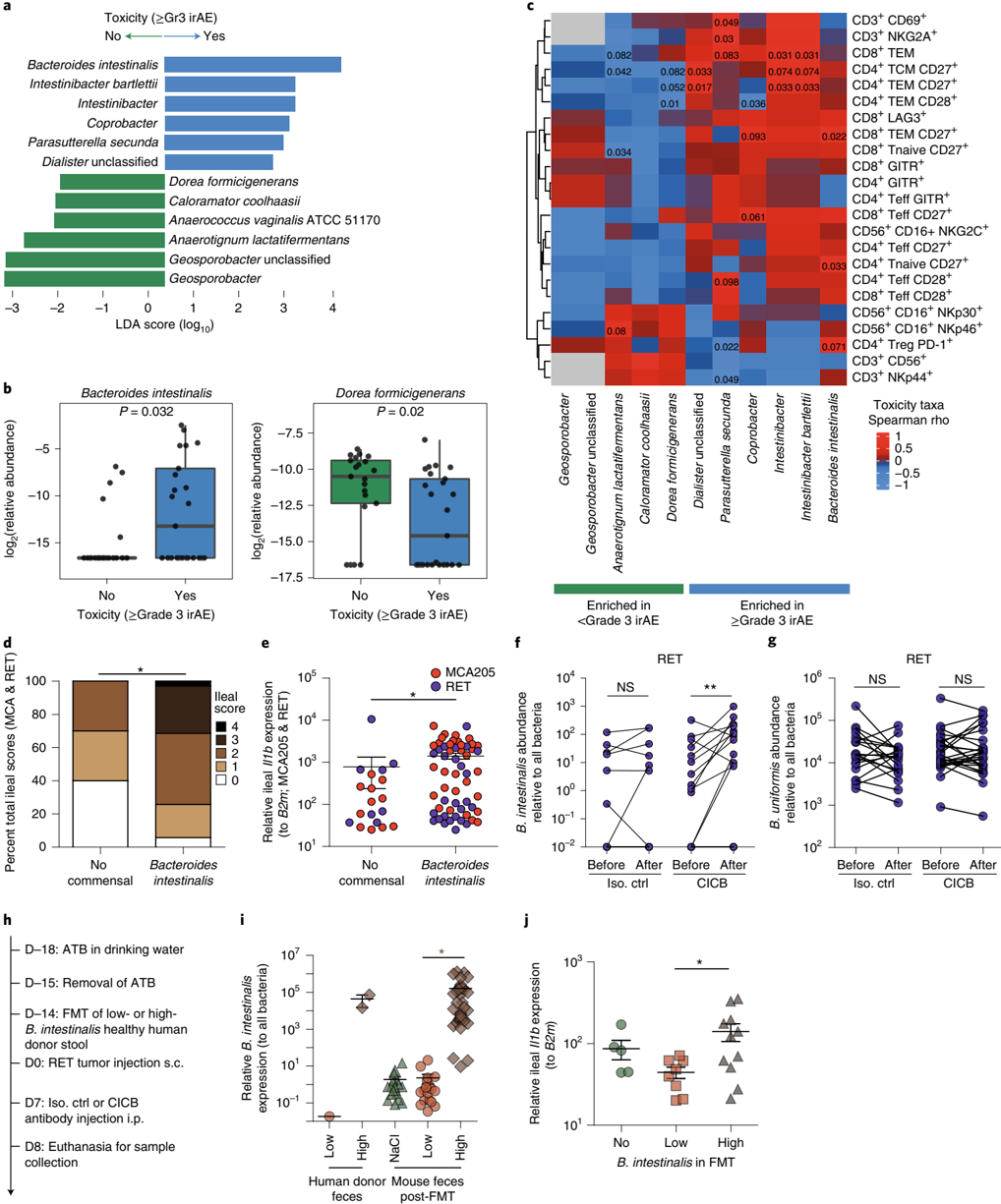
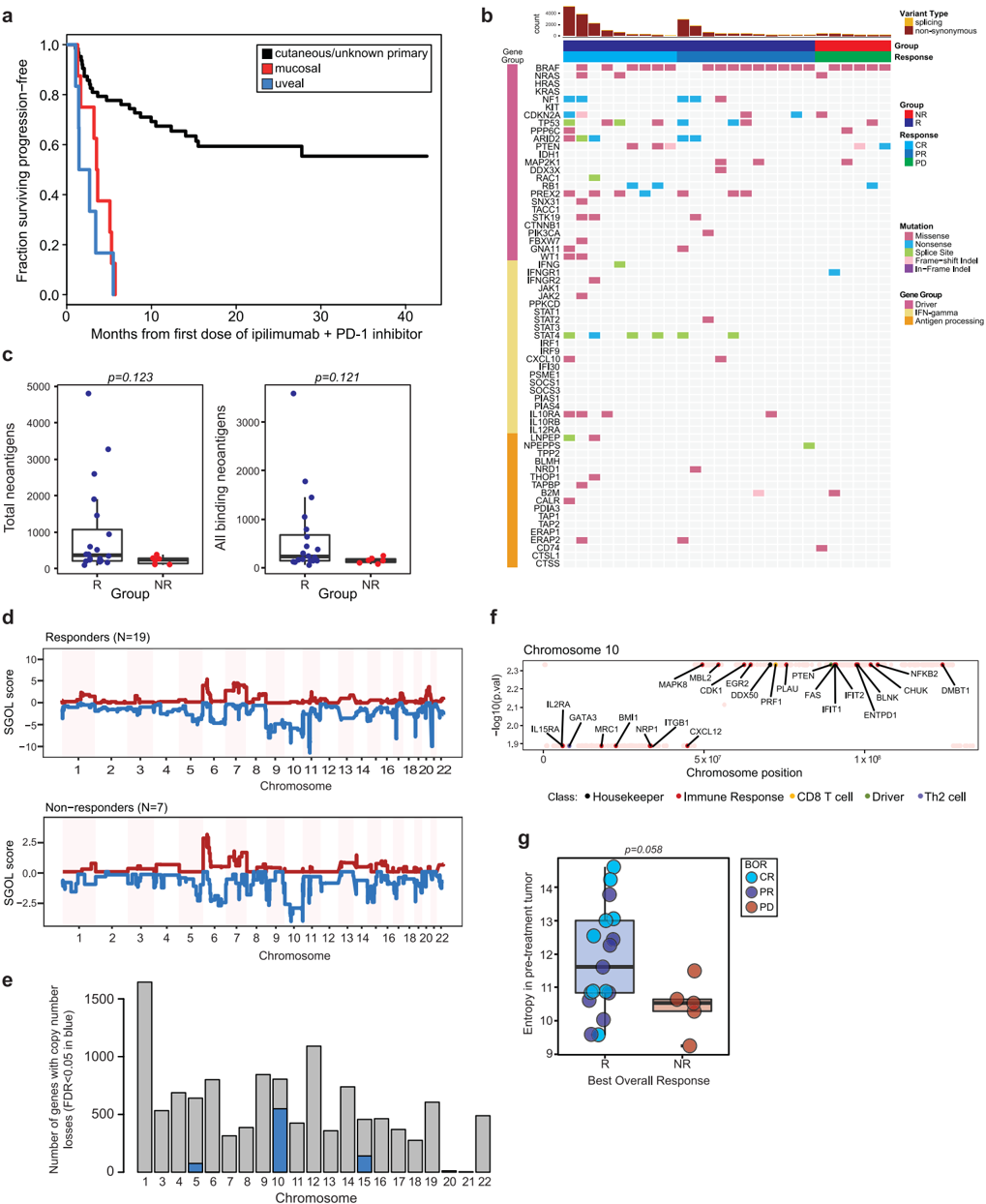
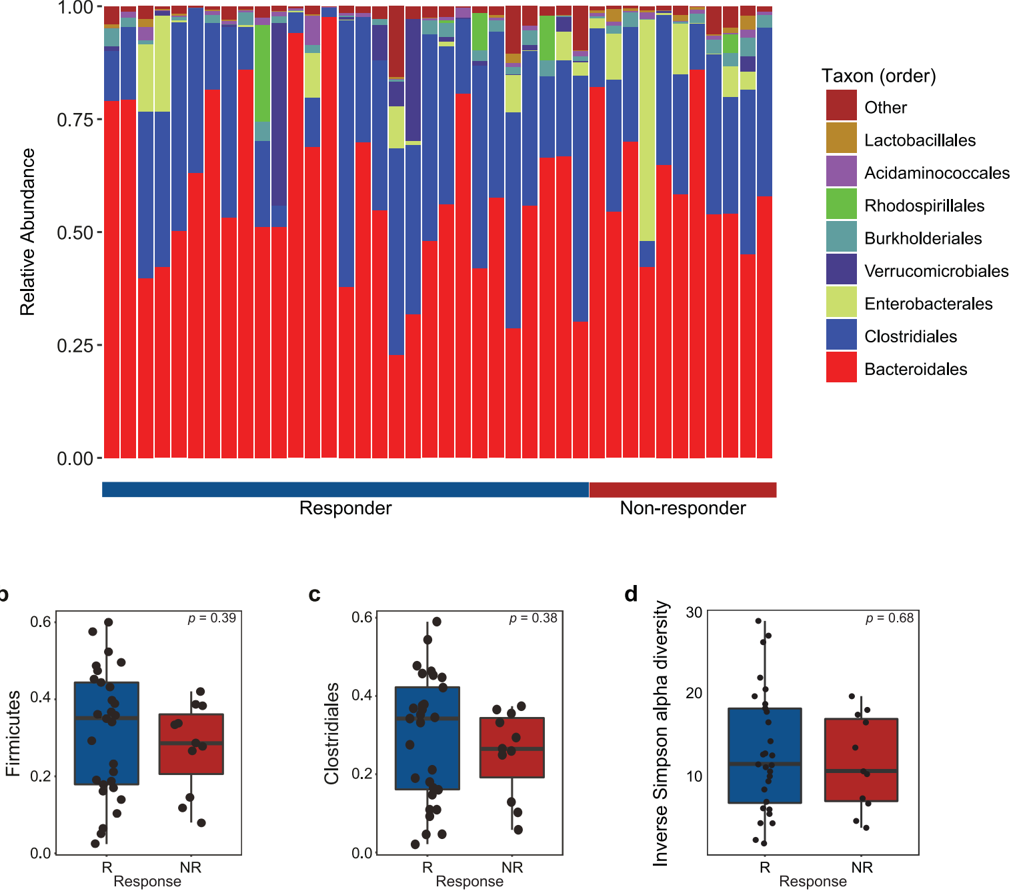
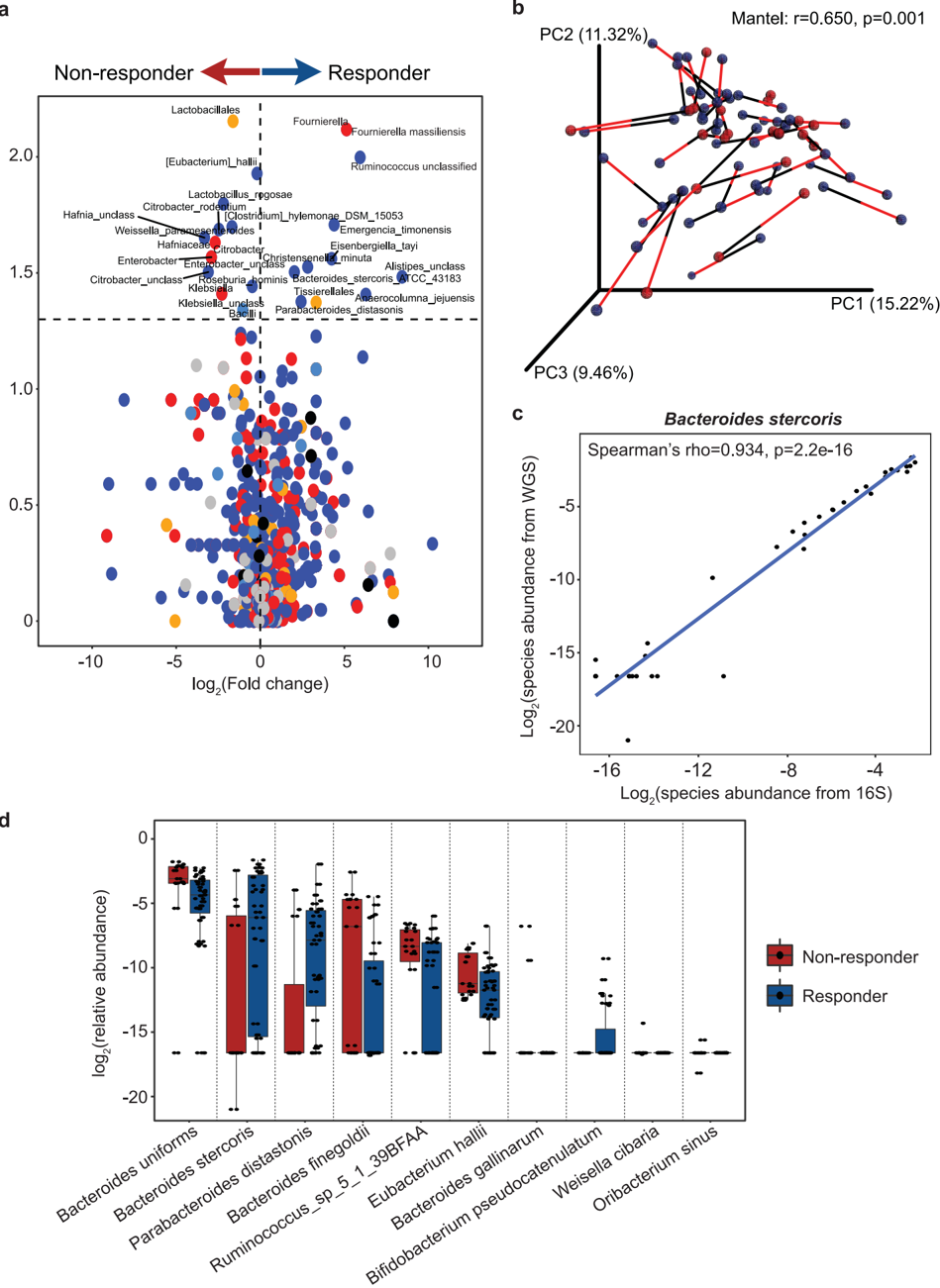
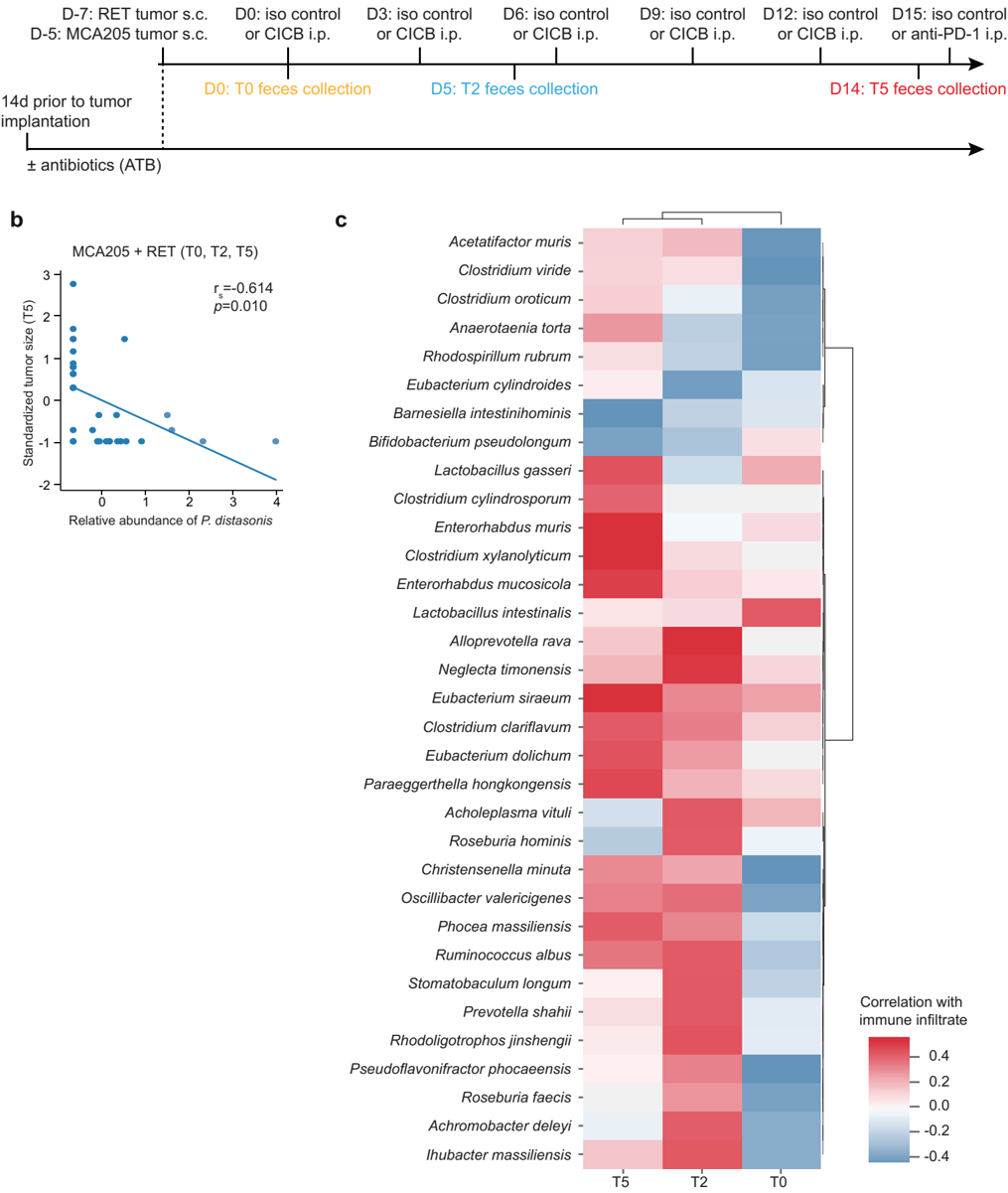
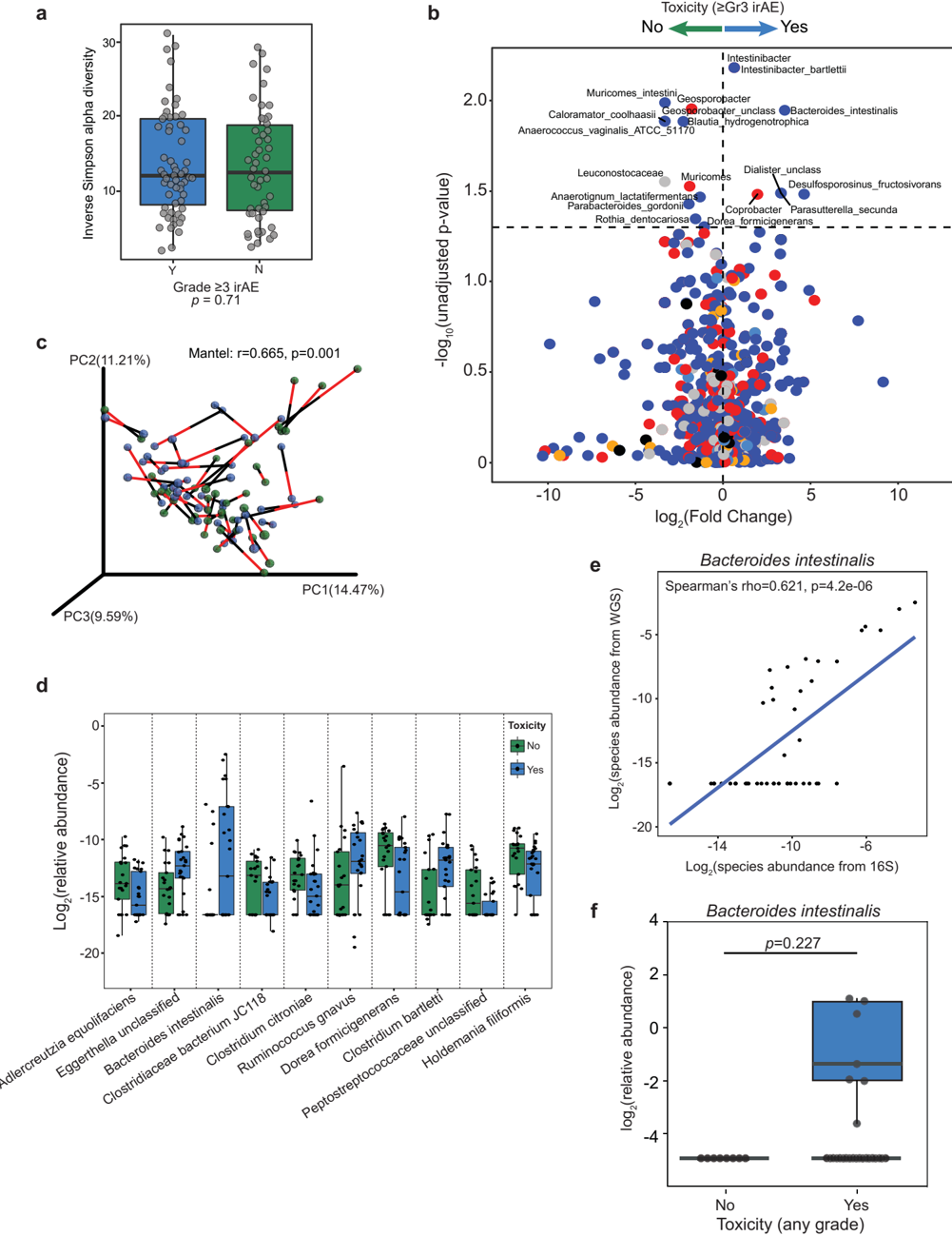
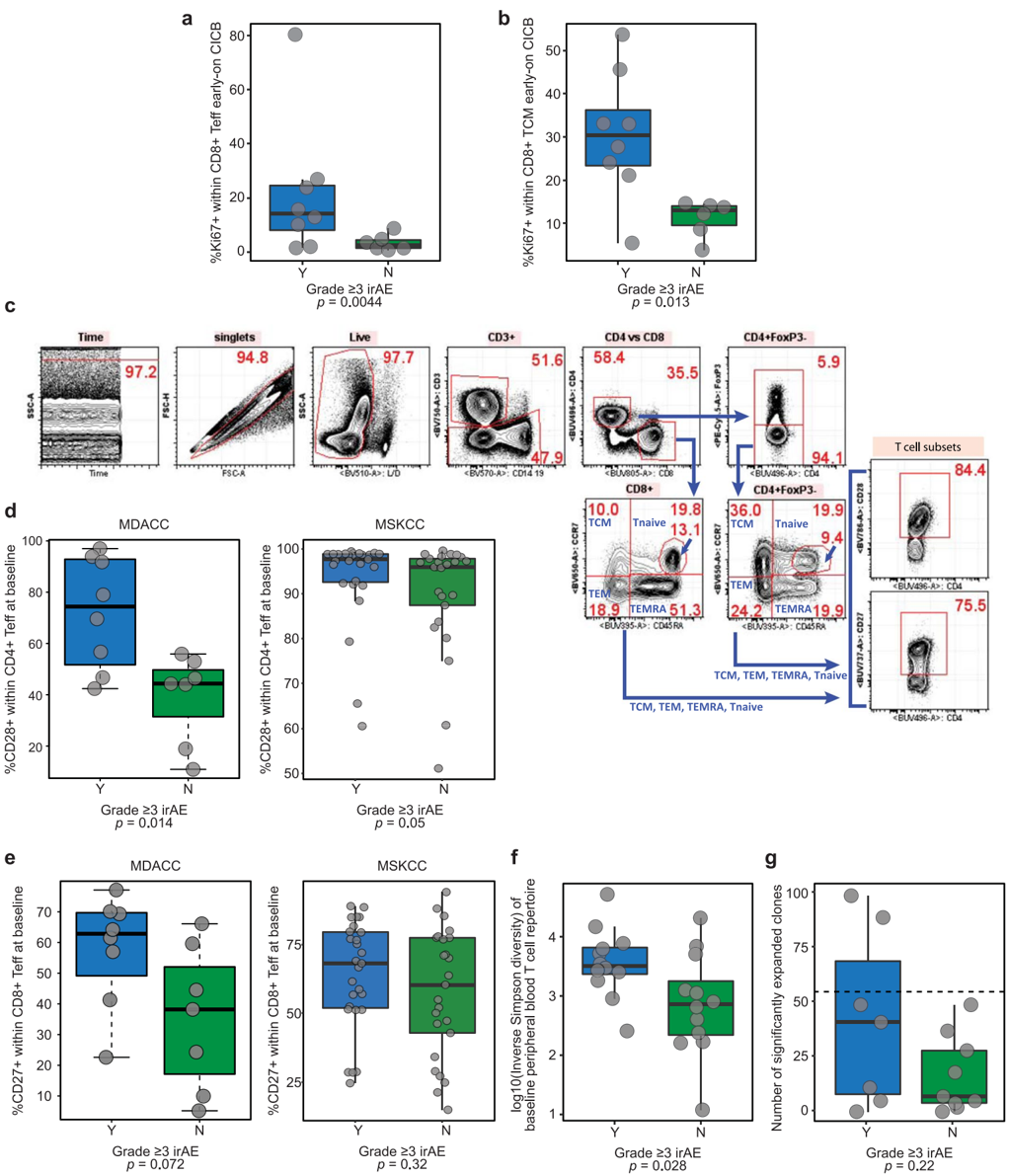
Treatment with combined immune checkpoint blockade (CICB) targeting CTLA-4 and PD-1 is associated with clinical benefit across tumor types, but also a high rate of immune-related adverse events. Insights into biomarkers and mechanisms of response and toxicity to CICB are needed. To address this, we profiled the blood, tumor and gut microbiome of 77 patients with advanced melanoma treated with CICB, with a high rate of any ≥grade 3 immune-related adverse events (49%) with parallel studies in pre-clinical models. Tumor-associated immune and genomic biomarkers of response to CICB were similar to those identified for ICB monotherapy, and toxicity from CICB was associated with a more diverse peripheral T-cell repertoire. Profiling of gut microbiota demonstrated a significantly higher abundance of Bacteroides intestinalis in patients with toxicity, with upregulation of mucosal IL-1β in patient samples of colitis and in pre-clinical models. Together, these data offer potential new therapeutic angles for targeting toxicity to CICB. Clinical benefit or intestinal toxicity resulting from combined immune checkpoint blockade in patients with melanoma associates with prevalent commensal bacteria and can be decoupled by IL-1R inhibition.
Overview
The claims and statistics of this paper haven’t been checked yet.
Free: it reads the open-access text and checks the first 5 claims that cite a source we can check. Create a free account to check every claim.
Integrity signals
Registry
Cites
Statistics
Figures

Verification
Claims the paper makes
The claims and statistics of this paper haven’t been checked yet.
Free: it reads the open-access text and checks the first 5 claims that cite a source we can check. Create a free account to check every claim.
Claims other papers make about this one
Each is checked against this paper’s own text: does it say what the citing paper says it does?
The source backs part of the claim, not all of it — or backs it for a different population, condition or comparison.
In the citing paper
“Gut bacteria modulate the response to immune checkpoint blockade (ICB) treatment in cancer”
From Dietary fiber and probiotics influence the gut microbiome and melanoma immunotherapy response (2021) · cites this paper as [7]
Experimental — accuracy not yet measuredThe cited source says what the claim attributes to it.
In the citing paper
“Another study linked toxicity with dual CTLA-4 and PD-1 inhibition to an increased abundance of Bacteroides intestinalis in the stool of patients with melanoma.40”
From Faecalibacterium prausnitzii strain EXL01 boosts efficacy of immune checkpoint inhibitors (2024) · cites this paper as [40]
The cited source says what the claim attributes to it.
In the citing paper
“This phenomenon is particularly pronounced in dual ICI combination therapies, where it has been associated with an increased incidence of severe AEs30.”
From Microbiome meets immunotherapy: unlocking the hidden predictors of immune checkpoint inhibitors (2025) · cites this paper as [30]
The cited source says what the claim attributes to it.
In the citing paper
“Despite these findings, some studies have reported conflicting results regarding the direct association between microbiota diversity and ICI efficacy30,143.”
From Microbiome meets immunotherapy: unlocking the hidden predictors of immune checkpoint inhibitors (2025) · cites this paper as [30]
In the citing paper
“Gut microbes, such as Bacteroides, could also be a biomarker for predicting ICI therapeutic toxicity in advanced melanoma patients treated with combined CTLA-4 and PD-1 blockade [131].”
From Gut microbiota influence immunotherapy responses: mechanisms and therapeutic strategies (2022) · doi:10.1186/s13045-022-01273-9 · cites this paper as [131]
1 more claim about this paper
Create a free account to see every claim other papers make about this one.
Self-check
Percentages, sums and reported differences re-computed from the paper’s own numbers.
The self-check needs the paper’s full text.
Citations
Cites
2 retracted
Million, M., Tidjani Alou, M., Khelaifia, S., Bachar, D., Lagier, J.-C., Dione, N., Brah, S., Hugon, P., Lombard, V., Armougom, F., et al. (2016) · Scientific Reports · doi:10.1038/srep26051 · Cited by 204
Self-citationRetractedGlycans affect DNA extraction and induce substantial differences in gut metagenomic studies
Angelakis, E., Bachar, D., Henrissat, B., Armougom, F., Audoly, G., Lagier, J.-C., Robert, C., & Raoult, D. (2016) · Scientific Reports · doi:10.1038/srep26276 · Cited by 82
Self-citationRetractedQIIME allows analysis of high-throughput community sequencing data
Caporaso, J. G., Kuczynski, J., Stombaugh, J., Bittinger, K., Bushman, F. D., Costello, E. K., Fierer, N., Peña, A. G., Goodrich, J. K., Gordon, J. I., et al. (2010) · Nature Methods · doi:10.1038/nmeth.f.303 · Cited by 34,887
PD-1 and PD-L1 Immune Checkpoint Blockade to Treat Breast Cancer
Hartkopf, A. D., Taran, F.-A., Wallwiener, M., Walter, C. B., Krämer, B., Grischke, E.-M., & Brucker, S. Y. (2016) · Breast Care · doi:10.1159/000453569 · Cited by 30,845
New response evaluation criteria in solid tumours: revised RECIST guideline (version 1.1)
Eisenhauer, E. A., Therasse, P., Bogaerts, J., Schwartz, L. H., Sargent, D., Ford, R., Dancey, J., Arbuck, S., Gwyther, S., Mooney, M., et al. (2009) · European Journal of Cancer · doi:10.1016/j.ejca.2008.10.026 · Cited by 29,534
Search and clustering orders of magnitude faster than BLAST
Edgar, R. C. (2010) · Bioinformatics · doi:10.1093/bioinformatics/btq461 · Cited by 20,826
UPARSE: highly accurate OTU sequences from microbial amplicon reads
Edgar, R. C. (2013) · Nature Methods · doi:10.1038/nmeth.2604 · Cited by 16,707
Metagenomic biomarker discovery and explanation
Segata, N., Izard, J., Waldron, L., Gevers, D., Miropolsky, L., Garrett, W. S., & Huttenhower, C. (2011) · Genome Biology · doi:10.1186/gb-2011-12-6-r60 · Cited by 16,192
Adverse Renal Effects of Immune Checkpoint Inhibitors: A Narrative Review
Wanchoo, R., Karam, S., Uppal, N. N., Barta, V. S., Deray, G., Devoe, C., Launay-Vacher, V., Jhaveri, K. D., & on behalf of Cancer and Kidney International Network Workgroup on Immune Checkpoint Inhibitors (2017) · American Journal of Nephrology · doi:10.1159/000455014 · Cited by 15,256
Structure, function and diversity of the healthy human microbiome
The Human Microbiome Project Consortium (2012) · Nature · doi:10.1038/nature11234 · Cited by 11,726
Cited by
Items 101–200 of 440
Zhao, Y., Yu, C., Zhang, J., Yao, Q., Zhu, X. M., & Zhou, X. (2025) · International Journal of Molecular Medicine · doi:10.3892/ijmm.2025.5651 · Cited by 62
Self-citationZhang, Y., Cheng, S., Zou, H., Han, Z., Xie, T., Zhang, B., Dai, D., Yin, X., Liang, Y., Kou, Y., et al. (2023) · Frontiers in Cellular and Infection Microbiology · doi:10.3389/fcimb.2023.1099063 · Cited by 53
Facts and Hopes for Gut Microbiota Interventions in Cancer Immunotherapy
Davar, D., & Zarour, H. M. (2022) · Clinical Cancer Research · doi:10.1158/1078-0432.ccr-21-1129 · Cited by 40
Association of Body Mass Index With the Safety Profile of Nivolumab With or Without Ipilimumab
McQuade, J. L., Hammers, H. J., Furberg, H. F., Engert, A., André, T., Blumenschein, G. R., Tannir, N. M., Baron, A. D., Larkin, J., El-Khoueiry, A. B., et al. (2022) · JAMA Oncology · doi:10.1001/jamaoncol.2022.5409 · Cited by 41
Self-citationHsieh, Y., Kuo, W.-L., Hsu, W.-T., Tung, S., & Li, C. (2022) · Cancers · doi:10.3390/cancers15010269 · Cited by 44
Wu, Z., Zhang, S., Li, L., Huang, Z., Huang, D., & Hu, Y. (2022) · Frontiers in Oncology · doi:10.3389/fonc.2022.887383 · Cited by 45
“Recent work has highlighted the key role of the gut microbiota in mediating tumor responses to chemotherapeutic agents and ICIs as well as irAEs (15, 21, 22).”
BackgroundCAR-T Cell Therapy and the Gut Microbiota
Asokan, S., Cullin, N., Stein‐Thoeringer, C. K., & Elinav, E. (2023) · Cancers · doi:10.3390/cancers15030794 · Cited by 42
Wang, B., Qiu, Y., Xie, M., Huang, P., Yu, Y., Sun, Q., Shangguan, W., Li, W., Zhu, Z., Xue, J., et al. (2024) · BMC Microbiology · doi:10.1186/s12866-024-03372-8 · Cited by 42
“In a melanoma transplant model, an increased abundance of P. distasonis correlated with a heightened response to a combined anti-CTLA-4 and anti-PD-1 antibody treatment [17].”
BackgroundWekking, D., van den Ende, T., Bijlsma, M. F., Vidal-Itriago, A., Nieuwdorp, M., & van Laarhoven, H. W. M. (2025) · Cancer Treatment Reviews · doi:10.1016/j.ctrv.2025.103025 · Cited by 46
Obesity Is Associated with Altered Tumor Metabolism in Metastatic Melanoma
Hahn, A. W., Menk, A. V., Rivadeneira, D. B., Augustin, R. C., Xu, M., Li, J., Wu, X., Mishra, A. K., Gide, T. N., Quek, C. Y. J., et al. (2022) · Clinical Cancer Research · doi:10.1158/1078-0432.ccr-22-2661 · Cited by 44
Self-citationLiu, Y., Altreuter, J., Bodapati, S., Cristea, S., Wong, C. J., Wu, C. J., & Michor, F. (2023) · Cell Genomics · doi:10.1016/j.xgen.2023.100444 · Cited by 48
“107 Additionally, the abundance of the Faecalibacterium genus was positively correlated with T cell infiltrates and antigen presentation and processing.”
BackgroundGhilardi, G., Paruzzo, L., Svoboda, J., Chong, E. A., Shestov, A. A., Chen, L., Cohen, I., Gabrielli, G., Nasta, S. D., Porazzi, P., et al. (2024) · Blood Advances · doi:10.1182/bloodadvances.2023011492 · Cited by 44
Integrated Multi-Omics Analyses Reveal Lipid Metabolic Signature in Osteoarthritis
Wang, Y., Zeng, T., Tang, D., Cui, H., Wan, Y., & Tang, H. (2024) · Journal of Molecular Biology · doi:10.1016/j.jmb.2024.168888 · Cited by 45
Facts and Hopes in Prediction, Diagnosis, and Treatment of Immune-Related Adverse Events
Smithy, J. W., Faleck, D. M., & Postow, M. A. (2021) · Clinical Cancer Research · doi:10.1158/1078-0432.ccr-21-1240 · Cited by 39
Self-citationTonneau, M., Nolin-Lapalme, A., Kazandjian, S., Auclin, E., Panasci, J., Benlaifaoui, M., Ponce, M., Al-Saleh, A., Belkaid, W., Naimi, S., et al. (2022) · OncoImmunology · doi:10.1080/2162402x.2022.2096535 · Cited by 34
Self-citationLiu, Y., Yu, G., Zhang, R., Feng, L., & Zhang, J. (2023) · Environmental Pollution · doi:10.1016/j.envpol.2023.121708 · Cited by 37
Self-citationMicrobiome influencers of checkpoint blockade–associated toxicity
Wang, Y., Jenq, R. R., Wargo, J. A., & Watowich, S. S. (2023) · The Journal of Experimental Medicine · doi:10.1084/jem.20220948 · Cited by 37
“…(Actinobacteria), including Bifidobacterium spp. and Collinsella aerofaciens; and the Verrucomicrobiota phylum member Akkermansia muciniphila (Andrews et al., 2021; Chaput et al., 2017; Derosa et al., 2022; Frankel et al., 2017; Gopalakrishnan et al., 2018b; Hakozaki et al., 2020; Matson et…”
BackgroundResultInfluentialSelf-citationJiang, H., & Zhang, Q. (2024) · Oncology Letters · doi:10.3892/ol.2024.14221 · Cited by 36
“Andrews et al (97) demonstrated a significant association between a higher abundance of Bacteroides and irAEs in melanoma patients receiving ICIs.”
BackgroundMIF and CD74 as Emerging Biomarkers for Immune Checkpoint Blockade Therapy
Fey, R. M., Nichols, R. A., Tran, T. T. T., Vandenbark, A. A., & Kulkarni, R. P. (2024) · Cancers · doi:10.3390/cancers16091773 · Cited by 43
“Interestingly, CD74 copy-number losses have been associated with a lack of response to combination anti-CTLA-4/anti-PD-1 ICB treatment in patients with advanced melanoma [92].”
BackgroundMulti-omics reveals microbiome, host gene expression, and immune landscape in gastric carcinogenesis
Park, C. H., Hong, C., Lee, A.-R., Sung, J., & Hwang, T. H. (2022) · iScience · doi:10.1016/j.isci.2022.103956 · Cited by 39
“…cancer immunotherapy, multiple studies have investigated the influence of the gut microbiome on response to immunotherapy in cancer-bearing hosts (Andrews et al., 2021; Gopalakrishnan et al., 2018; Matson et al., 2021; iScience 25, 103956, March 18, 2022 11 Oster et al., 2021; Peng et al., 2020;…”
BackgroundGut microbiota: A double-edged sword in immune checkpoint blockade immunotherapy against tumors
Wang, J., Zhu, N., Su, L., & Yang, R. (2023) · Cancer Letters · doi:10.1016/j.canlet.2023.216582 · Cited by 37
Elkrief, A., Routy, B., Derosa, L., Bolte, L. A., Wargo, J. A., McQuade, J. L., & Zitvogel, L. (2025) · American Society of Clinical Oncology Educational Book · doi:10.1200/edbk-25-472902 · Cited by 43
Self-citationInteraction between gut microbiota and immune checkpoint inhibitor-related colitis
Zhou, G., Zhang, N., Meng, K., & Pan, F. (2022) · Frontiers in Immunology · doi:10.3389/fimmu.2022.1001623 · Cited by 39
“Bacteroides intestinalis was also proved to induce IRC via up-regulating IL-1b mucosal transcription (63).”
BackgroundJamal, R., Messaoudene, M., de Figuieredo, M., & Routy, B. (2023) · Seminars in Immunology · doi:10.1016/j.smim.2023.101754 · Cited by 31
Self-citationEmerging roles of the gut microbiota in cancer immunotherapy
Shi, Z., Li, H., Song, W., Zhou, Z., Li, Z., & Zhang, M. (2023) · Frontiers in Immunology · doi:10.3389/fimmu.2023.1139821 · Cited by 34
“(41) A total of 77 patients receiving ipilimumab (anti-CTLA-4) in combination with PD-1 checkpoint blockade agent (either nivolumab or pembrolizumab) Responders: enrichment of Bacteroides stercoris, Parabacteroides distasonis and Fournierella massiliensis; Non-responders: overrepresentation of Klebsiella aerogenes and…”
BackgroundA TNF-α blocking peptide that reduces NF-κB and MAPK activity for attenuating inflammation
Wang, Y., Ye, R., Fan, L., Zhao, X., Li, L., Zheng, H., Qiu, Y., He, X., & Lu, Y. (2023) · Bioorganic & Medicinal Chemistry · doi:10.1016/j.bmc.2023.117420 · Cited by 35
Bird, B., Nally, K., Ronan, K. E., Clarke, G. A., Amu, S., Almeida, A. S., Flavin, R., & Finn, S. P. (2022) · Diagnostics · doi:10.3390/diagnostics12010124 · Cited by 31
Gut microbiota shed new light on the management of immune‐related adverse events
Tan, B., Liu, Y., Tang, H. T., Chen, D., Xu, Y., Chen, M., Li, Y., Wang, M., & Qian, J. (2022) · Thoracic Cancer · doi:10.1111/1759-7714.14626 · Cited by 36
“Bacteroides intestinalis were significantly enriched in baseline gut microbiomes and the peripheral T cell repertoire was more diverse in melanoma patients who developed grade 3–5 irAEs, which was shown to be related to the upregulation of mucosal IL-1β in murine models.(22) Furthermore, deficiencies in polyamine tran…”
BackgroundGut microbiome and immune checkpoint inhibitor toxicity
Verheijden, R. J., van Eijs, M. J. M., Paganelli, F. L., Viveen, M. C., Rogers, M. R. C., Top, J., May, A. M., van de Wijgert, J. H. H. M., & Suijkerbuijk, K. P. M. (2025) · European Journal of Cancer · doi:10.1016/j.ejca.2025.115221 · Cited by 38
Intratumoral microbiota: new frontiers in tumor immunity
Zhang, Z., Liao, Y., & Tang, D. (2022) · Carcinogenesis · doi:10.1093/carcin/bgac063 · Cited by 32
Liu, X., Tang, H. T., Zhou, Q., Zeng, Y., Lu, B., Chen, D., Li, Y., Qian, J., Chen, M., Zhao, J., et al. (2023) · Frontiers in Immunology · doi:10.3389/fimmu.2023.1109281 · Cited by 35
“found thatBacteroides intestinalis upregulated mucosal IL-1b and mediated immune-related colitis (37), suggesting that a more detailed species-level analysis is warranted.”
BackgroundAdvances and challenges in the treatment of osteosarcoma
Wang, X., Zhu, K., Hu, J., & Zhang, C. (2025) · Progress in Biophysics and Molecular Biology · doi:10.1016/j.pbiomolbio.2025.07.001 · Cited by 38
Brevi, A., Cogrossi, L. L., Lorenzoni, M., Mattorre, B., & Bellone, M. (2022) · Frontiers in Immunology · doi:10.3389/fimmu.2022.845422 · Cited by 32
“associated defined microbiota signatures and abundance of Bacteroides intestinalis with upregulation of mucosal IL-1b and IL-17 in patients with ICI-related gastrointestinal adverse events (127).”
BackgroundGut–lung axis: role of the gut microbiota in non-small cell lung cancer immunotherapy
Zhang, H., & Xu, Z. (2023) · Frontiers in Oncology · doi:10.3389/fonc.2023.1257515 · Cited by 34
“For example, Andrews et al. established that Bacteroides intestinalis mediates immune-related intestinal damage via IL-1 b in melanoma (56).”
BackgroundMicrobiome meets immunotherapy: unlocking the hidden predictors of immune checkpoint inhibitors
Huang, L., Li, Y., Zhang, C., Jiang, A., Zhu, L., Mou, W., Li, K., Zhang, J., Cui, C., Cui, X., et al. (2025) · npj Biofilms and Microbiomes · doi:10.1038/s41522-025-00819-2 · Cited by 28
“This phenomenon is particularly pronounced in dual ICI combination therapies, where it has been associated with an increased incidence of severe AEs 30 .”
Self-citationMicrobial mechanisms to improve immune checkpoint blockade responsiveness
Griffin, M. E., & Hang, H. C. (2022) · Neoplasia · doi:10.1016/j.neo.2022.100818 · Cited by 31
Chen, B., Zeng, G., Sun, L., & Jiang, C. (2024) · Science China Life Sciences · doi:10.1007/s11427-023-2446-y · Cited by 30
“Additionally, clinical investigations have demonstrated that gut microbiota can influence the clinical outcomes of CAR-T cell cancer immunotherapy (Stein-Thoeringer et al., 2023) as well as the toxicity of combination CTLA-4 and PD-1 inhibition (Andrews et al., 2021).”
Pi, X., Yu, Z., Yang, X., Zhi, D., & Liu, W. (2022) · Frontiers in Nutrition · doi:10.3389/fnut.2022.921137 · Cited by 28
“The abundance of these two bacteria in the intestines of colorectal cancer patients exhibited an increasing trend (21, 22).”
BackgroundKnisely, A. T., Seo, Y. D., Wargo, J. A., & Chelvanambi, M. (2023) · Cancers · doi:10.3390/cancers15030777 · Cited by 32
“response, resistance, and toxicity to cancer immunotherapy [2,3,5,6,81].”
BackgroundSelf-citationGut Microbiome in Patients With Early-Stage and Late-Stage Melanoma
Witt, R. G., Cass, S. H., Tran, T., Damania, A. V., Nelson, E. E., Sirmans, E., Burton, E. M., Chelvanambi, M., Johnson, S. B., Tawbi, H. A., et al. (2023) · JAMA Dermatology · doi:10.1001/jamadermatol.2023.2955 · Cited by 29
Self-citationUllern, A., Holm, K., Røssevold, A. H., Andresen, N. K., Bang, C., Lingjærde, O. C., Naume, B., Hov, J. R., & Kyte, J. A. (2025) · Molecular Oncology · doi:10.1002/1878-0261.13760 · Cited by 25
“The intestinal microbiota has been associated with irAE development in melanoma [3,34].”
Schettini, F., Fontana, A., Gattazzo, F., Strina, C., Milani, M., Cappelletti, M. R., Cervoni, V., Morelli, L., Curigliano, G., Iebba, V., et al. (2023) · European Journal of Cancer · doi:10.1016/j.ejca.2023.112948 · Cited by 26
Self-citationXu, L., Qi, Y., Jiang, Y., Ji, Y., Zhao, Q., Wu, J., Lu, W., Wang, Y., Chen, Q., & Wang, C. (2022) · Annals of Translational Medicine · doi:10.21037/atm-22-1165 · Cited by 29
“However, the results have not always been consistent in different cohorts (19).”
BackgroundResultInfluentialYang, S., Zhao, S., Ye, Y., Jia, L., & Lou, Y. (2022) · Frontiers in Immunology · doi:10.3389/fimmu.2022.952546 · Cited by 35
“Another study (76) showed that the toxicity of ICIs was associated with a significant increase in the abundance of Bacteroides intestinalis.”
BackgroundMicrobial metabolites and immunotherapy: Basic rationale and clinical indications
Kovtonyuk, L. V., & McCoy, K. D. (2023) · Seminars in Immunology · doi:10.1016/j.smim.2023.101755 · Cited by 27
Yang, L., Wang, J., Altreuter, J., Jhaveri, A., Wong, C. J., Song, L., Fu, J., Taing, L., Bodapati, S., Sahu, A. D., et al. (2023) · Nature Protocols · doi:10.1038/s41596-023-00841-8 · Cited by 26
“For instance, modulating gut microbial components has been shown to influence ICB response in melanoma 99,100 .”
BackgroundPepys, J., Stoff, R., Ramon‐Gonen, R., Ben‐Betzalel, G., Grynberg, S., Shapira‐Frommer, R., Schachter, J., Asher, N., Taliansky, A., Nikitin, V., et al. (2023) · Neurology · doi:10.1212/wnl.0000000000207632 · Cited by 29
“…mechanisms have been proposed for this alleged relationship, including the resemblance of tumor antigens and a ff ected healthy tissue ’ s antigens, 43,44 the intricate relationship between the gut microbiome and the immune system, 45,46 and CTLA-4 expression in healthy vulnerable tissues.”
BackgroundLasagna, A., Mascaro, F., Figini, S., Basile, S., Gambini, G., Klersy, C., Lenti, M. V., Sabatino, A. D., Benedetto, A. D., Calvi, M., et al. (2023) · Cancer Medicine · doi:10.1002/cam4.6565 · Cited by 27
Bypassing anti-PD-(L)1 therapy: Mechanisms and management strategies
Mortezaee, K., Majidpoor, J., Najafi, S., & Tasa, D. (2022) · Biomedicine & Pharmacotherapy · doi:10.1016/j.biopha.2022.114150 · Cited by 27
Lepper, A., Bitsch, R., Kurt, F. G. Ö., Arkhypov, I., Lasser, S., Utikal, J. S., & Umansky, V. (2023) · OncoImmunology · doi:10.1080/2162402x.2023.2247303 · Cited by 27
Immune-mediated colitis after immune checkpoint inhibitor therapy
Giesler, S., Riemer, R., Lowinus, T., & Zeiser, R. (2024) · Trends in Molecular Medicine · doi:10.1016/j.molmed.2024.09.009 · Cited by 30
Park, J. S., Gazzaniga, F. S., Kasper, D. L., & Sharpe, A. H. (2023) · Experimental & Molecular Medicine · doi:10.1038/s12276-023-01075-0 · Cited by 25
“Another study revealed that Bacteroides intestinalis and Intestinalibacter Bartlettii were enriched in a ≥ grade 3 IrAE patient group, whereas patients who did not develop ≥ grade 3 IrAE had microbiota enriched by Anaerotignum lactatifermentas and Dorea formicigenerans 149 .”
Cao, T., Zhou, X., Wu, X., & Zou, Y. (2023) · Frontiers in Immunology · doi:10.3389/fimmu.2023.1207544 · Cited by 27
“Additional studies have also supported the association between the commensal microbiota and irAEs (93, 95, 104).”
BackgroundSalivary Microbiome Relates to Neoadjuvant Immunotherapy Response in OSCC
Wang, X., Liu, Y. T., Ren, J., Liu, H. M., Fu, Q., Yang, Y., Fu, Q. Y., & Chen, G. (2024) · Journal of Dental Research · doi:10.1177/00220345241262759 · Cited by 24
“The gut microbiome, enriched in the phylum Firmicutes (Chaput et al. 2019; Andrews et al. 2021; Davar et al. 2021) has been correlated with favorable responses to ICI-based therapy, whereas the Bacteroidales family (Gopalakrishnan et al. 2018) has been linked to poorer responses.”
Lim, M. Y., Hong, S., & Nam, Y. (2025) · Frontiers in Immunology · doi:10.3389/fimmu.2024.1512683 · Cited by 27
Clinical Evidence for Microbiome-Based Strategies in Cancer Immunotherapy: A State-of-the-Art Review
Petrelli, F., Ghidini, A., Dottorini, L., Ghidini, M., Zaniboni, A., & Tomasello, G. (2025) · Medicina · doi:10.3390/medicina61091595 · Cited by 33
Gut microbiome in multiple myeloma: Mechanisms of progression and clinical applications
Zhang, L., Xiang, Y., Li, Y., & Zhang, J. (2022) · Frontiers in Immunology · doi:10.3389/fimmu.2022.1058272 · Cited by 29
Self-citationGouttefangeas, C., Klein, R., & Maia, A. R. R. (2023) · Frontiers in Immunology · doi:10.3389/fimmu.2023.1212546 · Cited by 28
Cheng, Y., Ling, F., Li, J., Chen, Y., Xu, M., Li, S., & Zhu, L. (2023) · Frontiers in Immunology · doi:10.3389/fimmu.2023.1190850 · Cited by 26
“found with anakinra was sufficient to reverse dual ICIs-induced ileitis by blocking IL-1b without compromising the therapeutic efficacy in mice (16).”
BackgroundInfluentialHuang, J., Gong, C., & Zhou, A. (2023) · Therapeutic Advances in Medical Oncology · doi:10.1177/17588359231204854 · Cited by 33
Chen, L., Li, B., Zu, M., Reis, R. L., Kundu, S. C., & Xiao, B. (2025) · Seminars in Cancer Biology · doi:10.1016/j.semcancer.2025.06.012 · Cited by 24
Remodeling the tumor dormancy ecosystem to prevent recurrence and metastasis
Liang, Y., Chen, W., Zhang, Y., & Li, L. (2026) · Signal Transduction and Targeted Therapy · doi:10.1038/s41392-025-02328-2 · Cited by 36
“511 Adjusting living habits .”
Self-citationZhang, Z., Xie, T., Qi, C., Zhang, X., Shen, L., & Peng, Z. (2022) · Cancers · doi:10.3390/cancers14153736 · Cited by 27
Next Wave of Targets in the Treatment of Advanced Renal Cell Carcinoma
Cardenas, L. M., Deluce, J. E., Khan, S., Gulam, O., Vareki, S. M., Fernandes, R., & Lalani, A. A. (2022) · Current Oncology · doi:10.3390/curroncol29080429 · Cited by 24
Mechanisms and biomarkers of immune-related adverse events in gastric cancer
Ding, P., Liu, P., Meng, L., & Zhao, Q. (2023) · European journal of medical research · doi:10.1186/s40001-023-01365-3 · Cited by 25
“Various candidate biomarkers associated with irAEs have been reported, including gene expression profiles, C-reactive protein, human leukocyte antigen (HLA) and gut microbiome, which can predict irAE [88–93].”
BackgroundHarnessing the microbiome for cancer therapy
Hajjar, R., Mars, R. A. T., & Kashyap, P. (2026) · Nature Reviews Microbiology · doi:10.1038/s41579-025-01268-6 · Cited by 34
“These include heterogeneity in patient populations, small cohort sizes and inconsistencies in the definition and classification of irAEs across studies 115,117–121 .”
Hes, C., Desîlets, A., Tonneau, M., Ouarzadi, O. E., Sousa, M. D. F., Bahig, H., Filion, É., Nguyen‐Tan, P. F., Christopoulos, A., Benlaïfaoui, M., et al. (2023) · Oral Oncology · doi:10.1016/j.oraloncology.2023.106623 · Cited by 22
Self-citationČierniková, S., Ševčíková, A., Novisedláková, M., & Mego, M. (2024) · Cancers · doi:10.3390/cancers16244271 · Cited by 24
“Preclinical murine models and clinical cohorts show that the gut microbiota significantly influences the efficacy and side effects of ICIs, and intestinal dysbiosis can lead to treatment resistance [37–40].”
Willis, M. D., Schroeder, B. E., Marandino, L., Turajlic, S., & Carr, A. S. (2025) · Journal of Neurology Neurosurgery & Psychiatry · doi:10.1136/jnnp-2025-335998 · Cited by 35
“Human leucocyte antigen (HLA) type, 93 lipid profiles 94 and the makeup of the gut microbiome 95 96 may also help predict irAEs.”
Bai, K., Zhang, Y., Li, X., Tian, X., Pan, M.-M., Wang, D., & Dai, Y. (2022) · Computational and Structural Biotechnology Journal · doi:10.1016/j.csbj.2022.09.021 · Cited by 20
“Currently, there are three common target sites for immune checkpoint therapy: PD-1, CTLA-4 and PD-L1 [8,24,25].”
Gut and urinary microbiota: the causes and potential treatment measures of renal cell carcinoma
Yang, J.-W., Wan, S., Li, K., Chen, S., & Yang, L. (2023) · Frontiers in Immunology · doi:10.3389/fimmu.2023.1188520 · Cited by 26
“In studies of the use of ICIs to treat advanced melanoma, it has been found that the distribution of gut microbiota can serve as a biomarker to predict the response and ultimate outcome of ICI therapy for tumors (66).”
BackgroundThe role of gut microbiome in immune modulation in metastatic renal cell carcinoma
Deluce, J. E., Vareki, S. M., & Fernandes, R. (2022) · Therapeutic Advances in Medical Oncology · doi:10.1177/17588359221122714 · Cited by 22
The gut microbiome is associated with susceptibility to febrile malaria in Malian children
Ham, K. M. V. D., Bower, L., Li, S., Lorenzi, H., Doumbo, S., Doumtabé, D., Kayentao, K., Ongoïba, A., Traoré, B., Crompton, P. D., et al. (2024) · Nature Communications · doi:10.1038/s41467-024-52953-8 · Cited by 23
“…depletion of the gut microbiota has been shown to increase ileal damage compared to mice allowed to naturally repopulate their gut microbiota 60 , and C . citroniae possesses D-cysteine desulfhydrases, which increase the concentration of colonic sul fi des, potentially inhibiting the…”
BackgroundThe Impact of Oncogenic Viruses on Cancer Development: A Narrative Review
Torres, M. K. D. S., Neto, G. D. S. P., Vallinoto, I. M. V. C., Reis, L. O., & Vallinoto, A. C. R. (2025) · Biology · doi:10.3390/biology14070797 · Cited by 35
“Modulating the microbiota—particularly within the gut and tumor microenvironment—may also influence responses to cancer therapies, including chemotherapy and immune checkpoint blockade (PD-1, CTLA-4) [185,186].”
Gronich, N., Geva‐Zatorsky, N., Herren, R., Kelly, L., Cohen, Z., Zhou, H., Chen, Y. H., Shah, K., Robinson‐Catala, T. A., Frisby, G., et al. (2025) · Clinical Pharmacology & Therapeutics · doi:10.1002/cpt.70066 · Cited by 26
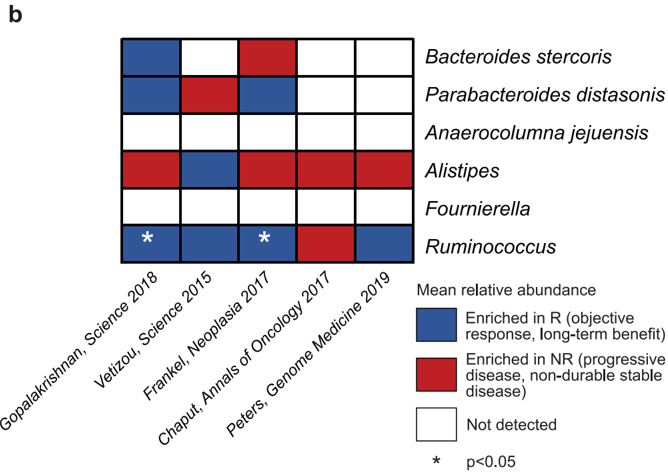
“71,72 In melanoma patients, the presence of Bacteroides stercoris , Parabacteroides distasonis , Fournierella massil-iensis , and Lachnospiraceae species are correlated with a positive clinical response 73,74 while the presence of Streptococcaceae species is linked to an unfavorable response.”
Immune checkpoint blockade in cancer: current insights and future horizons
Saman, H. T., Makni‐Maalej, K., El-Ella, D. M. A., Al-Tamimi, M. Y., AbuHaweeleh, M. N., Abuhayeh, N., Ismail, M. A., Prabhu, K. S., Fernandes, Q., Jabi, T., et al. (2026) · Discover Oncology · doi:10.1007/s12672-025-04361-7 · Cited by 24
Gut microbiota – a double-edged sword in cancer immunotherapy
Andrews, M. C., & Vasanthakumar, A. (2022) · Trends in cancer · doi:10.1016/j.trecan.2022.08.003 · Cited by 20
Self-citationExploring the roles of intestinal flora in enhanced recovery after surgery
Liu, Z., Li, N., Dang, Q., Liu, L., Wang, L., Li, H., & Han, X. (2023) · iScience · doi:10.1016/j.isci.2023.105959 · Cited by 26
Chen, H., Wu, Q., Zhang, T., & Zhao, Y. (2023) · Frontiers in Microbiology · doi:10.3389/fmicb.2023.1165360 · Cited by 22
“reported a contrasting result while studying the association between gut microbiota and the efficacy of anti-CTLA-4 combined with anti-PD-1 in melanoma patients (Andrews et al., 2021).”
ResultMicrobiota: A key factor affecting and regulating the efficacy of immunotherapy
Jiang, Y., Jia, D., Sun, Y., Ding, N., & Wang, L. (2023) · Clinical and Translational Medicine · doi:10.1002/ctm2.1508 · Cited by 22
“24 Uncertainty persists regarding whether the microbiota that improved treatment response were the same as those of individuals who were predisposed to ICI-associated col-16 itis.”
BackgroundLong-Term Toxicities of Immune Checkpoint Inhibitors
Abraham, P. E., & Johnson, D. B. (2025) · Drugs · doi:10.1007/s40265-025-02243-4 · Cited by 30
“Predisposing factors in a given patient could include genetic predisposition [34], pre-existing autoimmune conditions [35, 36], cross-reactivity of antigens [37], or perhaps a combination of these factors [38].”
Leigh, S., Lynch, C. M. K., Bird, B., Griffin, B. T., Cryan, J. F., & Clarke, G. A. (2022) · Expert Opinion on Drug Metabolism & Toxicology · doi:10.1080/17425255.2022.2043849 · Cited by 19
“patients undergoing combined CTLA-4 and PD-1 blockade [77].”
BackgroundCD4 T cells and toxicity from immune checkpoint blockade
Earland, N. J., Zhang, W., Usmani, A., Nene, A., Bacchiocchi, A., Chen, D. Y., Sznol, M., Halaban, R., Chaudhuri, A. A., & Newman, A. M. (2023) · Immunological Reviews · doi:10.1111/imr.13248 · Cited by 21
‘Know thyself’ – host factors influencing cancer response to immune checkpoint inhibitors
Gunjur, A., Manrique-Rincón, A., Klein, O., Behren, A., Lawley, T. D., Welsh, S. J., & Adams, D. J. (2022) · The Journal of Pathology · doi:10.1002/path.5907 · Cited by 20
Liu, L., Liang, L., Liang, H., Wang, M., Zhou, W., Mai, G., Yang, C., & Chen, Y. (2025) · Journal of Advanced Research · doi:10.1016/j.jare.2025.08.017 · Cited by 22
Spiliopoulou, P., Vornicova, O., Genta, S., & Spreafico, A. (2023) · International Journal of Molecular Sciences · doi:10.3390/ijms24021294 · Cited by 20
Baseline colitogenicity and acute perturbations of gut microbiota in immunotherapy-related colitis
Shang, J., Valle, D. M. D., Britton, G. J., Mead, K., Rajpal, U., Chen-Liaw, A., Mogno, I., Li, Z., Menon, R., Gonzalez‐Kozlova, E., et al. (2024) · The Journal of Experimental Medicine · doi:10.1084/jem.20232079 · Cited by 17
Self-citationXu, K., Motiwala, Z. Y., Corona‐Avila, I., Makhanasa, D., Alkahalifeh, L., & Khan, M. W. (2025) · Technology in Cancer Research & Treatment · doi:10.1177/15330338251331960 · Cited by 25
Self-citationToo much water drowned the miller: Akkermansia determines immunotherapy responses
Li, L., & McAllister, F. M. (2022) · Cell Reports Medicine · doi:10.1016/j.xcrm.2022.100642 · Cited by 21
“2 Cell Reports Medicine 3, 100642, May 17, 2 In conclusion, individual baseline gut microbiota profiling may represent promising biomarkers to predict ICIs responses as well as immune-related adverse effects.(7,10) Understanding and addressing the specific bacteria and roles in contributing to better outcomes should b…”
BackgroundUpdates in toxicities associated with immune checkpoint inhibitors
Curkovic, N. B., & Johnson, D. B. (2023) · Expert Review of Clinical Immunology · doi:10.1080/1744666x.2023.2221434 · Cited by 17
“Gut microbiome composition has been associated with the development of colitis, with microbial signatures differing in patients who developed severe colitis and irAEs more generally [116,117].”
BackgroundFluctuations in Gut Microbiome Composition During Immune Checkpoint Inhibitor Therapy
Sarkar, J., Gomez, E. C., Oba, T., Chen, H., Dy, G. K., Segal, B. H., Ernstoff, M. S., & Ito, F. (2023) · World Journal of Oncology · doi:10.14740/wjon1587 · Cited by 20
“Andrews et al demonstrated that mice injected with combined immune checkpoint blockade developed a relative abundance of Bacteroides intestinalis compared to baseline [40].”
BackgroundResultRole of the Microbiota in Skin Neoplasms: New Therapeutic Horizons
Savoia, P., Azzimonti, B., Rolla, R., & Zavattaro, E. (2023) · Microorganisms · doi:10.3390/microorganisms11102386 · Cited by 19
“Moreover, a study conducted on 77 advanced melanoma patients treated with an anti-CTLA4/anti-PD1 combination demonstrated that the more severe irAEs were associated with a gut microbiome significantly ( p = 0.009) enriched by Bacteroides intestinalis and Intestinibacter barlettii species [76].”
BackgroundInfluentialEating away cancer: the potential of diet and the microbiome for shaping immunotherapy outcome
Nguyen, N.-T. A., Jiang, Y., & McQuade, J. L. (2024) · Frontiers in Immunology · doi:10.3389/fimmu.2024.1409414 · Cited by 23
Self-citationFujii, T., Kuzuya, T., Kondo, N., Funasaka, K., Ohno, E., Hirooka, Y., & Tochio, T. (2024) · Journal of Medical Microbiology · doi:10.1099/jmm.0.001878 · Cited by 17
Mechanisms of dermatological toxicities to immune checkpoint inhibitor cancer therapies
Seervai, R. N. H., Sinha, A., & Kulkarni, R. P. (2022) · Clinical and Experimental Dermatology · doi:10.1111/ced.15332 · Cited by 18
Oey, O., Liu, Y.-Y., Sunjaya, A. F., Simadibrata, D. M., Khattak, M. A., & Gray, E. (2022) · World Journal of Clinical Oncology · doi:10.5306/wjco.v13.i11.929 · Cited by 15
Egeler, M., van Leeuwen, M., Fraterman, I., Heuvel, N. M. J. V. D., Boekhout, A. H., Lai-Kwon, J. E., Wilthagen, E. A., Eriksson, H., Haanen, J. B. A. G., Wilgenhof, S., et al. (2023) · Critical Reviews in Oncology/Hematology · doi:10.1016/j.critrevonc.2023.103919 · Cited by 15
Promising and Minimally Invasive Biomarkers: Targeting Melanoma
Spiliopoulou, P., Lopes, C. D. H., & Spreafico, A. (2023) · Cells · doi:10.3390/cells13010019 · Cited by 16
“…these events, ICI-related colitis has been most closely linked with the presence of members of the Firmicutes phyla ( F. prausnitzi , G. formicilis , Ruminococcaceae spp.), during anti-CTLA-4 monotherapy and B. in-testinalis (phylum Bacteroidetes) during combination CTLA-4/PD-1 immunotherapy [214].”
BackgroundMcKenzie, J., Sneath, E., Trinh, A., Nolan, M. T., & Spain, L. A. (2024) · Immuno-Oncology Technology · doi:10.1016/j.iotech.2024.100704 · Cited by 19
“48 However, con fl icting data have not found an association between Bacteroides and colitis.”
BackgroundLu, C., Zhang, Y., Chen, Z., Zhou, Q., & Wu, Y.-L. L. C. (2022) · Frontiers in Oncology · doi:10.3389/fonc.2022.836891 · Cited by 18
Metadata
- Authors
- Andrews, M. C., Duong, C. P. M., Gopalakrishnan, V., Iebba, V., Chen, W.-S., Derosa, L., Khan, M. A. W., Cogdill, A. P., White, M. G., Wong, M. C., Ferrere, G., Fluckiger, A., Roberti, M. P., Opolon, P., Alou, M. T., Yonekura, S., Roh, W., Spencer, C. N., Curbelo, I. F., Vence, L., Reuben, A., Johnson, S., Arora, R., Morad, G., Lastrapes, M., Baruch, E. N., Little, L., Gumbs, C., Cooper, Z. A., Prieto, P. A., Wani, K., Lazar, A. J., Tetzlaff, M. T., Hudgens, C. W., Callahan, M. K., Adamow, M., Postow, M. A., Ariyan, C. E., Gaudreau, P.-O., Nezi, L., Raoult, D., Mihalcioiu, C., Elkrief, A., Pezo, R. C., Haydu, L. E., Simon, J. M., Tawbi, H. A., McQuade, J., Hwu, P., Hwu, W.-J., Amaria, R. N., Burton, E. M., Woodman, S. E., Watowich, S., Diab, A., Patel, S. P., Glitza, I. C., Wong, M. K., Zhao, L., Zhang, J., Ajami, N. J., Petrosino, J., Jenq, R. R., Davies, M. A., Gershenwald, J. E., Futreal, P. A., Sharma, P., Allison, J. P., Routy, B., Zitvogel, L., & Wargo, J. A.
- Affiliations
- The University of Texas MD Anderson Cancer Center (US)
- Inserm (FR)
- Institut Gustave Roussy (FR)
- Parker Institute for Cancer Immunotherapy (US)
- AstraZeneca (United States) (US)
- University of Rochester Medicine (US)
- Memorial Sloan Kettering Cancer Center (US)
- European Institute of Oncology (IT)
- Aix-Marseille Université (FR)
- McGill University Health Centre (CA)
- Sunnybrook Health Science Centre (CA)
- Baylor College of Medicine (US)
- Corresponding author
- Zitvogel, Laurence
- Wargo, Jennifer A.
- ORCID
- Andrews, Miles C.
- Duong, Connie P. M.
- Gopalakrishnan, Vancheswaran
- Iebba, Valerio
- Chen, Wei-Shen
- Derosa, Lisa
- Khan, Md Abdul Wadud
- Cogdill, Alexandria P.
- White, Michael G.
- Wong, Matthew C.
- Ferrere, Gladys
- Fluckiger, Aurélie
- Roberti, Maria P.
- Opolon, Paule
- Alou, Maryam Tidjani
- Yonekura, Satoru
- Roh, Whijae
- Spencer, Christine N.
- Vence, Luis
- Reuben, Alexandre
- Johnson, Sarah
- Arora, Reetakshi
- Morad, Golnaz
- Lastrapes, Matthew
- Baruch, Erez N.
- Little, Latasha
- Gumbs, Curtis
- Cooper, Zachary A.
- Prieto, Peter A.
- Wani, Khalida
- Lazar, Alexander J.
- Hudgens, Courtney W.
- Callahan, Margaret K.
- Adamow, Matthew
- Postow, Michael A.
- Ariyan, Charlotte E.
- Gaudreau, Pierre-Olivier
- Nezi, Luigi
- Raoult, Didier
- Mihalcioiu, Catalin
- Elkrief, Arielle
- Pezo, Rossanna C.
- Haydu, Lauren E.
- Simon, Julie M.
- Tawbi, Hussein A.
- McQuade, Jennifer
- Hwu, Patrick
- Hwu, Wen-Jen
- Amaria, Rodabe N.
- Burton, Elizabeth M.
- Woodman, Scott E.
- Watowich, Stephanie
- Diab, Adi
- Patel, Sapna P.
- Wong, Michael K.
- Zhao, Li
- Zhang, Jianhua
- Ajami, Nadim J.
- Petrosino, Joseph
- Jenq, Robert R.
- Davies, Michael A.
- Gershenwald, Jeffrey E.
- Futreal, P. Andrew
- Sharma, Padmanee
- Allison, James P.
- Routy, Bertrand
- Zitvogel, Laurence
- Wargo, Jennifer A.
- Venue
- Nature Medicine
- Published
- 2021-07-08
- Volume
- 27
- Issue
- 8
- Pages
- 1432-1441
- ISSN
- 1078-8956 (ISSN-L)
- 1546-170X
- PMC
- PMC11107795
- OpenAlex
- W3112934313
- Semantic Scholar
- 1e128a098aaec7c7f4085a6e065071c0b46a6710
- Cited by
- 437
- References
- 67
- Citations by year
- 2026: 71 · 2025: 74 · 2024: 77 · 2023: 101 · 2022: 94 · 2021: 19
- FWCI
- 26.77
- Type
- journal article
- Language
- en
- Open access
- green
- doi.org
- Licence
- cc-by
- www.springernature.com/gp/researchers/text-and-data-mining (tdm)
- www.springernature.com/gp/researchers/text-and-data-mining (vor)
- Locations
- Nature Medicine (publishedVersion)
- Research Square (acceptedVersion, cc-by)
- PubMed (publishedVersion)
- PubMed Central (acceptedVersion)
- HAL (submittedVersion, cc-by)
- ArTS Archivio della ricerca di Trieste (University of Trieste https://www.units.it/) (submittedVersion, other-oa)
- HAL (submittedVersion)
- Funders
- U.S. Department of Health & Human Services | NIH | National Cancer Institute (1R01CA219896-01A1)
- American Association for Cancer Research (SU2C-AACR-IRG-19-17)
- UT | University of Texas MD Anderson Cancer Center Moonshots Program
- Department of Health | National Health and Medical Research Council (1148680)
- U.S. Department of Health & Human Services | National Institutes of Health (T32CA163185, 1 P50 CA221703-02, 1U54CA224070-03, T32 CA 009599)
- Parcours d’excellence en cancérologie - Fondation Philanthropia
- University of Texas MD Anderson Odyssey Fellowship Program - Kimberley Clark Foundation Award for Scientific Achievement
- Fonds de Recherche du Québec - Santé (32667)
- American Cancer SocietyMelanoma Research AllianceCancer Fighters of Houston
- Ligue Contre le Cancer
- Fondation pour la Recherche Médicale
- Institut National Du Cancer
- Agence Nationale de la Recherche (10-IAHU-03)
- Association pour la recherche sur le cancerFondation Carrefour
- Fulbright France Commission Franco-AmericainéThe John J Kopchick Foundation
- UT | University of Texas MD Anderson Cancer Center (P30 CA016672)
- Topics
- Health Sciences › Medicine › Oncology › Cancer Immunotherapy and Biomarkers
- Life Sciences › Biochemistry, Genetics and Molecular Biology › Molecular Biology › Gut microbiota and health
- Life Sciences › Immunology and Microbiology › Immunology › T-cell and B-cell Immunology
- Keywords
- gut microbiota, immune checkpoint blockade, CTLA-4, PD-1, immune-related adverse events, melanoma, Bacteroides intestinalis, colitis, IL-1β, T cell receptor repertoire, immune-related toxicity
- MeSH terms
- Gastrointestinal Microbiome, Animals, Female, Humans, Melanoma, Mice, Inbred C57BL, Cell Line, Tumor, Mice, Interleukin-1beta, CTLA-4 Antigen, Programmed Cell Death 1 Receptor
About these checks
Registry, retraction, Cites and statistics results are computed, not judged, with one exception: a printed reference that no index lists is read once by a model before it counts as a citation error. Claims are extracted by a model and kept only when their quote appears verbatim in the text; each cited source is then checked, with a model’s help, for whether it says what the claim relies on. Those verdicts can be wrong — read the claim’s quote and the cited source before relying on one.
Statistics and arithmetic are recomputed, not judged.
Confidence bands are shown only for fields calibrated on our annotated test set. None is calibrated yet, so no band is shown.
What counts as a claim ›How we measure confidence ›How we check this ›
Are you an author, or do you see a problem with this page? Request a review
Data sources
Bibliographic data: Semantic Scholar, OpenAlex, Crossref.
Contains information from the Semantic Scholar Academic Graph Datasets, made available under the ODC Attribution License (ODC-BY 1.0).
Semantic Scholar’s data is described in: Kinney, R., et al. (2023). The Semantic Scholar Open Data Platform. arXiv:2301.10140.
