

Gut microbiota signatures are associated with toxicity to combined CTLA-4 and PD-1 blockade
Open accessPublished version of a preprint
The DOI matches its Crossref record; 67 of the 67 references it cites were found in a registry or an index.
Abstract
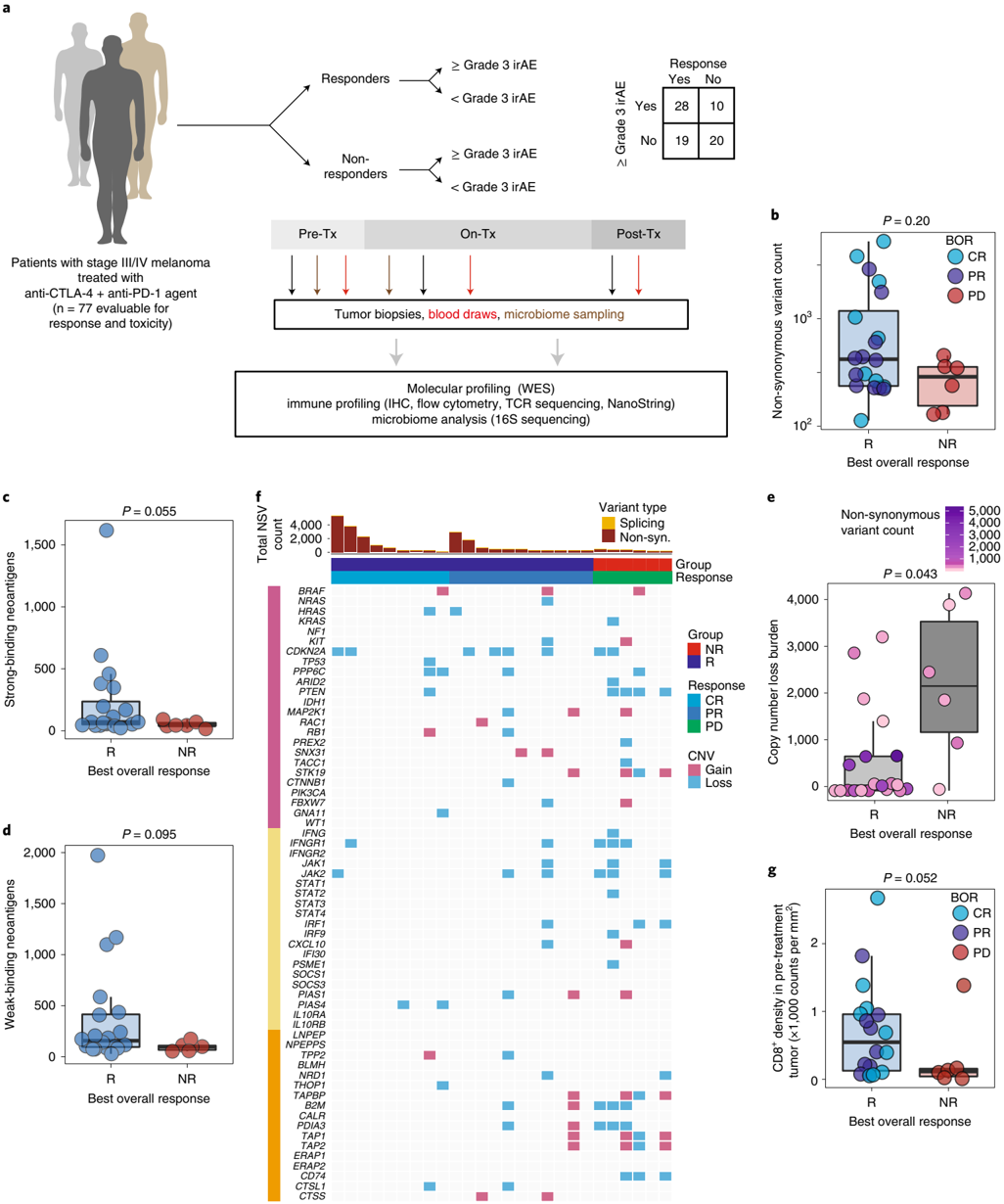
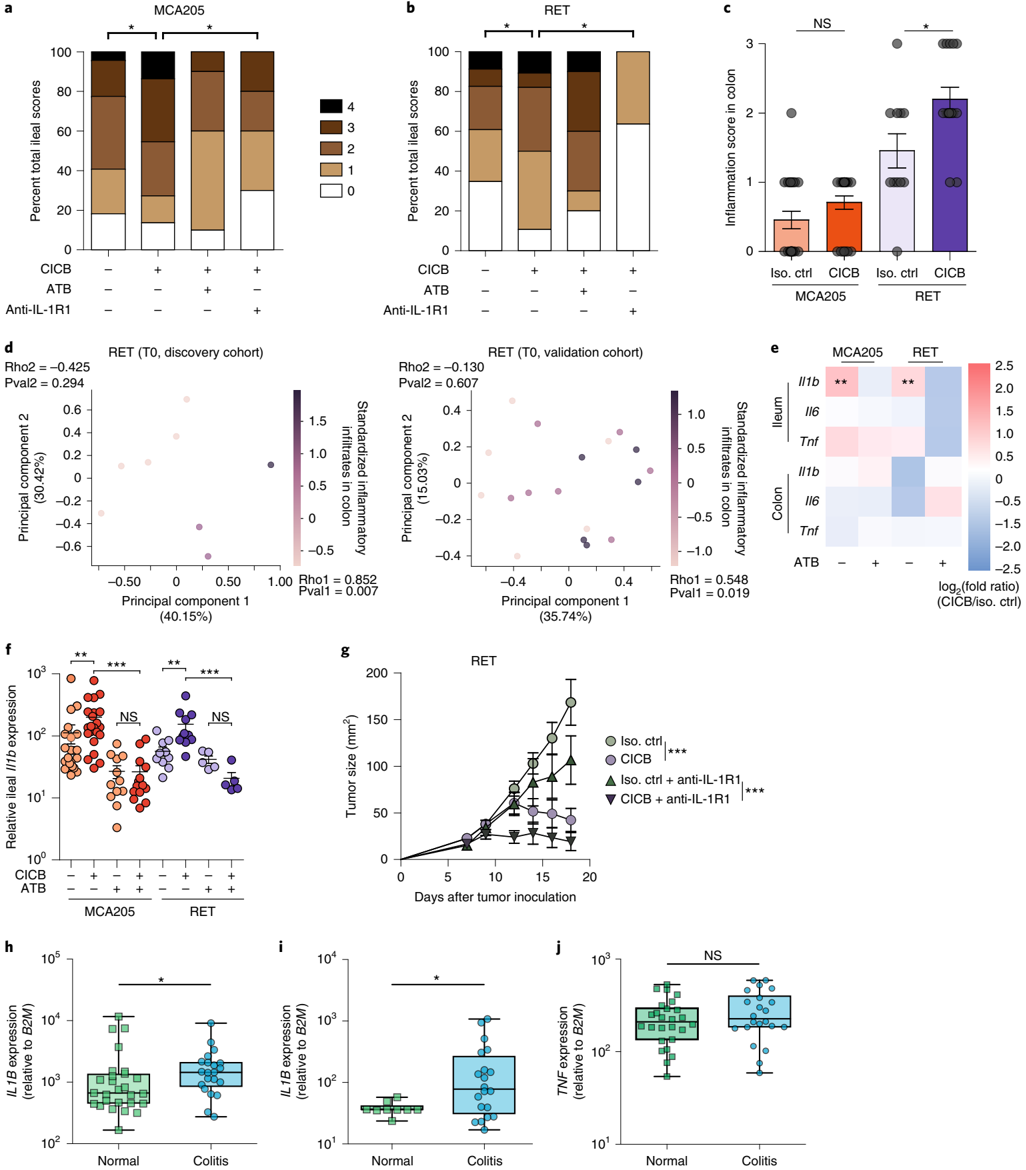
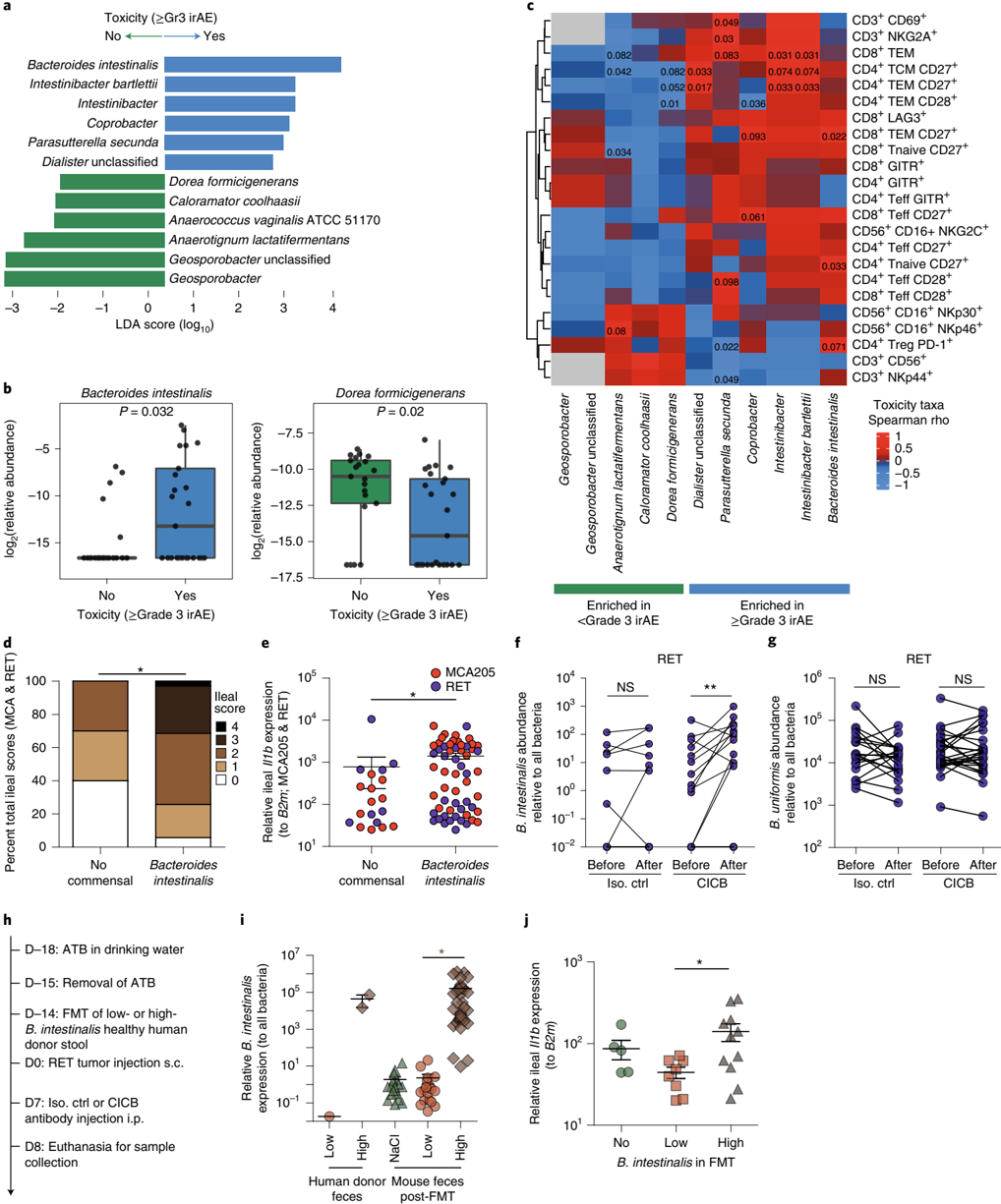
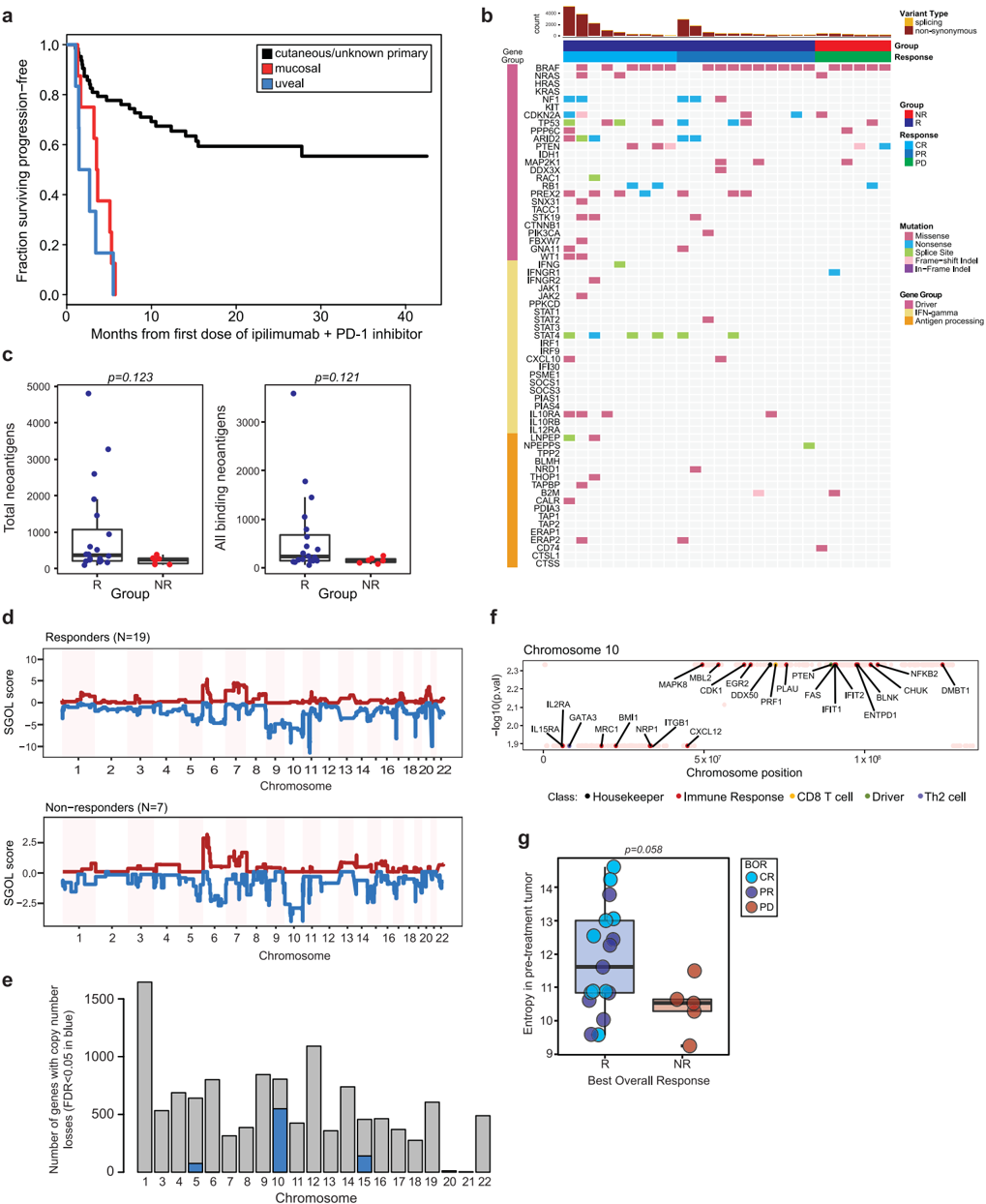
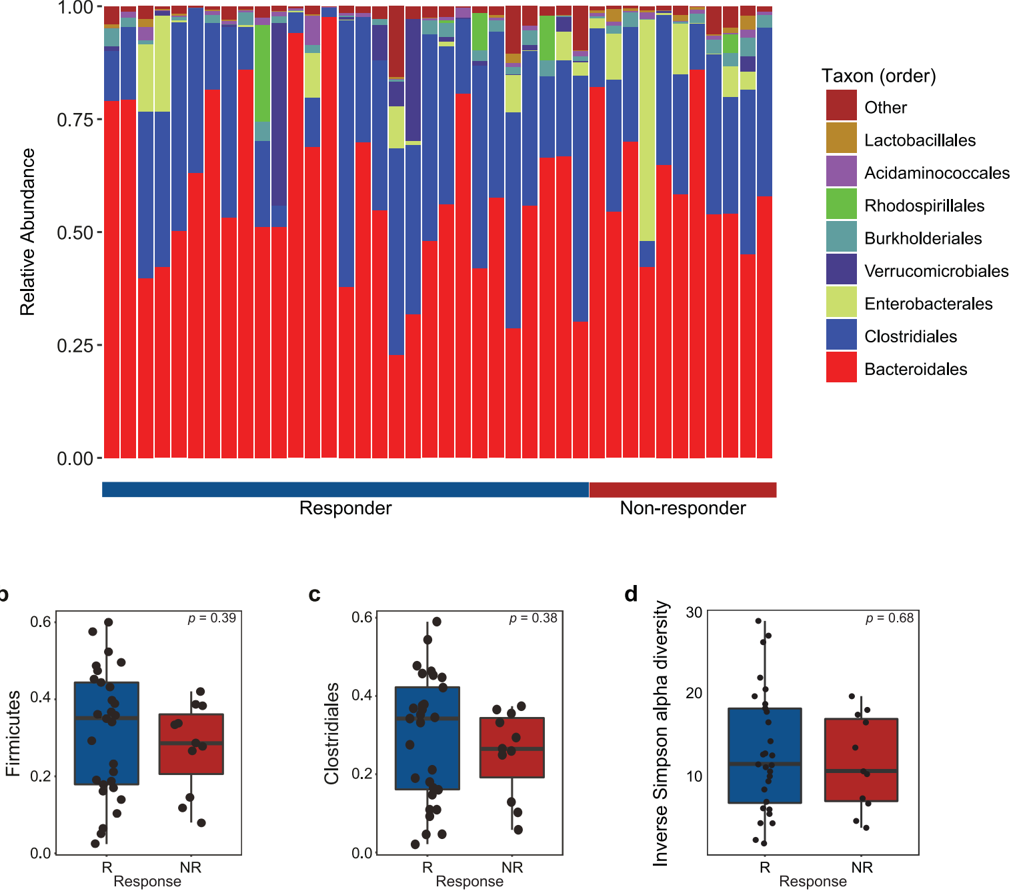
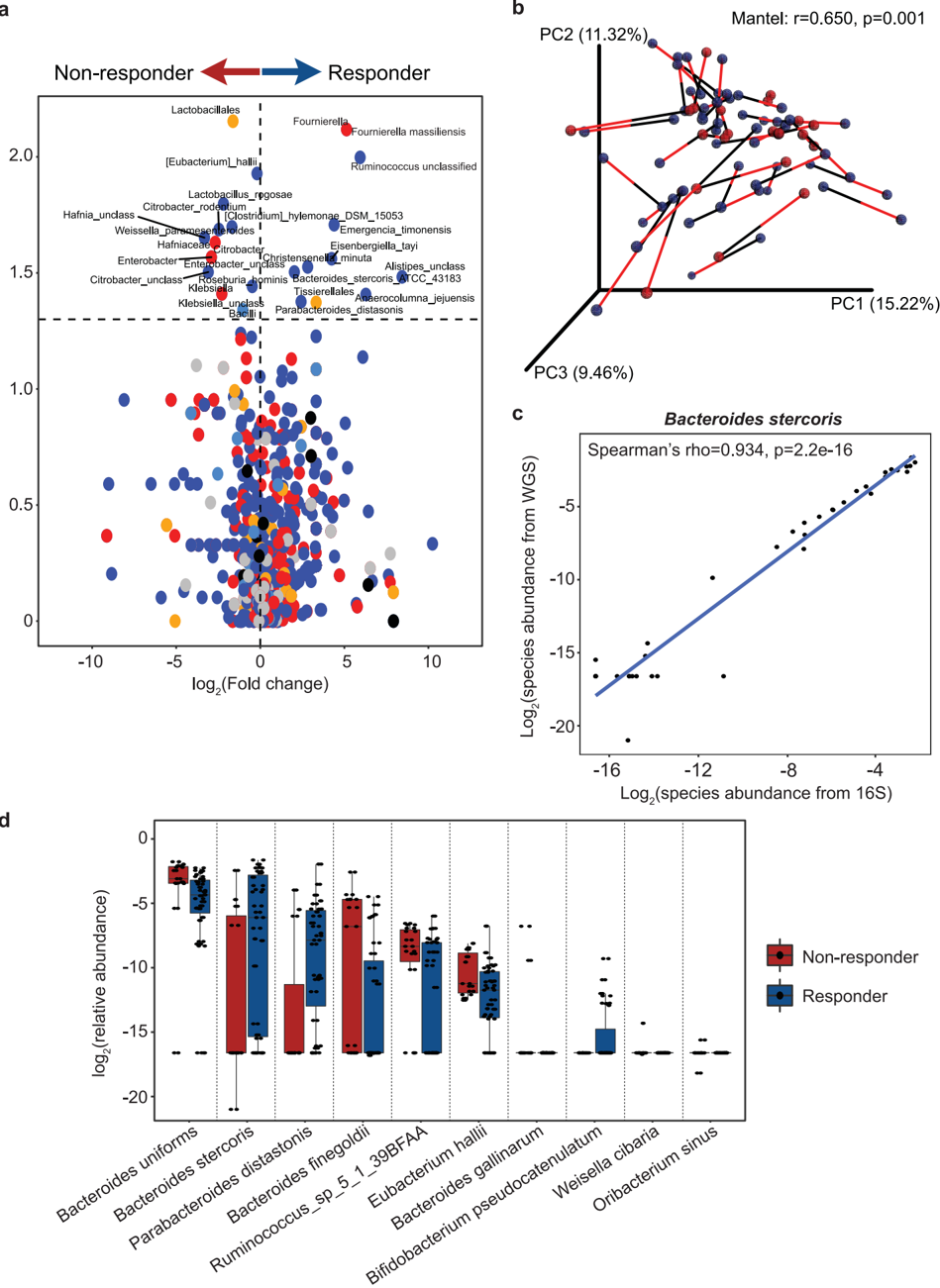
Treatment with combined immune checkpoint blockade (CICB) targeting CTLA-4 and PD-1 is associated with clinical benefit across tumor types, but also a high rate of immune-related adverse events. Insights into biomarkers and mechanisms of response and toxicity to CICB are needed. To address this, we profiled the blood, tumor and gut microbiome of 77 patients with advanced melanoma treated with CICB, with a high rate of any ≥grade 3 immune-related adverse events (49%) with parallel studies in pre-clinical models. Tumor-associated immune and genomic biomarkers of response to CICB were similar to those identified for ICB monotherapy, and toxicity from CICB was associated with a more diverse peripheral T-cell repertoire. Profiling of gut microbiota demonstrated a significantly higher abundance of Bacteroides intestinalis in patients with toxicity, with upregulation of mucosal IL-1β in patient samples of colitis and in pre-clinical models. Together, these data offer potential new therapeutic angles for targeting toxicity to CICB. Clinical benefit or intestinal toxicity resulting from combined immune checkpoint blockade in patients with melanoma associates with prevalent commensal bacteria and can be decoupled by IL-1R inhibition.
Overview
The claims and statistics of this paper haven’t been checked yet.
Free: it reads the open-access text and checks the first 5 claims that cite a source we can check. Create a free account to check every claim.
Integrity signals
Registry
Cites
Statistics
Figures

Verification
Claims the paper makes
The claims and statistics of this paper haven’t been checked yet.
Free: it reads the open-access text and checks the first 5 claims that cite a source we can check. Create a free account to check every claim.
Claims other papers make about this one
Each is checked against this paper’s own text: does it say what the citing paper says it does?
The source backs part of the claim, not all of it — or backs it for a different population, condition or comparison.
In the citing paper
“Gut bacteria modulate the response to immune checkpoint blockade (ICB) treatment in cancer”
From Dietary fiber and probiotics influence the gut microbiome and melanoma immunotherapy response (2021) · cites this paper as [7]
Experimental — accuracy not yet measuredThe cited source says what the claim attributes to it.
In the citing paper
“Another study linked toxicity with dual CTLA-4 and PD-1 inhibition to an increased abundance of Bacteroides intestinalis in the stool of patients with melanoma.40”
From Faecalibacterium prausnitzii strain EXL01 boosts efficacy of immune checkpoint inhibitors (2024) · cites this paper as [40]
The cited source says what the claim attributes to it.
In the citing paper
“This phenomenon is particularly pronounced in dual ICI combination therapies, where it has been associated with an increased incidence of severe AEs30.”
From Microbiome meets immunotherapy: unlocking the hidden predictors of immune checkpoint inhibitors (2025) · cites this paper as [30]
The cited source says what the claim attributes to it.
In the citing paper
“Despite these findings, some studies have reported conflicting results regarding the direct association between microbiota diversity and ICI efficacy30,143.”
From Microbiome meets immunotherapy: unlocking the hidden predictors of immune checkpoint inhibitors (2025) · cites this paper as [30]
In the citing paper
“Gut microbes, such as Bacteroides, could also be a biomarker for predicting ICI therapeutic toxicity in advanced melanoma patients treated with combined CTLA-4 and PD-1 blockade [131].”
From Gut microbiota influence immunotherapy responses: mechanisms and therapeutic strategies (2022) · doi:10.1186/s13045-022-01273-9 · cites this paper as [131]
1 more claim about this paper
Create a free account to see every claim other papers make about this one.
Self-check
Percentages, sums and reported differences re-computed from the paper’s own numbers.
The self-check needs the paper’s full text.
Citations
Cites
2 retracted
Million, M., Tidjani Alou, M., Khelaifia, S., Bachar, D., Lagier, J.-C., Dione, N., Brah, S., Hugon, P., Lombard, V., Armougom, F., et al. (2016) · Scientific Reports · doi:10.1038/srep26051 · Cited by 204
Self-citationRetractedGlycans affect DNA extraction and induce substantial differences in gut metagenomic studies
Angelakis, E., Bachar, D., Henrissat, B., Armougom, F., Audoly, G., Lagier, J.-C., Robert, C., & Raoult, D. (2016) · Scientific Reports · doi:10.1038/srep26276 · Cited by 82
Self-citationRetractedQIIME allows analysis of high-throughput community sequencing data
Caporaso, J. G., Kuczynski, J., Stombaugh, J., Bittinger, K., Bushman, F. D., Costello, E. K., Fierer, N., Peña, A. G., Goodrich, J. K., Gordon, J. I., et al. (2010) · Nature Methods · doi:10.1038/nmeth.f.303 · Cited by 34,887
PD-1 and PD-L1 Immune Checkpoint Blockade to Treat Breast Cancer
Hartkopf, A. D., Taran, F.-A., Wallwiener, M., Walter, C. B., Krämer, B., Grischke, E.-M., & Brucker, S. Y. (2016) · Breast Care · doi:10.1159/000453569 · Cited by 30,845
New response evaluation criteria in solid tumours: revised RECIST guideline (version 1.1)
Eisenhauer, E. A., Therasse, P., Bogaerts, J., Schwartz, L. H., Sargent, D., Ford, R., Dancey, J., Arbuck, S., Gwyther, S., Mooney, M., et al. (2009) · European Journal of Cancer · doi:10.1016/j.ejca.2008.10.026 · Cited by 29,534
Search and clustering orders of magnitude faster than BLAST
Edgar, R. C. (2010) · Bioinformatics · doi:10.1093/bioinformatics/btq461 · Cited by 20,826
UPARSE: highly accurate OTU sequences from microbial amplicon reads
Edgar, R. C. (2013) · Nature Methods · doi:10.1038/nmeth.2604 · Cited by 16,707
Metagenomic biomarker discovery and explanation
Segata, N., Izard, J., Waldron, L., Gevers, D., Miropolsky, L., Garrett, W. S., & Huttenhower, C. (2011) · Genome Biology · doi:10.1186/gb-2011-12-6-r60 · Cited by 16,192
Adverse Renal Effects of Immune Checkpoint Inhibitors: A Narrative Review
Wanchoo, R., Karam, S., Uppal, N. N., Barta, V. S., Deray, G., Devoe, C., Launay-Vacher, V., Jhaveri, K. D., & on behalf of Cancer and Kidney International Network Workgroup on Immune Checkpoint Inhibitors (2017) · American Journal of Nephrology · doi:10.1159/000455014 · Cited by 15,256
Structure, function and diversity of the healthy human microbiome
The Human Microbiome Project Consortium (2012) · Nature · doi:10.1038/nature11234 · Cited by 11,726
Cited by
Immune-checkpoint inhibitors: long-term implications of toxicity
Johnson, D. B., Nebhan, C. A., Moslehi, J. J., & Balko, J. M. (2022) · Nature Reviews Clinical Oncology · doi:10.1038/s41571-022-00600-w · Cited by 982
Dietary fiber and probiotics influence the gut microbiome and melanoma immunotherapy response
Spencer, C. N., McQuade, J. L., Gopalakrishnan, V., McCulloch, J. A., Vetizou, M., Cogdill, A. P., Khan, M. A. W., Zhang, X., White, M. G., Peterson, C. B., et al. (2021) · Science · doi:10.1126/science.aaz7015 · Cited by 966
Self-citationDizman, N., Meza, L., Bergerot, P., Alcantara, M., Dorff, T., Lyou, Y., Frankel, P., Cui, Y., Mira, V., Llamas, M., et al. (2022) · Nature Medicine · doi:10.1038/s41591-022-01694-6 · Cited by 515
Targeting the gut and tumor microbiota in cancer
Park, E. M., Chelvanambi, M., Bhutiani, N., Kroemer, G., Zitvogel, L., & Wargo, J. A. (2022) · Nature Medicine · doi:10.1038/s41591-022-01779-2 · Cited by 496
Self-citationGut microbiota influence immunotherapy responses: mechanisms and therapeutic strategies
(2022) · doi:10.1186/s13045-022-01273-9 · Cited by 495
“Gut microbes, such as Bacteroides, could also be a biomarker for predicting ICI therapeutic toxicity in advanced melanoma patients treated with combined CTLA-4 and PD-1 blockade [131].”
BackgroundMcCulloch, J. A., Davar, D., Rodrigues, R. R., Badger, J. H., Fang, J. R., Cole, A. M., Balaji, A. K., Vetizou, M., Prescott, S. M., Fernandes, M. R., et al. (2022) · Nature Medicine · doi:10.1038/s41591-022-01698-2 · Cited by 472
Lee, K. A., Thomas, A. M., Bolte, L. A., Björk, J. R., de Ruijter, L. K., Armanini, F., Asnicar, F., Blanco-Miguez, A., Board, R., Calbet-Llopart, N., et al. (2022) · Nature Medicine · doi:10.1038/s41591-022-01695-5 · Cited by 464
Self-citationJiang, S.-S., Xie, Y.-L., Xiao, X.-Y., Kang, Z.-R., Lin, X.-L., Zhang, L., Li, C.-S., Qian, Y., Xu, P.-P., Leng, X.-X., et al. (2023) · Cell Host & Microbe · doi:10.1016/j.chom.2023.04.010 · Cited by 419
T cells specific for α-myosin drive immunotherapy-related myocarditis
Axelrod, M. L., Meijers, W. C., Screever, E. M., Qin, J., Carroll, M. G., Sun, X., Tannous, E., Zhang, Y., Sugiura, A., Taylor, B. C., et al. (2022) · Nature · doi:10.1038/s41586-022-05432-3 · Cited by 367
Self-citationRole of the gut microbiota in anticancer therapy: from molecular mechanisms to clinical applications
Zhao, L.-Y., Mei, J.-X., Yu, G., Lei, L., Zhang, W.-H., Liu, K., Chen, X.-L., Kołat, D., Yang, K., & Hu, J.-K. (2023) · Signal Transduction and Targeted Therapy · doi:10.1038/s41392-023-01406-7 · Cited by 359
“As per these findings, novel therapeutic strategies based on microorganisms have been developed to modulate the gut microbiota to improve the clinical response to ICIs(66,67,315) and to reduce therapeutic toxicity.(316,317) However, due to the diversity within the gut microbiota, there are bound to be microbes that ha…”
BackgroundSelf-citationGut microbiome correlates of response and toxicity following anti-CD19 CAR T cell therapy
Smith, M., Dai, A., Ghilardi, G., Amelsberg, K. V., Devlin, S. M., Pajarillo, R., Slingerland, J. B., Beghi, S., Herrera, P. S., Giardina, P., et al. (2022) · Nature Medicine · doi:10.1038/s41591-022-01702-9 · Cited by 349
Advances in Metagenomics and Its Application in Environmental Microorganisms
Zhang, L., Chen, F., Zeng, Z., Xu, M., Sun, F., Yang, L., Bi, X., Lin, Y., Gao, Y., Hao, H., et al. (2021) · Frontiers in Microbiology · doi:10.3389/fmicb.2021.766364 · Cited by 332
“, 2020), autoimmune diseases (Svoboda, 2021), and tumors (Andrews et al., 2021).”
BackgroundLozano, A. X., Chaudhuri, A. A., Nene, A., Bacchiocchi, A., Earland, N., Vesely, M. D., Usmani, A., Turner, B. E., Steen, C. B., Luca, B. A., et al. (2022) · Nature Medicine · doi:10.1038/s41591-021-01623-z · Cited by 314
Defining clinically useful biomarkers of immune checkpoint inhibitors in solid tumours
Holder, A. M., Dedeilia, A., Sierra-Davidson, K., Cohen, S., Liu, D., Parikh, A., & Boland, G. M. (2024) · Nature Reviews Cancer · doi:10.1038/s41568-024-00705-7 · Cited by 298
Targeting the gut microbiota for cancer therapy
Fernandes, M. R., Aggarwal, P., Costa, R. G. F., Cole, A. M., & Trinchieri, G. (2022) · Nature Reviews Cancer · doi:10.1038/s41568-022-00513-x · Cited by 290
Gut Microbiota Modulation of Efficacy and Toxicity of Cancer Chemotherapy and Immunotherapy
Chrysostomou, D., Roberts, L. A., Marchesi, J. R., & Kinross, J. M. (2023) · Gastroenterology · doi:10.1053/j.gastro.2022.10.018 · Cited by 283
Mao, J., Wang, D., Long, J., Yang, X., Lin, J., Song, Y., Xie, F., Xun, Z., Wang, Y., Wang, Y., et al. (2021) · Journal for ImmunoTherapy of Cancer · doi:10.1136/jitc-2021-003334 · Cited by 275
Self-citationSimpson, R. C., Shanahan, E. R., Batten, M., Reijers, I. L. M., Read, M., Silva, I. P., Versluis, J. M., Ribeiro, R., Angelatos, A. S., Tan, J., et al. (2022) · Nature Medicine · doi:10.1038/s41591-022-01965-2 · Cited by 256
Self-citationMicrobiome-based interventions to modulate gut ecology and the immune system
Hitch, T. C. A., Hall, L. J., Walsh, S. K., Leventhal, G. E., Slack, E., de Wouters, T., Walter, J., & Clavel, T. (2022) · Mucosal Immunology · doi:10.1038/s41385-022-00564-1 · Cited by 243
Managing Metastatic Melanoma in 2022: A Clinical Review
Switzer, B., Puzanov, I., Skitzki, J. J., Hamad, L., & Ernstoff, M. S. (2022) · JCO Oncology Practice · doi:10.1200/op.21.00686 · Cited by 190
Immune-checkpoint inhibitor use in patients with cancer and pre-existing autoimmune diseases
Tison, A., Garaud, S., Chiche, L., Cornec, D., & Kostine, M. (2022) · Nature Reviews Rheumatology · doi:10.1038/s41584-022-00841-0 · Cited by 195
Insights from a 30-year journey: function, regulation and therapeutic modulation of PD1
Chamoto, K., Yaguchi, T., Tajima, M., & Honjo, T. (2023) · Nature Reviews Immunology · doi:10.1038/s41577-023-00867-9 · Cited by 185
“Microbiome profiling has therefore been used to predict the efficacy of ICI therapy and irAE incidence 172 .”
MethodNaidoo, J., Murphy, C., Atkins, M. B., Brahmer, J. R., Champiat, S., Feltquate, D., Krug, L. M., Moslehi, J., Pietanza, M. C., Riemer, J., et al. (2023) · Journal for ImmunoTherapy of Cancer · doi:10.1136/jitc-2022-006398 · Cited by 165
“9 The clinical spectrum of irAEs is vast and almost every organ system may be affected.”
BackgroundA gut microbial signature for combination immune checkpoint blockade across cancer types
Gunjur, A., Shao, Y., Rozday, T., Klein, O., Mu, A., Haak, B. W., Markman, B., Kee, D., Carlino, M. S., Underhill, C., et al. (2024) · Nature Medicine · doi:10.1038/s41591-024-02823-z · Cited by 165
Immune-related adverse events in various organs caused by immune checkpoint inhibitors
Okiyama, N., & Tanaka, R. (2022) · Allergology International · doi:10.1016/j.alit.2022.01.001 · Cited by 159
Modulating gut microbiome in cancer immunotherapy: Harnessing microbes to enhance treatment efficacy
Kang, X., Lau, H. C.-H., & Yu, J. Q. (2024) · Cell Reports Medicine · doi:10.1016/j.xcrm.2024.101478 · Cited by 197
Corticosteroids and Cancer Immunotherapy
Goodman, R. S., Johnson, D. B., & Balko, J. M. (2023) · Clinical Cancer Research · doi:10.1158/1078-0432.ccr-22-3181 · Cited by 196
Glaviano, A., Lau, H., Carter, L. M., Lee, E. H. C., Lam, H. Y., Okina, E., Tan, D. J. J., Tan, W., Ang, H. L., Carbone, D., et al. (2025) · Journal of Hematology & Oncology · doi:10.1186/s13045-024-01634-6 · Cited by 182
Gut microbiota shapes cancer immunotherapy responses
Lei, W., Zhou, K., Lei, Y., Li, Q., & Zhu, H. (2025) · npj Biofilms and Microbiomes · doi:10.1038/s41522-025-00786-8 · Cited by 194
“For example, a high abundance of Bacteroides intestinalis has been associated with colitis and upregulation of mucosal IL-1 β in melanoma patients treated with anti-CTLA-4 and anti-PD-1 therapy 56 .”
Towards modulating the gut microbiota to enhance the efficacy of immune-checkpoint inhibitors
Simpson, R. C., Shanahan, E. R., Scolyer, R. A., & Long, G. V. (2023) · Nature Reviews Clinical Oncology · doi:10.1038/s41571-023-00803-9 · Cited by 153
Optimizing therapeutic outcomes of immune checkpoint blockade by a microbial tryptophan metabolite
Renga, G., Nunzi, E., Pariano, M., Puccetti, M., Bellet, M. M., Pieraccini, G., D’Onofrio, F., Santarelli, I., Stincardini, C., Aversa, F., et al. (2022) · Journal for ImmunoTherapy of Cancer · doi:10.1136/jitc-2021-003725 · Cited by 156
Role of the microbiota in response to and recovery from cancer therapy
Blake, S. J., Wolf, Y., Boursi, B., & Lynn, D. J. (2023) · Nature reviews. Immunology · doi:10.1038/s41577-023-00951-0 · Cited by 158
“…of the Enterococcus peptidoglycan biosynthesis pathway is positively correlated with complete CAR T cell responses 12 11–13 , immune checkpoint blockade (ICB) 6,10,18,21,54,107–110,120,132,133 , immune-agonist antibodies (IAAs) 19 , haematopoietic cell transplantation (HCT) 20,83,85–87, 185 ,”
Role of gut microbiome in cancer immunotherapy: from predictive biomarker to therapeutic target
Zhang, M., Liu, J., & Xia, Q. (2023) · Experimental Hematology and Oncology · doi:10.1186/s40164-023-00442-x · Cited by 167
“Higher species richness or diversity has been found in responders with non-small-cell lung cancer (NSCLC), hepatocellular carcinoma (HCC), or melanoma at baseline compared with non-responders [29, 31, 41, 48, 53, 54].”
BackgroundChoi, Y., Lichterman, J. N., Coughlin, L. A., Poulides, N., Li, W., Del Valle, P., Palmer, S. N., Gan, S., Kim, J., Zhan, X., et al. (2023) · Science Immunology · doi:10.1126/sciimmunol.abo2003 · Cited by 132
Holistic Approach to Immune Checkpoint Inhibitor-Related Adverse Events
Poto, R., Troiani, T., Criscuolo, G., Marone, G., Ciardiello, F., Tocchetti, C. G., & Varricchi, G. (2022) · Frontiers in Immunology · doi:10.3389/fimmu.2022.804597 · Cited by 145
“CICB who developed ≥ grade 3 irAEs (96).”
BackgroundInfluentialClinical and translational attributes of immune-related adverse events
Suijkerbuijk, K. P. M., van Eijs, M. J. M., van Wijk, F., & Eggermont, A. M. M. (2024) · Nature Cancer · doi:10.1038/s43018-024-00730-3 · Cited by 148
“Proposed mechanisms accounting for T cell reactivity in irAEs have been based on the concepts of epitope sharing between tumor and inflamed tissue, T cell responses elicited by neoantigens and viral or microbial components exhibiting molecular mimicry with self-antigens 85–91 .”
Harnessing big data to characterize immune-related adverse events
Jing, Y., Yang, J., Johnson, D. B., Moslehi, J. J., & Han, L. (2022) · Nature Reviews Clinical Oncology · doi:10.1038/s41571-021-00597-8 · Cited by 125
Verheijden, R. J., van Eijs, M. J. M., May, A. M., van Wijk, F., & Suijkerbuijk, K. P. M. (2023) · npj Precision Oncology · doi:10.1038/s41698-023-00380-1 · Cited by 135
Gao, Y., Xu, P., Sun, D., Jiang, Y., Lin, X.-L., Han, T., Yu, J., Sheng, C., Chen, H., Hong, J., et al. (2023) · Cancer Research · doi:10.1158/0008-5472.can-23-0605 · Cited by 116
The gut microbiome and cancer: from tumorigenesis to therapy
Nobels, A., van Marcke, C., Jordan, B. F., Hul, M. V., & Cani, P. D. (2025) · Nature Metabolism · doi:10.1038/s42255-025-01287-w · Cited by 136
“This study was the catalyst for numerous other investigations into the relationship between ICIs and the gut microbiota 8,235,259–261 .”
The gut microbiota in cancer immunity and immunotherapy
Xie, M., Li, X., Lau, H. C.-H., & Yu, J. (2025) · Cellular and Molecular Immunology · doi:10.1038/s41423-025-01326-2 · Cited by 138
“For example, a study reported that 49% of ICB-treated patients with advanced MM experience ≥ grade 3 irAEs, whereas Bacteroides intestinalis is enriched in these patients and correlated with mucosal IL-1 β upregulation [218].”
Gao, G., Ma, T., Zhang, T., Jin, H., Li, Y., Kwok, L.-Y., Zhang, H., & Sun, Z. (2021) · Frontiers in Immunology · doi:10.3389/fimmu.2021.772532 · Cited by 111
“distasonis was found to be associated with effectiveness in antitumor immunotherapy, and it was considered as a predictive indicator of response to combined ICB treatment (37), while B.”
BackgroundUnderstanding human health through metatranscriptomics
Ojala, T., Kankuri, E. M., & Kankainen, M. (2023) · Trends in Molecular Medicine · doi:10.1016/j.molmed.2023.02.002 · Cited by 120
Lo, B. C., Kryczek, I., Yu, J., Vatan, L., Caruso, R., Matsumoto, M., Sato, Y., Shaw, M. H., Inohara, N., Xie, Y., et al. (2024) · Science · doi:10.1126/science.adh8342 · Cited by 118
Newsome, R. C., Gharaibeh, R. Z., Pierce, C. M., da Silva, W. V., Paul, S., Hogue, S. R., Yu, Q., Antonia, S., Conejo-Garcia, J. R., Robinson, L. A., et al. (2022) · Genome Medicine · doi:10.1186/s13073-022-01037-7 · Cited by 104
“Using functionally preserved fecal samples from a subset of patients, gnotobiotic mice were colonized with the feces of responding or non-responding patients, and maintained the response phenotype to anti-PD-1 treatment from their original donors, in a model of lung cancer traditionally resistant to ICIs [26].”
BackgroundInfluentialKostine, M., Mauric, E., Tison, A., Barnetche, T., Barre, A., Nikolski, M., Rouxel, L., Dutriaux, C., Dousset, L., Prey, S., et al. (2021) · European Journal of Cancer · doi:10.1016/j.ejca.2021.08.036 · Cited by 101
Xu, H., Cao, C., Ren, Y., Weng, S., Liu, L., Guo, C., Wang, L., Han, X., Ren, J., & Liu, Z. (2022) · Frontiers in Immunology · doi:10.3389/fimmu.2022.949490 · Cited by 126
“Intestinal goblet cells maintain the epithelial barrier by secreting mucus (45), which provides a habitat for commensal bacteria and prevents bacterial infiltration and inflammation, thus maintaining barrier integrity (46).”
BackgroundPredictive Biomarkers for Checkpoint Inhibitor Immune-Related Adverse Events
Les, I., Martínez, M., Pérez-Francisco, I., Cabero, M., Teijeira, L., Arrazubi, V., Torrego, N., Campillo-Calatayud, A., Elejalde, I., Kochan, G., et al. (2023) · Cancers · doi:10.3390/cancers15051629 · Cited by 100
Microbiota-driven mechanisms at different stages of cancer development
Ivleva, E., & Grivennikov, S. I. (2022) · Neoplasia · doi:10.1016/j.neo.2022.100829 · Cited by 103
Inamura, K., Hamada, T., Bullman, S., Ugai, T., Yachida, S., & Ogino, S. (2022) · Gut · doi:10.1136/gutjnl-2022-327209 · Cited by 100
Microbiome epidemiology and association studies in human health
VanEvery, H., Franzosa, E. A., Nguyen, L. H., & Huttenhower, C. (2022) · Nature Reviews Genetics · doi:10.1038/s41576-022-00529-x · Cited by 94
Glitza, I. C., Seo, Y. D., Spencer, C. N., Wortman, J. R., Burton, E. M., Alayli, F. A., Loo, C. P., Gautam, S., Damania, A., Densmore, J., et al. (2024) · Cancer Discovery · doi:10.1158/2159-8290.cd-24-0066 · Cited by 87
“Early seminal work in both preclinical models and clinical cohorts demonstrated differences in the taxonomic composition of the gut microbiome and dietary fiber intake that correlate with both response to ICB and immune-related toxicity (7–11).”
Self-citationElkrief, A., Pidgeon, R., Vareki, S. M., Messaoudene, M., Castagner, B., & Routy, B. (2025) · Nature Reviews Drug Discovery · doi:10.1038/s41573-025-01211-7 · Cited by 108
“…in influencing anticancer treatment efficacy, specific gut microbial signatures 50 have been linked with the development of immune-related adverse events such as colitis 50,51 , pneumonitis or complications from BMT, such as GVHD 52 , with the proof of principle confirmed in wild mice 53 .”
Self-citationChronic immune-related adverse events arising from immune checkpoint inhibitors: an update
Fletcher, K. A., & Johnson, D. B. (2024) · Journal for ImmunoTherapy of Cancer · doi:10.1136/jitc-2023-008591 · Cited by 115
Ibis, B., Aliazis, K., Cao, C., Yenyuwadee, S., & Boussiotis, V. A. (2023) · Frontiers in Immunology · doi:10.3389/fimmu.2023.1197364 · Cited by 99
“In a recent prospective study of patients with advanced melanoma who were treated with a combination of anti-PD-1 and anti-CTLA-4 ICIs, the profiling of gut microbiota demonstrated a significantly higher pre-treatment fecal abundance of Bacteroides intestinalis in patients with any ≥ grade 3 toxicities, which correlat…”
BackgroundBallerini, M., Galié, S., Tyagi, P., Catozzi, C., Raji, H., Nabinejad, A., Macandog, A. D. G., Cordiale, A., Slivinschi, B. I., Kugiejko, K. K., et al. (2025) · Nature Biomedical Engineering · doi:10.1038/s41551-024-01318-z · Cited by 103
“We have previously demonstrated that immune-related adverse events associate with higher IL-1β levels and peculiar microbial compositions in patients 79 , suggesting potential targets for intervention.”
Self-citationNi, J., Zhang, Z., Ge, M.-J., Chen, J., & Zhuo, W. (2022) · Acta Pharmacologica Sinica · doi:10.1038/s41401-022-00953-z · Cited by 88
“Moreover, dual ICI-induced toxicity was also associated with specific gut microbiota signatures, including an increased abundance of Bacteroides intestinalis [230].”
BackgroundGut microbiome in gastrointestinal cancer: a friend or foe?
Liu, Y., Baba, Y., Ishimoto, T., Gu, X. J., Zhang, J., Nomoto, D., Okadome, K., Baba, H., & Qiu, P. (2022) · International Journal of Biological Sciences · doi:10.7150/ijbs.69331 · Cited by 85
“The influence of the gut microbiota goes beyond the GI tract itself and affects human immune cell dynamics [129, 130].”
BackgroundSelf-citationFecal microbiota transplantation: no longer cinderella in tumour immunotherapy
Yang, Y., An, Y., Dong, Y., Chu, Q., Wei, J., Wang, B., & Cao, H. (2024) · EBioMedicine · doi:10.1016/j.ebiom.2024.104967 · Cited by 90
Lu, L., Dong, J., Liu, Y., Qian, Y., Zhang, G., Zhou, W., Zhao, A., Ji, G., & Xu, H. (2022) · Frontiers in Pharmacology · doi:10.3389/fphar.2022.964793 · Cited by 76
“A study demonstrated that the abundance of Bacteroides intestinalis is correlated with IL-1β production and toxicity caused by the combination of CTLA-4 and PD-1 blockade in patients with melanoma (Andrews et al., 2021).”
BackgroundCheckpoint inhibitor hepatotoxicity: pathogenesis and management
Cunningham, M., Gupta, R., & Butler, M. (2024) · Hepatology · doi:10.1097/hep.0000000000000045 · Cited by 71
Faecalibacterium prausnitzii strain EXL01 boosts efficacy of immune checkpoint inhibitors
Bredon, M., Danne, C., Pham, H. P., Ruffié, P., Bessede, A., Rolhion, N., Creusot, L., Brot, L., Alonso, I., Langella, P., et al. (2024) · OncoImmunology · doi:10.1080/2162402x.2024.2374954 · Cited by 74
“40 In the current study, we showed that high levels of F. prausnitzii in the intestinal microbiota were positively correlated with a better response to ICI in two independent cohorts of non-small cell lung cancer 10 or advanced melanoma.”
Self-citationMasuda, J., Sakai, H., Tsurutani, J., Tanabe, Y., Masuda, N., Iwasa, T., Takahashi, M., Futamura, M., Matsumoto, K., Aogi, K., et al. (2023) · Journal for ImmunoTherapy of Cancer · doi:10.1136/jitc-2023-007126 · Cited by 76
Gut microbiota as a new target for anticancer therapy: from mechanism to means of regulation
Sun, J., Song, S., Liu, J., Chen, F., Li, X., & Wu, G. (2025) · npj Biofilms and Microbiomes · doi:10.1038/s41522-025-00678-x · Cited by 89
“…effectssuchasintestinalin fl ammation, which is accompanied by high upregulation of IL-1 β in the mucosa 44 , and arti fi cial colonization of Bacillus fragilis can improve the toxicity and side effects associated with this immunotherapy 45 .”
Pavlick, A. C., Ariyan, C. E., Buchbinder, E. I., Davar, D., Gibney, G. T., Hamid, O., Hieken, T. J., Izar, B., Johnson, D. B., Kulkarni, R. P., et al. (2023) · Journal for ImmunoTherapy of Cancer · doi:10.1136/jitc-2023-006947 · Cited by 81
Self-citationYang, F., Wang, J., Wang, Y., Liu, B., & Molina, J. R. (2021) · Cancers · doi:10.3390/cancers14010109 · Cited by 83
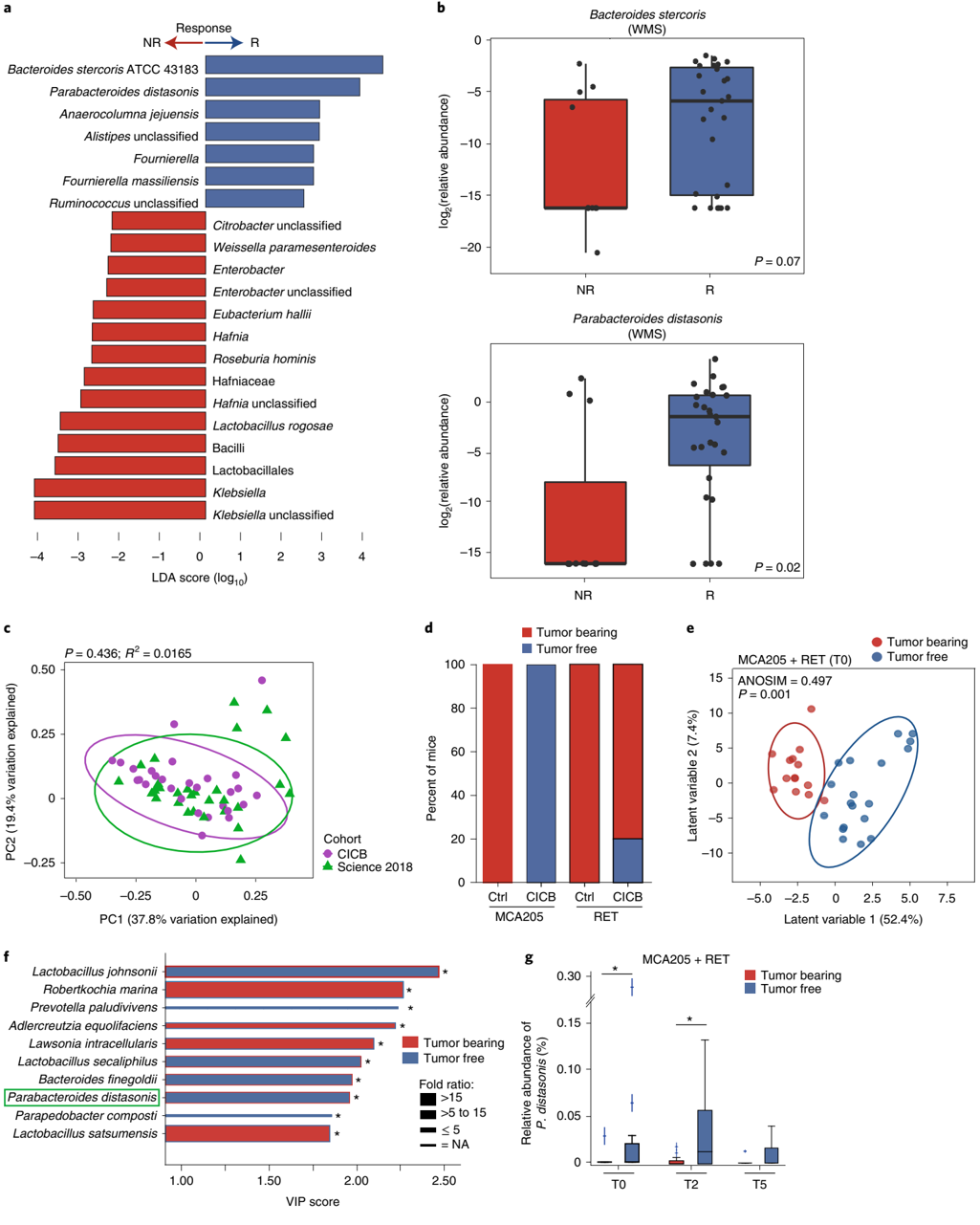
“Other bacteria, including Bacteroides stercoris, Parabacteroides distasonis, and Fournierella massiliensis were found to be enriched in responders compared with non-responders of a combined immune checkpoint blockade targeting both CTLA-4 and PD-1 [130].”
BackgroundUribe‐Herranz, M., Beghi, S., Ruella, M., Parvathaneni, K., Salaris, S., Κωστόπουλος, Ν., George, S. S., Pierini, S., Krimitza, E., Costabile, F., et al. (2023) · Molecular Therapy · doi:10.1016/j.ymthe.2023.01.012 · Cited by 71
The Microbiome and Cancer: A Translational Science Review
Fernandez, E., Wargo, J. A., & Helmink, B. A. (2025) · JAMA · doi:10.1001/jama.2025.2191 · Cited by 95
Self-citationCurrent Progress and Future Perspectives of Immune Checkpoint in Cancer and Infectious Diseases
Cai, X., Zhan, H., Ye, Y., Yang, J., Zhang, M., Li, J., & Zhuang, Y. (2021) · Frontiers in Genetics · doi:10.3389/fgene.2021.785153 · Cited by 66
“…said that various irAEs were associated with the different superior microbiome, application of antibiotics was linked to poor prognosis, and fecal microbiota transplantation (FMT) could reduce immune colitis (Pierrard and Seront, 2019; Hommes et al., 2020; Andrews et al., 2021; Seton-Rogers, 2021).”
BackgroundNeoadjuvant vidutolimod and nivolumab in high-risk resectable melanoma: A prospective phase II trial
Davar, D., Morrison, R. M., Dzutsev, A., Karunamurthy, A. D., Chauvin, J.-M., Amatore, F., Deutsch, J. S., das Neves, R. X., Rodrigues, R. R., McCulloch, J. A., et al. (2024) · Cancer Cell · doi:10.1016/j.ccell.2024.10.007 · Cited by 80
Self-citationZhong, H., Jiang, J., Hussain, M., Zhang, H., Ling, C., & Guan, R. (2025) · Advanced Science · doi:10.1002/advs.202500304 · Cited by 84
Gut microbiome for predicting immune checkpoint blockade-associated adverse events
Hu, M., Lin, X., Sun, T., Shao, X., Huang, X., Du, W., Guo, M., Zhu, X., Zhou, Y., Tong, T., et al. (2024) · Genome Medicine · doi:10.1186/s13073-024-01285-9 · Cited by 77
“Data from the preclinical models and clinical observations indicated that the gut microbiome processed great potential in modulating the development of irAEs [21].”
MethodIntestinal toxicity to CTLA-4 blockade driven by IL-6 and myeloid infiltration
Zhou, Y., Medik, Y. B., Patel, B., Zamler, D. B., Chen, S., Chapman, T., Schneider, S., Park, E. M., Babcock, R. L., Chrisikos, T. T., et al. (2023) · Journal of Experimental Medicine · doi:10.1084/jem.20221333 · Cited by 62
“This cytokine signature aligns closely with reports from others that have evaluated human ICB-associated colitis (Andrews et al., 2021; Hailemichael et al., 2022; Lim et al., 2019; Luoma et al., 2020).”
Self-citationLiu, Y., Xu, J., Ren, X., Zhang, Y., Ke, Z., Zhou, J., Wang, Y., Zhang, Y. Y., & Liu, Y. (2022) · Gut Microbes · doi:10.1080/19490976.2022.2107387 · Cited by 66
Immunotherapy in melanoma: Can we predict response to treatment with circulating biomarkers?
Splendiani, E., Besharat, Z. M., Covre, A., Maio, M., Giacomo, A. M. D., & Ferretti, E. (2024) · Pharmacology & Therapeutics · doi:10.1016/j.pharmthera.2024.108613 · Cited by 68
P4 Medicine as a model for precision periodontal care
Bartold, P. M., & Ivanovski, S. (2022) · Clinical Oral Investigations · doi:10.1007/s00784-022-04469-y · Cited by 75
Atallah, E., Welsh, S. J., O’Carrigan, B., Oshaughnessy, A., Dolapo, I., Kerr, A. S., Kucharczak, J., Lee, C. Y. C., Crooks, C. J., Hicks, A., et al. (2023) · JHEP Reports · doi:10.1016/j.jhepr.2023.100851 · Cited by 70
“Of those who met the predetermined criteria, 89.4% (42 out of 47) started promptly on steroids for suspected ChILI.”
ResultInfluentialDeterminants of resistance and response to melanoma therapy
Robertson, B. M., Fane, M. E., Weeraratna, A. T., & Rebecca, V. W. (2024) · Nature Cancer · doi:10.1038/s43018-024-00794-1 · Cited by 85
“https://doi.org/10.1038/s43018-024-00794-1 Parabacteroides distasonis and Fournierella massiliensis were enriched in the gut microbiome of patients who responded to combined ICB 148 .”
InfluentialFusobacterium is enriched in oral cancer and promotes induction of programmed death-ligand 1 (PD-L1)
Michikawa, C., Gopalakrishnan, V., Harrandah, A. M., Karpinets, T. V., Garg, R. R., Chu, R. A., Park, Y. P., Chukkapallia, S. S., Yadlapalli, N., Erikson, K., et al. (2022) · Neoplasia · doi:10.1016/j.neo.2022.100813 · Cited by 62
Self-citationYang, Z., Wu, G., Zhang, X., Gao, J., Meng, C., Liu, Y., Wei, Q., Sun, L., Wei, P., Bai, Z., et al. (2022) · Frontiers in Immunology · doi:10.3389/fimmu.2022.1001444 · Cited by 59
“Frontiers in Immunology 07 endocrine system (like hyperthyroidism), respiratory system (like pneumonia), gastrointestinal system (like diarrhea and colitis), and cardiovascular system (like myocarditis) (83, 84).”
BackgroundCho, Y. K., & Jung, C. H. (2023) · Diabetes & Metabolism Journal · doi:10.4093/dmj.2023.0072 · Cited by 62
“However, some non-antitumor pathways, such as those involving microbiota, viruses, or tissue-specific factors, are thought to cause irAEs [18-23].”
BackgroundMicrobiota and Colorectal Cancer: From Gut to Bedside
Silva, M. G., Brunner, V., & Tschurtschenthaler, M. (2021) · Frontiers in Pharmacology · doi:10.3389/fphar.2021.760280 · Cited by 66
T helper 17 (Th17) cell responses to the gut microbiota in human diseases
Sun, C., Yang, N. Y., Zheng, Z., Liu, D., & Xu, Q. (2023) · Biomedicine & Pharmacotherapy · doi:10.1016/j.biopha.2023.114483 · Cited by 65
The interaction between autophagy, Helicobacter pylori, and gut microbiota in gastric carcinogenesis
Nabavi-Rad, A., Yadegar, A., Sadeghi, A., Aghdaei, H. A., Zali, M. R., Klionsky, D. J., & Yamaoka, Y. (2023) · Trends in Microbiology · doi:10.1016/j.tim.2023.04.001 · Cited by 53
Liu, Z., Zhang, D., & Chen, S. (2024) · Journal of Experimental & Clinical Cancer Research · doi:10.1186/s13046-024-03034-7 · Cited by 62
“…the mounting body of evidence highlights the role of the gut microbiota in driving cancer initiation and progression, orchestrating the intricate landscape of the tumor microenvironment (TME), and providing novel avenues for manipulating the microbiota to modulate anti-tumor immunity [15–19].”
BackgroundDóra, D., Bokhari, S. M. Z., Aloss, K., Takacs, P., Desnoix, J. Z., Szklenárik, G., Hurley, P. D., & Lohinai, Z. (2023) · International Journal of Molecular Sciences · doi:10.3390/ijms24032769 · Cited by 51
Progresses in biomarkers for cancer immunotherapy
Lin, X., Zong, C., Zhang, Z., Fang, W., & Xu, P. (2023) · MedComm · doi:10.1002/mco2.387 · Cited by 53
Elkrief, A., Waters, N. R., Smith, N., Dai, A., Slingerland, J., Aleynick, N., Febles, B., Gogia, P., Socci, N. D., Lumish, M., et al. (2024) · Cancer Immunology Research · doi:10.1158/2326-6066.cir-23-0498 · Cited by 48
Self-citationReynolds, K. L., Arora, S., Elayavilli, R. K., Louv, W. C., Schaller, T. H., Khandelwal, A., Rothenberg, M., Khozin, S., Guidon, A. C., Dougan, M., et al. (2021) · Journal for ImmunoTherapy of Cancer · doi:10.1136/jitc-2021-002896 · Cited by 47
Bastacky, M. L., Wang, H., Fortman, D. D., Rahman, Z., Mascara, G. P., Brenner, T., Najjar, Y. G., Luke, J. J., Kirkwood, J. M., Zarour, H. M., et al. (2021) · Frontiers in Oncology · doi:10.3389/fonc.2021.749064 · Cited by 52
Sun, C., Zheng, Z., Chen, C., Lu, B.-W., & Liu, D. (2022) · Frontiers in Microbiology · doi:10.3389/fmicb.2022.859206 · Cited by 57
Taylor, J., Gandhi, A., Gray, E. S., & Zaenker, P. (2023) · Frontiers in Immunology · doi:10.3389/fimmu.2022.991433 · Cited by 51
“(62) also found a higher abundance of Bacteroides intestinalis in metastatic melanoma patients who developed severe grade irAEs on combination therapy.”
BackgroundThe impact of the gut microbiome on tumor immunotherapy: from mechanism to application strategies
Guo, C., Kong, L., Xiao, L., Liu, K., Cui, H., Xin, Q., Gu, X., Jiang, C., & Wu, J. (2023) · Cell & Bioscience · doi:10.1186/s13578-023-01135-y · Cited by 48
“…with advanced melanoma revealed a positive correlation between the toxicity of anti-PD-1 and anti-CTLA-4 antibodies and the presence of Bacteroides intestinalis in the feces of the patients, suggesting that the bacteria could be used as a target for reducing the side effects of ICB treatment [96].”
BackgroundXia, L., Zhu, X., Wang, Y., & Lü, S. (2024) · Cancer Letters · doi:10.1016/j.canlet.2024.217123 · Cited by 56
Gao, Y., Tan, Y.-J., & Fang, J. (2025) · Nature Reviews Clinical Oncology · doi:10.1038/s41571-025-01026-w · Cited by 54
“Multiple large-cohort studies have identified distinct gut microbial compositions in patients who develop irAEs 30,32 .”
InfluentialHakozaki, T., Nolin-Lapalme, A., Kogawa, M., Okuma, Y., Nakamura, S., Moreau-Amaru, D., Tamura, T., Hosomi, Y., Takeyama, H., Richard, C., et al. (2022) · Cancers · doi:10.3390/cancers14215405 · Cited by 52
“Similar to murine experiments, meta-analyses have demonstrated that altering the GM with antibiotics is associated with deleterious effects [6,7].”
ResultSelf-citationFernandes, R., Jabbarizadeh, B., Rajeh, A., Hong, M. M. Y., Baines, K. J., Ernst, S., Winquist, E., Ali, A. S., Penny, S. L., Figueredo, R., et al. (2026) · Nature Medicine · doi:10.1038/s41591-025-04183-8 · Cited by 57
The correlation between immune-related adverse events and efficacy of immune checkpoint inhibitors
Fukushima, T., Kobayashi, S., & Ueno, M. (2024) · Japanese Journal of Clinical Oncology · doi:10.1093/jjco/hyae067 · Cited by 48
“In a prospective study on advanced melanoma, patients with severe irAEs had a higher pre-treatment fecal abundance of the subclass Bacteroides intestinalis than those without irAEs (18).”
BackgroundZhang, Z., Li, J., Jiang, S., Xu, M. Y., Ma, T., Sun, Z., & Zhang, J. (2023) · Ecotoxicology and Environmental Safety · doi:10.1016/j.ecoenv.2023.114543 · Cited by 46
Self-citationRole of the gut microbiota in tumorigenesis and treatment
Liu, Q., Yang, Y., Pan, M., Yang, F., Yu, Y., & Qian, Z. (2024) · Theranostics · doi:10.7150/thno.91700 · Cited by 47
“Andrews et al. demonstrated that there is a correlation between gut microbiota signatures and the toxicity associated with CICB [210].”
Background
Metadata
- Authors
- Andrews, M. C., Duong, C. P. M., Gopalakrishnan, V., Iebba, V., Chen, W.-S., Derosa, L., Khan, M. A. W., Cogdill, A. P., White, M. G., Wong, M. C., Ferrere, G., Fluckiger, A., Roberti, M. P., Opolon, P., Alou, M. T., Yonekura, S., Roh, W., Spencer, C. N., Curbelo, I. F., Vence, L., Reuben, A., Johnson, S., Arora, R., Morad, G., Lastrapes, M., Baruch, E. N., Little, L., Gumbs, C., Cooper, Z. A., Prieto, P. A., Wani, K., Lazar, A. J., Tetzlaff, M. T., Hudgens, C. W., Callahan, M. K., Adamow, M., Postow, M. A., Ariyan, C. E., Gaudreau, P.-O., Nezi, L., Raoult, D., Mihalcioiu, C., Elkrief, A., Pezo, R. C., Haydu, L. E., Simon, J. M., Tawbi, H. A., McQuade, J., Hwu, P., Hwu, W.-J., Amaria, R. N., Burton, E. M., Woodman, S. E., Watowich, S., Diab, A., Patel, S. P., Glitza, I. C., Wong, M. K., Zhao, L., Zhang, J., Ajami, N. J., Petrosino, J., Jenq, R. R., Davies, M. A., Gershenwald, J. E., Futreal, P. A., Sharma, P., Allison, J. P., Routy, B., Zitvogel, L., & Wargo, J. A.
- Affiliations
- The University of Texas MD Anderson Cancer Center (US)
- Inserm (FR)
- Institut Gustave Roussy (FR)
- Parker Institute for Cancer Immunotherapy (US)
- AstraZeneca (United States) (US)
- University of Rochester Medicine (US)
- Memorial Sloan Kettering Cancer Center (US)
- European Institute of Oncology (IT)
- Aix-Marseille Université (FR)
- McGill University Health Centre (CA)
- Sunnybrook Health Science Centre (CA)
- Baylor College of Medicine (US)
- Corresponding author
- Zitvogel, Laurence
- Wargo, Jennifer A.
- ORCID
- Andrews, Miles C.
- Duong, Connie P. M.
- Gopalakrishnan, Vancheswaran
- Iebba, Valerio
- Chen, Wei-Shen
- Derosa, Lisa
- Khan, Md Abdul Wadud
- Cogdill, Alexandria P.
- White, Michael G.
- Wong, Matthew C.
- Ferrere, Gladys
- Fluckiger, Aurélie
- Roberti, Maria P.
- Opolon, Paule
- Alou, Maryam Tidjani
- Yonekura, Satoru
- Roh, Whijae
- Spencer, Christine N.
- Vence, Luis
- Reuben, Alexandre
- Johnson, Sarah
- Arora, Reetakshi
- Morad, Golnaz
- Lastrapes, Matthew
- Baruch, Erez N.
- Little, Latasha
- Gumbs, Curtis
- Cooper, Zachary A.
- Prieto, Peter A.
- Wani, Khalida
- Lazar, Alexander J.
- Hudgens, Courtney W.
- Callahan, Margaret K.
- Adamow, Matthew
- Postow, Michael A.
- Ariyan, Charlotte E.
- Gaudreau, Pierre-Olivier
- Nezi, Luigi
- Raoult, Didier
- Mihalcioiu, Catalin
- Elkrief, Arielle
- Pezo, Rossanna C.
- Haydu, Lauren E.
- Simon, Julie M.
- Tawbi, Hussein A.
- McQuade, Jennifer
- Hwu, Patrick
- Hwu, Wen-Jen
- Amaria, Rodabe N.
- Burton, Elizabeth M.
- Woodman, Scott E.
- Watowich, Stephanie
- Diab, Adi
- Patel, Sapna P.
- Wong, Michael K.
- Zhao, Li
- Zhang, Jianhua
- Ajami, Nadim J.
- Petrosino, Joseph
- Jenq, Robert R.
- Davies, Michael A.
- Gershenwald, Jeffrey E.
- Futreal, P. Andrew
- Sharma, Padmanee
- Allison, James P.
- Routy, Bertrand
- Zitvogel, Laurence
- Wargo, Jennifer A.
- Venue
- Nature Medicine
- Published
- 2021-07-08
- Volume
- 27
- Issue
- 8
- Pages
- 1432-1441
- ISSN
- 1078-8956 (ISSN-L)
- 1546-170X
- PMC
- PMC11107795
- OpenAlex
- W3112934313
- Semantic Scholar
- 1e128a098aaec7c7f4085a6e065071c0b46a6710
- Cited by
- 437
- References
- 67
- Citations by year
- 2026: 71 · 2025: 74 · 2024: 77 · 2023: 101 · 2022: 94 · 2021: 19
- FWCI
- 26.77
- Type
- journal article
- Language
- en
- Open access
- green
- doi.org
- Licence
- cc-by
- www.springernature.com/gp/researchers/text-and-data-mining (tdm)
- www.springernature.com/gp/researchers/text-and-data-mining (vor)
- Locations
- Nature Medicine (publishedVersion)
- Research Square (acceptedVersion, cc-by)
- PubMed (publishedVersion)
- PubMed Central (acceptedVersion)
- HAL (submittedVersion, cc-by)
- ArTS Archivio della ricerca di Trieste (University of Trieste https://www.units.it/) (submittedVersion, other-oa)
- HAL (submittedVersion)
- Funders
- U.S. Department of Health & Human Services | NIH | National Cancer Institute (1R01CA219896-01A1)
- American Association for Cancer Research (SU2C-AACR-IRG-19-17)
- UT | University of Texas MD Anderson Cancer Center Moonshots Program
- Department of Health | National Health and Medical Research Council (1148680)
- U.S. Department of Health & Human Services | National Institutes of Health (T32CA163185, 1 P50 CA221703-02, 1U54CA224070-03, T32 CA 009599)
- Parcours d’excellence en cancérologie - Fondation Philanthropia
- University of Texas MD Anderson Odyssey Fellowship Program - Kimberley Clark Foundation Award for Scientific Achievement
- Fonds de Recherche du Québec - Santé (32667)
- American Cancer SocietyMelanoma Research AllianceCancer Fighters of Houston
- Ligue Contre le Cancer
- Fondation pour la Recherche Médicale
- Institut National Du Cancer
- Agence Nationale de la Recherche (10-IAHU-03)
- Association pour la recherche sur le cancerFondation Carrefour
- Fulbright France Commission Franco-AmericainéThe John J Kopchick Foundation
- UT | University of Texas MD Anderson Cancer Center (P30 CA016672)
- Topics
- Health Sciences › Medicine › Oncology › Cancer Immunotherapy and Biomarkers
- Life Sciences › Biochemistry, Genetics and Molecular Biology › Molecular Biology › Gut microbiota and health
- Life Sciences › Immunology and Microbiology › Immunology › T-cell and B-cell Immunology
- Keywords
- gut microbiota, immune checkpoint blockade, CTLA-4, PD-1, immune-related adverse events, melanoma, Bacteroides intestinalis, colitis, IL-1β, T cell receptor repertoire, immune-related toxicity
- MeSH terms
- Gastrointestinal Microbiome, Animals, Female, Humans, Melanoma, Mice, Inbred C57BL, Cell Line, Tumor, Mice, Interleukin-1beta, CTLA-4 Antigen, Programmed Cell Death 1 Receptor
About these checks
Registry, retraction, Cites and statistics results are computed, not judged, with one exception: a printed reference that no index lists is read once by a model before it counts as a citation error. Claims are extracted by a model and kept only when their quote appears verbatim in the text; each cited source is then checked, with a model’s help, for whether it says what the claim relies on. Those verdicts can be wrong — read the claim’s quote and the cited source before relying on one.
Statistics and arithmetic are recomputed, not judged.
Confidence bands are shown only for fields calibrated on our annotated test set. None is calibrated yet, so no band is shown.
What counts as a claim ›How we measure confidence ›How we check this ›
Are you an author, or do you see a problem with this page? Request a review
Data sources
Bibliographic data: Semantic Scholar, OpenAlex, Crossref.
Contains information from the Semantic Scholar Academic Graph Datasets, made available under the ODC Attribution License (ODC-BY 1.0).
Semantic Scholar’s data is described in: Kinney, R., et al. (2023). The Semantic Scholar Open Data Platform. arXiv:2301.10140.
