

Gut microbiota signatures are associated with toxicity to combined CTLA-4 and PD-1 blockade
Open accessPublished version of a preprint
The DOI matches its Crossref record; 67 of the 67 references it cites were found in a registry or an index.
Abstract
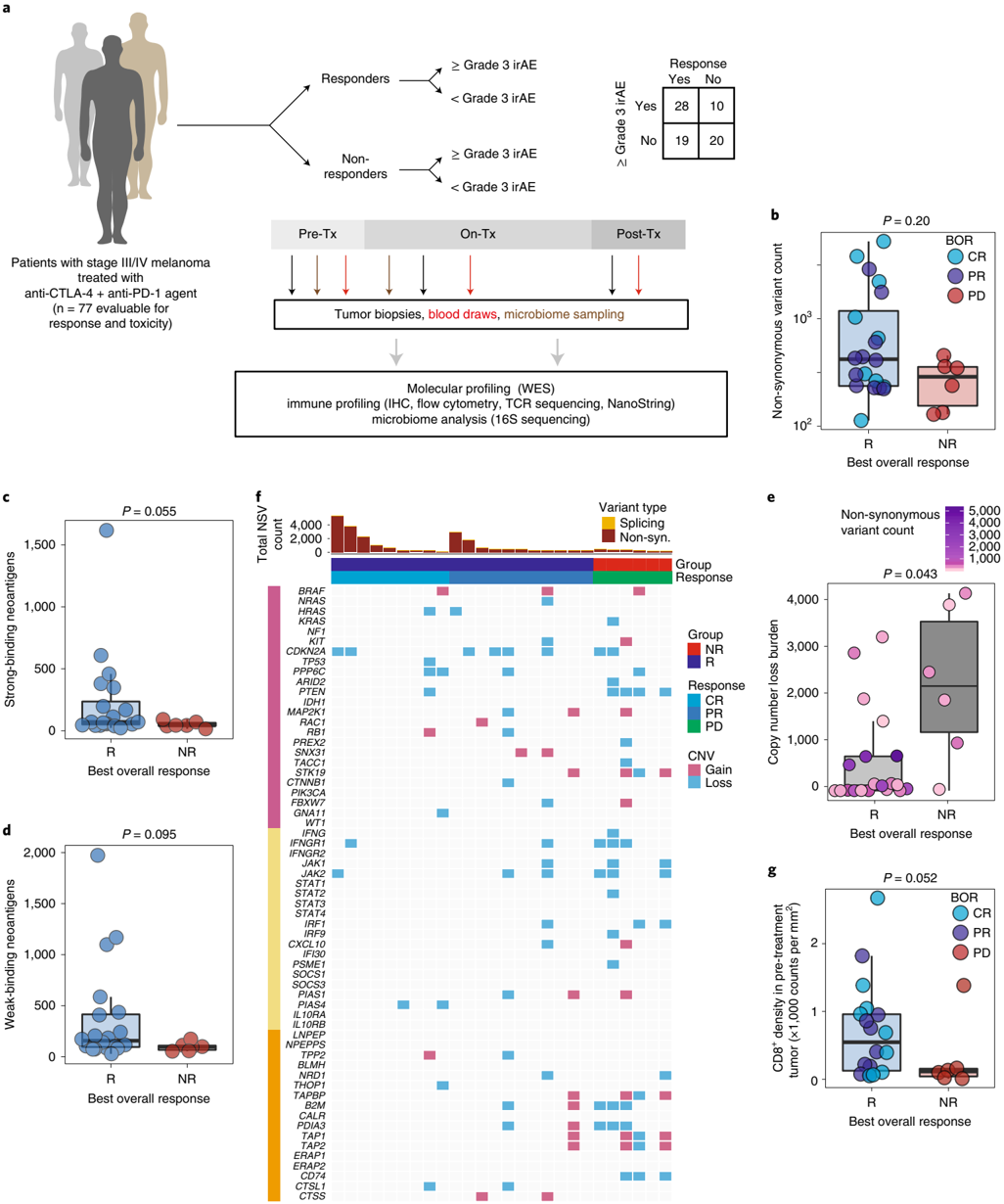
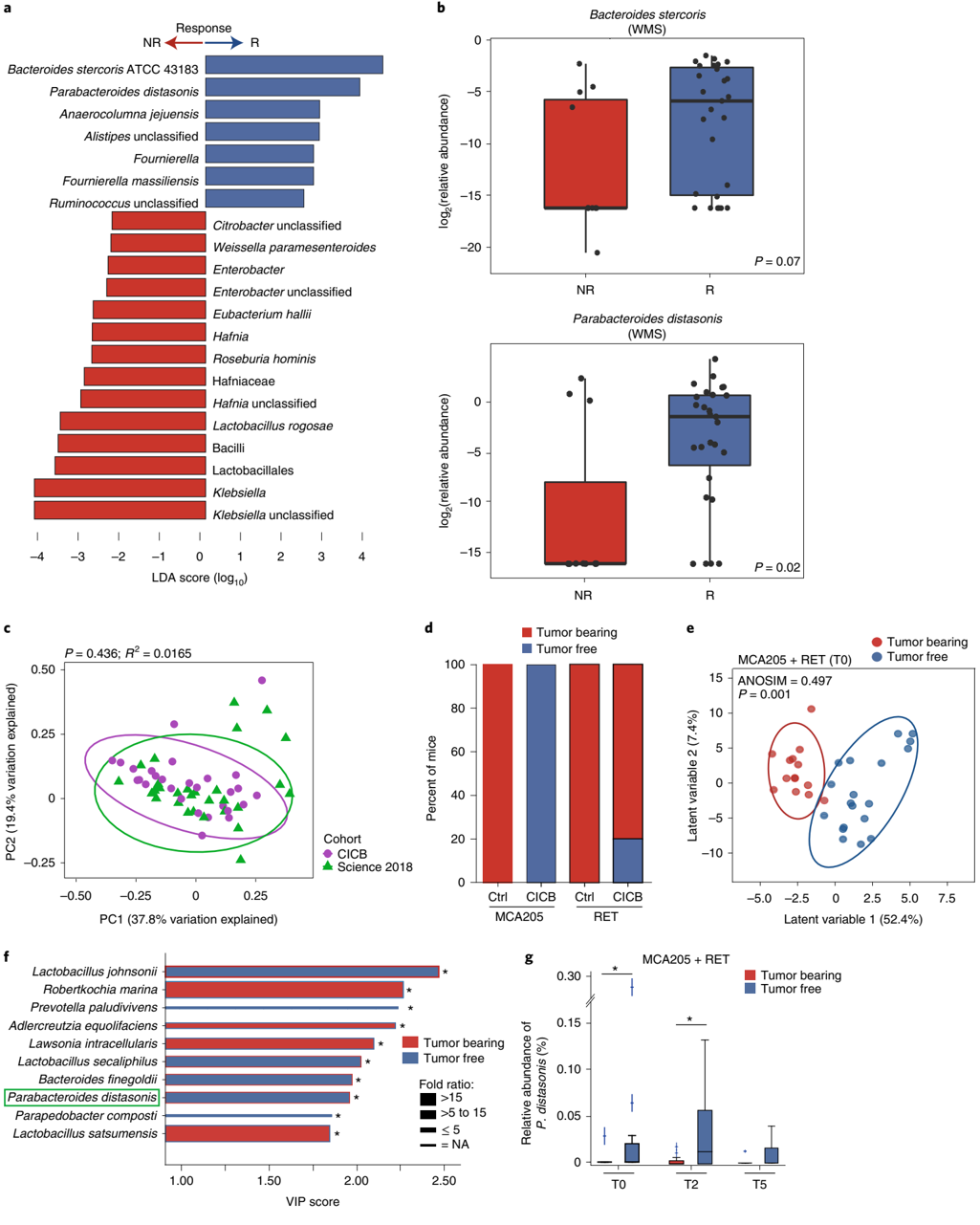
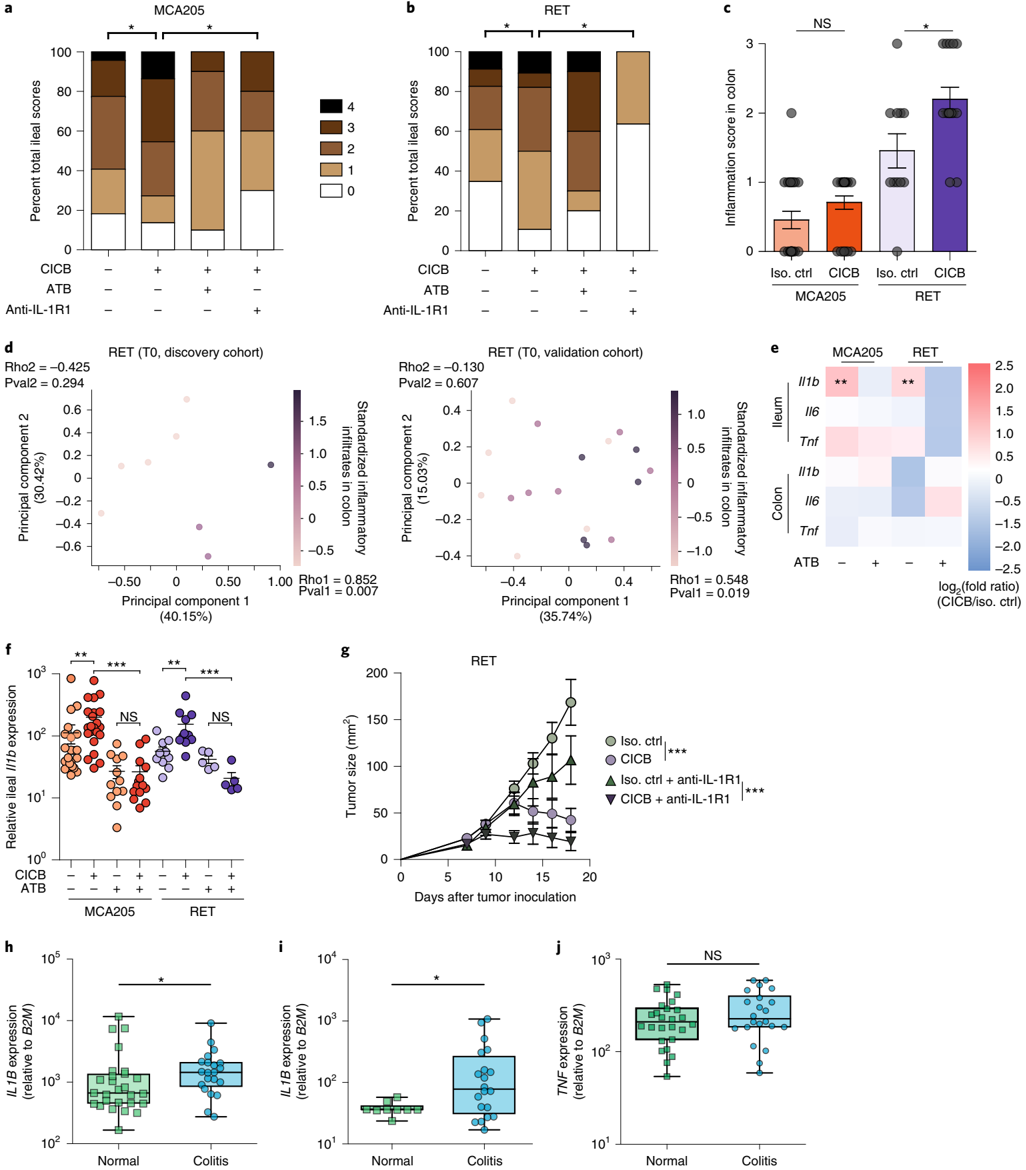
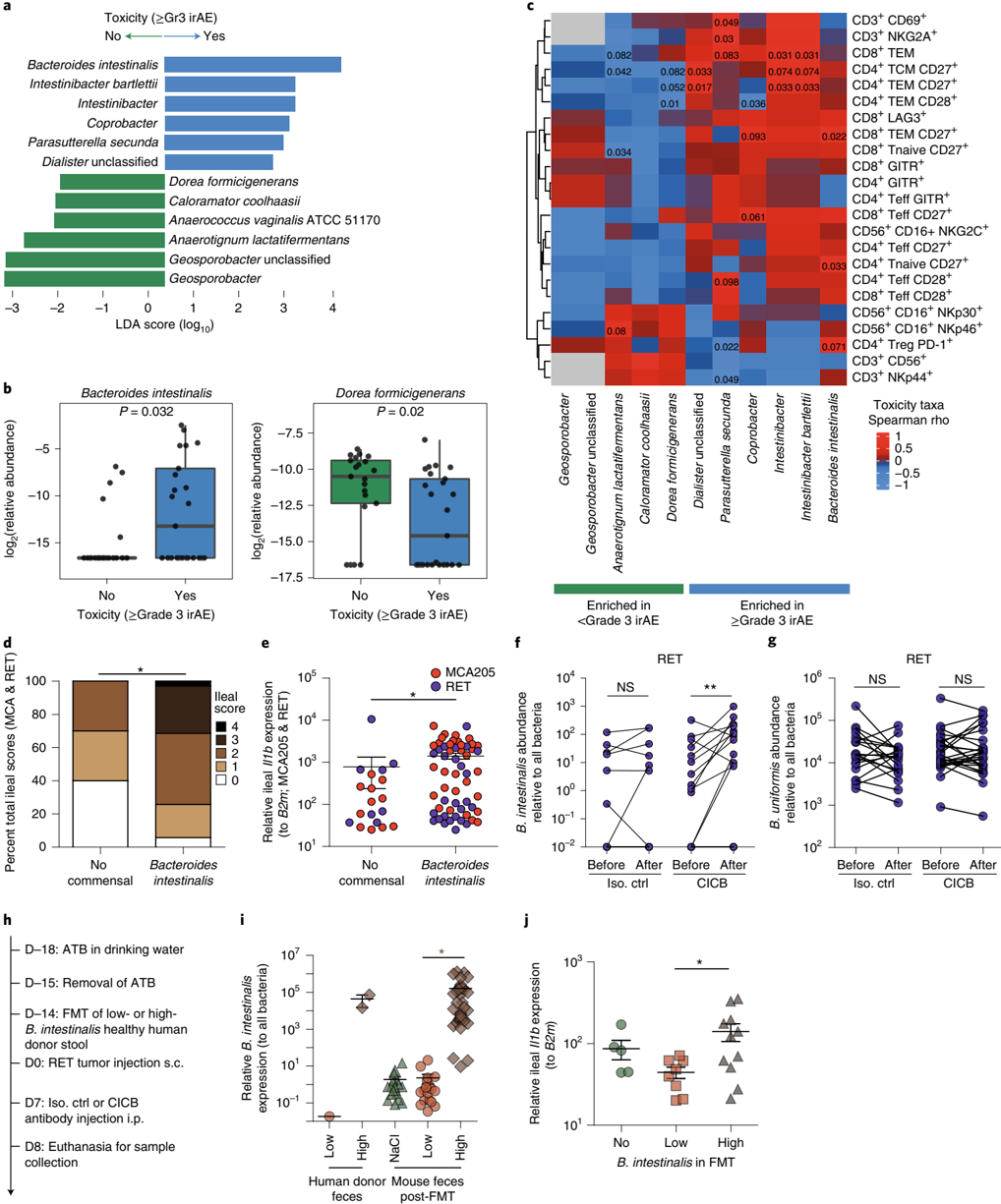
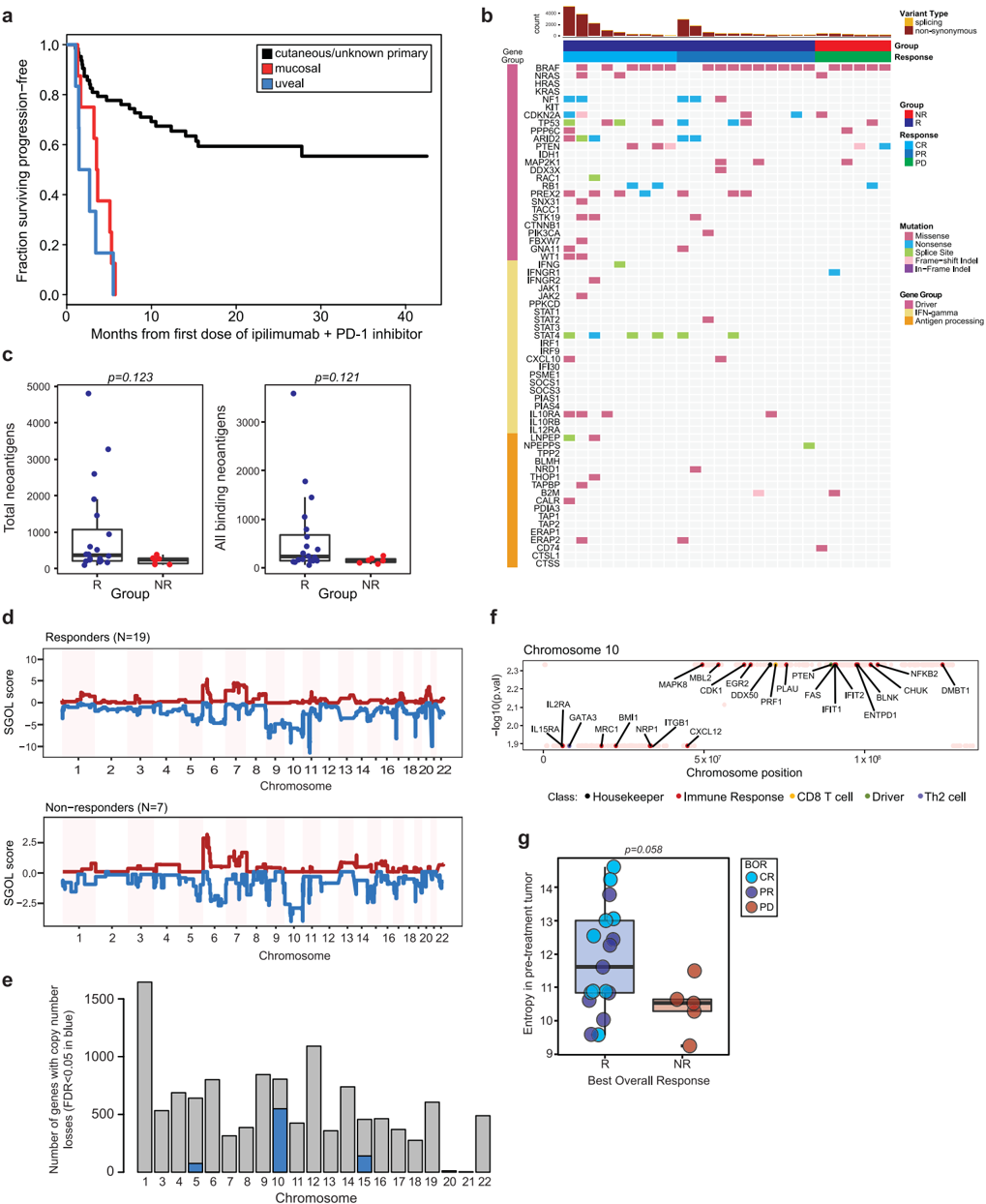
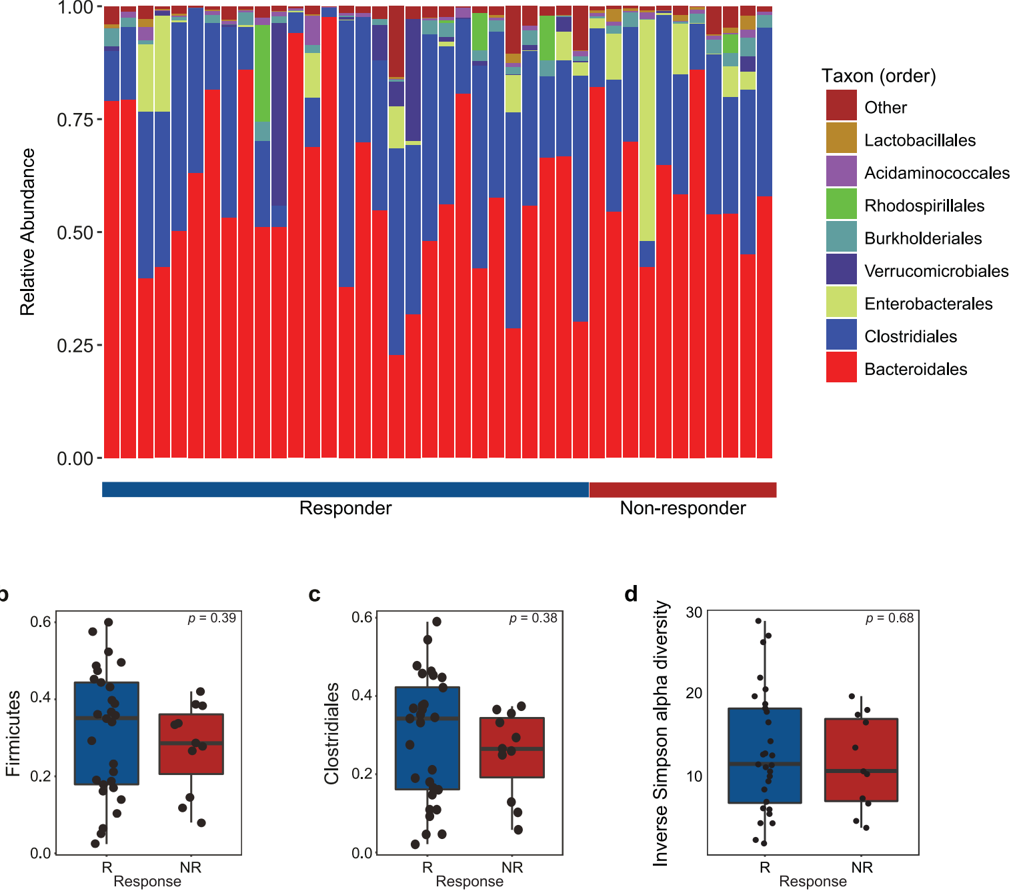
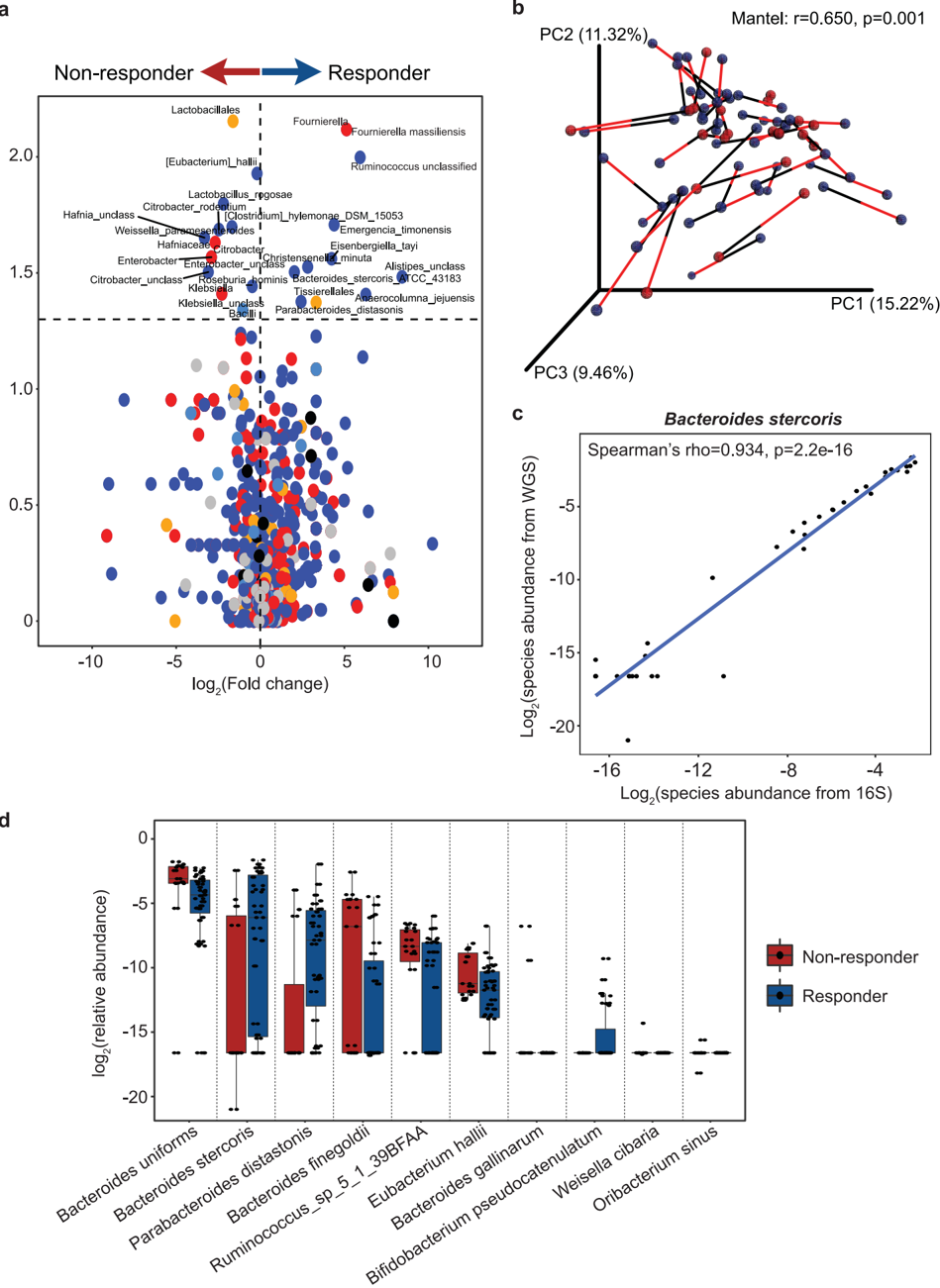
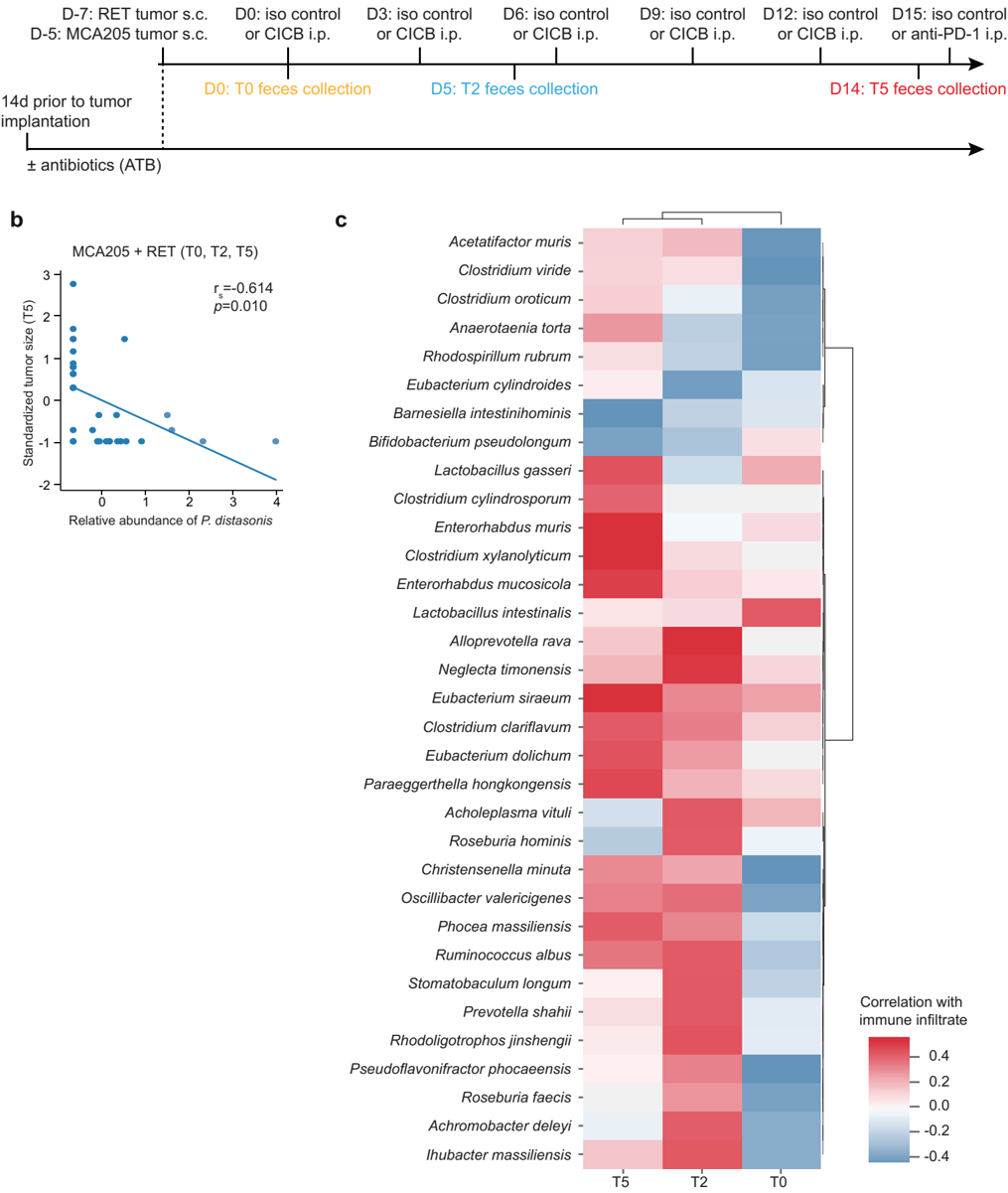
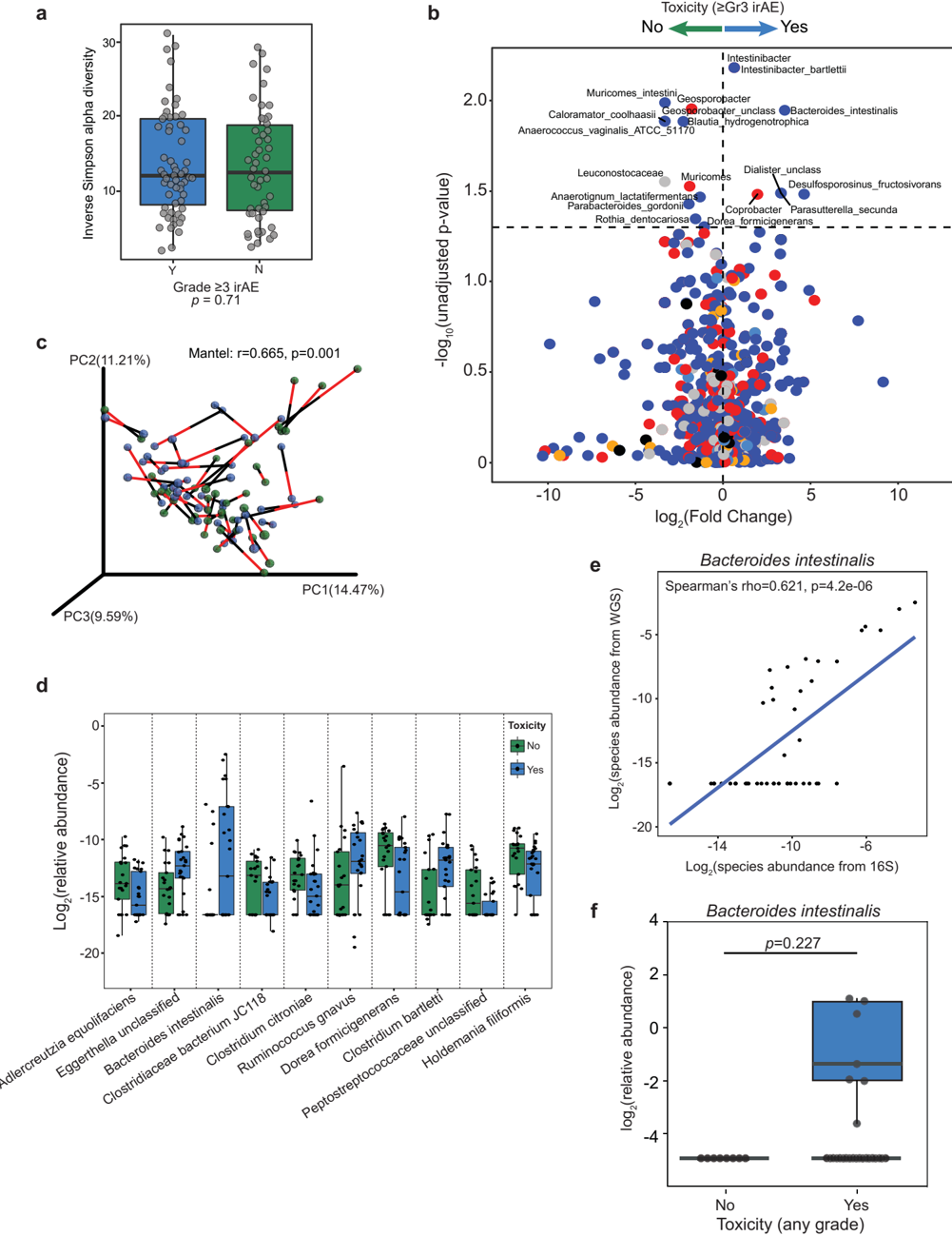
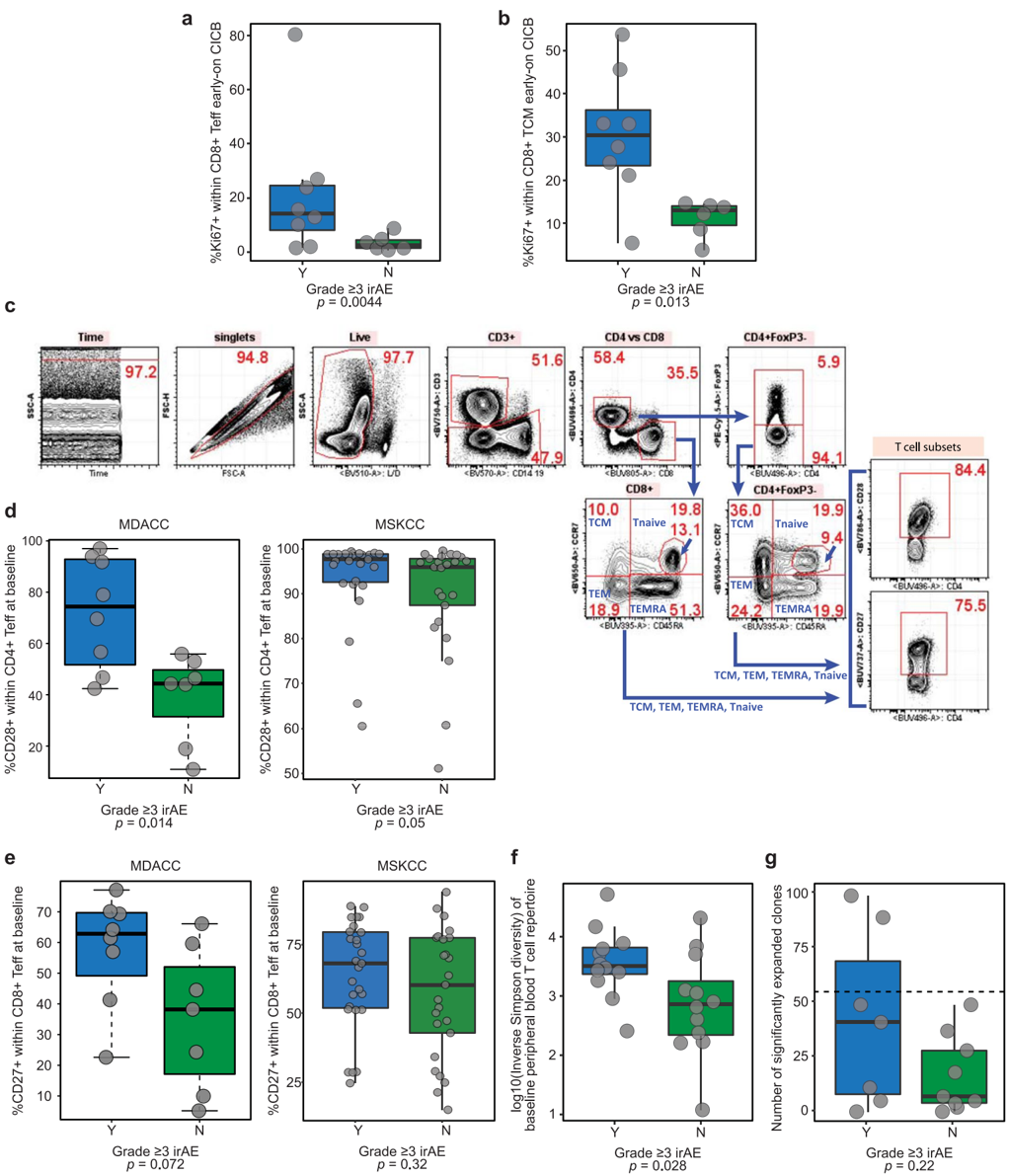
Treatment with combined immune checkpoint blockade (CICB) targeting CTLA-4 and PD-1 is associated with clinical benefit across tumor types, but also a high rate of immune-related adverse events. Insights into biomarkers and mechanisms of response and toxicity to CICB are needed. To address this, we profiled the blood, tumor and gut microbiome of 77 patients with advanced melanoma treated with CICB, with a high rate of any ≥grade 3 immune-related adverse events (49%) with parallel studies in pre-clinical models. Tumor-associated immune and genomic biomarkers of response to CICB were similar to those identified for ICB monotherapy, and toxicity from CICB was associated with a more diverse peripheral T-cell repertoire. Profiling of gut microbiota demonstrated a significantly higher abundance of Bacteroides intestinalis in patients with toxicity, with upregulation of mucosal IL-1β in patient samples of colitis and in pre-clinical models. Together, these data offer potential new therapeutic angles for targeting toxicity to CICB. Clinical benefit or intestinal toxicity resulting from combined immune checkpoint blockade in patients with melanoma associates with prevalent commensal bacteria and can be decoupled by IL-1R inhibition.
Overview
The claims and statistics of this paper haven’t been checked yet.
Free: it reads the open-access text and checks the first 5 claims that cite a source we can check. Create a free account to check every claim.
Integrity signals
Registry
Cites
Statistics
Figures

Verification
Claims the paper makes
The claims and statistics of this paper haven’t been checked yet.
Free: it reads the open-access text and checks the first 5 claims that cite a source we can check. Create a free account to check every claim.
Claims other papers make about this one
Each is checked against this paper’s own text: does it say what the citing paper says it does?
The source backs part of the claim, not all of it — or backs it for a different population, condition or comparison.
In the citing paper
“Gut bacteria modulate the response to immune checkpoint blockade (ICB) treatment in cancer”
From Dietary fiber and probiotics influence the gut microbiome and melanoma immunotherapy response (2021) · cites this paper as [7]
Experimental — accuracy not yet measuredThe cited source says what the claim attributes to it.
In the citing paper
“Another study linked toxicity with dual CTLA-4 and PD-1 inhibition to an increased abundance of Bacteroides intestinalis in the stool of patients with melanoma.40”
From Faecalibacterium prausnitzii strain EXL01 boosts efficacy of immune checkpoint inhibitors (2024) · cites this paper as [40]
The cited source says what the claim attributes to it.
In the citing paper
“This phenomenon is particularly pronounced in dual ICI combination therapies, where it has been associated with an increased incidence of severe AEs30.”
From Microbiome meets immunotherapy: unlocking the hidden predictors of immune checkpoint inhibitors (2025) · cites this paper as [30]
The cited source says what the claim attributes to it.
In the citing paper
“Despite these findings, some studies have reported conflicting results regarding the direct association between microbiota diversity and ICI efficacy30,143.”
From Microbiome meets immunotherapy: unlocking the hidden predictors of immune checkpoint inhibitors (2025) · cites this paper as [30]
In the citing paper
“Gut microbes, such as Bacteroides, could also be a biomarker for predicting ICI therapeutic toxicity in advanced melanoma patients treated with combined CTLA-4 and PD-1 blockade [131].”
From Gut microbiota influence immunotherapy responses: mechanisms and therapeutic strategies (2022) · doi:10.1186/s13045-022-01273-9 · cites this paper as [131]
1 more claim about this paper
Create a free account to see every claim other papers make about this one.
Self-check
Percentages, sums and reported differences re-computed from the paper’s own numbers.
The self-check needs the paper’s full text.
Citations
Cites
2 retracted
Million, M., Tidjani Alou, M., Khelaifia, S., Bachar, D., Lagier, J.-C., Dione, N., Brah, S., Hugon, P., Lombard, V., Armougom, F., et al. (2016) · Scientific Reports · doi:10.1038/srep26051 · Cited by 204
Self-citationRetractedGlycans affect DNA extraction and induce substantial differences in gut metagenomic studies
Angelakis, E., Bachar, D., Henrissat, B., Armougom, F., Audoly, G., Lagier, J.-C., Robert, C., & Raoult, D. (2016) · Scientific Reports · doi:10.1038/srep26276 · Cited by 82
Self-citationRetractedQIIME allows analysis of high-throughput community sequencing data
Caporaso, J. G., Kuczynski, J., Stombaugh, J., Bittinger, K., Bushman, F. D., Costello, E. K., Fierer, N., Peña, A. G., Goodrich, J. K., Gordon, J. I., et al. (2010) · Nature Methods · doi:10.1038/nmeth.f.303 · Cited by 34,887
PD-1 and PD-L1 Immune Checkpoint Blockade to Treat Breast Cancer
Hartkopf, A. D., Taran, F.-A., Wallwiener, M., Walter, C. B., Krämer, B., Grischke, E.-M., & Brucker, S. Y. (2016) · Breast Care · doi:10.1159/000453569 · Cited by 30,845
New response evaluation criteria in solid tumours: revised RECIST guideline (version 1.1)
Eisenhauer, E. A., Therasse, P., Bogaerts, J., Schwartz, L. H., Sargent, D., Ford, R., Dancey, J., Arbuck, S., Gwyther, S., Mooney, M., et al. (2009) · European Journal of Cancer · doi:10.1016/j.ejca.2008.10.026 · Cited by 29,534
Search and clustering orders of magnitude faster than BLAST
Edgar, R. C. (2010) · Bioinformatics · doi:10.1093/bioinformatics/btq461 · Cited by 20,826
UPARSE: highly accurate OTU sequences from microbial amplicon reads
Edgar, R. C. (2013) · Nature Methods · doi:10.1038/nmeth.2604 · Cited by 16,707
Metagenomic biomarker discovery and explanation
Segata, N., Izard, J., Waldron, L., Gevers, D., Miropolsky, L., Garrett, W. S., & Huttenhower, C. (2011) · Genome Biology · doi:10.1186/gb-2011-12-6-r60 · Cited by 16,192
Adverse Renal Effects of Immune Checkpoint Inhibitors: A Narrative Review
Wanchoo, R., Karam, S., Uppal, N. N., Barta, V. S., Deray, G., Devoe, C., Launay-Vacher, V., Jhaveri, K. D., & on behalf of Cancer and Kidney International Network Workgroup on Immune Checkpoint Inhibitors (2017) · American Journal of Nephrology · doi:10.1159/000455014 · Cited by 15,256
Structure, function and diversity of the healthy human microbiome
The Human Microbiome Project Consortium (2012) · Nature · doi:10.1038/nature11234 · Cited by 11,726
Cited by
Items 301–400 of 440
Gut Bacteria Provide Genetic and Molecular Reporter Systems to Identify Specific Diseases
Dicks, L. M. T. (2024) · International Journal of Molecular Sciences · doi:10.3390/ijms25084431 · Cited by 5
“Ungaro et al. [90]. used immunohistochemistry (IHC Melanoma patients treated with a combination of T-lymphocyte-associated protein 4 (CTLA-4) and programmed cell death protein 1 (PD-1) have developed immune-related adverse events (irAEs) of grade three or higher [93].”
BackgroundMethodMicrobiome dynamics in immune checkpoint blockade
Kim, C. W., Kim, H.-J., & Lee, H. K. (2024) · Trends in Endocrinology and Metabolism · doi:10.1016/j.tem.2024.04.013 · Cited by 5
Unpacking the sepsis controversy
Alverdy, J. C. (2025) · Trauma Surgery & Acute Care Open · doi:10.1136/tsaco-2024-001733 · Cited by 6
Functions of RNF Family in the Tumor Microenvironment and Drugs Prediction in Grade II/III Gliomas
Zhang, J., Wang, Z., Zhang, H., Dai, Z., Liang, X., Li, S., Zhang, X., Liu, F., Liu, Z., Yang, K., et al. (2022) · Frontiers in Cell and Developmental Biology · doi:10.3389/fcell.2021.754873 · Cited by 5
Self-citationPlitt, T., & Faith, J. J. (2023) · Seminars in Immunology · doi:10.1016/j.smim.2023.101735 · Cited by 3
Zhao, B., Zhou, B., Li, Q., Su, C., Ma, J., & Yang, L. (2024) · MedComm – Future Medicine · doi:10.1002/mef2.70006 · Cited by 3
Chan, N. S. L., Cross, C., Prestidge, C. A., Wardill, H. R., Bowen, J. M., & Joyce, P. M. (2026) · Critical Reviews in Microbiology · doi:10.1080/1040841x.2025.2610215 · Cited by 5
“However, some beneficial microbes such as Bacillus have also been associated with increased risk of colitis ( p = 0.009 ), underscoring the complex interplay between microbial taxa and treat-ment effects (chaput et al. 2017; Andrews et al. 2021).”
InfluentialSaghafi, S., Yaghoubi, M. A., Safarpour, H., Raeisi, H., & Mousavi, Z. (2026) · Biomedicine & Pharmacotherapy · doi:10.1016/j.biopha.2025.118948 · Cited by 4
Chen, X., Zuo, Z., Xiao, B., & Zhao, F. (2026) · Gut · doi:10.1136/gutjnl-2025-337778 · Cited by 5
Antohi, A. L., Gheorghiță, A. D., Andronic, O., Pîrcălăbioru, G. G., & Treteanu, A. R. (2026) · International Journal of Molecular Sciences · doi:10.3390/ijms27062538 · Cited by 7
Gut microbiota and metabolic control of immune checkpoint blockade in cancer
Gladstone, J. L., & Sonnenberg, G. F. (2026) · Cell Metabolism · doi:10.1016/j.cmet.2026.04.018 · Cited by 4
Efficacy and regulatory strategies of gut microbiota in immunotherapy: a narrative review
Sang, Y., Zheng, K., Zhao, Y., Liu, Y., Zhu, S., Xie, X., Shang, L., Liu, J., & Li, L. (2024) · Translational Cancer Research · doi:10.21037/tcr-24-316 · Cited by 4
Götz, L., Ansafi, T., Gerken, M., Klinkhammer‐Schalke, M., Fischl, A., Riemenschneider, M. J., Proescholdt, M. A., Bumes, E., Kölbl, O., Schmidt, N. O., et al. (2024) · Neuro-Oncology Advances · doi:10.1093/noajnl/vdae170 · Cited by 3
“19 Another study showed an increased risk of hematologic and gastrointestinal side effects after administration of the antibiotic gemcitabine.”
Clinical perspective and treatment of immune-related colitis after cancer immunotherapy
Braun, L. M., Lu, Y., & Zeiser, R. (2025) · Trends in cancer · doi:10.1016/j.trecan.2025.07.005 · Cited by 8
Primed for toxicity: CD4+ T cells and immune checkpoint inhibitors
Johnson, D. B., & Balko, J. M. (2022) · Med · doi:10.1016/j.medj.2022.02.003 · Cited by 3
Targeting Gut Microbiota in Colorectal Cancer
Wong, S. H. (2023) · Springer eBooks · doi:10.1007/978-981-19-4492-5_16 · Cited by 3
Zhu, C., Zhang, D., Wang, Y., Zhang, C., Wang, S., Xue, J., Lan, Z., Xun, Z., Zhang, L., Chao, J., et al. (2025) · Journal of Advanced Research · doi:10.1016/j.jare.2025.08.016 · Cited by 3
“Despite constituting less than 0.1 % of the gut microbiome, the mycobiome plays an indispensable role in the human gut microbiota and is tightly integrated into the bacterial community [25].”
InfluentialHarnessing biomarkers to guide immunotherapy in esophageal cancer: toward precision oncology
Almars, A. I., Shaheen, S. Y., Ghouth, N. M., Abumansour, I. S., Khogeer, A., Alsulaimani, F., Basri, A. M., Elhawary, N. A., Hasan, T., & Almohaimeed, H. M. (2025) · Clinical & Translational Oncology · doi:10.1007/s12094-025-04051-4 · Cited by 3
“Andrews et al. have found that the abundance of Bacteroides intestinalis in the gut microbiome of melanoma patients is tied with the elevated risk of ≥ grade 3 immune-related adverse events after anti-CTLA-4/PD-1 immunotherapy [135].”
The impact of gut microbiota modulation on responses to immune checkpoint inhibitors in cancer
Ni, Z., & Ye, D. (2025) · Acta Microbiologica et Immunologica Hungarica · doi:10.1556/030.2025.02719 · Cited by 6
Farley, M. J., Scanlon, B., Crichton, M., Bigaran, A., Barnes, A., Hart, N. H., Yates, P. M., Eastgate, M. A., & Alexander, K. E. (2025) · Current Oncology Reports · doi:10.1007/s11912-025-01714-x · Cited by 2
“The gut microbiome is highly responsive and has a profound influence on the host’s immune system; therefore, it is unsurprising that the gut microbiota has been linked to ICI treatment response [63] and the incidence and severity of irAEs [64].”
Su, P., Tao, Y., Wang, A., & Xiao, Y. (2025) · International Journal of Surgery · doi:10.1097/js9.0000000000004476 · Cited by 4
Microbial-derived immunostimulatory small molecule augments anti-PD-1 therapy in lung cancer
Newsome, R. C., Liu, H., Agbodzi, B., Gharaibeh, R. Z., Zhou, L., & Jobin, C. (2025) · Cell Reports Medicine · doi:10.1016/j.xcrm.2025.102519 · Cited by 5
Su, X., Li, A., Liu, J., Guo, Y., Yu, H., Yu, J., Wang, R., Garza, D. R., Qu, J., Wen, B., et al. (2026) · Microbiological Research · doi:10.1016/j.micres.2026.128539 · Cited by 3
Cardiovascular toxicity from immune checkpoint inhibitor therapy: an inflammatory continuum
Reyes, F., Buehning, F., Lerchner, T., Vogel, J. K., Mincu, R. I., Totzeck, M., Rassaf, T., & Michel, L. (2026) · British Journal of Pharmacology · doi:10.1111/bph.70504 · Cited by 2
Integration of donor microbiota following FMT correlates with anti-PD-1 response in melanoma
Fessler, J. L., Olm, M. R., Engleman, E. G., & Sonnenburg, J. L. (2026) · Nature Communications · doi:10.1038/s41467-026-73465-7 · Cited by 7
Trust your gut when it comes to driving CARs
Chelvanambi, M., & Wargo, J. A. (2022) · Med · doi:10.1016/j.medj.2022.04.015 · Cited by 2
Self-citationDesîlets, A., & Elkrief, A. (2023) · Current Opinion in Oncology · doi:10.1097/cco.0000000000000957 · Cited by 5
Self-citationMathuria, A., Chaudhary, A., Sharma, H., & Mani, I. (2024) · Springer eBooks · doi:10.1007/978-981-97-1844-3_9 · Cited by 8
Guo, K.-C., Wang, Z., & Su, X. (2024) · Chinese Journal of Integrative Medicine · doi:10.1007/s11655-024-4115-8 · Cited by 3
“(96) Triptolide downregulates tumor-derived chemokine (C-X-C motif) ligand 12 (CXCL12) expression through the NF-(cid:169) B and ERK1/2 pathways, reshaping the immune microenvironment and reducing infiltration of tumor-associated macrophages in CRC. Additionally, triptolide inhibits the expression of arginase 1, CD206…”
InfluentialRecent Advances in Bacterium‐Based Therapeutic Modalities for Melanoma Treatment
Khan, M., Dong, Y., Ullah, R., Li, M., Huang, Q., Hu, Y., Li, Y., & Luo, Z. Y. (2024) · Advanced Healthcare Materials · doi:10.1002/adhm.202401076 · Cited by 2
Self-citationMachado, A. P., Shatila, M., Aujla, P., Huey, R. W., Wang, Y., & Thomas, A. S. (2024) · Annals of Gastroenterology · doi:10.20524/aog.2024.0935 · Cited by 4
Exploring molecular imaging to investigate immune checkpoint inhibitor-related toxicity
Peeters, E., van Genugten, E. A. J., Heskamp, S., de Vries, I. J. M., van Herpen, C., Koenen, H. J. P. M., Kneilling, M., van der Post, R. S., van Dop, W. A., Westdorp, H., et al. (2025) · Journal for ImmunoTherapy of Cancer · doi:10.1136/jitc-2024-011009 · Cited by 2
Beyond the tumor: the gut microbiome as a key player in immunotherapy efficacy and resistance
Zhao, Y., Liu, W., & Hu, Y. (2025) · Naunyn-Schmiedeberg s Archives of Pharmacology · doi:10.1007/s00210-025-04315-4 · Cited by 3
“Additionally, enrichment of Bacteroides stercoris , Parabacteroides distasonis , and Fournierella massiliensis was correlated with enhanced responses to both CTLA-4 and PD-1 blockade in melanoma patients (Andrews et al. 2021).”
Recent Abdominal Surgery as a Risk Factor for Unfavorable Immune-Mediated Colitis Outcomes
Ahuja, R., Shatila, M., Shah, J., Natha, C. M., Vemulapalli, V., Mittal, N., Haydel, J., Lee, I. J.-A., Rivera, A. C. U., Cruz, C. C., et al. (2025) · Gastro Hep Advances · doi:10.1016/j.gastha.2025.100767 · Cited by 2
More fuel for the fire: Gut microbes and toxicity to immune agonist antibodies in cancer
Chelvanambi, M., & Wargo, J. A. (2021) · Cell Reports Medicine · doi:10.1016/j.xcrm.2021.100482 · Cited by 2
“Cell Reports Medicine 2, 100482, D ticle under the CC BY-NC-ND license (http://cr of cytokines such as IL-1B and IL-6, with options to therapeutically target these.(7) However, gut microbes have been less well-studied in the context of treatment with IAAs.”
BackgroundSelf-citationMechanisms of Resistance and Strategies to Combat Resistance in PD-(L)1 Blockade
Moise, J., Murthy, J. J., Dabir, D., Yu, S., Kisto, F., Herron, E., & Aulakh, S. (2022) · Immuno · doi:10.3390/immuno2040041 · Cited by 2
Burgermeister, E., & Ebert, M. P. A. (2023) · Springer eBooks · doi:10.1007/978-981-19-4492-5_4 · Cited by 3
Gattlen, C., Frank, K. R., Marie, D. N., Trompette, A., Chriqui, L.-E., Hao, Y., Abdelnour, E., González, M., Krueger, T., Dyson, P. J., et al. (2024) · JTCVS Open · doi:10.1016/j.xjon.2024.02.007 · Cited by 2
Pan-cancer analysis reveals tumor microbiome associations with host molecular aberrationsPreprint
Ma, C., Su, C., Li, J., Qu, J., & Shuai, S. (2023) · bioRxiv (Cold Spring Harbor Laboratory) · doi:10.1101/2023.04.13.536730 · Cited by 3
Hillege, L. E., Trepka, K. R., Ziemons, J., Aarnoutse, R., Guthrie, B. G. H., de Vos‐Geelen, J., Iersel, L. V., van Hellemond, I. E. G., Baars, A., Vestjens, J. H. M. J., et al. (2024) · medRxiv · doi:10.1101/2024.10.11.24315249 · Cited by 3
Esparteiro, D., Fouquet, G., Courtois, A., Naassïla, M., Nguyen-Khac, É., & Marcq, I. (2024) · Gastro Hep Advances · doi:10.1016/j.gastha.2024.07.020 · Cited by 1
Metagenomics and Microbiome Analysis
Kumar, V., Shukla, R., Gangani, S., Shekhar, H., & Shukla, V. (2024) · Springer eBooks · doi:10.1007/978-981-97-7123-3_4 · Cited by 3
Link between dysbiosis and cancer: Contributing mechanisms and factors
Turner, N., Colunga-Minutti, J., Alekseev, S., Jenq, R. R., & Nurieva, R. (2025) · International review of cytology · doi:10.1016/bs.ircmb.2024.12.004 · Cited by 1
Self-citationLasagna, A. (2025) · Immunotherapy · doi:10.1080/1750743x.2025.2516995 · Cited by 1
Emerging Issues Regarding the Effects of the Microbiome on Lung Cancer Immunotherapy
Papavassiliou, K. A., Sofianidi, A. A., Spiliopoulos, F. G., Margoni, A., & Papavassiliou, A. G. (2025) · Biomolecules · doi:10.3390/biom15111525 · Cited by 1
“It has been shown that Bacteroidetes fragilis , Barnesiellaceae , Ikenellaceae , Bacteroidaceae [45], and Caloramator coolhaasii [46] gut enrichment in patients with lung cancer correlates with decreased ICB toxicity.”
Biscaglia, G., Gentile, A., Parente, P., Calvo, A., Fontana, R., Continisio, A., Brina, A. L. P. D., Ciardiello, D., McIlwain, G., Latiano, A., et al. (2025) · Nutrients · doi:10.3390/nu17233788 · Cited by 1
“Elevated IL-6 levels have been associated with disease activity [48–51], while a higher baseline abundance of Bac-teroidetes has been linked to reduced risk [52–54].”
Vogiatzi, I., Lehmann, A., Chuang, L. I. U., Moreno-Lama, L., Kajiwara, Y., Kanaya, N., Zwaenepoel, O., Farid, A. S., Lee, U., Rossignoli, F., et al. (2026) · EBioMedicine · doi:10.1016/j.ebiom.2026.106122 · Cited by 1
“26,27 Many of the immuno-modulators agents also exhibit short systemic half-life and low peak concentrations restricting their accumulation to therapeutically effective levels within the TME.”
Ziogas, D. C., Theocharopoulos, C., Martinos, A., Lyrarakis, G., Stefanou, D. T., Anastasopoulou, A. N., & Gogas, H. (2026) · Current Oncology Reports · doi:10.1007/s11912-026-01744-z · Cited by 2
“In another study involving patients receiving anti-PD-1 and anti-CTLA-4 combination therapy, GM enrichment with Parabacteroides distasonis and Bacteroides stercoris was shown to be significantly correlated with clinical benefit [56 ].”
Han, X., Zang, D., Lin, M., Yin, Y., Liu, D., Sun, Q., & Chen, J. (2026) · Frontiers in Immunology · doi:10.3389/fimmu.2026.1731931 · Cited by 1
“Some studies have established classi fi cation models for predicting irAEs based on differential gut microbiota (9, 27), which have shown excellent performance in predicting the occurrence of irAEs (AUC = 0.88).”
InfluentialDiop, K., Benlaïfaoui, M., Hunter, S., Méndez-Salazar, E. O., Hakozaki, T., Richard, C., Prifti, D. K., Kourtian, S., Proulx-Rocray, F., Naimi, S., et al. (2026) · Microbiome · doi:10.1186/s40168-026-02419-4 · Cited by 4
“For example, in melanoma patients, loss of Faecalibacterium prausnitzii and enrichment of Bacteroides intestinalis and Bacteroides clarus were associated with irAE development [14–16].”
Self-citationLiu, J., Zhao, P., Jiang, D., Li, S. B., Jin, C., Xu, D., Wang, X. M., Chen, Y., Tang, B., & Qu, X. (2026) · Gut Microbes · doi:10.1080/19490976.2026.2672791 · Cited by 3
Ali, H., Xie, B., Yang, J., & Nadeem, U. (2026) · Cancers · doi:10.3390/cancers18121948 · Cited by 1
“NSCLC patients showed an increase in fecal Lactobacillus and/or Bifidobacterium in non-or low-grade irAE cases [147].”
Wang, J., Gao, J., Liu, J. P., Hu, D., & Zhan, Y. (2026) · Journal of Proteome Research · doi:10.1021/acs.jproteome.5c01260 · Cited by 1
Alanazi, Y. N. (2026) · Frontiers in Immunology · doi:10.3389/fimmu.2026.1883259 · Cited by 1
“Qualitative cross-cohort comparison of landmark clinical datasets (9 – 11, 26, 27) suggested recurrent enrichment of multiple immunologically relevant taxa in ICI responders, including Akkermansia muciniphila , members of the Ruminococcaceae family, Enterococcus spp., Alistipes spp., and…”
Gut metabolites: key factors in the cross-talk between the gut microbiota and tumor immunotherapy
Zeng, L., Ren, Y., Huang, H., Wang, Q., Li, H., Song, J., He, F., & Li, J. (2026) · Frontiers in Immunology · doi:10.3389/fimmu.2026.1882542 · Cited by 1
“By integrating microbial features with genomic and immune pro fi ling, composite models may enable accurate prediction of ICB responses and strati fi cation according to the risk of immune-related adverse events (140).”
Microbiome as a prediction of immunotherapy response in lung cancer
Rojas, L., Zuluaga, J., & Cardona, A. F. (2026) · Frontiers in Immunology · doi:10.3389/fimmu.2026.1849553 · Cited by 1
“These fi ndings support the potential of microbiome pro fi ling as a tool for identifying patients at a higher risk of severe irAEs (20).”
Liu, Z., Wang, C., Shen, Y., Shi, Y., Duan, J., Dong, H., Xu, Y., Zheng, Y., & Cui, H. (2026) · Frontiers in Oncology · doi:10.3389/fonc.2026.1904273 · Cited by 1
“Given that ICI therapy itself has been associated with dysbiosis and susceptibility to irAEs, microbiota-related immune activation may have further aggravated local in fl ammation and disrupted intestinal neuromuscular homeostasis in this setting (49 – 52).”
Wang, Y., Fan, C., Varatharajalu, K., Satila, M., Cruz, C. C., Sun, B., Lermi, N. O., Hayase, T., Thomas, A., Szymonowicz, K., et al. (2026) · Cell Reports Medicine · doi:10.1016/j.xcrm.2026.103044 · Cited by 2
“We present here the results from our ongoing clinical trial on the efficacy and safety of front-line FMT in the management of IMDC, with preliminary analyses to explore the role of the gut microbiome and immune profiling in this disease course and treatment response.”
InfluentialSelf-citationPei, X., Zhao, J., Luo, R. K., Da, L., Li, E., Zhu, H., Li, Y., Luo, Y., Tian, K., Wang, Z., et al. (2024) · Frontiers in Oncology · doi:10.3389/fonc.2024.1407312 · Cited by 1
“Emerging evidence suggests that the diversity of gut microbiome can in fl uence anti-tumor immunity, and predict treatment ef fi cacy and toxicity level of ICI immunotherapy (27, 28).”
Ge, Y.-C., Min, L., Liu, Q., Wang, X., Wang, S., Chen, J., Kong, W., Wu, S., Zhou, G., Wang, T., et al. (2024) · Future Oncology · doi:10.1080/14796694.2024.2385291 · Cited by 2
Aminzade, Z., Jafari, A., Shirani, A., Karimi, H., Naserpour, M., Javazm, A. R., Shirvani, P., Alijanzadeh, D., Samieefar, N., & Rezaei, N. (2024) · Interdisciplinary cancer research · doi:10.1007/16833_2024_472 · Cited by 1
Immune checkpoint inhibitor-induced myocarditis
Kushnareva, E. A., Gavrilyuk, N. D., Shuginova, T. N., & Моисеева, О. М. (2022) · Russian Journal for Personalized Medicine · doi:10.18705/2782-3806-2022-2-4-35-43 · Cited by 2
Chu, Y., Hu, S., Li, S., & Qi, X. (2022) · Annals of Translational Medicine · doi:10.21037/atm-22-6045
“The combination of anti-CLTA-4 agents has been shown to increase the 5-year survival rate by an additional 7–10% (41,42).”
Microbiota in Cancer Immunotherapy: The Next Milestone of Immuno-oncology?
Ting, N. L.-N., & Yu, J. (2023) · Springer eBooks · doi:10.1007/978-981-19-4492-5_17 · Cited by 1
Management of Toxicity and Side Effects of Systemic Therapy for Renal Cell Carcinoma
Young, K., Schmitt, A. M., Mukherji, D., Spain, L. A., Schmidinger, M., & Pickering, L. M. (2022) · Société Internationale d’Urologie Journal · doi:10.48083/syab9165 · Cited by 3
White, Z., Cabrera, I., Ochoa-Raya, A., Kapustka, I., Koster, K. P., Matsuo, T., Jayawardena, D., Kageyama, T., Dudeja, P. K., Lutz, S. E., et al. (2022) · bioRxiv (Cold Spring Harbor Laboratory) · doi:10.1101/2022.09.27.509786 · Cited by 1
Corps atypiques. Jeu : Revue de théâtre, no. 151, 2014
Cyr, C. (2014) · VST - Vie sociale et traitements
Zhang, J., Zhang, Z., Li, J., Jiang, S., Xu, M. Y., Ma, T., & Sun, Z. (2022) · Research Square · doi:10.21203/rs.3.rs-1571407/v1
Self-citationImmune checkpoint inhibitors: the mechanisms, limitations, and improvements
Zhang, F. (2022) · Highlights in Science Engineering and Technology · doi:10.54097/hset.v8i.1105 · Cited by 1
“In detail, they would be delayed until the fourth week and tenth week when using ipilimumab and nivolumab respectively [20].”
The role of PD-1/PD-L1 inhibitors in the treatment for non-small cell lung cancer (NSCLC)
Li, C., & Xu, M. (2022) · Highlights in Science Engineering and Technology · doi:10.54097/hset.v8i.1108
“While utilizing ipilimumab and nivolumab, they would be deferred until the fourth and tenth weeks, respectively [22].”
MethodSupplementary Data from Microbiota-Centered Interventions: The Next Breakthrough in Immuno-Oncology?
(2023) · doi:10.1158/2159-8290.22540051.v1
Self-citationSystemic Onco-Sphere: Host Microbiome and Cancer
Saw, P. E., & Song, E. (2023) · Springer eBooks · doi:10.1007/978-981-99-1183-7_25
Neoadjuvant anti-PD-1/PD-L1 therapy for colorectal cancer: Current status and future prospects
Han, Q., Zeng, H., Xu, W., & Wu, M. (2023) · World Chinese Journal of Digestology · doi:10.11569/wcjd.v31.i15.615
Wang, B., Qiu, Y., Xie, M., Huang, P., Yu, Y., Sun, Q., Shangguan, W., Li, W., Zhu, Z., Xue, J., et al. (2023) · Research Square · doi:10.21203/rs.3.rs-3762145/v1
de Ruijter, L. K. (2024) · University of Groningen research database (University of Groningen / Centre for Information Technology) · doi:10.33612/diss.952617592
Newsome, R. C., Gharaibeh, R. Z., Pierce, C. M., da Silva, W. V., Paul, S., Hogue, S., Yu, Q., Antonia, S. J., Conejo-Garcia, J. R., Robinson, L. A., et al. (2022) · Figshare · doi:10.6084/m9.figshare.19445599
Current trends and approaches in clinical metagenomics
Tyagi, S., & Katara, P. (2024) · Elsevier eBooks · doi:10.1016/b978-0-443-16092-9.00020-5 · Cited by 1
Cogrossi, L. L., Zordan, P., Grioni, M., Tosi, A., RIZZO, N., Policastro, A., Mattorre, B., Lorenzoni, M., Meregalli, G., Sisti, S., et al. (2024) · bioRxiv (Cold Spring Harbor Laboratory) · doi:10.1101/2024.05.08.590282
Disputes and Challenges of Immune Checkpoint Inhibitors in Gastrointestinal Cancers
(2024) · Frontiers research topics · doi:10.3389/978-2-8325-4910-0
Progression of Gut Microbiota in Immunotherapy for Solid Tumors
张, 慧. (2024) · Advances in Clinical Medicine · doi:10.12677/acm.2024.14112950
Cancer and microbiome-targeted therapies
Meena, A. S., Singh, P., & Shukla, P. K. (2025) · International review of cytology · doi:10.1016/bs.ircmb.2024.12.006 · Cited by 5
Xing, R., Chen, K., Liu, Y., Zhao, L., Shi, M., Xue, H., Ma, G., & Yan, X. (2025) · Research Square · doi:10.21203/rs.3.rs-6493668/v1
Self-citationProspect of interdisciplinary research on gut microbiota and colorectal cancer immunotherapy
Lu, Y., Zhang, Z., Chen, L., Xue, P., Zhang, Y., Li, Y., & Guo, H. (2025) · Critical Reviews in Oncology/Hematology · doi:10.1016/j.critrevonc.2025.104832 · Cited by 1
Zhou, Y., Feng, Y., Wang, Y., Wang, Y., Liu, X., Sun, T., & Xu, J. (2025) · Food Science & Nutrition · doi:10.1002/fsn3.70708 · Cited by 1
157Chapter 8 The gut microbiota, nutrigenomics, and digestive health
Olaniran, A. F., Obayomi, O. V., & Olagunju, O. F. (2025) · De Gruyter eBooks · doi:10.1515/9783111441238-009
The Research Advancements of Gut and Urinary Microbiota in the Treatment of Bladder Cancer
葛, 文. (2025) · Advances in Clinical Medicine · doi:10.12677/acm.2025.15113128
Metagenomics: Concepts and scope
Tyagi, S., Kanchan, S., Kesheri, M., & Katara, P. (2025) · Elsevier eBooks · doi:10.1016/b978-0-443-21980-1.00004-8
Gastrointestinal complications of immune checkpoint Inhibitor therapy
Carbonnel, F., Martin, A., Marthey, L., Bellanger, C., Bou-Farah, R., Boytchev, I., Abdallah, R., Amiot, A., & Meyer, A. (2025) · La Presse Médicale · doi:10.1016/j.lpm.2025.104326
Tryptophan metabolite indole-3-acetate: a new culprit in irinotecan-induced gut epithelial injury
Fidelle, M., & Zitvogel, L. (2025) · Gut · doi:10.1136/gutjnl-2025-336758
Self-citationNewsome, R. C., Gharaibeh, R. Z., Pierce, C. M., da Silva, W. V., Paul, S., Hogue, S., Yu, Q., Antonia, S., Conejo-Garcia, J. R., Robinson, L. A., et al. (2022) · Figshare · doi:10.6084/m9.figshare.19445605
Newsome, R. C., Gharaibeh, R. Z., Pierce, C. M., da Silva, W. V., Paul, S., Hogue, S., Yu, Q., Antonia, S., Conejo-Garcia, J. R., Robinson, L. A., et al. (2022) · Figshare · doi:10.6084/m9.figshare.19445587
Newsome, R. C., Gharaibeh, R. Z., Pierce, C. M., da Silva, W. V., Paul, S., Hogue, S., Yu, Q., Antonia, S., Conejo-Garcia, J. R., Robinson, L. A., et al. (2022) · Figshare · doi:10.6084/m9.figshare.19445584
Hu, M., Lin, X., Sun, T., Shao, X., Huang, X., Weiwei, D., Guo, M., Zhu, X., Zhou, Y., Tong, T., et al. (2024) · Figshare · doi:10.6084/m9.figshare.26669787
Wang, B., Qiu, Y., Xie, M., Huang, P., Yu, Y., Sun, Q., Shangguan, W., Li, W., Zhu, Z., Xue, J., et al. (2024) · Figshare · doi:10.6084/m9.figshare.26170561
Hu, M., Lin, X., Sun, T., Shao, X., Huang, X., Weiwei, D., Guo, M., Zhu, X., Zhou, Y., Tong, T., et al. (2024) · Figshare · doi:10.6084/m9.figshare.26669790
Newsome, R. C., Gharaibeh, R. Z., Pierce, C. M., da Silva, W. V., Paul, S., Hogue, S., Yu, Q., Antonia, S., Conejo-Garcia, J. R., Robinson, L. A., et al. (2022) · Figshare · doi:10.6084/m9.figshare.19445596
Newsome, R. C., Gharaibeh, R. Z., Pierce, C. M., da Silva, W. V., Paul, S., Hogue, S., Yu, Q., Antonia, S., Conejo-Garcia, J. R., Robinson, L. A., et al. (2022) · Figshare · doi:10.6084/m9.figshare.19445593
Newsome, R. C., Gharaibeh, R. Z., Pierce, C. M., da Silva, W. V., Paul, S., Hogue, S., Yu, Q., Antonia, S., Conejo-Garcia, J. R., Robinson, L. A., et al. (2022) · Figshare · doi:10.6084/m9.figshare.19445590
Xu, B., Liu, P., Yan, N., Wang, T., Liu, L., & Cheng, Y. (2025) · Immunotherapy · doi:10.1080/1750743x.2026.2618937 · Cited by 1
“…multi-omics approaches – including metagenomics, metabolomics, and proteomics – have revealed systemic alterations in microbial-derived metabolites that contribute to the development of irAEs, such as amino acids, short-chain fatty acids (SCFA), bile acids, and tryptophan derivatives [11,15–20].”
InfluentialChen, W.-W., Li, S.-C., Yin, Q., Xu, M.-L., Zhang, J.-J., Zhao, X.-R., Xing, P.-F., Kong, Y.-H., & Zhang, L.-Y. (2026) · Cancer Immunology Immunotherapy · doi:10.1007/s00262-025-04292-w · Cited by 1
“Studies by Andrews [31] and Lozano [10] consistently revealed an elevation of normal tissue TCR and CD4 + Tem cells in patients with AEs, supporting that TCR recognition of normal tissue by CD4 + Tem cells causes toxicity.”
Self-citation
Metadata
- Authors
- Andrews, M. C., Duong, C. P. M., Gopalakrishnan, V., Iebba, V., Chen, W.-S., Derosa, L., Khan, M. A. W., Cogdill, A. P., White, M. G., Wong, M. C., Ferrere, G., Fluckiger, A., Roberti, M. P., Opolon, P., Alou, M. T., Yonekura, S., Roh, W., Spencer, C. N., Curbelo, I. F., Vence, L., Reuben, A., Johnson, S., Arora, R., Morad, G., Lastrapes, M., Baruch, E. N., Little, L., Gumbs, C., Cooper, Z. A., Prieto, P. A., Wani, K., Lazar, A. J., Tetzlaff, M. T., Hudgens, C. W., Callahan, M. K., Adamow, M., Postow, M. A., Ariyan, C. E., Gaudreau, P.-O., Nezi, L., Raoult, D., Mihalcioiu, C., Elkrief, A., Pezo, R. C., Haydu, L. E., Simon, J. M., Tawbi, H. A., McQuade, J., Hwu, P., Hwu, W.-J., Amaria, R. N., Burton, E. M., Woodman, S. E., Watowich, S., Diab, A., Patel, S. P., Glitza, I. C., Wong, M. K., Zhao, L., Zhang, J., Ajami, N. J., Petrosino, J., Jenq, R. R., Davies, M. A., Gershenwald, J. E., Futreal, P. A., Sharma, P., Allison, J. P., Routy, B., Zitvogel, L., & Wargo, J. A.
- Affiliations
- The University of Texas MD Anderson Cancer Center (US)
- Inserm (FR)
- Institut Gustave Roussy (FR)
- Parker Institute for Cancer Immunotherapy (US)
- AstraZeneca (United States) (US)
- University of Rochester Medicine (US)
- Memorial Sloan Kettering Cancer Center (US)
- European Institute of Oncology (IT)
- Aix-Marseille Université (FR)
- McGill University Health Centre (CA)
- Sunnybrook Health Science Centre (CA)
- Baylor College of Medicine (US)
- Corresponding author
- Zitvogel, Laurence
- Wargo, Jennifer A.
- ORCID
- Andrews, Miles C.
- Duong, Connie P. M.
- Gopalakrishnan, Vancheswaran
- Iebba, Valerio
- Chen, Wei-Shen
- Derosa, Lisa
- Khan, Md Abdul Wadud
- Cogdill, Alexandria P.
- White, Michael G.
- Wong, Matthew C.
- Ferrere, Gladys
- Fluckiger, Aurélie
- Roberti, Maria P.
- Opolon, Paule
- Alou, Maryam Tidjani
- Yonekura, Satoru
- Roh, Whijae
- Spencer, Christine N.
- Vence, Luis
- Reuben, Alexandre
- Johnson, Sarah
- Arora, Reetakshi
- Morad, Golnaz
- Lastrapes, Matthew
- Baruch, Erez N.
- Little, Latasha
- Gumbs, Curtis
- Cooper, Zachary A.
- Prieto, Peter A.
- Wani, Khalida
- Lazar, Alexander J.
- Hudgens, Courtney W.
- Callahan, Margaret K.
- Adamow, Matthew
- Postow, Michael A.
- Ariyan, Charlotte E.
- Gaudreau, Pierre-Olivier
- Nezi, Luigi
- Raoult, Didier
- Mihalcioiu, Catalin
- Elkrief, Arielle
- Pezo, Rossanna C.
- Haydu, Lauren E.
- Simon, Julie M.
- Tawbi, Hussein A.
- McQuade, Jennifer
- Hwu, Patrick
- Hwu, Wen-Jen
- Amaria, Rodabe N.
- Burton, Elizabeth M.
- Woodman, Scott E.
- Watowich, Stephanie
- Diab, Adi
- Patel, Sapna P.
- Wong, Michael K.
- Zhao, Li
- Zhang, Jianhua
- Ajami, Nadim J.
- Petrosino, Joseph
- Jenq, Robert R.
- Davies, Michael A.
- Gershenwald, Jeffrey E.
- Futreal, P. Andrew
- Sharma, Padmanee
- Allison, James P.
- Routy, Bertrand
- Zitvogel, Laurence
- Wargo, Jennifer A.
- Venue
- Nature Medicine
- Published
- 2021-07-08
- Volume
- 27
- Issue
- 8
- Pages
- 1432-1441
- ISSN
- 1078-8956 (ISSN-L)
- 1546-170X
- PMC
- PMC11107795
- OpenAlex
- W3112934313
- Semantic Scholar
- 1e128a098aaec7c7f4085a6e065071c0b46a6710
- Cited by
- 437
- References
- 67
- Citations by year
- 2026: 71 · 2025: 74 · 2024: 77 · 2023: 101 · 2022: 94 · 2021: 19
- FWCI
- 26.77
- Type
- journal article
- Language
- en
- Open access
- green
- doi.org
- Licence
- cc-by
- www.springernature.com/gp/researchers/text-and-data-mining (tdm)
- www.springernature.com/gp/researchers/text-and-data-mining (vor)
- Locations
- Nature Medicine (publishedVersion)
- Research Square (acceptedVersion, cc-by)
- PubMed (publishedVersion)
- PubMed Central (acceptedVersion)
- HAL (submittedVersion, cc-by)
- ArTS Archivio della ricerca di Trieste (University of Trieste https://www.units.it/) (submittedVersion, other-oa)
- HAL (submittedVersion)
- Funders
- U.S. Department of Health & Human Services | NIH | National Cancer Institute (1R01CA219896-01A1)
- American Association for Cancer Research (SU2C-AACR-IRG-19-17)
- UT | University of Texas MD Anderson Cancer Center Moonshots Program
- Department of Health | National Health and Medical Research Council (1148680)
- U.S. Department of Health & Human Services | National Institutes of Health (T32CA163185, 1 P50 CA221703-02, 1U54CA224070-03, T32 CA 009599)
- Parcours d’excellence en cancérologie - Fondation Philanthropia
- University of Texas MD Anderson Odyssey Fellowship Program - Kimberley Clark Foundation Award for Scientific Achievement
- Fonds de Recherche du Québec - Santé (32667)
- American Cancer SocietyMelanoma Research AllianceCancer Fighters of Houston
- Ligue Contre le Cancer
- Fondation pour la Recherche Médicale
- Institut National Du Cancer
- Agence Nationale de la Recherche (10-IAHU-03)
- Association pour la recherche sur le cancerFondation Carrefour
- Fulbright France Commission Franco-AmericainéThe John J Kopchick Foundation
- UT | University of Texas MD Anderson Cancer Center (P30 CA016672)
- Topics
- Health Sciences › Medicine › Oncology › Cancer Immunotherapy and Biomarkers
- Life Sciences › Biochemistry, Genetics and Molecular Biology › Molecular Biology › Gut microbiota and health
- Life Sciences › Immunology and Microbiology › Immunology › T-cell and B-cell Immunology
- Keywords
- gut microbiota, immune checkpoint blockade, CTLA-4, PD-1, immune-related adverse events, melanoma, Bacteroides intestinalis, colitis, IL-1β, T cell receptor repertoire, immune-related toxicity
- MeSH terms
- Gastrointestinal Microbiome, Animals, Female, Humans, Melanoma, Mice, Inbred C57BL, Cell Line, Tumor, Mice, Interleukin-1beta, CTLA-4 Antigen, Programmed Cell Death 1 Receptor
About these checks
Registry, retraction, Cites and statistics results are computed, not judged, with one exception: a printed reference that no index lists is read once by a model before it counts as a citation error. Claims are extracted by a model and kept only when their quote appears verbatim in the text; each cited source is then checked, with a model’s help, for whether it says what the claim relies on. Those verdicts can be wrong — read the claim’s quote and the cited source before relying on one.
Statistics and arithmetic are recomputed, not judged.
Confidence bands are shown only for fields calibrated on our annotated test set. None is calibrated yet, so no band is shown.
What counts as a claim ›How we measure confidence ›How we check this ›
Are you an author, or do you see a problem with this page? Request a review
Data sources
Bibliographic data: Semantic Scholar, OpenAlex, Crossref.
Contains information from the Semantic Scholar Academic Graph Datasets, made available under the ODC Attribution License (ODC-BY 1.0).
Semantic Scholar’s data is described in: Kinney, R., et al. (2023). The Semantic Scholar Open Data Platform. arXiv:2301.10140.
