

Amyloid and tau PET-positive cognitively unimpaired individuals are at high risk for future cognitive decline
Open accessPublished version of a preprint
The DOI matches its Crossref record; 62 of the 62 references it cites were found in a registry or an index.
Abstract
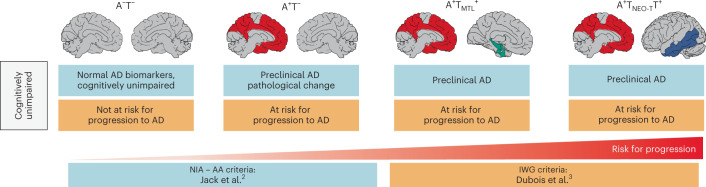
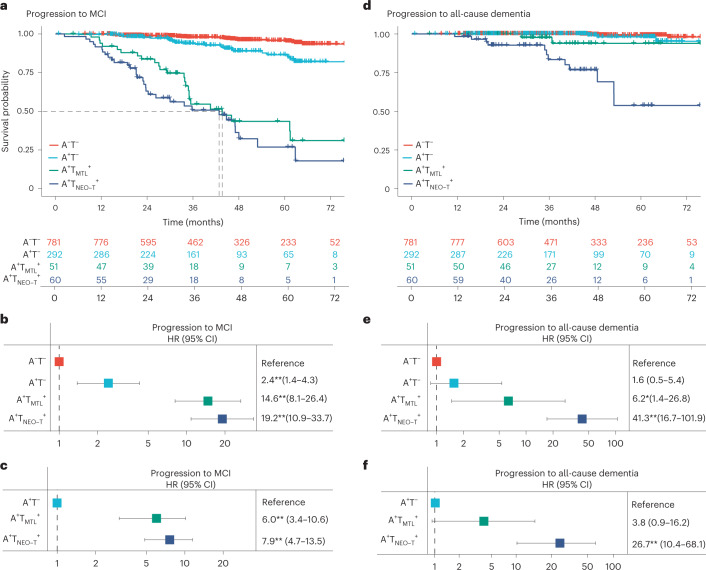
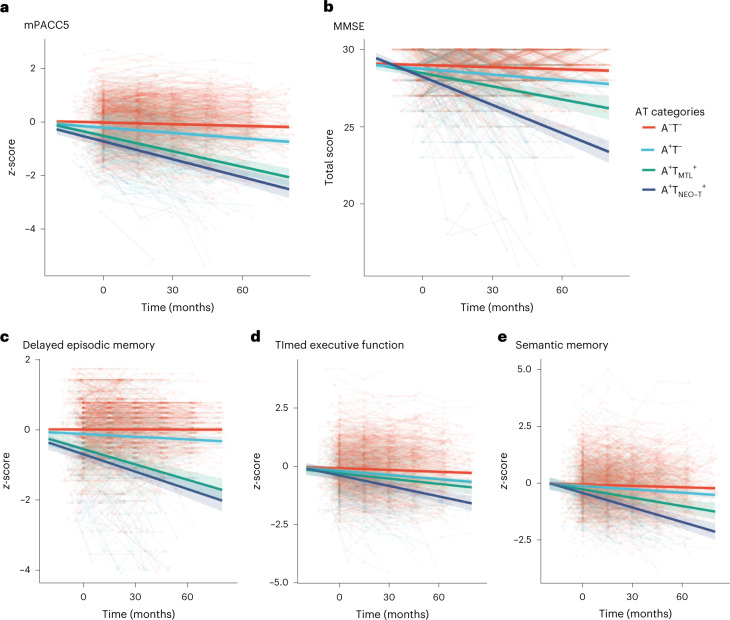
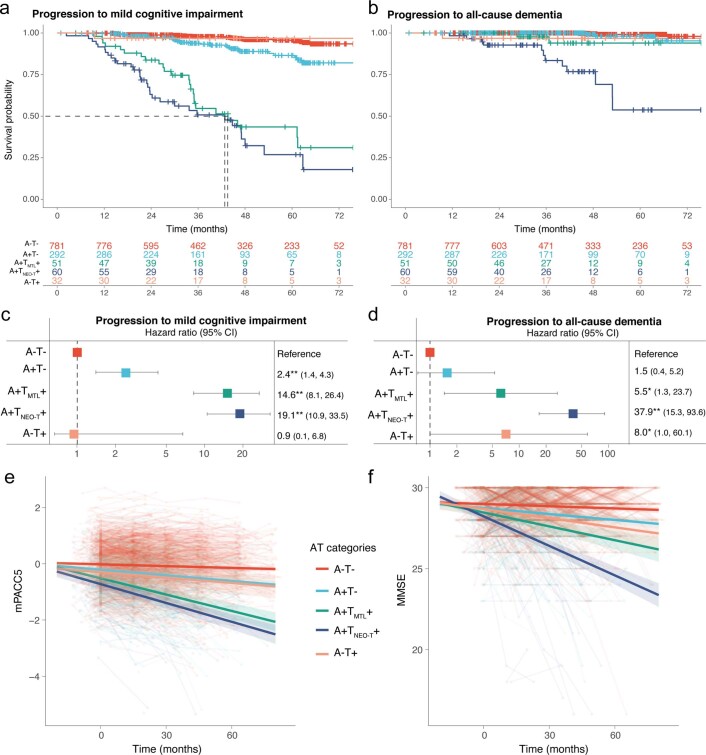
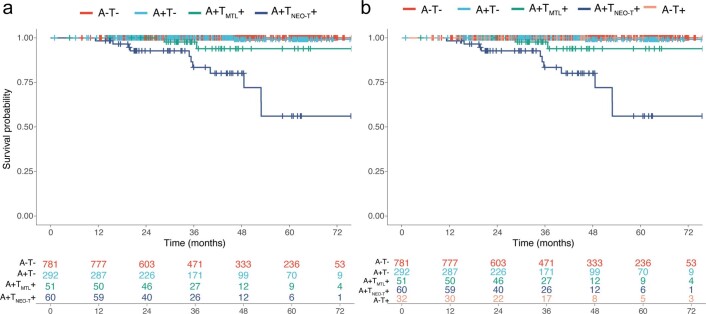
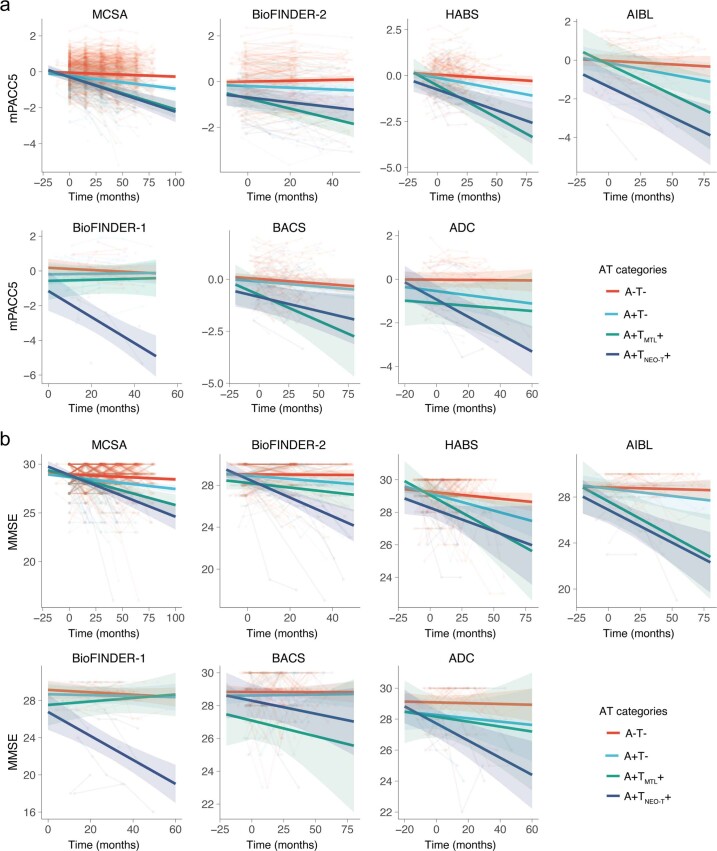
A major unanswered question in the dementia field is whether cognitively unimpaired individuals who harbor both Alzheimer’s disease neuropathological hallmarks (that is, amyloid-β plaques and tau neurofibrillary tangles) can preserve their cognition over time or are destined to decline. In this large multicenter amyloid and tau positron emission tomography (PET) study ( n = 1,325), we examined the risk for future progression to mild cognitive impairment and the rate of cognitive decline over time among cognitively unimpaired individuals who were amyloid PET-positive (A + ) and tau PET-positive (T + ) in the medial temporal lobe (A + T MTL + ) and/or in the temporal neocortex (A + T NEO-T + ) and compared them with A + T − and A − T − groups. Cox proportional-hazards models showed a substantially increased risk for progression to mild cognitive impairment in the A + T NEO-T + (hazard ratio (HR) = 19.2, 95% confidence interval (CI) = 10.9–33.7), A + T MTL + (HR = 14.6, 95% CI = 8.1–26.4) and A + T − (HR = 2.4, 95% CI = 1.4–4.3) groups versus the A − T − (reference) group. Both A + T MTL + (HR = 6.0, 95% CI = 3.4–10.6) and A + T NEO-T + (HR = 7.9, 95% CI = 4.7–13.5) groups also showed faster clinical progression to mild cognitive impairment than the A + T − group. Linear mixed-effect models indicated that the A + T NEO-T + ( β = −0.056 ± 0.005, T = −11.55, P < 0.001), A + T MTL + ( β = −0.024 ± 0.005, T = −4.72, P < 0.001) and A + T − ( β = −0.008 ± 0.002, T = −3.46, P < 0.001) groups showed significantly faster longitudinal global cognitive decline compared to the A − T − (reference) group (all P < 0.001). Both A + T NEO-T + ( P < 0.001) and A + T MTL + ( P = 0.002) groups also progressed faster than the A + T − group. In summary, evidence of advanced Alzheimer’s disease pathological changes provided by a combination of abnormal amyloid and tau PET examinations is strongly associated with short-term (that is, 3–5 years) cognitive decline in cognitively unimpaired individuals and is therefore of high clinical relevance.
Overview
The claims and statistics of this paper haven’t been checked yet.
Free: it reads the open-access text and checks the first 5 claims that cite a source we can check. Create a free account to check every claim.
Integrity signals
Registry
Cites
Statistics
Figures
Verification
Claims the paper makes
The claims and statistics of this paper haven’t been checked yet.
Free: it reads the open-access text and checks the first 5 claims that cite a source we can check. Create a free account to check every claim.
Claims other papers make about this one
Each is checked against this paper’s own text: does it say what the citing paper says it does?
The source backs part of the claim, not all of it — or backs it for a different population, condition or comparison.
In the citing paper
“Cognitively unimpaired people who have amyloid and tau in the medial temporal lobe or temporal neocortex are more likely to decline cognitively compared to people who have neither and, over 6 years, the risk in those that are tau positive in temporal neocortex may approach 50% but samples are small and estimates imprecise. (445)”
From Dementia prevention, intervention, and care: 2024 report of the Lancet standing Commission (2024) · cites this paper as [445]
Experimental — accuracy not yet measuredThe source backs part of the claim, not all of it — or backs it for a different population, condition or comparison.
In the citing paper
“Tau‐PET is often considered a state‐of‐the‐art outcome in AD research studies, a very accurate prognostic tool in patients with AD, and frequently used in clinical trials for AD during screening and to monitor treatment effects. 12 , 14 , 15 , 16”
From Machine learning prediction of tau‐PET in Alzheimer's disease using plasma, MRI, and clinical data (2025) · cites this paper as [14]
Experimental — accuracy not yet measuredThe check wasn’t confident either way, so it gives no verdict — never disputed.
In the citing paper
“Tau‐PET is often considered a state‐of‐the‐art outcome in AD research studies, a very accurate prognostic tool in patients with AD, and frequently used in clinical trials for AD during screening and to monitor treatment effects. 12 , 14 , 15 , 16”
From Machine learning prediction of tau‐PET in Alzheimer's disease using plasma, MRI, and clinical data (2025) · cites this paper as [14]
Experimental — accuracy not yet measured
Self-check
Percentages, sums and reported differences re-computed from the paper’s own numbers.
The self-check needs the paper’s full text.
Citations
Cites
McKhann, G. M., Knopman, D. S., Chertkow, H., Hyman, B. T., Jack, C. R., Kawas, C. H., Klunk, W. E., Koroshetz, W. J., Manly, J. J., Mayeux, R., et al. (2011) · Alzheimer's & Dementia · doi:10.1016/j.jalz.2011.03.005 · Cited by 18,657
Self-citationNIA‐AA Research Framework: Toward a biological definition of Alzheimer's disease
Jack, C. R., Bennett, D. A., Blennow, K., Carrillo, M. C., Dunn, B., Haeberlein, S. B., Holtzman, D. M., Jagust, W., Jessen, F., Karlawish, J., et al. (2018) · Alzheimer's & Dementia · doi:10.1016/j.jalz.2018.02.018 · Cited by 10,537
Self-citationFischl, B., Salat, D. H., Busa, E., Albert, M., Dieterich, M., Haselgrove, C., van der Kouwe, A., Killiany, R., Kennedy, D., Klaveness, S., et al. (2002) · Neuron · doi:10.1016/s0896-6273(02)00569-x · Cited by 8,610
Mild cognitive impairment as a diagnostic entity
Petersen, R. C. (2004) · Journal of Internal Medicine · doi:10.1111/j.1365-2796.2004.01388.x · Cited by 7,864
Self-citationNeuroinflammation in Alzheimer's disease
Heneka, M. T., Carson, M. J., Khoury, J. E., Landreth, G. E., Brosseron, F., Feinstein, D. L., Jacobs, A. H., Wyss-Coray, T., Vitorica, J., Ransohoff, R. M., et al. (2015) · The Lancet Neurology · doi:10.1016/s1474-4422(15)70016-5 · Cited by 6,226
Synapse loss in frontal cortex biopsies in Alzheimer's disease: Correlation with cognitive severity
DeKosky, S. T., & Scheff, S. W. (1990) · Annals of Neurology · doi:10.1002/ana.410270502 · Cited by 2,376
(2018) · Neurology · doi:10.1212/wnl.0000000000004826 · Cited by 2,183
Self-citationNelson, P. T., Alafuzoff, I., Bigio, E. H., Bouras, C., Braak, H., Cairns, N. J., Castellani, R. J., Crain, B. J., Davies, P., Tredici, K. D., et al. (2012) · Journal of Neuropathology & Experimental Neurology · doi:10.1097/nen.0b013e31825018f7 · Cited by 2,050
A/T/N: An unbiased descriptive classification scheme for Alzheimer disease biomarkers
Jack, C. R., Bennett, D. A., Blennow, K., Carrillo, M. C., Feldman, H. H., Frisoni, G. B., Hampel, H., Jagust, W. J., Johnson, K. A., Knopman, D. S., et al. (2016) · Neurology · doi:10.1212/wnl.0000000000002923 · Cited by 1,864 · cited 1×
“Replication across different age groups Based on the lower age of the AT group compared to the biomarker-positive groups (Table 1), we performed the Cox proportional-hazards models and linear mixed models (1) stratified a b”
MethodSelf-citationWhitepaper: Defining and investigating cognitive reserve, brain reserve, and brain maintenance
Stern, Y., Arenaza‐Urquijo, E. M., Bartrés‐Faz, D., Belleville, S., Cantilon, M., Chetelat, G., Ewers, M., Franzmeier, N., Kempermann, G., Kremen, W. S., et al. (2020) · Alzheimer's & Dementia · doi:10.1016/j.jalz.2018.07.219 · Cited by 1,703
Cited by
Items 101–200 of 559
Huszár, Z., Engh, M. A., Pavlekovics, M., Sato, T., Steenkamp, Y., Hanseeuw, B. J., Terebessy, T., Molnár, Z., Hegyi, P., & Csukly, G. (2024) · Alzheimer s Research & Therapy · doi:10.1186/s13195-024-01455-2 · Cited by 33
Sensorineural hearing loss and cognitive impairment: three hypotheses
Zhao, H., Wang, Y., Cui, L., Wang, H., Liu, S., Liang, T., Liu, D., Qiu, J., Chen, L., & Sun, Y. (2024) · Frontiers in Aging Neuroscience · doi:10.3389/fnagi.2024.1368232 · Cited by 33
Zhang, J., Liu, S., Wu, Y., Tang, Z., Wu, Y., Qi, Y., Dong, F., & Wang, Y. (2023) · Cellular and Molecular Neurobiology · doi:10.1007/s10571-023-01440-7 · Cited by 33
Cognitive modeling of the Mnemonic Similarity Task as a digital biomarker for Alzheimer's disease
Vanderlip, C. R., Lee, M. D., & Stark, C. E. L. (2024) · Alzheimer s & Dementia · doi:10.1002/alz.14163 · Cited by 31
Cerebrospinal fluid proteomics identification of biomarkers for amyloid and tau PET stages
Wang, Z., Chen, Y., Gong, K., Zhao, B., Ning, Y., Chen, M., Li, Y., Ali, M., Timsina, J., Liu, M., et al. (2025) · Cell Reports Medicine · doi:10.1016/j.xcrm.2025.102031 · Cited by 31
Coughlan, G., Rubinstein, Z. B., Klinger, H. M., Lopez, K. A., Hsieh, S., Boyle, R. T., Seto, M., Townsend, D. L., Mayblyum, D. V., Thibault, E. G., et al. (2025) · Science Advances · doi:10.1126/sciadv.adt1288 · Cited by 31
Self-citationMattsson, N., Palmqvist, S., Horie, K., Barthélemy, N. R., Salvadó, G., Binette, A. P., Tideman, P., Morris, J. C., Benzinger, T. L. S., Perrin, R. J., et al. (2026) · The Lancet Neurology · doi:10.1016/s1474-4422(26)00029-3 · Cited by 30
Self-citationAmygdala atrophies in specific subnuclei in preclinical Alzheimer's disease
Salman, Y., Gérard, T., Huyghe, L., Colmant, L., Quenon, L., Malotaux, V., Ivanoiu, A., Lhommel, R., Dricot, L., Hanseeuw, B. J., et al. (2024) · Alzheimer s & Dementia · doi:10.1002/alz.14235 · Cited by 31
Associations between misfolded alpha‐synuclein aggregates and Alzheimer's disease pathology in vivo
Binette, A. P., Mammana, A., Wisse, L. E. M., Rossi, M., Strandberg, O. T., Smith, R. A., Mattsson, N., Janelidze, S., Palmqvist, S., ADNI, et al. (2024) · Alzheimer s & Dementia · doi:10.1002/alz.14225 · Cited by 29
Self-citationFan, Y., Zhang, Y., Yuan, J., Liu, Z., Zhai, F., Hao, A., Wu, F. Q., Somekh, J., Peleg, M., Zhu, Y., et al. (2023) · EClinicalMedicine · doi:10.1016/j.eclinm.2023.102247 · Cited by 28
Sol, O., Mermoud, J., Hallikainen, M., Kurl, S., Rinne, J. O., DAUTZENBERG, P. L. J., Vijverberg, E. G. B., Mummery, C. J., Börjesson‐Hanson, A., Jonsson, M. A. G., et al. (2025) · EBioMedicine · doi:10.1016/j.ebiom.2025.105940 · Cited by 28
Altered T-cell reactivity in the early stages of Alzheimer's disease
Rickenbach, C., Mallone, A., Häusle, L., Frei, L., Seiter, S., Sparano, C., Kirabali, T., Blennow, K., Zetterberg, H., Ferretti, M. T., et al. (2025) · Brain · doi:10.1093/brain/awaf167 · Cited by 27
Association of Basal Forebrain Atrophy With Cognitive Decline in Early Alzheimer Disease
Xia, Y., Doré, V., Fripp, J., Bourgeat, P., Laws, S. M., Fowler, C. J., Rainey‐Smith, S. R., Martins, R. N., Rowe, C. C., Masters, C. L., et al. (2024) · Neurology · doi:10.1212/wnl.0000000000209626 · Cited by 27
Self-citationHendriksen, H. M. A., van Gils, A. M., van Harten, A. C., Hartmann, T., Mangialasche, F., Kamondi, A., Kivipelto, M., Rhodius‐Meester, H. F. M., Smets, E. M. A., van der Flier, W. M., et al. (2023) · Alzheimer s Research & Therapy · doi:10.1186/s13195-023-01276-9 · Cited by 28
Vanderlip, C. R., Stark, C. E. L., & Initiative, A. D. N. (2024) · Alzheimer s & Dementia · doi:10.1002/alz.14154 · Cited by 27
Jack, C. R., Hu, M., Wiste, H. J., Knopman, D. S., Vemuri, P., Graff‐Radford, J., Lowe, V. J., Vassilaki, M. E., Cogswell, P. M., Schwarz, C. G., et al. (2025) · The Lancet Neurology · doi:10.1016/s1474-4422(25)00350-3 · Cited by 27
Self-citationAlzheimer Disease—What’s in a Name?
Petersen, R. C., Mormino, E. C., & Schneider, J. A. (2024) · JAMA Neurology · doi:10.1001/jamaneurol.2024.3766 · Cited by 26
Self-citationQuantitative Brain Amyloid PET
Jagust, W. J., Mattay, V. S., Krainak, D. M., Wang, S., Weidner, L. D., Hofling, A. A., Koo, H., Hsieh, P., Kuo, P. H., Farrar, G., et al. (2024) · Journal of Nuclear Medicine · doi:10.2967/jnumed.123.265766 · Cited by 26
Self-citationA clinical perspective on the revised criteria for diagnosis and staging of Alzheimer’s disease
Hansson, O., & Jack, C. R. (2024) · Nature Aging · doi:10.1038/s43587-024-00675-3 · Cited by 26
Self-citationThe PREVENT‐AD cohort: Accelerating Alzheimer's disease research and treatment in Canada and beyond
Villeneuve, S., Poirier, J., Breitner, J. C. S., Tremblay‐Mercier, J., Remz, J., Raoult, J., Yakoub, Y., Gallego-Rudolf, J., Qiu, T., Valdez, A. F., et al. (2025) · Alzheimer s & Dementia · doi:10.1002/alz.70653 · Cited by 26
Personalised regional modelling predicts tau progression in the human brain
Chaggar, P., Vogel, J. W., Binette, A. P., Thompson, T., Strandberg, O. T., Mattsson, N., Karlsson, L., Stomrud, E., Jbabdi, S., Magon, S., et al. (2025) · PLoS Biology · doi:10.1371/journal.pbio.3003241 · Cited by 25
Self-citationWang, Z., Tan, L., Gao, P., Ma, Y., Fu, Y., Sun, Y., Yu, J., & Initiative, A. D. N. (2023) · Alzheimer s & Dementia · doi:10.1002/alz.13413 · Cited by 25
Frontotemporal dementia. How to deal with its diagnostic complexity?
Antonioni, A., Raho, E. M., Granieri, E., & Koch, G. (2025) · Expert Review of Neurotherapeutics · doi:10.1080/14737175.2025.2461758 · Cited by 25
Depressive Symptoms and Amyloid Pathology
Wiels, W. A., Oomens, J. E., Engelborghs, S., Baeken, C., Arnim, C. A. F. V., Boada, M., Didic, M., Dubois, B., Fladby, T., van der Flier, W. M., et al. (2025) · JAMA Psychiatry · doi:10.1001/jamapsychiatry.2024.4305 · Cited by 25
Self-citationEstimating the time course of biomarker changes in Alzheimer’s disease
Rakêt, L. L., Binette, A. P., Mattsson, N., Janelidze, S., Zetterberg, H., Ashton, N. J., Blennow, K., Stomrud, E., Palmqvist, S., & Hansson, O. (2025) · Brain · doi:10.1093/brain/awaf413 · Cited by 24
Self-citationAbbatecola, A. M., Giuliani, A., Biscetti, L., Scisciola, L., Battista, P., Barbieri, M., Sabbatinelli, J., & Olivieri, F. (2024) · Ageing Research Reviews · doi:10.1016/j.arr.2024.102257 · Cited by 23
Hu, Q., Zhou, X., Xiao, Z., Zhao, Q., Ding, D., & Zhang, J. (2025) · Alzheimer s & Dementia · doi:10.1002/alz.14594 · Cited by 23
Rakêt, L. L., Cummings, J. L., Moscoso, A., Villain, N., & Schöll, M. (2024) · Alzheimer s & Dementia · doi:10.1002/alz.14134 · Cited by 23
Serrano‐Pozo, A., Escott‐Price, V., Grinberg, L. T., Pascoal, T. A., Suárez‐Calvet, M., Dubois, B., & Sperling, R. A. (2026) · The Lancet · doi:10.1016/s0140-6736(26)00198-4 · Cited by 23
Self-citationRoe, J. M., Dídac Vidal-piñeiro, A., Sørensen, Ø., Grydeland, H., Leonardsen, E. H., Iakunchykova, O. P., Pan, M., Mowinckel, A. M., Strømstad, M., Nawijn, L., et al. (2024) · Nature Communications · doi:10.1038/s41467-024-53548-z · Cited by 22
Self-citationMoving the Needle on Alzheimer’s Disease with an Anti-Oligomer Antibody
Gandy, S., & Ehrlich, M. E. (2023) · New England Journal of Medicine · doi:10.1056/nejme2214981 · Cited by 22
Bakhtiari, A., Benedek, K., Law, I. G., Fagerlund, B., Mortensen, E. L., Osler, M., Lauritzen, M., Larsson, H. B. W., & Vestergaard, M. B. (2023) · GeroScience · doi:10.1007/s11357-023-01031-w · Cited by 21
Point of view: Challenges in implementation of new immunotherapies for Alzheimer's disease
Aye, S., Johansson, G., Höck, C., Lannfelt, L., Sims, J. R., Blennow, K., Frederiksen, K. S., Graff, C., Molinuevo, J. L., Scheltens, P., et al. (2025) · The Journal of Prevention of Alzheimer s Disease · doi:10.1016/j.tjpad.2024.100022 · Cited by 21
Self-citationVulnerability to memory decline in aging revealed by a mega-analysis of structural brain change
Dídac Vidal-piñeiro, A., Sørensen, Ø., Strømstad, M., Amlien, I. K., Baaré, W. F. C., Bartrés‐Faz, D., Brandmaier, A. M., Cattaneo, G., Düzel, S., Ghisletta, P., et al. (2025) · Nature Communications · doi:10.1038/s41467-025-66354-y · Cited by 21
Current Status of α-Synuclein Biomarkers and the Need for α-Synuclein PET Tracers
Berman, S. E., & Siderowf, A. D. (2025) · Cells · doi:10.3390/cells14161272 · Cited by 21
Shah, H. A., Andberg, S., Koivisto, A. M., & Bednarik, R. (2025) · IEEE Transactions on Neural Systems and Rehabilitation Engineering · doi:10.1109/tnsre.2025.3561043 · Cited by 21
Staging Alzheimer’s disease through amyloid and tau PET
Johnson, D. R., Wiste, H. J., Lowe, V. J., Schwarz, C. G., Knopman, D. S., Vemuri, P., Kantarci, K., Boeve, B. F., Graff‐Radford, J., Cogswell, P. M., et al. (2025) · Brain · doi:10.1093/brain/awaf346 · Cited by 20
Self-citationImaging and Fluid Biomarkers of Alzheimer Disease: Complementation Rather Than Competition
Drzezga, A. E., & Barthel, H. (2025) · Journal of Nuclear Medicine · doi:10.2967/jnumed.125.270152 · Cited by 20
Longitudinal changes in metabolic network activity in early Alzheimer's disease
Perovnik, M., Tang, C. C., Namías, M., Eidelberg, D., & Initiative, A. D. N. (2023) · Alzheimer s & Dementia · doi:10.1002/alz.13137 · Cited by 20
Padrela, B. E., Mahroo, A., Tee, M., Sneve, M. H., Moyaert, P., Geier, O. M., Kuijer, J. P. A., Beun, S., Nordhøy, W., Zhu, Y. D., et al. (2024) · BMJ Open · doi:10.1136/bmjopen-2023-081635 · Cited by 20
Towards pharmacological prevention of Alzheimer disease
Llibre‐Guerra, J. J., McDade, E., Schindler, S. E., Clifford, D. B., Supnet, C. B., Atri, A., & Bateman, R. J. (2025) · Nature Reviews Neurology · doi:10.1038/s41582-025-01154-y · Cited by 20
Amyloid PET predicts longitudinal functional and cognitive trajectories in a heterogeneous cohort
Younes, K., Johns, E., Young, C. B., Kennedy, G., Mukherjee, S., Vossler, H. A., Winer, J. R., Cody, K. A., Henderson, V. W., Poston, K. L., et al. (2025) · Alzheimer s & Dementia · doi:10.1002/alz.70075 · Cited by 19
Recent advances in Alzheimer’s disease: From molecular mechanisms to therapeutic strategies
Rudman, M. D., Ulrich, J. D., & Holtzman, D. M. (2026) · Cell · doi:10.1016/j.cell.2026.06.006 · Cited by 20
Povala, G., Bellaver, B., Lussier, F. Z., Amaral, L., Bauer‐Negrini, G., Ferreira, P. C. L., Rocha, A., Ruppert, E. P., Medeiros, M. S., Tissot, C., et al. (2026) · The Lancet · doi:10.1016/s0140-6736(26)00417-4 · Cited by 19
Self-citationAlzheimer's disease biomarkers and the tyranny of treatment
Karlawish, J. H., & Grill, J. D. (2024) · EBioMedicine · doi:10.1016/j.ebiom.2024.105291 · Cited by 20
TREM2 risk variants and associated endophenotypes in alzheimer’s disease
Dijkstra, J. I. R., Vermunt, L., Venkatraghavan, V., Ozhegov, G., Coomans, E. M., Ossenkoppele, R., van de Giessen, E., Hulsman, M., de Geus, C. M., van der Flier, W. M., et al. (2025) · Alzheimer's Research & Therapy · doi:10.1186/s13195-025-01700-2 · Cited by 18
Self-citationAmyloid PET disclosure in subjective cognitive decline: Patient experiences over time
Hendriksen, H. M. A., de Rijke, T. J., Fruijtier, A. D., van de Giessen, E., van Harten, A. C., van Leeuwenstijn‐Koopman, M. S. S. A., van der Schaar, J., Trieu, C., Visser, D., Smets, E. M. A., et al. (2024) · Alzheimer s & Dementia · doi:10.1002/alz.14148 · Cited by 18
Self-citationSafety and tolerability of lumbar puncture for the evaluation of Alzheimer's disease
Baldaranov, D., Garcia, V., Miller, G., Donohue, M., Shaw, L. M. J., Weiner, M. W., Petersen, R. C., Aisen, P. S. S., Raman, R., & Rafii, M. S. (2023) · Alzheimer s & Dementia Diagnosis Assessment & Disease Monitoring · doi:10.1002/dad2.12431 · Cited by 18
Self-citationPotential utility of plasma pTau217 for assessing amyloid and tau biomarker profiles
Shin, D., Jang, H., Yoo, H., Kim, K., Zetterberg, H., Blennow, K., González‐Ortiz, F., Ashton, N. J., Lee, E. H., Yun, J., et al. (2025) · European Journal of Nuclear Medicine and Molecular Imaging · doi:10.1007/s00259-025-07457-y · Cited by 18
Amyloid and SCD jointly predict cognitive decline across Chinese and German cohorts
Shao, K., Hu, X., Kleineidam, L., Stark, M., Altenstein, S., Amthauer, H., Boecker, H., Buchert, R., Büerger, K., Butryn, M., et al. (2024) · Alzheimer s & Dementia · doi:10.1002/alz.14119 · Cited by 18
Jutten, R. J., Soberanes, D., Molinare, C. P., Hsieh, S., Farrell, M. E., Schultz, A. P., Rentz, D. M., Marshall, G. A., Johnson, K. A., Sperling, R. A., et al. (2025) · npj Digital Medicine · doi:10.1038/s41746-024-01347-7 · Cited by 18
Self-citationTau in Alzheimer's disease: Shaping the future patient journey
Mummery, C. J., Li-Hsian, C. C., Lasagna‐Reeves, C. A., Ossenkoppele, R., Rowe, C. C., Scharre, D. W., Wang, H., Kyaga, S., & Cummings, J. L. (2026) · The Journal of Prevention of Alzheimer s Disease · doi:10.1016/j.tjpad.2025.100447 · Cited by 19
Self-citationPlasma GFAP for populational enrichment of clinical trials in preclinical Alzheimer's disease
Bellaver, B., Povala, G., Ferreira, P. C. L., Bauer‐Negrini, G., Lussier, F. Z., Leffa, D. T., Ferrari‐Souza, J. P., Rodrigues, M. S., Amaral, L., Oliveira, M. S., et al. (2025) · Alzheimer s & Dementia · doi:10.1002/alz.70209 · Cited by 18
Cell-specific copper dyshomeostasis mechanism in Alzheimer’s disease
Okafor, M., Faller, P., & Vitale, N. (2025) · Translational Neurodegeneration · doi:10.1186/s40035-025-00504-6 · Cited by 18
Unraveling Alzheimer’s complexity with a distinct Aβ42 fibril type and specific AV-45 binding
Zhao, Q., Tao, Y., Yao, Y., Liu, K., Lv, S., Cui, B., Xiao, W., Cao, T., Li, W., Gao, F., et al. (2025) · Nature Chemical Biology · doi:10.1038/s41589-025-01921-4 · Cited by 18
Barbera, L. L., Krashia, P., Loffredo, G., Cauzzi, E., Paolis, M. L. D., Montanari, M., Saba, L., Spoleti, E., Ficchì, S., Zaccone, C., et al. (2025) · Molecular Neurodegeneration · doi:10.1186/s13024-025-00893-2 · Cited by 18
Gogola, A., Lopresti, B. J., Tudorascu, D. L., Snitz, B. E., Minhas, D. S., Doré, V., Ikonomović, M. D., Shaaban, C. E., Matan, C., Bourgeat, P., et al. (2023) · Journal of Nuclear Medicine · doi:10.2967/jnumed.123.265941 · Cited by 18
Self-citationImpact of amyloid and tau positivity on longitudinal brain atrophy in cognitively normal individuals
Fujishima, M., Kawasaki, Y., Mitsuhashi, T., Matsuda, H., & Initiative, A. D. N. (2024) · Alzheimer s Research & Therapy · doi:10.1186/s13195-024-01450-7 · Cited by 17
Vanderlip, C. R., & Stark, C. E. L. (2025) · Alzheimer s & Dementia · doi:10.1002/alz.70355 · Cited by 17
Kuhn, E., Klinger, H. M., Amariglio, R. E., Wagner, M., Jessen, F., Düzel, E., Heneka, M. T., Chételat, G., Rentz, D. M., Sperling, R. A., et al. (2025) · Alzheimer s & Dementia · doi:10.1002/alz.14307 · Cited by 17
Self-citationOndrejčák, T., Klyubin, I. V., Hu, N., O’Malley, T. T., Corbett, G. T., Winters, R., Perkinton, M. S., Billinton, A., Prenderville, J. A., Walsh, D. M., et al. (2023) · Journal of Neuroscience · doi:10.1523/jneurosci.0082-23.2023 · Cited by 17
Advanced brain imaging for the diagnosis of Alzheimer disease
Wang, Y.-T. T., Rosa‐Neto, P., & Gauthier, S. G. (2023) · Current Opinion in Neurology · doi:10.1097/wco.0000000000001198 · Cited by 17
Gebre, R. K., Moscoso, A., Raghavan, S., Wiste, H. J., Heeman, F., Costoya‐Sánchez, A., Schwarz, C. G., Spychalla, A. J., Lowe, V. J., Graff‐Radford, J., et al. (2024) · Journal of Nuclear Medicine · doi:10.2967/jnumed.123.267273 · Cited by 17
Self-citationAPOE ε4 carrier status modifies plasma p‐tau181 concentrations in cognitively healthy super‐seniors
Cooper, J. G., Ghodsi, M., Stukas, S. K., Leach, S. R., Brooks-Wilson, A. R., & Wellington, C. L. (2024) · Alzheimer s & Dementia · doi:10.1002/alz.13804 · Cited by 17
Amyloid-PET imaging predicts functional decline in clinically normal individuals
Quenon, L., Collij, L. E., García, D. V., Alves, I. L., Gérard, T., Malotaux, V., Huyghe, L., Gispert, J. D., Jessen, F., Visser, P. J., et al. (2024) · Alzheimer s Research & Therapy · doi:10.1186/s13195-024-01494-9 · Cited by 17
Time‐encoded ASL reveals lower cerebral blood flow in the early AD continuum
Falcón, C., Montesinos, P., Václavů, L., Kassinopoulos, M., Minguillón, C., Fauria, K., Cascales‐Lahoz, D., Contador, J., Fernández‐Lebrero, A., Navalpotro‐Gómez, I., et al. (2024) · Alzheimer s & Dementia · doi:10.1002/alz.14059 · Cited by 16
Lehmann, S., Schraen‐Maschke, S., Buée, L., Vidal, J., Delaby, C., Hirtz, C., Blanc, F., Paquet, C., Allinquant, B., Bombois, S., et al. (2024) · Molecular Neurodegeneration · doi:10.1186/s13024-024-00755-3 · Cited by 16
Illustrated Neuropathologic Diagnosis of Alzheimer’s Disease
Doher, N., Davoudi, V., Magaki, S., Townley, R. A., Haeri, M., & Vinters, H. V. (2023) · Neurology International · doi:10.3390/neurolint15030054 · Cited by 16
Connectivity as a universal predictor of tau progression in atypical Alzheimer’s disease
de Bruin, H., Groot, C., Barthel, H., Bischof, G. N., Blazhenets, G., Boellaard, R., Boon, B. D. C., Brendel, M., Cash, D. M., Coath, W., et al. (2025) · Brain · doi:10.1093/brain/awaf279 · Cited by 16
Self-citationAPOE Genotype in the Era of Disease-Modifying Treatment With Monoclonal Antibodies Against Amyloid-β
Ossenkoppele, R., & van der Flier, W. M. (2023) · JAMA Neurology · doi:10.1001/jamaneurol.2023.4046 · Cited by 16
Self-citationXie, L., Das, S. R., Li, Y., Wisse, L. E. M., McGrew, E., Lyu, X., DiCalogero, M., Shah, U., Ilesanmi, A. E., Denning, A. E., et al. (2025) · Alzheimer s & Dementia · doi:10.1002/alz.14492 · Cited by 15
Longitudinal tau aggregation, atrophy, and cognitive decline in Alzheimer's disease
Singleton, E. H., Mattsson, N., Binette, A. P., Stomrud, E., Strandberg, O. T., Palmqvist, S., Ossenkoppele, R., & Hansson, O. (2025) · Alzheimer s & Dementia · doi:10.1002/alz.70435 · Cited by 15
Self-citationCabreira, V., Alty, J., Antić, S., Araújo, R., Aybek, S., Ball, H. A., Baslet, G. C., Bhome, R., Coebergh, J. A., Dubois, B., et al. (2025) · BMJ Neurology Open · doi:10.1136/bmjno-2024-000918 · Cited by 15
Blood DNA methylation signature for incident dementia: Evidence from longitudinal cohorts
Zhang, W., Young, J. I., Gomez, L., Schmidt, M. A., Lukacsovich, D., Kunkle, B. W., Chen, X. S., Martin, E. R., & Wang, L. (2025) · Alzheimer s & Dementia · doi:10.1002/alz.14496 · Cited by 15
Lane‐Donovan, C., Smith, A. W., Saloner, R., Miller, B. L., Casaletto, K. B., & Kao, A. W. (2025) · Alzheimer s & Dementia · doi:10.1002/alz.70320 · Cited by 15
Survey among experts on the future role of tau‐PET in clinical practice and trials
Vermeiren, M. R., Calandri, I. L., van der Flier, W. M., van de Giessen, E., & Ossenkoppele, R. (2024) · Alzheimer s & Dementia Diagnosis Assessment & Disease Monitoring · doi:10.1002/dad2.70033 · Cited by 14
Self-citationHeston, M. B., Teague, J. P., Cody, K. A., Deming, Y. K., Chavez, E. R. D., Morse, J., Chin, N. A., Engelman, C. D., Chappell, R. J., Langhough, R. E., et al. (2025) · Alzheimer s & Dementia · doi:10.1002/alz.70551 · Cited by 14
Vito, A. N. D., Kunicki, Z. J., Joyce, H. E., Huey, E. D., Jones, R. N., & Initiative, A. D. N. (2025) · Alzheimer s & Dementia · doi:10.1002/alz.14568 · Cited by 14
Hermann, D. M., Bacigaluppi, M., Bassetti, C. L., Bassotti, G., Boltze, J., Chan, A., Dalkara, T., Denes, A., Diez-Tejedor, E., Dodel, R., et al. (2025) · Exploration of Neuroscience · doi:10.37349/en.2025.1006106 · Cited by 13
“While A β and tau PET are already clinically established in Alzheimer’s disease management [76], the predictive value of several other imaging biomarkers remains to be scrutinized.”
Vanderlip, C. R., Taylor, L., Kim, S., Harris, A. L., Tuteja, N., Meza, N. J., Escalante, Y. Y., McMillan, L. C., Yassa, M. A., & Adams, J. N. (2025) · Journal of Neuroscience · doi:10.1523/jneurosci.1605-24.2025 · Cited by 13
PET/CT/MRI in Clinical Trials of Alzheimer’s Disease
Høilund‐Carlsen, P. F., Alavi, A. A., & Barrio, J. R. (2024) · Journal of Alzheimer s Disease · doi:10.3233/jad-240206 · Cited by 13
Lu, J., Wang, J., Wu, J., Zhang, H., Ma, X., Zhu, Y., Wang, J., Yang, Y., Xiao, Z., Li, M., et al. (2024) · Alzheimer s & Dementia · doi:10.1002/alz.14245 · Cited by 13
Devanarayan, V., Donohue, M., Sperling, R. A., Johnson, K. A., Ye, Y., Charil, A., Doherty, T., Tian, L., Raman, R., Aisen, P. S. S., et al. (2025) · Alzheimer s & Dementia · doi:10.1002/alz.70702 · Cited by 13
Self-citationHuszár, Z., Solomon, A., Engh, M. A., Koszovácz, V., Terebessy, T., Molnár, Z., Hegyi, P., Horvath, A. A., Mangialasche, F., Kivipelto, M., et al. (2024) · Alzheimer s Research & Therapy · doi:10.1186/s13195-024-01602-9 · Cited by 13
Huang, S., Hsiao, W.-C., Chang, H., Ma, M.-C., Hsu, S., Lee, C., Chen, H., Lin, C.-H., Huang, C., & Chang, C. (2024) · BMC Medical Imaging · doi:10.1186/s12880-024-01256-x · Cited by 13
Iwatsubo, T., Sperling, R. A., Algeciras‐Schimnich, A., Arai, H., Barron, A. M., Benzinger, T. L. S., Carrillo, M. C., Chen, C., Choi, S. H., Fontana, I. C., et al. (2025) · Alzheimer s & Dementia · doi:10.1002/alz.70536 · Cited by 13
Self-citationCircadian rhythms are associated with higher amyloid-β and tau and poorer cognition in older adults
Eckhardt, J. L., Isenberg, L., Aslanyan, V., Monreal, T. K., Stradford, J., Fenton, L. E., Contreras, J. A., Mack, W. J., & Pa, J. (2025) · Brain Communications · doi:10.1093/braincomms/fcaf322 · Cited by 13
Rates of clinical progression according to biological Alzheimer's disease stages
Trudel, L., Therriault, J., Macedo, A. C., Servaes, S., Hosseini, S. A., Bezgin, G., Rahmouni, N., Chan, T., Arias, J. F., Aumont, É., et al. (2025) · Alzheimer s & Dementia · doi:10.1002/alz.70624 · Cited by 13
Tonietto, M., Sotolongo‐Grau, Ó., Roé-Vellvé, N., Bullich, S., Tartari, J. P., Sanabria, Á., García‐Sánchez, A., Borroni, E., Galli, C., Pérez-Martínez, E., et al. (2024) · Alzheimer s Research & Therapy · doi:10.1186/s13195-024-01622-5 · Cited by 13
Ferritin nanocage-enabled detection of pathological tau in living human retinal cells
Barolo, L., Gigante, Y., Mautone, L., Ghirga, S., Soloperto, A., Giorgi, A., Ghirga, F., Pitea, M., Incocciati, A., Mura, F., et al. (2024) · Scientific Reports · doi:10.1038/s41598-024-62188-8 · Cited by 13
Astrocyte-driven vasoconstriction impairs glymphatic clearance in a human tauopathy-on-chip model
Park, R., Peng, Y., Yslas, A. R., & Lee, E. (2025) · APL Bioengineering · doi:10.1063/5.0261875 · Cited by 13
de Havenon, A., Gottesman, R. F., Willamson, J. D., Rost, N. S., Sharma, R., Li, V., Littig, L., Stulberg, E. L., Falcone, G. J., Prabhakaran, S., et al. (2024) · Alzheimer s & Dementia · doi:10.1002/alz.14126 · Cited by 13
Effects of common plastic products heat exposure on cognition: Mediated by gut microbiota
Hu, N., Pan, D., Yang, Y. H., Pu, L., He, X., Wang, H., Zhang, X., Du, Y., Yu, Z., He, S., et al. (2023) · Ecotoxicology and Environmental Safety · doi:10.1016/j.ecoenv.2023.114758 · Cited by 13
Allué, J. A., Pascual‐Lucas, M., Sarasa, L., Castillo, S., Sarasa, M., Sáez, M. E., Abdel‐Latif, S., Rissman, R. A., & Terencio, J. V. (2023) · Alzheimer s & Dementia Diagnosis Assessment & Disease Monitoring · doi:10.1002/dad2.12451 · Cited by 13
Colmant, L., Quenon, L., Huyghe, L., Ivanoiu, A., Gérard, T., Lhommel, R., Coppens, P., Salman, Y., Malotaux, V., Dricot, L., et al. (2025) · Alzheimer s Research & Therapy · doi:10.1186/s13195-025-01679-w · Cited by 12
Bader, I., Groot, C., Tan, H. S., Milongo, J.-M. A., den Haan, J., Verberk, I. M. W., Yong, K. X. X., Orellina, J. A., Campbell, S. R., Wilson, D., et al. (2024) · Alzheimer s Research & Therapy · doi:10.1186/s13195-024-01545-1 · Cited by 12
Self-citationAliuş, C., Breazu, A., Panţu, C., Toader, C., Șerban, M., Covache-Busuioc, R.-A., Munteanu, O., & Dumitru, A. V. (2025) · International Journal of Molecular Sciences · doi:10.3390/ijms262210959 · Cited by 12
Cerman, J., Škorvagová, A., Vyhnálek, M., Veverová, K., Dvořák, K., Kozák, Š., Kavka, A., & Hort, J. (2025) · Scientific Reports · doi:10.1038/s41598-025-23759-5 · Cited by 12
Plasma eMTBR-tau243 and %p-tau217 for Biological Staging of Alzheimer Disease
Salvadó, G., Horie, K., Barthélemy, N. R., Schindler, S. E., Janelidze, S., Dolado, A. O., Bali, D., Perrin, R. J., Morris, J. C., Benzinger, T. L. S., et al. (2026) · JAMA Neurology · doi:10.1001/jamaneurol.2026.1405 · Cited by 12
Self-citationYalçınkaya, B. H., Ziaeemehr, A., Fousek, J., Hashemi, M., Lavanga, M., Solodkin, A., McIntosh, A. R., Jirsa, V., & Petkoski, S. (2023) · medRxiv · doi:10.1101/2023.01.11.23284438 · Cited by 12
Metadata
- Authors
- Ossenkoppele, R., Pichet Binette, A., Groot, C., Smith, R., Strandberg, O., Palmqvist, S., Stomrud, E., Tideman, P., Ohlsson, T., Jögi, J., Johnson, K., Sperling, R., Dore, V., Masters, C. L., Rowe, C., Visser, D., van Berckel, B. N. M., van der Flier, W. M., Baker, S., Jagust, W. J., Wiste, H. J., Petersen, R. C., Jack, C. R., & Hansson, O.
- Affiliations
- Lund University (SE)
- Skåne University Hospital (SE)
- Brigham and Women's Hospital (US)
- Florey Institute of Neuroscience and Mental Health (AU)
- Amsterdam Neuroscience (NL)
- Lawrence Berkeley National Laboratory (US)
- Mayo Clinic (US)
- Corresponding author
- Ossenkoppele, Rik
- Hansson, Oskar
- ORCID
- Ossenkoppele, Rik
- Pichet Binette, Alexa
- Groot, Colin
- Smith, Ruben
- Palmqvist, Sebastian
- Stomrud, Erik
- Tideman, Pontus
- Jögi, Jonas
- Johnson, Keith
- Sperling, Reisa
- Dore, Vincent
- Masters, Colin L.
- Rowe, Christopher
- Visser, Denise
- van Berckel, Bart N. M.
- van der Flier, Wiesje M.
- Baker, Suzanne
- Jagust, William J.
- Wiste, Heather J.
- Petersen, Ronald C.
- Jack, Clifford R.
- Hansson, Oskar
- Venue
- Nature Medicine
- Published
- 2022-11
- Volume
- 28
- Issue
- 11
- Pages
- 2381-2387
- ISSN
- 1078-8956 (ISSN-L)
- 1546-170X
- PMC
- PMC9671808
- OpenAlex
- W4308773890
- Semantic Scholar
- 11bdea0193b4c38c63eac2665bdfd211fd699fc4
- Cited by
- 496
- References
- 62
- Citations by year
- 2026: 110 · 2025: 171 · 2024: 130 · 2023: 79 · 2022: 5
- FWCI
- 62.45
- Type
- journal article
- Language
- en
- Open access
- hybrid
- doi.org
- Licence
- cc-by
- creativecommons.org/licenses/by/4.0 (tdm)
- creativecommons.org/licenses/by/4.0 (vor, 9 d)
- Locations
- Nature Medicine (publishedVersion, cc-by)
- medRxiv (acceptedVersion, cc-by-nc)
- PubMed Central (publishedVersion, cc-by)
- PubMed (publishedVersion)
- Pure Amsterdam UMC (publishedVersion, cc-by)
- Amsterdam UMC (VU Amsterdam) - Institutional Repository (publishedVersion, cc-by)
- Minerva Access (University of Melbourne) (submittedVersion, cc-by)
- Lund University Publications (Lund University) (submittedVersion)
- Data Archiving and Networked Services (DANS) (submittedVersion, other-oa)
- Funders
- Mayo Clinic (U01 AG006786)
- Alzheimer's Association (P01AG036694)
- Massachusetts General Hospital
- Biogen
- BrightFocus Foundation (U01 AG006786, A2021013F)
- EU Joint Programme – Neurodegenerative Disease Research
- Australian Government
- GHR Foundation
- Health~Holland (#LSHM20106)
- European Commission (EU-FP7, 298314, HORIZON2020)
- ZonMw (LSHM20106, #73305095007, 10510022110010)
- Nederlandse Organisatie voor Wetenschappelijk Onderzoek (#73305095007, EU-FP7)
- Lunds Universitet
- Knut och Alice Wallenbergs Stiftelse (2017‐0383, 2015.0125, FO2021-0293, 2020-O000028)
- Vetenskapsrådet (2016-00906, FO2021-0293, 2018-, 2020-O000028, 2017-00383)
- Konung Gustaf V:s och Drottning Victorias Frimurarestiftelse (2020-O000028, 2020-0314)
- Hersenstichting
- Stichting Dioraphte
- Alzheimer Nederland (LSHM20106)
- Skånes universitetssjukhus (2020-O000028)
- Marcus och Amalia Wallenbergs minnesfond (2015.0125)
- Amsterdam Neuroscience
- GIESKES-STRIJBIS FONDS
- Parkinsonfonden (1280/20)
- Avid Radiopharmaceuticals
- National Institute on Aging (U01AG006786, AG-006786, F31AG067677, P01AG036694)
- H2020 European Research Council (949570)
- Topics
- Health Sciences › Medicine › Psychiatry and Mental health › Dementia and Cognitive Impairment Research
- Life Sciences › Neuroscience › Cellular and Molecular Neuroscience › Alzheimer's disease research and treatments
- Health Sciences › Medicine › Oncology › Cancer-related cognitive impairment studies
- Keywords
- amyloid PET, tau PET, cognitively unimpaired individuals, Alzheimer's disease, amyloid plaques, neurofibrillary tangles, mild cognitive impairment, cognitive decline, medial temporal lobe, temporal neocortex, dementia risk, longitudinal cognitive trajectories, neurodegeneration biomarkers
- MeSH terms
- Alzheimer Disease, Amyloid, Amyloidosis, Brain, Humans, Biomarkers, Amyloid beta-Peptides, tau Proteins, Positron-Emission Tomography, Plaque, Amyloid, Cognitive Dysfunction
About these checks
Registry, retraction, Cites and statistics results are computed, not judged, with one exception: a printed reference that no index lists is read once by a model before it counts as a citation error. Claims are extracted by a model and kept only when their quote appears verbatim in the text; each cited source is then checked, with a model’s help, for whether it says what the claim relies on. Those verdicts can be wrong — read the claim’s quote and the cited source before relying on one.
Statistics and arithmetic are recomputed, not judged.
Confidence bands are shown only for fields calibrated on our annotated test set. None is calibrated yet, so no band is shown.
What counts as a claim ›How we measure confidence ›How we check this ›
Are you an author, or do you see a problem with this page? Request a review
Data sources
Bibliographic data: Semantic Scholar, OpenAlex, Crossref.
Contains information from the Semantic Scholar Academic Graph Datasets, made available under the ODC Attribution License (ODC-BY 1.0).
Semantic Scholar’s data is described in: Kinney, R., et al. (2023). The Semantic Scholar Open Data Platform. arXiv:2301.10140.
