

Amyloid and tau PET-positive cognitively unimpaired individuals are at high risk for future cognitive decline
Open accessPublished version of a preprint
The DOI matches its Crossref record; 62 of the 62 references it cites were found in a registry or an index.
Abstract
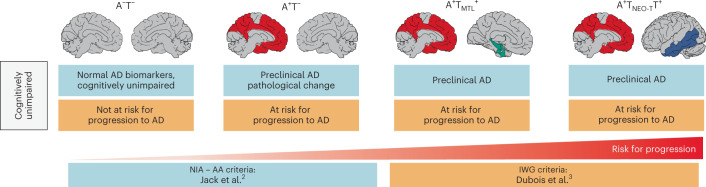
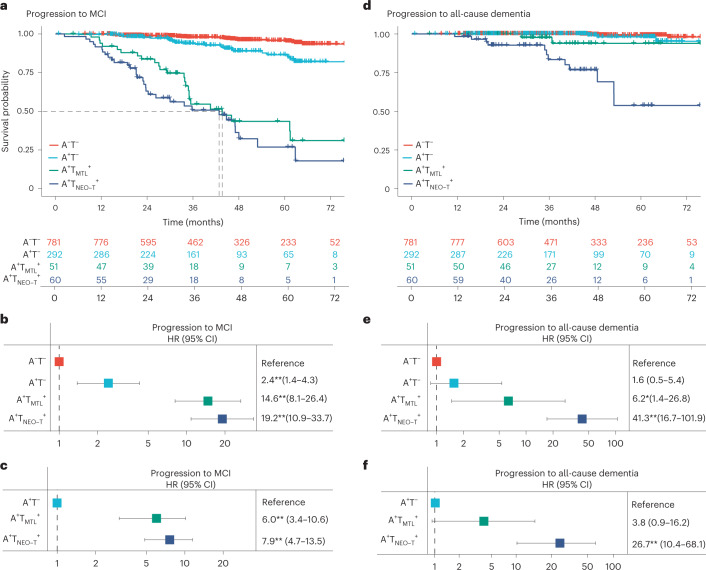
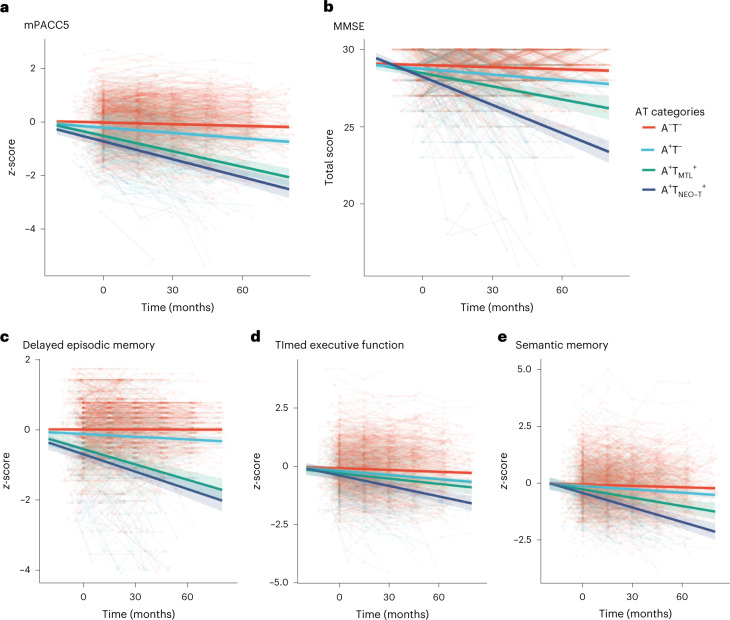
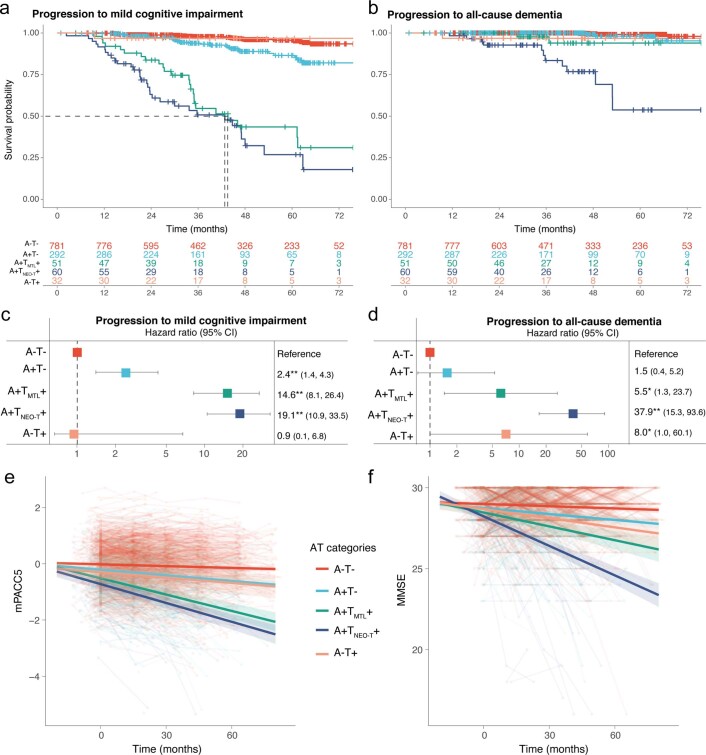
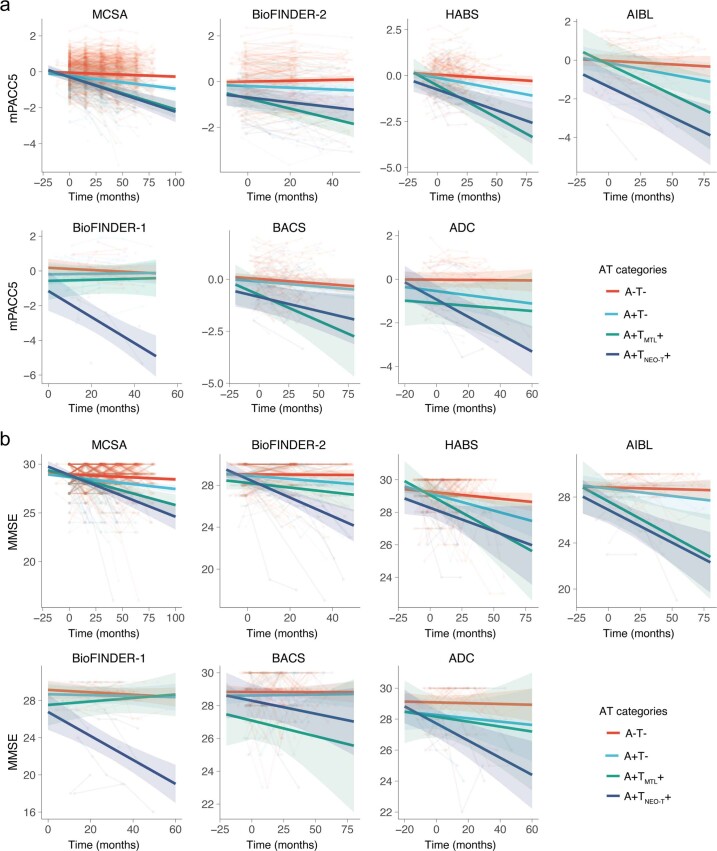
A major unanswered question in the dementia field is whether cognitively unimpaired individuals who harbor both Alzheimer’s disease neuropathological hallmarks (that is, amyloid-β plaques and tau neurofibrillary tangles) can preserve their cognition over time or are destined to decline. In this large multicenter amyloid and tau positron emission tomography (PET) study ( n = 1,325), we examined the risk for future progression to mild cognitive impairment and the rate of cognitive decline over time among cognitively unimpaired individuals who were amyloid PET-positive (A + ) and tau PET-positive (T + ) in the medial temporal lobe (A + T MTL + ) and/or in the temporal neocortex (A + T NEO-T + ) and compared them with A + T − and A − T − groups. Cox proportional-hazards models showed a substantially increased risk for progression to mild cognitive impairment in the A + T NEO-T + (hazard ratio (HR) = 19.2, 95% confidence interval (CI) = 10.9–33.7), A + T MTL + (HR = 14.6, 95% CI = 8.1–26.4) and A + T − (HR = 2.4, 95% CI = 1.4–4.3) groups versus the A − T − (reference) group. Both A + T MTL + (HR = 6.0, 95% CI = 3.4–10.6) and A + T NEO-T + (HR = 7.9, 95% CI = 4.7–13.5) groups also showed faster clinical progression to mild cognitive impairment than the A + T − group. Linear mixed-effect models indicated that the A + T NEO-T + ( β = −0.056 ± 0.005, T = −11.55, P < 0.001), A + T MTL + ( β = −0.024 ± 0.005, T = −4.72, P < 0.001) and A + T − ( β = −0.008 ± 0.002, T = −3.46, P < 0.001) groups showed significantly faster longitudinal global cognitive decline compared to the A − T − (reference) group (all P < 0.001). Both A + T NEO-T + ( P < 0.001) and A + T MTL + ( P = 0.002) groups also progressed faster than the A + T − group. In summary, evidence of advanced Alzheimer’s disease pathological changes provided by a combination of abnormal amyloid and tau PET examinations is strongly associated with short-term (that is, 3–5 years) cognitive decline in cognitively unimpaired individuals and is therefore of high clinical relevance.
Overview
The claims and statistics of this paper haven’t been checked yet.
Free: it reads the open-access text and checks the first 5 claims that cite a source we can check. Create a free account to check every claim.
Integrity signals
Registry
Cites
Statistics
Figures
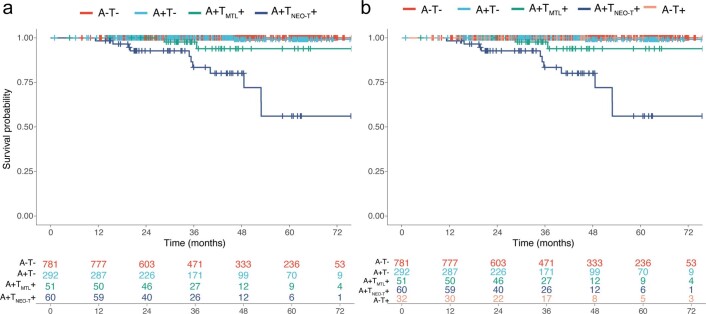
Verification
Claims the paper makes
The claims and statistics of this paper haven’t been checked yet.
Free: it reads the open-access text and checks the first 5 claims that cite a source we can check. Create a free account to check every claim.
Claims other papers make about this one
Each is checked against this paper’s own text: does it say what the citing paper says it does?
The source backs part of the claim, not all of it — or backs it for a different population, condition or comparison.
In the citing paper
“Cognitively unimpaired people who have amyloid and tau in the medial temporal lobe or temporal neocortex are more likely to decline cognitively compared to people who have neither and, over 6 years, the risk in those that are tau positive in temporal neocortex may approach 50% but samples are small and estimates imprecise. (445)”
From Dementia prevention, intervention, and care: 2024 report of the Lancet standing Commission (2024) · cites this paper as [445]
Experimental — accuracy not yet measuredThe source backs part of the claim, not all of it — or backs it for a different population, condition or comparison.
In the citing paper
“Tau‐PET is often considered a state‐of‐the‐art outcome in AD research studies, a very accurate prognostic tool in patients with AD, and frequently used in clinical trials for AD during screening and to monitor treatment effects. 12 , 14 , 15 , 16”
From Machine learning prediction of tau‐PET in Alzheimer's disease using plasma, MRI, and clinical data (2025) · cites this paper as [14]
Experimental — accuracy not yet measuredThe check wasn’t confident either way, so it gives no verdict — never disputed.
In the citing paper
“Tau‐PET is often considered a state‐of‐the‐art outcome in AD research studies, a very accurate prognostic tool in patients with AD, and frequently used in clinical trials for AD during screening and to monitor treatment effects. 12 , 14 , 15 , 16”
From Machine learning prediction of tau‐PET in Alzheimer's disease using plasma, MRI, and clinical data (2025) · cites this paper as [14]
Experimental — accuracy not yet measured
Self-check
Percentages, sums and reported differences re-computed from the paper’s own numbers.
The self-check needs the paper’s full text.
Citations
Cites
McKhann, G. M., Knopman, D. S., Chertkow, H., Hyman, B. T., Jack, C. R., Kawas, C. H., Klunk, W. E., Koroshetz, W. J., Manly, J. J., Mayeux, R., et al. (2011) · Alzheimer's & Dementia · doi:10.1016/j.jalz.2011.03.005 · Cited by 18,657
Self-citationNIA‐AA Research Framework: Toward a biological definition of Alzheimer's disease
Jack, C. R., Bennett, D. A., Blennow, K., Carrillo, M. C., Dunn, B., Haeberlein, S. B., Holtzman, D. M., Jagust, W., Jessen, F., Karlawish, J., et al. (2018) · Alzheimer's & Dementia · doi:10.1016/j.jalz.2018.02.018 · Cited by 10,537
Self-citationFischl, B., Salat, D. H., Busa, E., Albert, M., Dieterich, M., Haselgrove, C., van der Kouwe, A., Killiany, R., Kennedy, D., Klaveness, S., et al. (2002) · Neuron · doi:10.1016/s0896-6273(02)00569-x · Cited by 8,610
Mild cognitive impairment as a diagnostic entity
Petersen, R. C. (2004) · Journal of Internal Medicine · doi:10.1111/j.1365-2796.2004.01388.x · Cited by 7,864
Self-citationNeuroinflammation in Alzheimer's disease
Heneka, M. T., Carson, M. J., Khoury, J. E., Landreth, G. E., Brosseron, F., Feinstein, D. L., Jacobs, A. H., Wyss-Coray, T., Vitorica, J., Ransohoff, R. M., et al. (2015) · The Lancet Neurology · doi:10.1016/s1474-4422(15)70016-5 · Cited by 6,226
Synapse loss in frontal cortex biopsies in Alzheimer's disease: Correlation with cognitive severity
DeKosky, S. T., & Scheff, S. W. (1990) · Annals of Neurology · doi:10.1002/ana.410270502 · Cited by 2,376
(2018) · Neurology · doi:10.1212/wnl.0000000000004826 · Cited by 2,183
Self-citationNelson, P. T., Alafuzoff, I., Bigio, E. H., Bouras, C., Braak, H., Cairns, N. J., Castellani, R. J., Crain, B. J., Davies, P., Tredici, K. D., et al. (2012) · Journal of Neuropathology & Experimental Neurology · doi:10.1097/nen.0b013e31825018f7 · Cited by 2,050
A/T/N: An unbiased descriptive classification scheme for Alzheimer disease biomarkers
Jack, C. R., Bennett, D. A., Blennow, K., Carrillo, M. C., Feldman, H. H., Frisoni, G. B., Hampel, H., Jagust, W. J., Johnson, K. A., Knopman, D. S., et al. (2016) · Neurology · doi:10.1212/wnl.0000000000002923 · Cited by 1,864 · cited 1×
“Replication across different age groups Based on the lower age of the AT group compared to the biomarker-positive groups (Table 1), we performed the Cox proportional-hazards models and linear mixed models (1) stratified a b”
MethodSelf-citationWhitepaper: Defining and investigating cognitive reserve, brain reserve, and brain maintenance
Stern, Y., Arenaza‐Urquijo, E. M., Bartrés‐Faz, D., Belleville, S., Cantilon, M., Chetelat, G., Ewers, M., Franzmeier, N., Kempermann, G., Kremen, W. S., et al. (2020) · Alzheimer's & Dementia · doi:10.1016/j.jalz.2018.07.219 · Cited by 1,703
Cited by
Items 401–500 of 559
A Multimodal Dataset to Investigate Task-Evoked Negative BOLD Response and Neurodegeneration
Yazdi, B. G., Ozoria, S., Hojjati, S. H., Chernek, P., Calimag, J., Wang, X. H., & Razlighi, Q. R. (2026) · Scientific Data · doi:10.1038/s41597-026-07081-x · Cited by 1
Predictors of sex-specific resistance to caTAUstrophePreprint
Carrigan, M., Birkenbihl, C., Klinger, H. M., Langford, O., Coughlan, G., Seto, M., Brown, J. K., Li, A., Cuppels, M., Properzi, M. J., et al. (2026) · medRxiv · doi:10.64898/2026.01.28.26345029 · Cited by 1
Self-citationSharma, S., Sharma, U., Sethiya, N. K., & Singh, L. (2026) · Current Aging Science · doi:10.2174/0118746098373086251201095903 · Cited by 1
Bizzi, I. H., Macedo, A. C., Trudel, L., Therriault, J., Rahmouni, N., Lussier, F. Z., Tissot, C., Bezgin, G., Aumont, É., Chan, T., et al. (2026) · Alzheimer s & Dementia · doi:10.1002/alz.71861 · Cited by 1
Self-citationLongitudinal trajectories of divergent cortical tau patterns in preclinical Alzheimer’s disease
Young, C. B., Sheng, J., Winer, J. R., Cody, K. A., Sai, I., Carlson, M. L., Younes, K., Insel, P. S., Schultz, A. P., & Mormino, E. C. (2026) · Brain · doi:10.1093/brain/awag113 · Cited by 1
Contribution of Global Amyloid-PET Imaging for Predicting Future Cognition in the MEMENTO Cohort
Ackley, S. F., Calmasini, C., Bouteloup, V., Hill‐Jarrett, T. G., Swinnerton, K. N., Chêne, G., Dufouil, C., Glymour, M. M., & for the MEMENTO Cohort Study Group and DPUK (2024) · Neurology · doi:10.1212/wnl.0000000000208054 · Cited by 1
Live brain biopsy during CSF shunt surgery for precision diagnostics and multi-omic research
Lukkarinen, H., Luikku, A. J., Dougalis, A., Pelkonen, A., Gómez‐Budia, M., Abushik, P. A., Novosolova, N., Jäntti, H., Elomaa, A.-P., Kaipainen, A. L., et al. (2026) · Alzheimer s Research & Therapy · doi:10.1186/s13195-026-02150-0 · Cited by 1
IWG and AA Criteria—Where the Differences Matter—Reply
Dubois, B., Villain, N., & Feldman, H. (2025) · JAMA Neurology · doi:10.1001/jamaneurol.2025.0772 · Cited by 1
Should the preclinical stage of Alzheimer's disease be disclosed?
Masters, C. L. (2025) · The Lancet Neurology · doi:10.1016/s1474-4422(24)00520-9 · Cited by 1
Self-citationDemirsoy, İ., & Özge, A. (2026) · Medical Bulletin of Haseki · doi:10.4274/haseki.galenos.2026.99608 · Cited by 1
Liu, T., Lin, S., Liu, T., Wang, H., Lian, C., Lu, J., Ma, J., & Xie, L. (2026) · arXiv (Cornell University) · doi:10.48550/arxiv.2604.11176 · Cited by 1
Pupil Size Derived Features Improve the Accuracy of Eye-Tracker Based MCI Classification
Andberg, S., Shah, H. A., Hannonen, S., Kärkkäinen, V., Kaarniranta, K., Koivisto, A. M., & Bednarik, R. (2025) · Proceedings - IEEE Symposium on Computer-Based Medical Systems · doi:10.1109/cbms65348.2025.00191 · Cited by 1
Author Response: The Great Debate in Diagnosing Alzheimer Disease: More Than Just a β Test
Villain, N., Hanseeuw, B. J., Planche, V., & Paretsky, M. S. (2026) · Neurology · doi:10.1212/wnl.0000000000210240 · Cited by 1
Umeda, T., Sakai, A., Uekado, R., Shigemori, K., Nakajima, R., Yamana, K., & Tomiyama, T. (2024) · eLife · doi:10.7554/elife.100737.1
Plasma p‐tau markers, vascular factors, and cognitive decline in the CIMA‐Q cohort
Cottez, R. J., Peyrot, C., Denis, H. L., Tremblay, C., Loiselle, A., Dallaire‐Théroux, C., Filali‐Mouhim, A., Hébert, S. S., Leclerc, N. M., Blennow, K., et al. (2026) · Alzheimer s & Dementia · doi:10.1002/alz.71588
Lange‐Asschenfeldt, C., & Benkert, O. (2023) · Springer eBooks · doi:10.1007/978-3-662-67685-1_6
FDG-PET in Cognitive Impairment and Dementia
Hong, J., & Silverman, D. H. S. (2026) · PET Clinics · doi:10.1016/j.cpet.2026.07.001
Hayakawa, N., Takeda, S., Takahashi, H., Arisawa, A., Matsuo, C., Tomiyama, N., Nakajima, T., Miki, S., Kishino, Y., Teshirogi, S., et al. (2026) · Journal of Alzheimer s Disease · doi:10.1177/13872877261436754
Chaggar, P., Vogel, J. W., Thompson, T., Aldea, R., Strandberg, O. T., Stomrud, E., Palmqvist, S., Ossenkoppele, R., Jbabdi, S., Magon, S., et al. (2026) · bioRxiv (Cold Spring Harbor Laboratory) · doi:10.64898/2026.01.27.701320
Self-citationPET-Imaging bei Demenzerkrankungen
Parvizi, T. (2025) · psychopraxis neuropraxis · doi:10.1007/s00739-025-01127-2
Le concept de sujet à risque dans la maladie d’Alzheimer
Villain, N. (2026) · Bulletin de l Académie Nationale de Médecine · doi:10.1016/j.banm.2026.06.015
Parsing an Early Stage of Alzheimer’s Disease: Obj-SCD Versus SCD
Wang, X., & Zuo, X. (2023) · Neuroscience · doi:10.1016/j.neuroscience.2023.01.006
Low premorbid IQ effects biomarker–cognition relationships: A pilot study
Abdullah, L. B., Zhou, Z., Housini, M., Hall, J., & O’Bryant, S. E. (2026) · Journal of Alzheimer s Disease Reports · doi:10.1177/25424823261445643
Zhang, X., Zhuang, D., Lai, C., Zheng, C., Soh, Z. D., Wagner, S. K., Cai, V. Y., Yang, Z., Wang, S., Geng, X., et al. (2026) · Progress in Retinal and Eye Research · doi:10.1016/j.preteyeres.2026.101504
Molecular Neuroimaging Approaches to Primary Age-Related Tauopathy
Lee, Y., Kim, D., & Yun, M. (2026) · Nuclear Medicine and Molecular Imaging · doi:10.1007/s13139-026-01070-z
Qin, H., Fan, Y., Alam, U., Branson, K., Zheng, Y., & El‐Bouri, W. K. (2026) · Lecture notes in computer science · doi:10.1007/978-3-032-38470-6_59
A century of Alzheimer's disease: Merging neuropathology with in vivo biomarkers
Harrison, T. M., & Jagust, W. J. (2025) · Elsevier eBooks · doi:10.1016/b978-0-12-822240-9.00013-2
Self-citationAlzweiri, M. H., Agha, A. S. A. A., Qinna, N. A., AlDabet, G., Khassawna, T. E., & Aburjai, T. A. (2026) · Biomedicines · doi:10.3390/biomedicines14081823
Huang, Y., Gong, Q., Zhong, Z., & Guo, Q.-H. (2026) · Alzheimer s Research & Therapy · doi:10.1186/s13195-026-02061-0
Preclinical Alzheimer’s disease: how to predict who will decline next year?
Hanseeuw, B. J., & Johnson, K. A. (2023) · Brain Communications · doi:10.1093/braincomms/fcad079
Self-citationXia, Y., Johnson, K. A., Fakhri, G. E., Guehl, N. J., van de Giessen, E., Coomans, E. M., Pijnenburg, Y. A. L., Ossenkoppele, R., & Groot, C. (2026) · European Journal of Nuclear Medicine and Molecular Imaging · doi:10.1007/s00259-026-07868-5
Self-citationMultimodal diagnosis of Alzheimer’s disease through causal imaging markers and risk factorsPreprint
Chilla, G. S. V. N. (2026) · medRxiv · doi:10.64898/2026.05.01.26352207
Bimali, B., Chen, J., & Iraji, A. (2026) · bioRxiv (Cold Spring Harbor Laboratory) · doi:10.64898/2026.08.11.744123
Short-term memory conjunctive binding in subjective cognitive decline: A PET biomarker-based study
Cecchini, M. A., Studart‐Neto, A., Moraes, N. C., Carneiro, C. G., Gomes, A. C., Buchpiguel, C. A., Brucki, S. M. D., Coutinho, A. M., Nitríni, R., & Yassuda, M. S. (2026) · Journal of Neurology · doi:10.1007/s00415-026-13640-4
van der Meer, A., Knippenberg, M. L., Visser, D., & Boenink, M. (2025) · Health Expectations · doi:10.1111/hex.70284
Self-citationChmiel, J., & Kładna, A. (2026) · International Journal of Molecular Sciences · doi:10.3390/ijms27188043
Xu, L., Zhang, Y., Jiang, L., Xing, J. F., Hu, J., Lan, T., & Ta, G. (2026) · Frontiers in Cellular Neuroscience · doi:10.3389/fncel.2026.1902577
Chaowen, H., Gao, Y., & Wang, H. (2026) · Frontiers in Neuroscience · doi:10.3389/fnins.2026.1879617
Smeriglio, E., Imbesi, M., Xiao, J., Smeriglio, A., & Trombetta, D. (2026) · Frontiers in Aging Neuroscience · doi:10.3389/fnagi.2026.1924338
Contreras, J. A., Ortega, N. E., Jones, R., Thorpe, R. J., & Hayes, C. A. (2026) · Frontiers in Aging Neuroscience · doi:10.3389/fnagi.2026.1870150
López‐Martos, D., Suárez‐Calvet, M., Salvadó, G., Cacciaglia, R., Shekari, M., González‐Escalante, A., Horta‐Barba, A., Palma‐Gudiel, H., Milà‐Alomà, M., Brugulat‐Serrat, A., et al. (2026) · Neurobiology of Aging · doi:10.1016/j.neurobiolaging.2026.06.006
Blood-based emerging biomarkers in early detection and diagnosis of Alzheimer’s disease
Anand, T., & Kumar, A. (2026) · International review of neurobiology · doi:10.1016/bs.irn.2026.01.002
Zhang, J.-W., Li, R., Niu, Y.-X., Liu, S., Li, C.-H., Hao, X., Wang, S., Chen, S., & Wang, F. (2026) · Alzheimer s Research & Therapy · doi:10.1186/s13195-026-02016-5
Hewitt, P., Kim, H., & Vida, T. A. (2026) · Frontiers in Aging Neuroscience · doi:10.3389/fnagi.2026.1748671
Hybrid CNN-Transformer Framework for Molecular Imaging-based Early Alzheimer’s Disease Detection
Murugesan, S., Manjunath, P. S., Pardhi, P. R., Katta, A. K., Sahoo, A. K., & Prasad, G. S. (2026) · Molecular Imaging and Biology · doi:10.1007/s11307-026-02134-4
Role of Biomarker in Treating Alzheimer's Disease
Anand, P., Kumar, D., Gupta, S., Tiwari, J., & Singh, S. N. (2026) · BENTHAM SCIENCE PUBLISHERS eBooks · doi:10.2174/9798898814953126010006
Tang, Y., Yang, H.-C., Yin, Y., Wang, M., He, B., Ye, L., Li, R., Yu, C.-J., Di, R., Xu, Q., et al. (2024) · Research Square · doi:10.21203/rs.3.rs-3831426/v1
Combining p‐tau217 and digital cognitive testing to predict cognitive decline
Kim, H., Soberanes, D., Jutten, R. J., Dubbelman, M. A., Yang, H., Marshall, G. A., Johnson, K. A., Betensky, R. A., Kivisäkk, P., Arnold, S. E., et al. (2026) · Alzheimer s & Dementia · doi:10.1002/alz.71328
Self-citationConcordance between plasma biomarkers of phosphorylated tau and tau-PET: A narrative review
van Houwelingen, A., Vernooij, M. W., Vermeiren, M. R., Ossenkoppele, R., van de Giessen, E., Seelaar, H., & Neitzel, J. (2026) · Journal of Alzheimer s Disease · doi:10.1177/13872877261468708
Self-citationMorbelli, S. D., Brendel, M., Tolboom, N., Drzezga, A. E., Janelidze, S., Joie, R. L., Roccatagliata, L., Agosta, F., Arbizu, J., Boccalini, C., et al. (2026) · The EANM Journal · doi:10.1016/j.eanmj.2026.100250
Self-citationLapcinski, I. P., Petersen, A. J., Ashe, K. H., & Liu, P. (2025) · bioRxiv (Cold Spring Harbor Laboratory) · doi:10.1101/2025.04.11.648457
Shu, K., Li, J., Zhang, R., Cheng, N., Yang, P., Song, X., & Lei, B. (2026) · Medical Image Analysis · doi:10.1016/j.media.2026.104243
Tallon, C., Bell, B. J., Malvankar, M. M., Deme, P., Nogueras‐Ortiz, C. J., Eren, E., Thomas, A. G., Hollinger, K. R., Pal, A., Mustapić, M., et al. (2024) · Figshare · doi:10.6084/m9.figshare.26649171
Cerebral Intramural Cells: A Missing Cellular Link Between Vascular Aging and Alzheimer’s Disease
Arbănași, E. M., Arbănași, E. M., Boghițoiu, T., Cărare, S. A., Cordoș, B. A., Braysh, K., Suciu, N., Chinezu, L., Manu, D. R., Montagne, A., et al. (2026) · International Journal of Molecular Sciences · doi:10.3390/ijms27167353
Surhan, A., Oad, J., Kumar, B., Memon, S. N., Essrani, C., Muhammad, F., Kashif, S. N., Abbas, S. M. I., Ameen, T. B., Sauleh, A., et al. (2026) · The Egyptian Journal of Neurology Psychiatry and Neurosurgery · doi:10.1186/s41983-026-01263-5
A vascular component to the selective vulnerability of the medial temporal lobe to tau pathology
Doyon, V., Janelle, F., Sean, M., Vanderweyen, D., Cote, S. R., Huck, J., Tétreault, P., Lepage, J., Gutierrez, J., Bocti, C., et al. (2026) · Brain Communications · doi:10.1093/braincomms/fcag301
Or, P., Yon, M., Narvaez, O., Sitnikova, V., Malm, T., Bouhrara, M., Sierra, A., Topgaard, D., & Benjamini, D. (2026) · bioRxiv (Cold Spring Harbor Laboratory) · doi:10.64898/2026.08.26.747377
SuperAgers, amyloid, and brain resilience: beyond the absence of pathology
Caramelli, P., & Borelli, W. V. (2026) · Arquivos de Neuro-Psiquiatria · doi:10.1055/s-0046-1817825
Plasma p-tau217 and NfL predict incident dementia in the communityPreprint
Sunde, A. L., Tovar, D., Vik‐Mo, A. O., Zetterberg, H., Arslan, B., Tan, K., Huber, H., Persson, K., Molfetta, G. D., Pola, I., et al. (2026) · medRxiv · doi:10.64898/2026.08.07.26359934
Zhang, S., Bao, R., He, H., Initiative, A. D. N., The Health and Aging Brain Study (HABS‐HD) Study Team, Zhang, T., Cheng, W., & Ding, W. (2026) · Research Square · doi:10.21203/rs.3.rs-10847343/v1
Huszár, Z., Engh, M. A., Pavlekovics, M., Sato, T., Steenkamp, Y., Hanseeuw, B. J., Terebessy, T., Molnár, Z., Hegyi, P., & Csukly, G. (2024) · Figshare · doi:10.6084/m9.figshare.26705691
Huang, S.-H., Hsiao, W.-C., Chang, H.-I., Ma, M.-C., Hsu, S.-W., Lee, C.-C., Chen, H.-J., Lin, C.-H., Huang, C.-W., & Chang, C.-C. (2024) · Figshare · doi:10.6084/m9.figshare.25506747
Lu, J., Ma, X., Zhang, H., Xiao, Z., Li, M., Wu, J., Ju, Z., Chen, L., Zheng, L., Ge, J., et al. (2024) · Figshare · doi:10.6084/m9.figshare.26600593
Huang, S.-H., Hsiao, W.-C., Chang, H.-I., Ma, M.-C., Hsu, S.-W., Lee, C.-C., Chen, H.-J., Lin, C.-H., Huang, C.-W., & Chang, C.-C. (2024) · Figshare · doi:10.6084/m9.figshare.25506602
Hendriksen, H. M. A., van Gils, A. M., van Harten, A. C., Hartmann, T., Mangialasche, F., Kamondi, A., Kivipelto, M., Rhodius‐Meester, H. F. M., Smets, E. M. A., van der Flier, W. M., et al. (2023) · Figshare · doi:10.6084/m9.figshare.23896107
Fujishima, M., Kawasaki, Y., Mitsuhashi, T., & Matsuda, H. (2024) · Figshare · doi:10.6084/m9.figshare.25583953
Fujishima, M., Kawasaki, Y., Mitsuhashi, T., & Matsuda, H. (2024) · Figshare · doi:10.6084/m9.figshare.25584003
Hendriksen, H. M. A., van Gils, A. M., van Harten, A. C., Hartmann, T., Mangialasche, F., Kamondi, A., Kivipelto, M., Rhodius‐Meester, H. F. M., Smets, E. M. A., van der Flier, W. M., et al. (2023) · Figshare · doi:10.6084/m9.figshare.23896104
Wachi, K., Yamao, T., Miwa, K., Miyaji, N., Akiya, N., Horikawa, T., Masubuchi, M., Kimura, S., & Matsuda, H. (2026) · Annals of Nuclear Medicine · doi:10.1007/s12149-026-02184-2
BIN1 (amphiphysin 2) in the pathogenesis of cognitive impairment
Shamakina, I. Y., Kokhan, V. S., Venkova, V. A., Баронец, В. Ю., Popov, S. S., & Anokhin, P. K. (2026) · S S Korsakov Journal of Neurology and Psychiatry · doi:10.17116/jnevro202612603145
Mundada, N. S., Sadeghpour, N., McGrew, E., Tucker, H. L. M., Nasrallah, I. M., Das, S. R., Wolk, D. A., Yushkevich, P. A., Brown, C., & Wisse, L. E. M. (2026) · Alzheimer s & Dementia · doi:10.1002/alz.71571
Grey- and white-matter resilience to tau, cognition and sex in Alzheimer’s diseasePreprint
Boutin, S., Houzé, B., Bedetti, C., Binette, A. P., Brambati, S. M., & Initiative, A. D. N. (2026) · medRxiv · doi:10.64898/2026.06.16.26355812
de Bruin, H., Groot, C., Zhu, Z., van de Giessen, E., Shcherbinin, S., Kotari, V., Svaldi, D. O., Pijnenburg, Y. A. L., Coomans, E. M., Ossenkoppele, R., et al. (2026) · Alzheimer s & Dementia · doi:10.1002/alz.71718
Self-citationBIN1 (Amphiphysin 2) in the Pathogenesis of Cognitive Impairment
Shamakina, I. Y., Kokhan, V. S., Venkova, V. A., Баронец, В. Ю., Popov, S. S., & Anokhin, P. K. (2026) · Neuroscience and Behavioral Physiology · doi:10.1007/s11055-026-02059-z
A Harmonized Visual Reading Framework for Tau PET Staging in Alzheimer Disease
Ruppert, E. P., Vermeiren, M. R., Medeiros, M. S., Povala, G., Soares, C., Rocha, A., Franco, Á. D. O., Rodrigues, M. S., Oliveira, M. S., Mroué, R., et al. (2026) · JAMA Neurology · doi:10.1001/jamaneurol.2026.3253
Self-citationLong-term impact of disclosing amyloid PET results to individuals with subjective cognitive decline
van der Schaar, J., van der Flier, W. M., Visser, L. N. C., van de Giessen, E., van Harten, A. C., Sikkes, S. A. M., van Leeuwenstijn‐Koopman, M. S. S. A., Hendriksen, H. M. A., Trieu, C., Bredenoord, A. L., et al. (2026) · Alzheimer s Research & Therapy · doi:10.1186/s13195-026-02026-3
Medina, T., Quiñones, S., Liu, Z., Wu, L., Ziani, B., Shedlock, C. J., Ma, X., Ryan, A., Larson, R., Soto, C. M., et al. (2026) · bioRxiv (Cold Spring Harbor Laboratory) · doi:10.64898/2026.06.16.732673
Villemagne, V. L. (2025) · Journal of Nuclear Medicine · doi:10.2967/jnumed.125.269476
Opposing views or like-minded? International Working Group and Alzheimer’s Association criteria
Verberk, I. M. W., van Harten, A. C., & van der Flier, W. M. (2025) · Brain · doi:10.1093/brain/awaf366
Lange‐Asschenfeldt, C. (2026) · Springer eBooks · doi:10.1007/978-3-662-72452-1_6
Solis‐Urra, P., Olvera‐Rojas, M., García‐Rivero, Y., Zeng, X., Chen, Y., Sehrawat, A., Shekari, M., Oberlin, L. E., Erickson, K. I., Karikari, T. K., et al. (2026) · medRxiv · doi:10.64898/2026.03.02.26347392
P-TAU205 IS A BIOMARKER LINKED TO TAU-PET ABNORMALITY: A CROSS-SECTIONAL AND LONGITUDINAL STUDYPreprint
Lantero‐Rodriguez, J., Janelidze, S., Palmqvist, S., Braun-Wohlfahrt, L. S., Vávra, J., Bali, D., Dolado, A. O., Mattsson, N., Stomrud, E., Zetterberg, H., et al. (2025) · medRxiv · doi:10.1101/2025.10.21.25338437
Self-citationScouarnec, L. L., Bouteloup, V., Daly, T. P., Planche, V., Chêne, G., Dufouil, C., for the MEMENTO Study Group, Allard, M., Amroun, S., Andrade, K. S., et al. (2026) · npj Dementia · doi:10.1038/s44400-026-00128-1
Evaluation of a Sensitive Visual Read Algorithm for Assessing 3R/4R Tau PET Images
Smith, R. A., Garibotto, V., Hägerström, D., Jögi, J., Ohlsson, T. G., Strandberg, O. T., Tonietto, M., Janelidze, S., Palmqvist, S., Stomrud, E., et al. (2025) · Journal of Nuclear Medicine · doi:10.2967/jnumed.125.269685
Self-citationGuo, T., Li, A., Sun, P., He, Z., Cai, Y., Lan, G., Liu, L., Li, J., Yang, J., Zhu, Y., et al. (2024) · Figshare · doi:10.6084/m9.figshare.26410059
Guo, T., Li, A., Sun, P., He, Z., Cai, Y., Lan, G., Liu, L., Li, J., Yang, J., Zhu, Y., et al. (2024) · Figshare · doi:10.6084/m9.figshare.26409831
Kjar, A., Kim, H., Spetz, M. R., Jarrett, Z., Fernandez, M., Wang, J., Russotti, M. L., Bodnya, C., Chavarría, D., Hohman, T. J., et al. (2026) · ACS Chemical Neuroscience · doi:10.1021/acschemneuro.6c00376
Sex specificity of resistance to caTAUstrophe
Carrigan, M., Birkenbihl, C., Klinger, H. M., Langford, O., Coughlan, G., Seto, M., Brown, J. A., Li, A., Cuppels, M., Properzi, M. J., et al. (2026) · Alzheimer s & Dementia · doi:10.1002/alz.71716
Self-citationElorriaga, I. T., Jiménez-Marín, A., Diez, I. P., Erramuzpe, A., & Cortés, J. M. (2026) · medRxiv · doi:10.64898/2026.05.11.26352893
Shimoda, N. (2026) · Epigenomics · doi:10.1080/17501911.2026.2635932
Peripheral T-cell co-signalling states mark vulnerability and resilience to cerebral Aβ pathologyPreprint
Mallone, A., Bachmann, D., Rickenbach, C., Krueger, M., Kirabali, T., Zetterberg, H., Ferretti, M. T., Kulic, L., Höck, C., Nitsch, R. M., et al. (2026) · bioRxiv (Cold Spring Harbor Laboratory) · doi:10.64898/2026.08.03.742616
Bermudez, S., Choi, J.-H., Mahmood, N., Vogel, J. W., Almousa, H. A., Huang, Z., Kim, S.-H., Zhu, V. Y., Zhou, L., Casas-Antillon, D., et al. (2026) · Proceedings of the National Academy of Sciences · doi:10.1073/pnas.2610766123
Self-citationXiong, C., Luo, J. R., Hartz, S. M., Schindler, S. E., Kukull, W. A., Hassenstab, J. J., Wolk, D. A., Gleason, C. E., Johnson, S. C., Sperling, R. A., et al. (2026) · Annals of Neurology · doi:10.1002/ana.78392
Self-citationThe relation of whole-brain functional connectivity to global amyloid and local tau presence
Ziadlou, D., Wales, R., Chen, X., & Leung, H.-C. (2026) · Neurobiology of Aging · doi:10.1016/j.neurobiolaging.2026.10.007
Age-specific Aβ-Tau interactions underlie spatial memory deficits in an APP/PS1 amyloidosis modelPreprint
Metaxas, A., Anzalone, M., Vaitheeswaran, R., Tejsi, V., Li, S., Mitilineou, G., Lambertsen, K. L., Audrain, H., Brooks, D. J., Landau, A. M., et al. (2025) · bioRxiv (Cold Spring Harbor Laboratory) · doi:10.64898/2025.12.06.689974
PERSPECTIVE ON RECENT UPDATES IN ALZHEIMER’S DISEASE
(2024) · International Journal of Biology Pharmacy and Allied Sciences · doi:10.31032/ijbpas/2024/13.8.8264
CSF p-tau205: a biomarker of Alzheimer’s disease progression and biological staging
Lantero‐Rodriguez, J., Janelidze, S., Palmqvist, S., Braun-Wohlfahrt, L. S., Vávra, J., Bali, D., Dolado, A. O., Mattsson, N., Stomrud, E., Zetterberg, H., et al. (2026) · Molecular Psychiatry · doi:10.1038/s41380-026-03838-3
Self-citationChiyanika, C., Chan, N. Y., Liu, W., Au, L. W. C., Chen, W., Liu, C., Chen, S., Leung, E. Y. L., Ho, C. L., Cai, Y., et al. (2026) · Journal of Alzheimer s Disease Reports · doi:10.1177/25424823261491875
Metadata
- Authors
- Ossenkoppele, R., Pichet Binette, A., Groot, C., Smith, R., Strandberg, O., Palmqvist, S., Stomrud, E., Tideman, P., Ohlsson, T., Jögi, J., Johnson, K., Sperling, R., Dore, V., Masters, C. L., Rowe, C., Visser, D., van Berckel, B. N. M., van der Flier, W. M., Baker, S., Jagust, W. J., Wiste, H. J., Petersen, R. C., Jack, C. R., & Hansson, O.
- Affiliations
- Lund University (SE)
- Skåne University Hospital (SE)
- Brigham and Women's Hospital (US)
- Florey Institute of Neuroscience and Mental Health (AU)
- Amsterdam Neuroscience (NL)
- Lawrence Berkeley National Laboratory (US)
- Mayo Clinic (US)
- Corresponding author
- Ossenkoppele, Rik
- Hansson, Oskar
- ORCID
- Ossenkoppele, Rik
- Pichet Binette, Alexa
- Groot, Colin
- Smith, Ruben
- Palmqvist, Sebastian
- Stomrud, Erik
- Tideman, Pontus
- Jögi, Jonas
- Johnson, Keith
- Sperling, Reisa
- Dore, Vincent
- Masters, Colin L.
- Rowe, Christopher
- Visser, Denise
- van Berckel, Bart N. M.
- van der Flier, Wiesje M.
- Baker, Suzanne
- Jagust, William J.
- Wiste, Heather J.
- Petersen, Ronald C.
- Jack, Clifford R.
- Hansson, Oskar
- Venue
- Nature Medicine
- Published
- 2022-11
- Volume
- 28
- Issue
- 11
- Pages
- 2381-2387
- ISSN
- 1078-8956 (ISSN-L)
- 1546-170X
- PMC
- PMC9671808
- OpenAlex
- W4308773890
- Semantic Scholar
- 11bdea0193b4c38c63eac2665bdfd211fd699fc4
- Cited by
- 496
- References
- 62
- Citations by year
- 2026: 110 · 2025: 171 · 2024: 130 · 2023: 79 · 2022: 5
- FWCI
- 62.45
- Type
- journal article
- Language
- en
- Open access
- hybrid
- doi.org
- Licence
- cc-by
- creativecommons.org/licenses/by/4.0 (tdm)
- creativecommons.org/licenses/by/4.0 (vor, 9 d)
- Locations
- Nature Medicine (publishedVersion, cc-by)
- medRxiv (acceptedVersion, cc-by-nc)
- PubMed Central (publishedVersion, cc-by)
- PubMed (publishedVersion)
- Pure Amsterdam UMC (publishedVersion, cc-by)
- Amsterdam UMC (VU Amsterdam) - Institutional Repository (publishedVersion, cc-by)
- Minerva Access (University of Melbourne) (submittedVersion, cc-by)
- Lund University Publications (Lund University) (submittedVersion)
- Data Archiving and Networked Services (DANS) (submittedVersion, other-oa)
- Funders
- Mayo Clinic (U01 AG006786)
- Alzheimer's Association (P01AG036694)
- Massachusetts General Hospital
- Biogen
- BrightFocus Foundation (U01 AG006786, A2021013F)
- EU Joint Programme – Neurodegenerative Disease Research
- Australian Government
- GHR Foundation
- Health~Holland (#LSHM20106)
- European Commission (EU-FP7, 298314, HORIZON2020)
- ZonMw (LSHM20106, #73305095007, 10510022110010)
- Nederlandse Organisatie voor Wetenschappelijk Onderzoek (#73305095007, EU-FP7)
- Lunds Universitet
- Knut och Alice Wallenbergs Stiftelse (2017‐0383, 2015.0125, FO2021-0293, 2020-O000028)
- Vetenskapsrådet (2016-00906, FO2021-0293, 2018-, 2020-O000028, 2017-00383)
- Konung Gustaf V:s och Drottning Victorias Frimurarestiftelse (2020-O000028, 2020-0314)
- Hersenstichting
- Stichting Dioraphte
- Alzheimer Nederland (LSHM20106)
- Skånes universitetssjukhus (2020-O000028)
- Marcus och Amalia Wallenbergs minnesfond (2015.0125)
- Amsterdam Neuroscience
- GIESKES-STRIJBIS FONDS
- Parkinsonfonden (1280/20)
- Avid Radiopharmaceuticals
- National Institute on Aging (U01AG006786, AG-006786, F31AG067677, P01AG036694)
- H2020 European Research Council (949570)
- Topics
- Health Sciences › Medicine › Psychiatry and Mental health › Dementia and Cognitive Impairment Research
- Life Sciences › Neuroscience › Cellular and Molecular Neuroscience › Alzheimer's disease research and treatments
- Health Sciences › Medicine › Oncology › Cancer-related cognitive impairment studies
- Keywords
- amyloid PET, tau PET, cognitively unimpaired individuals, Alzheimer's disease, amyloid plaques, neurofibrillary tangles, mild cognitive impairment, cognitive decline, medial temporal lobe, temporal neocortex, dementia risk, longitudinal cognitive trajectories, neurodegeneration biomarkers
- MeSH terms
- Alzheimer Disease, Amyloid, Amyloidosis, Brain, Humans, Biomarkers, Amyloid beta-Peptides, tau Proteins, Positron-Emission Tomography, Plaque, Amyloid, Cognitive Dysfunction
About these checks
Registry, retraction, Cites and statistics results are computed, not judged, with one exception: a printed reference that no index lists is read once by a model before it counts as a citation error. Claims are extracted by a model and kept only when their quote appears verbatim in the text; each cited source is then checked, with a model’s help, for whether it says what the claim relies on. Those verdicts can be wrong — read the claim’s quote and the cited source before relying on one.
Statistics and arithmetic are recomputed, not judged.
Confidence bands are shown only for fields calibrated on our annotated test set. None is calibrated yet, so no band is shown.
What counts as a claim ›How we measure confidence ›How we check this ›
Are you an author, or do you see a problem with this page? Request a review
Data sources
Bibliographic data: Semantic Scholar, OpenAlex, Crossref.
Contains information from the Semantic Scholar Academic Graph Datasets, made available under the ODC Attribution License (ODC-BY 1.0).
Semantic Scholar’s data is described in: Kinney, R., et al. (2023). The Semantic Scholar Open Data Platform. arXiv:2301.10140.
