

Amyloid and tau PET-positive cognitively unimpaired individuals are at high risk for future cognitive decline
Open accessPublished version of a preprint
The DOI matches its Crossref record; 62 of the 62 references it cites were found in a registry or an index.
Abstract
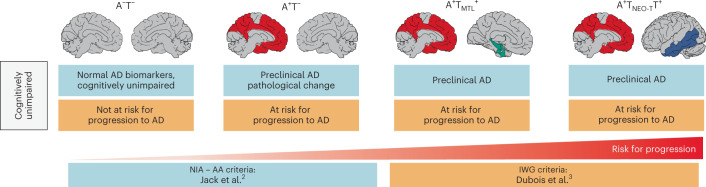
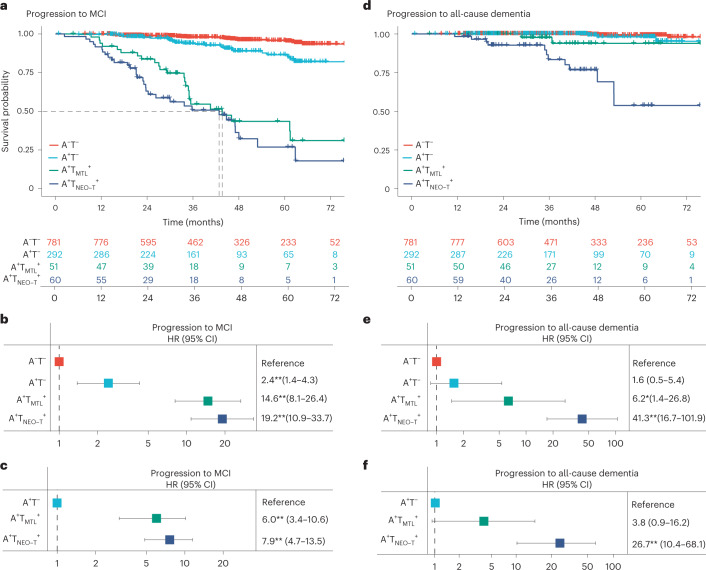
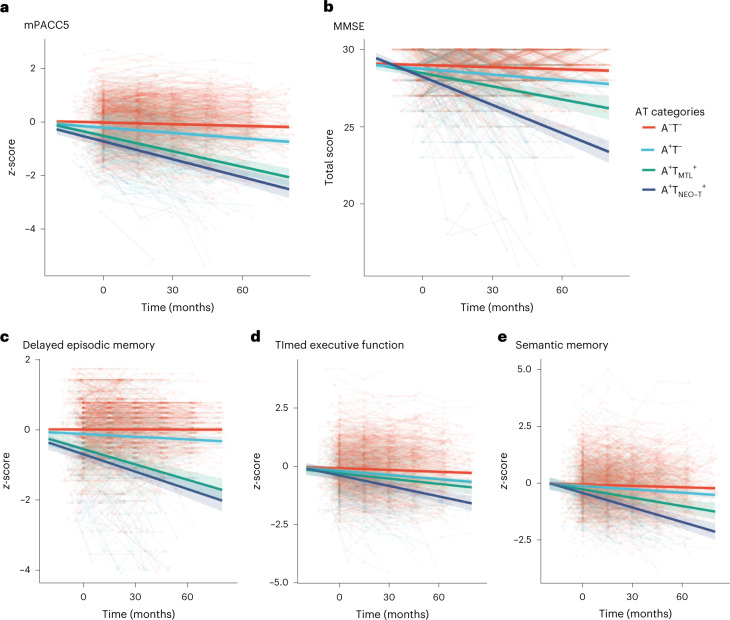
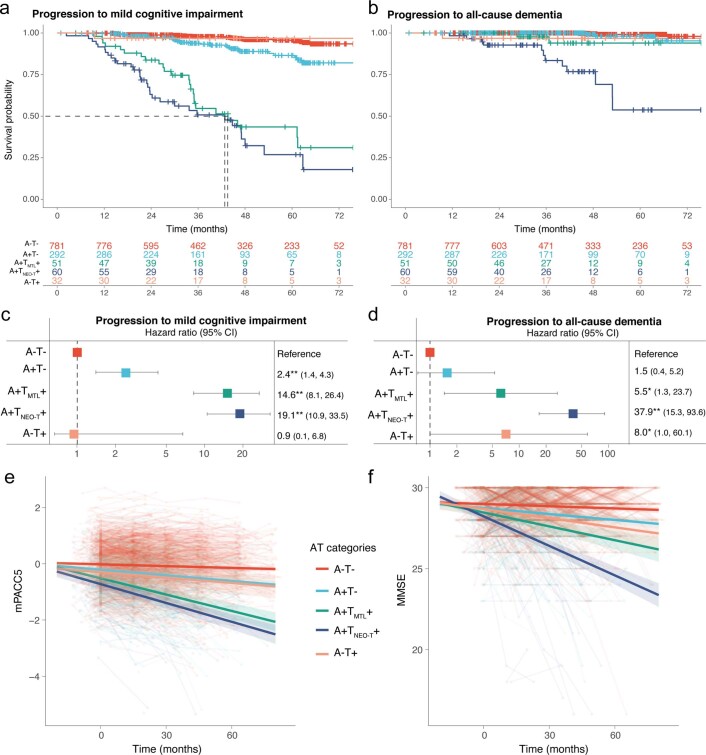
A major unanswered question in the dementia field is whether cognitively unimpaired individuals who harbor both Alzheimer’s disease neuropathological hallmarks (that is, amyloid-β plaques and tau neurofibrillary tangles) can preserve their cognition over time or are destined to decline. In this large multicenter amyloid and tau positron emission tomography (PET) study ( n = 1,325), we examined the risk for future progression to mild cognitive impairment and the rate of cognitive decline over time among cognitively unimpaired individuals who were amyloid PET-positive (A + ) and tau PET-positive (T + ) in the medial temporal lobe (A + T MTL + ) and/or in the temporal neocortex (A + T NEO-T + ) and compared them with A + T − and A − T − groups. Cox proportional-hazards models showed a substantially increased risk for progression to mild cognitive impairment in the A + T NEO-T + (hazard ratio (HR) = 19.2, 95% confidence interval (CI) = 10.9–33.7), A + T MTL + (HR = 14.6, 95% CI = 8.1–26.4) and A + T − (HR = 2.4, 95% CI = 1.4–4.3) groups versus the A − T − (reference) group. Both A + T MTL + (HR = 6.0, 95% CI = 3.4–10.6) and A + T NEO-T + (HR = 7.9, 95% CI = 4.7–13.5) groups also showed faster clinical progression to mild cognitive impairment than the A + T − group. Linear mixed-effect models indicated that the A + T NEO-T + ( β = −0.056 ± 0.005, T = −11.55, P < 0.001), A + T MTL + ( β = −0.024 ± 0.005, T = −4.72, P < 0.001) and A + T − ( β = −0.008 ± 0.002, T = −3.46, P < 0.001) groups showed significantly faster longitudinal global cognitive decline compared to the A − T − (reference) group (all P < 0.001). Both A + T NEO-T + ( P < 0.001) and A + T MTL + ( P = 0.002) groups also progressed faster than the A + T − group. In summary, evidence of advanced Alzheimer’s disease pathological changes provided by a combination of abnormal amyloid and tau PET examinations is strongly associated with short-term (that is, 3–5 years) cognitive decline in cognitively unimpaired individuals and is therefore of high clinical relevance.
Overview
The claims and statistics of this paper haven’t been checked yet.
Free: it reads the open-access text and checks the first 5 claims that cite a source we can check. Create a free account to check every claim.
Integrity signals
Registry
Cites
Statistics
Figures
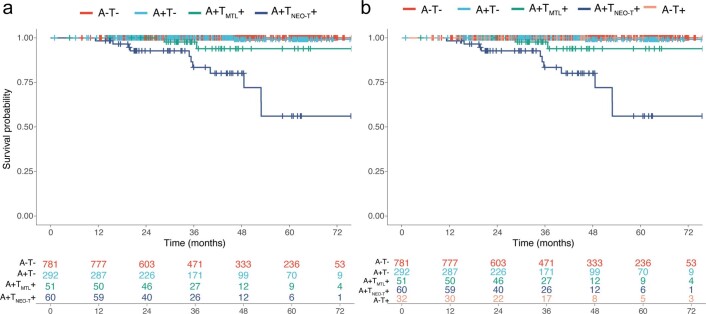
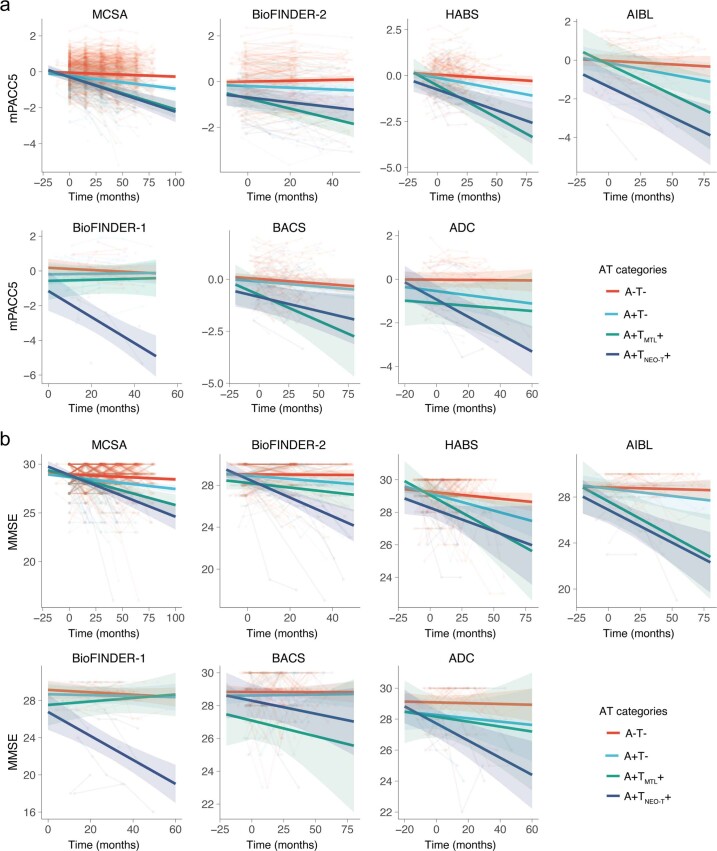
Verification
Claims the paper makes
The claims and statistics of this paper haven’t been checked yet.
Free: it reads the open-access text and checks the first 5 claims that cite a source we can check. Create a free account to check every claim.
Claims other papers make about this one
Each is checked against this paper’s own text: does it say what the citing paper says it does?
The source backs part of the claim, not all of it — or backs it for a different population, condition or comparison.
In the citing paper
“Cognitively unimpaired people who have amyloid and tau in the medial temporal lobe or temporal neocortex are more likely to decline cognitively compared to people who have neither and, over 6 years, the risk in those that are tau positive in temporal neocortex may approach 50% but samples are small and estimates imprecise. (445)”
From Dementia prevention, intervention, and care: 2024 report of the Lancet standing Commission (2024) · cites this paper as [445]
Experimental — accuracy not yet measuredThe source backs part of the claim, not all of it — or backs it for a different population, condition or comparison.
In the citing paper
“Tau‐PET is often considered a state‐of‐the‐art outcome in AD research studies, a very accurate prognostic tool in patients with AD, and frequently used in clinical trials for AD during screening and to monitor treatment effects. 12 , 14 , 15 , 16”
From Machine learning prediction of tau‐PET in Alzheimer's disease using plasma, MRI, and clinical data (2025) · cites this paper as [14]
Experimental — accuracy not yet measuredThe check wasn’t confident either way, so it gives no verdict — never disputed.
In the citing paper
“Tau‐PET is often considered a state‐of‐the‐art outcome in AD research studies, a very accurate prognostic tool in patients with AD, and frequently used in clinical trials for AD during screening and to monitor treatment effects. 12 , 14 , 15 , 16”
From Machine learning prediction of tau‐PET in Alzheimer's disease using plasma, MRI, and clinical data (2025) · cites this paper as [14]
Experimental — accuracy not yet measured
Self-check
Percentages, sums and reported differences re-computed from the paper’s own numbers.
The self-check needs the paper’s full text.
Citations
Cites
McKhann, G. M., Knopman, D. S., Chertkow, H., Hyman, B. T., Jack, C. R., Kawas, C. H., Klunk, W. E., Koroshetz, W. J., Manly, J. J., Mayeux, R., et al. (2011) · Alzheimer's & Dementia · doi:10.1016/j.jalz.2011.03.005 · Cited by 18,657
Self-citationNIA‐AA Research Framework: Toward a biological definition of Alzheimer's disease
Jack, C. R., Bennett, D. A., Blennow, K., Carrillo, M. C., Dunn, B., Haeberlein, S. B., Holtzman, D. M., Jagust, W., Jessen, F., Karlawish, J., et al. (2018) · Alzheimer's & Dementia · doi:10.1016/j.jalz.2018.02.018 · Cited by 10,537
Self-citationFischl, B., Salat, D. H., Busa, E., Albert, M., Dieterich, M., Haselgrove, C., van der Kouwe, A., Killiany, R., Kennedy, D., Klaveness, S., et al. (2002) · Neuron · doi:10.1016/s0896-6273(02)00569-x · Cited by 8,610
Mild cognitive impairment as a diagnostic entity
Petersen, R. C. (2004) · Journal of Internal Medicine · doi:10.1111/j.1365-2796.2004.01388.x · Cited by 7,864
Self-citationNeuroinflammation in Alzheimer's disease
Heneka, M. T., Carson, M. J., Khoury, J. E., Landreth, G. E., Brosseron, F., Feinstein, D. L., Jacobs, A. H., Wyss-Coray, T., Vitorica, J., Ransohoff, R. M., et al. (2015) · The Lancet Neurology · doi:10.1016/s1474-4422(15)70016-5 · Cited by 6,226
Synapse loss in frontal cortex biopsies in Alzheimer's disease: Correlation with cognitive severity
DeKosky, S. T., & Scheff, S. W. (1990) · Annals of Neurology · doi:10.1002/ana.410270502 · Cited by 2,376
(2018) · Neurology · doi:10.1212/wnl.0000000000004826 · Cited by 2,183
Self-citationNelson, P. T., Alafuzoff, I., Bigio, E. H., Bouras, C., Braak, H., Cairns, N. J., Castellani, R. J., Crain, B. J., Davies, P., Tredici, K. D., et al. (2012) · Journal of Neuropathology & Experimental Neurology · doi:10.1097/nen.0b013e31825018f7 · Cited by 2,050
A/T/N: An unbiased descriptive classification scheme for Alzheimer disease biomarkers
Jack, C. R., Bennett, D. A., Blennow, K., Carrillo, M. C., Feldman, H. H., Frisoni, G. B., Hampel, H., Jagust, W. J., Johnson, K. A., Knopman, D. S., et al. (2016) · Neurology · doi:10.1212/wnl.0000000000002923 · Cited by 1,864
Self-citationWhitepaper: Defining and investigating cognitive reserve, brain reserve, and brain maintenance
Stern, Y., Arenaza‐Urquijo, E. M., Bartrés‐Faz, D., Belleville, S., Cantilon, M., Chetelat, G., Ewers, M., Franzmeier, N., Kempermann, G., Kremen, W. S., et al. (2020) · Alzheimer's & Dementia · doi:10.1016/j.jalz.2018.07.219 · Cited by 1,703
Janelidze, S., Mattsson, N., Palmqvist, S., Smith, R., Beach, T. G., Serrano, G. E., Chai, X., Proctor, N. K., Eichenlaub, U., Zetterberg, H., et al. (2020) · Nature Medicine · doi:10.1038/s41591-020-0755-1 · Cited by 1,247
Self-citationPET Imaging of Tau Deposition in the Aging Human Brain
Schöll, M., Lockhart, S. N., Schonhaut, D. R., O’Neil, J. P., Janabi, M., Ossenkoppele, R., Baker, S. L., Vogel, J. W., Faria, J., Schwimmer, H. D., et al. (2016) · Neuron · doi:10.1016/j.neuron.2016.01.028 · Cited by 1,214
Self-citationTau PET patterns mirror clinical and neuroanatomical variability in Alzheimer’s disease
Ossenkoppele, R., Schonhaut, D. R., Schöll, M., Lockhart, S. N., Ayakta, N., Baker, S. L., O’Neil, J. P., Janabi, M., Lazaris, A., Cantwell, A., et al. (2016) · Brain · doi:10.1093/brain/aww027 · Cited by 1,185
Self-citationClinical diagnosis of Alzheimer’s disease: Recommendations of the International Working Group
Dubois, B., Villain, N., Frisoni, G. B., Rabinovici, G. D., Sabbagh, M., Cappa, S., Bejanin, A., Bombois, S., Epelbaum, S., Teichmann, M., et al. (2021) · The Lancet Neurology · doi:10.1016/s1474-4422(21)00066-1 · Cited by 1,051
Self-citationTau positron emission tomographic imaging in aging and early Alzheimer disease
Johnson, K. A., Schultz, A., Betensky, R. A., Becker, J. A., Sepulcre, J., Rentz, D., Mormino, E., Chhatwal, J., Amariglio, R., Papp, K., et al. (2016) · Annals of Neurology · doi:10.1002/ana.24546 · Cited by 986
Self-citationDefining imaging biomarker cut points for brain aging and Alzheimer's disease
Jack, C. R., Wiste, H. J., Weigand, S. D., Therneau, T. M., Lowe, V. J., Knopman, D. S., Gunter, J. L., Senjem, M. L., Jones, D. T., Kantarci, K., et al. (2017) · Alzheimer's & Dementia · doi:10.1016/j.jalz.2016.08.005 · Cited by 931
Self-citationAssociation of Amyloid and Tau With Cognition in Preclinical Alzheimer Disease: A Longitudinal Study
Hanseeuw, B. J., Betensky, R. A., Jacobs, H. I. L., Schultz, A. P., Sepulcre, J., Becker, J. A., Cosio, D. M. O., Farrell, M., Quiroz, Y. T., Mormino, E. C., et al. (2019) · JAMA Neurology · doi:10.1001/jamaneurol.2019.1424 · Cited by 865
Self-citationThe Preclinical Alzheimer Cognitive Composite: Measuring Amyloid-Related Decline
Donohue, M. C., Sperling, R. A., Salmon, D. P., Rentz, D. M., Raman, R., Thomas, R. G., Weiner, M., & Aisen, P. S. (2014) · JAMA Neurology · doi:10.1001/jamaneurol.2014.803 · Cited by 860
Self-citationRoberts, R. O., Geda, Y. E., Knopman, D. S., Cha, R. H., Pankratz, V. S., Boeve, B. F., Ivnik, R. J., Tangalos, E. G., Petersen, R. C., & Rocca, W. A. (2008) · Neuroepidemiology · doi:10.1159/000115751 · Cited by 793
Self-citationthe Dominantly Inherited Alzheimer Network, Barthélemy, N. R., Li, Y., Joseph-Mathurin, N., Gordon, B. A., Hassenstab, J., Benzinger, T. L. S., Buckles, V., Fagan, A. M., Perrin, R. J., et al. (2020) · Nature Medicine · doi:10.1038/s41591-020-0781-z · Cited by 651
Self-citationTau biomarkers in Alzheimer's disease: towards implementation in clinical practice and trials
Ossenkoppele, R., van der Kant, R., & Hansson, O. (2022) · The Lancet Neurology · doi:10.1016/s1474-4422(22)00168-5 · Cited by 557
Self-citationPalmqvist, S., Tideman, P., Cullen, N., Zetterberg, H., Blennow, K., Initiative, T. A. D. N., Dage, J. L., Stomrud, E., Janelidze, S., Mattsson-Carlgren, N., et al. (2021) · Nature Medicine · doi:10.1038/s41591-021-01348-z · Cited by 524
Self-citationOssenkoppele, R., Rabinovici, G. D., Smith, R., Cho, H., Schöll, M., Strandberg, O., Palmqvist, S., Mattsson, N., Janelidze, S., Santillo, A., et al. (2018) · JAMA · doi:10.1001/jama.2018.12917 · Cited by 472
Self-citationDonohue, M. C., Sperling, R. A., Petersen, R., Sun, C.-K., Weiner, M. W., Aisen, P. S., & Initiative, F. T. A. D. N. (2017) · JAMA · doi:10.1001/jama.2017.6669 · Cited by 452
Self-citationFleisher, A. S., Pontecorvo, M. J., Devous, M. D., Lu, M., Arora, A. K., Truocchio, S. P., Aldea, P., Flitter, M., Locascio, T., Devine, M., et al. (2020) · JAMA Neurology · doi:10.1001/jamaneurol.2020.0528 · Cited by 448
Pontecorvo, M. J., Devous, M. D., Navitsky, M., Lu, M., Salloway, S., Schaerf, F. W., Jennings, D., Arora, A. K., McGeehan, A., Lim, N. C., et al. (2017) · Brain · doi:10.1093/brain/aww334 · Cited by 357
Milà-Alomà, M., Ashton, N. J., Shekari, M., Salvadó, G., Ortiz-Romero, P., Montoliu-Gaya, L., Benedet, A. L., Karikari, T. K., Lantero-Rodriguez, J., Vanmechelen, E., et al. (2022) · Nature Medicine · doi:10.1038/s41591-022-01925-w · Cited by 353
Moloney, C. M., Lowe, V. J., & Murray, M. E. (2021) · Alzheimer's & Dementia · doi:10.1002/alz.12321 · Cited by 330
Jack, C. R., Wiste, H. J., Therneau, T. M., Weigand, S. D., Knopman, D. S., Mielke, M. M., Lowe, V. J., Vemuri, P., Machulda, M. M., Schwarz, C. G., et al. (2019) · JAMA · doi:10.1001/jama.2019.7437 · Cited by 324
Self-citationAssociations between tau, Aβ, and cortical thickness with cognition in Alzheimer disease
Ossenkoppele, R., Smith, R., Ohlsson, T., Strandberg, O., Mattsson, N., Insel, P. S., Palmqvist, S., & Hansson, O. (2019) · Neurology · doi:10.1212/wnl.0000000000006875 · Cited by 317
Self-citationOssenkoppele, R., Smith, R., Mattsson-Carlgren, N., Groot, C., Leuzy, A., Strandberg, O., Palmqvist, S., Olsson, T., Jögi, J., Stormrud, E., et al. (2021) · JAMA Neurology · doi:10.1001/jamaneurol.2021.1858 · Cited by 311
Self-citationOptimizing the preclinical Alzheimer's cognitive composite with semantic processing: The PACC5
Papp, K. V., Rentz, D. M., Orlovsky, I., Sperling, R. A., & Mormino, E. C. (2017) · Alzheimer's & Dementia: Translational Research & Clinical Interventions · doi:10.1016/j.trci.2017.10.004 · Cited by 303
Self-citationThe impact of amyloid‐beta and tau on prospective cognitive decline in older individuals
Sperling, R. A., Mormino, E. C., Schultz, A. P., Betensky, R. A., Papp, K. V., Amariglio, R. E., Hanseeuw, B. J., Buckley, R., Chhatwal, J., Hedden, T., et al. (2019) · Annals of Neurology · doi:10.1002/ana.25395 · Cited by 286
Self-citation18F-MK-6240 PET for early and late detection of neurofibrillary tangles
Pascoal, T. A., Therriault, J., Benedet, A. L., Savard, M., Lussier, F. Z., Chamoun, M., Tissot, C., Qureshi, M. N. I., Kang, M. S., Mathotaarachchi, S., et al. (2020) · Brain · doi:10.1093/brain/awaa180 · Cited by 252
Pontecorvo, M. J., Devous, M. D., Kennedy, I., Navitsky, M., Lu, M., Galante, N., Salloway, S., Doraiswamy, P. M., Southekal, S., Arora, A. K., et al. (2019) · Brain · doi:10.1093/brain/awz090 · Cited by 249
Early stages of tau pathology and its associations with functional connectivity, atrophy and memory
Berron, D., Vogel, J. W., Insel, P. S., Pereira, J. B., Xie, L., Wisse, L. E. M., Yushkevich, P. A., Palmqvist, S., Mattsson-Carlgren, N., Stomrud, E., et al. (2021) · Brain · doi:10.1093/brain/awab114 · Cited by 240
Self-citationDubois, B., Epelbaum, S., Nyasse, F., Bakardjian, H., Gagliardi, G., Uspenskaya, O., Houot, M., Lista, S., Cacciamani, F., Potier, M.-C., et al. (2018) · The Lancet Neurology · doi:10.1016/s1474-4422(18)30029-2 · Cited by 237
Harvard Aging Brain Study: Dataset and accessibility
Dagley, A., LaPoint, M., Huijbers, W., Hedden, T., McLaren, D. G., Chatwal, J. P., Papp, K. V., Amariglio, R. E., Blacker, D., Rentz, D. M., et al. (2017) · NeuroImage · doi:10.1016/j.neuroimage.2015.03.069 · Cited by 224
Self-citationLeuzy, A., Smith, R., Ossenkoppele, R., Santillo, A., Borroni, E., Klein, G., Ohlsson, T., Jögi, J., Palmqvist, S., Mattsson-Carlgren, N., et al. (2020) · JAMA Neurology · doi:10.1001/jamaneurol.2020.0989 · Cited by 222
Self-citationPrevalence and clinical phenotype of quadruple misfolded proteins in older adults
Karanth, S., Nelson, P. T., Katsumata, Y., Kryscio, R. J., Schmitt, F. A., Fardo, D. W., Cykowski, M. D., Jicha, G. A., Van Eldik, L. J., & Abner, E. L. (2020) · JAMA Neurology · doi:10.1001/jamaneurol.2020.1741 · Cited by 206
Effect of lifestyle activities on alzheimer disease biomarkers and cognition
Vemuri, P., Lesnick, T. G., Przybelski, S. A., Knopman, D. S., Roberts, R. O., Lowe, V. J., Kantarci, K., Senjem, M. L., Gunter, J. L., Boeve, B. F., et al. (2012) · Annals of Neurology · doi:10.1002/ana.23665 · Cited by 193
Self-citationGordon, B. A., Blazey, T. M., Christensen, J., Dincer, A., Flores, S., Keefe, S., Chen, C., Su, Y., McDade, E. M., Wang, G., et al. (2019) · Brain · doi:10.1093/brain/awz019 · Cited by 180
Self-citationBrookmeyer, R., & Abdalla, N. (2018) · Alzheimer's & Dementia · doi:10.1016/j.jalz.2018.03.005 · Cited by 176
Fowler, C., Rainey-Smith, S. R., Bird, S., Bomke, J., Bourgeat, P., Brown, B. M., Burnham, S. C., Bush, A. I., Chadunow, C., Collins, S., et al. (2021) · Journal of Alzheimer's Disease Reports · doi:10.3233/adr-210005 · Cited by 164
Self-citationBiel, D., Brendel, M., Rubinski, A., Buerger, K., Janowitz, D., Dichgans, M., Franzmeier, N., & (ADNI), F. T. A. D. N. I. (2021) · Alzheimer's Research & Therapy · doi:10.1186/s13195-021-00880-x · Cited by 152
Biomarker-Based Prediction of Longitudinal Tau Positron Emission Tomography in Alzheimer Disease
Leuzy, A., Smith, R., Cullen, N. C., Strandberg, O., Vogel, J. W., Binette, A. P., Borroni, E., Janelidze, S., Ohlsson, T., Jögi, J., et al. (2022) · JAMA Neurology · doi:10.1001/jamaneurol.2021.4654 · Cited by 149
Self-citationGenetic variants and functional pathways associated with resilience to Alzheimer’s disease
Dumitrescu, L., Mahoney, E. R., Mukherjee, S., Lee, M. L., Bush, W. S., Engelman, C. D., Lu, Q., Fardo, D. W., Trittschuh, E. H., Mez, J., et al. (2020) · Brain · doi:10.1093/brain/awaa209 · Cited by 143
Self-citationAlzheimer’s disease profiled by fluid and imaging markers: tau PET best predicts cognitive decline
Bucci, M., Chiotis, K., Nordberg, A., & Initiative, F. T. A. D. N. (2021) · Molecular Psychiatry · doi:10.1038/s41380-021-01263-2 · Cited by 140
Subjective Cognitive Impairment Cohort (SCIENCe): study design and first results
Slot, R. E. R., Verfaillie, S. C. J., Overbeek, J. M., Timmers, T., Wesselman, L. M. P., Teunissen, C. E., Dols, A., Bouwman, F. H., Prins, N. D., Barkhof, F., et al. (2018) · Alzheimer's Research & Therapy · doi:10.1186/s13195-018-0390-y · Cited by 132
Determining clinically meaningful decline in preclinical Alzheimer disease
Insel, P. S., Weiner, M., Mackin, R. S., Mormino, E., Lim, Y. Y., Stomrud, E., Palmqvist, S., Masters, C. L., Maruff, P. T., Hansson, O., et al. (2019) · Neurology · doi:10.1212/wnl.0000000000007831 · Cited by 128
Self-citationStrikwerda-Brown, C., Hobbs, D. A., Gonneaud, J., St-Onge, F., Binette, A. P., Ozlen, H., Provost, K., Soucy, J.-P., Buckley, R. F., Benzinger, T. L. S., et al. (2022) · JAMA Neurology · doi:10.1001/jamaneurol.2022.2379 · Cited by 127
Self-citationProgressive Tau Accumulation in Alzheimer Disease: 2-Year Follow-up Study
Cho, H., Choi, J. Y., Lee, H. S., Lee, J. H., Ryu, Y. H., Lee, M. S., Jack, C. R., & Lyoo, C. H. (2019) · Journal of Nuclear Medicine · doi:10.2967/jnumed.118.221697 · Cited by 94
Self-citationYoung, C. B., Winer, J. R., Younes, K., Cody, K. A., Betthauser, T. J., Johnson, S. C., Schultz, A., Sperling, R. A., Greicius, M. D., Cobos, I., et al. (2022) · JAMA Neurology · doi:10.1001/jamaneurol.2022.0676 · Cited by 79
Self-citationConsent bias in research: how to avoid it
Junghans, C., & Jones, M. M. (2007) · Heart · doi:10.1136/hrt.2007.120113 · Cited by 71
Staging tau pathology with tau PET in Alzheimer’s disease: a longitudinal study
Chen, S.-D., Lu, J.-Y., Li, H.-Q., Yang, Y.-X., Jiang, J.-H., Cui, M., Zuo, C.-T., Tan, L., Dong, Q., Yu, J.-T., et al. (2021) · Translational Psychiatry · doi:10.1038/s41398-021-01602-5 · Cited by 71
Self-citationLeuzy, A., Ashton, N. J., Mattsson-Carlgren, N., Dodich, A., Boccardi, M., Corre, J., Drzezga, A., Nordberg, A., Ossenkoppele, R., Zetterberg, H., et al. (2021) · European Journal of Nuclear Medicine and Molecular Imaging · doi:10.1007/s00259-021-05258-7 · Cited by 69
Self-citationJack, C. R., Therneau, T. M., Lundt, E. S., Wiste, H. J., Mielke, M. M., Knopman, D. S., Graff-Radford, J., Lowe, V. J., Vemuri, P., Schwarz, C. G., et al. (2022) · Brain Communications · doi:10.1093/braincomms/fcac017 · Cited by 56
Self-citationOssenkoppele, R., Madison, C., Oh, H., Wirth, M., van Berckel, B. N. M., & Jagust, W. J. (2014) · Cerebral Cortex · doi:10.1093/cercor/bht076 · Cited by 45
Self-citationWolters, E. E., Dodich, A., Boccardi, M., Corre, J., Drzezga, A., Hansson, O., Nordberg, A., Frisoni, G. B., Garibotto, V., & Ossenkoppele, R. (2021) · European Journal of Nuclear Medicine and Molecular Imaging · doi:10.1007/s00259-020-05118-w · Cited by 45
Self-citationTeng, E., Manser, P. T., Sanabria Bohorquez, S., Wildsmith, K. R., Pickthorn, K., Baker, S. L., Ward, M., Kerchner, G. A., & Weimer, R. M. (2021) · Alzheimer's Research & Therapy · doi:10.1186/s13195-021-00937-x · Cited by 30
Self-citationPositron-Emission Tomography Imaging
Carli, M. F. D. (2014) · Elsevier eBooks · doi:10.1016/b978-0-12-386456-7.07612-7 · Cited by 11
Genetic Variants and Functional Pathways Associated with Resilience to Alzheimer’s DiseasePreprint
Dumitrescu, L. C., Mahoney, E. R., Mukherjee, S., et al. (2020) · bioRxiv (Cold Spring Harbor Laboratory) · doi:10.1101/2020.02.19.954651 · Cited by 7
Cited by
Dementia prevention, intervention, and care: 2024 report of the Lancet standing Commission
Livingston, G., Huntley, J., Liu, K. Y., Costafreda, S. G., Selbæk, G., Alladi, S., Ames, D., Banerjee, S., Burns, A., Brayne, C., et al. (2024) · The Lancet · doi:10.1016/s0140-6736(24)01296-0 · Cited by 3,860
Revised criteria for diagnosis and staging of Alzheimer's disease: Alzheimer's Association Workgroup
Jack, C. R., Andrews, J. S., Beach, T. G., Buracchio, T., Dunn, B., Graf, A., Hansson, O., Ho, C., Jagust, W., McDade, E., et al. (2024) · Alzheimer's & Dementia · doi:10.1002/alz.13859 · Cited by 2,803
Self-citationBlood biomarkers for Alzheimer’s disease in clinical practice and trials
Hansson, O., Blennow, K., Zetterberg, H., & Dage, J. (2023) · Nature Aging · doi:10.1038/s43587-023-00403-3 · Cited by 522
Self-citationAlzheimer Disease as a Clinical-Biological Construct—An International Working Group Recommendation
Dubois, B., Villain, N., Schneider, L., Fox, N., Campbell, N., Galasko, D., Kivipelto, M., Jessen, F., Hanseeuw, B., Boada, M., et al. (2024) · JAMA Neurology · doi:10.1001/jamaneurol.2024.3770 · Cited by 426
Self-citationBlood Biomarkers to Detect Alzheimer Disease in Primary Care and Secondary Care
Palmqvist, S., Tideman, P., Mattsson-Carlgren, N., Schindler, S. E., Smith, R., Ossenkoppele, R., Calling, S., West, T., Monane, M., Verghese, P. B., et al. (2024) · JAMA · doi:10.1001/jama.2024.13855 · Cited by 416
Self-citation
Metadata
- Authors
- Ossenkoppele, R., Pichet Binette, A., Groot, C., Smith, R., Strandberg, O., Palmqvist, S., Stomrud, E., Tideman, P., Ohlsson, T., Jögi, J., Johnson, K., Sperling, R., Dore, V., Masters, C. L., Rowe, C., Visser, D., van Berckel, B. N. M., van der Flier, W. M., Baker, S., Jagust, W. J., Wiste, H. J., Petersen, R. C., Jack, C. R., & Hansson, O.
- Affiliations
- Lund University (SE)
- Skåne University Hospital (SE)
- Brigham and Women's Hospital (US)
- Florey Institute of Neuroscience and Mental Health (AU)
- Amsterdam Neuroscience (NL)
- Lawrence Berkeley National Laboratory (US)
- Mayo Clinic (US)
- Corresponding author
- Ossenkoppele, Rik
- Hansson, Oskar
- ORCID
- Ossenkoppele, Rik
- Pichet Binette, Alexa
- Groot, Colin
- Smith, Ruben
- Palmqvist, Sebastian
- Stomrud, Erik
- Tideman, Pontus
- Jögi, Jonas
- Johnson, Keith
- Sperling, Reisa
- Dore, Vincent
- Masters, Colin L.
- Rowe, Christopher
- Visser, Denise
- van Berckel, Bart N. M.
- van der Flier, Wiesje M.
- Baker, Suzanne
- Jagust, William J.
- Wiste, Heather J.
- Petersen, Ronald C.
- Jack, Clifford R.
- Hansson, Oskar
- Venue
- Nature Medicine
- Published
- 2022-11
- Volume
- 28
- Issue
- 11
- Pages
- 2381-2387
- ISSN
- 1078-8956 (ISSN-L)
- 1546-170X
- PMC
- PMC9671808
- OpenAlex
- W4308773890
- Cited by
- 496
- References
- 62
- Citations by year
- 2026: 110 · 2025: 171 · 2024: 130 · 2023: 79 · 2022: 5
- FWCI
- 62.45
- Type
- journal article
- Language
- en
- Open access
- hybrid
- doi.org
- Licence
- cc-by
- creativecommons.org/licenses/by/4.0 (tdm)
- creativecommons.org/licenses/by/4.0 (vor, 9 d)
- Locations
- Nature Medicine (publishedVersion, cc-by)
- medRxiv (acceptedVersion, cc-by-nc)
- PubMed Central (publishedVersion, cc-by)
- PubMed (publishedVersion)
- Pure Amsterdam UMC (publishedVersion, cc-by)
- Amsterdam UMC (VU Amsterdam) - Institutional Repository (publishedVersion, cc-by)
- Minerva Access (University of Melbourne) (submittedVersion, cc-by)
- Lund University Publications (Lund University) (submittedVersion)
- Data Archiving and Networked Services (DANS) (submittedVersion, other-oa)
- Funders
- Mayo Clinic (U01 AG006786)
- Alzheimer's Association (P01AG036694)
- Massachusetts General Hospital
- Biogen
- BrightFocus Foundation (U01 AG006786, A2021013F)
- EU Joint Programme – Neurodegenerative Disease Research
- Australian Government
- GHR Foundation
- Health~Holland (#LSHM20106)
- European Commission (EU-FP7, 298314, HORIZON2020)
- ZonMw (LSHM20106, #73305095007, 10510022110010)
- Nederlandse Organisatie voor Wetenschappelijk Onderzoek (#73305095007, EU-FP7)
- Lunds Universitet
- Knut och Alice Wallenbergs Stiftelse (2017‐0383, 2015.0125, FO2021-0293, 2020-O000028)
- Vetenskapsrådet (2016-00906, FO2021-0293, 2018-, 2020-O000028, 2017-00383)
- Konung Gustaf V:s och Drottning Victorias Frimurarestiftelse (2020-O000028, 2020-0314)
- Hersenstichting
- Stichting Dioraphte
- Alzheimer Nederland (LSHM20106)
- Skånes universitetssjukhus (2020-O000028)
- Marcus och Amalia Wallenbergs minnesfond (2015.0125)
- Amsterdam Neuroscience
- GIESKES-STRIJBIS FONDS
- Parkinsonfonden (1280/20)
- Avid Radiopharmaceuticals
- National Institute on Aging (U01AG006786, AG-006786, F31AG067677, P01AG036694)
- H2020 European Research Council (949570)
- Topics
- Health Sciences › Medicine › Psychiatry and Mental health › Dementia and Cognitive Impairment Research
- Life Sciences › Neuroscience › Cellular and Molecular Neuroscience › Alzheimer's disease research and treatments
- Health Sciences › Medicine › Oncology › Cancer-related cognitive impairment studies
- Keywords
- amyloid PET, tau PET, cognitively unimpaired individuals, Alzheimer's disease, amyloid plaques, neurofibrillary tangles, mild cognitive impairment, cognitive decline, medial temporal lobe, temporal neocortex, dementia risk, longitudinal cognitive trajectories, neurodegeneration biomarkers
- MeSH terms
- Alzheimer Disease, Amyloid, Amyloidosis, Brain, Humans, Biomarkers, Amyloid beta-Peptides, tau Proteins, Positron-Emission Tomography, Plaque, Amyloid, Cognitive Dysfunction
About these checks
Registry, retraction, Cites and statistics results are computed, not judged, with one exception: a printed reference that no index lists is read once by a model before it counts as a citation error. Claims are extracted by a model and kept only when their quote appears verbatim in the text; each cited source is then checked, with a model’s help, for whether it says what the claim relies on. Those verdicts can be wrong — read the claim’s quote and the cited source before relying on one.
Statistics and arithmetic are recomputed, not judged.
Confidence bands are shown only for fields calibrated on our annotated test set. None is calibrated yet, so no band is shown.
What counts as a claim ›How we measure confidence ›How we check this ›
Are you an author, or do you see a problem with this page? Request a review
Data sources
Bibliographic data: Semantic Scholar, OpenAlex, Crossref.
Contains information from the Semantic Scholar Academic Graph Datasets, made available under the ODC Attribution License (ODC-BY 1.0).
Semantic Scholar’s data is described in: Kinney, R., et al. (2023). The Semantic Scholar Open Data Platform. arXiv:2301.10140.
