

Amyloid and tau PET-positive cognitively unimpaired individuals are at high risk for future cognitive decline
Open accessPublished version of a preprint
The DOI matches its Crossref record; 62 of the 62 references it cites were found in a registry or an index.
Abstract
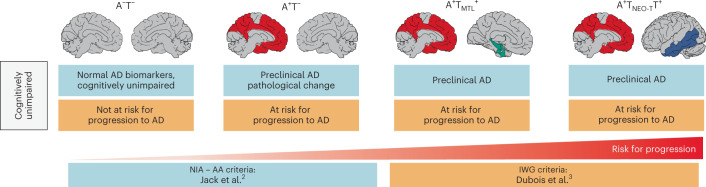
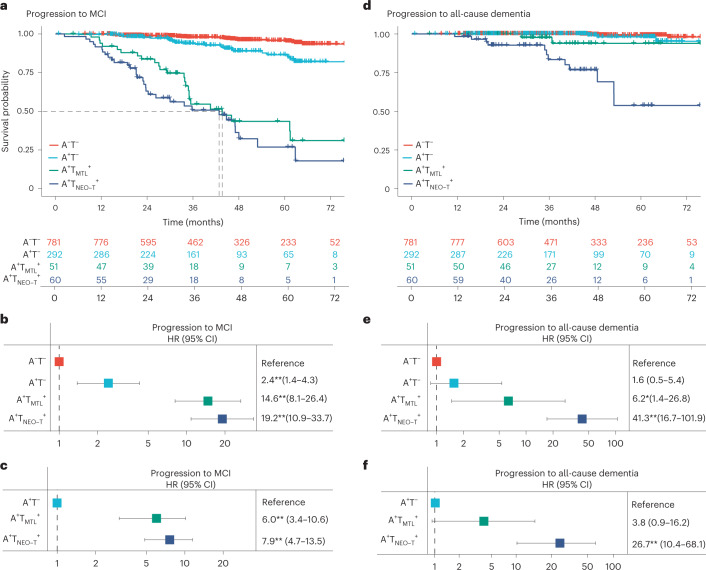
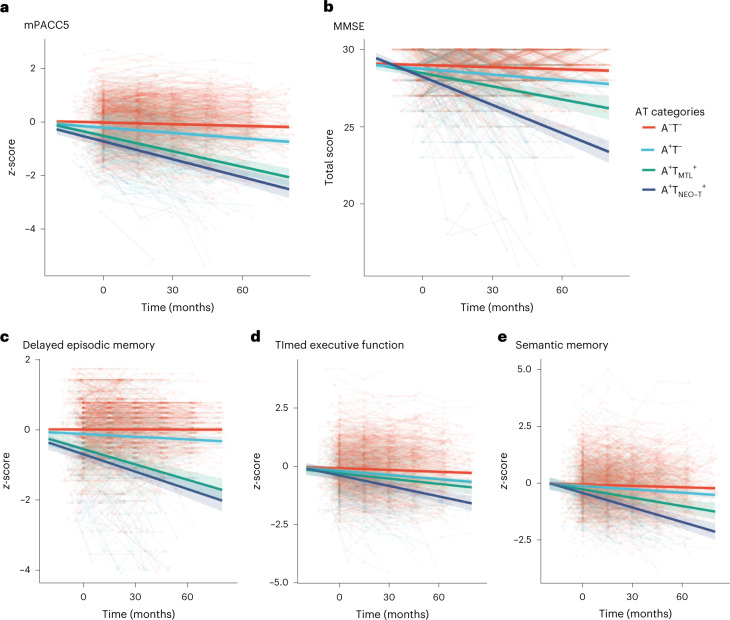
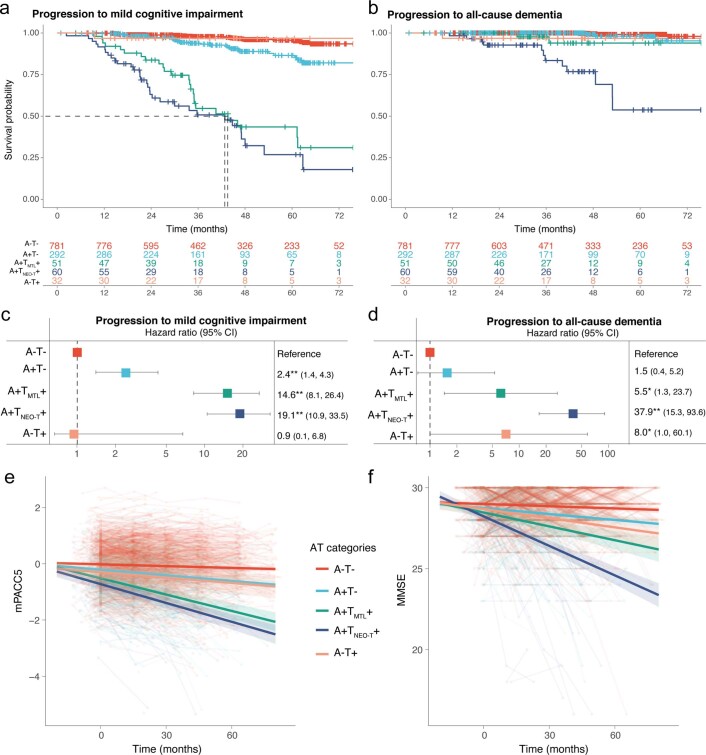
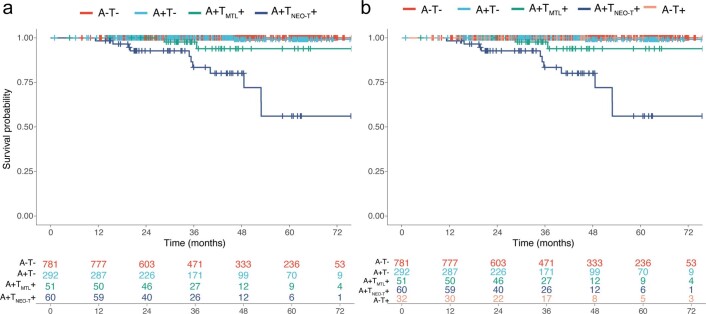
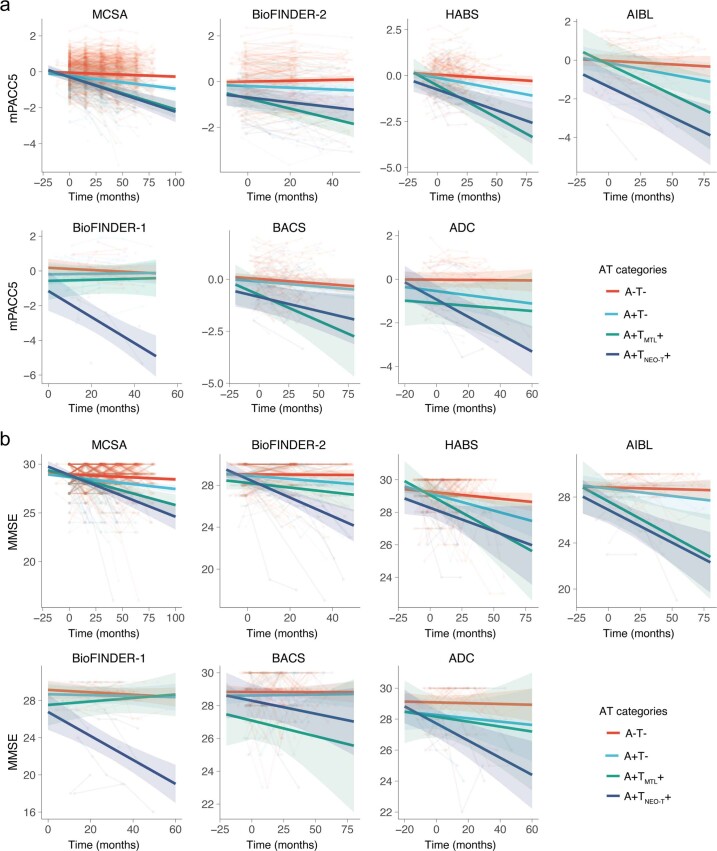
A major unanswered question in the dementia field is whether cognitively unimpaired individuals who harbor both Alzheimer’s disease neuropathological hallmarks (that is, amyloid-β plaques and tau neurofibrillary tangles) can preserve their cognition over time or are destined to decline. In this large multicenter amyloid and tau positron emission tomography (PET) study ( n = 1,325), we examined the risk for future progression to mild cognitive impairment and the rate of cognitive decline over time among cognitively unimpaired individuals who were amyloid PET-positive (A + ) and tau PET-positive (T + ) in the medial temporal lobe (A + T MTL + ) and/or in the temporal neocortex (A + T NEO-T + ) and compared them with A + T − and A − T − groups. Cox proportional-hazards models showed a substantially increased risk for progression to mild cognitive impairment in the A + T NEO-T + (hazard ratio (HR) = 19.2, 95% confidence interval (CI) = 10.9–33.7), A + T MTL + (HR = 14.6, 95% CI = 8.1–26.4) and A + T − (HR = 2.4, 95% CI = 1.4–4.3) groups versus the A − T − (reference) group. Both A + T MTL + (HR = 6.0, 95% CI = 3.4–10.6) and A + T NEO-T + (HR = 7.9, 95% CI = 4.7–13.5) groups also showed faster clinical progression to mild cognitive impairment than the A + T − group. Linear mixed-effect models indicated that the A + T NEO-T + ( β = −0.056 ± 0.005, T = −11.55, P < 0.001), A + T MTL + ( β = −0.024 ± 0.005, T = −4.72, P < 0.001) and A + T − ( β = −0.008 ± 0.002, T = −3.46, P < 0.001) groups showed significantly faster longitudinal global cognitive decline compared to the A − T − (reference) group (all P < 0.001). Both A + T NEO-T + ( P < 0.001) and A + T MTL + ( P = 0.002) groups also progressed faster than the A + T − group. In summary, evidence of advanced Alzheimer’s disease pathological changes provided by a combination of abnormal amyloid and tau PET examinations is strongly associated with short-term (that is, 3–5 years) cognitive decline in cognitively unimpaired individuals and is therefore of high clinical relevance.
Overview
The claims and statistics of this paper haven’t been checked yet.
Free: it reads the open-access text and checks the first 5 claims that cite a source we can check. Create a free account to check every claim.
Integrity signals
Registry
Cites
Statistics
Figures
Verification
Claims the paper makes
The claims and statistics of this paper haven’t been checked yet.
Free: it reads the open-access text and checks the first 5 claims that cite a source we can check. Create a free account to check every claim.
Claims other papers make about this one
Each is checked against this paper’s own text: does it say what the citing paper says it does?
The source backs part of the claim, not all of it — or backs it for a different population, condition or comparison.
In the citing paper
“Cognitively unimpaired people who have amyloid and tau in the medial temporal lobe or temporal neocortex are more likely to decline cognitively compared to people who have neither and, over 6 years, the risk in those that are tau positive in temporal neocortex may approach 50% but samples are small and estimates imprecise. (445)”
From Dementia prevention, intervention, and care: 2024 report of the Lancet standing Commission (2024) · cites this paper as [445]
Experimental — accuracy not yet measuredThe source backs part of the claim, not all of it — or backs it for a different population, condition or comparison.
In the citing paper
“Tau‐PET is often considered a state‐of‐the‐art outcome in AD research studies, a very accurate prognostic tool in patients with AD, and frequently used in clinical trials for AD during screening and to monitor treatment effects. 12 , 14 , 15 , 16”
From Machine learning prediction of tau‐PET in Alzheimer's disease using plasma, MRI, and clinical data (2025) · cites this paper as [14]
Experimental — accuracy not yet measuredThe check wasn’t confident either way, so it gives no verdict — never disputed.
In the citing paper
“Tau‐PET is often considered a state‐of‐the‐art outcome in AD research studies, a very accurate prognostic tool in patients with AD, and frequently used in clinical trials for AD during screening and to monitor treatment effects. 12 , 14 , 15 , 16”
From Machine learning prediction of tau‐PET in Alzheimer's disease using plasma, MRI, and clinical data (2025) · cites this paper as [14]
Experimental — accuracy not yet measured
Self-check
Percentages, sums and reported differences re-computed from the paper’s own numbers.
The self-check needs the paper’s full text.
Citations
Cites
McKhann, G. M., Knopman, D. S., Chertkow, H., Hyman, B. T., Jack, C. R., Kawas, C. H., Klunk, W. E., Koroshetz, W. J., Manly, J. J., Mayeux, R., et al. (2011) · Alzheimer's & Dementia · doi:10.1016/j.jalz.2011.03.005 · Cited by 18,657
Self-citationNIA‐AA Research Framework: Toward a biological definition of Alzheimer's disease
Jack, C. R., Bennett, D. A., Blennow, K., Carrillo, M. C., Dunn, B., Haeberlein, S. B., Holtzman, D. M., Jagust, W., Jessen, F., Karlawish, J., et al. (2018) · Alzheimer's & Dementia · doi:10.1016/j.jalz.2018.02.018 · Cited by 10,537
Self-citationFischl, B., Salat, D. H., Busa, E., Albert, M., Dieterich, M., Haselgrove, C., van der Kouwe, A., Killiany, R., Kennedy, D., Klaveness, S., et al. (2002) · Neuron · doi:10.1016/s0896-6273(02)00569-x · Cited by 8,610
Mild cognitive impairment as a diagnostic entity
Petersen, R. C. (2004) · Journal of Internal Medicine · doi:10.1111/j.1365-2796.2004.01388.x · Cited by 7,864
Self-citationNeuroinflammation in Alzheimer's disease
Heneka, M. T., Carson, M. J., Khoury, J. E., Landreth, G. E., Brosseron, F., Feinstein, D. L., Jacobs, A. H., Wyss-Coray, T., Vitorica, J., Ransohoff, R. M., et al. (2015) · The Lancet Neurology · doi:10.1016/s1474-4422(15)70016-5 · Cited by 6,226
Synapse loss in frontal cortex biopsies in Alzheimer's disease: Correlation with cognitive severity
DeKosky, S. T., & Scheff, S. W. (1990) · Annals of Neurology · doi:10.1002/ana.410270502 · Cited by 2,376
(2018) · Neurology · doi:10.1212/wnl.0000000000004826 · Cited by 2,183
Self-citationNelson, P. T., Alafuzoff, I., Bigio, E. H., Bouras, C., Braak, H., Cairns, N. J., Castellani, R. J., Crain, B. J., Davies, P., Tredici, K. D., et al. (2012) · Journal of Neuropathology & Experimental Neurology · doi:10.1097/nen.0b013e31825018f7 · Cited by 2,050
A/T/N: An unbiased descriptive classification scheme for Alzheimer disease biomarkers
Jack, C. R., Bennett, D. A., Blennow, K., Carrillo, M. C., Feldman, H. H., Frisoni, G. B., Hampel, H., Jagust, W. J., Johnson, K. A., Knopman, D. S., et al. (2016) · Neurology · doi:10.1212/wnl.0000000000002923 · Cited by 1,864 · cited 1×
“Replication across different age groups Based on the lower age of the AT group compared to the biomarker-positive groups (Table 1), we performed the Cox proportional-hazards models and linear mixed models (1) stratified a b”
MethodSelf-citationWhitepaper: Defining and investigating cognitive reserve, brain reserve, and brain maintenance
Stern, Y., Arenaza‐Urquijo, E. M., Bartrés‐Faz, D., Belleville, S., Cantilon, M., Chetelat, G., Ewers, M., Franzmeier, N., Kempermann, G., Kremen, W. S., et al. (2020) · Alzheimer's & Dementia · doi:10.1016/j.jalz.2018.07.219 · Cited by 1,703
Cited by
Items 201–300 of 559
Prognostic model for predicting Alzheimer’s disease conversion using functional connectome manifolds
Kim, S., Kim, M., Lee, J., Park, B., & Park, H. (2024) · Alzheimer s Research & Therapy · doi:10.1186/s13195-024-01589-3 · Cited by 12
Global experience in brain amyloid imaging
Filippi, L., & Schillaci, O. (2025) · Seminars in Nuclear Medicine · doi:10.1053/j.semnuclmed.2025.03.004 · Cited by 12
New Value of Acorus tatarinowii/gramineus Leaves as a Dietary Source for Dementia Prevention
Umeda, T., Sakai, A., Shigemori, K., Nakata, K., Nakajima, R., Yamana, K., & Tomiyama, T. (2024) · Nutrients · doi:10.3390/nu16111589 · Cited by 11
Biel, D., Steward, A., Dewenter, A., Dehsarvi, A., Zhu, Z., Roemer, S. N., Frontzkowski, L. K., Hirsch, F., Palleis, C., Höglinger, G. U., et al. (2025) · Alzheimer s & Dementia · doi:10.1002/alz.70783 · Cited by 11
18F-PI-2620 Tau PET is associated with cognitive and motor impairment in Lewy body disease
Winer, J. R., Vossler, H. A., Young, C. B., Smith, V., Romero, A., Shahid, M., Ruiz, C. A., Wilson, E. N., Anders, D., Morales, A. P., et al. (2024) · Brain Communications · doi:10.1093/braincomms/fcae458 · Cited by 11
Super-multiplexed imaging and coding in the range of radio frequency
Jiang, Y., Fan, Y., Chen, L., Lin, H., & Gao, J. (2025) · Nature Communications · doi:10.1038/s41467-025-57785-8 · Cited by 11
Ziontz, J., Harrison, T. M., Fonseca, C. S., Giorgio, J., Han, F., Lee, J., Jagust, W. J., & Initiative, A. D. N. (2024) · Human Brain Mapping · doi:10.1002/hbm.70083 · Cited by 10
Self-citationAdvances in nanoprobes for molecular MRI of Alzheimer's disease
Parekh, P. A., Badachhape, A., Tanifum, E. A., Annapragada, A., & Ghaghada, K. B. (2024) · Wiley Interdisciplinary Reviews Nanomedicine and Nanobiotechnology · doi:10.1002/wnan.1946 · Cited by 10
de Rijke, T. J., Hendriksen, H. M. A., Fruijtier, A. D., van Harten, A. C., van Leeuwenstijn‐Koopman, M. S. S. A., van de Giessen, E., Trieu, C., Visser, D., Street, R. L., van der Flier, W. M., et al. (2025) · Patient Education and Counseling · doi:10.1016/j.pec.2025.108668 · Cited by 10
Self-citationpS396/pS404 (PHF1) tau vaccine outperforms pS199/pS202 (AT8) in rTg4510 tauopathy model
Hulse, J. P., Maphis, N. M., Peabody, J., Bondu, V., Chackerian, B., & Bhaskar, K. (2025) · npj Vaccines · doi:10.1038/s41541-025-01147-4 · Cited by 10
Murayama, M. A. (2023) · EXPERIMENTAL ANIMALS · doi:10.1538/expanim.22-0164 · Cited by 10
Wadop, Y. N., Bernal, R., Njamnshi, W. Y., Satizábal, C. L., Beiser, A., Ruiz, A., NJAMNSHI, A. K., Vasan, R. S., Seshadri, S. S., Himali, J. J., et al. (2025) · Journal of Neurology · doi:10.1007/s00415-025-13412-6 · Cited by 10
Synergetic effect of β-asarone and cannabidiol against Aβ aggregation in vitro and in vivo
Duan, F., Ju, T., Song, C., Liu, M., Xiong, Y., Han, X., & Lu, W. (2023) · Computational and Structural Biotechnology Journal · doi:10.1016/j.csbj.2023.07.028 · Cited by 10
Clinical–biological Alzheimer's disease stage concordance: insights from cohorts and autopsy data
Trudel, L., Therriault, J., Macedo, A. C., Hosseini, S. A., Arias, J. F., Chan, T., Rahmouni, N., Bezgin, G., Tissot, C., Woo, M. S., et al. (2026) · Brain · doi:10.1093/brain/awag018 · Cited by 10
Souza‐Talarico, J. N., Perkhounkova, Y., Hein, M., Lee, J., Hefti, M. M., & Sindi, S. (2025) · Alzheimer s & Dementia Diagnosis Assessment & Disease Monitoring · doi:10.1002/dad2.70140 · Cited by 10
How can secondary dementia prevention trials of Alzheimer's disease be clinically meaningful?
Liu, K. Y., Thambisetty, M., & Howard, R. J. (2022) · Alzheimer s & Dementia · doi:10.1002/alz.12788 · Cited by 9
Plasma p‐tau217 predicts PET‐based pathological staging for precision Alzheimer disease assessment
Kim, H., Lee, J. H., Chun, J., Kim, Y. J., Park, M., West, T., Kirmess, K. M., Verghese, P. B., Connell, D., Braunstein, J. B., et al. (2026) · Alzheimer s & Dementia · doi:10.1002/alz.71199 · Cited by 9
Porta‐Mas, C., Grau‐Rivera, O., Gispert, J. D., Blasco, G. S., & Sánchez‐Benavides, G. (2025) · Alzheimer s & Dementia · doi:10.1002/alz.70753 · Cited by 9
Lozupone, M., Dibello, V., Resta, E., Sardone, R., Castellana, F., Zupo, R., Lampignano, L., Bortone, I., Mollica, A., Berardino, G., et al. (2025) · Expert Review of Neurotherapeutics · doi:10.1080/14737175.2025.2500752 · Cited by 9
Anderson, C. L., Gross, A. L., Pettigrew, C. A., Vazquez, J. P., Moghekar, A., Oh, S., Na, C. H., Albert, M., Worley, P. F., & Soldan, A. (2025) · Neurobiology of Aging · doi:10.1016/j.neurobiolaging.2025.09.002 · Cited by 9
Digital memory assessments and plasma pTau217 enable efficient preclinical Alzheimer’s trials
Vanderlip, C. R., Gillen, D. L., Grill, J. D., & Stark, C. E. L. (2026) · The Journal of Prevention of Alzheimer s Disease · doi:10.1016/j.tjpad.2026.100503 · Cited by 9
Biomarker-based diagnosis of preclinical Alzheimer disease: time for the clinic?
Sabbagh, M. N., & Decourt, B. (2023) · Nature Reviews Neurology · doi:10.1038/s41582-022-00767-x · Cited by 9
Feldman, H., Villain, N., Frisoni, G. B., & Dubois, B. (2025) · Nature Aging · doi:10.1038/s43587-025-00977-0 · Cited by 9
Functional cognitive disorder in Alzheimer's disease
Cabreira, V., Zeidler, M., McWhirter, L., Pal, S., Stone, J., & Carson, A. J. (2025) · Journal of the Neurological Sciences · doi:10.1016/j.jns.2025.123618 · Cited by 9
Pollard, C. A., Saito, E. R., Burns, J. M., Hill, J. T., & Jenkins, T. G. (2024) · Journal of Personalized Medicine · doi:10.3390/jpm14111104 · Cited by 8
Park, K. H., Choi, S. H., Shim, Y., Youn, Y. C., Yang, D. W., & Kim, S. (2025) · Journal of Clinical Neurology · doi:10.3988/jcn.2025.0037 · Cited by 8
Do, A. N., Song, S., Ali, M., Timsina, J., Wang, L., Western, D., Liu, M., Sanford, J., Rosende-Roca, M., Boada, M., et al. (2026) · Alzheimer s & Dementia · doi:10.1002/alz.71063 · Cited by 8
Emerging concepts towards a translational framework in Alzheimer’s disease
Cozachenco, D., Zimmer, E. R., & Lourenco, M. V. (2023) · Neuroscience & Biobehavioral Reviews · doi:10.1016/j.neubiorev.2023.105246 · Cited by 8
Umeda, T., Shigemori, K., Uekado, R., Matsuda, K., & Tomiyama, T. (2023) · GeroScience · doi:10.1007/s11357-023-00950-y · Cited by 8
Catecholaminergic nucleus integrity and Alzheimer's pathology, symptoms, and progression
David, M., Kolanko, M., Parker, T. D., Nilforooshan, R., Zimmerman, K. A., Olivares, C. B., Hoang, K., Brandt, J., Triantafyllou, C., Lally, P., et al. (2025) · Alzheimer s & Dementia · doi:10.1002/alz.70749 · Cited by 8
Liu, S., Luo, X., Chong, J. S. X., Jiaerken, Y., Youn, S. H., Zhang, M., Zhou, J. H., & Initiative, A. D. N. (2024) · Human Brain Mapping · doi:10.1002/hbm.26765 · Cited by 8
Defining patient‐centered amyloid PET thresholds for the onset of tauopathy in Alzheimer's disease
Zhu, Z., Steward, A., Dehsarvi, A., Roemer, S. N., Dewenter, A., Biel, D., Hirsch, F., Frontzkowski, L. K., Pescoller, J., Klonowski, M., et al. (2026) · Alzheimer s & Dementia · doi:10.1002/alz.71064 · Cited by 8
Self-citationCoomans, E. M., van Tol, B. G. J., Groot, C., Smith, R. A., Palmqvist, S., Stomrud, E., Pontecorvo, M. J., Shcherbinin, S., Kennedy, I. A., Kotari, V., et al. (2025) · European Journal of Nuclear Medicine and Molecular Imaging · doi:10.1007/s00259-025-07384-y · Cited by 8
Self-citationLee, Y., Kang, S. W., Lee, S., Jeon, S., Ye, B. S., Yun, M., & Initiative, T. A. D. N. (2025) · Journal of Clinical Neurology · doi:10.3988/jcn.2025.0218 · Cited by 8
Nasrallah, I. M., Kuo, P. H., Nordberg, A. K., Bohnen, N. I., & Ponisio, M. R. (2025) · American Journal of Roentgenology · doi:10.2214/ajr.24.32325 · Cited by 7
Xiao, J.-W., Wang, J., Wang, J., Li, H., Li, J., Xie, X., Geng, J., Zhi, N., Cao, W., Song, Y., et al. (2025) · NeuroImage Clinical · doi:10.1016/j.nicl.2025.103893 · Cited by 7
What is "biological Alzheimer's disease"?
Nitríni, R. (2024) · Dementia & Neuropsychologia · doi:10.1590/1980-5764-dn-2024-e001 · Cited by 7
The challenging concept of preclinical Alzheimer's disease
Wallon, D., & Garnier‐Crussard, A. (2025) · Revue Neurologique · doi:10.1016/j.neurol.2025.07.016 · Cited by 7
Tau Protein Accumulation Trajectory-Based Brain Age Prediction in the Alzheimer’s Disease Continuum
Wang, M., Wei, M., Wang, L., Song, J., Rominger, A., Shi, K., & Jiang, J. (2024) · Brain Sciences · doi:10.3390/brainsci14060575 · Cited by 7
López‐Martos, D., Suárez‐Calvet, M., Milà‐Alomà, M., Gispert, J. D., Salvadó, G., Brugulat‐Serrat, A., Shekari, M., Minguillón, C., Zetterberg, H., Blennow, K., et al. (2025) · Neurology · doi:10.1212/wnl.0000000000214308 · Cited by 7
Clemmensen, F. K., Gramkow, M. H., González‐Ortiz, F., Benedet, A. L., Tan, K., Traichel, W., Lindberg, U., Henriksen, O. M., Zetterberg, H., Blennow, K., et al. (2025) · Alzheimer s Research & Therapy · doi:10.1186/s13195-025-01892-7 · Cited by 7
Lee, J., Sim, S., Jin, Y., Park, H., Byeon, E. Y., Kim, S. J., Yun, S., Lee, H., Jeong, D. U., Suh, J. M., et al. (2025) · Advanced Science · doi:10.1002/advs.202505495 · Cited by 7
Simon, S. S., Varangis, E. M. L., Lee, S., Gu, Y., Gazes, Y., Razlighi, Q. R., Habeck, C. G., & Stern, Y. (2023) · Neurobiology of Aging · doi:10.1016/j.neurobiolaging.2023.10.001 · Cited by 7
The emerging era of staging Alzheimer’s disease pathology using plasma biomarkers
Mattsson, N., & Palmqvist, S. (2023) · Brain · doi:10.1093/brain/awad112 · Cited by 7
Self-citation18F ‐Florzolotau PET Imaging Unveils Tau Pathology in Dementia with Lewy Bodies
Tang, G., Lu, J., Li, X., Yao, R., Yang, Y., Jiao, F., Chen, M., Liang, X., Ju, Z., Ge, J., et al. (2024) · Movement Disorders · doi:10.1002/mds.30055 · Cited by 7
Alpha-Synuclein co-pathology in Alzheimer’s Disease drives tau accumulationPreprint
Struebing, F. L., Song, X., Vecchi, T. D., Widmann, J., Fierli, F., Ruf, V., Tang, Q., Arzberger, T., Roeber, S., Koeglsperger, T., et al. (2025) · Research Square · doi:10.1101/2025.01.24.634706 · Cited by 7
Elevated temporal tau PET predicts faster cognitive decline in women than men: A meta‐analysis
Li, A., Klinger, H. M., Seto, M., Birkenbihl, C., Properzi, M. J., Farrell, M. E., Thibault, E. G., Schultz, A. P., Townsend, D. L., Cuppels, M., et al. (2026) · Alzheimer s & Dementia · doi:10.1002/alz.71031 · Cited by 7
Self-citationXu, S., Liu, Y., Wáng, Q., Liu, F., Xu, F., & Liu, Y. (2023) · Frontiers in Cardiovascular Medicine · doi:10.3389/fcvm.2023.1150432 · Cited by 7
López, O. L., Villemagne, V. L., Chang, Y., Cohen, A. D., Klunk, W. E., Mathis, C. A., Pascoal, T. A., Ikonomović, M. D., Rowe, C. C., Doré, V., et al. (2023) · Neurology · doi:10.1212/wnl.0000000000207920 · Cited by 7
Self-citationThe role of actigraphy in detecting and characterizing the early phases of Alzheimer’s disease
Winer, J. R. (2024) · SLEEP · doi:10.1093/sleep/zsae076 · Cited by 7
Chae, H., Kim, H.-J., Kim, Y.-J., Ji, H., Oh, E., & Yang, D. W. (2025) · Annals of Laboratory Medicine · doi:10.3343/alm.2024.0498 · Cited by 7
Reference proteins to improve Core 1 and Core 2 Alzheimer’s disease CSF and plasma biomarkers
Karlsson, L., Janelidze, S., Barthélemy, N. R., Horie, K., Therriault, J., Gaetani, L., Bellomo, G., Schindler, S. E., Vogel, J. W., Arvidsson, I., et al. (2025) · Brain · doi:10.1093/brain/awaf375 · Cited by 7
Self-citationWen, Z., & Biros, G. (2025) · Medical Image Analysis · doi:10.1016/j.media.2025.103757 · Cited by 6
Lingad, J. N., Vanderlip, C. R., Wright, S. T., Sordo, L., Head, E., & Stark, C. E. L. (2025) · Neurobiology of Aging · doi:10.1016/j.neurobiolaging.2025.10.005 · Cited by 5
Machado, L. S., Vidor, P. R., Perquim, L., Limberger, C., Machado, L., da Rocha, A. S., Soares, C., Rahmouni, N., Brum, W. S., Bellaver, B., et al. (2025) · Molecular Psychiatry · doi:10.1038/s41380-025-03160-4 · Cited by 6
Alzheimer's disease: part 2 – the present
Nitríni, R. (2024) · Arquivos de Neuro-Psiquiatria · doi:10.1055/s-0044-1791755 · Cited by 6
Yazdi, B. G., & Razlighi, Q. R. (2025) · Journal of Translational Medicine · doi:10.1186/s12967-025-06721-x · Cited by 6
Associations of cerebral amyloid beta and tau with cognition from midlife
Gonzales, M. M., O’Donnell, A., Ghosh, S., Thibault, E. G., Tanner, J. A., Satizábal, C. L., DeCarli, C. S., Fakhri, G. E., Johnson, K. A., Beiser, A., et al. (2024) · Alzheimer s & Dementia · doi:10.1002/alz.14060 · Cited by 6
Self-citationG-protein coupled estrogen receptor 1, amyloid-β, and tau tangles in older adults
Oveisgharan, S., Yu, L., Lopes, K. D. P., Petyuk, V., Tasaki, S., Vialle, R. A., Menon, V., Wang, Y., Jager, P. L. D., Schneider, J. A., et al. (2024) · Communications Biology · doi:10.1038/s42003-024-06272-9 · Cited by 6
Air pollution as a key risk factor for alzheimer’s disease: A comprehensive review
Zhu, X., Guo, C., Zhang, Y., & Wei, Y. (2025) · Environmental Technology & Innovation · doi:10.1016/j.eti.2025.104555 · Cited by 7
Lane, R. M., Darreh‐Shori, T., Junge, C., Li, D. X., Yang, Q., Edwards, A., Graham, D. L., Moore, K. M., & Mummery, C. J. (2024) · BMC Neurology · doi:10.1186/s12883-024-03611-5 · Cited by 6
Bachmann, D., Wybitul, M., Buchmann, A., Gericke, C., Saake, A., Studer, S. T., Rauen, K., Gruber, E., Blennow, K., Zetterberg, H., et al. (2025) · Alzheimer s & Dementia · doi:10.1002/alz.70802 · Cited by 6
Current status of prevention strategies adapted for Alzheimer's disease
Singh, A., Sethi, P., Ghosh, S., Singh, K. K., Rohatgi, S., Singh, P. K., & Sinha, J. K. (2024) · Elsevier eBooks · doi:10.1016/b978-0-443-15540-6.00004-5 · Cited by 6
Teipel, S. J., Dyrba, M., Levin, F., Altenstein, S., Berger, M., Beyle, A., Brosseron, F., Büerger, K., Burow, L., Dobisch, L., et al. (2023) · Journal of Alzheimer s Disease Reports · doi:10.3233/adr-230027 · Cited by 6
MRI-free processing of tau PET images for early detection
Carlson, M. L., Smith, V., Johns, E., Young, C. B., Vossler, H. A., Ward, T. J., Harrison, T. M., Tosun, D., Hohman, T. J., Landau, S. M., et al. (2024) · Imaging Neuroscience · doi:10.1162/imag_a_00369 · Cited by 6
Stephenson, H. G., Betthauser, T. J., Jonaitis, E. M., Hulle, C. V., Kollmorgen, G., Quijano‐Rubio, C., Ewers, M., Denecke, J., Ulland, T. K., Chin, N. A., et al. (2026) · Brain Behavior and Immunity · doi:10.1016/j.bbi.2026.106468 · Cited by 6
Mapping Alzheimer's disease heterogeneity with molecular imaging biomarkers
Harput, E., Boccalini, C., Mathoux, G., Prior, J. O., Dardel, N. T., Jreige, M., & Garibotto, V. (2025) · European Journal of Clinical Investigation · doi:10.1111/eci.70163 · Cited by 6
Integration over reduction: multimodal PET and fluid biomarkers in Alzheimer's disease and beyond
Blūma, M., Chiotis, K., & Nordberg, A. K. (2026) · Current Opinion in Neurology · doi:10.1097/wco.0000000000001462 · Cited by 6
Anti-CMV IgG Seropositivity is Associated with Plasma Biomarker Evidence of Amyloid-β Accumulation
Parker, D., Whitson, H. E., Smith, P. J., Kraus, V. B., Huebner, J. L., North, R., Kraus, W. E., Cohen, H. J., & Huffman, K. M. (2024) · Journal of Alzheimer s Disease · doi:10.3233/jad-230220 · Cited by 6
Sex differences in Alzheimer's disease plasma biomarker levels and clinical utility
Milà‐Alomà, M., Hausle, I., Myoraku, A., Sorensen, C., Thropp, P., Shaw, L. M. J., Weiner, M. W., Tosun, D., & Initiative, A. D. N. (2026) · Alzheimer s & Dementia · doi:10.1002/alz.71244 · Cited by 6
Biomarkers in CNS Drug Discovery, Drug Development, and Clinical Implementation
Caro, V. D., Williams, C., North, H. A., & Hamby, M. E. (2025) · Wiley eBooks · doi:10.1002/9783527844678.ch7 · Cited by 5
Chen, A. M., Gajdošík, M., Ahmed, W., Ahn, S., Babb, J. S., Blessing, E., Boutajangout, A., de Leon, M. J., Debure, L., Gaggi, N. L., et al. (2024) · NeuroImage · doi:10.1016/j.neuroimage.2024.120742 · Cited by 5
Moderating effects of plasma glial fibrillary acidic protein along the Alzheimer's disease continuum
Lee, S. Y., Diaz, V. E., Emanuel, O. M., Matusz, E. F., Webb, J. D., Chan, B., Lago, A. L., Wang, W., DeSimone, J. C., Rojas, J. C., et al. (2025) · Alzheimer s & Dementia · doi:10.1002/alz.70626 · Cited by 5
Mueller, K. D. (2023) · Springer eBooks · doi:10.1007/978-3-031-45190-4_4 · Cited by 5
Umeda, T., Sakai, A., Uekado, R., Shigemori, K., Nakajima, R., Yamana, K., & Tomiyama, T. (2025) · eLife · doi:10.7554/elife.100737.2 · Cited by 5
Predictive Value of Plasma Biomarkers in Tau‐ PET Transitions
Graff‐Radford, J., Syrjanen, J. A., Vemuri, P., Lowe, V. J., Schwarz, C. G., Wiste, H. J., Kremers, W. K., Algeciras‐Schimnich, A., Binette, A. P., Smith, R. A., et al. (2025) · Annals of Neurology · doi:10.1002/ana.78003 · Cited by 5
Self-citationKatsuhisa, M., Teshirogi, S., Yamamoto, S., Oyama, A., Ito, Y., Ikegawa, Y., Okawara, M., Nakajima, T., Nakatani, Y., Bando, H., et al. (2026) · Geriatrics and gerontology international/Geriatrics & gerontology international · doi:10.1111/ggi.70439 · Cited by 5
Molinare, C. P., Soberanes, D., Dubbelman, M. A., Hsieh, S., Johnson, K. A., Rentz, D. M., Sperling, R. A., Marshall, G. A., Amariglio, R. E., Papp, K. V., et al. (2025) · Alzheimer s & Dementia · doi:10.1002/alz.70047 · Cited by 5
Self-citationEntorhinal tau impairs short-term memory binding in preclinical Alzheimer’s disease
Huyghe, L., Quenon, L., Salman, Y., Colmant, L., Gérard, T., Malotaux, V., Boyer, E., Dricot, L., Lhommel, R., Woodard, J. L., et al. (2025) · Journal of the International Neuropsychological Society · doi:10.1017/s1355617725000165 · Cited by 5
Gogola, A., Lopresti, B. J., Minhas, D. S., López, O. L., Cohen, A. D., & Villemagne, V. L. (2025) · Geriatrics · doi:10.3390/geriatrics10010027 · Cited by 5
Transcranial Photobiomodulation for Neuromodulation of Brain Disorders: A Perspective
Ridder, D. D., Hamblin, M. R., & Vanneste, S. (2026) · Neuromodulation Technology at the Neural Interface · doi:10.1016/j.neurom.2025.12.006 · Cited by 5
Demirsoy, İ., Ghanbarian, E., Khorsand, B., Nallapu, B. T., Petersen, K. K., Lipton, R. B., Sajjadi, S. A., Rabin, L. A., & Ezzati, A. (2025) · Alzheimer s & Dementia Diagnosis Assessment & Disease Monitoring · doi:10.1002/dad2.70128 · Cited by 5
Demirsoy, İ. (2025) · Balkan Medical Journal · doi:10.4274/balkanmedj.galenos.2025.2025-2-93 · Cited by 5
Medial temporal lobe tau–neurodegeneration mismatch from structural imaging and plasma biomarkers
Lyu, X., Mundada, N. S., Brown, C., Sadeghpour, N., McGrew, E., Xie, L., Li, Y., Wuestefeld, A., Duong, M. T., Cook, P. A., et al. (2026) · Brain · doi:10.1093/brain/awag105 · Cited by 5
Jadick, M. F., Robinson, T. L., Farrell, M. E., Klinger, H. M., Buckley, R. F., Marshall, G. A., Vannini, P., Rentz, D. M., Johnson, K. A., Sperling, R. A., et al. (2024) · Neurology · doi:10.1212/wnl.0000000000209447 · Cited by 4
Self-citationDolado, A. O., Binette, A. P., Benedet, A. L., Pola, I., Tan, K., Traichel, W., Hristovska, I., Mammana, A., Stomrud, E., Salvadó, G., et al. (2026) · medRxiv · doi:10.64898/2026.02.04.26345534 · Cited by 4
Self-citationIdentifying cognitive test scores associated with early tau burden in Alzheimer's disease
Terao, C. M., Alexander, M. W., Chalmers, R. P., Boshmaf, S. Z., Paterson, J., Black, S. E., Papp, K. V., Sperling, R. A., & Rabin, J. S. (2025) · Alzheimer s & Dementia Diagnosis Assessment & Disease Monitoring · doi:10.1002/dad2.70052 · Cited by 4
Self-citationComparison of amyloid PET acquired through standardized and unstandardized protocols
Cody, K. A., Sokolowski, A., Guerra, L. M., Insel, P. S., Jagust, W., Harrison, T. M., & Mormino, E. C. (2025) · Alzheimer s & Dementia · doi:10.1002/alz.70697 · Cited by 4
Self-citationTherriault, J., Gauthier, S. G., & Rosa‐Neto, P. (2023) · The Journal of Prevention of Alzheimer s Disease · doi:10.14283/jpad.2023.52 · Cited by 4
Denkinger, M. N., Baker, S. L., Harrison, T. M., Chadwick, T. A., & Jagust, W. J. (2024) · Neurobiology of Aging · doi:10.1016/j.neurobiolaging.2024.11.002 · Cited by 4
Self-citationKhaled, M., Al-Jamal, H., Tajer, L., & El-Mir, R. (2024) · Journal of Alzheimer s Disease · doi:10.3233/jad-231432 · Cited by 4
Athanasaki, A., Tsantzali, I., Theodorou, A., Michalopoulou, A., Constantinides, V. C., Boufidou, F., Tzartos, J. S., Tsalouchidou, P., Zompola, C., Paraskevas, S. G., et al. (2025) · International Journal of Molecular Sciences · doi:10.3390/ijms26199531 · Cited by 4
Johnson, A. S., Houlihan, H. M., Ziaggi, G., Maldonado, A., Smith, A. C., Heuer, L. B., Guzman, D., Okafor, A., Sanchez, T., Palacios, C., et al. (2026) · Alzheimer s & Dementia Diagnosis Assessment & Disease Monitoring · doi:10.1002/dad2.70264 · Cited by 4
Mattsson, N., Karlsson, L., Tang, W., Blennow, K., Zetterberg, H., Bateman, R. J., Schindler, S. E., Barthélemy, N. R., Palmqvist, S., Stomrud, E., et al. (2025) · EMBO Molecular Medicine · doi:10.1038/s44321-025-00348-7 · Cited by 4
Self-citationBendetowicz, D., Planche, V., Bézard, E., Dehay, B., & Meissner, W. G. (2025) · Journal of Parkinson s Disease · doi:10.1177/1877718x241313443 · Cited by 4
AD‐related plasma biomarkers in centenarians: links to cognition and neuropathology
Lorenz, L. M. C., Rohde, S. K., Luimes, M. C., Rozemüller, A. J. M., Bank, N. B., Hulsman, M., Graat, M. J. I., van der Hoorn, M. E., Daatselaar, D. A. H., Gouda, M., et al. (2025) · Alzheimer s & Dementia · doi:10.1002/alz.70969 · Cited by 4
Rosenich, E., & Lim, Y. Y. (2025) · Alzheimer s Research & Therapy · doi:10.1186/s13195-025-01776-w · Cited by 4
Tau seeding activity in Alzheimer's disease: Characteristics, factors, and applications
Liu, Y., Chen, Y., Chen, Z., Wan, H., & Wu, C. (2025) · Journal of Alzheimer s Disease · doi:10.1177/13872877251378772 · Cited by 4
Aschenbrenner, A. J., Hassenstab, J. J., Schindler, S. E., Janelidze, S., Hansson, O., Morris, J. C., & Grober, E. H. (2024) · The Journal of Prevention of Alzheimer s Disease · doi:10.14283/jpad.2024.130 · Cited by 4
Self-citationBehaviorally meaningful functional networks mediate the effect of Alzheimer’s pathology on cognition
Ziontz, J., Harrison, T. M., Chen, X., Giorgio, J., Adams, J. N., Wang, Z., Jagust, W. J., & Initiative, A. D. N. (2024) · Cerebral Cortex · doi:10.1093/cercor/bhae134 · Cited by 4
Self-citation
Metadata
- Authors
- Ossenkoppele, R., Pichet Binette, A., Groot, C., Smith, R., Strandberg, O., Palmqvist, S., Stomrud, E., Tideman, P., Ohlsson, T., Jögi, J., Johnson, K., Sperling, R., Dore, V., Masters, C. L., Rowe, C., Visser, D., van Berckel, B. N. M., van der Flier, W. M., Baker, S., Jagust, W. J., Wiste, H. J., Petersen, R. C., Jack, C. R., & Hansson, O.
- Affiliations
- Lund University (SE)
- Skåne University Hospital (SE)
- Brigham and Women's Hospital (US)
- Florey Institute of Neuroscience and Mental Health (AU)
- Amsterdam Neuroscience (NL)
- Lawrence Berkeley National Laboratory (US)
- Mayo Clinic (US)
- Corresponding author
- Ossenkoppele, Rik
- Hansson, Oskar
- ORCID
- Ossenkoppele, Rik
- Pichet Binette, Alexa
- Groot, Colin
- Smith, Ruben
- Palmqvist, Sebastian
- Stomrud, Erik
- Tideman, Pontus
- Jögi, Jonas
- Johnson, Keith
- Sperling, Reisa
- Dore, Vincent
- Masters, Colin L.
- Rowe, Christopher
- Visser, Denise
- van Berckel, Bart N. M.
- van der Flier, Wiesje M.
- Baker, Suzanne
- Jagust, William J.
- Wiste, Heather J.
- Petersen, Ronald C.
- Jack, Clifford R.
- Hansson, Oskar
- Venue
- Nature Medicine
- Published
- 2022-11
- Volume
- 28
- Issue
- 11
- Pages
- 2381-2387
- ISSN
- 1078-8956 (ISSN-L)
- 1546-170X
- PMC
- PMC9671808
- OpenAlex
- W4308773890
- Semantic Scholar
- 11bdea0193b4c38c63eac2665bdfd211fd699fc4
- Cited by
- 496
- References
- 62
- Citations by year
- 2026: 110 · 2025: 171 · 2024: 130 · 2023: 79 · 2022: 5
- FWCI
- 62.45
- Type
- journal article
- Language
- en
- Open access
- hybrid
- doi.org
- Licence
- cc-by
- creativecommons.org/licenses/by/4.0 (tdm)
- creativecommons.org/licenses/by/4.0 (vor, 9 d)
- Locations
- Nature Medicine (publishedVersion, cc-by)
- medRxiv (acceptedVersion, cc-by-nc)
- PubMed Central (publishedVersion, cc-by)
- PubMed (publishedVersion)
- Pure Amsterdam UMC (publishedVersion, cc-by)
- Amsterdam UMC (VU Amsterdam) - Institutional Repository (publishedVersion, cc-by)
- Minerva Access (University of Melbourne) (submittedVersion, cc-by)
- Lund University Publications (Lund University) (submittedVersion)
- Data Archiving and Networked Services (DANS) (submittedVersion, other-oa)
- Funders
- Mayo Clinic (U01 AG006786)
- Alzheimer's Association (P01AG036694)
- Massachusetts General Hospital
- Biogen
- BrightFocus Foundation (U01 AG006786, A2021013F)
- EU Joint Programme – Neurodegenerative Disease Research
- Australian Government
- GHR Foundation
- Health~Holland (#LSHM20106)
- European Commission (EU-FP7, 298314, HORIZON2020)
- ZonMw (LSHM20106, #73305095007, 10510022110010)
- Nederlandse Organisatie voor Wetenschappelijk Onderzoek (#73305095007, EU-FP7)
- Lunds Universitet
- Knut och Alice Wallenbergs Stiftelse (2017‐0383, 2015.0125, FO2021-0293, 2020-O000028)
- Vetenskapsrådet (2016-00906, FO2021-0293, 2018-, 2020-O000028, 2017-00383)
- Konung Gustaf V:s och Drottning Victorias Frimurarestiftelse (2020-O000028, 2020-0314)
- Hersenstichting
- Stichting Dioraphte
- Alzheimer Nederland (LSHM20106)
- Skånes universitetssjukhus (2020-O000028)
- Marcus och Amalia Wallenbergs minnesfond (2015.0125)
- Amsterdam Neuroscience
- GIESKES-STRIJBIS FONDS
- Parkinsonfonden (1280/20)
- Avid Radiopharmaceuticals
- National Institute on Aging (U01AG006786, AG-006786, F31AG067677, P01AG036694)
- H2020 European Research Council (949570)
- Topics
- Health Sciences › Medicine › Psychiatry and Mental health › Dementia and Cognitive Impairment Research
- Life Sciences › Neuroscience › Cellular and Molecular Neuroscience › Alzheimer's disease research and treatments
- Health Sciences › Medicine › Oncology › Cancer-related cognitive impairment studies
- Keywords
- amyloid PET, tau PET, cognitively unimpaired individuals, Alzheimer's disease, amyloid plaques, neurofibrillary tangles, mild cognitive impairment, cognitive decline, medial temporal lobe, temporal neocortex, dementia risk, longitudinal cognitive trajectories, neurodegeneration biomarkers
- MeSH terms
- Alzheimer Disease, Amyloid, Amyloidosis, Brain, Humans, Biomarkers, Amyloid beta-Peptides, tau Proteins, Positron-Emission Tomography, Plaque, Amyloid, Cognitive Dysfunction
About these checks
Registry, retraction, Cites and statistics results are computed, not judged, with one exception: a printed reference that no index lists is read once by a model before it counts as a citation error. Claims are extracted by a model and kept only when their quote appears verbatim in the text; each cited source is then checked, with a model’s help, for whether it says what the claim relies on. Those verdicts can be wrong — read the claim’s quote and the cited source before relying on one.
Statistics and arithmetic are recomputed, not judged.
Confidence bands are shown only for fields calibrated on our annotated test set. None is calibrated yet, so no band is shown.
What counts as a claim ›How we measure confidence ›How we check this ›
Are you an author, or do you see a problem with this page? Request a review
Data sources
Bibliographic data: Semantic Scholar, OpenAlex, Crossref.
Contains information from the Semantic Scholar Academic Graph Datasets, made available under the ODC Attribution License (ODC-BY 1.0).
Semantic Scholar’s data is described in: Kinney, R., et al. (2023). The Semantic Scholar Open Data Platform. arXiv:2301.10140.
