

Amyloid and tau PET-positive cognitively unimpaired individuals are at high risk for future cognitive decline
Open accessPublished version of a preprint
The DOI matches its Crossref record; 62 of the 62 references it cites were found in a registry or an index.
Abstract
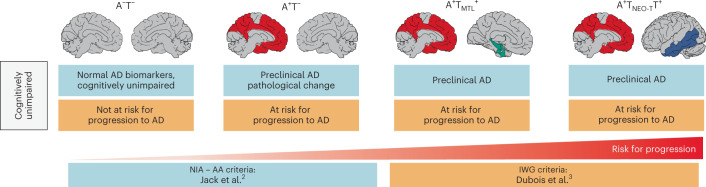
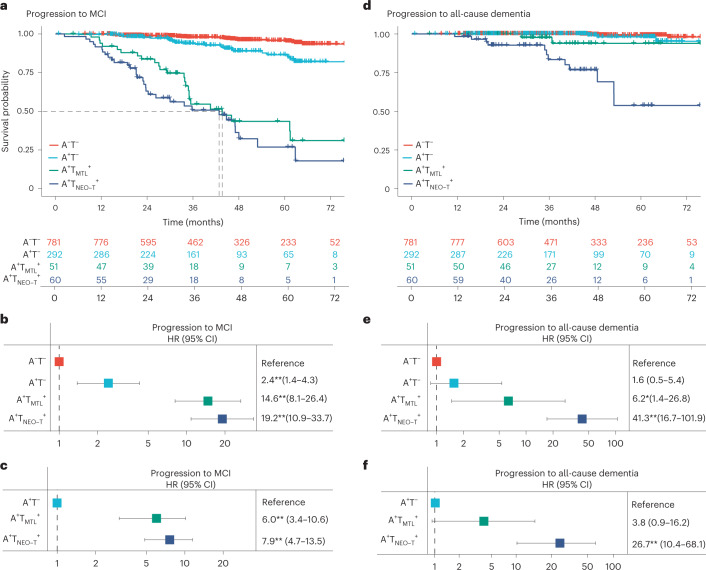
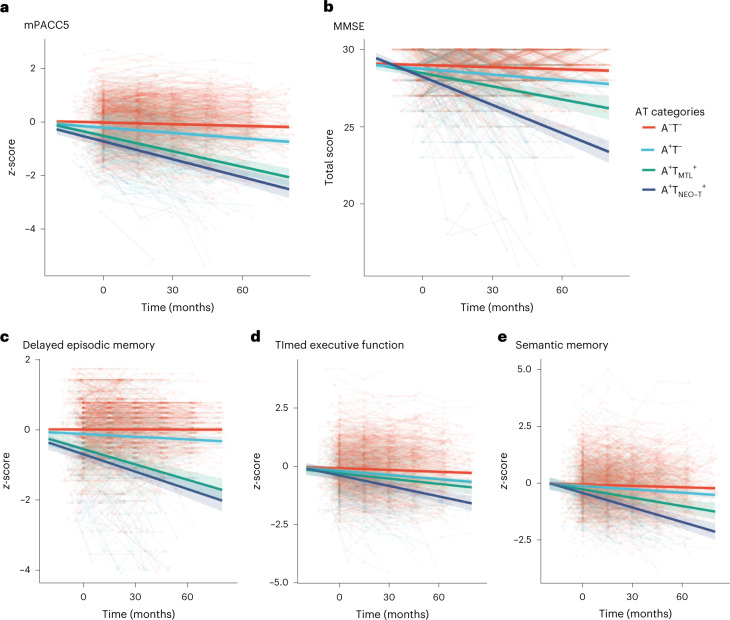
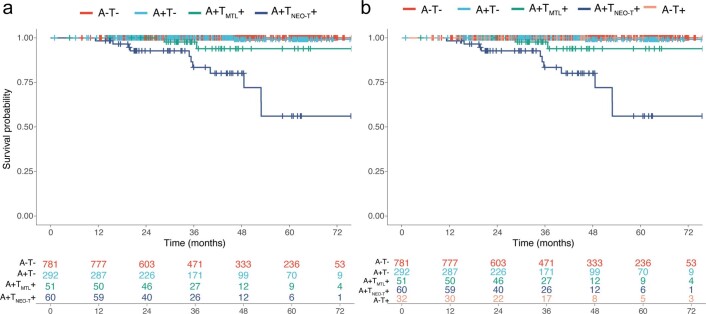
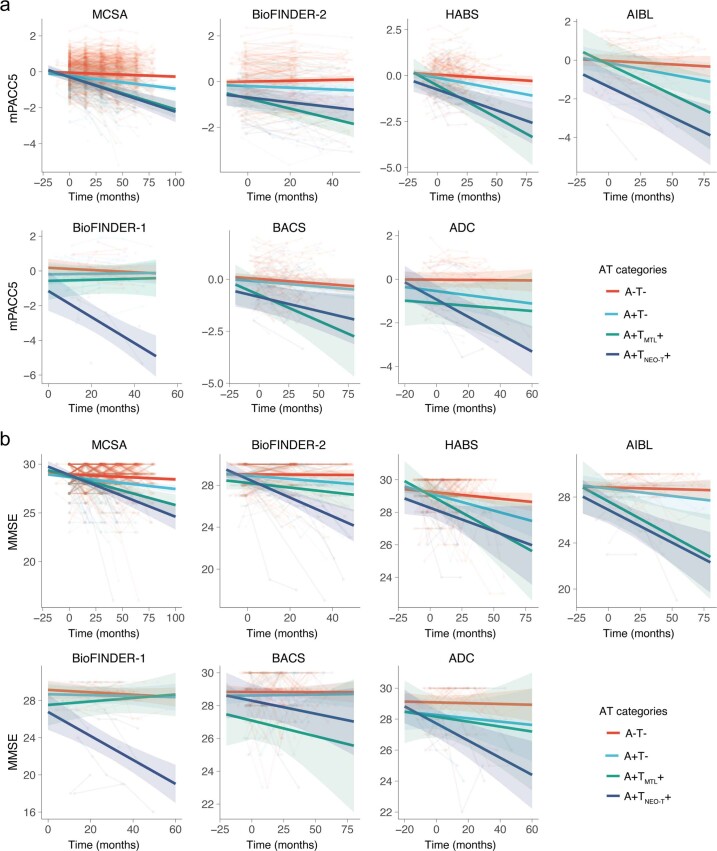
A major unanswered question in the dementia field is whether cognitively unimpaired individuals who harbor both Alzheimer’s disease neuropathological hallmarks (that is, amyloid-β plaques and tau neurofibrillary tangles) can preserve their cognition over time or are destined to decline. In this large multicenter amyloid and tau positron emission tomography (PET) study ( n = 1,325), we examined the risk for future progression to mild cognitive impairment and the rate of cognitive decline over time among cognitively unimpaired individuals who were amyloid PET-positive (A + ) and tau PET-positive (T + ) in the medial temporal lobe (A + T MTL + ) and/or in the temporal neocortex (A + T NEO-T + ) and compared them with A + T − and A − T − groups. Cox proportional-hazards models showed a substantially increased risk for progression to mild cognitive impairment in the A + T NEO-T + (hazard ratio (HR) = 19.2, 95% confidence interval (CI) = 10.9–33.7), A + T MTL + (HR = 14.6, 95% CI = 8.1–26.4) and A + T − (HR = 2.4, 95% CI = 1.4–4.3) groups versus the A − T − (reference) group. Both A + T MTL + (HR = 6.0, 95% CI = 3.4–10.6) and A + T NEO-T + (HR = 7.9, 95% CI = 4.7–13.5) groups also showed faster clinical progression to mild cognitive impairment than the A + T − group. Linear mixed-effect models indicated that the A + T NEO-T + ( β = −0.056 ± 0.005, T = −11.55, P < 0.001), A + T MTL + ( β = −0.024 ± 0.005, T = −4.72, P < 0.001) and A + T − ( β = −0.008 ± 0.002, T = −3.46, P < 0.001) groups showed significantly faster longitudinal global cognitive decline compared to the A − T − (reference) group (all P < 0.001). Both A + T NEO-T + ( P < 0.001) and A + T MTL + ( P = 0.002) groups also progressed faster than the A + T − group. In summary, evidence of advanced Alzheimer’s disease pathological changes provided by a combination of abnormal amyloid and tau PET examinations is strongly associated with short-term (that is, 3–5 years) cognitive decline in cognitively unimpaired individuals and is therefore of high clinical relevance.
Overview
The claims and statistics of this paper haven’t been checked yet.
Free: it reads the open-access text and checks the first 5 claims that cite a source we can check. Create a free account to check every claim.
Integrity signals
Registry
Cites
Statistics
Figures
Verification
Claims the paper makes
The claims and statistics of this paper haven’t been checked yet.
Free: it reads the open-access text and checks the first 5 claims that cite a source we can check. Create a free account to check every claim.
Claims other papers make about this one
Each is checked against this paper’s own text: does it say what the citing paper says it does?
The source backs part of the claim, not all of it — or backs it for a different population, condition or comparison.
In the citing paper
“Cognitively unimpaired people who have amyloid and tau in the medial temporal lobe or temporal neocortex are more likely to decline cognitively compared to people who have neither and, over 6 years, the risk in those that are tau positive in temporal neocortex may approach 50% but samples are small and estimates imprecise. (445)”
From Dementia prevention, intervention, and care: 2024 report of the Lancet standing Commission (2024) · cites this paper as [445]
Experimental — accuracy not yet measuredThe source backs part of the claim, not all of it — or backs it for a different population, condition or comparison.
In the citing paper
“Tau‐PET is often considered a state‐of‐the‐art outcome in AD research studies, a very accurate prognostic tool in patients with AD, and frequently used in clinical trials for AD during screening and to monitor treatment effects. 12 , 14 , 15 , 16”
From Machine learning prediction of tau‐PET in Alzheimer's disease using plasma, MRI, and clinical data (2025) · cites this paper as [14]
Experimental — accuracy not yet measuredThe check wasn’t confident either way, so it gives no verdict — never disputed.
In the citing paper
“Tau‐PET is often considered a state‐of‐the‐art outcome in AD research studies, a very accurate prognostic tool in patients with AD, and frequently used in clinical trials for AD during screening and to monitor treatment effects. 12 , 14 , 15 , 16”
From Machine learning prediction of tau‐PET in Alzheimer's disease using plasma, MRI, and clinical data (2025) · cites this paper as [14]
Experimental — accuracy not yet measured
Self-check
Percentages, sums and reported differences re-computed from the paper’s own numbers.
The self-check needs the paper’s full text.
Citations
Cites
McKhann, G. M., Knopman, D. S., Chertkow, H., Hyman, B. T., Jack, C. R., Kawas, C. H., Klunk, W. E., Koroshetz, W. J., Manly, J. J., Mayeux, R., et al. (2011) · Alzheimer's & Dementia · doi:10.1016/j.jalz.2011.03.005 · Cited by 18,657
Self-citationNIA‐AA Research Framework: Toward a biological definition of Alzheimer's disease
Jack, C. R., Bennett, D. A., Blennow, K., Carrillo, M. C., Dunn, B., Haeberlein, S. B., Holtzman, D. M., Jagust, W., Jessen, F., Karlawish, J., et al. (2018) · Alzheimer's & Dementia · doi:10.1016/j.jalz.2018.02.018 · Cited by 10,537
Self-citationFischl, B., Salat, D. H., Busa, E., Albert, M., Dieterich, M., Haselgrove, C., van der Kouwe, A., Killiany, R., Kennedy, D., Klaveness, S., et al. (2002) · Neuron · doi:10.1016/s0896-6273(02)00569-x · Cited by 8,610
Mild cognitive impairment as a diagnostic entity
Petersen, R. C. (2004) · Journal of Internal Medicine · doi:10.1111/j.1365-2796.2004.01388.x · Cited by 7,864
Self-citationNeuroinflammation in Alzheimer's disease
Heneka, M. T., Carson, M. J., Khoury, J. E., Landreth, G. E., Brosseron, F., Feinstein, D. L., Jacobs, A. H., Wyss-Coray, T., Vitorica, J., Ransohoff, R. M., et al. (2015) · The Lancet Neurology · doi:10.1016/s1474-4422(15)70016-5 · Cited by 6,226
Synapse loss in frontal cortex biopsies in Alzheimer's disease: Correlation with cognitive severity
DeKosky, S. T., & Scheff, S. W. (1990) · Annals of Neurology · doi:10.1002/ana.410270502 · Cited by 2,376
(2018) · Neurology · doi:10.1212/wnl.0000000000004826 · Cited by 2,183
Self-citationNelson, P. T., Alafuzoff, I., Bigio, E. H., Bouras, C., Braak, H., Cairns, N. J., Castellani, R. J., Crain, B. J., Davies, P., Tredici, K. D., et al. (2012) · Journal of Neuropathology & Experimental Neurology · doi:10.1097/nen.0b013e31825018f7 · Cited by 2,050
A/T/N: An unbiased descriptive classification scheme for Alzheimer disease biomarkers
Jack, C. R., Bennett, D. A., Blennow, K., Carrillo, M. C., Feldman, H. H., Frisoni, G. B., Hampel, H., Jagust, W. J., Johnson, K. A., Knopman, D. S., et al. (2016) · Neurology · doi:10.1212/wnl.0000000000002923 · Cited by 1,864 · cited 1×
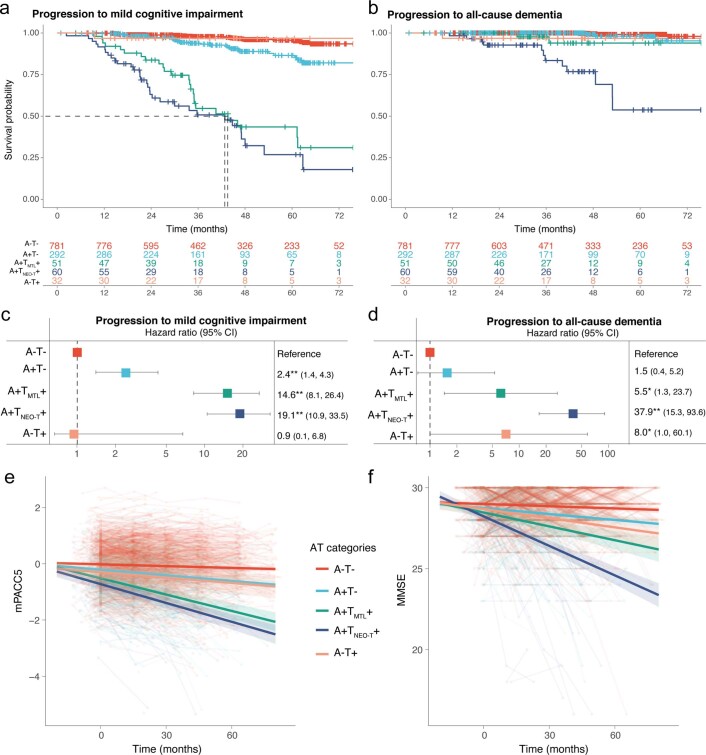
“Replication across different age groups Based on the lower age of the AT group compared to the biomarker-positive groups (Table 1), we performed the Cox proportional-hazards models and linear mixed models (1) stratified a b”
MethodSelf-citationWhitepaper: Defining and investigating cognitive reserve, brain reserve, and brain maintenance
Stern, Y., Arenaza‐Urquijo, E. M., Bartrés‐Faz, D., Belleville, S., Cantilon, M., Chetelat, G., Ewers, M., Franzmeier, N., Kempermann, G., Kremen, W. S., et al. (2020) · Alzheimer's & Dementia · doi:10.1016/j.jalz.2018.07.219 · Cited by 1,703
Cited by
Items 501–559 of 559
Askevold, F., Schumann‐Werner, B., Behrenbruch, N., Schwarck, S., Molloy, E. N., Peelle, J. E., O’Leary, R. M., Wingfield, A., Behnisch, G., Seidenbecher, C. I., et al. (2026) · Brain Communications · doi:10.1093/braincomms/fcag375
The Relationship Between Alzheimer’s Disease and Sleep: Implications for Diagnosis and Treatment
McGuire, C. (2025) · Critical Debates in Humanities Science and Global Justice · doi:10.68709/001c.128317
Cellular and molecular consequences of tau and amyloid-β in Alzheimers disease
Chinnathambi, S., & Prakash, L. E. (2026) · Advances in protein chemistry and structural biology · doi:10.1016/bs.apcsb.2026.07.003
Ren, D., Xu, J., Xiao, L., Zhang, T., Li, B., Li, R., & Zhu, H. (2026) · Journal of Molecular Medicine · doi:10.1007/s00109-026-02691-9
Functional networks in aging and Alzheimer’s disease: Contributions and consequences
Ziontz, J. (2024) · eScholarship (California Digital Library)
Quenon, L., Collij, L. E., García, D. V., Lopes Alves, I., Gérard, T., Malotaux, V., Huyghe, L., Gispert, J. D., Jessen, F., Visser, P. J., et al. (2024) · Figshare · doi:10.6084/m9.figshare.26734833
Quenon, L., Collij, L. E., García, D. V., Lopes Alves, I., Gérard, T., Malotaux, V., Huyghe, L., Gispert, J. D., Jessen, F., Visser, P. J., et al. (2024) · Figshare · doi:10.6084/m9.figshare.26734836
Ou, Z., Jiang, C., Liu, Y., Sun, K., & Shen, D. G. (2025) · Lecture notes in computer science · doi:10.1007/978-3-032-05472-2_23
Rial, A. M., Leuzy, A., Rakêt, L. L., Villemagne, V. L., Klein, G., Tonietto, M., Olafson, E., Smith, R., Schwarz, C. G., Baker, S. L., et al. (2026) · Alzheimer s & Dementia · doi:10.1002/alz.71886
Self-citationAliyu, Y. M., Sagir, U., Sajjad, F., Khurshid, S., Tarique, F., & Sani, I. M. (2026) · bioRxiv (Cold Spring Harbor Laboratory) · doi:10.64898/2026.10.31.763276
Plasma biomarkers of neurodegeneration across the spectrum of brain health
Cooper, J. G. (2026) · cIRcle (University of British Columbia)
Kaipainen, A. L. (2026) · UEF eRepo (University of Eastern Finland)
Multimodal neuroimaging approach for cognitive impairment in Alzheimer’s diseasePreprint
Gonzales, M., Kang, X., Adamson, M. M., Chao, S. Z., Yoon, B. C., & Initiative, T. F. L. D. N. (2026) · medRxiv · doi:10.64898/2026.06.04.26354924
Detection of tau spatial extent using MK6240 and flortaucipir PETPreprint
Povala, G., Bellaver, B., Amaral, L., Lussier, F. Z., Macedo, A. C., Ferreira, P. C. L., Leffa, D. T., Bauer‐Negrini, G., Medeiros, M. S., Ruppert, E. P., et al. (2026) · medRxiv · doi:10.64898/2026.10.26.26366488
Self-citationSaeed, S. (n.d.) · ArTS Archivio della ricerca di Trieste (University of Trieste https://www.units.it/)
Liu, A. C. (2026) · Carolina Digital Repository (University of North Carolina at Chapel Hill) · doi:10.17615/km87-n626
Umeda, T., Sakai, A., Uekado, R., Shigemori, K., Nakajima, R., Yamana, K., & Tomiyama, T. (2024) · eLife · doi:10.7554/elife.100737.1.sa4
Fischer, L., Vockert, N., Fernandes, J. H., Garcia‐Garcia, B., Roemer, S. N., Franzmeier, N., Gellersen, H. M., Schumann‐Werner, B., Behrenbruch, N., Schwarck, S., et al. (2026) · bioRxiv (Cold Spring Harbor Laboratory) · doi:10.64898/2026.08.18.745399
Bertazzoli, G., Canu, E., Bagattini, C., Freri, F., Bonfiglio, N. S., Brignani, D., Bulgari, M., Castelnovo, V., Delai, M. C. L., Ferrari, E., et al. (2026) · Alzheimer s Research & Therapy · doi:10.1186/s13195-026-02176-4
Hacein‐Bey, L., & Kuchcinski, G. (2023) · American Journal of Roentgenology · doi:10.2214/ajr.23.29113
Chiu, L. K. (2024) · eScholarship@McGill (McGill) · doi:10.82308/29066
Biomarcadores Sanguíneos em Doença de Alzheimer: Ponto de Situação e Considerações Práticas
Araújo, R., Martins, B., Sardoeira, A., & Gouveia, A. (2026) · Gazeta Médica · doi:10.29315/gm.1136
Accorroni, A., Clavien, C., & Frisoni, G. B. (2026) · Neurodegenerative Diseases · doi:10.1159/000552764
Vyniavska, P., & Shpylchyn, V. (2025) · NaUKMA Research Papers Biology and Ecology · doi:10.18523/2617-4529.2025.8.19-29
Comparative Evaluation of SNAP25 in Cerebrospinal Fluid and Plasma Across Three CohortsPreprint
Sauer, M., Machado, L. S., Rocker, C., Goossens, J., Grötschel, L., Janelidze, S., Rahmouni, N., Ribaldi, F., Therriault, J., Trudel, L., et al. (2026) · Research Square · doi:10.21203/rs.3.rs-11320091/v1
Self-citationRoy, B., & Roy, P. K. (2026) · bioRxiv (Cold Spring Harbor Laboratory) · doi:10.64898/2026.10.03.756274
Negida, A., Rissardo, J. P., & Initiative, A. D. N. (2026) · bioRxiv (Cold Spring Harbor Laboratory) · doi:10.64898/2026.03.31.713304
TRAPPC8 Is an Endogenous Brake on UFMylation That Suppresses TauopathyPreprint
Wan, Y., Cordes, E., Feng, W., Lee, S.-I., Munechika, K., Sun, Y., Gao, Z., Gao, B., Zhu, J., Wong, M. Y., et al. (2026) · bioRxiv (Cold Spring Harbor Laboratory) · doi:10.64898/2026.08.18.745347
Williams, M. E., Arrotta, K., Bangen, K. J., Reyes, A., Stasenko, A., Zawar, I., Punia, V., Wang, I., Shin, W., Su, T., et al. (2026) · medRxiv · doi:10.64898/2026.06.05.26354952
Dedicated Brain PET in the Emerging Care Pathways of Alzheimer’s DiseasePreprint
Yousefzadeh, H. C. (2025) · Preprints.org · doi:10.20944/preprints202508.1577.v1
Clos‐Garcia, M., Wretlind, A., Muk, T., Hooshmand, K., Simonsen, A. H., Winchester, L. M., Proitsi, P., Marioni, R. E., Ahluwalia, T. S., Kümler, T., et al. (2026) · medRxiv · doi:10.64898/2026.05.06.26352559
Deep learning‐based prediction of regional brain Tau PET burden from MRI
Kim, D., Ho, B. C., van Voorst, H., Liu, Y., Benzinger, T. L. S., Sha, S. J., Mormino, E. C., Henderson, V. W., & Zaharchuk, G. (2026) · Alzheimer s & Dementia · doi:10.1002/alz.71911
Okorie, M. (2026) · eScholarship (California Digital Library)
Zhang, K., Zhang, Y., Jiang, X., & Chen, X. (2026) · Aging and Disease · doi:10.14336/ad.2026.0888
Huang, M. (2025) · Academic Journal of Science and Technology · doi:10.54097/9fqhc613
Fizyolojide Güncel Yaklaşımlar
ÇANAKÇI, A., Kavak, İ., ERSUNGUR, E., Cesur, G., Cesur, G., & ERSUNGUR, E. (2024) · Bidge Yayınları eBooks · doi:10.70269/9vf9pekkscaw
Neuroimaging - From Research to Clinical Practice
Palermo, S. (2025) · IntechOpen eBooks · doi:10.5772/intechopen.1005993
Clinical Applications of PET/CT in Neuroimaging: Case-Based Approach
Qin, J., Wu, Y., Mu, X., Li, J. Z., Li, Z., Chong, W., Zeng, Y., Zhang, L., Mo, B., Yu, P., et al. (2025) · IntechOpen eBooks · doi:10.5772/intechopen.1009839
A Brain-Friendly Life: How to Manage Cognitive Overload and Reduce Glitching
Menchola, M. (2024) · Routledge eBooks · doi:10.4324/9781003409311
Devulder, A. (2024) · Lirias
Dolado, A. O. (2026) · Lund University Publications (Lund University)
Arnold, D. (2026) · Lume (Universidade Federal do Rio Grande do Sul)
Xu, S., Liu, Y., Wang, Q., Liu, F., Xu, F., & Liu, Y. (2023) · doi:10.3389/fcvm.2023.1150432.s002
Memory precision across space and time in Alzheimer's disease
Toniolo, S. (2023) · Oxford University Research Archive (ORA) (University of Oxford) · doi:10.5287/ora-pzz6prj4e
Chen, S., Gao, X., Li, F., Ou, R., Wei, Q., Li, C., Song, W., Zhao, B., Yang, J., Fu, J., et al. (2026) · Journal of Neurology · doi:10.1007/s00415-026-14270-6
Nabizadeh, F. (2026) · Neurology Letters · doi:10.66224/nl.5.1.34
Asymmetric Amyloid Cross-Seeding Beyond “Like-Seeds-Like”
Wang, L.-J., Shuzan, N., Zhang, Y.-X., Zhao, C., & Zheng, J. (2026) · Chemical Reviews · doi:10.1021/acs.chemrev.6c00727
Preclinical and Pilot Human Evaluation of [18F]NIDF-1, an N-Protonation-Guided Tau PET TracerPreprint
Guo, W., Wang, Y., Li, Y., Zhang, X., Wu, N., Zhang, Q., Yan, X., Zhang, J., Yao, S., & Cui, M. (2026) · ChemRxiv · doi:10.26434/chemrxiv.15009101/v1
Zhou, T., Xu, Y., Zhou, Q., Khan, S., Li, J., Wu, J., Xu, Z., Quan, J., Xiong, W., & Wu, H. (2026) · International Journal of Pharmaceutics · doi:10.1016/j.ijpharm.2026.127694
Nakamura, T., Zhou, B., & Fukushima, M. (2024) · SSRN Electronic Journal · doi:10.2139/ssrn.5061256
Zhao, Y., Zhang, J., Zhao, Y., Yuan, Y., Shen, J., Peng, H., & Li, J. (2026) · Neuropsychology · doi:10.1037/neu0001074
Dong, S., Guan, M., Yang, L., Liu, G., Rominger, A., Yuan, Y., Ren, W., Ni, R., & Wei, X. (2026) · bioRxiv (Cold Spring Harbor Laboratory) · doi:10.64898/2026.07.04.736179
An, C., & Jang, I. (2026) · arXiv (Cornell University) · doi:10.48550/arxiv.2610.11394
Bhat, A., Cestari, M., Chen, C., Fleming, B. T., Fleming, G., & Initiative, F. T. A. D. N. (2026) · medRxiv · doi:10.64898/2026.10.16.26365770
Ontology After the Accident: Derrida, Malabou, and the Future of the Trace
Stec, J. T. (2026) · Derrida Today · doi:10.3366/drt.2026.0421
Synaptic Plasticity as the Physical Substrate of the Self
Niedzialek, J. (2026) · Oxford Journal of Student Scholarship · doi:10.65161/recmtzgp0v444j21z
Zhong, L., Xia, Y., Zhang, J., Huang, S., Nie, X., Xia, M., Deng, Z., Yue, J., Wang, X., Zhao, J., et al. (2026) · arXiv (Cornell University) · doi:10.48550/arxiv.2611.15831
Data-driven clustering of atrophy patterns in Alzheimer’s disease
Winzell, F., Rakêt, L. L., Overgaard, N. C., Åström, K., Stomrud, E., Spotorno, N., Janelidze, S., Palmqvist, S., Heyden, A., Arvidsson, I., et al. (2026) · Alzheimer s Research & Therapy · doi:10.1186/s13195-026-02261-8
Self-citation
Metadata
- Authors
- Ossenkoppele, R., Pichet Binette, A., Groot, C., Smith, R., Strandberg, O., Palmqvist, S., Stomrud, E., Tideman, P., Ohlsson, T., Jögi, J., Johnson, K., Sperling, R., Dore, V., Masters, C. L., Rowe, C., Visser, D., van Berckel, B. N. M., van der Flier, W. M., Baker, S., Jagust, W. J., Wiste, H. J., Petersen, R. C., Jack, C. R., & Hansson, O.
- Affiliations
- Lund University (SE)
- Skåne University Hospital (SE)
- Brigham and Women's Hospital (US)
- Florey Institute of Neuroscience and Mental Health (AU)
- Amsterdam Neuroscience (NL)
- Lawrence Berkeley National Laboratory (US)
- Mayo Clinic (US)
- Corresponding author
- Ossenkoppele, Rik
- Hansson, Oskar
- ORCID
- Ossenkoppele, Rik
- Pichet Binette, Alexa
- Groot, Colin
- Smith, Ruben
- Palmqvist, Sebastian
- Stomrud, Erik
- Tideman, Pontus
- Jögi, Jonas
- Johnson, Keith
- Sperling, Reisa
- Dore, Vincent
- Masters, Colin L.
- Rowe, Christopher
- Visser, Denise
- van Berckel, Bart N. M.
- van der Flier, Wiesje M.
- Baker, Suzanne
- Jagust, William J.
- Wiste, Heather J.
- Petersen, Ronald C.
- Jack, Clifford R.
- Hansson, Oskar
- Venue
- Nature Medicine
- Published
- 2022-11
- Volume
- 28
- Issue
- 11
- Pages
- 2381-2387
- ISSN
- 1078-8956 (ISSN-L)
- 1546-170X
- PMC
- PMC9671808
- OpenAlex
- W4308773890
- Semantic Scholar
- 11bdea0193b4c38c63eac2665bdfd211fd699fc4
- Cited by
- 496
- References
- 62
- Citations by year
- 2026: 110 · 2025: 171 · 2024: 130 · 2023: 79 · 2022: 5
- FWCI
- 62.45
- Type
- journal article
- Language
- en
- Open access
- hybrid
- doi.org
- Licence
- cc-by
- creativecommons.org/licenses/by/4.0 (tdm)
- creativecommons.org/licenses/by/4.0 (vor, 9 d)
- Locations
- Nature Medicine (publishedVersion, cc-by)
- medRxiv (acceptedVersion, cc-by-nc)
- PubMed Central (publishedVersion, cc-by)
- PubMed (publishedVersion)
- Pure Amsterdam UMC (publishedVersion, cc-by)
- Amsterdam UMC (VU Amsterdam) - Institutional Repository (publishedVersion, cc-by)
- Minerva Access (University of Melbourne) (submittedVersion, cc-by)
- Lund University Publications (Lund University) (submittedVersion)
- Data Archiving and Networked Services (DANS) (submittedVersion, other-oa)
- Funders
- Mayo Clinic (U01 AG006786)
- Alzheimer's Association (P01AG036694)
- Massachusetts General Hospital
- Biogen
- BrightFocus Foundation (U01 AG006786, A2021013F)
- EU Joint Programme – Neurodegenerative Disease Research
- Australian Government
- GHR Foundation
- Health~Holland (#LSHM20106)
- European Commission (EU-FP7, 298314, HORIZON2020)
- ZonMw (LSHM20106, #73305095007, 10510022110010)
- Nederlandse Organisatie voor Wetenschappelijk Onderzoek (#73305095007, EU-FP7)
- Lunds Universitet
- Knut och Alice Wallenbergs Stiftelse (2017‐0383, 2015.0125, FO2021-0293, 2020-O000028)
- Vetenskapsrådet (2016-00906, FO2021-0293, 2018-, 2020-O000028, 2017-00383)
- Konung Gustaf V:s och Drottning Victorias Frimurarestiftelse (2020-O000028, 2020-0314)
- Hersenstichting
- Stichting Dioraphte
- Alzheimer Nederland (LSHM20106)
- Skånes universitetssjukhus (2020-O000028)
- Marcus och Amalia Wallenbergs minnesfond (2015.0125)
- Amsterdam Neuroscience
- GIESKES-STRIJBIS FONDS
- Parkinsonfonden (1280/20)
- Avid Radiopharmaceuticals
- National Institute on Aging (U01AG006786, AG-006786, F31AG067677, P01AG036694)
- H2020 European Research Council (949570)
- Topics
- Health Sciences › Medicine › Psychiatry and Mental health › Dementia and Cognitive Impairment Research
- Life Sciences › Neuroscience › Cellular and Molecular Neuroscience › Alzheimer's disease research and treatments
- Health Sciences › Medicine › Oncology › Cancer-related cognitive impairment studies
- Keywords
- amyloid PET, tau PET, cognitively unimpaired individuals, Alzheimer's disease, amyloid plaques, neurofibrillary tangles, mild cognitive impairment, cognitive decline, medial temporal lobe, temporal neocortex, dementia risk, longitudinal cognitive trajectories, neurodegeneration biomarkers
- MeSH terms
- Alzheimer Disease, Amyloid, Amyloidosis, Brain, Humans, Biomarkers, Amyloid beta-Peptides, tau Proteins, Positron-Emission Tomography, Plaque, Amyloid, Cognitive Dysfunction
About these checks
Registry, retraction, Cites and statistics results are computed, not judged, with one exception: a printed reference that no index lists is read once by a model before it counts as a citation error. Claims are extracted by a model and kept only when their quote appears verbatim in the text; each cited source is then checked, with a model’s help, for whether it says what the claim relies on. Those verdicts can be wrong — read the claim’s quote and the cited source before relying on one.
Statistics and arithmetic are recomputed, not judged.
Confidence bands are shown only for fields calibrated on our annotated test set. None is calibrated yet, so no band is shown.
What counts as a claim ›How we measure confidence ›How we check this ›
Are you an author, or do you see a problem with this page? Request a review
Data sources
Bibliographic data: Semantic Scholar, OpenAlex, Crossref.
Contains information from the Semantic Scholar Academic Graph Datasets, made available under the ODC Attribution License (ODC-BY 1.0).
Semantic Scholar’s data is described in: Kinney, R., et al. (2023). The Semantic Scholar Open Data Platform. arXiv:2301.10140.
