

A deep learning algorithm to predict risk of pancreatic cancer from disease trajectories
Open accessThe DOI matches its Crossref record; 64 of the 64 references it cites were found in a registry or an index.
Abstract
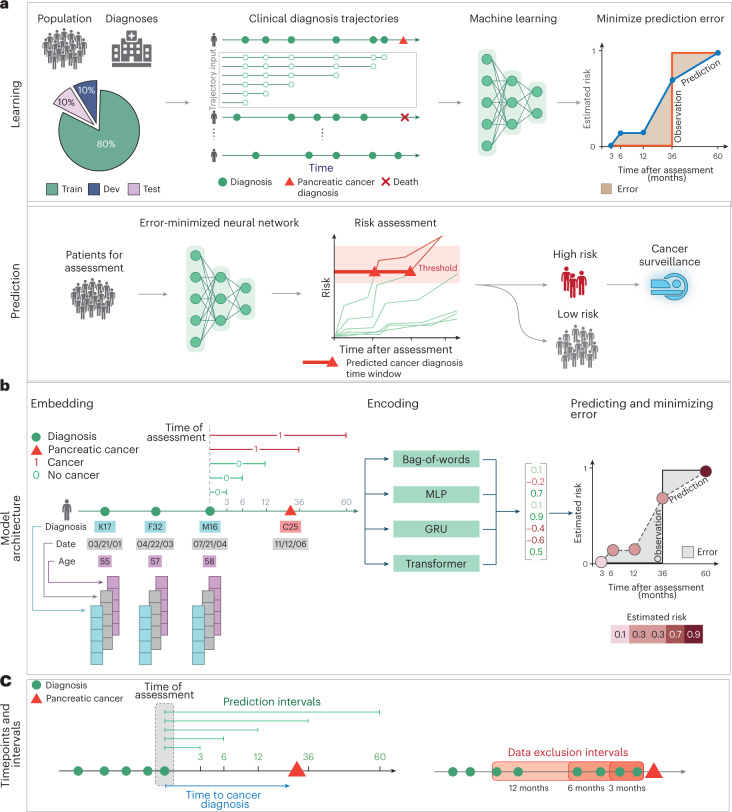
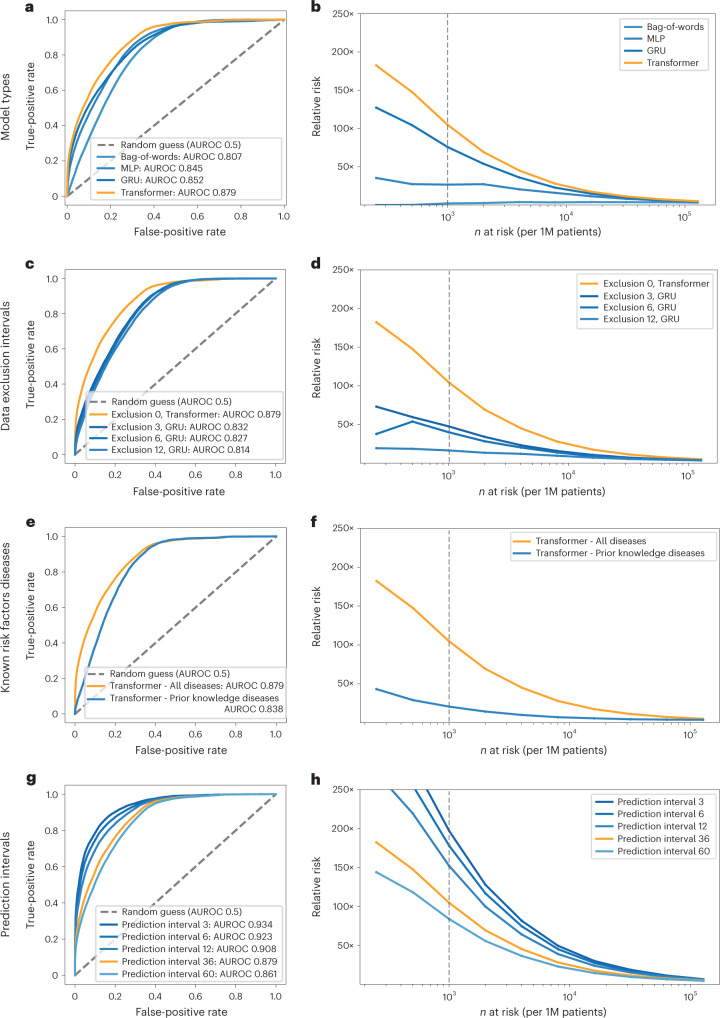
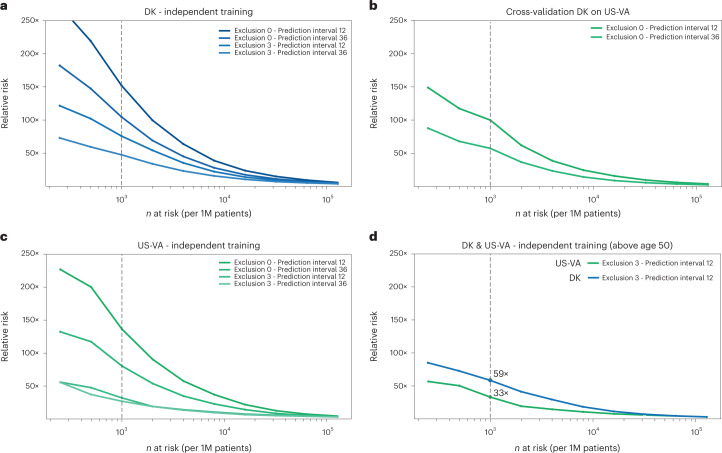
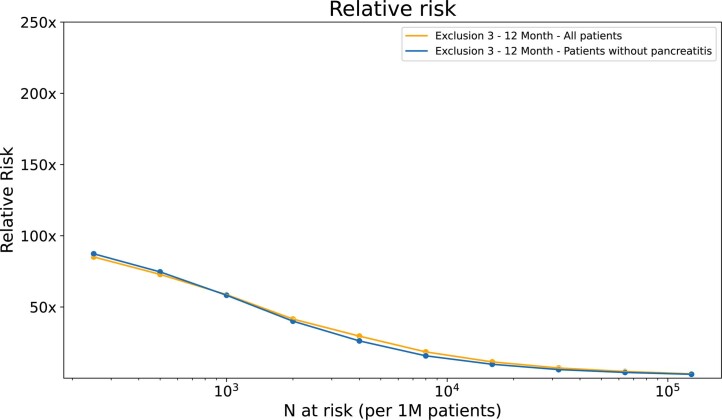
Pancreatic cancer is an aggressive disease that typically presents late with poor outcomes, indicating a pronounced need for early detection. In this study, we applied artificial intelligence methods to clinical data from 6 million patients (24,000 pancreatic cancer cases) in Denmark (Danish National Patient Registry (DNPR)) and from 3 million patients (3,900 cases) in the United States (US Veterans Affairs (US-VA)). We trained machine learning models on the sequence of disease codes in clinical histories and tested prediction of cancer occurrence within incremental time windows (CancerRiskNet). For cancer occurrence within 36 months, the performance of the best DNPR model has area under the receiver operating characteristic (AUROC) curve = 0.88 and decreases to AUROC (3m) = 0.83 when disease events within 3 months before cancer diagnosis are excluded from training, with an estimated relative risk of 59 for 1,000 highest-risk patients older than age 50 years. Cross-application of the Danish model to US-VA data had lower performance (AUROC = 0.71), and retraining was needed to improve performance (AUROC = 0.78, AUROC (3m) = 0.76). These results improve the ability to design realistic surveillance programs for patients at elevated risk, potentially benefiting lifespan and quality of life by early detection of this aggressive cancer.
Overview
The claims and statistics of this paper haven’t been checked yet.
Free: it reads the open-access text and checks the first 5 claims that cite a source we can check. Create a free account to check every claim.
Integrity signals
Registry
Cites
Statistics
Figures
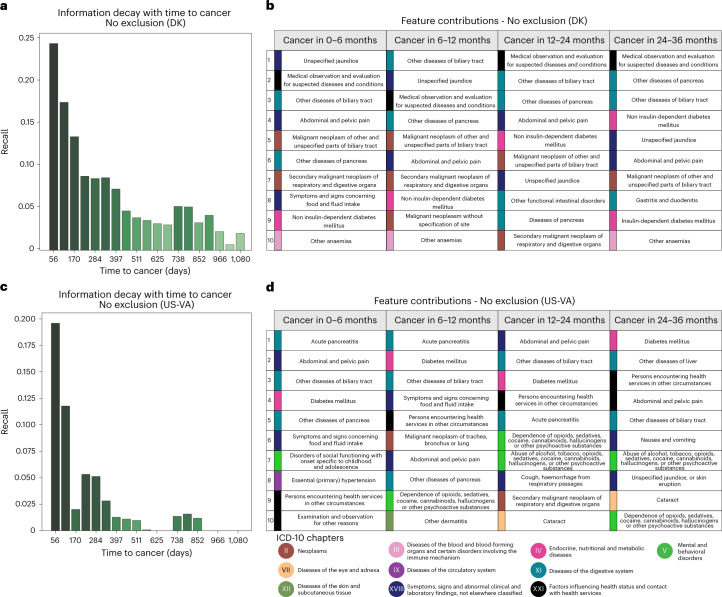
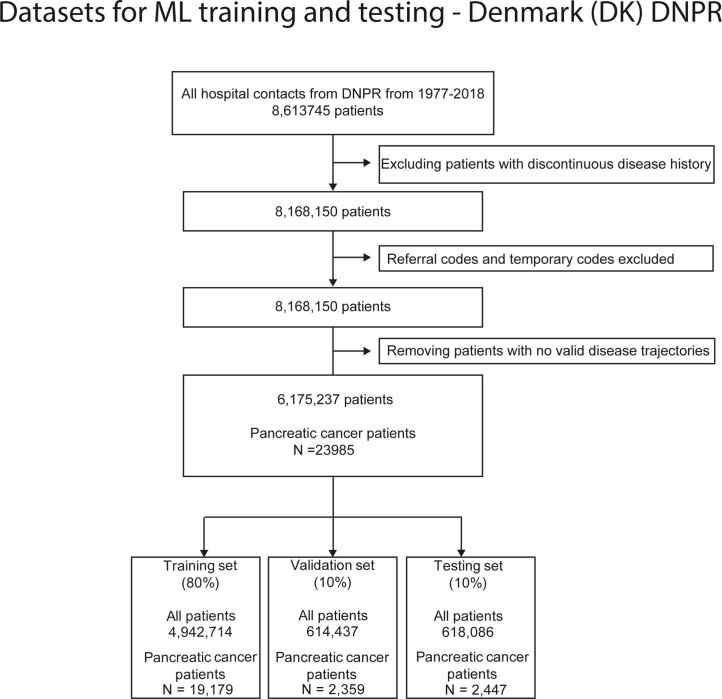
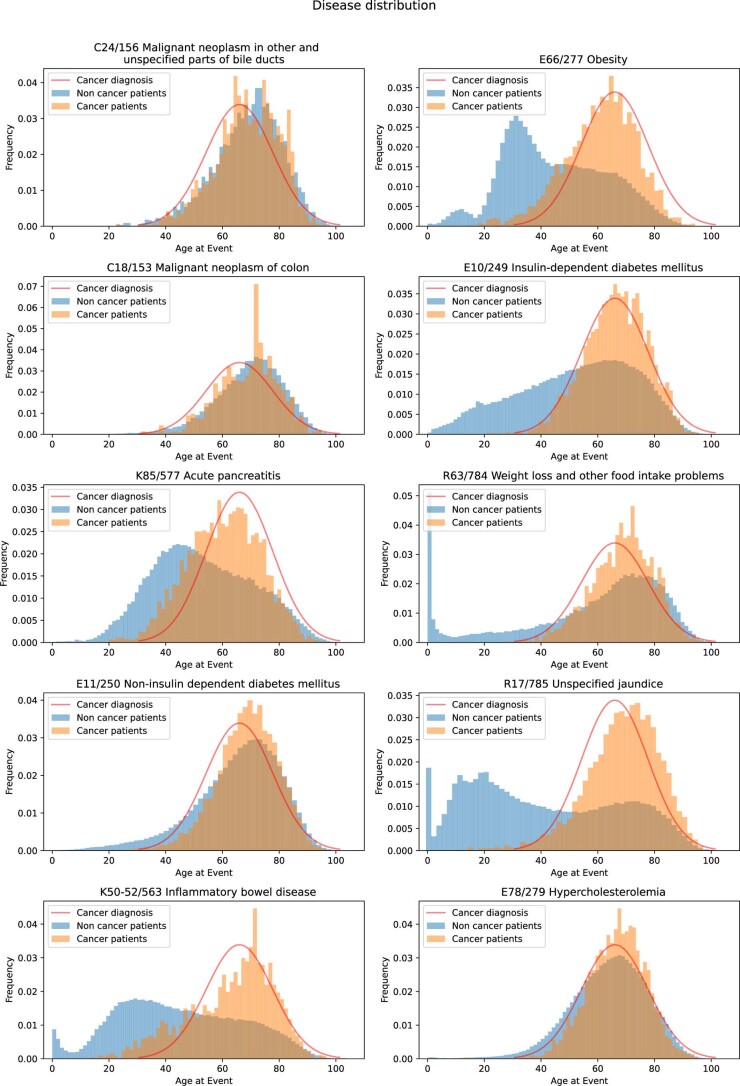
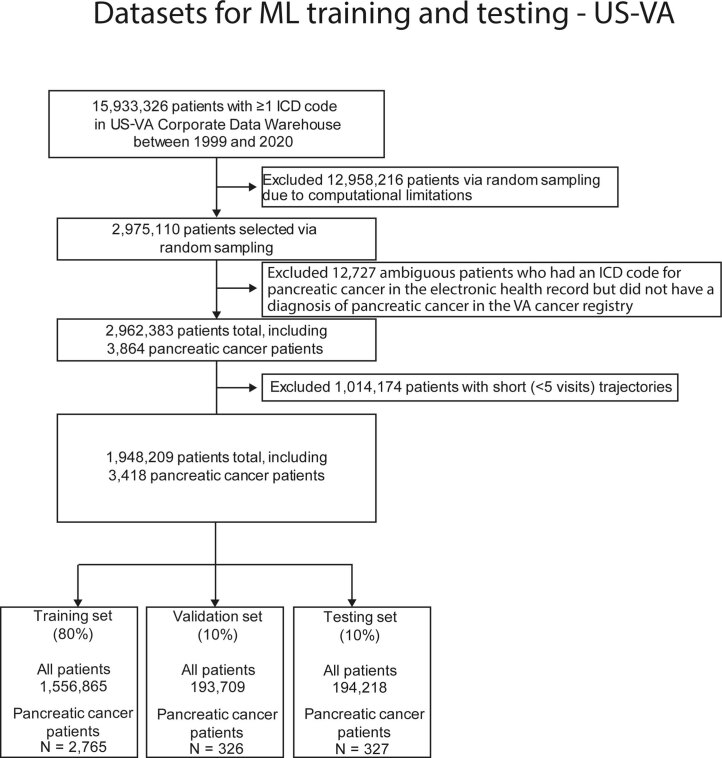
Verification
Claims the paper makes
The claims and statistics of this paper haven’t been checked yet.
Free: it reads the open-access text and checks the first 5 claims that cite a source we can check. Create a free account to check every claim.
Claims other papers make about this one
Each is checked against this paper’s own text: does it say what the citing paper says it does?
The source backs part of the claim, not all of it — or backs it for a different population, condition or comparison.
In the citing paper
“As shown in Figure 2A, AI agents possess the capacity to process extensive patient data, including medical histories, diagnostic test results, and imaging, thereby aiding healthcare professionals in making more informed and precise diagnostic decisions.62,63,64,65,66,67,68,69”
From A foundational architecture for AI agents in healthcare (2025) · cites this paper as [64]
Experimental — accuracy not yet measured
Self-check
Percentages, sums and reported differences re-computed from the paper’s own numbers.
The self-check needs the paper’s full text.
Citations
Cites
Vaswani, A., Shazeer, N., Parmar, N., Uszkoreit, J., Jones, L., Gomez, A. N., Kaiser, L., & Polosukhin, I. (2017) · arXiv · doi:10.48550/arxiv.1706.03762 · Cited by 120,404
LeCun, Y., Bengio, Y., & Hinton, G. (2015) · Nature · doi:10.1038/nature14539 · Cited by 84,126
Efficient Estimation of Word Representations in Vector Space
Mikolov, T., Chen, K., Corrado, G., & Dean, J. (2013) · arXiv · doi:10.48550/arxiv.1301.3781 · Cited by 26,568
Learning Phrase Representations using RNN Encoder–Decoder for Statistical Machine Translation
Cho, K., van Merrienboer, B., Gulcehre, C., Bahdanau, D., Bougares, F., Schwenk, H., & Bengio, Y. (2014) · Proceedings of the 2014 Conference on Empirical Methods in Natural Language Processing (EMNLP) · doi:10.3115/v1/d14-1179 · Cited by 25,545
Dermatologist-level classification of skin cancer with deep neural networks
Esteva, A., Kuprel, B., Novoa, R. A., Ko, J., Swetter, S. M., Blau, H. M., & Thrun, S. (2017) · Nature · doi:10.1038/nature21056 · Cited by 14,362
Rahib, L., Smith, B. D., Aizenberg, R., Rosenzweig, A. B., Fleshman, J. M., & Matrisian, L. M. (2014) · Cancer Research · doi:10.1158/0008-5472.can-14-0155 · Cited by 7,094
The Danish National Patient Registry: a review of content, data quality, and research potential
Schmidt, M., Schmidt, S. A. J., Sandegaard, J. L., Ehrenstein, V., Pedersen, L., & Sørensen, H. T. (2015) · Clinical Epidemiology · doi:10.2147/clep.s91125 · Cited by 4,769
Axiomatic attribution for deep networks
Sundararajan, M., Taly, A., & Yan, Q. (2017) · arXiv · doi:10.48550/arxiv.1703.01365 · Cited by 4,087
Federated Learning: Strategies for Improving Communication Efficiency
Konečný, J., McMahan, H. B., Yu, F. X., Richtárik, P., Suresh, A. T., & Bacon, D. (2016) · arXiv · doi:10.48550/arxiv.1610.05492 · Cited by 3,766
The Danish Civil Registration System as a tool in epidemiology
Schmidt, M., Pedersen, L., & Sørensen, H. T. (2014) · European Journal of Epidemiology · doi:10.1007/s10654-014-9930-3 · Cited by 3,441
Cited by
Items 101–200 of 399
Park, J., Artin, M. G., Lee, E., May, B. L., Park, M. K., Hur, C., & Tatonetti, N. P. (2022) · Patterns · doi:10.1016/j.patter.2022.100636 · Cited by 13
Learning the natural history of human disease with generative transformersPreprint
Shmatko, A., Jung, A. W., Gaurav, K., Brunak, S., Mortensen, L. H., Birney, E., Fitzgerald, T. W., & Gerstung, M. (2024) · medRxiv · doi:10.1101/2024.06.07.24308553 · Cited by 13
Self-citationSarwal, D., Wang, L., Gandhi, S., Pour, E. S. H., Janssens, L. P., Delgado, A. M., Doering, K. A., Mishra, A. K., Greenwood, J. D., Liu, H., et al. (2024) · Pancreatology · doi:10.1016/j.pan.2024.03.016 · Cited by 11
Establishment of prediction model for mortality risk of pancreatic cancer: a retrospective study
Nopour, R. (2024) · BMC Medical Informatics and Decision Making · doi:10.1186/s12911-024-02590-4 · Cited by 10
“…techniques played a significant role in other modes associated with PC disease, such as predicting the risk determination and early detection of PC [50–53], quality of life and surgical outcomes after surgery [54], death after surgery [55], risk of recurrence [56], and differentiating the tumor…”
BackgroundPredicting pancreatic diseases from fundus images using deep learning
Wu, Y., Fang, P., Wang, X., & Shen, J. (2024) · The Visual Computer · doi:10.1007/s00371-024-03619-5 · Cited by 12
“In 2023, Placido et al. [41] constructed a time series model using a sequence neural network that combines Gated Recurrent Unit (GRU) and Transformer models.”
LUNETR: Language-Infused UNETR for precise pancreatic tumor segmentation in 3D medical image
Shi, Z., Zhang, R., Wei, X., Yu, C. B., Xie, H., Hu, Z., Chen, X., Zhang, Y., Xie, B., Luo, Z., et al. (2025) · Neural Networks · doi:10.1016/j.neunet.2025.107414 · Cited by 12
Zhu, W., Chen, L., Aphinyanaphongs, Y., Kastrinos, F., Simeone, D. M., Pochapin, M. B., Stender, C., Razavian, N., & Gonda, T. A. (2025) · Scientific Reports · doi:10.1038/s41598-025-89607-8 · Cited by 11
“…studies have identified additional risk factors that are associated with PC, some of which using machine learning models such as logistic regression and random forest 29,31 , and some utilizing deep learning based approaches, including deep neural network and gated recurrent unit models 28,30 .”
InfluentialWeselá, P., Eid, M., Moravčík, P., Vlažný, J., Hlavsa, J., Procházka, V., Kala, Z., & Vaňhara, P. (2025) · Cell Division · doi:10.1186/s13008-025-00158-w · Cited by 13
“The results for the validation set were lower, with AUC values of 0.78 and 0.76, respectively [28].”
InfluentialAhmed, H. M., Al-Hussainy, A. F., Mustafa, W. W., Jyothi, S. R., Nayak, P. P., Janney, J. B., Singh, G., Sinha, A., Sameer, H. N., Salih, R. M., et al. (2026) · Discover Oncology · doi:10.1007/s12672-026-04495-2 · Cited by 10
“This score could yield an actionable probability of attaining pCR or a 2-year recurrence risk, thereby enabling highly personalized risk stratification and guiding precise, response-adapted treatment decisions [211–214].”
Chhikara, J., Goel, N., & Rathee, N. (2024) · Procedia Computer Science · doi:10.1016/j.procs.2024.04.295 · Cited by 10
A deep learning approach to prediction of blood group antigens from genomic data
Moslemi, C., Sækmose, S. G., Larsen, R., Brodersen, T., Bay, J. T., Didriksen, M., Nielsen, K. R., Bruun, M. T., Dowsett, J., Dinh, K. M., et al. (2024) · Transfusion · doi:10.1111/trf.18013 · Cited by 13
“Although adoption of DL in the field of biology has been slow, some impressive recent results in protein folding 42 and successful applications of DL in a variety of other biological areas 43 – 45 promises a potential bright future in the field.”
Yu, G., Zhang, Z., Eresen, A., Hou, Q., Amirrad, F., Webster, S., Nauli, S. M., Yaghmai, V., & Zhang, Z. (2024) · International Journal of Molecular Sciences · doi:10.3390/ijms252212038 · Cited by 12
“A study utilizing data from millions of patients in Denmark and the United States demonstrated that machine learning models could predict cancer occurrence with high accuracy, achieving an AUROC of 0.88 for predictions within 36 months [67].”
InfluentialPeduzzi, G., Felici, A., Pellungrini, R., & Campa, D. (2024) · Digestive and Liver Disease · doi:10.1016/j.dld.2024.11.010 · Cited by 13
Deploying blood-based cancer screening
Micalizzi, D. S., Sequist, L. V. D., & Haber, D. A. (2024) · Science · doi:10.1126/science.adk1213 · Cited by 14
Muñoyerro-Muñiz, D., Villegas, R., de la Oliva, V., Esteban-Medina, A., del Valle, P. F., Sánchez, A., Susin, M. B., Gutiérrez-Álvarez, I., Reboredo, M., Alejos, L., et al. (2025) · Frontiers in Public Health · doi:10.3389/fpubh.2025.1630351 · Cited by 12
“For example, predictive models have been successfully applied to cardiovascular disease (61) and cancer prevention (9, 62).”
InfluentialGuntur, M., Sahronih, S., Ningsih, N. I. S., & Windari, P. (2023) · Participatory Educational Research · doi:10.17275/per.23.90.10.6 · Cited by 9
Multilayer network approaches to omics data integration in digital twins for cancer research
Chenel, H., Marku, M., James, T. J., Zinovyev, A. Y., & Pancaldi, V. (2026) · Frontiers in Systems Biology · doi:10.3389/fsysb.2026.1776941 · Cited by 10
“For instance, integrating prior comorbidities could be of great value in predicting patient outcomes, as was the case for predicting pancreatic cancer onset (Placido et al., 2023).”
BackgroundHuang, C., Shen, Y., Galgano, S. J., Goenka, A. H., Hecht, E. M., Kambadakone, A., Wang, Z. J., & Chu, L. C. H. (2024) · Abdominal Radiology · doi:10.1007/s00261-024-04644-7 · Cited by 10
“Their objective was to determine if they could predict the occurrence of pancreatic cancer within 36 months of initial diagnosis based on data extracted from electronic health records such as diagnostic codes and clinical history [51, 52].”
Emergency Presentations Predict Worse Outcomes Among Patients with Pancreatic Cancer
Khalaf, N. I., Ali, B., Liu, Y., Kramer, J. R., El‐Serag, H. B., Kanwal, F., & Singh, H. (2023) · Digestive Diseases and Sciences · doi:10.1007/s10620-023-08207-6 · Cited by 8
“One such strategy could include the incorporation of risk-prediction models for near-future cancer diagnosis [33] into clinical decision support tools to flag high-risk patients who also have early warning signs of pancreatic cancer, such as rising total bilirubin or significant weight loss [34].”
Engel, B., Assis, D. N., Bhat, M., Clusmann, J., Drenth, J. P. H., Gerussi, A., Londoño, M., Oo, Y. H., Schregel, I., Sebode, M., et al. (2024) · JHEP Reports · doi:10.1016/j.jhepr.2024.101265 · Cited by 8
Sun, L., Wang, J., Yu, H., Zhu, X., Zhang, J., Hu, J., Yan, Y., Zhang, X., Zhu, Y., Jiang, G., et al. (2025) · Communications Biology · doi:10.1038/s42003-025-07595-x · Cited by 8
The exposome as a target for primary prevention and a tool for early detection of pancreatic cancer
Lauri, G., Mills, K. C., Majumder, S., & Capurso, G. (2025) · Best Practice & Research Clinical Gastroenterology · doi:10.1016/j.bpg.2025.101991 · Cited by 8
AI-enhanced synergistic chemo-immunotherapy: From mechanistic insights to clinical translation
Muhammad, S., Li, B., Zhong, W., Siddiqui, H. L., Zhao, Y., & Wang, J. (2025) · Critical Reviews in Oncology/Hematology · doi:10.1016/j.critrevonc.2025.105064 · Cited by 11
Challenges in the future of cancer screening
Lynge, E., Andersen, B. S., Bojesen, S. E., Petersen, L. K., Bech, M., Bøgsted, M., Dam, M. S., Egstrand, S., Hvass, A. M. F., Kobylecki, C. J., et al. (2025) · International Journal of Cancer · doi:10.1002/ijc.70286 · Cited by 8
Clusmann, J., Koop, P., Zhang, D. Y., van Haag, F., Nahhas, O. S. M. E., Seibel, T., Žigutytė, L., Kaewdech, A., Caldéraro, J., Tacke, F., et al. (2026) · Cancer Discovery · doi:10.1158/2159-8290.cd-25-1323 · Cited by 9
Xu, L., Guo, C., & Liu, M. (2023) · Artificial Intelligence in Medicine · doi:10.1016/j.artmed.2023.102740 · Cited by 8
Lei, P., Liang, R., Zhao, A., Sun, R., Yi, F., Zhong, J., Li, R., Zhu, S., Zhang, S., & Wu, S. (2024) · International Journal of Surgery · doi:10.1097/js9.0000000000001775 · Cited by 8
Wong, K. K. (2025) · Biomedical Signal Processing and Control · doi:10.1016/j.bspc.2025.107867 · Cited by 10
Potential of artificial intelligence in injury prevention research and practice
Quistberg, D. A. (2024) · Injury Prevention · doi:10.1136/ip-2023-045203 · Cited by 8
Zheng, C., Khan, A., Ritter, D., Marks, D. S., Do, N., Fillmore, N. R., & Sander, C. (2025) · Cell Reports Medicine · doi:10.1016/j.xcrm.2025.102359 · Cited by 10
“To remedy this issue, we retrieve a list of verified pancreatic cancer patients from the VA Cancer Registry, a centralized re-pository of cancer patients data within the VA system.”
Self-citationHeuriskance: a novel paradigm for systematic earlier detection of sporadic pancreatic cancer
Chari, S. T., Feng, Z., Wu, B. U., Fisher, W., Kambadakone, A. R., Zhao, Y., Maitra, A., Kenner, B. J., & Matrisian, L. M. (2025) · JNCI Journal of the National Cancer Institute · doi:10.1093/jnci/djaf291 · Cited by 8
Development and Validation of a Parsimonious Risk Stratification Model for Pancreatic Cancer
Mavromatis, L. A., Zlatanic, V., Agarunov, E., Sanoba, S. A., Kluger, M. D., Horwitz, L. I., Razavian, N., Maitra, A., Gonda, T. A., & Grams, M. E. (2026) · JAMA Oncology · doi:10.1001/jamaoncol.2026.0372 · Cited by 12
Accelerating discovery of cancer causes for prevention in the era of rising early-onset cancers
Shi, M., Patti, G. J., Gunter, M. J., Govindan, R., Lansdorp‐Vogelaar, I., Wang, T., Townsend, J. P., Colditz, G. A., Belkaid, Y., & Cao, Y. (2026) · Cell · doi:10.1016/j.cell.2026.03.019 · Cited by 8
Prediction of Pancreatic Cancer Risk in Patients with New-Onset Diabetes
Khan, S. (2025) · Visceral Medicine · doi:10.1159/000543479 · Cited by 8
“The Danish study [76] analyzed 6.2 million patient records and uniquely incorporated temporal patterns in disease codes, achieving an AUC of 0.88 in Danish cohorts but dropping to 0.71 in US validation.”
InfluentialExpert Judgment Supporting a Bayesian Network to Model the Survival of Pancreatic Cancer Patients
Secchettin, E., Paiella, S., Azzolina, D., Casciani, F., Salvia, R., Malleo, G., & Gregori, D. (2025) · Cancers · doi:10.3390/cancers17020301 · Cited by 7
Harnessing Artificial Intelligence for the Diagnosis, Treatment and Research of Multiple Sclerosis
Patil, M. S., Lin, L. Y., Ford, R. K., James, E. J., Morton, S., Marsh‐Wakefield, F., Hawke, S. H., & Grau, G. E. (2025) · Sclerosis · doi:10.3390/sclerosis3020015 · Cited by 9
AI-driven preclinical disease risk assessment using imaging in UK biobank
Seletkov, D., Starck, S., Mueller, T. T., Zhang, Y., Steinhelfer, L., Rueckert, D., & Braren, R. (2025) · npj Digital Medicine · doi:10.1038/s41746-025-01771-3 · Cited by 8
Detrois, K. E., Hartonen, T., Teder‐Laving, M., Jermy, B. S., Läll, K., Yang, Z., FinnGen, Mägi, R., Ripatti, S., & Ganna, A. (2025) · Nature Genetics · doi:10.1038/s41588-025-02298-9 · Cited by 7
“However, EHRs are also known to be noisy 1,2 , and the models are expected to suffer from poor generalizability because of differences in data availability, as well as in clinical and recording practices across healthcare systems 2,3,5,10–13 .”
Important steps for artificial intelligence-based risk assessment of older adults
Wiil, U. K. (2023) · The Lancet Digital Health · doi:10.1016/s2589-7500(23)00155-3 · Cited by 7
Artificial intelligence-driven drug interaction prediction
SONAJI, P., SUBRAMANIAN, L., & Rajesh, M. (2024) · World Journal of Biology Pharmacy and Health Sciences · doi:10.30574/wjbphs.2024.17.2.0070 · Cited by 8
Cheng, A., Zhang, Y., Qian, Z., Yuan, X., Yao, S., Ni, W., Zheng, Y., Zhang, H., Lu, Q., & Zhao, Z. (2024) · International Journal of Medical Informatics · doi:10.1016/j.ijmedinf.2024.105567 · Cited by 10
Natural language processing for identifying major bleeding risk in hospitalised medical patients
Alnor, A. B., Lynggaard, R. B., Laursen, M. S., & Vinholt, P. J. (2025) · Computers in Biology and Medicine · doi:10.1016/j.compbiomed.2025.110093 · Cited by 7
Li, D., Qian, J., Li, Y., Liu, Y., Xu, X., Zhou, X., Zhang, Z., Meng, J., & Qin, K. (2025) · Biosensors and Bioelectronics · doi:10.1016/j.bios.2025.117792 · Cited by 6
Schneider, F., Chen, H., Pelzer, U., Compton, R. G., Duwe, G., Dragomir, M. P., Hilfenhaus, G., Vecchione, L., Alig, A. H. S., Felsenstein, M., et al. (2025) · European Journal of Cancer · doi:10.1016/j.ejca.2025.116189 · Cited by 6
Chen, Q., Xu, Z., Zou, Y., Jiang, Z., Li, Y., He, T., Yin, H., Li, J., An, Y., Han, J., et al. (2026) · Advanced Science · doi:10.1002/advs.202515952 · Cited by 6
CLEAR: an auditable foundation model for radiology grounded in clinical concepts
Han, T., Wu, R., Tian, Y., Khader, F., Adams, L. C., Bressem, K. K., Davatzikos, C. A., Kather, J. N., Shen, L., Mankoff, D. A., et al. (2026) · Nature Biomedical Engineering · doi:10.1038/s41551-026-01741-4 · Cited by 7
Mohammadi, A., Pishgar, E., & Aguilera, J. (2025) · ISPRS International Journal of Geo-Information · doi:10.3390/ijgi14030105 · Cited by 6
“…Boosting Machine (GBM), and XGBoost to capture intricate, non-linear correlations between risk factors is demonstrated by successful applications in domains including diabetes, cardiovascular illnesses, and cancer [53–55], as well as in the prediction of infectious diseases such as COVID-19 [56].”
Chen, Z., Qiang, M., Hong, Y., Tian, W., Tang, M., & Liu, W. (2025) · Frontiers in Oncology · doi:10.3389/fonc.2025.1588817 · Cited by 6
Dzemyda, G., Kurasova, O., Medvedev, V., Šubonienė, A., Gulla, A., Samuilis, A., Jagminas, D., & Strupas, K. (2024) · Expert Systems · doi:10.1111/exsy.13614 · Cited by 6
“In a study (Placido et al., 2023), a DL algorithm was developed to predict the risk of pancreatic cancer from clinical data trajectories.”
Self‐Learning e‐Skin Respirometer for Pulmonary Disease Detection
Babu, A., Kassahun, G., Dufour, I., Mandal, D., & Thuau, D. (2024) · Advanced Sensor Research · doi:10.1002/adsr.202400079 · Cited by 7
Artificial intelligence: clinical applications and future advancement in gastrointestinal cancers
Akbari, A., Adabi, M., Masoodi, M., Namazi, A., Mansouri, F., Tabaeian, S. P., & Eshkiki, Z. S. (2024) · Frontiers in Artificial Intelligence · doi:10.3389/frai.2024.1446693 · Cited by 7
“…using the chronological order of disease histories as input to the model, as opposed to only considering disease incidence at any given time, enhances the predictive capability of AI techniques in estimating the onset of PC, particularly for those in the highest-risk group (Placido et al., 2023).”
Retracted: Pancreatic Cancer Diagnosis from CT Scan Images Using Machine Learning Methods
Kashikar, A., Maurya, S., Likhar, T., Mirza, K., Yadav, A. K., & Asudani, D. S. (2024) · International Conference on Contemporary Computing and Informatics (IC3I) · doi:10.1109/ic3i61595.2024.10828780 · Cited by 6
“In the study [12], the data of 6 million patient’s Danish patients and 3 million American patients were used where AI methods were used for the early diagnosis of pancreatic cancer.”
RetractedMitigation of outcome conflation in predicting patient outcomes using electronic health records
Reincke, S. M., Espinosa, C. A., Chung, P., James, T. K., Berson, E., & Aghaeepour, N. (2025) · Journal of the American Medical Informatics Association · doi:10.1093/jamia/ocaf033 · Cited by 6
Liu, C., Xu, K., Shen, L. L., Huguet, G., Wang, Z., Tong, A., Bzdok, D., Stewart, J., Wang, J. C., Priore, L. V. D., et al. (2024) · doi:10.36227/techrxiv.172297920.01199828/v1 · Cited by 6
Yun, C., Tang, F., & Lou, Q. (2024) · Diabetes & Metabolism Journal · doi:10.4093/dmj.2024.0490 · Cited by 6
“…term memory (LSTM) model and the support vector machine (SVM) due to the superior predictive capabilities of deep learning models in disease diagnosis [4,5] and prognosis [6,7] compared to traditional machine learning approaches (such as random forests, decision trees, SVM, and Bayesian methods).”
MethodAlharbi, W., & Alfayez, A. A. (2025) · Frontiers in Oncology · doi:10.3389/fonc.2025.1720039 · Cited by 5
“Future work should aim to unify explanations across modalities, enabling a holistic understanding of patient-level insights and supporting collaborative decision-making in multidisciplinary oncology boards (33, 52, 53).”
Park, J., Lim, F., Prest, M. T., Ferris, J. S., Aziz, Z., Agyekum, A. A., Wagner, S., Gulati, R., & Hur, C. (2023) · Scientific Reports · doi:10.1038/s41598-023-46751-3 · Cited by 5
Algorithms advise, humans decide: the evidential role of the patient preference predictor
Makins, N. (2024) · Journal of Medical Ethics · doi:10.1136/jme-2024-110175 · Cited by 6
“13 Given the growing development of AI systems to make predictions in medical specialties including oncology, 14–18 cardiology 19–23 and ophthalmology, 24–26 to name but a few, one might hope that similar technological solutions could be found to the problem of predicting the healthcare preferences…”
Broadening the Net: Overcoming Challenges and Embracing Novel Technologies in Lung Cancer Screening
Czerlanis, C. M., Singh, N., Fintelmann, F. J., Damaraju, V., Chang, A. E. B., White, M., & Hanna, N. H. (2025) · American Society of Clinical Oncology Educational Book · doi:10.1200/edbk-25-473778 · Cited by 5
Out-of-distribution reject option method for dataset shift problem in early disease onset prediction
Tosaki, T., Uchino, E., Kojima, R., Mineharu, Y., Okamoto, Y., Arita, M., Miyai, N., Tamada, Y., Mikami, T., Murashita, K., et al. (2025) · Scientific Reports · doi:10.1038/s41598-025-01811-8 · Cited by 5
“These models have been evaluated solely on the internal dataset 1–4 or reported a reduction of area under the receiver operating curve (AUROC) when applied to different sites due to OOD data 12 .”
Bi, Y., Li, D., Pang, R., Du, C., Li, D., Zhao, X., & Lv, H. (2025) · Frontiers in Oncology · doi:10.3389/fonc.2025.1597969 · Cited by 6
Kour, T., Raina, J. K., Gondhi, N. K., Sharma, A. K., Banerjee, S., Kumar, P., Sharma, R., & Panjaliya, R. K. (2025) · Archives of Computational Methods in Engineering · doi:10.1007/s11831-025-10401-w · Cited by 7
Liu, J., Leng, X., Yuan, Z., Li, Y., Luo, H., Chen, J., Li, R., Li, X., He, Z., Zou, Q., et al. (2025) · BMC Cancer · doi:10.1186/s12885-025-15148-y · Cited by 5
“Through transfer learning using pre-trained models, knowledge from a source domain can be transferred to the medical imaging domain, effectively addressing overfitting issues in small and unbalanced medical image datasets [36, 37].”
Explainable multi-omics modeling for risk stratification in pancreatic ductal adenocarcinoma
Chen, B., Chen, J., Cao, Z., Zhang, Q., Yan, S., Cao, H., Yu, J., wang, F., & Liu, Z. (2026) · Gland Surgery · doi:10.21037/gs-2025-396 · Cited by 5
“Some studies have leveraged longitudinal health trajectories to predict PDAC risk (11), yet these approaches often rely on structured medical records that are unavailable for the general population.”
Kuchana, S. K., Repalle, U. K., Alahari, N. V., Kondamuri, M., Manduva, S. K., Vanguru, R. V., Gorle, S. A., & Alahari, S. K. (2026) · Cancers · doi:10.3390/cancers18101543 · Cited by 7
Machine Learning-Based Model Helps to Decide which Patients May Benefit from Pancreatoduodenectomy
Vigia, E., Ramalhete, L., Filipe, E., Bicho, L., Nobre, A. M., Mira, P., Macedo, M., Aguiar, C., Corado, S. C., Chumbinho, B., et al. (2023) · Onco · doi:10.3390/onco3030013 · Cited by 8
“…from the Danish National Patient Registry and US Veterans Affairs dataset was able to predict cancer occurrence within incremental time windows, reaching an area under the receiver operating characteristic (AUROC) curve of 0.88 for disease identification up to 36 months before occurrence [30].”
BackgroundInfluentialChen, Y., Tong, L., & Zhao, J. (2024) · Future Generation Computer Systems · doi:10.1016/j.future.2024.07.023 · Cited by 5
FedDSS: A data-similarity approach for client selection in horizontal federated learning
Nguyen, T. M., Poh, K. L., Chong, S., & Lee, J. H. (2024) · International Journal of Medical Informatics · doi:10.1016/j.ijmedinf.2024.105650 · Cited by 6
Bojesen, A. B., Mortensen, F. V., & Kirkegård, J. (2023) · JCO Clinical Cancer Informatics · doi:10.1200/cci.23.00084 · Cited by 5
“Recently, Placido et al 16 achieved AUCs above 80% in a test set using only sequentially encoded diagnoses from Danish registries as input into a deep learning algorithm, but they did not include data from general practice, laboratory measurements, and prescription drugs as our study did.”
A hybrid machine learning approach for the personalized prognostication of aggressive skin cancers
Andrew, T. W., Alrawi, M. F., Plummer, R., Reynolds, N. J., Sondak, V. K., Brownell, I., Lovat, P. E., Rose, A., & Shalhout, S. Z. (2025) · npj Digital Medicine · doi:10.1038/s41746-024-01329-9 · Cited by 7
Rajwa, P., Borkowetz, A., Abbott, T., Alberti, A., Beyer, K., Bjartell, A. S., Brash, J. T., Chilelli, A., Davies, E., Meulder, B. D., et al. (2025) · European Urology Focus · doi:10.1016/j.euf.2025.08.005 · Cited by 4
Duan, L., Yao, Z., Li, X., Wu, Y., & Sheng, D. (2025) · Digital Health · doi:10.1177/20552076251388140 · Cited by 4
Caraka, R. E., Supardi, K., Gondhowiardjo, S. A., Isnaniawardhani, V., Gio, P. U., Chen, R.-C., & Pardamean, B. (2025) · Journal of Healthcare Leadership · doi:10.2147/jhl.s550933 · Cited by 4
Advancing cancer detection and treatment using longitudinal routine clinical data
Liu, F., Wang, K., Xu, H., Tang, C., Shen, X., Wang, M., Yang, L., Yang, L., Liu, L., Hu, C., et al. (2026) · Cell · doi:10.1016/j.cell.2026.07.009 · Cited by 4
Liquid biopsy for early detection of pancreatic ductal adenocarcinoma
Xu, C., Mannucci, A., Han, H., Muñoz, R. M., Cridebring, D., Darabi, S., Toiyama, Y., Okugawa, Y., Singh, G. P., Raoof, M., et al. (2026) · Nature Medicine · doi:10.1038/s41591-026-04625-x · Cited by 4
Alvero, A., & Peña, C. (2023) · Journal of Social Computing · doi:10.23919/jsc.2023.0021 · Cited by 11
Mahendran, R. K., Aniruddhan, P., & Kumar, P. (2025) · International Conference on Wireless Communications, Signal Processing and Networking (WiSPNET) · doi:10.1109/wispnet64060.2025.11004859 · Cited by 4
“Often described as the ‘king of cancer’ because of its aggressive nature, rapid metastasis, and poor survival rates, it is known for its challenging prognosis and invasive characteristics [1].”
Arslan, E. Y., Ekşi, B. Ö., Istıflı, E. S., Atacan, K., Baş, S. Z., & Özmen, M. (2025) · Journal of Cluster Science · doi:10.1007/s10876-025-02849-4 · Cited by 4
Pancreatic Cancer Screening among High-risk Individuals
Turner, K. M., & Patel, S. H. (2024) · Surgical Clinics of North America · doi:10.1016/j.suc.2024.03.002 · Cited by 4
Wang, H., Shen, B., Jia, P., Li, H., Bai, X., Li, Y., Xu, K., Hu, P., Ding, L., Xu, N., et al. (2024) · Frontiers in Oncology · doi:10.3389/fonc.2024.1399297 · Cited by 5
“We compared it to a published machine learning prediction model for pancreatic cancer and found that our proposed model performed best among models trained with the same order of magnitude of samples, with AUROC values only lower than the cancer risk model proposed by Placido et al (18). using clinical case studies co…”
BackgroundMethodInfluentialUsing the Electronic Health Record to Develop a Gastric Cancer Risk Prediction Model
Kim, M. K., Rouphael, C., Wehbe, S., Yoon, J. Y., Wisnivesky, J. P., McMichael, J., Welch, N., Dasarathy, S., & Zabor, E. C. (2024) · Gastro Hep Advances · doi:10.1016/j.gastha.2024.07.001 · Cited by 4
“16,17 18 – 20 Only one US-based study developed an EHR-based model to predict GC, but was limited to patients who had undergone esophagogastroduodenoscopy (EGD).”
BackgroundTPNET: A Time-Sensitive Small Sample Multimodal Network for Cardiotoxicity Risk Prediction
He, Y., Zhang, F., Hu, K., Sun, C., Geng, J., Ren, N., & Su, R. (2025) · IEEE Journal of Biomedical and Health Informatics · doi:10.1109/jbhi.2025.3552819 · Cited by 3
“While embedding methods are widely used in time-series data [20], [33], our proposed method is more suitable for independent feature sequences.”
Diagnostic Risk Prediction Models for Upper Gastrointestinal Cancers: A Systematic Review
Saunders, T. S., Virpal, P., Andreou, M., Parmar, A. V. E., Derksen, C., Blyuss, O. B., Walter, F. M., & Funston, G. (2025) · Cancer Epidemiology Biomarkers & Prevention · doi:10.1158/1055-9965.epi-24-1714 · Cited by 3
“The learning algorithm of Placido and colleagues (89) offers an alternative approach, which is intended to identify higher-risk individuals for screening based on complex healthcare patterns (disease trajectories) within longitudinal healthcare records.”
InfluentialMolecular Imaging: Unveiling Metabolic Abnormalities in Pancreatic Cancer
Wang, H., Gui, Y., & Lv, K. (2025) · International Journal of Molecular Sciences · doi:10.3390/ijms26115242 · Cited by 4
“Placido et al. developed a machine learning model utilizing clinical history data for the risk prediction of PC [122].”
Goyal, A., Koutentakis, M., Park, J., Macias, C. A., Ballard, I., Law, S. H., Babu, A., Lau, E. C. A., Mendoza, M., Acosta, S., et al. (2025) · Cancers · doi:10.3390/cancers17203292 · Cited by 3
“Placido et al. (2023) [21] developed a Transformer-based model for predicting pancreatic cancer from a wider range of diagnoses trained on over 6 million patients.”
InfluentialMa, X., Xia, W., Qiu, Z., Hu, F., Gu, M., & Zhang, Q. (2025) · APL Photonics · doi:10.1063/5.0288172 · Cited by 3
Park, J., Pang, C., Lee, T. Y., Yang, J. Y., Berkowitz, J. S., Wei, A. Z., & Tatonetti, N. P. (2026) · npj Precision Oncology · doi:10.1038/s41698-026-01483-1 · Cited by 3
“For controls, the index date was set to 24 months prior to the last ,consistentwithpriorEHR-basedcancerrisk predictionstudies 42,43 For the 3-year prediction setting, the index date was shifted two years earlier relative to the 1-year index date for both cases and controls.”
Wu, J., Tang, X., Zheng, Q., Gu, X., Ma, L. M., Xian, J., Mao, H. Z., Gan, J., & Ji, G. (2025) · Frontiers in Oncology · doi:10.3389/fonc.2025.1695749 · Cited by 3
“This approach not only predicts the likelihood of cancer occurrence but also provides dynamic risk assessments at incremental time intervals following the initial prediction (54).”
Zamani, A. S., Motwakel, A., Alluhayb, A., Akhtar, M. M., Ayub, R., Abdelrahim, M. A. A., Mohamed, S. S. I., & Ahmad, N. (2025) · International Journal of Medical Informatics · doi:10.1016/j.ijmedinf.2025.106217 · Cited by 5
Zhang, Y., Zhang, H., Yang, Y., Wu, C., Zhang, L., Xia, W., Wang, X. A., Zhang, X., Cao, L., Liu, M., et al. (2025) · npj Digital Medicine · doi:10.1038/s41746-025-02260-3 · Cited by 3
Song, M., Zhang, Z., Pan, X., Yang, X., Xu, F., Ye, Z., Zhou, J., Zhong, Q., Ding, Y., & Zhang, H. (2026) · Advanced Materials · doi:10.1002/adma.202519523 · Cited by 3
Yao, L., Wang, C., Meng, F., Shao, S., & Xu, X. (2026) · United European Gastroenterology Journal · doi:10.1002/ueg2.70209 · Cited by 4
Johansen, C. H., Hjaltelin, J. X., Placido, D., Cadell, S., Mortensen, L. H., Waldorff, F. B., Haue, A. D., & Brunak, S. (2026) · The Lancet Digital Health · doi:10.1016/j.landig.2025.100968 · Cited by 3
Self-citationDeep representation learning for temporal inference in cancer omics: a systematic literature review
Prol-Castelo, G., Cirillo, D., & Valencia, A. (2026) · Briefings in Bioinformatics · doi:10.1093/bib/bbag147 · Cited by 3
“A study following up on cancer patients is [21], where the authors used EHR data of patients with pancreatic cancer.”
InfluentialLi, Y., Li, D., Zhou, Y., Wang, W.-E., Ma, Y., Liu, X.-Y., Yang, Q.-X., Lu, C.-N., Cai, Y.-F., Yang, C., et al. (2026) · Journal of Advanced Research · doi:10.1016/j.jare.2026.04.060 · Cited by 4
Artificial Intelligence in Image Assisted Radiation Oncology
Wang, H., Zhao, Y., Chen, X., McDonald, B. A., Li, Y., Xie, J., Rhee, D. J., Lim, T. Y., Netherton, T., Phan, J., et al. (2026) · Cancers · doi:10.3390/cancers18111715 · Cited by 4
“Placido et al. [24] developed a temporal prediction model using disease trajectory data that identified high-risk patients up to three years before clinical diagnosis.”
Willison, D. J., Nash, D. M., Bota, S. E., Almadhoun, S., Scassa, T., Garg, A. X., Kidney Patient and Donor Alliance of Canada, & Young, A. (2024) · PLoS ONE · doi:10.1371/journal.pone.0298382 · Cited by 3
Liu, H., Chen, Y., Zhang, M., Bu, H., Lin, F., Chen, J., Xiao, M., & Chen, J. (2024) · Frontiers in Medicine · doi:10.3389/fmed.2024.1480196 · Cited by 3
“Advances in computer technology have facilitated the widespread clinical integration of artificial intelligence (AI) for disease diagnosis (10–12).”
BackgroundSeth, S., Chaudhary, K., & Ramachandran, S. (2025) · Biomedical Signal Processing and Control · doi:10.1016/j.bspc.2025.108240 · Cited by 6
Intraductal Papillary Mucinous Neoplasm and Pancreatic Cancer: Opportunity Knocks Twice
Hamada, T., Oyama, H., Nakai, Y., Petrov, M. S., & for the TOP-CREATE study group (2025) · The American Journal of Gastroenterology · doi:10.14309/ajg.0000000000003677 · Cited by 4
Metadata
- Authors
- Placido, D., Yuan, B., Hjaltelin, J. X., Zheng, C., Haue, A. D., Chmura, P. J., Yuan, C., Kim, J., Umeton, R., Antell, G., Chowdhury, A., Franz, A., Brais, L., Andrews, E., Marks, D. S., Regev, A., Ayandeh, S., Brophy, M. T., Do, N. V., Kraft, P., Wolpin, B. M., Rosenthal, M. H., Fillmore, N. R., Brunak, S., & Sander, C.
- Affiliations
- University of Copenhagen (DK)
- Broad Institute (US)
- Boston University (US)
- Harvard University (US)
- Dana-Farber Cancer Institute (US)
- VA Boston Healthcare System (US)
- Brigham and Women's Hospital (US)
- Corresponding author
- Brunak, Søren
- Sander, Chris
- ORCID
- Placido, Davide
- Yuan, Bo
- Hjaltelin, Jessica X.
- Zheng, Chunlei
- Haue, Amalie D.
- Chmura, Piotr J.
- Yuan, Chen
- Kim, Jihye
- Umeton, Renato
- Brais, Lauren
- Andrews, Elizabeth
- Marks, Debora S.
- Regev, Aviv
- Ayandeh, Siamack
- Brophy, Mary T.
- Do, Nhan V.
- Kraft, Peter
- Wolpin, Brian M.
- Rosenthal, Michael H.
- Fillmore, Nathanael R.
- Brunak, Søren
- Sander, Chris
- Venue
- Nature Medicine
- Published
- 2023-05
- Volume
- 29
- Issue
- 5
- Pages
- 1113-1122
- ISSN
- 1078-8956 (ISSN-L)
- 1546-170X
- PMC
- PMC10202814
- OpenAlex
- W4375858857
- Cited by
- 349
- References
- 56
- Citations by year
- 2026: 82 · 2025: 137 · 2024: 97 · 2023: 32
- FWCI
- 32.90
- Type
- journal article
- Language
- en
- Open access
- hybrid
- doi.org
- Licence
- cc-by
- creativecommons.org/licenses/by/4.0 (tdm)
- creativecommons.org/licenses/by/4.0 (vor, 7 d)
- Locations
- Nature Medicine (publishedVersion, cc-by)
- PubMed Central (publishedVersion, cc-by)
- PubMed (publishedVersion)
- Research at the University of Copenhagen (University of Copenhagen) (publishedVersion, cc-by)
- Funders
- EIF | Stand Up To Cancer (SU2C#6180)
- U.S. Department of Health & Human Services | National Institutes of Health (U01 CA210171, P50 CA127003)
- Novo Nordisk Fonden (NNF17OC0027594, NNF14CC0001)
- Topics
- Physical Sciences › Computer Science › Artificial Intelligence › Machine Learning in Healthcare
- Health Sciences › Medicine › Oncology › Pancreatic and Hepatic Oncology Research
- Physical Sciences › Computer Science › Artificial Intelligence › AI in cancer detection
- Keywords
- pancreatic cancer, cancer risk prediction, disease trajectories, clinical codes, early detection, cancer surveillance, cross-model transfer, Danish National Patient Registry, model retraining
- MeSH terms
- Deep Learning, Algorithms, Artificial Intelligence, Humans, Middle Aged, Pancreatic Neoplasms, Quality of Life
About these checks
Registry, retraction, Cites and statistics results are computed, not judged, with one exception: a printed reference that no index lists is read once by a model before it counts as a citation error. Claims are extracted by a model and kept only when their quote appears verbatim in the text; each cited source is then checked, with a model’s help, for whether it says what the claim relies on. Those verdicts can be wrong — read the claim’s quote and the cited source before relying on one.
Statistics and arithmetic are recomputed, not judged.
Confidence bands are shown only for fields calibrated on our annotated test set. None is calibrated yet, so no band is shown.
What counts as a claim ›How we measure confidence ›How we check this ›
Are you an author, or do you see a problem with this page? Request a review
Data sources
Bibliographic data: Semantic Scholar, OpenAlex, Crossref.
Contains information from the Semantic Scholar Academic Graph Datasets, made available under the ODC Attribution License (ODC-BY 1.0).
Semantic Scholar’s data is described in: Kinney, R., et al. (2023). The Semantic Scholar Open Data Platform. arXiv:2301.10140.
