

A deep learning algorithm to predict risk of pancreatic cancer from disease trajectories
Open accessThe DOI matches its Crossref record; 64 of the 64 references it cites were found in a registry or an index.
Abstract
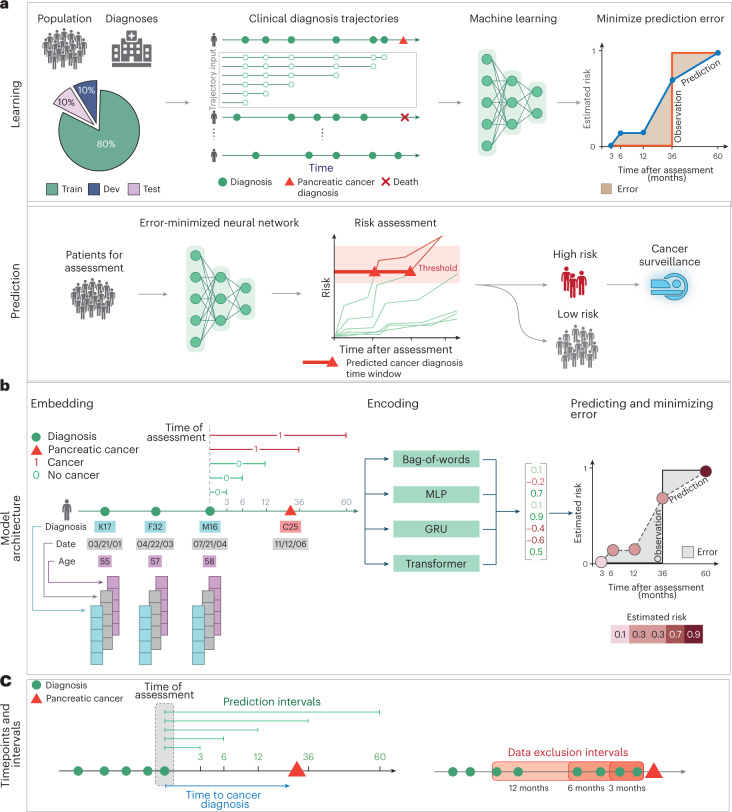
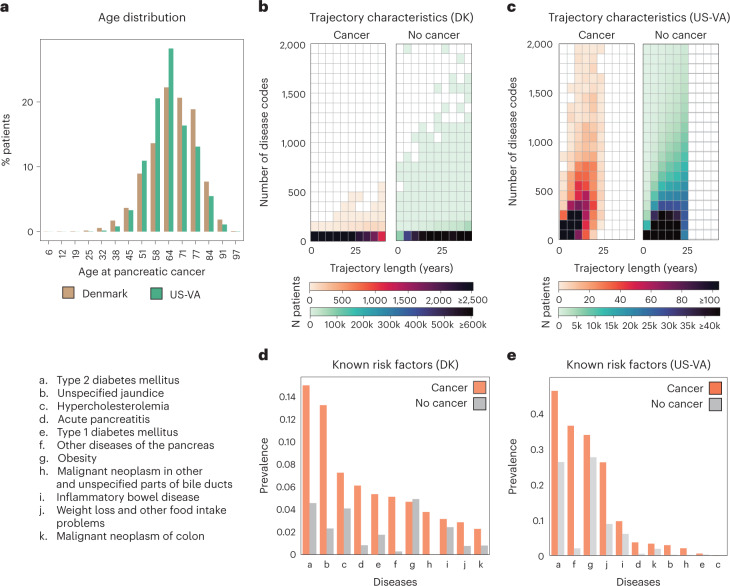
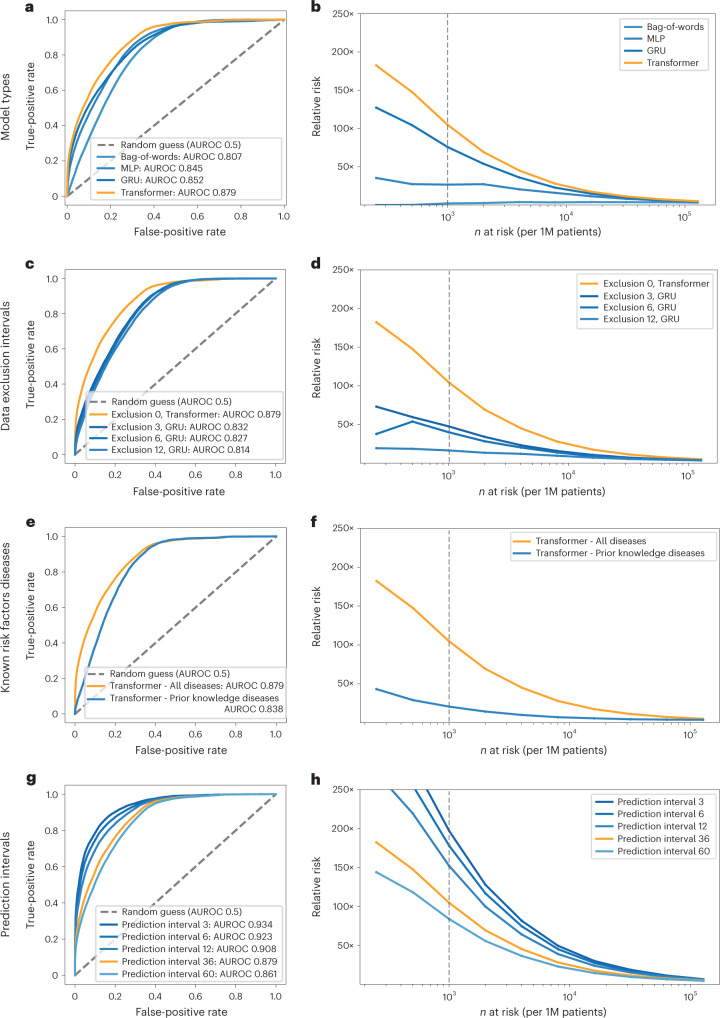
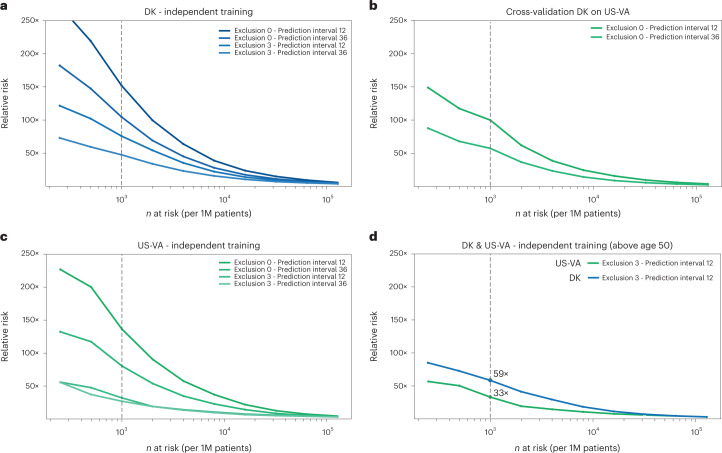
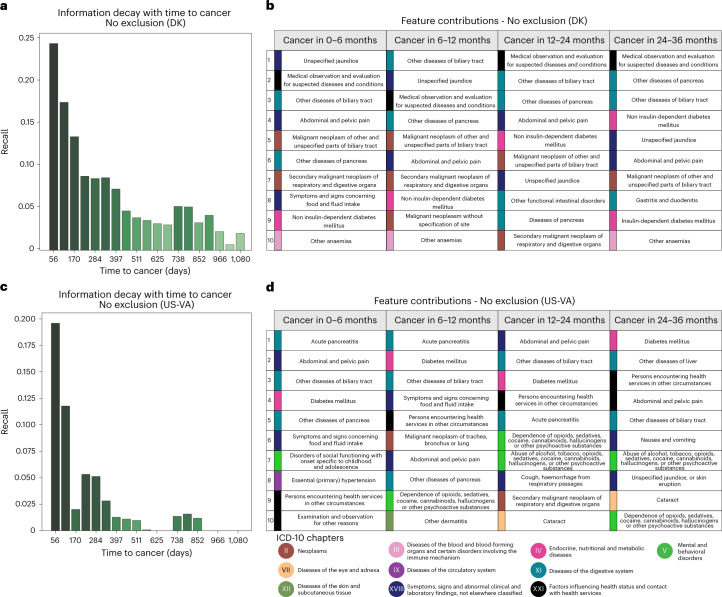
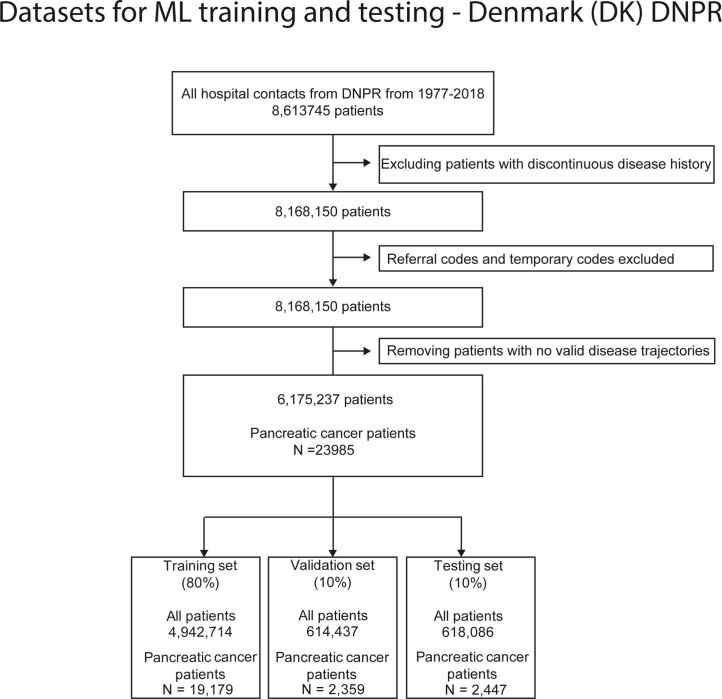
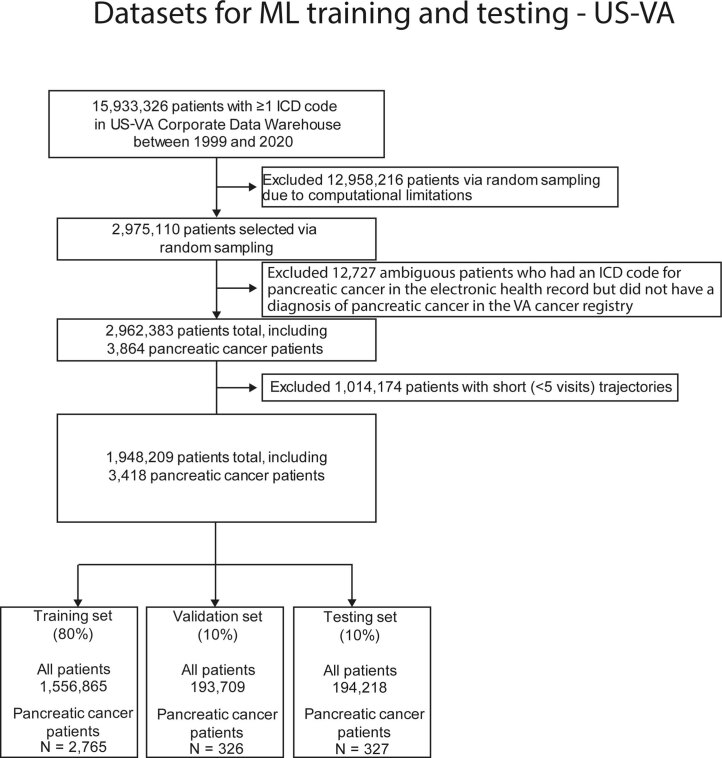
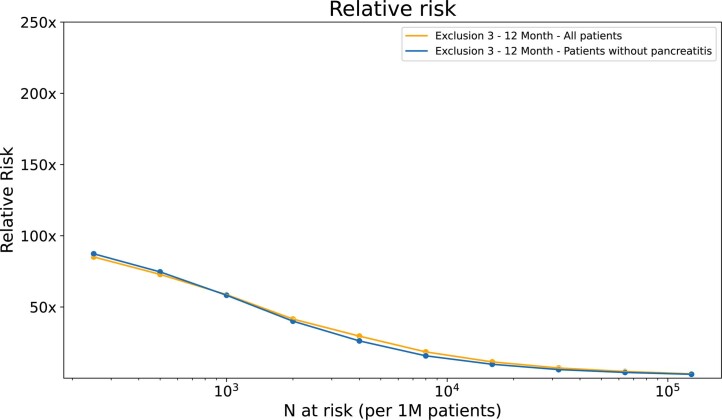
Pancreatic cancer is an aggressive disease that typically presents late with poor outcomes, indicating a pronounced need for early detection. In this study, we applied artificial intelligence methods to clinical data from 6 million patients (24,000 pancreatic cancer cases) in Denmark (Danish National Patient Registry (DNPR)) and from 3 million patients (3,900 cases) in the United States (US Veterans Affairs (US-VA)). We trained machine learning models on the sequence of disease codes in clinical histories and tested prediction of cancer occurrence within incremental time windows (CancerRiskNet). For cancer occurrence within 36 months, the performance of the best DNPR model has area under the receiver operating characteristic (AUROC) curve = 0.88 and decreases to AUROC (3m) = 0.83 when disease events within 3 months before cancer diagnosis are excluded from training, with an estimated relative risk of 59 for 1,000 highest-risk patients older than age 50 years. Cross-application of the Danish model to US-VA data had lower performance (AUROC = 0.71), and retraining was needed to improve performance (AUROC = 0.78, AUROC (3m) = 0.76). These results improve the ability to design realistic surveillance programs for patients at elevated risk, potentially benefiting lifespan and quality of life by early detection of this aggressive cancer.
Overview
The claims and statistics of this paper haven’t been checked yet.
Free: it reads the open-access text and checks the first 5 claims that cite a source we can check. Create a free account to check every claim.
Integrity signals
Registry
Cites
Statistics
Figures
Verification
Claims the paper makes
The claims and statistics of this paper haven’t been checked yet.
Free: it reads the open-access text and checks the first 5 claims that cite a source we can check. Create a free account to check every claim.
Claims other papers make about this one
Each is checked against this paper’s own text: does it say what the citing paper says it does?
The source backs part of the claim, not all of it — or backs it for a different population, condition or comparison.
In the citing paper
“As shown in Figure 2A, AI agents possess the capacity to process extensive patient data, including medical histories, diagnostic test results, and imaging, thereby aiding healthcare professionals in making more informed and precise diagnostic decisions.62,63,64,65,66,67,68,69”
From A foundational architecture for AI agents in healthcare (2025) · cites this paper as [64]
Experimental — accuracy not yet measured
Self-check
Percentages, sums and reported differences re-computed from the paper’s own numbers.
The self-check needs the paper’s full text.
Citations
Cites
Vaswani, A., Shazeer, N., Parmar, N., Uszkoreit, J., Jones, L., Gomez, A. N., Kaiser, L., & Polosukhin, I. (2017) · arXiv · doi:10.48550/arxiv.1706.03762 · Cited by 120,404
LeCun, Y., Bengio, Y., & Hinton, G. (2015) · Nature · doi:10.1038/nature14539 · Cited by 84,126
Efficient Estimation of Word Representations in Vector Space
Mikolov, T., Chen, K., Corrado, G., & Dean, J. (2013) · arXiv · doi:10.48550/arxiv.1301.3781 · Cited by 26,568
Learning Phrase Representations using RNN Encoder–Decoder for Statistical Machine Translation
Cho, K., van Merrienboer, B., Gulcehre, C., Bahdanau, D., Bougares, F., Schwenk, H., & Bengio, Y. (2014) · Proceedings of the 2014 Conference on Empirical Methods in Natural Language Processing (EMNLP) · doi:10.3115/v1/d14-1179 · Cited by 25,545
Dermatologist-level classification of skin cancer with deep neural networks
Esteva, A., Kuprel, B., Novoa, R. A., Ko, J., Swetter, S. M., Blau, H. M., & Thrun, S. (2017) · Nature · doi:10.1038/nature21056 · Cited by 14,362
Rahib, L., Smith, B. D., Aizenberg, R., Rosenzweig, A. B., Fleshman, J. M., & Matrisian, L. M. (2014) · Cancer Research · doi:10.1158/0008-5472.can-14-0155 · Cited by 7,094
The Danish National Patient Registry: a review of content, data quality, and research potential
Schmidt, M., Schmidt, S. A. J., Sandegaard, J. L., Ehrenstein, V., Pedersen, L., & Sørensen, H. T. (2015) · Clinical Epidemiology · doi:10.2147/clep.s91125 · Cited by 4,769
Axiomatic attribution for deep networks
Sundararajan, M., Taly, A., & Yan, Q. (2017) · arXiv · doi:10.48550/arxiv.1703.01365 · Cited by 4,087
Federated Learning: Strategies for Improving Communication Efficiency
Konečný, J., McMahan, H. B., Yu, F. X., Richtárik, P., Suresh, A. T., & Bacon, D. (2016) · arXiv · doi:10.48550/arxiv.1610.05492 · Cited by 3,766
The Danish Civil Registration System as a tool in epidemiology
Schmidt, M., Pedersen, L., & Sørensen, H. T. (2014) · European Journal of Epidemiology · doi:10.1007/s10654-014-9930-3 · Cited by 3,441
Cited by
Artificial intelligence for multimodal data integration in oncology
Lipkova, J., Chen, R. J., Chen, B., Lu, M. Y., Barbieri, M., Shao, D., Vaidya, A. J., Chen, C., Zhuang, L., Williamson, D. F. K., et al. (2022) · Cancer Cell · doi:10.1016/j.ccell.2022.09.012 · Cited by 777
Current AI technologies in cancer diagnostics and treatment
Tiwari, A., Mishra, S., & Kuo, T.-R. (2025) · Molecular Cancer · doi:10.1186/s12943-025-02369-9 · Cited by 207
Pancreatic Cancer Surveillance and Survival of High-Risk Individuals
Blackford, A. L., Canto, M. I., Dbouk, M., Hruban, R. H., Katona, B. W., Chak, A., Brand, R. E., Syngal, S., Farrell, J., Kastrinos, F., et al. (2024) · JAMA Oncology · doi:10.1001/jamaoncol.2024.1930 · Cited by 171
Federated benchmarking of medical artificial intelligence with MedPerf
Karargyris, A., Umeton, R., Sheller, M. J., Aristizabal, A., George, J., Wuest, A., Pati, S., Kassem, H., Zenk, M., Baid, U., et al. (2023) · Nature Machine Intelligence · doi:10.1038/s42256-023-00652-2 · Cited by 188
“…across dozens of clinical sites and research institutes (for example, BraTS 33 and Federated Tumor Segmentation (FeTS) 34 ; and (4) other prominent medical AI and machine learning efforts spanning multiple countries and healthcare specialties (such as oncology 3,29,35,36 and COVID-19 37 ).”
Self-citationYang, Z., Mitra, A., Liu, W., Berlowitz, D., & Yu, H. (2023) · Nature Communications · doi:10.1038/s41467-023-43715-z · Cited by 158
Digital twins as global learning health and disease models for preventive and personalized medicine
Li, X., Loscalzo, J., Mahmud, A. K. M. F., Aly, D. M., Rzhetsky, A., Žitnik, M., & Benson, M. (2025) · Genome Medicine · doi:10.1186/s13073-025-01435-7 · Cited by 152
The generative era of medical AI
Fahrner, J., Chen, E., Topol, E. J., & Rajpurkar, P. (2025) · Cell · doi:10.1016/j.cell.2025.05.018 · Cited by 145
Frontiers in pancreatic cancer on biomarkers, microenvironment, and immunotherapy
Yu, B., Shao, S., & Ma, W. (2024) · Cancer Letters · doi:10.1016/j.canlet.2024.217350 · Cited by 132
MacDonald, W., Purcell, C., Pinho-Schwermann, M. P., Stubbs, N. M., Srinivasan, P. R., & El‐Deiry, W. S. (2025) · Cancers · doi:10.3390/cancers17030441 · Cited by 134
“For one, AI can be used as a predictive model to identify patients most at risk for developing a specific cancer type [150].”
Learning the natural history of human disease with generative transformers
Shmatko, A., Jung, A. W., Gaurav, K., Brunak, S., Mortensen, L. H., Birney, E., Fitzgerald, T., & Gerstung, M. (2025) · Nature · doi:10.1038/s41586-025-09529-3 · Cited by 110
“Transformer models trained on electronic health records have been used for predicting diagnoses such as pancreatic cancer 26 , self-harm 25 and stroke 24 , as well as non-clinical parameters such as self-esteem 27 .”
Self-citationDigestive cancers: mechanisms, therapeutics and management
Zhan, T., Betge, J., Schulte, N., Dreikhausen, L., Hirth, M., Li, M., Weidner, P., Leipertz, A., Teufel, A., & Ebert, M. P. A. (2025) · Signal Transduction and Targeted Therapy · doi:10.1038/s41392-024-02097-4 · Cited by 100
Hallmarks of artificial intelligence contributions to precision oncology
Chang, T., Park, S., Schäffer, A. A., Jiang, P., & Ruppin, E. (2025) · Nature Cancer · doi:10.1038/s43018-025-00917-2 · Cited by 99
Promises and pitfalls of multi-cancer early detection using liquid biopsy tests
Wan, J. C. M., Sasieni, P. D., & Rosenfeld, N. (2025) · Nature Reviews Clinical Oncology · doi:10.1038/s41571-025-01033-x · Cited by 82
Emerging strategies to investigate the biology of early cancer
Zhou, R., Tang, X., & Wang, Y. (2024) · Nature reviews. Cancer · doi:10.1038/s41568-024-00754-y · Cited by 80
“…model, named CancerRiskNet, that was trained on clinical histories of patients, including diagnosis of acute pancreatitis and other pancreatic diseases, as well as additional risk factors such as weight loss and type II diabetes, was established for predicting risk of pancreatic cancer 79 .”
From Machine Learning to Patient Outcomes: A Comprehensive Review of AI in Pancreatic Cancer
Tripathi, S., Tabari, A., Mansur, A., Dabbara, H., Bridge, C. P., & Daye, D. (2024) · Diagnostics · doi:10.3390/diagnostics14020174 · Cited by 76
“Machine learning is categorized here as vanilla algorithms that learn from data and make decisions or predictions, like linear models and support vector machines outcomes or monitoring treatment response in pancreatic cancer [42,45,46].”
BackgroundArtificial intelligence in cancer: applications, challenges, and future perspectives
Cheng, H., & Shi, S.-S. (2025) · Molecular Cancer · doi:10.1186/s12943-025-02450-3 · Cited by 78
“Moreover, NCI-sup-ported researchers are harnessing DL algorithms trained on population-scale disease data to predict individual risk for pancreatic cancer, thereby laying the groundwork for earlier detection and improved patient outcomes [179].”
Early Detection of Pancreatic Cancer: Applying Artificial Intelligence to Electronic Health Records
Kenner, B. J., Abrams, N., Chari, S. T., Field, B. F., Goldberg, A. E., Hoos, W. A., Klimstra, D. S., Rothschild, L. J., Srivastava, S., Young, M. R., et al. (2021) · Pancreas · doi:10.1097/mpa.0000000000001882 · Cited by 67
Mukund, A., Afridi, M. A., Karolak, A. M., Park, M. A., Permuth, J. B., & Rasool, G. (2024) · Cancers · doi:10.3390/cancers16122240 · Cited by 72
“In another study, the International Classification of Diseases (ICD-8 and ICD-10) codes were used as features for analyzing the health records of approximately 8.6 million patients [40].”
BackgroundMethodInfluentialTumor immune microenvironment in pancreatic ductal adenocarcinoma revisited – Exploring the “Space”
Bräutigam, K., Skok, K., Szymoński, K., Rift, C. V., & Karamitopoulou, E. (2025) · Cancer Letters · doi:10.1016/j.canlet.2025.217699 · Cited by 66
Risk prediction models of depression in older adults with chronic diseases
Zheng, Y., Zhang, C., & Liu, Y. (2024) · Journal of Affective Disorders · doi:10.1016/j.jad.2024.05.078 · Cited by 57
Riaz, I. B., Harmon, S. A., Chen, Z., Naqvi, S. A. A., & Cheng, L. (2024) · American Society of Clinical Oncology Educational Book · doi:10.1200/edbk_438516 · Cited by 61
Artificial intelligence-driven transformative applications in disease diagnosis technology
Zhou, J., Park, S., Dong, S., Tang, X., & Wei, X. (2025) · Medical Review · doi:10.1515/mr-2024-0097 · Cited by 56
“One of the most promising developments comes from a collaborative e ff ort between Harvard and the University of Copenhagen, where researchers have developed an AI tool capable of predicting pancreatic cancer up to three years before conventional diagnosis [29].”
Harnessing the power of artificial intelligence for human living organoid research
Wang, H., Li, X., You, X., & Zhao, G. (2024) · Bioactive Materials · doi:10.1016/j.bioactmat.2024.08.027 · Cited by 64
“Unexpectedly, among 0.1 % of highest-risk patients over 50 years of age who were predicted within 12 months of diagnosis, there was a large difference in relative risk between DNPR (58.7) and US-VA (33.1) [201].”
BackgroundInfluentialNew approach methodologies for drug discovery
Liu, W., Pang, P. D., Wu, C. A., Tagle, D. A., & Wu, J. C. (2026) · Cell · doi:10.1016/j.cell.2026.02.012 · Cited by 49
Artificial Intelligence for the Prediction and Early Diagnosis of Pancreatic Cancer: Scoping Review
Jan, Z., Assadi, F. E., Abd-Alrazaq, A. A., & Jithesh, P. V. (2023) · Journal of Medical Internet Research · doi:10.2196/44248 · Cited by 52
Imaging of pancreatic ductal adenocarcinoma – An update for all stages of patient management
Bilreiro, C., Andrade, L., Santiago, I., Marques, R. M., & Matos, C. (2024) · European Journal of Radiology Open · doi:10.1016/j.ejro.2024.100553 · Cited by 50
Perturbomics: CRISPR–Cas screening-based functional genomics approach for drug target discovery
Park, B.-S., Lee, M., Kim, J. Y., & Kim, T. (2025) · Experimental & Molecular Medicine · doi:10.1038/s12276-025-01487-0 · Cited by 49
“Similarly, machine learning models have shown promise in early pancreatic cancer detection using clinical records 98 , while biology-guided deep learning applied to preoperative computed tomography images has provided prognostic predictions for gastric cancer and potential immunotherapy responses…”
Self-citationLarge language model-based biological age prediction in large-scale populations
Li, Y., Huang, Q. Z., Jiang, J., Du, X., Xiang, W., Zhang, S., Pan, Z., Zhao, L., Cui, Y., Ke, L., et al. (2025) · Nature Medicine · doi:10.1038/s41591-025-03856-8 · Cited by 53
“Unlike traditional statistical or ML models, which are often developed for specific populations and struggle to transfer to other regions 49 , LLMs can assess aging effectively across diverse populations (Fig.”
Pancreatic Cancer Detection using Machine and Deep Learning Techniques
Gupta, A., Koul, A., & Kumar, Y. (2022) · International Conference on Innovative Practices in Technology and Management (ICIPTM) · doi:10.1109/iciptm54933.2022.9754010 · Cited by 46
Jia, K., Kundrot, S., Palchuk, M. B., Warnick, J., Haapala, K., Kaplan, I. D., Rinard, M., & Appelbaum, L. (2023) · EBioMedicine · doi:10.1016/j.ebiom.2023.104888 · Cited by 46
“14 Some studies lacked an external validation, 13 completed the external validation/evaluated model generalizability only with data from a single geographic area, 14,16 or validated only on one sex (male) 15 or race.”
BackgroundMicrobiome and pancreatic cancer: time to think about chemotherapy
de Castilhos, J., Tillmanns, K., Blessing, J., Larano, A., Borisov, V., & Stein‐Thoeringer, C. K. (2024) · Gut Microbes · doi:10.1080/19490976.2024.2374596 · Cited by 42
“193 In another approach, Placido et al. (2023) focuses on developing a deep learning algorithm to predict the risk of PDAC from disease trajectories.”
BackgroundMethodA foundational architecture for AI agents in healthcare
Liu, F., Niu, Y., Zhang, Q., Wang, K., Dong, Z., Wong, I. N., Cheng, L., Li, T., Duan, L., Li, K., et al. (2025) · Cell Reports Medicine · doi:10.1016/j.xcrm.2025.102374 · Cited by 41
Moglia, V., Johnson, O. A., Cook, G., de Kamps, M., & Smith, L. (2025) · BMC Medical Research Methodology · doi:10.1186/s12874-025-02473-w · Cited by 46
“Six studies utilised transformer architectures [40, 49, 54, 55, 61, 65].”
InfluentialBiomarkers, omics and artificial intelligence for early detection of pancreatic cancer
Murray, K., Oldfield, L. S., Stefanova, I., Gentiluomo, M., Aretini, P., O’Sullivan, R., Greenhalf, W., Paiella, S., Aoki, M. N., Pastore, A., et al. (2025) · Seminars in Cancer Biology · doi:10.1016/j.semcancer.2025.02.009 · Cited by 45
Artificial intelligence across the cancer care continuum
Riaz, I. B., Khan, M. A., & Osterman, T. J. (2025) · Cancer · doi:10.1002/cncr.70050 · Cited by 40
“14 These predictive models can empower health care providers to identify high - risk individuals who may benefit from more intensive screening, chemoprevention, or lifestyle modifications.”
Mishra, A. K., Chong, B., Arunachalam, S. P., Oberg, A. L., & Majumder, S. (2024) · The American Journal of Gastroenterology · doi:10.14309/ajg.0000000000002870 · Cited by 45
Informatics strategies for early detection and risk mitigation in pancreatic cancer patients
Jin, D., Khan, N. U., Gu, W., Lei, H., Goel, A., & Chen, T. (2025) · Neoplasia · doi:10.1016/j.neo.2025.101129 · Cited by 39
“The diagnosis of pancreatic ductal adenocarcinoma (PDAC) by AI at a more manageable stage for the patient is another vital field of study that can contribute to an increase in the survival rates of those diagnosed [85,86].”
Qiu, J., Hu, Y., Li, L., Erzurumluoglu, A. M., Brænne, I., Whitehurst, C. E., Schmitz, J., Arora, J., Bartholdy, B., Gandhi, S., et al. (2025) · Nature Communications · doi:10.1038/s41467-025-56625-z · Cited by 44
“As a more recent example, Placido et al. presented a transformer model fordetecting patients with a high risk ofpancreatic cancer from EHR data 8 .”
Early Detection of Pancreatic Cancer: Current Advances and Future Opportunities
Lin, Z., Adeniran, E. A., Cai, Y., Qureshi, T. A., Li, D., Gong, J., Li, J., Pandol, S. J., & Jiang, Y. (2025) · Biomedicines · doi:10.3390/biomedicines13071733 · Cited by 48
“…temporal patterns of diagnosis codes, their model—CancerRiskNet—achieved an area under the receiver operating characteristic curve (AUROC) of up to 0.88 for predicting PDAC within 36 months, demonstrating strong potential for early identification based on longitudinal clinical trajectories [122].”
InfluentialRashed, B. M., & Popescu, N. (2022) · Sensors · doi:10.3390/s22187065 · Cited by 41
Wang, L. F., Yin, Y., Glampson, B., Peach, R. L., Barahona, M., Delaney, B. C., & Mayer, E. K. (2024) · EBioMedicine · doi:10.1016/j.ebiom.2024.105442 · Cited by 40
“10,19,20 We propose an innovative framework for deriving, modelling, and analysing the entire encoded patient pathways leading to the point of diagnosis with lung cancer.”
Haab, B. B., Qian, L., Staal, B., Jain, M., Fahrmann, J. F., Worthington, C., Prosser, D., Velokokhatnaya, L., Lopez, C., Tang, R., et al. (2024) · Cancer Letters · doi:10.1016/j.canlet.2024.217245 · Cited by 40
Ki, M., Kim, D. H., Abdelhamid, M. A. A., & Pack, S. P. (2025) · Biosensors · doi:10.3390/bios15110737 · Cited by 35
A multimodal dataset for precision oncology in head and neck cancer
Dörrich, M., Balk, M., Heusinger, T., Beyer, S., Mirbagheri, H., Fischer, D. J., Kanso, H., Matek, C., Hartmann, A., Iro, H., et al. (2025) · Nature Communications · doi:10.1038/s41467-025-62386-6 · Cited by 44
“We provide the resulting polygon annotations in ”.geojson” format to enable effortless extraction of tumor tiles for future works.”
Jung, A. W., Holm, P. C., Gaurav, K., Hjaltelin, J. X., Placido, D., Mortensen, L. H., Birney, E., Brunak, S., & Gerstung, M. (2024) · The Lancet Digital Health · doi:10.1016/s2589-7500(24)00062-1 · Cited by 34
Self-citationThe leading global health challenges in the artificial intelligence era
Zaidan, A. M. (2023) · Frontiers in Public Health · doi:10.3389/fpubh.2023.1328918 · Cited by 37
The role of biomarkers in the early detection of pancreatic cancer
Goggins, M. (2024) · Familial Cancer · doi:10.1007/s10689-024-00381-4 · Cited by 35
“…in the Danish National Patient Registry as well as 3 million US Veterans Affairs and found good diagnostic performance for identifying pancreatic cancer within the Danish database within 3 years of diagnosis, though the model did not perform well when cross validated with the US dataset [102].”
Disease Trajectories from Healthcare Data: Methodologies, Key Results, and Future Perspectives
Jørgensen, I. F., Haue, A. D., Placido, D., Hjaltelin, J. X., & Brunak, S. (2024) · Annual Review of Biomedical Data Science · doi:10.1146/annurev-biodatasci-110123-041001 · Cited by 33
Self-citationCichosz, S. L., Jensen, M. H., Hejlesen, O. K., Henriksen, S. D., Drewes, A. M., & Olesen, S. S. (2023) · Computer Methods and Programs in Biomedicine · doi:10.1016/j.cmpb.2023.107965 · Cited by 33
Manimaran, G., Peimankar, A., Puthusserypady, S. K., Momeni, M., Asyari, R. A. I., Jahan, M. S., Moll, J., Wiil, U. K., & Ebrahimi, A. (2025) · Computers in Biology and Medicine · doi:10.1016/j.compbiomed.2025.111324 · Cited by 38
Artificial intelligence-aided data mining of medical records for cancer detection and screening
Haue, A. D., Hjaltelin, J. X., Holm, P. C., Placido, D., & Brunak, S. (2024) · The Lancet Oncology · doi:10.1016/s1470-2045(24)00277-8 · Cited by 30
Self-citationDevelopment and evaluation of a large language model of ophthalmology in Chinese
Zheng, C., Ye, H., Guo, J., Yang, J., Fei, P., Yuan, Y., Huang, D., Huang, Y., Peng, J., Xie, X., et al. (2024) · British Journal of Ophthalmology · doi:10.1136/bjo-2023-324526 · Cited by 29
Self-citationChallenges of early detection of pancreatic cancer
Shen, M. J., Jamali, A., & Katona, B. W. (2025) · Journal of Clinical Investigation · doi:10.1172/jci191942 · Cited by 27
Recent advances in hydrogel-based delivery systems for the treatment of pancreatic cancer
Wang, H., Yu, H., Bai, X., Wang, X., Shao, H., Liao, J., & Yang, X. (2025) · Materials Today Bio · doi:10.1016/j.mtbio.2025.102487 · Cited by 35
“Although recent advances have been made in conventional treatments such as surgery, radiotherapy, chemotherapy, and emerging modalities like targeted therapy and immunotherapy, their efficacy remains profoundly limited [7 – 9].”
A generalist model for diverse text-guided medical image synthesis
Cho, J., Mathur, M., Zakka, C., Kaur, D., Leipzig, M., Higa, K. C., Dalal, A., Krishnan, A., Koo, E., Wai, K. M., et al. (2026) · npj Digital Medicine · doi:10.48550/arxiv.2405.09806 · Cited by 26
“Deep learning (DL) has made remarkable strides in medicine, with applications ranging from diagnostic imaging to predictive analytics [1–5].”
Screening for pancreatic cancer has the potential to save lives, but is it practical?
Mazer, B. L., Lee, J. W., Roberts, N. J., Chu, L. C. H., Lennon, A. M., Klein, A. P., Eshleman, J. R., Fishman, E. K., Canto, M. I., Goggins, M., et al. (2023) · Expert Review of Gastroenterology & Hepatology · doi:10.1080/17474124.2023.2217354 · Cited by 27
Pancreatic cancer in 2025: Have we found a solution?
Tonini, V., & Zanni, M. (2025) · World Journal of Gastroenterology · doi:10.3748/wjg.v31.i43.111433 · Cited by 26
“Placido et al [237] analyzed clinical data from 6 million patients, including 24000 with PDAC in the Danish National Patient Registry and 3 million patients, with 3900 cases of PDAC, in the United States Department of Veterans Affairs databases.”
Potential application of artificial intelligence in cancer therapy
Riaz, I. B., Khan, M. A., & Haddad, T. C. (2024) · Current Opinion in Oncology · doi:10.1097/cco.0000000000001068 · Cited by 21
Enhancing EHR-based pancreatic cancer prediction with LLM-derived embeddings
Park, J., Patterson, J., Cortina, J. M. A., Gu, T., Hur, C., & Tatonetti, N. P. (2025) · npj Digital Medicine · doi:10.1038/s41746-025-01869-8 · Cited by 26
Tan, Y., Dede, M., Mohanty, V., Dou, J., Hill, H., Bernstam, E., & Chen, K. (2024) · Journal of Biomedical Informatics · doi:10.1016/j.jbi.2024.104648 · Cited by 19
Felici, A., Peduzzi, G., Pellungrini, R., & Campa, D. (2025) · European Journal of Cancer · doi:10.1016/j.ejca.2025.115440 · Cited by 24
Smith, L. M., Mahoney, D. W., Bamlet, W. R., Yu, F., Liu, S., Goggins, M., Darabi, S., Majumder, S., Wang, Q.-L., Coté, G. A., et al. (2024) · Pancreatology · doi:10.1016/j.pan.2024.10.012 · Cited by 22
Self-citationLoaiza‐Bonilla, A., Thaker, N. G., Chung, C. D., Parikh, R. B., Stapleton, S., & Borkowski, P. (2025) · American Society of Clinical Oncology Educational Book · doi:10.1200/edbk-25-100048 · Cited by 21
Kirchler, M., Ferro, M., Lorenzini, V., van de Water, R. P., FinnGen, Ganna, A., Lippert, C., & Ganna, A. (2026) · npj Digital Medicine · doi:10.1038/s41746-026-02363-5 · Cited by 26
Letelier, P. J., Saldías, R., Loren, P., Riquelme, I., & Guzmán, N. H. (2023) · International Journal of Molecular Sciences · doi:10.3390/ijms242316984 · Cited by 18
“It has recently been published that an algorithm managed to identify people at higher risk of suffering from pancreatic cancer up to three years before diagnosis; this approach only used clinical data from the patients [226].”
MethodMedical Federated Model With Mixture of Personalized and Shared Components
Zhao, Y., Liu, Q., Liu, P., Liu, X., & He, K. (2024) · IEEE Transactions on Pattern Analysis and Machine Intelligence · doi:10.1109/tpami.2024.3470072 · Cited by 29
“W ITH proliferation of data, decision models generated by data-driven paradigm have shown remarkable performance on clinical diagnosis and treatment [1], [2], [3], [4], [5].”
Alaca, Y., & Akmeşe, Ö. F. (2025) · International Journal of Imaging Systems and Technology · doi:10.1002/ima.70040 · Cited by 20
Adaptive Cancer Therapy in the Age of Generative Artificial Intelligence
Derbal, Y. M. (2024) · Cancer Control: Journal of the Moffitt Cancer Cente · doi:10.1177/10732748241264704 · Cited by 16
“29 The use of ML to plan radiation therapy (RT) for prostate cancer patients, 30 and to identify patients that are likely to need acute care visit during RT or chemoradiation 31 are among the few instances of clinically integrated applications of AI in oncology.”
MethodDeep Learning in Hematology: From Molecules to Patients
Wang, J. (2024) · Clinical Hematology International · doi:10.46989/001c.124131 · Cited by 21
Teixeira, P. F., Battelino, T., Carlsson, A., Guðbjörnsdóttir, S., Hannelius, U., von Herrath, M., Knip, M., Korsgren, O., Larsson, H. E., Lindqvist, A., et al. (2024) · Diabetologia · doi:10.1007/s00125-024-06089-5 · Cited by 17
Yuanyuan, Z., Bensahla, A., Bjelogrlic, M., Zaghir, J., Turbé, H., Bednarczyk, L., Gaudet-Blavignac, C., Ehrsam, J., Marchand‐Maillet, S., & Lovis, C. (2025) · npj Digital Medicine · doi:10.1038/s41746-025-01692-1 · Cited by 22
Convergence of machine learning and genomics for precision oncology
Reardon, B. M., Culhane, A. C., & Allen, E. M. V. (2026) · Nature reviews. Cancer · doi:10.1038/s41568-025-00897-6 · Cited by 17
Genetic and other risk factors for pancreatic ductal adenocarcinoma (PDAC)
Jacobs, M. F., & Stoffel, E. M. (2024) · Familial Cancer · doi:10.1007/s10689-024-00372-5 · Cited by 16
“…assessing pancreatic cancer risk, recent modeling studies suggest that incorporating other individual characteristics, such as comorbidities, health behaviors, and longitudinal tracking of laboratory values through electronic medical records can improve the precision of risk stratification [ 116].”
Enhancing neuro-oncology care through equity-driven applications of artificial intelligence
Mehari, M., Sibih, Y., Dada, A., Chang, S. M., Wen, P. Y., Molinaro, A. M., Chukwueke, U. N., Budhu, J. A., Jackson, S., McFaline-Figueroa, J. R., et al. (2024) · Neuro-Oncology · doi:10.1093/neuonc/noae127 · Cited by 15
Farinella, R., Felici, A., Peduzzi, G., Testoni, S. G. G., Costello, E., Aretini, P., Blázquez‐Encinas, R., Oz, E., Pastore, A., Tacelli, M., et al. (2025) · Seminars in Cancer Biology · doi:10.1016/j.semcancer.2025.03.004 · Cited by 19
Schuurmans, M., Saha, A., Alves, N., Vendittelli, P., Yakar, D., Sabroso‐Lasa, S., Xue, N., Malats, N., Huisman, H. J., Hermans, J. J., et al. (2025) · European Radiology · doi:10.1007/s00330-025-11694-y · Cited by 22
Artificial intelligence and improved early detection for pancreatic cancer
Zhong, J., Shi, J., & Amundadottir, L. T. (2023) · The Innovation · doi:10.1016/j.xinn.2023.100457 · Cited by 15
Hjaltelin, J. X., Novitski, S. I., Jørgensen, I. F., Siggaard, T., Vulpius, S. A., Westergaard, D., Johansen, J. S., Chen, I. M., Jensen, L. J., & Brunak, S. (2023) · eLife · doi:10.7554/elife.84919 · Cited by 15
Self-citationEarly detection of pancreatic cancer and AI risk partitioning
Maitra, A., & Topol, E. J. (2024) · The Lancet · doi:10.1016/s0140-6736(24)00690-1 · Cited by 15
Thermosensitive Liposomes for Gemcitabine Delivery to Pancreatic Ductal Adenocarcinoma
Aparicio-Lopez, C. B., Timmerman, S. A., Lorino, G., Rogers, T., Pyle, M. M., Shrestha, T. B., & Basel, M. T. (2024) · Cancers · doi:10.3390/cancers16173048 · Cited by 14
Opportunities for Causal Machine Learning in Precision Oncology
Weberpals, J. G., Feuerriegel, S., van der Schaar, M., & Kehl, K. L. (2025) · NEJM AI · doi:10.1056/aip2500277 · Cited by 20
Yang, L., Qi, K., Zhang, P., Cheng, J., Soha, H., Jin, Y., Ci, H., Zheng, X., Wang, B., Mei, Y., et al. (2024) · Bioengineering · doi:10.3390/bioengineering11050429 · Cited by 13
Nishida, N. (2024) · Bioengineering · doi:10.3390/bioengineering11121243 · Cited by 18
Deng, B., Zhao, Z., Ruan, T., Zhou, R., Liu, C., Li, Q., Cheng, W., Wang, J., Wang, F., Xie, H., et al. (2025) · Critical Care · doi:10.1186/s13054-024-05248-9 · Cited by 13
Fan, Z., Mamouei, M., Li, Y., Rao, S., & Rahimi, K. (2025) · EBioMedicine · doi:10.1016/j.ebiom.2025.105657 · Cited by 15
Pancreatic cancer is associated with medication changes prior to clinical diagnosis
Zhang, Y., Wang, Q.-L., Yuan, C., Lee, A. A., Babić, A., Ng, K., Perez, K. J., Nowak, J. A., Lagergren, J., Stampfer, M. J., et al. (2023) · Nature Communications · doi:10.1038/s41467-023-38088-2 · Cited by 13
Self-citationThe Role of Artificial Intelligence in Early Cancer Detection: Exploring Early Clinical Applications
Thaker, N. G., Dicker, A. P., Loaiza‐Bonilla, A., Wallace, A. F., Kolman, D., Ruggles, A. N. G., Manda, S., Frank, S. J., Orio, P. F., & Doria, C. (2024) · AI in Precision Oncology · doi:10.1089/aipo.2023.0011 · Cited by 15
“23 They investigated 6 million patients from the Danish National Patient Registry (24,000 pancreatic cancer cases) and cross-applied their models to 3 million patients from U.S. Veterans Affairs.”
Mahawan, T., Luckett, T., Mielgo, A., Pornputtapong, N., & Caamaño‐Gutiérrez, E. (2024) · BMC Medical Informatics and Decision Making · doi:10.1186/s12911-024-02578-0 · Cited by 13
“For example, a study applied AI methods to clinical data to predict the risk of pancreatic cancer, showing promising results beneficial for future disease screening [11].”
MethodMillarch, A. S., Folke, F., Rudolph, S. S., Kaafarani, H. M. A., & Sillesen, M. (2025) · British journal of surgery · doi:10.1093/bjs/znaf058 · Cited by 12
Evaluation of trajectory analysis for disease risk assessment: a scoping review
Pollington, F., Denaxas, S., Li, K., Thygesen, J. H., Lyratzopoulos, G., & White, B. (2025) · Journal of the American Medical Informatics Association · doi:10.1093/jamia/ocaf208 · Cited by 17
Ma, Y., Yang, Y., Du, Y., Jin, L., Liang, B., Zhang, Y., Wang, Y., Liu, L., Zhang, Z., Jin, Z., et al. (2025) · BMC Medicine · doi:10.1186/s12916-025-03962-x · Cited by 14
Zhu, W., Tang, H., Zhang, H., Rajamohan, H. R., Huang, S., Ma, X., Chaudhari, A., Madaan, D., Almahmoud, E., Chopra, S., et al. (2024) · medRxiv · doi:10.1101/2024.04.26.24306180 · Cited by 18
“As the state-of-the-art model for learning representations of the structured EHR data 21,22 , we adopted a Transformer 19 network to encode the EHR at the patient level.”
Vabalas, A., Hartonen, T., Vartiainen, P., Jukarainen, S., Viippola, E., Rodosthenous, R. S., Liu, A., Hägg, S., Perola, M., & Ganna, A. (2024) · Nature Aging · doi:10.1038/s43587-024-00657-5 · Cited by 12
“Previous work showed that RNNs have comparable performance to other sequential DL models in predicting clinical events 29,30 .”
Ney, A., Nene, N. R., Sedlak, E., Acedo, P., Blyuss, O. B., Whitwell, H. J., Costello, E., Gentry‐Maharaj, A., Williams, N. R., Menon, U., et al. (2024) · PLoS Computational Biology · doi:10.1371/journal.pcbi.1012408 · Cited by 12
Sushmitha, G., & Utukuru, S. (2025) · Iran Journal of Computer Science · doi:10.1007/s42044-024-00223-7 · Cited by 11
“Some studies [32, 33] have also developed deep learning systems to automatecoronaryarterycalcium quantificationfrom routine computed tomography (CT) scans, demonstrating the potential to predict cardiovascular events and improve population health.”
Mekala, S., & Phani Kumar, S. (2025) · Scientific Reports · doi:10.1038/s41598-025-00512-6 · Cited by 11
Tavanaeian, S., Feizabadi, M. M., Falsafi, S., Aghdaei, H. A., & Houri, H. (2025) · BMC Microbiology · doi:10.1186/s12866-025-04344-2 · Cited by 11
“…male gender predominance, alcohol consumption, smoking habits, dietary patterns, chronic pancreatitis, and non-invasive cysts like intraductal papillary mucinous neo-plasm (IPMN), within which the microbiome emerges as a significant determinant within this intricate framework of influences [5–10].”
Application of artificial intelligence to pancreatic adenocarcinoma
Chen, X., Fu, R., Shao, Q., Chen, Y., Ye, Q., Li, S., He, X., & Zhu, J. (2022) · Frontiers in Oncology · doi:10.3389/fonc.2022.960056 · Cited by 11
Visualising disease trajectories from population-wide data
Hjaltelin, J. X., Currant, H., Jørgensen, I. F., & Brunak, S. (2023) · Frontiers in Bioinformatics · doi:10.3389/fbinf.2023.1112113 · Cited by 13
Self-citationMatchaba, S., Fellague-Chebra, R., Purushottam, P., & Johns, A. (2023) · JCO Clinical Cancer Informatics · doi:10.1200/cci.23.00076 · Cited by 12
“14 However, model ’ s performance was suboptimal on the US Veterans Affairs data set (0.71 AUC), and retraining was required to achieve an AUC of 0.78.”
Influential
Metadata
- Authors
- Placido, D., Yuan, B., Hjaltelin, J. X., Zheng, C., Haue, A. D., Chmura, P. J., Yuan, C., Kim, J., Umeton, R., Antell, G., Chowdhury, A., Franz, A., Brais, L., Andrews, E., Marks, D. S., Regev, A., Ayandeh, S., Brophy, M. T., Do, N. V., Kraft, P., Wolpin, B. M., Rosenthal, M. H., Fillmore, N. R., Brunak, S., & Sander, C.
- Affiliations
- University of Copenhagen (DK)
- Broad Institute (US)
- Boston University (US)
- Harvard University (US)
- Dana-Farber Cancer Institute (US)
- VA Boston Healthcare System (US)
- Brigham and Women's Hospital (US)
- Corresponding author
- Brunak, Søren
- Sander, Chris
- ORCID
- Placido, Davide
- Yuan, Bo
- Hjaltelin, Jessica X.
- Zheng, Chunlei
- Haue, Amalie D.
- Chmura, Piotr J.
- Yuan, Chen
- Kim, Jihye
- Umeton, Renato
- Brais, Lauren
- Andrews, Elizabeth
- Marks, Debora S.
- Regev, Aviv
- Ayandeh, Siamack
- Brophy, Mary T.
- Do, Nhan V.
- Kraft, Peter
- Wolpin, Brian M.
- Rosenthal, Michael H.
- Fillmore, Nathanael R.
- Brunak, Søren
- Sander, Chris
- Venue
- Nature Medicine
- Published
- 2023-05
- Volume
- 29
- Issue
- 5
- Pages
- 1113-1122
- ISSN
- 1078-8956 (ISSN-L)
- 1546-170X
- PMC
- PMC10202814
- OpenAlex
- W4375858857
- Cited by
- 349
- References
- 56
- Citations by year
- 2026: 82 · 2025: 137 · 2024: 97 · 2023: 32
- FWCI
- 32.90
- Type
- journal article
- Language
- en
- Open access
- hybrid
- doi.org
- Licence
- cc-by
- creativecommons.org/licenses/by/4.0 (tdm)
- creativecommons.org/licenses/by/4.0 (vor, 7 d)
- Locations
- Nature Medicine (publishedVersion, cc-by)
- PubMed Central (publishedVersion, cc-by)
- PubMed (publishedVersion)
- Research at the University of Copenhagen (University of Copenhagen) (publishedVersion, cc-by)
- Funders
- EIF | Stand Up To Cancer (SU2C#6180)
- U.S. Department of Health & Human Services | National Institutes of Health (U01 CA210171, P50 CA127003)
- Novo Nordisk Fonden (NNF17OC0027594, NNF14CC0001)
- Topics
- Physical Sciences › Computer Science › Artificial Intelligence › Machine Learning in Healthcare
- Health Sciences › Medicine › Oncology › Pancreatic and Hepatic Oncology Research
- Physical Sciences › Computer Science › Artificial Intelligence › AI in cancer detection
- Keywords
- pancreatic cancer, cancer risk prediction, disease trajectories, clinical codes, early detection, cancer surveillance, cross-model transfer, Danish National Patient Registry, model retraining
- MeSH terms
- Deep Learning, Algorithms, Artificial Intelligence, Humans, Middle Aged, Pancreatic Neoplasms, Quality of Life
About these checks
Registry, retraction, Cites and statistics results are computed, not judged, with one exception: a printed reference that no index lists is read once by a model before it counts as a citation error. Claims are extracted by a model and kept only when their quote appears verbatim in the text; each cited source is then checked, with a model’s help, for whether it says what the claim relies on. Those verdicts can be wrong — read the claim’s quote and the cited source before relying on one.
Statistics and arithmetic are recomputed, not judged.
Confidence bands are shown only for fields calibrated on our annotated test set. None is calibrated yet, so no band is shown.
What counts as a claim ›How we measure confidence ›How we check this ›
Are you an author, or do you see a problem with this page? Request a review
Data sources
Bibliographic data: Semantic Scholar, OpenAlex, Crossref.
Contains information from the Semantic Scholar Academic Graph Datasets, made available under the ODC Attribution License (ODC-BY 1.0).
Semantic Scholar’s data is described in: Kinney, R., et al. (2023). The Semantic Scholar Open Data Platform. arXiv:2301.10140.
