

A deep learning algorithm to predict risk of pancreatic cancer from disease trajectories
Open accessThe DOI matches its Crossref record; 64 of the 64 references it cites were found in a registry or an index.
Abstract
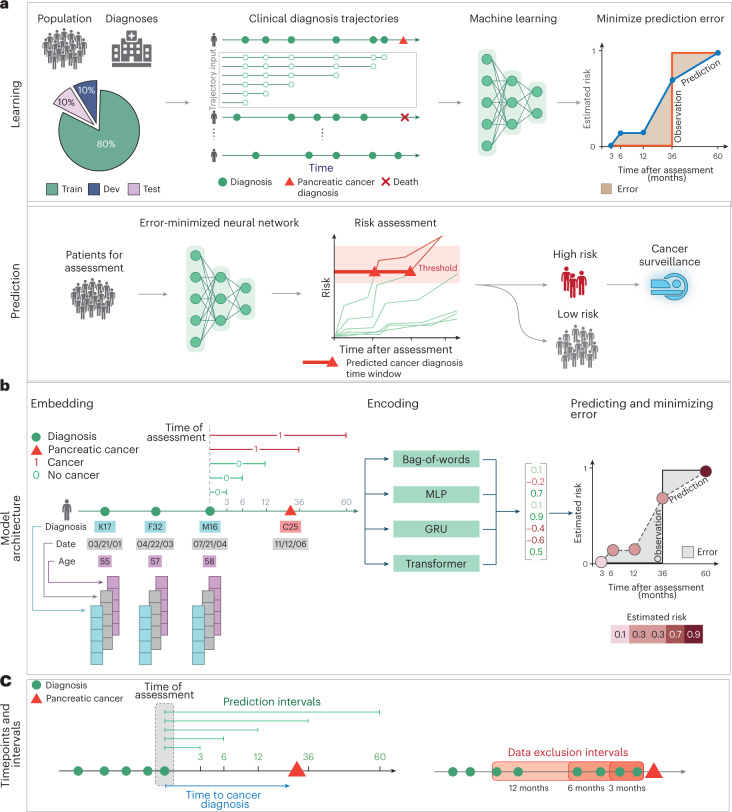
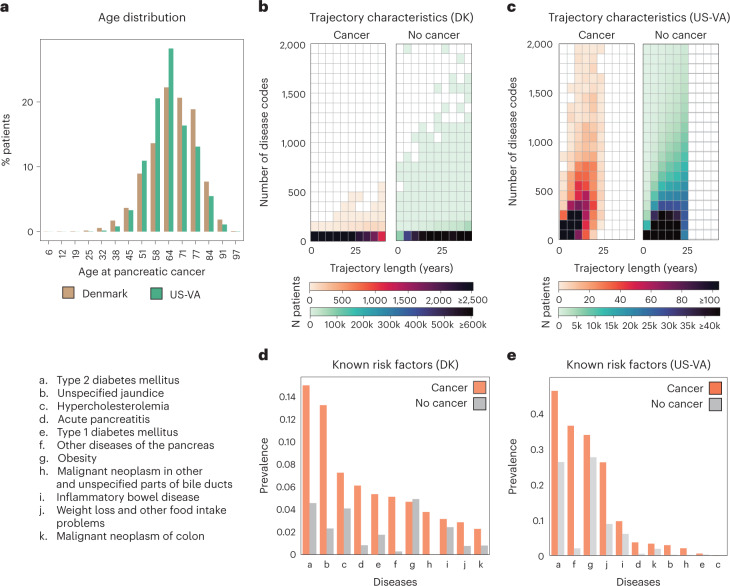
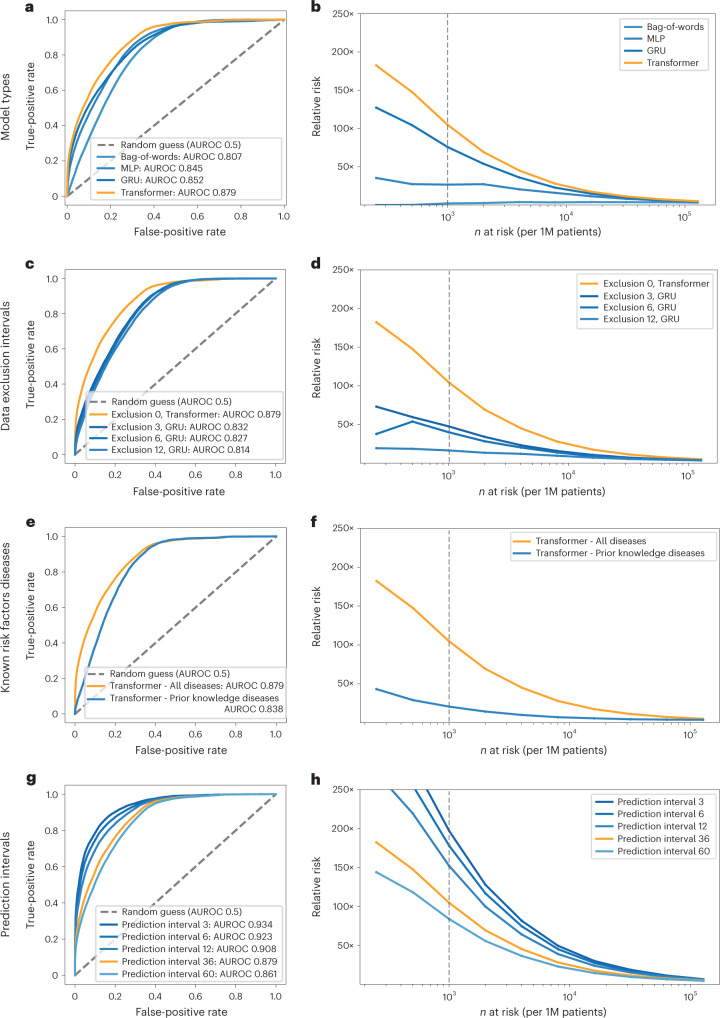
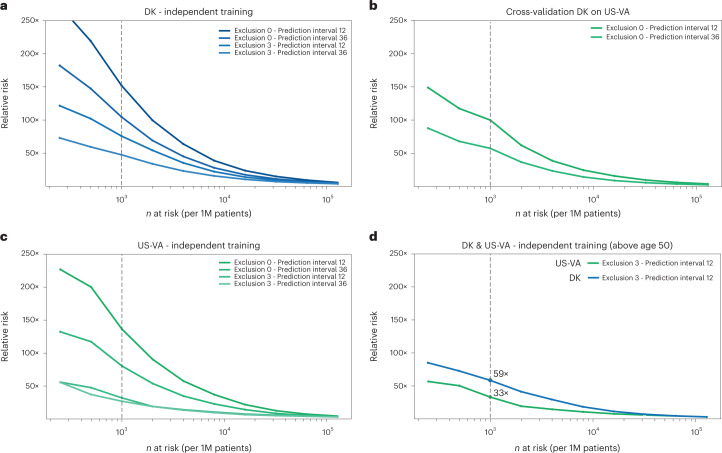
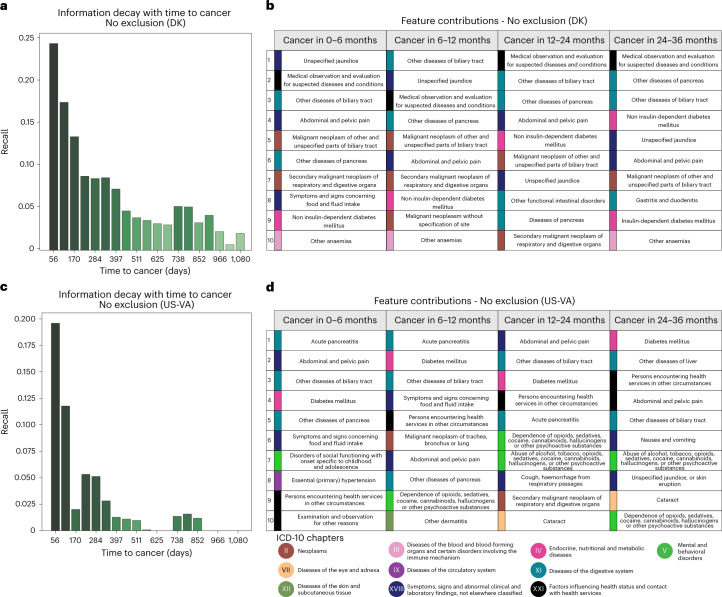
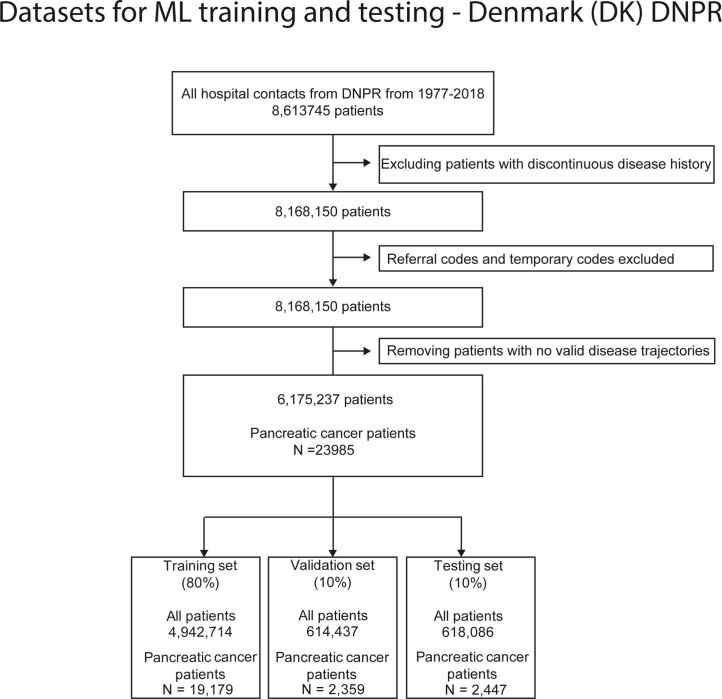
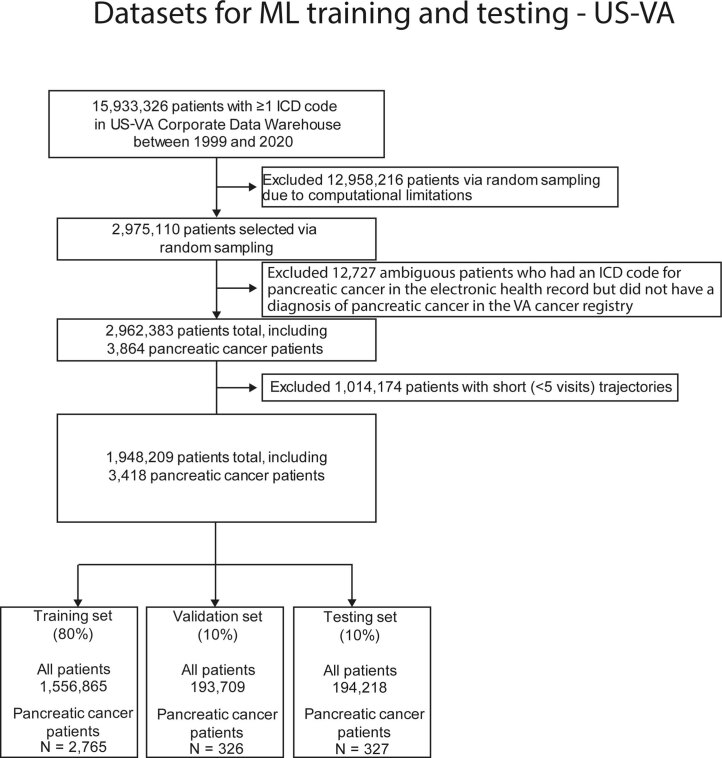
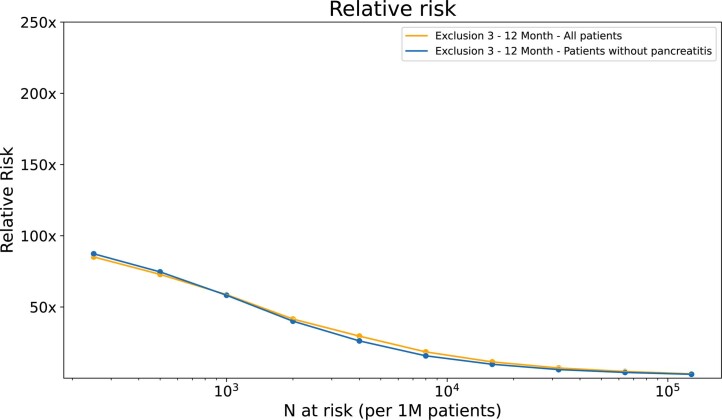
Pancreatic cancer is an aggressive disease that typically presents late with poor outcomes, indicating a pronounced need for early detection. In this study, we applied artificial intelligence methods to clinical data from 6 million patients (24,000 pancreatic cancer cases) in Denmark (Danish National Patient Registry (DNPR)) and from 3 million patients (3,900 cases) in the United States (US Veterans Affairs (US-VA)). We trained machine learning models on the sequence of disease codes in clinical histories and tested prediction of cancer occurrence within incremental time windows (CancerRiskNet). For cancer occurrence within 36 months, the performance of the best DNPR model has area under the receiver operating characteristic (AUROC) curve = 0.88 and decreases to AUROC (3m) = 0.83 when disease events within 3 months before cancer diagnosis are excluded from training, with an estimated relative risk of 59 for 1,000 highest-risk patients older than age 50 years. Cross-application of the Danish model to US-VA data had lower performance (AUROC = 0.71), and retraining was needed to improve performance (AUROC = 0.78, AUROC (3m) = 0.76). These results improve the ability to design realistic surveillance programs for patients at elevated risk, potentially benefiting lifespan and quality of life by early detection of this aggressive cancer.
Overview
The claims and statistics of this paper haven’t been checked yet.
Free: it reads the open-access text and checks the first 5 claims that cite a source we can check. Create a free account to check every claim.
Integrity signals
Registry
Cites
Statistics
Figures
Verification
Claims the paper makes
The claims and statistics of this paper haven’t been checked yet.
Free: it reads the open-access text and checks the first 5 claims that cite a source we can check. Create a free account to check every claim.
Claims other papers make about this one
Each is checked against this paper’s own text: does it say what the citing paper says it does?
The source backs part of the claim, not all of it — or backs it for a different population, condition or comparison.
In the citing paper
“As shown in Figure 2A, AI agents possess the capacity to process extensive patient data, including medical histories, diagnostic test results, and imaging, thereby aiding healthcare professionals in making more informed and precise diagnostic decisions.62,63,64,65,66,67,68,69”
From A foundational architecture for AI agents in healthcare (2025) · cites this paper as [64]
Experimental — accuracy not yet measured
Self-check
Percentages, sums and reported differences re-computed from the paper’s own numbers.
The self-check needs the paper’s full text.
Citations
Cites
Vaswani, A., Shazeer, N., Parmar, N., Uszkoreit, J., Jones, L., Gomez, A. N., Kaiser, L., & Polosukhin, I. (2017) · arXiv · doi:10.48550/arxiv.1706.03762 · Cited by 120,404
LeCun, Y., Bengio, Y., & Hinton, G. (2015) · Nature · doi:10.1038/nature14539 · Cited by 84,126
Efficient Estimation of Word Representations in Vector Space
Mikolov, T., Chen, K., Corrado, G., & Dean, J. (2013) · arXiv · doi:10.48550/arxiv.1301.3781 · Cited by 26,568
Learning Phrase Representations using RNN Encoder–Decoder for Statistical Machine Translation
Cho, K., van Merrienboer, B., Gulcehre, C., Bahdanau, D., Bougares, F., Schwenk, H., & Bengio, Y. (2014) · Proceedings of the 2014 Conference on Empirical Methods in Natural Language Processing (EMNLP) · doi:10.3115/v1/d14-1179 · Cited by 25,545
Dermatologist-level classification of skin cancer with deep neural networks
Esteva, A., Kuprel, B., Novoa, R. A., Ko, J., Swetter, S. M., Blau, H. M., & Thrun, S. (2017) · Nature · doi:10.1038/nature21056 · Cited by 14,362
Rahib, L., Smith, B. D., Aizenberg, R., Rosenzweig, A. B., Fleshman, J. M., & Matrisian, L. M. (2014) · Cancer Research · doi:10.1158/0008-5472.can-14-0155 · Cited by 7,094
The Danish National Patient Registry: a review of content, data quality, and research potential
Schmidt, M., Schmidt, S. A. J., Sandegaard, J. L., Ehrenstein, V., Pedersen, L., & Sørensen, H. T. (2015) · Clinical Epidemiology · doi:10.2147/clep.s91125 · Cited by 4,769
Axiomatic attribution for deep networks
Sundararajan, M., Taly, A., & Yan, Q. (2017) · arXiv · doi:10.48550/arxiv.1703.01365 · Cited by 4,087
Federated Learning: Strategies for Improving Communication Efficiency
Konečný, J., McMahan, H. B., Yu, F. X., Richtárik, P., Suresh, A. T., & Bacon, D. (2016) · arXiv · doi:10.48550/arxiv.1610.05492 · Cited by 3,766
The Danish Civil Registration System as a tool in epidemiology
Schmidt, M., Pedersen, L., & Sørensen, H. T. (2014) · European Journal of Epidemiology · doi:10.1007/s10654-014-9930-3 · Cited by 3,441
Cited by
Items 301–399 of 399
Babaei, S. S., Shojaie, A. A., Akbari, A. A., & Khalili‐Damghani, K. (2025) · Biomedical Materials & Devices · doi:10.1007/s44174-025-00561-5
Explaining Protein Folding Networks Using Integrated Gradients and Attention Mechanisms
Myana, R. S., & Jha, S. K. (2025) · Lecture notes in computer science · doi:10.1007/978-3-032-02489-3_15
Date, A., Hushangabade, R., Kokare, D. U., & Kamargaonkar, C. (2025) · Communications in computer and information science · doi:10.1007/978-3-032-08260-2_6
Solary, É. (2025) · médecine/sciences · doi:10.1051/medsci/2025166
Prediction of Pancreatic Cancer Based on Data and Artificial Intelligence
Angulo, W. D. C., Enrique, N. T. S., Villegas-Cubas, J. E., Fernández, M. F., & Alberto, O. O. L. (2025) · Journal of Cultural Analysis and Social Change · doi:10.64753/jcasc.v10i2.2363
“Placido et al. (2023) mention the ability of deep learning models to identify high-risk patients,allowing for more personalized surveillance tailored to each patient's individual needs.”
Chen, X., Xu, B., Wang, S., & Shi, J. (2025) · Digestive Diseases and Sciences · doi:10.1007/s10620-025-09551-5
“The CancerRiskNet model analyzes disease trajectory information, demonstrating superior performance within 36-month prediction windows with AUROC values reaching 0.88 [32].”
InfluentialZhang, J., Huang, H. F., Tang, B., Hu, X., Ming, Z., Wan, D., & Qu, Q. (2025) · World Journal of Surgical Oncology · doi:10.1186/s12957-025-04106-4 · Cited by 1
“Studies from the United States and Denmark have demonstrated that machine and deep learning models based on electronic health records can identify individuals at high risk of PDAC 6–18 months in advance, with the best models predicting up to 36 months earlier [28, 29].”
Pancreatic Cancer Prediction Using Machine Learning: An Investigation of Different Algorithms
Jadaun, R. S., Grover, N. M., Srinivas, K., & Kumari, A. C. (2025) · International Journal of Information Technology and Computer Science · doi:10.5815/ijitcs.2025.06.07 · Cited by 1
“[7,8] investigated into disease trajectories utilizing various deep learning algorithms, introducing a practical prediction-surveillance process through machine learning.”
Sumithra, R. N. P., & Sivarani, T. S. (2025) · Journal of Biological Regulators and Homeostatic Agents/Journal of Biological Regulators & Homeostatic Agents · doi:10.54517/jbrha3854
ExCaPT: Explainable Cancer Prediction with Transformer-based modelsPreprint
Iskandaryan, D., Moratalla-Navarro, F., Magallon-Baro, A., Riobó‐Mayo, L., Salas, T., Socolovsky, M., & Moreno, V. R. (2025) · medRxiv · doi:10.64898/2025.12.03.25341591
Multimorbidity measurement strategies for predicting hospital visits
Neves, B. D., Moreira, J. M., Gonçalves, S., Cerejo, J., Mota, I., Silva, N. A., Leite, F., & Silva, M. J. (2025) · BMC Health Services Research · doi:10.1186/s12913-025-13817-z
Extracting intraoperative blood loss from unstructured clinical narratives
Alnor, A. B., Lynggaard, R. B., Pedersen, L. E., Storgaard, J., Laursen, M. S., & Vinholt, P. J. (2025) · Journal of Clinical Anesthesia · doi:10.1016/j.jclinane.2025.112101
Boie, S. D. (2025) · Refubium (Universitätsbibliothek der Freien Universität Berlin) · doi:10.17169/refubium-46255
Mahawan, T., Luckett, T., Mielgo, A., Pornputtapong, N., & Caamaño Gutiérrez, E. (2024) · Figshare · doi:10.6084/m9.figshare.26736996
Mahawan, T., Luckett, T., Mielgo, A., Pornputtapong, N., & Caamaño Gutiérrez, E. (2024) · Figshare · doi:10.6084/m9.figshare.26736999
Mahawan, T., Luckett, T., Mielgo, A., Pornputtapong, N., & Caamaño Gutiérrez, E. (2024) · Figshare · doi:10.6084/m9.figshare.26737002
Mahawan, T., Luckett, T., Mielgo, A., Pornputtapong, N., & Caamaño Gutiérrez, E. (2024) · Figshare · doi:10.6084/m9.figshare.26737005
Germline TGFBR1*6A and colorectal cancer risk
Johansen, A. M. (2025) · WakeSpace Scholarship (Wake Forest University)
Computational methodologies for studying polyclonal immune responses with PhIP-Seq
Kung, A. F. (2024) · eScholarship (California Digital Library)
Early detection of cancer among patients presenting to healthcare services with fatigue
White, B. (2023) · UCL Discovery (University College London)
Levina, N., Lifshitz‐Assaf, H., & Sedoc, J. (2025) · The Conversation · doi:10.64628/ab.vted7un6m
A better old age? Improving health and care outcomes for the over-65s in the UK
Cavendish, C., Moberg, G., & Freedman, J. (2024) · Digital Access to Scholarship at Harvard (DASH) (Harvard University)
Wang, W., Zhang, H., & Liu, W. (2025) · Updates in Surgery · doi:10.1007/s13304-025-02493-7
Zhu, Y., Huang, S., & Shi, Y. (2026) · ACM Transactions on Intelligent Systems and Technology · doi:10.1145/3786597
“SSL methods [20, 21, 34] proved adept at extracting valuable representations for downstream tasks, without the need for labeled data.”
Synthetic Disease Trajectories for Predicting Chronic Kidney Disease Post-diabetes Onset
de la Oliva, V., Kreil, D. P., Dopazo, J., Ortuño, F. M., & Loucera, C. (2026) · Lecture notes in computer science · doi:10.1007/978-3-032-10661-2_47
One Flew Over the Cancer’s Nest
Paul, D. (2025) · Springer eBooks · doi:10.1007/978-3-032-08808-6_2
Deep Learning Algorithm Predicts the Protective Effect of Movable Guardrails on Urban Viaducts
Wang, D., & Zhang, X. (2026) · Lecture notes on data engineering and communications technologies · doi:10.1007/978-981-95-2348-1_47
Li, L., Liu, J., Pang, S., Zhao, Y., Wang, Y. F., Wen, J., Liu, Y., Zhang, Y., Zhang, Y., Li, J., et al. (2026) · Frontiers in Immunology · doi:10.3389/fimmu.2026.1733518
Gunjal, P., Mankeshwar, T., Chiddarwar, G., & Anokar, B. (2025) · IEEE Pune Section International Conference (PuneCon) · doi:10.1109/punecon67554.2025.11378790
“Progenitor samples were classified perfectly in both models, reflecting strong subtype-specific molecular signatures [3], [7].”
Classification of pancreatic cancer classification using deep learning
Vasanthi, P., Raza, S. D., Lakshmi, P. V., Arif, S., & Manikanta, V. Y. (2025) · doi:10.26634/djhm.2.1.21804
A deep clustering Gaussian process algorithm for motor progression prediction of Parkinson’s disease
Pan, C., Tian, Y., Zhou, T., Chi, S., Wu, C., Ma, L., Ren, K., Feng, T., & Li, J. (2026) · Computer Methods and Programs in Biomedicine · doi:10.1016/j.cmpb.2026.109305
Medical Intelligence Solution for Population-Based Oncology Prevention
Philonenko, P., Kokh, V., & Blinov, P. D. (2025) · Doklady Mathematics · doi:10.1134/s1064562425700620
Li, L. (2026) · Discover Artificial Intelligence · doi:10.1007/s44163-026-01143-0
Research on machine learning-based clinical prediction models: a bibliometric analysis
Li, Q., Zeng, M., Liang, D., Zheng, X., Zhang, X., & Martín-Payo, R. (2026) · Frontiers in Oncology · doi:10.3389/fonc.2026.1786176
GRIP-Lung: Generative Model of Response to Drug-Induced Perturbation in Lung Cancer
Fu, Z., Li, Y., Du, Z., Zhang, D. X., Liu, L., Jin, Q., Chen, X., & Xie, H. (2026) · International Journal of Molecular Sciences · doi:10.3390/ijms27073264
“Deep learning based on neural network architectures can combine multiple omics datasets and process vast and complex data to discover detailed patterns and associations that have been difficult to find with ordinary approaches [13–15].”
Analyse multi échelles de la qualité des soins et des pratiques : le modèle du cancer du pancréas
Marchèse, U. (2023) · theses.fr (ABES) · doi:10.70675/79459909zc97cz4962za928zeaa6c844a545
Lahtinen, E., Shigiltchoff, N., Jia, K., Kundrot, S., Palchuk, M. B., Warnick, J., Chan, L., Kaplan, I. D., Sawhney, M., Rinard, M., et al. (2026) · medRxiv · doi:10.64898/2026.04.11.26350318
Care Trajectories Are Linked to Mental Health and Mortality in Cancer PatientsPreprint
Lindner, S. D., Zeilinger, E. L., Fuchs, A., Lubowitzki, S., Klimek, P., & Gaiger, A. (2026) · arXiv (Cornell University) · doi:10.48550/arxiv.2604.18431
“Broader investigations have characterized temporal disease trajectories across large patient populations [15, 18] or used longitudinal data primarily for cancer risk prediction rather than patient stratification [16, 17].”
病態変化に基づく連続的患者状態モデルと臨床予測への応用 (本文)
カワモト, シ., Kawamoto, S., & 川本, 章. (2025) · Institutional Repositories DataBase (IRDB)
Bhattacharya, S. (2026) · Journal of Applied Health Sciences and Medicine · doi:10.58614/jahsm636
Artificial intelligence in cancer risk assessment
Siddique, K. R., Tiwari, S., Akash, A., Singh, N., Yadav, P., & Gupta, S. K. (2026) · Elsevier eBooks · doi:10.1016/b978-0-443-45004-4.00013-x
Deng, E., Mareboina, M., Georgakopoulos‐Soares, I., & Yee, N. S. (2026) · Biomedicines · doi:10.3390/biomedicines14050992
“The model was able to predict the occurrence of PC within a three-year period, with an AUROC of 0.88 and 0.71 in the Danish population and the United States population, respectively [67].”
InfluentialQuantum-CNN Synergy: Redefining Early Prediction of Pancreatic Cancer
Kakulapati, V., Reddy, K. M., Teja, T. S., & Chandan, D. H. (2026) · Lecture notes in networks and systems · doi:10.1007/978-3-032-18346-0_9
He, T., Zheng, C., La, J., Pham, D., Jafari, O., Strampe, J., Dulberger, K., Ramos‐Cejudo, J., Gaziano, J. M., Do, N., et al. (2026) · npj Digital Medicine · doi:10.1038/s41746-026-02730-2
Self-citationLiao, T., Gan, Y., Liu, L., Tang, M., Gan, L., & Li, G. (2026) · Clinical Interventions in Aging · doi:10.2147/cia.s593644
Real-World Data Needs Real-World Doctors: When Automation Advances Faster Than Clinical Workflow
Price, A. I., & Raesfeld, C. V. (2026) · Journal of Participatory Medicine · doi:10.2196/97972
Ledebur, K., Devetak, M., & Klimek, P. (2026) · npj Digital Medicine · doi:10.1038/s41746-026-03265-2
“Related sequence models predict outcomes such as early cancer detection and biological aging 16,17 .”
Basu, S., Dash, A., Kalita, D., Singh, A., Toumazou, C., & Mirza, K. B. (2026) · Computational Biology and Chemistry · doi:10.1016/j.compbiolchem.2026.109145
Slimani, S., Ajanovic, S. A., Aboian, M., Ahmedou, I., Anazodo, U., de Ribaupierre, S., Attar, H. E., Sabaa, B. E., Fincham, R. E. A., Hashimoto, D. A., et al. (2026) · npj Digital Surgery · doi:10.1038/s44484-025-00004-0
Early Detection of Pancreatic Cancer Using Machine Learning
Yadav, N., & Gupta, S. (2025) · International Conference on Emerging Engineering Technologies and Applications (IC-EETA) · doi:10.1109/ic-eeta66496.2025.11548497
EffiViT-Hybrid: A CNN–Transformer Framework for Pancreatic Cancer Detection from CT Images
Lameya, M. A., Shanto, M. S. I., Naher, S. R., Ahamed, M. I., Rakin, A., & Jibon, F. A. (2026) · IEEE International Conference on Quantum Photonics, Artificial Intelligence & Networking (QPAIN) · doi:10.1109/qpain69676.2026.11546439
“Transformer-and GRU-based sequential models were used in CancerRiskNet to study disease trajectories (longitudinal) in large healthcare databases, and the results were used to identify high-risk individuals [11].”
Artificial intelligence, big data, and the exposome: Transforming cancer risk assessment
Mbatha, S. Z., Rivera, D., & Dlamini, Z. (2026) · Elsevier eBooks · doi:10.1016/b978-0-443-44322-0.00017-3
Revelations of pancreatic cancer treated by high-intensity focused ultrasound
Zhou, W., Lei, C., Xue, X., Yu, H., Li, J., Li, W., Li, S., Xu, W., Li, M. M., Li, J., et al. (2026) · Discover Oncology · doi:10.1007/s12672-026-05049-2
“Currently, prevention or early diagnosis at a stage amenable to curative intervention is exceedingly challenging [3].”
Kollu, A., Nagare, S., Arwat, R., Aher, A., & Kadam, O. (2026) · International Conference on Sustainable and Futuristic Technologies (ICSFT) · doi:10.1109/icsft67370.2026.11566194
Wu, B., Li, R. J., Wang, M., Wang, X., Chen, Q., Luo, D., & Liu, J. (2026) · Discover Oncology · doi:10.1007/s12672-026-05362-w
“Other noteworthy models include the pancreatic cancer risk prediction model for patients with newly diagnosed diabetes [66, 95] and the EUS image-assisted diagnostic system combined with artificial intelligence [96] [100].”
Wang, W., ZHAO, Y., Jiang, S., Zhou, Y., Yang, Q., Li, D., Jiang, Y., Chen, H., Tang, X. Y., Ren, L., et al. (2026) · Cancer Cell International · doi:10.1186/s12935-026-04395-z
“Malignant tumor progression involves various aberrant cellular processes, and recent evidence has highlighted that many of these processes occur within biomolecular condensates [3, 17, 18].”
Venkat, A., Zaksas, V., Baker, A., Brophy, M. T., Davenport, M. J., Elbers, D. C., Fillmore, N. R., Hamed, O., Lukasse, P., Malson, C., et al. (2026) · Research Square · doi:10.21203/rs.3.rs-10021917/v1
Self-citationA US perspective on optimising the inpatient classical haematology consultation service
Marshall, A. L., Yui, J. C., & Cogan, J. (2026) · The Lancet Haematology · doi:10.1016/s2352-3026(26)00106-7
Predicting health and disease: a conceptual framework for AI in preventive and precision medicine
Barmada, A. (2026) · BMJ Health & Care Informatics · doi:10.1136/bmjhci-2025-101798
“19 Such predictions may help address the particularly poor clinical outcomes of pancreatic cancer, which is highly aggressive and typically presents late due to lack of early symptoms.”
243Chapter 13 Emerging Technologies at the Intersection of AI and Biotechnology
Saini, S., Saini, M., Tuli, H. S., & Duhan, P. (2026) · De Gruyter eBooks · doi:10.1515/9783112214275-013
Hamada, T., Oyama, H., Nakai, Y., & Petrov, M. S. (2026) · JNCI Journal of the National Cancer Institute · doi:10.1093/jnci/djag225
Early Prediction of Bladder Cancer Diagnosis Using Structured Claims Data and Machine Learning
Cui, W., & Finkelstein, J. (2026) · Communications in computer and information science · doi:10.1007/978-3-032-22199-5_22
Proper Phenotyping of Pancreatic Cancer in Database Research
Shevach, J. W., & Brown, T. J. (2026) · JAMA Oncology · doi:10.1001/jamaoncol.2026.2609
Artificial intelligence-enabled organoids and organ-on-a-chip for pioneering biomedical platforms
Zhao, Y., Xie, D., Liu, H., Peng, B., Li, X., Wang, X., Leng, Y., Liu, J., Yang, T., Li, H., et al. (2026) · Bio-Design and Manufacturing · doi:10.1631/bdm.2500394
Comparative Analysis of Detection of Pancreatic Cancer with Machine Learning Algorithms
Divya Bharathi, G., S.Kumarganesh, Jayasutha, P., Ragavendran, B., Loganathan, S., & Kavya, G. S. (2026) · International Conference on Inventive Computation and Information Technologies (ICICIT) · doi:10.1109/icicit69063.2026.11633922
Hemelings, R., Wong, D. W. K., Chua, J., Eijgen, J. V., Barbosa‐Breda, J., Ehongo, A., Collignon, N. N., Kiekens, S., König, S. C., Elen, B., et al. (2026) · The Lancet Digital Health · doi:10.1016/j.landig.2026.101032
Shang, Z., Shan, L., Liu, C., 郑丹丹, Huang, W., & Li, D. (2026) · Chemical Communications · doi:10.1039/d6cc02906j
Electronic Health Records in Emergency Medicine: From Accountability to Opportunity
(2026) · Frontiers research topics · doi:10.3389/978-2-8325-8514-6
Hooda, A., Alhusseini, J. A., Basak, R., & Hu, C. (2026) · Advances in biochemical engineering, biotechnology · doi:10.1007/10_2026_346
Yan, Z., Wang, X., Xu, X., Guo, Y., Chang, W., & He, J. (2026) · PeerJ · doi:10.7717/peerj.21631
“Patients with multiple ICU admissions typically have multiple ICD diagnostic codes for each admission; these were integrated into a single variable to facilitate subsequent data processing ( Placido et al., 2023 ).”
Liu, H., Mizani, M. A., Zhao, Y., Wood, A., Inouye, M., Price, A. L., & Jiang, X. (2026) · medRxiv · doi:10.64898/2026.08.27.26361302
Enhancing Pancreatic Cancer Prediction with Deep Learning Models
Revathy, G., Sowparnika, B., Venmathi, A. R., & Saivaraju, A. (2026) · Smart innovation, systems and technologies · doi:10.1007/978-981-95-9097-1_3
Sicińska, M. M., Katra, M., Szczęsny, M., Pal, A., Cienkowski, K., Cegiełka, P., Ślot, M., Kotnis, W., Głowacka, I., & Adamczyk, A. (2026) · Journal of Education Health and Sport · doi:10.12775/jehs.2026.95.73648
“Machine learning and deep learning algorithms analysing CT images have shown the ability to compare identified changes characteristic of pancreatic cancer against reference datasets, offering a promising complement to conventional diagnostic pathways [32].”
Identifying cohorts at elevated risk of cancers using generative modeling of patient health statesPreprint
Khan, A., Forster, D. T., Harsh, M., Zheng, C., Warner, E. T., Ritter, D., Chang, A. E. B., Wei, Q., Sorensen, T. K., Marks, D. S., et al. (2026) · Research Square · doi:10.64898/2026.09.09.26362676
Self-citationYu, H., Li, X., Cheng, X., Deng, Y., Wang, Y., Li, Y., Liu, B., 黄子星, & Cao, D. (2026) · Journal for ImmunoTherapy of Cancer · doi:10.1136/jitc-2026-015705
Vijaykuamr, P., Rath, P. S., & Reddy, P. V. (2026) · International Conference on Inventive Systems and Control (ICISC) · doi:10.1109/icisc69558.2026.11681522
PancreaVision: Multi-Agent Framework for Early Detection and Staging of Pancreatic Cancer
Likitha, S., Gupta, P., Pattanaik, M., Mule, K. J., & Krupa, N. (2026) · International Conference on Machine Learning Technologies (ICMLT) · doi:10.1109/icmlt69916.2026.11688990
“Li et al. [12] introduced a causality-driven graph neural network, and Placido et al. [4] developed CancerRiskNet, achieving AU-ROC 0.88 for 36-month prediction using longitudinal patient data.”
InfluentialTargeting RAS for Pancreatic Cancer Interception
Misale, S., Zaidi, N., Jaffee, E. M., Klein, A. P., & Wood, L. D. (2026) · Cancer Discovery · doi:10.1158/2159-8290.cd-26-1179
Overcoming inequity in cancer screening: Can modern technologies close the gap?
Turan, G., Başbınar, Y., & Ellıdokuz, H. (2026) · Critical Reviews in Oncology/Hematology · doi:10.1016/j.critrevonc.2026.105617
Rashidian, P., Smerat, A., Khan, M. A., Bansal, P., Sharma, C., Mansurov, D., Moghimnejadhosseini, S., Mojtahedzadeh, A., Talebzadeh, M., & Amini‐Salehi, E. (2026) · Medicine · doi:10.1097/md.0000000000050681
“The second most frequently cited article was “A deep learning algorithm to predict risk of pancreatic cancer from disease trajectories” by Placido et al, [7] also published in Nature Medicine , with 241 citations.”
InfluentialEarly Prediction of Aggressive Prostate Cancer Using Machine Learning and Electronic Health Records
Cui, W., & Finkelstein, J. (2026) · Communications in computer and information science · doi:10.1007/978-3-032-28463-1_8
Aparicio-Lopez, C. B. (2024) · K-State Research Exchange (Kansas State University) · Cited by 1
Predictive Runtime Verification for Clinical Event Monitoring
Lin, V., & Lee, I. (2026) · Lecture notes in computer science · doi:10.1007/978-3-032-41160-0_15
Deep Learning Study of Pandemic Contact Tracing
Uzoigwe, C. O., Akaabo, J., & Blamah, N. V. (2025) · Scholar J Computational Science · doi:10.67378/w5rb1r07
Raitanen, M. (2026) · UTUPub (University of Turku)
AI-Based Screening Approach for Primary Aldosteronism Using Longitudinal Electronic Health RecordsPreprint
Lee, F. G., Choudhary, A., Li-Han, L. Y., Varghese, C., Larson, E. L., Perry, W., Bancos, I., Foster, T. R., McKenzie, T. J., Salehinejad, H., et al. (2026) · medRxiv · doi:10.64898/2026.10.06.26364909
Zhu, H., Fan, H., Yang, W., Gao, S., Chang, J., Zong, G., Zhuang, Y., Abudukeranmu, A., Jia, X., Zhu, Y., et al. (2026) · Gut · doi:10.1136/gutjnl-2026-339722
Artificial Intelligence in Pancreatic Cancer: From Predictive Performance to Clinical Translation
Khan, I., Belhaj, A., Gemini, A., Ibis, K. A., Darsif, N., Rouani, N., Vanlander, A., & Messaoudi, N. (2026) · Cancers · doi:10.3390/cancers18203253
“Several landmark studies could not capture race or ethnicity, and generalizability to under-represented populations is largely untested [23,24].”
InfluentialRahul, R., Saxena, R., Shukla, S., Parikh, K. S., Mandal, S., Rakesh, S., Shukla, A., & Misra, N. (2026) · Research Square · doi:10.21203/rs.3.rs-10927874/v1
Artificial intelligence in gastroenterology practice: Current perspectives and emerging prospects
Roy, S., Samanta, A., & Banerjee, A. (2026) · Artificial Intelligence in Gastroenterology · doi:10.35712/aig.125000
Longitudinal AI Models Predict Cancer Adverse EventsPreprint
Fu, C., Yu, J., Shi, R., Waters, M., Pavlak, M., Arfè, A., Shah, S. P., Battle, A. J., Kehl, K. L., Bot, B. M., et al. (2026) · medRxiv · doi:10.64898/2026.10.22.26364879
Ngufor, C. G., Patel, S., Weston, A. D., Bogdanski, A. M., Wijsman, K. J. H., Li, J., Wallace, M. B., & Bi, Y. (2026) · Research Square · doi:10.21203/rs.3.rs-11265358/v1
Altahla, R., Wang, Y., Yekta, M. M., Wang, Z., Jiang, H., Li, C., Zhang, P., Bolideei, M., Mehran, M. J., & Alshorman, J. (2026) · International Journal of Nanomedicine · doi:10.2147/ijn.s644095
“59 Such risk-adapted approaches may be particularly relevant for cancers for which population-wide screening is not established.”
Sommers, S., Zheng, C., Corrigan, J. K., Culnan, J., Bodanapu, G., Ferri, G. M., Abdallah, M. M., Bell, B. N., Yellanki, M., Elbers, D. C., et al. (2026) · Journal of Clinical Medicine · doi:10.3390/jcm15218418
Self-citationChu, L., & Ottenbreit-Leftwich, A. T. (2026) · Journal of Research on Technology in Education · doi:10.1080/15391523.2026.2737299
Strategies and tools for enhancing early detection of pancreatic cancer
Liao, W. (2026) · Journal of the Formosan Medical Association · doi:10.1016/j.jfma.2026.10.024
High-Resolution Mapping of Healthcare Pathways in AutismPreprint
Huang, L., Ren, T., Hou, C., Fang, F., Grove, J., Xie, Z., Pu, Y., Schendel, D., Lee, B. K., Li, F. R., et al. (2026) · medRxiv · doi:10.64898/2026.10.30.26366679
Schaefer, M. L., Sougiannis, A. T., & Blair, A. B. (2026) · Current Oncology · doi:10.3390/curroncol33110693
Metadata
- Authors
- Placido, D., Yuan, B., Hjaltelin, J. X., Zheng, C., Haue, A. D., Chmura, P. J., Yuan, C., Kim, J., Umeton, R., Antell, G., Chowdhury, A., Franz, A., Brais, L., Andrews, E., Marks, D. S., Regev, A., Ayandeh, S., Brophy, M. T., Do, N. V., Kraft, P., Wolpin, B. M., Rosenthal, M. H., Fillmore, N. R., Brunak, S., & Sander, C.
- Affiliations
- University of Copenhagen (DK)
- Broad Institute (US)
- Boston University (US)
- Harvard University (US)
- Dana-Farber Cancer Institute (US)
- VA Boston Healthcare System (US)
- Brigham and Women's Hospital (US)
- Corresponding author
- Brunak, Søren
- Sander, Chris
- ORCID
- Placido, Davide
- Yuan, Bo
- Hjaltelin, Jessica X.
- Zheng, Chunlei
- Haue, Amalie D.
- Chmura, Piotr J.
- Yuan, Chen
- Kim, Jihye
- Umeton, Renato
- Brais, Lauren
- Andrews, Elizabeth
- Marks, Debora S.
- Regev, Aviv
- Ayandeh, Siamack
- Brophy, Mary T.
- Do, Nhan V.
- Kraft, Peter
- Wolpin, Brian M.
- Rosenthal, Michael H.
- Fillmore, Nathanael R.
- Brunak, Søren
- Sander, Chris
- Venue
- Nature Medicine
- Published
- 2023-05
- Volume
- 29
- Issue
- 5
- Pages
- 1113-1122
- ISSN
- 1078-8956 (ISSN-L)
- 1546-170X
- PMC
- PMC10202814
- OpenAlex
- W4375858857
- Semantic Scholar
- fd4046310cf0f35e3e4c7b8501ea861e697baaf9
- Cited by
- 349
- References
- 56
- Citations by year
- 2026: 82 · 2025: 137 · 2024: 97 · 2023: 32
- FWCI
- 32.90
- Type
- journal article
- Language
- en
- Open access
- hybrid
- doi.org
- Licence
- cc-by
- creativecommons.org/licenses/by/4.0 (tdm)
- creativecommons.org/licenses/by/4.0 (vor, 7 d)
- Locations
- Nature Medicine (publishedVersion, cc-by)
- PubMed Central (publishedVersion, cc-by)
- PubMed (publishedVersion)
- Research at the University of Copenhagen (University of Copenhagen) (publishedVersion, cc-by)
- Funders
- EIF | Stand Up To Cancer (SU2C#6180)
- U.S. Department of Health & Human Services | National Institutes of Health (U01 CA210171, P50 CA127003)
- Novo Nordisk Fonden (NNF17OC0027594, NNF14CC0001)
- Topics
- Physical Sciences › Computer Science › Artificial Intelligence › Machine Learning in Healthcare
- Health Sciences › Medicine › Oncology › Pancreatic and Hepatic Oncology Research
- Physical Sciences › Computer Science › Artificial Intelligence › AI in cancer detection
- Keywords
- pancreatic cancer, cancer risk prediction, disease trajectories, clinical codes, early detection, cancer surveillance, cross-model transfer, Danish National Patient Registry, model retraining
- MeSH terms
- Deep Learning, Algorithms, Artificial Intelligence, Humans, Middle Aged, Pancreatic Neoplasms, Quality of Life
About these checks
Registry, retraction, Cites and statistics results are computed, not judged, with one exception: a printed reference that no index lists is read once by a model before it counts as a citation error. Claims are extracted by a model and kept only when their quote appears verbatim in the text; each cited source is then checked, with a model’s help, for whether it says what the claim relies on. Those verdicts can be wrong — read the claim’s quote and the cited source before relying on one.
Statistics and arithmetic are recomputed, not judged.
Confidence bands are shown only for fields calibrated on our annotated test set. None is calibrated yet, so no band is shown.
What counts as a claim ›How we measure confidence ›How we check this ›
Are you an author, or do you see a problem with this page? Request a review
Data sources
Bibliographic data: Semantic Scholar, OpenAlex, Crossref.
Contains information from the Semantic Scholar Academic Graph Datasets, made available under the ODC Attribution License (ODC-BY 1.0).
Semantic Scholar’s data is described in: Kinney, R., et al. (2023). The Semantic Scholar Open Data Platform. arXiv:2301.10140.
