

A deep learning algorithm to predict risk of pancreatic cancer from disease trajectories
Open accessThe DOI matches its Crossref record; 64 of the 64 references it cites were found in a registry or an index.
Abstract
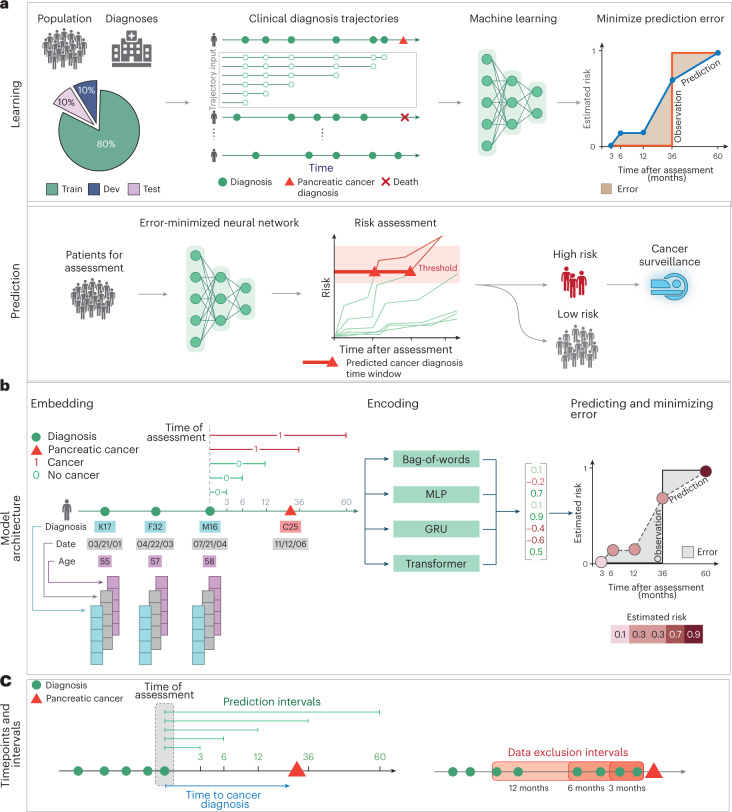
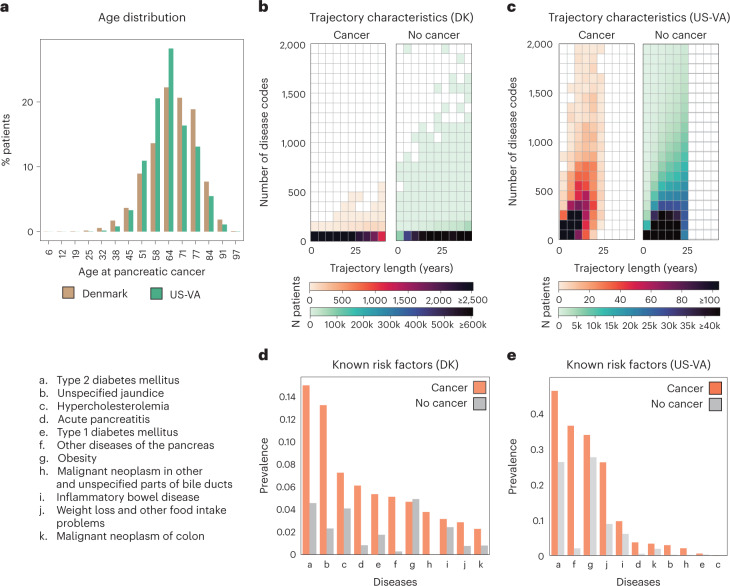
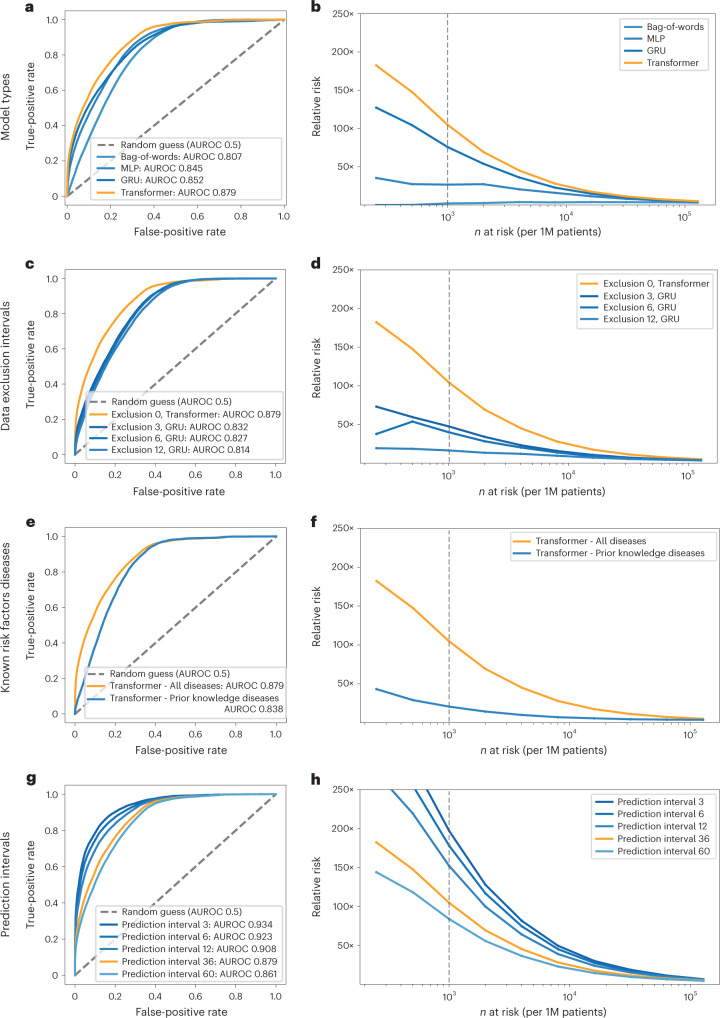
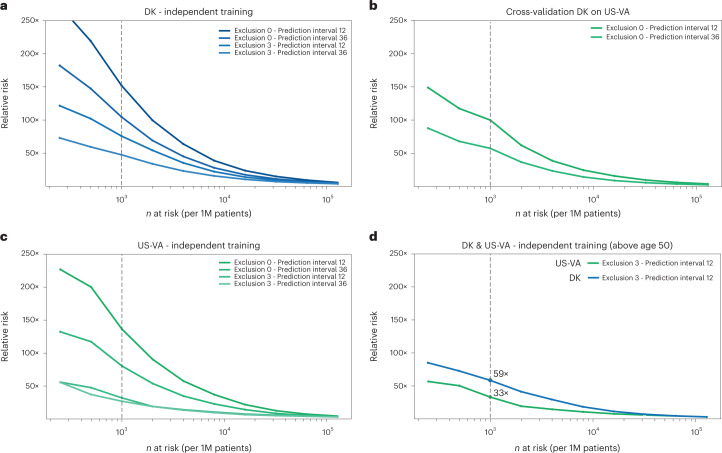
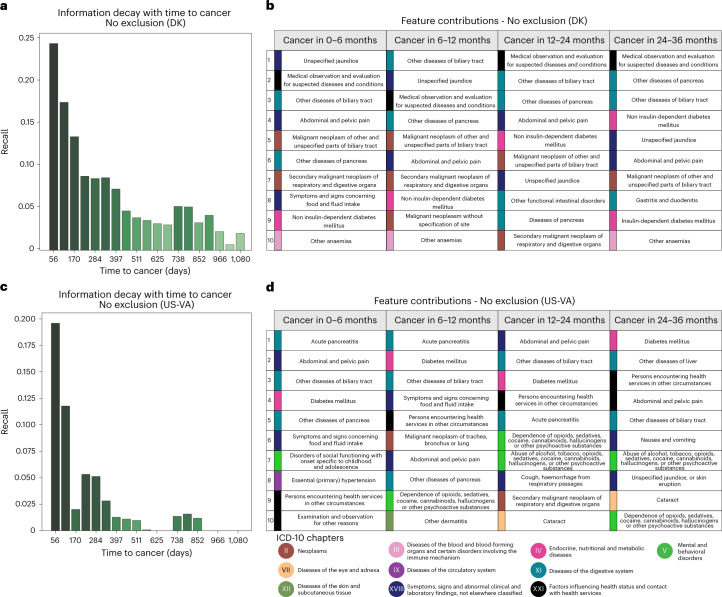
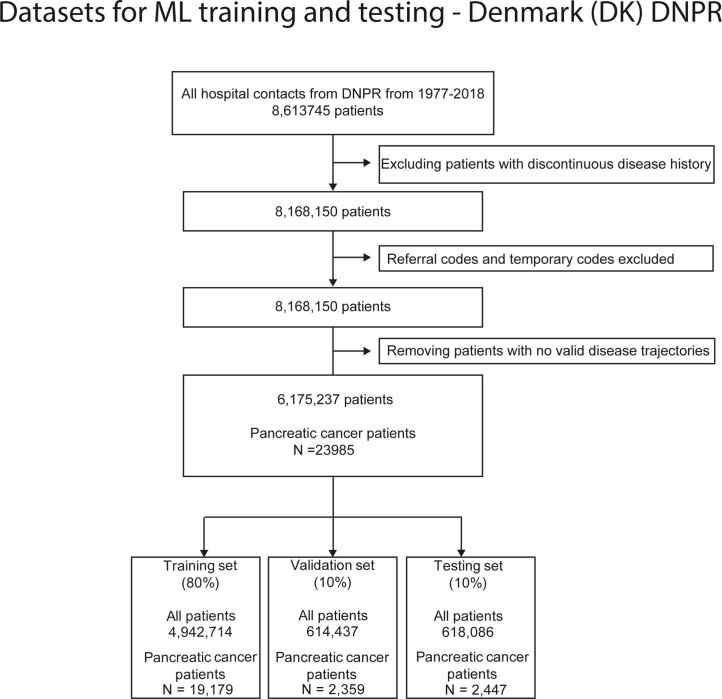
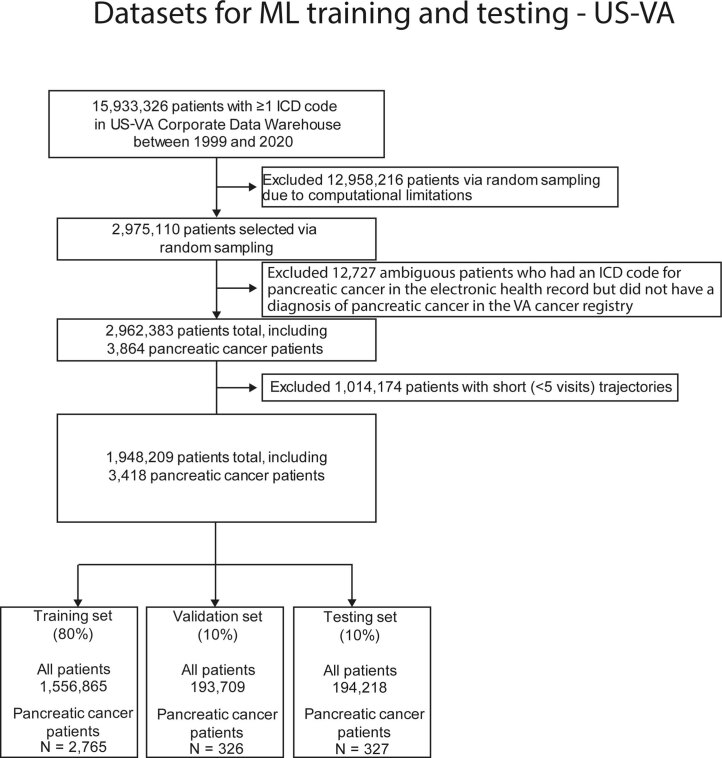
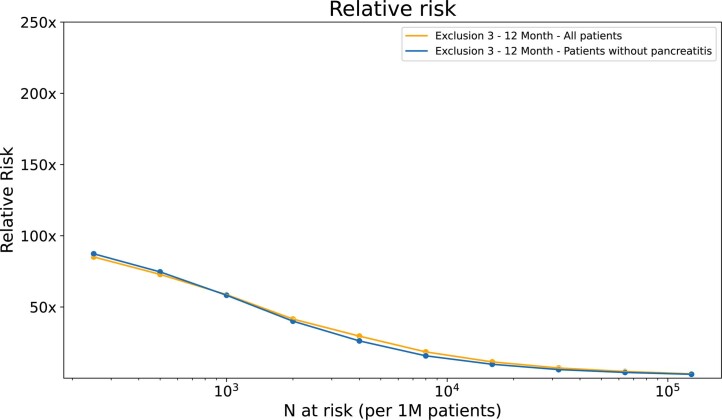
Pancreatic cancer is an aggressive disease that typically presents late with poor outcomes, indicating a pronounced need for early detection. In this study, we applied artificial intelligence methods to clinical data from 6 million patients (24,000 pancreatic cancer cases) in Denmark (Danish National Patient Registry (DNPR)) and from 3 million patients (3,900 cases) in the United States (US Veterans Affairs (US-VA)). We trained machine learning models on the sequence of disease codes in clinical histories and tested prediction of cancer occurrence within incremental time windows (CancerRiskNet). For cancer occurrence within 36 months, the performance of the best DNPR model has area under the receiver operating characteristic (AUROC) curve = 0.88 and decreases to AUROC (3m) = 0.83 when disease events within 3 months before cancer diagnosis are excluded from training, with an estimated relative risk of 59 for 1,000 highest-risk patients older than age 50 years. Cross-application of the Danish model to US-VA data had lower performance (AUROC = 0.71), and retraining was needed to improve performance (AUROC = 0.78, AUROC (3m) = 0.76). These results improve the ability to design realistic surveillance programs for patients at elevated risk, potentially benefiting lifespan and quality of life by early detection of this aggressive cancer.
Overview
The claims and statistics of this paper haven’t been checked yet.
Free: it reads the open-access text and checks the first 5 claims that cite a source we can check. Create a free account to check every claim.
Integrity signals
Registry
Cites
Statistics
Figures
Verification
Claims the paper makes
The claims and statistics of this paper haven’t been checked yet.
Free: it reads the open-access text and checks the first 5 claims that cite a source we can check. Create a free account to check every claim.
Claims other papers make about this one
Each is checked against this paper’s own text: does it say what the citing paper says it does?
The source backs part of the claim, not all of it — or backs it for a different population, condition or comparison.
In the citing paper
“As shown in Figure 2A, AI agents possess the capacity to process extensive patient data, including medical histories, diagnostic test results, and imaging, thereby aiding healthcare professionals in making more informed and precise diagnostic decisions.62,63,64,65,66,67,68,69”
From A foundational architecture for AI agents in healthcare (2025) · cites this paper as [64]
Experimental — accuracy not yet measured
Self-check
Percentages, sums and reported differences re-computed from the paper’s own numbers.
The self-check needs the paper’s full text.
Citations
Cites
Vaswani, A., Shazeer, N., Parmar, N., Uszkoreit, J., Jones, L., Gomez, A. N., Kaiser, L., & Polosukhin, I. (2017) · arXiv · doi:10.48550/arxiv.1706.03762 · Cited by 120,404
LeCun, Y., Bengio, Y., & Hinton, G. (2015) · Nature · doi:10.1038/nature14539 · Cited by 84,126
Efficient Estimation of Word Representations in Vector Space
Mikolov, T., Chen, K., Corrado, G., & Dean, J. (2013) · arXiv · doi:10.48550/arxiv.1301.3781 · Cited by 26,568
Learning Phrase Representations using RNN Encoder–Decoder for Statistical Machine Translation
Cho, K., van Merrienboer, B., Gulcehre, C., Bahdanau, D., Bougares, F., Schwenk, H., & Bengio, Y. (2014) · Proceedings of the 2014 Conference on Empirical Methods in Natural Language Processing (EMNLP) · doi:10.3115/v1/d14-1179 · Cited by 25,545
Dermatologist-level classification of skin cancer with deep neural networks
Esteva, A., Kuprel, B., Novoa, R. A., Ko, J., Swetter, S. M., Blau, H. M., & Thrun, S. (2017) · Nature · doi:10.1038/nature21056 · Cited by 14,362
Rahib, L., Smith, B. D., Aizenberg, R., Rosenzweig, A. B., Fleshman, J. M., & Matrisian, L. M. (2014) · Cancer Research · doi:10.1158/0008-5472.can-14-0155 · Cited by 7,094
The Danish National Patient Registry: a review of content, data quality, and research potential
Schmidt, M., Schmidt, S. A. J., Sandegaard, J. L., Ehrenstein, V., Pedersen, L., & Sørensen, H. T. (2015) · Clinical Epidemiology · doi:10.2147/clep.s91125 · Cited by 4,769
Axiomatic attribution for deep networks
Sundararajan, M., Taly, A., & Yan, Q. (2017) · arXiv · doi:10.48550/arxiv.1703.01365 · Cited by 4,087
Federated Learning: Strategies for Improving Communication Efficiency
Konečný, J., McMahan, H. B., Yu, F. X., Richtárik, P., Suresh, A. T., & Bacon, D. (2016) · arXiv · doi:10.48550/arxiv.1610.05492 · Cited by 3,766
The Danish Civil Registration System as a tool in epidemiology
Schmidt, M., Pedersen, L., & Sørensen, H. T. (2014) · European Journal of Epidemiology · doi:10.1007/s10654-014-9930-3 · Cited by 3,441
Cited by
Items 201–300 of 399
Butler, D., Hilton, A., & Carneiro, G. (2025) · Lecture notes in computer science · doi:10.1007/978-3-032-05185-1_52 · Cited by 3
Ortuño, F. M., de la Oliva, V., Ramirez‐Lopez, J., Kreil, D. P., Dopazo, J., & Loucera, C. (2026) · Advanced Science · doi:10.1002/advs.202516196 · Cited by 3
AI predicts pancreatic cancer risk
Fyfe, I. (2023) · Nature Reviews Gastroenterology & Hepatology · doi:10.1038/s41575-023-00802-2 · Cited by 3
Ram, K. S. R., & Annamalai, R. (2023) · International Conference on Next Generation Electronics (NELEX) · doi:10.1109/nelex59773.2023.10421733 · Cited by 3
“[3] establishes a deep learning algorithm that predicts the risk of pancreatic cancer using clinical data from millions of patients in Denmark and the United States.”
BackgroundPrediagnostic blood biomarkers for pancreatic cancer: meta-analysis
Bengtsson, A., Draus, T., Andersson, R., & Ansari, D. (2024) · BJS Open · doi:10.1093/bjsopen/zrae046 · Cited by 3
“Machine-learning algorithms are well suited for diagnostic classification problems, especially when using large data sets 22 .”
MethodAdvancing Pancreatic Cancer Prediction with a Next Visit Token Prediction Head on Top of Med-BERT
He, J., Rasmy, L., Zhi, D., & Tao, C. (2025) · Cancers · doi:10.3390/cancers17030516 · Cited by 6
“These factors collectively render early diagnosis highly challenging, with the disease typically being identified at advanced stages [3].”
InfluentialAdvances in Screening and Early Diagnosis of Pancreatic Cancer
Luo, W., Wang, J., Chen, H., Cao, Z., Qiu, J., Liu, Y., Fu, Y., Yang, G., Tao, J., Weng, G., et al. (2024) · Cancer Screening and Prevention · doi:10.14218/csp.2024.00006s · Cited by 3
AI and imaging-based cancer screening: getting ready for prime time
Kleeff, J. H., & Ronellenfitsch, U. (2023) · Nature Medicine · doi:10.1038/s41591-023-02630-y · Cited by 6
Thaker, N. G., Loaiza‐Bonilla, A., Choudhri, A., & Doria, C. (2024) · AI in Precision Oncology · doi:10.1089/aipo.2024.0031 · Cited by 3
Fiedler, A., Dadras, M., Drysch, M., Schmidt, S. V., Puscz, F., Reinkemeier, F., Lehnhardt, M., & Wallner, C. (2025) · Children · doi:10.3390/children12060806 · Cited by 2
“Byeon et al. demonstrated DL’s applicability in pediatric oncology settings [18], while Placido et al. and Miotto et al. highlighted how these methods can detect clinically relevant recurrence patterns often missed by conventional models [19,20].”
Genetic testing for pancreatic cancer screening: ready for prime time?
Whitcomb, D. C. (2025) · Current Opinion in Gastroenterology · doi:10.1097/mog.0000000000001121 · Cited by 2
Early Detection of Pancreatic Cancer: Recent Advancements
Konikoff, T. D., & Majumder, S. (2025) · Current Treatment Options in Gastroenterology · doi:10.1007/s11938-025-00480-w · Cited by 2
“The implementation of deep learning, an advanced form of ML, has shown the ability to predict those at risk for developing PDAC using disease trajectories [38 ].”
Liu, K., Yu, H., Han, X., Yu, Y., Guo, W., Li, X., Yi, C., Xu, Y., Zhang, Y., Wang, H., et al. (2025) · IEEE Internet of Things Journal · doi:10.1109/jiot.2025.3603595 · Cited by 2
“Therefore, improving early detection [5], [6], [7] and risk prediction [8], [9] of pancreatic cancer is of significant clinical importance for developing personalized treatment strategies and prolonging patient survival.”
Anukem, S., Ozougwu, L., Ataguba, G., Milos, E., & Orji, R. (2025) · SeGAH ... IEEE ... International Conference on Serious Games and Applications for Health/IEEE International Conference on Serious Games and Applications for Health · doi:10.1109/segah65397.2025.11168427 · Cited by 2
“Similarly, although studies have shown that machine learning can help predict patients’ health states [25, 26], little is known about harnessing its capabilities alongside VA, to facilitate quick decision-making for non-cardiac surgery patients.”
Silvestri, C. J., Hoagland, D. L., Woodward, J. M., Naaseh, A., McDermott, C. E., Carter, B. M., Lund, S. B., Prokop, L. J., Bernard, A., & Navarro, S. M. (2025) · Journal of surgical education · doi:10.1016/j.jsurg.2025.103758 · Cited by 2
Ichikawa, J., Okuda, H., Kawano, K., Kato, S., Sato, S., Kuroishikawa, R., Kurotaki, D., Kawase, W., Yoshida, H., Hiroshima, Y., et al. (2025) · Cancer Science · doi:10.1111/cas.70246 · Cited by 2
Self-supervised Hierarchical Representation for Medication Recommendation
Liang, Y., Liu, Y., Dang, Y., Yang, E., Guo, G., Cai, W., Zhao, J., & Wang, X. (2026) · Lecture notes in computer science · doi:10.1007/978-981-95-4155-3_9 · Cited by 2
Makiev, G. G., Самойленко, И. В., Nazarova, V. V., Магомедова, З. Ш., Tryakin, A. A., & Gevorkyan, T. G. (2026) · Cancers · doi:10.3390/cancers18020315 · Cited by 2
Musaeva, F. T., Sumenova, E. R., Islamgulov, A. K., Kumykova, Z. M., Салмановна, Э. Т., Ushaeva, A. I., Khasieva, A. S., Ozerova, E. S., Khusnutdinova, D. A., Nabiullina, A. A., et al. (2025) · Digital Diagnostics · doi:10.17816/dd670193 · Cited by 3
The role of artificial intelligence in advancing population-based cancer registration
Ding, S., Liu, M., Wang, H., Song, C., Zhao, L., Yang, Z., Wang, Y., Wang, Y., Cui, H., Liu, Z., et al. (2026) · Science Bulletin · doi:10.1016/j.scib.2026.02.012 · Cited by 2
Ma, H., Qammar, S., Wang, J.-M., Zhai, A., Li, F., & Hu, H. (2026) · Journal of Gastroenterology and Hepatology · doi:10.1111/jgh.70281 · Cited by 3
“AI tools can aid in identifying high-risk individuals from large datasets, calculating individualized PDAC risk from electronic health records, and potentially expanding focused surveillance to broader populations [91].”
Abuhassan, Q., Faisal, A., Shareef, A., Pate, P. N., Jyothi, S. R., Singh, G., Maharana, L., Arora, V., Polatova, D., Sameer, H. N., et al. (2026) · Clinica Chimica Acta · doi:10.1016/j.cca.2026.121005 · Cited by 2
Apostolou, V., Papageorgiou, G., & Tjortjis, C. (2026) · Evolutionary Intelligence · doi:10.1007/s12065-026-01202-6 · Cited by 2
Worthington, C., Raitses‐Gurevich, M., Innamorati, G., Hart, P. A., Wilkie, T. M., Tau, N., Brin, D., Yablecovitch, D., Laish, I., Keith, D., et al. (2026) · International Journal of Cancer · doi:10.1002/ijc.70592 · Cited by 3
Arasu, V. A., Gadgil, T., Rothstein, J. H., Alexeeff, S., Achacoso, N. S., Bhattacharya, A., Cord, J. B., Esserman, L. J., Galbraith, W. B., Gerstley, L. D., et al. (2026) · JNCI Journal of the National Cancer Institute · doi:10.1093/jnci/djag154 · Cited by 3
Detection of Pancreatic Cancer Cells at Early Stage and Recommend the Treatment Process
Margret Sharmila, F., Shree Harini, R., Vityarubbasiri, M., & Gopi Krishna, S. (2023) · International Conference on Recent Trends in Advance Computing (ICRTAC) · doi:10.1109/icrtac59277.2023.10480749 · Cited by 2
Pattanashetti, N. V., Mayur, R., Prakash, A., Adiga, T. B., Kodipalli, A., & Rao, T. (2024) · IEEE International Conference on Computer Vision and Machine Intelligence (CVMI) · doi:10.1109/cvmi61877.2024.10781815 · Cited by 2
Road Map to Defeat Pancreatic Cancer
Ferguson, L. P., & Tuveson, D. A. (2025) · Annual Review of Cancer Biology · doi:10.1146/annurev-cancerbio-060624-044323 · Cited by 3
A Review of Deep Learning Methods for Early Prediction of Pancreatic Cancer in High-Risk Populations
Naresh, K., & Ganesh, D. (2024) · Intelligent Systems and Machine Learning Conference (ISML) · doi:10.1109/isml60050.2024.11007370 · Cited by 3
“Deep learning has the potential to transform cancer diagnoses and customized therapy, and there is a growing body of research examining its incorporation into clinical settings [16].”
Yu, M., Yang, D., Zhu, D., Wang, Y., Cao, M., Zhu, J., Zhu, W., Wang, G., & Aa, J. (2025) · The Journal of Pathology · doi:10.1002/path.6442 · Cited by 2
Ensemble of HMMs for Sequence Prediction on Multivariate Biomedical Data
Fechner, R., Dörpinghaus, J., Rockenfeller, R., & Faber, J. (2024) · BioMedInformatics · doi:10.3390/biomedinformatics4030090 · Cited by 3
“In addition, data and time-series often are incomplete, biased or may contain errors [4,5].”
BackgroundMuzammil, M. A., Mazhar, I., Zohair, M., Ahmed, O., Rasool, W., Fariha, F., & Nashwan, A. J. (2023) · SSRN Electronic Journal · doi:10.2139/ssrn.4564402 · Cited by 2
Cancer screening must become more precise
(2025) · Nature Medicine · doi:10.1038/s41591-025-04148-x · Cited by 2
Lab: An R Package for Generating Analysis-Ready Data from Laboratory Records
Tseng, Y., Chen, C. J., & Chang, C. W. (2022) · PeerJ Computer Science · doi:10.7717/peerj-cs.1528 · Cited by 1
“Analysis of EHRs incorporating temporal information has been shown to improve outcomes, prognoses, and diagnosis predictions (Singh et al., 2015; Liu et al., 2019; Placido et al., 2023).”
BackgroundAcharjee, A., Okyere, D., Nath, D., Nagar, S., & Gkoutos, G. V. (2024) · Heliyon · doi:10.1016/j.heliyon.2024.e31437 · Cited by 1
“This was performed by applying newly established methods using ML techniques, like gated recurrent unit (GRU) models [30].”
BackgroundMethodAgrawal, A., Gupta, D., Tomar, A., Bhargava, C. P., & Shrivastava, D. (2024) · Advances in medical technologies and clinical practice book series · doi:10.4018/979-8-3693-7462-7.ch007 · Cited by 2
Machine Intelligence in Pancreatic Cancer
Yee, N. S., Ma, F., & Georgakopoulos‐Soares, I. (2023) · Springer eBooks · doi:10.1007/978-3-030-80962-1_317-1 · Cited by 1
Analysis of Medical Image Processing using Machine Learning Applications - A Review
(2024) · International Journal of Advanced Trends in Computer Science and Engineering · doi:10.30534/ijatcse/2024/061362024 · Cited by 1
Brand, R. E., Whitcomb, D. C., & Wu, B. U. (2024) · SMART-MD journal of precision medicine. · doi:10.69734/525x3s54 · Cited by 3
Zhang, T., Sun, M., Sun, J., Xu, Y., Fu, Y., & Feng, Y. (2025) · Molecular & cellular biomechanics · doi:10.62617/mcb1324 · Cited by 1
“However, it also underscores the need for further validation in clinical settings to ensure the algorithm’s effectiveness in improving patient care outcomes [18–20].”
Elangovan, A., Nagarajan, M., & Asokan, A. (2024) · International Conference on Ubiquitous Computing and Intelligent Information Systems (ICUIS) · doi:10.1109/icuis64676.2024.10866635 · Cited by 1
Digital twin in cancer: Pancreatic cancer, lung cancer, and melanoma metastases
Sheth, V., & Shah, M. (2025) · Elsevier eBooks · doi:10.1016/b978-0-443-33984-4.00005-5 · Cited by 1
Felici, A., Peduzzi, G., Pellungrini, R., & Campa, D. (2025) · European Journal of Cancer · doi:10.1016/j.ejca.2025.115716 · Cited by 1
Machine Intelligence in Pancreatic Cancer
Yee, N. S., Ma, F., & Georgakopoulos‐Soares, I. (2025) · Springer eBooks · doi:10.1007/978-3-032-00773-5_317 · Cited by 1
The pancreatic cancer models helping to drive innovation in the field
Nuwer, R. (2025) · Nature · doi:10.1038/d41586-025-03944-2 · Cited by 1
Yapay Zekâ Destekli Gözetim ile İlgili Çalışmaların Bibliyometrik Analizi
Asıl, S. (2025) · Afyon Kocatepe Üniversitesi Sosyal Bilimler Dergisi · doi:10.32709/akusosbil.1675072 · Cited by 1
Schrader, S., Rafiq, M., Martínez-Gutiérrez, J., Waterhouse, M. A., Lee, B., Neale, R. Ε., & Emery, J. D. (2026) · British Journal of General Practice · doi:10.3399/bjgp.2025.0328 · Cited by 1
“28,36 Therefore, external validation (as demonstrated in this study), accompanied by retraining and updating of models for the population in which they are intended, is essential.”
Zhang, H., & Pei, L. (2026) · Big Data and Information Analytics · doi:10.3934/bdia.2026002 · Cited by 1
Molecular Subtyping and Prognostic Prediction in Pancreatic Cancer Based on Mitophagy-Related Genes
Cai, Y., Yue, T., Ma, Y., Liu, G., Zhang, J., & Rong, L. (2026) · International Journal of Medical Sciences · doi:10.7150/ijms.121350 · Cited by 1
“Despite being the sixth leading cause of cancer-related deaths worldwide[2], PaC often evades early detection due to the absence of distinctive clinical symptoms and its aggressive nature[3].”
Deep Learning Based Diagnostic Framework for Pancreatic Cancer Detection Using CT- Images
Panara, M., Tulshyan, V., & Patel, P. (2025) · IEEE Uttar Pradesh Section Women in Engineering International Conference on Electrical, Electronics and Computer Engineering (UPWIECON) · doi:10.1109/upwiecon67212.2025.11390137 · Cited by 1
“Placido et al. (2023) [13] applied AI to big clinical data from more than 6 million patients in Denmark and 3 million in the United States for pancreatic cancer risk prediction.”
Villalba-Díez, J., González‐Marcos, A., Losada, J. C., & Ordieres-Meré, J. B. (2026) · Quantum Information Processing · doi:10.1007/s11128-026-05144-x · Cited by 1
“Conventional imaging analysis techniques often rely on handcrafted features or standard deep learning models that, while effective in many contexts, may lack the sensitivity required to capture the intricate details present in pancreatic images [29].”
Prediagnostic prescription patterns in pancreatic cancer: a retrospective primary care cohort study
Morel, C. H., Walter, F. M., Virpal, P., Arendse, K. D., & Funston, G. (2026) · British Journal of General Practice · doi:10.3399/bjgp.2025.0780 · Cited by 1
Syailendra, E. A., Arshad, H., Lopez‐Ramirez, F., Tixier, F., Kawamoto, S., Fishman, E. K., & Chu, L. C. H. (2026) · Korean Journal of Radiology · doi:10.3348/kjr.2026.0003 · Cited by 2
Early onset pancreatic Cancer: epidemiology, molecular features, and clinical outcomes
Petrelli, F., Dottorini, L., Celotti, A., Meriggi, F. A., Cherri, S., Oneda, E., Tomasello, G., Ghidini, M., Baiocchi, G., & Zaniboni, A. (2026) · Cancer Treatment Reviews · doi:10.1016/j.ctrv.2026.103170 · Cited by 1
Mehanna, H. M., Rogado, J., Calvo, A. C., González, V., Aguilar, F., Culié, D., Sanabria, Á., Zuñiga-Pavia, S. F., Guix, M., Baliga, S., et al. (2026) · JMIR Research Protocols · doi:10.2196/83598 · Cited by 1
Explainable Machine Learning for Head and Neck Cancer Risk Stratification
Ghanem, A. S., Baťa, R., Móré, M., Erdei, R. J., & Nagy, A. C. (2026) · Cancers · doi:10.3390/cancers18142228 · Cited by 1
“Disease-specific examples further support this concept, including deep learning models that predicted pancreatic cancer risk from longitudinal records [19] and diagnosis-based approaches that identified high-risk individuals before pancreatic cancer diagnosis [20].”
Toma, M., & YUSUPOV, D. (2026) · Bioengineering · doi:10.3390/bioengineering13091034 · Cited by 1
Wu, B. U., Luong, T. Q., Lustigova, E., Jeon, C. Y., Puttock, E. J., Moon, R. H., Munis, M. A., & Chen, W. (2026) · Cancer Medicine · doi:10.64898/2026.09.22.26363704 · Cited by 1
Acute pancreatitis – one key to early detection of pancreatic cancer?
Andersson, R. E., & Ansari, D. (2023) · Scandinavian Journal of Gastroenterology · doi:10.1080/00365521.2023.2281251 · Cited by 1
“…that can help differentiate pancreatitis and pancreatic cancer [18] to clinical risk stratification tools based on deep learning algorithms [19]. to conclude, acute pancreatitis preceding the diagnosis of pancreatic cancer is infrequent, but may yield, under the right circumstances, and if…”
BackgroundRawlani, P., Ghosh, N. K., & Kumar, A. (2023) · Artificial Intelligence in Gastroenterology · doi:10.35712/aig.v4.i3.48 · Cited by 1
Sun, Y., Hu, S., Li, X., & Wu, Y. (2024) · Cureus · doi:10.7759/cureus.57161 · Cited by 1
Application of artificial intelligence and machine learning in pancreatic cancer immunotherapy
Ahmed, N. S., Gorrie, R. P., Meguid, T., Nelson, C., Basha, R. M., & Siraj, S. (2024) · Elsevier eBooks · doi:10.1016/b978-0-443-23523-8.00022-5 · Cited by 1
Rogalla, P., Cadour, F., & Kim, T. K. (2024) · Canadian Association of Radiologists Journal · doi:10.1177/08465371241230905 · Cited by 1
Multicancer detection tests: What we know and what we don’t know
Hanash, S., & Yu, P. P. (2024) · CA A Cancer Journal for Clinicians · doi:10.3322/caac.21836 · Cited by 1
Casalino, S., Zecchetto, C., Merz, V., Quinzii, A., Pietrobono, S., & Melisi, D. (2024) · Annals of Oncology · doi:10.1016/j.annonc.2024.05.547 · Cited by 1
Nédelec, T., Zaidi, K., Montaud, C., Guinebretiere, O., Sipilä, P. N., Wei, D., Yang, F., Freydenzon, A., Belloir, A., Fournier, N., et al. (2025) · SSRN Electronic Journal · doi:10.2139/ssrn.5108444 · Cited by 2
Opportunistic Screening: 2026 Status Update and Future Outlook
Magudia, K. A., Brunak, S., Filice, R. W., Rosenthal, M. H., & Pickhardt, P. J. (2026) · American Journal of Roentgenology · doi:10.2214/ajr.26.34817 · Cited by 1
Self-citationRole of artificial intelligence in early detection and screening for pancreatic adenocarcinoma
Lin, K. W., Ang, T. L., & Li, J. W. (2022) · Artificial Intelligence in Medical Imaging · doi:10.35711/aimi.v3.i2.21 · Cited by 1
Artificial intelligence and medicine: Mounting risks amid the promise
Nelson, B., & Faquin, W. C. (2023) · Cancer Cytopathology · doi:10.1002/cncy.22739 · Cited by 1
10 Prävention in der Gastroenterologie
Jansen, P. L., Michl, P., Rösch, T., Siegmund, B., Seufferlein, T., Tacke, F., & Wedemeyer, H. (2023) · Zeitschrift für Gastroenterologie · doi:10.1055/a-2697-3893
Marchèse, U., Rebours, V., Sauvanet, A., Caron, O., Ali, E. A., Perkins, G., Malka, D., Dohan, A. J. J., Thibault, L. M., Perrod, G., et al. (2023) · Bulletin du Cancer · doi:10.1016/j.bulcan.2023.11.002 · Cited by 1
Kouremenou, E., Manias, G., Syed-Abdul, S., & Kyriazis, D. (2023) · International Conference on Applied Mathematics & Computer Science (ICAMCS) · doi:10.1109/icamcs59110.2023.00014
Topol, E. J. (2024) · AI in Precision Oncology · doi:10.1089/aipo.2024.0005
Yu, C., & Pei, H. (2024) · Applied Sciences · doi:10.3390/app14072900
Pineda, G., Krebs, O. K., Sandino, Á. A., Romero, E., & Tiwari, P. (2024) · SPIE Medical Imaging: Digital and Computational Pathology · doi:10.1117/12.3008549
Ein Blick in die Nachbardisziplin: eHealth in der Onkologie
Overkamp, F. (2024) · Die Chirurgie · doi:10.1007/s00104-024-02089-8
Pneumonia Classification using deep learning: a comparative study
Tiar, M. L., Terki, N., & Domínguez‐Jiménez, J. J. (2024) · International Conference on Image and Signal Processing and their Applications (ISPA) · doi:10.1109/ispa59904.2024.10536711
Decoding Precision Cancer Care: AI’s Evolution from Data to Decision and Recent Breakthroughs
Zhao, X., Blum, J., Menta, A. K., Yang, V., & Subbiah, V. (2024) · AI in Precision Oncology · doi:10.1089/aipo.2024.0013
“A Deep Learning Algorithm to Predict Risk of Pancreatic Cancer from Disease Trajectories 16 With a growing prevalence, pancreatic cancer ranks among the world ’ s top causes of death from cancer.”
Analyzing the Role of Time Series Analysis in Early Detection of Pancreatic Cancer
Kavitha, R., Singh, Y., Madhusudhan, M., & Mishra, A. (2024) · Lecture notes in electrical engineering · doi:10.1007/978-981-97-8043-3_91
Herrero-Zazo, M., Fitzgerald, T. W., Banasik, K., Louloudis, I. E., Vassos, E., Colón-Ruíz, C., Segura-Bédmar, I., Kessing, L. V., Ostrowski, S. R., Pedersen, O. B., et al. (2024) · medRxiv · doi:10.1101/2024.12.17.24319152
Self-citationElangovan, A., & Nagarajan, M. (2024) · International Conference on Data Intelligence and Cognitive Informatics (ICDICI) · doi:10.1109/icdici62993.2024.10810838
Kung, A. F., Didigu, C. A., Wang, C., Saxena, A., Castillo-Rojas, B., Mitchell, A. M., Mann, S. A., Murillo, A. D., Zorn, K. C., Bod, L., et al. (2025) · medRxiv · doi:10.1101/2025.01.09.24315050 · Cited by 1
Aneja, S., & Parikh, R. B. (2024) · Yearbook of Medical Informatics · doi:10.1055/s-0044-1800727
“Placido et al. [3] developed longitudinal machine learning methods based on diag - nosis codes in routine administrative data, trained and validated on 6 million patients (24,000 pancreatic cancer cases) in Denmark and 3 million patients (3,900 cases) in the United States (US Veterans Health Admin…”
Navegando por la OncoEvolución: el futuro del cáncer cuidado en la era del big data y las máquinas
Pino, L. E. (2024) · Medicina · doi:10.56050/01205498.2367
Salvatore, M., Mondul, A. M., Friese, C. R., Hanauer, D. A., Xu, H., Pearce, C. L., & Mukherjee, B. (2025) · Journal of Biomedical Informatics · doi:10.1016/j.jbi.2025.104853
Early Diagnosis of Pancreatic Cancer Using Deep Learning-Based Intelligent System
-, D. S., Hameed, V. T. , -, K. K. S., Nimisha, S., & Chaitanya, Y. (2025) · International Journal on Science and Technology · doi:10.71097/ijsat.v16.i2.6080
Lakshmi, M. R., & Maragathavalli, P. (2025) · International Journal of Image and Graphics · doi:10.1142/s0219467827500513
Interpretable Ai-Driven Risk Stratification of Postpartum Hemorrhage in Placenta Previa or Low-LyingPreprint
Lin, K., Zhang, S., Wu, S., Yao, X., Tang, L., Zhou, Z., Liu, Z., Wu, S., Zhou, Y., Su, H., et al. (2025) · SSRN Electronic Journal · doi:10.2139/ssrn.5378149
Cancer diagnosis using deep learning
Alex, S. A., Akshatha, G. C., & Alamelu, J. V. (2025) · Elsevier eBooks · doi:10.1016/b978-0-443-33984-4.00025-0
As the status quo shifts, we’re becoming more forgiving when algorithms mess up
Tariq, H. (2025) · The Conversation · doi:10.64628/aam.a4q9fxu6d
Constructing multicancer risk cohorts using national data from medical helplines and secondary care
Modarres, H., Pipinis, D., Balasubramanian, D., Chaplin, R., Kynoch, S., Manandhar, A., Thandi, G., Cavilla, R., & Hirst-Williams, E. (2025) · npj Digital Medicine · doi:10.1038/s41746-025-01855-0
Deep Learning and Medical Imaging for Automatic Detection of Pancreatic Cancer
Dineshkumar, S., Gopinath, V., & Kavitha, C. T. (2025) · International Conference for Emerging Technology (INCET) · doi:10.1109/incet64471.2025.11140982
Cracking the code to early detection of pancreatic cancer using AI
Jayaprakash, V., & Gonda, T. A. (2025) · Pancreatology · doi:10.1016/j.pan.2025.09.002
Zhang, G., Cao, F., & Zhang, L. (2026) · Translational Oncology · doi:10.1016/j.tranon.2026.103108
Feng, Y., Zhang, B., Deng, S., Hu, Z., & Qin, J. (2025) · Lecture notes in computer science · doi:10.1007/978-3-032-05182-0_2 · Cited by 1
Ahmed, K. S., Issaka, S. M., Cher, B. A. Y., Marcinak, C. T., & Zafar, S. N. (2025) · AI in Precision Oncology · doi:10.1177/2993091x251386458
PANCDetect: Early Detection of Pancreatic Cancer from Multimodal EHR data with LLM EmbeddingsPreprint
Jin, Z., Guo, X., Wang, Z., Yang, Q., Yang, X., Zhang, X., Yin, R., & Garmire, L. X. (2025) · medRxiv · doi:10.1101/2025.10.03.25337210
“Among these efforts, CancerRiskNet 21 stands out as a representative study that demonstrated the feasibility of using Transformers in this domain.”
InfluentialMasood, F., Ahmad, J. E., Alasbali, N. A., Nafea, I. T., Saeed, F., & Ullah, R. (2025) · Journal of Intelligent Systems · doi:10.1515/jisys-2024-0417 · Cited by 1
Revolutionizing cancer diagnosis with computational biology in the era of digital healthcare
Sahu, S. K., Chauhan, D., & Vyas, M. (2025) · Health and Technology · doi:10.1007/s12553-025-01023-0 · Cited by 1
Metadata
- Authors
- Placido, D., Yuan, B., Hjaltelin, J. X., Zheng, C., Haue, A. D., Chmura, P. J., Yuan, C., Kim, J., Umeton, R., Antell, G., Chowdhury, A., Franz, A., Brais, L., Andrews, E., Marks, D. S., Regev, A., Ayandeh, S., Brophy, M. T., Do, N. V., Kraft, P., Wolpin, B. M., Rosenthal, M. H., Fillmore, N. R., Brunak, S., & Sander, C.
- Affiliations
- University of Copenhagen (DK)
- Broad Institute (US)
- Boston University (US)
- Harvard University (US)
- Dana-Farber Cancer Institute (US)
- VA Boston Healthcare System (US)
- Brigham and Women's Hospital (US)
- Corresponding author
- Brunak, Søren
- Sander, Chris
- ORCID
- Placido, Davide
- Yuan, Bo
- Hjaltelin, Jessica X.
- Zheng, Chunlei
- Haue, Amalie D.
- Chmura, Piotr J.
- Yuan, Chen
- Kim, Jihye
- Umeton, Renato
- Brais, Lauren
- Andrews, Elizabeth
- Marks, Debora S.
- Regev, Aviv
- Ayandeh, Siamack
- Brophy, Mary T.
- Do, Nhan V.
- Kraft, Peter
- Wolpin, Brian M.
- Rosenthal, Michael H.
- Fillmore, Nathanael R.
- Brunak, Søren
- Sander, Chris
- Venue
- Nature Medicine
- Published
- 2023-05
- Volume
- 29
- Issue
- 5
- Pages
- 1113-1122
- ISSN
- 1078-8956 (ISSN-L)
- 1546-170X
- PMC
- PMC10202814
- OpenAlex
- W4375858857
- Semantic Scholar
- fd4046310cf0f35e3e4c7b8501ea861e697baaf9
- Cited by
- 349
- References
- 56
- Citations by year
- 2026: 82 · 2025: 137 · 2024: 97 · 2023: 32
- FWCI
- 32.90
- Type
- journal article
- Language
- en
- Open access
- hybrid
- doi.org
- Licence
- cc-by
- creativecommons.org/licenses/by/4.0 (tdm)
- creativecommons.org/licenses/by/4.0 (vor, 7 d)
- Locations
- Nature Medicine (publishedVersion, cc-by)
- PubMed Central (publishedVersion, cc-by)
- PubMed (publishedVersion)
- Research at the University of Copenhagen (University of Copenhagen) (publishedVersion, cc-by)
- Funders
- EIF | Stand Up To Cancer (SU2C#6180)
- U.S. Department of Health & Human Services | National Institutes of Health (U01 CA210171, P50 CA127003)
- Novo Nordisk Fonden (NNF17OC0027594, NNF14CC0001)
- Topics
- Physical Sciences › Computer Science › Artificial Intelligence › Machine Learning in Healthcare
- Health Sciences › Medicine › Oncology › Pancreatic and Hepatic Oncology Research
- Physical Sciences › Computer Science › Artificial Intelligence › AI in cancer detection
- Keywords
- pancreatic cancer, cancer risk prediction, disease trajectories, clinical codes, early detection, cancer surveillance, cross-model transfer, Danish National Patient Registry, model retraining
- MeSH terms
- Deep Learning, Algorithms, Artificial Intelligence, Humans, Middle Aged, Pancreatic Neoplasms, Quality of Life
About these checks
Registry, retraction, Cites and statistics results are computed, not judged, with one exception: a printed reference that no index lists is read once by a model before it counts as a citation error. Claims are extracted by a model and kept only when their quote appears verbatim in the text; each cited source is then checked, with a model’s help, for whether it says what the claim relies on. Those verdicts can be wrong — read the claim’s quote and the cited source before relying on one.
Statistics and arithmetic are recomputed, not judged.
Confidence bands are shown only for fields calibrated on our annotated test set. None is calibrated yet, so no band is shown.
What counts as a claim ›How we measure confidence ›How we check this ›
Are you an author, or do you see a problem with this page? Request a review
Data sources
Bibliographic data: Semantic Scholar, OpenAlex, Crossref.
Contains information from the Semantic Scholar Academic Graph Datasets, made available under the ODC Attribution License (ODC-BY 1.0).
Semantic Scholar’s data is described in: Kinney, R., et al. (2023). The Semantic Scholar Open Data Platform. arXiv:2301.10140.
