

Elranatamab in relapsed or refractory multiple myeloma: phase 2 MagnetisMM-3 trial results
Open accessThe DOI matches its Crossref record; 37 of the 38 references it cites were found in a registry or an index; 28 of the 69 sources its claims cite were checked for support.
Abstract
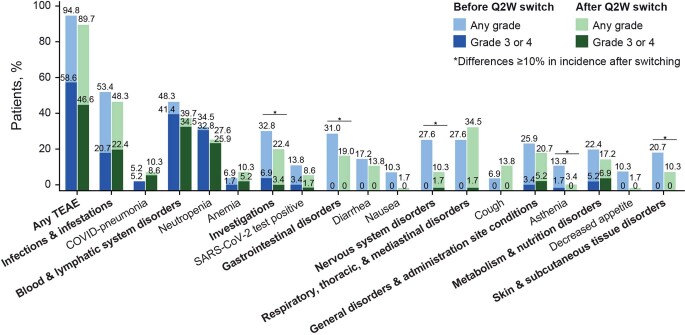
Elranatamab is a humanized B-cell maturation antigen (BCMA)-CD3 bispecific antibody. In the ongoing phase 2 MagnetisMM-3 trial, patients with relapsed or refractory multiple myeloma received subcutaneous elranatamab once weekly after two step-up priming doses. After six cycles, persistent responders switched to biweekly dosing. Results from cohort A, which enrolled patients without prior BCMA-directed therapy (n = 123) are reported. The primary endpoint of confirmed objective response rate (ORR) by blinded independent central review was met with an ORR of 61.0% (75/123); 35.0% ≥complete response. Fifty responders switched to biweekly dosing, and 40 (80.0%) improved or maintained their response for ≥6 months. With a median follow-up of 14.7 months, median duration of response, progression-free survival and overall survival (secondary endpoints) have not been reached. Fifteen-month rates were 71.5%, 50.9% and 56.7%, respectively. Common adverse events (any grade; grade 3-4) included infections (69.9%, 39.8%), cytokine release syndrome (57.7%, 0%), anemia (48.8%, 37.4%), and neutropenia (48.8%, 48.8%). With biweekly dosing, grade 3-4 adverse events decreased from 58.6% to 46.6%. Elranatamab induced deep and durable responses with a manageable safety profile. Switching to biweekly dosing may improve long-term safety without compromising efficacy. ClinicalTrials.gov identifier: NCT04649359 .
Overview
CoChat Summary
TL;DR
Elranatamab monotherapy in the phase 2 MagnetisMM-3 cohort A produced a 61.0% confirmed objective response rate in 123 patients with relapsed or refractory multiple myeloma who had no prior BCMA-directed therapy. Responses were often deep and durable, with 35.0% achieving ≥CR, 60.5% of those ≥CR being MRD-negative, and safety being manageable though infections, CRS, and cytopenias were common.
Key findings
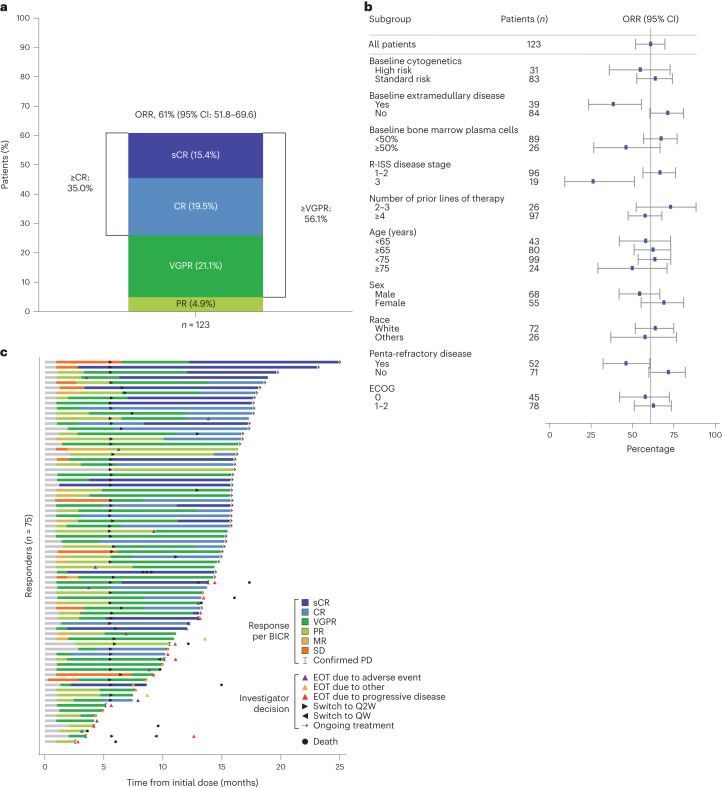
- In 123 treated patients, the confirmed objective response rate by blinded independent central review was 61.0% (75/123; 95% CI 51.8–69.6).
- Deep responses were frequent: 35.0% achieved ≥CR, 56.1% achieved VGPR or better, and among patients with ≥CR and evaluable MRD (n = 29), 89.7% were MRD-negative, corresponding to 60.5% of all patients with ≥CR.
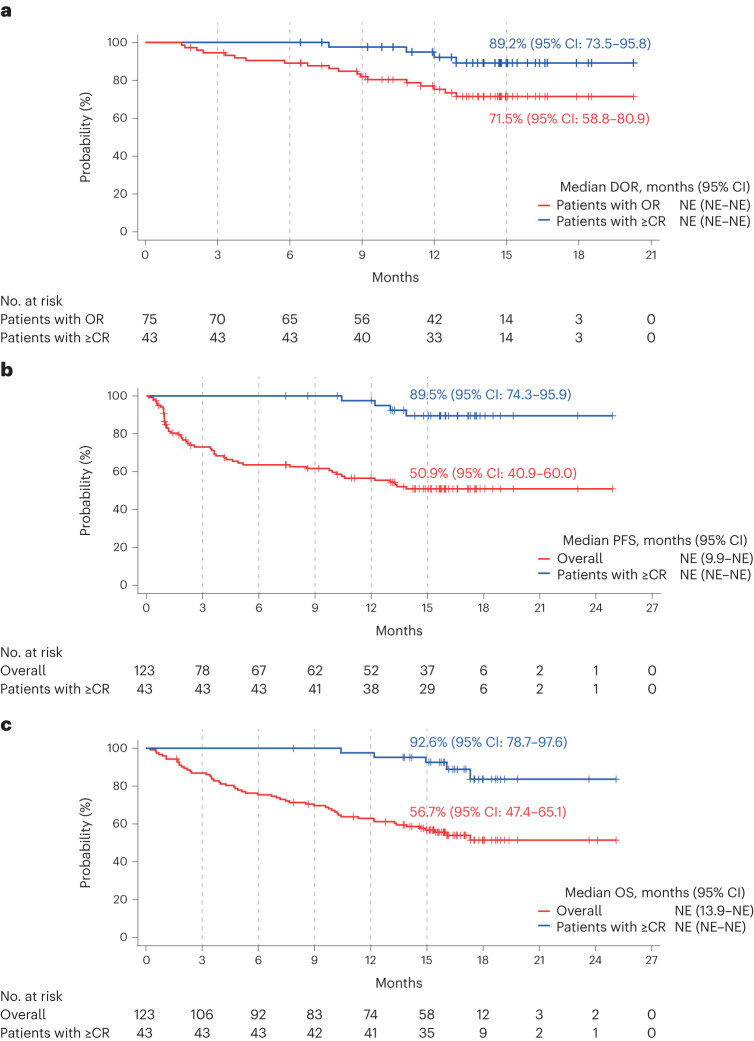
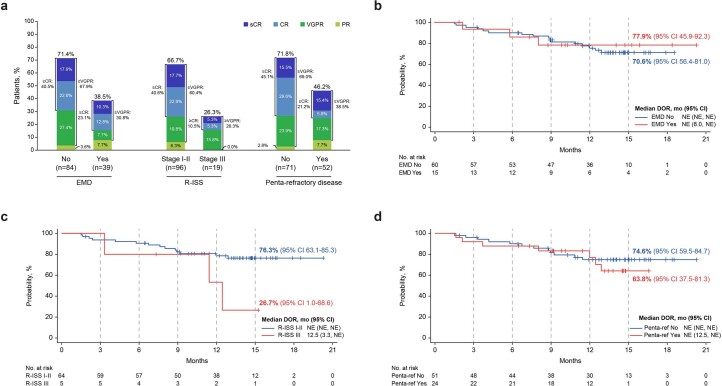
- With median follow-up of 14.7 months, median duration of response, progression-free survival, and overall survival were not reached; 15-month estimates were 71.5% for maintaining response, 50.9% for PFS, and 56.7% for OS.
- Among 50 responders who switched to biweekly dosing at least 6 months before data cutoff, 80.0% maintained or improved response ≥6 months after the switch, and 40.0% deepened response, including 38.0% who improved to ≥CR.
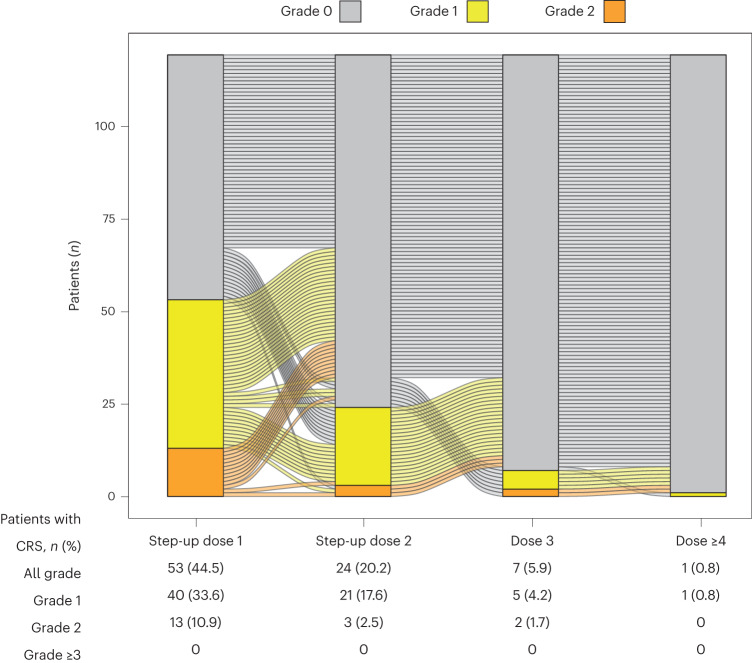
- Safety: all 123 patients had treatment-emergent AEs; 70.7% had grade 3 or 4 events. Common AEs included infections (69.9%; 39.8% grade 3–4), CRS (57.7%; 0% grade 3–4), anemia (48.8%; 37.4% grade 3–4), and neutropenia (48.8%; 48.8% grade 3–4).
Methods
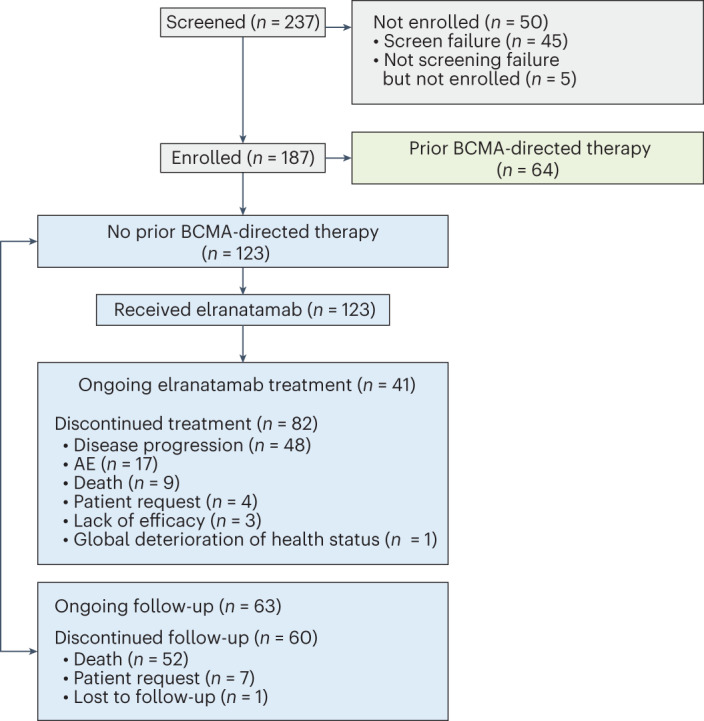
- Ongoing multicenter, open-label, single-arm phase 2 MagnetisMM-3 study of elranatamab monotherapy in relapsed or refractory multiple myeloma; this report covers cohort A (no prior BCMA-directed therapy), with 123 enrolled and treated patients across 47 sites in 10 countries.
- Eligible patients were adults with measurable disease, ECOG ≤2, adequate organ function, and disease refractory to at least one proteasome inhibitor, one immunomodulatory drug, and one anti-CD38 antibody; treatment was subcutaneous elranatamab 76 mg weekly after 12 mg and 32 mg step-up doses, with responders switching to biweekly dosing after 6 cycles if PR or better persisted for at least 2 months.
- Primary endpoint was confirmed ORR by BICR; secondary endpoints included CR rate, MRD negativity, TTR, DOR, PFS, OS, safety, pharmacokinetics, and immunogenicity; analyses were descriptive with Kaplan–Meier methods for time-to-event outcomes.
Limitations
- The paper states the main limitations are the single-arm design, lack of direct comparison with other treatments, small sample sizes in some subgroups, and the need for longer follow-up to confirm DOR, PFS, and OS benefits.
- Evident from the text: results for biweekly dosing are not from a randomized QW comparator, so the authors note the safety change after switching cannot be cleanly interpreted.
- Evident from the text: the cohort reported here excludes patients with prior BCMA-directed therapy, so the findings do not address that population.
Model-written summary. Check it against the paper before relying on it.
Integrity signals
Registry
Cites
Statistics
Figures
Verification
Claims the paper makes
13 Valid · 1 Not valid · 10 Not checked · 88 Own results and interpretations
The cited sources support only part of this claim — read each source’s verdict below.
In the paper
“Elranatamab is a humanized B-cell maturation antigen (BCMA)-CD3 bispecific antibody.”
- Also stated in: § Main · plain
“Elranatamab (PF-06863135) is a humanized bispecific antibody that targets both BCMA (on myeloma cells) and CD3 (on T cells)3.”
§ Elranatamab in relapsed or refractory multiple myeloma: phase 2 MagnetisMM-3 trial results > Abstract
What the sources say
- Partly supportedcites [3] Shah, N., Chari, A., Scott, E., Mezzi, K. & Usmani, S. Z. B-cell maturation antigen (BCMA) in multiple myeloma: rationale for targeting and current therapeutic approaches. Leukemia 34, 985–1005 (2020). 32055000 PMC7214244 sourceExperimental — accuracy not yet measured
The Bispecific antibody constructs section describes PF-06863135 (PF-3135) as a humanized antibody with anti-BCMA and anti-CD3 arms. Our copy does not name elranatamab or identify it as PF-06863135, so it does not establish that the description applies to elranatamab. (LLM, conf=0.78)
plain- Asserted: passes — The authors put it forward as true.
- Checkable: passes — It can be checked against evidence.
- Load-bearing: passes — The paper’s conclusions depend on it.
- Based: passes — The paper gives a reason why it holds.
- Also stated in: § Main · plain
Every source the paper cites for this claim was checked and supports it.
In the paper
“outcomes for patients with disease progression after these agents remain poor with a median progression-free survival (PFS) of 4.6 months and median overall survival (OS) of 12.4 months with a standard of care therapy, highlighting an unmet medical need in the relapsed or refractory multiple myeloma population1.”
§ Elranatamab in relapsed or refractory multiple myeloma: phase 2 MagnetisMM-3 trial results > Main
What the sources say
- Supportedcites [1] Mateos, M. V. et al. LocoMMotion: a prospective, non-interventional, multinational study of real-life current standards of care in patients with relapsed and/or refractory multiple myeloma. Leukemia 36, 1371–1376 (2022). 35332278 PMC9061296 source
The Introduction identifies the study population as patients with relapsed or refractory multiple myeloma previously treated with a proteasome inhibitor, an immunomodulatory drug, and an anti-CD38 antibody. The Results (Efficacy) report median progression-free survival of 4.6 months and median overall survival of 12.4 months with real-life standard-of-care therapy; the Discussion describes these outcomes as poor. (LLM, conf=0.94)
plain- Asserted: passes — The authors put it forward as true.
- Checkable: passes — It can be checked against evidence.
- Load-bearing: passes — The paper’s conclusions depend on it.
- Based: passes — The paper gives a reason why it holds.
- Supported
The cited sources support only part of this claim — read each source’s verdict below.
In the paper
“Similarly, patients with advanced disease stage (R-ISS stage III) have consistently shown poorer outcomes irrespective of the therapy received4–6,19–22.”
§ Elranatamab in relapsed or refractory multiple myeloma: phase 2 MagnetisMM-3 trial results > Discussion
What the sources say
- Partly supportedcites [4] Moreau, P. et al. Teclistamab in relapsed or refractory multiple myeloma. N. Engl. J. Med. 387, 495–505 (2022). 35661166 PMC10587778 sourceExperimental — accuracy not yet measured
The Results (Efficacy; page not provided) report lower response rates among patients with stage III disease receiving teclistamab. However, the Results (Patients) identify the staging measure as the International Staging System, not R-ISS, and the Discussion notes that this small subgroup had wide confidence intervals. This single-treatment finding does not establish consistently poorer outcomes irrespective of therapy. (LLM, conf=0.88)
- Could not verifycites [5] Munshi, N. C. et al. Idecabtagene vicleucel in relapsed and refractory multiple myeloma. N. Engl. J. Med. 384, 705–716 (2021). 33626253 sourceExperimental — accuracy not yet measured
The Efficacy section and subgroup figure include R-ISS stage III patients, but the available text does not establish that they had poorer outcomes than patients at other stages. The paper reports outcomes after ide-cel, not a consistent pattern irrespective of therapy; searches for stage-specific outcomes and therapy-independent prognosis found no supporting passage. Page numbers were not available in our copy. (LLM, conf=0.74)
- Not checked — no full text of the sourcecites [6] Berdeja, J. G. et al. Ciltacabtagene autoleucel, a B-cell maturation antigen-directed chimeric antigen receptor T-cell therapy in patients with relapsed or refractory multiple myeloma (CARTITUDE-1): a phase 1b/2 open-label study. Lancet 398, 314–324 (2021). 34175021 source
- Not checked — no full text of the sourcecites [19] Lonial, S. et al. Belantamab mafodotin for relapsed or refractory multiple myeloma (DREAMM-2): a two-arm, randomised, open-label, phase 2 study. Lancet Oncol. 21, 207–221 (2020). 31859245 source
- Could not verifycites [20] Blade, J. et al. Extramedullary disease in multiple myeloma: a systematic literature review. Blood Cancer J. 12, 45 (2022). 35314675 PMC8938478 sourceExperimental — accuracy not yet measured
The Results > Incidence section mentions revised stage III only as a reason to suspect extramedullary disease and consider PET/CT. Results > Treatment outcomes discusses poorer outcomes for patients with extramedullary disease, but does not compare outcomes by R-ISS stage or establish that stage III patients fare worse regardless of therapy. Searches for “R-ISS,” “stage III,” and therapy-independent outcomes found no supporting passage. (LLM, conf=0.76)
- Supportedcites [21] Palumbo, A. et al. Revised international staging system for multiple myeloma: a report from International Myeloma Working Group. J. Clin. Oncol. 33, 2863–2869 (2015). 26240224 PMC4846284 source
The Results (Combined ISS, CA and LDH; page not provided) show that R-ISS stage III had the poorest overall and progression-free survival. The subgroup analysis reports that R-ISS remained prognostic among patients who did and did not receive ASCT, proteasome inhibitors, or IMIDs; the Discussion describes its impact on overall survival as independent of therapy. (LLM, conf=0.92)
- Could not verifycites [22] Gill, S. K. et al. I-OPen: inferior outcomes of penta-refractory compared to penta-exposed multiple myeloma patients. Blood Cancer J. 12, 138 (2022). 36151090 PMC9508328 sourceExperimental — accuracy not yet measured
The To the Editor section reports poorer outcomes for quad- or penta-refractory patients than for exposed patients, but it does not establish outcomes by R-ISS stage or across therapies. Searches for “R-ISS,” “stage III,” and staging-related survival findings found no passage addressing the claim about R-ISS stage III. (LLM, conf=0.74)
boostedstates an association- Asserted: passes — The authors put it forward as true.
- Checkable: passes — It can be checked against evidence.
- Load-bearing: unclear — It is unclear whether the paper’s conclusions depend on it.
- Based: passes — The paper gives a reason why it holds.
- Partly supported
The cited sources support only part of this claim — read each source’s verdict below.
In the paper
“In comparison to other BCMA-targeted T-cell-redirecting therapies, the rate of hematologic AEs with elranatamab was similar or lower after a similar follow-up4–6.”
§ Elranatamab in relapsed or refractory multiple myeloma: phase 2 MagnetisMM-3 trial results > Discussion
What the sources say
- Partly supportedcites [4] Moreau, P. et al. Teclistamab in relapsed or refractory multiple myeloma. N. Engl. J. Med. 387, 495–505 (2022). 35661166 PMC10587778 sourceExperimental — accuracy not yet measured
The Results > Safety passage reports hematologic adverse-event rates for teclistamab, and Results > Efficacy gives a median follow-up of 14.1 months. These provide comparator data, but this paper does not report elranatamab rates or establish that they were similar or lower after a similar follow-up. Page numbers are unavailable in our copy. (LLM, conf=0.84)
- Partly supportedcites [5] Munshi, N. C. et al. Idecabtagene vicleucel in relapsed and refractory multiple myeloma. N. Engl. J. Med. 384, 705–716 (2021). 33626253 sourceExperimental — accuracy not yet measured
The Safety section and Table 2 report hematologic adverse-event rates for idecabtagene vicleucel, providing data for one therapy in the comparison. This paper does not report elranatamab outcomes or establish that its rates were similar or lower after a similar follow-up. (LLM, conf=0.86)
- Not checked — no full text of the sourcecites [6] Berdeja, J. G. et al. Ciltacabtagene autoleucel, a B-cell maturation antigen-directed chimeric antigen receptor T-cell therapy in patients with relapsed or refractory multiple myeloma (CARTITUDE-1): a phase 1b/2 open-label study. Lancet 398, 314–324 (2021). 34175021 source
plain- Asserted: passes — The authors put it forward as true.
- Checkable: passes — It can be checked against evidence.
- Load-bearing: unclear — It is unclear whether the paper’s conclusions depend on it.
- Based: passes — The paper gives a reason why it holds.
- Partly supported
The cited sources support only part of this claim — read each source’s verdict below.
In the paper
“BCMA-targeted T-cell-redirecting therapies have been linked to a heightened susceptibility to infectious complications due to their mechanism of action30–33.”
§ Elranatamab in relapsed or refractory multiple myeloma: phase 2 MagnetisMM-3 trial results > Discussion
What the sources say
- Partly supportedcites [30] Sim, B. Z. et al. Infectious complications of bispecific antibody therapy in patients with multiple myeloma. Blood Cancer J. 13, 34 (2023). 36894539 PMC9998258 sourceExperimental — accuracy not yet measured
The Discussion reports substantial infection rates in trials of T-cell/BCMA-targeting bispecific antibodies, supporting the link to infectious complications. It does not establish that their mechanism of action causes heightened susceptibility; the authors also note that infection rates in their heavily treated cohort were comparable to those with other therapies. No page number is available in our copy. (LLM, conf=0.84)
- Partly supportedcites [31] Mazahreh, F. et al. Risk of infections associated with the use of bispecific antibodies in multiple myeloma: a pooled analysis. Blood Adv. 7, 3069–3074 (2023). 36857755 PMC10331406 sourceExperimental — accuracy not yet measured
The Results report more severe infections with BCMA-targeting than non-BCMA bispecific antibodies, and the Discussion describes treatment-related immune changes that increase infection risk. However, the Discussion says infections may be related to the underlying myeloma, prior therapies, and/or the antibodies’ mechanism of action; it does not establish that the mechanism is the cause. Page numbers were not supplied in our copy. (LLM, conf=0.84)
- Partly supportedcites [32] Kambhampati, S. et al. Infectious complications in patients with relapsed refractory multiple myeloma after BCMA CAR T-cell therapy. Blood Adv. 6, 2045–2054 (2022). 34543400 PMC9006279 sourceExperimental — accuracy not yet measured
The Abstract reports infections in 29 of 55 patients after BCMA CAR-T, and the Introduction lists infections among CAR-T-associated toxicities. But the study concerns BCMA CAR-T specifically, not all BCMA-targeted T-cell-redirecting therapies, and it does not establish that their mechanism of action caused heightened infection susceptibility. Page numbers were not available in our copy. (LLM, conf=0.86)
- Partly supportedcites [33] Mikkilineni, L. et al. Infectious complications of CAR T-cell therapy across novel antigen targets in the first 30 days. Blood Adv. 5, 5312–5322 (2021). 34619768 PMC9153053 sourceExperimental — accuracy not yet measured
Our copy supports only the association half, and weakly: the Abstract reports BCMA CAR T cells had the second-highest infection proportion (9/24; 37.5%) after CD22 (43.4%), with grade 4 infections rare (2.5%) and the overall 32.7% rate 'comparable to published studies of infection with CD19 CAR' (Discussion). The Discussion explicitly attributes the myeloma/BCMA infections to host factors — 'MM leads to longterm immunocompromise in patients' — and to prior lines of therapy, not to the BCMA-targeting mechanism; the Introduction even states 'the impact and interplay of CAR T-cell induced CRS on host mechanisms to fight foreign pathogens is unknown,' and no passage discusses on-target/off-tumor plasma-cell or immunoglobulin depletion (searched: hypogammaglobulinemia, immunoglobulin, plasma cell aplasia, on-target off-tumor, B-cell aplasia). The mechanistic causal attribution ('due to their mechanism of action') and the extension beyond CAR T to all 'T-cell-redirecting therapies' (e.g., bispecific antibodies) are not supported by this source, which studied only five phase 1 CAR T trials (BCMA cohort NCT02215967, MM adults). (LLM, conf=0.75)
plainstates an association- Asserted: passes — The authors put it forward as true.
- Checkable: passes — It can be checked against evidence.
- Load-bearing: unclear — It is unclear whether the paper’s conclusions depend on it.
- Based: passes — The paper gives a reason why it holds.
- Partly supported
53 more claims · 2 with their cited sources checked
Create a free account to see all 112 claims and to verify the 2 references still open.
- Probably not a substantial claim. 21
- It may state two separate claims as one. 42
Claims other papers make about this one
Each is checked against this paper’s own text: does it say what the citing paper says it does?
The source backs part of the claim, not all of it — or backs it for a different population, condition or comparison.
In the citing paper
“The objective response rate of Elranatamab reach to 61.0% (75 out of 123 patients); with 35.0%≥CR, and 80.0% of patients maintained their response for at least 6 months [211].”
From Multiple myeloma: signaling pathways and targeted therapy (2024) · cites this paper as [211]
Experimental — accuracy not yet measured
Citations
Cites
Lee, D. W., Santomasso, B. D., Locke, F. L., Ghobadi, A., Turtle, C. J., Brudno, J. N., Maus, M. V., Park, J. H., Mead, E., Pavletic, S., et al. (2019) · Biology of Blood and Marrow Transplantation · doi:10.1016/j.bbmt.2018.12.758 · Cited by 3,675
Kumar, S., Paiva, B., Anderson, K. C., Durie, B., Landgren, O., Moreau, P., Munshi, N., Lonial, S., Bladé, J., Mateos, M.-V., et al. (2016) · The Lancet Oncology · doi:10.1016/s1470-2045(16)30206-6 · Cited by 3,061
A Phase 2 Study of Bortezomib in Relapsed, Refractory Myeloma
Richardson, P. G., Barlogie, B., Berenson, J., Singhal, S., Jagannath, S., Irwin, D., Rajkumar, S. V., Srkalovic, G., Alsina, M., Alexanian, R., et al. (2003) · New England Journal of Medicine · doi:10.1056/nejmoa030288 · Cited by 2,632
Idecabtagene Vicleucel in Relapsed and Refractory Multiple Myeloma.
Munshi, N. C., Anderson, L. D., Shah, N., Madduri, D., Berdeja, J., Lonial, S., Raje, N., Lin, Y., Siegel, D., Oriol, A., et al. (2021) · New England Journal of Medicine · doi:10.1056/nejmoa2024850 · Cited by 2,560
Self-citationPalumbo, A., Avet-Loiseau, H., Oliva, S., Lokhorst, H. M., Goldschmidt, H., Rosinol, L., Richardson, P., Caltagirone, S., Lahuerta, J. J., Facon, T., et al. (2015) · Journal of Clinical Oncology · doi:10.1200/jco.2015.61.2267 · Cited by 2,210
Berdeja, J. G., Madduri, D., Usmani, S. Z., Jakubowiak, A., Agha, M., Cohen, A. D., Stewart, A. K., Hari, P., Htut, M., Lesokhin, A., et al. (2021) · The Lancet · doi:10.1016/s0140-6736(21)00933-8 · Cited by 1,756
Self-citationTeclistamab in Relapsed or Refractory Multiple Myeloma
Moreau, P., Garfall, A. L., van de Donk, N. W. C. J., Nahi, H., San-Miguel, J. F., Oriol, A., Nooka, A. K., Martin, T., Rosinol, L., Chari, A., et al. (2022) · New England Journal of Medicine · doi:10.1056/nejmoa2203478 · Cited by 1,269 · cited 2×
“Includes t(4;14), t(14;16) and del(17p) chromosomal abnormalities.”
BackgroundSelf-citationLonial, S., Lee, H. C., Badros, A., Trudel, S., Nooka, A. K., Chari, A., Abdallah, A.-O., Callander, N., Lendvai, N., Sborov, D., et al. (2020) · The Lancet Oncology · doi:10.1016/s1470-2045(19)30788-0 · Cited by 812
Self-citationTalquetamab, a T-Cell–Redirecting GPRC5D Bispecific Antibody for Multiple Myeloma
Chari, A., Minnema, M. C., Berdeja, J. G., Oriol, A., van de Donk, N. W. C. J., Rodríguez-Otero, P., Askari, E., Mateos, M.-V., Costa, L. J., Caers, J., et al. (2022) · New England Journal of Medicine · doi:10.1056/nejmoa2204591 · Cited by 744
Self-citationMartin, T., Usmani, S. Z., Berdeja, J. G., Agha, M., Cohen, A. D., Hari, P., Avigan, D., Deol, A., Htut, M., Lesokhin, A., et al. (2023) · Journal of Clinical Oncology · doi:10.1200/jco.22.00842 · Cited by 663
Self-citation
Cited by
Items 301–400 of 650
Dye, B., Gromer, D. J., Bibi, M., Siegrist, E. A., & Sassine, J. (2025) · The American Journal of the Medical Sciences · doi:10.1016/j.amjms.2025.10.007 · Cited by 3
Incorporating mRNA therapeutics into biological treatments of hematologic malignancies
Hunia, J., Tomasik, J., Czerwik, N., Pezeshki, P. S., & Nowis, D. (2025) · Frontiers in Immunology · doi:10.3389/fimmu.2025.1680071 · Cited by 6
Rahbari, K. J., del Toro-Mijares, R., Kennedy, K., Mader, L., Sengsayadeth, S. M., Jayani, R., Jerkins, J. H., Jallouk, A. P., Kim, T. K., Bhaskar, S., et al. (2025) · JCO Oncology Practice · doi:10.1200/op-25-00652 · Cited by 3
Elranatamab Exposure–Safety Analysis in Relapsed or Refractory Multiple Myeloma
Soltantabar, P., Hibma, J. E., Wang, D., Conte, U., Hickman, A., & Elmeliegy, M. A. (2025) · The Journal of Clinical Pharmacology · doi:10.1002/jcph.70130 · Cited by 4
Self-citationBispecific and multispecific T-cell engagers: advancing the future of immunotherapy
Kang, X., Zhao, Y., Ling, H., & Huang, X. (2025) · Antibody Therapeutics · doi:10.1093/abt/tbaf026 · Cited by 11
“For instance, elranatamab, a BCMA/CD3 bsAb approved in 2023 for R/R MM, achieves overall response rates exceeding 60%, with sustained responses in a disease resistant to prior therapies [62].”
Reshaping multiple myeloma treatment: recent breakthroughs
Martino, E. A., Caserta, S., Vigna, E., Bruzzese, A., Mendicino, F., Alvaro, M. E., Labanca, C., Lucia, E., Olivito, V., Amodio, N., et al. (2025) · Expert Opinion on Pharmacotherapy · doi:10.1080/14656566.2025.2610373 · Cited by 4
“A second BCMA×CD3 BsAb, elranatamab, was approved in 2023 based on the MagnetisMM-1 and MagnetisMM-3 pivotal trials, both demonstrating ORR exceeding 60% and durable responses in heavily pretreated patients [18,19].”
Bispecific Antibody Therapy for Multiple Myeloma: A Practical Toolkit
Rodriguez, C., Touzeau, C., Crusoé, E. D. Q., Pericole, F. V., & Hungria, V. (2025) · Clinical Lymphoma Myeloma & Leukemia · doi:10.1016/j.clml.2025.12.015 · Cited by 3
Self-citationAkiyama, H., Kakiuchi, S., Sakamoto, A., Tomigaki, N., Fujioka, S., Harima, I., Niwa, R., Takagi, I., Kozuki, Y., Miyata, Y., et al. (2026) · Frontiers in Oncology · doi:10.3389/fonc.2025.1705843 · Cited by 4
Paulsen, J. S., & Slørdahl, T. S. (2026) · Frontiers in Immunology · doi:10.3389/fimmu.2025.1722579 · Cited by 5
“(6 – 8 , 13).”
Progressive Multifocal Leukoencephalopathy (PML) in 2 Patients Treated With Elranatamab
Tomkins, O. M., Maamari, R. G., Douthwaite, S. T., Roy, A., Bain, H., Kohli, N., de Lavallade, H., Kazmi, M. A., Sachchithanantham, S., Dmello, T., et al. (2026) · Clinical Lymphoma Myeloma & Leukemia · doi:10.1016/j.clml.2026.01.017 · Cited by 4
Hamadeh, I. S., Merz, M., Derkach, A., Modelevsky, L. R., Lesokhin, A. M., Mailankody, S., Hultcrantz, M. L., Tan, C. R. C., Hassoun, H., Shah, U. A., et al. (2026) · Clinical Lymphoma Myeloma & Leukemia · doi:10.1016/j.clml.2026.03.016 · Cited by 3
Self-citationLee, H. C., Plattel, W. J., Harrison, S. J., Sborov, D. W., Lentzsch, S., Spencer, A. G., Niesvizky, R., Trudel, S., Mollee, P. N., Vij, R., et al. (2026) · Blood · doi:10.1182/blood.2025032044 · Cited by 5
Self-citationRejeski, K., Banerjee, R. K., & Hill, J. A. (2026) · Blood · doi:10.1182/blood.2025032298 · Cited by 5
New Therapies on the Horizon for Relapsed Refractory Multiple Myeloma
Abdallah, N. H., & Kumar, S. K. (2024) · Hematology/Oncology Clinics of North America · doi:10.1016/j.hoc.2023.12.013 · Cited by 3
Matsumura, N., & Mandai, M. (2024) · International Journal of Clinical Oncology · doi:10.1007/s10147-024-02531-1 · Cited by 3
Improving Access to T-Cell Therapies in Multiple Myeloma
Derman, B. A. (2024) · Clinical Lymphoma Myeloma & Leukemia · doi:10.1016/j.clml.2024.06.011 · Cited by 3
Peery, M. R., Hill, H., Sharps, A., Zaver, A., & Moore, D. C. (2024) · Annals of Pharmacotherapy · doi:10.1177/10600280241282115 · Cited by 3
Caponi, L., Giudice, M. L. D., Botti, A., Ursino, S., Gennari, A., Barachini, S., Paolicchi, A., Galimberti, S., & Buda, G. (2025) · Journal of Clinical Laboratory Analysis · doi:10.1002/jcla.25151 · Cited by 4
“It has been identified as a promising target for some of the most innovative and effective new therapies introduced in myeloma [14–20].”
Challenges in Multiple Myeloma Therapy in Older and Frail Patients
Aureli, A., Marziani, B., Sconocchia, T., Pasqualone, G., Franceschini, L., Spagnoli, G. C., Venditti, A., & Sconocchia, G. (2025) · Cancers · doi:10.3390/cancers17060944 · Cited by 5
Current and Future Directions of Immunotherapies in Multiple Myeloma
Biltibo, E. A., Surapaneni, M., Hadidi, S. A., Suvannasankha, A., & Jayani, R. (2025) · American Society of Clinical Oncology Educational Book · doi:10.1200/edbk-25-473316 · Cited by 5
Moore, S. E., Miller, H., Parrish, C., Seymour, F., Miller, L. J., Chandler, T., Land, J., Karpha, I., Brearton, G., Thompson, S., et al. (2025) · British Journal of Haematology · doi:10.1111/bjh.70041 · Cited by 6
“76,77 In the MagnetisMM-3 and MajesTEC 1 studies, all grade infections occurred in 69.9% and 76.4%, respectively, with 39.8% and 44.8%, respectively, experiencing grade 3–4 events.”
InfluentialBahlis, N. J., Nooka, A. K., DiBonaventura, M., Sullivan, S. T., Chaudhary, M. A., Aydin, D., & Mohty, M. (2025) · HemaSphere · doi:10.1002/hem3.70224 · Cited by 3
Self-citationKikuchi, J., Osada, N., Matsuoka, S., Yasui, H., Furukawa, Y., & Nakasone, H. (2025) · Leukemia · doi:10.1038/s41375-025-02792-3 · Cited by 3
“Furthermore, the ORR of Tec was reduced in patients with high tumor burden as measured by bone marrow plasma cells (BM-PCs) > 60%, whereas those of Elra were >50% [8, 9].”
InfluentialMatsunaga, N., Suzuki, T., Nishitarumizu, N., Nakanishi, Y., Kondo, A., Kato, Y., Ebina, T., Marumo, Y., Nakamura, T., Nakashima, T., et al. (2024) · Clinical Lymphoma Myeloma & Leukemia · doi:10.1016/j.clml.2024.03.012 · Cited by 3
Self-citationHashmi, H., Kumar, A., Kharfan‐Dabaja, M. A., Munshi, P. N., Inamoto, Y., DeFilipp, Z. M., Dholaria, B., Jain, T., Perales, M., Carpenter, P. A., et al. (2024) · Transplantation and Cellular Therapy · doi:10.1016/j.jtct.2024.04.007 · Cited by 4
Looking ahead to CD3, T-cell engager bispecific antibodies for hematological malignancies
Reed, D. R., & Lum, L. G. (2024) · Expert Opinion on Biological Therapy · doi:10.1080/14712598.2024.2384086 · Cited by 4
“Of note, 20% of the patients had received CAR-T and/or other BCMA-targeted therapy [37].”
Akhtar, O. S., Szabó, A., Bhatlapenumarthi, V., Forsberg, M., Balev, M., Patwari, A., Cheruvalath, H., Bhutani, D., Thanendrarajan, S., Dhakal, B., et al. (2024) · British Journal of Haematology · doi:10.1111/bjh.19700 · Cited by 4
McCurdy, A. B. R., Reece, D. E., Louzada, M., White, D. J., Parkin, S., Chu, M. P., Kotb, R. R., Mian, H. S., Othman, I., Su, J., et al. (2024) · Blood Cancer Journal · doi:10.1038/s41408-024-01135-2 · Cited by 7
Engaging a New Treatment Paradigm: Elranatamab in Relapsed/Refractory Multiple Myeloma
Saied, G., & Halford, Z. (2024) · Annals of Pharmacotherapy · doi:10.1177/10600280241281742 · Cited by 4
Rapid high‐dose cyclophosphamide as bridging treatment for advanced therapies in multiple myeloma
Marable, M., Kelly, K., Cooperrider, J. H., Jakubowiak, A. J., & Derman, B. A. (2024) · eJHaem · doi:10.1002/jha2.1039 · Cited by 3
Lancman, G., Song, K., White, D. J., Crosbie, T., Sharif, I., Emond, M., Raza, M. S., Elias, M., Kaedbey, R., & Chu, M. P. (2024) · Frontiers in Oncology · doi:10.3389/fonc.2024.1446995 · Cited by 4
Kortüm, K. M., Theurich, S., Farrell, J. J., Jackson, G., Cook, G., Cappelleri, J. C., Ashman, O., Neff-Baro, S., Gauthier, A., Jewiti-Rigondza, K., et al. (2025) · BMC Cancer · doi:10.1186/s12885-025-14724-6 · Cited by 5
“) is an open-label, multicentre, non-randomized phase II study to evaluate the efficacy and safety of elranatamab in patients with RRMM who are refractory to at least one proteasome inhibitor (PI), one IMiD, and one anti-CD38 monoclonal antibody (mAB) [22].”
Epcoritamab in B-cell malignancies: current status and prospects
Molica, S., Rossi, M., & Allsup, D. J. (2024) · Expert Opinion on Biological Therapy · doi:10.1080/14712598.2024.2310148 · Cited by 2
Wan, X., Tian, Y., Yu, T., & Cai, H. (2025) · Frontiers in Oncology · doi:10.3389/fonc.2025.1479164 · Cited by 5
Karp, S., Trautmann‐Grill, K., Warncke, P., Zolnowski, D., Röllig, C., Pannach, M., Zinn, J., Kroschinsky, F., Morgner, A., Bonin, M. V., et al. (2025) · Annals of Hematology · doi:10.1007/s00277-025-06262-9 · Cited by 4
“…cell Bispecific T-cell engagers directed against B-cell matura - tion antigen (BCMA) or GPRC5D on myeloma cells and CD3 on T lymphocytes [12–14], as well as anti-BCMA chimeric antigen receptor (CAR) T cell therapies [15] and antibody-drug conjugates (ADC) [16] have been developed in rapid…”
Progress of immune senescence in multiple myeloma treatment resistance
Jia, Y., Yan, L., Fan, C., Sun, H., Zhou, X., & Shi, Z. (2025) · Discover Oncology · doi:10.1007/s12672-025-02136-8 · Cited by 5
Functional Cure as a New Concept of Therapy for Multiple Myeloma
Семочкин, С. В. (2025) · Clinical oncohematology · doi:10.21320/2500-2139-2025-18-2-105-120 · Cited by 3
Ayyappan, S. R., Larsen, J. T., Sanchez, J. F., & Krishnan, A. Y. (2025) · Clinical Lymphoma Myeloma & Leukemia · doi:10.1016/j.clml.2025.04.006 · Cited by 2
Costa, L. J., LeBlanc, T. W., Tesch, H., Sonneveld, P., Johnson, S. M. A., Vekeman, F., Hlavacek, P., Meche, A., Kim, C. H., Cislo, P. R., et al. (2025) · Blood and Lymphatic Cancer Targets and Therapy · doi:10.2147/blctt.s516356 · Cited by 6
“MagnetisMM-3 (NCT04649359) is an open label, multicenter, non-randomized, phase 2 study of elranatamab among patients with TCR MM. 13,14 The study enrolled two independent and parallel cohorts: 1) Cohort A, which included participants who are naïve to BCMA-directed therapies (N = 123) and 2) Cohort…”
Revolutions at the frontline of multiple myeloma treatment: lessons and challenges to finding a cure
Kort, J., Rivera, A., Senigarapu, S., & Driscoll, J. J. (2025) · Frontiers in Oncology · doi:10.3389/fonc.2025.1578529 · Cited by 3
Rosenberg, M. C., Scarpetti, L., Morgan, G. J., & Davies, F. E. (2025) · Clinical Lymphoma Myeloma & Leukemia · doi:10.1016/j.clml.2025.06.013 · Cited by 3
Encinas, C., Blanchard, M. J., Alonso, R., Hernández‐Rivas, J., Tamayo, R. R., Machado-Vílchez, M., Martínez‐López, J., & Mateos, M. (2025) · Clinical Lymphoma Myeloma & Leukemia · doi:10.1016/j.clml.2025.06.012 · Cited by 9
Self-citationSzymczyk, A., Drozd-Sokolowska, J. E., & Hus, I. (2025) · Cancers · doi:10.3390/cancers17152426 · Cited by 5
“In the MagnetisMM-3 trial evaluating the efficacy and safety of elranatamab, an anti-BCMA BsAB [54], infectious complications developed in 69.9% of patients, with grade 3 or higher in 39.8%.”
InfluentialBispecific T-cell engager therapy for multiple myeloma
Cirstea, D. D., Puliafito, B. R., Kim, B. E., Lei, M., & Raje, N. S. (2025) · Best Practice & Research Clinical Haematology · doi:10.1016/j.beha.2025.101649 · Cited by 3
Self-citationThe silent signals: emerging safety concerns in bispecific antibody therapy for multiple myeloma
Zhou, X., Luo, E., Chen, W., Deng, Y., Wu, B., Jiang, X., Zhang, K., & Lai, F. (2025) · Frontiers in Medicine · doi:10.3389/fmed.2025.1593405 · Cited by 3
“Similarly, approximately 3.4% of patients experienced ICANS after elranatamab therapy (30), and ICANS was detected in around 10% of patients who received talquetamab at a dose of 405 µ g (14).”
InfluentialElranatamab Fixed Dosing: A Safe, Effective, and Convenient Dosing Approach
Elmeliegy, M. A., Soltantabar, P., Hibma, J. E., Ashman, O., Wang, D., & Lon, H.-K. (2025) · Targeted Oncology · doi:10.1007/s11523-025-01170-4 · Cited by 4
“The most common hematologic TEAEs for elranata-mab were previously reported to be anemia, neutropenia, thrombocytopenia, and lymphopenia [16].”
Self-citationManagement of relapsed refractory multiple myeloma: Evidence-based guide to community oncologists
Mushtaq, A. H., Cheema, A. Y., Ali, H. M., Shatnawi, Y., Ashruf, O. S., Ahmad, E. N., Lytvynova, O., Munir, M., Asif, M. A., Ahmad, M., et al. (2025) · Blood Reviews · doi:10.1016/j.blre.2025.101339 · Cited by 5
Hashimoto, Y., Hosoda, S., Omura, H., & Tanaka, T. (2025) · Medicine · doi:10.1097/md.0000000000045145 · Cited by 2
Saga of MCL1 inhibitors in multiple myeloma
Nelson, E., Telang, S. P., Budak-Alpdoǧan, T., Jonnalagadda, S. C., Srivastava, S. K., & Pandey, M. K. (2025) · Biochemical Pharmacology · doi:10.1016/j.bcp.2025.117532 · Cited by 3
Advances in immune microenvironment profiling during multiple myeloma progression and therapy
Bai, J., Nishimura, N., & Kawano, Y. (2025) · International Journal of Hematology · doi:10.1007/s12185-025-04110-0 · Cited by 5
Rizzello, I., Sacchetti, I., Barbato, S., Solli, V., Stefanoni, P., Cani, L., Quaresima, M., Belotti, A., Sgherza, N., Gentile, M., et al. (2025) · Clinical and Experimental Medicine · doi:10.1007/s10238-025-01956-w · Cited by 4
“Moreover, the possibility of an impact of len duration and dose on the efficacy of DaraVd at relapse was explored; however, no correlation was found in the univariate analysis, consistent with retrospective data reported by Goel and colleagues about second-line treatment of len-ref patients [30].”
Utilization of real-world evidence in regulatory approvals for multiple myeloma therapies
Taylor, L., Chen, A., & Pierre, A. E. (2025) · Blood Cancer Journal · doi:10.1038/s41408-025-01420-8 · Cited by 2
Afrough, A., Dima, D., Razzo, B. M., Goel, U., Sannareddy, A., Pasvolsky, O., Vazquez-Martinez, M. A., Ferreri, C. J., Banerjee, R. K., Khouri, J., et al. (2025) · Blood Cancer Journal · doi:10.1038/s41408-025-01414-6 · Cited by 7
Li, F., Li, F., Xu, X., Wang, X., Yu, Q., Duan, G., Yan, J., Jiang, B., Sun, H., Xu, S., et al. (2025) · Frontiers in Oncology · doi:10.3389/fonc.2025.1647730 · Cited by 4
Voorhees, P. M., Kumar, S. K., Usmani, S. Z., Ye, J. C., Cohen, Y. C., Scott, E., Carson, R. L., Heuck, C. J., Gan, R. W., Ackerman, B., et al. (2025) · Annals of Hematology · doi:10.1007/s00277-025-06705-3 · Cited by 8
“Treatment with bispecific antibodies has shown ORRs of 31.7%–48.5% in patients with EMD (including both EMD and paramedullary disease) versus 68.3%– 74.1% in patients without EMD [41, 42, 45].”
InfluentialZhang, Y., Lei, Y., Huang, Y., Gao, Y., Liu, R., Guo, K., Zhao, C., & Lei, M. (2025) · Molecular Biology Reports · doi:10.1007/s11033-025-11317-1 · Cited by 2
Mina, R., Antonioli, E., Barilà, G., Bolli, N., Botta, C., Furlan, A., Liberatore, C., Martello, M., Móre, S. M. C., Oliva, S., et al. (2025) · Clinical Lymphoma Myeloma & Leukemia · doi:10.1016/j.clml.2025.12.016 · Cited by 3
Roy, P. G., Gogia, A., Anwar, Z., Mukherjee, S., & Anwer, F. (2026) · JCO Oncology Practice · doi:10.1200/op-25-00947 · Cited by 2
Targeted therapies in pediatric oncology: A start
Shah, N. (2026) · Molecular Therapy Oncology · doi:10.1016/j.omton.2026.201146 · Cited by 2
“101 Additional BsAbs have been developed for malignancies in adults, including lymphomas, 108,109 multiple myeloma, 110,111 and small cell lung cancer, 112 but no other agents have been developed or approved for children with cancer, despite the expression of many of these targets on pediatric…”
Lowy, J. A., Rogers, M. F., Avigan, Z. M., Flores, M. S., Samuel, M., Rattu, M. A., & Richter, J. (2026) · Expert Review of Hematology · doi:10.1080/17474086.2026.2634283 · Cited by 2
“Of the 27 patients who transitioned to dosing every 4 weeks, 92% maintained their response after 6 months [28].”
InfluentialTan, C. R., Usmani, S. Z., Derkach, A., Corraes, A. D. M. S., Parrondo, R. D., Ailawadhi, S., Asoori, S., Dave, M., Popat, R., Morjaria, O., et al. (2026) · Blood Advances · doi:10.1182/bloodadvances.2025019231 · Cited by 2
“5,7 These estimates are comparable to findings from a systematic review and meta-analysis of bsAbs for MM, which estimated NRM rates of 6.2%, primarily due to infections, particularly COVID-19, which was the leading cause of NRM. 25 Treatment-related T-cell activation, T-cell exhaustion, and…”
InfluentialSelf-citationWang, Y.-C., Li, P.-H., Lin, C., Su, Y., & Teng, C. J. (2026) · Targeted Oncology · doi:10.1007/s11523-026-01209-0 · Cited by 2
“[7].”
InfluentialHébraud, B., Charalampous, C., Parrondo, R. D., Chhabra, S., Nagaraj, M., DiBonaventura, M., Duh, M. S., Bobbili, P. J., Wang, A., Frey-Koba, S., et al. (2026) · Clinical Lymphoma Myeloma & Leukemia · doi:10.1016/j.clml.2026.03.014 · Cited by 2
Zerbit, J., Fouquet, G., Detroit, M., Choquet, S., Garderet, L., Hermine, O., Cazelles, C., Frenzel, L., Mohty, M., de Wyngaert, Z. V., et al. (2026) · JCO oncology advances. · doi:10.1200/oa-25-00077 · Cited by 2
Self-citationNandakumar, V., Godara, A., & Mensah, F. (2026) · Clinical Lymphoma Myeloma & Leukemia · doi:10.1016/j.clml.2026.04.023 · Cited by 2
Melflufen in Multiple Myeloma: Clinical Limitations, Biological Rationale, and Future Perspectives
Garibotto, M., Soncini, D., Lemoli, R. M., Cagnetta, A., & Cea, M. (2026) · Cancers · doi:10.3390/cancers18101551 · Cited by 2
Bumma, N., Lee, H. C., Richter, J. R., Hoffman, J. E., Zonder, J. A., Fillbrunn, M. K., García-Horton, V., Zhou, Z., Xu, Y., Burnett, H., et al. (2026) · Current Medical Research and Opinion · doi:10.1080/03007995.2026.2686032 · Cited by 2
“…in The analyses were based on a total of eight trials, including: LINKER-MM1 (linvoseltamab) 39 , MajesTEC-1 (teclistamab) 40 , MonumenTAL-1 (talquetamab) 41 , MagnetisMM-3 (elranatamab) 42 , CARTITUDE-1 (cilta-cel) 43 , KarMMa (ide-cel) 44 , KarMMa-2 (ide-cel) 45 , and KarMMa-3 (ide-cel) 46 .”
Recent advances and future perspectives of T-cell engagers in lymphoid malignancies
Shirouchi, Y., & Maruyama, D. (2024) · Japanese Journal of Clinical Oncology · doi:10.1093/jjco/hyad186 · Cited by 2
Krzysiek, R., Bitoun, S., Belkhir, R., Hacein‐Bey‐Abina, S., & Mariette, X. (2024) · Haematologica · doi:10.3324/haematol.2023.284942 · Cited by 3
Schütt, J., Brinkert, K., Plis, A., Schenk, T., & Brioli, A. (2024) · Cancer Drug Resistance · doi:10.20517/cdr.2024.39 · Cited by 3
van Voss, M. R. H., Molenaar, R. J., Korst, C. L. B. M., Bartelink, I. H., Baglio, S. R., Kruyswijk, S., de Ruijter, M. E. M., Zweegman, S., Kuipers, M. T., & van de Donk, N. W. C. J. (2024) · Expert Opinion on Biological Therapy · doi:10.1080/14712598.2024.2397436 · Cited by 5
“In addition, transitioning from a weekly to a biweekly dosing regimen after achieving an initial durable response with teclistamab and elranatamab maintains the efficacy of BsAbs, but reduces the occurrence of grade ≥ 3 AEs [9,27].”
InfluentialInfections during novel myeloma therapies
Liu, A. J., Slavin, M. A., Harrison, S. J., & Teh, B. W. (2024) · Leukemia & lymphoma/Leukemia and lymphoma · doi:10.1080/10428194.2024.2428819 · Cited by 2
“cRS is also a recognized toxicity of BsAb therapy, occurring in 58%–72% of patients receiving teclistamab and elranatamab, and 77%–80% of patients on talquetamab in clinical trial settings [6,8,70].”
InfluentialTO MARKET, TO MARKET—2023: MACROMOLECULAR THERAPEUTICS
Lim, S. A., Agard, N. J., Kelly, R. L., Bell, B. N., Chen, S.-J., Gram, A. M., Moench, I., Pance, K., & Petojevic, T. (2024) · Medicinal chemistry reviews · doi:10.1021/mc-2024-vol59.ch20 · Cited by 2
Lin, C., Wu, S., Liao, C.-H., Weng, R. R., & Lin, C.-M. (2025) · Human Vaccines & Immunotherapeutics · doi:10.1080/21645515.2024.2447141 · Cited by 3
Advancements in Multiple Myeloma Therapies: A Comprehensive Review by Disease Stage
Khatib, H. H. E., Abdulla, K., Nassar, L. K., Ellabban, M. G., & Kakarougkas, A. (2025) · Lymphatics · doi:10.3390/lymphatics3010002 · Cited by 4
“Resistance to BsAbs was a result of high tumor burden, (International Staging System) ISS stage 3, and extramedullary disease, which has been shown to adversely impact the clinical efficacy of BsAbs in MM [89].”
Chari, A., Bal, S., Ailawadhi, S., Krishnan, A. Y., Patel, K. K., Berdeja, J. G., Garfall, A. L., Callander, N. S., Banerjee, R., Alsina, M., et al. (2025) · Clinical Lymphoma Myeloma & Leukemia · doi:10.1016/j.clml.2025.03.008 · Cited by 4
Self-citationHolstein, S. A., Atrash, S., Mian, H. S., Dimopoulos, M. A., Schjesvold, F. H., Popat, R., Shah, N. N., Gatt, M. E., Gocke, C. B., Frenzel, L., et al. (2025) · Blood · doi:10.1182/blood.2024027873 · Cited by 3
Self-citationRelapsed/refractory multiple myeloma: standard of care management of patients in the Gulf region
Alhuraiji, A., Farsi, K. A., Mheidly, K., Elsabah, H., Cherif, H., Hamad, A. A., Marashi, M., Al-Hateeti, H., Osman, H. Y., & Mohty, M. (2025) · Clinical Hematology International · doi:10.46989/001c.137860 · Cited by 3
Self-citationLu, D., Chu, H.-Y., Park, S., Landon, M. B., Tsuda, M., Avramis, E. V., Dege, C., Dailey, T., Pan, Y., Hanok, S. K., et al. (2025) · Molecular Therapy · doi:10.1016/j.ymthe.2025.05.030 · Cited by 3
Updates to Management of Multiple Myeloma
Callander, N. S., Mangan, P. A., & Kumar, S. K. (2025) · Journal of the National Comprehensive Cancer Network · doi:10.6004/jnccn.2025.5008 · Cited by 4
Jeremian, R., Sivachandran, S., Galati, M. A., Ramchatesingh, B. L., Rijal, H., Hanna, J., Netchiporouk, E., Chergui, M., Redpath, M., Setah, S. A., et al. (2025) · Molecular Oncology · doi:10.1002/1878-0261.70107 · Cited by 2
“BCMA targeted therapies including CAR-T and BiTEs have also been approved in multiple myeloma [51,54,55].”
Ntanasis‐Stathopoulos, I., Malandrakis, P., Filippatos, C., Maganas, S., Fotiou, D., Theodorakakou, F., Spiliopoulou, V., Kanellias, N., Migkou, M., Eleutherakis‐Papaiakovou, E., et al. (2025) · Clinical Lymphoma Myeloma & Leukemia · doi:10.1016/j.clml.2025.08.003 · Cited by 3
Park, H., Robinson, J., Flanagan, C., Pawlyn, C., Jackson, G. H., & Jones, J. R. (2025) · Leukemia & lymphoma/Leukemia and lymphoma · doi:10.1080/10428194.2025.2560085 · Cited by 3
“…group developed SPMs, whilst 3 patients in Bite group developed SPMs. Pivotal trials that led to the regulatory approval of bispecific antibodies, including Majestec-1 (Nct03145181, Nct04557098), MonumentAl-1 (Nct03399799), and MagnetisMM-3 (Nct04649359) did not report on SPM outcomes [8,30,31].”
Chalopin, T., Cellerin, E., Demarquette, H., Pieragostini, A., Sonntag, C., Jaquet, C., de Wyngaert, Z. V., Rumpler, A., Roussel, M., Labouré, G., et al. (2025) · Blood Cancer Journal · doi:10.1038/s41408-025-01365-y · Cited by 4
“A sub-analysis of the MagnetisMM-3 trial reported an ORR of 0% in patients with ISS stage III disease and HRCA or EMD, compared to ORRs of 47.4% and 71.4% in patients with ISS stages I and II with EMD or HRCA, respectively [3, 4].”
InfluentialSelf-citationYi, J. H., Yoon, D. H., & Kım, K. (2025) · Seminars in Hematology · doi:10.1053/j.seminhematol.2025.11.003 · Cited by 2
Giles, H. V., & Kishore, B. (2026) · Antibodies · doi:10.3390/antib15010005 · Cited by 2
“In an effort to overcome the barrier of concerns over outpatient management of CRS, the use of prophylactic tocilizumab has been explored and has been shown to reduce the overall incidence of CRS to 0–26.3%, although it does not reduce the incidence of grade 2 CRS [23,25–30].”
InfluentialSingle-agent belantamab mafodotin in patients with relapsed or refractory multiple myeloma
Rodríguez‐Otero, P., Tamariz‐Amador, L., & Miguel, J. F. S. (2023) · The Lancet Haematology · doi:10.1016/s2352-3026(23)00278-8 · Cited by 2
Self-citationA tertiary care centre experience with Elranatamab: A report of three cases
Kakkar, D., Singh, A., Pillai, R. H., et al. (2024) · Leukemia Research Reports · doi:10.1016/j.lrr.2024.100466 · Cited by 2
“This is a major advantage in comparison to the currently approved treatments which cause cytopenias further increasing the risk of infectious complications [3].”
BackgroundMaura, F., Freeman, C. L. L., Maclachlan, K. H., Larráyoz, M., Ziccheddu, B., Meermeier, E. W., Garcés, J., Durante, M. A., Lee, H., Firestone, R., et al. (2025) · bioRxiv (Cold Spring Harbor Laboratory) · doi:10.64898/2025.12.08.692978 · Cited by 4
Self-citationShrinking the divide: improving myeloma CART access
Nooka, A. K., Hartley-Brown, M. A., Anderson, K. C., & Lonial, S. (2024) · Blood Advances · doi:10.1182/bloodadvances.2023011659 · Cited by 2
“8,9 There is at present no reliable comparative data that evaluates innate immunity, cytokine, and myeloma responses between NHB and NHW patients with MM.”
BackgroundSelf-citationShah, M., Chaer, F. E., Ho, D. Y., & Boghdadly, Z. E. (2024) · Transplant Infectious Disease · doi:10.1111/tid.14283 · Cited by 3
Barberio, J., Lash, T. L., Nooka, A. K., Naimi, A. I., Patzer, R. E., & Kim, C. (2024) · Acta Haematologica · doi:10.1159/000539127 · Cited by 1
“…from receiving effective regimens for later treatment lines that have potential for signi fi cant myelosuppression (e.g., bis-peci fi c antibodies [32, 33] and chimeric antigen receptor therapies [34, 35]) or from being included in future clinical trials due to eligibility criteria related to…”
Self-citationImmunotherapy in multiple myeloma
Cantó, P. A., Herraiz, M. A., & Comos, J. D. L. R. (2024) · Medicina Clínica (English Edition) · doi:10.1016/j.medcle.2024.05.003 · Cited by 3
Collomb, E., & Croizier, C. (2024) · Bulletin du Cancer · doi:10.1016/j.bulcan.2024.06.006 · Cited by 1
Yashar, D., Regidor, B. S. S., Goldwater, M., Bujarski, S. E., Dosso, A. D., & Berenson, J. R. (2024) · Therapeutic Advances in Hematology · doi:10.1177/20406207241275797 · Cited by 3
Ho, P. J., & Li, E. W. (2025) · Internal Medicine Journal · doi:10.1111/imj.16647 · Cited by 2
“26 Overall, CRS occurred in 58% – 72%, mostly mild, with step-up dosing as mitigation; prophylactic tocilizumab has been shown to reduce the incidence and severity of CRS. 22,23,26,28 Management is similar to CAR-Ts which include tocilizumab, steroids and supportive care as the key elements.”
InfluentialHueso, T., Cagnat, J., Ouali, K., Haberstich, M., Henry, B., Danu, A., Bigenwald, C., Merad-Boudia, M., Messayke, S., Laparra, A., et al. (2025) · Clinical Infectious Diseases · doi:10.1093/cid/ciaf164 · Cited by 2
Perspectives on Outpatient Delivery of Bispecific T-Cell Engager Therapies for Multiple Myeloma
Pelland, A.-A., Dumas, M., Lemieux‐Blanchard, É., LeBlanc, R., Côté, J. A., Boudreault, J., Duquette, D., Kaedbey, R., Lalancette, M., Larose, F., et al. (2025) · Current Oncology · doi:10.3390/curroncol32040238 · Cited by 4
“For patients that have achieved at least partial response at 2 months, with at least six 28-day cycles of elranatamab, injections can be given every 2 weeks [16].”
InfluentialNew therapeutic options and trends in the treatment of multiple myelom
Hájek, R., Muroňová, L., Mihályová, J., Horňáková, M., Popková, T., Plonková, H., & Jelínek, T. (2025) · Vnitřní lékařství · doi:10.36290/vnl.2025.031 · Cited by 1
Cardiovascular complications of cellular immunotherapies and associated risk factors
Grunblatt, E., & Akhter, N. (2025) · npj Cardiovascular Health · doi:10.1038/s44325-025-00057-7 · Cited by 2
Metadata
- Authors
- Lesokhin, A. M., Tomasson, M. H., Arnulf, B., Bahlis, N. J., Miles Prince, H., Niesvizky, R., Rodrίguez-Otero, P., Martinez-Lopez, J., Koehne, G., Touzeau, C., Jethava, Y., Quach, H., Depaus, J., Yokoyama, H., Gabayan, A. E., Stevens, D. A., Nooka, A. K., Manier, S., Raje, N., Iida, S., Raab, M.-S., Searle, E., Leip, E., Sullivan, S. T., Conte, U., Elmeliegy, M., Czibere, A., Viqueira, A., & Mohty, M.
- Affiliations
- Memorial Sloan Kettering Cancer Center (US)
- University of Iowa (US)
- Hôpital Saint-Louis (FR)
- University of Calgary (CA)
- Centre Hospitalier Universitaire de Nantes (FR)
- The University of Melbourne (AU)
- UCLouvain (BE)
- Tohoku University (JP)
- Beverly Hills Cancer Center (US)
- Norton Healthcare (US)
- Winship Cancer Institute (US)
- Inserm (FR)
- Harvard University (US)
- Nagoya City University (JP)
- University Hospital Heidelberg (DE)
- University of Manchester (GB)
- Pfizer (United States) (US)
- Pfizer (Spain) (ES)
- Corresponding author
- Lesokhin, Alexander M.
- ORCID
- Lesokhin, Alexander M.
- Tomasson, Michael H.
- Arnulf, Bertrand
- Bahlis, Nizar J.
- Miles Prince, H.
- Martinez-Lopez, Joaquin
- Koehne, Guenther
- Touzeau, Cyrille
- Jethava, Yogesh
- Quach, Hang
- Yokoyama, Hisayuki
- Nooka, Ajay K.
- Manier, Salomon
- Raje, Noopur
- Iida, Shinsuke
- Raab, Marc-Steffen
- Searle, Emma
- Sullivan, Sharon T.
- Elmeliegy, Mohamed
- Mohty, Mohamad
- Venue
- Nature Medicine
- Published
- 2023-08-15
- Volume
- 29
- Issue
- 9
- Pages
- 2259-2267
- ISSN
- 1078-8956 (ISSN-L)
- 1546-170X
- PMC
- PMC10504075
- OpenAlex
- W4385839624
- Semantic Scholar
- a55507ebe804052e3b521e7acb8f3139db15bbe0
- Cited by
- 664
- References
- 38
- Citations by year
- 2026: 213 · 2025: 242 · 2024: 181 · 2023: 28
- FWCI
- 136.62
- Type
- journal article
- Language
- en
- Open access
- hybrid
- doi.org
- Licence
- cc-by
- creativecommons.org/licenses/by/4.0 (tdm)
- creativecommons.org/licenses/by/4.0 (vor)
- Locations
- Nature Medicine (publishedVersion, cc-by)
- PubMed Central (publishedVersion, cc-by)
- PubMed (publishedVersion)
- Research Explorer (The University of Manchester) (publishedVersion, other-oa)
- HAL (submittedVersion)
- Digital Access to Libraries (submittedVersion, other-oa)
- Minerva Access (University of Melbourne) (submittedVersion, cc-by)
- Scholarly Commons - Baptist Health South Florida (Baptist Health South Florida) (submittedVersion, cc-by)
- Funders
- Pfizer
- Topics
- Health Sciences › Medicine › Hematology › Multiple Myeloma Research and Treatments
- Life Sciences › Immunology and Microbiology › Immunology › Monoclonal and Polyclonal Antibodies Research
- Health Sciences › Medicine › Oncology › CAR-T cell therapy research
- Keywords
- elranatamab, relapsed/refractory multiple myeloma, BCMA-CD3 bispecific antibody, BCMA, subcutaneous dosing, biweekly dosing, objective response rate, progression-free survival, overall survival, cytokine release syndrome, adverse events
- MeSH terms
- Progression-Free Survival, Humans, Multiple Myeloma, Remission Induction, B-Cell Maturation Antigen
About these checks
Registry, retraction, Cites and statistics results are computed, not judged, with one exception: a printed reference that no index lists is read once by a model before it counts as a citation error. Claims are extracted by a model and kept only when their quote appears verbatim in the text; each cited source is then checked, with a model’s help, for whether it says what the claim relies on. Those verdicts can be wrong — read the claim’s quote and the cited source before relying on one.
The claim verdicts this report counts are experimental: their accuracy is not yet measured.
A language model drew the claims from the paper on 2026-10-10, under version 3 of the claim definition (model deepseek-v4.1-flash, prompt extract-v3).
A second model labelled each claim on 2026-10-10 (model jev-1.13-20260917, definition revision gold-guideline-v0.2).
Cited sources are checked with a language model’s help (gpt-6-sol and qwen3.8-omni-flash).
Statistics and arithmetic are recomputed, not judged.
Confidence bands are shown only for fields calibrated on our annotated test set. None is calibrated yet, so no band is shown.
What counts as a claim ›How we measure confidence ›How we check this ›
Are you an author, or do you see a problem with this page? Request a review
Data sources
Bibliographic data: Semantic Scholar, OpenAlex, Crossref.
Contains information from the Semantic Scholar Academic Graph Datasets, made available under the ODC Attribution License (ODC-BY 1.0).
Semantic Scholar’s data is described in: Kinney, R., et al. (2023). The Semantic Scholar Open Data Platform. arXiv:2301.10140.
