

Elranatamab in relapsed or refractory multiple myeloma: phase 2 MagnetisMM-3 trial results
Open accessThe DOI matches its Crossref record; 37 of the 38 references it cites were found in a registry or an index; 28 of the 69 sources its claims cite were checked for support.
Abstract
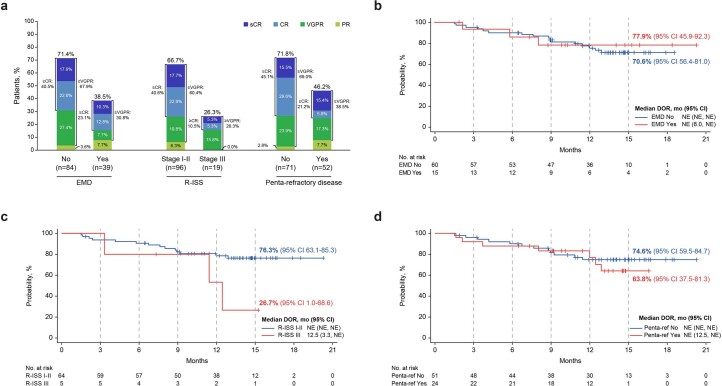
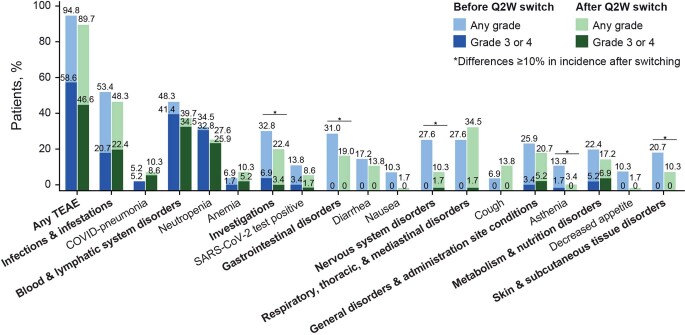
Elranatamab is a humanized B-cell maturation antigen (BCMA)-CD3 bispecific antibody. In the ongoing phase 2 MagnetisMM-3 trial, patients with relapsed or refractory multiple myeloma received subcutaneous elranatamab once weekly after two step-up priming doses. After six cycles, persistent responders switched to biweekly dosing. Results from cohort A, which enrolled patients without prior BCMA-directed therapy (n = 123) are reported. The primary endpoint of confirmed objective response rate (ORR) by blinded independent central review was met with an ORR of 61.0% (75/123); 35.0% ≥complete response. Fifty responders switched to biweekly dosing, and 40 (80.0%) improved or maintained their response for ≥6 months. With a median follow-up of 14.7 months, median duration of response, progression-free survival and overall survival (secondary endpoints) have not been reached. Fifteen-month rates were 71.5%, 50.9% and 56.7%, respectively. Common adverse events (any grade; grade 3-4) included infections (69.9%, 39.8%), cytokine release syndrome (57.7%, 0%), anemia (48.8%, 37.4%), and neutropenia (48.8%, 48.8%). With biweekly dosing, grade 3-4 adverse events decreased from 58.6% to 46.6%. Elranatamab induced deep and durable responses with a manageable safety profile. Switching to biweekly dosing may improve long-term safety without compromising efficacy. ClinicalTrials.gov identifier: NCT04649359 .
Overview
CoChat Summary
TL;DR
Elranatamab monotherapy in the phase 2 MagnetisMM-3 cohort A produced a 61.0% confirmed objective response rate in 123 patients with relapsed or refractory multiple myeloma who had no prior BCMA-directed therapy. Responses were often deep and durable, with 35.0% achieving ≥CR, 60.5% of those ≥CR being MRD-negative, and safety being manageable though infections, CRS, and cytopenias were common.
Key findings
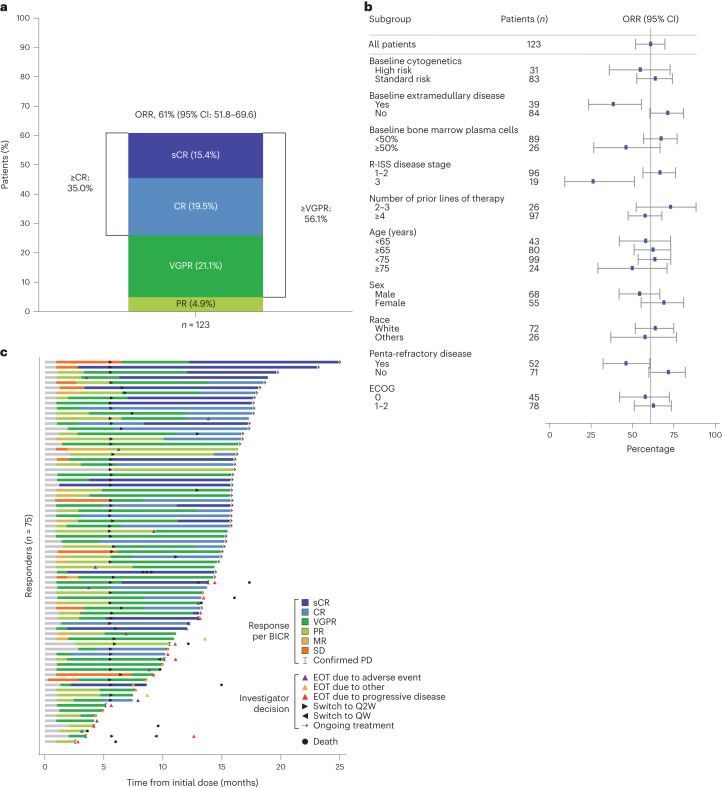
- In 123 treated patients, the confirmed objective response rate by blinded independent central review was 61.0% (75/123; 95% CI 51.8–69.6).
- Deep responses were frequent: 35.0% achieved ≥CR, 56.1% achieved VGPR or better, and among patients with ≥CR and evaluable MRD (n = 29), 89.7% were MRD-negative, corresponding to 60.5% of all patients with ≥CR.
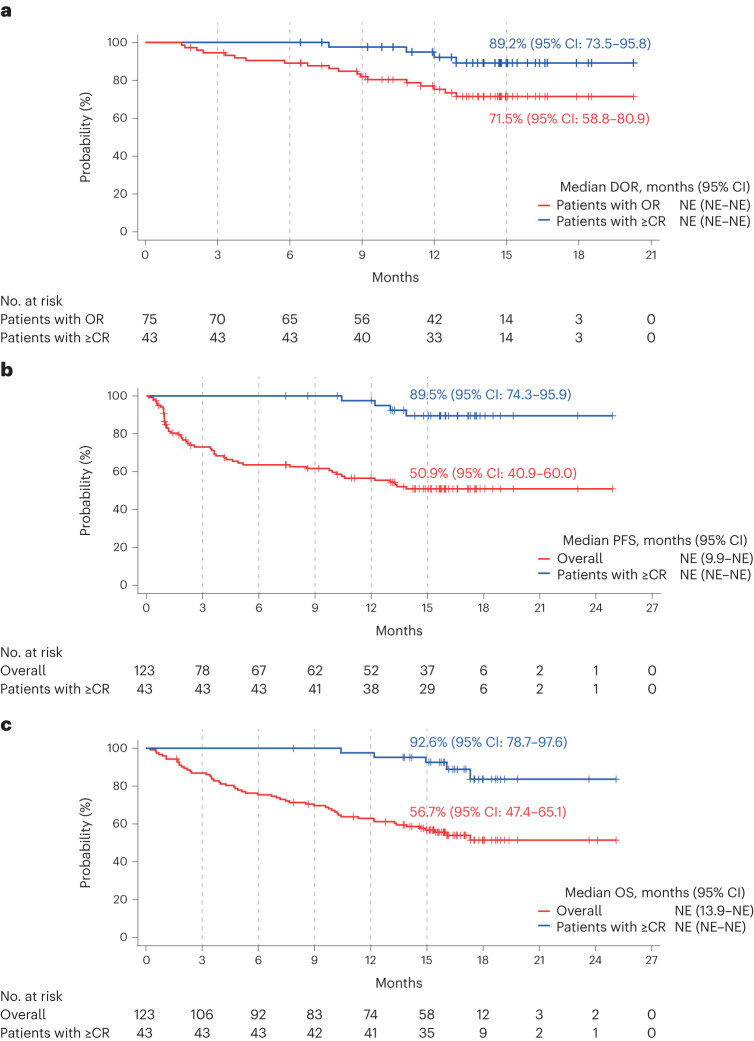
- With median follow-up of 14.7 months, median duration of response, progression-free survival, and overall survival were not reached; 15-month estimates were 71.5% for maintaining response, 50.9% for PFS, and 56.7% for OS.
- Among 50 responders who switched to biweekly dosing at least 6 months before data cutoff, 80.0% maintained or improved response ≥6 months after the switch, and 40.0% deepened response, including 38.0% who improved to ≥CR.
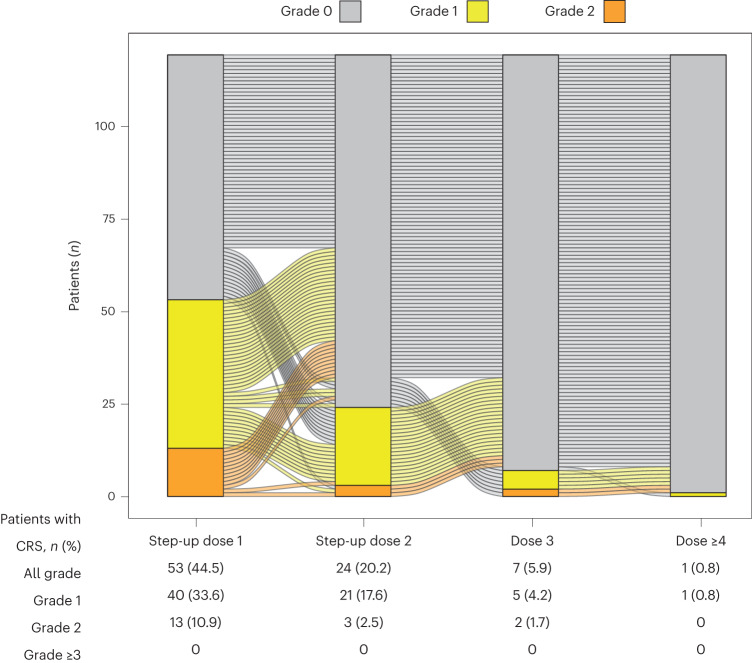
- Safety: all 123 patients had treatment-emergent AEs; 70.7% had grade 3 or 4 events. Common AEs included infections (69.9%; 39.8% grade 3–4), CRS (57.7%; 0% grade 3–4), anemia (48.8%; 37.4% grade 3–4), and neutropenia (48.8%; 48.8% grade 3–4).
Methods
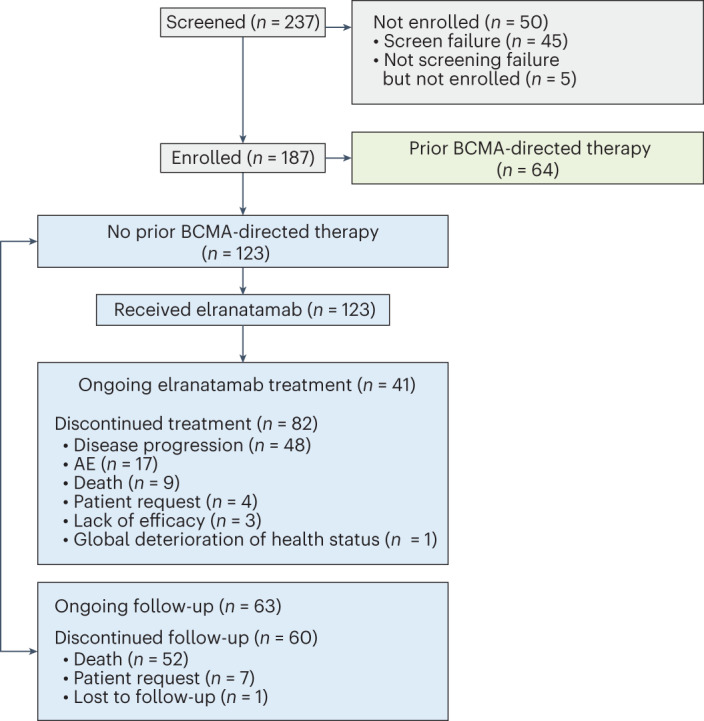
- Ongoing multicenter, open-label, single-arm phase 2 MagnetisMM-3 study of elranatamab monotherapy in relapsed or refractory multiple myeloma; this report covers cohort A (no prior BCMA-directed therapy), with 123 enrolled and treated patients across 47 sites in 10 countries.
- Eligible patients were adults with measurable disease, ECOG ≤2, adequate organ function, and disease refractory to at least one proteasome inhibitor, one immunomodulatory drug, and one anti-CD38 antibody; treatment was subcutaneous elranatamab 76 mg weekly after 12 mg and 32 mg step-up doses, with responders switching to biweekly dosing after 6 cycles if PR or better persisted for at least 2 months.
- Primary endpoint was confirmed ORR by BICR; secondary endpoints included CR rate, MRD negativity, TTR, DOR, PFS, OS, safety, pharmacokinetics, and immunogenicity; analyses were descriptive with Kaplan–Meier methods for time-to-event outcomes.
Limitations
- The paper states the main limitations are the single-arm design, lack of direct comparison with other treatments, small sample sizes in some subgroups, and the need for longer follow-up to confirm DOR, PFS, and OS benefits.
- Evident from the text: results for biweekly dosing are not from a randomized QW comparator, so the authors note the safety change after switching cannot be cleanly interpreted.
- Evident from the text: the cohort reported here excludes patients with prior BCMA-directed therapy, so the findings do not address that population.
Model-written summary. Check it against the paper before relying on it.
Integrity signals
Registry
Cites
Statistics
Figures
Verification
Claims the paper makes
13 Valid · 1 Not valid · 10 Not checked · 88 Own results and interpretations
The cited sources support only part of this claim — read each source’s verdict below.
In the paper
“Elranatamab is a humanized B-cell maturation antigen (BCMA)-CD3 bispecific antibody.”
- Also stated in: § Main · plain
“Elranatamab (PF-06863135) is a humanized bispecific antibody that targets both BCMA (on myeloma cells) and CD3 (on T cells)3.”
§ Elranatamab in relapsed or refractory multiple myeloma: phase 2 MagnetisMM-3 trial results > Abstract
What the sources say
- Partly supportedcites [3] Shah, N., Chari, A., Scott, E., Mezzi, K. & Usmani, S. Z. B-cell maturation antigen (BCMA) in multiple myeloma: rationale for targeting and current therapeutic approaches. Leukemia 34, 985–1005 (2020). 32055000 PMC7214244 sourceExperimental — accuracy not yet measured
The Bispecific antibody constructs section describes PF-06863135 (PF-3135) as a humanized antibody with anti-BCMA and anti-CD3 arms. Our copy does not name elranatamab or identify it as PF-06863135, so it does not establish that the description applies to elranatamab. (LLM, conf=0.78)
plain- Asserted: passes — The authors put it forward as true.
- Checkable: passes — It can be checked against evidence.
- Load-bearing: passes — The paper’s conclusions depend on it.
- Based: passes — The paper gives a reason why it holds.
- Also stated in: § Main · plain
Every source the paper cites for this claim was checked and supports it.
In the paper
“outcomes for patients with disease progression after these agents remain poor with a median progression-free survival (PFS) of 4.6 months and median overall survival (OS) of 12.4 months with a standard of care therapy, highlighting an unmet medical need in the relapsed or refractory multiple myeloma population1.”
§ Elranatamab in relapsed or refractory multiple myeloma: phase 2 MagnetisMM-3 trial results > Main
What the sources say
- Supportedcites [1] Mateos, M. V. et al. LocoMMotion: a prospective, non-interventional, multinational study of real-life current standards of care in patients with relapsed and/or refractory multiple myeloma. Leukemia 36, 1371–1376 (2022). 35332278 PMC9061296 source
The Introduction identifies the study population as patients with relapsed or refractory multiple myeloma previously treated with a proteasome inhibitor, an immunomodulatory drug, and an anti-CD38 antibody. The Results (Efficacy) report median progression-free survival of 4.6 months and median overall survival of 12.4 months with real-life standard-of-care therapy; the Discussion describes these outcomes as poor. (LLM, conf=0.94)
plain- Asserted: passes — The authors put it forward as true.
- Checkable: passes — It can be checked against evidence.
- Load-bearing: passes — The paper’s conclusions depend on it.
- Based: passes — The paper gives a reason why it holds.
- Supported
The cited sources support only part of this claim — read each source’s verdict below.
In the paper
“Similarly, patients with advanced disease stage (R-ISS stage III) have consistently shown poorer outcomes irrespective of the therapy received4–6,19–22.”
§ Elranatamab in relapsed or refractory multiple myeloma: phase 2 MagnetisMM-3 trial results > Discussion
What the sources say
- Partly supportedcites [4] Moreau, P. et al. Teclistamab in relapsed or refractory multiple myeloma. N. Engl. J. Med. 387, 495–505 (2022). 35661166 PMC10587778 sourceExperimental — accuracy not yet measured
The Results (Efficacy; page not provided) report lower response rates among patients with stage III disease receiving teclistamab. However, the Results (Patients) identify the staging measure as the International Staging System, not R-ISS, and the Discussion notes that this small subgroup had wide confidence intervals. This single-treatment finding does not establish consistently poorer outcomes irrespective of therapy. (LLM, conf=0.88)
- Could not verifycites [5] Munshi, N. C. et al. Idecabtagene vicleucel in relapsed and refractory multiple myeloma. N. Engl. J. Med. 384, 705–716 (2021). 33626253 sourceExperimental — accuracy not yet measured
The Efficacy section and subgroup figure include R-ISS stage III patients, but the available text does not establish that they had poorer outcomes than patients at other stages. The paper reports outcomes after ide-cel, not a consistent pattern irrespective of therapy; searches for stage-specific outcomes and therapy-independent prognosis found no supporting passage. Page numbers were not available in our copy. (LLM, conf=0.74)
- Not checked — no full text of the sourcecites [6] Berdeja, J. G. et al. Ciltacabtagene autoleucel, a B-cell maturation antigen-directed chimeric antigen receptor T-cell therapy in patients with relapsed or refractory multiple myeloma (CARTITUDE-1): a phase 1b/2 open-label study. Lancet 398, 314–324 (2021). 34175021 source
- Not checked — no full text of the sourcecites [19] Lonial, S. et al. Belantamab mafodotin for relapsed or refractory multiple myeloma (DREAMM-2): a two-arm, randomised, open-label, phase 2 study. Lancet Oncol. 21, 207–221 (2020). 31859245 source
- Could not verifycites [20] Blade, J. et al. Extramedullary disease in multiple myeloma: a systematic literature review. Blood Cancer J. 12, 45 (2022). 35314675 PMC8938478 sourceExperimental — accuracy not yet measured
The Results > Incidence section mentions revised stage III only as a reason to suspect extramedullary disease and consider PET/CT. Results > Treatment outcomes discusses poorer outcomes for patients with extramedullary disease, but does not compare outcomes by R-ISS stage or establish that stage III patients fare worse regardless of therapy. Searches for “R-ISS,” “stage III,” and therapy-independent outcomes found no supporting passage. (LLM, conf=0.76)
- Supportedcites [21] Palumbo, A. et al. Revised international staging system for multiple myeloma: a report from International Myeloma Working Group. J. Clin. Oncol. 33, 2863–2869 (2015). 26240224 PMC4846284 source
The Results (Combined ISS, CA and LDH; page not provided) show that R-ISS stage III had the poorest overall and progression-free survival. The subgroup analysis reports that R-ISS remained prognostic among patients who did and did not receive ASCT, proteasome inhibitors, or IMIDs; the Discussion describes its impact on overall survival as independent of therapy. (LLM, conf=0.92)
- Could not verifycites [22] Gill, S. K. et al. I-OPen: inferior outcomes of penta-refractory compared to penta-exposed multiple myeloma patients. Blood Cancer J. 12, 138 (2022). 36151090 PMC9508328 sourceExperimental — accuracy not yet measured
The To the Editor section reports poorer outcomes for quad- or penta-refractory patients than for exposed patients, but it does not establish outcomes by R-ISS stage or across therapies. Searches for “R-ISS,” “stage III,” and staging-related survival findings found no passage addressing the claim about R-ISS stage III. (LLM, conf=0.74)
boostedstates an association- Asserted: passes — The authors put it forward as true.
- Checkable: passes — It can be checked against evidence.
- Load-bearing: unclear — It is unclear whether the paper’s conclusions depend on it.
- Based: passes — The paper gives a reason why it holds.
- Partly supported
The cited sources support only part of this claim — read each source’s verdict below.
In the paper
“In comparison to other BCMA-targeted T-cell-redirecting therapies, the rate of hematologic AEs with elranatamab was similar or lower after a similar follow-up4–6.”
§ Elranatamab in relapsed or refractory multiple myeloma: phase 2 MagnetisMM-3 trial results > Discussion
What the sources say
- Partly supportedcites [4] Moreau, P. et al. Teclistamab in relapsed or refractory multiple myeloma. N. Engl. J. Med. 387, 495–505 (2022). 35661166 PMC10587778 sourceExperimental — accuracy not yet measured
The Results > Safety passage reports hematologic adverse-event rates for teclistamab, and Results > Efficacy gives a median follow-up of 14.1 months. These provide comparator data, but this paper does not report elranatamab rates or establish that they were similar or lower after a similar follow-up. Page numbers are unavailable in our copy. (LLM, conf=0.84)
- Partly supportedcites [5] Munshi, N. C. et al. Idecabtagene vicleucel in relapsed and refractory multiple myeloma. N. Engl. J. Med. 384, 705–716 (2021). 33626253 sourceExperimental — accuracy not yet measured
The Safety section and Table 2 report hematologic adverse-event rates for idecabtagene vicleucel, providing data for one therapy in the comparison. This paper does not report elranatamab outcomes or establish that its rates were similar or lower after a similar follow-up. (LLM, conf=0.86)
- Not checked — no full text of the sourcecites [6] Berdeja, J. G. et al. Ciltacabtagene autoleucel, a B-cell maturation antigen-directed chimeric antigen receptor T-cell therapy in patients with relapsed or refractory multiple myeloma (CARTITUDE-1): a phase 1b/2 open-label study. Lancet 398, 314–324 (2021). 34175021 source
plain- Asserted: passes — The authors put it forward as true.
- Checkable: passes — It can be checked against evidence.
- Load-bearing: unclear — It is unclear whether the paper’s conclusions depend on it.
- Based: passes — The paper gives a reason why it holds.
- Partly supported
The cited sources support only part of this claim — read each source’s verdict below.
In the paper
“BCMA-targeted T-cell-redirecting therapies have been linked to a heightened susceptibility to infectious complications due to their mechanism of action30–33.”
§ Elranatamab in relapsed or refractory multiple myeloma: phase 2 MagnetisMM-3 trial results > Discussion
What the sources say
- Partly supportedcites [30] Sim, B. Z. et al. Infectious complications of bispecific antibody therapy in patients with multiple myeloma. Blood Cancer J. 13, 34 (2023). 36894539 PMC9998258 sourceExperimental — accuracy not yet measured
The Discussion reports substantial infection rates in trials of T-cell/BCMA-targeting bispecific antibodies, supporting the link to infectious complications. It does not establish that their mechanism of action causes heightened susceptibility; the authors also note that infection rates in their heavily treated cohort were comparable to those with other therapies. No page number is available in our copy. (LLM, conf=0.84)
- Partly supportedcites [31] Mazahreh, F. et al. Risk of infections associated with the use of bispecific antibodies in multiple myeloma: a pooled analysis. Blood Adv. 7, 3069–3074 (2023). 36857755 PMC10331406 sourceExperimental — accuracy not yet measured
The Results report more severe infections with BCMA-targeting than non-BCMA bispecific antibodies, and the Discussion describes treatment-related immune changes that increase infection risk. However, the Discussion says infections may be related to the underlying myeloma, prior therapies, and/or the antibodies’ mechanism of action; it does not establish that the mechanism is the cause. Page numbers were not supplied in our copy. (LLM, conf=0.84)
- Partly supportedcites [32] Kambhampati, S. et al. Infectious complications in patients with relapsed refractory multiple myeloma after BCMA CAR T-cell therapy. Blood Adv. 6, 2045–2054 (2022). 34543400 PMC9006279 sourceExperimental — accuracy not yet measured
The Abstract reports infections in 29 of 55 patients after BCMA CAR-T, and the Introduction lists infections among CAR-T-associated toxicities. But the study concerns BCMA CAR-T specifically, not all BCMA-targeted T-cell-redirecting therapies, and it does not establish that their mechanism of action caused heightened infection susceptibility. Page numbers were not available in our copy. (LLM, conf=0.86)
- Partly supportedcites [33] Mikkilineni, L. et al. Infectious complications of CAR T-cell therapy across novel antigen targets in the first 30 days. Blood Adv. 5, 5312–5322 (2021). 34619768 PMC9153053 sourceExperimental — accuracy not yet measured
Our copy supports only the association half, and weakly: the Abstract reports BCMA CAR T cells had the second-highest infection proportion (9/24; 37.5%) after CD22 (43.4%), with grade 4 infections rare (2.5%) and the overall 32.7% rate 'comparable to published studies of infection with CD19 CAR' (Discussion). The Discussion explicitly attributes the myeloma/BCMA infections to host factors — 'MM leads to longterm immunocompromise in patients' — and to prior lines of therapy, not to the BCMA-targeting mechanism; the Introduction even states 'the impact and interplay of CAR T-cell induced CRS on host mechanisms to fight foreign pathogens is unknown,' and no passage discusses on-target/off-tumor plasma-cell or immunoglobulin depletion (searched: hypogammaglobulinemia, immunoglobulin, plasma cell aplasia, on-target off-tumor, B-cell aplasia). The mechanistic causal attribution ('due to their mechanism of action') and the extension beyond CAR T to all 'T-cell-redirecting therapies' (e.g., bispecific antibodies) are not supported by this source, which studied only five phase 1 CAR T trials (BCMA cohort NCT02215967, MM adults). (LLM, conf=0.75)
plainstates an association- Asserted: passes — The authors put it forward as true.
- Checkable: passes — It can be checked against evidence.
- Load-bearing: unclear — It is unclear whether the paper’s conclusions depend on it.
- Based: passes — The paper gives a reason why it holds.
- Partly supported
53 more claims · 2 with their cited sources checked
Create a free account to see all 112 claims and to verify the 2 references still open.
- Probably not a substantial claim. 21
- It may state two separate claims as one. 42
Claims other papers make about this one
Each is checked against this paper’s own text: does it say what the citing paper says it does?
The source backs part of the claim, not all of it — or backs it for a different population, condition or comparison.
In the citing paper
“The objective response rate of Elranatamab reach to 61.0% (75 out of 123 patients); with 35.0%≥CR, and 80.0% of patients maintained their response for at least 6 months [211].”
From Multiple myeloma: signaling pathways and targeted therapy (2024) · cites this paper as [211]
Experimental — accuracy not yet measured
Citations
Cites
Lee, D. W., Santomasso, B. D., Locke, F. L., Ghobadi, A., Turtle, C. J., Brudno, J. N., Maus, M. V., Park, J. H., Mead, E., Pavletic, S., et al. (2019) · Biology of Blood and Marrow Transplantation · doi:10.1016/j.bbmt.2018.12.758 · Cited by 3,675
Kumar, S., Paiva, B., Anderson, K. C., Durie, B., Landgren, O., Moreau, P., Munshi, N., Lonial, S., Bladé, J., Mateos, M.-V., et al. (2016) · The Lancet Oncology · doi:10.1016/s1470-2045(16)30206-6 · Cited by 3,061
A Phase 2 Study of Bortezomib in Relapsed, Refractory Myeloma
Richardson, P. G., Barlogie, B., Berenson, J., Singhal, S., Jagannath, S., Irwin, D., Rajkumar, S. V., Srkalovic, G., Alsina, M., Alexanian, R., et al. (2003) · New England Journal of Medicine · doi:10.1056/nejmoa030288 · Cited by 2,632
Idecabtagene Vicleucel in Relapsed and Refractory Multiple Myeloma.
Munshi, N. C., Anderson, L. D., Shah, N., Madduri, D., Berdeja, J., Lonial, S., Raje, N., Lin, Y., Siegel, D., Oriol, A., et al. (2021) · New England Journal of Medicine · doi:10.1056/nejmoa2024850 · Cited by 2,560
Self-citationPalumbo, A., Avet-Loiseau, H., Oliva, S., Lokhorst, H. M., Goldschmidt, H., Rosinol, L., Richardson, P., Caltagirone, S., Lahuerta, J. J., Facon, T., et al. (2015) · Journal of Clinical Oncology · doi:10.1200/jco.2015.61.2267 · Cited by 2,210
Berdeja, J. G., Madduri, D., Usmani, S. Z., Jakubowiak, A., Agha, M., Cohen, A. D., Stewart, A. K., Hari, P., Htut, M., Lesokhin, A., et al. (2021) · The Lancet · doi:10.1016/s0140-6736(21)00933-8 · Cited by 1,756
Self-citationTeclistamab in Relapsed or Refractory Multiple Myeloma
Moreau, P., Garfall, A. L., van de Donk, N. W. C. J., Nahi, H., San-Miguel, J. F., Oriol, A., Nooka, A. K., Martin, T., Rosinol, L., Chari, A., et al. (2022) · New England Journal of Medicine · doi:10.1056/nejmoa2203478 · Cited by 1,269 · cited 2×
“Includes t(4;14), t(14;16) and del(17p) chromosomal abnormalities.”
BackgroundSelf-citationLonial, S., Lee, H. C., Badros, A., Trudel, S., Nooka, A. K., Chari, A., Abdallah, A.-O., Callander, N., Lendvai, N., Sborov, D., et al. (2020) · The Lancet Oncology · doi:10.1016/s1470-2045(19)30788-0 · Cited by 812
Self-citationTalquetamab, a T-Cell–Redirecting GPRC5D Bispecific Antibody for Multiple Myeloma
Chari, A., Minnema, M. C., Berdeja, J. G., Oriol, A., van de Donk, N. W. C. J., Rodríguez-Otero, P., Askari, E., Mateos, M.-V., Costa, L. J., Caers, J., et al. (2022) · New England Journal of Medicine · doi:10.1056/nejmoa2204591 · Cited by 744
Self-citationMartin, T., Usmani, S. Z., Berdeja, J. G., Agha, M., Cohen, A. D., Hari, P., Avigan, D., Deol, A., Htut, M., Lesokhin, A., et al. (2023) · Journal of Clinical Oncology · doi:10.1200/jco.22.00842 · Cited by 663
Self-citation
Cited by
Items 401–500 of 650
Estimation of benefit to bispecific antibodies in US patients with lymphoma and multiple myeloma
Rios‐Olais, F. A., & Hilal, T. (2025) · Blood Advances · doi:10.1182/bloodadvances.2025016176 · Cited by 1
Llinares, J., Toribio-Castelló, S., García, L. F., Iglesias, T., Heredero, A., Rebollo, P., Ricote, I., & Mateos, M. (2025) · Clinical Lymphoma Myeloma & Leukemia · doi:10.1016/j.clml.2025.07.008 · Cited by 2
Rees, M. J., & Quach, H. (2025) · Cancers · doi:10.3390/cancers17152579 · Cited by 1
“The greatest concern of TCEs in elderly patients stems from the high incidence of ≥ grade 3 infections, which exceeds 40% with BCMA-directed TCEs [56,64,65].”
InfluentialSelf-citationT cell redirecting therapy for relapsed multiple myeloma
Tan, M. S. Y., Hellou, T., & Dingli, D. (2025) · Discover Oncology · doi:10.1007/s12672-025-03432-z · Cited by 3
Kawamura, K., Tsukada, N., Kimura, S., Kako, S., Minakata, D., Enami, T., Hamano, Y., Yamamoto, G., Ota, S., Obara, N., et al. (2025) · Hematological Oncology · doi:10.1002/hon.70129 · Cited by 1
Wang, X., Cui, Y., Wang, Y., & Fang, B. (2025) · Annals of Hematology · doi:10.1007/s00277-025-06563-z · Cited by 3
“Similarly, the MagnetisMM-3 study [ 65 ] reported an ORR of 61.0% and CR rate of 35% with elranatamab, with 15-month PFS and OS rates of 50.9% and 56.7%, respectively.”
InfluentialCAR-T cell therapy for multiple myeloma: An update on the current state and future potential
Pophali, P. A., Rosenblatt, J. M., & Avigan, D. (2025) · Best Practice & Research Clinical Haematology · doi:10.1016/j.beha.2025.101659 · Cited by 2
Jenner, M. W., Boyd, K. D., Choudhuri, S., Parrish, C., Garg, M. K., Stern, S., & the British Society of Haematology and UK Myeloma Society (2025) · British Journal of Haematology · doi:10.1111/bjh.70149 · Cited by 2
Soekojo, C. Y., Chung, S. J., Tsai, M.-T., Chen, W.-M., Huang, J., Kim, J. S., Lee, D., Min, C., Suzuki, K., Swaminathan, S., et al. (2025) · Clinical Lymphoma Myeloma & Leukemia · doi:10.1016/j.clml.2025.10.005 · Cited by 1
The importance and utility of post market drug safety monitoring in cancer therapy
Levêque, D. (2025) · Expert Opinion on Drug Safety · doi:10.1080/14740338.2025.2575099 · Cited by 4
“For elranatamab (CD3xBCMA), the ≥ grade 3 infections rate was 39.8% with 6.5% of deaths in the phase 2 [92].”
InfluentialIdentification and transformation of novel targets for immunotherapy in multiple myeloma
Wang, Y., Wang, Y., Ma, J., Jing, H., Liu, L., Qiu, L., & Hao, M. (2025) · Chinese Medical Journal · doi:10.1097/cm9.0000000000003869 · Cited by 2
“[191] In addition, patients with fewer prior lines of therapy or less refractory disease had better response rates than those with multiple prior therapies or advanced disease in both the MajesTEC-1 and MagnetisMM-1 studies, indicating improved benefits for both teclistamab and elranatamab when…”
Guadagno, L., Schütt, J., Brinkert, K., Schenk, T., & Brioli, A. (2025) · Leukemia & lymphoma/Leukemia and lymphoma · doi:10.1080/10428194.2025.2575438 · Cited by 3
Kitamura, A., Fujita, S., Isono, Y., Nakano, T., Morino, T., Tozuka, K., Kudo, H., Abe, R., Kohashi, S., & Toyama, T. (2025) · Journal of Infection and Chemotherapy · doi:10.1016/j.jiac.2025.102851 · Cited by 2
mRNA cancer vaccine: A novel and potential immunotherapy for multiple myeloma
Feng, Y., Du, Y., Zhang, C.-T., Xie, F., & Yan, J. (2025) · Biochimica et Biophysica Acta (BBA) - Reviews on Cancer · doi:10.1016/j.bbcan.2025.189493 · Cited by 2
Sontayananon, N., Yuti, P., Sawasdee, N., Okada, S., Junking, M., Sujjitjoon, J., & Yenchitsomanus, P. (2025) · Biomedicine & Pharmacotherapy · doi:10.1016/j.biopha.2025.118820 · Cited by 1
Bae, Y. J., Leblebjian, H., Redd, R. A., Yeung, V., & Hossain, S. (2025) · Journal of Oncology Pharmacy Practice · doi:10.1177/10781552251397884 · Cited by 1
Suzuki, T., & Iida, S. (2025) · Journal of the Japan Society of the Reticuloendothelial System · doi:10.3960/jslrt.25038 · Cited by 2
“17,18 Consequently, long-term monitoring is required.”
InfluentialSelf-citationHow to approach the high-risk myeloma from induction through relapse?
Weisel, K. C., Schaefers, C., & Leypoldt, L. B. (2025) · Hematology · doi:10.1182/hematology.2025000762 · Cited by 1
Pasvolsky, O., Marcoux, C., Milton, D. R., Haider, A. A., Tanner, M. R., Bashir, Q., Srour, S. A., Saini, N. Y., Smallbone, P., Lin, P., et al. (2025) · Bone Marrow Transplantation · doi:10.1038/s41409-025-02771-3 · Cited by 3
Piron, B., Moreau, P., & Touzeau, C. (2026) · Biologics · doi:10.2147/btt.s539066 · Cited by 8
Self-citationUemura, M., Marumo, A., Obata, A., Matsumoto, N., Li, M., Kaito, Y., Nagata, Y., Wakita, S., Tamura, H., & Yamaguchi, H. (2026) · Internal Medicine · doi:10.2169/internalmedicine.6418-25 · Cited by 1
“However, its efficacy in cases of CNS involvement remains unclear, with only some case reports available (10, 15).”
Qureshi, Z. A., Jamil, A. R., Samsuddoha, K., & Kahlon, N. (2026) · American Journal of Clinical Oncology · doi:10.1097/coc.0000000000001295 · Cited by 1
Dean, E. A. (2026) · Frontiers in Immunology · doi:10.3389/fimmu.2026.1705345 · Cited by 7
“For patients switched to biweekly dosing (n= 50), the incidence of neutropenia (any grade, Grade ≥ 3) decreased from 34.5% to 27.6%, 32.8% to 25.9%; while infections of any grade decreased from 53.4% to 48.3% but Grade ≥ 3 increased slightly from 20.7% to 22.4% (13).”
InfluentialOliver, G. R., Barnett, C. C., Hightower, K. E., Kang, Y., & Baljević, M. (2026) · Cancers · doi:10.3390/cancers18030411 · Cited by 2
Gullà, A., Dhodapkar, M. V., Einsele, H., Raab, M. S., Solimando, A. G., Botta, C., Turi, M., Sester, L. S., Portuguese, A. J., Steinbrunn, T., et al. (2026) · Blood Cancer Discovery · doi:10.1158/2643-3230.bcd-25-0107 · Cited by 2
Self-citationRodríguez-Fraga, P., Cascos, E., Cuartas, A., et al. (2026) · European Heart Journal - Case Reports · doi:10.1093/ehjcr/ytag102 · Cited by 1
First-line Therapy in Newly Diagnosed Multiple Myeloma
Miller, K. C., & Usmani, S. Z. (2026) · Blood Cancer Discovery · doi:10.1158/2643-3230.bcd-25-0384 · Cited by 2
Ardah, M. T., Abdulsahib, W. K., Jasim, I. K., Malathi, H., Patro, P. S., Anand, D. A., Mukherjee, G., Sinha, A., & Aminqulov, S. (2026) · Discover Oncology · doi:10.1007/s12672-026-04735-5 · Cited by 2
“• Elranatamab This agent has shown promise in RRMM, achieving an ORR of 61.0% and CR in 27.6% of patients in the MagnetisMM-3 trial, with CRS being the most common side effect[9, 63].”
InfluentialAntibiotic-associated dysbiosis and bispecific antibody outcomes in multiple myeloma
Corona, M., García-Vicente, R., Sáez, A., Ancos-Pintado, R., Rodríguez-García, A., Arroyo, A., Sánchez, A. B., Chari, A., Martin, T., Wolf, J. L., et al. (2026) · Journal for ImmunoTherapy of Cancer · doi:10.1136/jitc-2025-014224 · Cited by 3
“25 26 29 While promising, preliminary findings indicate a potential for elevated infection risk compared with conventional MM therapies.”
Self-citationOcio, E. M., Parmar, G., Mateos, M., Leleu, X. P., Buck, T. T., Tan, C. R., Curry, N. C., Ling, S., Quach, H., Mai, E. K., et al. (2026) · Expert Opinion on Drug Delivery · doi:10.1080/17425247.2026.2659263 · Cited by 2
Self-citationBanerjee, R., Mohan, M., Shah, B., et al. (2026) · Future Oncology · doi:10.1080/14796694.2026.2662504 · Cited by 1
Shibata, K., Tsutsumi, K., Murakami, H., Mizuta, E., 池田, 峻., Kogue, Y., Kano, M., Sanda, K., Maehara, Y., Akamine, H., et al. (2026) · Leukemia · doi:10.1038/s41375-026-02969-4 · Cited by 1
“The CD62L + CD45RA + naive/SCM CD8 T cells and other CD8 T cells (non-naïve/SCM) were puri fi ed from PBMCs of healthy donors ( n = 3) and independently co-cultured with MM.1S cells in the presence of BCMAxCD3 TCE elranatamab [3, 6 – 9] and 100IU/ ml of IL-2 (Fig.”
Saxena, A., Yorker, M., Zorko, N. A., Narayan, V., Siddiqui, B. A., Saraiya, B., Tester, W. J., Mille, P. J., Shaver, A. L., Nikita, N., et al. (2026) · The Oncologist · doi:10.1093/oncolo/oyag172 · Cited by 1
Cardiac amyloidosis: Current and pipeline of therapies for the nuclear imager
Davis, B., & Masri, A. (2026) · Journal of Nuclear Cardiology · doi:10.1016/j.nuclcard.2026.102727 · Cited by 1
Li, J., Abulaiti, A., Li, D., Zhao, Y., Wahafu, P., Maimaitiming, M., Qiu, S., Zhang, Y., An, Y., Wang, W., et al. (2026) · Frontiers in Immunology · doi:10.3389/fimmu.2026.1811816 · Cited by 1
Dermatologic Adverse Events Associated with T-Cell Engager Therapy
Patil, M. K., Wang, B., LeBoeuf, N. R., Nambudiri, V. E., & Shi, C. R. (2026) · American Journal of Clinical Dermatology · doi:10.1007/s40257-026-01041-2 · Cited by 2
“[52] In a single-center retrospective cohort of 64 patients treated with elranatamab, 7/64 (11”
Vega, G., Morillo, D., Riedhammer, C., Smits, F., Bag, A., Julian, K., Gomis, N. T., Gaisan, C. M. M., Bermúdez, M. A., Shah, M. R., et al. (2026) · HemaSphere · doi:10.1002/hem3.70396 · Cited by 2
Five trials reshaping multiple myeloma
Talbot, A., Bobin, A., Touzeau, C., Arnulf, B., Manier, S., Perrot, A., & Leleu, X. P. (2026) · Med · doi:10.1016/j.medj.2026.101177 · Cited by 1
Self-citationHuang, S., Luo, J., Yu, G., et al. (2026) · Leukemia Research · doi:10.1016/j.leukres.2026.108267 · Cited by 1
Benda, M., Reimann, P., Willenbacher, W., Gunsilius, E., Weisel, K. C., Straßl, I., Krauth, M. T., Knop, S., Winder, T., & Steiner, N. (2026) · Annals of Hematology · doi:10.1007/s00277-026-07140-8 · Cited by 5
“All patients were heavily pretreated [31–37].”
Lim, K. J. C., Kumar, S. K., Parrondo, R. D., Chhabra, S., Tan, M. S. Y., Dooley, K. E., Corraes, A. D. M. S., Gertz, M. A., Hwa, Y. L., Stephens, H. J. B., et al. (2026) · American Journal of Hematology · doi:10.1002/ajh.70425 · Cited by 1
“High disease burden was defined as bone marrow plasma-cytosis of ≥ 50% [9, 10] or involved serum free light chain values of ≥ 100 mg/dL.”
Hej-Ali, S., Banwell, K., Mohamed, H., Cervi, A., Dass, A., Gupta, R., Hamm, C. M., Kanjeekal, S. M., Strange, I. S., Szalay, M., et al. (2026) · Cancers · doi:10.3390/cancers18132083 · Cited by 1
Real-world outcomes with BCMA- and GPRC5D-targeting bispecific antibodies in plasma cell leukemia
Gaballa, M., Julian, K. L., Afrough, A., Hansen, D. K., Goel, U., Corraes, A. D. M. S., Dima, D., Rana, M. S., Hosoya, H., Mikkilineni, L., et al. (2026) · Blood Advances · doi:10.1182/bloodadvances.2026020826 · Cited by 2
“5 In addition, case series have suggested that plas-mapheresis can reduce circulating BCMA levels and potentially enhance sensitivity to BCMA-directed therapies.”
Systemic light chain and transthyretin amyloidosis—treatment advancements and future directions
Bianchi, G., Sanchorawala, V., Wechalekar, A. D., Grogan, M. A., Cuddy, S. A. M., & Merlini, G. (2026) · The Lancet · doi:10.1016/s0140-6736(26)00302-8 · Cited by 2
Richter, J. R., Lee, H. C., Jagannath, S., Zonder, J. A., Hoffman, J. E., Zhou, Z., García-Horton, V., Fillbrunn, M. K., Wang, H., Mattera, M., et al. (2026) · Leukemia & lymphoma/Leukemia and lymphoma · doi:10.1080/10428194.2026.2688561 · Cited by 1
“Endpoints less sensitive to censoring, such as time on treatment (12.2 months for linvoseltamab [data on file] vs. 5.6 months for elranatamab [10]) and OS (discussed above), showed meaningful improvements with linvoseltamab.”
InfluentialMondal, S., Becker, N. J., Huo, Y., Zhang, P., Johnson, T. S., Landgren, O., Coffey, D. G., Walker, B. A., & Liu, E. (2026) · Biomedicines · doi:10.3390/biomedicines14071556 · Cited by 3
“Elranatamab is the second FDA-approved BCMA-directed CD3 bispecific antibody that demonstrated an overall response rate of approximately 58% in patients with RRMM, with 82% of responders maintaining their response at 9 months in clinical trials [81,82].”
Manzato, E., Puppi, M., Barbato, S., Vitale, D. A., Sacchetti, I., Masci, S., Restuccia, R., Ghibellini, S., Pantani, L., Mancuso, K., et al. (2026) · Blood Advances · doi:10.1182/bloodadvances.2026020762 · Cited by 1
Leitner, T., Oelschläger, L., Mosquera, F. H., Schaefers, C., Leypoldt, L. B., Weisel, K. C., von Bubnoff, N., Rückert, M., Kimmich, C., Ahmed, H., et al. (2026) · Leukemia & lymphoma/Leukemia and lymphoma · doi:10.1080/10428194.2026.2699285 · Cited by 1
Functional Characteristics Derived from the Structural Design of Bispecific Antibodies
Han, J., Lim, S. Y., Kim, Y., Jeong, D.-H., Kim, H., Ha, S., Park, J., Won, Y., & Lim, K. S. (2026) · Pharmaceuticals · doi:10.3390/ph19081245 · Cited by 1
“Another example with a similar 1 + 1 structure is elranatamab [89,90].”
Influentialvan den Broecke, L., der Vreken, A. V., Watté, F., Meeus, F., Veirman, K. D., Breckpot, K., Bruyne, E. D., & Menu, E. (2026) · Signal Transduction and Targeted Therapy · doi:10.1038/s41392-026-02923-x · Cited by 5
He, X., Chen, G., Zhan, Z., & Li, Z. (2026) · Hematology · doi:10.1080/16078454.2026.2730041 · Cited by 1
Phase 1 Study of Anito-cel, a d -Domain BCMA CAR T Cell for Refractory or Recurrent Myeloma
Frigault, M. J., Dhakal, B., Jakubowiak, A. J., Raje, N. S., Banerjee, K., Mu, C. J., Hart, K. C., Shachar, S., Andrews, L. P., Cheung, L. S., et al. (2026) · New England Journal of Medicine · doi:10.1056/nejmoa2603527 · Cited by 1
Self-citationMadan, S., Costello, C. L., Lipe, B. C., et al. (2026) · The Lancet Haematology · doi:10.1016/s2352-3026(26)00228-0 · Cited by 1
Self-citationMori, Y., Takizawa, J., Katsuoka, Y., Takezako, N., Nagafuji, K., Handa, H., Kuroda, J., Sunami, K., Kamimura, T., Ogawa, R., et al. (2024) · Cancer Science · doi:10.1111/cas.16158
Kapur, R., McCarron, J., Rajeeve, S., & Mohyuddin, G. R. (2024) · Leukemia & lymphoma/Leukemia and lymphoma · doi:10.1080/10428194.2024.2411625 · Cited by 1
“…pretreated population. these include idecabtagene vicleucel (ide-cel; N = 140) 2 , cilta-cabtagene autoleucel (cilta-cel; N = 113) 3 , elranatamab [7] ( N = 123), talquetamab [8] ( N = 232) and teclistamab [9] ( N = 165). this current practice of running very large single-arm studies may take…”
Is There a Role for Daratumumab Retreatment in Patients with Relapsed/Refractory Multiple Myeloma?
Galušić, D., Krečak, I., Blaslov, V., Anđela, K. O., Valković, T., & Bašić‐Kinda, S. (2025) · Biomedicines · doi:10.3390/biomedicines13010207 · Cited by 1
Rosenberg, A. S., Maverakis, E., Costello, C. L., Brem, E. A., Wieduwilt, M. J., Luxardi, G., Kaesberg, P. R., Abedi, K., Herbert, S. M., & Tuscano, J. M. (2025) · Blood Neoplasia · doi:10.1016/j.bneo.2025.100067 · Cited by 2
Tan, C. J., Kacerek, D., Kampirapawong, N., Godara, A., & Chaiyakunapruk, N. (2025) · Cancer Medicine · doi:10.1002/cam4.70585 · Cited by 7
“The combination of selinexor with carfilzomib and elranat-amab also reported relatively long PFS and OS [31, 49].”
InfluentialMin, C., Zhong, X., Cui, Y. J., Zhang, H., & Wang, Q. (2025) · Frontiers in Pharmacology · doi:10.3389/fphar.2025.1515555 · Cited by 1
Quezada-Ramírez, S. I., Tarin-Arzaga, L. C., León, A. G., & Gómez‐Almaguer, D. (2025) · Expert Review of Hematology · doi:10.1080/17474086.2025.2490764 · Cited by 2
“However, BsAbs have lower ORR, PFS, and higher rates of infectious complications [98–100] (see Table 2).”
McLoughlin, A., & Rees, M. J. (2025) · Lymphatics · doi:10.3390/lymphatics3020014 · Cited by 1
Incorporating Immunotherapeutic Strategies in the Management of Relapsed/Refractory Multiple Myeloma
Kumar, S. K. (2023) · Journal of the National Comprehensive Cancer Network · doi:10.6004/jnccn.2023.5037 · Cited by 1
Multi-Omic Profiling Reveals Epigenetic Drivers of Immunotherapy Resistance in Multiple MyelomaPreprint
Haertle, L., Buenache, N., González, F. J. V., Díaz, I. E., del Campo, P. L., Rosa-Rosa, J. M., Fernández, R. A. A., Muñoz, M. N. L., Sánchez‐Pina, J. M., García-Ortiz, A., et al. (2025) · medRxiv · doi:10.1101/2025.04.15.25325788 · Cited by 2
“Additional modalities include antibody-drug conjugates (ADC) like belantamab mafodotin (BLMF) 3 , as well as BCMAxCD3 bispecific T-cell engagers (TCEs) such as teclistamab, elranatamab, linvoseltamab, AMG420, AMG701, or TNB-383B 4 .”
Self-citationvan Nimwegen, K. J., Oguz, M., Morano, R., et al. (2026) · Oncology and Therapy · doi:10.1007/s40487-026-00420-3 · Cited by 1
The Age of Immune-therapy in Multiple Myeloma with a Collective Goal for a Cure
Larios, J. M., & Terebelo, H. R. (2023) · Medical Research Archives · doi:10.18103/mra.v11i10.4607
The Gaining Momentum of BCMA-Directed Therapies for Relapsed/Refractory Multiple Myeloma
Schmidt, A. (2023) · healthbook TIMES Oncology Hematology · doi:10.36000/hbt.oh.2023.17.123 · Cited by 2
Inmunoterapia en el mieloma múltiple
Cantó, P. A., Herraiz, M. A., & de la Rubia, J. (2024) · Medicina Clínica · doi:10.1016/j.medcli.2023.11.019 · Cited by 1
Usmani, S. Z. (2024) · The Hematologist · doi:10.1182/hem.v21.1.202415
Guo, L., Sun, X., Kang, K., Zhao, A., & Wu, Y. (2024) · International Journal of Surgery · doi:10.1097/js9.0000000000001602
Anticuerpos biespecíficos en mieloma múltiple: un nuevo paradigma
Abello, V., Omaña, P., & Daza, J. A. (2023) · Medicina · doi:10.56050/01205498.2308
Rodríguez‐Otero, P., & Martin, T. J. (2024) · Hemato · doi:10.3390/hemato5020014 · Cited by 1
Self-citationHigh-Risk Myeloma: Definitions and Treatments
Sharma, R., Sanchez-Hernandez, K. A., & Lancman, G. (2024) · Canadian Hematology Today · doi:10.58931/cht.2024.3254
Bal, S., Magnusson, T., Ravi, G., et al. (2024) · Research Square · doi:10.21203/rs.3.rs-5015478/v1
CDA-AMC (2024) · Canadian Journal of Health Technologies · doi:10.51731/cjht.2024.1023
Kikuchi, T., Kunisada, K., Sato, K., Tsukada, N., & Ishida, T. (2024) · Cureus · doi:10.7759/cureus.74902 · Cited by 2
Neves, M. L., Gerivaz, R., Esteves, G. V., Bergantim, R., Ferreira, G., Coelho, H. G. B., Afonso, C., Duarte, D., Neves, A., Silva, H. M., et al. (2024) · Frontiers in Hematology · doi:10.3389/frhem.2024.1480120
“These novel options, such as bispeci fi c antibodies (32 – 34), are associated with achieving deep responses, but are indicated only when disease progression or unacceptable toxicity occur.”
Expert Opinion on Multiple Myeloma Treatment in Brazil in the Bispecific Antibody Era
Hungria, V., Neto, J. V. P., Garibaldi, P. M. M., Jansen, A. M., Filho, R. J. P. D. M., Pericole, F. V., Sanku, G., & Maiolino, Â. (2024) · Clinical Lymphoma Myeloma & Leukemia · doi:10.1016/j.clml.2024.12.001 · Cited by 1
Anticuerpos biespecíficos en el mieloma múltiple en recaída
de Larrea, C. F., Rosiñol, L., Rodríguez-Lobato, L. G., & Tovar, N. (2026) · Revista Sangre · doi:10.24875/sangre.m24000027
Immuntherapien des multiplen Myeloms
Kadel, S., & Rasche, L. (2025) · Die Onkologie · doi:10.1007/s00761-024-01658-0
Zhang, H., Zhang, L., Lian, J.-X., Kou, Z.-F., Zhu, Y., Ma, L., Zheng, J., & Zhao, C.-J. (2025) · Frontiers in Medicine · doi:10.3389/fmed.2025.1456732
Myélome multiple : ce que le rhumatologue doit savoir en 2025
Belkhir, R. (2025) · Revue du Rhumatisme · doi:10.1016/j.rhum.2025.01.022
Richter, J. R., Dhodapkar, M. V., Li, M., Awad, M., Hampp, C., Knorr, K., Kroog, G. S., Roccia, T., & Bumma, N. (2025) · American Journal of Hematology · doi:10.1002/ajh.27618 · Cited by 2
“To illustrate the “behaviors” of the two metrics above, we collected longitudinal results reported by three BsAbs trials: the MajesTEC-1 study (teclistamab) [3, 12, 13], the MagnetisMM-3 study (elranatamab) [4, 14, 15], and the LINKER-MM1 study (linvoseltamab) [5, 16, 17].”
Treatment of Refractory Monoclonal Immunoglobulin Deposition Disease With BCMA Bispecific Antibody
Bhutani, D., Chakraborty, R., Wats, K., et al. (2025) · European Journal Of Haematology · doi:10.1111/ejh.14393
“The recent development of B cell maturation antigen (BCMA) based therapies has revolutionized therapy of patients with MM and two BCMA-targeted bispecific antibodies (teclis-tamab and elranatamab) [10, 11] are currently FDA-approved for therapy of relapsed/refractory MM.”
Optimizing Transitions of Care in Multiple Myeloma Immunotherapy: Nurse Roles
Bellerive, C., Steinbach, M., McNeill, A., Faiman, B., & Richards, T. (2025) · Clinical journal of oncology nursing · doi:10.1188/25.cjon.e7e16 · Cited by 4
Addressing practical challenges with bispecific antibody therapy in multiple myeloma
Vasudevan, S., Lal, B. M., Vojjala, N., & Mohan, M. (2025) · Expert Opinion on Biological Therapy · doi:10.1080/14712598.2025.2495984 · Cited by 1
“Across early clinical trials of bsAbs, we have seen an ORR ranging from 61% to 72%, with nearly a third of patients not responding to therapy [2,8,9].”
InfluentialBal, S., Magnusson, T., Ravi, G., Giri, S., Godby, K. N., Dhakal, B., Callander, N. S., Silbermann, R. W., Dholaria, B., Reddy, V., et al. (2025) · Blood Cancer Journal · doi:10.1038/s41408-025-01252-6 · Cited by 2
Hämatologische Neoplasien und solide Tumore
Ludwig, W.-D., Ganser, A., & Maschmeyer, G. (2025) · Springer eBooks · doi:10.1007/978-3-662-70594-0_5
Liang, T. B., Yan, L., Li, J., Gai, D., & Xu, C. (2025) · Expert Opinion on Drug Safety · doi:10.1080/14740338.2025.2499218 · Cited by 2
Čemažar, L., Škerget, M., & Skopec, B. (2025) · Medicina · doi:10.3390/medicina61050859 · Cited by 1
Neue Möglichkeiten für die Rezidivtherapie
Hentrich, M., Mertens, L., & Högner, M. (2025) · InFo Hämatologie + Onkologie · doi:10.1007/s15004-025-0954-5
Lau, B., Gabrie, S., Hobbs, P., Newman, J., Elzein, A., Sargant, N., Cowley, A., Nikolova, A. N., Flanagan, C., Burt, L., et al. (2025) · eJHaem · doi:10.1002/jha2.70074 · Cited by 2
“Although incidence of IESs of Grade 3 and above was rare in early-phase BiTE trials, CRS overall was common, seen in up to 80% of patients [4–6].”
InfluentialMasson, M. (2025) · Revue du Rhumatisme · doi:10.1016/j.rhum.2025.06.015
Real-world data provide a CARbon copy for ide-cel
Schmidt, T. M. (2025) · Blood · doi:10.1182/blood.2025029274
Are transplant strategies in relapsed myeloma relevant in the cellular treatment era?
Fotiou, D., & Kastritis, E. (2025) · Cancer · doi:10.1002/cncr.70005
Khan, M. A., Khan, F. H., Irfan, S., Mahmoudjafari, Z., Abdallah, A.-O. A., McGuirk, J. P., & Ahmed, N. (2025) · Cureus · doi:10.7759/cureus.87950
“This differs from almost similar incidence of ICANS reported by Lesokhin et [11,12].”
InfluentialBashy, B., Shah, D., Steensma, D. P., Oekelen, O. V., Chakraborty, R., & Mohyuddin, G. R. (2025) · British Journal of Haematology · doi:10.1111/bjh.70042
Gupta‐Werner, N., Goble, J. A., & Slavcev, M. (2025) · ClinicoEconomics and Outcomes Research · doi:10.2147/ceor.s550970
Ciltacabtagén autoleucel y talquetamab en mieloma múltiple
Vaca, E. R. (2025) · Panorama actual del medicamento · doi:10.63105/49.484.3
Metadata
- Authors
- Lesokhin, A. M., Tomasson, M. H., Arnulf, B., Bahlis, N. J., Miles Prince, H., Niesvizky, R., Rodrίguez-Otero, P., Martinez-Lopez, J., Koehne, G., Touzeau, C., Jethava, Y., Quach, H., Depaus, J., Yokoyama, H., Gabayan, A. E., Stevens, D. A., Nooka, A. K., Manier, S., Raje, N., Iida, S., Raab, M.-S., Searle, E., Leip, E., Sullivan, S. T., Conte, U., Elmeliegy, M., Czibere, A., Viqueira, A., & Mohty, M.
- Affiliations
- Memorial Sloan Kettering Cancer Center (US)
- University of Iowa (US)
- Hôpital Saint-Louis (FR)
- University of Calgary (CA)
- Centre Hospitalier Universitaire de Nantes (FR)
- The University of Melbourne (AU)
- UCLouvain (BE)
- Tohoku University (JP)
- Beverly Hills Cancer Center (US)
- Norton Healthcare (US)
- Winship Cancer Institute (US)
- Inserm (FR)
- Harvard University (US)
- Nagoya City University (JP)
- University Hospital Heidelberg (DE)
- University of Manchester (GB)
- Pfizer (United States) (US)
- Pfizer (Spain) (ES)
- Corresponding author
- Lesokhin, Alexander M.
- ORCID
- Lesokhin, Alexander M.
- Tomasson, Michael H.
- Arnulf, Bertrand
- Bahlis, Nizar J.
- Miles Prince, H.
- Martinez-Lopez, Joaquin
- Koehne, Guenther
- Touzeau, Cyrille
- Jethava, Yogesh
- Quach, Hang
- Yokoyama, Hisayuki
- Nooka, Ajay K.
- Manier, Salomon
- Raje, Noopur
- Iida, Shinsuke
- Raab, Marc-Steffen
- Searle, Emma
- Sullivan, Sharon T.
- Elmeliegy, Mohamed
- Mohty, Mohamad
- Venue
- Nature Medicine
- Published
- 2023-08-15
- Volume
- 29
- Issue
- 9
- Pages
- 2259-2267
- ISSN
- 1078-8956 (ISSN-L)
- 1546-170X
- PMC
- PMC10504075
- OpenAlex
- W4385839624
- Semantic Scholar
- a55507ebe804052e3b521e7acb8f3139db15bbe0
- Cited by
- 664
- References
- 38
- Citations by year
- 2026: 213 · 2025: 242 · 2024: 181 · 2023: 28
- FWCI
- 136.62
- Type
- journal article
- Language
- en
- Open access
- hybrid
- doi.org
- Licence
- cc-by
- creativecommons.org/licenses/by/4.0 (tdm)
- creativecommons.org/licenses/by/4.0 (vor)
- Locations
- Nature Medicine (publishedVersion, cc-by)
- PubMed Central (publishedVersion, cc-by)
- PubMed (publishedVersion)
- Research Explorer (The University of Manchester) (publishedVersion, other-oa)
- HAL (submittedVersion)
- Digital Access to Libraries (submittedVersion, other-oa)
- Minerva Access (University of Melbourne) (submittedVersion, cc-by)
- Scholarly Commons - Baptist Health South Florida (Baptist Health South Florida) (submittedVersion, cc-by)
- Funders
- Pfizer
- Topics
- Health Sciences › Medicine › Hematology › Multiple Myeloma Research and Treatments
- Life Sciences › Immunology and Microbiology › Immunology › Monoclonal and Polyclonal Antibodies Research
- Health Sciences › Medicine › Oncology › CAR-T cell therapy research
- Keywords
- elranatamab, relapsed/refractory multiple myeloma, BCMA-CD3 bispecific antibody, BCMA, subcutaneous dosing, biweekly dosing, objective response rate, progression-free survival, overall survival, cytokine release syndrome, adverse events
- MeSH terms
- Progression-Free Survival, Humans, Multiple Myeloma, Remission Induction, B-Cell Maturation Antigen
About these checks
Registry, retraction, Cites and statistics results are computed, not judged, with one exception: a printed reference that no index lists is read once by a model before it counts as a citation error. Claims are extracted by a model and kept only when their quote appears verbatim in the text; each cited source is then checked, with a model’s help, for whether it says what the claim relies on. Those verdicts can be wrong — read the claim’s quote and the cited source before relying on one.
The claim verdicts this report counts are experimental: their accuracy is not yet measured.
A language model drew the claims from the paper on 2026-10-10, under version 3 of the claim definition (model deepseek-v4.1-flash, prompt extract-v3).
A second model labelled each claim on 2026-10-10 (model jev-1.13-20260917, definition revision gold-guideline-v0.2).
Cited sources are checked with a language model’s help (gpt-6-sol and qwen3.8-omni-flash).
Statistics and arithmetic are recomputed, not judged.
Confidence bands are shown only for fields calibrated on our annotated test set. None is calibrated yet, so no band is shown.
What counts as a claim ›How we measure confidence ›How we check this ›
Are you an author, or do you see a problem with this page? Request a review
Data sources
Bibliographic data: Semantic Scholar, OpenAlex, Crossref.
Contains information from the Semantic Scholar Academic Graph Datasets, made available under the ODC Attribution License (ODC-BY 1.0).
Semantic Scholar’s data is described in: Kinney, R., et al. (2023). The Semantic Scholar Open Data Platform. arXiv:2301.10140.
