

The DOI matches its Crossref record; 470 of the 470 references it cites were found in a registry or an index; 15 of the 20 sources its claims cite were checked for support.
Health effects associated with exposure to secondhand smoke: a Burden of Proof study
Open accessAbstract
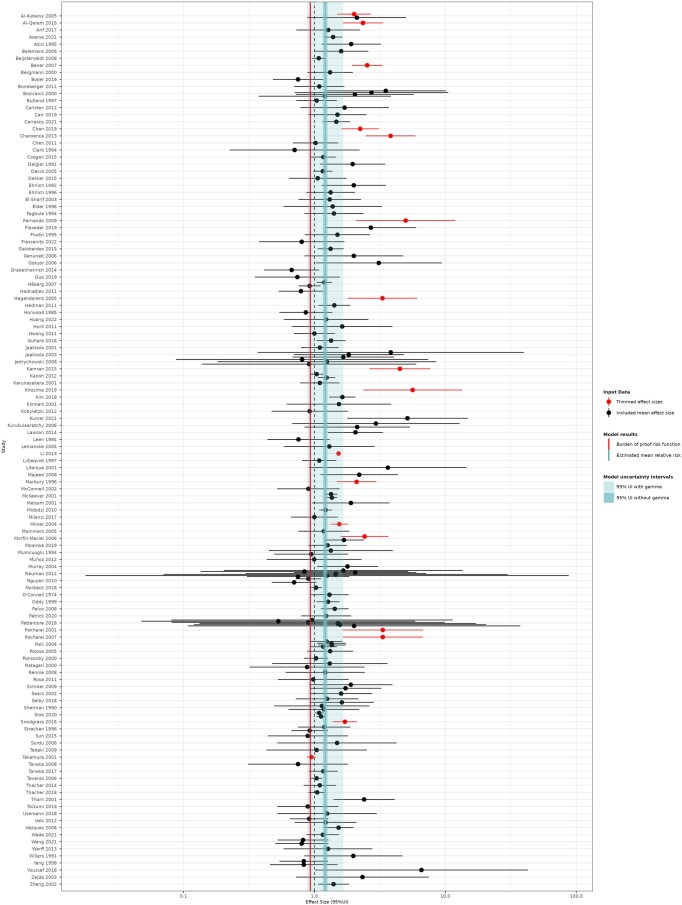
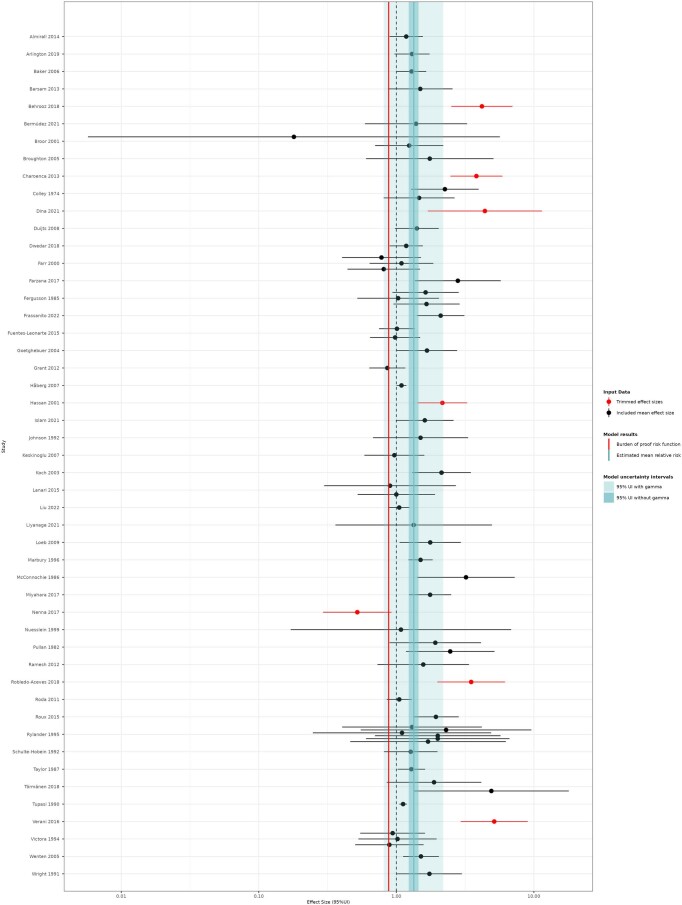
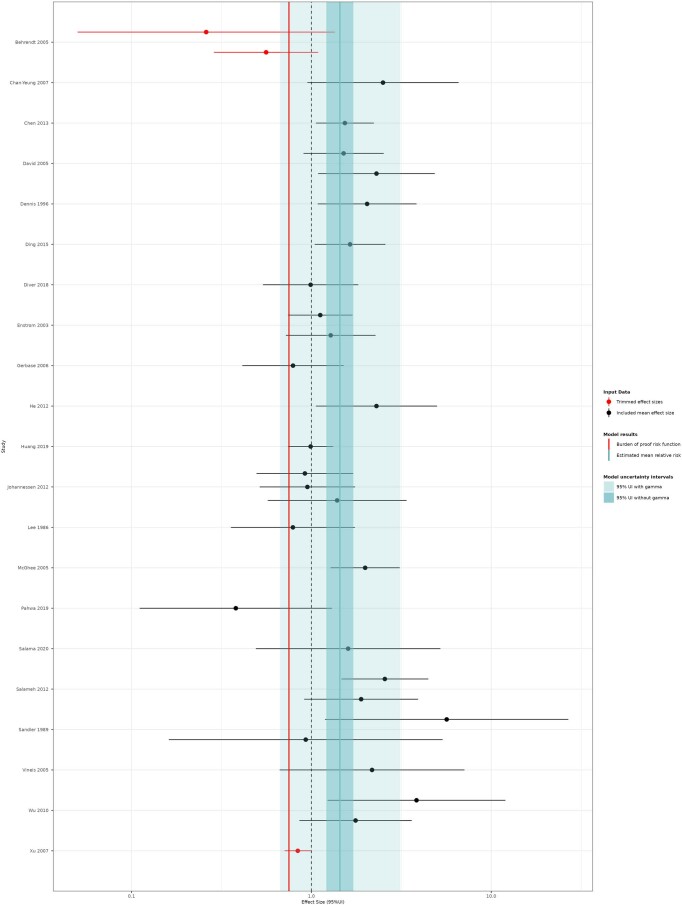
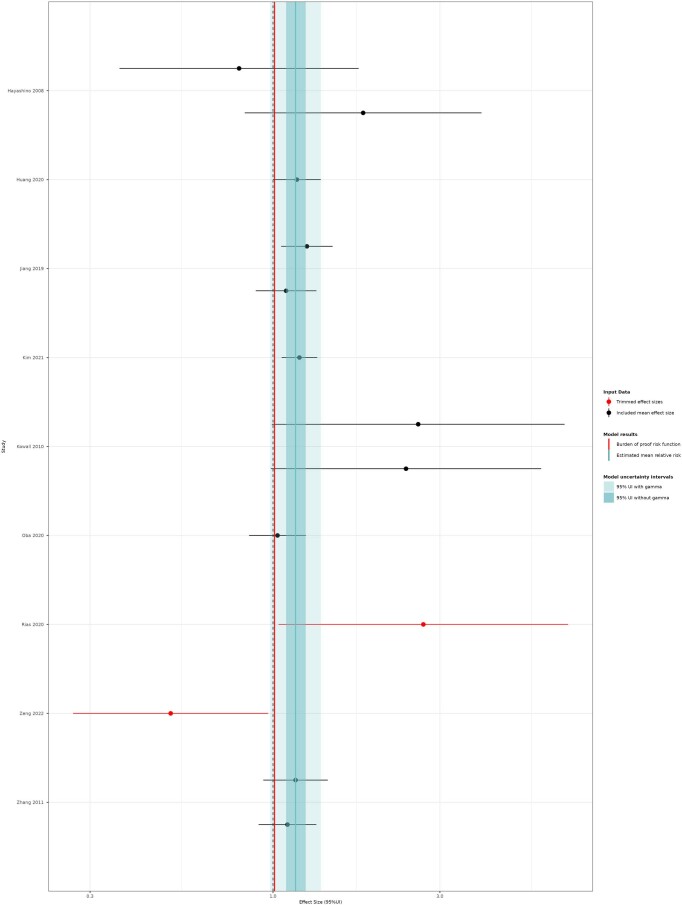
Despite a gradual decline in smoking rates over time, exposure to secondhand smoke (SHS) continues to cause harm to nonsmokers, who are disproportionately children and women living in low- and middle-income countries. We comprehensively reviewed the literature published by July 2022 concerning the adverse impacts of SHS exposure on nine health outcomes. Following, we quantified each exposure–response association accounting for various sources of uncertainty and evaluated the strength of the evidence supporting our analyses using the Burden of Proof Risk Function methodology. We found all nine health outcomes to be associated with SHS exposure. We conservatively estimated that SHS increases the risk of ischemic heart disease, stroke, type 2 diabetes and lung cancer by at least around 8%, 5%, 1% and 1%, respectively, with the evidence supporting these harmful associations rated as weak (two stars). The evidence supporting the harmful associations between SHS and otitis media, asthma, lower respiratory infections, breast cancer and chronic obstructive pulmonary disease was weaker (one star). Despite the weak underlying evidence for these associations, our results reinforce the harmful effects of SHS on health and the need to prioritize advancing efforts to reduce active and passive smoking through a combination of public health policies and education initiatives.
Overview
AI snapshot
Written from the paper’s full text.
TL;DR
This Burden of Proof meta-analysis synthesized evidence through July 2022 on secondhand smoke (SHS) exposure and nine health outcomes, finding statistically significant associations with all nine when not accounting for between-study heterogeneity. Under conservative BPRF estimates, SHS exposure was associated with at least around 8%, 5%, 1% and 1% higher risk of ischemic heart disease, stroke, type 2 diabetes and lung cancer, respectively, with these four rated two stars and the remaining five outcomes rated one star.
Key findings
- Across 410 included publications and 623 observations from over 178 locations, all nine outcomes showed statistically significant associations with SHS exposure before accounting for between-study heterogeneity.
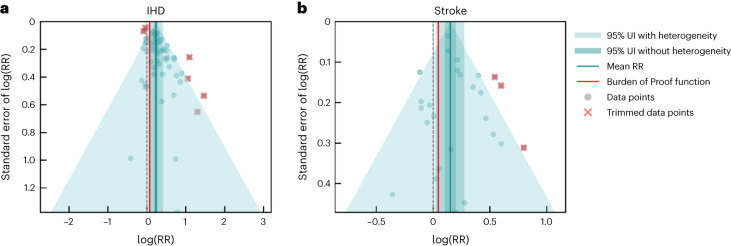
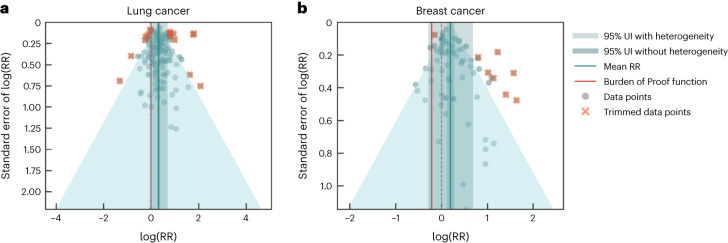
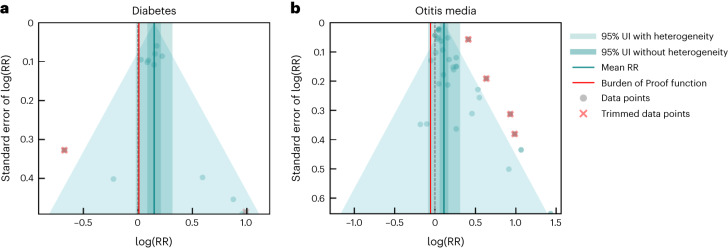
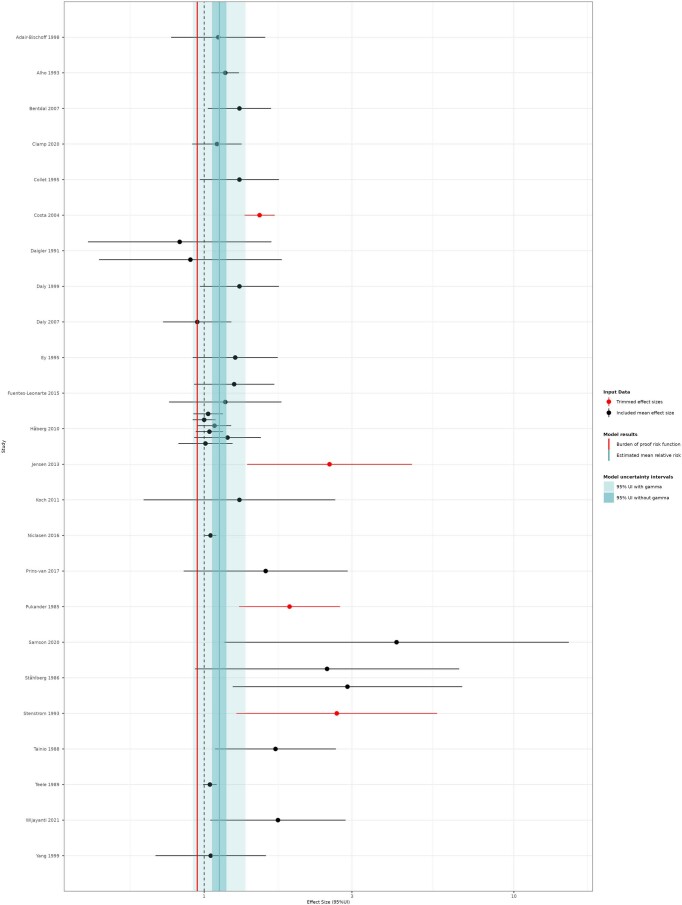
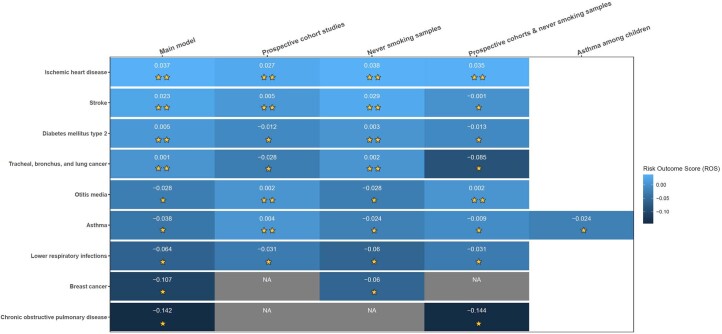
- Conservative BPRF estimates: ischemic heart disease RR 1.26 (1.05–1.52), BPRF 1.08, ROS 0.04, two stars, at least 8% higher risk; stroke RR 1.16 (1.03–1.32), BPRF 1.05, ROS 0.02, two stars, at least 5% higher risk; type 2 diabetes RR 1.16 (0.98–1.37), BPRF 1.01, ROS 0.005, two stars, at least 1% higher risk; lung cancer RR 1.37 (0.94–1.99), BPRF 1.00, ROS 0.001, two stars at the lower threshold, around 1% higher risk.
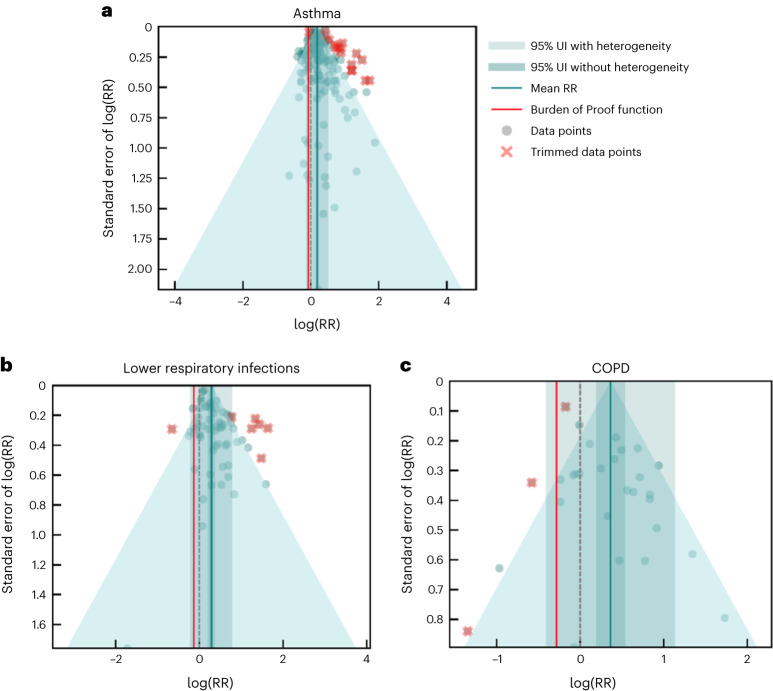
- The evidence for otitis media (BPRF 0.95, ROS −0.03), asthma (BPRF 0.93, ROS −0.04), lower respiratory infections (BPRF 0.88, ROS −0.06), breast cancer (BPRF 0.81, ROS −0.11) and COPD (BPRF 0.75, ROS −0.14) was weaker, each rated one star.
- No publication bias was detected in the primary models; publication bias was found for otitis media in one prospective-cohort sensitivity analysis.
Methods
- PRISMA systematic review in PubMed and Web of Science for studies published 1 January 1970 to 31 July 2022, plus citation searching; 7,109 unique records and 1,972 additional records were screened, yielding 410 publications. Included designs were mostly case–control (n = 235) and prospective cohort (n = 156), with smaller numbers of nested case–control, retrospective cohort, case–cohort and case-crossover studies.
- The Burden of Proof Risk Function (BPRF) framework used MR-BRT meta-regression to estimate pooled relative risks for dichotomous SHS exposure, adjust for selected bias covariates, quantify unexplained between-study heterogeneity (gamma), test publication bias with Egger’s regression, and derive BPRF, ROS and star ratings.
- Sensitivity analyses restricted models to prospective cohort studies, never-smoking samples, and both restrictions combined; asthma also had a children-only sensitivity analysis.
Limitations
- The paper states that SHS exposure was self-reported or proxy-reported, risking exposure misclassification; most surveys captured current rather than cumulative exposure, so formerly exposed individuals could be misclassified as unexposed; and dichotomous exposure may oversimplify intensity and frequency.
- The paper also states that input studies used varied exposure definitions and locations, public-setting exposure was not included, modeled RRs were not disaggregated by geography, sex or age group, and the nine outcomes do not capture the full disease burden of SHS.
- The text makes evident that several associations were sensitive to data restrictions: stroke was downgraded to one star when restricted to prospective cohorts of never smokers, lung cancer to one star in prospective cohorts, breast cancer showed no significant association in prospective cohorts without gamma, and COPD showed no significant association in prospective cohorts or never-smoking populations without gamma.
Model-written summary. Check it against the paper before relying on it.
Integrity signals
Registry
Cites
Statistics
Figures
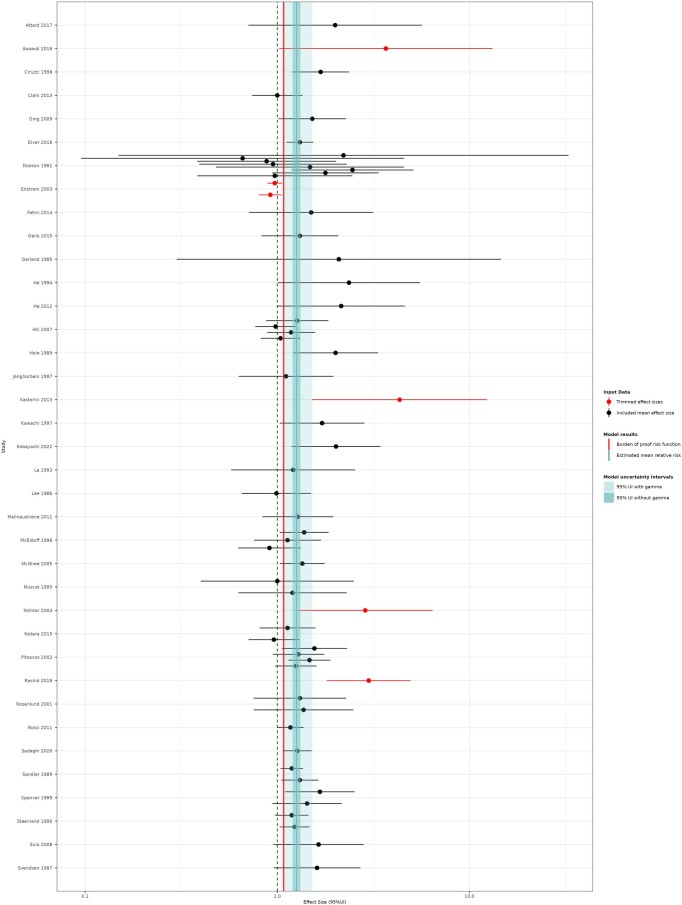
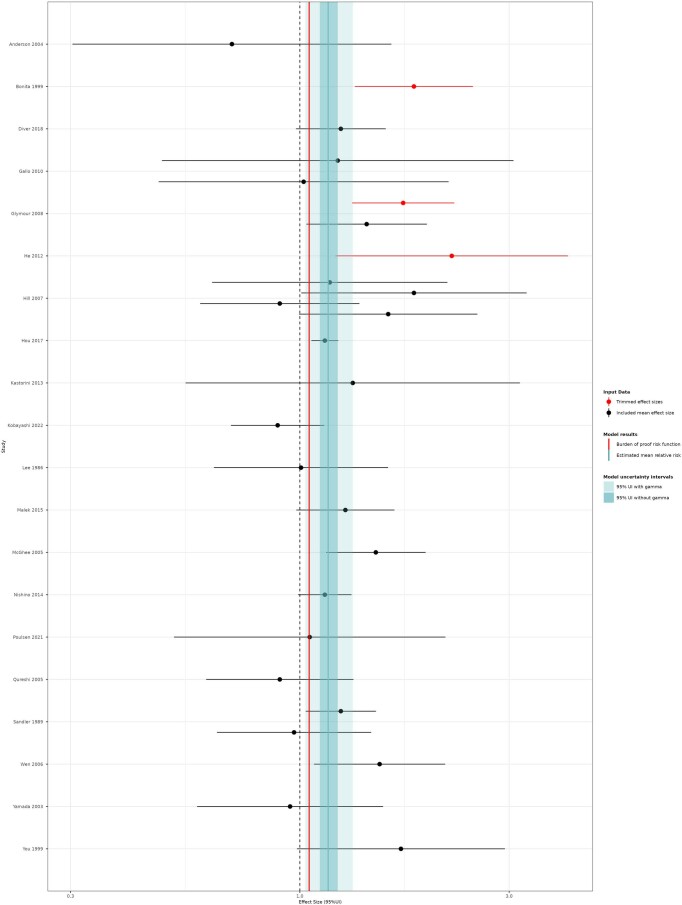
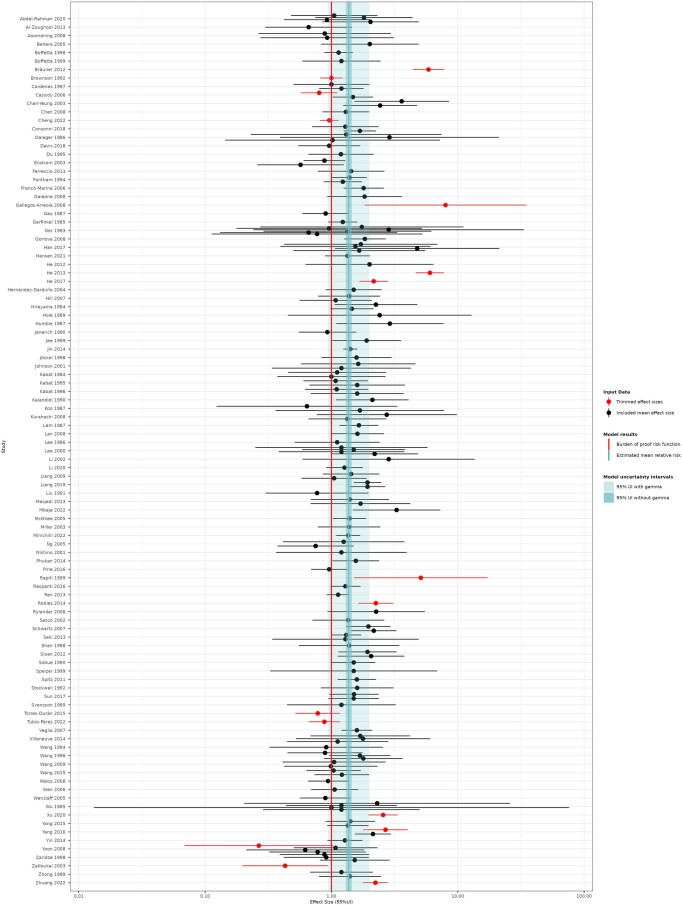
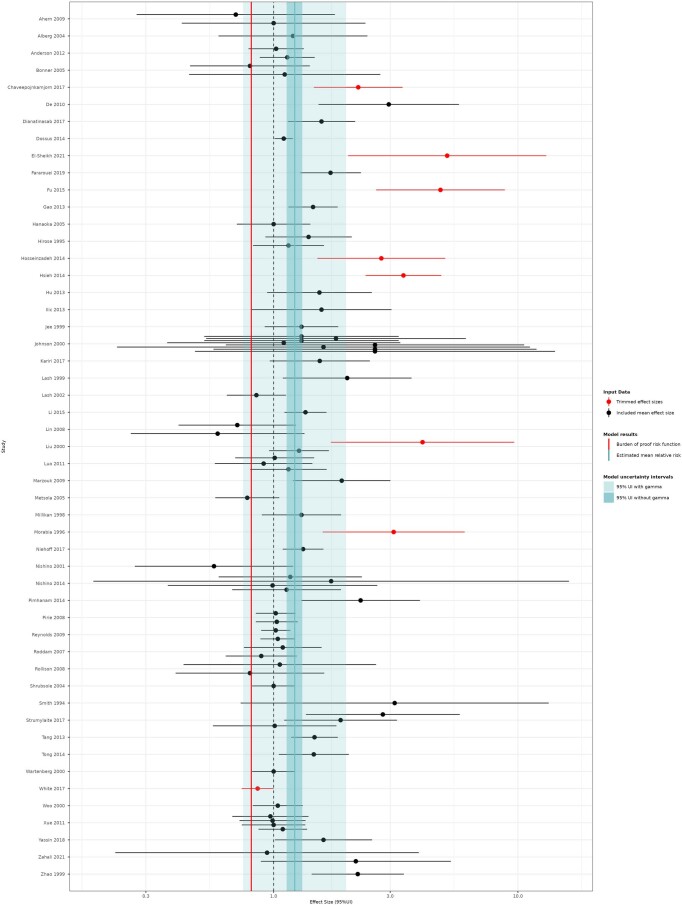
Verification
Claims the paper makes
53 Own result · 41 Own method · 9 Own interpretation · 5 No basis given · 3 Supported · 2 Supported so far · 2 Partly supported · 2 No full text of the sources · 1 Sources not found · accuracy not yet measured
The cited sources support only part of this claim — read each source’s verdict below.
In the paper
“Studies of the effects of smoke-free laws found that hospital admission and mortality rates for cardiovascular and respiratory conditions decreased after the implementation of smoking bans455–459.”
§ Health effects associated with exposure to secondhand smoke: a Burden of Proof study > Discussion
What the sources say
- Supportedcites [455] Stallings-Smith, S., Zeka, A., Goodman, P., Kabir, Z. & Clancy, L. Reductions in cardiovascular, cerebrovascular, and respiratory mortality following the National Irish Smoking Ban: interrupted time-series analysis. PLoS ONE 8, e62063 (2013). source
The Introduction reports that studies found post-ban reductions in cardiovascular mortality and in hospital admissions for cardiovascular and respiratory conditions. The Discussion reports this study’s reductions in ischemic heart disease and respiratory mortality, and cites post-ban reductions in cardiac and pulmonary admissions. The paper therefore supports the broad claim, though the admissions findings come from studies it discusses rather than its own analysis. (LLM, conf=0.92)
- Supportedcites [456] Akter, S. et al. Evaluation of population-level tobacco control interventions and health outcomes: a systematic review and meta-analysis. JAMA Netw. Open 6, e2322341 (2023). source
The Results (Meta-Analysis; page not provided) report reduced cardiovascular mortality following smoke-free legislation. The Discussion (page not provided) reports reductions in cardiovascular hospitalizations and in both mortality and hospitalizations for respiratory conditions. (LLM, conf=0.93)
- Partly supportedcites [457] Chu, M. et al. Effects of a smoke-free policy in Xi’an, China: impact on hospital admissions for acute ischemic heart disease and stroke. Front. Public Health 10, 898461 (2022). sourceExperimental — accuracy not yet measured
The Introduction reports reductions in cardiovascular mortality after some smoking bans, and the Results report reduced stroke admissions in Xi’an. But the paper’s findings are mixed for cardiovascular admissions, and its text does not report a reduction in respiratory admissions or mortality; respiratory outcomes appear only in cited reference titles. No page numbers are available in our copy. (LLM, conf=0.86)
- Partly supportedcites [458] Rando-Matos, Y. et al. Smokefree legislation effects on respiratory and sensory disorders: a systematic review and meta-analysis. PLoS ONE 12, e0181035 (2017). sourceExperimental — accuracy not yet measured
The Introduction (page not supplied) reports consistent reductions in cardiac events and hospitalizations after smoke-free legislation, while the Results report reduced respiratory admissions and respiratory mortality in some groups. The claim overstates the mortality evidence: the Introduction calls cardiovascular mortality findings conflicting, and the respiratory mortality reductions were limited to subgroups. (LLM, conf=0.90)
- Partly supportedcites [459] Gao, M. et al. The effect of smoke-free legislation on the mortality rate of acute myocardial infarction: a meta-analysis. BMC Public Health 19, 1269 (2019). sourceExperimental — accuracy not yet measured
The Conclusion (page unavailable) reports a decline in acute myocardial infarction mortality after smoke-free legislation, supporting the cardiovascular-mortality part of the claim. The paper does not report findings for hospital admissions or respiratory conditions; those outcomes appear in titles in its References (page unavailable). (LLM, conf=0.86)
plaindirect- Asserted: passes — The authors put it forward as true.
- Checkable: passes — It can be checked against evidence.
- Load-bearing: unclear — It is unclear whether the paper’s conclusions depend on it.
- Based: passes — The paper gives a reason why it holds.
- Supported
The cited sources support only part of this claim — read each source’s verdict below.
In the paper
“Moreover, private homes remain a major source of SHS exposure, particularly for women and children3,460”
§ Health effects associated with exposure to secondhand smoke: a Burden of Proof study > Discussion
What the sources say
- Partly supportedcites [3] Mbulo, L. et al. Secondhand smoke exposure at home among one billion children in 21 countries: findings from the Global Adult Tobacco Survey (GATS). Tob. Control 25, e95–e100 (2016). sourceExperimental — accuracy not yet measured
The Objective states that homes remain the major place where children may be exposed to secondhand smoke, and the Results document substantial exposure at home among children in 21 countries. The paper does not establish the corresponding claim for women. Section labels are available in our copy, but page numbers are not. (LLM, conf=0.88)
- Supportedcites [460] Huque, R. & Siddiqi, K. Smoke-free homes: the final frontier. Tob. Prev. Cessat. 7, 1–3 (2021). source
The “Level of SHS exposure at home” section states the claim directly and gives exposure estimates for women and children in their homes. (LLM, conf=0.95)
plaincorrelational- Asserted: passes — The authors put it forward as true.
- Checkable: passes — It can be checked against evidence.
- Load-bearing: unclear — It is unclear whether the paper’s conclusions depend on it.
- Based: passes — The paper gives a reason why it holds.
- Partly supported
The sources with a verdict support this claim; the rest weren’t checked yet, have no full text we could read, or their verdicts aren’t rated yet.
In the paper
“Previous studies have found different effect sizes for SHS exposure at home and at work442,443,462, a factor that was not investigated in our analysis.”
§ Health effects associated with exposure to secondhand smoke: a Burden of Proof study > Discussion
What the sources say
- Supportedcites [442] He, J. et al. Passive smoking and the risk of coronary heart disease—a meta-analysis of epidemiologic studies. N. Engl. J. Med. 340, 920–926 (1999). source
Table 4 reports separate effect-size estimates for exposure at home (1.17) and at work (1.11), supporting the part of the citing sentence attributed to this source. The paper says those estimates were not significantly different. The statement that the citing authors did not investigate this factor describes their own analysis, not this source. (LLM, conf=0.90)
- Not checked — no full text of the sourcecites [443] Lee, P. N., Forey, B. A., Hamling, J. S. & Thornton, A. J. Environmental tobacco smoke exposure and heart disease: a systematic review. World J. Meta-Anal. 5, 14–40 (2017). source
- Supportedcites [462] Du, Y. et al. Lung cancer occurrence attributable to passive smoking among never smokers in China: a systematic review and meta-analysis. Transl. Lung Cancer Res. 9, 204–217 (2020). source
The Results section (“The PAF for lung cancer due to passive smoking in women, based on exposure source”) reports different pooled effect estimates for exposure at home and at work among female never smokers: odds ratios of 1.42 and 1.58, respectively. The statement that the citing authors did not investigate this factor concerns their own analysis, not a finding attributed to this source. (LLM, conf=0.92)
plain- Asserted: passes — The authors put it forward as true.
- Checkable: passes — It can be checked against evidence.
- Load-bearing: unclear — It is unclear whether the paper’s conclusions depend on it.
- Based: passes — The paper gives a reason why it holds.
- Supported
Every source the paper cites for this claim was checked and supports it.
In the paper
“The validity of the BPRF approach to meta-analyze data extracted across studies has been extensively and rigorously evaluated by Zheng and colleagues430.”
§ Health effects associated with exposure to secondhand smoke: a Burden of Proof study > Methods > Model validation
What the sources say
- Supportedcites [430] Zheng, P. et al. The Burden of Proof studies: assessing the evidence of risk. Nat. Med. 28, 2038–2044 (2022). source
The Methods section (‘Model validation’; page not specified) describes 1,800 simulations testing the accuracy of the meta-analytic approach, including BPRF estimation. The Results section reports that the approach outperformed existing methods, particularly for non-log-linear relationships. (LLM, conf=0.93)
boosted- Asserted: passes — The authors put it forward as true.
- Checkable: passes — It can be checked against evidence.
- Load-bearing: unclear — It is unclear whether the paper’s conclusions depend on it.
- Based: passes — The paper gives a reason why it holds.
- Supported
A result the paper reports from its own data — it cites no other source for it, so there is none to check. The quote shows it is in the paper.
In the paper
“The BPRF and ROS were 0.93 and −0.04”
§ Health effects associated with exposure to secondhand smoke: a Burden of Proof study > Results > Respiratory conditions
plain- Asserted: passes — The authors put it forward as true.
- Checkable: passes — It can be checked against evidence.
- Load-bearing: unclear — It is unclear whether the paper’s conclusions depend on it.
- Based: passes — The paper gives a reason why it holds.
A result the paper reports from its own data — it cites no other source for it, so there is none to check. The quote shows it is in the paper.
In the paper
“The evidence supporting the harmful associations between SHS and otitis media, asthma, lower respiratory infections, breast cancer and chronic obstructive pulmonary disease was weaker (one star).”
- Also stated in: § Other health outcomes · plain
“which equates to a ROS of −0.03 and a one-star rating (weak evidence of association)”
- Also stated in: § Discussion · plain
“these risk–outcome pairs were classified as one-star associations”
§ Health effects associated with exposure to secondhand smoke: a Burden of Proof study > Abstract
plaincorrelational- Asserted: passes — The authors put it forward as true.
- Checkable: passes — It can be checked against evidence.
- Load-bearing: passes — The paper’s conclusions depend on it.
- Based: passes — The paper gives a reason why it holds.
- Also stated in: § Other health outcomes · plain
A result the paper reports from its own data — it cites no other source for it, so there is none to check. The quote shows it is in the paper.
In the paper
“with the evidence supporting these harmful associations rated as weak (two stars)”
- Also stated in: § Other health outcomes · plain
“translating to a two-star risk”
- Also stated in: § Discussion · plain
“corresponding to two-star associations with SHS”
§ Health effects associated with exposure to secondhand smoke: a Burden of Proof study > Abstract
plaincorrelational- Asserted: passes — The authors put it forward as true.
- Checkable: passes — It can be checked against evidence.
- Load-bearing: passes — The paper’s conclusions depend on it.
- Based: passes — The paper gives a reason why it holds.
- Also stated in: § Other health outcomes · plain
A result the paper reports from its own data — it cites no other source for it, so there is none to check. The quote shows it is in the paper.
In the paper
“We conservatively estimated that SHS increases the risk of ischemic heart disease, stroke, type 2 diabetes and lung cancer by at least around 8%, 5%, 1% and 1%, respectively”
- Also stated in: § Cardiovascular diseases · hedged
“indicating that exposure to tobacco smoke was associated with at least a 5% higher risk of stroke”
- Also stated in: § Discussion · plain
“being exposed to SHS increased the risk of IHD, stroke and type 2 diabetes by a minimum of 8%, 5% and 1%, respectively”
§ Health effects associated with exposure to secondhand smoke: a Burden of Proof study > Abstract
plaindirect- Asserted: passes — The authors put it forward as true.
- Checkable: passes — It can be checked against evidence.
- Load-bearing: passes — The paper’s conclusions depend on it.
- Based: passes — The paper gives a reason why it holds.
- Also stated in: § Cardiovascular diseases · hedged
A result the paper reports from its own data — it cites no other source for it, so there is none to check. The quote shows it is in the paper.
In the paper
“the estimated RR incorporating between-study heterogeneity into the uncertainty was 1.21 (0.88–1.66)”
§ Health effects associated with exposure to secondhand smoke: a Burden of Proof study > Results > Respiratory conditions
hedgedcorrelational- Asserted: passes — The authors put it forward as true.
- Checkable: passes — It can be checked against evidence.
- Load-bearing: passes — The paper’s conclusions depend on it.
- Based: passes — The paper gives a reason why it holds.
A result the paper reports from its own data — it cites no other source for it, so there is none to check. The quote shows it is in the paper.
In the paper
“The evidence supporting the harmful associations between SHS and otitis media, asthma, lower respiratory infections, breast cancer and chronic obstructive pulmonary disease was weaker (one star).”
- Also stated in: § Cancer · plain
“one-star rating”
- Also stated in: § Discussion · plain
“these risk–outcome pairs were classified as one-star associations”
§ Health effects associated with exposure to secondhand smoke: a Burden of Proof study > Abstract
plaincorrelational- Asserted: passes — The authors put it forward as true.
- Checkable: passes — It can be checked against evidence.
- Load-bearing: passes — The paper’s conclusions depend on it.
- Based: passes — The paper gives a reason why it holds.
- Also stated in: § Cancer · plain
- Probably not a substantial claim. 24
- It may state two separate claims as one. 15
- The quote only partly states this claim. 2
The sources with a verdict support this claim; the rest weren’t checked yet, have no full text we could read, or their verdicts aren’t rated yet.
In the paper
“Additionally, previous research, including meta-analyses, found suggestive evidence of an association between SHS exposure and breast cancer13–15.”
§ Health effects associated with exposure to secondhand smoke: a Burden of Proof study > Main
What the sources say
- Supportedcites [13] Kim, A.-S., Ko, H.-J., Kwon, J.-H. & Lee, J.-M. Exposure to secondhand smoke and risk of cancer in never smokers: a meta-analysis of epidemiologic studies. Int. J. Environ. Res. Public Health 15, 1981 (2018). source
The Results (§3.3, Subgroup Analysis) report a statistically significant association between secondhand smoke exposure and breast cancer across 15 studies. The claim’s cautious wording is consistent with the limitations acknowledged in the Discussion (§4). (LLM, conf=0.94)
- Supportedcites [14] Macacu, A., Autier, P., Boniol, M. & Boyle, P. Active and passive smoking and risk of breast cancer: a meta-analysis. Breast Cancer Res. Treat. 154, 213–224 (2015). source
The Discussion says exposure to environmental tobacco smoke seems associated with a moderately increased breast cancer risk, while noting difficulties in assessing second-hand smoke exposure and the small number of studies. The Passive smoking section also reports a statistically significant increase in the meta-analysis of prospective cohorts, supporting the claim's cautious wording. (LLM, conf=0.93)
- Not checked — no full text of the sourcecites [15] Carreras, G. et al. Burden of disease attributable to second-hand smoke exposure: a systematic review. Prev. Med. 129, 105833 (2019). source
hedgedcorrelational- Asserted: passes — The authors put it forward as true.
- Checkable: passes — It can be checked against evidence.
- Load-bearing: fails — The paper’s conclusions may not depend on it.
- Based: passes — The paper gives a reason why it holds.
Probably not a substantial claim. The paper’s conclusions may not depend on it.
- Supported
Every source the paper cites for this claim was checked and supports it.
In the paper
“The present study complies with the PRISMA guidelines19 (Supplementary Tables 17 and 18 and Supplementary Figs. 1–9) and Guidelines for Accurate and Transparent Health Estimates Reporting (GATHER) recommendations (Supplementary Table 19)468.”
§ Health effects associated with exposure to secondhand smoke: a Burden of Proof study > Methods > Overview
What the sources say
- Supportedcites [19] Page, M. J. et al. The PRISMA 2020 statement: an updated guideline for reporting systematic reviews. BMJ 372, n71 (2021). source
The Abstract identifies this paper as the PRISMA 2020 reporting guideline and says it presents its checklists and reporting recommendations. Citation 19 is attached to “PRISMA guidelines”; the citing authors’ assertion that their study complies with them is not a claim this source is asked to verify. The GATHER recommendations have separate citations. (LLM, conf=0.92)
- Supportedcites [468] Stevens, G. A. et al. Guidelines for accurate and transparent health estimates reporting: the GATHER statement. Lancet 388, e19–e23 (2016). source
The Summary identifies this paper as the Guidelines for Accurate and Transparent Health Estimates Reporting (GATHER) and describes its reporting checklist. The citation supports the identification of the GATHER recommendations; the citing authors’ assertion that their study complies with them is not a finding attributed to this source. PRISMA has a separate citation in the citing sentence. (LLM, conf=0.91)
plain- Asserted: passes — The authors put it forward as true.
- Checkable: passes — It can be checked against evidence.
- Load-bearing: fails — The paper’s conclusions may not depend on it.
- Based: passes — The paper gives a reason why it holds.
Probably not a substantial claim. The paper’s conclusions may not depend on it. It may state two separate claims as one.
- Supported
Every source the paper cites for this claim was checked and supports it.
In the paper
“Furthermore, the BPRF framework employed in this study addresses many of the limitations of existing meta-analytical approaches18.”
§ Health effects associated with exposure to secondhand smoke: a Burden of Proof study > Discussion
What the sources say
- Supportedcites [18] Aravkin, A. Y. et al. Reply to: concerns about the Burden of Proof studies. Nat. Med. 29, 826–827 (2023). source
In “Reply to: Concerns about the Burden of Proof studies” (page not provided), the authors say the BoP approach was designed to address key problems in current analytical frameworks. They describe how it accounts for between-study heterogeneity and avoids imposing a log-linear relationship, supporting the broad paraphrase. (LLM, conf=0.91)
plaindirect- Asserted: passes — The authors put it forward as true.
- Checkable: passes — It can be checked against evidence.
- Load-bearing: passes — The paper’s conclusions depend on it.
- Based: passes — The paper gives a reason why it holds.
Probably not a substantial claim.
- Supported
A result the paper reports from its own data — it cites no other source for it, so there is none to check. The quote shows it is in the paper.
In the paper
“Overall, we found SHS to have small to moderate quantitative impacts on health—mean effect sizes range from 1.12 for otitis media to 1.44 for COPD—which is in line with previous assessments13,431–441 and anticipated on the basis of mechanistic processes leading to diseases5.”
§ Health effects associated with exposure to secondhand smoke: a Burden of Proof study > Discussion
plaincorrelational- Asserted: passes — The authors put it forward as true.
- Checkable: passes — It can be checked against evidence.
- Load-bearing: passes — The paper’s conclusions depend on it.
- Based: passes — The paper gives a reason why it holds.
It may state two separate claims as one.
A result the paper reports from its own data — it cites no other source for it, so there is none to check. The quote shows it is in the paper.
In the paper
“when restricting our analysis to prospective cohort studies, the ROS was slightly higher, elevating the risk–outcome relationship to a two-star rating, with no bias covariates found statistically significant”
§ Health effects associated with exposure to secondhand smoke: a Burden of Proof study > Results > Other health outcomes
plaincorrelational- Asserted: passes — The authors put it forward as true.
- Checkable: passes — It can be checked against evidence.
- Load-bearing: unclear — It is unclear whether the paper’s conclusions depend on it.
- Based: passes — The paper gives a reason why it holds.
It may state two separate claims as one.
The paper states this without a source or data behind it here, so there is nothing to check it against. The quote shows it is in the paper.
In the paper
“which equates to a ROS of −0.03”
§ Health effects associated with exposure to secondhand smoke: a Burden of Proof study > Results > Other health outcomes
plain- Asserted: passes — The authors put it forward as true.
- Checkable: passes — It can be checked against evidence.
- Load-bearing: unclear — It is unclear whether the paper’s conclusions depend on it.
- Based: passes — The paper gives a reason why it holds.
The quote only partly states this claim.
A result the paper reports from its own data — it cites no other source for it, so there is none to check. The quote shows it is in the paper.
In the paper
“the ROS for COPD was also negative (−0.14)”
§ Health effects associated with exposure to secondhand smoke: a Burden of Proof study > Results > Respiratory conditions
plaincorrelational- Asserted: passes — The authors put it forward as true.
- Checkable: passes — It can be checked against evidence.
- Load-bearing: passes — The paper’s conclusions depend on it.
- Based: passes — The paper gives a reason why it holds.
The quote only partly states this claim.
A result the paper reports from its own data — it cites no other source for it, so there is none to check. The quote shows it is in the paper.
In the paper
“Our study contributes to previous iterations of the GBD by not only increasing the number of studies informing each of the existing SHS–outcome associations but by assessing the relationship between passive smoking and asthma, a risk–outcome pair not yet incorporated into the GBD but deemed eligible for further consideration.”
§ Health effects associated with exposure to secondhand smoke: a Burden of Proof study > Discussion
plaincorrelational- Asserted: passes — The authors put it forward as true.
- Checkable: passes — It can be checked against evidence.
- Load-bearing: passes — The paper’s conclusions depend on it.
- Based: passes — The paper gives a reason why it holds.
It may state two separate claims as one.
A result the paper reports from its own data — it cites no other source for it, so there is none to check. The quote shows it is in the paper.
In the paper
“In particular, we found insufficient evidence to support an association with SHS when restricting to prospective cohort studies (breast cancer) and never smokers (COPD), even when not incorporating between-study heterogeneity in our estimates of uncertainty.”
§ Health effects associated with exposure to secondhand smoke: a Burden of Proof study > Discussion
plain- Asserted: passes — The authors put it forward as true.
- Checkable: passes — It can be checked against evidence.
- Load-bearing: passes — The paper’s conclusions depend on it.
- Based: passes — The paper gives a reason why it holds.
It may state two separate claims as one.
What the paper did — it cites no source for this, so there is none to check. The quote shows it is in the paper.
In the paper
“We did not detect publication bias, as identified by Egger’s regression test, in the primary analysis or in any of the sensitivity analyses for the cardiovascular outcomes”
§ Health effects associated with exposure to secondhand smoke: a Burden of Proof study > Results > Cardiovascular diseases
plain- Asserted: passes — The authors put it forward as true.
- Checkable: passes — It can be checked against evidence.
- Load-bearing: unclear — It is unclear whether the paper’s conclusions depend on it.
- Based: passes — The paper gives a reason why it holds.
It may state two separate claims as one.
What the paper did — it cites no source for this, so there is none to check. The quote shows it is in the paper.
In the paper
“The potential existence of publication bias, which, if present, would affect the validity of the results, was tested using Egger’s regression.”
§ Health effects associated with exposure to secondhand smoke: a Burden of Proof study > Results > Overview
plain- Asserted: passes — The authors put it forward as true.
- Checkable: passes — It can be checked against evidence.
- Load-bearing: fails — The paper’s conclusions may not depend on it.
- Based: passes — The paper gives a reason why it holds.
Probably not a substantial claim. The paper’s conclusions may not depend on it.
What the paper did — it cites no source for this, so there is none to check. The quote shows it is in the paper.
In the paper
“the automated covariate selection did not find any significant bias covariates for inclusion in the main or alternative final models”
§ Health effects associated with exposure to secondhand smoke: a Burden of Proof study > Results > Other health outcomes
plain- Asserted: passes — The authors put it forward as true.
- Checkable: passes — It can be checked against evidence.
- Load-bearing: fails — The paper’s conclusions may not depend on it.
- Based: passes — The paper gives a reason why it holds.
Probably not a substantial claim. The paper’s conclusions may not depend on it.
What the paper did — it cites no source for this, so there is none to check. The quote shows it is in the paper.
In the paper
“The covariate selection algorithm flagged studies performed among populations that were not generalizable and those that used exposure definitions other than current SHS (for example, ever exposure to SHS) to be adjusted in our final model (Table 2).”
§ Health effects associated with exposure to secondhand smoke: a Burden of Proof study > Results > Respiratory conditions
plain- Asserted: passes — The authors put it forward as true.
- Checkable: passes — It can be checked against evidence.
- Load-bearing: fails — The paper’s conclusions may not depend on it.
- Based: passes — The paper gives a reason why it holds.
Probably not a substantial claim. The paper’s conclusions may not depend on it.
What the paper did — it cites no source for this, so there is none to check. The quote shows it is in the paper.
In the paper
“The bias covariate algorithm selected observations that did not originally control for smoking to be adjusted in the final model (Table 2).”
§ Health effects associated with exposure to secondhand smoke: a Burden of Proof study > Results > Cancer
plain- Asserted: passes — The authors put it forward as true.
- Checkable: passes — It can be checked against evidence.
- Load-bearing: fails — The paper’s conclusions may not depend on it.
- Based: passes — The paper gives a reason why it holds.
Probably not a substantial claim. The paper’s conclusions may not depend on it.
A conclusion the paper draws from its own results — it cites no other source for it, so there is none to check. The quote shows it is in the paper.
In the paper
“Although some of the SHS–disease associations we estimated were relatively weak, this is due in part to inconsistencies in methods and results across input studies.”
§ Health effects associated with exposure to secondhand smoke: a Burden of Proof study > Main
hedgeddirect- Asserted: passes — The authors put it forward as true.
- Checkable: passes — It can be checked against evidence.
- Load-bearing: unclear — It is unclear whether the paper’s conclusions depend on it.
- Based: passes — The paper gives a reason why it holds.
It may state two separate claims as one.
What the paper did — it cites no source for this, so there is none to check. The quote shows it is in the paper.
In the paper
“The selected bias covariates were chosen for inclusion in the model using an algorithm that systematically detects bias covariates that correspond to significant sources of bias in the included observations.”
§ Health effects associated with exposure to secondhand smoke: a Burden of Proof study > Results > Overview
plain- Asserted: passes — The authors put it forward as true.
- Checkable: passes — It can be checked against evidence.
- Load-bearing: fails — The paper’s conclusions may not depend on it.
- Based: passes — The paper gives a reason why it holds.
Probably not a substantial claim. The paper’s conclusions may not depend on it.
What the paper did — it cites no source for this, so there is none to check. The quote shows it is in the paper.
In the paper
“We found no publication bias in our primary model, but a statistically significant evidence of publication bias was found in our prospective cohort sensitivity analysis.”
§ Health effects associated with exposure to secondhand smoke: a Burden of Proof study > Results > Other health outcomes
plain- Asserted: passes — The authors put it forward as true.
- Checkable: passes — It can be checked against evidence.
- Load-bearing: unclear — It is unclear whether the paper’s conclusions depend on it.
- Based: passes — The paper gives a reason why it holds.
It may state two separate claims as one.
What the paper did — it cites no source for this, so there is none to check. The quote shows it is in the paper.
In the paper
“We systematically tested for the effect of bias covariates using a selection algorithm, which uses a step-wise Lasso strategy to identify statistically significant covariates at a threshold of 0.05, and adjusted for the selected bias covariates in the final model used to generate the RR estimates.”
§ Health effects associated with exposure to secondhand smoke: a Burden of Proof study > Methods > Testing and adjusting for biases across study designs and characteristics
plain- Asserted: passes — The authors put it forward as true.
- Checkable: passes — It can be checked against evidence.
- Load-bearing: passes — The paper’s conclusions depend on it.
- Based: passes — The paper gives a reason why it holds.
Probably not a substantial claim. It may state two separate claims as one.
What the paper did — it cites no source for this, so there is none to check. The quote shows it is in the paper.
In the paper
“In the included studies, those not exposed at work or home may be exposed to SHS at other settings, and this bias, similar to our first limitation above, will tend to underestimate the true RR.”
§ Health effects associated with exposure to secondhand smoke: a Burden of Proof study > Discussion
hedgeddirect- Asserted: passes — The authors put it forward as true.
- Checkable: passes — It can be checked against evidence.
- Load-bearing: unclear — It is unclear whether the paper’s conclusions depend on it.
- Based: passes — The paper gives a reason why it holds.
It may state two separate claims as one.
In the paper
“However, comprehensive smoke-free legislation (that is, covering all indoor public places) is in place in only 67 countries, protecting less than 25% of the world’s population7.”
§ Health effects associated with exposure to secondhand smoke: a Burden of Proof study > Discussion
What the sources say
- Not matchedcites [7] WHO Report on the Global Tobacco Epidemic 2021: Addressing New and Emerging Products. (World Health Organization, 2021).
Couldn’t be matched to a paper in Crossref, so it can’t be checked.
plain- Asserted: passes — The authors put it forward as true.
- Checkable: passes — It can be checked against evidence.
- Load-bearing: unclear — It is unclear whether the paper’s conclusions depend on it.
- Based: passes — The paper gives a reason why it holds.
It may state two separate claims as one.
- Not matched
What the paper did — it cites no source for this, so there is none to check. The quote shows it is in the paper.
In the paper
“Bias covariates were created to capture the impact of using alternate exposure definitions.”
§ Health effects associated with exposure to secondhand smoke: a Burden of Proof study > Methods > Estimating pooled RRs for each risk–outcome pair
plaindirect- Asserted: passes — The authors put it forward as true.
- Checkable: passes — It can be checked against evidence.
- Load-bearing: fails — The paper’s conclusions may not depend on it.
- Based: passes — The paper gives a reason why it holds.
Probably not a substantial claim. The paper’s conclusions may not depend on it.
What the paper did — it cites no source for this, so there is none to check. The quote shows it is in the paper.
In the paper
“This study did not engage in primary data collection, randomization or blinding. Therefore, data exclusions were not relevant to the present study, and, as such, no data were excluded from the analyses.”
§ Health effects associated with exposure to secondhand smoke: a Burden of Proof study > Methods > Statistical analysis and reproducibility
plain- Asserted: passes — The authors put it forward as true.
- Checkable: passes — It can be checked against evidence.
- Load-bearing: fails — The paper’s conclusions may not depend on it.
- Based: passes — The paper gives a reason why it holds.
Probably not a substantial claim. The paper’s conclusions may not depend on it. It may state two separate claims as one.
What the paper did — it cites no source for this, so there is none to check. The quote shows it is in the paper.
In the paper
“Finally, despite the inclusion of asthma, a new health outcome to be considered for inclusion in the GBD, the outcomes assessed here do not necessarily reflect the harms associated with SHS in full.”
§ Health effects associated with exposure to secondhand smoke: a Burden of Proof study > Discussion
hedged- Asserted: passes — The authors put it forward as true.
- Checkable: passes — It can be checked against evidence.
- Load-bearing: fails — The paper’s conclusions may not depend on it.
- Based: passes — The paper gives a reason why it holds.
Probably not a substantial claim. The paper’s conclusions may not depend on it.
What the paper did — it cites no source for this, so there is none to check. The quote shows it is in the paper.
In the paper
“All extracted data underwent manual quality assurance by the research team to verify accuracy.”
§ Health effects associated with exposure to secondhand smoke: a Burden of Proof study > Methods > Systematic review
plain- Asserted: passes — The authors put it forward as true.
- Checkable: passes — It can be checked against evidence.
- Load-bearing: fails — The paper’s conclusions may not depend on it.
- Based: passes — The paper gives a reason why it holds.
Probably not a substantial claim. The paper’s conclusions may not depend on it.
What the paper did — it cites no source for this, so there is none to check. The quote shows it is in the paper.
In the paper
“In this study, the RR metric of primary interest was the pooled RR with 95% uncertainty intervals that are inclusive (using gamma) of the effect of between-study heterogeneity.”
§ Health effects associated with exposure to secondhand smoke: a Burden of Proof study > Methods > Quantifying remaining between-study heterogeneity
plain- Asserted: passes — The authors put it forward as true.
- Checkable: passes — It can be checked against evidence.
- Load-bearing: passes — The paper’s conclusions depend on it.
- Based: passes — The paper gives a reason why it holds.
Probably not a substantial claim.
What the paper did — it cites no source for this, so there is none to check. The quote shows it is in the paper.
In the paper
“We flagged the potential publication bias but did not correct for it in the model.”
§ Health effects associated with exposure to secondhand smoke: a Burden of Proof study > Methods > Evaluating publication and reporting bias
plain- Asserted: passes — The authors put it forward as true.
- Checkable: passes — It can be checked against evidence.
- Load-bearing: fails — The paper’s conclusions may not depend on it.
- Based: passes — The paper gives a reason why it holds.
Probably not a substantial claim. The paper’s conclusions may not depend on it.
In the paper
“Following the BPRF methodology, we applied a 10% likelihood-based data-trimming algorithm to detect and remove outliers that may otherwise over-influence the model. This approach is suggested for all analyses with more than ten data points; therefore, it was implemented across all of our primary risk–outcome assessments and most of our sensitivity analyses470.”
§ Health effects associated with exposure to secondhand smoke: a Burden of Proof study > Methods > Estimating pooled RRs for each risk–outcome pair
What the sources say
- Not checked — no full text of the sourcecites [470] Zheng, P., Barber, R., Sorensen, R. J. D., Murray, C. J. L. & Aravkin, A. Y. Trimmed constrained mixed effects models: formulations and algorithms. J. Comput. Graph. Stat. 30, 544–556 (2021). source
plain- Asserted: passes — The authors put it forward as true.
- Checkable: passes — It can be checked against evidence.
- Load-bearing: fails — The paper’s conclusions may not depend on it.
- Based: passes — The paper gives a reason why it holds.
Probably not a substantial claim. The paper’s conclusions may not depend on it.
A conclusion the paper draws from its own results — it cites no other source for it, so there is none to check. The quote shows it is in the paper.
In the paper
“Similarly, our findings also suggest that the risk of lung cancer and type 2 diabetes are also elevated for those exposed to SHS.”
§ Health effects associated with exposure to secondhand smoke: a Burden of Proof study > Discussion
hedgedcorrelational- Asserted: passes — The authors put it forward as true.
- Checkable: passes — It can be checked against evidence.
- Load-bearing: passes — The paper’s conclusions depend on it.
- Based: passes — The paper gives a reason why it holds.
It may state two separate claims as one.
What the paper did — it cites no source for this, so there is none to check. The quote shows it is in the paper.
In the paper
“To reduce the influence on our model of multiple observations coming from the same study, we adjusted the standard errors of effect sizes reported for multiple non-mutually exclusive exposure groups in each study by a factor matching the number of repeated measurements within each age–sex–smoking status group (Supplementary Information Section 2.2).”
§ Health effects associated with exposure to secondhand smoke: a Burden of Proof study > Methods > Estimating pooled RRs for each risk–outcome pair
plain- Asserted: passes — The authors put it forward as true.
- Checkable: passes — It can be checked against evidence.
- Load-bearing: passes — The paper’s conclusions depend on it.
- Based: passes — The paper gives a reason why it holds.
Probably not a substantial claim.
What the paper did — it cites no source for this, so there is none to check. The quote shows it is in the paper.
In the paper
“For the present study, we conducted three main sensitivity analyses to examine the robustness of our primary findings to our data input in which we kept most of the model parameters consistent but (1) restricted our analysis to studies with a prospective cohort design; (2) subset our input data to never-smoking samples only; and (3) applied both these restrictions in conjunction.”
§ Health effects associated with exposure to secondhand smoke: a Burden of Proof study > Methods > Model validation
plain- Asserted: passes — The authors put it forward as true.
- Checkable: passes — It can be checked against evidence.
- Load-bearing: fails — The paper’s conclusions may not depend on it.
- Based: passes — The paper gives a reason why it holds.
Probably not a substantial claim. The paper’s conclusions may not depend on it. It may state two separate claims as one.
What the paper did — it cites no source for this, so there is none to check. The quote shows it is in the paper.
In the paper
“For asthma, specifically, we ran an additional model in which we restrict the data to those studies performed among children only (≤16 years old).”
§ Health effects associated with exposure to secondhand smoke: a Burden of Proof study > Methods > Model validation
plain- Asserted: passes — The authors put it forward as true.
- Checkable: passes — It can be checked against evidence.
- Load-bearing: fails — The paper’s conclusions may not depend on it.
- Based: passes — The paper gives a reason why it holds.
Probably not a substantial claim. The paper’s conclusions may not depend on it.
What the paper did — it cites no source for this, so there is none to check. The quote shows it is in the paper.
In the paper
“We have made our data and code available to foster reproducibility.”
§ Health effects associated with exposure to secondhand smoke: a Burden of Proof study > Methods > Statistical analysis and reproducibility
plain- Asserted: passes — The authors put it forward as true.
- Checkable: passes — It can be checked against evidence.
- Load-bearing: fails — The paper’s conclusions may not depend on it.
- Based: passes — The paper gives a reason why it holds.
Probably not a substantial claim. The paper’s conclusions may not depend on it.
What the paper did — it cites no source for this, so there is none to check. The quote shows it is in the paper.
In the paper
“After adjusting for study-level bias covariates, we used a linear mixed-effects model to capture the remaining unexplained between-study heterogeneity, in which we included a study-level random slope (gamma) and a study-level random intercept for within-study correlation.”
§ Health effects associated with exposure to secondhand smoke: a Burden of Proof study > Methods > Quantifying remaining between-study heterogeneity
plain- Asserted: passes — The authors put it forward as true.
- Checkable: passes — It can be checked against evidence.
- Load-bearing: passes — The paper’s conclusions depend on it.
- Based: passes — The paper gives a reason why it holds.
Probably not a substantial claim.
In the paper
“We also assessed each study for risk of potential bias following the Grading of Recommendations, Assessment, Development and Evaluations (GRADE) approach and recorded the information in the extraction template469.”
§ Health effects associated with exposure to secondhand smoke: a Burden of Proof study > Methods > Systematic review
What the sources say
- Not checked — no full text of the sourcecites [469] Guyatt, G. H. et al. GRADE guidelines: 4. Rating the quality of evidence—study limitations (risk of bias). J. Clin. Epidemiol. 64, 407–415 (2011). source
plain- Asserted: passes — The authors put it forward as true.
- Checkable: passes — It can be checked against evidence.
- Load-bearing: fails — The paper’s conclusions may not depend on it.
- Based: passes — The paper gives a reason why it holds.
Probably not a substantial claim. The paper’s conclusions may not depend on it.
What the paper did — it cites no source for this, so there is none to check. The quote shows it is in the paper.
In the paper
“As a component of the GBD, the present analysis was approved by the University of Washington institutional review board committee (study no. 9060).”
§ Health effects associated with exposure to secondhand smoke: a Burden of Proof study > Methods > Overview
plain- Asserted: passes — The authors put it forward as true.
- Checkable: passes — It can be checked against evidence.
- Load-bearing: fails — The paper’s conclusions may not depend on it.
- Based: passes — The paper gives a reason why it holds.
Probably not a substantial claim. The paper’s conclusions may not depend on it.
What the paper did — it cites no source for this, so there is none to check. The quote shows it is in the paper.
In the paper
“No statistical method was used to predetermine sample size. For each health outcome, we included all studies that met our inclusion criteria.”
§ Health effects associated with exposure to secondhand smoke: a Burden of Proof study > Methods > Statistical analysis and reproducibility
plain- Asserted: passes — The authors put it forward as true.
- Checkable: passes — It can be checked against evidence.
- Load-bearing: fails — The paper’s conclusions may not depend on it.
- Based: passes — The paper gives a reason why it holds.
Probably not a substantial claim. The paper’s conclusions may not depend on it. It may state two separate claims as one.
The paper relies on this without support.
Substantial heterogeneity exists across and within SHS risk–outcome assessments in terms of quantity and quality of studies and reported strength of associations.
“Despite these findings, substantial heterogeneity is detected across and within SHS risk–outcome assessments in terms of quantity and quality of studies and reported strength of associations.”
The paper relies on this without support.
Variation across studies in definitions of risk exposure used is observed.
“Variation across studies in the definitions of risk exposure used is also observed, with some reporting the risk associated with SHS exposure in specific settings16 or from specific sources (that is, maternal, paternal)17.”
The paper relies on this without support.
The units and dose categories reported across studies vary widely due to limited availability of studies with environmental and biological samples and lack of a standard measure of SHS exposure.
“Furthermore, given the limited availability of studies that assess exposure to tobacco smoke on the basis of environmental and biological samples, and the lack of a standard measure of SHS exposure, the units and dose categories reported across studies vary widely.”
The paper relies on this without support.
These inconsistencies limit the comparability and consolidation of evidence concerning the health effects of SHS.
“Together, these inconsistencies can limit the comparability and consolidation of evidence concerning the health effects of SHS.”
Self-check
Percentages, sums and reported differences re-computed from the paper’s own numbers.
Each contradiction between two passages listed here was confirmed by an independent check.
Rated minor: it would not touch a result — a value no result rests on, a p-value that stays on the same side of the significance level, or a conflict that is clerical, resolved elsewhere in the paper, or outside its own findings.
In the paper
§ Health effects associated with exposure to secondhand smoke: a Burden of Proof study > Methods > Statistical analysis and reproducibility
“Therefore, data exclusions were not relevant to the present study, and, as such, no data were excluded from the analyses.”
§ Health effects associated with exposure to secondhand smoke: a Burden of Proof study > Methods > Estimating pooled RRs for each risk–outcome pair
“Following the BPRF methodology, we applied a 10% likelihood-based data-trimming algorithm to detect and remove outliers that may otherwise over-influence the model. This approach is suggested for all analyses with more than ten data points; therefore, it was implemented across all of our primary risk–outcome assessments and most of our sensitivity analyses470.”
Citations
Cites
Items 201–400 of 470
The relation of passive smoking to lung cancer.
Dalager, N. A., Pickle, L. W., Mason, T. J., et al. (1986) · PubMed · Cited by 61
David, G. L. (2005) · Thorax · doi:10.1136/thx.2005.042960 · Cited by 61
Secondhand Smoke Exposure and Stroke
Malek, A. M., Cushman, M., Lackland, D. T., Howard, G., & McClure, L. A. (2015) · American Journal of Preventive Medicine · doi:10.1016/j.amepre.2015.04.014 · Cited by 61
Zatloukal, P. (2003) · Lung Cancer · doi:10.1016/s0169-5002(03)00234-4 · Cited by 60
Indoor Air Pollution and Asthma in Hospitalized Children in a Tropical Environment
Azizi, B. H. O., Zulkifli, H. I., & Kasim, M. S. (1995) · Journal of Asthma · doi:10.3109/02770909409077752 · Cited by 59
Hagendorens, M. M., Bridts, C. H., Lauwers, K., Nuijs, S. V., Ebo, D. G., Vellinga, A., Clerck, L. S. D., Bever, H. P. V., Weyler, J., & Stevens, W. J. (2005) · Clinical & Experimental Allergy · doi:10.1111/j.1365-2222.2005.02254.x · Cited by 59
Waist-hip ratio and low HDL predict the risk of coronary artery disease in Pakistanis
Nishtar, S., Wierzbicki, A. S., Lumb, P. J., Lambert‐Hammill, M., Turner, C., Crook, M. A., Mattu, M. A., Shahab, S., Badar, A., Ehsan, A., et al. (2003) · Current Medical Research and Opinion · doi:10.1185/030079903125002595 · Cited by 59
Zhong, L., Goldberg, M. S., Gao, Y.-T., et al. (1999) · Cancer Causes & Control · doi:10.1023/a:1008962025001 · Cited by 58
Johannessen, A., Bakke, P. S., Hardie, J. A., & Eagan, T. (2012) · Respirology · doi:10.1111/j.1440-1843.2012.02129.x · Cited by 58
MILLER, D. P., Vivo, I. D., Neuberg, D. S., et al. (2003) · International Journal of Cancer · doi:10.1002/ijc.10989 · Cited by 58
Prenatal and postnatal parental smoking and acute otitis media in early childhood
Håberg, S., Bentdal, Y., London, S. J., Kværner, K., Nystad, W., & Nafstad, P. H. J. (2009) · Acta Paediatrica · doi:10.1111/j.1651-2227.2009.01506.x · Cited by 58
Passive Smoking and Risk of Breast Cancer in the California Teachers Study
Reynolds, P., Goldberg, D. E., Hurley, S. E., Nelson, D. O., Largent, J. A., Henderson, K. D., & Bernstein, L. (2009) · Cancer Epidemiology Biomarkers & Prevention · doi:10.1158/1055-9965.epi-09-0936 · Cited by 58 · cited 1×
“Indeed, authors have drawn markedly different conclusions about the presence and magnitude of association between passive exposure to tobacco smoke and breast cancer, especially when accounting for age group and menopausal status 11,12,346,350,450 .”
BackgroundChildhood asthma and passive smoking
Whatling, J. (1994) · Nursing Standard · doi:10.7748/ns.8.46.25.s44 · Cited by 58
Case-Control Study of Passive Smoking at Home and Risk of Acute Myocardial Infarction
Ciruzzi, M. A., Pramparo, P., Esteban, O., Rozlosnik, J. A., Tartaglione, J. E., Abecasis, B. G., César, J., Rosa, J. D., Paterno, C. A., & Schargrodsky, H. (1998) · Journal of the American College of Cardiology · doi:10.1016/s0735-1097(98)00017-5 · Cited by 57
Risk factors of asthma in the Asian population: a systematic review and meta-analysis
Sio, Y. Y., & Chew, F. T. (2021) · Journal of PHYSIOLOGICAL ANTHROPOLOGY · doi:10.1186/s40101-021-00273-x · Cited by 57 · cited 1×
“Similar to our findings, population-specific meta-analyses found positive associations between passive exposure to tobacco smoke and both an overall increase in asthma risk within the Asian population 452 and the occurrence of childhood asthma 453 .”
ResultAkter, S., Islam, M. R., Rahman, M. M., Rouyard, T., Nsashiyi, R. S., Hossain, F., & Nakamura, R. (2023) · JAMA Network Open · doi:10.1001/jamanetworkopen.2023.22341 · Cited by 57
Johnson, K. C., Hu, J., & Mao, Y. (2001) · International Journal of Cancer · doi:10.1002/ijc.1416 · Cited by 56
Chronic Suppurative Otitis Media in a Birth Cohort of Children in Greenland
Koch, A., Homøe, P., Pipper, C. B., et al. (2010) · The Pediatric Infectious Disease Journal · doi:10.1097/inf.0b013e3181efaa11 · Cited by 56
Both environmental tobacco smoke and personal smoking is related to asthma and wheeze in teenagers
Hedman, L., Bjerg, A., Sundberg, S., Forsberg, B., & Rönmark, E. (2010) · Thorax · doi:10.1136/thx.2010.143800 · Cited by 56
Some environmental risk factors for childhood asthma: a case-control study
Doyin, F., & Ekanem, E. E. (1994) · Annals of Tropical Paediatrics · doi:10.1080/02724936.1994.11747686 · Cited by 56
Association between chronic obstructive pulmonary disease and PM2.5 in Taiwanese nonsmokers
Huang, H.-C., Lin, F. C., Wu, M., et al. (2019) · International Journal of Hygiene and Environmental Health · doi:10.1016/j.ijheh.2019.03.009 · Cited by 56
Risk factors of lung cancer by histological category in Taiwan
Ger, L. P. (1994) · Lung Cancer · doi:10.1016/0169-5002(94)90294-1 · Cited by 55
Association of birth weight with asthma‐related outcomes at age 2 years
Taveras, E. M., Camargo, C. A., Rifas‐Shiman, S. L., Oken, E., Gold, D. R., Weiss, S. T., & Gillman, M. W. (2006) · Pediatric Pulmonology · doi:10.1002/ppul.20427 · Cited by 55
Attard, R., Dingli, P. F., Doggen, C. J. M., Cassar, K., Farrugia, R. C., & Wettinger, S. B. (2017) · Open Heart · doi:10.1136/openhrt-2017-000620 · Cited by 55
Ng, D. P. K., Tan, K. W., Zhao, B., et al. (2005) · Cancer Causes & Control · doi:10.1007/s10552-004-5476-0 · Cited by 54
Relationship between childhood atopy and wheeze: what mediates wheezing in atopic phenotypes?
Kurukulaaratchy, R. J., Matthews, S., & Arshad, S. H. (2006) · Annals of Allergy Asthma & Immunology · doi:10.1016/s1081-1206(10)61375-0 · Cited by 54
Cigarette Smoking Among Spouses
Qureshi, A. I., Fareed, M., Suri, K., Kirmani, J. F., & Divani, A. A. (2005) · Stroke · doi:10.1161/01.str.0000177475.30281.7f · Cited by 54
Hill, S. E., Blakely, T. A., Kawachi, I. I., & Woodward, A. J. (2006) · American Journal of Epidemiology · doi:10.1093/aje/kwk043 · Cited by 54
Lin, Y., Kikuchi, S., Tamakoshi, K., et al. (2008) · Journal of Epidemiology · doi:10.2188/jea.18.77 · Cited by 53
CYP1B1, CYP1A1, MPO, and GSTP1 polymorphisms and lung cancer risk in never-smoking Korean women
Yoon, K., Kim, J. H., Gil, H.-J., et al. (2007) · Lung Cancer · doi:10.1016/j.lungcan.2007.09.009 · Cited by 53
Mouth breathing, another risk factor for asthma: the Nagahama Study
Izuhara, Y., Matsumoto, H., Nagasaki, T., Kanemitsu, Y., Murase, K., Ito, I., Oguma, T., Muro, S., Asai, K., Tabara, Y., et al. (2016) · Allergy · doi:10.1111/all.12885 · Cited by 53
Early-life antibiotic use and risk of asthma and eczema: results of a discordant twin study
Slob, E. M. A., Brew, B. K., Vijverberg, S. J. H., Kats, C. J. A. R., Longo, C., Pijnenburg, M. W. H., van Beijsterveldt, T. C. E. M., Dolan, C. V., Bartels, M., Magnusson, P., et al. (2020) · European Respiratory Journal · doi:10.1183/13993003.02021-2019 · Cited by 53
Nguyen, T. Q., Lurie, M., Gómez, M. I., Reddy, A. L., Pandya, K., & Medvesky, M. G. (2010) · Public Health Reports · doi:10.1177/003335491012500615 · Cited by 52
Islam, M., Sultana, Z. Z., Iqbal, A., Ali, M., & Hossain, A. (2021) · International Journal of Infectious Diseases · doi:10.1016/j.ijid.2021.03.002 · Cited by 52
Ramesh Bhat, Y., Manjunath, N., Sanjay, D., et al. (2012) · Paediatrics and International Child Health · doi:10.1179/2046905512y.0000000027 · Cited by 51
Parental smoking in childhood asthma.
O’Connell, E. J., & Logan, G. B. (1974) · PubMed · Cited by 51
Self-citationStenstrom, R. J., Bernard, P. A. M., & Ben-Simhon, H. (1993) · International Journal of Pediatric Otorhinolaryngology · doi:10.1016/0165-5876(93)90128-p · Cited by 49
Risk factors associated with bronchial asthma in school going children of rural Haryana
Pokharel, P. K., Kabra, S. K., Kapoor, S. K., et al. (2001) · The Indian Journal of Pediatrics · doi:10.1007/bf02722022 · Cited by 48
Tanaka, K., Miyake, Y., Sasaki, S., Ohya, Y., Hirota, Y., & He, F. T. O. M. A. C. (2008) · Journal of Asthma · doi:10.1080/02770900802339742 · Cited by 48
A Null Association between Active or Passive Cigarette Smoking and Breast Cancer Risk
Lash, T. L., & Aschengrau, A. (2002) · Breast Cancer Research and Treatment · doi:10.1023/a:1019625102365 · Cited by 48
Early-life indoor environmental exposures increase the risk of childhood asthma
Chen, Y., Tsai, C., & Lee, Y. L. (2011) · International Journal of Hygiene and Environmental Health · doi:10.1016/j.ijheh.2011.07.004 · Cited by 48
Household wood and charcoal smoke increases risk of otitis media in childhood in Maputo
da Costa, J. L. (2004) · International Journal of Epidemiology · doi:10.1093/ije/dyh071 · Cited by 48
Modifiable risk factors associated with bronchiolitis
Nenna, R., Cutrera, R., Frassanito, A., Alessandroni, C., Nicolai, A., Cangiano, G., Petrarca, L., Arima, S., Caggiano, S., Ullmann, N., et al. (2017) · Therapeutic Advances in Respiratory Disease · doi:10.1177/1753465817725722 · Cited by 48
van der Valk, R. J. P., Duijts, L., Kerkhof, M., Willemsen, S. P., Albert Hofman, D., Moll, H., Smit, H. A., Brunekreef, B., Postma, D. S., Jaddoe, V. W. V., et al. (2012) · Allergy · doi:10.1111/j.1398-9995.2012.02819.x · Cited by 47
Factors associated with severe asthma.
Ratageri, V. H., Kabra, S. K., Dwivedi, S. N., & Seth, V. (2000) · PubMed · Cited by 45
Environmental Tobacco Smoke and Lung Cancer
Jöckel, K., Pohlabeln, H., Ahrens, W., et al. (1998) · Epidemiology · doi:10.1097/00001648-199811000-00020 · Cited by 45
Active and Passive Smoking, and Alcohol Drinking and Breast Cancer Risk in Chinese Women
Gao, C., Ding, J., Li, S., Liu, Y., Qian, Y., Chang, J. Y., Tang, J., & Tajima, K. (2013) · Asian Pacific Journal of Cancer Prevention · doi:10.7314/apjcp.2013.14.2.993 · Cited by 45
Spousal Smoking and Incidence of First Stroke
Glymour, M. M., DeFries, T., Kawachi, I. I., & Avendaño, M. (2008) · American Journal of Preventive Medicine · doi:10.1016/j.amepre.2008.05.024 · Cited by 44
Familial susceptibility to severe respiratory infection in early life
Goetghebuer, T., Kwiatkowski, D. P., Thomson, A. H., et al. (2004) · Pediatric Pulmonology · doi:10.1002/ppul.20069 · Cited by 44
Hair Coloring, Stress, and Smoking Increase the Risk of Breast Cancer: A Case-Control Study
Dianatinasab, M., Fararouei, M., Mohammadianpanah, Μ., Zare-Bandamiri, M., & Rezaianzadeh, A. (2017) · Clinical Breast Cancer · doi:10.1016/j.clbc.2017.04.012 · Cited by 44
Risk factors for asthma after infant bronchiolitis
Törmänen, S., Lauhkonen, E., Riikonen, R., Koponen, P. S., Huhtala, H., Helminen, M., Korppi, M. O., & Nuolivirta, K. (2017) · Allergy · doi:10.1111/all.13347 · Cited by 44
Baker, R. J., Hertz‐Picciotto, I., Dostál, M., et al. (2006) · Environmental Health Perspectives · doi:10.1289/ehp.8501 · Cited by 43
Exposure to Environmental Tobacco Smoke and the Risk of Heart Attack
Muscat, J. E., & Wynder, E. L. (1995) · International Journal of Epidemiology · doi:10.1093/ije/24.4.715 · Cited by 43
Breast cancer and exposure to tobacco smoke during potential windows of susceptibility
White, A. J., D’Aloisio, A. A., Nichols, H. B., et al. (2017) · Cancer Causes & Control · doi:10.1007/s10552-017-0903-1 · Cited by 43
Cheng, E. S., Chan, K. H., Weber, M. F., Steinberg, J., Young, J. M., Canfell, K., & Yu, X. Q. (2022) · American Journal of Respiratory and Critical Care Medicine · doi:10.1164/rccm.202201-0114oc · Cited by 43
Cigarette smoking and lung cancer risk according to histologic type in Japanese men and women
Seki, T., Nishino, Y., Tanji, F., et al. (2013) · Cancer Science · doi:10.1111/cas.12273 · Cited by 42
Galeone, C., Pelucchi, C., Vecchia, C. L., Negri, E., Bosetti, C., & Hu, J. (2008) · European Journal of Cancer Prevention · doi:10.1097/cej.0b013e328305a0b9 · Cited by 42
Passive smoking and the risk of acute myocardial infarction
Vecchia, C. L., D’Avanzo, B., Franzosi, M., & Tognoni, G. (1993) · The Lancet · doi:10.1016/0140-6736(93)90271-h · Cited by 41
Cotinine in meconium indicates risk for early respiratory tract infections
Nuesslein, T. G., Beckers, D., & RIEGER, C. H. L. (1999) · Human & Experimental Toxicology · doi:10.1191/096032799678840057 · Cited by 41
Sun, W., Svendsen, E. R., Karmaus, W. J. J., Kuehr, J., & Förster, J. (2014) · Journal of Asthma · doi:10.3109/02770903.2014.999284 · Cited by 41
Rosenlund, M., Berglind, N., Gustavsson, A., Reuterwall, C., Hallqvist, J., Nyberg, F., & Pershagen, G. (2001) · Epidemiology · doi:10.1097/00001648-200109000-00016 · Cited by 41
DNA Repair Capacity and Lung Cancer Risk in Never Smokers
Gorlova, O. Y., Weng, S., Zhang, Y., Amos, C. I., Spitz, M. R., & Wei, Q. (2008) · Cancer Epidemiology Biomarkers & Prevention · doi:10.1158/1055-9965.epi-07-2591 · Cited by 41
Gallo, V., Neasham, D., Airoldi, L., Ferrari, P., Jenab, M., Boffetta, P., Overvad, K., Tjønneland, A. M., Clavel‐Chapelon, F., Boeing, H., et al. (2010) · Epidemiology · doi:10.1097/ede.0b013e3181c9fdad · Cited by 41
Spitz, M. R., Gorlov, I. P., Amos, C. I., et al. (2011) · Cancer Discovery · doi:10.1158/2159-8290.cd-11-0080 · Cited by 41
Residential radon and lung cancer incidence in a Danish cohort
Bräuner, E. V., Andersen, C. E., Sørensen, M., Andersen, Z. J., Gravesen, P., Ulbak, K., Hertel, O., Pedersen, C., Overvad, K., Tjønneland, A. M., et al. (2012) · Environmental Research · doi:10.1016/j.envres.2012.05.012 · Cited by 41
Association of cord blood cytokine levels with wheezy infants in the first year of life
Tadaki, H., Arakawa, H., Sugiyama, M., Ozawa, K., Mizuno, T., Mochizuki, H., Tokuyama, K., & Morikawa, A. (2009) · Pediatric Allergy and Immunology · doi:10.1111/j.1399-3038.2008.00783.x · Cited by 40
Xu, F., Yin, X.-M., Shen, H., et al. (2007) · Respirology · doi:10.1111/j.1440-1843.2007.01178.x · Cited by 40
Childhood and Adolescent Passive Smoking and the Risk of Female Lung Cancer
Wang, F.-L., Love, E. J., LIU, N., & DAI, X.-D. (1994) · International Journal of Epidemiology · doi:10.1093/ije/23.2.223 · Cited by 40
Self-citationInfluencing factors of lung cancer in nonsmoking women: systematic review and meta-analysis
Huang, J., Yue, N., Shi, N., Wang, Q., Cui, T., Ying, H., Wang, Z., Leng, J., Sui, Z., Xu, Y., et al. (2020) · Journal of Public Health · doi:10.1093/pubmed/fdaa254 · Cited by 40
Second-hand smoke and chronic bronchitis in Taiwanese women: a health-care based study
Wu, C., Feng, N., Chong, I., Wu, K., Lee, C., Hwang, J., Huang, C., Lee, C., Chou, S., Christiani, D. C., et al. (2010) · BMC Public Health · doi:10.1186/1471-2458-10-44 · Cited by 39
Lee, P. N., Thornton, A. J., Forey, B. A., & Hamling, J. (2016) · Journal of Stroke and Cerebrovascular Diseases · doi:10.1016/j.jstrokecerebrovasdis.2016.09.011 · Cited by 39
Roda, C., Kousignian, I., Guihenneuc‐Jouyaux, C., et al. (2011) · Environmental Health Perspectives · doi:10.1289/ehp.1003222 · Cited by 38
Control of the Temporal Aspect When Considering Risk Factors for Acute Otitis Media
Alho, O.-P., Kilkku, O., Oja, H., et al. (1993) · Archives of Otolaryngology - Head and Neck Surgery · doi:10.1001/archotol.1993.01880160092014 · Cited by 38
Family history and risk of lung cancer: age-at-diagnosis in cases and first-degree relatives
Cassidy, A., Myles, J. P., Duffy, S. W., et al. (2006) · British Journal of Cancer · doi:10.1038/sj.bjc.6603386 · Cited by 38
Prenatal tobacco smoke exposure increases hospitalizations for bronchiolitis in infants
Lanari, M., Vandini, S., Adorni, F., Prinelli, F., Santo, S. G. D., Silvestri, M., & Musicco, M. (2015) · Respiratory Research · doi:10.1186/s12931-015-0312-5 · Cited by 38
The fraction of lung cancer attributable to smoking in the Norwegian Women and Cancer (NOWAC) Study
Hansen, M. S., Licaj, I., Braaten, T., et al. (2020) · British Journal of Cancer · doi:10.1038/s41416-020-01131-w · Cited by 38
Jin, Z.-Y., Wu, M., Han, R., Zhang, X., Wang, X.-S., Liu, A., Zhou, J., Lu, Q., Kim, C. H., Mu, L., et al. (2014) · PLoS ONE · doi:10.1371/journal.pone.0102685 · Cited by 37
Anderson, L. N., Cotterchio, M., Mirea, L., Ozçelik, H., & Kreiger, N. (2012) · American Journal of Epidemiology · doi:10.1093/aje/kwr324 · Cited by 37
Prenatal and postnatal tobacco smoke exposure and risk of severe bronchiolitis during infancy
Behrooz, L., Balekian, D. S., Faridi, M. K., Espinola, J. A., Townley, L. P., & Camargo, C. A. (2018) · Respiratory Medicine · doi:10.1016/j.rmed.2018.05.013 · Cited by 37
Yin, Z., Cui, Z., Ren, Y., et al. (2014) · Medical Oncology · doi:10.1007/s12032-014-0114-5 · Cited by 36
Risk Factors of Childhood Asthma: A Sri Lankan Study
Karunasekera, K. A. W. (2001) · Journal of Tropical Pediatrics · doi:10.1093/tropej/47.3.142 · Cited by 36
Balemans, W. A. F., van der Ent, C. K., Schilder, A. G., Sanders, E. A. M., Zielhuis, G. A., & Rovers, M. M. (2006) · Journal of Clinical Epidemiology · doi:10.1016/j.jclinepi.2006.02.011 · Cited by 36
Niclasen, J., Obel, C., Homøe, P., et al. (2016) · International Journal of Pediatric Otorhinolaryngology · doi:10.1016/j.ijporl.2016.02.017 · Cited by 36
Asthma symptoms in early childhood – what happens then?
Goksör, E., Åmark, M., Alm, B., et al. (2006) · Acta Paediatrica · doi:10.1111/j.1651-2227.2006.tb02264.x · Cited by 36
Passive smoking and breast cancer risk among non‐smoking Chinese women
Shrubsole, M. J., Gao, Y., Dai, Q., et al. (2004) · International Journal of Cancer · doi:10.1002/ijc.20168 · Cited by 35
Indoor environment and respiratory symptoms in children living in the Dutch–German borderland
Mommers, M., Jongmans-Liedekerken, A. W., Derkx, R., Dott, W., Mertens, P. L. J. M., van Schayck, O. C. P., Steup, A., Swaen, G. M. H., Ziemer, B., & Weishoff-Houben, M. (2005) · International Journal of Hygiene and Environmental Health · doi:10.1016/j.ijheh.2005.04.007 · Cited by 35
Passive smoking amongst asthmatic children. Questionnaire or objective assessment?
CLARK, S. J., Warner, J. O., & Dean, T. (1994) · Clinical & Experimental Allergy · doi:10.1111/j.1365-2222.1994.tb00231.x · Cited by 35
Robledo‐Aceves, M., Moreno-Peregrina, M. D. J., Velarde-Rivera, F. A., Ascencio-Esparza, E. P., Preciado-Figueroa, F. M., Caniza, M. A., & Escobedo-Meléndez, G. (2018) · Medicine · doi:10.1097/md.0000000000010057 · Cited by 35
Flexeder, C., Zock, J., Jarvis, D., Verlato, G., Olivieri, M., Benke, G., Abramson, M. J., Sigsgaard, T., Svanes, C., Torén, K., et al. (2019) · Respiratory Research · doi:10.1186/s12931-019-0996-z · Cited by 35
The Indoor Air and Childrenʼs Health Study
Marbury, M. C., Maldonado, G., & Waller, L. A. (1996) · Epidemiology · doi:10.1097/00001648-199603000-00011 · Cited by 34
Duijts, L., Jaddoe, V. W. V., Albert Hofman, D., Steegers, E. A. P., Mackenbach, J. P., de Jongste, J. C., & Moll, H. A. (2008) · European Journal of Epidemiology · doi:10.1007/s10654-008-9264-0 · Cited by 34
Pre- and postnatal exposure to tobacco smoke and respiratory outcomes during the first year
Fuentes‐Leonarte, V., Estarlich, M., Ballester, F., Murcia, M., Esplugues, A., Aurrekoetxea, J. J., Basterrechea, M., Fernández‐Somoano, A., Morales, E., Gascón, M., et al. (2014) · Indoor Air · doi:10.1111/ina.12128 · Cited by 34
N-acetyltransferase 2 (NAT2) genotypes, cigarette smoking, and the risk of breast cancer
Alberg, A. J., Daudt, A. W., Huang, H.-Y., et al. (2004) · Cancer Detection and Prevention · doi:10.1016/j.cdp.2004.04.001 · Cited by 34
Wang, J., Janson, C., Jögi, R., Forsberg, B., Gíslason, Þ., Holm, M., Torén, K., Malinovschi, A., Sigsgaard, T., Schlünssen, V., et al. (2020) · Environmental Research · doi:10.1016/j.envres.2020.110269 · Cited by 34
Alpha-1 Antitrypsin Deficiency and Lung Cancer Risk
Torres‐Durán, M., Ruano‐Raviña, A., Parente-Lamelas, I., et al. (2015) · Journal of Thoracic Oncology · doi:10.1097/jto.0000000000000609 · Cited by 33
Almirall, J., Serra‐Prat, M., Bolíbar, I., et al. (2014) · BMJ Open · doi:10.1136/bmjopen-2014-005133 · Cited by 33
Tang, L.-Y., Chen, L.-J., Qi, M.-L., Su, Y., Su, F.-X., Lin, Y., Wang, K., Jia, W.-H., Zhuang, Z.-X., & Ren, Z.-F. (2013) · Gene · doi:10.1016/j.gene.2013.04.064 · Cited by 33
Fatmi, Z., Coggon, D., Kazi, A., Abbasi, I. N., Kadir, M. M., & Sathiakumar, N. (2013) · Public Health · doi:10.1016/j.puhe.2013.09.005 · Cited by 33
Liu, L., Wu, K., Lin, X., et al. (2000) · PubMed · Cited by 33
Sharif, N. E., Abdeen, Z., Barghuthy, F. S., & Nemery, B. (2003) · Clinical & Experimental Allergy · doi:10.1046/j.1365-2222.2003.01598.x · Cited by 32
Lawson, J. A., Janssen, I., Bruner, M. W., Hossain, A., & Pickett, W. (2014) · BMC Pulmonary Medicine · doi:10.1186/1471-2466-14-51 · Cited by 32
Nishino, Y., Tsuji, I., Tanaka, H., Nakayama, T., Nakatsuka, H., Ito, H. M., Suzuki, T., Katanoda, K., Sobue, T., & Tominaga, S. (2014) · Preventive Medicine · doi:10.1016/j.ypmed.2014.06.029 · Cited by 32
Passive Smoking and Breast Cancer Risk among Non-Smoking Women: A Case-Control Study in China
Ли, Б., Wang, L., Lu, M., Mo, X., Lin, F., Ho, S. C., & Zhang, C. (2015) · PLoS ONE · doi:10.1371/journal.pone.0125894 · Cited by 32
Lee, P. N., & Hamling, J. (2016) · Inhalation Toxicology · doi:10.1080/08958378.2016.1210701 · Cited by 32
Urinary bisphenol A concentrations in relation to asthma in a sample of Egyptian children
Youssef, M., El-Din, E. M. S., AbuShady, M. M., Baroudy, N. R. E., el hamid, T. A., Armaneus, A., Refay, A. S. E., Hussein, J., Medhat, D., & Latif, Y. A. (2018) · Human & Experimental Toxicology · doi:10.1177/0960327118758150 · Cited by 32
Selby, A., Munro, A. P. S., Grimshaw, K. E. C., Cornelius, V. R., Keil, T. O. P., Grabenhenrich, L., Clausen, M. V., Dubakienė, R., Fiocchi, A. G., Kowalski, M. L., et al. (2018) · Thorax · doi:10.1136/thoraxjnl-2016-209429 · Cited by 32
Environmental tobacco smoke and cancer risk, a prospective cohort study in a Chinese population
Li, J., Xu, H., Yao, B., Li, W., Fang, H., Xu, D., & Zhang, Z. (2020) · Environmental Research · doi:10.1016/j.envres.2020.110015 · Cited by 32
Tobacco smoke exposure and respiratory morbidity in young children
Snodgrass, A. M., Tan, K. H., Soh, S., Goh, A., Shek, L. P., Bever, H. P. V., Gluckman, P. D., Godfrey, K. M., Chong, Y. S., Saw, S., et al. (2015) · Tobacco Control · doi:10.1136/tobaccocontrol-2015-052383 · Cited by 31
Niehoff, N. M., White, A. J., McCullough, L. E., Steck, S. E., Beyea, J., Mordukhovich, I., Shen, J., Neugut, A. I., Conway, K., Santella, R. M., et al. (2016) · Environmental Research · doi:10.1016/j.envres.2016.09.022 · Cited by 31
Zhang, D., Liu, Y., Cheng, C., Wang, Y., Xue, Y., Li, W., & Li, X. (2020) · International Journal of Hygiene and Environmental Health · doi:10.1016/j.ijheh.2020.113546 · Cited by 31
Parental smoking and risk of otitis media in pre-school children.
Collet, J. P., Larson, C. P., Boivin, J.-F., et al. (1995) · PubMed · Cited by 30
Phukan, R. K., Saikia, B. J., Borah, P. K., et al. (2014) · Asian Pacific Journal of Cancer Prevention · doi:10.7314/apjcp.2014.15.7.3253 · Cited by 30
Nishino, Y., Minami, Y., Kawai, M., Fukamachi, K., Sato, I., Ohuchi, N., & Kakugawa, Y. (2014) · SpringerPlus · doi:10.1186/2193-1801-3-65 · Cited by 30
Tobacco Smoke Exposure and Breast Cancer Risk in Thai Urban Females
Pimhanam, C., Sangrajrang, S., & Ekpanyaskul, C. (2014) · Asian Pacific Journal of Cancer Prevention · doi:10.7314/apjcp.2014.15.17.7407 · Cited by 30
McElduff, P., Dobson, A. J., Jackson, R., Beaglehole, R., Heller, R. F., & Lay‐Yee, R. (1998) · Tobacco Control · doi:10.1136/tc.7.1.41 · Cited by 30
Fararouei, M., Iqbal, A., Rezaeian, S., et al. (2018) · Clinical Breast Cancer · doi:10.1016/j.clbc.2018.10.011 · Cited by 30
Lung Cancer in Never-Smokers: A Multicenter Case-Control Study in North China
Liang, D., Wang, J., Li, D., Shi, J. F., Jin, J., Shan, B., & He, Y. (2019) · Frontiers in Oncology · doi:10.3389/fonc.2019.01354 · Cited by 30
Urinary cadmium and stroke - a case-cohort study in Danish never-smokers
Poulsen, A. H., Sears, C. G., Harrington, J. M., Howe, C. J., James, K. A., Roswall, N., Overvad, K., Tjønneland, A. M., Wellenius, G. A., Meliker, J. R., et al. (2021) · Environmental Research · doi:10.1016/j.envres.2021.111394 · Cited by 30
Risk factors for asthma among primary school children in Baghdad, Iraq
Al-Kubaisy, W., Ali, S. H., & Al-Thamiri, D. (2005) · Saudi Medical Journal · doi:10.15537/1658-3175.2882 · Cited by 29
Toxocara seropositivity in Sri Lankan children with asthma
Fernando, D., Wickramasinghe, P., Kapilananda, G. M. G., et al. (2008) · Pediatrics International · doi:10.1111/j.1442-200x.2008.02687.x · Cited by 29
Yang, L., Lu, X., Deng, J., Zhou, Y., Huang, D., Qiu, F., Yang, X., Yang, R., Fang, W., Ran, P., et al. (2014) · Cancer Causes & Control · doi:10.1007/s10552-014-0475-2 · Cited by 29
Liang, H., Guan, P., Yin, Z., et al. (2009) · Journal of Women s Health · doi:10.1089/jwh.2008.1355 · Cited by 29
Ren, Y., Yin, Z., Wan, Y., Guan, P., Wu, W., Li, X., & Zhou, B. (2013) · Asian Pacific Journal of Cancer Prevention · doi:10.7314/apjcp.2013.14.9.5415 · Cited by 29
Maternal exposure to smoking and infant's wheeze and asthma: Japan Environment and Children's Study
Wada, T., Adachi, Y., Murakami, S., Ito, Y., Itazawa, T., Tsuchida, A., Matsumura, K., Hamazaki, K., Inadera, H., Kamijima, M., et al. (2021) · Allergology International · doi:10.1016/j.alit.2021.04.008 · Cited by 29
Childhood asthma and indoor allergens in Native Americans in New York
Surdu, S., Montoya, L. D., Tarbell, A. M., & Carpenter, D. O. (2006) · Environmental Health · doi:10.1186/1476-069x-5-22 · Cited by 28
Robles, A. I., Yang, P., Jen, J., McClary, A. C., Calhoun, K. M., Bowman, E. D., Vähäkangas, K., Greathouse, K. L., Wang, Y., Olivo‐Marston, S., et al. (2014) · Cancer Prevention Research · doi:10.1158/1940-6207.capr-14-0158 · Cited by 28
TNF -308 Modifies the Effect of Second-Hand Smoke on Respiratory Illness–related School Absences
Wenten, M., Berhane, K. T., Rappaport, E. B., Avol, E. L., Tsai, W.-W., Gauderman, W. J., McConnell, R., Dubeau, L., & Gilliland, F. D. (2005) · American Journal of Respiratory and Critical Care Medicine · doi:10.1164/rccm.200503-490oc · Cited by 28
Hunt, A. G., Crawford, J. A., Rosenbaum, P. F., & Abraham, J. L. (2011) · Environment International · doi:10.1016/j.envint.2011.04.013 · Cited by 28
Bonner, M. R., Nie, J., Han, D., Vena, J. E., Rogerson, P. A., Muti, P. C., Trevisan, M., Edge, S. B., & Freudenheim, J. L. (2005) · Cancer Causes & Control · doi:10.1007/s10552-005-1906-x · Cited by 28
Molds, parental atopy and pediatric incident asthma
Hwang, B., Liu, I.-P., & Huang, T. (2011) · Indoor Air · doi:10.1111/j.1600-0668.2011.00733.x · Cited by 28
Roddam, A. W., Pirie, K. L., Pike, M. C., et al. (2007) · British Journal of Cancer · doi:10.1038/sj.bjc.6603859 · Cited by 28
Determinants of chronic obstructive pulmonary disease in Chinese patients in Hong Kong.
Chan-Yeung, M. M. W., Ho, A., Cheung, A. H. K., et al. (2007) · PubMed · Cited by 27
Cotinine versus questionnaire: early-life environmental tobacco smoke exposure and incident asthma
Carlsten, C., Dimich‐Ward, H., Dybuncio, A., Becker, A. B., & Chan‐Yeung, M. (2012) · BMC Pediatrics · doi:10.1186/1471-2431-12-187 · Cited by 27
Arlington, L., Patel, A., Simmons, E., Kurhe, K., Prakash, A. A., Rao, S. R., & Hibberd, P. L. (2019) · PLoS ONE · doi:10.1371/journal.pone.0224374 · Cited by 27
Risk factors associated with childhood asthma.
Majeed, R., Rajar, U. D. M., Shaikh, N., et al. (2008) · PubMed · Cited by 26
Risk Factors of Childhood Asthma in Sao Jose do Rio Preto, Sao Paulo, Brazil
Palvo, F., Toledo, E. C., Menin, A. M. C. R., Jorge, P. P., de Godoy, M. F., & Solé, D. (2008) · Journal of Tropical Pediatrics · doi:10.1093/tropej/fmn007 · Cited by 26
Tong, J., Li, Z., Shi, J. C., et al. (2014) · PLoS ONE · doi:10.1371/journal.pone.0097498 · Cited by 26
Childhood Asthma and the Indoor Environment in a Subtropical Area
Yang, C., Lin, M., & Hwang, K.-C. (1998) · CHEST Journal · doi:10.1378/chest.114.2.393 · Cited by 26
The Impact of Passive Smoking on the Development of Lower Respiratory Tract Infections in Children
Keskinoğlu, P., Cimrin, D., & Aksakoğlu, G. (2007) · Journal of Tropical Pediatrics · doi:10.1093/tropej/fmm037 · Cited by 26
He, F., Chang, S., Wallar, G., Zhang, Z., & Cai, L. (2013) · Journal of Human Genetics · doi:10.1038/jhg.2013.78 · Cited by 26
Lung cancer risks in relation to vegetable and fruit consumption and smoking
Rylander, R., & Axelsson, G. (2005) · International Journal of Cancer · doi:10.1002/ijc.21384 · Cited by 26
Secondhand smoke and the risk of incident cardiovascular disease among never-smoking women
Kobayashi, Y., Yamagishi, K., Muraki, I., Kokubo, Y., Saito, I., Yatsuya, H., Iso, H., Tsugane, S., & Sawada, N. (2022) · Preventive Medicine · doi:10.1016/j.ypmed.2022.107145 · Cited by 26
Tabuchi, T., Fujiwara, T., Nakayama, T., Miyashiro, I., Tsukuma, H., Ozaki, K., & Kondo, N. (2014) · Drug and Alcohol Dependence · doi:10.1016/j.drugalcdep.2014.12.001 · Cited by 25 · cited 1×
“Variation across studies in the definitions of risk exposure used is also observed, with some reporting the risk associated with SHS exposure in specific settings 16 or from specific sources (that is, maternal, paternal) 17 .”
BackgroundLongitudinal study of parental smoking habits and development of asthma in early childhood
Kanoh, M., Kaneita, Y., Hara, M., et al. (2011) · Preventive Medicine · doi:10.1016/j.ypmed.2011.10.011 · Cited by 25
Airway inflammation after treatment with aerosolized deoxyribonuclease in cystic fibrosis
Henry, R. L., Gibson, P. G., Carty, K., Cai, Y., & Francis, J. L. (1998) · Pediatric Pulmonology · doi:10.1002/(sici)1099-0496(199808)26:2 · Cited by 25
Clark, M. L., Butler, L. M., Koh, W., Wang, R., & Yuan, J. (2013) · Nutrition · doi:10.1016/j.nut.2013.04.003 · Cited by 25
Acute Otitis Media During Infancy
Ginkel, A. C. P.-V., Bruijning-Verhagen, P. C. J. L., Uiterwaal, C. S. P. M., et al. (2016) · The Pediatric Infectious Disease Journal · doi:10.1097/inf.0000000000001412 · Cited by 25
Passive smoking and stroke in men and women: a national population-based case-control study in China
Hou, L., Han, W., Jiang, J., Liu, B., Wu, Y., Zou, X., Xue, F., Chen, Y., Zhang, B., Pang, H., et al. (2017) · Scientific Reports · doi:10.1038/srep45542 · Cited by 25
Mpairwe, H., Namutebi, M., Nkurunungi, G., Tumwesige, P., Nambuya, I., Mukasa, M., Onen, C., Nnaluwooza, M., Apule, B., Katongole, T., et al. (2019) · eLife · doi:10.7554/elife.49496 · Cited by 25
Abdel-Rahman, O. M. (2020) · Clinical Lung Cancer · doi:10.1016/j.cllc.2020.04.009 · Cited by 25
Lifetime tobacco smoke exposure and breast cancer incidence
Ahern, T. P., Lash, T. L., Egan, K. M., et al. (2009) · Cancer Causes & Control · doi:10.1007/s10552-009-9376-1 · Cited by 24
ECONOMIC STATUS, SMOKING, OCCUPATIONAL EXPOSURE TO RUBBER, AND LUNG CANCER: A CASE-COHORT STUDY
Li, K., & Yu, S. (2002) · Journal of Environmental Science and Health Part C · doi:10.1081/gnc-120003926 · Cited by 24
Muñoz, B., Magaña, J. J., Romero-Toledo, I., Juárez-Pérez, E., López-Moya, A., Leyva‐García, N., Campos, C. L., Dávila‐Borja, V. M., & Albores, A. (2011) · Environmental Toxicology and Pharmacology · doi:10.1016/j.etap.2011.12.007 · Cited by 24
[Matched case-control study for detecting risk factors of breast cancer in women living in Chengdu].
Zhao, Y., Shi, Z., & Liu, L.-Z. (1999) · PubMed · Cited by 24
Risk Factors for Severe Pneumonia in Children in Basrah
Hassan, M. K., & Al-Sadoon, I. A. (2001) · Tropical Doctor · doi:10.1177/004947550103100307 · Cited by 24
Tanaka, K., Miyake, Y., Furukawa, S., & Arakawa, M. (2017) · Tobacco Induced Diseases · doi:10.1186/s12971-017-0138-7 · Cited by 24
He, F., Xie, J., Liu, C., et al. (2017) · Medicine · doi:10.1097/md.0000000000008816 · Cited by 24
Asthma and indoor environment in Nepal
Melsom, T., Brinch, L., Hessen, J. O., et al. (2001) · Thorax · doi:10.1136/thx.56.6.477 · Cited by 24
Exposure to outdoor air pollution and chronic bronchitis in adults: a case-control study.
Salameh, P., Salamé, J., Khayat, G., et al. (2012) · PubMed · Cited by 23
Barsam, F. J. B. G., Borges, G. S. D., Severino, A. B. A., et al. (2012) · European Journal of Pediatrics · doi:10.1007/s00431-012-1909-z · Cited by 23
Early Otitis Media Among Minnesota American Indians: The Little Ears Study
Daly, K. A., Pirie, P. L., Rhodes, K. L., et al. (2006) · American Journal of Public Health · doi:10.2105/ajph.2004.052837 · Cited by 23
Jensen, R. G., Koch, A., Homøe, P., et al. (2013) · Environment International · doi:10.1016/j.envint.2013.01.015 · Cited by 23
Cigarette Smoking and Breast Cancer: a Case-control Study in Serbia
Ilić, M., Vlajinac, H., & Marinković, J. (2013) · Asian Pacific Journal of Cancer Prevention · doi:10.7314/apjcp.2013.14.11.6643 · Cited by 23
Reported prevalence of allergy and asthma in children from urban and rural Egypt
Al-Qerem, W. A., Ling, J., Pullen, R., & McGarry, K. (2015) · Air Quality Atmosphere & Health · doi:10.1007/s11869-015-0372-1 · Cited by 23
for the GREECS Study Investigators, G., Notara, V., Panagiotakos, D. B., Kouroupi, S., Stergiouli, I., Kogias, Y., Stravopodis, P., Papanagnou, G., Zombolos, S., Mantas, Y., et al. (2015) · Tobacco Induced Diseases · doi:10.1186/s12971-015-0063-6 · Cited by 23
The Association Between Passive Smoking and Type 2 Diabetes
Zhu, B., Wu, X., Wang, X., Zheng, Q., & Sun, G. (2014) · Asia Pacific Journal of Public Health · doi:10.1177/1010539514531041 · Cited by 23
Environmental and DNA repair risk factors for breast cancer in South China
Fu, X., Shi, X., Lin, K., et al. (2015) · International Journal of Hygiene and Environmental Health · doi:10.1016/j.ijheh.2015.01.001 · Cited by 22
Shen, X., Wang, G. X., & Zhou, B. (1998) · Oncology Reports · doi:10.3892/or.5.5.1221 · Cited by 22
Nava, F. V., González, A. H. S., Perales, G. M. M., Ochoa, D., Gómez, M. D. C. B., Rodríguez, E. M. V., Vázquez-Rodríguez, C. F., & Guzmán, F. J. B. (2006) · Archivos de Bronconeumología · doi:10.1157/13095970 · Cited by 22
Kastorini, C.-M., Georgousopoulou, E. N., Vemmos, K. N., et al. (2013) · The American Journal of Cardiology · doi:10.1016/j.amjcard.2013.03.039 · Cited by 22
Rando-Matos, Y., Pons-Vigués, M., López, M. J., Córdoba, R., Ballve-Moreno, J. L., Puigdomènech-Puig, E., Benito-López, V. E., Arias-Agudelo, O. L., López-Grau, M., Guardia-Riera, A., et al. (2017) · PLOS ONE · doi:10.1371/journal.pone.0181035 · Cited by 22
Early acute otitis media: Predictor for AOM and respiratory infections in schoolchildren?
Bentdal, Y. E., Karevold, G., Nafstad, P. H. J., et al. (2007) · International Journal of Pediatric Otorhinolaryngology · doi:10.1016/j.ijporl.2007.04.017 · Cited by 21
Boneberger, A., Haider, D., Baer, J., Kausel, L., von Kries, R., Kabesch, M., Radon, K., & Calvo, M. A. (2011) · Journal of Asthma · doi:10.3109/02770903.2011.576740 · Cited by 21
Fanconi anemia genes in lung adenocarcinoma- a pathway-wide study on cancer susceptibility
Yang, S., Hsiung, C.-N., Li, Y.-J., Chang, G., Tsai, Y.-H., Chen, K., Huang, M.-S., Su, W., Chen, Y.-M., Hsiung, C. A., et al. (2016) · Journal of Biomedical Science · doi:10.1186/s12929-016-0240-9 · Cited by 21
Li, H., Lee, C. K., Pang, H., Chan, H.-T., Lo, I. L., Lam, S. K., Cheong, T.-H., & Ho, J. (2017) · Lung Cancer · doi:10.1016/j.lungcan.2017.10.012 · Cited by 21
Perinatal factors and the development of childhood asthma
Kim, A., Lim, G., Oh, I., Kim, Y., Lee, T., & Lee, J. (2018) · Annals of Allergy Asthma & Immunology · doi:10.1016/j.anai.2017.12.009 · Cited by 21
Gao, M., Li, Y., Wang, F., Zhang, S., Qu, Z., Wan, X., Wang, X., Yang, J., Tian, D., & Zhang, W. (2019) · BMC Public Health · doi:10.1186/s12889-019-7408-7 · Cited by 21 · cited 1×
“Studies of the effects of smoke-free laws found that hospital admission and mortality rates for cardiovascular and respiratory conditions decreased after the implementation of smoking bans 455–459 .”
BackgroundAssessment of Human Papillomavirus Infection and Risk Factors in Egyptian Women With Breast Cancer
El-Sheikh, N., Mousa, N. O., Tawfeik, A. M., Saleh, A. M., El‐Shiekh, I., Deyab, M., Ragheb, F., Moneer, M. M., Kawashti, A. S., Osman, A. G. E.-D., et al. (2021) · Breast Cancer Basic and Clinical Research · doi:10.1177/1178223421996279 · Cited by 21
Risk factors for asthma in school children--results of a seven-year follow-up.
Zejda, J. E., & Kowalska, M. (2003) · PubMed · Cited by 20
Determining the burden of secondhand smoke exposure on the respiratory health of Thai children
Charoenca, N., Kungskulniti, N., Tipayamongkholgul, M., Sujirarat, D., Lohchindarat, S., Mock, J., & Hamann, S. L. (2013) · Tobacco Induced Diseases · doi:10.1186/1617-9625-11-7 · Cited by 19 · cited 1×
“The meta-analysis of the risk of lower respiratory infections associated with SHS exposure included 50 studies 53,64,91,134, 362– 407 and 66 observations Similar to the results for asthma and lower respiratory infections, the ROS for COPD was also negative (−0.14), equating to a one-star rating,…”
ResultInfluentialNava, F. V., González, A. H. S., Perales, G. M. M., Ochoa, D. L., Gómez, M. D. C. B., Rodríguez, E. M. V., Vázquez-Rodríguez, C. F., & Guzmán, F. J. B. (2006) · Archivos de Bronconeumología · doi:10.1016/s1579-2129(07)60003-2 · Cited by 19
Verani, J. R., Groome, M. J., Zar, H. J., et al. (2016) · The Pediatric Infectious Disease Journal · doi:10.1097/inf.0000000000001264 · Cited by 19
Miyahara, R., Takahashi, K., Anh, N. T. H., Thiểm, V. Đ., Suzuki, M., Yoshino, H., Tho, L. H., Moriuchi, H., Cox, S. E., Yoshida, L., et al. (2017) · Scientific Reports · doi:10.1038/srep45481 · Cited by 19
The pattern and genetics of pediatric extrinsic asthma risk factors in polluted environment.
Bener, A., Ehlayel, M. S., & Sabbah, A. (2007) · PubMed · Cited by 18
Indoor and outdoor air pollution and lung cancer in New Hampshire and Vermont
Sloan, C., Andrew, A. S., Gruber, J. F., Mwenda, K. M., Moore, J. H., Onega, T., Karagas, M. R., Shi, X., & Duell, E. J. (2012) · Toxicological & Environmental Chemistry Reviews · doi:10.1080/02772248.2012.659930 · Cited by 18
Case-control study of tobacco smoke exposure and breast cancer risk in Delaware
Rollison, D. E. M., Brownson, R. C., Hathcock, H. L., et al. (2008) · BMC Cancer · doi:10.1186/1471-2407-8-157 · Cited by 18
Voluntary home smoking ban: prevalence, trend and determinants in Italy: Table 1
Gallus, S., Lugo, A., Gorini, G., Colombo, P., Pacifici, R., & Fernández, E. (2016) · European Journal of Public Health · doi:10.1093/eurpub/ckw146 · Cited by 18
Chan, T., Hu, T., Chu, Y.-H., & Hwang, J. (2019) · BMC Pulmonary Medicine · doi:10.1186/s12890-019-0998-0 · Cited by 18
Sadeghi, M., DANESHPOUR, M. S., Khodakarim, S., Momenan, A. A., Akbarzadeh, M., & Soori, H. (2020) · Epidemiology and Health · doi:10.4178/epih.e2020009 · Cited by 18
Respiratory Effects of Environmental Tobacco Exposure are Enhanced by Bronchial Hyperreactivity
Gerbase, M. W., Schindler, C., Zellweger, J.-P., Künzli, N., Downs, S. H., Brändli, O., Schwartz, J. D., Frey, M., Burdet, L., Rochat, T., et al. (2006) · American Journal of Respiratory and Critical Care Medicine · doi:10.1164/rccm.200512-1890oc · Cited by 17
CHRNA9 polymorphisms and smoking exposure synergize to increase the risk of breast cancer in Taiwan
Hsieh, Y., Lee, C., Tu, S., Wu, C., Hung, C., Hsieh, M.-C., Chuang, C.-W., Ho, Y., & Chiou, H. (2014) · Carcinogenesis · doi:10.1093/carcin/bgu179 · Cited by 17
Non‐atopic rhinitis at age 6 is associated with subsequent development of asthma
Carr, T. F., Stern, D. A., Halonen, M. J., Wright, A. L., & Martínez, F. D. (2018) · Clinical & Experimental Allergy · doi:10.1111/cea.13276 · Cited by 17
Rashid, N. A., Nawi, A. M., & Khadijah, S. (2019) · BMC Public Health · doi:10.1186/s12889-019-6855-5 · Cited by 17
Huang, C., Chen, G., Zhang, M., Lu, Y., Hua, Y., Hu, Y., Jin, J., Zhou, J., Bian, Z., Yu, C., et al. (2019) · Journal of Diabetes · doi:10.1111/1753-0407.13001 · Cited by 17
Wijayanti, S. P. M., Wahyono, D. J., Rejeki, D. S. S., et al. (2021) · Journal of Public Health Research · doi:10.4081/jphr.2021.1909 · Cited by 17
Epidemiological Study of Risk Factors for Lung Cancer in KwaZulu-Natal, South Africa
Mbeje, N. P., Ginindza, T. G., & Jafta, N. (2022) · International Journal of Environmental Research and Public Health · doi:10.3390/ijerph19116752 · Cited by 17
CYP1A1 *2B and *4 polymorphisms are associated with lung cancer susceptibility in Mexican patients
Gallegos‐Arreola, M. P., Figuera, L. E., Troyo‐Sanromán, R., et al. (2008) · The International Journal of Biological Markers · doi:10.5301/jbm.2008.379 · Cited by 16
EFFECTS OF INDOOR ENVIRONMENTAL FACTORS ON RISK FOR ACUTE OTITIS MEDIA IN A SUBTROPICAL AREA
Yang, C. (1999) · Journal of Toxicology and Environmental Health · doi:10.1080/009841099158178 · Cited by 16
The analyses of risk factors for COPD in the Li ethnic group in Hainan, People’s Republic of China
Ding, Y., Xu, J., Yao, J., et al. (2015) · International Journal of COPD · doi:10.2147/copd.s86402 · Cited by 16
Milanzi, E. B., Brunekreef, B., Koppelman, G. H., Wijga, A. H., van Rossem, L., Vonk, J. M., Smit, H. A., & Gehring, U. (2017) · Environmental Health · doi:10.1186/s12940-017-0223-7 · Cited by 16
Research works printed but not linked: 4
- Salama, B. M., Abukanna, A. & Hegazy, A. Risk factors associated with chronic obstructive pulmonary disease in Arar, Saudi Arabia: a case–control study. Med. Sci. 24, 2487–2493 (2020).
- Janghorbani, M. & Sadeghigolmakani, N. Passive smoking and the risk of coronary heart disease among married non-smoking women. Med. J. Islam. Repub. Iran 11, 203–208 (1997).
- Woo, C. et al. A prospective study of passive cigarette smoke exposure and breast cancer. Am. J. Epidemiol. 151, 11 (2000).
- Dina, A. D. & Djuwita, R. The role of exclusive breastfeeding in reducing pneumonia prevalence in children under five. J. Gizi dan Pangan 16, 89–98 (2021).
Cited by
Sorted by citations
Hay, S. I., Ong, K. L., Santomauro, D. F., A, B., Aalipour, M. A., Aalruz, H., Ababneh, H. S., Abaraogu, U. O., Abate, B. B., Abbafati, C., et al. (2025) · The Lancet · doi:10.1016/s0140-6736(25)01637-x · Cited by 916
Self-citationForma, A., Kłodnicka, K., Pająk, W., Flieger, J., Teresińska, B., Januszewski, J., & Baj, J. (2025) · International Journal of Molecular Sciences · doi:10.3390/ijms26115173 · Cited by 132
“Even minimal SHS exposure induces immediate inflammatory responses, lasting for hours [90].”
Huang, X., Steinmetz, J. D., Marsh, E. K., Aravkin, A. Y., Ashbaugh, C., Murray, C. J. L., Yang, F., Ji, J. S., Zheng, P., Sorensen, R. J. D., et al. (2025) · Nature Aging · doi:10.1038/s43587-025-00844-y · Cited by 76
“The ‘Burden of Proof’ framework has been employed to assess health effects associated with other risk factors 90–97 .”
Self-citationBhangdia, K. P., May, M. L., Kocarnik, J., Pritchett, N. R., Crist, A., Penberthy, L., Acheson, A., Deitesfeld, L., Bhoomadevi, A., Aalruz, H., et al. (2026) · The Lancet Oncology · doi:10.1016/s1470-2045(25)00730-2 · Cited by 71
Advances in Non-Small Cell Lung Cancer: Current Insights and Future Directions
Garg, P., Singhal, S., Kulkarni, P., Horne, D. A., Malhotra, J. D., Salgia, R., & Singhal, S. S. (2024) · Journal of Clinical Medicine · doi:10.3390/jcm13144189 · Cited by 77
“Additionally, exposure to secondhand smoke significantly raises the risk of lung cancer in non-smokers [4].”
Background
Metadata
- Authors
- Flor, L. S., Anderson, J. A., Ahmad, N., Aravkin, A., Carr, S., Dai, X., Gil, G. F., Hay, S. I., Malloy, M. J., McLaughlin, S. A., Mullany, E. C., Murray, C. J. L., O’Connell, E. M., Okereke, C., Sorensen, R. J. D., Whisnant, J., Zheng, P., & Gakidou, E.
- Affiliations
- University of Washington (US)
- ORCID
- Venue
- Nature Medicine
- Published
- 2024-01
- Volume
- 30
- Issue
- 1
- Pages
- 149-167
- ISSN
- 1078-8956 (ISSN-L)
- 1546-170X
- PMC
- PMC10803272
- OpenAlex
- W4390706631
- Semantic Scholar
- b2594595aa44eea39d24b194c85ea97e6be58be7
- Cited by
- 167
- References
- 469
- Citations by year
- 2026: 75 · 2025: 71 · 2024: 21
- FWCI
- 47.64
- Type
- journal article
- Language
- en
- Update notices
- correction (2024-01-30)
- Open access
- hybrid
- doi.org
- Locations
- Nature Medicine (publishedVersion, cc-by)
- PubMed (publishedVersion)
- PubMed Central (submittedVersion, cc-by)
- Funders
- Bloomberg Family Foundation
- Topics
- Health Sciences › Medicine › Public Health, Environmental and Occupational Health › Smoking Behavior and Cessation
- Physical Sciences › Environmental Science › Health, Toxicology and Mutagenesis › Air Quality and Health Impacts
- Health Sciences › Medicine › Pulmonary and Respiratory Medicine › Chronic Obstructive Pulmonary Disease (COPD) Research
- Keywords
- passive smoking, non-smokers, health outcomes, ischemic heart disease, stroke, type 2 diabetes, lung cancer, otitis media, asthma, lower respiratory tract infection, breast cancer, chronic obstructive pulmonary disease, quality of evidence
- MeSH terms
- Asthma, Breast Neoplasms, Child, Diabetes Mellitus, Type 2, Female, Humans, Respiratory Tract Infections, Tobacco Smoke Pollution
About these checks
Registry, retraction, Cites and statistics results are computed, not judged, with one exception: a printed reference that no index lists is read once by a model before it counts as a citation error. Claims are extracted by a model and kept only when their quote appears verbatim in the text; each cited source is then checked, with a model’s help, for whether it says what the claim relies on. Those verdicts can be wrong — read the claim’s quote and the cited source before relying on one.
A language model drew the claims from the paper on 2026-10-29, under version 3 of the claim definition (model deepseek-v4.1-flash, prompt extract-v3).
A second model labelled each claim on 2026-10-29 (model jev-1.13-20260917, definition revision gold-guideline-v0.2).
Cited sources are checked with a language model’s help (gpt-6-sol).
Statistics and arithmetic are recomputed, not judged.
Confidence bands are shown only for fields calibrated on our annotated test set. None is calibrated yet, so no band is shown.
What counts as a claim ›How we measure confidence ›How we check this ›
Are you an author, or do you see a problem with this page? Request a review
