

Genome-wide analysis of common structural variants in Alzheimer’s disease identifies a risk-associated regulatory CCG repeat in FAM193B
Open accessThe DOI matches its Crossref record; 95 of the 95 references it cites were found in a registry or an index; none of the 40 sources its claims cite is checked for support yet.
Abstract
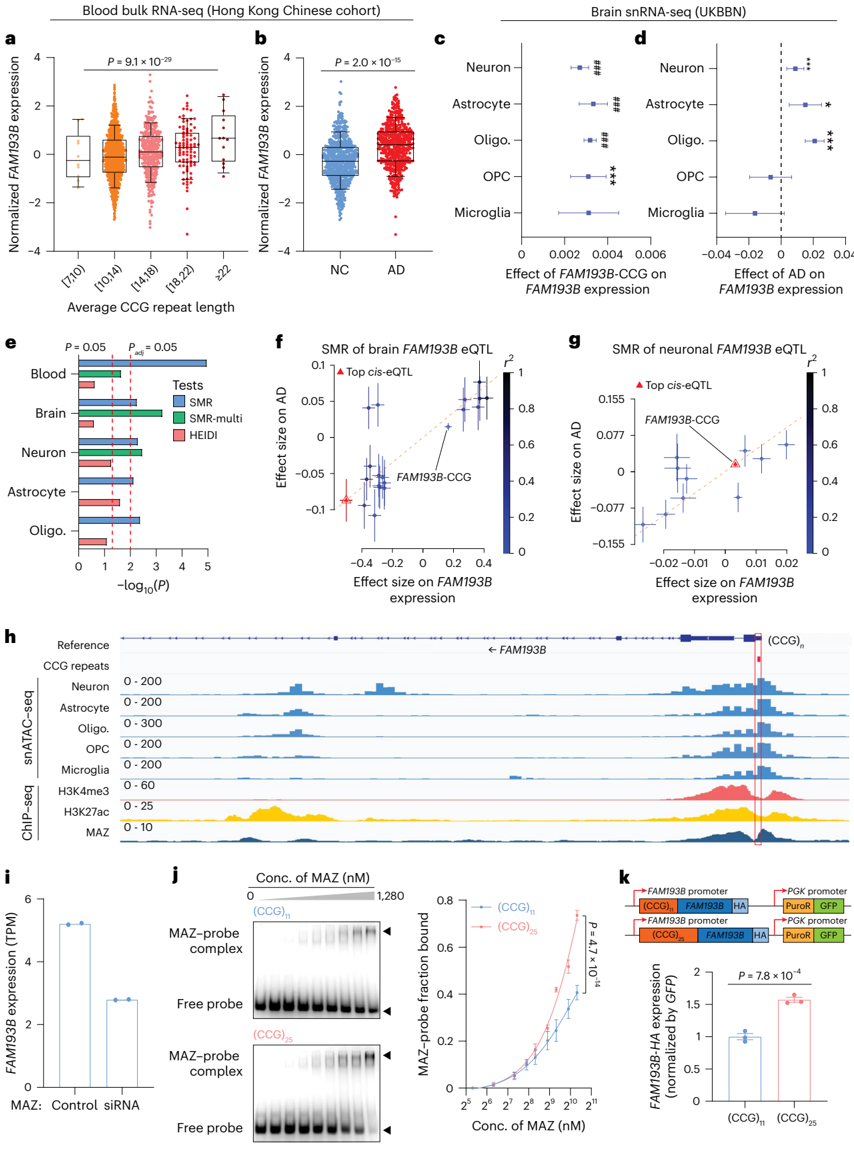
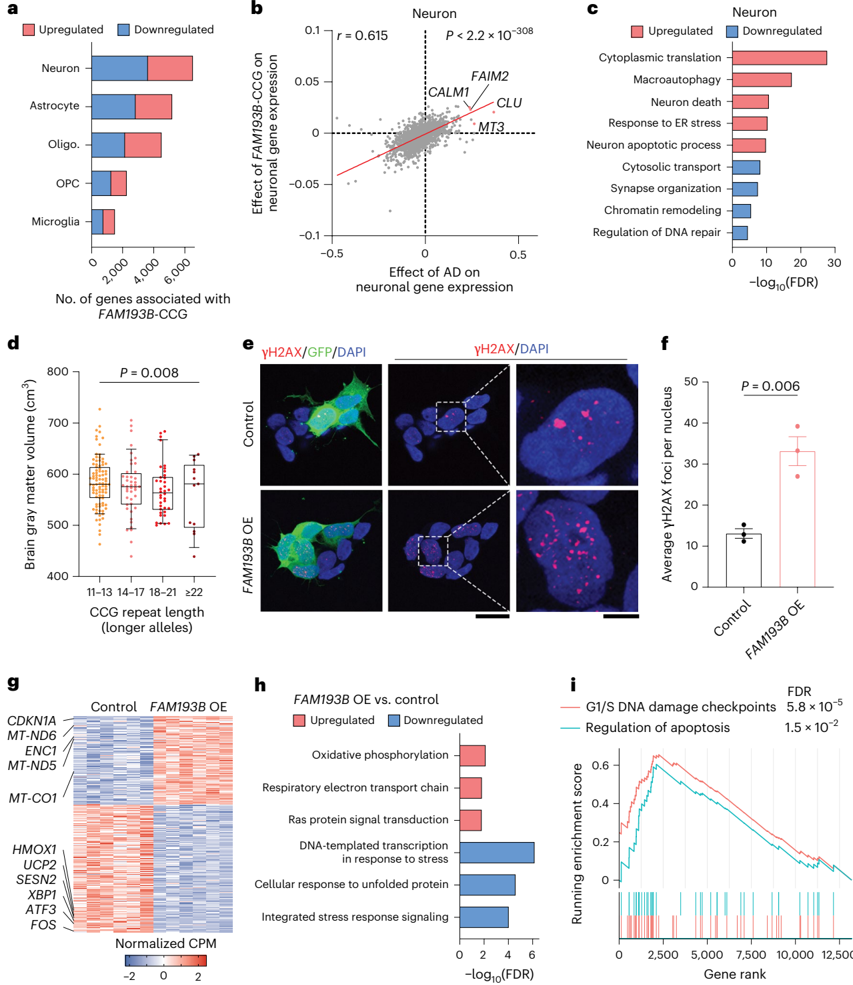
Although Alzheimer's disease (AD) has a polygenic architecture, with numerous associated single-nucleotide polymorphisms (SNPs) identified, the contribution of structural variants (SVs) is unclear. In this study, using long-read (n = 11) and short-read (n = 3,190) sequencing data from the Chinese population, we show that common SVs contribute to AD heritability beyond common SNPs. We identify an expanded CCG repeat in the FAM193B promoter that shows a genome-wide significant association with increased AD risk (odds ratio = 2.20 per 10-repeat increase, P = 5.5 × 10⁻¹³). The expanded FAM193B-CCG repeat increases FAM193B expression and mediates the pleiotropic association between brain FAM193B expression and AD risk. Analyses of postmortem human brains and cultured neuronal cells show that elevated neuronal FAM193B expression is associated with DNA damage and cell death-related pathways. These findings establish the common FAM193B-CCG repeat as an AD risk genetic factor and highlight the contribution of common SVs to AD heritability.
Overview
CoChat Summary
TL;DR
Using a hybrid long-read (n = 11) plus short-read (n = 3,190) sequencing strategy in Chinese cohorts, this study shows that common structural variants (SVs) contribute to Alzheimer's disease (AD) heritability beyond common SNPs and identifies an expanded CCG repeat in the FAM193B promoter as a genome-wide significant AD risk variant. The repeat increases FAM193B expression via enhanced transcription factor (MAZ) binding and is linked to DNA damage, cell-death pathways and reduced gray matter volume.
Key findings
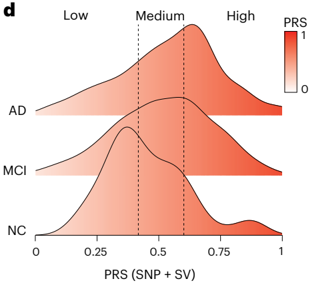
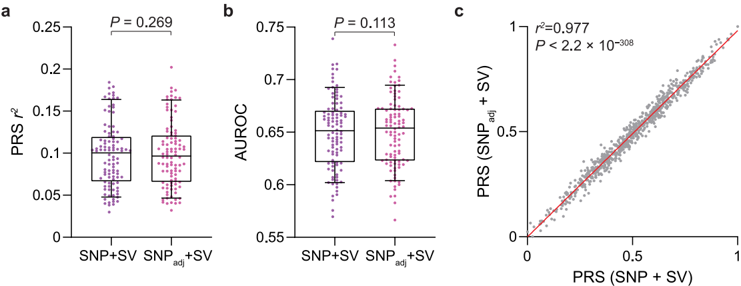
- Common SVs captured AD risk beyond SNPs: SV-based polygenic risk scores predicted AD better than SNP-based scores (r² = 0.056, AUROC = 0.611 versus r² = 0.046, AUROC = 0.597; P = 0.022), and combined SNP + SV models explained more variance (r² = 0.098, AUROC = 0.649; P ≤ 2.6 × 10⁻¹⁵). Approximately 18% of common SVs were not tagged by SNPs.
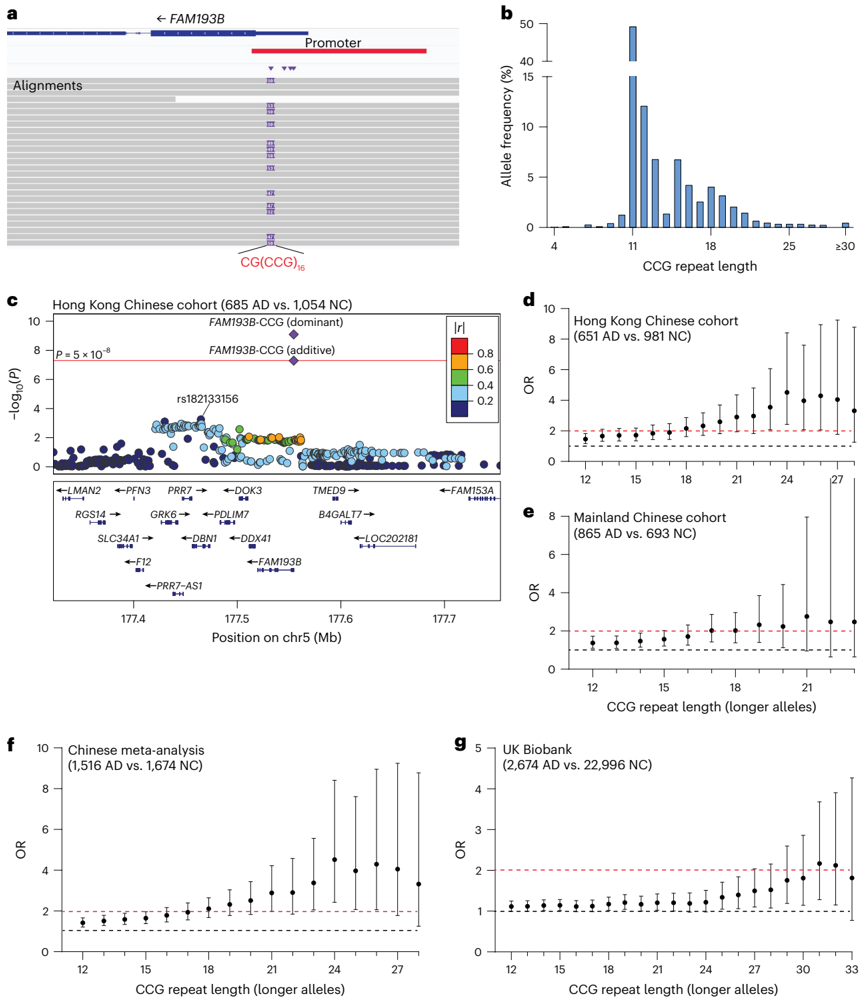
- An expanded CCG repeat in the FAM193B promoter was associated with increased AD risk; meta-analysis of two Chinese cohorts (1,516 AD versus 1,674 NC) gave genome-wide significant associations in additive (β = 0.048, P = 1.2 × 10⁻⁹) and dominant (β = 0.079, P = 5.5 × 10⁻¹³) models, equivalent to ORs of 1.6 and 2.2 per 10 repeats. Alleles with ≥18 CCG repeats showed the strongest association (OR = 2.11, 95% CI: 1.68–2.65, P = 1.1 × 10⁻¹⁰; carrier frequency 0.199 in NCs versus 0.309 in AD).
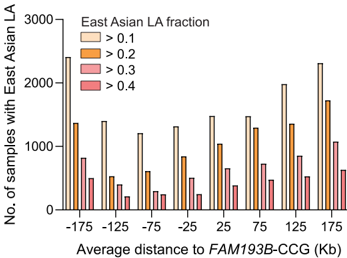
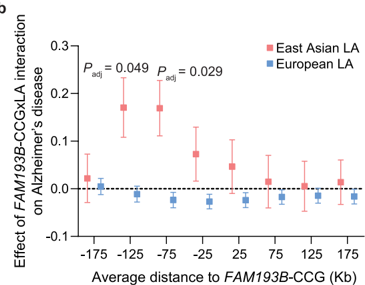
- The association replicated with a smaller effect in UK Biobank Europeans (additive β = 0.015, P = 2.9 × 10⁻³; dominant β = 0.012, P = 9.2 × 10⁻³; 2,674 AD versus 22,996 NC), with ≥19 repeats most significant (OR = 1.21, 95% CI: 1.05–1.41, P = 1.1 × 10⁻²); local ancestry analysis suggested interaction with East Asian ancestry (β = 0.170, Bonferroni-adjusted P < 0.05).
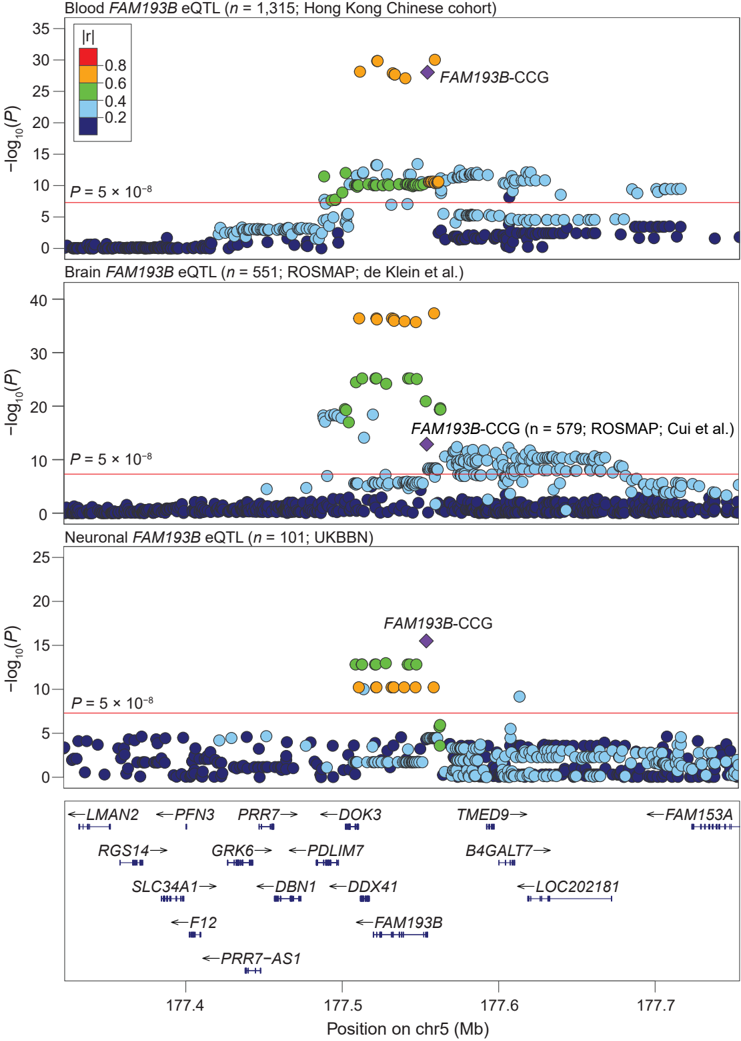
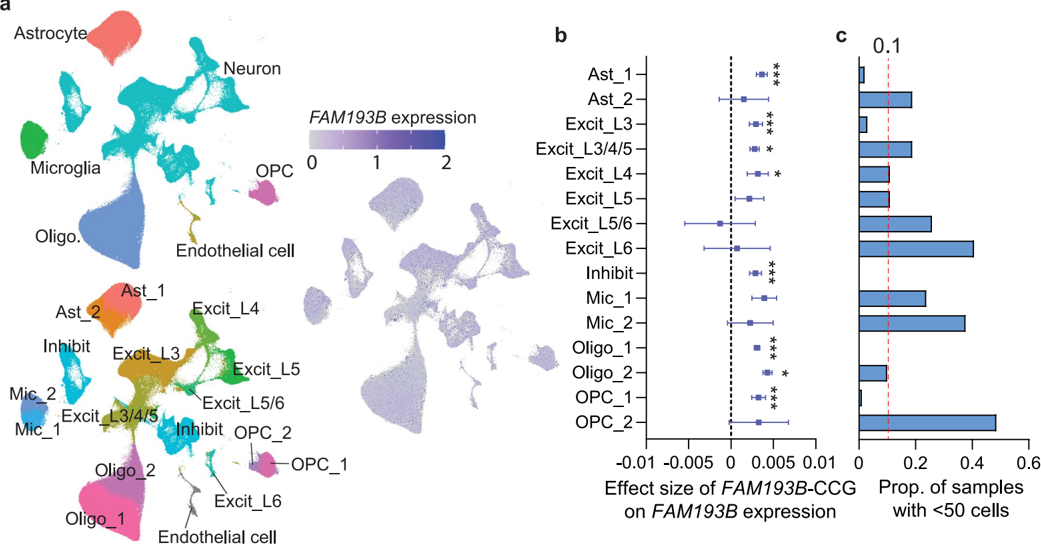
- The repeat acted as an eQTL increasing FAM193B expression in blood (β = 0.026, P = 9.1 × 10⁻²⁹) and brain, including neurons (β = 0.003, P = 3.1 × 10⁻¹⁶), astrocytes (P = 2.3 × 10⁻⁹) and oligodendrocytes (P = 2.9 × 10⁻²⁵); SMR/HEIDI and SMR-multi supported a pleiotropic association between neuronal FAM193B expression and AD (adjusted P_SMR-multi = 1.0 × 10⁻²).
- Longer repeats were associated with decreased brain gray matter volume (β = −0.015, s.e. = 0.006, P = 8.3 × 10⁻³), and FAM193B overexpression in IMR-32 cells increased γH2AX foci (P = 0.006) and 270 differentially expressed genes, with upregulation of G1/S DNA damage checkpoints (FDR = 5.8 × 10⁻⁵) and apoptosis regulation (FDR = 1.5 × 10⁻²).
Methods
- Hybrid sequencing design: PacBio long-read data from 11 Chinese genomes (1.37 terabases, ~40× coverage) for SV discovery, combined with 35× short-read sequencing for genotyping in a Hong Kong Chinese cohort (n = 2,333); replication in a mainland Chinese cohort and UK Biobank.
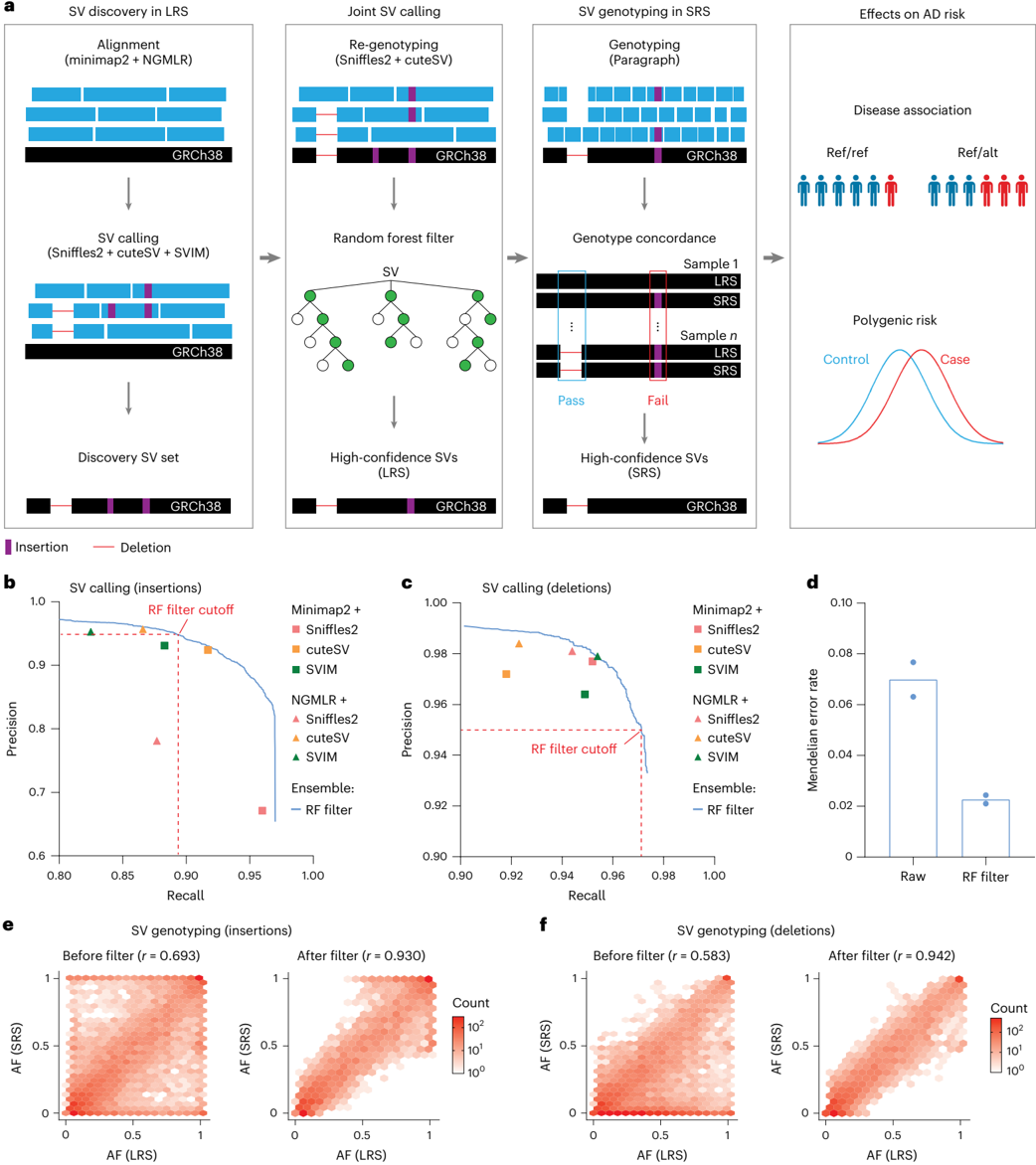
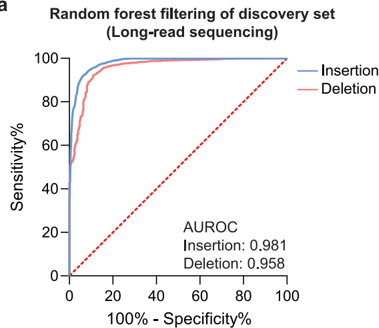
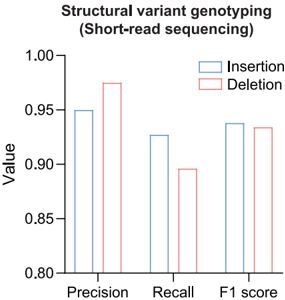
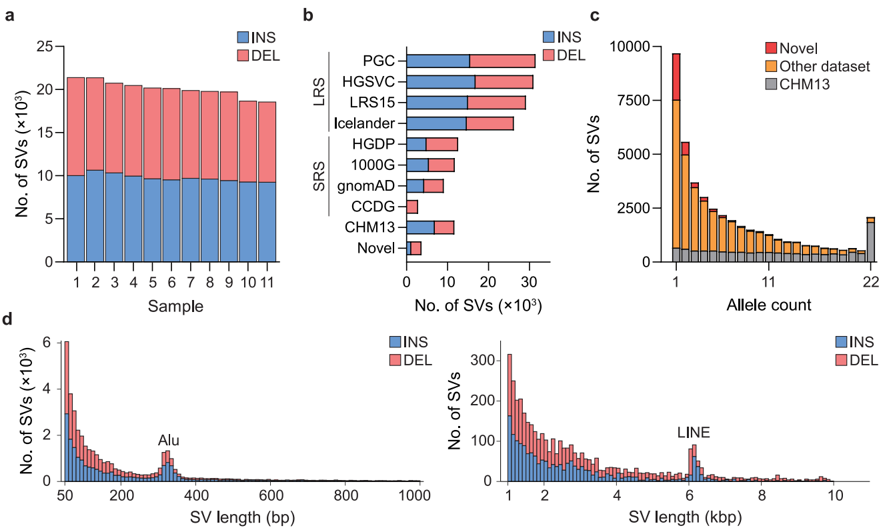
- SV discovery combined two aligners (NGMLR, minimap2) and three callers (Sniffles2, cuteSV, SVIM), merged with Jasmine, and filtered with a random forest model (AUROC 0.981 insertions, 0.958 deletions; FDR ≤ 5%), yielding 44,122 SVs and 17,294 high-confidence SVs genotyped in 2,123 unrelated individuals (6,792 common SVs, MAF > 0.05). The FAM193B-CCG repeat was genotyped with HipSTR, GangSTR and ExpansionHunter combined via EnsembleTR.
- Analyses included PRS with repeated 10-fold cross-validation, logistic regression with age, sex and principal components as covariates, conditional and linkage disequilibrium analyses, eQTL analysis, SMR/HEIDI and SMR-multi, single-nucleus RNA-seq differential expression (MAST, DESeq2), electrophoretic mobility shift assays, promoter-reporter assays in HEK293T cells, and γH2AX immunofluorescence in IMR-32 cells.
Limitations
- Stated by the paper: larger discovery cohorts and independent replication are required to precisely estimate SNP-based or SV-based heritability for AD; functional studies are needed to investigate the molecular mechanisms underlying FAM193B's roles in neurodegeneration and AD pathogenesis, as its biological function remains unclear.
- Evident from the text: the FAM193B-CCG effect size was smaller in the European population than in the Chinese population, and the UK Biobank replication reached only nominal significance; the mechanistic work relies on cell lines (IMR-32, HEK293T, K562) rather than human neurons; the Hong Kong cohort association analysis for the repeat used a subset (651 AD versus 981 NC) of the recruited cohort.
Model-written summary. Check it against the paper before relying on it.
Integrity signals
Registry
Cites
Statistics
Figures
Verification
Claims the paper makes
0 Valid · 0 Not valid · 30 Not checked · 129 Own results and interpretations
A result the paper reports from its own data — it cites no other source for it, so there is none to check. The quote shows it is in the paper.
In the paper
“Analyses of postmortem human brains and cultured neuronal cells show that elevated neuronal FAM193B expression is associated with DNA damage and cell death-related pathways.”
- Also stated in: § Effects of the FAM193B-CCG repeat on neurodegeneration-related pathways · hedged
“Thus, these findings suggest the role of FAM193B in modulating DNA damage and promoting neuronal death.”
§ Genome-wide analysis of common structural variants in Alzheimer's disease identifies a risk-associated regulatory CCG repeat in FAM193B > Abstract
plainstates an association- Asserted: passes — The authors put it forward as true.
- Checkable: passes — It can be checked against evidence.
- Load-bearing: passes — The paper’s conclusions depend on it.
- Based: passes — The paper gives a reason why it holds.
- Also stated in: § Effects of the FAM193B-CCG repeat on neurodegeneration-related pathways · hedged
A result the paper reports from its own data — it cites no other source for it, so there is none to check. The quote shows it is in the paper.
In the paper
“We identify an expanded CCG repeat in the FAM193B promoter that shows a genome-wide significant association with increased AD risk (odds ratio = 2.20 per 10-repeat increase, P = 5.5 × 10 -13 ).”
- Also stated in: § Identification of a common AD risk repeat polymorphism in the FAM193B locus · plain
“Meta-analysis of the two Chinese cohorts identified genome-wide significant associations (Bonferroni correction cutoff = 1.7 × 10 -8 ) between the repeat and AD for both the additive model (β = 0.048, P = 1.2 × 10 -9 ) and the dominant model (β = 0.079, P = 5.5 × 10 -13 ) (n = 1,516 AD versus n = 1,674 NC; Supplementary Table 13).”
§ Genome-wide analysis of common structural variants in Alzheimer's disease identifies a risk-associated regulatory CCG repeat in FAM193B > Abstract
plainstates an associationn = 1,516- Asserted: passes — The authors put it forward as true.
- Checkable: passes — It can be checked against evidence.
- Load-bearing: passes — The paper’s conclusions depend on it.
- Based: passes — The paper gives a reason why it holds.
- Also stated in: § Identification of a common AD risk repeat polymorphism in the FAM193B locus · plain
A result the paper reports from its own data — it cites no other source for it, so there is none to check. The quote shows it is in the paper.
In the paper
“Thus, these results demonstrate that our multi-method SV calling approach yields high-confidence SVs.”
- Also stated in: § Abstract · plain
“Therefore, by applying a hybrid sequencing method, we identified and genotyped high-confidence SVs in the study cohort.”
§ Genome-wide analysis of common structural variants in Alzheimer's disease identifies a risk-associated regulatory CCG repeat in FAM193B > Abstract
boostedstates a causen = 5- Asserted: passes — The authors put it forward as true.
- Checkable: passes — It can be checked against evidence.
- Load-bearing: passes — The paper’s conclusions depend on it.
- Based: passes — The paper gives a reason why it holds.
- Also stated in: § Abstract · plain
A result the paper reports from its own data — it cites no other source for it, so there is none to check. The quote shows it is in the paper.
In the paper
“Expression levels of FAM193B-HA mRNA driven by FAM193B promoters containing 11 or 25 CCG repeats in HEK293T cells.”
§ Genome-wide analysis of common structural variants in Alzheimer's disease identifies a risk-associated regulatory CCG repeat in FAM193B > Extended
plainstates a causen = 3- Asserted: passes — The authors put it forward as true.
- Checkable: passes — It can be checked against evidence.
- Load-bearing: passes — The paper’s conclusions depend on it.
- Based: passes — The paper gives a reason why it holds.
A result the paper reports from its own data — it cites no other source for it, so there is none to check. The quote shows it is in the paper.
In the paper
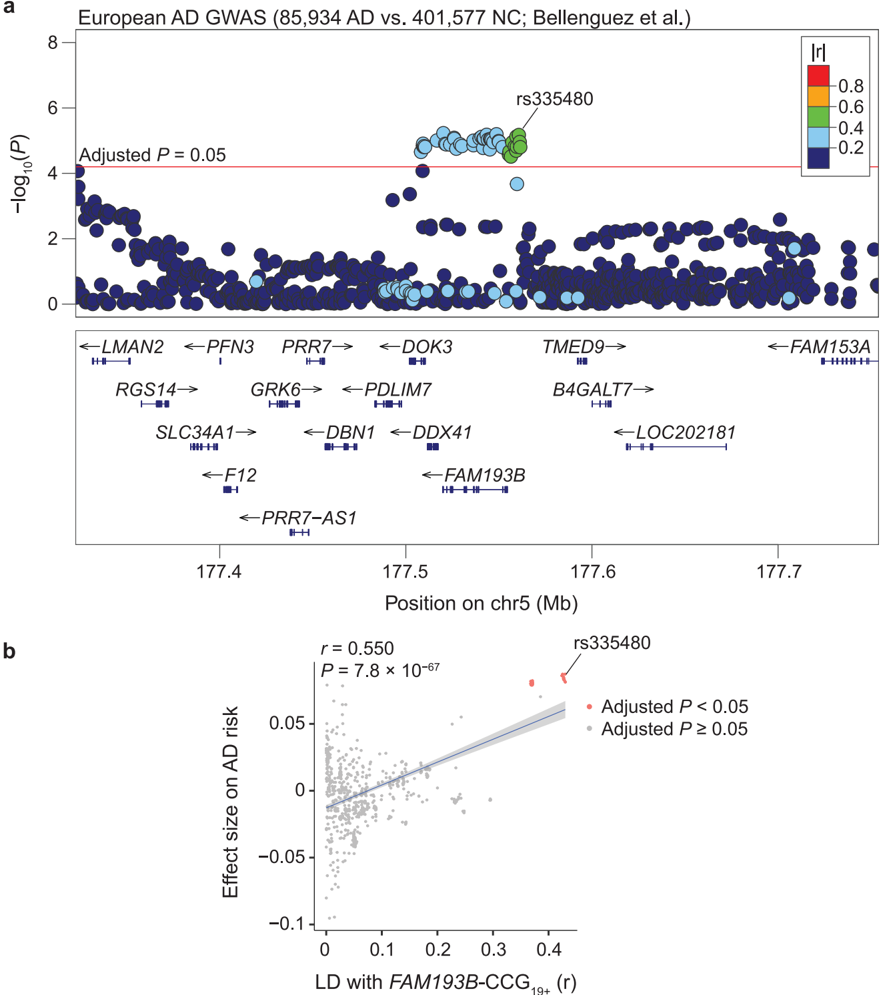
“Conditional analysis suggests that the effect of the FAM193B-CCG repeat is independent of nearby SNPs (P = 4.3 × 10 -7 and P = 6.9 × 10 -9 for the additive and dominant models, respectively; Supplementary Table 14).”
§ Genome-wide analysis of common structural variants in Alzheimer's disease identifies a risk-associated regulatory CCG repeat in FAM193B > Identification of a common AD risk repeat polymorphism in the FAM193B locus
hedgedn = 651- Asserted: passes — The authors put it forward as true.
- Checkable: passes — It can be checked against evidence.
- Load-bearing: passes — The paper’s conclusions depend on it.
- Based: passes — The paper gives a reason why it holds.
76 more claims
Create a free account to see all 159 claims and to verify the 36 references still open.
- The quote only partly states this claim. 2
- It may state two separate claims as one. 49
- Probably not a substantial claim. 37
Citations
Cites
Diagnostic and Statistical Manual of Mental Disorders
American Psychiatric Association (2013) · doi:10.1176/appi.books.9780890425596 · Cited by 116,369
Moderated estimation of fold change and dispersion for RNA-seq data with DESeq2
Love, M. I., Huber, W., & Anders, S. (2014) · Genome Biology · doi:10.1186/s13059-014-0550-8 · Cited by 95,106
fastp: an ultra-fast all-in-one FASTQ preprocessor
Chen, S., Zhou, Y., Chen, Y., & Gu, J. (2018) · Bioinformatics · doi:10.1093/bioinformatics/bty560 · Cited by 29,721
Self-citationBEDTools: a flexible suite of utilities for comparing genomic features
Quinlan, A. R., & Hall, I. M. (2010) · Bioinformatics · doi:10.1093/bioinformatics/btq033 · Cited by 27,437
The Montreal Cognitive Assessment, MoCA: a brief screening tool for mild cognitive impairment
Nasreddine, Z. S., Phillips, N. A., Bédirian, V., Charbonneau, S., Whitehead, V., Collin, I., Cummings, J. L., & Chertkow, H. (2005) · Journal of the American Geriatrics Society · doi:10.1111/j.1532-5415.2005.53221.x · Cited by 25,553
Robinson, J. T., Thorvaldsdóttir, H., Winckler, W., Guttman, M., Lander, E. S., Getz, G., & Mesirov, J. P. (2011) · Nature Biotechnology · doi:10.1038/nbt.1754 · Cited by 15,390
Twelve years of SAMtools and BCFtools
Danecek, P., Bonfield, J. K., Liddle, J., Marshall, J., Ohan, V., Pollard, M. O., Whitwham, A., Keane, T., McCarthy, S. A., Davies, R. M., et al. (2021) · GigaScience · doi:10.1093/gigascience/giab008 · Cited by 15,343
pROC: an open-source package for R and S+ to analyze and compare ROC curves
Robin, X., Turck, N., Hainard, A., Tiberti, N., Lisacek, F., Sanchez, J.-C., & Müller, M. (2011) · BMC Bioinformatics · doi:10.1186/1471-2105-12-77 · Cited by 13,697
Second-generation PLINK: rising to the challenge of larger and richer datasets
Chang, C. C., Chow, C. C., Tellier, L. C., Vattikuti, S., Purcell, S. M., & Lee, J. J. (2015) · Gigascience · doi:10.1186/s13742-015-0047-8 · Cited by 12,709
Wickham, H. (2016) · Use R! · doi:10.1007/978-3-319-24277-4_9 · Cited by 12,516
A framework for variation discovery and genotyping using next-generation DNA sequencing data
DePristo, M. A., Banks, E., Poplin, R., Garimella, K. V., Maguire, J. R., Hartl, C., Philippakis, A. A., del Angel, G., Rivas, M. A., Hanna, M., et al. (2011) · Nature Genetics · doi:10.1038/ng.806 · Cited by 11,456
The UK Biobank resource with deep phenotyping and genomic data
Bycroft, C., Freeman, C., Petkova, D., Band, G., Elliott, L. T., Sharp, K., Motyer, A., Vukcevic, D., Delaneau, O., O’Connell, J., et al. (2018) · Nature · doi:10.1038/s41586-018-0579-z · Cited by 8,876
Scikit-learn: Machine Learning in Python
(2011) · Journal of Machine Learning Research · doi:10.5555/1953048.2078195 · Cited by 8,539
The Ensembl Variant Effect Predictor
McLaren, W., Gil, L., Hunt, S. E., Riat, H. S., Ritchie, G. R. S., Thormann, A., Flicek, P., & Cunningham, F. (2016) · Genome Biology · doi:10.1186/s13059-016-0974-4 · Cited by 8,099
The GTEx Consortium atlas of genetic regulatory effects across human tissues
The GTEx Consortium, Aguet, F., Anand, S., Ardlie, K. G., Gabriel, S., Getz, G. A., Graubert, A., Hadley, K., Handsaker, R. E., Huang, K. H., et al. (2020) · Science · doi:10.1126/science.aaz1776 · Cited by 5,547
Aligning sequence reads, clone sequences and assembly contigs with BWA-MEM
Li, H. (2013) · DROPS (Schloss Dagstuhl – Leibniz Center for Informatics) · doi:10.48550/arxiv.1303.3997 · Cited by 5,159
Integration of summary data from GWAS and eQTL studies predicts complex trait gene targets
Zhu, Z., Zhang, F., Hu, H., Bakshi, A., Robinson, M. R., Powell, J. E., Montgomery, G. W., Goddard, M. E., Wray, N. R., Visscher, P. M., et al. (2016) · Nature Genetics · doi:10.1038/ng.3538 · Cited by 3,352
2023 Alzheimer's disease facts and figures
(2023) · Alzheimer's & Dementia · doi:10.1002/alz.13016 · Cited by 3,212
Finak, G., McDavid, A., Yajima, M., Deng, J., Gersuk, V., Shalek, A. K., Slichter, C. K., Miller, H. W., McElrath, M. J., Prlic, M., et al. (2015) · Genome Biology · doi:10.1186/s13059-015-0844-5 · Cited by 3,159
LocusZoom: regional visualization of genome-wide association scan results
Pruim, R. J., Welch, R. P., Sanna, S., Teslovich, T. M., Chines, P. S., Gliedt, T. P., Boehnke, M., Abecasis, G. R., & Willer, C. J. (2010) · Bioinformatics · doi:10.1093/bioinformatics/btq419 · Cited by 2,707
New insights into the genetic etiology of Alzheimer’s disease and related dementias
Bellenguez, C., Küçükali, F., Jansen, I. E., Kleineidam, L., Moreno-Grau, S., Amin, N., Naj, A. C., Campos-Martin, R., Grenier-Boley, B., Andrade, V., et al. (2022) · Nature Genetics · doi:10.1038/s41588-022-01024-z · Cited by 2,498
Moderated estimation of fold change and dispersion for RNA-seq data with DESeq2Preprint
Love, M. I., Huber, W. K., & Anders, S. (2014) · bioRxiv (Cold Spring Harbor Laboratory) · doi:10.1101/002832 · Cited by 1,849
Accurate detection of complex structural variations using single-molecule sequencing
Sedlazeck, F. J., Rescheneder, P., Smolka, M., Fang, H., Nattestad, M., von Haeseler, A., & Schatz, M. C. (2018) · Nature Methods · doi:10.1038/s41592-018-0001-7 · Cited by 1,654
The NHGRI-EBI GWAS Catalog: knowledgebase and deposition resource
Sollis, E., Mosaku, A., Abid, A., Buniello, A., Cerezo, M., Gil, L., Groza, T., Güneş, O., Hall, P., Hayhurst, J., et al. (2023) · Nucleic Acids Research · doi:10.1093/nar/gkac1010 · Cited by 1,641
γH2AX: a sensitive molecular marker of DNA damage and repair
Mah, L.-J., El-Osta, A., & Karagiannis, T. C. (2010) · Leukemia · doi:10.1038/leu.2010.6 · Cited by 1,557
Computationally efficient whole-genome regression for quantitative and binary traits
Mbatchou, J., Barnard, L., Backman, J., Marcketta, A., Kosmicki, J. A., Ziyatdinov, A., Benner, C., O’Dushlaine, C., Barber, M., Boutkov, B., et al. (2021) · Nature Genetics · doi:10.1038/s41588-021-00870-7 · Cited by 1,502
Rovelet-Lecrux, A., Hannequin, D., Raux, G., Meur, N. L., Laquerrière, A., Vital, A., Dumanchin, C., Feuillette, S., Brice, A., Vercelletto, M., et al. (2006) · Nature Genetics · doi:10.1038/ng1718 · Cited by 1,249
New strategies to improve minimap2 alignment accuracy
Li, H. (2021) · Bioinformatics · doi:10.1093/bioinformatics/btab705 · Cited by 1,236
The GSK3 hypothesis of Alzheimer’s disease
Hooper, C., Killick, R., & Lovestone, S. (2008) · Journal of Neurochemistry · doi:10.1111/j.1471-4159.2007.05194.x · Cited by 1,191
qqman: an R package for visualizing GWAS results using Q-Q and manhattan plots
D. Turner, S. (2018) · Journal of Open Source Software · doi:10.21105/joss.00731 · Cited by 1,091
Stegle, O., Parts, L., Piipari, M., Winn, J., & Durbin, R. (2012) · Nature Protocols · doi:10.1038/nprot.2011.457 · Cited by 1,049
Multi-platform discovery of haplotype-resolved structural variation in human genomes
Chaisson, M. J. P., Sanders, A. D., Zhao, X., Malhotra, A., Porubsky, D., Rausch, T., Gardner, E. J., Rodriguez, O. L., Guo, L., Collins, R. L., et al. (2019) · Nature Communications · doi:10.1038/s41467-018-08148-z · Cited by 891
Self-citationA hyperactive piggyBac transposase for mammalian applications
Yusa, K., Zhou, L., Li, M. A., Bradley, A., & Craig, N. L. (2011) · Proceedings of the National Academy of Sciences · doi:10.1073/pnas.1008322108 · Cited by 770
Han, B., & Eskin, E. (2011) · The American Journal of Human Genetics · doi:10.1016/j.ajhg.2011.04.014 · Cited by 680
CAG repeat number governs the development rate of pathology in Huntington's disease
Penney, J. B., Vonsattel, J., Macdonald, M. E., Gusella, J. F., & Myers, R. H. (1997) · Annals of Neurology · doi:10.1002/ana.410410521 · Cited by 669
Phenotypic impact of genomic structural variation: insights from and for human disease
Weischenfeldt, J., Symmons, O., Spitz, F., & Korbel, J. O. (2013) · Nature Reviews Genetics · doi:10.1038/nrg3373 · Cited by 658
Disruption of DNA-methylation-dependent long gene repression in Rett syndrome
Gabel, H. W., Kinde, B., Stroud, H., Gilbert, C. S., Harmin, D. A., Kastan, N. R., Hemberg, M., Ebert, D. H., & Greenberg, M. E. (2015) · Nature · doi:10.1038/nature14319 · Cited by 569
The impact of structural variation on human gene expression
GTEx Consortium, Chiang, C., Scott, A. J., Davis, J. R., Tsang, E. K., Li, X., Kim, Y., Hadzic, T., Damani, F. N., Ganel, L., et al. (2017) · Nature Genetics · doi:10.1038/ng.3834 · Cited by 495
Lau, S.-F., Cao, H., Fu, A. K. Y., & Ip, N. Y. (2020) · Proceedings of the National Academy of Sciences · doi:10.1073/pnas.2008762117 · Cited by 476
Self-citationLong-read-based human genomic structural variation detection with cuteSV
Jiang, T., Liu, Y., Jiang, Y., Li, J., Gao, Y., Cui, Z., Liu, Y., Liu, B., & Wang, Y. (2020) · Genome Biology · doi:10.1186/s13059-020-02107-y · Cited by 422
A robust benchmark for detection of germline large deletions and insertions
Zook, J. M., Hansen, N. F., Olson, N. D., Chapman, L., Mullikin, J. C., Xiao, C., Sherry, S., Koren, S., Phillippy, A. M., Boutros, P. C., et al. (2020) · Nature Biotechnology · doi:10.1038/s41587-020-0538-8 · Cited by 418
ExpansionHunter: a sequence-graph-based tool to analyze variation in short tandem repeat regions
Dolzhenko, E., Deshpande, V., Schlesinger, F., Krusche, P., Petrovski, R., Chen, S., Emig-Agius, D., Gross, A., Narzisi, G., Bowman, B., et al. (2019) · Bioinformatics · doi:10.1093/bioinformatics/btz431 · Cited by 394
The complex genetic architecture of Alzheimer's disease: novel insights and future directions
Andrews, S. J., Renton, A. E., Fulton-Howard, B., Podlesny-Drabiniok, A., Marcora, E., & Goate, A. M. (2023) · eBioMedicine · doi:10.1016/j.ebiom.2023.104511 · Cited by 377
SVIM: structural variant identification using mapped long reads
Heller, D., & Vingron, M. (2019) · Bioinformatics · doi:10.1093/bioinformatics/btz041 · Cited by 372
The GTEx Consortium atlas of genetic regulatory effects across human tissues
Aguet, F., Barbeira, A. N., Bonazzola, R., Brown, A., Castel, S. E., Jo, B., Kasela, S., Kim-Hellmuth, S., Liang, Y., Oliva, M., et al. (2019) · bioRxiv (Cold Spring Harbor Laboratory) · doi:10.1101/787903 · Cited by 366
Towards a comprehensive structural variation map of an individual human genome
Pang, A. W., MacDonald, J. R., Pinto, D., Wei, J., Rafiq, M. A., Conrad, D. F., Park, H., Hurles, M. E., Lee, C., Venter, J. C., et al. (2010) · Genome Biology · doi:10.1186/gb-2010-11-5-r52 · Cited by 335
Genome-wide profiling of heritable and de novo STR variations
Willems, T., Zielinski, D., Yuan, J., Gordon, A., Gymrek, M., & Erlich, Y. (2017) · Nature Methods · doi:10.1038/nmeth.4267 · Cited by 329
The Ensembl Variant Effect PredictorPreprint
McLaren, W. M., Gil, L., Hunt, S. E., et al. (2016) · bioRxiv (Cold Spring Harbor Laboratory) · doi:10.1101/042374 · Cited by 313
de Klein, N., Tsai, E. A., Vochteloo, M., Baird, D., Huang, Y., Chen, C.-Y., van Dam, S., Oelen, R., Deelen, P., Bakker, O. B., et al. (2023) · Nature Genetics · doi:10.1038/s41588-023-01300-6 · Cited by 272
Profiling the genome-wide landscape of tandem repeat expansions
(2019) · doi:10.1093/nar/gkz501 · Cited by 270
Truvari: refined structural variant comparison preserves allelic diversity
English, A. C., Menon, V. K., Gibbs, R. A., Metcalf, G. A., & Sedlazeck, F. J. (2022) · Genome Biology · doi:10.1186/s13059-022-02840-6 · Cited by 236
Identifying individuals with high risk of Alzheimer’s disease using polygenic risk scores
Leonenko, G., Baker, E., Stevenson-Hoare, J., Sierksma, A., Fiers, M., Williams, J., de Strooper, B., & Escott-Price, V. (2021) · Nature Communications · doi:10.1038/s41467-021-24082-z · Cited by 227
LongQC: A Quality Control Tool for Third Generation Sequencing Long Read Data
Fukasawa, Y., Ermini, L., Wang, H., Carty, K., & Cheung, M.-S. (2020) · G3 Genes|Genomes|Genetics · doi:10.1534/g3.119.400864 · Cited by 210
Diagnostic and statistical manual of mental disorders DSM-5
American Psychiatric Association (2013) · Cited by 209
Paragraph: a graph-based structural variant genotyper for short-read sequence data
Chen, S., Krusche, P., Dolzhenko, E., Sherman, R. M., Petrovski, R., Schlesinger, F., Kirsche, M., Bentley, D. R., Schatz, M. C., Sedlazeck, F. J., et al. (2019) · Genome Biology · doi:10.1186/s13059-019-1909-7 · Cited by 196
Short tandem repeats bind transcription factors to tune eukaryotic gene expression
Horton, C. A., Alexandari, A. M., Hayes, M. G. B., Marklund, E., Schaepe, J. M., Aditham, A. K., Shah, N., Suzuki, P. H., Shrikumar, A., Afek, A., et al. (2023) · Science · doi:10.1126/science.add1250 · Cited by 189
Accurate detection of complex structural variations using single molecule sequencingPreprint
Sedlazeck, F. J., Rescheneder, P., Smolka, M., et al. (2017) · bioRxiv (Cold Spring Harbor Laboratory) · doi:10.1101/169557 · Cited by 179
Computationally efficient whole genome regression for quantitative and binary traitsPreprint
Mbatchou, J. S., Barnard, L., Backman, J., et al. (2020) · bioRxiv (Cold Spring Harbor Laboratory) · doi:10.1101/2020.06.19.162354 · Cited by 171
Jasmine and Iris: population-scale structural variant comparison and analysis
Kirsche, M., Prabhu, G., Sherman, R., Ni, B., Battle, A., Aganezov, S., & Schatz, M. C. (2023) · Nature Methods · doi:10.1038/s41592-022-01753-3 · Cited by 165
Privé, F., Luu, K., Blum, M. G. B., McGrath, J. J., & Vilhjálmsson, B. J. (2020) · Bioinformatics · doi:10.1093/bioinformatics/btaa520 · Cited by 162
Farrer, L. A. (1997) · JAMA · doi:10.1001/jama.1997.03550160069041 · Cited by 124
Canty, A. J., & Ripley, B. D. (1999) · doi:10.32614/cran.package.boot · Cited by 112
Rare autosomal copy number variations in early-onset familial Alzheimer’s disease
Hooli, B. V., Kovacs-Vajna, Z. M., Mullin, K., Blumenthal, M. A., Mattheisen, M., Zhang, C., Lange, C., Mohapatra, G., Bertram, L., & Tanzi, R. E. (2014) · Molecular Psychiatry · doi:10.1038/mp.2013.77 · Cited by 100
Zhou, X., Chen, Y., Mok, K. Y., Zhao, Q., Chen, K., Chen, Y., Hardy, J., Li, Y., Fu, A. K. Y., Guo, Q., et al. (2018) · Proceedings of the National Academy of Sciences · doi:10.1073/pnas.1715554115 · Cited by 96
Self-citationTRTools: a toolkit for genome-wide analysis of tandem repeats
Mousavi, N., Margoliash, J., Pusarla, N., Saini, S., Yanicky, R., & Gymrek, M. (2020) · Bioinformatics · doi:10.1093/bioinformatics/btaa736 · Cited by 76
A framework to score the effects of structural variants in health and disease
Kleinert, P., & Kircher, M. (2022) · Genome Research · doi:10.1101/gr.275995.121 · Cited by 69
The impact of structural variation on human gene expressionPreprint
Chiang, C., Scott, A. J., Davis, J. R., et al. (2016) · bioRxiv (Cold Spring Harbor Laboratory) · doi:10.1101/055962 · Cited by 48
ExpansionHunter: A sequence-graph based tool to analyze variation in short tandem repeat regionsPreprint
Dolzhenko, E., Deshpande, V., Schlesinger, F., et al. (2019) · bioRxiv (Cold Spring Harbor Laboratory) · doi:10.1101/572545 · Cited by 46
Jang, B., Kailash, B. P., Tokolyi, A., Dredge, W. H., Ravi, A., Jung, S., Naito, T., Kim, B., Kim, M. S., Cho, M., et al. (2026) · Nature Genetics · doi:10.1038/s41588-026-02541-x · Cited by 40
EADB, Bellenguez, C., Castillo Morales, A., Amin, N., van der Lee, S. J., Muntaner, M., Parveen, K., Küçükali, F., Grenier-Boley, B., Heikkinen, S., et al. (2026) · Nature Genetics · doi:10.1038/s41588-026-02583-1 · Cited by 36
Ming, C., Wang, M., Wang, Q., Neff, R., Wang, E., Shen, Q., Reddy, J. S., Wang, X., Allen, M., Ertekin‐Taner, N., et al. (2022) · Alzheimer's & Dementia · doi:10.1002/alz.12507 · Cited by 32
Using blood transcriptome analysis for Alzheimer's disease diagnosis and patient stratification
Zhong, H., Zhou, X., Uhm, H., Jiang, Y., Cao, H., Chen, Y., Mak, T. T. W., Lo, R. M. N., Wong, B. W. Y., Cheng, E. Y. L., et al. (2024) · Alzheimer's & Dementia · doi:10.1002/alz.13691 · Cited by 25
Self-citationThe role of structural variations in Alzheimer’s disease and other neurodegenerative diseases
Wang, H., Wang, L.-S., Schellenberg, G., & Lee, W.-P. (2023) · Frontiers in Aging Neuroscience · doi:10.3389/fnagi.2022.1073905 · Cited by 23
Profiling the genome-wide landscape of tandem repeat expansionsPreprint
Mousavi, N., Shleizer-Burko, S., Yanicky, R., et al. (2018) · bioRxiv (Cold Spring Harbor Laboratory) · doi:10.1101/361162 · Cited by 22
Cui, Y., Arnold, F. J., Li, J. S., Wu, J., Wang, D., Philippe, J., Colwin, M. R., Michels, S., Chen, C., Sallam, T., et al. (2025) · Nature Genetics · doi:10.1038/s41588-024-02057-2 · Cited by 21
Short tandem repeats bind transcription factors to tune eukaryotic gene expressionPreprint
Horton, C. A., Alexandari, A. M., Hayes, M. G. B., Marklund, E., Schaepe, J. M., Aditham, A. K., Shah, N., Shrikumar, A., Afek, A., Greenleaf, W. J., et al. (2022) · bioRxiv (Cold Spring Harbor Laboratory) · doi:10.1101/2022.05.24.493321 · Cited by 20
Population-scale variability at short tandem repeat loci reveals pathogenicity signature
Danzi, M. C., Xu, I. R. L., Fazal, S., Dolzhenko, E., Pellerin, D., Weisburd, B., Van de Vondel, L., Reuter, C., Sampson, J. B., Folland, C., et al. (2025) · doi:10.1101/2025.01.06.631535 · Cited by 18
Polygenic burden of short tandem repeat expansions promotes risk for Alzheimer’s disease
Guo, M. H., Lee, W.-P., Vardarajan, B., Schellenberg, G. D., & Phillips-Cremins, J. E. (2025) · Nature Communications · doi:10.1038/s41467-025-56400-0 · Cited by 17
Interactomes of Glycogen Synthase Kinase-3 Isoforms
Cormier, K. W., Larsen, B., Gingras, A.-C., & Woodgett, J. R. (2023) · Journal of Proteome Research · doi:10.1021/acs.jproteome.2c00825 · Cited by 17
Thulin, M. (2021) · doi:10.32614/cran.package.boot.pval · Cited by 16
Jensen, T. D., Ni, B., Reuter, C. M., Gorzynski, J. E., Fazal, S., Bonner, D., Ungar, R. A., Goddard, P. C., Raja, A., Ashley, E. A., et al. (2025) · Genome Research · doi:10.1101/gr.279323.124 · Cited by 14
Finak, G., McDavid, A., Yajima, M., et al. (2015) · bioRxiv (Cold Spring Harbor Laboratory) · doi:10.1101/020842 · Cited by 13
Wang, H., Dombroski, B. A., Cheng, P., Tucci, A., Si, Y., Farrell, J. J., Tzeng, J., Leung, Y. Y., Malamon, J. S., The Alzheimer's Disease Sequencing Project, et al. (2025) · Alzheimer's & Dementia · doi:10.1002/alz.70277 · Cited by 12
TRTools: a toolkit for genome-wide analysis of tandem repeatsPreprint
Mousavi, N., Margoliash, J., Pusarla, N., et al. (2020) · bioRxiv (Cold Spring Harbor Laboratory) · doi:10.1101/2020.03.17.996033 · Cited by 11
nricens: NRI for Risk Prediction Models with Time to Event and Binary Response Data
Inoue, E. (2012) · doi:10.32614/cran.package.nricens · Cited by 9
CADD-SV – a framework to score the effects of structural variants in health and diseasePreprint
Kleinert, P., & Kircher, M. (2021) · bioRxiv (Cold Spring Harbor Laboratory) · doi:10.1101/2021.07.10.451798 · Cited by 8
Paragraph: A graph-based structural variant genotyper for short-read sequence data
Chen, S., Krusche, P., Dolzhenko, E., Sherman, R. M., Petrovski, R., Schlesinger, F., Kirsche, M., Bentley, D. R., Schatz, M. C., Sedlazeck, F. J., et al. (2019) · doi:10.1101/635011
SVIM: Structural Variant Identification using Mapped Long Reads
Heller, D., & Vingron, M. (2018) · doi:10.1101/494096
Long-read-based Human Genomic Structural Variation Detection with cuteSV
Jiang, T., Liu, B., Jiang, Y., Li, J., Gao, Y., Cui, Z., Liu, Y., & Wang, Y. (2019) · doi:10.1101/780700
Genome-wide profiling of heritable and de novo STR variations
Willems, T., Zielinski, D., Gordon, A., Gymrek, M., & Erlich, Y. (2016) · doi:10.1101/077727
Jensen, T. D., Ni, B., Reuter, C., Gorzynski, J. E., Fazal, S., Bonner, D. E., Ungar, R. A., Goddard, P. C., Raja, A. N., Ashley, E. A., et al. (2024) · doi:10.1101/2024.03.22.24304565
fastp : an ultra-fast all-in-one FASTQ preprocessor
Chen, S., Zhou, Y., Chen, Y., & Gu, J. (2018) · doi:10.1101/274100
Self-citationTruvari: Refined Structural Variant Comparison Preserves Allelic Diversity
English, A. C., Menon, V. K., Gibbs, R., Metcalf, G. A., & Sedlazeck, F. J. (2022) · doi:10.1101/2022.02.21.481353
Privé, F., Luu, K., Blum, M. G. B., McGrath, J. J., & Vilhjálmsson, B. J. (2019) · doi:10.1101/841452
Jang, B., Kailash, B. P., Tokolyi, A., Dredge, W. H., Ravi, A., Jung, S.-H., Naito, T., Kim, B., Kim, M. S., Cho, M., et al. (2026) · Nature Genetics · doi:10.1038/s41588-026-02581-3
Metadata
- Authors
- Cao, H., Fu, Y., Zhou, X., Duan, Y., Ip, F. C. F., Chen, Y., Hu, S., Liu, S. C., Kwok, T. C. Y., Mok, K. Y., Cheung, T. H., Hardy, J., Fu, A. K. Y., & Ip, N. Y.
- Affiliations
- Hong Kong University of Science and Technology (HK)
- Chinese Academy of Sciences (CN)
- Chinese University of Hong Kong (HK)
- UK Dementia Research Institute (GB)
- Corresponding author
- Fu, Amy K. Y.
- Ip, Nancy Y.
- ORCID
- Venue
- Nature Neuroscience
- Published
- 2026-10-12
- ISSN
- 1097-6256 (ISSN-L)
- 1546-1726
- OpenAlex
- W6968137982
- Cited by
- 0
- References
- 75
- FWCI
- 0.00
- Type
- journal article
- Language
- en
- Open access
- hybrid
- doi.org
- Licence
- cc-by-nc-nd
- creativecommons.org/licenses/by-nc-nd/4.0 (tdm)
- creativecommons.org/licenses/by-nc-nd/4.0 (vor)
- Locations
- Nature Neuroscience (publishedVersion, cc-by-nc-nd)
- PubMed (publishedVersion)
- Rare & Special e-Zone (The Hong Kong University of Science and Technology) (submittedVersion)
- Zenodo (CERN European Organization for Nuclear Research) (cc-by)
- Zenodo (CERN European Organization for Nuclear Research)
- Funders
- Research Grants Council, University Grants Committee (C6027-19GF, T13-605/18W)
- University Grants Committee (AoE/M-604/16)
- Innovation and Technology Commission (InnoHK, ITCPD/17-9, ITS/207/18FP, MRP/042/18X)
- Topics
- Life Sciences › Neuroscience › Cellular and Molecular Neuroscience › Alzheimer's disease research and treatments
- Health Sciences › Medicine › Psychiatry and Mental health › Dementia and Cognitive Impairment Research
- Life Sciences › Biochemistry, Genetics and Molecular Biology › Genetics › Genetic Associations and Epidemiology
- Keywords
- Alzheimer's disease, structural variants, promoter, genetic risk, polygenic architecture, heritability, gene expression, DNA damage, neuronal cell death, Chinese population
About these checks
Registry, retraction, Cites and statistics results are computed, not judged, with one exception: a printed reference that no index lists is read once by a model before it counts as a citation error. Claims are extracted by a model and kept only when their quote appears verbatim in the text; each cited source is then checked, with a model’s help, for whether it says what the claim relies on. Those verdicts can be wrong — read the claim’s quote and the cited source before relying on one.
A language model drew the claims from the paper on 2026-11-26, under version 3 of the claim definition (model deepseek-v4.1-flash, prompt extract-v3).
A second model labelled each claim on 2026-11-26 (model jev-1.13-20260917, definition revision gold-guideline-v0.2).
Statistics and arithmetic are recomputed, not judged.
Confidence bands are shown only for fields calibrated on our annotated test set. None is calibrated yet, so no band is shown.
What counts as a claim ›How we measure confidence ›How we check this ›
Are you an author, or do you see a problem with this page? Request a review
Data sources
Bibliographic data: Semantic Scholar, OpenAlex, Crossref.
Contains information from the Semantic Scholar Academic Graph Datasets, made available under the ODC Attribution License (ODC-BY 1.0).
Semantic Scholar’s data is described in: Kinney, R., et al. (2023). The Semantic Scholar Open Data Platform. arXiv:2301.10140.
